
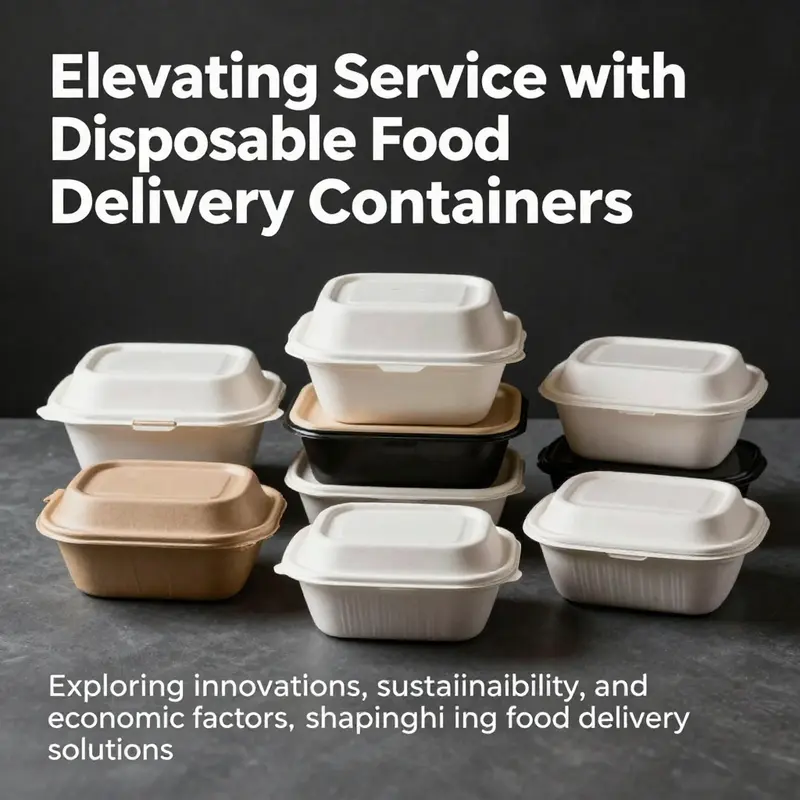
The dining landscape is evolving, and with it, the demand for safe and efficient food delivery solutions. Disposable food delivery containers play a pivotal role in bridging the gap between restaurants, beverage chains, food trucks, and event planners, ensuring that meals reach consumers in prime condition. Emerging trends in innovation, sustainability, and eco-conscious practices are influencing choices in disposable containers. This article delves into these themes, exploring the economic aspects, geopolitical challenges, and social trends that inform purchasing decisions in this vital sector. Each chapter will provide a detailed look into how these factors shape the use and perception of disposable food containers in the industry.
Beyond the Takeout Box: Innovations Redefining Disposable Food Delivery Containers
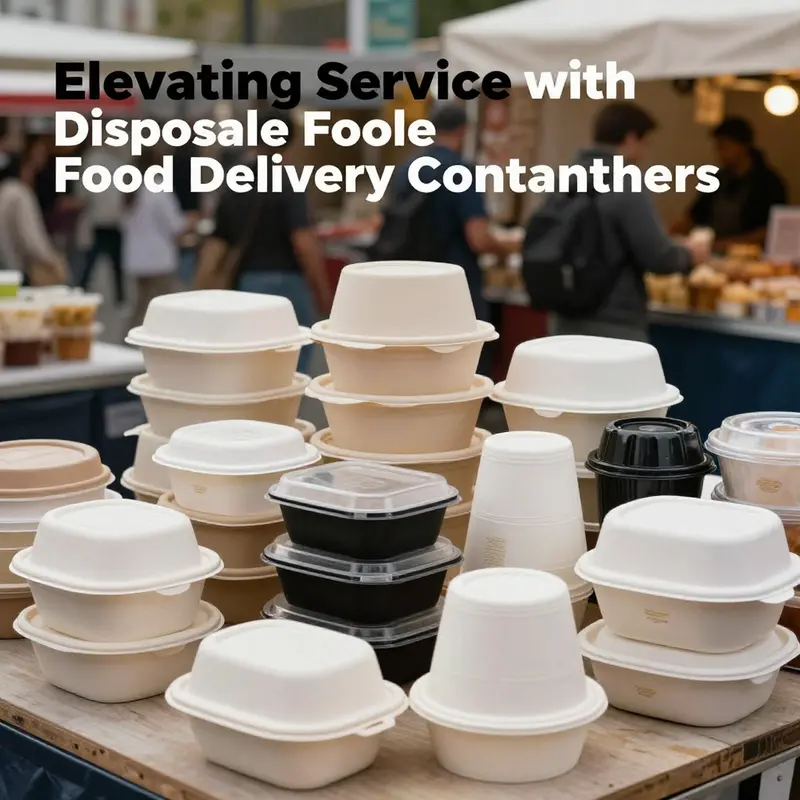
Disposable food delivery containers are more than empty vessels. They are evolving into integrated systems that orchestrate performance, safety, and end-of-life outcomes in a crowded and demanding market. The reigning challenge is not merely to substitute one material for another, but to reimagine how a single-use object can support temperature control, preserve flavor and texture, and align with circular economy goals. In practice, this means designers, material scientists, and supply-chain partners are crafting packaging that acts as a steward of food quality while also guiding users toward responsible disposal. As consumer expectations shift toward convenience without compromising sustainability, the container itself becomes a dialogue about how quickly meals move from kitchen to curb and how gently the planet is treated along the way. The conversation, therefore, centers on how to reconcile performance and end-of-life pathways within a single, practical product category.
A core trajectory in this field is the emergence of multi-material, functionally intelligent designs. Packaging now often blends materials to balance strength, weight, and barrier properties with reusability or compostability. Some concepts push heat management beyond insulation, incorporating self-heating or self-cooling mechanisms that rely on safe, non-toxic chemical reactions. In outdoor events or remote deliveries, maintaining food temperature can determine whether a dish is enjoyed at peak quality or, worse, becomes a wasteful disappointment. This shift toward active, responsive packaging marks a move away from static containers toward systems that participate in the dining experience itself. While the promise is enticing, it also demands rigorous testing to ensure that any added functions do not complicate recycling or composting streams, a nontrivial balance in complex waste-management infrastructures.
Active packaging has already begun to reshape expectations for shelf-life and safety. Oxygen absorbers and moisture regulators, for instance, extend freshness for items that are sensitive to humidity or oxidation during transit. Antimicrobial coatings and surface treatments can suppress microbial growth on the container’s interior or exterior, further reducing waste by slowing spoilage. The upshot is not merely longer freshness but greater reliability in supply chain timing, especially for meal kits and hot takeout where delays are costly. Yet these enhancements must be designed with end-of-life in mind. Consumers and municipalities alike require clarity on what component goes where after use. The ideal is a container that integrates seamlessly with existing recycling streams or home-composting practices, aided by clear labeling and, when possible, simple separation of materials at the end of life.
Material innovation remains central to the conversation. Conventional plastics still offer unmatched barrier performance, but industry attention is increasingly turning to renewable and compostable alternatives. Polylactic acid (PLA) and polyhydroxyalkanoates (PHA), sourced from crops such as corn and sugarcane, can mimic the plastics’ performance while aiming for industrial compostability. However, their environmental impact hinges on the availability of high-temperature composting facilities and reliable collection schemes. In parallel, plant-based fibers—bamboo, sugarcane bagasse, and molded pulp—are gaining traction for their natural integration into home or industrial composting under favorable conditions. The catch is waterproofing. Many fiber-based options require coatings that can hinder biodegradability, so cutting-edge research focuses on waterproof, plastic-free coatings drawn from natural polymers or nanocellulose. The aim is true circularity: a package that breaks down cleanly without leaving persistent residues, and that can be directed to the appropriate recycling or composting stream without confusion.
Design optimization plays a pivotal role in achieving this balance. Engineers are exploring clever folding patterns, geometry that multiplies strength while using less material, and components that can be separated at end-of-life without disrupting the user experience. For example, a paper bowl may be joined to a PLA lid with a water-soluble adhesive, a small but meaningful innovation that ensures each part follows its intended disposal path—composting for the paper, recycling or industrial composting for the PLA. Such separation strategies reduce contamination in recycling streams and enable more precise downstream processing. Beyond materials, the geometric sophistication of packing solutions can permit tighter stacking, lighter weight, and better resistance to leaks and grease—crucial for fast-food items, hot meals, and liquids. The result is a durable container that does not squander resources during manufacture, transit, or disposal.
Industry players recognize the importance of scale and governance in turning promising concepts into practical reality. A robust supplier ecosystem—particularly in regions with mature injection-molding sectors and automated production lines—supports rapid prototyping and scalable production. When businesses source wholesale disposable containers, they must look beyond upfront price. Compliance and certifications, such as food-grade assurances, safety standards, and environmental claims, are non-negotiable. Material safety and sustainability claims must be verified, with a clear understanding of recyclability or compostability pathways. Production capacity and supply reliability matter as well, since initial trials need to translate into tens of thousands of units without compromising quality. The logistics of delivery, especially for orders with tight timelines, are another pillar of evaluation. Effective after-sales support can be the difference between a packaging program that thrives and one that falters under demand surges or regulatory changes.
The procurement narrative for disposable containers often converges with private-label opportunities and customization. Suppliers increasingly offer individualized capacities, portioning dividers, and branding options to support restaurant concepts, meal kits, or event packaging. The ability to craft a consistent, public-facing identity through the packaging—while ensuring a clear disposal pathway—adds a strategic dimension to product design. Within this ecosystem, a growing array of eco-conscious materials is being paired with consumer-friendly features such as leak resistance, grease resistance, and microwave compatibility. A cited example of ongoing market activity is the expansion of alternatives that combine craft-paper aesthetics with modern usability. This blend of style and sustainability resonates with brands seeking to differentiate themselves in crowded markets without sacrificing environmental responsibility. For readers seeking practical trailheads into supplier options, visit the eco-friendly takeout boxes for food packaging resource, which highlights stylish, microwave-safe, grease-resistant options that align with contemporary expectations.
As innovation accelerates, the industry has begun to emphasize system-level thinking that extends beyond the container itself. True sustainability depends on consumer behavior and municipal waste strategies. Even the most advanced packaging is limited if it cannot be collected, sorted, and processed efficiently. Companies are increasingly incorporating labeling that informs users about disposal instructions and end-of-life pathways. Some initiatives explore take-back or return programs for specific packaging lines, though such efforts require infrastructure and incentives to be viable. The broader narrative thus weaves together material science, design ingenuity, operational excellence, and policy-aware considerations to deliver packaging that performs in transit and respects the living systems that eventually encounter it. The Shanghai Expo scene in 2026 underscored this collaborative imperative, bringing together material scientists, chefs, hoteliers, and waste-management experts to highlight that sustainability requires alignment across the entire value chain. The scale and cross-pollination observed there signal a future where packaging is not merely a protective shell but a cooperative partner in responsible food service.
In this evolving landscape, it helps to keep one eye on practical pathways that connect concepts to everyday practice. The material choices, the clever joinery, and the optional smart features must translate into real-world benefits for operators and customers alike. For example, a procurement decision can favor packaging that supports efficient vertical storage in kitchens, reduces spill risk during delivery, and offers a predictable end-of-life route. When these attributes converge with robust certifications and trustworthy sustainability claims, the result is a packaging program that customers can trust and operators can scale. The narrative is not about sacrificing performance for virtue; rather, it is about intelligently engineering both performance and responsibility into a single-use product class that touches millions of meals each day. The future of disposable food delivery containers thus rests on the elegance of design, the clarity of environmental pathways, and the willingness of the industry to work in concert across disciplines and borders. For readers interested in exploring practical examples of eco-conscious options, a notable resource highlights eco-friendly takeout boxes designed for microwave-safe use and grease resistance—demonstrating how modern packaging can blend form, function, and sustainability in everyday service. eco-friendly takeout boxes for food packaging.
External context also helps shape expectations and momentum. Industry events such as the 2026 Shanghai Hotel & Catering Expo (HOTELEX) serve as barometers for how far packaging innovators and food-service operators have progressed in concert. The expo’s expansive footprint and diverse participation underscored a shared commitment to sustainable packaging design, cross-functional collaboration, and practical demonstrations of new materials and manufacturing techniques. For a broader exploration of this ongoing evolution and the strategic role of such exhibitions in advancing packaging sustainability, see the official overview of HOTELEX 2026. For additional context and ongoing developments in the field, refer to the event’s official platform: HOTELEX 2026 Official Website.
Balancing Materials, Systems, and Behavior: The Sustainability Equation for Disposable Food Delivery Containers
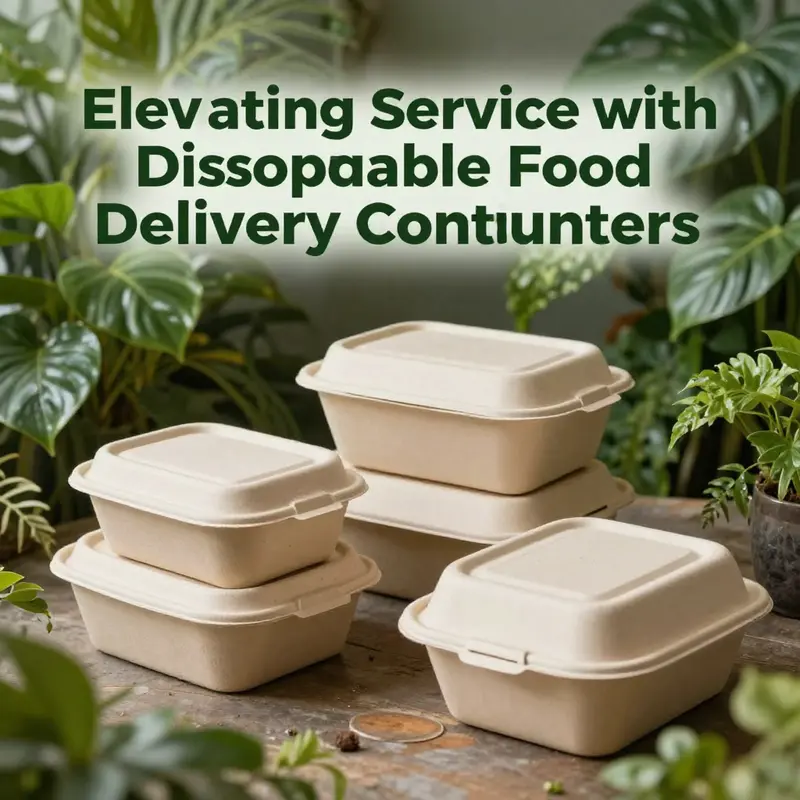
Sustainability for disposable food delivery containers cannot be reduced to a single label. Biodegradable, recyclable, compostable, and reusable terms matter, but they tell only part of the story. Real environmental outcomes depend on three linked elements: the material chosen, how people use the packaging, and what local systems exist for disposal and recovery. When these elements align, impact falls. When they do not, well-intended choices can create new problems.
Material choice shapes the initial footprint. Lightweight plastics such as PET and polypropylene excel at product visibility, sealing, and leak resistance. They require less energy to produce per unit mass than many alternatives. However, their climate and pollution impact depend heavily on collection and recycling rates. Rigid clear containers retain value in recycling streams when clean and sorted. When contaminated with food waste, they often are diverted to landfill, erasing much of their advantage.
Paperboard and molded fiber offer a compelling alternative. These materials come from renewable sources and often require less fossil energy to make. They can be compostable and biodegradable, which appeals to consumers and regulators. Yet performance under heat and oil remains a limitation. Lined paperboard can resist grease, but that lining affects compostability and recycling. Without industrial composting facilities, a compostable label delivers limited benefits. In regions lacking such infrastructure, these containers often end up in the residual waste stream.
Aluminum foil containers bring different strengths. Durable and oven-safe, they enable safe transport of hot, baked, or roasted meals. Aluminum is infinitely recyclable in principle. In practice, the sustainability case depends on collection systems and local recycling rates. Where aluminum is widely recycled, its lifecycle impacts shrink considerably. Where recycling rates lag, the high energy input in primary aluminum production increases the environmental burden. Therefore, aluminum’s promise is contingent on efficient recovery networks.
Newer materials and blends, such as bioplastics and PLA-lined paper, attempt to bridge performance and sustainability. They are attractive for firms constrained by regulatory change. Still, they introduce complexity to waste sorting and processing. Some bioplastics require industrial composting. Others may confuse consumers and contaminate conventional recycling if mis-sorted. The overall effect depends on clarity in labeling and investments in appropriate infrastructure.
Reusability changes the equation. Lifecycle analyses show that reusable systems can outperform single-use options across many metrics once containers are used enough times. The break-even point varies by material, washing method, and transport distances. One rigorous analysis suggests that a reusable takeout container needs roughly twenty uses to beat single-use alternatives on climate metrics. That threshold depends on local energy sources and the logistics of collection, cleaning, and redistribution. Without an efficient return-and-wash model, reusables may never achieve their potential.
Consumer behavior is the third critical piece. How customers handle packaging after use determines whether a container completes a circular path or becomes waste. Simple actions, such as rinsing or separating lids from boxes, can preserve material value. Misunderstandings about compostability and recyclability do the opposite. Clear, consistent labeling helps, but education and convenient disposal options matter more. For many businesses, partnering with local municipalities or waste managers to align labeling with collection realities improves diversion rates.
Supply chain choices influence sustainability as well. Sourcing from mature manufacturing hubs can lower per-unit emissions through economies of scale and efficient production. Automated lines reduce labor-intensive defects, and integrated logistics shorten lead times. However, long-distance shipping and air freight increase embodied emissions. Buyers focused on sustainability should weigh production efficiencies against transportation impacts and prioritize modes that minimize greenhouse gases.
Procurement decisions benefit from a lifecycle perspective. Evaluating a supplier by price alone misses hidden costs. Instead, assess material safety, certifications, production capacity, and logistics reliability. Confirm food-grade compliance and verify recyclability or compostability claims. Look for suppliers able to support trial runs and scaling. Consider whether the supplier can provide customization that reduces waste, such as accurate portioning dividers or lids sized to food types. Small design changes often yield big downstream savings in food waste and disposed packaging.
End-of-life infrastructure must match product design. Compostable paper bowls require industrial composting to realize benefits. Aluminum containers need consistent collection streams. Clear plastics must enter clean recycling flows. Where such infrastructure is lacking, product redesign, takeback programs, or hybrid systems may be necessary. Businesses can invest in local solutions, such as drop-off points for used packaging or partnerships that create closed-loop recovery. These efforts demand coordination and often modest upfront cost, but they substantially increase diversion and reduce net impact.
Operational practices also matter. Reducing packaging volume per order lowers material throughput. Offering portion-appropriate sizes avoids waste from unused food and oversized containers. Lightweighting—trimming unnecessary material without sacrificing performance—reduces embodied emissions. And limits on secondary packaging for delivery platforms can cut both cost and waste. Small operational changes compound across large order volumes.
Finally, transparency builds trust. Communicating the trade-offs associated with different materials helps customers make informed choices. Explain how a compostable box should be disposed of. Describe the local recycling realities. Share reuse targets and the expected number of reuse cycles needed to achieve environmental benefits. Transparency motivates responsible behavior and guides investment toward solutions that produce measurable gains.
Choosing the most sustainable disposable container is never universal. It depends on the food being served, the delivery model, local waste systems, and customer behavior. In some cases, a well-managed reusable program is best. In others, a compostable molded fiber container with access to industrial composting makes more sense. For hot, oven-ready meals, aluminum remains highly practical when recycling streams collect it reliably.
Practical steps for businesses reduce risk and improve outcomes. Map local waste infrastructure before adopting new materials. Run small trials to track real-world disposal behavior. Require suppliers to certify material claims and provide lifecycle data when possible. Consider partnerships for collection and takeback. Use design to minimize material without compromising performance. And communicate clearly with customers about disposal.
Sustainability in food delivery packaging will remain an iterative process. Materials and systems will evolve together. When businesses align design, procurement, and local infrastructure, disposable containers can become part of a lower-impact food system. Choosing wisely requires context, data, and a willingness to adapt as new evidence emerges. For examples of thoughtfully designed compostable and portioned solutions, consider an eco-friendly three-compartment takeout box available from industry retailers: https://ecocupbowl.com/product/eco-friendly-disposable-3-compartment-food-grade-packaging-box-for-fast-food-high-quality-takeout-boxes-for-fried-chicken-french-fries-packaging/.
For a detailed comparison of reusable and single-use systems, consult lifecycle research from the University of Michigan: https://www.sciencedirect.com/science/article/pii/S1876459222001847
Balancing the Ledger: Economic Trade-offs of Disposable Food Delivery Containers
Balancing the Ledger: Economic Trade-offs of Disposable Food Delivery Containers
Choosing disposable food delivery containers is rarely a narrow procurement decision. It touches purchasing budgets, daily operations, brand reputation, and long-term fiscal exposure. On paper, single-use containers look attractive. Unit prices tend to be lower than reusable alternatives. They avoid laundering, warehousing, and complex return logistics. Yet a comprehensive economic view reveals layered costs that can change the calculus for food service operators.
Upfront savings are real. Many disposables arrive at a fraction of the per-use cost of a reusable container. For new outlets or low-volume services, the minimal capital outlay matters. There is no need to invest in dishwashing equipment. Staff time is not diverted to container management. Storage needs are smaller, and inventory turnover is straightforward. For short promotional runs or one-off events, disposable solutions often make financial sense.
Hidden expenses start to appear when usage scales. Waste disposal fees rise with volume. Municipal policies are increasingly stringent about landfill contributions and single-use plastics. Fines or surcharges may be applied when certain materials exceed local thresholds. These regulatory costs can shift a marginally profitable menu item into an operational drain. Externalities also matter. Environmental impacts from production and disposal create indirect economic burdens. Public infrastructure and community services absorb these costs over time, affecting insurance, taxation, and brand trust.
Reputation translates directly into revenue. Customer expectations around sustainability influence purchasing decisions. Consumers may prefer brands demonstrating measurable waste reduction. That preference can be worth a premium and increase customer retention. Conversely, frequent negative publicity linked to waste can impose revenue losses. Measuring these effects requires tracking both short-term sales and longer-term customer lifetime value.
Reusable systems change the financial profile. They demand higher capital commitment up front. Investment covers durable containers and the supporting logistics for returns and cleaning. Yet, over repeated cycles, per-use costs fall steeply. For steady, high-frequency routes, a reusable model often yields lower total cost of ownership. Companies that run effective return-and-clean operations see reduced procurement spend and waste fees. They also gain a sustainability narrative that may justify higher prices or preferential contracts with corporate clients.
Operational complexity is the core trade-off for reusables. Return rates must be high. Cleaning standards demand compliant processes. Loss and damage reduce the effective lifecycle of containers. For small operators, these requirements are barriers. The necessary infrastructure—partnered cleaning facilities, sealed return bins, or dedicated staff—creates fixed costs that are hard to amortize at low volumes. Scaling reusable programs tends to favor larger or clustered operations, where density and frequency make logistics efficient.
Hybrid approaches offer pragmatic balance. Using higher-grade disposables for high-risk items is one approach. Foods that are greasy, very hot, or likely to contaminate are candidates for single-use packaging. Meanwhile, staples sent on recurring routes can shift to reusable containers. This combination reduces waste and mitigates the infrastructure burden. It also spreads capital investment over time, letting teams pilot reusable programs in manageable service areas.
Lifecycle costing clarifies decisions. A true comparison accounts for procurement, transport, storage, cleaning, disposal, regulatory fees, and product loss. It also includes brand effects and potential revenue shifts tied to sustainability claims. Sensitivity analyses reveal which variables tip the balance. For instance, increased disposal fees or new municipal bans on certain plastics often accelerate the case for reusables. Conversely, low return rates or high breakage can undermine expected savings.
Supplier and material choices affect economics too. Lightweight plastics and paperboard usually have lower sticker prices. Compostable molded fiber and bagasse command higher per-unit costs. Yet their end-of-life profiles can reduce municipal disposal fees and align with composting programs. When supplier ecosystems offer scale and fast turnaround, procurement savings can compound. Many manufacturers provide custom branding and sizing, which helps reduce food waste from mismatched portions. Tailoring container capacity to menu items lowers ingredient and packaging waste, improving margins.
For businesses exploring change, pilot projects are indispensable. Start with a subset of routes or menu items. Track metrics for six months at minimum. Monitor container loss, cleaning costs, customer feedback, and waste charges. Compare these with historical data for disposables. A phased rollout reduces financial risk and uncovers operational pitfalls early.
Financing options and partnerships can soften upfront burdens. Some systems use deposit models, where customers pay a small refundable fee per container. Others partner with sanitation services or third-party laundries to outsource cleaning. Food delivery platforms and subscription customers sometimes subsidize reusable programs in exchange for branding or sustainability credentials. These arrangements shift capital expenditures off the balance sheet and accelerate payback periods.
Finally, small adjustments in packaging design can yield significant savings. Portion-dividing inserts, stackable shapes, and nesting designs reduce material use and shipping volume. Lids that double as plates or trays cut part counts. Choosing materials that are compatible with existing municipal recycling or composting streams lowers disposal costs. Even modest improvements in packing density can reduce transport costs and carbon-related fees.
For further depth on long-term economic impacts and the comparative analysis of reusable versus disposable containers, review academic cost–benefit studies. One useful resource is a 2023 analysis of reusable takeaway container usage, which explores lifecycle impacts and fiscal trade-offs: https://www.sciencedirect.com/science/article/pii/S095668662300145X
For businesses seeking incremental change, exploring eco-friendly disposable options can bridge the gap. A practical example is the range of eco-friendly takeout boxes for food packaging that balance convenience with lower environmental cost (https://ecocupbowl.com/product/eco-friendly-takeout-boxes-for-food-packaging-stylish-food-containers-safe-microwave-craft-paper-lunch-boxes-leak-grease-resistant/). Such choices reduce immediate waste impact while offering operational simplicity.
Viewed holistically, the economic decision around disposable food delivery containers is strategic. It requires blended evaluation of capital, operations, regulatory risk, and brand value. Careful pilots and lifecycle accounting reveal where savings actually lie. For many operators, a hybrid path yields the best fiscal outcome while supporting measurable sustainability goals.
How Geopolitics Shapes the Supply, Cost, and Choices of Disposable Food Delivery Containers
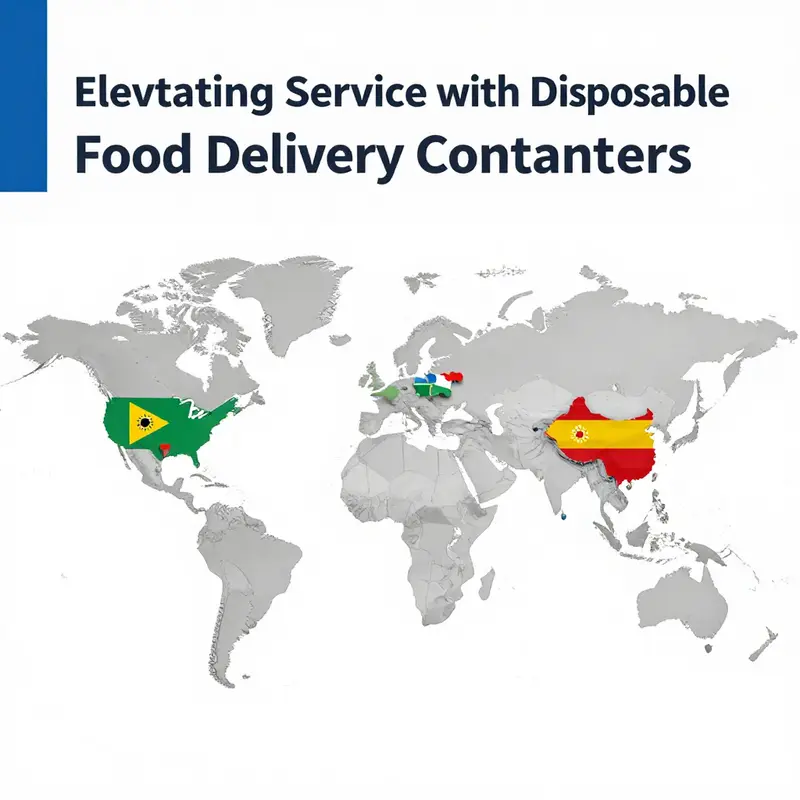
Geopolitics quietly determines which disposable food delivery containers reach customers, how much they cost, and which materials dominate menus. Behind every takeout bowl or foil tray lies a chain of political decisions, trade dynamics, and regulatory choices. These forces influence raw material availability, manufacturing footprints, shipping reliability, and the pace at which alternatives to conventional plastics scale. Understanding these connections helps food businesses, procurement teams, and sustainability planners make smarter packaging decisions.
At the raw-material level, geopolitical trends set the tone. Most conventional plastics come from petrochemical feedstocks. Changes in energy policy, sanctions on oil-producing regions, or export restrictions can create volatility in resin prices. When feedstock costs surge, manufacturers may raise prices or prioritize existing contracts. That prompts some buyers to shift to paper, molded fiber, or bioplastics. Those alternatives depend on separate supply chains. For paper and molded fiber, forestry policy and timber export rules matter. For bioplastics, the availability of agricultural feedstocks hinges on trade in crops and on biofuel mandates. In all cases, governments that restrict exports, impose tariffs, or subsidize domestic producers reshape material flows and comparative costs.
Trade agreements and tariff policy play a decisive role for high-volume buyers. Preferential trade deals reduce the landed cost of imported containers. Conversely, sudden tariff hikes or anti-dumping measures add unpredictability. Many producers of injection-molded PET and PP containers operate in concentrated regions. When a key supplier nation raises export taxes, or when bilateral tensions lead to punitive tariffs, buyers face limited, immediate alternatives. Sourcing shifts then trigger lead-time increases and higher per-unit costs. For companies running just-in-time operations, such disruptions can be costly.
Supply chain geography matters. Major manufacturing hubs benefit from mature tooling ecosystems and economies of scale. However, concentration increases vulnerability. Natural chokepoints and strategic waterways expose shipments to disruption. Political instability in transit countries, blockages at key canals, or naval tensions in busy shipping lanes can delay container shipments and raw-material deliveries. The COVID-19 era showed how port congestion, labor restrictions, and shifting trade priorities cascade through packaging supply chains. Those lessons have pushed some buyers to consider nearshoring or regional sourcing, trading lower unit costs for improved resilience.
Regulatory divergence between regions influences both product design and demand. Some jurisdictions ban specific single-use items or place requirements for recyclability and compostability. Others apply extended producer responsibility rules, requiring manufacturers or brands to fund waste management. These rules change the technical profile of containers. For instance, a paperboard box with a PLA lining may be acceptable in one market but deemed non-compostable in another. Such inconsistencies compel manufacturers to either create market-specific SKUs or adopt the strictest standards across all exports. Both paths affect price and lead times.
Policy instruments beyond bans also matter. Carbon pricing, border carbon adjustments, and low-import thresholds can make raw materials more expensive, indirectly favoring lighter or lower-carbon alternatives. Subsidies for recycling infrastructure, meanwhile, tilt the economics in favor of recyclable plastics. Political commitments to reduce landfill or marine pollution can accelerate adoption of compostable fibers. These policy levers are rarely uniform. Their patchwork nature forces global buyers to maintain flexible packaging strategies and to monitor political developments continuously.
Sanctions and geopolitical friction add another layer of risk. Sanctions regimes can restrict access to specific chemicals, machinery, or shipping services. Even the threat of sanctions increases risk premiums on suppliers in affected regions. Banks and insurers may limit transactions or shipments, further complicating procurement. In response, savvy procurement teams diversify supplier bases, qualify alternate materials, and maintain buffer inventories. Those strategies raise carrying costs but reduce the chance of production stoppages.
Labor and industrial policy shape manufacturing capacity. Nations that invest in automation and tooling scale can produce high volumes of consistent containers quickly. Trade unions, labor unrest, and minimum wage policies influence manufacturing reliability and unit costs. Public incentives for domestic production may stimulate local industry, altering global market shares. For businesses weighing offshore production against local sourcing, labor policy trends are as important as raw-material costs.
Security of recycling and waste management infrastructure is a geopolitical factor that often goes overlooked. Exporting plastic waste to other countries depended on diplomatic relationships, permissive import rules, and low-cost processing. When major waste importer countries tightened rules, global recycling streams rerouted. That affected the value proposition of certain materials and increased pressure to adopt locally recyclable or compostable options. Decisions about packaging materials must therefore account for how waste is legally handled across markets.
Geopolitics also affects standards and certification. International certifications ensure market access, but standards bodies reflect political realities. Alignment or divergence in testing methods, safety criteria, or labeling requirements changes how quickly new container designs can be adopted across borders. For manufacturers seeking scale, harmonized standards reduce friction. Where political disputes block standard setting, manufacturers face higher compliance costs and slower rollouts.
Strategic responses from buyers and suppliers are practical and varied. Diversify material sources and qualify multiple suppliers across regions. Build flexible specifications that allow substitution between PET, PP, molded fiber, and aluminum when necessary. For high-volume SKUs, consider longer lead times and larger shipments to smooth price and availability peaks. For brands with sustainability goals, prioritize materials with resilient local supply chains. Where regulations diverge, adopt the strictest standard globally to reduce SKU fragmentation.
Procurement evaluation must therefore extend beyond price. Alongside product safety and certifications, buyers should weigh political risk, concentration of production, transit exposure, and regulatory outlook. Scenario planning helps. Map supplier locations, identify key transit routes, and model how tariffs or export controls would affect costs. Maintain dialogue with suppliers about their contingency plans for geopolitical shocks.
Finally, geopolitics accelerates technological shifts. Investment in local recycling, bioplastic feedstock production, and automation often stems from policy priorities. Regions that prioritize circular economy policies generate domestic markets for recycled-content containers. Others that subsidize agricultural feedstocks spur bioplastic growth. These policy-driven technology investments will shape the long-term landscape of disposable food delivery containers.
Choosing the right container today means reading political signals as carefully as market reports. Procurement teams that combine technical knowledge of materials with geopolitical awareness gain a lasting advantage. And when in doubt, aligning with resilient, locally anchored options often reduces exposure to sudden geopolitical shocks while also supporting sustainability goals. For practical options that marry resilience and eco-conscious design, explore this supplier’s range of eco-friendly takeout options eco-friendly takeout boxes for food packaging.
Where Taste Meets Conscience: Social Shifts Driving Disposable Food Delivery Containers
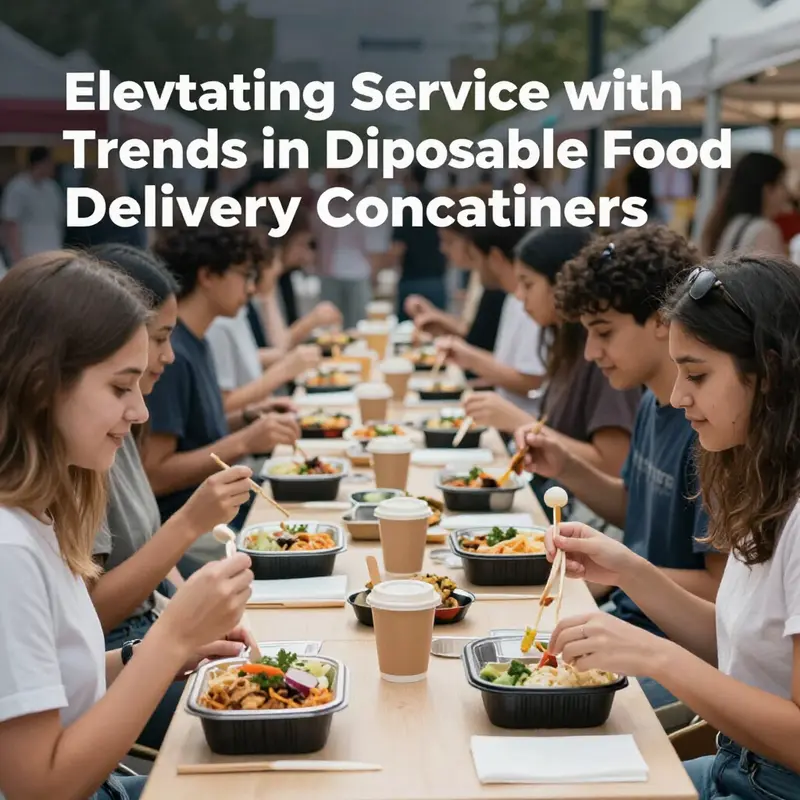
Consumers today evaluate delivery containers on more than cost and convenience. They weigh appearance, functionality, and the environmental story behind packaging. This shift has moved disposable food delivery containers from a purely logistical concern to a visible expression of values. The new marketplace rewards products that balance performance with sustainable credentials. Businesses that understand social dynamics gain an edge in adoption and loyalty.
Demand for greener materials is rising steadily. Traditional plastics remain common because they are cheap, lightweight, and reliable. Yet a growing segment of consumers looks for compostable molded fiber, recycled paperboard, and bio-based films. These materials appeal both to environmental sensibilities and to foodservice operators aiming to reduce waste footprints. Importantly, acceptance of greener options hinges on real-world performance. If an eco container fails a delivery, no amount of good intention saves customer satisfaction. So businesses must choose materials that deliver on heat retention, leak resistance, and presentation.
Social influence plays a surprisingly large role in adoption. People mimic peers’ eco choices in public contexts, especially when decisions are visible. When reusable boxes appear in community groups, or neighborhood cafés visibly brand compostable takeout boxes, others follow. This ripple effect accelerates change. Operators that partner with local influencers or highlight customer choices see higher adoption rates. The norm becomes visible when the packaging is part of the dining ritual—unboxing videos, photographed meals, or plated leftovers shared online. Packaging that photographs well and signals sustainability can therefore yield organic promotional value.
Willingness to pay matters, but the threshold is context-dependent. Some customers accept a modest premium for clear sustainability benefits on a single order. Frequent users, however, become more price-sensitive. Businesses can bridge the gap with tiered options: standard economy packaging for value meals, and premium eco-packaging for signature items. Subscription models and loyalty programs create opportunities to offset costs. For example, offering free eco upgrades to subscribers or points for choosing compostable containers turns a one-off expense into sustained behavior. Clear labeling of compostability, recyclability, and food safety helps customers rationalize paying a little more.
Functionality and aesthetics remain critical. An eco container must preserve temperature and texture, prevent leaks, and present food attractively. Innovations in material blends and design now deliver both technical performance and sustainable credentials. Molded fiber forms sturdy bowls and trays that survive delivery, while PLA-lined paperboard maintains moisture resistance for saucy dishes. Clear PET or recyclable PP lids retain product visibility for salads and desserts. The market is therefore moving toward hybrid solutions that mix visibility, barrier properties, and compostability where possible.
Operational realities shape business choices as well. Restaurants and cloud kitchens must balance storage space, supplier reliability, and staff training. Switching materials can change stackability, lid fit, and grease resistance. Packaging decisions cascade into other processes, including dish labeling, reheating instructions, and disposal guidance for customers. The most successful operators pilot new containers on limited menu items and collect feedback. This iterative approach prevents large-scale failures and helps suppliers scale production for consistent supply.
Local regulations accelerate change by setting baseline expectations. Regions with strict plastic bans or mandatory recycling targets nudge businesses toward compliant alternatives. Beyond legal pressure, municipal compost programs increase the value of compostable containers. When consumers can easily dispose of packaging correctly, acceptance rises. Equally important is transparency. Labels that explain whether an item is recyclable, compostable, or requires special handling reduce confusion. Clear instructions improve correct disposal rates and reinforce trust in sustainability claims.
Branding and storytelling matter as much as the material. Consumers often judge a brand by packaging choices. A container that communicates care, through a subtle logo, a printed disposal icon, or a brief sustainability message, enhances perceived value. Private label customization allows food businesses to embed branding on lids or sleeves. This visual cue signals investment in the customer experience and reinforces the brand’s environmental stance. Packaging that supports storytelling—ingredients, sourcing, or a carbon reduction claim—becomes a touchpoint in customer relationships.
The economic case for greener containers improves as supply chains mature. Large manufacturing hubs and automated lines reduce costs for high-volume buyers. Many suppliers now offer customization at scale, including portion dividers, leak-proof lids, and logo printing. Buyers who evaluate suppliers on more than price—looking at certifications, production capacity, and logistics reliability—avoid quality and delivery issues. Certifications from recognized bodies, combined with transparent material safety data, build buyer confidence and increase procurement speed.
Community-led solutions are an emerging trend. Shared-return systems and deposit incentives encourage reusable container use while reducing single-use waste. These systems work best in dense urban areas with repeat customers. They require operational coordination, robust cleaning processes, and clear customer incentives. Where feasible, hybrid models combine reusable containers for local pickup orders and certified compostable disposables for long-distance deliveries. This pragmatic approach balances waste reduction with practical constraints.
Finally, practical product selection matters for day-to-day success. Operators should choose containers that suit menu profiles and delivery distances. For crispy foods, vented designs preserve texture. For soups and sauces, reliably sealing lids prevent spills. Multi-compartment trays support mixed meals and portion control. And clear, well-fitting lids boost visual appeal and reduce returns. One example of a practical, eco-conscious option available to foodservice operators is the eco-friendly disposable three-compartment food-grade packaging box, which combines portion control and compostable materials for fast-food and delivery use. eco-friendly disposable 3-compartment food-grade packaging box
The social landscape around disposable food delivery containers will continue to evolve. Consumer values, regulatory frameworks, and supply chain capabilities interact to shape which options become mainstream. Businesses that design packaging strategies with social influence, performance, and clear disposal guidance in mind will find smoother transitions and stronger customer loyalty. For further market context and forecasts, see this detailed study: https://www.researchandmarkets.com/reports/687492/disposable-food-containers-market-export-forecasts-size-and-trends
Final thoughts
The exploration of disposable food delivery containers reveals their multifaceted role in our modern dining experiences. As innovation drives designs, and sustainability becomes imperative, the industry is primed for transformative growth. Understanding the economic implications and geopolitical factors enhances the decision-making processes for businesses committed to excellence. Furthermore, social acceptance underscores the importance of aligning with consumer expectations. By focusing on quality and responsibility in sourcing, businesses can not only enhance their service but also contribute positively to the environment.