
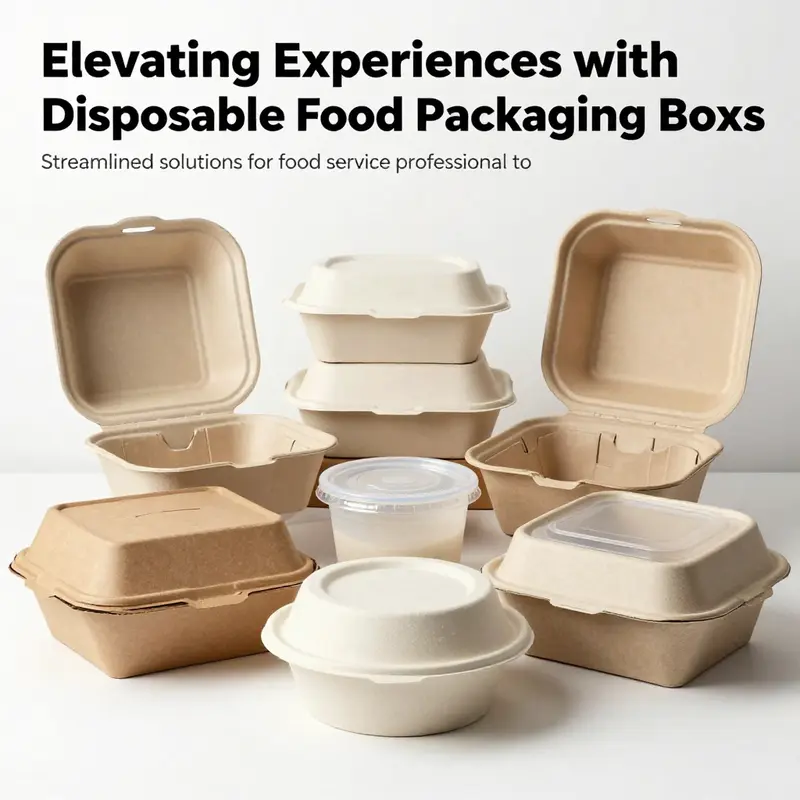
In the competitive food service industry, the choice of packaging can significantly impact customer satisfaction and operational efficiency. Disposable food packaging boxes serve as vital components for maintaining food quality and enhancing presentation during delivery and takeout. This article delves into the various styles of disposable packaging available, addressing their benefits, environmental concerns, and specialized applications. We will explore the role of paperboard food boxes, the advantages and drawbacks of plastic options, specialized packaging for fried foods, and the surge in eco-friendly alternatives. Each chapter offers insights tailored for bubble tea shops, restaurants, food trucks, event planners, and corporate procurement teams, ensuring you can make informed choices that align with your business goals.
Paperboard Food Boxes: The Sustainable Core of Disposable Food Packaging

In the quiet choreography of a takeaway night, paperboard food boxes perform the critical, often overlooked task of translating hot, fresh meals from kitchen to curbside with dignity. They are more than simple vessels; they are the interface between culinary intention and consumer experience. Paperboard boxes, particularly those built from heavyweight paperboard materials such as corrugated board or solid bleached sulfate (SBS) stock, are designed to endure the rigors of transport while preserving the food’s appeal. Their strength is not only in resisting pressure from stacked loads but also in their rigidity, which helps prevent crushing and leakage during handling. This dual role—protective and presentable—emerges from careful material selection and engineering, where thickness, weight, and stiffness are tuned to specific applications. When a sandwich sits in a box that remains flat, the consumer’s perception of quality often begins at that moment, long before the lid is opened. The box, in other words, carries a brand message before the first bite is taken, and it does so with a quiet efficiency that can be measured in both performance and perception.
At a technical level, paperboard boxes used in disposable packaging typically exhibit grammage well above 150 g/m² and thickness surpassing 300 μm. This combination supports structural integrity even when the box is burdened with heavy fillings or stacked for bulk transport. Yet the material is not rigidly symbolic of one single function. It can be engineered to resist moisture, oil, and grease—barrier properties that matter when packing salads with dressing, wraps with humid components, or hot meals that generate steam. The modern box often relies on surface coatings or barrier treatments that marry form and function. A moisture- and oil-resistant finish helps keep the interior dry and the exterior clean, extending the box’s usable life from the kitchen to the customer’s hands without compromising the experience of the meal inside. The engineering behind these features strikes a balance: it must safeguard the food, protect the packaging, and remain compatible with recycling streams or composting options where appropriate.
Sustainability sits at the heart of the paperboard narrative. In a world increasingly attentive to resource use and waste, paperboard derives strength from a lineage of responsible sourcing and end-of-life clarity. Many producers now emphasize FSC-certified craft paper and recycled content, aligning with broad environmental goals and regulatory frameworks in regions that impose Extended Producer Responsibility (EPR) obligations. In practice, this means that the paperboard box can be traced to responsibly managed forests or post-consumer fibers, reducing the environmental burden associated with single-use packaging. The adoption of such principles is not merely a compliance tactic; it is a strategic signal to a growing cohort of consumers who ask for transparency and accountability in every layer of a product’s journey. When a brand communicates that its boxes come from responsibly sourced materials, it embeds itself in a narrative of stewardship that resonates beyond the dinner table, influencing perceptions of the entire brand and its long-term commitments.
The environmental story of paperboard is complemented by the market’s growing appetite for customization and branding. Four-color offset printing, for instance, enables a box to carry vibrant, attention-grabbing graphics that reflect a café’s personality or a restaurant’s signature style. The visual language achievable on paperboard is versatile, inviting designs that can be playful for family-friendly meals or elegant for premium, dine-at-home experiences. This design flexibility is not merely about aesthetics; it is a strategic tool that helps the product stand out in a crowded marketplace. A well-branded box communicates care, quality, and consistency at a glance, reinforcing a consumer’s trust even before tasting the food. Innovations in this space have encouraged the development of features that go beyond striking visuals. Some paperboard configurations are designed with multi-compartment layouts or insulated sections to help maintain temperature during short delivery runs, addressing a common pain point in to-go service. In this way, the material and design work together to preserve both temperature and presentation, two factors that significantly influence the consumer’s overall impression of value.
From a supply chain perspective, paperboard boxes offer a practical blend of performance, cost-effectiveness, and environmental compatibility. Their production often leverages heavyweight stock that can be sourced from mills with transparent certifications, and the right combinations of pulp and coatings are chosen to align with the intended use—cold dishes, warm meals, or mixed assortments. This flexibility is crucial for operators who manage varied menus or fluctuating demand. A single box family can be configured to accommodate different portion sizes—ranging in sizes such as 26 oz, 45 oz, and approaching 96 oz—while preserving consistent handling characteristics and branding language. The modularity of design support is a practical advantage: operators can standardize packaging across multiple locations, streamlining procurement, reducing waste, and simplifying waste-stream separation at the consumer level when appropriate.
The decision to choose paperboard boxes is rarely about a single attribute. It is a holistic assessment that weighs barrier performance, printability, load-bearing capacity, and the potential for end-of-life recovery. The barrier properties can often be engineered through coatings that meet regulatory and sustainability criteria without sacrificing print quality or consumer appeal. When coatings are used, it is essential to consider how they affect recyclability or compostability. The best modern paperboard solutions separate cleanly from other materials in the recycling stream and, where possible, are compatible with organic waste streams for composting. Certifications such as BPI (Biodegradable Products Institute) and OK Compost (a certification indicating compostability) provide guidance for brands seeking compostable options. These marks help ensure that the product not only performs on the shelf and in transit but also follows a responsible path after use, aligning with the expectations of municipalities and waste-management programs that increasingly prioritize circularity.
The role of paperboard also intersects with regulatory landscapes that vary across regions. In Europe, for example, producers and retailers are navigating EPR laws that place responsibility for packaging waste on producers. This shift has elevated the importance of material choices, recycling compatibility, and the overall design for recyclability. Paperboard, with its relatively straightforward mechanical recycling profile and potential for recycled fiber content, sits well within many EPR frameworks. Yet the exact success of recycling depends on coatings, inks, and adhesives used in the final product. The packaging designer’s job thus extends beyond aesthetics and barrier properties to include the lifecycle considerations that shape regulatory compliance and public perception. The best designs anticipate these lifecycle concerns, enabling brands to pursue sustainable goals without compromising on performance or cost.
The practicalities of manufacturing and distribution further illuminate why paperboard remains a mainstay in disposable packaging. Paperboard boxes can be produced with a variety of internal configurations to meet different dietary needs and culinary styles. The ability to craft multi-compartment layouts or accommodate grease management through optimized wall constructions makes them suitable for a broad spectrum of foods, from salads and sandwiches to baked goods and snack assortments. The manipulation of grammage and thickness also supports a spectrum of use cases—from lightweight, grab-and-go meals to more robust, multi-portion deliveries. This versatility is a key reason operators around the world continue to rely on paperboard boxes as a dependable baseline in their packaging ecosystems. It allows them to balance the competing demands of performance, cost, and environmental responsibility while maintaining a coherent brand narrative across multiple touchpoints—from the kitchen bench to the consumer’s doorstep.
In practice, a business seeking tailored packaging solutions will explore how to align the technical properties with the operational realities of its menu and service model. The choice of paperboard stock is informed by the type of food, the expected duration of transport, and the degree of heat or moisture exposure the package will endure. The packaging designer may work with material suppliers to specify barrier coatings that do not compromise recyclability or compostability, keeping the box compatible with local waste management practices. This collaborative approach helps ensure that the packaging not only meets functional criteria—such as preventing sogginess, leakage, and blistering of hot contents—but also adheres to environmental standards that increasingly guide consumer trust and corporate reputation. When these boxes are used in bulk, their standardization across menus and service formats simplifies procurement and reduces waste through predictable performance. The result is a packaging system that feels invisible in its efficiency yet remains central to the consumer experience, shaping perceptions of freshness, safety, and reliability with every unsealing moment.
For readers thinking about the future of disposable packaging, paperboard boxes offer a compelling path forward, rooted in material science and shaped by consumer expectations. The ongoing evolution of barrier technologies, sustainable fibers, and transparent certifications suggests that the paperboard box will continue to adapt without losing the core attributes that make it a practical and trusted choice. In this sense, the box functions not as a disposable afterthought, but as a durable link in the chain from chef’s table to consumer table, carrying with it the values of quality, care, and responsibility that define contemporary food service. As manufacturers push the boundaries of design—balancing printability, barrier performance, and environmental compatibility—the paperboard option remains a resilient backbone for diverse food experiences. This resilience, combined with deliberate branding and lifecycle considerations, explains why paperboard boxes occupy such a central place in the taxonomy of disposable food packaging, and why they will likely endure even as new materials and strategies emerge to meet evolving needs.
External resource: For a technical overview of paperboard materials and their applications in packaging, see https://www.sciencedirect.com/topics/materials-science/paperboard
Clear, Convenient, Controversial: The Practical Edge and Environmental Reckoning of Plastic Food Boxes

Plastic food boxes have become quiet workhorses in the food service ecosystem. They are the familiar shells that carry the everyday rituals of takeout, delivery, and meal prep from kitchen to curb to table. In many menus, a box is more than a container; it is a promise of freshness, a guarantee of spill resistance, and a cue about the care that went into packaging the meal. This usefulness does not stand alone, however. It sits at a crossroads where the needs of operators and customers for reliability and speed meet the wider concerns about resource use, waste, and environmental impact. Understanding the advantages of plastic food boxes requires looking at the materials that underlie them, the functions they perform, and the conditions of modern consumption that reward convenience and presentation as much as safety and sanitation.
The most common plastic families used for disposable food boxes—polyethylene (PE, including LDPE and HDPE), polypropylene (PP), and polyethylene terephthalate (PET)—each bring distinct strengths to the table. PE is celebrated for its moisture resistance and flexibility. Its barrier properties help keep sauces from soaking into neighboring items and protect dry goods from ambient humidity during transit. PP offers impressive heat resistance, which is why many standing appetite for microwaveable containers rests on this polymer. The ability to heat a meal directly in its container is more than a convenience for the consumer; it reduces the need for extra dishware and simplifies the food journey, from kitchen to microwave to table. PET, meanwhile, is valued for its clarity. The transparency of PET allows the vibrant colors and textures of the food to show through, supporting an appetizing presentation that can influence choice and perceived quality.
Durability and light weight are not merely technical phrases; they translate into real advantages for both operators and customers. A sturdy plastic box withstands the bumps and vibrations of delivery routes, the occasional rough handoff, and the rigors of stacking in a crowded cabinet or a crowded backpack. For operators, this translates into reduced breakage risk, lower packaging losses, and the ability to offer a one-size-fits-many approach. For customers, the result is confidence in the safety and integrity of the food, minimal risk of leaks, and a clean, straightforward experience when opening the box. The cost advantage cannot be ignored either. Plastics have historically offered a cost per unit that fits the economics of high-volume food service, enabling affordable packaging for both small eateries and large chains. In many markets, the efficiency of production and the versatility of the raw materials keep prices competitive, which translates into more accessible takeout options for a broad range of consumers.
Yet the same trio of advantages also reveals a set of tensions that shape the ongoing debate about plastic in disposable packaging. The functional appeal—lightweight, sturdy, and adaptable—exists alongside sustainability questions that have intensified as awareness of environmental impacts grows. The production of conventional plastics typically relies on fossil fuels, tying their lifecycle to energy consumption and greenhouse gas emissions. Even when plastics are recycled, the process often downcycles the material: the polymer quality degrades with each loop, limiting the extent to which the same plastic can be reused in the same form. This reality challenges the notion of a endlessly circulating resource and underscores the distinction between recycling in theory and recycling in practice.
The environmental concerns extend beyond the end-of-life fate of these containers. Plastic in the environment persists for long periods, contributing to pollution and hazards to wildlife, particularly in marine ecosystems. The potential for plastics to shed microplastics raises questions about long-term exposure in environmental and health contexts. In situations where containers are exposed to heat, the risk of leaching certain additives or plasticizers into food has been a focus of regulatory and scientific scrutiny. While many food-contact plastics are designed to be safe within specified conditions, the broader concern remains that everyday exposure, especially under extreme or repeated heat stress, could pose health considerations that deserve careful attention.
In the discourse around plastic packaging, expert voices remind us that the situation is not simply a choice between convenience and catastrophe. Rather, it is a call to balance the proven benefits of plastic with a clear pathway toward reducing harms. For instance, environmental health scientists and researchers emphasize the importance of rigorous assessment of potential health risks and the value of clear labeling and safe-use guidelines. The discussion extends to the broader question of how society can reimagine packaging to maintain the benefits that plastic boxes offer while limiting their negative externalities.
Within this balance lies a spectrum of practical responses. Innovations in bioplastics—such as bio-based polymers and compostable formulations—seek to address end-of-life concerns by offering options that can break down under appropriate industrial conditions. These materials are not universally superior in every context, though; their performance in terms of barrier properties, heat resistance, and shelf stability must align with real-world use cases. Companies and researchers are actively exploring blends, coatings, and process innovations that can improve compostability without compromising food safety or performance during transit.
Recycling technologies also hold promise as components of a more sustainable plastic packaging system. Advances in mechanical and chemical recycling aim to recover materials more effectively and maintain polymer integrity across cycles. Such improvements could support higher recovery rates and better retention of material value, contributing to a more viable circular economy. Still, achieving this in practice requires robust infrastructure, clear consumer guidance, and standardized sorting streams to minimize contamination that undermines recycling efforts. In other words, the potential of plastic boxes to be part of a more sustainable loop is real, but turning that potential into consistent outcomes demands coordinated action from manufacturers, retailers, waste managers, and consumers alike.
Consumer behavior and industry practices also play pivotal roles. As awareness of environmental issues grows, customers increasingly seek packaging that aligns with their values—whether that means recyclable or compostable options, reduced overall packaging, or reuse programs. For operators, the challenge is converting that interest into credible choices at scale, balancing performance demands with sustainability goals and cost constraints. The shift toward sustainability often requires a portfolio approach: keeping the proven performance of traditional plastic where it matters most, while investing in greener alternatives for segments of the business where waste reduction and end-of-life stewardship are most feasible and impactful.
Policy frameworks can either accelerate or impede progress toward better packaging systems. When governments implement well-designed regulations and incentives, they create a clearer runway for manufacturers to invest in safer, more sustainable materials and production methods. Policies that encourage extended producer responsibility, support for recycling infrastructure, and clear labeling of recyclability and compostability can drive a more responsible market. In parallel, industry standards and certifications help buyers distinguish packaging options that truly meet environmental benchmarks from those that merely claim to be green. The landscape is complex, but the trend is toward systems that reward both functionality and accountability.
From a narrative perspective, plastic boxes embody a practical ingenuity that has shaped how meals travel from kitchen to consumer. They enable portion control, protect the appearance of food, and reduce the need for extra utensils or dishware that would otherwise accompany a meal. They also enable a seamless, user-friendly experience in the era of on-demand dining, where speed, reliability, and presentation can tip a decision in favor of a particular option. But the same containers raise legitimate questions about waste, resource use, and the broader trajectory of plastic pollution. The tension is not a knock on plastic itself, but a prompt to reimagine how packaging can be designed, produced, and disposed of in ways that honor both practical needs and planetary boundaries.
A deeper understanding of the plastic food box landscape reveals that the path forward is not a single silver bullet. Instead, it is a mosaic built from material science innovations, improved recycling and composting infrastructure, and smarter consumer and business choices. Bioplastics hold potential where composting facilities are accessible and standardized, while robust recycling streams may keep certain plastics in use longer and with less environmental leakage. Reusable packaging models, though logistically more complex, offer a compelling vision for reducing single-use waste in high-volume settings. The integration of these approaches depends on rigorous testing, transparent labeling, and a willingness to trade some convenience for greater environmental stewardship.
For those evaluating packaging strategies in practice, the questions often come down to three threads: Does the container meet the required performance in terms of moisture control, heat tolerance, and leak resistance? Is it sourced from materials that align with responsible production practices and can it be recovered or reused at meaningful rates? And finally, does the end-of-life pathway deliver a tangible route to reduce waste and recover value? These questions shape decisions across the supply chain, from product development and procurement to marketing and customer education. When answered with rigor, they lead to packaging choices that keep food safe and appealing without sacrificing the larger social and ecological commitments that communities increasingly expect.
In this evolving context, plastic food boxes are not merely passive vessels; they are active participants in a broader dialogue about sustainability, health, and the design of modern consumption. The challenge is to acknowledge the undeniable benefits they offer for everyday life while confronting the environmental realities they raise. The trajectory ahead will likely feature a blend of improved materials, smarter end-of-life solutions, and policy and consumer behavior shifts that together push the packaging ecosystem toward a more resilient, transparent, and responsible equilibrium. This is not a rejection of plastic but a maturation of how plastic is used and managed in a world where waste and resource stewardship are inseparable from quality food experiences.
As researchers and practitioners continue to map the complex trade-offs involved in plastic food boxes, one thing remains clear: the story of disposable packaging is ultimately about design decisions that optimize safety, practicality, and sustainability in tandem. The future likely resides in a diversified toolkit that includes high-performance plastics for certain applications, along with compostable or recyclable alternatives where feasible, all undergirded by robust recycling and composting systems. In that sense, the box is both a vehicle for nourishment and a lens through which we examine how society values waste, resource use, and the future of food packaging. For readers seeking a deeper dive into the safety and long-term effects of plastic food containers, authoritative public health perspectives offer a foundation for informed judgment and responsible action: https://www.hsph.harvard.edu.
Grease-Guarded and Brand-Driven: The Rise of Specialized Fried-Chicken Packaging Boxes

Specialized packaging for fried chicken and fast food has become a critical interface between performance and perception. As takeout and delivery scale, the box is not merely a carrier but a first impression, a miniature storefront that carries heat, grease, aroma, and the customer’s expectations. The challenge is not just to keep food fresh and intact during transit; it is to present it so that texture remains appealing, mess is minimized, and a brand story is conveyed from the moment the order is handed over. In this sense, fried-chicken and fast-food boxes have become a focused canvas for materials science, industrial design, and sustainability, all converging in a single use item that must perform like a durable container in the customer’s hands. The shift toward specialized packaging mirrors a broader shift in foodservice: efficiency in logistics, clarity of branding, and responsibility to the environment are core expectations embedded in every box that leaves a kitchen.
Material choice sits at the heart of this evolution. Kraft and recycled paperboard are popular for their natural aesthetics and perceived recyclability, delivering warmth alongside strength, cost, and environmental compatibility. Yet even within this category, performance demands are exacting. Frying oils and sauces require grease resistant coatings that prevent seepage while keeping the box structurally sound through handoffs and stacking. The coatings are engineered to resist oil and moisture without compromising safety or food contact standards. In parallel, multi layer constructions maximize rigidity and heat retention while maintaining a light footprint for shipping. The environmental conversation around these materials has become nuanced. Brands seek food-grade, biodegradable, and compostable options certified by bodies such as BPI and FSC, ensuring that performance and planet alignment go hand in hand. This is not merely compliance; it is a strategic decision that resonates with customers who want convenience without guilt and with regulators who demand safety and lifecycle accountability.
The design vocabulary has expanded in response to high-volume realities. Boxes vary from about 16 to 32 ounces, a range that fits wings, strips, and larger portions while matching delivery workflows. Beyond capacity, practicality matters. Many boxes feature grease resistant interiors, clearly sealed lids, and secure locking mechanisms to prevent leaks. Lids may include vents to manage steam, a small but meaningful detail that keeps food crisp and reduces condensation that could harm presentation. Stackability is critical; boxes are engineered to nest or stack securely under pressure, optimizing kitchen to curb transitions and reducing spill risk in transit. Outer surfaces serve as branding real estate; flexo printing enables vivid logos and color palettes to be applied at scale without sacrificing speed. The ability to customize packaging, from color to shape to logo, supports branding differentiation and a consistent customer experience.
The market is global, with high-volume hubs driving efficient production. In dense restaurant ecosystems, suppliers build capabilities to produce large volumes quickly, meeting the needs of chains that require fast replenishment and tight inventory control. Economics of scale lower per piece costs, enabling operators to bundle packaging with meal pricing. For brands moving large volumes daily, cheaper, high-performance packaging helps sustain growth while keeping packaging costs predictable. The emphasis on bulk production also drives innovations in process efficiency, print durability, and materials that minimize grease buildup on inner walls, preserving integrity from factory to doorstep.
Sustainability shapes both product development and procurement. A growing segment experiments with compostable and renewable materials such as sugarcane bagasse and molded pulp. These materials offer potential industrial compostability while meeting mechanical needs. Certification plays a central role in building trust with buyers, with safety and environmental credentials spanning multiple jurisdictions. This layered approach is about constructing a credible narrative of responsibility that resonates with diners who scrutinize where their food comes from and how it is packaged.
Safety and regulatory considerations underscore the packaging’s role beyond aesthetics and branding. Boxes intended for fried chicken must be certified for contact with food, free from contaminants, and compliant with safety norms in international markets. In practice, this means selecting packaging that meets standards across regimes, including food-contact safety and environmental compliance. Suppliers provide documentation detailing materials used, coatings applied, and testing protocols that demonstrate grease resistance, heat stability, and mechanical resilience. The emphasis is not just about avoiding penalties; it is about aligning with trust and responsible consumption.
Innovation in this space is tied to the needs of large operators. Customized packaging must deliver more than containment; it must convey the brand story, protect the product through the journey, and simplify logistics for store staff and riders. OEM/ODM services enable businesses to design packaging with specific colors, shapes, inner coatings, and manufacturing tolerances. Customization, paired with rigorous quality control, yields packaging that harmonizes dining experience with the customer’s moment of expectation when the box is opened.
From an operational standpoint, daily production capacities for leading suppliers reach millions of units, reflecting the logistics backbone required by the fast food industry. This scale ensures quick turnaround times, consistent quality, and dependable supply during peak periods. For buyers, the implication is reduced risk of stockouts and smoother scaling of menu offerings. The packaging becomes a strategic asset, tied to a brand’s promise of a reliable, enjoyable, and responsible dining experience.
A final dimension concerns the consumer experience. The packaging should feel effortless for a hungry customer who expects warmth and convenience. The tactile feel, clean branding lines, and the box’s ability to keep contents intact fuse into a perception of quality that customers carry beyond the bite. It is no longer just what is inside the box that matters; it is what the box communicates about the brand’s standards and sustainability commitments. In this light, specialized fried-chicken and fast-food disposable packaging boxes become instruments of trust, efficiency, and storytelling—bridging kitchen pace with the customer’s dining moment.
For businesses pursuing scale, the practical considerations extend to sourcing, lead times, and supply chain resilience. In high-demand segments, suppliers emphasize reliable throughput, consistent quality, and transparent pricing. The economics of bulk procurement empower operators to invest in branding while meeting service levels that keep customers returning. Although numbers vary by region, the underlying message is consistent: large orders yield unit-cost advantages, enabling brands to expand without sacrificing performance, protecting food integrity and customer satisfaction. The packaging thus becomes a strategic asset closely tied to a brand’s promise of a reliable and responsible dining experience.
External resource: for a comprehensive view of bulk fried-chicken packaging options and supplier listings, see the external resource at https://www.made-in-china.com/products/879477201022000. This resource reflects scale, customization capabilities, and certification scope that underpin modern specialized packaging solutions for fried chicken and fast food, illustrating how market insights translate into tangible products that power today’s takeaway economy.
Sustainable by Design: Rethinking Eco-Friendly Disposable Packaging Boxes
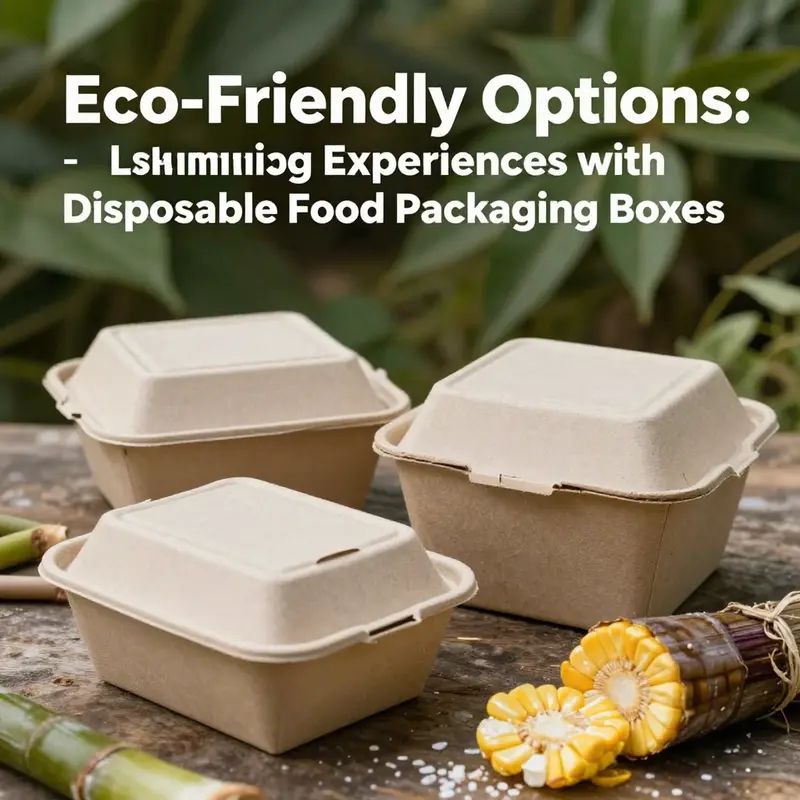
Designing eco-friendly disposable packaging starts with a clear purpose: perform in foodservice while minimizing environmental impact. By selecting materials like certified Kraft paper, bagasse, and plant-based bioplastics, packaging can deliver strength, moisture resistance, and consumer appeal without compromising end-of-life options. Extended producer responsibility and clear labeling guide better waste sorting and increase recycling and composting rates. This chapter explores material options, performance metrics, and market realities that shape decisions from kitchen to curbside.
In practice, successful sustainable boxes balance renewability with practicality. Recycled-content paperboard, responsibly sourced fibers, and compostable liners can meet the demands of hot and cold foods, multi-component meals, and fast throughput, while certifications such as FSC or OK Compost provide credible assurance to operators and customers. End-of-life considerations, from recycling infrastructure to consumer disposal behavior, determine the true environmental benefit and drive continuous improvement across the supply chain.
Final thoughts
Disposable food packaging boxes play a crucial role in the food service industry, significantly impacting customer satisfaction and operational efficiency. Whether opting for versatile paperboard, durable plastic, specialized fast food containers, or sustainable options, it’s important to choose packaging that maintains food integrity and aligns with your business’s values. As environmental concerns increase, embracing eco-friendly alternatives not only meets consumer demand but also enhances your brand’s reputation. Make informed choices that elevate your food service experience, attract customers, and contribute to a broader commitment to sustainability.