
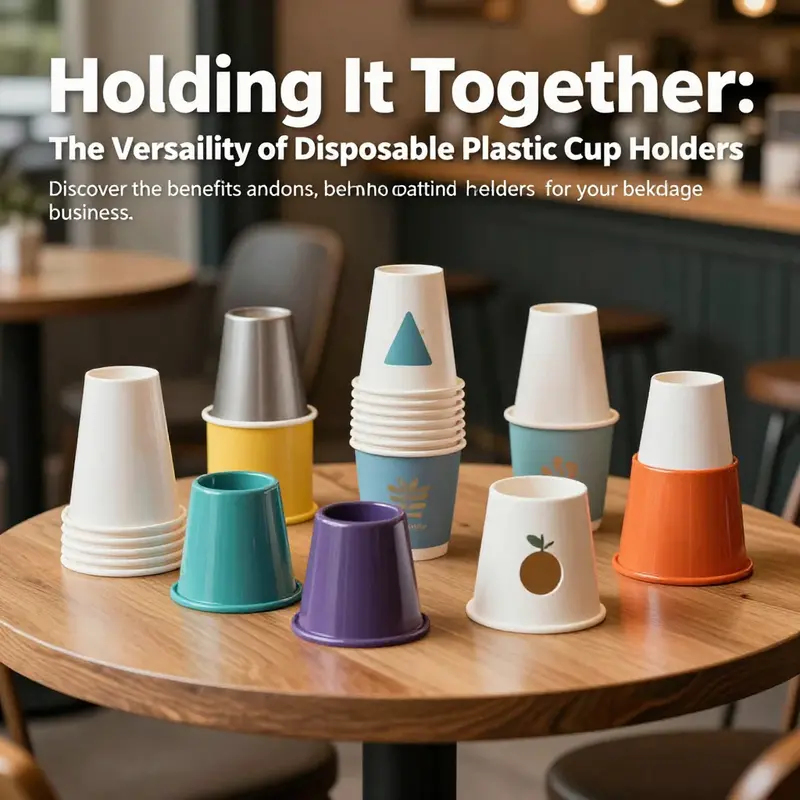
Disposable plastic cup holders have emerged as a sophisticated solution for businesses catering to hot beverages, particularly in sectors like bubble tea shops, food trucks, and catering services. In any bustling environment where efficiency meets demand for quality, these holders serve not just as protective gear against heat but also play a pivotal role in enhancing customer experience. Each chapter of this article will delve into critical aspects such as the environmental impacts, economic benefits, technological advancements, societal influences, and branding opportunities associated with these versatile products, arming you with insights to make informed choices for your business.
Holding Heat, Not the Planet: The Hidden Footprint of Disposable Plastic Cup Holders
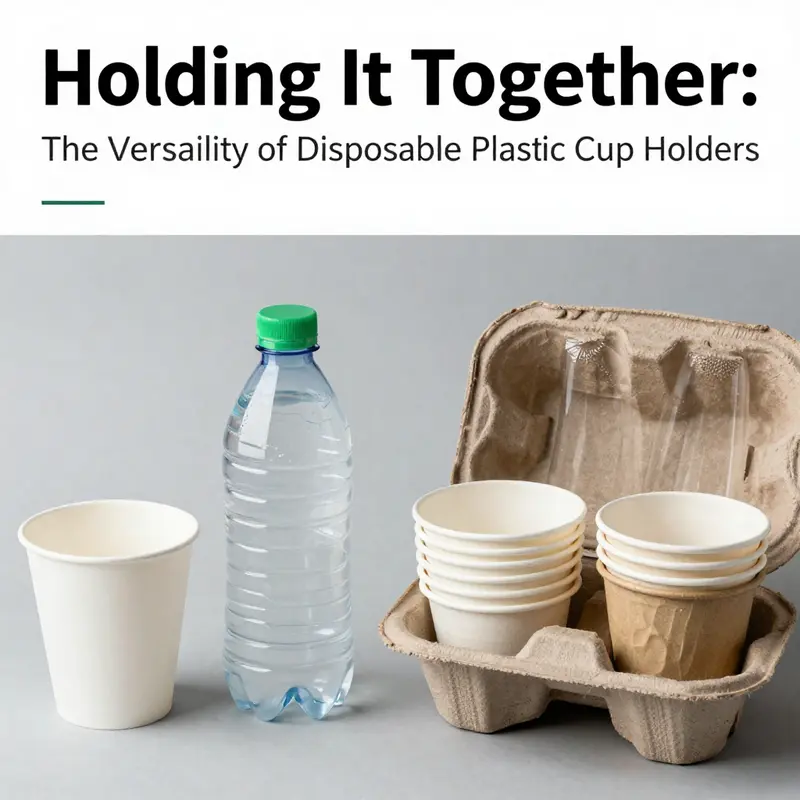
The everyday act of pouring a hot drink into a paper or plastic cup often comes with an invisible aftertaste—the environmental footprint of the tools we use to handle it. A disposable plastic cup holder, small in scale and simple in form, is designed to protect hands from heat, stabilize a cup during transit, and offer a surface that can carry a brand’s mark. Yet like many single-use items, it carries consequences that extend far beyond a single shift or an individual event. The chapter that follows treats the holder not as a trivial accessory but as a piece in a larger system where heat, habit, and waste intersect. It asks readers to consider whether convenience today might be shaping the planet’s costs tomorrow, and if there are ways to honor both customer experience and ecological limits without sacrificing the practical benefits that holders historically provided.
Disposable cup holders are typically fashioned from PET or PS, plastics derived from non-renewable feedstocks. The choice of material matters beyond the immediate utility; it maps onto a lifecycle that begins with extraction and production, travels through manufacture, packaging, and distribution, and ends with disposal, recycling, or landfill. In the lifecycle, heat resistance, water resistance, and durability are the selling points. A holder’s ability to withstand repeated handling and its potential for branding through high-quality printing make it appealing to cafes, catering operations, and event organizers that value a polished image. But as the literature on single-use packaging makes clear, durability in use does not automatically translate into environmental virtue if the end-of-life story is poor or non-existent. The production phase alone, for instance, can contribute a sizable carbon footprint. When one ton of PET is manufactured, estimates suggest that approximately 3.7 tons of CO₂ equivalent are released into the atmosphere. Add the energy costs of transportation and the complexities of end-of-life processing, and the footprint grows more complex still. These numbers are not just abstract figures; they translate into real-world trade-offs that businesses must weigh when deciding whether to deploy disposable holders for high-volume operations or to explore alternatives that might offer comparable comfort and grip with a smaller environmental price tag.
The environmental concerns around cup holders are deeply entwined with the broader plastic pollution crisis. The United Nations Environment Programme has tracked a troubling flow of plastic waste into oceans each year, with estimates that exceed eight million metric tons. Even seemingly small items—like a cup holder discarded after a single use—contribute to a cumulative stream of debris that can persist for centuries in the environment, ultimately fragmenting into microplastics that infiltrate soils, waterways, and even food webs. The consequences for marine life are immediate and stark. Tiny plastic fragments are mistaken for food by a range of organisms, from plankton to seabirds to larger predators, with the potential for injury and even death, depending on the size, shape, and chemical composition of the particles involved. The threat is not limited to beaches and oceans; microplastics can be transported inland by wind and water, entering agricultural soils and freshwater systems where they may interact with soil microbiota, plants, and terrestrial fauna. The ecosystem-level costs are diffuse and long-term, making the decision to rely on disposables a public-interest issue that extends beyond any single business.
Within this framework, the carbon footprint of production and logistics deserves closer attention. PET and PS rely on fossil fuel inputs, and their manufacture consumes energy, sometimes sourced from facilities powered by fossil fuels. When a business considers ordering hundreds of thousands of holders for a busy season, the aggregated emissions become a material consideration. The life-cycle argument becomes more nuanced when a company pairs disposables with aggressive branding, where the same items may be used across multiple events or venues during a given period. In such cases, the per-item cost may seem lower, while the per-event environmental cost remains substantial. This tension between cost efficiency and environmental accountability is not merely a theoretical dilemma; it shapes decisions in supply chains, venue partnerships, and marketing strategies.
A crucial counterpoint often highlighted in sustainability discussions is the role of reusables. When designers or operators compare disposable holders with reusable options—whether made from silicone, silicone-coated fabric, or other durable materials—the life cycle requires careful accounting. Reusables typically exhibit lower environmental impact over multiple uses, provided they are used frequently enough and returned for proper cleaning and maintenance. The math changes depending on wash costs, energy use, and the durability of the given reusable. In a bakery that serves hundreds of customers daily, for instance, a tempered judgment about when to switch from single-use holders to a reusable alternative could hinge on a robust life-cycle assessment. If a reusables-first strategy reduces waste and energy per serving, it becomes a compelling business case, particularly for brands seeking a lower-profile environmental stance or aiming to align with consumer expectations for responsible packaging.
Design and practicality intersect in meaningful ways here. Disposable holders are often foldable or compact, designed to nest within one another for easy storage in crowded service spaces. This portability adds value for mobile operations—food trucks, pop-up events, or portable coffee stalls—where space is at a premium and the ability to manage a clean, efficient workflow matters. Branding is another area where holders shine. The surface of a properly finished holder can carry a high-quality logo or message without compromising readability, offering a branding opportunity that is both practical and promotional. However, that same branding feature subtly reinforces a disposable mindset: a visible logo on a single-use item signals an expectation that the item will be used and discarded, reinforcing a cycle of use-and-lose rather than reuse. The cultural dimension is not a small footnote; it frames how customers, staff, and suppliers perceive the value of permanence versus impermanence in packaging ecosystems.
As businesses navigate the path forward, several practical considerations emerge. First, there is the cost calculus. While disposables may have a higher upfront price than traditional cardboard sleeves, the perceived durability, branding potential, and suitability for high-volume, fast-paced environments can yield unit economics that look attractive on a per-event or per-shift basis. Yet the environmental costs, when added to the business’s broader sustainability commitments, require clear, transparent accounting and communication. This is not solely about compliance or green marketing; it is about aligning operational choices with a company’s stated values and with evolving consumer expectations. Second, end-of-life management matters. A system that encourages a circular approach—one that designates clear recycling streams, or that channels holders toward reuse or repurposing where feasible—can mitigate some environmental harms. Without such systems, even the most well-intentioned products risk ending up in landfills or informal disposal pathways that bypass proper recycling channels.
In markets seeking balance, suppliers and operators increasingly search for alternatives that reduce environmental harm while preserving the benefits of grip, heat protection, and branding. It is here that a practical, actionable counteroffer emerges: embrace the potential of lightweight, more easily recyclable materials; reduce the use of mixed materials that complicate recycling; and ensure that design supports end-of-life stewardship. For some operators, a hybrid approach may be most effective—using disposables during peak hours or at large events, and switching to durable reusables during longer service periods or in venues with established take-back programs. The aim is not to demonize disposables in all circumstances but to curate packaging choices that reflect a conscious assessment of heat management needs, customer experience, and environmental responsibilities.
One notable way to bridge the gap between convenience and environmental stewardship is to explore sleeve alternatives that reduce plastic use while preserving grip and heat protection. A sleeve option that is lightweight, easy to store, and compatible with a variety of cup sizes can be part of a broader strategy to minimize material waste. To illustrate how such an alternative can be positioned within a broader packaging approach, consider a simple, generic sleeve option described in a practical resource that highlights the value of rack-and-stack robust sleeves without glamorizing disposability. The focus remains on reducing the reliance on plastic while maintaining function and branding potential. You can explore a representative example here 50pcs-brown-coffee-cup-sleeves-kraft-corrugated-paper-heat-insulation-cardboard-holder-disposable-cup-cover.
The conversation about disposable cup holders also intersects with the broader cultural and policy landscapes. Public policies increasingly encourage reductions in single-use plastics, including items used in food service settings. Businesses that proactively reframe their packaging choices—prioritizing reuse, investing in end-of-life stewardship, and communicating clearly with customers about why certain materials are selected—are better positioned to adapt to evolving expectations and potential regulatory shifts. In addition, consumer education can play a critical role. When customers understand the lifecycle costs of disposables and the practical benefits of reusables, they may support a gradual transition that respects both experience and the environment. The shift requires clarity, transparency, and a willingness to experiment with new approaches to service and presentation, without sacrificing the quality of the customer experience.
Ultimately, the choice of whether to use disposable cup holders, the type of material chosen, and how the item is managed at the end of its life all contribute to a larger, interconnected system. The heat-protective function remains valuable, especially in high-volume or mobile settings, but the environmental costs call for a more integrated approach. The path forward invites designers, operators, and policymakers to collaborate on packaging that protects hands and enhances branding while reducing material use, improving recyclability, and supporting reuse where feasible. It is a collaborative, ongoing process that asks organizations to align operational realities with ecological responsibilities, to reframe the idea of convenience as something that can coexist with care for the planet.
External reading provides a broader lens on these challenges. For a comprehensive understanding of the environmental consequences of plastic packaging, including disposable cups and holders, refer to the United Nations Environment Programme’s Global Plastic Pollution Crisis: https://www.unep.org/resources/report/global-plastic-pollution-crisis
The Quiet Economics of Cup Holders: How Disposable Plastic Cup Holders Shape Profit, Efficiency, and Brand at Scale
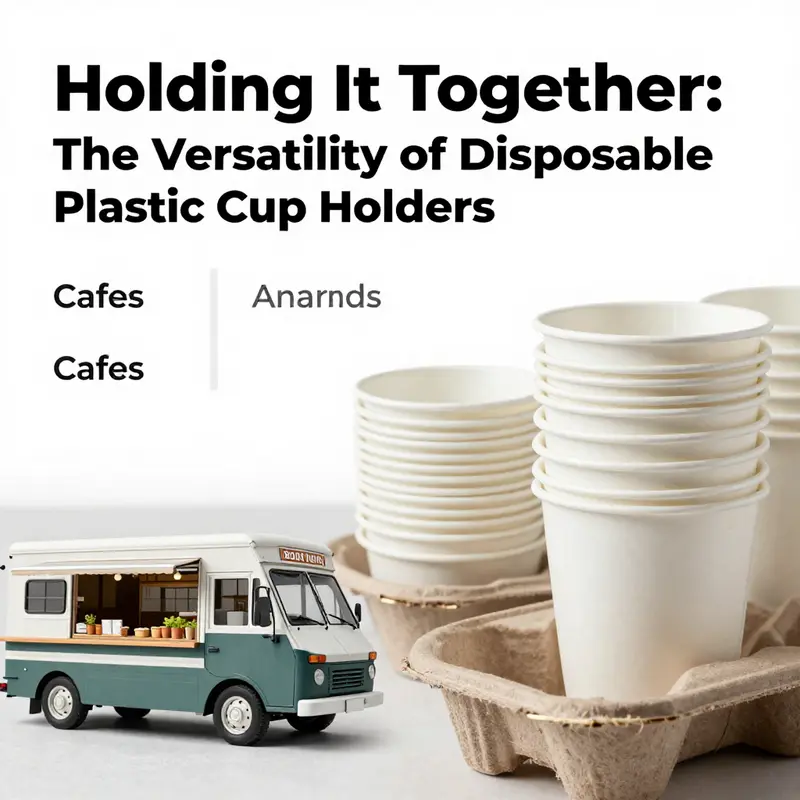
The discussion around disposable plastic cup holders often centers on convenience, heat protection, and branding potential. Yet for operators in high-velocity service environments, the real value rests in a subtler calculus: how these holders can influence cost, throughput, customer perception, and long-term profitability. In contexts where cups travel from a barista’s station to a customer’s table, a holder does more than warm hands or reinforce a logo. It becomes a small, repeatable lever that can tilt the economics of an entire shift or event. While the research landscape has focused more on cups themselves—heat resistance, recyclability, and the trade-offs between single-use and reusable options—the economic implications of holders deserve careful consideration because they touch almost every line item in the P&L, from materials costs to labor, waste handling, and marketing impact.
First, there is the fundamental math of cost per unit. A disposable plastic cup holder typically costs more upfront than a cardboard sleeve. Yet the unit price is only one dimension of value. A durable, foldable, heat-resistant holder reduces the risk of slips and burns, which translates into fewer minor injuries or spills that require staff time to manage and customers to report. In busy service moments, even a small reduction in spill rate can accumulate into meaningful savings over dozens or hundreds of transactions. Moreover, the resilience of plastic in heat and moisture means fewer breakages during transport and handling, which lowers both replacement costs and waste from damaged cups. In other words, the initial sticker price may be higher, but the downstream savings on replacements and incident-related losses can narrow the gap with cardboard sleeves, especially in high-volume settings where the volume simply amortizes the cost more quickly.
There is also a storage and logistics angle that often gets overlooked. Cup holders are typically foldable, compact, and easy to stack. In a fast-paced cafe, food truck, or event environment, space is a scarce resource—every inch of storage translates into a smoother service line and quicker setup. A system that reduces bulk and enables quick deployment across shift changes or event phases can shave minutes off each cycle. Those minutes, multiplied by dozens of staff during peak periods, convert into tangible gains in throughput. And when a business runs multiple shifts across a day or operates at large events, the cumulative effect compounds: faster service, happier customers, and the potential to serve more cups without hiring additional staff. Efficiency, in this sense, is not just about speed; it is about predictable, repeatable performance across the entire operation.
Branding is another lane where the economics become clearer with scale. A well-designed cup holder offers a broader canvas for logos, colors, and messaging than a sleeve can usually provide. Because the holder remains in contact with the cup throughout service, it acts as a floating advertisement that travels with the customer from the counter to the table—or, in a takeout scenario, from the storefront to the car or event space. The value here extends beyond mere visibility. Well-executed branding on a durable plastic holder can reinforce a premium perception, support impulse purchases, and contribute to repeat visits when customers associate the holder with a positive experience. For operations that count every impression, the incremental marketing value sits alongside the functional benefits, creating a blended return that can improve the cost-to-brand ratio over time. For businesses that maintain a consistent event calendar or operate across multiple venues, a uniform, high-quality holder can become a recognizable symbol of reliability, reinforcing brand equity without additional ad spend.
From an operations standpoint, the holder’s impact on workflow deserves emphasis. Handling a hot beverage often requires a secure grip and a stable lid fit. A purpose-built holder can improve grip security, reducing the likelihood of accidental spills during bagging, transport, or customer pickup. That stability matters not only for the customer experience but for the staff’s daily routine; fewer spill-related interruptions mean more predictable service rhythms and less time spent on damage control. In turn, that steadiness supports wage efficiency—less time lost to cleanup, fewer restocking disruptions, and a smoother handoff from the barista to the customer. In markets where speed is a defining competitive edge, even small gains in measured throughput can translate into higher volume capacity and better utilization of equipment and space.
Yet the economic narrative cannot ignore environmental considerations. The chapter’s core tension remains: disposable plastic cup holders, by design, introduce additional plastic waste unless they are reused or recycled effectively. The broader analysis acknowledges that these holders typically sit within a spectrum that includes traditional sleeves, biodegradable or compostable alternatives, and reusable configurations. In high-volume environments, operators may choose to emphasize durability and reuse as a means to balance economic benefits with sustainability commitments. For example, certain operations adopt a policy of cleaning and sanitizing holders for reuse across events or shifts, turning a disposable item into a semi-reusable tool for a defined period. When such reuse programs are paired with robust cleaning protocols, the economic argument strengthens: the initial cost is diluted by multiple uses, and the environmental footprint per event declines as long as the recycling and waste management practices align with local regulations and customer expectations.
There is also room to consider the life-cycle costs in a broader sustainability frame. Even when always used once, a holder can contribute to waste management costs, energy usage in production, and end-of-life disposal. Businesses wrestle with these factors as part of a larger corporate responsibility strategy. The practical takeaway is that a more durable, heat-resistant holder can be paired with clear disposal guidance, recycling streams, and even a commitment to using recyclable or recyclable-grade plastics where feasible. When management communicates a practical plan for end-of-life handling, customers perceive a brand that takes responsibility seriously, which has its own, though harder-to-measure, economic payoff in terms of customer loyalty and market differentiation.
The procurement channel plays a nontrivial role in the economic equation. In bulk purchasing scenarios, suppliers often offer customization options—logo printing, color alignment, and even fold-patterns that optimize packing density and shipping costs. The more volume a business processes, the more leverage it gains in negotiating favorable per-unit prices and design allowances. In practice, a restaurant, coffee chain, festival organizer, or catering outfit can convert branding investments into measurable returns when the printed holder elevates the perceived value of the cup and reduces the need for additional branding collateral. Custom designs may carry a one-time fabrication cost, but the per-unit impact on visibility and perceived quality scales with volume, eroding the difference between traditional sleeves and plastic holders over time.
The discussion would be incomplete without acknowledging that the research landscape has offered limited direct data on the economics of cup holders themselves. The available material tends to focus on cups, disposal methods, and comparisons between reusable and biodegradable options. Despite the absence of precise economic metrics for holders, the logic of cost efficiency, throughput improvement, and branding impact remains compelling for operations that evaluate total cost of ownership rather than upfront price alone. The key is to model the holder’s value within a given operation: estimate the reduction in spill costs, the marginal uplift in speed of service, the incremental revenue from enhanced brand exposure, and the additional waste-management considerations. When run as a scenario analysis, even modest improvements in each dimension can yield a meaningful ROI, particularly for venues with high transaction volumes and a steady cadence of repeat customers.
For operators exploring this space, there is a practical way to connect the dots between theory and implementation. Treat the holder as a platform for efficiency and identity, not just a heat shield. Start with a small, controlled rollout—one or two outlets or events—then track concrete metrics: spill incident rates, average handling time, customer satisfaction signals, and any shifts in cart or table turnover. Pair those metrics with a branding assessment: does the visible logo translate into stronger brand recall in post-visit surveys or social media mentions? If the results point toward tangible gains, scale the program with a standardized procurement process, clear reuse and cleaning guidelines where applicable, and a sustainability plan that communicates to customers how the organization minimizes waste without compromising service speed or safety.
On the topic of practical sourcing and design considerations, the conversation should recognize that customization options can affect both aesthetics and cost. In broad terms, a well-designed holder should be easy to print on, resistant to heat and moisture, and compact enough to fit into existing packaging and display systems. The goal is to minimize friction in both the front-of-house workflow and the supply chain. A durable holder that folds neatly and stacks without deformation reduces shipping weight and space, which, in turn, trims logistics costs over time. When combined with a credible branding approach, the holder becomes a multiplier for a restaurant or event brand, quietly reinforcing identity as it travels through every interaction—an asset that can quietly strengthen the economics of a busy operation. For context on how related disposables fit into end-to-end service, see the broader range of disposable items that accompany beverages and takeout experiences, including the range of disposable cups themselves. disposable clear plastic cups.
In sum, the economics of disposable plastic cup holders hinge on a balance between upfront cost and downstream gains. When adopted with a thoughtful lens—one that weighs durability, reusability, branding impact, service efficiency, and responsible waste practices—the holder can become a strategic asset. It is not a silver bullet, nor a universally superior choice to all sleeve or cup configurations. But in environments where speed, reliability, and consistent branding matter across dozens or hundreds of events, a well-designed, properly deployed holder can contribute to a healthier bottom line while supporting a customer experience that feels polished and deliberate. The value, then, lies not in an isolated feature but in how a simple accessory integrates with operations, branding, and sustainability ambitions to deliver measurable gains over time.
From Heat Shields to Smart Lifecycles: Innovations Shaping Disposable Plastic Cup Holder Production
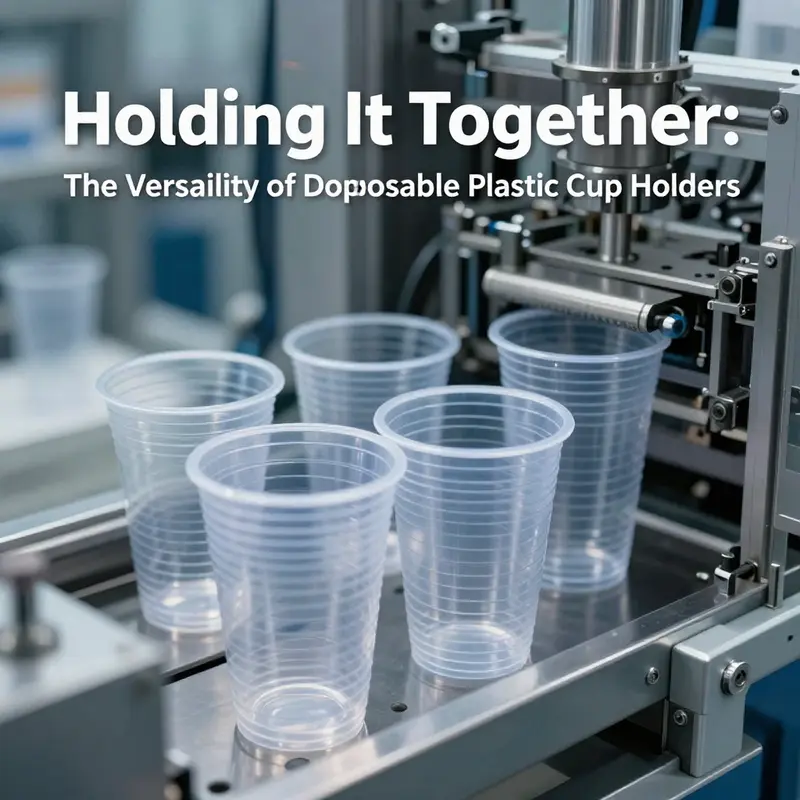
The disposable plastic cup holder has long lived at the intersection of practicality and portability, a small tool designed to protect hands, preserve beverage quality, and support the distinctive personalities of brands. When viewed through the lens of production, this accessory reveals a surprisingly dynamic field where efficiency, sustainability, and user experience converge. The chapter that follows threads together the technological advances reshaping how these holders are conceived, manufactured, and deployed across cafes, caterers, and event services. It is a narrative that moves beyond the surface of heat resistance and grip, toward a future where every holder carries data, materials that sit lighter on the environment, and forms that enhance the act of service itself. In this light, the growth of the disposable cup holder is not merely a response to heat or branding; it is a case study in how modern manufacturing seeks to harmonize performance with responsibility while maintaining cost discipline in high-velocity settings. These currents, drawn from the latest research and industry practice, illuminate why innovations now cluster around three core areas: smart technology integration, material evolution, and process-driven design. They also reveal how design choices subtly reshape operations, inventory planning, and customer perception, making the cup holder a more integral piece of the service ecosystem than its modest size would suggest. Each development stands as a bridge between the immediate needs of a barista’s hand and the longer arc of circular economy thinking that many manufacturers are beginning to embrace.
Smart technology integration marks one of the most transformative shifts in production. The concept of embedding sensors and microchips directly into cup holders moves from novelty to feasible standard in markets where data-driven decision making governs quality control, waste management, and lifecycle stewardship. These smart holders can log usage patterns, measure environmental exposure, and signal recycling status. In practice, data generated from millions of uses can map heat exposure ranges, detect micro-damages before they become failures, and even help distributors track returns or recycling flows in a circular economy framework. For manufacturers, this means more reliable forecasting, better maintenance of semi-automatic lines, and clearer insights into when to batch-supply certain sizes or finishes to meet shifting demand. For operators, it translates into a tangible assurance that the product performs consistently across shifts and outlets, reinforcing safety margins while supporting branding that resonates with eco-conscious guests. Such technology also opens possibilities for connected fleets of devices that coordinate on a regional or national scale, simplifying logistics and enabling suppliers to tune production in near real time to seasonal or event-driven needs. The potential benefits extend beyond uptime and efficiency; they touch on how a business communicates its values. When a cup holder can indicate whether it is ready for recycling or requires special handling at end of life, it signals a commitment to responsible waste streams that resonates with guests who increasingly consider cradle-to-cradle practices as part of their purchase decisions. This integration of digital awareness into a simple accessory is a quiet revolution, one that aligns with broader shifts toward transparency and traceability in consumer packaging. The research cited in contemporary industry reports highlights how such embedded technologies are gaining traction, driven by the demand for enhanced lifecycle data and smarter waste management systems. For practitioners, the challenge lies in balancing the added cost and complexity of sensors with the practical realities of high-volume production, where reliability must be assured and returns must be minimized. Yet the trajectory is clear: smart cup holders, once experimental, are becoming a meaningful lever for efficiency, sustainability, and branding. They convert a disposable item into a data-enabled component of a company’s operational footprint, a shift that in turn feeds more informed decisions about design, materials, and end-of-life strategies.
Material choices in cup holder production are also undergoing a thoughtful recalibration. The emergence of biodegradable and compostable plastics, derived from renewable resources such as cornstarch or sugarcane, promises to soften the environmental footprint of an item designed for single use. These materials strive to preserve essential performance characteristics—durability, heat resistance, and structural integrity—while offering a more favorable end-of-life path than traditional petroleum-based polymers. The push toward renewables does not erase challenges; it reframes them. Temperature stability, mechanical strength, and long-term behavior under repeated heat exposure remain critical criteria for any holder intended for hot beverages. In high-volume environments such as busy cafes or mobile catering, the choice of material also intersects with cost, supply chain resilience, and shelf life. Biodegradable and compostable options require appropriate disposal infrastructure to realize their environmental benefits, a factor that varies by region and facility capabilities. In places with robust composting networks, these materials can significantly reduce landfill burdens when paired with clear labeling and staff training on waste sorting. In other contexts, the benefits may be more modest if composting remains inaccessible. Still, the trend toward renewable-based polymers reflects a broader consumer appetite for responsible packaging and a willingness among brands to invest in materials that can align with this ethos over time. The literature accompanying this shift emphasizes not only end-of-life advantages but also performance parity; the latest formulations have demonstrated heat resistance and stability that meet or closely approach those of conventional plastics. The challenge for manufacturers is to maintain that performance while delivering cost efficiencies. Widespread adoption will likely hinge on scalable supply chains, predictable pricing, and the development of standards that help buyers compare options with confidence. This is where ongoing collaboration among material suppliers, equipment manufacturers, and brand owners becomes essential. In the chapters to come, readers will see how such collaborations translate into practical outcomes—from smoother molding cycles to more consistent surface finishes that carry brand logos more crisply, even at small batch quantities.
A third axis of production evolution centers on improvements to the manufacturing process itself. Semi-automated cup-making machines, which blend human input with automated heating, sealing, and cutting steps, have emerged as a pragmatic path for small and mid-sized operations. These hybrid systems increase throughput while preserving flexibility, enabling local suppliers to maintain quality without the capital intensity of fully automated lines. The impact is multifold: faster turnarounds for custom orders, tighter tolerances for ergonomic features, and more uniform wall thickness that reduces the risk of burns or heat transfer to the fingers. This accessibility matters in settings where demand can surge during events or peak service periods. The efficiency gains also support customization at scale. With semi-automation, a producer can experiment with different grip textures, ribbed surfaces, or color profiles without incurring prohibitive setup costs. The ability to change molds, adjust heat levels, and tweak cutting sequences becomes more practical, encouraging brands to explore designs that better align with user needs and brand personalities. The upshot is a democratization of production capabilities: more shops can offer bespoke or limited-run holders, expanding the market beyond a few large manufacturers and enabling more rapid response to local preferences or event-specific branding. While automation promises speed and repeatability, it also invites attention to labor in the value chain. Workers in hybrid facilities often assume roles that leverage their judgment and dexterity, overseeing quality checks, ensuring that sensors are correctly embedded, and validating the integrity of finished pieces before packaging. This balance between machine precision and human oversight tends to yield more consistent results and fewer defects, a crucial factor when forming consumer impressions around brand quality.
Design innovations are equally central to the modern cup holder story. Beyond simple heat protection, designers now consider ergonomic grip, stacking efficiency, and the tactile experience of holding a hot cup. Customizable features—ranging from color schemes and branding elements to ergonomic contours and integrated grip textures—allow businesses to create a cohesive identity across their on-site packaging. Advanced printing techniques and mold precision enable high-quality finishes, even in small-batch runs. The interplay between design and branding can extend into the functional realm as well: some holders incorporate micro-text or subtle branding motifs that become recognizable cues across venues, reinforcing memory and preference long after the beverage is gone. These design choices also influence the logistical side of production. Ergonomic and stackable shapes can reduce packaging space, lowering storage and transport costs. In a world where brands increasingly view packaging as a translator of their values, a well-designed holder can communicate care for user comfort and respect for the environment while still delivering a reliable heat shield. The result is a product that is not merely a disposable accessory but a portable element of a brand’s storytelling toolkit. The push toward customization is powered by advances in printing and molding technologies that ensure consistent results across runs, whether the order is a single batch for a local event or a larger run for a chain with regional variations. It is this convergence of form and function that makes cup holder design a telling indicator of a company’s willingness to invest in user experience and long-term relationship building with customers. The chapter’s exploration of these threads—smart sensing, renewable materials, and adaptable manufacturing—reveals a production ecosystem that is no longer about isolated parts but about an integrated pipeline capable of delivering safer, greener, and more expressive products.
In considering how these innovations influence the broader landscape, it is important to acknowledge the environmental dimension alongside performance. The adoption of smart features and new materials must be weighed against end-of-life realities and regional waste management capabilities. A modern cup holder that carries sensors may offer lifecycle insights and recycling status, but those benefits depend on the capacity to recycle or repurpose the device as a whole or in parts. The shift toward renewable-based plastics can reduce dependence on fossil fuels, yet it requires careful design to ensure compatibility with existing recycling streams or composting facilities. The semi-automated production approach, while reducing labor costs and increasing speed, also has implications for workforce development and skill requirements. The most successful operators will be those who align their engineering decisions with a clear plan for waste sorting, post-consumer logistics, and customer education about proper disposal. The end result is not merely a new generation of holders but a more resilient, transparent, and responsive supply chain for heat protection that respects the realities of local infrastructure and consumer expectations. The alignment of smart sensing, innovative materials, and flexible manufacturing thus becomes a blueprint for how a seemingly ordinary item can catalyze broader improvements in product stewardship, branding discipline, and service delivery. For readers seeking practical context on how heat-protective accessories are positioned within the market and how design choices translate into real-world outcomes, a nearby internal reference provides a useful touchstone: the page dedicated to heat-insulating cup sleeve options offers a tangible example of how minute design decisions can influence user comfort and manufacturer efficiency. See 50pcs brown coffee cup sleeves for a concrete illustration of these principles in action. 50pcs brown coffee cup sleeves.
External perspectives on these developments reinforce a broader sense of direction. Industry analyses highlight that embedded technologies, renewable materials, and hybrid manufacturing are swiftly changing the economics of cup holder production. The convergence of data, sustainability, and design is reshaping expectations for what a disposable accessory can achieve. In practice, this means manufacturers, suppliers, and brand owners must collaborate more closely than ever to balance performance with environmental responsibility while maintaining cost discipline in high-volume settings. For readers who want to explore the wider discourse on smart, sustainable innovations in disposables, an external resource offers a concise view of this trajectory:https://www.plasticnews.com/innovations-in-disposable-plastic-cups-2025. This link provides additional context on how sensors, materials, and streamlined production are aligning to create more capable and environmentally aware products.
The path forward for disposable plastic cup holder production lies in the careful orchestration of technology, material science, and process design. It is a path that respects the practical constraints of busy service environments while inviting brands to think more critically about end-of-life outcomes and life-cycle data. The combination of smart integration, renewables-based materials, and flexible manufacturing does more than improve a single product. It signals a shift in how manufacturers design for reuse, how suppliers enable easy recycling streams, and how operators communicate quality and sustainability to guests. In the chapters that follow, the discussion will return to the core themes of usability and cost, examining case studies that illustrate how these innovations manifest in real-world settings. The aim is to show not just what is possible, but what is practical and sustainable across diverse venues, from intimate coffee shops to large-scale events. The cup holder, once a simple heat shield, emerges as a miniature platform for innovation—one that demonstrates how a small component can drive meaningful advances in service quality, branding, and environmental stewardship. This perspective helps connect the micro-level design decisions of a single product to macro-level trends in packaging, manufacturing, and consumer expectations, setting the stage for the next exploration of how material choices and logistics contribute to a more resilient and responsible packaging ecosystem.
Carrying Convenience: How Societal Shifts Shape the Demand for Disposable Plastic Cup Holders
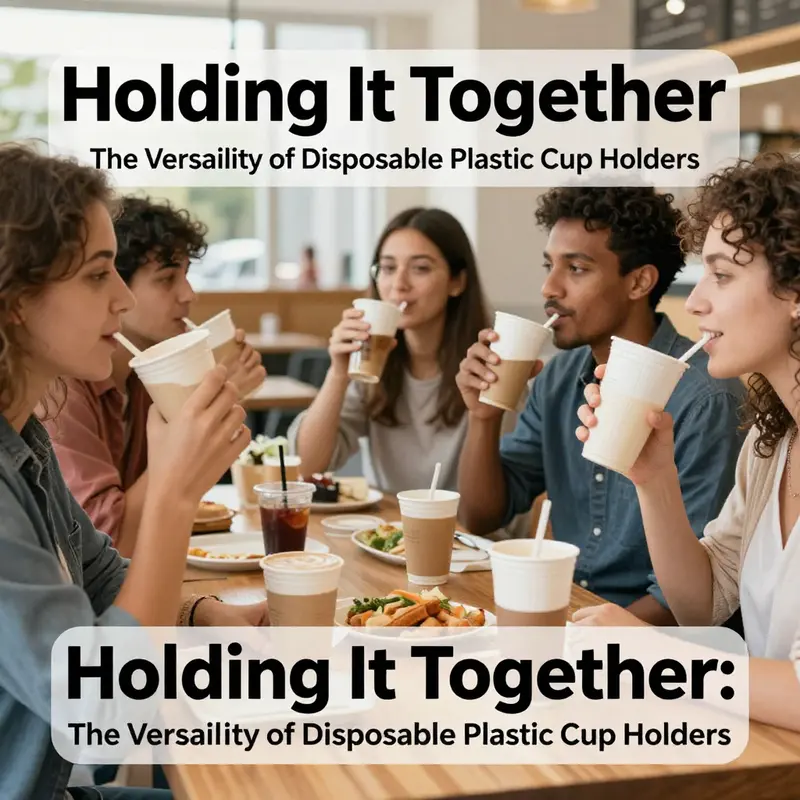
Across crowded streets, in buzzing cafes, and along the curbside lines of food trucks, a small, often overlooked accessory quietly echoes the pace of modern life. The disposable plastic cup holder emerges not merely as a protective grip for a hot drink, but as a tangible response to a broader pattern of behavior: the move from lingering, sit-down consumption to rapid, on-the-go moments that demand efficiency, hygiene, and branding on the fly. In this sense, the holder is a compact technology of modern hospitality—a simple tool that translates velocity, weathering, and visuals into everyday practicality. Its design, materials, and lifecycle are not random choices but reflections of how people drink, move, and interact with service ecosystems that prioritize speed without sacrificing quality.
Fundamentally, the cup holder addresses three core needs that have become entrenched in contemporary service delivery. First is heat management. Hot beverages are a universal touchpoint in daily life, yet the warming effect that makes a drink inviting also threatens comfort and safety for the hand that holds it. Durable plastic holders—often foldable for storage—provide a reliable barrier that frees customers from the paralyzing worry of burning fingers, especially in fast-service settings where temperature gradients can vary from one cup to the next. The practical value of this feature compounds when the product is intended for take-away or delivery, where the consumer’s hand may encounter chilly air or unexpected gusts of wind along a route to the office, a park, or a home kitchen. The result is a more confident and relaxed drinking experience, which in turn encourages repeat purchases and steadier tipping for frontline staff.
Second is grip security. In high-volume environments, spill prevention is not cosmetic; it is a measurable driver of customer satisfaction. A well-designed cup holder reduces the risk that a lid loosens, a sleeve slides, or a cup tilts at a crowded counter. The added texture and rigidity of a plastic accessory can provide a reassuringly stable boundary between beverage and consumer, even when hands are busy with bags, phones, or umbrella handles. This stability matters not only during the moment of drinking but through the transit cycle—from counter to car seat to doorway—where every wobble risks a spill that could stain clothing, furniture, or upholstery. In this context, the holder becomes part of a broader quality proposition: it signals care and reliability in service design.
Third is branding and perceived value. In a crowded marketplace, visual identity travels with the cup and travels even more quickly with the accessories that accompany it. A holder that carries a logo, a color, or a distinctive shape extends a business’s footprint beyond the cup sleeve or lid. The opportunity to print logos, taglines, or seasonal graphics on the holder adds a canvass for marketing that is both durable and portable. In practice, this elevates a practical tool into a low-cost, high-visibility marketing asset that can be distributed across venues, events, and delivery channels without the need for separate promotional media. For brands that rely on consistency and recognition, the holder offers a repeatable surface that reinforces identity in every interaction.
These functional and branding considerations align closely with the evolving habits of today’s consumers. The rise in on-the-go consumption is not a fleeting phase; it represents a structural shift in how people allocate time and where they choose to invest it. Urban life has become defined by rapid transitions—from home to transit, from office to cafe, from curbside pickup to doorstep delivery. In this tempo, accessories that support mobility without sacrificing comfort become essential. A disposable plastic cup holder, though simple, fits squarely into this ecosystem: it is foldable, lightweight, and easy to stash in a bag or glovebox, ready for the next cup and next moment. The holder’s portability mirrors the broader logistics of modern food and beverage service, where the emphasis is on getting quality into customers’ hands quickly and cleanly.
Hygiene has also sharpened the demand for disposable, convenient, and low-contact options. The COVID-19 era did not erase the preference for single-use items; it reframed expectations around cleanliness, safety, and minimal handling. While many operators chase sustainability and explore greener alternatives, the immediate psychological comfort of disposable holders remains compelling for many customers and operators alike. A disposable solution is perceived as reducing cross-contamination risks, simplifying turnover at busy points of sale, and enabling faster service during peak hours. The perception of safety that surrounds disposable accessories contributes to their continued adoption in settings ranging from boutique coffee shops to large-scale catering operations, where each micro-interaction with a cup can influence a guest’s overall impression of the brand.
The delivery economy further reinforces the role of the cup holder as a practical necessity. As meals and beverages traverse long distances, the chances of spills or leakage increase. Delivery platforms and restaurants seeking to safeguard orders often deploy fillable, weather-resistant accessories to stabilize containers and minimize damage during transport. In this milieu, the disposable plastic cup holder becomes a symbol of reliability—an inexpensive, mass-produced buffer against the vicissitudes of travel, weather, and handling. It is also a familiar, easily integrated component within existing packaging ecosystems, allowing operators to maintain consistent protective measures across in-store and off-site experiences. The result is a smoother end-to-end experience for customers who rely on predictability as much as taste.
Yet the conversation around these holders cannot ignore sustainability concerns. In many markets, consumers are increasingly aware of the environmental footprint of single-use plastics. While holders are designed to be durable and sometimes reusable across multiple events or shifts, their environmental impact is nonetheless higher than biodegradable or recyclable alternatives such as paper or plant-based sleeves. This tension—between convenience and ecological responsibility—shapes procurement strategies, supplier selection, and branding narratives. Forward-thinking operators approach this challenge not as a trade-off but as a call to innovate: they seek holders that balance performance with recyclability, explore post-consumer reuse programs, and emphasize responsible end-of-life disposal in their communications. The industry’s trajectory, then, hinges on a dual mandate: deliver reliable protection and grip, while advancing waste-reduction goals and clarity about recycling pathways in diverse markets.
From a market dynamics perspective, shopping for disposable cup holders reflects broader geographic and economic realities. In many emerging economies, where recycling infrastructure remains developing or uneven, the affordability and availability of disposable plastics continue to meet immediate consumer needs. In these contexts, the holder serves as a practical solution to everyday problems—reducing spills, protecting hands from heat, and enabling quick turnover in busy service environments. The economics of scale matter here: bulk purchases, standardization of sizes, and customization options become decisive factors for cafes, catering outfits, and event organizers that must balance quality with cost per unit. Custom designs and branding potential add another layer of value, turning a disposable accessory into a portable advertisement that travels with the customer. When service providers can secure favorable terms through wholesale channels, they unlock a pathway to consistent quality across shifts and locations, supporting a uniform customer experience across a network of venues and delivery routes.
To understand how these trends interlock, consider the lifecycle of a typical cup holder in a high-volume venue. The buying decision is influenced by heat resistance, grip integrity, and foldability, but those functional attributes are increasingly evaluated in the context of branding flexibility and supply chain resilience. A holder that can be printed with a logo and seasonal graphics offers a practical touchpoint for brand storytelling, turning each cup into a mobile piece of advertising during a customer’s commute. The ability to store the holder compactly means fewer storage constraints for crowded shops, enabling more flexible shifts and weekend events. When a venue cycles through different themes or campaigns, the holder becomes a reusable canvas for seasonal messages, without demanding new packaging for every occasion. This convergence of utility and marketing potential elevates the holder from a peripheral accessory to a strategic component of a brand’s customer experience toolkit.
For businesses exploring where to source and how to design for maximum impact, the landscape offers a spectrum of options. The emphasis is on durable plastics that resist heat and water while remaining cost-efficient at scale. Printability matters, as does compatibility with existing cup sizes and lid configurations. The foldable nature of many designs adds a logistical advantage, enabling easier transport for mobile caterers and pop-up events. In a market where customers expect speed, cleanliness, and consistent quality, a well-chosen holder supports faster service, reduces errors, and preserves the look and feel of the brand across every touchpoint. The narrative embedded in these decisions is clear: society’s shift toward on-the-go consumption and convenience does not diminish the importance of hygiene or branding; instead, it amplifies them by making every cup a compact, traveling billboard and every service interaction a chance to reinforce trust.
As businesses calibrate their packaging and accessory strategies, they increasingly turn to integrated solutions that align with broader trends in consumer behavior and supply-chain logistics. The discourse around disposable cup accessories is not about choosing between comfort and sustainability; it is about designing better experiences that acknowledge the realities of modern consumption while seeking smarter, greener pathways for the future. This evolving balance shapes how operators plan their inventory, how designers approach materials and finishes, and how marketers frame the value proposition of even the smallest add-on in a cup-centered journey. In this light, the disposable plastic cup holder is more than a placeholder for a hot drink. It becomes a microcosm of the tradeoffs, preferences, and innovations that define contemporary food and beverage service.
For readers seeking a concrete example of how these accessories intertwine with product design and distribution, see the example of cup sleeve options that accompany many beverage programs. 50pcs brown coffee cup sleeves kraft corrugated paper heat insulation cardboard holder disposable cup cover. While it highlights a paper-based alternative, the link illustrates how brands think about protective layers, branding surfaces, and portability in real-world settings. This broader view helps frame why a disposable plastic cup holder continues to find relevance in diverse contexts and why operators continually evaluate both plastic and paper options within a single packaging ecosystem.
External reference for market context and trends continues to point toward comprehensive industry analyses that track shifts in consumer behavior, regulatory environments, and supply-chain dynamics. For a broader market perspective, see Grand View Research’s review of disposable cups and related packaging, which provides an expansive lens on how on-the-go consumption, hygiene norms, and delivery logistics shape demand across regions. https://www.grandviewresearch.com/industry-analysis/disposable-cups-market
Branding at Hand: Turning Disposable Cup Holders into Mobile Brand Ambassadors
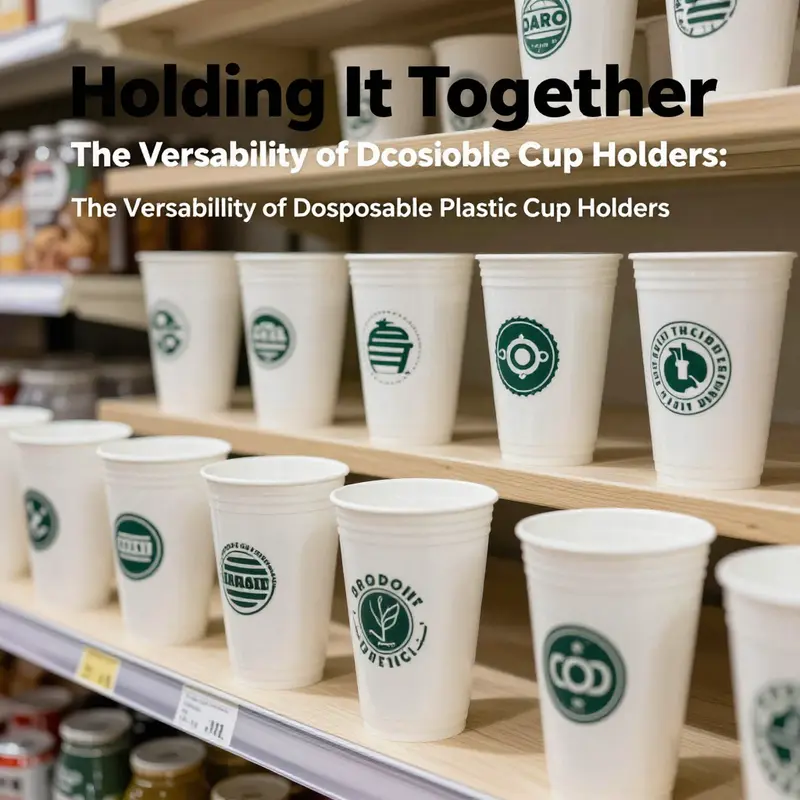
Each time a human hand closes around a cup, a brand has the chance to speak without a bark or a banner. Disposable plastic cup holders, often dismissed as simple heat shields, are increasingly recognized as deliberate, mobile surfaces for brand storytelling. The holder is more than a practical accessory; it is a compact canvas that travels from cafe to office, from festival line to door-to-door delivery, carrying color, logo, and message with every grasp. What makes this shift possible is the combination of durable materials, foldable practicality, and print-ready surfaces that can withstand the tempo of modern service without compromising hygiene or convenience. In practice, the holder’s value comes from its ability to protect the user and elevate the brand in the same breath, creating a tactile link between product and experience. When a customer picks up a hot beverage, their first touchpoint is the brand’s presence on the outside of the cup holder, which sets a tone for the whole encounter. This is not merely about visibility; it is about consistency, legibility, and the careful choreography of form and function that keeps the brand legible as it moves through a bustling day.
Durability is the quiet hero of this narrative. The typical disposable cup holder is engineered for heat resistance and moisture tolerance, which allows it to survive multiple shifts in a busy cafe or during the travels of a food truck. The material—often a sturdy, finished plastic designed to be folded flat for storage—offers a reliable home for branding elements that must endure repeated handling. The folding mechanism itself becomes a feature, enabling easy transport and quick deployment in a crowded service setting. For operators, this translates into fewer interruptions and a more streamlined workflow. The user experience remains clean and straightforward: lift, grip, sip, and dispose, all while the outer surface communicates the business’s identity at a glance. The opportunity here is to leverage every interaction, turning the act of holding a cup into a brief, memorable moment of brand reinforcement.
Printing technology plays a decisive role in how effectively a cup holder conveys identity. Flexographic printing, known for its speed and efficiency, can lay down logos, color palettes, and promotional messages with a high degree of fidelity. The method supports rapid high-volume production while maintaining color consistency across batches, which is essential for any chain or event-driven operation that must present a unified look across multiple locations and times. The surface area on a cup holder is not infinite, but it is sufficiently expansive to accommodate a central logo, a supporting tagline, and perhaps a secondary accent color that echoes the brand’s overall design language. The result is a compact, legible statement that travels with the beverage, ensuring that even a brief pickup line remains aligned with the brand’s tone.
The design versatility of these holders further expands their branding potential. Some operators experiment with multi-compartment designs that can feature branded messaging on each section, turning the incidental act of condiments or sauces into a mobile advertising moment. This isn’t just about printing a logo on a surface; it’s about creating a small, splittable narrative that can tell different facets of a brand story within a single, practical object. Larger cup options, such as those used for smoothies or dessert beverages, provide additional space for bold graphics or seasonal campaigns, allowing a shop to capture attention during peak hours when customers are bustling through a crowd. For hot beverages, double-walled insulated designs can extend branding opportunities by preserving temperature and providing a larger canvas for high-visibility graphics that endure through travel and outdoor use. In these scenarios, branding becomes a steady companion rather than a one-off flourish, reinforcing recognition long after the initial purchase.
From a strategic standpoint, the promise of branding through disposable cup holders extends beyond the cup or the beverage itself. In hospitality environments—weddings, corporate events, catering functions—the clean, uniform look of branded holders can contribute to a cohesive event aesthetic. The key is to balance the refined appearance with the practical expectations of guests. While cheaper, lower-end options may contribute a casual, informal vibe, a well-branded holder can still convey professionalism and attention to detail without implying luxury beyond what the material can realistically communicate. The result is an adaptable branding tool that supports different venue atmospheres—from a bustling cafe to a formal reception—without forcing a compromise between branding impact and day-to-day practicality.
Cost considerations inevitably accompany any branding decision. Disposable cup holders tend to carry a higher upfront price than traditional cardboard sleeves, especially when the buyer seeks color-rich branding and durable construction. Yet this premium is offset in other ways. A holder that lasts across multiple events or shifts reduces ongoing replacement costs and inventory management challenges. In high-volume settings, the ability to reuse holders across dozens of service cycles can translate into tangible savings. The math becomes more favorable when a business values consistency and branding across locations, because a uniform, well-printed holder contributes to a recognizable brand narrative that customers can quickly identify, even amid a crowded market. That recognition translates into trust, memory, and a higher likelihood of repeat business or word-of-mouth referrals, which are particularly valuable in sectors where quick-service and takeaway dominate.
Environmental considerations add another layer to the decision. While disposable, durable plastic holders are not biodegradable in the same way as some paper or plant-based sleeves, many operators recognize the trade-off and seek to mitigate impact through responsible practices. For brands with sustainability goals, the decision may hinge on a clear governance framework: durable materials, safe recycling streams, and transparent communication about disposal preferences. To some degree, this means acknowledging the portable, temporary nature of these items while still delivering a branded experience that aligns with broader environmental commitments. In markets where eco-conscious consumers are influential, brands can emphasize durability and reusability in messaging, or pair holders with recycling programs and clear disposal guidance to reduce environmental footprint. The conversation around sustainability does not negate the branding benefits; it reframes them in a context that foregrounds responsibility alongside visibility.
The broader procurement landscape also shapes how these holders come to life. Bulk purchases and customization capabilities exist across wholesale marketplaces, where operators can select materials, sizes, and print methods to suit their unique needs. Platforms that offer wholesale pricing and design flexibility enable large-volume orders with consistent quality. This practical access is crucial for brands that operate across multiple locations or events within tight timelines. The capability to order in scale—while maintaining brand consistency across batches—helps prevent the chaos that can arise when a campaign relies on ad hoc production. The efficiency gained from streamlined ordering complements the branding impact, ensuring that the design language remains intact from the first cup to the last at an event.
For operators curious about real-world implementation, the media surrounding disposable plastic cup hardware often highlights the practical, design-forward opportunities these holders present. The outer face becomes a stage for the brand’s visual identity, while the inner components continue to safeguard comfort and hygiene. The balance between aesthetics and function is delicate, yet achievable when the printing is stable, the materials are durable, and the design respects the realities of fast-paced service. It is here that the concept of branding at hand truly comes to life: the cup holder operates as a tiny billboard, a portable ambassador, and a functional companion to the customer experience all at once.
To illustrate a concrete example of how design and branding converge, consider the idea of a simple, clean exterior with a bold logo and a restrained color palette. The result is a holder that communicates confidence and clarity at a glance. The branding can be extended by pairing the holder with complementary packaging elements—matching sleeve colors, a consistent typography system, and a subtle pattern that reinforces brand personality across touchpoints. In practice, this approach invites customers to associate the physical warmth of the beverage with the warmth of the brand’s identity, creating a holistic, memorable encounter rather than a stray moment of visual noise. The payoff is not a single impression but a series of reinforcing cues that travel with the cup and stay with the customer after the sip is finished.
As brands explore these opportunities, the dialogue around customization also evolves. It is not merely about placing a logo on a surface. It is about shaping a cohesive design system that can adapt to seasonal campaigns, regional variations, and diverse venues. A campaign might feature a dominant core brand element on the exterior, with seasonal accents or event-specific messages on secondary surfaces. The aim is to build a flexible, scalable approach that preserves brand integrity while enabling timely, relevant storytelling. In this sense, the disposable cup holder becomes a scalable, portable marketing channel with a footprint that travels as reliably as the beverage itself. The practice of designing for this channel requires thoughtful decisions about color, contrast, legibility, and surface geometry, all of which influence how effectively a brand communicates at the precise moment of reach.
If readers wish to explore a tangible example of a disposable cup’s branding surface, a good place to start is a product page focused on disposable clear plastic cup offerings. This page demonstrates how surface area, print options, and material choice come together to support branding goals in a compact, practical form. The example underlines how a simple object can be transformed into a strategic asset with careful design and production planning. For a broader sense of how printing and material choices affect brand representation in disposable plastics, it is helpful to study industry resources that outline print methods, color management, and durability expectations across different beverage applications. In the context of a fully branded service line, these considerations become integral to delivering a consistent, high-quality customer experience that reinforces recognition with every cup carried and handed over.
External resource for broader context and supplier insights can offer practical guidance on scale, capabilities, and the trade-offs between cost and branding impact. See a leading industry reference for custom-disposable cup branding and production details for deeper understanding of how customization programs are executed in real-world settings. Plastic Cup Factory
For readers who want to see an internal example of how a disposable plastic cup can bear branding while remaining highly functional, the following internal page provides a close look at a disposable clear plastic cup product page. It illustrates how a robust surface can carry branding elements, while preserving the cup’s usability and service speed. disposable clear plastic cup product page
In sum, disposable cup holders are more than a practical accessory. When designed with branding as a core consideration, they become portable, cost-effective ambassadors that travel across spaces, seasons, and events. They offer a compelling way to extend a business’s visual identity beyond the walls of the storefront, turning ordinary beverage moments into consistent brand encounters. By balancing design, print technology, material choice, and sustainability considerations, operators can transform a simple heat-protection device into a strategic branding instrument that stands up to the pace of modern service while staying true to the brand’s voice and values.
Final thoughts
In summary, disposable plastic cup holders represent not just a functional solution for managing hot beverages but also a means to engage with customers meaningfully and sustainably. Through understanding their environmental impact, economic advantages, innovations in manufacturing, societal trends, and branding opportunities, businesses can leverage these products as integral tools to enhance their service offerings. By choosing high-quality, reliable disposable plastic cup holders, you can elevate your brand while ensuring customer comfort and satisfaction.