
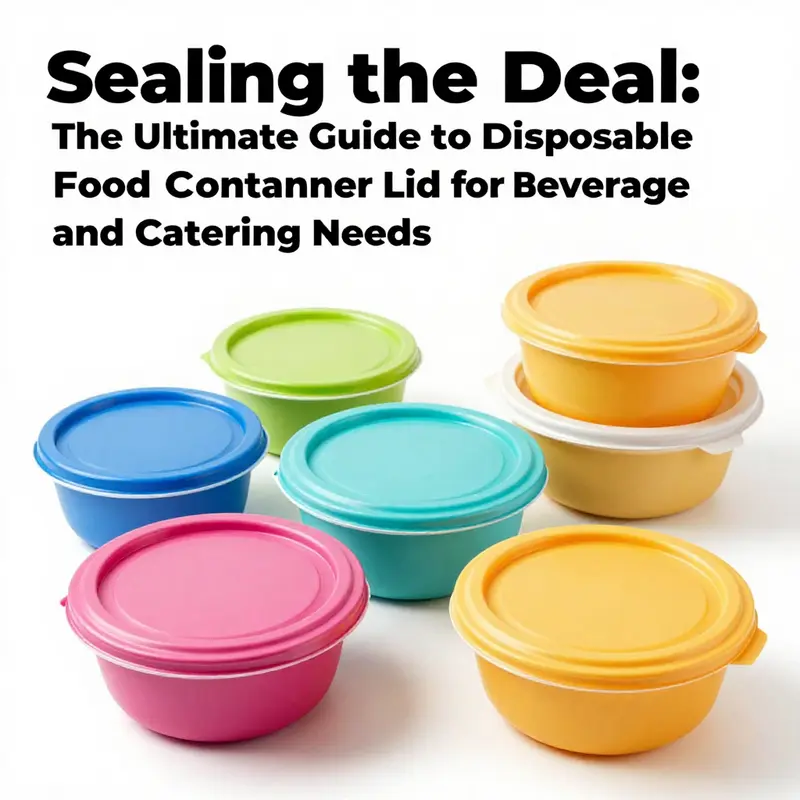
In the competitive landscape of food services—from bubble tea shops to catering services—the essentials of maintaining food quality while ensuring convenience cannot be overstated. Disposable round food container lids play a pivotal role in this sector, offering functionality, safety, and an enhanced customer experience. They not only satisfy the immediate needs of food storage and transport, but they also cater to a growing demand for environmentally friendly options. This article delves into the various materials and technologies behind these lids, their importance in the restaurant and catering markets, the environmental impacts of their use, and a comprehensive procurement guide to help you choose the right lids for your business. Each chapter is crafted to build upon the last, creating a holistic view of these essential items in food service.
材料与技术的交响:一次性圆形食品容器盖的塑料与可降解选择及其市场演进
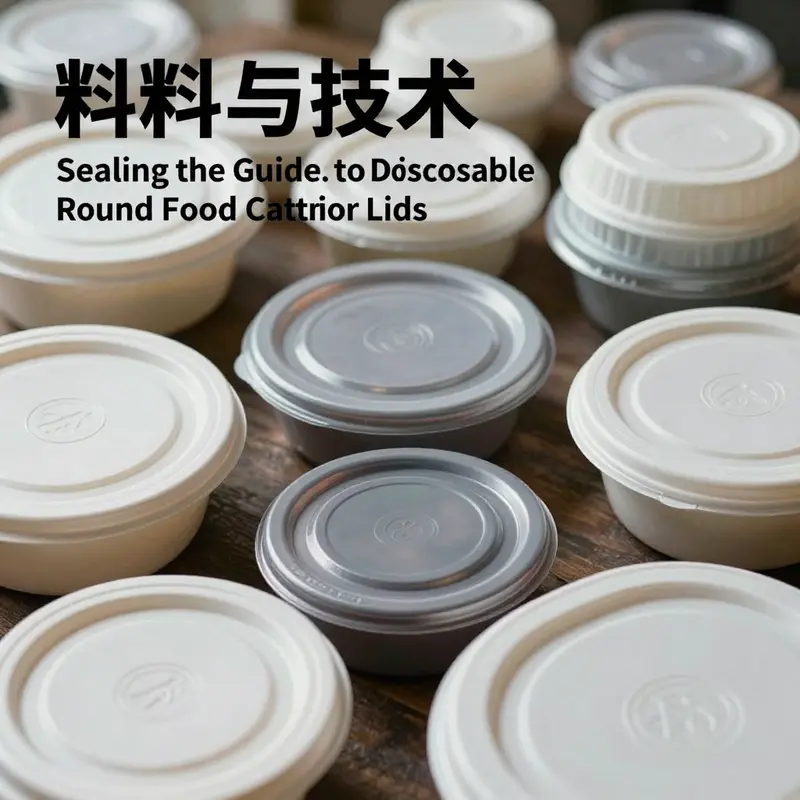
在餐饮包装的微观世界里,一次性圆形食品容器盖并非简单的配件,它承载着密封、卫生与便捷三重职责。它必须在运输、叠放、温度波动和不同环境中保持完整性能,同时回应日益清晰的环境诉求与法规约束。这种看似平凡的盖子,实则是供应链中对食品安全、货物保鲜与品牌形象的隐形传达者。要理解它的价值,应从材料、结构与应用场景三者的协同作用入手,进而观察市场对材料与设计的持续演变。AP与HDPE等塑料材料长期支撑着主流市场,但环保意识的提升与法规的趋严,正在推动可降解与生物基材料成为备选,成为行业在“安全、经济、可持续”之间的平衡点。
塑料材料在一次性圆形容器盖中的地位,源自其综合特性:耐热性、化学稳定性、成型可控性与成本可控性。聚丙烯(PP)是最为常见的基础材料之一,具备良好的耐热性,通常能够承受近100℃甚至更高的温度,这使得部分盖子在微波加热和蒸汽处理过程中仍然保持密封性与结构完整性。PP的化学稳定性使其在食品接触领域具有广泛适用性,且透明或半透明的外观便于快速识别容器内的食品状态。与此同时,聚乙烯(PE)也在盖子的制造中扮演重要角色,尤其在某些需要柔韧性和冲击耐受性的场景中。PE的加工灵活性高,但耐热性不如PP,在高温直接接触场景下需要谨慎设计与使用。
对于追求透明或半透明外观、注重耐冲击性的场景,HDPE的使用也相当普遍,但在透明度方面通常略逊于PP。PET在某些冷食或低温场景中偶有应用,但高温环境并非其强项,因此在需要高温耐受的盖子设计中往往并非首选。聚苯乙烯(PS)虽在某些餐盒设计中占据一定比重,但其对温度的耐受性有限,长期热暴露容易产生变形或降解,影响密封性能。聚碳酸酯(PC)曾广泛用于食品接触材料,然而由于潜在的双酚A(BPA)风险,许多地区已限制其在婴幼儿与食品接触材料中的使用,行业对PC的应用正趋于谨慎与替代。以上材料的选择,往往需要在耐热、密封性、透明度、加工成本与法规要求之间做出权衡。
在可持续性需求日益凸显的背景下,可降解与生物基材料成为行业关注的焦点。聚乳酸(PLA)作为以玉米淀粉等可再生资源为原料的生物基材料,具备工业堆肥条件下快速降解的潜力,这是其成为备选的重要原因之一。PLA在60℃左右的堆肥环境中,能够与水和二氧化碳分解,理论上对环境压力的缓释具有积极影响。尽管如此,PLA也并非没有局限:其耐热性通常低于100℃,在普通环境下的降解速度不快,若缺乏专业堆肥设施,最终进入环境的降解路径可能并不如人们期望的那么高效。因此,在设计和选材时,需要对使用条件进行严格评估,并确保终端的回收与处理链条能够与材料特性相匹配。除PLA外,PHA、淀粉基等新型可降解材料也在研发与尝试阶段,尽管成本较高、性能稳定性仍待提升,但它们在某些高端场景中的应用潜力不可忽视。
材料选择的另一层含义,是对食品安全标准与监管框架的响应。中国与全球市场都强调食品接触材料在使用过程中的安全性与卫生性。合规的材料通常需要通过相应的食品接触材料标准和认证,确保在日常使用和温度变化中不会向食物迁移有害物质。对于塑料而言,GB 4806.x等国家标准为材料及制品的监管提供了基线要求,确保材料在洗涤、再加热、交互接触等情形下的安全性。与此同时,环保法规和回收体系的完善,也在改变设计理念的走向。设计师和采购团队需要关注材料的全生命周期,从原料来源、制造过程中的排放、运输中的碳足迹,到使用后的回收、堆肥与处置路径,以及对不同地区垃圾分类和再利用系统的适应性。
在市场层面,盖子与容器本身并非独立存在,它们与容器的形状、容量、锁扣结构以及密封形式共同决定了包装的实际表现。常见的容量范围通常覆盖16盎司到48盎司之间的圆形盖,这一区间能够满足从个人餐盒到小型聚餐份量的多样需求。密封性是衡量盖子好坏的核心指标之一,许多盖子采用锁扣、卡扣或翻盖设计,以减少液体渗漏风险。可视化管理也成为用户体验的重要部分,透明盖面让外卖人员、餐饮人员或最终家庭用户能快速确认食品类型与分量,减少误取与跨污染的概率。对于品牌商而言,定制服务成为一项增值能力:通过品牌印刷、烫金、UV涂层、丝印等工艺,盖子不仅承担包装功能,更成为品牌传播的一部分。
采购环节同样影响材料与设计的最终成效。现代供应链强调供应商资质、认证、可追溯性以及稳定的交货能力。在全球范围内,优选的供应链往往具备多元材料选项、严格的质量控制以及对不同地区法规的响应速度。采购团队需要综合考虑材料类型、成本、环境责任以及后续处置的便利性,确保在大规模配送场景下的可持续性与经济性之间取得平衡。对于追求环境友好解决方案的企业,PLA等可降解材料在可行性研究阶段通常需要评估其商业整合性、仓储条件、运输成本与回收体系的衔接。某些供应链也在探索将材料与回收体系对接的创新模式,例如收集并投放至具备工业堆肥能力的区域,以实现材料降解路径的闭环。
在口味与安全之外,市场对包装的认知也在改变。消费者越来越关注包装能否在日常生活中减少污染,是否易于回收,是否进入了正确的回收或堆肥链条。这一认知的转变,推动企业在选择盖子材料时更加注重全生命周期影响,而不仅仅是初始成本或外观。与此同时,法规的演化也在推动创新设计的落地。以往以“耐用性”为中心的设计语言正在逐步融入“可回收性、可堆肥性与低碳足迹”的考虑。这样的转变并非一蹴而就,它需要跨学科的协同努力——材料科学、包装工程、物流与环境管理之间的协作,才能让从原材料选择到最终处置的每一个环节都更为高效与负责任。
对于正在制定采购策略、产品线规划或包装创新路线的企业而言,理解材料与设计的内在逻辑,是实现长期稳定发展的关键。常规塑料盖在确保密封和成本效益方面具有不可替代的优势,但环保压力催生了替代材料的可行性评估。 PLA等可降解材料的引入,不应被视为简单的替代,而应被视作一种策略性选择,要求企业建立合适的使用场景与处理路径,以确保降解过程真正发生在合适的设施中。若企业在高温、长时间保温或需要反复加热的场景中,仍需以传统塑料材料为主,并在设计阶段确保尽可能降低环境影响,例如通过可回收设计、减少添加剂、优化材料用量等方式来实现更可持续的运营。
如需了解关于环保取向的外卖包装方案,可以参阅一份关于环保包装解决方案的参考资源,其中强调了材料选择、微波兼容性、密封性与耐用性之间的综合权衡,以及在现代餐饮场景中的实际应用。这一资源以实务角度展示了如何在保持功能性的同时,尽量降低环境足迹,并展示了品牌如何通过包装设计提升消费者信任与忠诚度。
在未来的发展进程中,材料选择的核心并非简单的对错,而是在具体应用中的综合适配。PP作为常规塑料的首选,凭借其稳定的热性能与加工友好性,在市场上继续占据主导地位;PLA及其他可降解材料则以可持续性为导向,成为品牌在绿色转型中的关键工具。两者之间的取舍,需要基于对使用环境、回收体系、成本结构及法规要求的综合评估。监管框架的完善,将促使材料供应商、盖子设计师与食品企业共同探索更高效、低污染的解决方案。只有在全生命周期的视角下,圆形盖子这一包装附件才能真正服务于现代餐饮的卫生、速度与可持续愿景。
外部参考资源与法规指引将为这一转型提供底座。对于标准化与合规性而言,了解并遵循食品接触用塑料材料及制品的国家标准,是实现安全与合规经营的前提。相关法规的持续更新,要求企业建立动态的法规监测机制,确保新材料、新工艺在进入市场前已经完成风险评估与合规审阅。对行业从业者而言,这不仅是合规的要求,也是市场信任的基础。
外部参考资源与法规指引的理解,是帮助企业在复杂市场环境中作出明智选择的关键。通过搭建透明、可追溯的供应链,以及与回收、堆肥体系的有效对接,包装材料的选择不再只是成本计算的结果,而是企业社会责任、品牌声誉与长期竞争力的综合体现。未来的圆形盖子,将在材料科学、工程设计和环境治理的共同推动下,朝向更高的性能与更低的环境代价而演进。
How Disposable Round Lids Drive Performance, Safety and Brand Value in Takeout and Catering
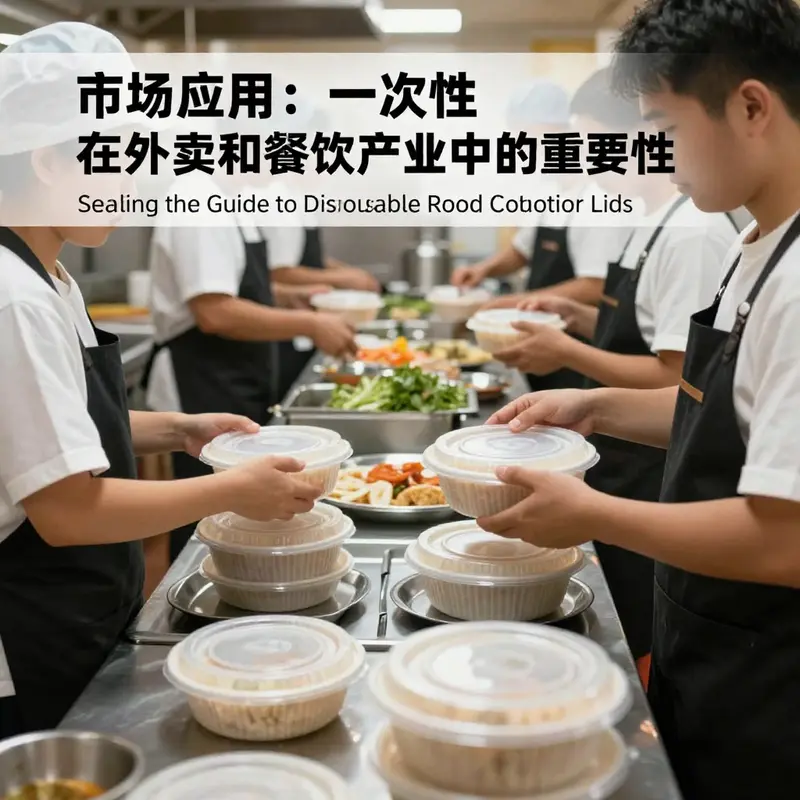
The lid is more than a cover. For modern takeout, delivery and large-scale catering, disposable round food container lids determine how food arrives, how it is perceived, and how efficiently a kitchen operates. Their role reaches beyond containment. A thoughtfully engineered lid protects temperature and texture. It prevents leaks. It communicates quality. It simplifies handling for staff and customers. This chapter explores how those lids translate into measurable gains in customer satisfaction, operational efficiency and brand strength.
A central function of any disposable round lid is sealing integrity. Delivery requires stability. Containers travel in bags, on racks, and in the backs of vehicles. Liquids and sauces are especially vulnerable to movement. A lid with a reliable locking mechanism and a resilient gasket can prevent spills that lead to returns, negative ratings, and wasted food. Designs that combine a snap-fit, an internal seal, and a raised rim create three layers of protection. In real-world tests, lids with multiple sealing features maintain containment even when tilted or jostled for extended periods. That reliability reduces the incidence of customer complaints and the associated cost of remakes and refunds.
Sealing performance also protects food quality. Steam and heat escape change texture and mouthfeel. Condensation on lid interiors can dilute seasonings and soften crispy elements. A well-designed lid balances breathability and retention. It traps necessary heat while allowing minimal steam release, preserving crispness where needed. This balance is critical for dishes combining hot and cold elements, such as a soup with a side salad or a bento-style meal. When food keeps its intended texture, customers receive the experience the chef intended, and perceived value rises.
Beyond containment and quality, lids are a silent component of your brand narrative. Packaging is the first tactile brand touchpoint a customer experiences. A lid that looks and feels sturdy communicates care. Visual choices matter: matte finishes, subtle embossing, or metallic accents can transform the perceived tier of a meal. When customers open a container at home and find a tidy presentation, they are more likely to share images and recommend the brand. That organic exposure translates into customer acquisition without extra marketing spend. Small interventions on the lid surface, such as a dedicated space for a sticker or handwritten note, enable personalization at scale. These seemingly minor design choices support repeat orders and foster emotional connection.
Operational efficiency is another area where lids deliver clear ROI. Round containers and matching lids stack with predictable geometry. When lids are engineered for secure, multi-layer stacking, storage density improves. Kitchens can reduce occupied shelf space and move larger volumes with fewer trips. Stable stacks also speed assembly: staff can grab multiple units at once and assemble orders quickly during peak periods. Fewer misfits and jams in packaging lines reduce downtime. For businesses dealing in volume—catering companies, institutional cafeterias, chain outlets—space saving and speed directly affect margins.
Handling and usability are important, too. Lids that open cleanly and close reliably save seconds on each order. Those seconds add up. Easy-to-read orientation markers, tactile tabs, and one-handed opening features allow delivery drivers and customers to manipulate containers without spills. Lids designed to remain attached when opened reduce the risk of dropping them on the floor or contaminating food. A small investment in ergonomics lowers the probability of service mistakes and improves the speed of first-mile and last-mile interactions.
Food safety and regulatory compliance sit at the foundation of lid selection. Materials must meet food-contact standards and avoid chemical leaching at intended use temperatures. Many plastic lids today are produced from food-grade polymers certified to established regulatory frameworks. For operations where heating or reheating is expected, lids must be compatible with microwave use when labeled accordingly. Alternatively, for oven-safe needs, metal or foil solutions are appropriate. Understanding the intended use case—cold service, microwaving, oven finishing—prevents misuse and limits liability.
Traceability and labeling features on lids improve safety in multi-order and institutional settings. A molded or printed label area lets staff mark allergens, dietary preferences, or reheating instructions. This simple capability reduces communication errors between the kitchen and the customer. In high-volume environments, clear labeling also helps automated sorting systems and reduces time spent on manual checks.
Sustainability considerations influence procurement decisions more than ever. Many operators must balance performance with environmental responsibility. Biodegradable lids and compostable materials now offer viable alternatives where municipal composting exists. Paper-based lids with compostable coatings or lids made from PLA provide options for businesses aiming to reduce plastic waste. However, choosing a sustainable lid requires matching material performance to the use case. Some compostable materials perform well for dry foods but lose integrity with long-exposure to liquids. Procurement teams should evaluate lifecycle impact alongside functionality.
Customer perception of sustainability also affects brand value. When a lid clearly communicates compostability or recyclability, it aligns brand messaging with customer expectations. That alignment yields measurable results: stores that highlight environmentally conscious packaging often see higher loyalty among eco-minded consumers. But transparency matters. Claims should be verifiable and supported by labeling. Vague statements about being “green” without clear disposal instructions can cause confusion and reduce the intended benefit.
Cost dynamics are important, but cost alone is not the right decision metric. Lower-priced lids may reduce immediate expenditure but can increase hidden costs from leaks, remakes, and customer churn. A mid-tier lid that reduces returns and supports stackable storage often yields a lower total cost of ownership. Procurement should evaluate lids on a combination of metrics: sealing performance, material safety, stack density, customization potential, and end-of-life options. Many suppliers offer sample programs so kitchens can test lids under real conditions before committing to large orders.
Customization supports marketing and operational needs. Printing logos, reheating instructions, or QR codes on lids can strengthen brand recognition and enable dynamic interactions. QR codes can link to menus, loyalty programs, or ingredient lists. A dedicated label area keeps marks legible and prevents contamination of the consumption surface. Custom colors and finishes can also help kitchens segregate meal types or dietary categories for faster sorting.
Integration with other packaging components enhances the whole system. Lids that pair well with trays, bags, and insulated carriers create a cohesive delivery system. Insulated carriers designed for secure stacking of lidded containers preserve temperature longer. Similarly, sauce cups and inserts that nest under or within lids reduce separate packaging. Designing the containment system as a whole reduces the number of loose components and simplifies delivery logistics.
Data from food service operations reveals the quantitative impact of quality packaging. Operators report higher order values and lower complaint rates after upgrading to lids that maintain presentation and prevent leakage. Those gains are not abstract: fewer negative reviews, fewer replacements, and improved throughput contribute directly to revenue. For enterprise buyers, these metrics drive purchasing decisions at scale.
Finally, procurement choices should be guided by realistic testing. Evaluate lids under the same stresses they will face: full transit cycles, expected tilt angles, and temperature swings. Test stackability under load and assess how lids perform when a customer reopens a container for reheating. Check label adhesion under condensation and whether printed information fades after microwave use. These simple tests reveal how a lid will behave in live service.
A well-chosen disposable round lid is a strategic asset. It keeps food intact, supports brand storytelling, reduces operational friction, and aligns with sustainability goals when selected carefully. By viewing lids as part of a systemic solution, not merely a commodity, operators can improve margins and customer loyalty. When packaging decisions are based on performance data and aligned with service models, lids consistently contribute to predictable, repeatable customer experiences.
For more detail on typical technical specifications and sealing performance used in product benchmarking, consult the external technical listing referenced by industry suppliers.
External reference: https://item.jd.com/100049756884.html
Internal resource: For complementary eco-friendly packaging options, see the page on eco-friendly takeout boxes for food packaging.
Closing the Circle: The Ecological Footprint and Future Path of Disposable Round Food Container Lids
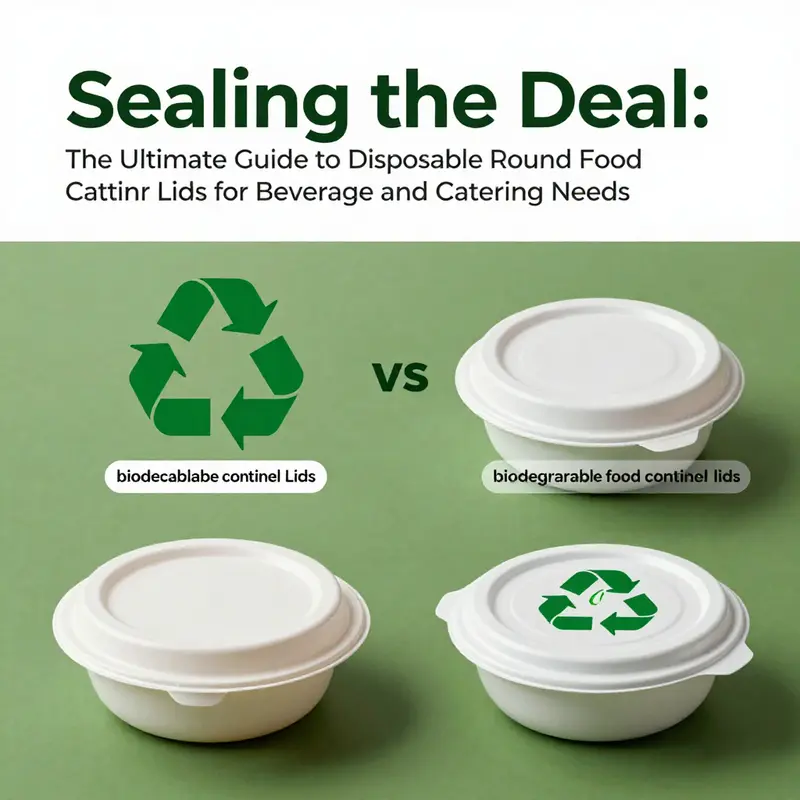
The environmental conversation around disposable round food container lids begins with an obvious question: what happens after the lid is discarded? Yet the answer stretches far beyond a single end-of-life moment. It unfolds across a lifecycle that starts with the choice of material, travels through the production line, travels again through the act of use, and finally lands in the waste stream or the composting facility. In this light, the lid is not a mere component of a takeout box or a household meal; it is a lever that can tilt the balance of resource use, emissions, and waste, depending on how it is designed, manufactured, used, and disposed. The topic sits squarely at the intersection of practicality and responsibility, where small design decisions ripple into broader ecological outcomes. For those managing foodservice operations, this is not simply a matter of choosing a cheaper or more familiar lid. It is about aligning everyday packaging choices with a broader commitment to reducing environmental impact without compromising food safety and convenience.
Material choice lies at the heart of the lid’s environmental profile. The most familiar options—the common translucent plastics such as polypropylene or high-density polyethylene—offer durability, heat resistance, and a light touch that makes them appealing for takeout and short-term storage. Their performance, however, is inseparable from the fact that they are rooted in fossil-based feedstocks. Even when labeled BPA-free and certified for food contact, the path from crude oil to final lid carries energy use and emissions that contribute to the overall carbon footprint. In many cases, the same material that provides reliable seal and clarity may also complicate end-of-life processing. When these lids end up in recycling streams, contamination and the mixed-material reality of some packaging systems can hinder effective recovery. And while some lids claim heat tolerance suitable for reheating, the reality remains that most are not designed for high-heat applications beyond a certain threshold. The key implication is pragmatic: a plastic lid’s ecological impact cannot be judged purely by its functional performance; its ultimate fate in the waste system—whether through recycling, landfilling, or energy recovery—significantly shapes its environmental footprint.
In response to rising environmental concerns, the market has introduced biodegradable and bio-based alternatives that promise a cleaner end-of-life story. Materials such as polylactic acid (PLA) and fiber-based papers coated with plant-derived barriers are positioned as solutions to the plastic legacy. These options can perform well in terms of sealing and lightness, and they align with growing consumer demand for products that appear kinder to the planet. Yet their advantages are conditioned by the realities of disposal infrastructure. Industrial composting facilities, which are designed to handle certain compostable plastics and fiber composites, are not universally available. In many regions, contaminated or improperly disposed packaging can end up in mixed waste streams, undermining the intended compostability. The ecological benefit of a compostable lid is most fully realized when it actually enters the facilities capable of processing it under standardized conditions. Moreover, production of bio-based materials brings its own set of substrate choices, energy requirements, and supply chain considerations. The net effect is that the story of a biodegradable lid is nuanced: it can offer tangible advantages under right conditions, but it cannot be assumed to be universally better than conventional plastics without considering local disposal realities and supply chain footprints.
A third, sometimes overlooked material option is the foil-based or laminated approach used in some high-temperature or premium applications. Aluminum or foil-like lids, when used with corresponding containers, offer excellent heat conduction and barrier properties. They can be highly effective for oven heating or heat retention during transport. However, these materials are less compatible with standard mechanical recycling, and their integration into widely accepted recycling streams can present challenges. In practice, the environmental calculus for foil lids often hinges on the end-use scenario and the availability of appropriate recovery paths. This reminder—that the intended use, rather than mere material credentials, should guide choice—highlights the central truth: ecological performance is a function of lifecycle alignment, not only material purity.
Production mode and energy sources shape the carbon footprint long before the lid reaches the consumer. The electricity mix powering factories, the efficiency of molding or forming processes, and the degree to which recycled inputs are used all contribute to the lifecycle score. A lid produced with a high share of recycled content and powered by renewable energy will generally have a lower baseline footprint than one produced from virgin fossil-based feedstocks in a high-emission grid. Yet even with greener inputs, the final tally depends on how many times a lid is used, how effectively it is cleaned, and whether it remains part of a system that prioritizes recycling or composting. Here, the logic of the circular economy becomes clear: a design’s value is multiplied when it enables reuse, repair, or high-quality recycling streams. If a lid is rugged enough to endure multiple uses with simple, thorough cleaning, its per-use environmental cost declines significantly. Conversely, a fragile lid that fails after a few cycles offers little sustainability upside. The intersection of durable design and practical reuse is where manufacturers can create meaningful environmental gains without sacrificing performance.
Even within a durable, single-use paradigm, the number of uses matters. Studies across packaging genres consistently show that extending the usable life of a lid—or any container component—shifts the environmental equation. The logic is straightforward: the more times a lid can function for different meals or different customers, the lower the average impact per use. This is not a call to create fragile lids that risk leakage; it is a call to invest in resilient engineering, lockable seals, and surfaces that are easy to clean and sanitize. When a lid is designed for repeated handling in a bustling kitchen, the gains accumulate. The real-world implication is that procurement decisions should weigh not only upfront cost but also lifetime performance. It is an unfamiliar calculus for some operators, but one that aligns with the broader sustainability objective of reducing waste and extending the utility of packaging components.
Weight and packaging efficiency also play an important role in the ecological equation. Lighter lids reduce transport energy and material use, contributing to lower emissions across the supply chain. Yet weight reductions must be balanced against the need for reliable sealing and leak resistance. A lid that sacrifices performance for a few grams of material may incur downstream costs in food waste, spoilage, or customer dissatisfaction. This tension underscores a central governance principle for packaging design: optimize for the minimal functional requirement performed reliably, rather than maximizing novelty or cost savings at the expense of containment integrity. The best outcomes emerge when designers pursue lean, efficient shapes and materials that still deliver robust barrier properties and ease of use.
Beyond the material and manufacturing considerations, the end-of-life pathway deserves equal attention. The packaging ecosystem is a mosaic of recycling streams, composting facilities, and waste management policies that differ by region. A lid that is clearly labeled as recyclable, or clearly compatible with industrial composting, stands a better chance of entering an appropriate recovery stream. Ambiguity, on the other hand, leads to mis-sorting and downcycling, which often translates into higher environmental costs. Clear material identification, compatible coatings, and minimal-layer constructions that avoid composite, hard-to-separate laminates can greatly improve recyclability and reduce landfill burdens. In addition, the rise of standardized certification and labeling schemes helps both businesses and consumers navigate the murkier corners of disposal. In this sense, the ecological footprint of a disposable round lid is not fixed; it shifts with labeling clarity, the availability of appropriate facilities, and the alignment of packaging with local waste policies.
The broader market implications follow logically. For foodservice operators, the sustainability of lids intertwines with the brand’s environmental narrative and with regulatory expectations. A portfolio that blends a mix of reusable options, recyclable designs, and compostable alternatives can help a business tailor its packaging to the specific contexts of each operation—corporate catering, convenience meals, or hotel banquets—without compromising safety or performance. In practice, this means embracing design-for-reuse when possible, investing in cleaning workflows that minimize resource use, and partnering with suppliers who can confirm end-of-life outcomes. It also requires shoppers and food handlers to understand proper disposal practices. The most sustainable choice often depends on local infrastructure—whether there is a robust recycling system, a reliable composting facility, or a community that can support reusable, returnable packaging loops. In other words, ecological impact is not solely a material question; it is a systems question.
This perspective prompts a practical, forward-looking synthesis. If one discards the illusion that all “green” lids are equally beneficial in every context, one arrives at a set of guiding principles. First, prioritize durability and cleanliness to enable repeat use where feasible. A lid designed to endure dozens of reuses, while remaining easy to sanitize, reduces cumulative impact. Second, favor materials and constructions that align with available disposal infrastructure, whether recycling or composting, and strive for simple, separable components that simplify recovery. Third, minimize unnecessary layers and coatings that complicate recycling streams or hinder compostability. Fourth, ensure labeling is unambiguous and consistent with local handling practices to minimize mis-sort rates. Fifth, balance performance with cost, recognizing that the most sustainable outcome arises from a lifecycle-aware procurement approach rather than a single metric like material type or upfront price. Finally, communicate honestly with stakeholders about disposal realities and infrastructure constraints. A credible sustainability claim is one grounded in lifecycle thinking, not a glossy surface impression.
To translate these ideas into real-world action, operators can lean into the internal resources available through supplier networks and packaging criteria. A practical step is to evaluate lids not only on their sealing efficiency but also on their compatibility with the container system in use, their resistance to leakage during transit, and their behavior under typical reheating conditions if applicable. Another step is to assess the end-of-life options in a given operating environment. If industrial composting is not readily accessible, the case for compostable lids weakens, and a shift toward more recyclable or reusable designs may be more prudent. In any case, the decision framework benefits from having a clear understanding of disposal outcomes at the community or facility level, rather than assuming universal compostability or recyclability. When foodservice teams adopt a lifecycle perspective, packaging decisions begin to resemble a holistic optimization problem rather than a narrow material comparison. The objective is not simply to minimize one kind of waste but to maximize the likelihood that the lid, along with its container, can be recovered, repurposed, or safely returned to the ecosystem with minimal residual harm.
For readers seeking a practical entry point into this complex landscape, consider resources that explore the broader ecosystem of takeout packaging and its sustainability implications. Eco-friendly takeout boxes for food packaging offer a representative view of how brands are aligning design, material choices, and user experience with environmental considerations in mind. This example underscores a larger trend: packaging suppliers are increasingly signaling transparency about material choices and disposal outcomes, while operators weigh trade-offs between performance and environmental stewardship. Yet the narrative remains nuanced. A system-wide transformation requires not only better lids but also stronger collaboration across suppliers, waste managers, policy makers, and consumers. Only then can the ecological footprint of disposable round lids be meaningfully reduced without compromising the essential functions of protection, safety, and convenience that define modern food service.
Ultimately, the challenge is to move beyond a single material-versus-material lens and toward a lifecycle-aware framework that situates the lid within the broader packaging system. The goal is not to declare one path universally superior but to enable informed choices that fit local waste infrastructure, business models, and consumer expectations. When viewed through this lens, the lid becomes more than a disposable accessory. It becomes a component of a sustainable operating model, one that rewards durability, clarity about end-of-life, and thoughtful integration with reuse and recovery options. The future of disposable round lids, then, will likely hinge on a spectrum of solutions—ranging from more durable, reusable variants to improved recyclable and compostable designs—each chosen in accordance with the realities of place, policy, and practice. In this ongoing dialogue between practicality and responsibility, the lid’s ecological footprint is not a fixed burden but a dynamic target that invites continuous improvement across design, production, usage, and disposal. And as the industry learns to navigate those dimensions together, the promise remains that even the smallest component can contribute to a cleaner, more resilient packaging ecosystem.
锁住新鲜与信任:一次性圆形食品容器盖的采购与定制之道

最后,External参考:权威资源指出,食品接触材料的安全提示应成为选购和使用的核心参考,确保材料在使用过程中的安全性与合规性。你可以查阅以下官方信息以获取最新的规范与建议:国家市场监督管理总局关于食品接触材料的安全提示。通过对这些指南的持续关注,采购团队不仅能在法规变化时快速响应,还能在市场波动中坚持对食品安全、环境责任与消费者信任的长期承诺。
Final thoughts
The insights shared in this guide illustrate how integral disposable round food container lids are to ensuring food safety and customer satisfaction in various food service sectors. The materials chosen not only reflect the quality and safety of the food served but also the environmental responsibilities businesses are beginning to embrace. Understanding the applications and implications of these lids, alongside making informed procurement decisions, ensures that your business not only meets customer expectations but also stands out in a competitive market. As you consider the distinct features that each option brings, remember that investing in the right disposable lids will ultimately enhance the overall customer experience you seek to provide.