
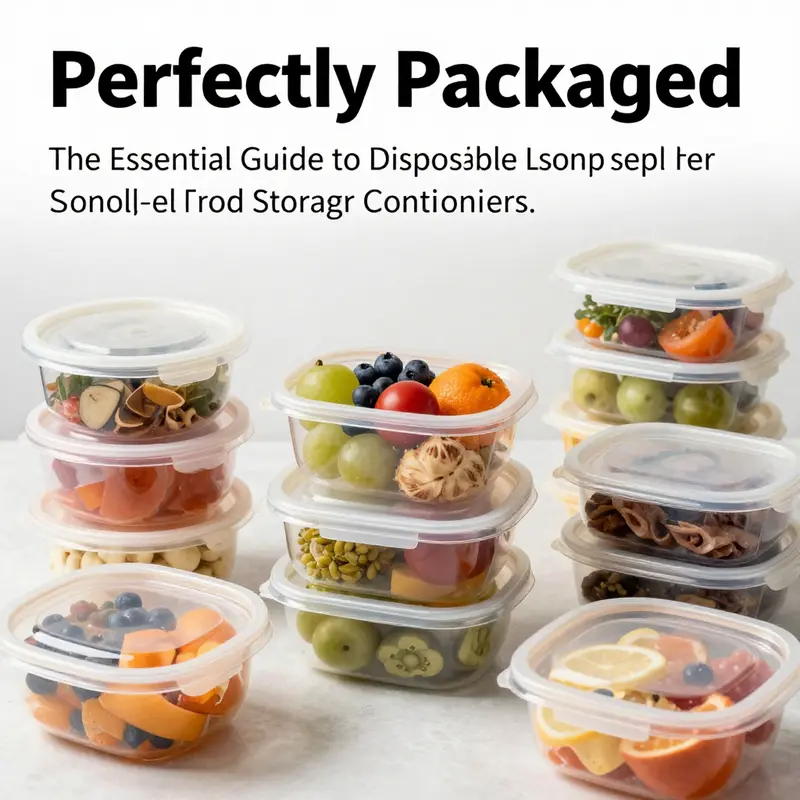
As the culinary and beverage industry evolves, the need for convenient, reliable, and efficient food storage solutions becomes increasingly significant. Disposable small food storage containers have emerged as indispensable tools for businesses ranging from bubble tea shops to catering services. With their diverse composition and practical applications, these containers serve a multitude of purposes, ensuring that businesses can deliver exceptional products while maintaining standards of hygiene and convenience. This guide will delve into the various types of materials used in disposable containers, their industrial applications, prevailing market trends, and the important conversation around sustainability. Each chapter aims to equip you with insights on how to effectively harness the potential of these storage solutions to enhance your operations and meet customer demands.
null

null
Hygiene, Scale, and Branding: The Industrial Reach of Disposable Small Food Storage Containers

Disposable small food storage containers are more than simple receptacles; they are integral components of a highly coordinated system that keeps food safe, travels smoothly, and communicates a brand ethic across every corner of the supply chain. In busy kitchens and bustling delivery operations, these containers do the quiet work of maintaining temperature, preventing cross-contamination, and preserving the appearance of a dish from the moment it leaves the line to the moment it arrives at the customer. They are chosen not just for cost, but for a balance of performance, compliance, and sustainability that matches the needs of a given application. The variety of materials—ranging from polypropylene (PP) and polyethylene terephthalate (PET) to biodegradable plant-based plastics and even paper options—reflects the diverse requirements of modern food workflows. PP and PET containers often deliver robust performance for cold or room-temperature items and can be engineered for leak resistance and stackability without excessive bulk. They tend to handle the rigors of transit well, maintaining shape and integrity through multiple handoffs. Yet their heat and moisture resistance is not unlimited, and exposure to liquids over extended periods can challenge their performance unless designed with specialized liners or venting features. Aluminum foil containers, by contrast, excel in hot, ready-to-serve contexts. Their high heat conductivity makes them ideal for oven-ready presentations and for meals meant to stay hot through transport. They are not microwave-safe and are heavier and pricier than most plastic options, which has led many operators to use them primarily for catered events, takeout where reheating occurs at a destination, or bakery-style dishes where presentation and heat retention are paramount. Paper-based disposables add another axis to choice—favoring eco-conscious programs and offering good moisture resistance when treated or combined with barrier coatings. However, their durability under heavy use and long handling cycles is generally lower, so they are often reserved for lighter fare or for concepts that emphasize sustainability alongside short service windows. Across all these materials, the opportunity to tailor containers with dividers, lids, or venting sits at the heart of industrial and commercial use. Such features support portion control, easy separation of sauces and sides, and streamlined packing lines, enabling a single container to perform multiple roles in a meal-prep or delivery workflow. In the real world, suppliers that connect manufacturers with buyers emphasize not only the raw performance of these containers but also compliance with food-safety standards and the ease of sanitation. Containers that can withstand frequent cleaning or that come from sources with robust certifications help restaurants and caterers maintain high hygiene standards while delivering consistent customer experiences. The economics of scale also shape material choice. Bulk orders reduce per-unit costs, and the ability to customize with dividers or branded lids lets operators preserve a restaurant’s visual identity even in off-premise settings. The tradeoffs among cost, performance, and environmental impact drive ongoing innovation in the sector, as manufacturers explore lighter-weight formulations, better moisture barriers, and compostable or recyclable design approaches that still meet the demands of high-use environments. In this dynamic landscape, the sourcing choices extend beyond product features to supply-chain reliability. A well-run operation requires containers that can be stocked in predictable cycles, fit standardized equipment like stackable racks or insulated carriers, and integrate with inventory management systems. When these containers align with a business’s packaging architecture, they reduce waste, speed up prep times, and improve accuracy in portioning. The interconnectedness of these factors is evident in how containers become such a familiar, almost invisible, backbone of everyday food logistics. Within the food service industry, disposable small containers are a constant presence at fast-food outlets, cafés, and casual dining spots. They are indispensable for packaging salads, sandwiches, bakery items, and pre-portioned meals. Hygiene and cross-contamination control are central, as is the need for containers that can travel through bustling pickup lanes and delivery routes without leaking or deforming. The lightweight, shatter-resistant character of many plastic options makes them particularly well-suited for takeout and delivery. When hot foods are involved, careful material selection matters; the containers must resist deformation and maintain a reasonable barrier against moisture while staying within temperature safety guidelines. The ability to safely hold warm items without leaking or sogginess is crucial for customer satisfaction and for maintaining the quality of textural contrasts that define many on-the-go menus. In retail and gourmet markets, the visual dimension of packaging becomes a strategic asset. Clear PET or translucent PP containers allow consumers to assess color and texture at a glance, which can elevate perceived freshness and quality. This transparency becomes a form of branding—an ambient, almost subliminal advertisement—that complements product photography and shelf presence. Yet the consumer experience does not rely on aesthetics alone. These containers must protect delicate inclusions, maintain crispness, and provide predictable shelf performance during display and transport. The choice between a transparent option and a more opaque or decorative design often reflects the product category, price point, and brand story. In catering and event management, disposables are tested by scale. Buffet lines, mobile catering, and large venue deliveries demand containers that can be produced in bulk, loaded into transport boxes, and distributed with consistent portioning. Here, biodegradability has grown from a niche preference to a broader, more practical consideration. Eco-conscious events seek solutions that reduce post-event waste while delivering the same levels of hygiene and reliability required for professional service. This has driven demand for compostable or fully recyclable materials that can withstand the realities of live service, from cold canapés to hot entrees. In healthcare and institutional settings, the imperative is uncompromising hygiene and operational efficiency. Hospitals, nursing homes, and school cafeterias lean toward single-use formats that simplify cleaning regimes and minimize cross-contamination risks. Standardized sizes and shapes streamline inventory management, enabling staff to move quickly through lines and to track usage with greater accuracy. In these environments, the straight-forward, reliable performance of disposable containers contributes directly to patient and student safety, as well as to the reliability of meal distribution in high-demand contexts. The e-commerce and meal-kit sector highlights a different dimension of value: the need to preserve freshness and texture during transit. Vacuum-sealed or insulated variants help safeguard perishable ingredients, supporting the delivery of ready-to-cook or pre-prepared meals that maintain quality from warehouse to doorstep. In this space, containers may be part of an integrated packaging ecosystem that includes seals, liners, and coordinated cold-chain practices. Sustainability remains a central thread across all sectors. The debate over single-use versus reusable containers is not a simple binary. The lifecycle assessment of a given packaging choice depends on how the container is used, how it is disposed of, and the local infrastructure for recycling or composting. In many markets, recycling streams favor certain polymers, while compostable options require industrial facilities to achieve efficient breakdown. Innovations in barrier technology, thinner walls, and compatible lids all contribute to reducing material usage and waste without sacrificing performance. As companies weigh these tradeoffs, regulatory compliance, traceability, and food-safety standards become guardrails that keep packaging choices aligned with public health goals. This is where bulk sourcing platforms and CE-certified options play a critical role. They offer access to a wide range of container types, from everyday takeout boxes to specialized segmentations that fit partitioned meal plans or event service needs. The ability to source containers in bulk with defined barrier properties and validated safety credentials supports efficient procurement, helps standardize portions across menus, and simplifies sanitation planning for large operations. For operators seeking to balance practicality with sustainability, the supply chain must enable flexible rotation of materials and easy substitution when a particular design no longer meets evolving needs. In this sense, the container becomes a strategic asset—not merely a vessel for food but a lever for operational excellence. To illustrate the practical dimension of these choices, consider how the supply ecosystem emphasizes design features such as divided compartments and tight-sealing lids. Dividers enable portion control and the separation of incompatible foods, which is especially important for multi-item meals and when oils or sauces could compromise other components. Tight seals reduce leakage during transit, protecting both the product and the consumer’s experience. On the sourcing side, platforms that connect buyers with manufacturers stress the importance of compliance and customization. They highlight options for customized shapes, sizes, and barrier properties that can be matched to specific menus, service styles, and delivery routes. In short, the industrial and commercial applications of disposable small containers are a mosaic of material science, logistics, consumer psychology, and sustainability. They enable rapid service, protect food quality, reinforce brand narratives, and respond to a growing demand for responsible packaging. For any operator building a packaging portfolio, the goal is to select containers that harmonize with the operation’s scale, climate, and customer expectations while staying adaptable to regulatory changes and evolving waste-management landscapes. The conversation around these containers will continue to evolve as innovations in materials science, sterilization methods, and recycling infrastructures mature. As markets expand globally, the role of reliable, standardized packaging becomes even more critical for ensuring consistent safety and quality from kitchen to consumer. Internal links to responsible packaging concepts can offer a practical path for teams seeking to align packaging choices with sustainability goals. For example, the option to explore eco-friendly takeout boxes for food packaging provides a direct route to plug aligned solutions into existing menus and operations, helping teams navigate a transition toward more sustainable packaging footprints while preserving the efficiency and hygiene standards that permeate today’s food service world. eco-friendly takeout boxes for food packaging. External reference: https://www.alibaba.com/showroom/disposable-commercial-food-containers.html
How Market Forces, Regulations, and Consumer Tastes Are Rewriting the Rules for Disposable Small Food Storage Containers
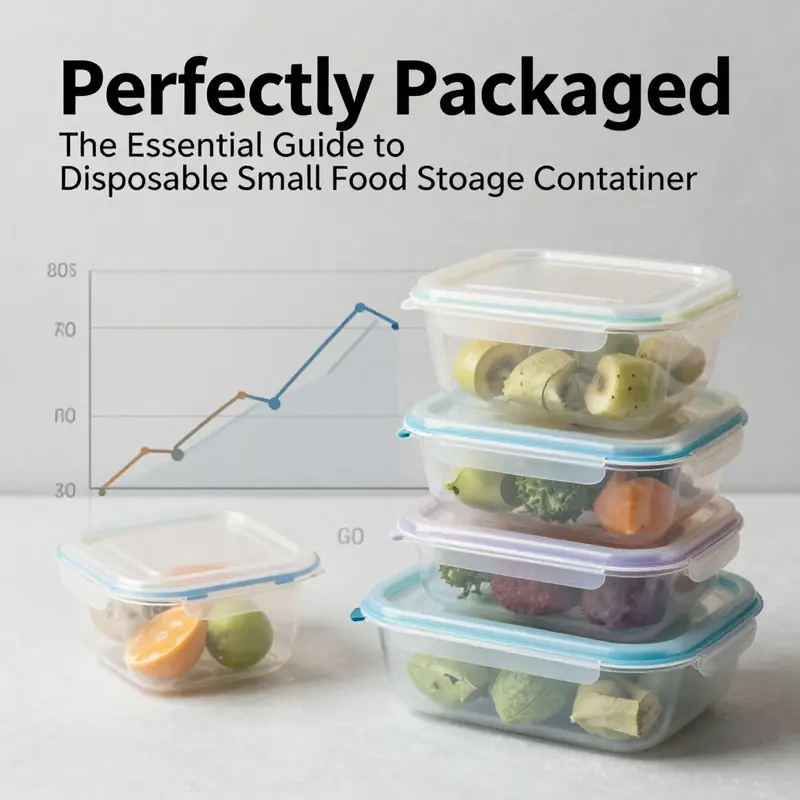
The disposable small food storage container market has shifted from commodity thinking to strategic product design. Once judged chiefly by price and availability, these containers are now evaluated through the lenses of environmental impact, functional performance, and brand storytelling. Regulatory pressure, evolving consumer values, and advances in manufacturing have combined to create a marketplace where material choice, closure performance, and aesthetic appeal carry measurable commercial weight. Manufacturers and buyers must consider how regulations affect sourcing, how consumers’ willingness to pay for greener options reshapes margins, and how digital channels accelerate product discovery.
Sustainability is more than a marketing claim; it is a market requirement. Policies that restrict single-use plastics and promote industrial composting have created a clear direction for suppliers. Emerging materials such as PLA and PBAT are now mainstream alternatives because they meet compostability standards under industrial conditions. For companies selling at scale, this changes procurement, production, and logistics. Compostable polymers often require chain-of-custody documentation, separate waste streams, and different storage conditions to preserve product integrity. Buyers who fail to account for those requirements face higher waste rates and customer dissatisfaction. Equally important, consumer surveys show a persistent willingness to accept slightly higher prices for verifiably eco-friendly packaging, but only when claims are clear and verifiable. A premium of 12–15% is acceptable to many shoppers, provided certification and end-of-life guidance are present on-pack.
Material trade-offs remain central to product strategy. Traditional plastics such as PET and PP still outperform many compostables on barrier protection and moisture resistance. They are stackable, clear, and cost-efficient for cold and room-temperature foods. Aluminum foil containers excel for high-heat applications because they are oven-safe and conductive, but they cannot be microwaved and are heavier. Paper-based options score highly for perceived eco-friendliness, but they often require greaseproof liners or coatings to handle wet, oily, or saucy foods. The most commercially successful offerings combine materials or apply targeted coatings that extend functionality without undermining compostability or recyclability. Designers increasingly use hybrid approaches: compostable liners inside a kraft outer shell, or clear PLA windows in paperboard boxes to balance visibility with environmental claims.
Functionality now competes with sustainability as a primary purchase driver. Consumers expect freshness-preserving seals, secure lid fits, and compartmentalization. Divided containers allow meal components to remain separate, preserving texture and flavor. Leak-resistance is not optional for consumers who order soups, dressings, or Asian takeout; it is necessary to avoid negative reviews and high return rates. Heat resistance is also a differentiator. Containers that tolerate higher temperatures without warping reduce customer complaints and expand use-cases for delivery of hot entrees. From a product development perspective, improving seal geometry or adding a double-lip closure can dramatically reduce spill incidents without big material cost increases. Similarly, stackability and nesting features reduce transportation costs and improve in-store shelving density.
A new consumer archetype has emerged: the buyer seeking sustainable reusability. These buyers want items that serve as single-use when needed yet survive multiple cycles if cleaned properly. This expectation has birthed products with thicker walls, modular lids, and neutral aesthetics. Packaging that looks and feels like a higher-tier product encourages reuse. Retailers and foodservice operators can capitalize on this by offering incentives for returns or discounts on repeat purchases, blending disposable convenience with circular-economy thinking.
Digitalization accelerates both product development and purchase. AI-driven design tools enable rapid iteration of shapes, lid tolerances, and compartment layouts. Flexible manufacturing lines and digital printing make small-run personalization affordable. This means brands can test niche designs, seasonal colorways, or co-branded sets with low upfront cost. On the retail side, e-commerce and live-stream selling permit direct engagement with end users. Visuals and demonstrations of durability and leak performance convert better online than text descriptions alone. Influencers and live hosts can show a container’s leak test, oven tolerance, or compost breakdown, all within a single streaming session. These demonstrations reduce uncertainty and build trust faster than static listings.
Retail channels now demand more granular SKU strategies. Foodservice buyers look for bulk compatibility and cost efficiency, while direct-to-consumer channels emphasize presentation and convenience. Subscription meal kits favor uniform, stackable sets that integrate easily into post-production logistics. Luxury delivery services require premium appearance and tamper-evident closures. In each case, manufacturers must tailor offerings to the buyer’s operational needs rather than assuming a one-size-fits-all product will suffice. Moreover, suppliers able to offer certifications, custom printing, and tailored pack counts win larger contracts. The margins on specialized SKUs justify tooling runs and small-batch customization.
Brand differentiation emerges through experience design. A container’s look, tactile feel, and unboxing sequence influence perceived food quality. Matte kraft finishes and muted colors communicate naturalness. Clear lids highlight freshness, while printed compostability instructions educate buyers. For event catering and retail-ready snacks, attractive compartmented boxes improve perceived value. A practical internal example is the move toward eco-friendly compartmented boxes for fast-food combos or catering platters. Those boxes keep hot and fried items separate from salads and dips, and they make portion control simple for meal-prep customers. Retailers that emphasize these conveniences reduce food waste and complaints while improving upsell opportunities. See an example of an eco-minded compartmented option here: eco-friendly disposable 3-compartment food-grade packaging box.
Operational readiness and supply-chain robustness are now competitive differentiators. Sourcing compostable resins requires relationships with reliable suppliers and contingency plans for seasonality and tariff shifts. Manufacturing capacity must adapt to different cooling and drying profiles for bioplastics. Warehousing needs vary by material; some materials cannot be stored in humid conditions without degrading. Forward-thinking companies invest in testing labs and clear labeling systems to avoid costly recalls. Equally, logistics partners must support separate waste streams for end-of-life disposal where regional infrastructure exists. Brands that educate buyers on disposal expectations reduce confusion and strengthen trust.
Finally, pricing strategy must align with transparent value propositions. Consumers will pay more for credible sustainability, but the premium is conditional. Certification marks, clear disposal instructions, and visible performance testing close the purchase decision. For B2B buyers, total cost of ownership matters. An operator will accept a higher unit price if the container reduces food waste, minimizes returns, and streamlines storage and transport. Marketing must therefore present both emotional and rational benefits: an eco story supported by quantifiable advantages, such as improved stack density, leak reduction rates, or compatibility with existing warehousing.
The trajectory of this market favors suppliers who integrate regulation compliance, functional innovation, and digital-first marketing. Manufacturers that pair credible environmental claims with demonstrable performance will capture the most engaged buyers. Retailers that curate product assortments around both sustainability and use-case performance will attract more loyal customers. In practice, winning products are those that solve real problems while making the buyer feel they made a responsible choice. The interplay of design, material science, and digital engagement will continue to redefine what buyers expect from disposable small food storage containers.
For a deeper look at market forecasts and regulatory impacts, consult this industry study: https://www.marketresearchintellect.com/market-research-report/disposable-small-food-storage-containers-market
From Single-Use to Smarter Storage: Environmental Choices for Disposable Small Food Containers
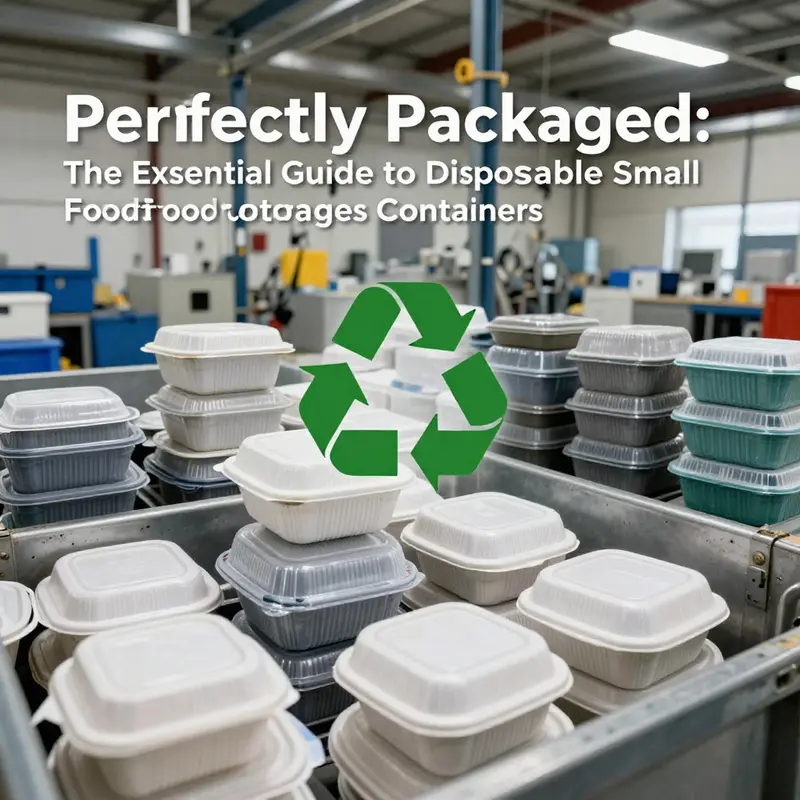
Balancing environmental cost with convenience requires clear trade-offs. Disposable small food storage containers meet real needs: portion control, sanitation, transport, and presentation. They also carry environmental burdens. Understanding those burdens, and the practical alternatives, helps kitchens and consumers reduce harm without losing utility.
Plastic-based disposables often rely on fossil-fuel feedstocks. Many are lightweight, stackable, and leak-resistant, but they resist natural breakdown. Some are recyclable in principle, yet food contamination and mixed-material construction usually block recycling streams. Foam polystyrene versions persist in the environment for centuries. They fragment into microplastics that travel through waterways and soil. Production and transport add greenhouse gases. Disposal in landfill means long-term permanence. Incineration reduces volume but emits carbon and other pollutants when not tightly controlled.
Paper and fiber disposables present a different profile. Items made from kraft paper, bagasse (sugarcane fiber), or molded pulp come from plant-based sources. Their raw materials are renewable when managed well. They often arrive compostable under commercial conditions. However, their water and energy footprints during manufacturing can be significant. Most importantly, their compostability depends on proper infrastructure. In a city without industrial composting, these products may degrade slowly in landfill and still emit methane. Grease and oil from fried foods or heavy sauces can also prevent composting, or require separate processing.
Aluminum containers offer reuse potential in closed-loop catering systems, and they perform well under high heat. But aluminum production is energy intensive. Lightweight disposables still require collection and recycling systems to recapture material value. When aluminum ends up in landfill, the embodied energy is lost.
Bioplastics and plant-based polymers sit between plastic and fiber options. Some derive from corn, sugarcane, or other biomass and are designed to break down in industrial composters. They reduce reliance on petroleum feedstocks and can lower greenhouse gas emissions across some life cycle assessments. Yet the term “bioplastic” covers many chemistries. Not all are industrially compostable, and most will not degrade in backyard compost or landfill. Clear labeling is essential, but often missing. When bioplastics enter traditional recycling or are mistaken for petrochemical plastics, they can contaminate streams and reduce recycling quality.
Choosing better materials is necessary, but not sufficient. Collection infrastructure, user behavior, and product design shape outcomes. A compostable container that is thrown in the trash is functionally equivalent to a non-compostable one in landfill. A recyclable plastic food tub contaminated with sauce is unlikely to be recycled. For this reason, supply decisions should be coupled with operational plans. Caterers, meal-kit providers, and event managers must create clear disposal pathways. Signs, staff training, and strategically placed bins improve diversion rates. Where feasible, partnerships with local composting or recycling firms ensure materials are processed correctly.
Design matters. Single-material construction supports recycling. Simple closures, minimal coatings, and grease-resistant fiber treated with clean, compostable barriers perform better in industrial composters. Divided trays help portioning and presentation, but each additional compartment or lining complicates end-of-life handling. Manufacturers can reduce complexity by avoiding mixed substrates and by specifying coatings and glues that meet composting standards.
For businesses seeking balance, a tiered approach works well. Use compostable fiber or certified compostable bioplastic for cold and dry items. Reserve aluminum or heavier heat-tolerant options for hot entrees when returning containers for reuse is feasible. Keep single-use plastics for limited cases where sanitary concerns override other factors. Apply this mix with strong labeling and customer guidance so waste streams stay pure.
Reusables shift the paradigm entirely. Glass and stainless steel outperform disposables over repeated use. They avoid chemical leaching issues and tolerate heat, cold, and mechanical stress. Their upfront footprint is higher, but extended lifespans amortize embodied energy over many uses. Closed-loop systems work best in commercial settings: customers return containers for washing and reuse. Logistics can be simple in university cafeterias, corporate cafeterias, or food halls. In dispersed retail or delivery, incentivized return programs or deposit systems increase recovery rates. The major barrier is convenience. Reusable programs must be frictionless. Collection points, washing infrastructure, and clear economics determine adoption.
Behavioral nudges amplify material choices. Clear signage and on-package disposal instructions reduce contamination. Training staff to scrape and stack containers improves recycling rates. Incentives, like small discounts for returning containers or choosing reusable options, change consumer habits. Businesses should track diversion metrics. Data informs which containers to keep, which to replace, and whether educational efforts are working.
Procurement decisions should look beyond unit cost. Life cycle thinking matters. A slightly higher unit cost for a compostable fiber box may lead to lower waste fees and better brand positioning. Conversely, investments in durable containers and return logistics may pay off in reduced purchasing and disposal costs. Certifications and third-party testing provide assurance. Look for industrial compostability certifications or recycled-content verification. Labels are imperfect, but they guide buyers.
Local context alters the best choice. Cities with curbside composting can rely more on compostable disposables. Regions with robust plastic recycling benefit from single-material plastics that are accepted by local processors. In remote locations without sorting services, reusable containers backed by centralized washing likely offer the most meaningful environmental improvements. Decision-making should map supplier options to local waste infrastructure.
When moving toward sustainable options, transparency helps. Share material information with customers. Explain what “compostable” means locally. Offer clear guidance for disassembly, such as removing lids or separators when required. Avoid greenwashing. Do not claim full biodegradability if a product requires industrial composting. Provide alternatives where disposal options are limited.
Practical tips for reducing impact are straightforward. First, favor single-material designs accepted locally. Second, choose compostable fiber or certified bioplastics only when industrial composting is accessible. Third, set up staff training and clear disposal signage. Fourth, pilot returnable container programs where logistics allow. Fifth, track waste streams to verify improvements and adjust procurement.
At scale, circular approaches reduce reliance on virgin materials. Refill-and-return models and container exchange systems can dramatically cut waste from food service. Local wash-and-return hubs enable reuse for small businesses. Partnerships between suppliers, haulers, and composters create reliable recovery pathways. Public policy can help by expanding composting infrastructure and standardizing labeling.
Finally, consider the full life cycle. The best immediate choice may differ from the best long-term strategy. Short-term steps include switching to compostable fiber where composting exists, and reducing mixed-material packaging. Long-term investments favor reuse systems, material innovations that meet composting standards, and building closed-loop collection networks. Each choice comes with trade-offs in cost, convenience, and carbon.
For businesses and households, the path forward pairs practical changes with system-level thinking. Choose materials that align with local processing. Design products that are easy to separate and process. Communicate clearly to users. Pilot reuse and return programs where possible. Small food storage containers are ubiquitous; the cumulative impact of smarter choices is large. Applying life cycle thinking and investing in infrastructure and behavior change turns a convenience product into an opportunity for meaningful emissions and waste reductions.
For further guidance on storing food safely while reducing waste, review federal resources on sustainable food management and storage best practices: https://www.epa.gov/sustainable-management-food-waste/food-storage-and-safety-tips
For an example of compostable fiber options suitable for takeout and events, see these eco-friendly takeout boxes for food packaging.
Final thoughts
In conclusion, disposable small food storage containers play a vital role in many aspects of the food service and beverage industry. With a variety of material types and practical applications, they cater to a wide range of needs, ensuring convenience without compromising quality. Understanding industrial applications, recognizing consumer preferences, and being aware of their environmental impact are crucial for businesses looking to thrive in a competitive landscape. By selecting the right containers for your operations, you can enhance your service offerings while contributing to a more sustainable future.