
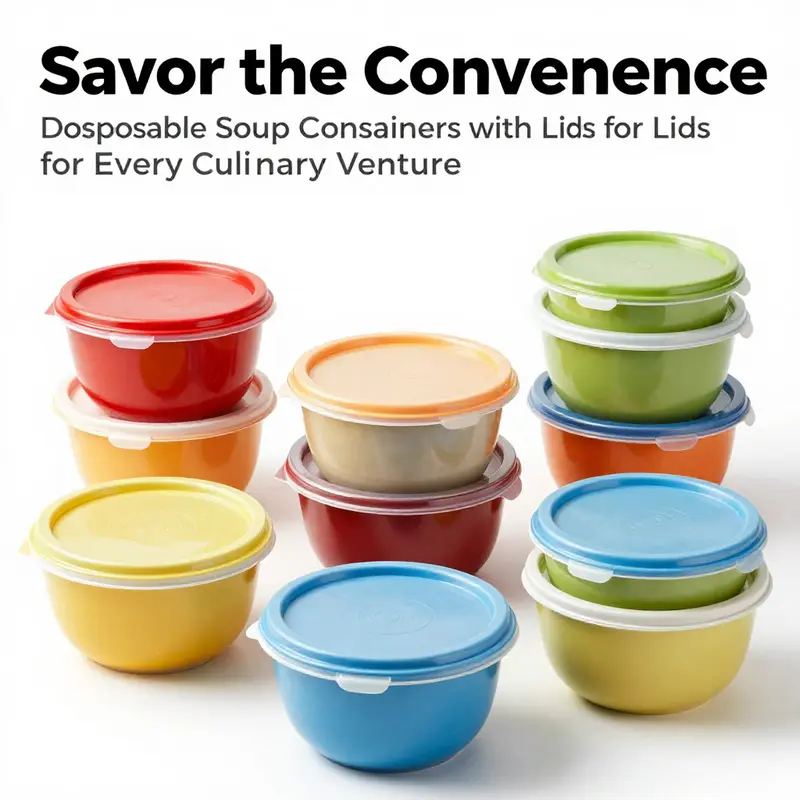
In the dynamic realms of food service, from bubble tea shops to catering services, the choice of packaging plays a pivotal role in operational efficiency and customer satisfaction. Disposable soup containers with lids offer a seamless solution, designed to meet the diverse needs of businesses serving liquid-based dishes. This versatile kitchenware not only ensures food safety and hygiene but also embraces sustainability practices crucial for modern consumers. As we navigate through the chapters ahead, we’ll explore the materials and construction behind these containers, the myriad benefits they present, their environmental impact, market trends, and exciting customization opportunities that allow brands to stand out in a crowded marketplace.
null
null
Leakproof Convenience: How Disposable Soup Containers with Lids Transform Catering and Food Service
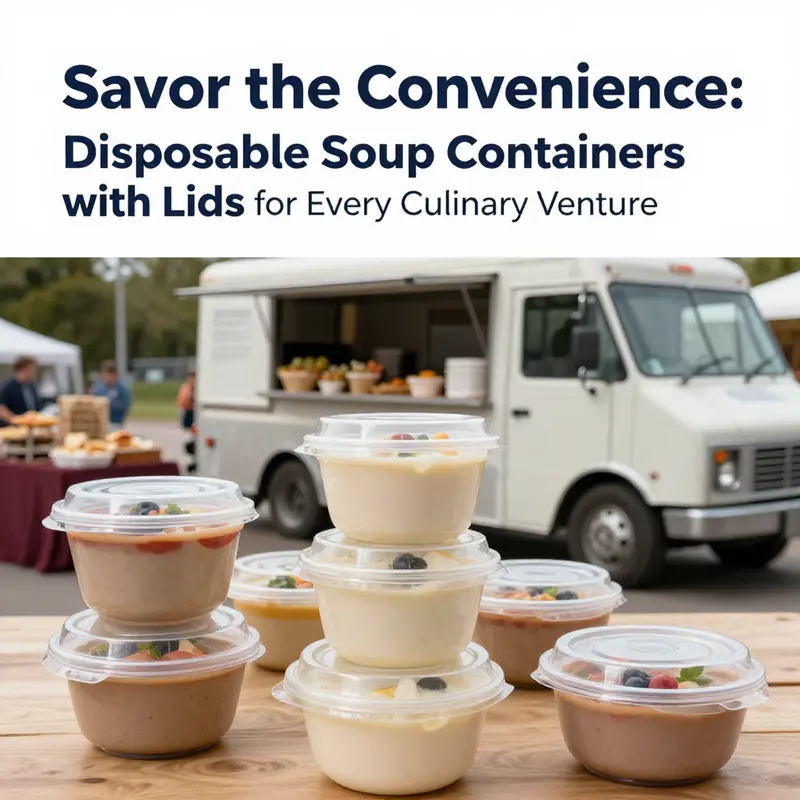
In the ebb and flow of catering and food service, the humble disposable soup container with a lid has become a quiet backbone of modern operations. It sits at the intersection of practicality and hospitality, enabling kitchens to move with speed without sacrificing safety, and it does so while preserving the integrity of the food from pot to plate, tray, or door. The container and its lid are not merely vessels; they are a small yet critical system that governs how a hot broth travels through a service line, across a room, onto a delivery rider’s bag, and finally into a guest’s hands. When chosen thoughtfully, these containers support a seamless experience that customers notice even if they cannot name the exact material that encases their soup. They are the everyday tools that, in aggregate, determine how well a catering operation scales from a few dozen portions to thousands, and how reliably a brand keeps its promises of freshness and cleanliness.
Hygiene sits at the core of why disposable soup containers with lids matter. In a setting that serves hot liquids to many guests, cross-contamination risk is a real concern, and the one-use design eliminates the carryover of residues from one event to the next. Each unit arrives clean, sealed, and ready for fill, reducing the chances that a shared dish or a dampened sleeve could become a vector for unwanted microbes. The lid plays a crucial role here: it creates a tight seal that blocks dust, pests, and airborne contaminants during transit and storage, while also maintaining a safer temperature range for the soup. For hot soups, temperature stability is not a mere comfort—it is a safety measure, supporting the maintenance of at least a minimum temperature that discourages rapid bacterial growth during busy service windows. In this light, the container becomes a small but meaningful contributor to a rigorous food-safety culture that operators often strive to uphold with limited space and time.
From the perspective of kitchen workflow, the advantages stack up quickly. Disposable containers with lids minimize the labor overhead tied to dishwashing, sanitizing, and drying those many bowls and pots that would otherwise pile up after a service. The act of washing is replaced by a straightforward cycle of discard, cleanup, and restocking. The net effect is a leaner operation that can reallocate staff toward core cooking tasks, order accuracy, and guest interactions. Water consumption drops, energy use for washing equipment declines, and the physical footprint of dish storage shrinks. For a catering operation that pivots from corporate lunchtime deliveries to large-event tastings, such flexibility translates into measurable throughput gains. The containers also simplify inventory management—no need to forecast the exact number of reusable dishes that could break, chip, or go missing in transit; instead, planners can estimate volumes based on headcounts and order patterns and adjust orders with a precision that helps stabilize costs over a season.
The customer experience is equally shaped by the interplay of container design and service expectations. A well-sealed lid reduces the likelihood of spills during delivery or when guests are juggling containers in crowded spaces. No one wants to answer a phone call from a guest reporting a leak—yet that risk recedes when a lid forms a secure barrier. Temperature retention matters too. A soup that stays warmer longer, with less dilution from travel, feels premium and comforting, and it strengthens customer satisfaction in takeout and delivery scenarios. In events where portions are shared, the ability to seal a larger cup or a two-serving container helps keep sauces and broths from cooling too rapidly while still allowing guests to pour and share without mess. In short, the lid is not just a cap; it is a performance feature that underpins reliability in the most demanding service contexts.
Beyond safety and efficiency, there is a practical dimension of customization and branding that many operators value. Disposable containers can be printed with logos, colors, or messaging, turning a practical tool into a portable and visible extension of the brand. The ability to brand a takeaway or delivery package can reinforce a restaurant’s identity in a crowded marketplace, improve recall, and convey professionalism in a season when competition is intense. Even without elaborate customization, choosing a container with a cohesive look—color, texture, or finish—can convey a moment of hospitality that resonates with guests as they open their meal. Keeping this in mind, operators often balance aesthetics with the functional requirements of leak resistance and thermal performance, opting for materials and constructions that deliver both form and function in equal measure.
A growing thread in the conversation around disposable soup containers with lids is the question of sustainability. The industry has responded with a spectrum of material choices, from traditional lined paper and recyclable plastics to compostable and biodegradable options. Paper containers with a polyethylene lining historically offered a reliable barrier against leaks and a degree of heat retention, making them a staple in many kitchens. Yet environmental considerations push operators to explore alternatives such as molded fiber and plant-based bioplastics. In theory, compostable options mobilize a meaningful end-of-life solution for food-service waste, particularly when facilities have access to industrial composting streams. In practice, the environmental impact depends on multiple factors, including the container’s material composition, the local waste infrastructure, and consumer behavior after disposal. The broader takeaway is clear: when sustainability is a priority, the best choice often occurs at the intersection of material science, waste management realities, and operational goals. If a business uses sustainable materials, it aligns with evolving consumer expectations and regulatory trends, while still delivering the reliability customers expect during delivery and catering.
From a cost and scalability perspective, disposable soup containers with lids offer predictable budgeting in an otherwise variable landscape. Bulk pricing makes it feasible to plan for major events without fear of runaway costs due to breakage or long-term maintenance of non-disposable items. Depending on size and material, the per-unit price for these containers can be a fraction of a dollar when ordered in bulk, with compostable options sometimes carrying a slightly higher unit cost but potentially offset by waste reduction and simplified logistics. The economics shine when one pairs the right size with the right service model—16-ounce portions for solo meals, larger 32-ounce sizes for family style or catering demoes, and even bigger containers for sharing platters. This range supports flexible menu design and service formats, letting operators tailor portions to the event without compromising on convenience or safety.
The chapter would be remiss without touching on sourcing and reliability. In a field where timing can define success or failure, the ability to source consistent, certified containers in bulk matters just as much as the packaging’s performance in heat and leak resistance. Reputable suppliers emphasize safety for food contact, end-of-life disposal pathways, and the capacity to scale up operations for busy seasons. Certifications from recognized bodies provide confidence that the containers meet safe-use standards and that they perform as advertised under real-world conditions. For operators, the sourcing decision is as much about who delivers as about what arrives—the right partner will provide stable lead times, consistent quality, and the option to customize in ways that fit the brand’s needs while keeping the menu and service intact. In practice, many kitchens benefit from pairing a trusted container with a flexible procurement approach, allowing them to shift among materials as markets and waste streams evolve.
Integral to the practical narrative of these cups and lids is the everyday choice of what to purchase and how to use it. To illustrate the tangible presence of the format in real operations, many caterers and food-service providers turn to readily accessible, generic options that emphasize leak resistance and ease of use. See the disposable kraft paper soup containers with lids available in bulk, a straightforward illustration of the core attributes: reliable containment, simple handling, and room for branding if desired. For a closer look at a widely available option that emphasizes practicality and compatibility with busy service, consider exploring a listing that highlights the kraft-based, lid-enabled design. This reference can offer a concrete sense of how the packaging looks in practice and how it supports diverse service models in both delivery and takeout contexts. https://ecocupbowl.com/product/disposable-kraft-paper-soup-containers-with-lids-ready-bulk-takeaway-bowls-noodle-soup-container/ In choosing such a container, operators align with a structure that keeps soup secure in transit, preserves heat, and minimizes the risk of contamination, all while offering room for growth as menus expand and service channels diversify.
As the industry continues evolving, a nuanced view emerges: the best disposable soup container with a lid is not a single perfect choice for every operation. It is the option that harmonizes safety, efficiency, guest experience, cost, and environmental responsibility within the context of a business’s unique needs. When a caterer weighs the decision, they consider how the container will perform from the moment the ladle leaves the pot to the moment the guest lifts the lid at the table or on the doorstep. They consider how easily staff can assemble orders, how reliably the product will ship, and how well it will align with sustainability goals without compromising the trust guests place in the quality of the food. In this way, the container carries more than soup; it carries the capacity for consistent service, proud hospitality, and responsible business practice, all wrapped into a compact, disposable form that remains remarkably enduring in the fast-paced world of food service.
External perspectives remind us that packaging is part of a broader system. Standards and collaborations across the packaging ecosystem guide improvements in materials, end-of-life pathways, and consumer expectations. For operators seeking deeper guidance on sustainable packaging strategies, engaging with industry coalitions and standards bodies offers a practical roadmap. This chapter has drawn on those broader conversations and practical industry realities to reflect a balanced view: the disposables most often used in catering can be safe, efficient, and increasingly sustainable when they are chosen with care and aligned with local waste infrastructure. For more on sustainable packaging practices and industry-wide guidelines, an external resource from a respected industry coalition provides a solid foundation and an invitation to ongoing learning. https://www.packagingcoalition.org/
Sealed and Sustainable: Reimagining the Environmental Footprint of Disposable Soup Containers with Lids
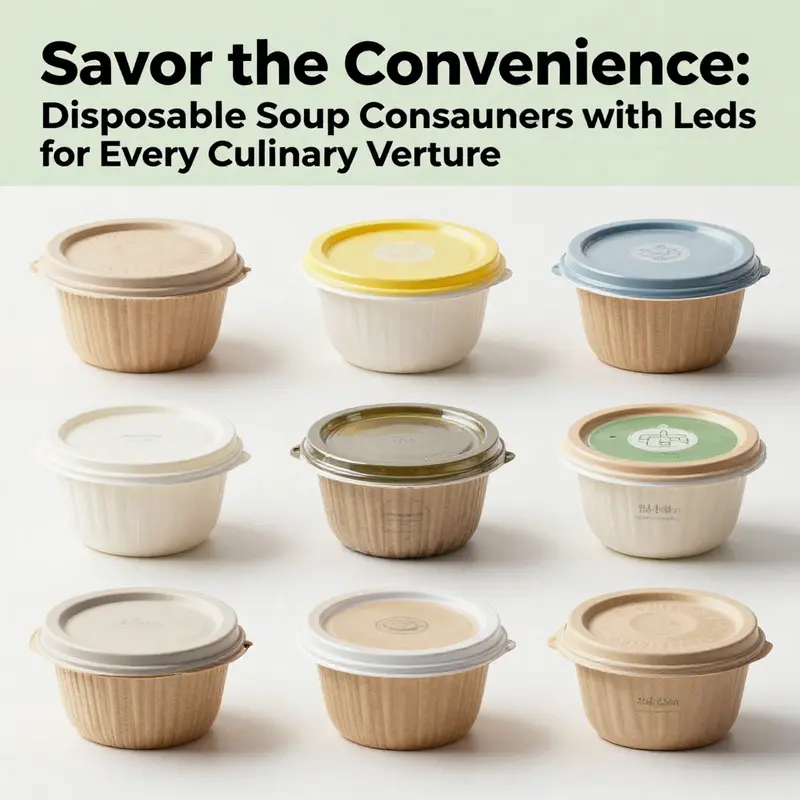
The humble disposable soup container with a lid sits at a surprising crossroads of daily routine, corporate responsibility, and planetary health. It is a small object that travels from kitchen to customer, carrying warmth, comfort, and a message about how we value convenience and stewardship in equal measure. When we trace the path of these containers—from raw materials to end-of-life disposal—we glimpse a broader story about how modern food systems balance performance with responsibility. The chapter that follows treats this seemingly ordinary package not as a mere receptacle but as a conduit for change, a product shaped by material science, waste-management ecosystems, and consumer behavior, all converging around the simple act of taking soup on the go or storing leftovers for later.
At the heart of these containers lies a practical challenge: they must withstand heat, resist leaks, and stay sturdy during transport, all while remaining affordable at scale. Paper-based shells with a polymer lining have dominated this space for years, a configuration that marries familiar, renewable-origin materials with the leak resistance shoppers expect. The lining, often a thin polyethylene layer, is what keeps broth from soaking through the outer paper and helps preserve temperature during short trips. Yet the environmental impact of that lining can’t be ignored. Even as it keeps contents contained, it anchors the product to fossil-derived polymers in many cases, complicating end-of-life pathways if the aim is true recycling. This is where the sustainability conversation becomes nuanced: the trade-off between performance and compostability hinges on the type of coating, the availability of appropriate disposal streams, and the local infrastructure that can actually render compostable materials into useful compost rather than waste.
In response, innovators have introduced alternatives that tilt the balance toward renewability and end-of-life clarity. Sugarcane fiber, or bagasse, rises as a renewable byproduct of another industry, offering a naturally fibrous substrate that can be molded into sturdy containers. Bamboo, another rapidly renewing resource, provides strength and resilience suitable for hot or cold liquids. Paperboard with plant-based coatings opens a path to water resistance without leaving the heavy, nonrenewable footprint of traditional plastics. Molded fiber—the kind often composed of recycled papers and agricultural fibers—embeds a circular ethos into the container’s very structure, dissolving into a more benign residue when disposed of properly. Then there is the appeal of bio-based plastics like PLA, derived from cornstarch, which can offer a lower carbon profile under the right conditions. These materials collectively broaden the palette of what “eco-friendly” can mean in practice, but they also demand a more careful choreography of disposal and infrastructure. It is not enough to claim compostability; a product must meet well-defined standards and find its way into facilities that can actually complete the decomposition process.
The literature and industry standards emphasize that compostability is not universal. A batch of containers labeled compostable might still require industrial facilities that can reach high enough temperatures and maintain oxygen levels to break down in a timely fashion. Certifications from respected bodies, such as the Biodegradable Products Institute (BPI) or adherence to ASTM D6400 standards, help buyers and regulators verify that a product will perform as claimed in the intended waste stream. Even with rigorous certification, the end-of-life outcome depends on local practice. In places without industrial composting capacity, compostable packaging may end up in landfills where anaerobic conditions slow decomposition, undermining the environmental promise. This is a reminder that sustainability is not purely about the material in the container but also about the system in which it is disposed.
Lids play a crucial role in the sustainability equation. A tight-sealing lid reduces the chance of spills, which in turn lowers the likelihood of product loss and second- packaging waste that would be needed to manage leaks. The lids themselves can be made from the same base material as the container or from recyclable plastics designed to align with existing recycling streams. A well-fitted lid extends the usable life of a product in transit, a small but meaningful contributor to waste reduction by preventing premature disposal due to mishaps. When pairs of containers and lids are designed with uniform material families, downstream sorting becomes simpler for recycling facilities, increasing the odds that a container will be processed rather than discarded.
The environmental performance of these systems is ultimately measured in life-cycle terms. A paper-based shell with a PE lining may require less energy to manufacture than a molded fiber alternative, but it may persist in the environment longer if it escapes proper composting. Conversely, bagasse or PLA-coated options may offer superior compostability on paper, yet their real-world benefits hinge on the availability of industrial facilities and consumer adherence to disposal directions. This is why many practitioners advocate for transparency in labeling, clear disposal guidance, and robust consumer education. When customers understand whether a product is best disposed of in a composting stream, a campus recycling program, or a standard trash bin, they can participate more effectively in the system designed to minimize harm and maximize resource recovery.
Beyond the technical and ecological dimensions, there is a business logic to adopting more sustainable soup containers with lids. For food-service operators, the choice is not simply about cost per unit. It is also about brand alignment, reliability, and the reduction of waste-related concerns during peak service. Seasonal menus, catering events, and delivery programs depend on packaging that travels well, keeps contents at the right temperature, and arrives intact. The resilience of the packaging—its ability to resist leaks, to resist crushing in transit, to maintain heat for the duration of the journey—translates directly into customer satisfaction and operational efficiency. When a lid seals securely, it reduces the chance of spills on car seats, office desks, or event spaces, which in turn lowers the burden on cleanup and increases the likelihood of repeat business.
A practical way to think about sustainability in this sphere is through the lens of system fit rather than isolated material claims. A compostable container that ends up in a recycling stream or a landfill might not deliver the intended environmental advantage. Conversely, a slightly heavier container made from recycled paper with a responsibly sourced coating, designed to be compatible with existing municipal compost programs, can be a more effective choice in a city with robust composting infrastructure. The question becomes less about which material is “best” in a vacuum and more about which packaging choice integrates most effectively with the local waste management ecosystem, the supplier’s guarantee of performance, and the consumer’s willingness to participate in proper disposal.
To illustrate how these pieces come together in the market, consider the continuum from takeout to delivery to event catering. In quick-service contexts, the priority is enduring heat retention and spill resistance, paired with a price point that scales with volume. In event settings like festivals or corporate catering, branding becomes more pronounced, and the containers offer opportunities for customization that reinforce an organization’s sustainability narrative. The capacity range—from smaller 16-ounce options to larger 32-ounce or even bigger formats—gives operators flexibility in portion control and sharing, reducing food waste by enabling more precise serving sizes. The ability to align lid design with the container’s material family further reinforces the waste-management story: a sealed package that travels securely is one less source of waste from spills, and a consistent material family simplifies downstream processing.
From a consumer perspective, the container’s appearance and tactile feel can signal environmental intent. A natural-toned paper, a subtle embossing, or a kraft-like finish can convey a message of earth-friendliness even before the product is discarded. Conversely, a product that looks overly flimsy or that leaks easily can undermine trust in sustainability claims. This is where communication matters: clear labeling, explicit disposal instructions, and visible certifications help people make informed choices. It is not only about what happens after consumption but about how the packaging shapes the eater’s behavior during use—whether they keep a hot cup from sloshing or they separate waste according to local guidelines.
In pursuit of a more sustainable future for disposable soup containers with lids, the industry also faces the practical realities of sourcing and scale. The global supply chain has shown that bulk purchasing can lower per-unit costs, but it also concentrates impact. Responsible procurement means selecting materials that balance performance, cost, and end-of-life outcomes. It means seeking suppliers who can provide documentation on raw-material sourcing, processing energy use, and compostability claims. It also means recognizing that a packaging decision influences not only the immediate dining experience but also the environmental footprint of an organization over time, from the kitchen’s waste streams to municipal recycling and composting facilities.
For readers who want to explore a concrete example of how these principles translate into market options, consider the broader category of kraft paper soup containers with lids. These products illustrate how a seemingly simple design choice—paper-based shells with a secure lid—can embody a spectrum of sustainability strategies, from compostable coatings to recycled content and clear end-of-life guidance. The combination of renewable feedstocks, performance reliability, and disposal transparency makes these containers a focal point for responsible food packaging in a world increasingly attentive to waste and resource use. To further explore the practical angles, you can examine how buyers approach packaging selection, balancing price, performance, and environmental claims in a dynamic market that continues to evolve with technology and policy.
This integrated view of material science, waste infrastructure, and consumer behavior reframes the disposable soup container from a one-off product to a performance-driven system. It invites operators to ask not just how well a container holds soup, but how it aligns with a city’s compostability programs, how it contributes to a brand’s sustainability story, and how it can reduce the total volume of waste produced during a busy service period. When lids snap into place and materials are chosen with end-of-life pathways in mind, these containers become a bridge between convenience and care for the environment. They demonstrate that sustainability is not an afterthought but a core design parameter—one that shapes service experiences, supports responsible waste streams, and ultimately helps communities move toward more sustainable food systems.
For readers seeking a concise entry point into the practicalities of choosing sustainable packaging, consider the concept of integrated disposal guidance and standardized labeling. When a container clearly communicates its intended waste stream and aligns with local facilities, it reduces confusion and increases the likelihood that it will be processed correctly. This is not merely a moral argument; it is an actionable pathway to reduce pollution, lower the life-cycle impact of food service operations, and preserve resources for future meals. As the market continues to respond to demand for eco-friendly options, suppliers are increasingly able to offer a range of compostable or low-impact coated materials, matched with lids designed for secure transport. The outcome is a more resilient packaging ecosystem that serves both customers and the planet without sacrificing the convenience that has become a staple of modern dining.
Internal link reference: For a practical example of a kraft paper solution that illustrates these points, see the article on disposable kraft paper soup containers with lids. The anchor text is crafted to reflect the product category while remaining neutral about brand names, and the link points to a page describing bulk, ready-to-use options for takeout and noodle-soup applications.
External resource: For a deeper dive into compostability standards and certification, see the Biodegradable Products Institute database: https://bpiworld.org/
Seal, Serve, Sustain: Market Trends and Pricing in Disposable Soup Containers with Lids
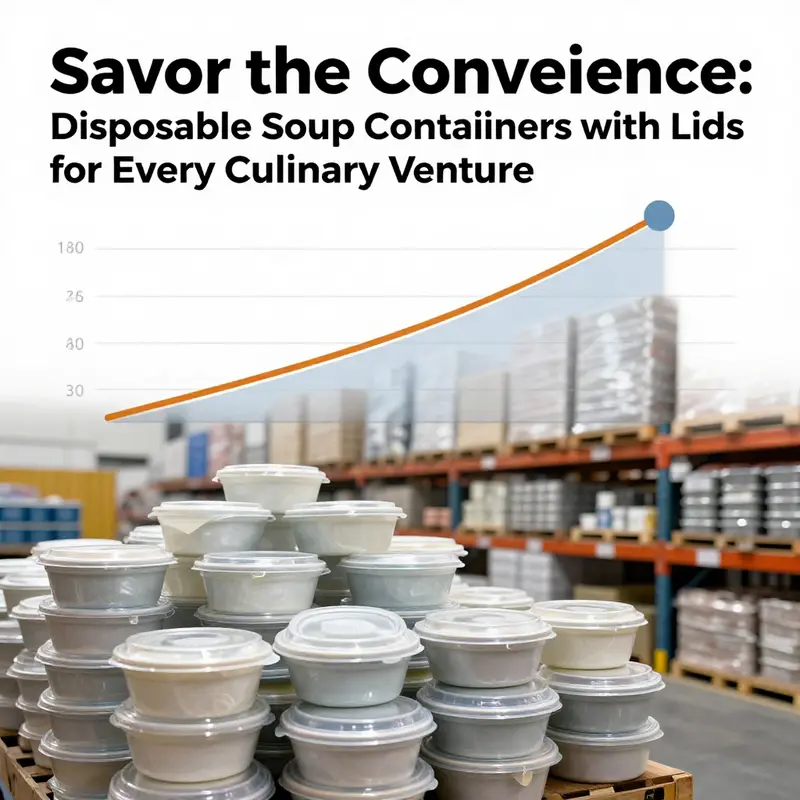
Across kitchens that run on speed and service, disposable soup containers with lids function as more than simple vessels. They are a quiet interface between hot food and busy hands, a promise that a meal remains intact from counter to customer. Over the past few years, the market has pivoted from a purely functional option to a portable, sustainable solution that supports speed, safety, and storytelling for brands. In this landscape, the container is not just packaging; it is an extension of the dining experience. Restaurants, food trucks, and caterers seek containers that resist leaks, retain heat, and offer predictable performance under a range of handling conditions. Consumers expect clean, recyclable or compostable choices, and suppliers respond with materials that satisfy both appetite and conscience.
Material choices sit at the heart of this shift. Most traditional options use paper with a plastic lining to prevent leakage and preserve temperature. Yet, growing demand for greener options has accelerated the development of compostable and biodegradable variants. Plant-based plastics, uncoated papers, and certified compostable films are moving into mainstream lines. Each option carries a balance of benefits and tradeoffs: tighter seals and heat retention can be achieved with certain linings, but compostability must be verified under appropriate standards. Certifications such as regulatory food-contact approval, quality-management systems, and compostability standards help buyers compare options with confidence. In practice, the choice often comes down to the intended end use, whether one-off takeaway or longer-term cold storage, and the acceptable environmental footprint of the disposal path.
Performance remains a central buying criterion. Modern containers aim to survive hot fillings, rough handling, and quick service without leaking or collapsing. Heat retention matters for patrons who expect soups to stay piping hot during transit, yet many buyers also want the option to chill or reheat leftovers safely. Lids that snap firmly onto rims are essential for travel, as a loose lid invites spills and user frustration. The materials used for the lid, whether the same family as the container or a recyclable alternative, should withstand microwave or freezer use if the user intends to reheat. Such capabilities are now frequently marketed as part of the package, reinforced by safety approvals and listening to customer feedback about convenience and reliability. In parallel, stackability and rigidity influence storage in back-of-house and in home pantries, enabling cooks to prepare large batches and portion meals with minimal effort.
Design optimization has become a discipline in itself. Industry players embed efficiency into every curve, reinforcing a snug fit that helps prevent leakage yet remains easy to open. The rise of stackable shapes reduces warehouse and transport costs, sometimes by a noticeable portion of storage space, according to kitchen efficiency studies. The seal design—whether a simple snap-on lid or a more integrated locking mechanism—adds to the perceived value as much as to actual performance. In a system where speed matters, even the way containers nest together between batches can shorten cycle times and reduce waste. This is not just about convenience; it is about protecting margins in a sector where small gains compound across thousands of servings each day. The best designs also consider branding opportunities, allowing logos or color accents to appear on lids or sides without compromising seal integrity or recyclability.
Customization is no longer a side feature; it is a growth strategy. Suppliers increasingly offer a spectrum of sizes, print options, and branding services. For event planners and branded takeout concepts, the ability to print a logo, color, or message on a lid becomes a tangible marketing channel. Flexible runs, quick turnarounds, and predictable pricing empower smaller kitchens to adopt higher-end packaging without sacrificing cost control. In addition to visuals, packaging designers optimize for compatibility with common commercial processes. Containers should be microwave-safe for reheat, freezer-safe for long-term storage, and dishwasher-safe enough to withstand incidental cleaning in busy kitchens. As these capabilities converge, a broader audience gains access to containers that perform well in the demanding cycles of takeout, meal prep, and office meal programs.
Market demand now flows from multiple directions. Takeout and delivery continue to expand as consumer routines favor convenience. Catering events and parties require dependable containers that arrive intact, with lids in place and seals uncompromised. Office lunches and school meals demand cost-effective options suitable for bulk orders, while food trucks and pop-up vendors value lightweight, leak-resistant solutions that can be trusted in transit and under heat. Meanwhile, home storage and meal-prep habits have grown, with families portioning soups for the week and reheating them safely. Across these channels, the core appeal remains consistent: a single-use package that eliminates dishware cleanup while guaranteeing food safety and consistent temperature. The driver’s seat of choice shifts with price, performance, and environmental credentials, guiding procurement decisions in real time.
Pricing and availability reflect a layered market. Basic, paper-based containers offer a compelling price ceiling for high-volume operations. In bulk, the per-unit cost can shrink to a few cents, making them attractive for daily soups, stews, or brothy meals that move quickly through a kitchen. At the same time, more advanced options—such as sturdy, BPA-free plastics or compostable papers—command higher unit costs but deliver improved durability, heat tolerance, and clean disposal after use. For some buyers, the premium is justified by reductions in return rates, complaints about leaks, and the labor saved during handling. In the landscape described by major online platforms, prices can swing within a broad band: the smallest servings may land in the low cents per unit, while larger or certified compostable formats trend toward the upper end of a few tenths of a dollar. This tiered structure reflects both material science and the economics of scale, as well as the growing premium attached to sustainability and brand assurance. The procurement approach thus matters as much as the product itself, with bulk orders enabling significant discounts and shorter lead times often tied to specific supply chains.
End-of-life considerations now shape purchase choices as much as sealing quality. A rising share of shoppers and operators weigh whether a container is recyclable, compostable, or designed for a particular waste stream. Compostable and biodegradable variants have grown in prominence, especially when paired with municipal or industrial composting infrastructure. Yet true end-of-life sustainability requires clear labeling, dedicated collection streams, and reliable consumer education. Certification schemes and transparent claims help buyers compare options and avoid greenwashing. In practice, the market has begun to reward packaging that aligns with the local waste ecosystem, even if this means selecting a slightly different material profile to match regional capabilities. In this context, the container becomes part of a broader circle of sustainability that includes transportation, energy use, and the upstream sourcing of raw materials.
From a sourcing perspective, buyers increasingly evaluate supplier capability and reliability. They look for documentation of food-safety compliance, consistent production tolerances, and responsive customer support. The ability to customize colors, shapes, and print runs shortens the time from concept to consumer and makes packaging a strategic component of brand experience. For those evaluating options, a frequently cited category is kraft-based, sealed containers designed for bulk takeout and noodle-soup style applications. disposable kraft paper soup containers with lids. This category demonstrates how packaging suppliers balance performance with sustainability, delivering a product that travels well in transit and looks polished in a catering setup. The broader takeaway is a push toward reliability, traceability, and cost control, with suppliers offering both standard lines and flexible customization to fit a wide range of budgets and marketing ambitions.
Ultimately, the market’s pulse is driven by the twin forces of performance and responsibility. Operators want assurance that soups will arrive hot, intact, and ready to serve, while communities increasingly demand packaging that minimizes waste and supports circularity. The most successful players now articulate a clear value proposition: a packaging choice that reduces waste, protects food safety, and reinforces brand trust. As the product category matures, manufacturers experiment with novel materials and hybrid designs that can deliver both leakage resistance and compostability. The ongoing dialogue between kitchen practicality and environmental stewardship shapes future pricing, innovation, and availability. In this evolving field, the container is not merely a holder; it is a front-line interface between a meal and its journey from kitchen to table, and the business decisions around it reflect broader shifts in how society thinks about waste, value, and taste.
External resource: Amazon Best Sellers page
Branding on the Move: Customizable Soup Containers with Lids
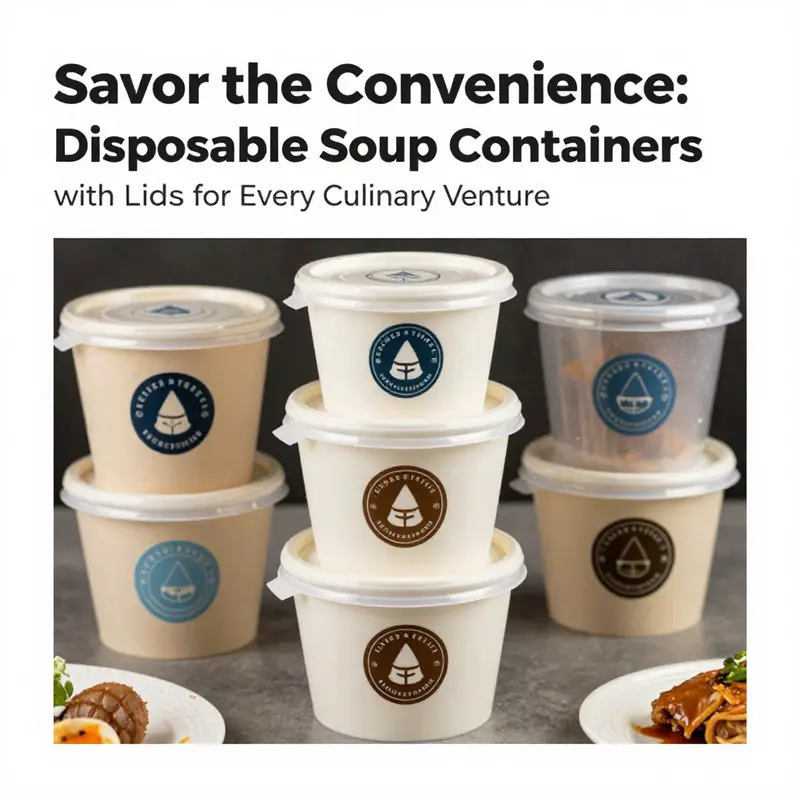
Customizable disposable soup containers with lids transform packaging into a brand touchpoint. In takeout, delivery, and catering, the container is often the first physical interaction a customer has with a brand. A cohesive design on both the body and the lid reinforces recognition, communicates values, and signals quality. The choice of printing method, materials, and finishes affects durability, legibility, and sustainability. High-quality offset or digital printing can produce vibrant logos and messaging that withstand heat and condensation, while careful material selection supports compostability and responsible packaging.
Branding should extend beyond logos to color schemes, typography, and on-package calls to action. QR codes, social handles, or menu links on the lid can connect customers to digital experiences, loyalty programs, or seasonal promotions. The packaging system should be legible, scalable, and adaptable to menu changes, ensuring consistency across product lines and partnerships.
From a regulatory perspective, food-contact materials must meet safety standards and quality controls. Certifications and third-party audits reassure buyers and help build trust. When branding aligns with compliance, brands communicate reliability and care. The practical result is a container that travels with a brand’s promise—from the kitchen to the customer’s hands and back through recycling or disposal.
For brands exploring this path, the key steps include defining a visual system, selecting materials that support sustainability, and coordinating designs across body and lid. Working with suppliers who offer coordinated printing on both components helps maintain color consistency and legibility. A thoughtful packaging system can become a portable ambassador, enhancing recognition and loyalty with every meal.
Final thoughts
In an industry where first impressions count and sustainability is ever more critical, disposable soup containers with lids offer a smart solution that caters to both operational efficiency and customer desires. Their robust design, environmental benefits, and vast customization options make them an essential choice for businesses looking to enhance their offerings. By selecting the right packaging, brands can project a commitment to quality and sustainability, ultimately elevating the dining experience. Make the shift towards these versatile containers, and experience the difference in service and satisfaction.