
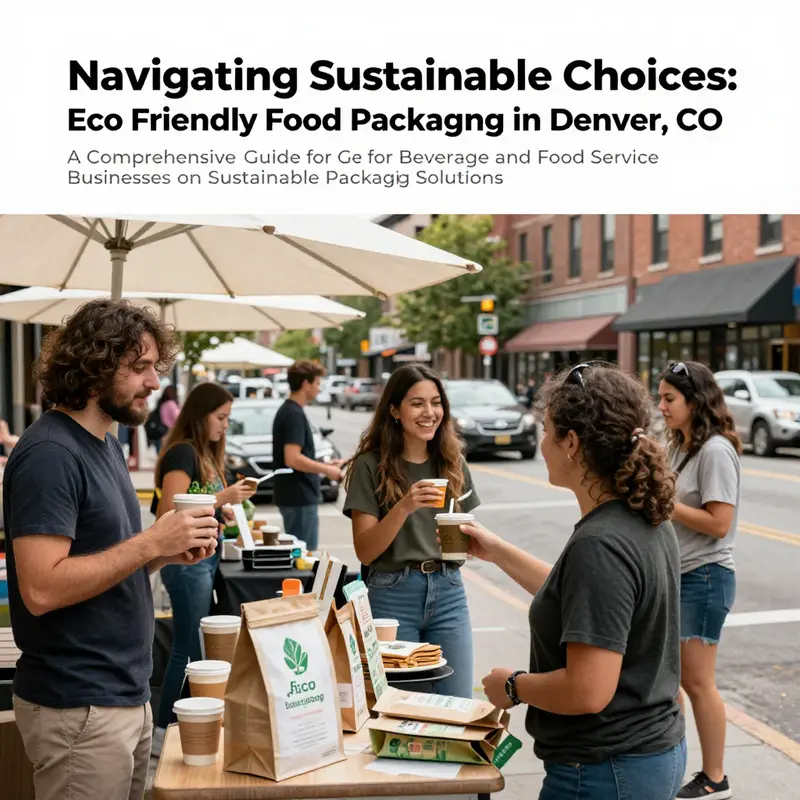
In the vibrant city of Denver, CO, the demand for eco-friendly food packaging has seen unprecedented growth, particularly among beverage chains, restaurants, food trucks, catering services, and event planners. As consumers become increasingly environmentally conscious, local businesses are now seeking sustainable solutions that align with their values. This article delves into the eco-friendly food packaging landscape in Denver, showcasing local suppliers and services, current industry trends, and effective online platforms for sourcing sustainable packaging materials. Each chapter is designed to provide valuable insights for businesses looking to make a positive impact through environmentally responsible choices.
Denver’s Local Green Packaging Corridor: Building an Eco-Friendly Food Packaging Ecosystem on Colorado’s Front Range
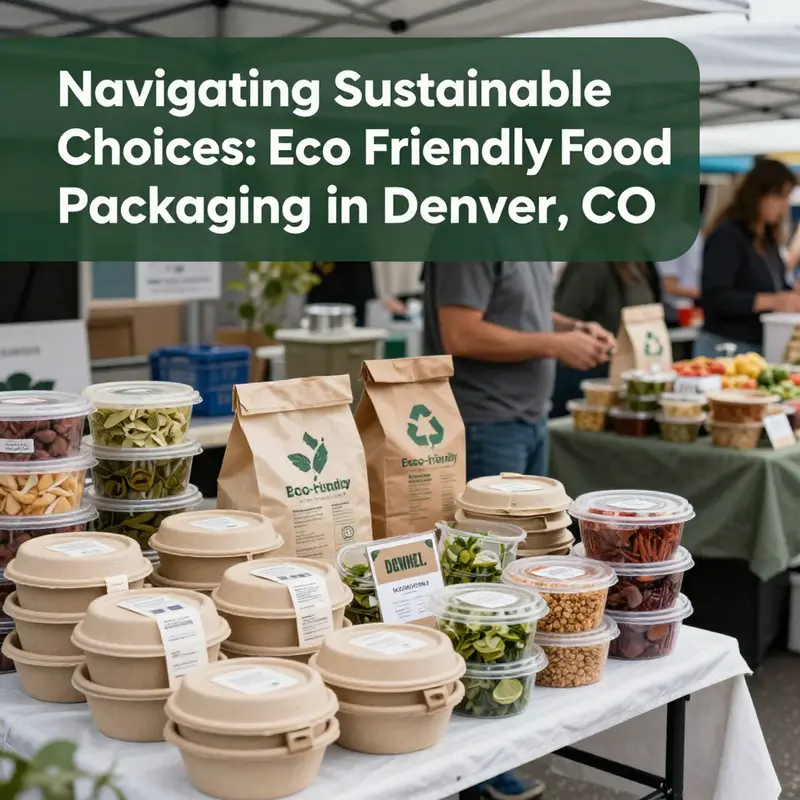
Denver is cultivating an eco-friendly packaging ecosystem for the food economy along the Front Range. Local manufacturers, suppliers, restaurants, and logistics providers collaborate to align packaging with waste streams, reduce carbon impact, and support transparent sourcing. The market emphasizes durable, heat-safe, compostable or recyclable options that work in Denver’s municipal programs. Policy and industry groups encourage waste reduction and practical end-of-life programs, creating stable demand signals for credible materials. Third-party logistics partners help keep service levels high while minimizing miles and energy use. Brands can access global and regional suppliers, but must verify certifications and end-of-life viability with local facilities. Local marketplaces and curated supplier networks simplify procurement and support design for sorting and contamination reduction. Educational programs and industry forums translate sustainability claims into concrete operations, labeling, and compliance practices. For brands entering Denver, start with the city’s waste streams, select materials with transparent certifications, and partner with a trusted 3PL to align packaging with routing and handling realities. The ecosystem continues to mature through events, pilots, and cross-sector collaboration, moving sustainable packaging from aspiration to standard in the Denver food economy. A Newtopia Now-type expo and related regional exchanges help connect designers, operators, and policymakers, accelerating practical innovation. As supply chains grow more transparent and networks scale, Denver’s packaging story demonstrates how regional collaboration can achieve measurable waste reduction, reliable performance, and a stronger competitive edge for responsible brands.
丹佛的低碳餐饮包装之路:趋势、法规驱动与在地协作
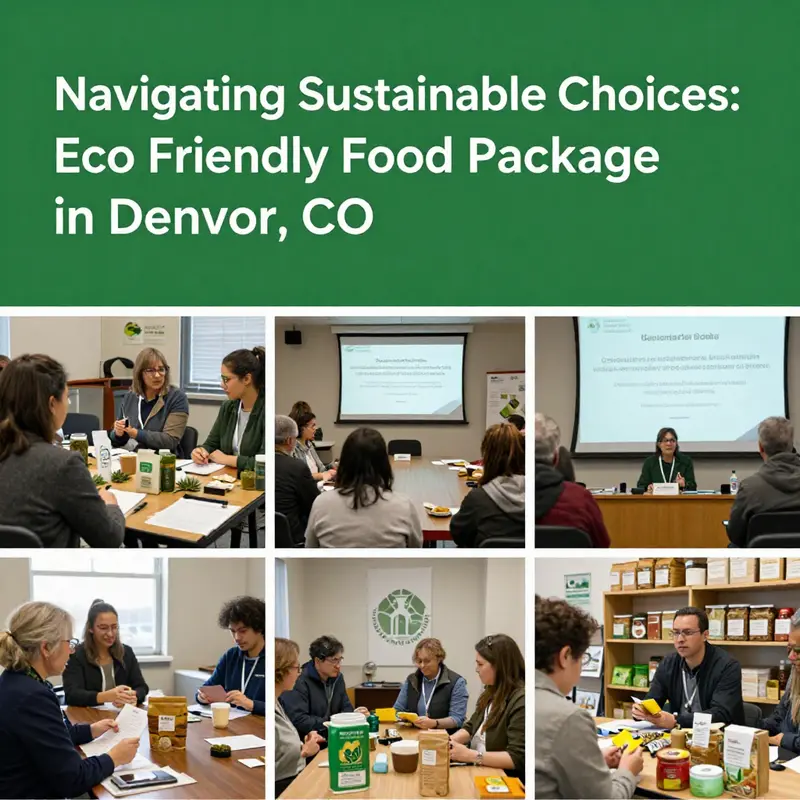
丹佛这座坐落在科罗拉多州的城市,因其独特的地理位置、活跃的创意经济与强大的物流能力,正在成为美国西部地区环保餐饮包装创新的重要试验田。随着城市与周边区域对减塑、降碳目标的不断推动,越来越多的餐饮品牌、外卖平台和活动策划方开始优先考虑可持续的包装解决方案。这个趋势并非孤立的市场偏好,而是一个综合性的系统变革,涉及材料科学、回收体系、法规导向以及本地社区的协作网络。把目光投向丹佛,我们可以看到一个由需求驱动、由法规促成、由创新者连接的生态系统正在成形,它不仅改变包装本身的设计和制造,也在重新定义餐饮业对包装的依赖方式、对资源的使用效率以及对废弃物的处置路径。这个章节尝试把焦点放在丹佛地区正在发生的核心转变,以及支撑这些转变的制度、组织与网络,以便为本地企业、供应商和政策制定者提供可操作的洞察。通过对趋势的梳理、对潜在支持体系的勾勒,以及对未来方向的前瞻性思考,我们可以看到,丹佛的环保食品包装并非一个短期风向,而是一个持续演进的体系试探,它将材料、技术、商业模式与地域特色深度融合,从而在区域层面实现更高效的资源利用和更低的环境足迹。为了更清晰地理解这一过程,我们需要把注意力放在几个互相影响的维度上:材料与设计、法规与激励、供应链与本地生产、以及知识与协同网络。以下的叙述尽量以一个流动的、连贯的叙事来呈现,避免将主题切割成过多的子话题,以便读者能够在一个完整的语境中感知变化的脉络。
Digital Avenues, Local Currents: How Online Platforms Shape Denver’s Eco-Friendly Food Packaging Ecosystem
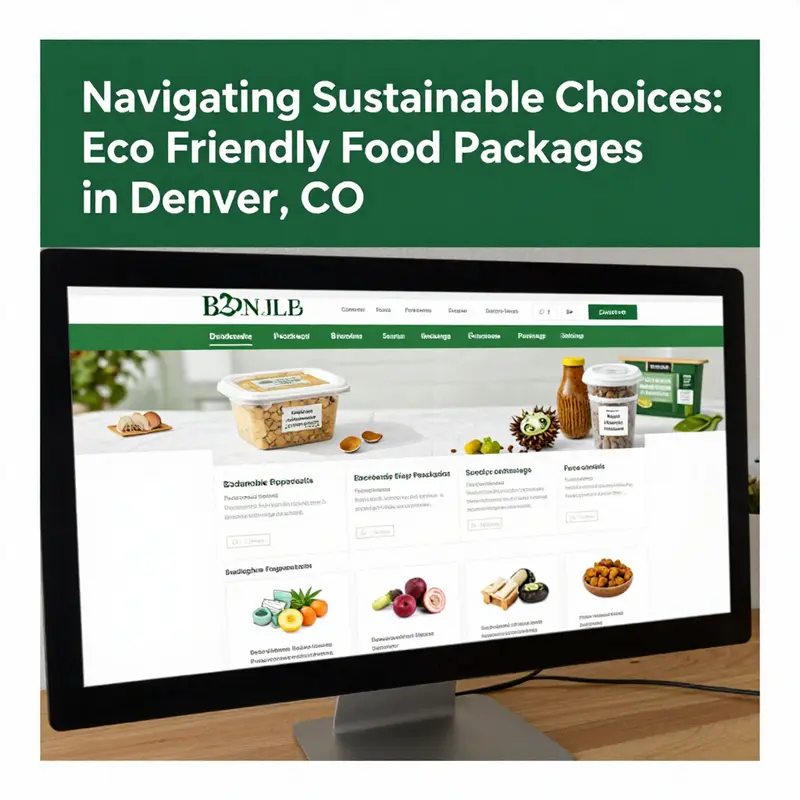
Denver sits at a compelling intersection of policy drive, market demand, and digital-enabled procurement when it comes to eco-friendly food packaging. The city’s growing appetite for sustainable solutions mirrors a broader regional current across Colorado, where businesses—from fast-casual eateries to boutique coffee shops and event planners—seek packaging that reduces waste, lowers carbon footprints, and communicates a commitment to responsible supply chains. Yet the path from aspiration to everyday practice is not paved with one-off purchases or hopeful intentions. It unfolds through a deliberate alignment of online platforms, local distributors, and regulatory signals that together compress time, reduce risk, and scale impact. The story in Denver is less about a single breakthrough and more about a systemic shift: procurement channels that once favored convenience now prioritize transparency, material performance, and cradle-to-cradle thinking, all within a framework that residents and policymakers alike can trust and understand.
At the core of this shift lies a quiet revolution in how a buyer discovers, evaluates, and sources packaging. In practice, Denver’s restaurateurs and food brands increasingly rely on digital marketplaces and procurement networks to move beyond traditional catalogs and into a data-informed dialogue with suppliers. The impact is twofold. First, online platforms knit together diverse players—local distributors, regional manufacturers, and international suppliers—into a seamless ecosystem that can respond to the city’s unique mix of demand signals. Second, these platforms translate policy goals into actionable procurement profiles. They highlight certifications, track carbon footprints, and surface end-of-life options, making it easier for buyers to align procurement choices with local laws, city campaigns, and consumer expectations.
A pivotal driver of this dynamic is the annual Denver International Natural & Organic Products Expo, a regional beacon that gathers growers, manufacturers, processors, and retailers around the themes of naturality, safety, and sustainability. This expo, while spanning a broad spectrum of products, has become especially influential for packaging decisions. Exhibitors use the event to introduce new packaging concepts—biobased materials, compostable coatings, and redesigned formats that optimize durability while reducing waste. For Denver area buyers, the expo operates as a live matchmaking forge where product developers and procurement teams begin conversations that digital platforms later carry forward into concrete orders. The fair’s presence in the city calendar signals to suppliers that Denver is not merely a pass-through market; it is a place where responsible packaging can be scaled and integrated into broader foodservice operations.
Digital platforms amplify this momentum by providing a structured space where buyers can articulate cuisine-specific needs, budget constraints, and sustainability targets, and where suppliers can demonstrate material compatibility, certification status, and lifecycle data. A restaurant that serves hot soups and noodle dishes, for instance, needs containers that resist sogginess, maintain heat, and are compatible with industrial composting streams. A coffee shop that emphasizes sustainability may seek fully compostable cup-and-lid systems or minimal-waste bring-your-own-container programs. An online procurement platform makes it possible to filter by material class, certification, and end-of-life pathway, and to compare options side by side. It is this granular, data-driven filtering that transforms the procurement process from a series of impulsive purchases into a disciplined, traceable supply chain activity. The result is a procurement rhythm that better serves Denver’s environmental goals and the business models of local operators who are accountable to their customers and communities.
The platforms themselves operate with a delicate balance of breadth and specificity. They cast a wide net to bring in manufacturers from various regions and, increasingly, from international corners of the packaging world. The broader reach matters because it unlocks economies of scale and introduces competition that can drive down costs for sustainable materials. But these platforms also implement strong curation to ensure that what shows up in a buyer’s feed aligns with U.S. market standards and local expectations. They incorporate filters for certification programs, such as those verifying industrial compostability according to recognized standards, and for documentation that substantiates low emission manufacturing processes or recycled content. The net effect is a marketplace that acknowledges the realities of Denver’s regulatory climate while maintaining the flexibility needed for small and mid-sized operators to adopt greener practices without being priced out of the market.
To understand how this translates into everyday practice, consider the procurement lifecycle from initial inquiry to repeat orders. A Denver-based cafe reviewing its packaging strategy might begin by outlining its top-line goals: reduce single-use plastic, shift to compostable materials, and partner with suppliers who can provide transparent lifecycle data. The online platform then surfaces a shortlist of options that meet these criteria, ranging from fiber-based bowls and plates to sleeves and bags crafted from recycled or plant-derived materials. The platform’s search and comparison tools enable the cafe to evaluate the tradeoffs among moisture resistance, heat tolerance, and end-of-life outcomes, while also factoring in cost, minimum order quantities, and lead times. If a particular listing carries a certification like industrial compostability, the buyer can drill into the certification details to confirm applicability in local facilities and to check whether the packaging can be diverted to a compliant waste stream rather than ending up in a landfill. This kind of knowledge is crucial in Denver, where city policies encourage or require the use of compostable or recyclable packaging and where public and private actors increasingly expect suppliers to demonstrate verifiable environmental credentials.
The practical outcome is a more reliable, scalable path for sustainable packaging adoption. When a cafe places a larger, recurring order through the platform, the supplier gains visibility into demand patterns, production capacity, and seasonal fluctuations. The buyer benefits from pricing stability, predictable lead times, and the ability to push for customizations that better fit menu formats or service models. For instance, a chain with a signature takeout format might negotiate a suite of packaging solutions designed to work in concert—one container line for hot meals, another for cold items, with compatible liners, lids, and transport packaging. The supply chain becomes a living system rather than a loose collection of ad hoc purchases. And because these platforms can collect and share performance metrics, both sides of the transaction gain a foundation for continuous improvement. The buyer can track instances of product failure under heat and grease exposure, enlist the supplier’s help to resolve issues, and document improvements that reduce waste or improve user experience.
In this way, the digital procurement layer acts as a translator between policy priorities and kitchen-floor realities. Denver’s city government has shown a willingness to promote or require materials that are suitable for composting or recycling, and this translates into a demand signal that platforms can quantify and display. The Colorado Environmental Coalition and other regional sustainability groups contribute by hosting workshops that clarify what certification schemes mean in practice, how to compare carbon footprints, and how to verify a supplier’s sustainability claims. These resources are not mere add-ons; they are integrated into the online buyer journey. A platform may present a side-by-side view of a packaging option’s life cycle impact, including its production energy profile, the percent of post-consumer content, and the expected end-of-life processing. This transparency fosters trust and helps buyers justify investments to stakeholders, from restaurant owners to investors.
An example of how such integration works in real time can be seen in the way a Denver-area food brand might approach a large event or festival. The brand will need a packaging configuration that is not only sustainable but also practical at scale: containers that stack efficiently for transport, lids that seal securely in varying weather conditions, and a suite of ancillary packaging that minimizes voids and reduces the risk of leaks. The online platform can provide a procurement blueprint that maps expectations to suppliers with compatible capabilities. It can suggest, for example, a multi-supplier approach that mitigates risk—one source for the compostable bowls, another for the compostable cutlery, and a third for compostable bags and napkins—while ensuring that all packaging components receive consistent labeling and documentation. This level of coordination reduces the likelihood of mismatches between products and usage contexts and accelerates the onboarding of new packaging lines into the restaurant’s operating system.
To illustrate how the digital and physical layers of Denver’s eco-packaging ecosystem interact, imagine a typical ordering and fulfillment cycle. A cafe manager sits down to plan next quarter’s packaging mix. They access an online platform that prompts them to define parameters by cuisine type, service format, and budget range. The platform’s algorithm then suggests a palette of materials that balance performance with environmental outcomes. The proposed options come with exportable data packs that include recommended storage conditions, end-of-life handling guidance for staff, and, crucially, a mapping to local waste facilities that accept the specified materials. The manager can compare the total cost of ownership across options, considering not only unit price but also weight, volume, and the labor required to handle, separate, and dispose of packaging in a compliant manner. Once a decision is made, the order is placed within the platform, and the system tracks the shipment, receipts, and eventual recycling or composting outcomes. In a city like Denver, where the policy climate is actively pushing a transition away from conventional plastics, the ability to document and verify performance across the entire procurement lifecycle becomes a strategic advantage rather than a compliance chore.
The value proposition for Denver’s eco-packaging ecosystem extends beyond individual businesses. Online platforms enable a more efficient market for sustainable materials by improving demand visibility, reducing information asymmetry, and enabling smaller operators to access a more diverse supplier base. For a startup with a limited procurement budget, this means opportunities to pilot alternative materials, test performance in real-world settings, and scale up if compatibility and customer acceptance prove favorable. For established chains, platforms provide a mechanism to standardize packaging across multiple locations while preserving the flexibility needed to adapt to local tastes and menu changes. The result is a more resilient, responsive supply chain that can weather fluctuations in supply, transport costs, and regulatory requirements without compromising environmental outcomes.
The intra-city dimension should not be overlooked. Denver’s urban fabric brings together a mosaic of neighborhoods with distinct dining cultures and waste infrastructures. A platform that can accommodate this diversity—by offering region-specific guidance on acceptable end-of-life pathways, local recycling or composting facility partnerships, and transport logistics tailored to urban routes—becomes especially valuable. It helps a cafe in a densely populated district align its packaging choices with nearby facilities and municipal collection streams, thereby reducing the need for long-haul shipments and the associated emissions. Meanwhile, a brewery operating a seasonal food truck program benefits from platform features that support seasonal procurement, including temporary surges in demand and the ability to source from regional producers who share a commitment to sustainability. The platform’s role is not merely transactional; it becomes a partner in implementing a local, sustainable food ecosystem.
A more granular look at the supplier side reveals a similar pattern of digital-enabled transformation. Manufacturers and distributors, including those in Denver’s broader ecosystem and in nearby states, increasingly adopt standardized documentation, lifecycle data, and certification narratives that can be indexed by online procurement platforms. This standardization reduces the friction that formerly slowed adoption—such as the need to physically visit multiple suppliers, request repetitive documentation, or negotiate terms in disparate channels. Platforms that invest in robust data integrity and supplier verification processes can present buyers with reliable options and credible assurances, including third-party certifications and performance test results. For buyers, that means a higher likelihood of validating packaging claims and achieving regulatory alignment with less effort. For suppliers, it means reduced sales cycle times, more predictable demand, and the opportunity to differentiate themselves through transparent sustainability profiles rather than through price alone.
From a policy perspective, Denver’s approach to eco-packaging is inherently compatible with digital procurement. The city’s progressive stance toward compostable and recyclable packaging creates a durable demand signal that platforms can monetize through value-added services, such as lifecycle assessments, end-of-life guidance, and compliance checklists. Platforms can also serve as educational hubs, aggregating policy interpretations, industry standards, and case studies into an accessible format for small business owners and startup teams. This reduces the cognitive load associated with staying compliant in a rapidly evolving regulatory environment and frees operators to focus on their core business of feeding communities with thoughtful, sustainable choices.
For those navigating procurement from outside the United States, online platforms offer an efficient gateway while maintaining a clear line of sight to quality and compliance. International suppliers can present samples, share material certificates, and outline manufacturing processes that align with U.S. standards. Buyers can cross-check certifications such as those that validate industrial compostability or recycled content, and they can request carbon footprint data or supplier audits to accompany their purchasing decisions. While the idea of importing packaging may seem daunting, the platforms transform potential friction into a structured process with clear milestones, timelines, and performance benchmarks. They also provide a framework for risk management, enabling buyers to diversify supplier bases, negotiate favorable terms, and plan longer-term packaging strategies that align with Denver’s ambitious waste-reduction objectives.
The practical outcomes of these digital procurement dynamics are visible in the everyday operations of Denver’s dining and hospitality sectors. Customers increasingly expect responsible choices without compromising the user experience. They want to see packaging that is reliable, aesthetically pleasing, and clearly aligned with environmental values. Restaurant operators discern that the cost of sustainable packaging, while higher than traditional plastics in many cases, can be offset by reductions in waste handling, improved brand perception, and stronger customer loyalty. When a platform ties sustainability performance to tangible outcomes—such as quantifiable avoidance of plastic waste, lower energy intensity in production, or a transparent end-of-life pathway—it becomes easier for operators to justify investments to owners, investors, and patrons.
To further illustrate the confluence of online platforms and Denver’s packaging ecosystem, consider the customer journey that a mid-sized eatery might experience. The manager begins with a sustainability brief that outlines the restaurant’s values and operational needs. The platform surfaces a curated set of options that meet criteria for heat resistance, moisture management, and compostability. The restaurant prioritizes options validated by third-party certifications and that come with robust end-of-life guidance for staff education and customer communication. After selecting a supplier, the platform coordinates logistics, ensuring that packaging materials arrive in time for peak service periods and that inventory levels align with usage patterns. The platform may also facilitate pilot programs, encouraging a small batch rollout to test customer reception and operational feasibility before committing to full-scale adoption. This measured approach minimizes risk while maximizing learning, and it demonstrates how digital procurement channels can translate sustainability ambitions into tangible operational gains.
As this narrative unfolds, a practical tactic emerges for buyers seeking to optimize their Denver-based packaging strategy: leverage the platform’s ability to tailor solutions to specific contexts while maintaining a broader view of regional policy objectives and market dynamics. A buyer can request material recommendations that are suitable for “fast-casual service in a high-volume campus district,” while also requesting lifecycle data, end-of-life processing options, and supplier performance histories. The resulting decision-making framework becomes a living document, adaptable as new materials, new standards, and new waste processing infrastructure come online. And because the platform captures data over time, it creates a valuable knowledge repository for benchmarking progress, sharing best practices, and modeling future procurement scenarios that align with escalating sustainability targets.
In this way, Denver’s eco-packaging narrative reveals more than a preference for greener materials. It reveals a maturity in the procurement mindset—a recognition that sustainability is a system property, not merely a product attribute. Online platforms consolidate the necessary elements of that system: supplier diversity, transparent performance data, regulatory alignment, and customer-facing communication that makes sustainable choices comprehensible and appealing. They enable a practical, scalable approach to a challenge that historically depended on the good will of individual operators and, often, a higher tolerance for waste. They also reinforce a network effect: as more local buyers participate, more suppliers enter the market with credible, verifiable offerings, and the overall quality, reliability, and availability of sustainable packaging improve. In turn, this strengthens Denver’s reputation as a city where responsible consumption and innovative commerce go hand in hand, where policy ambition, consumer expectations, and digital innovation converge to reduce waste and transform everyday practices into lasting environmental benefits.
For readers seeking a concrete reference point within this dynamic, a glimpse into the available digital resources can be informative. A widely cited page on eco-friendly packaging options provides an overview of the kinds of disposables and containers that communities are discussing in practice. The page highlights options that align with compostable and biodegradable pathways and emphasizes the importance of certifications that verify end-of-life performance. While the page itself is not Denver-specific, its emphasis on material families, certification schemes, and lifecycle considerations mirrors the criteria that Denver buyers increasingly apply on online platforms. For local practitioners, it is a reminder that the choices extend beyond initial price to encompass long-term environmental outcomes, regulatory compatibility, and social responsibility. And for researchers and policymakers, it underscores the need for continuing collaboration among city officials, industry groups, and digital marketplaces to refine standards, harmonize labeling, and ensure that sustainability claims translate into verifiable, real-world impact.
The synergy of online platforms, local procurement channels, and Denver’s regulatory environment is not a static arrangement. It is a dynamic, evolving system shaped by user feedback, supply chain innovations, and the city’s ongoing commitment to reducing single-use plastics and advancing compostable and recyclable packaging. As more operators embrace digital procurement as a core competency, the platform becomes a hub for sharing experiences, storing best practices, and driving collective improvement across the food ecosystem. It also creates an opportunity to align Denver’s packaging decisions with broader regional supply chains, encouraging suppliers to scale sustainable solutions that can serve multiple markets while maintaining high environmental standards. In this sense, the online platform is not merely a transactional tool but a governance instrument—one that helps harmonize private sector actions with public policy goals and community expectations.
As Denver continues to nurture this environment, the city’s packaging story will likely expand in two important directions. First, the platforms will increasingly incorporate end-of-life infrastructure mapping, connecting buyers not only to certified materials but also to the local facilities capable of processing that packaging. This kind of mapping reduces the guesswork about what can actually be composted or recycled in a given district and helps restaurants communicate more accurately with customers about disposal expectations. Second, the platforms will broaden their analytics offerings, helping operators track not just cost and lead times, but also environmental metrics such as grams of CO2 equivalent per container, waste diversion rates, and absolute waste reductions achieved through packaging redesigns. These enhancements will elevate sustainable packaging from an aspirational goal to a measurable performance metric that can be shared with stakeholders and the public.
For Denver’s environment and economy alike, the integration of online procurement platforms with local packaging supply chains promises a more resilient, transparent, and scalable approach to sustainability. The city’s policy signals, the energy and ingenuity of local businesses, and the reach and intelligence of digital marketplaces together create a momentum that can bend the curve toward a future where eco-friendly packaging is not a niche or a premium but a standard practice embedded in daily operations. The next era of Denver’s packaging landscape will be defined by how well buyers and suppliers collaborate through these platforms, how carefully they translate policy guidance into practical specifications, and how openly they share data that proves the environmental benefits of their choices. In this landscape, the online platform becomes both compass and engine—guiding decisions and powering the journey toward a more sustainable, efficient, and connected food system.
To readers exploring this topic further, a concrete touchpoint within the digital ecosystem can illuminate the practical realities described above. One internal resource that demonstrates how online platforms present eco-friendly packaging options in an actionable format is accessible through a product-focused page dedicated to compostable and biodegradable takeout solutions. This page showcases a range of containers designed for hot and cold foods, with details about material composition and end-of-life processing. It serves as a practical illustration of how digital platforms translate sustainability concepts into tangible, purchasable products that align with Denver’s policy landscape. As you explore such resources, you’ll see how the platform’s interface helps buyers balance performance, cost, and environmental considerations in a way that supports both business viability and community goals. The broader point remains clear: in Denver, online platforms are enabling a more deliberate, data-driven, and collaborative path to greener packaging that benefits restaurants, waste streams, and the city’s climate objectives alike.
Internal link reference: eco-friendly takeout packaging options
External resource for readers seeking broader context on industry events that shape this arena: Denver International Natural & Organic Products Expo.
Final thoughts
Embracing eco-friendly food packaging solutions presents not just an opportunity to meet consumer demand but also a chance to contribute positively to the environment. Local suppliers in Denver are ready to support businesses in making this transition towards sustainability. Staying informed about industry trends and utilizing accessible online platforms can streamline the process of procuring responsible packaging materials. As the market for eco-friendly packaging continues to flourish, Denver businesses have the unique ability to lead by example, forging a path towards a more sustainable future.