
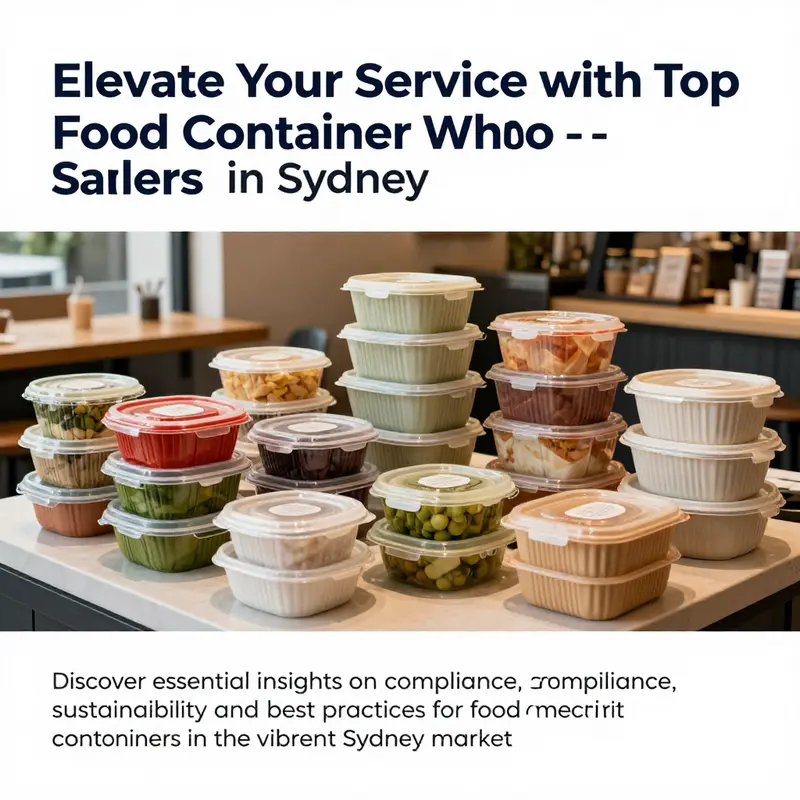
Food container wholesale in Sydney is an essential focus for businesses such as bubble tea shops, restaurants, food trucks, and event planners. In a city where packaging choices can impact both brand perception and operational efficiency, understanding the right standards, compliance regulations, and sustainable practices becomes paramount. This article dives deep into the operational standards and best practices in food container wholesale, the compliance and regulatory framework, and the sustainable practices shaping the industry. By examining these facets, businesses can ensure they choose the right suppliers, resulting in exemplary service delivery and enhanced customer satisfaction.
Safeguarding Taste and Trust: Operating Standards and Best Practices in Sydney’s Food Container Wholesale
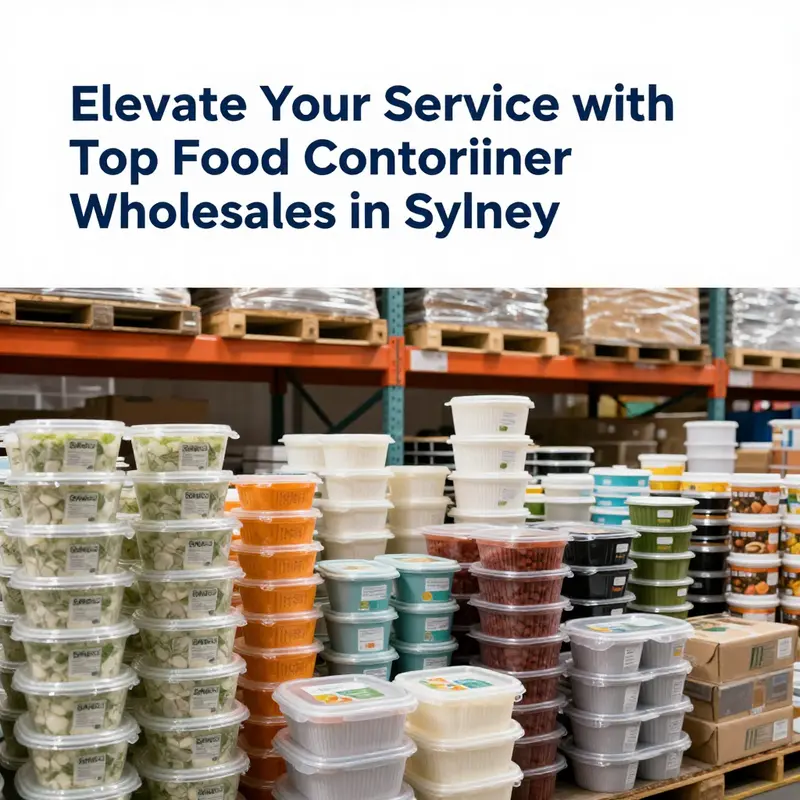
In Sydney, where food culture thrives on speedy service and meticulous hygiene, the wholesale landscape for food containers sits at a critical crossroads of reliability, safety, and regulatory compliance. A sound operating framework is not merely a box-ticking exercise; it is the backbone of a business that expects to be trusted by restaurants, caterers, and retailers who depend on containers to protect the integrity of their offerings. The overarching topic of food container wholesale in Sydney, therefore, invites a holistic view of how products are sourced, stored, labeled, and delivered, all while aligning with national standards and evolving consumer expectations. This chapter unfolds as a continuous narrative about how a disciplined approach to operations not only protects compliance but also strengthens competitive advantage amid a crowded market.
At the heart of this approach is a disciplined sourcing discipline. The materials used in containers destined for direct contact with food must be food-grade and non-toxic, a non-negotiable baseline that underpins every other practice. Australian standards provide the guiding framework for what qualifies as acceptable packaging material, and adherence to these standards is the first sign to buyers that a supplier takes quality seriously. In particular, plastic and fiber-based containers are evaluated for their compatibility with common food categories, their resistance to oils and moisture, and their ability to withstand typical handling and transportation conditions. The standard-setting process involves not only the material itself but also the processes by which it is produced. When a supplier can point to a documented conformity with recognized standards, buyers gain confidence that the product will perform as expected from kitchen to counter and into the consumer’s hands. The sourcing decision, then, becomes less a question of price and more a question of risk management and long-term value.
Material selection is never a static decision. As consumer preferences shift toward sustainability, a growing portion of buyers seek packaging that is both durable and responsibly sourced. Recyclability and compostability become elements of the supplier’s value proposition, intricately linked to the company’s procurement policies and its broader environmental commitments. The conversations that drive these choices are anchored in transparency. A responsible supplier should gladly share the composition of materials, certification documents, and any regulatory attestations that demonstrate compliance with FSANZ and local regulations. This transparency is not mere paperwork; it is a signal that the supplier is prepared for audits, recalls, and inquiries from conscientious customers who want to know exactly what their products are made of and how they were manufactured. In this context, the best practice is to couple clear material declarations with traceable batch information, a pairing that makes it possible to track a container from source to shelf and, if necessary, back to its supplier.
The hygiene dimension is inseparable from material choice. Hygiene protocols must permeate every stage of the container lifecycle, including storage, handling, and the final trip to the customer. Containers are often stored under conditions that may vary by season and location, so it is essential to implement robust environmental controls that manage temperature and humidity, deter contamination, and prevent cross-contact between different product categories. Sanitation standards should be embedded in daily rituals, not relegated to occasional deep cleans. Regular training for staff on hygiene best practices reinforces the message that small lapses can lead to significant consequences. It is not enough to rely on a clean facility alone; every worker must understand how to minimize contamination risks through proper handling, dedicated storage areas, and clear separation of products where necessary. Hygiene, in this view, becomes a living part of the organizational culture rather than a set of isolated procedures.
Documentation and traceability form the spine of a reliable supply chain. The capacity to trace a container from its original manufacturing site through the distribution network to the end user is what enables swift, decisive action during an incident and a smoother path to compliance with FSANZ expectations. A structured labeling system is essential, one that identifies contents, ingress of potential allergens, and any other critical content information that would affect consumer safety. Traceability systems, whether digital or manual, should be robust enough to withstand audits and simple enough for frontline staff to use without friction. This means consistent labeling formats, legible batch codes, and the systematic collection of data at every handoff in the supply chain. When suppliers deliver documentation that confirms testing and compliance, buyers gain a verifiable narrative of how each batch was produced, tested, and stored. The objective is not only to satisfy regulatory requirements but to empower buyers to respond quickly and accurately if questions arise from retailers, regulators, or consumers.
The regulatory dimension must be understood as an ongoing obligation rather than a one-time exercise. FSANZ provides the overarching framework for safe food handling, labeling, and allergen declarations, while state and local authorities may issue additional requirements on packaging and labeling content. The obligation is dynamic: regulations evolve as new scientific insights emerge and as public expectations shift toward greater transparency and safety. A best-practice supplier keeps a close watch on regulatory updates, participates in industry dialogues, and actively disseminates changes within its own organization. For buyers, partnering with a supplier that demonstrates proactive regulatory monitoring reduces the likelihood of non-compliance due to shifting standards and helps ensure that all packaging destined for direct contact with food remains within the guardrails of current law. This is not merely about avoiding penalties; it is about preserving brand integrity and minimizing risk across the supply chain.
Quality assurance and certification are the external signals of an embedded safety culture. Many organizations pursue formal certifications such as ISO 22000 or HACCP to demonstrate that their food safety management systems are comprehensive and auditable. These certifications reflect a commitment that extends beyond individual products to the entire operation—the way materials are sourced, how production lines are managed, how hygiene is enforced, and how traceability is maintained. Audits, both internal and external, serve as milestones that confirm the system is functioning as intended and that deviations are identified and corrected in a timely manner. The practical value of such certifications lies in their ability to reassure customers that the supplier’s processes are consistently aligned with internationally recognized best practices, even as market pressures fluctuate. Within the Sydney context, where many buyers operate in fast-paced segments such as takeaway, catering, and retail packaging, certification acts as a differentiator, signaling reliability and an insistence on quality that extends beyond the price tag.
To connect these internal standards to external sources of guidance, buyers and suppliers can turn to recognized authorities and industry bodies. A widely cited reference is the BSI Group’s Food Safety resources, which offer guidance on food safety systems, risk management, and certification pathways. This external resource serves as a practical companion to the in-house standards and FSANZ requirements that shape day-to-day operations in Sydney’s container market. By leveraging BSI Group insights, a wholesale operation can benchmark its practices against global best practices, identify gaps, and pursue improvements with confidence. This ongoing learning loop—grounded in regulation, certification, and continuous improvement—helps ensure that Sydney’s food container wholesale ecosystem remains resilient, compliant, and trusted by its diverse customer base.
The practical implications of integrating these standards into daily operations extend beyond compliance. A well-implemented framework supports smoother supplier relationships, clearer expectations, and more predictable delivery performance. When buyers can trust that a supplier consistently meets material and hygiene standards, they experience fewer disruptions, faster onboarding of new packaging lines, and reduced risk of product recalls or customer complaints. That trust translates into a stronger competitive position: buyers are more likely to engage with partners who can demonstrate lower total cost of ownership, quicker response times during supply chain disruptions, and transparent communication about product performance and regulatory status. In a market like Sydney, where competition among wholesalers is intense and customers are highly attentive to safety and quality, this combination of reliability, transparency, and responsiveness becomes a powerful differentiator.
Integrating best practices into the customer journey also means offering clear, accessible information about packaging attributes. Buyers increasingly expect not only a product that performs but also documentation that substantiates claims about material safety, allergen management, and regulatory compliance. Transparent information about material composition, certifications, and regulatory adherence reduces the burden on buyers to perform exhaustive due diligence on their own. In practice, this means that a responsible supplier maintains a well-organized docket of certificates, testing reports, and regulatory statements that can be readily shared with customers during procurement discussions and audits. When this documentation is paired with a reliable supply chain—where shipments are delivered on time, in good condition, and with accurate labeling—the resulting value proposition goes beyond price. It becomes a comprehensive risk management framework that supports sustainable growth for buyers and suppliers alike.
The ongoing challenge for Sydney’s wholesale market is to balance price competitiveness with the demands of safety, compliance, and customer service. Low MOQs can make it easier for new players to enter the market, but they must be coupled with predictable quality and reliable supply. A structured due diligence framework helps buyers evaluate suppliers not just on price, but on a broader spectrum of capabilities: material safety, process control, hygiene discipline, traceability, regulatory alignment, and continuous improvement. When a supplier can demonstrate a track record of meeting FSANZ requirements, maintaining hygienic operations, and providing transparent documentation, buyers gain confidence that their packaging will support safe food handling across a range of applications—from fast-cood to fine-dining contexts that require dependable performance from both packaging and supplier responsiveness.
The chapter’s philosophy is that operating standards should be woven into the fabric of everyday business rather than treated as a distant aspiration. This means encouraging a culture where staff see hygiene and safety as integral to the product’s value, where procurement teams insist on verifiable documentation, and where leadership uses audits and performance data to guide ongoing improvements. It also means recognizing that the wholesale market in Sydney benefits from a robust ecosystem of suppliers who can articulate their compliance posture clearly and who can back it up with tangible evidence. When buyers work with partners that value transparency, the entire channel benefits—from manufacturers who produce consistent packaging to retailers who rely on predictable supply and uniform labeling. In this interconnected system, a single well-documented deviation can ripple through the supply chain, highlighting the need for vigilance, good communication, and a shared commitment to consumer safety.
As a practical takeaway, consider the power of a well-curated set of internal and external touchpoints. Internally, a continuous improvement loop that tracks supplier performance, incident history, and audit results can help decision-makers identify trends, allocate resources more efficiently, and reduce the risk of non-compliance over time. Externally, leveraging respected industry guidance and certifications provides a credible, auditable trail that supports negotiations, contract terms, and customer assurance. The result is a more resilient, transparent, and trustworthy wholesale ecosystem in Sydney—one where high standards are not barriers to growth but catalysts for sustainable success. For buyers who wish to explore concrete packaging options that align with these principles, an accessible example of an compliant, eco-friendly packaging solution is described in the linked product resource, which demonstrates how material safety, environmental considerations, and clear content declarations can be packaged together in a single offering. This reference is intended to illustrate how packaging choices can embody the standards discussed here rather than to promote any particular brand.
In the spirit of practical application, the chapter also recognizes that the standard for excellence in this market is not a static target but a moving frontier. It invites ongoing engagement with regulatory updates, audits, and customer feedback. It invites wholesalers to adopt a proactive stance—regularly reviewing supplier performance, updating labeling practices, and ensuring that all documentation reflects current regulatory expectations. It invites customers to ask for evidence of materials’ safety, traceability, and environmental impact. And it invites the industry to view standards not as constraints, but as enablers of trust, efficiency, and long-term partnerships. When these elements come together in Sydney’s bustling wholesale environment, they create a robust, responsive, and responsible market that protects consumers while supporting business growth.
For readers seeking a concrete illustration of how packaging choices can harmonize with these standards, a widely accessible example of a compliant, eco-friendly packaging option is available through a supplier catalog that emphasizes transparent material declarations and regulatory alignment. The option highlighted in that catalog demonstrates how a single product can meet food safety expectations, support allergen management, and offer practical performance for takeaway and catering contexts. While this narrative does not focus on any one brand, it points to a broader principle: that packaging choices, when guided by rigorous standards and transparent documentation, can become a strategic asset rather than a compliance burden. The chapter therefore frames operating standards as a pathway to increased trust, smoother operations, and enduring relationships across Sydney’s food service supply chain.
External resource: For additional guidance on implementing and maintaining robust food safety systems, refer to the BSI Group’s Food Safety resources, which offer practical insights and certification pathways. https://www.bsigroup.com/food-safety/
From Compliance to Confidence: Navigating Sydney’s Regulatory Framework for Food Containers in Wholesale
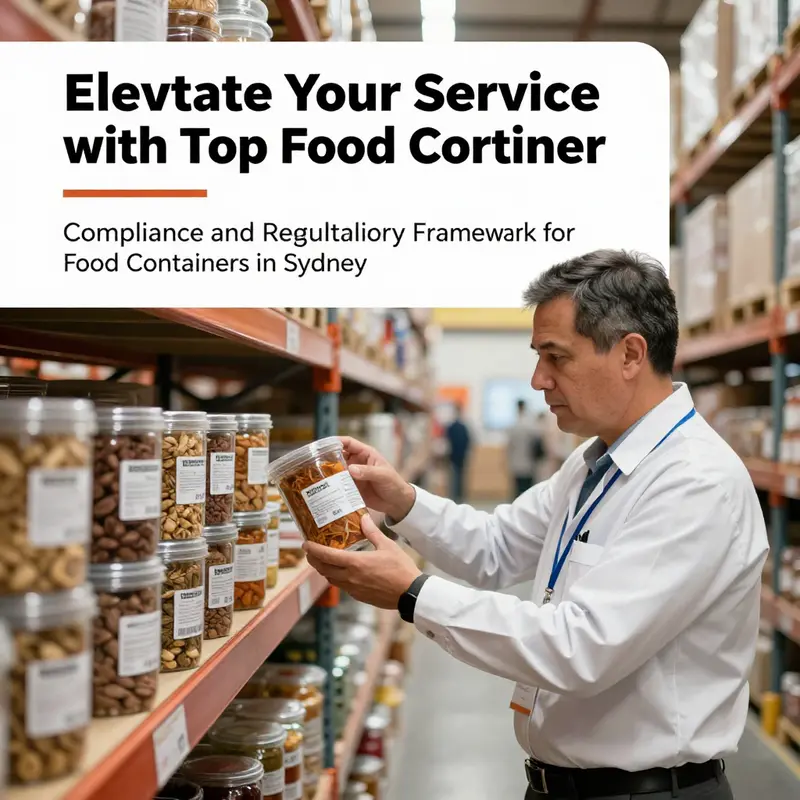
Sydney’s wholesale market for food containers sits at the intersection of price, minimum order quantities, reliability, and regulatory compliance. Prices and MOQs matter, but the real difference maker is trust built on safety and consistent performance. In Sydney, the regulatory framework governing food contact materials is not abstract. It shapes what can be sold, how it must be labeled, and how risks are managed across the supply chain. The national guidance comes from the Australian Government Department of Health and Aged Care through the Food Standards Code. This framework is designed to prevent harmful substances from migrating into food and to ensure clear information travels with packaging through every hand in the supply chain. For buyers, understanding this landscape is a practical skill, not a showroom slogan.
At the heart of the code are standards that specify safe materials and tested processes for plastic, ceramic, metal, and composite packaging used directly with food. One core standard is AS/NZS 4965:2018, which sets migration limits for plastics used in food contact applications. It defines the kinds of plastics allowed and the conditions under which they can be used, including testing methods to demonstrate migration is within safe levels. The standard also considers manufacturing processes and quality control, because a material that passes a migration test in one batch may fail in the next if production conditions drift. For Sydney buyers, this means a supplier should present lab test reports, batch certificates, and evidence of ongoing compliance, not just a once off certificate.
Another key standard, AS/NZS 4873:2021, addresses non plastic materials such as ceramics or glass. It places limits on toxic components like lead and cadmium, particularly in glazes and enamels that may contact food. The standard recognizes that glaze chemistry can evolve with suppliers, kiln cycles, and storage conditions. The practical implication for buyers is straightforward: ask for supplier declarations that specify glaze composition and test results for cadmium and lead content, plus evidence of adherence to sanitary manufacturing practices. The idea is not to chase every possible trace element, but to confirm that the product is manufactured under conditions that minimize risk to consumers and meet the expectations of the Food Standards Code.
In addition to these technical specifications, the Food Standards Code requires that products used for direct food contact carry clear labeling of the package contents and any relevant allergen declarations where applicable. While packaging itself rarely carries allergen statements, it often becomes part of the packaging solution that accompanies allergen information on the packaged food. For wholesalers in Sydney, it means questions to ask about labeling accuracy, labeling retention across supply chain shifts, and the ability to provide certification that the labeling is compliant with the code. It also means traceability—being able to trace a component or a batch of containers back through the supply chain to its source. Traceability is not a luxury; it is a regulatory expectation that supports recalls and market safety.
Operational reliability is a separate but linked pillar. Compliance is not static; it is tested through performance in the field. Measurable operational metrics help buyers assess a supplier’s ongoing capability. On time delivery rate speaks to logistics discipline, a critical factor when a restaurant or caterer cannot afford delays that disrupt service. Reorder rate signals that customers see consistent quality and predictable performance. Response time matters as well; when questions arise, a supplier’s ability to respond promptly can determine whether a food service operation keeps running smoothly or experiences interruptions. In Sydney’s time sensitive supply chain, even small delays can ripple into waste or unhappy customers.
To translate regulatory requirements into everyday procurement, many buyers adopt a structured assessment framework. A practical diligence approach combines three elements: quality control systems, regulatory adherence, and supply chain reliability. Quality control means that a supplier operates in a way that reduces variance from batch to batch. It includes the management of incoming raw materials, process controls, in-process checks, and final inspection. It also means independent or third party verification, such as laboratory testing for migration and purity, and periodic factory audits that examine sanitary conditions and process controls. Regulatory adherence goes beyond a paper certificate. It includes keeping up to date with changes in the Food Standards Code, monitoring supplier documentation for completeness, and ensuring that every shipment carries the appropriate conformity statements and test reports. Supply chain reliability covers on time delivery, accurate order fulfillment, and responsive customer service, but also extends to tracking and traceability across the entire chain, from the point of manufacture to the end user.
For buyers in Sydney who source from overseas suppliers, transparency becomes even more critical. A robust evaluation framework should include auditable documentation from the factory, third party testing reports, and ongoing post shipment performance monitoring. The goal is not to catch a single nonconformity but to ensure a sustainable pattern of compliance, quality, and service. In practice, this means asking for a full set of documents for each product line: material composition declarations, compliance certificates aligned to the relevant standards, hazard analyses if applicable, and evidence of sanitary manufacture. It also means verifying the presence of a dependable return, complaint, and corrective action process, so that any issue found after shipment can be resolved quickly. This is not about policing a single shipment; it is about building a durable trust framework that supports growth and reduces risk across a wide portfolio of containers, from takeout boxes to cookware and storage solutions used for direct contact with food.
The dynamics of the Sydney market favor wholesalers who embrace transparency and continuous improvement. A supplier that can demonstrate consistent on time delivery rates, high reorder rates, and quick response times may also have a well mapped supply chain and mature quality management system. In contrast, a supplier that cannot provide audit trails, batch level traceability, or recent test results introduces risk. For buyers, risk management becomes a daily discipline. They build it into the procurement process through documentation reviews, on site or remote supplier audits, and ongoing performance reviews. The strength of a supplier is measured not only by the ability to meet current standards but by the readiness to adapt to new standards and to respond to shifting demand in a volatile market.
Consider the role of packaging design and labeling in compliance. Regulatory requirements may dictate not only what materials are used but how products are labeled, how allergen information is presented, and how packaging supports safe handling and transport. In some cases the packaging solution must be compatible with cleaning and sanitizing regimes used by the end user, as well as the heat or cold conditions that the food may experience. These practical considerations often intersect with sustainability goals. Buyers increasingly seek packaging that minimizes environmental impact while maintaining compliance. The tension between sustainability and safety can be balanced by selecting materials and designs that are both food safe and resource efficient, while ensuring that the facility processing the food can rely on consistent packaging performance.
Within the Sydney market, the choice of a supplier becomes a choice of a partner who can deliver more than empties and boxes. It is a choice about the supply chain architecture that will support an enterprise, whether it serves hospitals, schools, caterers, or quick service restaurants. The partner that succeeds here will show a clear ability to provide documentation that aligns with AS/NZS 4965 and AS/NZS 4873, to maintain up to date labeling and allergen declarations where needed, and to supply a stable stream of containers that arrive on time and ready for use. It is this combination of regulatory discipline and operational reliability that turns a wholesale relationship into a dependable backbone for daily business.
In practice, the procurement journey in Sydney starts with awareness of the regulatory baseline and the willingness to demand proof. Buyers should ask for the conformity statements, the material safety declarations, the batch release test results, and the certificate of sanitary manufacturing processes. They should look for independent verification from recognized testing bodies, or at least documented evidence of ongoing supplier audits. They should also verify the supplier’s ability to provide post shipment support, including the handling of returns, replacements, and corrective actions if a defect arises. This is not about policing a single shipment; it is about building a durable trust framework that supports growth and reduces risk across a wide portfolio of containers, from takeout boxes to cookware and storage solutions used for direct contact with food.
For those who want a concrete example of how a well governed packaging choice aligns with compliance, consider the need to balance rigidity, heat resistance, barrier properties, and cleanability. A packaging option that performs in high use environments—fast food outlets, catering operations, and retail food service—must withstand routine cleaning and frequent handling. In practice, this means selecting materials that meet migration limits and can withstand the cleaning regimes without leaching substances. It also means the packaging should be easy to inspect visually, free of defects that could harbor bacteria, and compatible with the cooking or reheating methods used by end users. When a buyer holds such a balanced approach, they can secure supply even in times of market stress.
Part of this balanced approach is also recognizing the role of third party validation. Independent testing labs, manufacturing audits, and ongoing surveillance programs provide the evidence base that regulators and customers rely upon. For a Sydney buyer, this means requiring copies of recent test reports, supplier audit findings, and corrective action plans when issues arise. It means insisting on traceability back to the exact batch of materials used in each shipment, so that if there is a problem in one batch it is clearly traceable to the root cause and can be isolated quickly. The practical consequence is a reduction in recalls, complaints, and operational disruption, and a greater ability to forecast inventory needs and manage working capital.
The future profitability of a wholesale operation in Sydney will increasingly hinge on a supplier’s capacity to deliver both regulatory confidence and supply chain resilience. The best wholesalers will be those who maintain transparent documentation, who invest in robust quality control regimes, and who cultivate responsive service teams. They will be the ones able to adapt to evolving standards or to the emergence of new packaging formats that still comply with migration limits and labeling requirements. They will also be the ones who can demonstrate a track record of reliable performance across a range of materials, from plastics to ceramics to metals, and across a spectrum of end uses, from takeaway to retail display. In short, compliance and reliability are not separate attributes but two faces of the same governance that ensures safe packaging reaches consumers efficiently and predictably.
When buyers in Sydney consider the overall value proposition of a packaging supplier, they must look beyond the immediate price and the upfront MOQ. They should examine the completeness of the regulatory evidence, the consistency of performance indicators, and the supplier’s willingness to support ongoing compliance through documentation and testing. A credible supplier will not only deliver containers; they will deliver confidence that the containers will perform as intended from production through to use in the consumer environment. This is the essence of a compliant and reliable wholesale partnership in Sydney, where the market rewards those who align operational capability with rigorous standards.
As buyers accumulate experience in this space, they learn to recognize that compliance is a living discipline. Standards may update; new materials may emerge; and supply chains become more complex when sourcing internationally. The careful buyer remains curious, asks for the right documents, and builds a regulatory narrative that supports procurement decisions. The result is not merely a compliant product, but a supplier relationship that shortens the time from order to shelf, reduces risk, and strengthens the business’s reputation for safety and quality. In the thriving Sydney market, such relationships are the quiet engines behind reliable food service operations, ensuring that every box that leaves the warehouse is a guarantee of safety, performance, and accountability.
Finally, it is worth noting that the regulatory framework extends beyond the code itself. It extends to the way a supplier communicates about compliance, the care with which they manage documentation, and the speed with which they respond to new safety requirements. The best wholesalers will integrate regulatory knowledge into everyday business practices, so buyers do not have to chase compliance in parallel with material supply. They will offer transparent batch records, current test results, clear labeling explanations, and responsive service that can keep pace with the demands of Sydney’s dynamic food service industry. In that sense, the compliance and regulatory framework is not a hurdle but a roadmap—a map that guides suppliers and buyers toward safer packaging, smoother operations, and stronger partnerships.
External resource: https://www.foodstandards.gov.au/foodstandardscode
Sustainable Pathways for Food Container Wholesale in Sydney: Compliance, Circulation, and Community
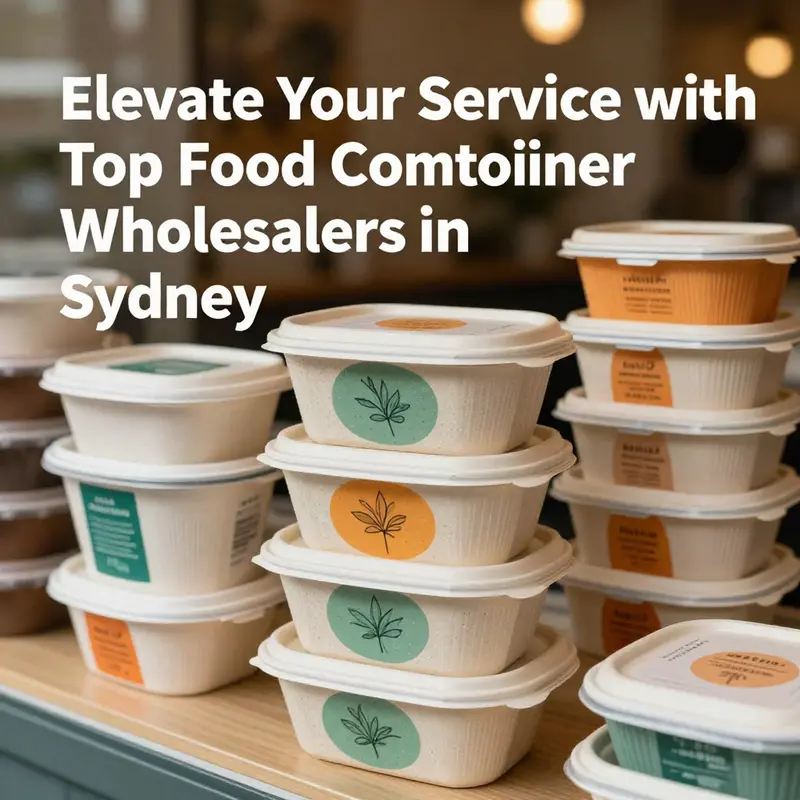
Sydney’s food container wholesale landscape is evolving beyond price competitiveness and MOQs toward a more deliberate embrace of sustainability, regulatory clarity, and resilient supply chains. In practice, this shift unfolds in a complex weave of compliance with food safety standards, transparent material sourcing, efficient design for distribution, and collaborative waste management. The resulting narrative is not about a single policy or trend but about a disciplined approach to sourcing, manufacturing, and distributing packaging that protects both people and the planet while supporting business growth in a crowded and discerning market. The backbone of this shift is a rigorous appreciation of how standards set by national agencies shape every decision—from the choice of fiber-based or plastic alternatives to how a container is labeled, tracked, and recycled. At the center of this approach lies FSANZ’s mandate for clear labeling, accurate allergen declarations, and full ingredient traceability for products intended for direct contact with food. In Sydney, buyers increasingly expect suppliers to produce documentation that demonstrates compliance and maintain sanitary production conditions. This regulatory mindfulness is not merely a compliance box-ticking exercise; it is a practical tool that reduces risk, streamlines audits, and builds trust with foodservice operators who must meet stringent standards to protect their customers.
Within this framework, the economics of wholesale packaging also changes. While competitive pricing and low MOQs remain important, buyers are more frequently evaluating the total cost of ownership, including longer-term savings from reduced waste, lighter packaging for lower transport emissions, and materials that enable easier recycling by end users. A modern Sydney wholesale operation often blends conventional packaging with innovative, sustainable options—such as recycled fiber, molded fiber, and thoughtfully formulated bio-based coatings—that minimize plastic reliance while maintaining performance, shelf life, and safety. The design philosophy extends beyond the container itself and into the packaging system: how boxes are nested for transport, how liners and sleeves are standardized across SKUs, and how cartons are sized to minimize void space in trucks. In this sense, sustainability becomes a practical logistics advantage as much as an environmental one. The result is a supply chain that is not only greener but more predictable and cost-efficient for food operators who must balance quality, speed, and cost in a highly competitive market.
A crucial element in achieving this balance is the operational capability of suppliers. In Sydney, wholesalers who can deliver consistent stock availability, quick replenishment, and reliable lead times earn the confidence of cafes, caterers, and retailers who rely on steady inputs to run their businesses. This reliability often depends on a structured assessment framework that buyers use to vet suppliers. A robust framework looks at three pillars: quality control, regulatory adherence, and supply chain resilience. Quality control means that every batch undergoes measurement against defined tolerances for moisture, microbial cleanliness, and dimensional accuracy. It also means that there is traceability back to raw materials, with documentation showing the origin of fibers, coatings, and adhesives. Regulatory adherence translates the FSANZ expectations into practical checks: clear allergen declarations where applicable, consistent labeling, and documentation that the product is manufactured under sanitary conditions. Finally, supply chain resilience concerns the ability to meet demand in the face of disruption, whether due to weather, port congestion, or shifts in consumer demand. Buyers understand that a supplier with robust forecasting, diversified sourcing, and transparent communications is a partner, not just a vendor, and that such a partner will help them navigate regulatory changes and market expectations with less friction.
The sustainability conversation in Sydney’s wholesale space cannot be separated from a broader environmental imperative. With consumer and corporate buyers increasingly prioritizing responsible packaging, the industry is charting a path toward closed-loop systems, where waste packaging transitions back into usable material streams. Local collaborations with farms and food producers help establish circular waste streams, ensuring that discarded containers are collected, processed, and reintroduced into manufacturing pipelines. This approach reduces the overall material footprint of packaging programs and supports clients’ carbon reduction targets. It also positions wholesalers as enablers of circular economy practices rather than mere suppliers of containers. In parallel, the industry is actively participating in city-level and national initiatives that promote recycling, composting, and the reduction of single-use plastics. While not every transaction can be fully circular—from frozen meals to heavily processed Grab-and-Go items—the trajectory is clear: more packaging designed for recycling, easier end-of-life processing, and greater transparency about the environmental attributes of each material choice.
In this evolving context, a leading theme is the material mix itself. Fiber-based packaging—recycled paperboard, molded pulp, and other compostable options—gains traction as an alternative to traditional plastics. Such materials offer benefits that align with environmental goals and regulatory expectations. They often provide adequate barrier properties for many foods, comply with labeling and allergen declarations, and present a favorable end-of-life profile for customers who operate sustainability programs. Yet the transition to these materials requires careful evaluation. Not all fiber-based solutions deliver the same performance in moisture resistance or shelf stability, and some may demand changes in the way foods are handled or stored. Therefore, wholesalers in Sydney increasingly rely on due diligence to compare not only price and MOQs but also performance data, supplier certifications, and lifecycle analyses. This careful scrutiny helps ensure that switching to a greener option does not compromise product integrity or customer experience.
A practical manifestation of these values is the growing tendency to offer a range of sustainable packaging options alongside conventional ones. This dual offering supports the diverse needs of Sydney’s hospitality and retail sectors, where some operators prioritize ultra-minimal environmental footprints, while others require proven performance at a lower cost. The wholesale model becomes a spectrum rather than a single path: a menu of choices aligned with different business models, regulatory contexts, and consumer expectations. In making these choices, buyers also consider the total cost and environmental impact of each option, factoring in production energy use, the feasibility of renewable energy integration within supplier facilities, and the potential to minimize transport emissions through optimized packaging design. For instance, packaging that nests efficiently and minimizes void space reduces truckloads and fuel consumption, delivering a tangible reduction in emissions across the supply chain. These design considerations, when scaled across many orders, translate into meaningful environmental benefits and cost savings for customers who require dependable, compliant packaging.
Within this ecosystem of sustainability, the role of documentation cannot be overstated. FSANZ compliance requires more than a certification stamp; it demands ongoing transparency. Buyers increasingly insist on up-to-date declarations of ingredients and allergen information, clear labeling that remains legible through typical use and stacking, and traceability records that identify batch-level origins. The emphasis on traceability is particularly important for reusable and single-use packaging intended for direct contact with food. It ensures that any safety concerns can be traced back to the source and addressed efficiently without disrupting operations for customers. In practice, this means that suppliers maintain robust record-keeping, provide access to documentation upon request, and reassure buyers that potential regulatory changes will be anticipated and integrated into product specifications with minimal disruption. The result is a collaborative, informed procurement process in which both sides—supplier and buyer—share a common language about safety, quality, and responsibility.
This shared language also supports the broader objective of consumer trust, which is increasingly tied to how a brand communicates its packaging choices. Businesses in Sydney that can articulate the environmental and regulatory attributes of their packaging choices gain an edge with consumers who want to know not just what they eat, but how it is packaged and what happens to the packaging after consumption. In practical terms, this means packaging programs that include clear consumer-facing messaging about recyclability or compostability, supported by verified data and accessible documentation for auditors and regulators. The credibility of such programs rests on the coherence between what operators promise, what suppliers provide, and what end users experience in their daily operations. When these linkages are strong, a wholesale supplier becomes a partner in building a responsible brand narrative rather than merely supplying containers.
To illustrate how these dynamics play out in the real world, buyers can look to the broader packaging ecosystem in Sydney and beyond for practical cues. A notable tendency is for wholesalers to curate a balanced portfolio that covers both the immediate needs of high-volume food service operations and the longer-term ambitions of sustainability-focused brands. This means offering a mix of standard, widely used containers and more sustainable options that meet regulatory standards and performance requirements. In some cases, wholesalers are partnering with local producers to ensure a tighter loop for material recovery. The aim is to close gaps in the recycling chain, minimize waste, and support businesses in achieving their own waste reduction targets. The result is a more resilient, adaptable supply chain that can weather regulatory shifts and market fluctuations while maintaining a focus on the health of the environment and the public.
An important aspect of this evolution is the way wholesalers communicate capabilities and expectations to potential buyers. A structured due diligence checklist becomes a practical tool for both sides, outlining critical factors for evaluation. The checklist typically includes questions about facility cleanliness, equipment modernity, and sanitation standards in production lines; documentation tied to FSANZ and related regulatory regimes; the traceability of ingredients and packaging materials; and the supplier’s ability to provide timely, accurate data about MOQs, pricing, and lead times. It also covers supply chain reliability—whether inventories are diversified, whether suppliers have contingency plans for disruptions, and how quickly they can scale to meet a surge in demand. By engaging in this process, buyers create a shared standard of expectations that reduces miscommunication and accelerates procurement cycles. The outcome is a more predictable relationship in which both parties feel confident about the regulatory compliance, environmental impact, and operational reliability of the packaging program.
The practical benefits of pursuing sustainable, compliant, and reliable packaging extend to the businesses that rely on these containers every day. For cafes and caterers, a well-chosen packaging program reduces risk—from allergen mislabeling to product contamination—while also contributing to brand integrity. For retailers and food manufacturers, sustainable packaging aligns with corporate responsibility goals, helps meet stakeholder expectations, and improves market positioning. The cumulative effect is a marketplace where packaging choices reinforce business strategy rather than complicate it. In Sydney, where regulatory oversight is rigorous and consumer expectations are increasingly aligned with environmental stewardship, a wholesale partner that can deliver on safety, sustainability, and service becomes an essential element of competitive advantage. The technology and logistics behind such a partnership are not glamorous, but they are precisely what keeps food items safe, shipments on schedule, and packaging programs scalable as businesses grow.
When considering the broader literature and case studies embedded in Sydney’s region, the emphasis on continuous improvement stands out. Suppliers that invest in process improvements, energy efficiency, and waste reduction consistently deliver better outcomes for customers. They often pursue certifications and audits that demonstrate their commitment to sustainable practices and regulatory compliance. They also invest in transparent supply chains, ensuring that customers can verify the origin of materials, trace the lifecycle of containers, and confirm the absence of prohibited additives or contaminants. This transparency is a critical component of trust, and it becomes a differentiator in a marketplace crowded with options. For buyers, the decision to engage with a supplier who offers sustainable materials, clear documentation, and reliable service translates into smoother operations, enhanced brand reputation, and measurable environmental benefits.
In sum, the Sydney wholesale sector for food containers is weaving together several threads: stringent food safety compliance, material innovation, design-for-distribution efficiency, and collaborative waste management. The outcome is a resilient, adaptable, and increasingly sustainable packaging ecosystem that can support business growth while aligning with the environmental and regulatory expectations of a modern economy. Buyers who approach procurement with a holistic lens—considering not only price and MOQs but also regulatory documentation, supplier reliability, and end-of-life considerations—will be well positioned to navigate the evolving market. They will find that sustainable practices are not a barrier to growth but a pathway to stronger partnerships, greater customer trust, and a more robust operation overall. For those who want to see a concrete example of sustainable packaging considerations in action, a representative solution line highlights the possibility of combining durable, safe, and recyclable options with clear consumer information and accessible documentation. The learning from this approach is transferable to many segments of the Sydney market, where packaging decisions reverberate through supply chains, regulatory compliance, and the values employers want to communicate to their customers. To explore a practical example of eco-conscious takeout packaging, consider the following resource that demonstrates how modern materials and thoughtful design come together to meet both performance and environmental goals: eco-friendly-takeout-boxes-for-food-packaging-stylish-food-containers-safe-microwave-craft-paper-lunch-boxes-leak-grease-resistant.
Looking ahead, the wholesale market in Sydney is likely to deepen its commitment to sustainability through continued material innovation, greater collaboration across the supply chain, and more transparent communication with regulators and customers. The most successful players will be those who can translate standards into practical, scalable packaging programs that meet the needs of food businesses of all sizes. They will provide a mix of solutions that balance performance, cost, and environmental impact, and they will do so with a level of service responsiveness that minimizes downtime and helps operators stay compliant with evolving FSANZ guidelines. In this environment, a supplier’s value lies not only in the containers themselves but in the ecosystem of information, assurance, and collaboration that surrounds each order. Such a holistic approach is what ultimately sustains growth, protects consumers, and strengthens the reputation of Sydney’s food service community as a global example of responsible packaging practice.
External resource: PakPlast sustainable packaging. https://www.pakplast.com.au/sustainable-packaging/
Final thoughts
As the food service industry continues to evolve, the selection of high-quality food containers plays a critical role in operational success. By adhering to established operating standards, understanding compliance requirements, and embracing sustainable practices, businesses can stand out in a competitive market. Whether you manage a bubble tea shop or cater corporate events, choosing the right food container wholesaler is vital to maintaining quality, ensuring safety, and fostering customer loyalty. The insights shared here equip you to make informed decisions that will elevate your service and align with both consumer expectations and regulatory standards.