
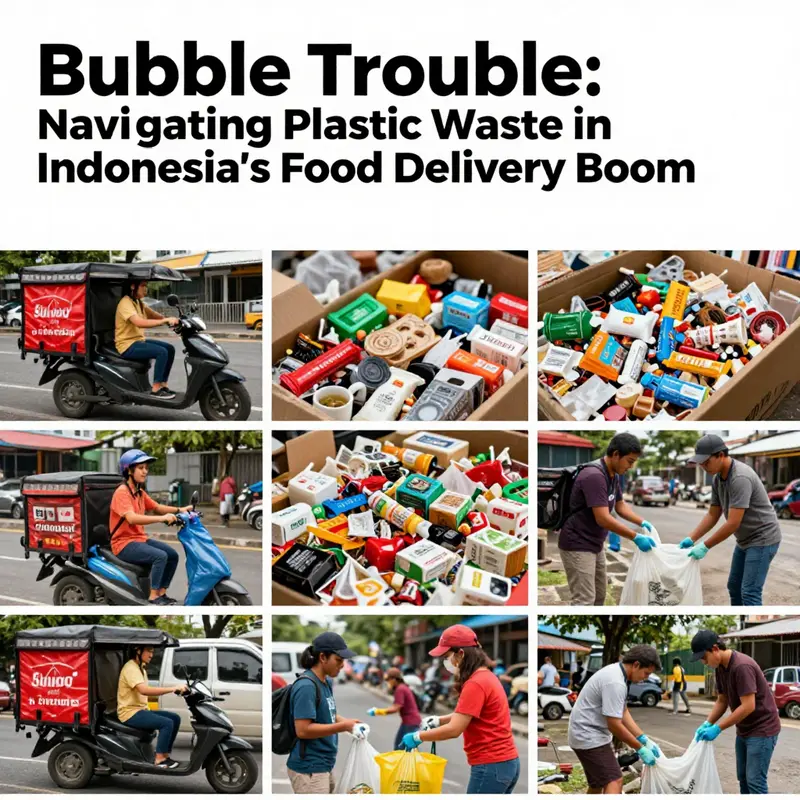
The food delivery service boom in Indonesia has reshaped the dining landscape, particularly since the onset of the COVID-19 pandemic. With an impressive annual user base surpassing 161 million, driven mainly by Millennials and Generation Z, the rise in popularity of online food ordering has inevitably led to a surge in plastic packaging waste. Each order contributes to thousands of metric tons of additional plastic waste annually, driven by the convenience-driven demands of modern consumers. This article delves into key aspects of this issue including consumer behavior influencing waste generation, regulatory frameworks addressing this concern, innovative technological solutions being developed, and rising public awareness aimed at combating plastic waste from food delivery services. Together, these chapters aim to provide a comprehensive understanding of the challenges and opportunities present in this space, paving the way for cleaner and more sustainable food delivery practices.
Tying the Trend: Indonesia’s Food-Delivery Packaging and Cable-Tie Footprint
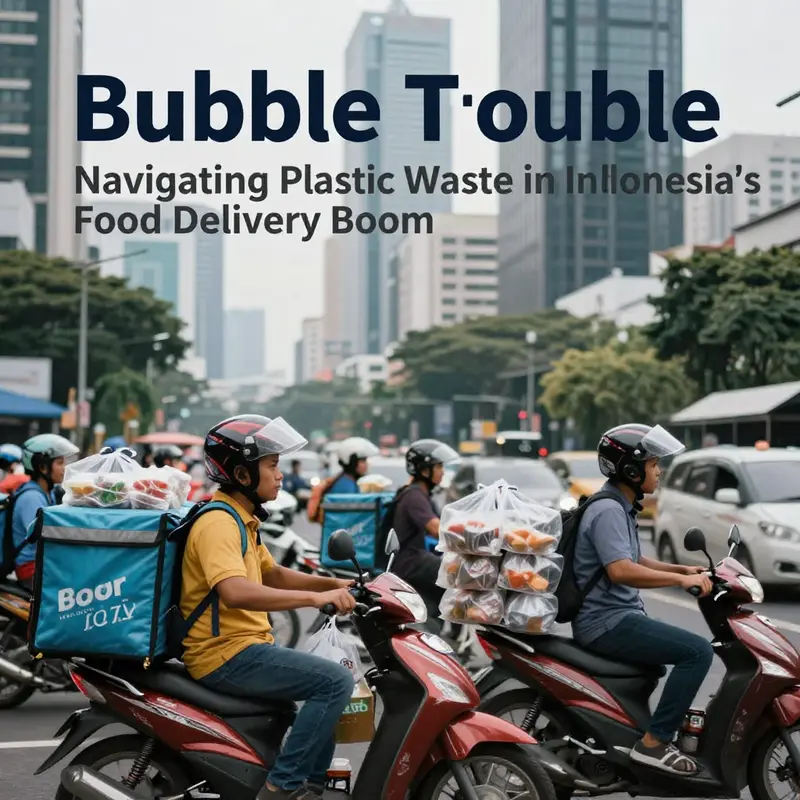
Indonesia’s rapid food-delivery growth has accelerated plastic use across cities and archipelagic regions. The ubiquitous cable tie, small and durable, symbolizes a broader packaging system designed for speed and reliability, yet challenging to recover and recycle. This chapter examines the scale of waste, the material mix in takeout packaging, and how geography, consumer behavior, and policy intersect to shape end-of-life outcomes. It proposes design and infrastructure changes—lighter, recyclable packaging, standardized closures, clearer labeling, and expanded recycling networks—and highlights the role of public awareness and business responsibility in reducing the environmental footprint of delivery.
The Ripple Effect of Choice: Consumer Behavior and Plastic Packaging Waste in Indonesia’s Food-Delivery Landscape
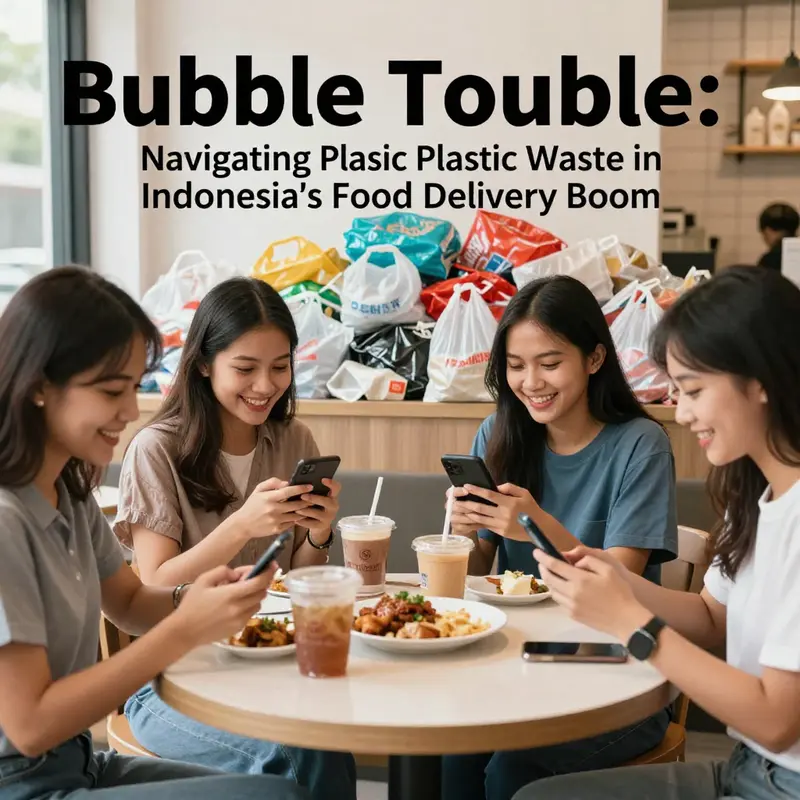
The rapid ascent of food delivery in Indonesia has stitched itself into the daily rhythm of cities and towns, rewriting how people eat and how waste travels from plate to planet. The appeal lies not only in menu variety and speed but in the ease of tapping a screen and receiving a hot meal moments later. Yet that same ease hides a quiet, persistent pressure on waste systems: plastic packaging waste that follows the digital-food chain from vendor to doorstep to disposal. In this ecosystem, consumer behavior does more than determine which dishes arrive at a consumer’s door; it shapes the packaging footprint every time a decision is made about what wraps the meal and how that wrap is perceived, reused, or discarded. The result is a complex trajectory where convenience, hygiene expectations, and promotional incentives intersect with waste management challenges, particularly in a country with sprawling urban corridors and dense economic activity.
Among the most influential forces is the generation gap in tastes and priorities, especially the rise of younger generations who are both digital natives and increasingly aware of environmental consequences. In Indonesia, younger cohorts—primarily Gen Z and Millennials—drive much of the online ordering surge. They are drawn to promotional offers, time-saving promises, and the social signals that come with popular delivery apps. This combination makes them a powerful, if sometimes paradoxical, force in the plastics equation. On one hand, promotions can lower the perceived cost of choosing certain packaging options; on the other, these same promotions can normalize a default preference for convenience-heavy packaging. The research suggests that these consumers are not merely passive recipients of packaging choices but active participants who can steer platforms and restaurants toward more sustainable options when nudged correctly.
The scale of the opportunity—and the risk—becomes clearer when we consider the order volume. An approximate figure suggests that around 161 million people place orders annually, with many doing so three to four times a week. Even under a cautious assumption that each order uses a single plastic element as a closure or tie, this demographic alone could contribute thousands of metric tons of plastic waste each year. The stark arithmetic underscores a broader truth: the environmental footprint of today’s food-delivery boom is not only a function of manufacturing or supply chains but also of daily consumer choice patterns embedded in the digital ordering experience. If a portion of orders relies on seemingly minor packaging components, those small choices accumulate into a substantial waste stream over time, particularly in densely populated urban areas where delivery services are most intense.
Indonesia’s waste map adds another layer of urgency. The country generates an estimated 346,500 tons of plastic waste annually from land-based sources that eventually enter the ocean. Two-thirds of this leakage originates from Java and Sumatra, islands hosting major metropolitan hubs where delivery services are most prevalent. These statistics are not merely numbers; they map the pressure points where consumer behavior, platform design, and municipal waste management converge. In Java’s and Sumatra’s bustling corridors, the embrace of on-demand meals has accelerated the flow of single-use plastics, making consumer choices in those regions disproportionately influential on the national waste trajectory. This regional concentration helps explain why any strategy to reduce plastic packaging waste must reckon with urban consumer habits, not just industrial or manufacturing practices.
Market dynamics amplify the influence of consumer behavior on packaging choices. Platforms, restaurants, and even small vendors learn quickly that consumer preferences regulate demand signals. If customers show even a modest willingness to pay for eco-friendly packaging or to opt for reusable containers, those signals can cascade through pricing, menu design, and packaging options. Conversely, if speed, cost, and perceived safety dominate decision-making, plastic-heavy packaging can remain the default. The research points to a delicate balance: consumers are highly sensitive to cost and delivery speed, yet there is growing receptivity to sustainability cues when they are integrated smoothly into the ordering flow. Subtle changes—such as defaulting to biodegradable packaging or offering opt-in discounts for reusable containers—can nudge behavior without sacrificing the user experience. It is not a matter of a single policy or a one-time campaign; it is about embedding environmentally responsible choices into the routine of ordering.
For this to work, the interface and the incentives must harmonize with consumer psychology. A seamless user experience that transparently communicates the environmental benefits of certain packaging choices tends to resonate more than broad, guilt-based messaging. When platforms design packaging options as part of a clean checkout path—presenting eco-friendly choices as the standard, not the exception—and pair them with tangible benefits, such as a small discount or loyalty points, sustainable behavior becomes a straightforward, rewarding option. In such a system, sustainable packaging is not an add-on but the expected norm, which is precisely the kind of behavioral shift that can ripple through the economy and the waste stream alike.
The social dimension also matters. Promotional campaigns and public messaging that highlight the environmental costs of plastic waste can alter perceived norms, especially among young adults who value peer cues and social visibility. When sustainability becomes part of the conversation about quality and modern living, it moves from a distant ideal to a personal standard embedded in how a person orders, what meals they choose to support, and how they treat leftovers. In this sense, consumer behavior is not only a driver of immediate waste but a lever for long-term change in the packaging ecosystem. The power lies in translating awareness into choices that the ordering platforms and restaurants can scale. Such alignment requires collaboration across stakeholders—consumers, platform designers, restaurateurs, and policymakers—to ensure that sustainable options are practical, affordable, and integrated into the everyday logic of delivery.
As the sector evolves, several practical pathways emerge. Platforms that make sustainable packaging the path of least resistance—by defaulting to compostable or reusable options and aligning pricing structures to reward eco-friendly choices—stand a better chance of achieving scale. Restaurants that embrace reusable containers, if paired with a reliable logistics and return system, could reduce waste in a meaningful way, though this approach demands robust infrastructure and careful health-safety planning. Meanwhile, the broader policy context—ranging from waste collection efficiency to extended producer responsibility—will shape what is feasible and financially sustainable for businesses and consumers alike. The convergence of these factors suggests a path forward where consumer behavior, platform design, and municipal systems cooperate to lower the plastic load without compromising the convenience that defines the modern urban dining experience.
In this evolving landscape, a practical takeaway for designers and policymakers is clear. Change will come not from a single big move but from a series of well-timed, well-designed nudges that align consumer incentives with environmental outcomes. A user experience that integrates sustainable options as the default, reinforced by transparent communication about environmental impact and supported by modest rewards, can create durable change. This approach does not require abandoning the appeal of quick, reliable delivery; it requires reimagining what “fast and convenient” means in a way that is compatible with a cleaner, more responsible waste profile. The research on consumer preferences for online delivery plastic packaging hints at a readiness to engage with such changes, provided they are framed in terms of value, simplicity, and social responsibility.
For readers seeking a broader lens on how consumer preferences shape packaging outcomes in online delivery, a deeper dive into the study on consumer preferences and online delivery plastic packaging offers valuable context. This external resource provides analytical insight into how promotional dynamics, perceived norms, and sustainability awareness interact with packaging choices in digital food ecosystems. Access the study here: Analysis of Consumer Preferences on Online Delivery Plastic Packaging.
Within Indonesia’s own packaging ecosystem, there are tangible opportunities to weave sustainability into the ordering experience itself. One such opportunity is to place eco-friendly takeout options front and center in the user journey, making responsible choices as straightforward as possible while preserving the visual and tactile cues customers expect from a trusted delivery experience. A practical example is to present environmentally friendly packaging as a default option in the cart, with a lightweight, positive notification about its benefits and, where feasible, a small incentive for choosing it. Such design decisions can be reinforced by public campaigns and real-world examples that demonstrate the impact of collective action on waste reduction. For businesses exploring this path, resources like eco-friendly takeout boxes can guide product choices, ensuring that sustainability and practicality coexist in a way that satisfies both the customer and the supply chain.
In sum, consumer behavior is not merely a driver of demand for meals but a powerful determinant of how packaging waste unfolds in Indonesia’s food-delivery system. The collective choices of millions of diners, shaped by promotions, norms, convenience, and information, have the potential to steer the market toward packaging that is kinder to the environment. Achieving this requires a coordinated approach that blends user-centric design, economic incentives, and robust waste-management infrastructure. When implemented thoughtfully, such an approach can transform the consumer experience from one of convenience at any cost into a model of sustainable convenience—where the ease of ordering goes hand in hand with responsible packaging and a cleaner coastline for Indonesia’s people and ecosystems.
Policy at the Doorstep: Indonesia’s Regulatory Drive on Plastic Waste in Food Delivery
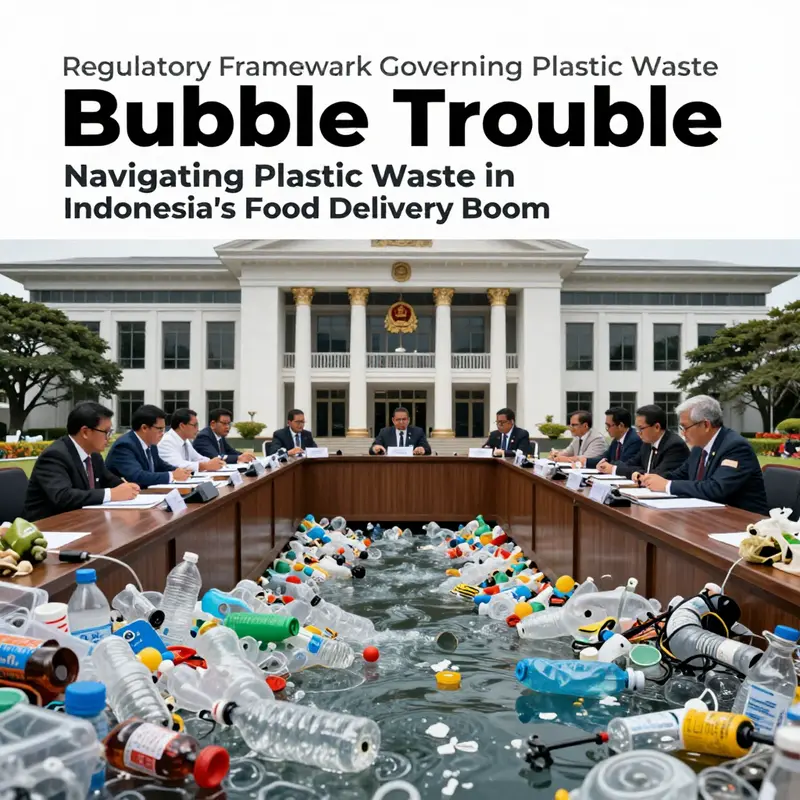
Indonesia’s rapid growth in food delivery has accelerated plastic packaging use, with implications for urban waste management. The policy response is incremental and aims to preserve affordability and accessibility while reducing waste. At the national level, the framework rests on Law No. 18 of 2008 on Waste Management, which assigns responsibility to producers, distributors, and consumers to minimize waste and to engage in sound waste management practices. Building on this, Government Regulation No. 81 of 2012 articulates operational steps for waste reduction, recycling, and proper disposal, emphasizing lifecycle responsibility and cross-sector collaboration. A pivotal shift comes with Government Regulation No. 10 of 2022 on the Reduction of Single-Use Plastic, which targets phased reductions in disposable items and promotes reusable or biodegradable alternatives where feasible, with timelines that push for changes by 2026. Local authorities further translate these directives into city-specific practices, with Jakarta and other municipalities introducing packaging guidelines and plastic-bag charges, creating market signals for sustainable packaging and pilots that could scale nationally. Enforcement hinges on robust data, clear standards for alternatives, and the capacity of waste-management infrastructure; without reliable metrics, policies risk remaining aspirational. The policy landscape also invites platform operators, restaurants, and packaging suppliers to align incentives, standardize packaging performance, and support pilots for reusable systems with deposits or take-back schemes. Consumer education and transparent labeling are essential to ensure waste streams are properly sorted and to maintain trust in delivery services. Looking ahead, Indonesia faces the challenge of balancing rapid service growth with environmental objectives, while enabling innovation in packaging design and supply chains. The evolving mix of national regulations and local experiments provides a blueprint for integrating waste targets into a digitized, urbanizing food economy. For readers seeking more detail, official regulatory texts and updates remain essential guides to how industry players and policymakers converge on sustainable takeout packaging.
Packaging with Purpose: Tech-Driven Pathways to Reducing Plastic Waste in Indonesia’s Food Delivery
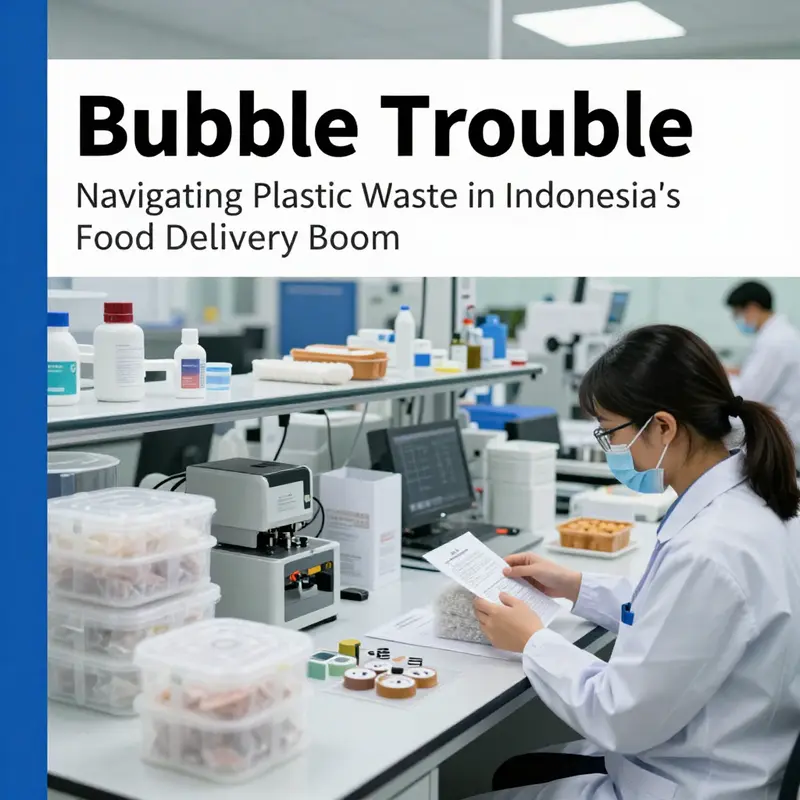
In Indonesia’s rapidly urbanizing landscape, the appetite for convenience has become a catalyst for a new kind of waste problem. Food delivery, once a novelty, has solidified itself as a staple of daily life for millions, especially among younger generations who have grown up with digital access and on-demand services. The consequence is a widening trace of plastic packaging across cityscapes, from apartment stairwells to riverside canals. Yet technology is not merely complicit in this trend; it also offers a suite of strategies to decouple delivery demand from mounting plastic waste. The chapter that follows traces how biodegradable materials, smarter packaging, digital platforms, circular economy models, and public awareness campaigns can collaborate to reshape the environmental footprint of Indonesia’s delivery ecosystem. It is not a single solution but a tapestry where each thread reinforces the others, guided by local conditions, supply chains, and consumer behavior. The narrative begins with the everyday realities of packaging and moves toward the emerging technologies that promise to transform those habits without sacrificing the convenience that delivery has made indispensable.
Biodegradable and compostable materials emerge as the most visible frontier in replacing conventional plastics. In practice, this shift is not a simple substitution of one material for another; it is a holistic rethink of how packaging is designed, manufactured, and disposed of within Indonesia’s complex waste management system. Cassava starch, sugarcane bagasse, and algae-derived blends are among the plant-based sources that researchers see as viable alternatives to traditional polymers. These materials offer a path to end-of-life outcomes that resemble composting rather than persistent pollution. They also invite closer attention to shelf life, barrier properties, and microwave safety—factors that influence how many meals can travel safely from kitchen to consumer without compromising quality. A growing body of Indonesian pilot work points to packaging innovations that extend product life while also reducing the overall amount of material needed per shipment. When a box is engineered to be lighter yet sturdy, the carbon and material costs of each delivery can decline in tandem with waste streams. The practical upshot is a shift from quantities of waste to quantities of value recovered through better design. This is not abstract theory but a material logic that many local producers are beginning to embrace, partly driven by consumer demand for greener choices and partly by the long-term economics of waste management and compliance.
Beyond the choice of material, the life cycle of packaging is being reimagined through smart, data-enabled solutions. Smart packaging, with embedded labels and sensors, has the potential to cut waste by reducing spoilage, mispackaging, and unnecessary over-packaging. A temperature sensor can ensure a hot meal stays within safe limits without requiring extra insulation that adds unnecessary weight and waste. Tamper-evident indicators provide an extra layer of assurance that a product arrived intact, reducing the need for excessive secondary packaging. In Indonesia’s market, where cold-chain logistics are still developing across many regions, such sensors can enable better route planning, more precise handoffs between restaurants and couriers, and fewer instances of returns or replacements due to quality concerns. The operational efficiencies of smart packaging ripple outward, influencing restaurant packaging choices, courier handling, and consumer expectations. When campuses, malls, and residential complexes begin to see reliable temperature and freshness data tied to a delivery, the incentive to rely on bulky, over-packaged solutions diminishes. The technology does not force a one-size-fits-all approach; instead, it enables a more nuanced balance between protection, sustainability, and practicality. In parallel, digital platforms are beginning to expose the environmental footprint of different packaging options. With a few taps, consumers can choose eco-friendly packaging, while platforms can reward restaurants that adopt recyclable or compostable solutions. The incentive structures built into these platforms—labeling that highlights environmental impact and reward programs for sustainable packaging choices—encourage a cultural shift toward responsible packaging without eroding the user experience. This is where product design meets policy and consumer psychology, a convergence that has the potential to shift the equilibrium toward more sustainable outcomes across millions of daily orders.
The digital layer extends beyond consumer choice. Platforms can catalyze a broader shift by standardizing eco-packaging incentives and making them part of the ordinary ordering flow. Restaurants can participate in programs that reduce the perceived friction of sustainable packaging, such as tiered pricing or credits for using recyclable materials, while customers benefit from a clearer sense of the environmental tradeoffs of their choices. Such digital platforms also facilitate better collaboration along the supply chain. When a restaurant commits to compostable cups, sleeves, or trays, the system can automatically flag procurement needs, forecast waste streams, and optimize packaging orders to reduce surplus. The result is a more resilient packaging ecosystem, where demand signals, waste data, and supplier capabilities are aligned in near real time. Within this ecosystem, a single change—such as substituting a disposable liner with a dissolvable alternative—can cascade through several partners, cutting waste at its origin and simplifying end-of-life management. A practical takeaway is that technology should operate not as a standalone solution but as an integrator that harmonizes procurement, logistics, and customer preferences toward lower-waste outcomes. The aim is to transform packaging from a disposable artifact into a data-informed, circular component of the delivery network.
Circular economy thinking further expands the space of possible interventions by prioritizing the recycling and upcycling of packaging materials. Startups and established companies alike are exploring ways to transform discarded packaging, and even the packaging waste stream itself, into usable inputs for new products. This approach aligns with emerging examples in global logistics networks where recycled plastics and post-consumer waste are redirected into functional packaging. In Indonesia, this kind of system change can reduce dependence on virgin plastics and unlock local material streams for reuse. It also invites a rethinking of the packaging itself as a resource rather than a waste product. For example, life-cycle thinking can guide decisions about whether a particular packaging format should be designed for multiple reuse cycles, whether it should be easily separable for recycling at the consumer end, or whether it can be designed for composting in municipal facilities. The practical implications are meaningful: less waste ending up in landfills, more value recovered from discarded materials, and a local economy that benefits from sustainable design and recycling innovations. Public-private partnerships can accelerate these transitions by aligning regulatory incentives, waste management capabilities, and consumer education in ways that move beyond pilot projects and into scalable practice. A notable, scalable blueprint from global practice demonstrates how recycled-content packaging can be produced at competitive costs while maintaining performance, setting a precedent that Indonesian players can adapt with appropriate supply chain investments.
The changes described above do not occur in a vacuum. Public awareness and replacement initiatives play a critical role in shaping demand for sustainable packaging. Consumers increasingly recognize that single-use items, including the small plastic bands that secure meals, contribute to urban pollution and long-term environmental harm. Technology enables more than just substitution; it enables replacement with viable alternatives. Edible or water-soluble bands, compostable ties, and smarter routing that minimizes package interferences are among the ideas gaining traction in various markets. In Indonesia, advancing such replacements requires collaboration across stakeholders—culinary partners, packaging manufacturers, waste managers, and policymakers. Education campaigns that explain not only the environmental impact but also how to properly sort and dispose of packaging can significantly improve recycling rates and composting outcomes. The most effective campaigns combine clear messaging with tangible incentives, such as discounts or loyalty rewards for customers who choose eco-friendly packaging or restaurants that commit to shortest possible supply chains with minimal packaging. In this sense, technology supports a social contract: a collective commitment to reduce waste while preserving the convenience that delivery services have made indispensable. As these efforts accumulate, the urban landscape begins to change—from a fixated showcase of disposables to a system that demonstrates the value of smarter materials, smarter logistics, and smarter choices. The result is a more sustainable rhythm for Indonesia’s food delivery, one in which the frequency of orders remains high but the waste footprint declines and the potential for meaningful recycling and upcycling grows along with consumer trust.
For readers seeking practical exemplars of how these ideas translate into real-world practice, the broader literature on packaging innovation provides useful signposts. The emphasis on biodegradable and compostable materials helps ground the discussion in tangible options that can be scaled regionally with appropriate investment and regulatory support. The smart packaging narrative, meanwhile, highlights the practical benefits of data-driven delivery systems in reducing waste—benefits that extend beyond environmental concerns to food safety, freshness, and customer satisfaction. Digital platforms that reward sustainable practices illustrate how consumer behavior can be nudged toward better choices without eroding the user experience. Circular economy models emphasize the importance of recovering value from waste streams, a principle that can unlock local job creation and new business models in packaging and recycling. In combination, these dimensions form a comprehensive approach that aligns environmental goals with the realities of a fast-growing, highly competitive delivery market in Indonesia.
Within this integrated framework, a concrete takeaway emerges: the transformation of packaging is not an isolated change set but a coordinated upgrade across materials, data, business models, and public engagement. The challenge lies in balancing cost, performance, and environmental outcomes while maintaining the reliability that customers expect from delivery services. The opportunities, though substantial, require sustained investment and a shared vision among manufacturers, platforms, restaurants, and waste managers. As Indonesia continues to refine its waste management infrastructure, the adoption of plant-based materials, intelligent packaging, and platform-enabled incentives could become standard features of the delivery ecosystem rather than exceptions. The path forward invites experimentation at scale—pilot programs that test new materials in diverse regions, data-sharing collaborations that reveal true waste footprints, and policy frameworks that reward reductions in packaging waste while preserving consumer protection and food safety. If these elements align, the country can chart a course where the convenience of delivery remains intact while the environmental cost of packaging recedes, year after year, order by order. To explore a tangible starting point for readers interested in materials that favor sustainability, consider the practical option highlighted by practitioners and designers who emphasize eco-friendly takeout boxes for food packaging as a meaningful step toward greener delivery practices: eco-friendly takeout boxes for food packaging.
As a final reflection, the chapter’s trajectory suggests that the Indonesian delivery landscape can evolve toward a model where technology serves as a bridge—not just between kitchens and customers but between immediate convenience and long-term environmental resilience. The story is not merely about replacing plastic with another material; it is about building a system where design choices, data insights, and shared standards reduce waste at the source and keep the most valuable resources in circulation. If policy, industry, and consumers move in concert, the urban experience can preserve its vibrancy while shrinking its ecological footprint. The promise lies in an ecosystem where cutting-edge packaging technologies, thoughtful consumer engagement, and responsible supply chain practices work together to redefine what a delivery experience can be—and should be—in Indonesia.
External resource for further context: FedEx’s Innovation in Packaging offers a catalog of scalable, sustainability-focused approaches that can inspire domestic adaptations in Indonesia’s packaging and logistics ecosystems. FedEx – Innovation in Packaging
Tangled in Convenience: Public Awareness and Community Action on Indonesia’s Plastic Packaging Waste from Food Delivery
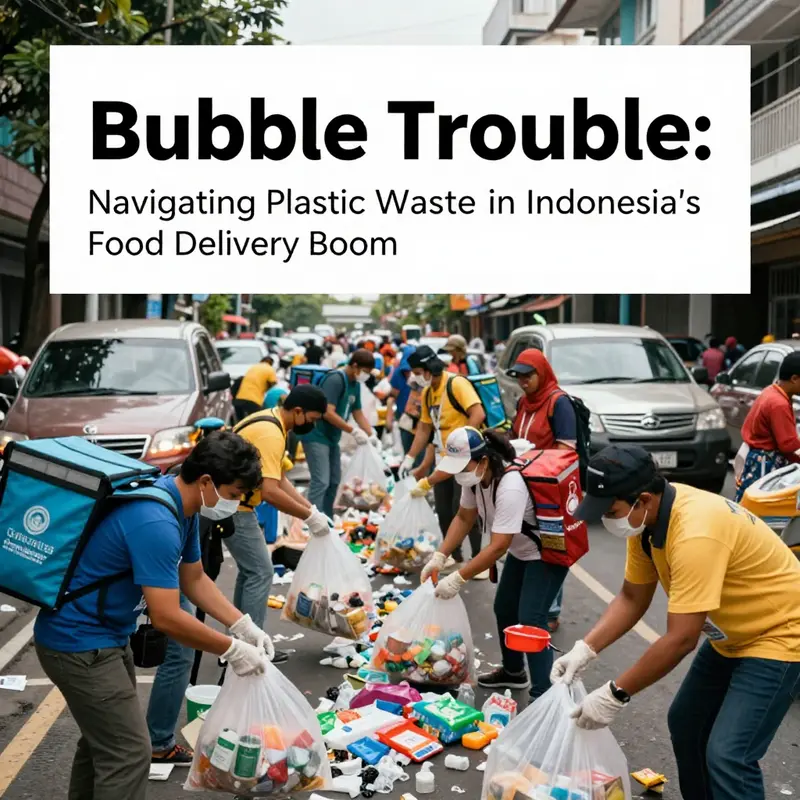
Across Indonesia, a rapid urban pull and a booming digital economy have reshaped everyday life. The rise of online food delivery has made meals more accessible than ever, but it has also intensified a quiet, stubborn problem: plastic packaging waste. The convenience that drew millions to order meals—often several times a week—comes with a cost that accumulates not only in landfills but in fragile coastal waters and crowded urban drainage systems. In densely populated cities, the sight of overflowing bins and the shimmer of plastic fragments along shorelines tell a story that many residents know by touch more than by policy. The narrative is not simply about waste diverted by households; it is about a system of packaging that travels from a restaurant to a doorstep, takes a moment in a home, and then lingers in the environment long after the last bite is enjoyed. Within this broader pattern, a small but persistent protagonist has emerged: the humble cable tie, a slender connector that quietly secures many orders. A 2025 study highlights that these seemingly negligible items contribute to the overall burden of single-use plastic in food packaging, explaining how such staples—used for their speed and low cost—accumulate as waste when discarded improperly. The emphasis on cable ties may seem esoteric, yet the study argues that their omnipresence in Indonesia’s delivery ecosystem reflects a bigger truth: convenience often compounds waste in ways that are invisible until they intersect with waste management systems and marine environments. The message for communities is clear. It is not enough to encourage people to recycle or to separate waste at home if the waste stream itself remains a mosaic of small, durable plastics that do not easily find their way back into a circular economy. Public awareness has therefore begun to move beyond general admonitions about plastic to a more concrete understanding of how everyday packaging choices—whether a bag, a container, or a securing tie—shape local waste profiles and regional pollution. This shift is essential because it reframes the issue from a distant environmental risk to a community-centered responsibility where residents can observe, critique, and influence the materials that arrive at their doors. In practice, awareness work translates into actions that communities can rally around, from neighborhood cleanups to school workshops, from social media campaigns to practical demonstrations of alternatives that do not undermine the delivery system’s efficiency. Local environmental groups and youthful activists have started to organize around a common aim: to reveal the hidden layers of packaging and to illuminate paths toward reuse and reduction. Clean-up campaigns, for instance, often blend waste collection with tangible education about how long certain plastics persist in the environment and how mismanaged trash makes its way into rivers, drains, and ultimately the sea. The emphasis is on legible, local outcomes—tidier streets in the short term and a clearer, longer-term understanding of waste flows in the long term. Educational workshops, sometimes hosted in community centers or schools, couple demonstrations of waste impact with hands-on sessions that explore sustainable habits. Participants learn to recognize the kinds of packaging that dominate the waste stream and to compare simple, cost-effective alternatives. Social media drives amplify these messages, turning local concerns into shared questions: What happens to the packaging we accept with each order? How can we hold platforms and restaurants accountable for packaging choices? How can we ally with suppliers who prioritize reuse over single-use, even in a fast-paced delivery environment? The conversations are not merely critical; they are forward-looking. Communities increasingly advocate for transparency, asking for detailed information about packaging materials, end-of-life options, and verification of recycling or composting pathways. They want to know not only what is being used but what is being avoided, and they want accessible data that helps ordinary people assess the trade-offs between convenience and environmental health. One practical consequence is the promotion of reusable or semi-reusable alternatives. In some neighborhoods, residents are testing cloth bags for carrying small meals, or metal clips and clips-based systems that secure orders without adding layers of plastic. These approaches are less about rejecting modern delivery and more about reimagining it through the lens of resource stewardship. The connection between consumer choice and corporate responsibility becomes increasingly visible as well. Pressure from the ground up—through petitions, public forums, and consumer feedback channels—has nudged platforms and restaurants to be more explicit about packaging policies. The push for sustainable packaging is not a luxury add-on; it is becoming a competitive expectation, a signal to customers that a company can align speed with stewardship. Yet, while public awareness grows, enforcement and practical implementation lag behind. The Indonesian government has acknowledged the issue and discussed policies aimed at reducing single-use plastics and boosting recycling. The challenge lies in translating broad policy aims into enforceable rules across a fragmented delivery ecosystem that includes thousands of small vendors and a handful of platform operators. Compliance requires cultural change as much as regulatory change. Public engagement thus becomes the indispensable catalyst that turns policy rhetoric into everyday practice. When people understand packaging as part of a larger system—one that links urban waste management, marine ecosystems, and the livelihoods of waste workers—there is greater willingness to alter routines. Such changes might involve choosing orders from vendors that demonstrate clear packaging improvements, supporting platforms that publish packaging data, or participating in local programs that collect and repurpose materials rather than consign them to landfills. The social dimension of this transformation rests on the belief that small, local actions can aggregate into broader social norms. As awareness rises, so does the expectation that packaging choices be more than cosmetic or temporary fixes. Consumers increasingly demand that platforms and restaurants be transparent about what materials they use, how those materials are disposed of, and what alternatives exist. This pressure fosters a more innovative delivery culture in which eco-friendly options—such as compostable, recyclable, or reusable packaging—are not seen as hurdles but as opportunities to differentiate and to build trust with customers who value environmental accountability. The narrative of public awareness is inseparable from practical demonstrations of change. In some communities, the conversation about plastic in food delivery has matured into a cooperative effort to demonstrate viable alternatives. For instance, residents may organize local exchanges that encourage the use of cloth or durable containers that can be siphoned into take-back programs, with community-based centers coordinating collection and redistribution. These efforts do not erase the need for rapid, reliable delivery, but they rewire the expectation of what belongs in a delivery ecosystem and who bears responsibility for end-of-life management. The dialogue also recognizes the transitional nature of this shift. Replacing every single-use item with a reusable equivalent in a high-volume delivery context is not a simple substitution; it involves supply chain adjustments, logistics redesign, and consumer habit changes. A cautious, iterative approach—pilot programs, feedback loops, and transparent reporting—begins to carve a sustainable path that can expand with time. Within this evolving scenario, one can observe how information and practice propagate through communities. A growing body of local knowledge points to practical entry points: educational campaigns that focus on the lifecycle of packaging, demonstrations of reusable systems, and the identification of barriers—cost, convenience, reliability—that must be addressed for real progress. The movement toward sustainable packaging in food delivery is thus as much a cultural shift as a technical one. It is about learning to coexist with convenience in a way that respects the environment, ensuring that the ease of ordering does not come at the expense of long-term health for ecosystems and urban residents alike. For readers seeking tangible pathways to participate, resources exist at the neighborhood level and beyond. Local groups provide a forum for dialogue with drivers, vendors, and municipal authorities, enabling a more integrated approach to waste reduction. And while public awareness forms the backbone of momentum, the momentum itself must be sustained through ongoing engagement, measurable outcomes, and a shared conviction that better packaging practices can, in time, redefine the rhythm of Indonesia’s food delivery culture. To further explore the environmental science behind these issues, researchers highlight how even small components, like cable ties, can shape waste streams when they become part of the daily routine of millions. This broadening of perspective—from macro-scale policy to micro-scale items—helps communities frame their goals with clarity and purpose. The path forward rests on continued collaboration among residents, civil society groups, delivery platforms, and government agencies. It invites everyone to imagine a delivery ecosystem where speed and satisfaction go hand in hand with responsible packaging choices, where public awareness translates into concrete actions, and where the most inconspicuous elements—like a tiny plastic tie—are recognized for their cumulative impact and reimagined accordingly. For readers who want to dive deeper into the material science and policy dimensions, a robust external resource provides a comprehensive analysis of the environmental footprint of single-use plastics in food packaging. The chapter’s discussion thus reaches beyond local action, inviting readers to consider how global research and local advocacy together can reshape a very Indonesian challenge into a sustainable model for the future. The conversation continues in the next chapter, where the focus shifts toward designing packaging systems that align with both consumer expectations and ecological realities. Meanwhile, communities keep testing ideas, sharing lessons, and building a more resilient urban palate that can savor convenience without compromising the health of the country’s rivers, seas, and streets. For a broader academic perspective on the topic, see the study on the effects of cable ties and other single-use plastics in food packaging. https://www.sciencedirect.com/science/article/pii/S2352146525001879
Final thoughts
Addressing the issue of plastic packaging waste in Indonesia’s burgeoning food delivery industry requires a multifaceted approach. By understanding the impact of consumer behavior, regulatory frameworks, and technological advancements, as well as harnessing community efforts, we can work collectively towards reducing plastic waste. Businesses engaged in food delivery, from bubble tea shops to catering services, have the opportunity and responsibility to lead the way in sustainable practices, significantly contributing to safeguarding the environment. The actions taken today will set the precedent for future initiatives that seek to balance convenience with ecological responsibility.