

Food grade plastic pond large fish tub containers are increasingly becoming essential tools in businesses such as beverage chains, restaurants, and catering services. These durable and versatile containers not only comply with the highest food safety standards but also offer practical applications in various settings. In this exploration, we’ll unravel the key features of these containers, delve into their diverse applications, and outline essential considerations for their purchase and use—tailoring practical insights for professionals like you who operate in competitive and dynamic culinary landscapes.
Food-Grade Plastic Pond Containers: Safe, Space-Efficient Solutions for Fish, Water, and Industrial Storage
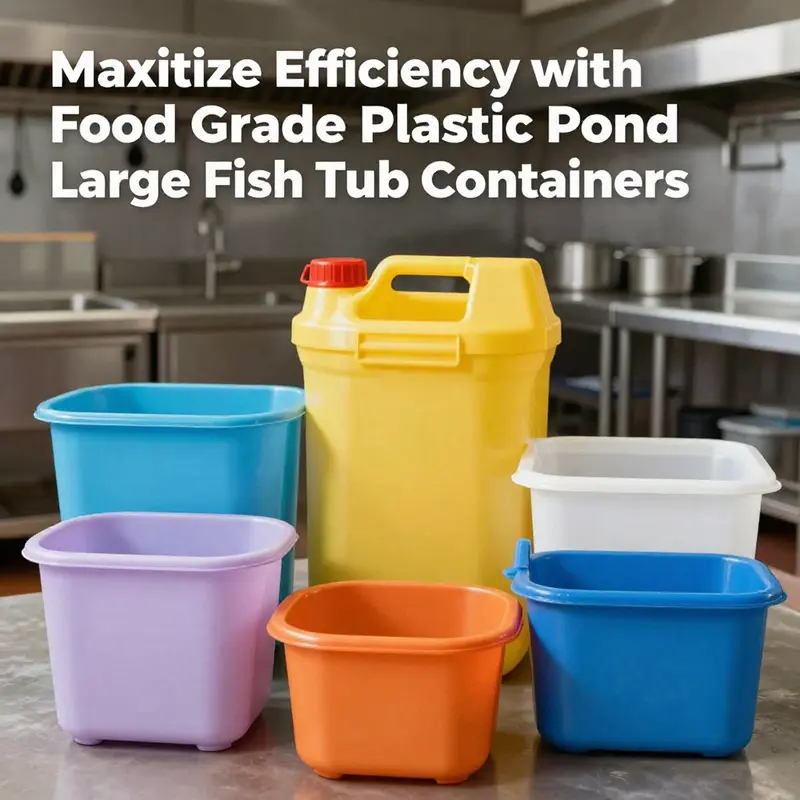
Food-grade plastic pond containers offer a durable, reusable option for holding water and live stock in small hobby setups or larger operations. They are designed to carry water, transport fish, and endure outdoor conditions without compromising safety or performance. The key idea is to provide a vessel that can touch water and fish without leaching harmful substances. Materials commonly used include high density polyethylene or HDPE and sometimes food-grade linear low density polyethylene, both chosen for strength, chemical resistance, and ease of cleaning. The aim is to minimize leaching and odor transfer while ensuring the product can be cleaned and sanitized between uses.
Design and features matter as much as raw materials. Rigid, ergonomic handles, sturdy lids, and drainage options help with daily tasks and fish welfare. Rectangular or square shapes maximize usable space on shelves and in transport, and stacking or nesting designs save warehouse or vessel space. Anti freeze capabilities and UV stabilization extend life in outdoor use. A smooth interior surface improves cleaning and reduces biofilm formation.
Considerations when purchasing include confirming food-grade status, verifying appropriate safety certifications, and checking capacity to match workflow. For outdoor use, assess how well the container tolerates temperature swings and sunlight. Cleanability and reconditioning ease are important for multiuse setups, especially in environments handling live stock.
In practice, these containers are valued for durability, reusability, and space efficiency. They can serve as temporary holding pools, bulk liquid storage, or transport vessels while meeting sanitation expectations. When chosen carefully and deployed thoughtfully, a food-grade plastic pond container can support reliable operations and responsible water management across different scales.
For sourcing, look for suppliers that provide clear material declarations, certifications, and labeling for reuse. You may find options spanning roughly 10 liters up to several thousand liters, with varied lid designs and stacking features to fit specific workflows.
Safe, Surface-Driven Growth: How Food-Grade Plastic Ponds Reshape Large-Fish Rearing and Modern Water Management
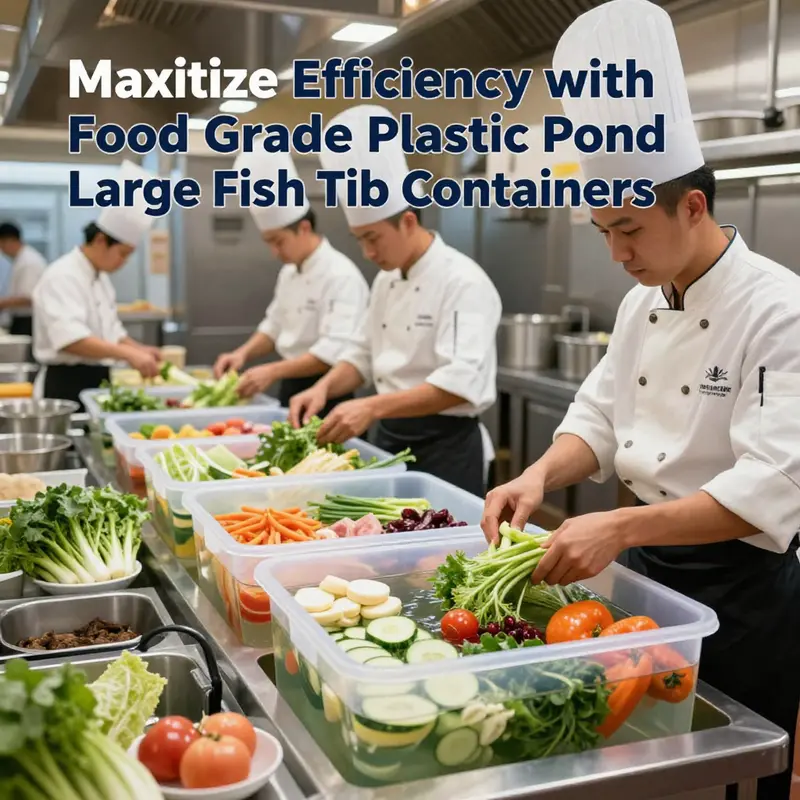
The rise of food-grade plastic pond containers signals a quiet revolution in how people think about large-fish rearing, water storage, and even the broader landscape of industrial liquids. These containers, designed to be reusable, safe, and adaptable, have emerged as a practical intersection between dietary safety, logistical efficiency, and environmental stewardship. They are not merely vessels for holding water or fish; they are modular tools that enable consistent hygiene, scalable production, and more resilient farming practices in a world where freshwater resources are increasingly precious and consumer expectations rise in tandem with supply-chain transparency. The core appeal lies in their materials—food-safe high-density polyethylene (HDPE) or food-grade polypropylene (PP)—which combine non-toxicity with mechanical toughness. When you examine these tanks, you quickly notice that the choices behind their construction are not esoteric luxuries but deliberate responses to real farming and industrial challenges: minimizing contaminant risk, extending service life, and enabling flexible layouts that adapt to available space, whether in a compact urban rooftop system or a multi-acre aquaculture facility.
Material science underpins the trust customers place in these containers. HDPE and PP offer a profile that balances chemical inertness with physical resilience. The chemistry matters because fish, feeds, and water can present a mix of stressors: salinity, pH fluctuations, trace cleaners, and the organic compounds that culture within a closed system. A food-grade standard—achieved through controlled manufacturing processes and rigorous testing—ensures the resin resists leaching and does not impart odors or tastes that would disrupt fish health or the quality of water used for drinking or processing. In practice, this means a container that remains non-toxic under prolonged contact with various liquids, including potable water, feed stocks, or even certain industrial solutions, without compromising the organisms or the workflow.
Durability is not a single attribute but a collaborative one. UV resistance protects surfaces from the sun’s relentless rays, preserving the plastic’s color and structural integrity when the tanks sit outdoors for years on end. Anti-freezing design elements, in regions where winters bite, help the containers withstand freeze-thaw cycles without cracking; at a practical level, this reduces downtime and replacement costs during off-season periods. Yet resilience is more than a chemical guarantee; it includes mechanical features such as reinforced rims, robust handles, and reliably sealing lids. A well-designed container can be maneuvered, stacked, and transported with ease, reducing labor costs and the risk of accidental damage. In the largest sense, these design choices contribute to a predictable life cycle that aligns with farmers’ budgeting and maintenance planning, turning a simple container into a dependable workhorse for year-round operations.
The architectural logic of these tanks often centers on capacity and space efficiency. Ranging from a few liters to several thousand, these containers accommodate diverse scales of operation. In a typical rooftop, backyard, or small commercial system, the shallower, wider footprint yields a higher surface-to-volume ratio, which is a silent ally for gas exchange. Oxygen diffusion across the air-water interface becomes more accessible, supporting healthier respiration for fish that thrive in well-oxygenated environments. This geometry also means easier visual inspection, easier feeding, and simpler cleaning. The rectangular or square variants further optimize space by enabling neat stacking and tight collocation along walls or under canopies. The practical upshot is a facility that can grow without being cramped by its own infrastructure, a crucial factor for investors who plan to expand while keeping capital expenditure in check. These physical traits—depth, surface area, and packable form—must be considered alongside the operational context: the species, growth stage, and whether the system integrates with plant components in a broader aquaponics setup.
The shallow, surface-forward design is particularly advantageous for aquaculture applications. Tilapia, catfish, shrimp, and ornamental fish have widely varying tolerances, but all share a common need for clean water and stable temperatures in early life stages. When these large plastic tubs are used as rearing or temporary holding tanks, they can function as part of a larger water management strategy that includes filtration, aeration, and circulation. The surface area is a window into the system’s health: clearer water often means better oxygenation and easier detection of turbidity or contamination. For hatchlings or juveniles, the ability to observe behavior and feeding cues with minimal disturbance becomes a practical boon. In that sense, these containers are not passive receptacles; they become active components of a living system that requires careful balance—between microbial activity, water chemistry, and the fish’s physiological demand for oxygen and minerals.
Beyond the tank, the containers support a broader philosophy: safe, modular, and scalable production. They lend themselves to integrated aquaculture and aquaponics, where nutrient-rich fish waste becomes feedstock for plants, while the plants help purify water that returns to the fish. In these cycles, the compatibility of the container with plant nutrients and with a range of aqueous environments becomes a strategic advantage. The grading of materials and the ability to avoid cross-contamination are essential in preventing the transfer of residues from one phase of production to another. In practical terms, a farmer or operator can design a multi-tiered system in which fish are raised in large, food-grade tanks, the effluent streams feed hydroponic beds, and the water is recirculated with minimal chemical intervention. The container’s material becomes the silent custodian of that cycle, maintaining integrity even as water moves through multiple treatment stages.
The hygienic assurance provided by food-grade plastics also has implications for larval and juvenile stages. Young fish are especially sensitive to contaminants and odors, and the absence of metals, harmful volatiles, or residual processing aids can reduce stress and disease risk. In addition, the hygienic environment is easier to maintain because the smooth interior surfaces limit crevices where biofilms might cling. Cleaning protocols can be straightforward and effective, using mild sanitizers or rinse cycles that do not compromise the container’s integrity. This simplification translates into fewer operational pauses, a more reliable production cycle, and better control over water quality parameters that ultimately influence growth rates and health outcomes.
While aquaculture is a central driver for these containers, their utility extends far beyond fish farming. On farms or facilities that require reliable water storage, the containers offer a practical, portable solution that can be deployed quickly in emergencies or seasonal peaks. In construction sites, temporary containment for water or noncorrosive liquids can streamline logistics and reduce equipment fatigue. Industrial environments that demand safe storage for various liquids—whether for cleaning, processing, or cooling—discover that the same container can adapt from a practical reservoir to a transportable tote with minimal reconfiguration. The common thread is a blend of safety, durability, and adaptability that aligns well with contemporary demands for resource efficiency and responsible stewardship of materials.
Selection, however, remains a nuanced exercise. A buyer cannot simply pick the largest container or the lowest price; instead, they should think through the total cost of ownership, including durability under local climate conditions, ease of cleaning, and the availability of compatible lids and sealing mechanisms. A robust lid and a secure handle are not cosmetic add-ons but functional components that protect the system from debris, pests, and temperature fluctuations. Similarly, features such as anti-slip textures on the exterior, UV-stabilized colorants to minimize heat gain under direct sun, and integrated gaskets for watertight operation all contribute to long-term performance. In many cases, a modular approach—selecting a baseline tank with optional accessories such as lids, accessories for stacking, or compatible stand systems—offers the most cost-efficient route to a sustainable, scalable operation.
Despite the many advantages, potential limitations must inform decision-making. The relatively modest insulation properties of plastic mean that water temperature can shift with ambient conditions, so sites in hot sun or windy areas may require passive or active insulation strategies. While UV resistance slows aging, prolonged exposure to extreme climates remains a concern, so shading, reflective coverings, or strategic placement can extend service life. Odor retention is another factor to consider: if the system is not thoroughly cleaned before re-use, residual smells could affect water quality or the sensory attributes of fish in subsequent cycles. Moreover, the mechanical properties of plastic can be challenged by extremely cold or highly variable temperatures, which may influence stiffness and resilience. For best results, operators should assess local climate data, plan for seasonal variation, and select model variants designed to cope with those conditions. The aim is not perfection but a pragmatic balance: a robust, safe, and adaptable container that reduces risk and supports consistent outcomes over time.
From an economic perspective, the appeal of these containers is tied to total cost of ownership and the potential for long-term savings. While initial acquisition costs can be higher than some disposable alternatives, the ability to reuse containers for multiple cycles, avoid costly corrosion-related failures, and reduce water-loss-related waste translates into meaningful savings. The ease of cleaning, maintenance, and transport further lowers labor costs, while the space efficiency of stackable designs translates into better warehouse utilization and logistics planning. All of these elements contribute to a business case that resonates with smallholders testing a new production model or with larger operators pursuing diversified water-management strategies. The broader implication is that food-grade plastic pond containers help bridge the gap between home-scale experimentation and commercial viability, turning a reliable container into a cornerstone of modern, responsible aquaculture and water handling.
In the broader context of sustainable food production and resource management, the shift toward durable, food-grade plastic containers reflects a trend toward modularity and adaptability. Their reusability supports circular economy principles by enabling repeated use across seasons, crops, and even different species or liquids without escalating risk. This flexibility matters as producers experiment with integrated systems that combine fish, plants, and even biofilters in compact footprints. It also matters for rural-urban supply chains, where the same basic equipment can be redeployed as needs change—whether for temporary fish storage, emergency water reserves, or remote water treatment tasks. The containers embody a practical philosophy: build resilience through simple, well-considered design choices that respect both safety standards and the economic realities of farming and industry. They are not a single solution but a versatile platform that can inspire smarter layouts, cleaner processes, and more reliable harvests.
Ultimately, what makes food-grade plastic ponds and large fish tubs compelling is the alignment of material integrity, ergonomic design, and systemic utility. They enable safer water management, healthier aquatic life, and more efficient operations, all while remaining accessible to small-scale producers and large facilities alike. In a world where the pace of production and the complexity of supply chains are continually accelerating, these containers offer a stable, scalable foundation for growth. They invite users to reimagine space, workflow, and risk—the very elements that determine whether a given farming system thrives or merely survives. As aquaculture and water management evolve, the role of safe, durable, and adaptable containers will only grow more central to practical, responsible, and profitable production.
External resource for additional context: Wholesale Poly Food Grade 1000L Large Plastic Container Tubs
null
null
Final thoughts
Incorporating food grade plastic pond large fish tub containers into your beverage shop, restaurant, or catering service can significantly enhance your storage solutions while ensuring food safety. With features such as high durability, ease of use, and compliance with safety standards, these containers stand out as invaluable assets. Remember to consider essential factors like size, material, and specific application needs when making your purchase. Empower your food service strategy today with these versatile containers, and elevate your operational efficacy within the culinary world.