
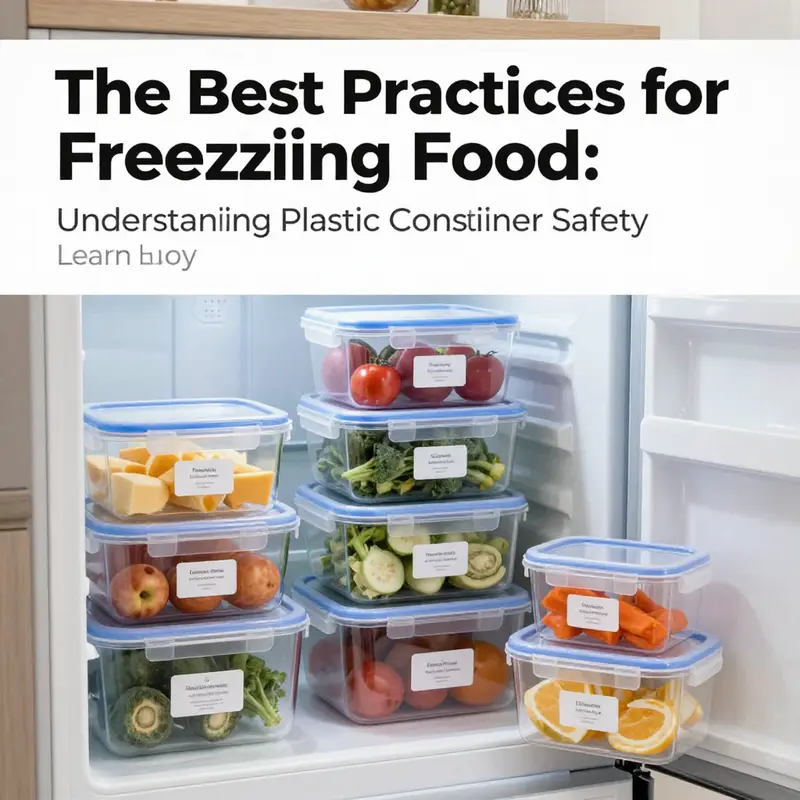
For restaurants, food trucks, and catering services, efficient food storage is critical, especially when it comes to freezing. But can you freeze food in any plastic container? This question arises often in the food service industry, where managing inventory while ensuring food safety is paramount. The answer isn’t straightforward; not all plastics are created equal when it comes to freezer use. This guide will help you understand the significance of using proper plastic containers for freezing and the potential dangers of neglecting these guidelines. In our exploration, we will delve into safety concerns surrounding plastic containers, identify the types that are safe for freezing, examine how freezer conditions impact plastic materials, and outline health risks associated with improper storage practices. Each chapter will equip you with valuable insights to enhance your operations.
The Cold Truth: Can You Freeze Food in Any Plastic Container? A Practical Look at Safety, Materials, and Real-World Practices
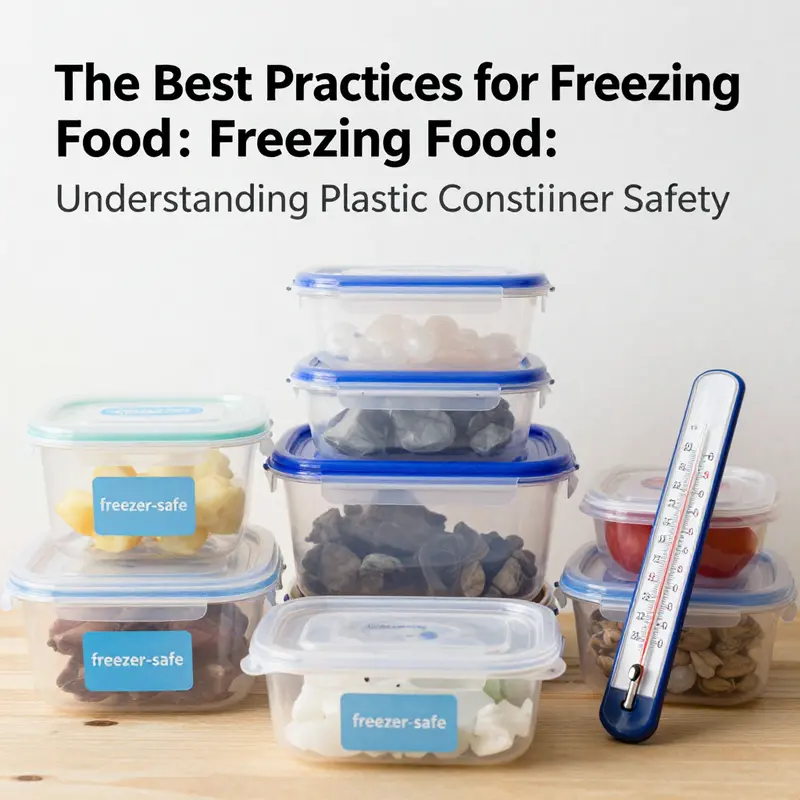
Freezing food promises preservation with convenience, but the idea that any plastic container is a safe home for frozen meals is a simplification. The freezer is a harsh phase for materials not designed to endure long-term cold, and the human body often bears the cost of shortcuts taken in the kitchen. When people fill a lunch-ready tub with yesterday’s stew or toss a bag of leftovers into a familiar plastic box, they are balancing convenience with a set of risks that are easy to overlook. The core question—can you freeze food in any plastic container—begins as a practical one and ends as a chemistry and materials question. The answer is nuanced: you should not freeze food in just any plastic container. Only specific types, clearly labeled as freezer-safe and food-grade, are appropriate for sustained cold storage. Understanding why is key to making choices that protect both the quality of the food and the health of the consumer over time.
At the heart of the matter is the stark reality that not all plastics behave the same way when the temperature drops. Freezing reaches around -18°C, a setting that makes some plastics stiff and brittle, while others stay pliant. Yet even a container that seems sturdy can harbor hidden hazards. The migration of chemicals from plastic into food is influenced by temperature, storage duration, and the food’s composition. While heat accelerates chemical transfer, cold storage is not a guarantee of safety. A growing body of research has shown that certain additives, including phthalates and various bisphenols, can migrate into foods even at freezing temperatures. These compounds are known to disrupt hormonal systems in the body, and their effects may accumulate with long-term exposure. The notion that cold equates to safety is, in many cases, a myth we need to discard. The practical implication is simple: when you choose a container for freezing, you’re selecting a barrier that may or may not protect your food from chemical migration.
The evidence is clear enough to warrant a careful eye on the materials we reach for in the freezer. A 2023 study in Environmental Health Perspectives examined how phthalates and bisphenols migrate from plastics into foods during cold storage. The researchers found detectable levels of these substances in frozen foods stored in plastics that were not designed for long-term freezer use. This is not a scare tactic designed to shame plastic; it is a reminder that low temperatures do not erase chemical migration. In fatty foods, where lipophilic compounds like phthalates dissolve more readily, the risk becomes more pronounced. Meat-rich meals or dishes with added fats present a greater challenge because they can pull more of those chemicals into the food matrix. In acidic foods, such as tomato sauces or citrus-tinged dishes, the dynamics change again, but the underlying principle remains: temperature and composition jointly influence leaching.
Beyond chemical migration, physical integrity matters too. Freezing is a repetitive stress test. Containers may endure a few cycles of freezing and thawing, but repeated use or long-term storage can introduce microfractures that are invisible to the eye. Microcracks dramatically increase the surface area of contact between plastic and food, creating more pathways for any residual substances to migrate, even if the container is labeled freezer-safe. What looks like a reliable, sturdy box can over time become a site of subtle degradation. This is particularly true for lower-quality or non-food-grade plastics, which are less able to withstand the mechanical and thermal strain of a freezer. The softer, more flexible plastics used in some everyday, single-use packaging may fare worse than sturdier, food-grade options stacked in a kitchen cabinet. The takeaway is clear: the mere presence of a freezer-safe label is not a license for indefinite storage. The quality of the material and the conditions of use will ultimately determine safety.
A related concern is the widespread practice of reusing containers that were never intended for food storage, or repurposing packaging from takeout or single-use products. These items may carry residual contaminants or additives that were never intended for contact with food, especially under the stress of freezing. Recycled plastics are another layer of risk. While recycling has environmental benefits, the color, clarity, and composition of recycled resins can vary widely. Some may carry residual substances from prior uses that could migrate into food under cold or even moderate temperatures. Taken together, these considerations push toward a conservative approach: favor containers engineered for freezer use and food contact, and avoid repurposing non-food plastics for long-term storage.
Labeling is a practical reality that can either help or mislead. The label ‘freezer-safe’ is a helpful guideline, but it is not a guarantee of safety in all circumstances. In the current regulatory landscape, there is variation in how stringently these labels are tested and verified. As one expert observer notes, a plastic can be labeled ‘microwave-safe’ and still permit some chemical migration. The same caution applies to freezer-safe claims. This is why looking for specific indicators of food-grade quality matters. Materials that are known to perform well at low temperatures—such as certain polyolefins and other inert plastics—are more likely to protect food from chemical leaching and physical degradation. Yet even within those categories, storage duration matters. Short-term freezing of portions in a well-chosen container is quite different from year-long storage that stretches the tolerance of the material.
With chemical migration and physical durability in mind, practical guidance emerges. The most reliable path for freezing is to use containers specifically labeled as freezer-safe and designed for food contact. In terms of material classes, polypropylene (PP, often coded as #5) has a long track record of good performance at low temperatures and is commonly considered safe for freezing and microwaving. Polyethylene (PE, coded #2 or #4 depending on the grade) is another widely used option for freezer storage, found in bags and wraps that are marketed as food-safe. These materials tend to resist cold-related brittleness better and accumulate fewer surface defects over repeated use. By prioritizing freezer-safe, food-grade plastics and avoiding containers not intended for long-term cold storage, you dramatically reduce the likelihood of both leaching and degradation.
That said, the safest approach to freezing is not a single container choice but a set of best practices that minimize risk. First, keep the cold chain intact and cool foods quickly before sealing them in the freezer. Slow cooling increases the time that the interior of a container is exposed to elevated temperatures during freezing, potentially enhancing migration of additives. Second, portion foods into smaller containers. Smaller volumes freeze more quickly and evenly, reducing the likelihood of temperature gradients that can promote migration. Third, do not overfill containers. Some expansion occurs during freezing; leaving a small headspace helps protect the container and reduces stress fractures that create more surface area for migration. Fourth, avoid reusing single-use packaging for long-term storage. Even if a container looks clean, its composition and prior history may not meet the stringent demands of freezer storage. Fifth, consider alternative materials for long-term storage. Glass, stainless steel, and silicone offer robust performance across temperature ranges and are less prone to leaching, especially when used for fatty or acidic foods. Of course, these materials carry their own considerations—weight, breakability, and cost—but they provide a long-term avenue for safer storage when you are planning to freeze items for extended periods.
In practice, this means that a thoughtful kitchen approach yields the best balance between safety and convenience. If you must use plastic for freezing, choose containers that are clearly labeled as freezer-safe and food-grade, and pay attention to the type of food you are freezing. Fatty foods call for even more caution, as they are more likely to extract lipophilic chemicals from plastics. Freezing plain, non-fat foods in a good freezer-safe container is generally less risky than freezing rich, fatty or highly acidic dishes, yet the margin of safety is still defined by the container’s material properties and the duration of storage.
For health-minded households, the information translates into reliable habits: prefer glass, stainless steel, or silicone when feasible, especially for long-term storage or when freezing fatty leftovers. If plastic is unavoidable, treat it as a transitional tool rather than a long-term storage solution. Store quantities you expect to use within a few months, label with clear dates, and avoid repurposed packaging. In formal terms: use only freezer-safe, food-grade plastics, limit storage duration to about three to six months, and be mindful of the type of food you are freezing. These guidelines align with current scientific understanding and practical kitchen experience, offering a reasonable compromise between safety, convenience, and cost.
Ultimately, the cold truth about freezing food in plastic comes down to choosing the right material for the right job and recognizing that no single container can guarantee safety under all conditions. Freezing is a form of preservation that interacts with the material’s chemistry and structure in subtle ways. Being aware of these interactions empowers you to make better choices, preserving not just the flavor and texture of frozen meals but also the health of the people who eat them. The conversation around plastic and freezing is ongoing, and it benefits from ongoing attention to new research and evolving labeling standards. For readers who want to explore the latest evidence in a scientific briefing, a peer-reviewed study from Environmental Health Perspectives examines how freezing can still allow chemical migration from plastics into foods, highlighting that cold storage is not a universal shield against exposure. You can read more here: https://www.ncbi.nlm.nih.gov/pmc/articles/PMC10879523/.
Freeze with Confidence: How to Select Freezer-Ready Plastic Containers for Safe Food Storage
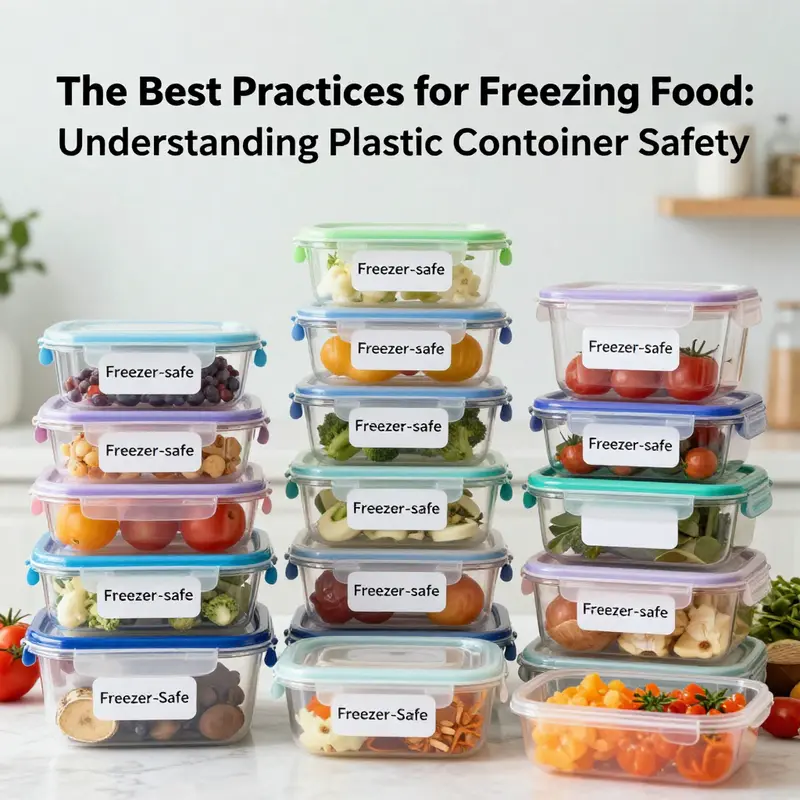
Freezing food is a practical habit that protects flavor, texture, and nutrition. Yet the act of freezing goes beyond simply sliding a lid onto any plastic tub. The cold engages with the plastic in ways that can affect both safety and quality. In households where meals are prepared in bulk, the choice of container becomes a daily decision with consequences that extend from the pantry to the plate. The simplest idea—that any plastic container can be frozen—sounds convenient, but it can invite trouble. Some plastics crack or become brittle in the freezer, especially when the temperatures approach the range of -18°C (0°F). When a container fractures, tiny shards can contaminate the food or create small air gaps that invite freezer burn. Even when a container appears intact, the very process of freezing can cause slow diffusion of substances from the plastic into the food, particularly when fatty foods are involved. This risk is not a dramatic anomaly; it reflects the reality that plastics are engineered for certain uses, not for every cold scenario. The core idea is to look for clear signals on the packaging that a container is designed for freezer use, and to understand the material behind those signals. It is worth pausing at this point to consider two intertwined questions: How does freezing affect plastic on a molecular level, and how does that influence what you store and how you store it? On a molecular level, many plastics are polymers with a glass transition temperature, the point at which a material shifts from a rigid to a more flexible state. In the freezer, some plastics remain stable, while others alter their mechanical behavior and may crack under stress or become brittle when exposed to repeated freezing and thawing cycles. The risk isn’t merely cosmetic; structural changes can create microcracks that harbor bacteria or compromise the seal, allowing air and moisture to intrude. Beyond structure, chemistry must be considered. In the past, some plastics incorporated additives like plasticizers that improve flexibility but can migrate into foods, especially when fats are present. Phthalates and bisphenol A (BPA) are two substances that have drawn scrutiny due to potential endocrine-disrupting effects. The concern is most pronounced with prolonged exposure or frequent reuse of non-food-grade plastics. While regulatory standards and consumer demand have moved many manufacturers toward safer formulations, the takeaway remains simple: when in doubt, choose containers that are explicitly labeled for freezer use and are made from materials known to resist leaching under cold conditions. The labeling itself—when a container carries a “Freezer Safe” designation—serves as a practical compass. It signals that the manufacturer tested the material’s behavior at low temperatures and assessed its resistance to cracking and chemical migration during typical freezer durations. This label doesn’t guarantee endless performance, but it does indicate the container was designed with freezing in mind. In the arena of plastics, polypropylene (PP) and polyethylene (PE) stand out as common, well-established choices for freezer use. PP, often marked with the recycling code #5, tends to retain its shape and strength when temperatures slide toward freezing. It tolerates both cold and, in many cases, microwave heating, making it a versatile option for batch meal prep and quick reheating. PE, typically coded as #2, is another sturdy family member for freezer storage. It forms the backbone of many freezer bags and wraps that are designed to protect from moisture and air. Together, PP and PE represent a practical duo for home freezers, balancing durability, chemical stability, and relative safety when used as intended. Yet the story doesn’t end with the polymer code. Some high-quality containers on the market incorporate Tritan, a copolyester praised for durability and a BPA-free ethos. Tritan has earned a reputation for withstanding repeated use, resisting staining and odors, and retaining clarity after many cycles in the freezer and beyond. When you encounter Tritan or other advanced materials, the label can reflect both freezer safety and BPA-free status, reinforcing an overall sense of reliability. This is not to suggest that every container labeled “freezer safe” is automatically flawless; the label is a practical tool, not a guarantee that no precautions are needed. It’s still wise to consider the specifics of your storage scenario. For fatty foods, where the interaction between fat and plastic is most likely to occur, prioritize containers that are explicitly marked as food-safe and free from known disruptive additives. If a container proclaims BPA-free, that’s a meaningful reassurance, though it should be interpreted alongside other markers of quality. In practice, a few additional markers can help you navigate choices with confidence. A container that is labeled “Microwave Safe” can be convenient for reheating, but it doesn’t automatically imply freezer suitability; the two uses require different testing and protection against different stressors. Likewise, “Dishwasher Safe” is a useful convenience signal, but its presence doesn’t guarantee freezer resilience. The clearest signal remains the “Freezer Safe” designation paired with a material that researchers and manufacturers trust for cold storage. When a product is constructed from PV-containing plastics, or from polystyrene, the guidance changes. These materials are generally not favored for freezing or long-term storage due to brittleness or potential health concerns. The practical implication is simple: avoid containers whose labeling is unclear or that rely on materials with a history of poor performance in the cold. This is why many culinary routines favor rigid, well-sealed containers for freezing rather than flexible bags alone, especially for long-term storage. Rigid containers reduce the risk of leaks and maintain portioned servings with less air exchange, helping to mitigate freezer burn and maintain texture. They also tend to be easier to stack and organize in the freezer, reducing the temptation to repack repeatedly, which can introduce temperature fluctuations that compromise quality. Of course, plastic is not the only material choice, and many households find it convenient to combine containers with freezer bags, provided both carry clear freezer-safe labeling and are designed for that use. The general rule remains simple: select products that are explicitly designed for freezer storage, pay attention to the plastic type and its associated labeling, and consider the nature of the food you are freezing. If you routinely stash liquids or soups, leave headspace to accommodate expansion and avoid overfilling—a simple practice that prevents lid warping and spillage. If you portion meals, pre-portion into sizes you will actually thaw and use, rather than freezing oversized blocks that take longer to thaw and may lead to uneven heating. Label each container with the date and contents in a legible way so that you can rotate stock and minimize waste. Cleaning and reuse also deserve attention. Freezer-safe plastics are generally designed to withstand multiple cycles, but aggressive or high-heat washing can gradually degrade seals and increase the risk of leaching or odor retention. A gentle washing routine, followed by air drying, helps preserve the integrity of the container over time. The care routine matters as much as the initial selection. And while it is tempting to think of containers as mere storage vessels, they play an active role in preserving the sensory attributes of food. The cold environment reshapes aromas, textures, and moisture distribution, and a well-chosen container helps guard against freezer burn, ice crystals, and flavor loss. In a broader sense, choosing the right freezer-safe plastic is an expression of a habit that respects food safety as much as convenience. It is a small but meaningful act that reduces cumulative exposure to substances with uncertain health effects and lowers the risk of cross-contamination. The conversation about plastics also invites a broader contemplation about how we approach everyday packaging. It invites readers to read labels with a critical eye, to distinguish temporary shortcuts from long-term investments in safer storage. It invites them to consider whether a given container’s performance under cold is paired with reliability in the other common kitchen tasks—whether it can transition easily from freezer to microwave or oven, whether it cleans well, and whether it maintains its shape without deforming under stress. The more you understand the material story behind the label, the more empowered you become to store foods in ways that protect taste, nutrition, and health. This is not about fear or alarm; it is about practical literacy for a modern kitchen. A well-chosen freezer-safe container reduces guesswork and helps maintain the integrity of your meals across weeks in the freezer. It supports meal planning by letting you freeze single-serving portions, batch-cooked staples, and leftover components with less risk of sudden texture changes. It also minimizes waste, because you can rely on consistent sealing that slows aging and preserves moisture and flavor. Practically, the best approach starts with a cautious reading of the label, a preference for PP or PE where appropriate, and an openness to newer materials like Tritan when the label confirms freezer safety and BPA-free status. It also means staying mindful of the type of food you intend to freeze, especially fatty or highly soluble items, which may require more robust barrier properties to keep odors contained and to prevent migration of substances from the container into the food. In the end, the goal is simple: store only what you intend to keep safe at freezing temperatures, in containers that are explicitly designed for that environment. This mindful approach makes freezing less about improvisation and more about informed practice, yielding consistent results and a healthier relationship with the food you save for later. External resource: https://www.ikea.com/us/en/p/365-food-container-with-lid-20491782/
Freezer Realities: How Different Plastics Weather the Cold and What It Means for Food Safety
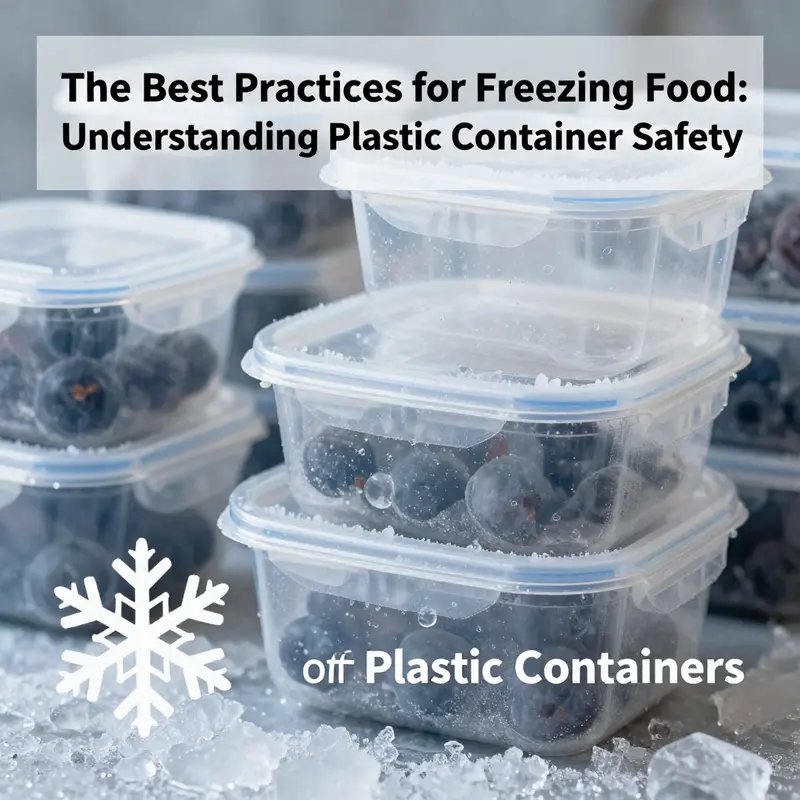
When people ask whether they can freeze food in any plastic container, the honest answer is not a simple yes or no. Freezing is a process that exposes materials to sustained cold, leading to changes that reveal how well a container is built for long-term storage. The core takeaway remains consistent: only containers specifically labeled freezer-safe are designed to handle the freezing environment, and those that aren’t can introduce risks to both food quality and safety. In domestic kitchens, the freezer sits at a steady, harsh temperature, often around minus eighteen Celsius (zero Fahrenheit). This environment is far more demanding than a refrigerator drawn to a comfortable chill. The stresses are not only about brittleness; they also involve expansion, contraction, and the potential for leakage of substances from the plastic into food, especially when fats are involved. The question you should ask yourself, then, is not whether a plastic container can survive a freezing night, but whether it has been engineered and tested to withstand repeated freezing and thawing without compromising the contents or the container itself. This distinction between general plastic use and freezer readiness is crucial for anyone who wants to preserve flavor, texture, and safety over time.
Plastic materials come with a spectrum of properties, and the historical lesson is clear: not all plastics are created equal when plunged into cold storage. Common plastics such as PET and PS, which are prevalent in a surprising number of household containers, are not primarily designed for prolonged exposure to freezing temperatures. When subjected to the shocks of a freezer, these materials can become brittle. A minor impact, such as a nudge against the shelf or a drop onto the freezer drawer, can crack or shatter an unprepared container, leading to spills or exposure of the food to the outside air. Even if a container survives a drop, the latent damage from repeated cycles of freezing and partial thawing can accumulate as microscopic flaws that gradually weaken the structure. In practice, this means that foods stored in such containers may experience uneven freezing, which affects texture and may change the likelihood of ice crystal formation that degrades quality.
What about containers that are marketed as freezer-safe? The literature makes a clearer distinction here. Freezer-safe plastics typically include polymers such as polypropylene PP and high-density polyethylene HDPE. These materials have superior resistance to the cold, maintaining their shape and integrity better than PET or PS under the same conditions. Yet even these materials are not immune to the wear of prolonged exposure. Repeated freeze-thaw cycles can produce microscopic stress fractures. Over time, these tiny defects accumulate and can soften the container’s resistance to impact or open the door for air ingress. In terms of practical consequences, you may notice cloudiness in the plastic, a slight hazing or whitening of the surface, or a subtle loss of rigidity. These are not merely cosmetic changes; they signal that the material is aging under freeze-thaw stress and may be edging toward failure.
A closely related issue concerns the container lid and its seal. The lid is more than a top closure; it is a critical component that keeps moisture and air out, preserving flavor and preventing freezer burn. Lids made from materials like polypropylene, when subjected to long-term freezing conditions, can lose elasticity and flexibility. The result is a warped or loose fit, which compromises the airtight seal. Air infiltration means more rapid moisture loss from foods and greater exposure to oxidation, particularly for fatty or delicate items. Even a container that remains intact can suffer a compromised seal that undermines a crucial aspect of freezer storage: the prevention of freezer burn and the retention of moisture and texture.
Beyond the physical durability of the plastic, there is the matter of chemical safety. Freezing does more than stress the polymer; it invites questions about the potential for leaching of additives into the food. While modern containers are increasingly marketed as BPA-free, concerns linger about other substances such as phthalates and various plasticizers that may be present in certain formulations or coatings. The cold environment can influence the rate and extent of any leaching, particularly for fatty foods where fat can act as a solvent for leachable chemicals. Although the risk is not uniform across all products, the principle is clear: if a container is not explicitly labeled as freezer-safe for food contact, there is an elevated chance that some chemicals could migrate into the food, especially over long storage periods. The practical implication is straightforward: prioritize containers that are certified for freezer use and keep an eye on any signs that a plastic is aging or breaking down, even if it initially appeared sturdy.
Given these dynamics, the guidance around labeling becomes essential. Look for explicit safety markers on the container or its packaging that certify it as freezer-safe. The labeling is not merely a formality; it encodes tested resilience against cold, moisture, and immersion in storage conditions that are typical of home freezing. Plastics that are considered freezer-safe are most often associated with two families: polypropylene and high-density polyethylene. PP is widely recognized for its strength at low temperatures and for remaining suitable for brief microwave use in many contexts, while HDPE also performs well in freezing environments. Nevertheless, it is important to be mindful of declarations that extend beyond the freezer to other uses. A container that is labeled as freezer-safe but not designed for long-term exposure to cold could still exhibit degradation if used for extended periods or if subjected to aggressive cycle patterns.
In practice, this knowledge translates into several sensible habits for anyone who stores food in the freezer. When you are filling a container for freezing, leave an appropriate headspace if you are freezing liquids. Liquids expand as they freeze, and headspace helps prevent the lid from bulging or the container from cracking. For foods that are dense or partially solid, ensure that the container is not overfilled, which can lead to stress during expansion and possible rupture. Moreover, assess the container before each use. If you notice cloudiness, a dull or chalky appearance, warping around the edges, or a lid that no longer seals tightly, those signals indicate the material is aging and may not perform reliably in future freeze-thaw cycles. In short, the best practice is forward-looking: choose containers that are clearly freezer-safe, store fatty or high-moisture foods in containers with robust seals, and retire any container showing wear.
From a safety perspective, the long-term store-all philosophy is insufficient. The goal is not merely to prevent leaks or spills but to minimize chemical exposure and maintain food quality. The science of freezing suggests that some plastics might perform well for short-term storage, but for the long term, particularly with fatty foods or liquids that will experience volume changes, the safer option is to rely on containers engineered and labeled for freezer use. The overall picture is balanced: using freezer-safe PP or HDPE containers can deliver dependable performance in the short term and for moderate storage durations, but no plastic is completely immune to the cumulative effects of repeated freezing and thawing. If you anticipate long-term storage, or if you are freezing a fatty or moisture-rich item for weeks, it becomes prudent to replace aging containers rather than assume they will continue to perform identically to brand-new ones.
In shaping your storage choices, you may also encounter a broader consumer landscape that continues to shift as new materials and testing protocols emerge. The ongoing dialogue about plastics in food contact uses emphasizes transparent labeling, independent testing, and consumer education. It is not enough to rely on past experiences or common sense alone; the evolving science of polymer behavior under cold stress demands vigilance. The practical upshot for your kitchen is clear-cut: avoid using containers that lack explicit freezer-safe labeling, especially for long-term storage of fatty foods, and monitor any signs of wear as a routine part of freezer maintenance. If in doubt, err on the side of conservatism and opt for a fresh, clearly labeled freezer-safe option rather than risking compromised food safety or texture.
For readers seeking a deeper, lab-informed perspective on freezer-safe plastics and their limitations, a reputable consumer testing source compiles reporting on material performance across many brands. The results reinforce the central premise: while certain plastics demonstrate real resilience to freezing, repeated freeze-thaw cycles can degrade even the best specimens, and gaps in labeling can obscure potential risks. The emphasis remains on choosing clearly freezer-safe plastics, using them correctly, and replacing them when signs of wear appear. For further reading, see the external resource that consolidates lab-tested findings on freezer-safe plastics and their practical implications for everyday storage: https://www.consumerreports.org/food-storage/freezer-safe-plastic-containers-a123456789/.
Beyond the Chill: Health Risks of Freezing Food in Non-Food-Grade Plastics
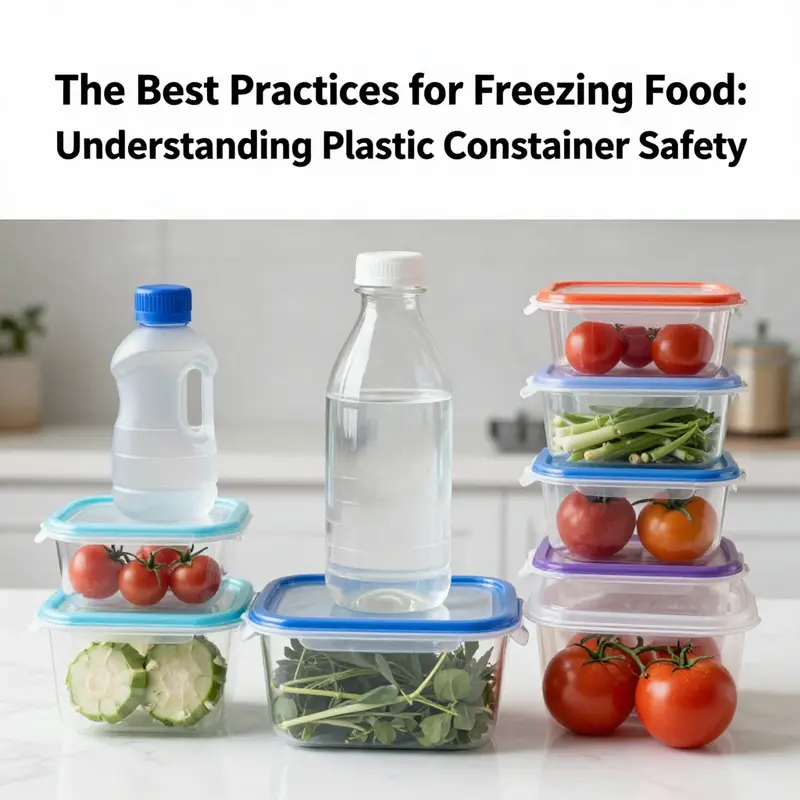
Freezing raises a simple question into a set of important choices: can you use any plastic container, or does the cold reveal a hidden danger in materials not meant for food contact? The honest answer lies somewhere in between. Freezing is not a universal setting for all plastics. It introduces stress that some polymers handle well, and others cannot. To protect both flavor and health, it helps to understand what happens at the molecular level when fatty foods, acidic sauces, or leftovers meet the chill of a freezer, and why the labeling on packaging matters so much.
Non-food-grade plastics are designed for short-term or non-food applications, if they are designed at all for contact with food. They may contain additives, fillers, or recycled materials whose chemical makeup has not been regulated for safety in a kitchen setting. When those plastics are exposed to extreme cold, their structure can become brittle. A brittle container is more likely to crack, warp, or shatter. The immediate risk is physical: glassy fragments or plastic shards in the food are a direct safety concern. But the longer shadow is chemical. Even intact containers can migrate substances into foods, and the migration increases as temperature drops or as the food type interacts with the plastic’s composition.
Particularly with fatty foods—think oils, butter, meats, or creamy sauces—the risk rises. Fat tends to dissolve and transport certain additives more readily than lean foods. In some non-food-grade plastics, components used to give flexibility or color can leach out under cold storage. Studied substances like phthalates, used as plasticizers, and even certain BPA-containing resins have been highlighted for potential endocrine-disrupting effects. The science often focuses on low-dose, chronic exposure and the possible implications for hormone signaling, metabolism, and development. While each study has its own limitations and the full human health picture continues to be refined, the precautionary principle urges restraint: avoid letting unregulated materials come into prolonged contact with food, especially when stored at freezing temperatures.
A less obvious risk is the presence of microplastics. Freezing can, in some cases, contribute to the shedding of microplastic particles from the container. When those particles migrate into food and are ingested, the concerns extend beyond immediate taste or texture. In animal and early human studies, microplastics have been associated with inflammatory responses, oxidative stress, and potential interference with endocrine systems. The long-term health effects are still being investigated, but the pattern is clear enough to warrant caution: a simple act like freezing can introduce another layer of exposure that might not be present with more inert storage options.
Against this backdrop, the contrast with food-grade plastics is instructive. Materials that are designed and tested for food contact—such as those made from certain polyolefins, including high-density polyethylene (HDPE) and polypropylene (PP)—are engineered to resist the kinds of chemical migration that worry scientists and regulators. These plastics are typically labeled to indicate their suitability for freezer use and for direct contact with food. The U.S. Food and Drug Administration regulates the chemical stability and migration limits of these substances, aiming to keep the food you store from picking up unwanted compounds. When you see a container marketed as “food-grade” and explicitly designed for freezing, you are choosing a material whose safety profile has been evaluated against the kinds of conditions typical in a household freezer.
All of this points toward a practical rule of thumb: if a container does not clearly bear a freezer-safe or food-contact designation, it should not be trusted for long-term freezing. The risk isn’t just about whether the container will crack; it is about what might migrate into your food over time, especially with fatty or acidic meals. It is perfectly reasonable to use glass, stainless steel, or dedicated freezer-safe plastics that carry proper labeling. For some people, that means choosing containers with temperatures and seals that accommodate expansion during freezing and contraction during thawing, finite tolerance that keeps contents intact while preserving flavor and texture.
The labeling itself is worth reading carefully, not just for the word “freezer” but for the context around it. Some containers claim to be microwave-safe or dishwasher-safe, and those features can be useful in different phases of handling food. But the freezer is a separate, demanding environment. A container can survive a microwave, yet poorly withstand a freezing environment. Look for explicit phrases like “freezer-safe” and “food-grade,” and, when possible, check for resin codes that hint at the material class. Polypropylene, designated as PP and often labeled #5, is a favorite for its resilience to cold temperatures and its balance of rigidity and flexibility. Polyethylene, particularly HDPE labeled #2, is another common option, widely used in freezer bags and some wraps. These marks aren’t merely cosmetic; they reflect a history of testing that supports safer long-term storage.
Even with the right plastic, proper use matters. Avoid reusing containers that previously held non-food substances, or those with unknown histories. A container’s past can carry residues into new foods, despite a fresh fill. When freezing, aim for compartments or portions that minimize air exposure, since oxidation and moisture loss can alter texture and taste as foods freeze and thaw. Leave a little space for expansion in liquids, and choose lids that seal well enough to guard against freezer burn and contamination. Labeling with a date helps track storage time, and designating portions for planned meals can curb the temptation to leave food in the freezer indefinitely. The human habit of relying on instinct rather than dates frequently leads to unnecessary waste and potential quality loss.
The human body is resilient, but it is also sensitive to cumulative exposures. The concerns about non-food-grade plastics in freezing contexts are not only about a single night with a forgotten bag. They encompass repeated cycles of storage, thawing, and refreezing, along with the particular vulnerabilities of fatty substances. The frequency and duration of contact in the freezer can matter as much as the chemical composition itself. In real kitchen life, households often accumulate a mix of frozen items—leftovers, sauces, stocks, and bulk buys. Each has different interaction profiles with plastic containers. This diversity makes a blanket endorsement of “any plastic container” not just risky, but scientifically unfounded for long-term storage.
The takeaway is both practical and principled. When you plan ahead, you curate your freezer food in a way that respects safety, flavor, and nutrition. Use containers that are explicitly labeled for freezer use and food contact. Favor materials whose safety profile is recognized by regulatory authorities and by kitchen experts alike. Reserve the non-food-grade plastics for brief, non-food applications or for items intended for short-term use where contact risk is minimal. If you ever doubt a container’s suitability, err on the side of caution and switch to a proven freezer-safe option. It might seem like a small extra step, but it is a step that pays off in taste, texture, and peace of mind.
For readers who want a quick reference, a reliable mental checklist helps keep choices aligned with safety goals: Is the container labeled as food-grade? Is it explicitly designed for freezing? Do you see a resin code or material designation like PP (#5) or HDPE (#2)? If the answer to any of these is uncertain, choose an alternative that carries a clear freezer-safe designation. When the contents are fatty or acidic, or when you intend long-term storage, the safest approach is to avoid anything that lacks a clear food-contact certification. Slightly more expensive or slightly bulkier options may seem inconvenient at first, but the trade-off is a safer pantry and a more consistent culinary experience across weeks of storage, defrosting, and meals.
The broader context of these considerations is a growing public recognition that not all plastics are equal in the kitchen. The science continues to evolve, and consumer habits often lag behind the latest findings. Yet the precautionary path is straightforward: minimize unnecessary exposure to non-food-grade plastics, especially for the long, cold journey from freezer to plate. By choosing freezer-safe, food-grade containers, you reduce the risk of physical damage, chemical migration, and microplastic contamination, all while preserving the integrity of your meals. In that sense, the decision about which container to use is not an afterthought, but a foundational act of safe food stewardship in a daily routine that revolves around freezing for convenience, budget, and reduced waste.
External resource: for a regulatory perspective on food contact materials and safety standards, see the FDA’s overview of Food Contact Substances: https://www.fda.gov/food/food-contact-materials/food-contact-substances
Final thoughts
Understanding the nuances of freezer-safe plastics is crucial for your food service operations. The safety of your food storage practices has both health and business implications. By selecting the right containers, you can prevent potential line items like food contamination or waste. Ensure that you only use containers specifically labeled for freezer use to maintain the integrity of your food products and prioritize the health of your customers. Apply the knowledge presented in this guide, and you can confidently navigate the intricacies of food storage.