

When it comes to delivering beverages with flair, the gold colored plastic disposable Solo cold cups in 16 oz capacity offer an exceptional choice for businesses in the food and beverage sector. These eye-catching cups not only elevate the aesthetic appeal of any event but also bring practicality and convenience, making them a must-have for bubble tea shops, catering services, event planners, and restaurants alike. This article will explore three key areas: the core product attributes that make these cups a favorite among businesses, an analysis of market trends influencing their use, and the design and safety standards that ensure their reliability. Each chapter will reveal how these cups can transform a simple beverage service into an elegant experience.
Gilded Glass, Briefly: The Allure, Function, and Footprint of 16 oz Gold Disposable Cups in Modern Event Service
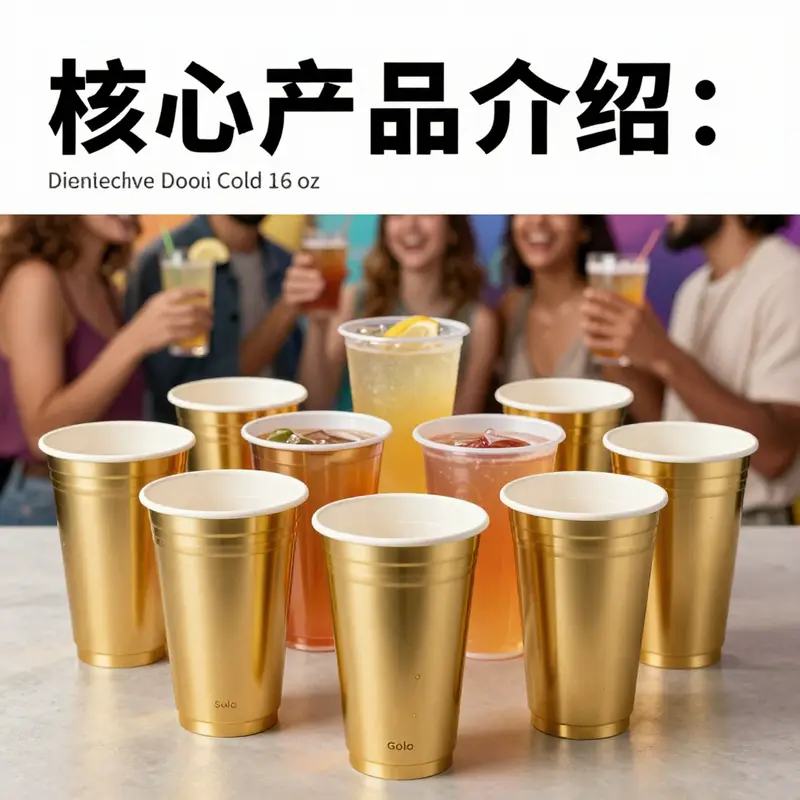
Gold-colored 16 oz disposable cups sit at a crossroads of ceremony and practicality. They are more than vessels for beverages; they signal warmth, luxury, and occasion. The 16-ounce capacity balances generous pours with efficient service, making them suitable for iced tea, sodas, beer, and cocktails at weddings, graduations, and corporate events.
Material options typically include PET, PS, and PP, each with its own balance of clarity, rigidity, and safety. All are common in food-contact applications and are subject to local recycling capabilities. The gold finish elevates the visual mood, while the practical design supports stable stacking and reliable containment.
From a service perspective, bulk packaging, branding options, and cost considerations matter. Custom on-cup printing can align cups with event themes, though lead times and minimums must be planned in advance. Sustainability is an ongoing consideration, with options to pair single-use cups with recycling, composting, or reusable approaches where feasible.
Together, color, size, and material choice create a cohesive narrative for events, helping guests feel the moment while enabling efficient service.
Gold-Woven Celebrations: The Rise and Reach of 16-Ounce Gold-Colored Disposable Cups in Modern Events
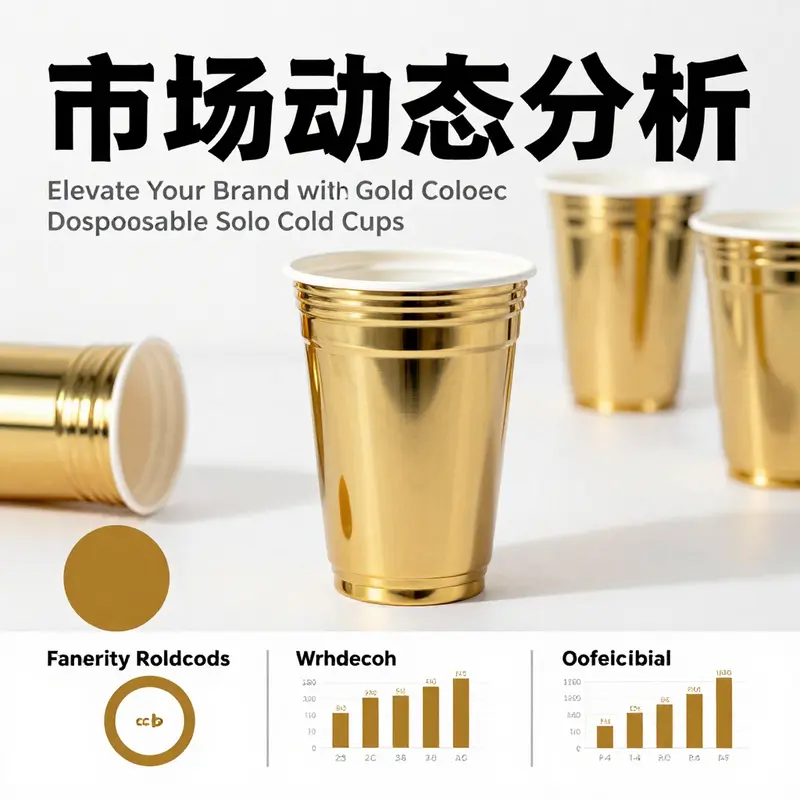
Gold-colored disposable cups in the 16-ounce class have quietly shifted from being simple serving vessels to becoming design accents that shape the look, feel, and memory of events. They carry more meaning than the sum of their plastic and metalized sheen. In contemporary catering, hospitality, and social gatherings, the choice of drinkware often serves as a visual narrator—an element that signals mood, status, and care for guests’ experience. The emergence of gold-toned plastic cups is not merely a trend in color; it is a response to a broader desire for ceremony within everyday moments. At weddings, graduations, milestone birthdays, and seasonal celebrations, gold cups offer a way to elevate the presentation without imposing the cost or fragility of glass. They catch light, echo the metallic accents in tableware and invitations, and provide a reflective surface that makes beverages look colder, more refreshing, and, crucially, more photogenic. In a world where much of the social-media shareable moment happens around a beverage, the gold cup becomes part prop, part stage set, and part practical tool for serving a crowd efficiently.
The economic calculus behind gold cups is as persuasive as their aesthetic appeal. For event planners and foodservice operators, the lure lies in a combination of bulk practicality and incremental branding potential. The 16-ounce size hits a sweet spot: ample capacity for ice, a generous pour, and compatibility with popular beverage formats—from iced coffee and cold brew to craft sodas and light beers. The plastic used in these cups—commonly food-grade PET or PP—brings a balance of clarity, durability, and safety. PET affords a bright, glossy finish that can reinforce a premium impression when the cup is fully gold or features gold accents, while PP emphasizes rigidity and leak resistance in more cost-conscious batches. Importantly, these materials are selected to meet safety standards set by regulatory bodies, ensuring a hygienic and reliable product for mass service.
Design philosophy guides both production and use. A solid gold finish can be full-coverage or feature a transparent body with a gold rim, combining the luxurious cue with the visual appreciation of the beverage’s color and clarity. Some variants include a gold-toned ring that frames the top edge, a design choice that helps the cup stand out on a crowded buffet or bar station while retaining the core practicality of a standard 16-ounce cup. The design is more than cosmetic; it influences handling, stacking, and transport. A cup with a smooth, rounded shoulder and a stable base reduces the risk of tipping on uneven surfaces, a critical consideration in outdoor venues, festivals, or multi-station setups where weather, wind, and crowds impact service efficiency. The presence or absence of a lid can also alter the experience: a secure lid reduces spillage during transport and lines, while an open-top form enhances accessibility for quick refills and iced beverages. In both cases, the gold finish remains a consistent beacon that signals a premium moment inside each ordinary drink.
From a consumer psychology standpoint, gold has long been associated with celebration, success, and value. When guests encounter a gold cup, they are primed to interpret what they drink as part of a special occasion. Even for casual gatherings, the gold cup can transform the perceived quality of the beverage, lending a sense of ceremony to the act of toasting or the simple pleasure of sipping on a hot day. This subtle perceptual effect matters in a world where first impressions are fast and fleeting. The cup becomes a quiet ambassador for the host’s attention to detail. It also functions as a visual cue in photographs, a factor increasingly important as guests share moments on social platforms. Studio-like lighting, white linen, and metallic accents all converge to elevate the drink experience, and the gold cup is a practical, scalable way to achieve that effect without the fragility or expense that real metal would entail.
The market for these cups has matured along several axes—availability, price efficiency, customization, and sustainability—each responding to the evolving needs of event professionals and home hosts alike. Availability spans major e-commerce platforms and specialized packaging suppliers that can offer varied batch sizes—from small, opportunistic orders for intimate gatherings to large, budget-friendly runs for weddings and corporate events. Price efficiency is the practical allure: in larger quantities, per-unit costs drop sharply, enabling organizers to allocate resources toward better beverage quality, more elaborate decor, or higher guest counts without inflating the overall event budget. Customization adds another layer of value. Many providers offer print-ready options that imprint logos, event names, or slogans onto the cups, transforming them into portable branding tools. The ability to tailor a disposable cup to an event’s theme—think wedding colors, corporate palettes, or school hues—helps unify the visual language of an occasion, from invitations to the dessert table to the bar signage.
As with any disposable good, materials and lifecycle considerations shape the ongoing narrative around gold cups. The PET- or PP-based cups are generally BPA-free and designed for cold beverages, with insulation and structural integrity that resist cracking under typical use. Durability matters in two directions: it reduces waste through fewer breakages and minimizes the disruption of service during peak flow. The all-important safety standard is not merely a marketing line; it dictates the conditions under which these cups can be stocked, handled, and transported, especially in venues with strict compliance requirements for food-contact materials. From a sustainability standpoint, the conversation is nuanced. Brands and purchasers increasingly seek options that align with the dual goals of convenience and environmental responsibility. This can mean selecting cups produced with reduced environmental impact, choosing recyclable options, or coordinating with suppliers who offer take-back programs or compostable variants in relevant markets. While a gold finish can pose a perception of luxury, it does not have to come at the cost of end-of-life manageability if the supply chain emphasizes recyclability and responsible disposal.
The purchase journey for gold cups blends practicality with planning. For a small gathering, a host might source a modest package that covers tens or a few hundred servings, ensuring the cups deliver reliable performance at a price point that fits a modest budget. For larger events—where guest lists swell and repeat service windows become a constraint—bulk ordering is common. In such cases, per-unit costs may decline to a few cents, a compelling return when weighed against staffing efficiency and the consistency of guest experience. The economics are further enriched by the scope for customization. A logo, a monogram, or a simple event inscription can be integrated into the cup’s surface at the point of manufacture, turning each serving into a tiny, portable advertisement that reinforces the host’s identity. The result is a product that operates on multiple levels: it functions as a reliable vessel, a visual element that coordinates with other décor, and a marketing asset that travels with every guest as they mingle and drink.
The channels through which these cups reach the market reflect broader shifts in consumer behavior and retail dynamics. Online marketplaces have become the default starting point for many buyers seeking quick access, transparent pricing, and reviews from other organizers. The ability to compare dozens of options at once, read feedback about stacking reliability, and gauge color accuracy under different lighting conditions makes online shopping for disposable cups particularly attractive. Yet there is also a thriving ecosystem of specialty suppliers who cater to larger orders and brand-centric campaigns. For enterprises planning multi-site activations or national marketing events, the option to customize at scale—often with lower minimums than traditional promotional merchandise suppliers—provides a practical pathway to unify a campaign’s visual language across venues and regions. The choice between a fully colored gold cup and a design that uses gold accents enables planners to modulate budget and impact while maintaining a strong aesthetic alignment with the event’s overarching theme.
The role of design and procurement becomes even more intricate when considering environmental stewardship and regulatory landscapes. In markets where environmental regulations tighten around single-use plastics, suppliers are increasingly promoting alternatives that align with sustainability goals. Some producers explore biodegradable or compostable coatings that preserve the cup’s glossy finish while offering a clearer end-of-life path. Others emphasize recyclable materials and clearly labeled recycling streams to help guests dispose of cups responsibly. For venues and organizers who must demonstrate due diligence in waste reduction, working with suppliers that can certify recyclability or compostability in the relevant jurisdiction adds a layer of credibility to the event’s environmental story. This alignment between aesthetics, function, and responsibility is not merely a niche concern but a core driver of how gold cups are perceived and valued in formal settings as well as casual gatherings.
Behind every aesthetic decision, there is an operational story. The production of gold-colored cups involves precision in color consistency, gloss control, and the integrity of the wall thickness. A uniform gold finish across batches reduces the risk of misalignment with other tableware elements and ensures that lighting, reflections, and shadows read consistently across service stations. The packaging decisions—whether the cups are shipped in bulk or in organized, easily accessible stacks—affect efficiency as much as the cup’s color does. For event teams, the ability to pull a tray of uniform cups from storage and quickly load them onto a service cart translates into meaningful time savings during a busy reception, a cocktail hour, or a food station rush. In this sense, the gold cup becomes a tiny equipment asset in the larger logistics puzzle of an event, where every moment of disruption avoided yields a smoother guest experience and better operational metrics.
The future outlook for gold-colored 16-ounce disposable cups is interwoven with consumer demand for interactive experiences and sharable moments. As venues look for ways to create more immersive environments, the cups can function as part of the storytelling—paired with corresponding lids, decorative seals, or brand-printed napkins that complete a cue-rich scene. The ability to integrate digital touchpoints, such as QR codes on the cup’s surface that lead guests to a brand story or a special offer, points toward an increasingly hybrid role for disposable drinkware. While the core function remains simple—hold a beverage—its secondary roles are expanding. The cups become canvases for branding, venues become immersive sets, and guests become participants in a shared narrative. This evolution is propelled by a market that values efficiency, aesthetics, and experiential depth in equal measure.
In sum, the rise of gold-colored 16-ounce disposable cups reflects a broader reconfiguration of how we design, serve, and experience beverages in public and private contexts. They merge the convenience and reliability of disposable service with the aspirational cues of luxury and celebration. They enable hosts to deliver consistently strong first impressions, while giving guests an immediate sense of occasion through color, shine, and form. The chapters that follow will explore how these cups intersect with complementary tableware, signage, and ambiance strategies, and how buyers can navigate the trade-offs between price, customization, and sustainability without compromising the guest experience. For practitioners seeking a concrete touchpoint in the broader catalog of party and events ware, consider exploring disposable options that feature a gold aesthetic and a 16-ounce capacity as a practical, stylish backbone for a wide range of gatherings. For more general options aligned with the broader category of disposable cups, you can browse this page: disposable clear plastic cup for parties.
External resource: https://www.amazon.com/dp/B0CZQXVJWY
Gold Without Glass: The Design and Safety Architecture of 16-Ounce Gold Plastic Disposable Cups for Cold Drinks
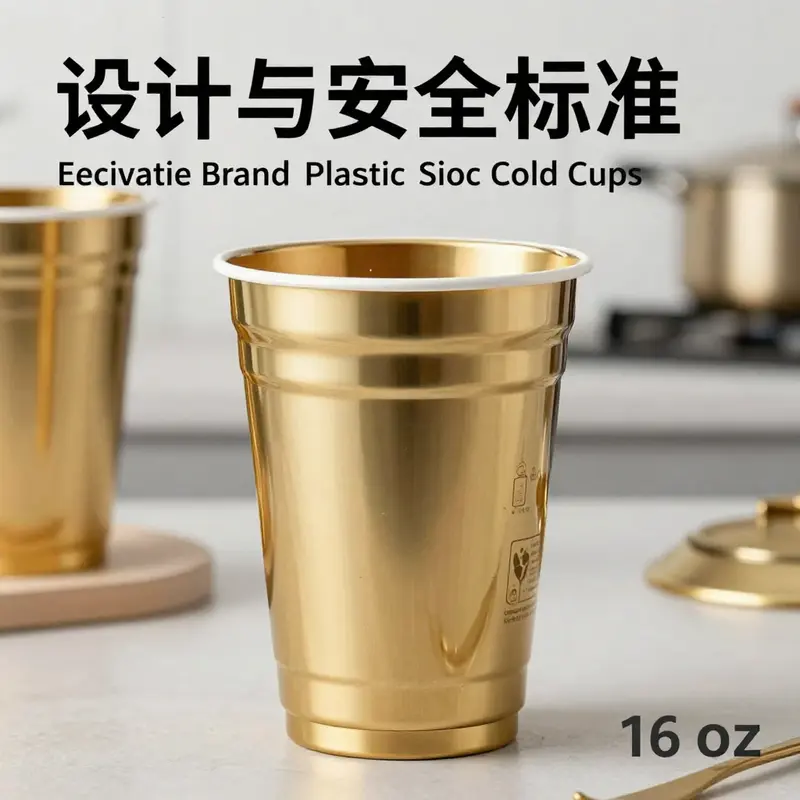
The gleam of gold can transform a surface from ordinary to ceremonial, and in the world of disposable tableware, that shimmer carries more than aesthetics. It signals celebration, precision, and care for the guest experience. Yet beneath the reflective finish of a gold-colored plastic cup lies a careful balance of design intelligence and safety compliance. This chapter explores how 16-ounce, gold-hued disposable cups are imagined, engineered, and validated for modern events, from intimate weddings to bustling festival cafés. It is not merely a story of color and capacity; it is a study in how form, function, and faith in a product converge to create a reliable, attractive, and trustworthy drinking vessel for cold beverages.
At first glance, the gold-colored cup is a study in visual drama. The color can range from a warm, champagne-like sheen to a bold, mirror-like finish, but in all cases the intent is to evoke a sense of refinement without the fragility of real glass. The cups are typically molded from lightweight, food-grade plastics such as polypropylene (PP) or polyethylene terephthalate (PET). These materials offer the essential combination of clarity or translucence, rigidity, and safety for contact with food and drinks. The choice between PP and PET is not accidental. PP provides a slightly opaque or translucent body with good fatigue resistance, while PET typically grants higher clarity and a crisper feel. Both materials, when formulated for food safety, meet stringent regulatory standards that ensure the cups do not leach harmful substances into beverages. In the realm of safety, color is not a license to relax standards; it complements the packaging story with a commitment to consumer health.
From a design perspective, the cup embodies a deliberate marriage of aesthetics and practicality. The exterior can be fully opaque gold, or it may present as a transparent body topped with a gold rim, which is a subtle cue of opulence that still reads as high-value plastic. The rim treatment matters as much as the body. A smooth, rounded lip enhances drinking comfort and reduces the chance of micro-splinters or rough edges that could irritate the palate. The body itself typically features a straightforward, functional profile—either a gentle U-shape that encases the beverage with a steady grip or a clean straight-wall silhouette that emphasizes volume and symmetry. The dimensions are chosen to align with the expectations of venues that churn out beverages quickly: a height around 127 to 135 millimeters, a top diameter near 86 millimeters, and a base diameter in the 55 to 60 millimeter range. When these measurements are combined with a 16-ounce (approximately 473–475 milliliters) capacity, the cup becomes a reliable vessel for chilled drinks such as iced coffee, milk tea, fruit smoothies, cold cocktails, or beer served at more casual events.
Crucially, the design aims to deliver stability. A well-proportioned base resists tipping on uneven surfaces and during the bustle of service, while a broad mouth helps with easy pouring, reduces spillage, and enhances the perception of generosity in the drink’s presentation. The ability to stack cups for storage and transport is not just a convenience; it is a logistics necessity for caterers and venues that juggle inventory, compact kitchens, and rapid service. A stackable design minimizes space requirements in cubbies, on bars, and in delivery crates, allowing teams to move more product with less friction. In practice, this means the cup’s geometry is engineered to nest neatly without wedging or binding, a feature that keeps the line moving during peak hours.
The Gold standard in this category, however, is not only how the cup looks or stacks. It is also how it behaves under real-world conditions. The cold drink test is a straightforward but critical evaluation. The cup must hold up when its contents are chilled to near-freezing temperatures, where ice expands and beverages can press against the walls. A robust cold performance minimizes condensation on the exterior, which helps servers maintain a comfortable grip and reduces the risk of accidental slips on wintery surfaces. The material’s performance at low temperatures—its brittleness, its resistance to cracking, and its tendency to contract or warp—must be predictable enough to prevent what engineers call brittle failure. A reliable cold-beverage cup also resists the chill-induced stress that can otherwise yield microcracks or a compromised seal at the rim. In practice, this translates to a tested minimum threshold around 0°C for sustained use, with the possibility of short-term exposure closer to 4°C as beverages sit on ice during service.
Heat performance rounds out the safety picture with complexity. Cold drinks are not the only possible contents; a bar may offer hot beverages for a short period, or staff may inadvertently pour a hot liquid into a cup while still in a distracted service moment. The design anticipates this by specifying a maximum tolerance for short-term contact with warm liquids—typically up to about 90°C—without compromising the cup’s structural integrity or releasing unacceptable levels of volatiles. Yet the guidance emphasizes not using these cups as long-term warm containers, a precaution that protects both the consumer and the material from unnecessary stress. The threshold for safe use, while accommodating some hot-facing moments, remains conservative by design. It aligns with a broader directive found in food-contact materials: the cup should perform well in typical service scenarios without transforming into a hazard when a spill occurs or when temperatures shift rapidly during event turnovers.
Aesthetics and safety converge further in the realm of compliance. The material must be labeled as food-grade, and the cups must be free of Bisphenol A (BPA) or any analogs that could mimic estrogenic activity in the body. BPA-free claims are now standard expectations, not marketing promises. They reassure both consumers and event organizers that the cup’s plastic matrix has been chosen with health considerations in mind. This is more than a sanitary credential; it is a component of the product’s risk management strategy. In jurisdictions with rigorous safety regimes—such as the United States, the European Union, and several other major markets—the cups must be compatible with applicable FDA and LFGB or EFSA guidelines, respectively. The result is a container that customers can trust for a wide range of beverages and for audiences that include families and guests with heightened sensitivity to chemical exposure.
Beyond chemical safety, environmental considerations enter the mainstream conversation. The reality is that a large share of disposable cups ends up in waste streams, where local recycling infrastructure and consumer behavior determine the end of the product’s journey. Many gold-colored cups are marketed as recyclable, and some producers pursue ISO 14001 certifications or similar environmental-management credentials to demonstrate responsibly managed production and supply chains. Yet there is a nuanced truth: recycling depends on local facilities and programs. While the cup itself may be made from PP or PET—materials widely accepted by many curbside programs—not every community can reclaim it efficiently. A growing segment of the market also offers PLA-based or other bio-based alternatives, which present a different set of advantages and limitations. These eco-oriented options seek to reduce the environmental footprint, though they introduce new considerations about compostability, industrial vs. home composting, and the conditions required for disintegration. For planners and operators, the practical implication is that sustainability messaging should accompany the product with clear guidance on local recycling policies and any brand-specific disposal recommendations.
From a safety and compliance standpoint, the labeling and testing regime is as important as the molding itself. The development and verification process hinges on standardized testing for leachables, mechanical integrity, heat resistance, and compatibility with commonly served beverages. Leachables refer to substances that might migrate from the plastic into the beverage under certain conditions. In the case of food-contact plastics, regulated panels review compositional constituents, stabilizers, plasticizers, colorants, and additives, ensuring they meet permitted-use criteria. The colorant used to achieve the gold finish must be stable under refrigeration and mild heating, and it must not migrate at a rate that could compromise beverage safety or flavor. The rim and lip of the cup, the wall thickness, and the bottom contour all contribute to a predictable response to pressure changes, stacking, and rough handling. These factors are not superficial; they are the measurable outcomes of robust design processes that embed safety in the product’s core.
In the commercial setting, the aggregation of these attributes—color, silhouette, material, and tolerances—drives how the cup performs across the event spectrum. Weddings and milestone celebrations demand a sense of prestige without sacrificing reliability. Corporate gatherings prioritize on-brand visuals and the ability to customize. Food trucks and coffee shops seek a cup that performs consistently across large volumes and a variety of beverages. The economics of 16-ounce cups is shaped by bulk buying dynamics—unit prices can plummet as order quantities rise, enabling large-scale operations to extend promotional activities or to standardize tableware across multiple venues. The procurement decision often weighs the premium impression created by the gold color against the cost per unit, with customization options as an additional lever. In practice, the gold cup becomes a platform for branding rather than a mere vessel; it carries logos, event names, or taglines through laser engraving or high-visibility printing. This capability turns ordinary serviceware into an extension of the guest experience, one that speaks to care and attention to detail.
The conversation about design and safety would be incomplete without acknowledging the practical realities of supply chains. The availability of gold-colored cups is influenced by vendor networks, manufacturing capacities, and logistic arrangements that determine lead times and stock levels. For venues that rely on seasonal peaks—weddings in late spring, graduations in early summer, charity galas at year-end—the ability to forecast demand and secure consistent supply is as essential as the cups’ physical performance. That reliability underpins trust: event organizers learn to expect not just a color that fits their theme, but a dependable product that behaves consistently under pressure, adheres to safety expectations, and supports the smooth operation of service teams. In this sense, design is not a one-off decision but a continuity of quality across many events and many beverages.
The role of color in brand storytelling should not be dismissed either. Gold is not simply a cosmetic choice; it signals value and ceremony, inviting guests to perceive the experience as special. The decision to use gold-colored cups in a given setting should harmonize with other decorative cues—table linens, lighting, florals, and signage—so that the entire tableau reads as deliberate and cohesive. Even the shade of gold can be calibrated to the event type. A softer, champagne-gold might suit a wedding luncheon; a brighter, jewel-toned gold can energize a cocktail party or promotional event. Each choice nods to a larger design philosophy: the cup is one element of a multi-sensory storytelling strategy, where color, texture, and form together influence perception and memory.
In this context, the concept of safety shifts from a purely regulatory concern to a broader duty of care. Operators must communicate clearly with staff and guests about what the cup can and cannot handle. This includes guidance on for how long warm beverages may be kept in contact with the cup, the importance of not using the cups for hot-food service, and the need to avoid exposure to solvents or aggressive cleaning agents that could degrade the plastic’s integrity. Training materials built around these cups reinforce safe handling practices in busy environments. A well-informed team minimizes spill risk, preserves the guest experience, and protects the venue’s reputation. The same attention to detail that informs the cup’s manufacturing—precise molding, controlled color application, and rigorous testing—should be mirrored in training and operational protocols.
The interplay between customization and compliance adds another layer of complexity. When a brand asks for printed logos or event names, the production path must ensure that the added graphics do not compromise the cup’s structural performance or safety profile. Colorfast printing, laser engraving, and other decorative methods must be compatible with the chosen plastic substrate. The result is a finished product that preserves readability and color integrity even after repeated handling and chilling. For organizers who require a cohesive look across their serviceware, the ability to coordinate with other themed items—such as take-away packaging, napkins, and display stands—helps create a holistic aesthetic. A practical tip is to align the gold hue with complementary metallic or warm-toned accents in the environment, rather than competing with them. When carefully planned, the gold cup not only conveys luxury but also reinforces a disciplined, brand-consistent message.
The chapter closes with a reminder of the practical steps a buyer can take to ensure both design excellence and safety. Start with a clear specification sheet: confirm material (PP or PET), confirm BPA-free status, confirm 16-ounce capacity, and note the exterior finish (fully gold vs. gold rim with transparent body). Specify intended use—cold beverages primarily, with a cautious allowance for short-term warm contact—and require evidence of regulatory compliance that aligns with local requirements. Request proof of material safety data and any available third-party testing results that demonstrate resistance to leaching and adequate mechanical strength under load. In addition, define the environmental preferences and recycling expectations so that sustainability claims align with local infrastructure. Finally, inquire about customization options, including minimum order quantities, lead times, and the feasibility of branded printing or laser etching, ensuring that branding does not compromise safety or usability.
For readers who want a concrete sense of how these cups function within their existing ecosystems, it is worth considering how a themed event’s tabletop design can harmonize with their overall service strategy. The gold cup can serve as a focal point in a cohesive narrative that includes specific lighting cues, glassware substitutions, or complementary disposable items that echo the same color story. When used thoughtfully, the cups help create a moment of observable delight—guests notice the shimmer, remember the occasion, and associate it with the organization that hosted the event. The story of this cup, then, is not only about material science and regulatory compliance; it is about human experience, perception, and the trust fostered by reliable, well-crafted serviceware.
Internal link for further considerations: for brands seeking themed party-ready packaging solutions that align with disposable tableware, explore customized takeaway packaging and disposable tableware for theme party, which offers a broader view of how color, branding, and practical design come together in event logistics. custom takeaway packaging supplies disposable tableware for theme party.
External resource: for a reference on safety data and consumer guidance related to food-contact plastics, see an external listing that highlights material safety, BPA-free assurances, and regulatory considerations in an industry context. External resource: https://www.amazon.com/dp/B0CJQZKX9L
Final thoughts
Gold colored plastic disposable Solo cold cups are more than just vessels for drinks; they are a way to enhance the presentation and service of beverages across various sectors. Their elegant look coupled with practicality makes them ideal for businesses looking to impress customers while ensuring convenience and safety. As you consider options for your beverage service, integrating these cups can significantly enhance guest experiences and reinforce branding. Keeping up with market dynamics and adhering to safety standards further ensures these cups remain a reliable choice. Elevate your beverage presentation today by incorporating these stylish cups into your offerings.