
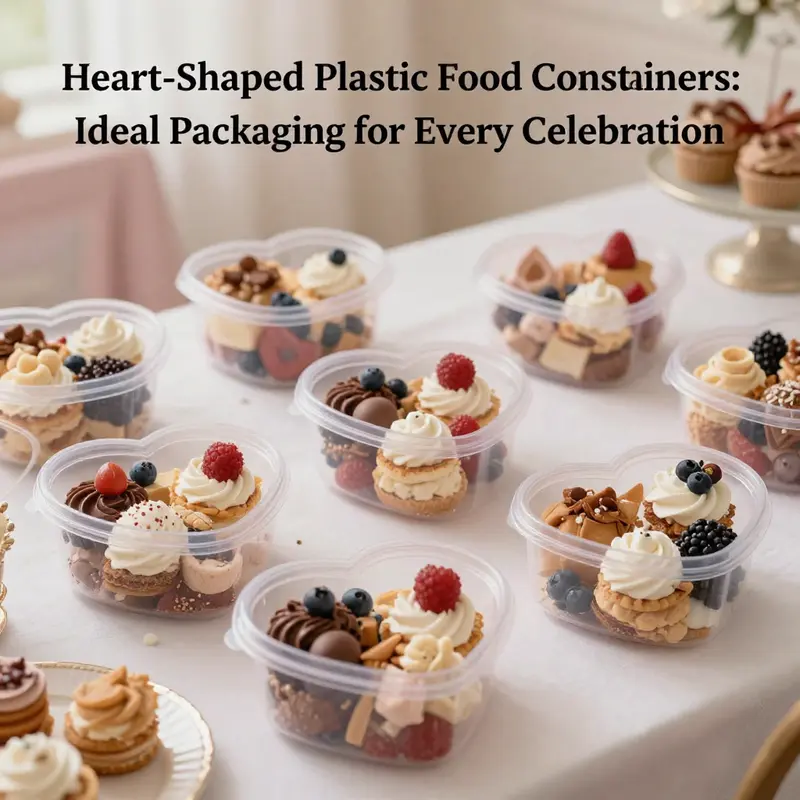
Heart-shaped plastic food containers serve as the perfect blend of practicality and romance, making them an irresistible choice for various businesses functioning within the food and beverage sector. From bubble tea shops to catering services, the aesthetic appeal and convenience they present enhance not only the culinary experience but also the emotional connection with consumers. As this article will explore the materials and characteristics, key features, sustainability considerations, market trends, and customization options, you will gain a comprehensive understanding of how integrating these unique containers into your product lineup can elevate your brand and delight your customers.
Choosing the Right Material: How PET, PP and PS Shape Heart-Shaped Plastic Food Containers
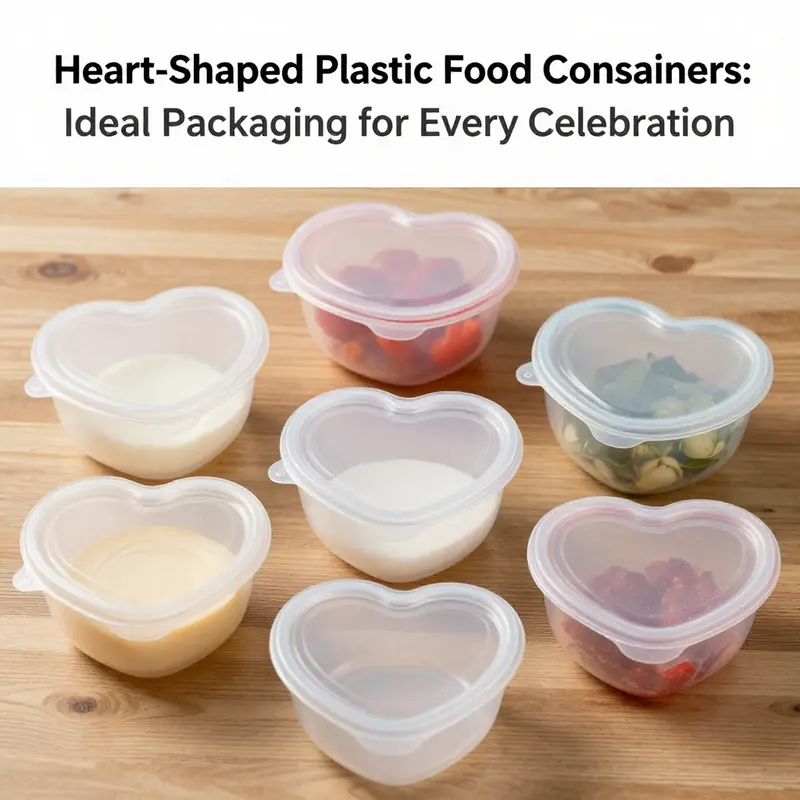
Materials determine more than appearance; they define performance, safety and suitability for every use of heart-shaped food containers. When you pick a heart-shaped plastic container for gifting, retail display, catering or home storage, the polymer beneath the glossy surface sets expectations for clarity, strength, temperature tolerance, recyclability and the overall customer experience. This chapter explores the three most common materials—PET, PP and PS—examining how each behaves in real-world scenarios, what trade-offs they require, and how to match material choice to specific needs.
Polypropylene (PP) is the practical all-rounder. It combines a pleasing level of transparency with a light gloss and dependable resistance to moisture and oils. For fresh fruit, confections, or salads intended for short-term presentation, PP keeps contents looking appealing while preventing seepage and staining. Its heat tolerance is a key advantage: many PP variants are microwave-safe within specified limits, allowing reheating of prepared meals without transferring food to another dish. Because PP is odorless and non-toxic, it meets food-contact safety requirements and is widely accepted by regulators. From a sustainability perspective, PP carries recycling code #5 and is recyclable where local systems accept it. That recyclability, plus its durability for multiple uses, makes PP attractive for reusable gift packaging, meal prep containers and branded promotional items.
However, PP has limits. It is generally less rigid than PET, so a heart-shaped shell in PP will feel more flexible and less glass-like. In very cold conditions some PP grades can become brittle, risking cracks if the container is dropped. Its gas barrier properties are modest, so it does less to block oxygen and delay staling compared with PET. Designers often compensate by adding thicker walls or integrating snug lids and clips to improve perceived quality and protect delicate items.
Polystyrene (PS) excels at producing visually striking displays. Thermoforming PS yields crystal-clear, sharply detailed shapes with crisp edges—ideal for heart silhouettes and decorative contours. Its low cost and light weight are valuable for high-volume retail display and short-term uses. When clarity and structural stability are priorities—such as showcasing chocolates, pastries or single-serve desserts—PS creates an immediate visual impact.
PS is less suitable for applications requiring heat or rough handling. It has poor heat resistance and will warp or deform at elevated temperatures, so it should not be used where microwave reheating or hot-fill processes are expected. PS is also more brittle than PP and can crack under impact. Environmental concerns also factor in: recycling acceptance for PS varies widely, and in many regions it is not economically recycled, which increases landfill risk. For ephemeral occasions—seasonal merchandising, point-of-sale displays and decorative gift boxes where longevity is not required—PS remains a strong candidate thanks to its aesthetic strengths and cost profile.
Polyethylene terephthalate (PET) is the premium choice for cases where clarity, rigidity and protective performance converge. PET offers superior optical clarity and a glass-like finish that elevates perceived value. Its strength and shatter-resistance make it ideal for transporting fragile confections or party favors without compromising presentation. PET also provides better barrier properties against gases and moisture than PP or PS, helping to extend the shelf life of fresh items.
For businesses selling products with a longer shelf life or those that must travel through distribution, PET often becomes the material of choice. It handles stress during shipment better than PS, resists cracking and maintains form under typical retail handling. PET is generally lightweight while delivering a premium look that supports higher price points or boutique branding.
On the downside, PET typically cannot be microwaved safely and is usually more costly than PP or PS. Its recyclability is strong where programs accept PET (#1), but as with other materials, local infrastructure determines whether recycling actually happens. Because PET is widely recycled in many regions, using PET can be a selling point—provided the supply chain and consumer behavior support proper disposal.
Matching material to application requires balancing visual appeal, thermal needs, durability and environmental goals. For reusable containers and microwaveable meal prep, PP is a sensible choice. For short-term retail displays and decorative gift packaging where cost and clarity matter most, PS provides affordability and sparkle. For premium packaging that needs to protect, present and preserve, PET is usually the best fit.
Designers should also account for lid systems and functional details. A well-engineered snap-fit lid can offset a material’s lower rigidity. For example, PP containers can feel robust when combined with a tight, flexible lid that prevents leaks and secures contents during transport. PET benefits from precise thermoforming that produces tight tolerances, which helps seals perform reliably even when the material itself is stiff. For PS, designers may rely on thicker walls or purpose-built trays to avoid flexing and cracking.
Compartmentalization is another consideration. Multi-compartment heart-shaped trays work well in PP because the material bends slightly to absorb load, reducing stress at divider junctions. PET can provide crisper compartments with higher visual separation, which looks professional for curated gift assortments. PS, while clear, can fracture at thin divider areas under impact, so careful wall thickness planning is essential.
Environmental impact has become a decisive factor for many buyers. PET and PP are both recyclable where collection systems exist; however, recycling rates differ between regions. PS faces steeper challenges in many markets. Beyond conventional recycling, manufacturers and brands are exploring alternatives like compostable liners or PLA-coated paperboard for a heart-shaped outer visible window that still maintains a romantic silhouette. Those alternatives often struggle with heat and liquid resistance, and they complicate recycling if mixed materials are bonded together. For brands focused on sustainability, specifying single-material constructions or clearly communicating end-of-life instructions helps ensure materials enter the correct waste stream.
Safety certifications matter. Consumers and retailers expect food-grade materials that meet regulatory standards. FDA food-contact approval and clear recycling codes (#1 PET, #5 PP, #6 PS) are baseline indicators of suitability. When sourcing at scale, requesting documentation for migration testing, heat-resistance thresholds and certification can avoid costly missteps. Suppliers that provide detailed material datasheets and compliance certificates streamline procurement and support claims on packaging.
Finally, procurement logistics influence material choice. Economies of scale, minimum order quantities and customization options vary across suppliers. Bulk buyers often find price breaks at larger volumes, but customization—such as embossed logos or tinted hues—can change lead times and unit costs. When targeting seasonal demand, choosing a supplier with reliable capacity and transparent lead times is as important as selecting the right polymer.
For brands seeking alternative or complementary packaging, paper-based boxes with clear windows offer a hybrid route: an eco-friendly exterior with a recyclable or compostable structure and a transparent view to preserve the heart-shaped presentation. For example, a picnic-style kraft paper cake box with a clear window pairs rustic appeal with visibility and can work alongside plastic heart containers in a mixed-product offering. More on this approach can be found in a discussion of picnic kraft paper cake boxes with clear windows.
As consumer preferences evolve, material selection will remain central to how heart-shaped plastic food containers perform, appeal and impact the environment. Understanding the strengths and limitations of PP, PS and PET enables smarter choices that align form, function and values—whether packaging a single chocolate or shipping a curated assortment across town.
External reference: https://www.alibaba.com/product-detail/Heart-Shaped-Plastic-Food-Container-for-Fruit_1600473289567.html
How Heart-Shaped Plastic Food Containers Balance Romance, Functionality, and Practical Use

A heart shape changes how food is perceived. It turns a simple dessert, snack, or meal into a moment. Heart-shaped plastic food containers do more than carry food. They package emotion, elevate presentation, and solve everyday handling challenges. This chapter explores how their design, materials, and features combine to create a versatile product used across gifting, retail, catering, and home use.
At first glance, the appeal is obvious: the silhouette itself communicates care. That visual cue makes heart-shaped containers ideal for occasions where appearance matters. Chocolates, pastries, fruit arrangements, and curated snack boxes look more thoughtful inside a heart-shaped case than in a plain square. Retailers and bakers use this to their advantage. A transparent lid framing confections within a heart invites purchase. Event planners select heart-shaped trays to reinforce a theme without extra decoration. The container becomes part of the message.
Beneath that emotional layer, material science defines what each container can do. Three plastics dominate: PET, PP, and PS. PET offers crystal clarity and a lightweight feel, so it often appears where display matters most. A pastry presented inside a clear PET heart reads as fresh and premium, because PET resists yellowing and shows color accurately. PET also provides a modest barrier to moisture and odors, which helps maintain textures for short-term storage. Its limits are clear: it is not heat-friendly and is best reserved for cold or room-temperature items.
Polypropylene, or PP, supplies a different balance. It has stronger heat and chemical resistance than PET or PS. When heart-shaped containers need to double as takeout boxes or reheatable meal vessels, PP is the better choice. It tolerates short microwave use within manufacturer guidelines and withstands freezer storage without cracking. PP resists oils and moisture, so salad dressings and saucy items can travel without immediate compromise. It also carries a recycling identification (#5), which helps when local programs accept it. For businesses offering reusable or multi-use heart containers, PP’s durability and thermal performance make it practical.
Polystyrene (PS) rounds out the trio with exceptional rigidity and optical clarity. PS is easy to thermoform into delicate shapes, making it cost-effective for high-volume display pieces where structural definition is critical. Its stiffness allows lids and bases to lock together crisply, creating a satisfying snap that signals quality to the buyer. PS’s drawback is heat sensitivity: it can warp under warm conditions and is not microwave-safe. For short-term retail displays and dessert packaging that won’t undergo heating, PS remains a strong choice.
Design features amplify these material strengths. Secure lids reduce spills and maintain freshness. Snap-fit seals and interlocking edges give confidence when transporting sauces, creams, or layered desserts. Some heart-shaped containers include internal compartments. These divide a single visual statement into organized portions, letting businesses present a variety of items—chocolates and truffles, fruit and cream, or a combination of savories and sweets—without mixing flavors. Clear windows or fully transparent shells allow inspection without opening, which is valuable for retail display and for gift recipients eager to glimpse the surprise.
Manufacturers also tune wall thickness, hinge types, and closure tolerances to match use. Thicker walls add perceived value and protect delicate goods. Flexible hinges in PP reduce the need for separate fasteners and create reusable packages. Detachable lids in PET simplify filling and allow artisans to present decorated goods directly on a nest or tray, then fit the lid for sale. These small mechanical choices influence logistics: stackability reduces storage footprint, while nesting shells save shipping costs when items are shipped empty.
Safety and regulatory compliance sit beneath every choice. Food-grade plastics are formulated to be non-toxic and odorless. Trusted suppliers test for migration of harmful substances and ensure compatibility with common food types. Labels and recycling codes help buyers understand safe uses: whether a container is microwaveable, freezer-safe, or intended for single use. For businesses that invest in custom heart-shaped packaging, demanding certificates of compliance and sample testing should be standard practice. Proper labeling not only protects consumers but also preserves brand reputation.
Applications for heart-shaped plastic containers are broad and adaptable. Gift packaging remains their strongest market: seasonal promotions for romantic holidays, anniversary bundles, and bespoke gift sets all lean on the shape’s emotional resonance. For small bakeries and chocolatiers, a heart-shaped box converts a modest product into an occasion-worthy gift. Presentation becomes part of the perceived value, and customers will often pay a premium for a memorable package.
In retail, heart-shaped containers function as visual merchandising tools. Clear heart shells create eye-catching point-of-sale displays that require minimal signage. Because they allow product inspection, they reduce the need for testers or opened samples on the shelf. Specialty stores can use nested heart trays to offer pre-portioned sampler packs that encourage impulse purchase.
Catering and events benefit from both function and form. Servers can present appetizers and desserts on heart-shaped trays that match the event’s theme. The shape helps planners design tablescapes with consistent visual language. For takeout catering, PP hearts that withstand transport and reheating reduce the need for additional containers. When multiple dishes must be delivered, compartmentalized hearts keep flavors separate and enhance the guest’s unboxing experience.
Households find utility in these containers as well. They are popular for themed meal prep, leftover storage after celebratory meals, and organized snack boxes for gatherings. For families hosting parties, heart-shaped disposable containers save cleanup time while adding a festive touch.
Sustainability remains a practical consideration. PET and PP are recyclable where infrastructure exists. However, recycling gaps mean many containers end up in landfill. As demand grows for greener options, many businesses look to alternative packaging formats for similar visual effects—paperboard boxes with clear windows, compostable liners, and biodegradable accessories. For example, picnic kraft paper cake boxes with clear windows provide a more eco-friendly display while offering similar visual access to the product inside. Selecting a recyclable or compostable alternative can align brand values with customer expectations.
For businesses ordering in bulk, production scale matters. Thermoforming and injection molding processes allow for rapid production of thousands of identical heart shells. Economies of scale reduce per-unit cost, making seasonal promotions feasible. Customization is also possible: printed logos, tinted plastics, or embossed textures can reinforce branding. When planning a seasonal rollout, consider lead times for tooling and the balance between customization costs and expected volume.
Practical tips for choosing the right heart-shaped plastic container hinge on matching material to use. Use PET for chilled displays where clarity and presentation are paramount. Select PP when reheating, freezing, or reusability is required. Opt for PS when crisp optical qualities and rigid structure are needed for short-term retail displays. Focus on lid design, stackability, and compartment options to match logistics and serving scenarios. Finally, verify food safety certifications and recycling codes to ensure compliance and communicate responsibly to customers.
The heart shape carries emotional weight. When combined with the right plastic, it becomes a tool that elevates food, streamlines operations, and creates memorable moments. Thoughtful selection—of material, design, and finish—lets businesses and hosts use heart-shaped plastic food containers to deliver not only food but also feeling.
For an eco-conscious alternative that still offers clear display and sturdy packaging, consider how paper-based cake boxes with windows approach similar presentation goals: https://ecocupbowl.com/product/picnic-kraft-paper-cake-boxes-clear-windows-dessert-fruit-packing-eco-friendly-food-container-home-kitchen-takeaway-party-event/
Additional guidance on food-contact materials and safety recommendations is available from regulatory sources such as the FDA: https://www.fda.gov/food/packaging-food-contact-substances-fcs
Balancing Romance and Responsibility: Environmental Realities for Heart-Shaped Plastic Food Containers
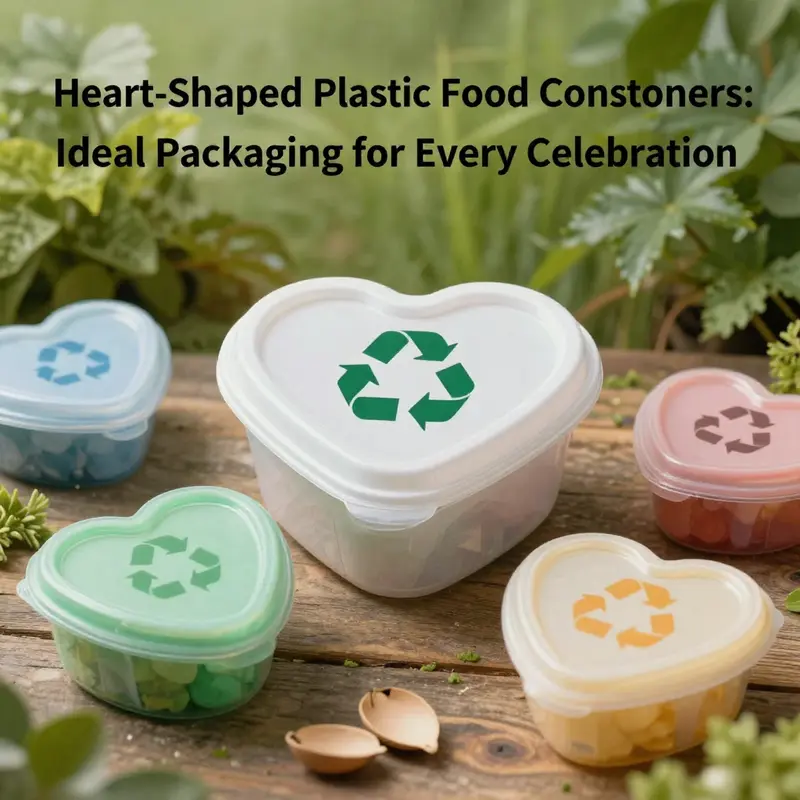
Heart-shaped plastic food containers carry emotional appeal and practical convenience, yet their environmental story is complex. Their charm makes them popular for celebrations, gifting, and retail displays, but the materials and end-of-life handling determine whether that charm becomes lasting waste or a thoughtful, lower-impact choice. This chapter examines the lifecycle challenges and practical strategies that designers, sellers, and consumers can use to reduce the environmental footprint of heart-shaped food packaging.
Most heart-shaped containers are made from fossil-fuel-derived polymers. Polypropylene (PP) and polystyrene (PS) are common for rigid, clear forms, while PET is used for transparent, display-friendly pieces. Each material brings performance trade-offs. PET combines clarity with food safety for cold items. PP offers greater heat tolerance and reusability potential. PS achieves crisp edges and optical clarity but performs poorly under heat and is brittle. These material properties influence both everyday use and the environmental impact that follows.
Production is the first point of environmental consequence. Manufacturing virgin plastic consumes energy and emits greenhouse gases. Extraction and refining of feedstocks create upstream emissions and ecological disturbance. Choosing recycled feedstock—such as recycled PET (rPET)—reduces embodied carbon and extends the useful life of existing material. However, recycled content is only meaningful when supply chains are reliable and sorting systems can feed clean streams of material back into production. For novelty shapes like hearts, contamination from food residues and mixed-material constructions can hinder recycling, so design matters from the start.
Design decisions influence end-of-life outcomes more than many stakeholders realize. Simple, mono-material designs with secure, detachable lids and minimal adhesives are easier to recycle. Transparent PET hearts, for example, are more readily accepted by recycling streams than multi-layered, opaque pieces. Avoiding laminated coatings or mixed substrates prevents irreparable contamination during processing. If a brand wants a compostable option, using plant-based alternatives like PLA or PLA-lined paperboard can lower fossil fuel reliance, but those materials require industrial composting facilities to break down properly. Misplaced compostable products in conventional recycling streams can contaminate recyclate and reduce value.
Recyclability depends heavily on local infrastructure and consumer behavior. A container labeled with a recycling number does not guarantee it will be recycled. Curbside programs vary widely in what they accept. Even if a facility accepts PP (#5) or PET (#1), food contamination can lead to rejection at sorting centers. Clear communication on labeling matters: a clear instruction to rinse and separate components improves the chance of recycling. For businesses packaging perishable goods, offering guidance on disposal and highlighting local recycling compatibility reduces confusion.
Biodegradable and compostable alternatives appear promising, but the distinction between the two matters. Biodegradable refers to materials that break down under certain conditions; compostable implies breakdown into non-toxic components within a defined timeframe in composting environments. PLA, a common plant-based polymer, is compostable in industrial facilities but not in home compost heaps. Paperboard with a thin PLA lining can support structural needs and visual appeal while improving end-of-life outcomes—if it reaches industrial composting. For small bakeries or event planners, choosing such hybrid options can balance presentation with environmental goals, but it demands a disposal pathway and consumer education.
Reusable materials offer the most reliable route to waste reduction. Silicone, glass, and durable PP containers designed for multiple uses displace single-use items over time. The initial environmental cost of producing a durable container is offset when it is used repeatedly. For heart-shaped containers positioned as keepsakes or gift boxes, designing for durability encourages reuse. Brands can support reuse by promoting cleaning instructions, suggesting second-life uses, and offering take-back or refill incentives.
Business-scale decisions amplify environmental impacts. Bulk sourcing from manufacturers can lower per-unit emissions through economies of scale, but ordering large volumes of disposable packaging risks creating excess inventory that may never be used. Businesses should project realistic demand, choose materials aligned with local disposal options, and favor suppliers that disclose recycled content and end-of-life recommendations. For events and catering, pairing attractive heart-shaped packaging with compostable cutlery or kraft secondary packaging creates a cohesive, lower-impact presentation. For example, combining a clear display heart with a kraft carrier makes the overall set easier to route to proper disposal.
Certifications and transparent claims matter. Look for third-party verification for compostability, percent recycled content, and food safety. Certifications for industrial compostability indicate performance under specific conditions, while recycled content labels confirm the proportion of material that has been reclaimed. Clear, honest labeling prevents greenwashing and helps consumers make informed choices at the point of sale.
Practical disposal guidance for consumers reduces leakage into landfills and natural environments. Encourage rinsing and separation, explain which parts go to recycling, and indicate whether pieces are compostable and require industrial processing. Visual cues—like simple icons and one-line instructions—work better than paragraph-long notes. Retailers can include detachable instruction cards at checkout or QR codes linking to regional disposal guidance. Education campaigns around proper disposal during peak seasons—such as Valentine’s Day—can dramatically improve outcomes when demand for heart-shaped packaging spikes.
Innovation continues to change the equation. Advances in chemical recycling may broaden the range of plastics that can be returned to feedstock. New compostable coatings that perform under retail demands are emerging. Still, these technologies depend on scale, investment, and supportive infrastructure. Until then, combining thoughtful material choices with intentional design and responsible consumer messaging yields the best results.
For businesses seeking a lower-impact aesthetic, paper-based containers with transparent windows offer a practical compromise. A kraft paper cake box with a clear window maintains product visibility and reduces plastic content. Such hybrids keep the romantic presentation while easing end-of-life sorting for consumers, especially where paper recycling and composting are more accessible than specialized plastic recycling. Retailers that pair heart-shaped displays with paper-based carriers give customers a clearer path to disposal and a stronger sustainability story. Consider viewing one example of environmentally oriented paper packaging to see how visibility and compostable intent can be combined: picnic kraft paper cake boxes with clear windows.
Finally, the broader environmental picture requires collective action. Manufacturers should prioritize designs that enable recycling and reuse. Municipalities must expand and harmonize recycling and composting infrastructure. Consumers play a role by choosing reusable options when possible and following disposal guidance. When heart-shaped packaging is designed and managed thoughtfully, it can keep its emotional value without becoming an environmental burden.
To learn more about the lifecycle impacts of disposable plastics and strategies to reduce plastic pollution, consult this external resource: https://www.plasticpollutioncoalition.org/
Why Demand for Heart-Shaped Plastic Food Containers Is Heating Up: Cultural Drivers, Tech, and Market Momentum
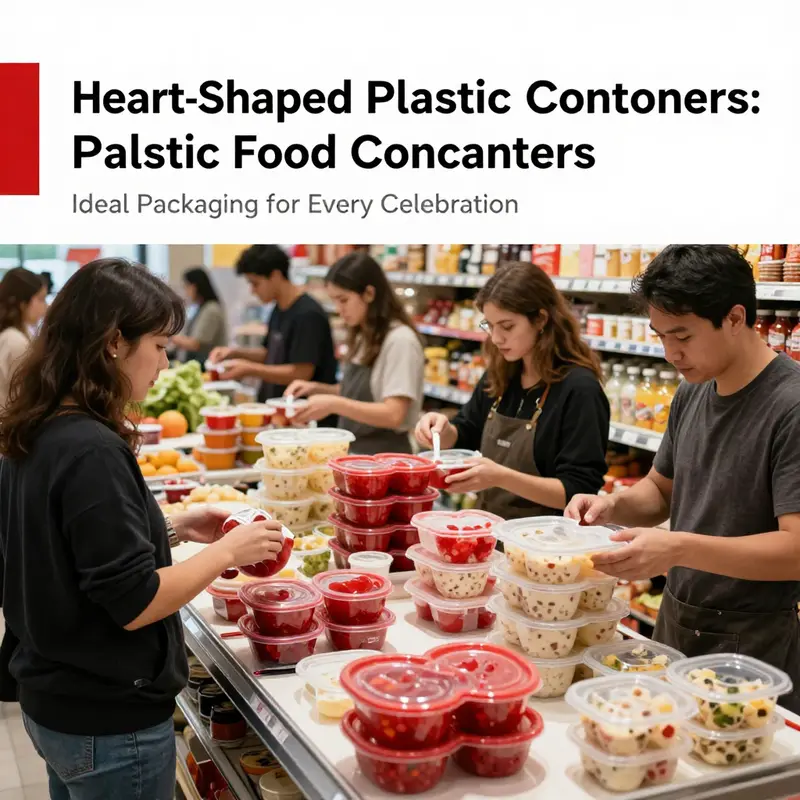
The market for heart-shaped plastic food containers has shifted from a predictable seasonal spike to a continuous, culturally embedded demand. What began as a niche for holiday gifts has become an expressive packaging category that blends utility with emotional value. Consumers now treat packaging as part of the experience; the container is not merely a vessel but a message. This chapter examines the forces fueling demand, the ways manufacturers and sellers respond, and how the category is evolving into an intersection of design, technology, sustainability, and social commerce.
At the core of rising demand is emotional resonance. The heart silhouette carries universal symbolism that transcends simple aesthetics. It signals care, celebration, and attention to detail. This gives food presented in a heart-shaped container perceived emotional lift: a dessert feels more thoughtful; a snack more curated. Over the past several years, that symbolic power has been reinterpreted by younger consumers. Instead of reserving heart-shaped packaging for romantic gestures, many use it for self-expression, gifting to friends, or as content props. This shift broadens buyer profiles and pushes demand into everyday occasions like personal treats, themed events, or curated meal kits.
Gen Z plays a defining role in this evolution. Their purchasing choices prioritize authenticity, shareability, and moments that photograph well. Heart-shaped containers perform exceptionally on these fronts: they are visually distinctive, easy to style, and translate directly into social content. A heart-shaped dessert box set against a minimal backdrop becomes micro-content for feeds and short video platforms. This visual advantage amplifies organic discovery: consumers post, friends notice, and small trends cascade into substantial demand spikes. Retailers that align product design with social aesthetics—color palettes, transparent lids, and clean lines—benefit from this organic marketing engine.
E-commerce has accelerated these dynamics. Product discovery and impulse purchase are easier than ever. Listing pages that feature lifestyle imagery, close-ups of texture, and shallow depth-of-field shots make heart-shaped containers irresistible. Platforms that pair fast shipping with micro-influencer partnerships can convert visual appeal into volume quickly. Because these containers are compact and relatively lightweight, they are low-cost to ship, further lowering the barrier for online vendors. Bundling opportunities—such as pairing containers with coordinating cutlery or decorative picks—create higher average order values and make the product a natural choice for event planners, gifting services, and subscription box curators.
Design innovation is a second major driver. Once a novelty, heart-shaped containers now come in a range of functional forms. Some feature secure snap-fit lids to protect delicate pastries and sauces; others include internal compartments for multi-item presentations. Clarity matters: transparent materials allow the food to sell itself, while frosted or colored variants cater to seasonal looks. Collaboration with cultural IP and heritage themes has also emerged as a value multiplier. When packaging borrows a cultural narrative—illustrative motifs, curated color stories, or traditional patterns—consumers perceive higher value, and price points can rise accordingly. These collaborations illustrate that packaging can be a storytelling layer, not an afterthought.
Material choices determine both performance and market positioning. PET and PP dominate because they balance clarity, safety, and cost. PET offers glass-like transparency that enhances product visibility. PP contributes higher heat tolerance and durability for reusable or microwavable applications. PS remains in use for its optics but is limited by fragility. Material selection influences which customers a manufacturer targets: premium retailers may favor crystal-clear PET for high-impact displays, while meal-prep brands may choose PP for durability and microwave compatibility. The materials also dictate logistics: lighter plastics reduce shipping costs, while sturdier polymers reduce breakage in transit.
Technology is reshaping how packaging interacts with customers. Integrating digital features—like scannable codes or NFC chips—transforms static packaging into an engagement platform. A consumer who scans a container can unlock a recipe video, a personalized greeting, or a loyalty offer. Augmented reality experiences layered over the heart-shaped form invite playful interaction and deeper brand recall. These integrations create post-purchase touchpoints that extend brand relationships beyond the point of sale. For businesses, the data gleaned from these interactions offers granular insights into usage patterns and repeat-purchase drivers.
Sustainability is both challenge and opportunity. Conventional plastics remain prevalent due to cost and manufacturing maturity. However, growing consumer awareness and regulatory pressure push brands to reconsider material choices and end-of-life strategies. Recyclability of PET and PP helps, but proper recycling infrastructure is uneven globally. Moving toward compostable alternatives or mixed-material hybrids introduces complexity: transparency and form stability can be harder to achieve in biodegradable options. Some brands solve this by combining a recyclable clear shell with an inner recyclable liner or by offering incentives for container return and reuse. These strategies signal commitment without sacrificing visual appeal.
Beyond single products, use-case diversification has expanded the market base. Heart-shaped containers appear in wedding favor suites, baby shower assortments, curated care packages, corporate gifting, and themed catering. Event planners appreciate the instant branding potential; bakers and chocolatiers find the shape elevates perceived craftsmanship. As a result, bulk purchasing channels—manufacturers offering minimums in the hundreds or thousands—have adapted their SKUs to include customization options like printing, inserts, and color matching. These services appeal to businesses that require consistent presentation across large events or seasonal campaigns.
Regional growth patterns further shape the market. Asia-Pacific leads volume growth driven by dense population centers, cultural gifting practices, and rapid e-commerce adoption. Localized tastes influence designs and marketing. Where ornate cultural motifs resonate, vendors introduce colorways and prints that reflect heritage themes. In Western markets, minimalism and pastel color palettes are common. International sellers that adapt artwork, labeling, and messaging to regional sensibilities capture higher conversion rates.
Price sensitivity exists, but value perception often trumps lowest-cost competition. Consumers willing to pay a premium expect attention to detail: crisp seams, secure lids, and unmatched clarity. Licensing or thematic collaboration can justify higher price points, especially when tied to limited-edition releases. For sellers, balancing cost efficiency with perceived value is essential. Volume manufacturing reduces unit costs, but overproduction risks inventory lock. Flexible production runs and pre-order models mitigate this risk while enabling seasonal responsiveness.
Finally, the competitive landscape favors agility. Brands that combine design sensibility with logistics efficiency and integrated digital experiences lead. Small makers can outperform larger incumbents by leaning into niche lifestyles and rapid social trends. At the same time, larger manufacturers capitalize on scale, offering cost-effective customization for bulk buyers.
For businesses exploring complementary options, clear dessert packaging demonstrates how form and function can coexist; see this example of transparent cake cups and dessert containers for inspiration: clear cake cups for desserts and packaging.
Overall, heart-shaped plastic food containers are no longer a seasonal novelty. They sit at the crossroads of emotion-led design, social commerce, and product engineering. Demand will continue to diversify as consumers repurpose the shape for personal expression, brands layer digital engagement, and manufacturers adapt materials and production models to meet sustainability goals. The category’s future will belong to those who treat packaging not as a cost center but as a strategic touchpoint—one that delivers utility, tells a story, and invites customers to participate in a memorable moment. For a broader view of the food packaging market that contextualizes these trends, refer to this industry analysis: https://www.statista.com/statistics/1285753/global-food-packaging-market-size/.
Heart-Crafted Packaging: Customization and Sourcing for Expressive Food Presentation

Heart-shaped plastic food containers sit at a curious crossroads of utility and emotion. They are more than receptacles for meals or desserts; they are instruments of storytelling, capable of guiding a moment from purchase to palate and memory. In markets saturated with standard boxes, the heart silhouette acts as a cue, signaling celebration and care. For food producers and retailers, this design is not merely decorative; it is a strategic vehicle for branding, product protection, and customer engagement. The chapter that follows threads customization and sourcing into a single, coherent arc, showing how a shape can be tuned and procured to become a reliable, expressive voice in a crowded aisle. The essence lies in how a simple container can carry a brand’s personality, protect contents through transport, and invite customers to an unboxing moment that feels personal and thoughtful.
Customization emerges first as a practical necessity and then as a branding opportunity. Businesses seeking to stand out increasingly demand options that fit a spectrum of foods—from delicate pastries and macarons to filled candies and savory bites—while maintaining the reliability of a single, recognizable shape. A direct manufacturer can provide a more seamless path from concept to production, reducing the friction that often accompanies middlemen: shorter lead times, tighter quality control, and clearer lines of communication. The scope of customization goes beyond mere size. Dimension specifications matter to ensure a heart-shaped container accommodates a given item without crowding or shifting. Thickness choices influence durability during transit and the container’s ability to withstand stacking or rough handling in delivery networks. Color options expand the design vocabulary, aligning with seasonal campaigns or brand color schemes, whether that means crystalline transparency for maximum visibility, a soft blush for romantic gifting, or metallic accents to suggest premium indulgence.
Internal structure is another axis of customization that affects both function and perception. Divided compartments or insert trays can transform a single-use vessel into a modular box that keeps items neatly separated, preserves textures, and makes the unboxing experience more satisfying. For desserts with sauces or liquids, a secure lid is essential to prevent leaks; for dry items, a snug seal still supports freshness and confidence during transport. Logo printing and surface finishes complete the circle, turning a generic container into a branded asset that travels with the product—from bakery counters to fridge doors to consumer tables. A packaging line that embraces consistency in logo placement, color accents, and finish quality helps build recognition. In this sense, customization becomes an instrument of trust as well as aesthetics, signaling to customers that the brand stands behind every detail of presentation and containment.
The sourcing side of the equation complements customization with scale, supply reliability, and lifecycle considerations. For heart-shaped containers, the most common materials—PET and PP—offer distinct advantages. PET provides outstanding clarity and a food-safe profile, making the contents visible and appetizing in display cases. It is an appealing choice for cases where the packaging must exude freshness at a glance. PP offers a robust balance of rigidity, heat resistance, and recyclability, making it suitable for items that may require light reheating or longer storage windows. It also lends itself to reusability in certain applications, which can align with sustainability goals when paired with consumer education about proper disposal. A third material, PS, can deliver exceptional rigidity and visual appeal, though its heat resistance is more limited, so its use tends to be constrained to short-term storage or decorative purposes. Each material carries a different footprint in terms of recycling infrastructure and end-of-life outcomes, and buyers must weigh these factors against product goals and regional waste systems. In practice, many producers choose PP or PET not only for performance but for the message those materials send about safety and modernity.
Sustainability remains a central thread in sourcing discussions. The ideal is to align packaging choices with both regulatory compliance and consumer expectations for responsible stewardship. Recyclability is achievable with PET and PP when systems are in place to collect, sort, and process the material. Yet the actual environmental benefit hinges on local infrastructure and consumer behavior. Biodegradable or compostable options—such as PLA-lined boards or compostable plastics—are making some inroads but are still less common in heart-shaped designs due to performance trade-offs, including clarity, seal integrity, and barrier properties. As brands seek to minimize waste, designers increasingly explore hybrid solutions that preserve the signature heart shape while reducing overall plastic mass, or that switch to recyclable components for lids and bases while preserving visual appeal. Customization then becomes a collaboration that not only delivers a distinct look but also clarifies disposal pathways for customers, turning packaging into a clear, responsible part of the product experience.
From a design and branding perspective, the packaging must speak to the product before the first bite is taken. The heart shape itself is a potent emotional cue; transparent lids amplify transparency of contents, reinforcing trust and appetite. Finishes such as a subtle gloss, a matte overlay, or a metallic highlight can elevate perceived value without compromising functionality. For brands, the continuity of the packaging line matters as much as the singular container. A family of heart-shaped vessels in coordinating colors and finish textures can create a cohesive shelf presence and a predictable unboxing sequence. This coherence supports a lasting impression, turning a moment of gifting into a small ritual that customers can anticipate with every purchase.
Sourcing strategies have evolved alongside consumer expectations and logistical realities. Direct manufacturers, with control over tooling, allow brands to iterate quickly on geometry and internal features, adjusting compartments or insert pieces in response to product changes or seasonal campaigns. When evaluating suppliers, brands weigh several criteria: material safety compliance across markets; ability to withstand frozen or microwaved use where appropriate; and reliability in delivering consistent dimensions, tolerances, and finishes. A well-managed supplier relationship often includes transparent communication about tooling costs, pilot runs, and quality assurance processes, enabling smoother scale-ups from 3,000 units to tens of thousands. Costs per unit tend to drop with volume, but this is only valuable if the lead times align with product launches and promotional calendars. In this landscape, the ability to customize the container while maintaining predictable delivery becomes a strategic advantage, especially for confectionery lines and gift-oriented sets that hinge on presentation as a differentiator.
To visualize how decorative box design can complement the heart motif, see the Pure Color Foldable Cake Boxes with Window. This example illustrates how a windowed design can showcase contents with clarity while preserving the iconic heart silhouette as a silhouette of care. The combination of form and function—where a container’s shape communicates sentiment and its window reveals the artistry inside—serves as a template for brands seeking to harmonize aesthetic storytelling with practical utility. The integration of a foldable, durable structure with a windowed presentation demonstrates that packaging can be both elegant and economical, enabling quick assembly, reliable stacking, and reduced material waste when designed with precision. In practice, the supplier ecosystem supports this balance by offering a range of customization options, including varied dimensions, wall thicknesses, color palettes, internal layouts, and printing capabilities that preserve the integrity of branding across multiple SKUs.
Another facet of sourcing concerns the breadth of platforms available for procurement. Buyers can access a spectrum of options—from ready-to-ship configurations to fully customized runs—across networks that connect manufacturers with brands seeking scale. The practical implication is that a brand can prototype a few dozen trial units, refine the internal geometry, and then place a bulk order with confidence in uniformity and delivery timelines. The flexibility to adjust packaging properties—without sacrificing the heart’s emotional resonance—enables campaigns to adapt quickly to market feedback and seasonal demand. In this sense, customization and sourcing collaborate as a cycle: design informs production constraints, and production insights feed design refinements for future cycles.
For teams navigating these decisions, internal references matter not just for features but for narrative alignment. The packaging choice becomes a communications tool that signals care, quality, and brand intent. It is about creating a packaging system that aligns with the product’s story—whether the item is a delicate cake slice, a set of bite-sized desserts, or a multi-item festive gift. The heart shape, when married to thoughtful material selection, robust construction, and a well-executed branding plan, can transform ordinary offerings into memorable experiences. In markets where holiday and celebration shopping is highly seasonal, such packaging can become a defining element of a product line, capable of turning impulse buys into cherished presents and routine meals into moments of delight.
External reference: https://www.alibaba.com/product-detail/High-Quality-Custom-Printed-Plastic-Transparent_1600593914595.html
Final thoughts
Heart-shaped plastic food containers are more than just packaging; they embody a unique blend of emotion and practicality that enhances food presentation, making them a must-have for any business catering to special occasions. Their versatile applications, coupled with the option for customization and the considerations for sustainability, position them as an ideal solution for companies looking to differentiate their offerings. Understanding the materials, advantages, and market trends around these containers can pave the way for innovative uses, ensuring that your establishment stands out in a crowded marketplace.