
In the food service industry, ensuring customer safety and satisfaction is paramount. One often overlooked area is how food is heated, particularly the materials used in this process. As businesses ranging from bubble tea shops to catering services strive to provide quality food, understanding the implications of heating in plastic containers is critical. This article explores the chemical safety concerns, the risks of microplastic emissions, the material composition of plastic, the effects of high temperatures on containers, and best practices for safely heating food. By the end, you’ll be equipped with the knowledge you need to make safer choices for your food business.
Heat, Plastic, and Health: Understanding Chemical Safety When Reheating Food in Containers
Many of us heat leftovers in plastic to save time. The convenience is undeniable, but the trade-offs are subtle and cumulative. Plastics are not simply inert vessels; they are complex matrices loaded with additives, stabilizers, and polymers designed to perform under stress. When heat is introduced, those additives and the plastic itself can change. The consequences show up not in a single moment but as exposure over days, weeks, or years.
The most cited concerns revolve around chemical leaching. Bisphenols, phthalates, and related plasticizers can migrate from the container into the food when heat is applied. These substances are endocrine disruptors, meaning they can interfere with hormonal systems at low doses. A stark illustration comes from a 2024 study in Environmental Health Perspectives, which found that nearly seven in ten common plastic food containers released detectable levels of endocrine-disrupting chemicals when microwaved, even when labeled microwave-safe. That finding challenges the confidence many people place in regulatory assurances. The FDA regulates food contact materials under the assumption that leaching stays minimal under intended use, but real-world conditions—reheating oily foods, aging containers, and repeated use—can push migration beyond those tested limits.
The cast of chemicals extends beyond BPA. Substitutes such as BPS and BPF resemble BPA closely enough to raise similar concerns about health effects. Phthalates, widely used in flexible PVC, are not chemically bound to the plastic; they can seep into food as the container heats. The broader lesson is that a label like microwave-safe does not guarantee chemical safety under all circumstances. The migration conversation sits alongside a separate but related issue: microplastics. Heating plastic, especially in the microwave, can dramatically increase the release of microplastics and nanoplastics. A striking observation from the research is that a single square centimeter of plastic could release over 200 billion nanoparticles when heated. Those tiny particles can pass into food, enter the body, and potentially accumulate over time, raising concerns about long-term exposure that science is still unraveling.
Material matters, and not all plastics are created equal. Common food-contact plastics carry resin codes that help distinguish their heat tolerance, but the codes alone do not tell the whole truth. Polystyrene, coded as 6, and certain PVC-based plastics, coded as 3, are particularly unsafe for heating. Even plastics marketed as food-grade or labeled for freezing may not perform well under high heat. Most experts converge on a cautious stance: polypropylene, resin code 5, is generally regarded as safer for microwaving, yet even this option should be used sparingly or avoided when possible. And even when a container bears a #5 label, the risk of chemical migration remains—especially if the container is old, scratched, or repeatedly heated. The core takeaway is not to seek a perfect safe container, but to reduce risk by favoring non-plastic heating whenever feasible.
Beyond chemistry, there is a physical dimension to heating that should color everyday choices. Heat can warp plastic, causing cracks that create microfractures where chemicals can accumulate and migrate more readily. Warping also invites leaks and spillage, turning a simple reheating step into a hazard for the appliance, the kitchen, and the meal itself. The practical implication is straightforward: if you see a container that has warped, cracked, or softened, transfer the contents to a safer vessel before continuing to heat. This isn’t just about aesthetics or container longevity; it’s about minimizing exposure and preserving the integrity of the food you’re about to eat.
What should a cautious cook do? The safest, most reliable option is to transfer food from a plastic container to a glass or ceramic dish before heating, and to use only that dish for the heating itself. Glass such as Pyrex and sturdy ceramic plates resist heat better and do not carry the same risks of chemical migration as plastics under typical reheating conditions. Stainless steel can be an option for containers in some contexts, though it is less common for direct microwave use and requires careful handling. In practice, the act of preheating in a non-plastic vessel—then serving or storing in a plastic container that has not been heated—helps break the chain of heat-induced migration. For those seeking packaging that emphasizes safety alongside convenience, there are options marketed as microwave-safe where the emphasis is on heat resistance and barrier properties; consider exploring eco-friendly takeout boxes that are microwave-safe. This route aligns with a growing preference for materials that limit leaching while still supporting modern kitchen and takeout needs.
Even with safer packaging choices, attention to usage patterns matters. Experts advise avoiding microwaving fatty or oily foods in plastic containers, because fats can act as carriers, drawing chemicals into the food more readily. Reheating sauces, gravies, or oils in plastic is especially problematic. Reuse and aging amplify risk; plastics accumulate microabrasions and chemical residues that can accumulate and migrate during subsequent heating. Regularly replacing containers or using heat-stable alternatives can reduce cumulative exposure, a practical approach for households that frequently reheat meals. The regulatory picture remains a balance between what is tested in controlled studies and how people actually heat foods at home. The gap between assurances that a container is safe for microwave use and everyday cooking habits underscores the importance of applying caution to seemingly ordinary routines.
The chapter would be incomplete without acknowledging both the visible and invisible consequences of these choices. The visible concerns—warping, melting, and leaks—are unmistakable signs that plastic is failing under heat. The invisible concerns—chemical migration and microplastic release—are subtler, yet potentially more consequential over time. The body’s exposure timeline matters; even low-level daily exposure to a range of chemicals could accumulate in certain tissues. That is why many researchers urge a precautionary approach: minimize heating in plastic, favor non-plastic containers, and treat plastic reheating as a last resort when no other option exists. Keeping leftovers in non-plastic containers for reheating, especially for oily or acidic foods, becomes not just a recommendation but a prudent habit.
For readers who crave additional evidence, the body of peer-reviewed work offers a clear signal. A 2024 study highlights a discrepancy between what is claimed and what happens in kitchens. The knowledge is not about condemning plastic itself but about understanding limits and choosing safer paths. For those seeking a deeper dive into how these chemicals behave under real-world conditions and the complexities of exposure, a comprehensive review is available in the Environmental Health Perspectives article. It provides context on leaching, substituent risks, and practical safety guidelines that support a cautious approach to reheating.
External resource: https://www.ncbi.nlm.nih.gov/pmc/articles/PMC10859982/
Heat, Plastic, and Microplastics: Reheating Food in Plastic Containers
Heating food in plastic containers is common but carries unseen risks. When plastics are heated, chemical additives can migrate into food and microplastics can shed from the container. Research shows that heating can increase microplastic release and exposure to additives, particularly with fatty or acidic foods. For example, studies have observed microplastics and nanoparticles released from certain containers after brief heating. Temperature thresholds matter; even moderate heating around 65°C can elevate emissions. The risk extends beyond momentary heating to prolonged storage and repeated reuse, especially with acidic contents. Regulatory limits for microplastic migration are not yet standardized, underscoring precautionary choices. Safer options include transferring food to glass, ceramic, or stainless steel before heating, using microwave- and oven-safe non-plastic packaging, and avoiding heating plastic wraps in contact with food. In practice, when plastic must be used, remove the food and heat in a non-plastic vessel when possible; if not, choose heat-tolerant plastics and monitor heating duration. The broader message is to weigh convenience against potential exposure and to consider safer packaging and durable kitchenware.
Heat, Hazards, and the Plastic Paradox: How Material Composition Shapes Safety When You Microwave Food
Heat, Hazards, and the Plastic Paradox: How Material Composition Shapes Safety When You Microwave Food
When you reach for a plastic container to heat a meal, you are not just moving food from one vessel to another. You are enacting a moment where chemistry, engineering, and daily routine meet. The container’s material makeup determines how heat behaves inside it, what stays intact, and what migrates into your food. This chapter unpacks the material choices behind common food containers, the safety assumptions that come with heating, and the practical steps you can take to minimize risk without sacrificing convenience. It is a story of one material at a time, showing how plastic is not a single, uniform foe or friend, but a family with different temperaments depending on the situation.
At the center of the discussion is the idea that heat is not a neutral force for plastics. It is a stress test. Different polymers respond in distinct ways when exposed to microwaves or hot ovens. The most commonly used plastics in home containers fall into a small, identifiable set: polypropylene (PP), polystyrene (PS), and polyethylene terephthalate (PET). Each has its own history, its own behavior under heat, and its own implications for safety when used for heating.
Polypropylene, or PP, is often presented as one of the safer options when heating is involved. It has relatively high heat resistance and is frequently labeled as microwave-safe or freezer-safe. In everyday practice, PP containers are considered inert under normal use, especially when used within their intended temperature range. That does not automatically make them harmless in all heating scenarios, but it does explain why many manufacturers rely on PP for products meant to endure warm or hot conditions. By contrast, polystyrene—especially the foam-style versions frequently used for takeout and single-use packaging—poses different hazards. When heated, PS can release substances like styrene into the food. Styrene carries a long-standing concern: the International Agency for Research on Cancer has classified it as a possible human carcinogen, at least under certain exposure conditions. The risk profile here is not about a single chemical spike; it is about the cumulative effect of repeated exposure from everyday dining practices.
PET, another familiar polymer, finds broad use in beverage containers and some food packaging. It is typically chosen for its clarity and strength, but it is not designed for repeated heating. Heating PET can lead to degradation pathways that release substances into food, especially if the container is used in a way beyond its intended purpose. The takeaway is not to declare PET universally dangerous, but to recognize that repeated heating can alter its structure in ways not compatible with safe food contact over time.
A layer of nuance appears once you consider the broader family of bisphenol-based plastics. Even when a container is labeled BPA-free, the replacement chemicals used to address BPA concerns—such as BPS or BPF—have drawn scrutiny. These substitutes may function differently, but emerging research suggests they can still act as endocrine disruptors. The safety label one encounters on the shelf can be reassuring yet not comprehensive, because the science of how these compounds behave under heating remains incomplete in some contexts. The overall implication is simple but important: do not assume safety from a single label alone; look for explicit, heat-specific guidance from manufacturers and trusted safety sources.
The theme that underpins all of these points is the idea of leaching and migration. When heat is applied, the boundary between a plastic container and the food at its core becomes a site of potential interaction. Leaching refers to chemicals migrating from the plastic into the food. The risk is not uniform across all plastics or all heating conditions. The temperature, duration, and the nature of the food (fatty foods, acidic foods, or salty condiments) all influence the likelihood and magnitude of migration. Microplastics add another layer to the puzzle. Heating plastic containers, particularly in a microwave, can dramatically increase the release of microplastics and nanoplastics. A single square centimeter of plastic, under certain heating conditions, can shed billions of tiny particles that may be taken up by the body and accumulate over time. Although the science is still evolving, the pattern is clear enough to warrant caution: exposure is not limited to a single molecule but can involve tiny fragments that behave differently from larger, visible plastic objects.
The practical consequences of these mechanisms hinge on the safety standards embedded in the materials themselves. Not all plastics are equal in their heat tolerance or their chemical stability. The packaging you choose matters as much as the food you cook. Some designs incorporate a composite or layered approach, using plastic with a graphite-based bottom or other innovations intended to improve thermal stability. The goal of such innovations is to preserve the convenience of plastic while reducing the risk of distortion, migration, or degradation under higher temperatures. Yet innovations do not erase the underlying truth: heat changes material behavior, and the materials used for heating must be chosen with clear intent and knowledge of their boundaries.
What this means for everyday decision-making is straightforward but not always obvious at the moment of hunger. Always check explicit labeling that indicates that a container is microwave-safe or oven-safe. Materials in the #5 family, polypropylene, are widely recognized as a safer option for heating when used properly. Still, this is not an invitation to heat everything in plastic. The safest practice remains transferring food from the original container into a glass, ceramic, or stainless steel dish before heating. This simple step breaks the direct contact between heat, plastic, and food—a boundary that reduces the chance of chemical migration and particle release. It is a pragmatic approach that respects both the usefulness of plastic for storage and the need to minimize exposure to potentially harmful substances.
From a design and consumer standpoint, the labeling and certification of containers matter. Certifications that specify microwave stability, temperature tolerance, and dishwasher safety reflect extensive testing and standardized expectations. They do not guarantee absolute safety in every possible scenario, but they do provide a framework for responsible use. In practice, many households rely on containers that carry a microwave-safe label, yet still treat heating as an operation that deserves attention: avoiding fatty or acidic foods, limiting heating times, and steering clear of overheated margins where plastic can soften, warp, or crack. The small acts of choosing a safer material, reading the labeling, and transferring to a suitable vessel collectively reduce risk. Even as manufacturers explore new materials and composites, the core guideline remains: heat changes plastics, and precaution is wise when you heat.
For readers seeking practical packaging options that are designed for heating while maintaining a safety-oriented posture, consider options described as eco-friendly takeout boxes for food packaging. These containers are often crafted to balance the convenience of disposability with improved safety and heat tolerance. They illustrate how the industry is responding to concerns about heat, leaching, and microplastic release by offering designs aimed at reducing risk while keeping foods warm and presentable. You can explore such options here: eco-friendly takeout boxes for food packaging.
The broader message is clear: your choice of container is a material decision as much as it is a convenience decision. The safest path through the maze of plastics is informed selection, label-checked usage, and deliberate heat management. In many homes, that translates into choosing PP-based containers when heating is anticipated, avoiding PS foam altogether for hot foods, and embracing glass or ceramic when feasible. It also means respecting temperature limits and avoiding the temptation to reuse single-use plastics for repeated high-heat heating events. The science is dynamic, but the practical steps are stable enough to be adopted today, reducing exposure while preserving the everyday benefits plastics offer for food storage and preparation.
External resource: For a comprehensive scientific overview, see the Plastic Food Container Safety study on PMC: https://www.ncbi.nlm.nih.gov/pmc/articles/PMC10597638/
Heat, Risk, and Reuse: Reading Temperature and Plastic in Food Containers
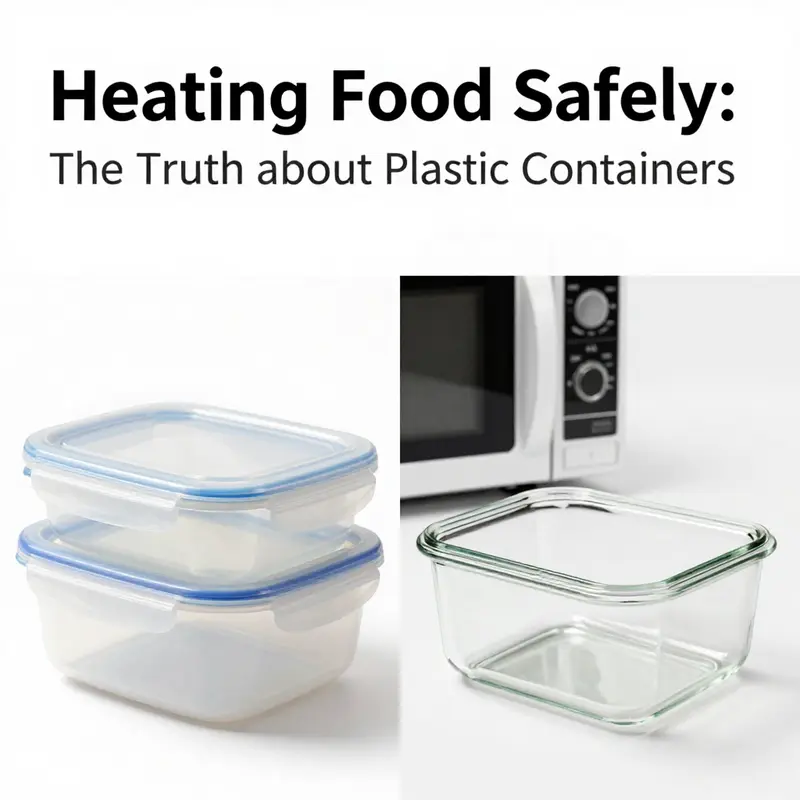
Heat is a routine part of daily life yet it changes how plastic containers interact with food. When we microwave or pour hot liquids into plastic, additives can migrate into the meal and tiny plastic fragments can shed from the surface. The risks depend on the type of plastic, the temperature reached and how long the heat lasts. PET, polycarbonate, polypropylene and other common materials behave differently under stress and not all are equally suited to hot foods or long reheating times.
A practical approach is to minimize heat exposure and start by transferring food to heat resistant glass or porcelain before warming. Look for containers labeled microwave safe and avoid those without a clear certification. Reuse of single use plastics is not advised for heating, as fatigue and microgrooves can accelerate leakage. When in doubt, reuse glass or ceramic containers.
Microplastics are another concern associated with heating. As temperature rises, some plastic materials can release small particles more readily, and those particles may be ingested with food. Studies show that temperature and duration can influence the amount released depending on material, with more release tied to hotter and longer heating and certain coatings also affecting the results.
In everyday practice, prioritize safer options. Favor durable reusable containers made from glass, ceramic, or stainless steel for reheating. If you must use disposable packaging, choose products with documented heat tolerance and avoid fatty or highly seasoned foods that can promote chemical migration. For hot beverages that are frequently consumed from cups, consider switching to cups that use coating technologies designed to minimize leaching and to reduce the presence of microplastics.
The overarching message is practical: reduce heat in contact with plastics whenever possible, monitor heating times, and transfer hot foods to non plastic vessels when feasible. This approach lowers potential exposure while preserving taste, texture, and nutritional quality. For readers who want more depth, a growing body of research explores how temperature affects the interaction between plastics and foods, and how different materials compare in real world use. See the linked literature for a deeper dive.
Rethinking Microwave Heat: Choosing Glass and Ceramic Over Plastic for Safe Reheating
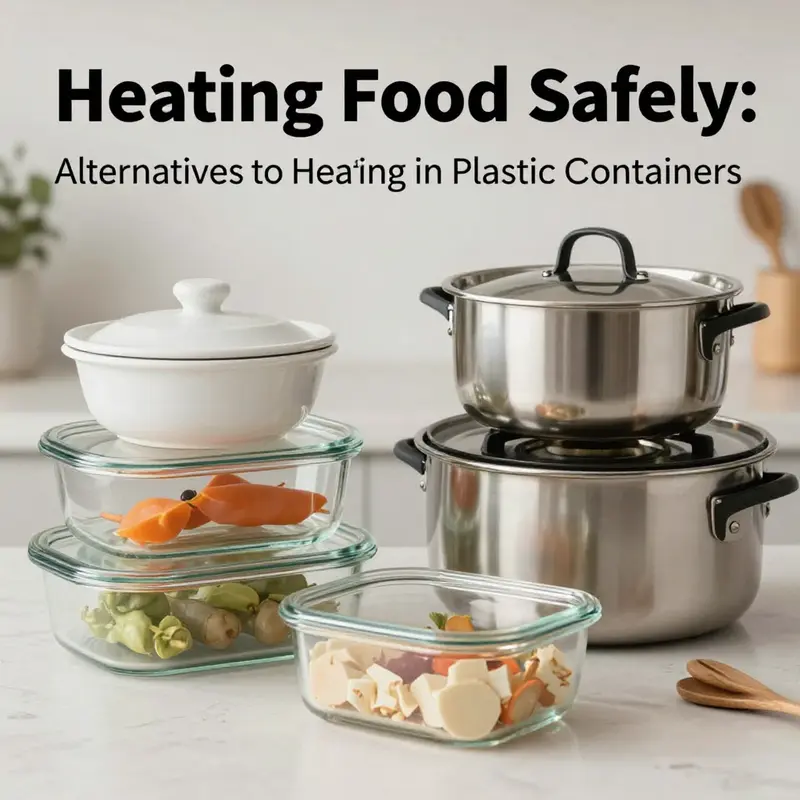
A quick kitchen scene where you reheat yesterday’s stew in a familiar plastic tub. Steam rises, the lid snaps, and a scent of reheating comfort fills the room. The urge to reach for the same plastic container is strong, but evidence invites caution. The central question should you heat food in plastic containers has a surprisingly simple answer: do not heat food in plastic containers unless they are labeled microwave safe, and even then proceed with caution. The reason goes beyond plastic getting hot; it is about the chemical story that unfolds with heat. When plastics are heated, substances can migrate into food. Although exposure from a single meal is small, cumulative exposure over time raises concerns about hormonal balance and development, especially for children and pregnant people. Not every plastic will release harmful amounts every time, but the potential exists, especially at higher temperatures or with cracked or degraded plastic. Even containers marketed as microwave safe deserve scrutiny rather than automatic trust. A second concern is microplastics shed during heating. Tiny particles can be released and migrate into food and eventually into the body. Reheating cycles can increase release, so minimize heating in plastic whenever possible. The material itself matters. Polystyrene and PVC are generally considered unsafe for heating due to higher leachability and degradation. Even food grade plastics do not automatically translate to high temperature safety. The guidance points to polypropylene as a type commonly deemed safer for microwave use, yet even with it, limit heating, avoid prolonged exposure, and never rely on plastic as a long term reheating solution. So what should a thoughtful cook do instead? The safest answer is to transfer food from a plastic container to a glass or ceramic dish before reheating. Glass is chemically inert and resists leaching; it tolerates a wide range of temperatures. Ceramic dishes offer similar stability and preserve flavor. Stainless steel containers can be used for reheating in other contexts, but with care. These options form a twofold strategy: minimize plastic for heating and preserve food quality. Beyond swapping containers, practice safe reheating: avoid placing plastic wrap directly on hot food; cover with microwave safe lids or parchment paper to retain moisture while avoiding direct contact with plastic. Always check manufacturer guidelines for any container used in the microwave. The practical takeaway is clear: heat in glass or ceramic, keep plastic use to a minimum for reheating. The habit of transferring leftovers to a non plastic vessel before warming is a simple commitment to safer cooking and eating that benefits families over years.
Final thoughts
Choosing the right materials for heating food is a vital aspect of food safety in the service industry. This article has highlighted the potential hazards associated with heating food in plastic containers, emphasizing the importance of chemical safety, the risks associated with microplastics, and the varying safety levels of different plastic materials. By adopting best practices and opting for safer alternatives like glass or ceramic, businesses can significantly reduce health risks while improving customer trust. Prioritize your customers’ well-being by making informed choices about food heating methods today.