
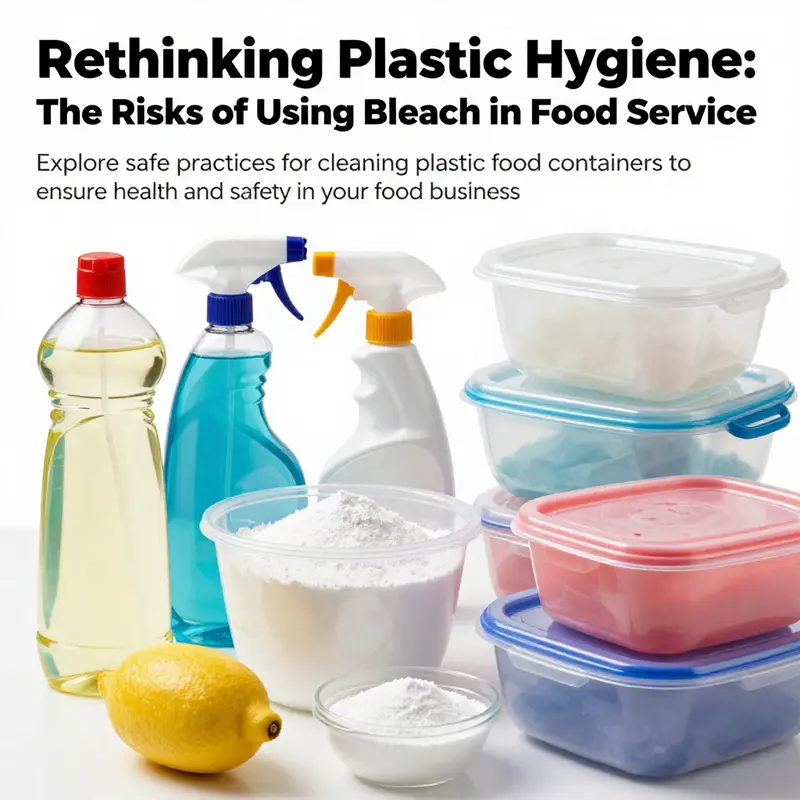
As businesses in the food service industry, from bubble tea shops to catering services, maintaining a clean and safe environment for food preparation and storage is crucial. However, many establishments mistakenly turn to bleach as a go-to cleaning agent for plastic food containers, unaware of the significant risks involved. In this article, we delve into why the use of bleach on plastic food containers can be harmful, explore safe and effective cleaning alternatives, and provide best practices to maintain your food containers without compromising safety. Each chapter will build on the understanding of how to protect both your products and your customers.
Why Bleach and Plastic Containers Are a Dangerous Mix: Health, Material, and Practical Risks

Why bleach and plastic containers are a dangerous mix
Bleach is a go-to disinfectant for many household tasks, but using it on plastic food containers is risky. Sodium hypochlorite, the active ingredient in common household bleach, kills bacteria effectively. Yet its strength is also the reason it harms plastics and can contaminate food. When bleach contacts many common food-grade plastics repeatedly, it can change their molecular structure. That damage is not always visible. Over time, plastics can become brittle, etched, or micro-scratched. Those changes create sites where chemicals lodge and where food can absorb residues. Even trace bleach trapped in tiny crevices can transfer to your food at the next use. This makes bleach an unsuited choice for routine cleaning of plastic food containers.
The interaction between bleach and plastic depends on the plastic type. Plastics like polypropylene (PP), polyethylene (PE), and polystyrene (PS) are widely used for food containers. These materials are chosen for their durability and relative chemical resistance, but none are immune to prolonged exposure to strong oxidizers. Bleach acts as an oxidizing agent. It can break polymer chains and oxidize additives, dyes, or stabilizers within the plastic. The result can be physical degradation, such as crazing, cracking, or color loss. More importantly, breakdown changes how the plastic behaves around food. Degraded plastics can leach compounds more readily, especially when heated or when they hold acidic or fatty foods. Heat and acidity accelerate migration of chemicals, increasing the risk that harmful substances reach the food.
Residual bleach is a separate but related hazard. Bleach molecules can persist in microscopic scratches and porous areas of a container. Simple rinsing under still water may not remove residue lodged in those places. If you then microwave the container, pour hot food inside, or store acidic dishes, trapped residues may volatilize or diffuse into the food. Ingesting bleach or its byproducts can cause immediate symptoms such as nausea, vomiting, and stomach pain. Repeated low-level exposure over time may contribute to long-term health concerns. For these reasons, even if bleach is diluted, it is not safe to rely on it for cleaning items that directly contact food.
Another concern is the unpredictable chemistry when bleach meets other household cleaners. Mixing bleach with acids or ammonia-based products releases toxic gases. Even weak acid cleaners like vinegar produce chlorine gas if combined with bleach. Chlorine gas exposure is dangerous, can irritate the respiratory tract, and poses an acute hazard in confined kitchens. This risk makes using bleach in a busy household environment especially unwise. People often switch between cleaners or combine products to speed cleaning. With plastic food containers, the combination of chemical residues and potential gas formation increases the chance of accidental exposure.
Some people believe there is a safe way to bleach plastics by controlling concentration or soaking time. That assumption is misleading. There is no universal, safe “bleach soak time” for plastic food containers. Plastics vary by polymer type, age, additives, and manufacturing methods. A new, thick-walled polypropylene container will respond differently than a thin disposable plastic tub. In many cases, damage is cumulative and not obvious after one exposure. A single misuse may not produce visible harm, but repeated use accelerates degradation. Because you cannot reliably assess the internal condition of a plastic’s polymer chains at home, claiming a safe soak time is unsafe. The sensible approach is to avoid bleach for cleaning anything that will directly touch food.
When containers show visible warning signs, stop using them. Look for cracks, significant discoloration, a persistent chemical smell, surface pitting, or a change in rigidity. Those signs indicate the plastic has degraded or is retaining residues. Even if a container looks intact, deep scratches from abrasive cleaning tools can harbor bacteria and chemicals. Avoid steel wool, harsh scouring pads, and abrasive powders for plastic. They do superficial damage that increases long-term risk. Instead, use soft cloths, non-abrasive sponges, and mild detergent with warm water. Proper technique minimizes scratches and preserves both the container and food safety.
If you need stronger cleaning or sanitizing than soap and water provide, choose food-safe alternatives. White vinegar diluted with water is a safe, effective option for many odors and light sanitizing needs. A mix of one part white vinegar to three parts water, soaked for about 15 minutes, can reduce bacterial load and help remove stains and mildew without harming plastic structure. Lemon or citric acid solutions are useful for removing food odors and neutralizing grease. Baking soda creates a mild abrasive paste that helps lift tough stains without scratching when used carefully. These methods are gentler on polymer chains and avoid the health hazards associated with bleach.
For true disinfection where pathogens are a real concern, seek sanitizers approved for food contact surfaces. Regulatory bodies provide guidance and lists of safe agents. Many foodservice sanitizers are formulated for equipment and utensils and are safe when used according to directions. Always follow dilution guidance, contact time, and rinsing instructions. Manufacturer labels and official guidance should be your source of truth. If a container’s label specifically warns against bleach or certain chemicals, heed that advice. When in doubt, do not gamble with strong oxidizers on food-contact plastics.
Dishwasher heat and aggressive detergents can compound issues. Some plastics are labeled dishwasher-safe because they withstand typical machine temperatures and detergents. But even dishwasher-safe plastics can degrade faster when repeatedly exposed to high heat and harsh chemicals. Bleach plus heat accelerates polymer breakdown. Therefore, avoid bleach in automatic dishwashers and avoid combining hot cycles with strong chemical disinfectants. If containers are microwave-safe, use them cautiously and avoid heating fatty or acidic foods in older containers. Fat and acid increase migration rates and can concentrate any harmful residues present.
Choosing alternatives to plastic may be part of a long-term strategy. Paper-based, compostable, or fiber-based food containers are available for many uses. These options are often designed to handle grease and heat without the chemical risks of degraded plastic. If you need durable, reusable containers, consider glass or stainless steel. These materials are inert under normal conditions, easier to sanitize without dangerous residues, and more tolerant of heat. If you remain committed to plastic, prefer newer, high-quality containers labeled for food use. Replace older or heavily used plastics proactively. If a container develops persistent stains, odors, or structural damage, remove it from food service and recycle it if local facilities accept it.
Practical cleaning routines keep containers safe while minimizing chemical exposure. Wash containers promptly after use with warm water and a mild dish soap. For lids and tight corners, use a soft bottle brush. Air-dry containers upside down to prevent moisture trapping. Avoid storing oily residues inside containers for long periods; fats encourage microbial growth and can embed into plastic. For odors, a short soak in diluted vinegar or warm lemon water followed by a baking soda rinse is often sufficient. For grease, a paste of baking soda and water or a soak in hot soapy water breaks down residues without aggressive chemicals. When sanitizing is necessary in situations like foodborne illness or an immunocompromised household member, use a food-safe sanitizer and thoroughly rinse afterward.
When disposal is necessary, handle it responsibly. Do not try to ‘fix’ degraded plastic with bleach or adhesives. Segregate damaged containers and replace them with safer alternatives. For single-use plastics, plan to transition to safer or compostable options where possible. For bulk or commercial use, adopt materials intended for high-heat sanitization and frequent cleaning. Suppliers often list cleaning compatibilities; choose items with clear food-contact safety claims and compatible cleaning methods.
The underlying message is simple. Bleach is powerful, but its power works against plastics used for food. It both harms the container and risks contaminating food. There is no guaranteed, safe bleach soak time for plastic food containers. Instead of attempting to force a solution with bleach, adopt gentler cleaning methods, use approved sanitizers when needed, follow manufacturer guidance, and replace containers at the first sign of damage. If you want an immediate alternative, consider switching to eco-friendly takeout or storage options designed for food use and heat resistance, such as the eco-friendly takeout boxes for food packaging that offer safer food storage choices.
For official guidance on food contact materials and safe cleaning practices, consult regulatory resources that address materials, cleaning agents, and approved sanitizers. The U.S. Food and Drug Administration publishes helpful information on food contact materials and safe cleaning practices: https://www.fda.gov/food/food-contact-materials/food-contact-materials-questions-and-answers
Why There’s No Safe Bleach Time: Practical, Safe Ways to Clean Plastic Food Containers

Why you should not treat bleach as a timing problem
There is no safe or recommended duration for soaking plastic food containers in bleach. The risk is not merely a matter of exposure time. Bleach attacks plastic at the molecular level. It breaks down polymer chains and weakens the structure. Over time, this creates microcracks, cloudiness, brittleness, and surface damage. Damaged plastic can leach chemicals and trap bacteria in scratches. For common food-grade plastics such as polypropylene (PP), polyethylene (PE), and polystyrene (PS), exposure to harsh chlorine-based cleaners accelerates aging. Even if a container looks intact after a bleach soak, its integrity—and the safety of food stored in it—may have been compromised.
Bleach can also leave behind chemical residues. Rinsing reduces residue but does not guarantee elimination. Traces of chlorine or degraded plastic fragments can cling to rough spots. Heat, acidic foods, or fatty sauces increase the chance these residues migrate into food. For that reason, experts advise against attempting to protect plastic by shortening the soak time. The damage is not always proportional to minutes spent. A single exposure can etch the surface enough to create long-term risk. In short: avoid bleach entirely for routine cleaning of plastic containers intended for food.
Understanding how bleach harms plastic helps explain safer choices. Bleach is a strong oxidizer. It strips electrons from molecules and helps break bonds in organic polymers. Visual effects include clouding and whitish streaks. Physical effects include reduced flexibility and tiny fissures. Those fissures are more than cosmetic. They increase surface area and hide bacteria. They also let small molecules from the plastic migrate into food. Over years, repeated bleaching accelerates that process. Other cleaning agents that say they remove stains faster can do similar damage. The safer approach is to choose methods that clean without degrading the plastic.
Practical, safe cleaning methods
For everyday washing, nothing beats warm water and a mild dish soap. Use a soft sponge and gentle circular motion. Keep water warm but not scalding; excessive heat can warp lower grade plastics. Rinse thoroughly under running water to remove soap and loosened food. Dry with a clean cloth or air dry. This routine prevents build-up without employing harsh chemicals.
When grease or stains persist, reach for a baking soda paste. Mix baking soda with a small amount of water to form a spreadable paste. Rub it across stains using a soft cloth or sponge. Let the paste sit for 10 to 30 minutes. Rinse well and repeat if necessary. Baking soda is mildly abrasive but gentle enough not to cause deep scratches when used softly. It neutralizes odors and breaks down greasy films.
For stubborn odors, a soak with white vinegar helps. Combine one part white vinegar with three parts water and let the container sit for 15 to 60 minutes. Vinegar’s mild acidity neutralizes many odor-causing compounds. It also sanitizes to a degree. After soaking, rinse thoroughly and wash with soap. Vinegar does not degrade plastic the way bleach does. For strong odors, leave the diluted vinegar in overnight, then air out the container in a ventilated area.
Citrus power—lemon and sunlight—works well for brightening and light disinfection. Fill the container with lemon juice or put lemon slices inside and leave it in direct sunlight for one to two hours. Citric acid breaks down stains and reduces odors. Sunlight adds UV disinfection and helps lift cloudiness from the surface. Avoid high heat while sunlight does its work; prolonged hot temperatures can warp some plastics.
A combined approach for tough stains and smells is to use a baking soda soak followed by a vinegar rinse. Start with warm water and baking soda, let it soak for 30 to 60 minutes, then add a splash of vinegar and let the fizzing action help dislodge residues. Rinse and wash as usual. This method cleans effectively without aggressive chemicals.
Dishwasher use is acceptable when the container is labeled dishwasher-safe. High dishwasher temperatures can accelerate wear on non-rated plastics. If the label says safe, place the container on the top rack to minimize direct heat exposure. If it is not labeled, hand washing remains the better option.
Tools and techniques to protect plastic surfaces
Avoid abrasive scrubbers. Steel wool, heavy-duty scouring pads, and stiff-bristled brushes create scratches. Those scratches trap food and harbor bacteria. When cleaning, use soft sponges, microfiber cloths, or non-scratch scrubbers designed for nonstick surfaces. A toothbrush works well for crevices such as lid seals and thread rings.
Pay special attention to lids and seals. Food particles collect in grooves. Remove silicone seals where possible and wash them separately. If seals cannot be removed, use a soft brush to reach into grooves. Replace seals if they show signs of tearing, stretching, or persistent staining.
Inspect containers regularly. Look for warping, whitening, cloudiness, fine cracks, or persistent odors that do not respond to cleaning. These signs indicate degraded plastic that should no longer be used for food. When in doubt, discard the container.
When to replace containers
Deciding when to replace plastic items is as important as knowing how to clean them. Replace containers that are visibly damaged. Deep scratches, haze, or brittleness are red flags. If a container retains odors after repeated safe treatments, it is likely compromised. Also replace containers that have been subjected to heat deformation. Even subtle warping reduces a lid’s sealing ability. Consider an item retired if it once held highly staining or strongly flavored foods and still shows persistent staining. Long-term use of certain containers, even when not visibly damaged, eventually causes molecular changes that increase leaching risk.
Safer temporary sanitizing options
There are situations when deeper sanitizing feels necessary, such as after illness or mold exposure. In those cases, choose options that disinfect while minimizing harm. A solution of one tablespoon of unscented household bleach per gallon of water applied briefly and rinsed thoroughly can sanitize hard, nonporous surfaces. However, avoid using bleach on plastic that will touch food unless the manufacturer explicitly permits it. For plastic containers, opt instead for vinegar soaks, lemon and sunlight, or a hot soapy wash followed by meticulous rinsing. If you must use bleach because no other option exists, do so only on non-food-contact items or disposable plastics, and rinse repeatedly. Even then, think twice.
Longer-term solutions and materials
If you worry about repeated cleaning and long-term exposure, consider switching to glass or stainless steel. Both are inert, durable, and give you confidence when cleaning with stronger sanitizers. Glass resists staining and does not leach. Stainless steel is robust and easy to sanitize. For transport, insulated stainless containers or borosilicate glass containers are sensible investments. Where plastic remains necessary, choose high-quality, food-grade plastics with clear manufacturer guidance on heat and dishwasher resistance.
Avoid reusing single-use plastics for food storage. Those items are not designed for repeated cleaning or heat. Their thin walls and lower-grade polymers degrade quickly. When you need disposable options, prefer compostable paper-based containers for short-term use. If you are interested in eco-friendly alternatives for takeaway or storage, check options such as eco-friendly takeout boxes for food packaging for temporary needs.
Practical routines to minimize problems
Adopt simple habits to extend the life of your containers and improve safety. Wash containers soon after use rather than letting foods dry and stain. For oily residues, rinse with hot water before soaping to remove most grease. Store containers dry and with lids off when possible to reduce trapped moisture. Rotate storage items so you do not overuse a single container. Label containers if you use them for particularly staining foods so you can retire them sooner if problems arise.
A note on chemical alternatives and labels
Labels such as “BPA-free” are helpful but not foolproof. Replacement chemicals sometimes behave similarly in the body. Look for manufacturer documentation on food safety, heat tolerance, and dishwasher compatibility. When a brand provides clear guidance, follow it. When it does not, err on the side of caution and use safer cleaning methods.
Final practical checklist
- Use warm water and mild dish soap for daily cleaning. Rinse thoroughly.
- Use baking soda paste for stains. Let it sit 10 to 30 minutes.
- Soak in diluted white vinegar for 15 to 60 minutes to remove odors.
- Brighten with lemon and sunlight for 1 to 2 hours.
- Avoid abrasive scrubbers to prevent micro-scratches.
- Replace containers with cracks, haze, or persistent odors.
- Prefer glass or stainless steel for long-term food storage.
For evidence that even low-risk claims can hide potential problems, see the research and practical guidance from public health experts. More detail on safer cleaning and avoiding cloudy, damaged plastics is available from authoritative sources.
Johns Hopkins Bloomberg School of Public Health: https://www.bloomberghealth.jhu.edu/2026/01/12/clean-cloudy-plastic-containers
Why Bleach and Plastic Don’t Mix: How Chemicals Change Containers and What That Means for ‘How Long to Bleach’ Questions

Chemical interactions between bleach and plastic are driven by more than time. For anyone asking “how long to bleach plastic food containers,” understanding the chemistry is essential. Bleach is not a single harmless fix; it is a strong oxidizer that reacts with polymers, additives, dyes, and surface imperfections. Those reactions depend on the type of plastic, the bleach concentration, temperature, and how long the container remains wet. Time matters, but it is only one of several levers that control whether a container is safely disinfected or chemically degraded and potentially unsafe for food.
HDPE, polypropylene, polyethylene and polystyrene are common in food storage. Each responds differently to chlorine-based bleach. HDPE ordinarily resists short, diluted bleach exposure at room temperature. Yet that resistance is conditional. Prolonged contact, higher concentrations, or elevated temperatures can shift stable behavior into chemical attack. Studies show additive-free polyethylene can exhibit measurable chemical changes after sustained exposure, and in molten or stressed states the same material degrades faster. That means a plastic that looks fine after a quick rinse can still harbor structural damage invisible to the eye.
Bleach attacks plastics by oxidizing polymer chains and by reacting with additives. Oxidation breaks long molecular chains into shorter fragments, a process called chain scission. The result is embrittlement, surface crazing, microcracks, and a loss of toughness. Additives—stabilizers, plasticizers, flame retardants, and colorants—can be more chemically reactive than the polymer backbone. When they leach or transform under oxidative attack, they can create stains, odors, and potentially harmful residues. Some plastics, when attacked, form chlorinated organic byproducts that may remain on or within the material.
Temperature and concentration magnify effect. A weak household bleach solution used for a minute or two at room temperature produces far less chemical stress than the same solution warmed, concentrated, or left overnight. Ultraviolet light and mechanical stresses—scratches, repeated heating and cooling, or dishwasher cycles—create defects that make chemical attack easier. A scratched lid provides microchannels where bleach pools and reacts, accelerating local damage and making leaching more likely. That is why repeated or long-term use of bleach on food contact plastics is a cumulative risk rather than a single-event outcome.
Not all plastics are equal. High-density polyethylene (HDPE) and polypropylene (PP) often show relatively good short-term resistance to dilute hypochlorite solutions. Yet both are still susceptible to long-term oxidative degradation. Polystyrene (PS) is more prone to embrittlement and cracking under oxidative stress. Polycarbonate and some other engineering plastics can be particularly vulnerable; they can release monomers or additives under attack. Vinyl chloride-based plastics with softeners may leach plasticizers when exposed to harsh chemicals. In short, even if a container is rated “food safe,” that designation does not guarantee resistance to bleach over time.
Color stability and appearance are further indicators of chemical interaction. Bleaching agents can alter dyes and pigments embedded in plastic, causing fading, mottling, or uneven discoloration. In dental and medical polymers, color shifts from bleaching agents are well-documented. This is proof that even specialized, high-performance plastics change under oxidizing conditions. For everyday food containers, color change is not only cosmetic; it signals chemical reactions that may coincide with structural weakening.
Given this complexity, a single universal “safe soak time” does not exist. The answer to “how long to bleach plastic food containers” cannot be a fixed number of minutes. Short exposures of properly diluted hypochlorite might disinfect nonporous plastic surfaces used briefly for food service, but they still carry risk. Repeated applications, high concentrations, or thermal stress make the practice increasingly unsafe. Rather than prescribing soak times, it is better to weigh the specific situation: the plastic type, the bleach concentration, whether the container will contact food afterward, and whether the container shows wear or odor.
If you must disinfect, take a cautious approach. Use the weakest effective concentration and limit contact time. For hard, nonporous surfaces not intended for direct food contact, public health guidance sometimes recommends diluted bleach solutions for disinfection. But for food containers, those same procedures are problematic because residues and microdamage are more consequential. When bleach is used on food-contact plastics, immediate and thorough rinsing with plenty of running water is essential. Multiple rinses help remove residual chlorine and soluble reaction products. Allowing the container to air-dry completely helps off-gas volatile residues. Still, rinsing does not undo molecular chain scission or remove embedded oxidized fragments.
Alternatives exist that avoid the trade-offs of bleach. Mechanical cleaning with warm, soapy water removes grease and most microbes. Dishwashing at high temperature in a machine designed for kitchenware provides thermal and mechanical sanitization without aggressive oxidizers. For stubborn odors or stains, food-safe methods like white vinegar, lemon juice, or a sodium bicarbonate (baking soda) paste are effective and less chemically aggressive. Vinegar dilutions (one part vinegar to three parts water) can sanitize while helping to neutralize odors. Lemon slices in warm water lift strong food smells. Baking soda paste lifts stains and neutralizes odors without oxidizing the polymer chain. These techniques typically take from minutes to a few hours depending on the issue, but they do not carry the same risk of material degradation as bleach.
Practical signals tell when to stop using a container. If a plastic bowl or lid shows cracks, white crazing, soft spots, or persistent stains and odors that do not respond to safe cleaning, it is time to replace it. Visible damage indicates a loss of structural integrity or accumulated chemical change. Cloudiness or a roughened surface can trap food particles and microbes, making disinfection less reliable. Persistent chemical smells after rinsing suggest residues that could migrate into food. In all these cases, continued use is not worth the convenience.
If bleach was used accidentally or in a rushed attempt at disinfection, act pragmatically. Rinse thoroughly under running water for several minutes. Wash with warm, soapy water and a soft sponge—avoid abrasive pads that create new scratches. Rinse again, then fill the container with fresh water and let it sit for an hour, repeating if any odor remains. If any distortion, brittleness, or discoloration appears, discard the container. When in doubt, replace.
For environments where sanitization is critical, consider materials chosen for chemical resistance. Glass and stainless steel tolerate bleach and other sanitizers far better than most food-grade plastics. For disposable needs, compostable or paper-based food packaging can avoid long-term chemical exposure entirely. If you use reusable plastic containers, choose those labeled dishwasher-safe and follow manufacturer instructions for temperature and chemical exposure. In many cases, the simplest long-term strategy is to avoid routine use of strong oxidizers on food-contact plastics.
The bottom line answers the original question without a neat time value: there is no universally safe duration to bleach plastic food containers. Short, occasional, properly diluted exposure on undamaged, nonporous plastics may not cause immediate harm. However, the cumulative chemical effects of chlorine-based bleach can produce structural damage and chemical residues that compromise safety over time. For cleaning and sanitizing food containers, safer alternatives exist and should be prioritized. If bleach is ever used, do so rarely, at the lowest effective concentration, for the shortest time necessary, and follow with exhaustive rinsing and inspection.
For a deeper technical review of how chemicals affect plastics and elastomers, see the comprehensive discussion available on ScienceDirect: https://www.sciencedirect.com/science/article/pii/B9780128035818000026
If you want fewer long-term risks, opt for cleaning methods designed for food contact. Use warm, soapy water first. Turn to vinegar, lemon, or baking soda for deep cleaning and deodorizing. Employ heat-sanitizing dishwashers for compatible items. And when a container becomes visibly compromised, replace it rather than attempt stronger chemical rescues. That approach protects both container integrity and the food you store within it.
For eco-friendly single-use or takeout options that avoid repeated chemical exposure, explore alternatives like paper-based or compostable containers. These reduce reliance on repeated sanitization and lower the risk of chemical interaction with food-contact surfaces. For example, using thoughtfully designed food-grade takeout boxes can eliminate the need to treat plastic containers with harsh chemicals. eco-friendly takeout boxes for food packaging provide one such alternative.
Understanding the chemistry behind bleach and plastics reframes the “how long” question. Rather than chase a time number, control exposure variables: choose compatible materials, minimize concentration and contact time, avoid heat and abrasion during chemical treatment, rinse thoroughly, and replace containers that show wear. That strategy keeps food safe and prevents the hidden, cumulative damage that bleach can inflict on everyday storage plastics.
Clear Choices: Why Bleach Isn’t the Answer and How to Clean Plastic Food Containers Safely Without It

The question of how long to soak plastic food containers in bleach is common, but the simplest answer is surprisingly clear: do not bleach them. Bleach and other strong chlorinated cleaners can damage the very material you rely on to store, transport, and protect your food. Over time, chlorine-based cleaners can break down the plastic’s molecular structure, making it more likely to warp, crack, or yellow. This not only weakens the container but also raises concerns about the safety of the food that touches or is stored in it. In practical terms, many food-grade plastics—polypropylene (PP), high- and low-density polyethylene (PE), and polystyrene (PS) among them—can become clouded or brittle after improper exposure. The guidance from experts is consistent: there is no safe soaking time for bleach when it comes to plastic food containers, and the risks far outweigh any perceived benefits of sanitizing with such agents.
Instead, a different set of principles guides effective cleaning. A great deal of the maintenance of plastic containers hinges on gentle handling, thorough rinsing, and avoiding environments that abrade or heat the plastic. The core idea is to preserve the container’s clarity and structural integrity while removing the residues that accumulate from daily use. This approach starts with hand washing, using warm water and a mild, food-safe soap. High heat and aggressive detergents found in dishwashers or heavy-duty cleaners can, over time, degrade the polymer’s surface. The consequence is not just a dull appearance; microstructural changes open the door to microscopic scratches and pores where fats, oils, and mineral deposits can settle, making future cleaning less effective and the container more prone to odors or staining.
When we confront cloudiness or dulling, we are often dealing with several intertwined causes: grease and oil from foods, mineral deposits from hard water, and the long-term effects of light and heat exposure. Fat and oil can seep into the tiny pores of plastic over time, especially if containers are not promptly cleaned after use. Mineral deposits form when minerals in water leave behind a film that adheres to the surface, and this film can become more noticeable in clear or light-colored plastics. Prolonged exposure to sunlight or heat helps drive chemical changes in the polymer that intensify yellowing and opacity. Each of these factors can contribute to a cloudy appearance, and they call for methods that address the root causes rather than simply masking the symptoms with harsh chemical agents.
A practical, effective routine begins with a simple, non-toxic toolkit. Baking soda and white vinegar, used with warm water, form a gentle yet capable cleaning solution. The baking soda acts as a mild abrasive that lifts grease from surface pores without scratching the plastic, while vinegar dissolves mineral buildup. The combination yields a cleaning action that tackles multiple culprits at once. A typical soaking regimen involves a container submerged in a solution of baking soda, white vinegar, and warm water for about 10 to 15 minutes. For stubborn cloudiness or heavily soiled containers, the soak can extend, with care, up to several hours—though this should be approached gradually. A common rule of thumb is to start with a shorter soak, rinse, and re-evaluate. If cloudiness remains, a longer, patient soak can be tried, alternating with fresh solution as needed. This approach stays within safe bounds and avoids the aggressive chemistry of chlorine-based cleaners, which can continue to affect the material long after the container is rinsed.
The method is complemented by careful handling during cleaning. Abrasive tools such as steel wool or rough scrub sponges should be avoided. They can create micro-scratches that scatter light, producing a permanent cloudiness that can make future cleaning more difficult and reduces the container’s transparency. A soft cloth, a non-abrasive sponge, or a gentler scrub pad is sufficient for removing stuck-on residues. When a stubborn film clings to the surface, a gentle microfiber cloth used with warm soapy water can help lift it without harming the surface. The goal is to preserve a smooth, uniform surface that dries evenly and resists micro-scratches that catch and hold onto oils or minerals.
Dishwasher use is a common temptation, given its convenience. Yet for plastic food containers, the high heat, powerful detergents, and the repetitive drying cycles can accelerate clouding and warping. Hand washing remains the safer route to preserve clarity and structural integrity. When the dishwasher is the only option, choose a milder cycle, skip heated dry, and ensure the plastic is clearly labeled as dishwasher-safe. Even then, frequent dishwasher cleaning can drain the container’s life more quickly than hand washing, especially for containers with tight seals or thinner walls. In the long run, a little extra elbow grease with warm water and mild soap today pays off in clearer, sturdier containers tomorrow.
Understanding what causes cloudiness helps tailor the cleaning approach. Fat and oil buildup can be coaxed out with baking soda, which works as a gentle abrasive and a neutralizing agent for grease. Mineral deposits dissolve more readily in vinegar, which reacts with calcium and magnesium to form soluble compounds that rinse away. UV exposure and heat drive changes in the polymer itself, so storage conditions matter as much as cleaning. The moment you notice yellowing or fading, it is a sign to review how and where the containers are stored. Storing containers away from direct sunlight and in a cool, dry place reduces further damage and keeps the plastic clear longer.
Once cleaned, drying becomes more than a housekeeping step; it is a preventive measure. Damp surfaces invite mineral deposits to re-form as water evaporates, leaving behind a crust that can trap odors and harbor bacteria. Wipe the interior and exterior with a clean, dry cloth or allow the container to air-dry completely before stacking or storing. Keeping containers completely dry also reduces opportunities for microbial growth that could compromise food safety. If you keep containers in a damp cabinet or a closed space with limited airflow, consider a quick option: a gentle toggle of air circulation or a brief period of sunless drying to ensure complete dryness without heat exposure that might alter the plastic’s properties.
For those who want a broader, structured guide that corroborates these practices, there are detailed resources that lay out step by step methods for cleaning without bleach. Although these guides emphasize non-chlorine approaches, they also highlight how delicate plastic is and why simple, repeated cleaning often beats heavy chemical stripping. A notable takeaway from such resources is that there is no universal “one-size-fits-all” soaking time when bleach is involved, precisely because the safer, more durable path is to forgo bleach entirely and instead rely on non-abrasive, non-harsh methods that address the underlying causes of discoloration and cloudiness. In practice, that means adopting the baking-soda-and-vinegar routine for most routine needs, reserving deeper interventions for truly persistent staining, and always stopping once the plastic returns to its intended clarity.
If you are exploring the broader ecosystem of containers and cleaning guidance, you might explore related packaging content that discusses safe, non-bleach cleaning in the context of other materials and designs. For instance, one finds discussions about eco-friendly takeout boxes for food packaging that emphasize durability, safe materials, and the importance of proper cleaning practices to extend the life of the container and protect contents. This broader perspective helps frame the plastic cleaning guidance within a larger conversation about how households manage reusable and disposable containers alike. You can learn more about the concept and application of safe, non-bleach cleaning in the context of these container types through a resource such as eco-friendly takeout boxes for food packaging. While the products linked there are designed for other uses, the underlying principle—using materials wisely and cleaning with care—mirrors the approach recommended for plastic containers used in everyday food storage.
It is also worth noting a practical stance that aligns with professional guidance: if a container shows persistent discoloration, deep cracks, or an off odor despite careful cleaning, it is not just a matter of aesthetics. Such signs can indicate that the plastic’s integrity has deteriorated to a point where food safety could be compromised. In these cases, it is prudent to retire the container and replace it with a fresh one. The investment in a new container, especially one designed for repeated use and safe food contact, is a straightforward precaution that pays dividends in both safety and peace of mind. This conservative practice echoes the broader message of cleanliness without bleach: protect the material, protect your food, and protect your health by choosing safer methods and recognizing when a container has reached the end of its useful life.
For readers seeking a concise, research-backed synthesis on these topics, practitioners emphasize three practical outcomes: first, avoid bleach entirely for plastic food containers; second, adopt a non-abrasive, routine cleaning regimen that targets grease and mineral buildup without damaging the surface; and third, store containers properly and inspect them regularly for signs of wear. The interplay of these steps creates a durable cycle of use that keeps containers clear and safe over time. The baking soda and vinegar soak, in particular, is a simple, non-toxic approach that reflects a nuanced understanding of how to reset the surface without attacking the polymer’s structure. If you are new to this routine, begin with a 10- to 15-minute soak in a gentle solution, rinse thoroughly, dry completely, and assess the result. If the container still looks cloudy, repeat the process with a fresh solution. Persisting issues after multiple gentle attempts warrant re-evaluation of the container’s suitability for food storage.
The overarching message, then, is not about a specific duration that applies to all bleaches and all plastics. It is about making safe, informed choices that protect the container, the food it touches, and the people who prepare and consume meals. Bleach is not a default in this framework. Instead, a blend of simple chemistry—baking soda, vinegar, warm water—combined with mindful handling and storage practices, provides a reliable path to maintain clarity and extend the life of plastic containers without exposing them to the risks associated with chlorine-based cleaners. By treating each surface gently, rinsing thoroughly, and drying completely, you build a routine that keeps your kitchen tools in good condition and your food environment safer. That is the essence of “clean without bleach”: practical, persistent care that respects the material and the meal.
External resources can offer additional perspectives and confirm the limits of chemical cleansing on plastic. For readers who want to dive deeper into the science behind why certain cleaning methods work on plastics—and why chlorine-based products are discouraged—a well-regarded guide on cleaning plastic containers without bleach provides a detailed, accessible overview that aligns with these recommendations. External reference: LifeTips: Cleaning Cloudy Plastic Containers Without Bleach. This resource reinforces the core principle: safety and preservation of the plastic come first, and that often means choosing gentler, more targeted cleaning methods over aggressive chemicals.
Final thoughts
To conclude, the risks associated with using bleach on plastic food containers cannot be overstated. In the concern for hygiene, it’s vital to prioritize both the safety of your products and the health of your customers. By adopting safe cleaning alternatives and best practices in your food service business, you can effectively maintain cleanliness without compromising the integrity of your containers or your food. Remember, informed choices in cleaning methods lead to a healthier and safer food environment.