
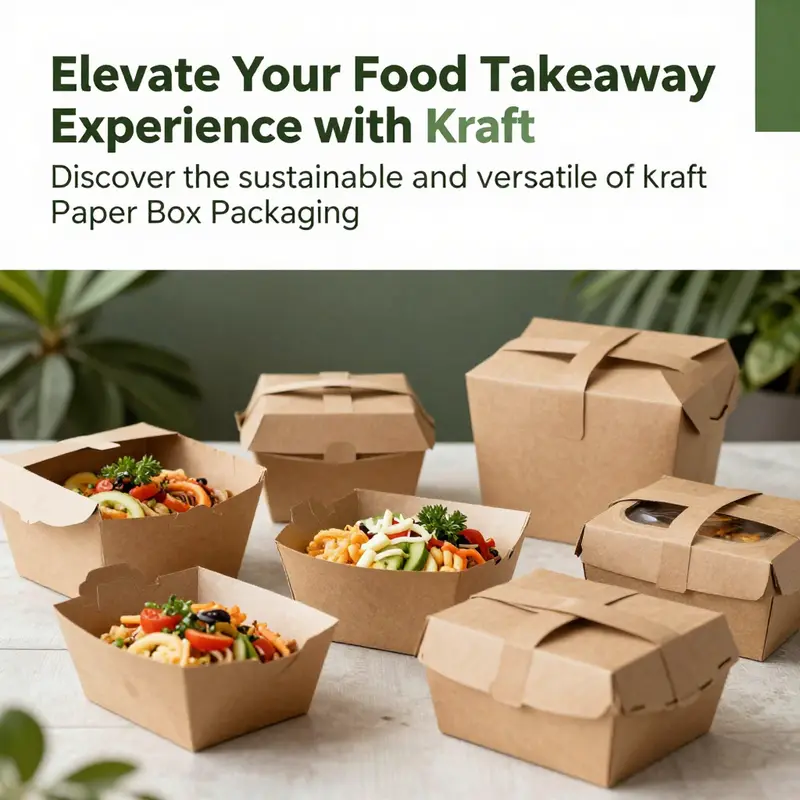
As consumers increasingly prioritize sustainability, kraft paper box packaging becomes a standout option for food takeaway services. This eco-friendly alternative to plastic and foam is not only kind to the planet but also meets the demands of durability and functionality that food providers require. From bubble tea shops and beverage chains to catering services and food trucks, adopting kraft paper boxes can enhance your brand image while addressing ecological concerns. Each chapter will delve into the sustainability benefits, the practical durability, customization opportunities for branding, and economic implications of incorporating kraft paper packaging into your operations.
From Forest to Front Door: The Sustainability Promise of Kraft Paper Box Packaging for Takeaway Food
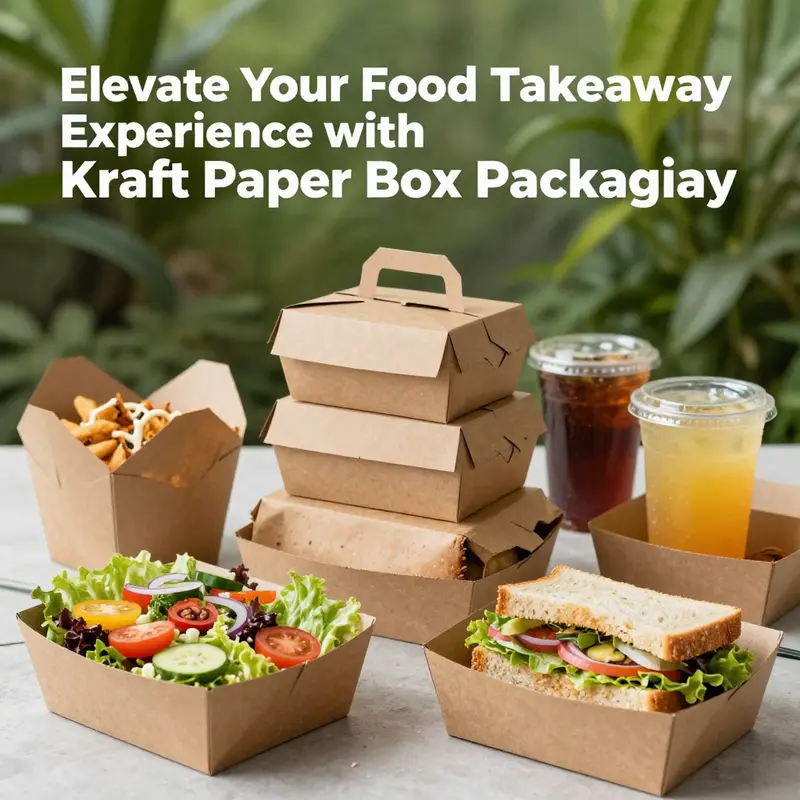
When a customer orders a meal for takeaway, the moment of choice extends beyond taste and price. It also includes a quiet judgment about how the food arrives—the wrapper, the box, the journey from kitchen to doorstep. Kraft paper box packaging has emerged as a leading answer to that expectation, offering a practical blend of performance and principles. The promise of kraft is not only in its strength or its ability to keep foods intact during transit, but in its closer alignment with a broader environmental agenda. This chapter follows the arc of that promise, tracing how a simple, natural material can support a more sustainable approach to food takeaway without compromising the experiences customers expect. The narrative flows from raw material to end-of-life, weaving in the design choices that make kraft packaging a durable, adaptable, and responsible choice for today’s kitchens and delivery fleets.
At the heart of kraft’s sustainability appeal is its biodegradability and compostability. Kraft paper derives from wood pulp and, in its native form, can break down in natural environments with minimal residual impact. This natural decomposition is a counterpoint to plastics that persist for decades or centuries in landfills and waterways. When a kraft box reaches the end of its useful life, it offers a clearer pathway back into the system, whether through home composting streams or municipal recycling programs designed to handle paper products. This reduced persistence matters because it lowers the chance that packaging will linger as litter or contribute to microplastic pollution in soils and waterways. For brands aiming to minimize waste, the ability to return a portion of the product’s life cycle to the earth in a relatively short time frame helps close the loop in practical, everyday terms.
The renewal aspect of kraft is equally important. Kraft paper is sourced from trees, a renewable resource when forests are managed with care. Sustainable forestry practices emphasize replanting, responsible harvest rates, and protection of biodiversity. In a world increasingly attentive to resource security, this renewable basis offers a steadier supply chain compared with reliance on non-renewable materials. The shift toward renewables in packaging design resonates with a growing consumer expectation that brands minimize dependence on fossil fuels. When a restaurant chooses kraft for its takeaway boxes, it is signaling a preference for materials that can be replenished at a rate compatible with long-term ecological balance, rather than materials tied to finite reserves.
Pollution reduction is another facet of kraft’s sustainability story. Compared with many plastics, kraft paper breaks down more readily in natural environments, reducing the long-term buildup of waste in ecosystems. This characteristic matters not only for the urban landscape but for rural areas where litter can travel to rivers and streams. By choosing a packaging option that degrades more easily, the takeaway sector contributes to lower environmental load and fewer persistent residues in the environment. It’s a practical alignment with broader goals to reduce plastic use and slash pollution across communities where meals are prepared, packaged, and delivered.
Production energy is a further differentiator. Kraft paper generally consumes less energy and emits fewer greenhouse gases in its manufacturing process than many conventional plastic packaging materials. This does not mean kraft is “perfect” in every circumstance, but it does offer a meaningful lower-energy path in the life cycle of a takeout container. When businesses compare packaging options, energy intensity becomes a tangible factor that affects not only factory emissions but the overall climate footprint of a brand’s operations. With public policies and consumer expectations tilting toward lower emissions, kraft’s energy profile becomes part of a larger conversation about responsible manufacturing and supply chain stewardship.
Recyclability is the fourth pillar of kraft’s sustainability narrative. Many kraft boxes are designed to be recyclable, turning used packaging back into new paper products rather than languishing in landfills. This recyclability supports a circular economy by reducing the need for virgin fibers and extending the usefulness of existing materials. It’s a practical demonstration that a takeout box can move through more than one life cycle, continually finding new purposes while conserving resources. For operators, recyclability also offers a straightforward route to responsible end-of-life management, which can simplify waste streams and improve compliance with local recycling guidelines. The result is a packaging loop that mirrors the larger environmental ambitions of many cities and regions—less waste, more reuse, and a clearer separation of materials at the end of consumption.
Beyond these general attributes, kraft packaging is designed to deliver durable performance that supports the reliability customers expect from takeout. A robust box that protects its contents from temperature and moisture is essential for foods like soups, stews, and sauces, as well as more solid items such as sandwiches, salads, and even pizza. Kraft boxes achieve this balance through well-considered construction and, when needed, a food-grade lining. Linings such as wax or certain compostable coatings create a barrier against leaks and moisture while still allowing the box to be recycled with other paper products. The combination of strength and protection reduces food waste during transit and enhances the overall customer experience by preventing spills, stains, or soggy textures that can damage a meal’s appeal before it reaches the table.
The design versatility of kraft packaging is another key sustainability advantage. Boxes come in a range of sizes and configurations, including single- and multi-compartment designs, to accommodate different dishes and portion sizes. A delivery system that can adapt to a diverse menu reduces the need for multiple packaging families and minimizes waste from misfit containers. This versatility also supports culinary creativity in takeout operations, enabling chefs and restaurateurs to present meals in an orderly, orderly manner that preserves temperature and presentation. The practicality of foldable structures and secure snap-lock lids further enhances the user experience. Customers can open and close boxes with ease and confidence, which reduces the risk of spills and ensures a tidier transit process from kitchen to customer.
Customization is an important social and environmental consideration as well. Kraft’s capacity for branding through flexo printing means that packages can carry logos, slogans, seasonal messages, or color schemes that reinforce a brand’s values while remaining compatible with sustainable goals. Customization supports consumer recognition and can encourage repeat purchases, reinforcing a cycle in which the packaging itself becomes a trusted signal of quality and responsibility. The ability to tailor packaging visually without sacrificing recyclability or compostability helps brands connect with customers on an emotional level, turning a simple box into a valued communications channel that aligns with environmental commitments. When customers see a familiar brand pattern on a box that they know is responsibly produced, it strengthens trust and fosters a sense of shared stewardship.
A practical implication of this sustainability framework is the alignment between kraft packaging and global sustainability goals. Many consumer markets now expect packaging to minimize plastic use, support recycling streams, and reduce the environmental impact of food service. Kraft boxes directly respond to these expectations by offering a pathway to cut plastic reliance, promote responsible materials, and encourage end-of-life recovery. For businesses pursuing green certifications or sustainability reporting, kraft packaging provides measurable advantages in material choice, recyclability scores, and life-cycle considerations. The net effect is a packaging solution that supports not only immediate operational goals but longer-term commitments to environmental leadership.
To illustrate the practical side of this approach, consider a takeout program that prioritizes eco-conscious choices across its packaging suite. The choice to use kraft boxes is not simply a matter of aesthetics or tradition; it’s a decision that integrates material science, waste management, and consumer expectations into a single, coherent strategy. In practice, this means selecting boxes made from responsibly sourced kraft, evaluating the need for coatings and liners in the context of end-of-life options, and coordinating with local recycling facilities to ensure that boxes are processed correctly. It also means training staff to handle packing efficiently so that food remains secure and customers receive a neat, spill-free product. The aim is to harmonize the speed and convenience of takeout with a packaging system that respects the environment at every stage—from sourcing to disposal.
In this broader frame, the idea of eco-friendliness extends beyond the materials themselves. It includes the entire packaging ecosystem, from suppliers and logistics to in-restaurant practices and consumer usage. A robust supplier network helps ensure that boxes are produced under responsible forestry practices, with transparent supply chains and verifiable sustainability credentials. The most effective programs integrate packaging design with operational workflows: efficient packing techniques, minimal waste, and clear labeling that helps customers recycle properly. For a brand, this means not only choosing a material that aligns with values but also implementing processes that maximize the material’s beneficial life cycle impact. When these elements come together, kraft packaging becomes a practical expression of a brand’s environmental intent rather than a mere compliance measure.
From a consumer perspective, the appeal of kraft packaging lies in its honest simplicity. The natural appearance of kraft, its tactile feel, and the sense of earth-friendly practice it conveys can contribute to a positive perception of the meal and the business behind it. Consumers increasingly judge brands by how they steward their resources, and the visual language of kraft packaging communicates a commitment to responsible material use without requiring elaborate explanations. The packaging becomes part of the storytelling around a meal, reinforcing values such as stewardship, quality, and transparency. In this sense, sustainability is not a separate add-on but an integrated experience that starts with the box and ends with a respectful, thoughtful disposal or reuse.
To ground these ideas in a tangible example, consider how an eco-conscious concept could weave into an everyday product line. A simple integration might involve pairing kraft boxes with a small, plant-based accessory or a leaf-shaped recycling guide printed on the inside of the lid. Such touches reinforce the message of care for the planet while remaining compatible with the box’s recycled and recyclable nature. And because kraft packaging can be customized through straightforward printing methods, brands can continually refresh their messaging in a way that keeps the environmental narrative fresh and credible without compromising recyclability or performance. The result is a packaging system that does not merely contain food but reinforces a broader ethos of responsible consumption and delivery.
In closing this reflection on sustainability, kraft paper box packaging for takeaway demonstrates that practicality and principle can coexist in a single, everyday object. The boxes’ biodegradable and compostable potential, their renewable resource base, their pollution-reducing and energy-efficient production profile, their recyclability, and their durable yet adaptable design all contribute to a compelling case. When brands pair these attributes with smart logistics, careful end-of-life planning, and a clean, informative brand message, they offer customers a way to enjoy meals with less environmental consequence and more peace of mind. The packaging becomes a trusted partner in the dining experience, one that respects the planet while delivering the comfort and convenience that customers expect. For those exploring eco-forward packaging strategies, kraft paper boxes stand as a practical, credible, and increasingly essential option for takeout.
For readers seeking a tangible example of how eco-conscious packaging concepts translate into real-world choices, one can explore related ideas such as plant-inspired packaging variants that demonstrate how nature-informed design can coexist with practicality and branding. Green Soil Lotus product
External resource: for further details on environmental advantages and industry standards of kraft paper packaging, see https://www.grewell.com/.
Tough Yet Trustworthy: How Kraft Paper Boxes Deliver Durability and Practicality for Food Takeaway

When a customer places a takeaway order, the packaging that greets them is more than a simple wrap or a label. It is a guarantee of care, a promise that the meal they chose will arrive in a state close to what was prepared in the kitchen. Kraft paper boxes have moved into that role with increasing authority, not by glamour alone but through a quiet, uncompromising combination of strength and practicality. They are built from thick, fibrous kraft paper whose inherent properties translate into real-world resilience in the chaotic journey from kitchen to doorstep. This is not merely about holding contents; it is about preserving the integrity of the food, maintaining its appeal, and supporting the operational realities of busy takeout environments. The durable nature of kraft paper boxes rests on a simple truth: the thicker, more fibrous structure of the material resists tearing under pressure, even when hands are full and traffic is interrupted by potholes or crowded sidewalks. The fibers, long and robust, work in concert to absorb stresses that could otherwise rip through a weaker container. This translates into fewer box failures during transit, fewer customer complaints, and a more dependable delivery experience overall. In practice, this means boxes that can withstand the occasional drop, the squeeze of a crowded bag, or the weight of a fully loaded meal without giving way to rips or leaks. It is a durability that customers notice as they unpack their meals, discovering that their salad remains neat, their sandwich remains intact, and their hot pizza does not slop through a compromised seam. Beyond tearing resistance, the same fibrous composition endows kraft boxes with puncture resistance. The boxes are not fragile, and they do not buckle at the slightest poke from a stray utensil or the edge of a clattering metal object in a delivery vehicle. In environments where bags rest against other packages, where boxes stack in a rack or on a delivery tray, the punching through of sharp objects is minimized by the sturdy backbone of the paper. This is not about ruggedness for its own sake, but about protecting the food inside from external threats that are common in fast-paced logistics networks. The third pillar of durability is crushing resistance. A successful takeaway box must hold its shape under weight, especially during stacking for efficient storage or during multi-item deliveries. Kraft paper boxes that are carefully engineered with flaps, folds, and reinforced corners maintain their geometry even when laden with dense items like thick sandwiches, bowls with generous portions, or multiple components that must travel together. The result is not only a sturdier box but a more secure overall packaging system. This structural integrity reduces the likelihood of accidental content displacement, which in turn protects both the customer experience and the restaurant’s reputation. Durability is not merely about surviving rough handling; it is about preserving the presentation and the sensory quality of the food. A hot pie or a steaming cup of soup benefits from a container that can maintain its form, keeping the lid aligned and the contents contained, so that the aroma, moisture balance, and temperature are preserved en route to the consumer. When design teams consider durability, they think beyond raw strength to how the box behaves in the real world: how it stacks, how it fares when a courier makes a sudden stop, and how it resists the creeping invasion of moisture and oil that naturally accompanies many takeaway meals. Kraft paper’s natural barrier properties, augmented by modern coatings, contribute to this practical resilience. A typical kraft box might be coated with a food-grade lining, which serves as a shield against leaks and grease while still allowing the box to vent steam and remain comfortable to handle. These barriers are not just about keeping contents inside; they are about maintaining the overall user experience. If a box becomes soggy or weak, it can alter the texture and temperature of the meal, eroding trust and satisfaction. The right balance of barrier properties, strength, and flexibility ensures that the packaging stays functional across a wide range of foods—from soups and salads to hot sandwiches and even dense, heavy items. Functionality flows from durability in more nuanced ways as well. Kraft paper boxes are often designed with the end user in mind, featuring elements that facilitate both packing and consumption. The rigidity that supports stacking also contributes to a neat, orderly pack-out in the kitchen, allowing staff to assemble meals quickly without sacrificing stability. A reliable folding structure and secure closures—such as snap-lock lids or interlocking seams—help keep contents secure during transport while remaining intuitive for customers to open without frustration. This balance between ease of use and secure containment is a critical part of the functionality story. The convenience features extend to visibility and presentation as well. Die-cut windows, commonly integrated into kraft packaging, offer a window into the meal without exposing it to external contaminants. These windows are typically lined with a food-safe film—either a polyethylene-based barrier or a biodegradable cellulose film—that protects the contents while satisfying consumer expectations for food visibility. The trade-off between visibility and barrier protection is carefully managed to preserve the integrity of the food and keep the packaging compliant with safety standards. Even with windows, the basic durability of the box remains intact, because the surrounding carton—unlike a transparent plastic container—does not rely on a fragile plastic shell to convey its message. Instead, the kraft container harnesses a robust exterior that handles handling and stacking with ease, while the inner film shields the meal from moisture and grease, reducing the risk of seepage. The practical implications of this combination become especially clear in high-volume operations. In a bustling kitchen or on a delivery route, kitchens require packaging that is not only strong but repeatable. The consistent performance of kraft boxes—across thousands or tens of thousands of units—translates into predictable operational costs and reliable outcomes. This reliability matters when margins are tight and expectations are high: a single packaging failure can cascade into delays, refunds, or reputational costs that ripple across the business. Kraft paper boxes address this risk by offering a stable platform for throughput. Their strength-to-cost ratio is a key factor in their appeal. When compared with alternatives such as plastic clamshells or laminated cartons, kraft boxes often deliver comparable performance at a lower unit cost, especially when scaled for large orders. This economic efficiency matters for restaurants, cafés, and food trucks that aim to deliver consistency without inflating packaging budgets. The value proposition is reinforced by environmental considerations. Businesses increasingly recognize that durable packaging does not have to be disposable in a negative sense; rather, it can be part of a responsible lifecycle. Kraft paper is derived from wood pulp and fibers that can come from responsibly managed sources. The material is widely recyclable and, in many cases, compostable in appropriate facilities. The durability of kraft boxes aligns with green objectives because their longer service life reduces the need for frequent replacements and lowers waste overall. In addition, the recyclability and potential compostability of kraft packaging support a circular economy, where materials can re-enter production streams rather than accumulate as waste. Yet durability and eco-friendliness are not independent virtues. They are interconnected through design choices and process efficiencies. The resilience of the box reduces damage and spillage, which in turn minimizes waste and the energy consumed in cleaning up or replacing damaged goods. The customization possibilities add another layer of functional value. Even as a choice driven by durability, kraft packaging can be tailored to brand identity and consumer engagement without compromising performance. Flexible flexo printing enables clear, high-contrast branding, logos, and messaging on the outside of the box. This customization is not merely cosmetic; it reinforces consumer perception of quality and care, helping to differentiate a business in a competitive takeout market. The result is a packaging system that marries rugged practicality with brand expression, ensuring that durability is not at odds with marketable appeal. It is also important to consider the end of the packaging lifecycle. Durable does not have to mean permanent. Kraft paper boxes can be designed for efficient recycling, and when they are made with responsibly sourced fibers, their environmental footprint is further mitigated. Businesses can communicate this lifecycle to customers, reinforcing a narrative of stewardship that resonates with a growing segment of environmentally conscious diners. In sum, durability in kraft paper box packaging for food takeaway is a holistic attribute. It encompasses the physical resilience of the carton, the protective barriers that defend contents, the user-friendly functionalities that simplify packing and unboxing, and the broader environmental and economic contexts in which modern takeout operates. The result is a packaging solution that is both reliable in day-to-day use and responsible in its broader impact. The strongest cases for kraft boxes come not from a single feature but from their integration of strength, barrier performance, and thoughtful design. A box that resists tearing when a courier squeezes a bag, that keeps grease from leaking onto a customer’s lap, and that can be printed with distinctive branding while remaining cost-efficient—this is packaging that supports the entire takeout ecosystem. As kitchens continue to optimize operations and as consumers demand packaging they can trust, kraft paper boxes stand out not as a trendy alternative but as a practical mainstay. For a deeper dive into the technical standards and performance metrics behind kraft paper boxes used in food packaging, see the authoritative discussion in Packaging Digest, which analyzes durability and functionality in this context: https://www.packagingdigest.com/food-packaging/kraft-paper-boxes-for-food-takeaway-durability-and-functionality.
Delivery by Design: Customization Opportunities in Kraft Paper Box Packaging for Food Takeaway

Delivery by Design: Customization Opportunities in Kraft Paper Box Packaging for Food Takeaway is more than a slogan. It is a practical philosophy that treats packaging as a strategic touchpoint rather than a disposable shell. In a market where meals travel from kitchen to curbside to home in minutes, the packaging that carries the food is part of the dining experience itself. Kraft paper boxes have long been valued for their sustainability, strength, and cost-effectiveness, but their true potential reveals itself when businesses treat them as manipulable media—papers that can be shaped, printed, layered, and finished to align with brand values, menu demands, and the realities of delivery. The result is a packaging system that does more than hold; it communicates, protects, and rewards customers for choosing a brand that treats its packaging as seriously as its recipes. The conversation around customization in kraft paper box packaging thus threads together three core ideas: identity, performance, and responsibility. Identity means branding that travels with the customer; performance means structure and materials that defend the integrity of food in transit; responsibility means choices that support a circular economy without compromising food safety or consumer convenience. In this light, customization becomes a continuous dialogue among design teams, procurement specialists, kitchen staff, and logistics partners, each contributing a piece of the puzzle to turn a simple box into a reliable ambassador for the business and its values.
Branding on kraft paper boxes is immediately visible, and yet it is more than surface beauty. Printing techniques such as flexo printing enable bold, crisp logos and color palettes that catch the eye from a rider’s glance or a customer’s doorstep. UV coatings can be used judiciously to protect against scuffs and to add a controlled sheen that elevates perceived value. Embossing or debossing introduces a tactile element that invites touch, a subtle cue that differentiates the packaging in a crowded lineup of takeaway options. The balance here is crucial: print quality should harmonize with the box’s weight and stiffness, avoiding print flake or transfer that could undermine food safety standards. The design should stay legible at typical viewing distances and lighting conditions, yet not overwhelm the practical needs of the box, such as lid closure, stackability, and ease of opening. When done well, a kraft box becomes a portable billboard that conveys brand voice with every delivery, amplifying recognition across dozens or hundreds of touchpoints each day. This is not mere branding theater; it is a strategic extension of the restaurant’s menu narrative, reinforcing what the food stands for through color, typography, and texture.
The sizing and shaping of kraft packaging is a practical frontier where customization proves its value again and again. Boxes can be tailored to fit a wide array of dishes—from compact, single-serve meals to larger, family-style combinations—without forcing customers to juggle multiple containers. For sandwiches and burgers, rectangular, boxy profiles maximize space efficiency and minimize wrap waste. For fries or finger foods, specialized fry boxes can accommodate portions while containing grease and heat. The capacity of these boxes—often expressed in milliliters or liters—can span a broad spectrum to accommodate different portion sizes and meal combinations. The advantage of precise sizing is twofold: it reduces material usage, which supports sustainability, and it improves packaging performance by minimizing movement inside the box. When a box is sized to match the food’s geometry, the chance of leaks and spills drops, which translates into fewer customer complaints and fewer driver deliveries to rectify mishaps. In practice, customers gain a more predictable, tidier experience from ordering to eating, and brands earn a reputation for reliability that strengthens loyalty over time.
Structural design enhancements push customization from aesthetics into everyday usefulness. The bottom of the box can be reinforced to bear heavier, greasy meals without collapsing. Foldable contours and interlocking flaps increase rigidity when the box is closed, while still offering straightforward assembly by kitchen staff and uncomplicated opening by customers. Internal dividers and separators keep multiple items neatly arranged within a single package, reducing cross-contamination and providing a cleaner eating experience. For multi-item orders, these features make it possible to deliver hot-and-cold combinations—think a warm main dish alongside a cool dessert or dipping sauces—without the items colliding or leaking. Such design choices have practical implications for delivery efficiency as well. A robust, well-thought-out structure can minimize bag clutter, simplify stacking in delivery totes, and lower the risk of damage during transit. The result is a packaging system that behaves as a dependable partner in the food service workflow, contributing to faster handoffs, happier customers, and fewer returns or complaints.
Finish and material choices further extend the customization toolkit while addressing environmental goals. Kraft paper forms the backbone, but coatings or liners can be selected to balance barrier performance with recyclability. A light interior lining—whether a biobased film or a wax-based coating—can guard against liquid penetration, maintaining product integrity for soups, stews, or oily dishes. Some finishes deliver superior water resistance and oil containment, which is particularly valuable for meats and fried foods. At the same time, the industry is moving toward coating systems that preserve recyclability or compostability, aligning with broader sustainability targets. Designers can experiment with combinations such as film-paper laminates that provide needed barriers while remaining compatible with existing waste streams in many municipalities. The challenge lies in choosing finishes that meet both food-safety requirements and end-of-life expectations, ensuring that the packaging is not only fit for purpose but also easy to recover and reuse in the circular economy. The end result should be a packaging solution that keeps food fresh and intact during transit, supports efficient recycling, and minimizes the environmental footprint of the meal.
Sustainability certifications play a pivotal role in signaling credibility to consumers who are increasingly mindful of where their packaging comes from and how it ends up. When kraft paper boxes originate from responsibly managed forests and carry recognized third-party certification seals, the message is straightforward: the materials used are sourced with attention to biodiversity, soil health, and long-term supply. Certifications help restaurants and packaging suppliers demonstrate governance and accountability beyond simple compliance. In parallel, manufacturers may align with broader regulatory frameworks such as extended producer responsibility programs, which encourage or require end-of-life considerations for packaging. These elements are not merely administrative; they affect how customers perceive a brand’s commitment to the planet. A packaging system built with certified materials and responsible processes resonates with diners who want to feel confident that their daily choices contribute to a healthier environment. It also helps brands navigate a landscape where consumers increasingly link food quality with packaging integrity and ecological stewardship. The cumulative effect is a package that communicates reliability and ethics as clearly as it communicates brand identity.
Customization is not only about what the box looks like, but also about how it supports the dining experience in concrete ways. The right combination of branding, fit, and finish can transform the box into an instrument of brand storytelling. The visual identity—colors, fonts, and logos—should align with the menu’s tone and the restaurant’s values, creating a cohesive experience from screen to table. Seasonal motifs and promotional graphics can be integrated to reflect campaigns and partnerships without sacrificing clarity or readability. Moreover, the packaging can carry practical messaging: reminders about recycling, instructions for proper disposal, or invitations to participate in a loyalty program or a sustainability initiative. The key is balance. A bold design should not come at the expense of readability or functionality. A thoughtful layout preserves essential information such as allergen notices and heating instructions while still delivering aesthetic impact. When done with restraint and intention, customization makes the takeout experience more personal and more trustworthy, a small but meaningful way to reinforce the relationship between brand and customer.
Implementing customization at scale requires a strategic approach to supplier selection, process control, and quality assurance. A dependable supplier network can deliver consistent print quality, reliable coatings, and robust packaging configurations across runs. It is important to request proofs and pilot productions to verify performance before committing to full-scale orders, ensuring that the chosen materials and finishes behave as expected under real-world transport, stacking, and handling conditions. Considerations such as sealing integrity, leak resistance, heat retention, and ease of opening all influence customer satisfaction and operational efficiency. When a business plans for seasonal campaigns or menu changes, the ability to switch designs quickly without sacrificing quality becomes a distinct competitive advantage. A flexible system can accommodate limited-edition motifs during holidays or collaborations with local producers, while preserving standard configurations that support daily operations. The design must be resilient to the realities of high-volume takeout workflows, ensuring that the box remains easy to assemble, easy to store, and easy to recycle.
From a consumer perspective, the value of customization is amplified when it aligns with environmental responsibility. Packaging that clearly communicates its recyclability, compostability, or other end-of-life options helps diners feel confident about their choices. When a brand consistently applies a sustainable design language across all packaging formats, it reinforces a coherent story about responsible sourcing and forward-looking practices. Over time, this coherence strengthens trust and brand loyalty, particularly among customers who assess packaging as a proxy for overall quality and ethics. Customization thus becomes a feedback loop: design decisions influence customer perception, which in turn can prompt demand for greener materials and more transparent disclosures. The packaging then becomes a tangible manifestation of the restaurant’s commitments, reinforcing the menu’s promise with a physical reminder on every takeout bag or box.
In practice, the journey from concept to carton can incorporate external standards and learning networks that broaden what customization can achieve. For example, consumer-grade sustainability signals can be bolstered by partnering with suppliers who pursue FSC-certified fibers, recycled content, and innovations in barrier materials that balance performance with recyclability. The broader takeaway is that customization is not a one-off graphic update; it is an ongoing discipline that integrates branding, product design, supply chain logistics, and environmental stewardship. When design decisions are aligned with these dimensions, kraft paper box packaging can fulfill a dual mission: it protects and promotes the food it carries while reducing waste and supporting responsible forest management. The box becomes a tangible ambassador of a brand’s commitment to delivering enjoyable meals through thoughtful, sustainable packaging.
For further reading on responsible forest management and certification, see the FSC resource at https://www.fsc.org/.
Sustainable Growth in Takeaway Packaging: Market Trends, Consumer Demand, and the Economic Footprint of Kraft Paper Boxes

A new standard is taking shape in the world of food takeaway packaging, one that threads together environmental responsibility, brand storytelling, and practical efficiency. Kraft paper box packaging has emerged not merely as a substitute for plastic or foam containers but as a platform for how modern food businesses articulate values to customers while maintaining reliable performance in delivery and takeout settings. The current market dynamics reflect a broader shift: consumers increasingly favor products and experiences that align with ecological stewardship, regulators push toward reducing single-use plastics, and manufacturers respond with packaging solutions that are both green and functional. In this evolving landscape, kraft paper boxes occupy a central position. They combine the natural aesthetic of unbleached brown paper with the opportunity for customization, enabling brands to convey authenticity and care in every takeout order. The market, as projected by leading industry analyses, is set to grow robustly over the next five years, underpinned by a suite of converging forces that shape both demand and supply. Foremost among these is the growing consumer expectation that packaging should be compostable or recyclable. This expectation is no longer a niche preference but a mainstream criterion that guides choices from independent cafes to large fast-casual networks. As environmental awareness deepens, the perception that packaging is merely a container for food is transforming into a perception of packaging as a promise—about where the meal came from, how it was produced, and what happens to the packaging afterward. Kraft paper boxes meet this promise with a natural look that signals sustainability and a premium, enduring feel that many consumers associate with responsible brands. The brown, earthy tone of kraft is more than color; it is a signal of provenance and intention. This symbolism has a practical side as well. Kraft fiber is inherently compatible with recycling streams and composting cycles, and when responsibly sourced, it reflects a chain of custody that resonates with brands aiming to minimize their environmental footprint. The material’s recyclability and compostability do not exist in isolation; they are part of a lifecycle that begins with sustainable forest management and ends with reduced landfill burden. In markets where policymakers increasingly tax or restrict disposable plastics and where retailers push for greener supply chains, the choice of kraft paper becomes part of a broader strategy to meet regulatory expectations while delivering on consumer values. The economic implications of this shift are multifaceted. For producers and packaging suppliers, the demand for kraft paper boxes translates into growth opportunities rooted in scalable manufacturing, customization capability, and efficient logistics. The ability to tailor sizes, compartments, and printing designs offers a level of flexibility that is particularly valuable in a market that serves diverse menu formats—from compact lunches to multi-component meals that require careful portioning and secure transit. The flexo printing capability that many kraft box manufacturers employ enables brands to imprint logos, slogans, seasonal campaigns, or sustainability messages directly onto the container. This branding dimension turns packaging into a tactile touchpoint, reinforcing brand identity and messaging at a moment when customers are deciding where to order from again. It is not just a matter of aesthetics; the box becomes a portable billboard that carries the brand’s story into the customer’s daily routine. Within this broadercontext, the durability and leak resistance of kraft paper boxes are critical. A common concern with paper-based packaging is whether it can hold hot and oily foods without compromising integrity during transit. The answer lies in thoughtful design and food-grade lining choices. Modern kraft boxes often incorporate coatings, such as food-grade linings, that shield contents from moisture and oils while preserving safety and taste. The choice of lining—whether a plant-based bioplastic layer, wax, or other compliant coatings—must balance performance with environmental considerations. The result is a container that can safely cradle soups, gravies, sauces, and moisture-rich items without leaking or collapsing, while still remaining compatible with recycling streams. This dual emphasis on performance and sustainability is a crucial lever for restaurants and takeout operators, who must meet high customer expectations for reliability and cleanliness while also signaling their commitment to the environment. The market’s trajectory is shaped by both consumer behavior and regulatory pressure. On the consumer side, there is a discernible shift toward packaging that communicates eco-conscious values without sacrificing convenience. The natural appearance of kraft paper aligns with this mindset; it conveys stewardship and simplicity in a world of increasingly complex supply chains. Consumers are drawn to packaging that feels authentic and easy to understand—an impression that kraft reinforces through its minimalism and perceived purity. On the regulatory front, a growing wave of plastic-reduction policies, single-use bans, and extended producer responsibility frameworks is redefining what is acceptable for foodservice packaging. Jurisdictions around the world are moving to discourage non-biodegradable options and to incentivize alternatives that can be recycled or composted at scale. The result is a market where compliance and sustainability can become competitive advantages. Businesses that anticipate these shifts position themselves to benefit from early adoption, improved waste management, and clearer brand storytelling around environmental stewardship. Another economic dimension worth noting is the scalability of kraft paper packaging production. As demand climbs, manufacturers with the capacity to produce a broad spectrum of box sizes, configurations, and compounding options can serve a wide array of clients—from tiny neighborhood eateries to national chains expanding their takeaway channels. The ability to offer multiple compartments, for instance, supports menu structures with sauces, sides, and desserts, each requiring secure separation to maintain quality during transit. The customization economy—where sizes, shapes, plate configurations, and branding are tailored to the customer’s needs—becomes a key driver of value in this space. The economics of this customization are balanced by the relative cost-competitiveness of kraft boxes, particularly when produced at scale. In many markets, kraft packaging remains cost-effective compared to specialty plastics or premium cardboard alternatives, especially when the cost of coatings and printing is efficiently managed. Bulk ordering and standardized production lines yield lower per-unit costs, enabling restaurants and caterers to maintain margins even as menu complexity grows. This practical advantage is complemented by the environmental narrative. When a brand communicates that its packaging is recyclable or compostable, it adds a dimension of responsibility to the customer experience. Consumers respond to this signal not only through immediate packaging choices but also through trust in the brand’s overall sustainability commitments. That trust is reinforced when the packaging functions as intended—delivering hot meals safely, preserving freshness, and resisting leaks across varying transport conditions. The supply chain for kraft paper packaging benefits from global sourcing of fibers and the possibility to tap into regional networks that shorten lead times and reduce transport-related emissions. Regions with robust forestry practices and strong recycling ecosystems can support efficient end-to-end flows—from raw material to finished boxes—while meeting international environmental standards. This geographic flexibility is especially valuable in a global market that includes export demand to North America, Europe, and Asia-Pacific regions. Export dynamics matter because they shape how quickly new packaging standards and consumer expectations disseminate across borders. When a nation or region begins to regulate or discourage single-use plastics, neighboring markets and trading partners often follow suit, creating a ripple effect that accelerates adoption. The result is a virtuous cycle: higher demand in mature markets encourages investment in more efficient manufacturing, which in turn improves availability and lowers unit costs for new entrants, enabling smaller operators to access high-quality packaging that aligns with sustainability goals. The overall economic implication of kraft paper box packaging thus extends beyond tilt toward greener materials. It encompasses job creation in manufacturing and printing, investment in production infrastructure, and the development of supply networks that can support ramping production in response to demand spikes—such as seasonal promotions or menu expansions. The packaging industry’s embrace of kraft paper boxes also contributes to a broader shift away from fossil-based plastics toward renewable and recycled resources. This transition, while incremental, reduces the carbon footprint of the food delivery ecosystem and aligns with corporate sustainability targets, investor expectations, and consumer demands. It also introduces a layer of resilience to the supply chain. Paper-based packaging can help diversify material risk when economies of scale or supply disruptions affect other packaging formats. In this sense, kraft paper packaging functions not only as a consumer-facing sustainability choice but also as a strategic hedging instrument for foodservice operators seeking stable, scalable packaging solutions that can grow with their brands. The market’s outlook carries an implicit invitation to stakeholders across the value chain. For producers, the mandate is clear: invest in production agility, extend customization capabilities, and ensure rigorous quality control to meet evolving regulatory and consumer expectations. For distributors and suppliers, the imperative is to optimize logistics, align with responsible sourcing practices, and maintain transparent communication about end-of-life options for the packaging. For retailers and brands, the opportunity lies in translating sustainability into tangible customer value—through clear labeling, honest environmental claims, and design that reinforces brand storytelling without compromising usability. Taken together, these threads sketch a landscape in which kraft paper box packaging is more than a packaging option. It is a strategic instrument that enables brands to articulate a compelling, credible environmental narrative while delivering reliable, cost-effective performance in the demanding context of food takeaway. The research signals that this is a growth market with durable economic fundamentals: rising demand for biodegradable and recyclable materials, a regulatory climate that increasingly penalizes non-sustainable packaging, and a consumer base that rewards brands for responsible practices and transparent sustainability commitments. In practice, this means a continued rise in customized kraft packaging solutions—boxes that fit a spectrum of menu items, from compact salads to soups, sandwiches, and multi-component meals—paired with printing and branding that reinforce corporate values. It also means supply chains and manufacturers that can scale operations while maintaining quality and controlling costs. The alignment of these factors will determine how quickly takeout packaging can transition from being a mere utility to becoming an integral part of a brand’s sustainable identity. As businesses observe the trajectory of the market, they will likely make packaging decisions that reflect a balance between environmental stewardship, consumer expectations, and economic viability. The opportunity is not merely to replace plastic with paper but to embed packaging within a sustainable, brand-forward strategy that enhances the customer experience, supports responsible production, and contributes to a healthier ecosystem for the planet. External references that explore these market dynamics provide further context for practitioners seeking to understand the breadth of this trend. For a comprehensive market forecast and analysis, see the external resource: https://www.marketresearch.com/industry-analysis/paper-packaging-box-food-market-31879/
Final thoughts
Kraft paper box packaging is more than just a trend; it represents a significant shift towards sustainable practices within the food service industry. As customer awareness grows, so does the importance of using packaging solutions that align with environmental values. By integrating durable, customizable, and eco-friendly kraft paper boxes into your takeaway offerings, you can meet market demands while enhancing your brand’s reputation. Make the switch today to not only appease the environmentally conscious consumer but to also future-proof your business in a rapidly evolving market.