
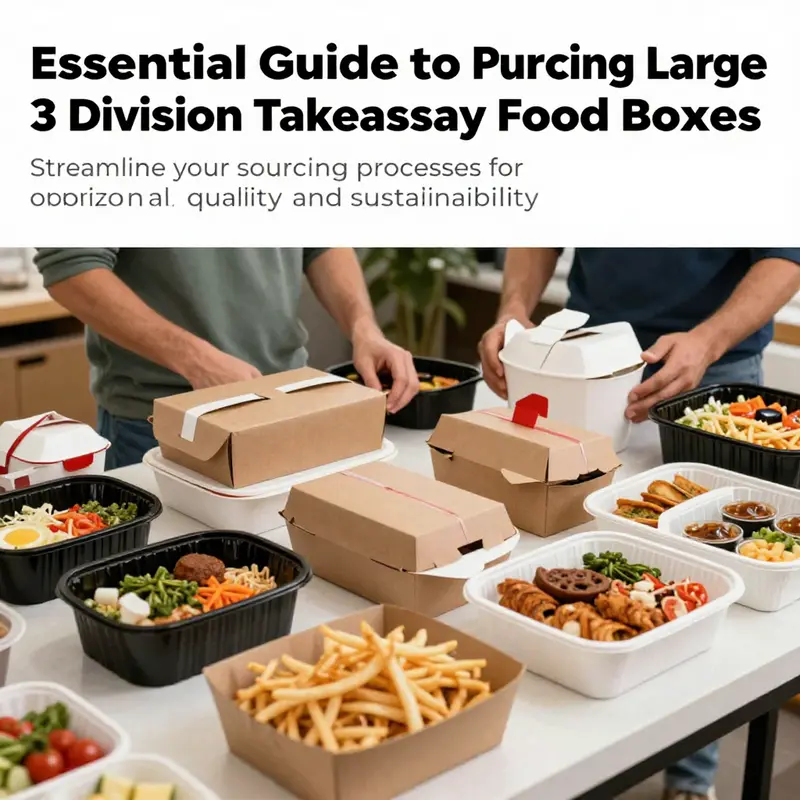
As the demand for takeaway food options soars, especially in the restaurant, catering, and beverage sectors, the importance of reliable and practical packaging becomes evident. Large 3-division takeaway food boxes offer an efficient solution for organizing and serving meals, and their procurement should be approached strategically. This guide will delve into crucial factors influencing sourcing decisions, including the geographic manufacturing hubs that shape purchasing dynamics, material considerations for sustainability and functionality, critical supplier criteria ensuring quality and compliance, and insights into pricing structures that will help businesses optimize their budgets. By navigating these components, bubble tea shops, food trucks, event planners, and corporate teams can make informed purchasing decisions in this essential area of food service.
Hubs, Materials, and the Pace of the Plate: How China’s Manufacturing Clusters Shape Large 3-Compartment Takeaway Box Purchases
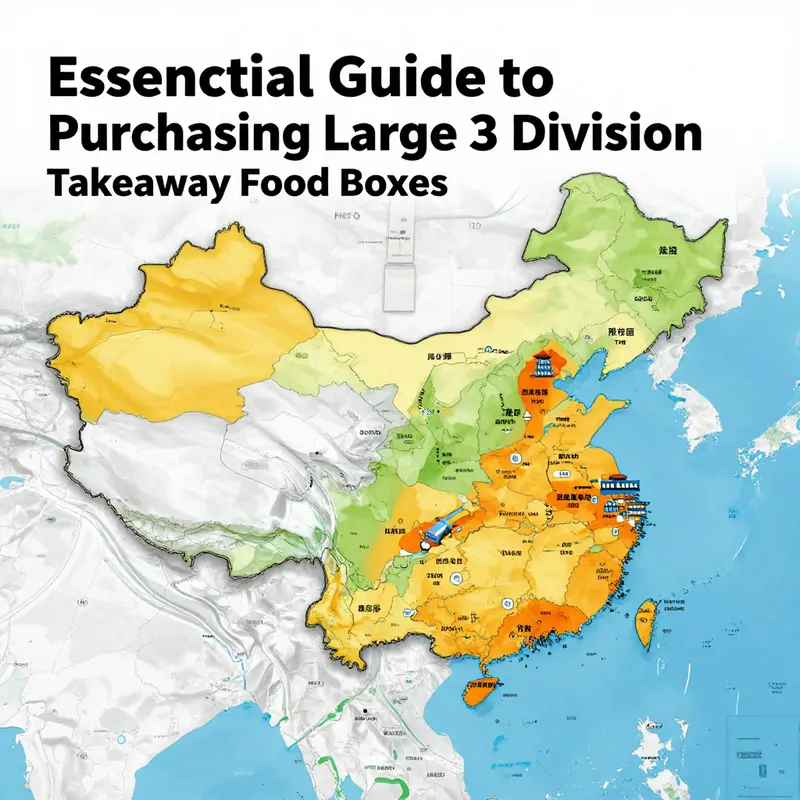
The demand for large 3-compartment takeaway boxes is not simply a decision about a container; it is a decision about aligning a supplier ecosystem with the tempo of a business. When a food service operation scales, packaging choices ripple through costs, inventory planning, and customer experience. The hub based model helps buyers understand where capability, reliability, and efficiency live. This chapter maps the clusters that drive production in China and explains how proximity, tooling, and green material capabilities translate into practical procurement choices for bulk orders. It also frames the tradeoffs between speed, price, and sustainability and offers a decision framework that helps buyers build a resilient, scalable packaging program. The aim is not to prescribe a single best factory but to help buyers design a multi hub sourcing approach that preserves quality and continuity at scale.
Guangdong Province stands as a speed engine. In cities like Shenzhen, Guangzhou, and Dongguan, advanced thermoforming, integrated supply chains, and rapid export logistics enable rapid iteration. Brands can compress design to delivery cadences, test new lid configurations, and translate branding into packaging quickly. This matters when product lines expand or when promotional packaging requires customization on tight cycles. In addition, Guangdongs ecosystem supports in house printing, mold capability, and often near source raw materials that cut lead times and reduce risk of design rework.
Proximity to major ports in Guangdong translates into meaningful logistics advantages. Transportation costs do not vanish, but they can be meaningfully reduced when the supply chain is less burdened by long inland transit phases. The region notes with a strong compliance ecosystem and a track record of green materials adoption, which enables faster audits for buyers operating across Western markets. For buyers who demand eco conscious options, Guangdong shores up access to green materials and process know how, allowing integration of bagasse and PLA into production while maintaining performance under typical hot and cold storage.
Shandong Province serves as a counterpoint to speed with an emphasis on scale and cost efficiency. Qingdao and Laizhou host facilities optimized for high volume output, often with robotic thermoforming and integrated lines that deliver tight cycle times. The cost advantages are real: lower labor costs, competitive material sourcing, and the capacity to run large batches with consistent yield. In procurement terms, total landed cost and long term supply stability become primary drivers, and Shandong offers a framework for bulk production that supports multi month contracts and predictable replenishment. The material mix here increasingly includes bagasse and PLA options that balance price with sustainability and regulatory alignment.
The Zhejiang and Jiangsu corridors add complementary capabilities to the sourcing mosaic. Zhejiang is gaining traction for green materials and bio based processes, enabling brands to pilot compostable solutions without sacrificing barrier performance. Jiangsu, with examples in Suzhou and Jiangyin, is renowned for precision engineering and seamless integration with e commerce logistics. The ability to synchronize outputs with online demand makes Jiangsu attractive for scalable packaging needs where data driven production and fast changeovers are routine. In essence, Zhejiang contributes environmental technology and material innovation, while Jiangsu provides reliability and process control for high frequency replenishment.
Anhui Province, though still developing relative to its southern neighbors, is an emerging hub worth watching. Lower operating costs, improving supplier maturity, and growing green technology capability position Anhui as a potential site for future expansion. The trajectory suggests a two pronged value for buyers: a potential incremental cost advantage as the supplier base matures, and geographic diversification to bolster resilience in a multi hub sourcing strategy. When combined with the more established hubs, Anhui can help create a balanced network that facilitates risk hedging and long term supply stability.
Material choices thread through these regional differences and shape how buyers evaluate value. Polypropylene, or PP, remains a workhorse material for its durability and heat tolerance. Bagasse, the sugar cane fiber composite, offers a strong sustainability proposition with FDA style compliance. PLA, a compostable plastic from renewable resources, occupies a premium niche for brands pursuing a closed loop narrative, though it requires careful processing conditions to avoid brittleness in certain temperatures. Aluminum foil laminates provide superior heat retention and moisture barrier for premium segments.
These materials interact with hub capabilities. Guangdong enables rapid customization within an integrated supply chain, including options such as windowed or vented lids that can accelerate market testing. Shandong combines high volume production with efficient material usage to achieve favorable unit costs at scale. Zhejiang favors green technology paths that ease pilot programs for compostable options while preserving performance. Jiangsu offers precision aligned with fast online fulfillment, translating design changes into measurable improvements in delivery speed and shelf life. Across hubs, certifications such as FDA, LFGB, BRCGS Packaging, and ISO 22000 anchor expectations for food safety and process discipline.
Practically, buyers should start with a disciplined framework that distinguishes direct manufacturers from trading intermediaries. Direct manufacturers with sizable facilities and dedicated quality teams tend to offer clearer traceability, faster communication, and favorable long term pricing. Certifications are more than paperwork; they signal robust quality control from incoming materials to finished products. Technical capabilities such as robotic thermoforming, in house mold development, and custom lid options provide functional advantages that can differentiate a brand. For large scale campaigns that require multi hub coordination, terms and conditions such as FOB, CIF, and DDP become important for planning and risk management.
Pricing and minimum order quantities add another layer of complexity. A typical bagasse 3 compartment design can be priced to reward very large volumes, while reusable PP options offer a broader spectrum of price points depending on size and features. MOQs commonly range from several thousand to tens of thousands of units for standard configurations, with higher commitments justified by tooling and design customization. These figures are the economics of scale and reflect the balance between upfront tooling investment and ongoing production amortization.
In practical terms, the hub based map supports a resilient procurement strategy. It is common to anchor with Guangdong for rapid prototyping and small scale pilots, shift a major share of steady state production to Shandong to capitalize on volume efficiencies, and reserve Zhejiang or Jiangsu for sustainability initiatives and e commerce aligned packaging. A diversified, multi hub program reduces single point failure risk, enables capacity reallocation during demand surges, and creates room for innovation through staged testing of new materials or lid designs.
The result is a sourcing architecture that mirrors the complexity of modern food service operations. It clarifies where to invest in capabilities, how materials align with brand promises, and how to structure supplier relationships to sustain quality and compliance over time. The hub based model is not merely a backdrop; it is a central driver of competitive advantage in bulk packaging procurement.
For readers seeking deeper decision support, a practical guide to supplier assessments tailored to 3-compartment takeaway boxes can be found in external resources.
Material Alchemy in Large 3-Compartment Takeaway Boxes: Balancing Durability, Sustainability, and Scale

Material is not merely a component in the construction of large 3-compartment takeaway boxes; it is the silent navigator of quality, performance, and brand integrity through the full delivery journey. In the intricate equation of large-volume procurement, the chosen material dictates how well a box protects its contents, how it resists the rigors of transit, and how a company aligns with environmental commitments. The decision ripples across the supply chain—from raw material sourcing in major Chinese hubs to the final moments of delivery at a customer’s doorstep. This chapter follows that thread, tracing how material choices influence not only the practicalities of use but also the strategic posture of a brand that aims to scale without surrendering quality or responsibility. The landscape is shaped by a spectrum of options—paperboard, plastics such as PP and PET, biodegradable and compostable alternatives like PLA and bagasse, and even aluminum foil laminates—and each option carries a distinct blend of advantages, trade-offs, and operational considerations. In practice, the selection is not a mere preference; it is a material strategy that must harmonize with intended menu formats, delivery timeframes, regional disposal infrastructures, and the regulatory expectations of multiple markets.
The most immediate decision revolves around barrier performance. A box must keep moisture at bay and control oil seepage from sauces, while also restraining odors that can transfer between meals or mask the product’s appeal. Paperboard, when paired with moisture-resistant coatings such as a suitable PLA layer, can deliver the eco-cred with recyclability and compostability in the right systems. It shines for dry items and lightly sauced formats, where the coating’s integrity prevents sogginess and maintains a crisp presentation. Yet even the best coating cannot make cardboard wholly immune to long-haul journeys in inclement weather, or to repeated re-heating cycles in some consumer ecosystems. For those scenarios, barrier systems embedded in a paperboard construct—or a combined material stack—offer a viable route, especially in regions where sustainability goals are a central business driver.
Plastic options, notably polypropylene (PP) and polyethylene terephthalate (PET), bring a well-established suite of barrier properties. They resist moisture and oil effectively, preserve contents across a wide temperature range, and are compatible with microwave or freezer use when designed for such applications. The transparency of PET, in particular, is a powerful marketing attribute that allows customers to view the product’s color and texture, leveraging appetite appeal. PP provides a robust, often cost-efficient alternative with mechanical resilience that suits high-volume packaging lines. The trade-off, however, is environmental responsibility. Plastics complicate end-of-life disposal, and while recycling streams exist, the rate of long-term recyclability hinges on local infrastructure, consumer behavior, and the availability of clear, consistent sorting. In fast-moving delivery ecosystems, the decision to use PP or PET frequently becomes a balancing act: protect the food and the brand’s image while acknowledging the evolving expectations around plastic reduction and circularity.
Biodegradable and compostable materials offer another axis for decision-making. PLA, derived from renewable resources, and bagasse—the sugarcane fiber byproduct—promise a closer alignment with sustainability narratives. PLA is increasingly positioned as a premium option for brands seeking to communicate environmental stewardship without sacrificing performance, but it requires careful formulation to ensure heat resistance and barrier properties match consumer needs. Bagasse has a natural strength-to-weight ratio that lends itself to sturdy, rigid boxes, with compostability under industrial conditions becoming a compelling incentive for brands aiming to close the loop on single-use packaging. Still, these materials introduce considerations around industrial composting availability, cost differentials, and the potential need for design adaptations to achieve moisture and temperature resilience on par with conventional plastics. The sustainability calculus is nuanced: a box may be compostable in theory, yet if industrial facilities are sparse in key markets or consumer behavior mismatches, the practical outcomes may fall short of intended environmental benefits.
Where durability and heat retention matter most—especially for meals that travel in fluctuating climates or require a bit of heat integrity—the aluminum foil laminate remains a strategic option. This class of material is a high-performance barrier, offering superior moisture sealing and temperature retention. It is typically deployed in higher-end meal kits or formats where premium presentation and extended heat stability justify the cost. The trade-off is rigidity, weight, and end-of-life complexity, which can complicate recycling streams unless integrated with robust waste-management programs. Each material choice—paperboard with coatings, PP, PLA, bagasse, or aluminum laminates—unfolds within a broader design philosophy that weighs how much of the box’s journey is defined by its mechanical performance versus its sustainability credentials.
The global supply chain context intensifies the importance of material choice. In China, the manufacturing landscape is not merely about raw materials; it is about an integrated ecosystem that aligns material science with production efficiency and regulatory compliance. Guangdong Province, with hubs in Shenzhen, Guangzhou, and Dongguan, stands as a center of packaging innovation and high-volume output. The proximity to major ports like Shenzhen Yantian and Guangzhou Nansha supports rapid shipping to North America, Europe, and Southeast Asia, enabling the fast-turnaround cycles essential for large 3-compartment boxes. In Guangdong, advanced thermoforming lines, in-house printing capabilities, and a culture of process optimization underwrite both speed and customization. Compliance with global standards, including FDA, LFGB, BRCGS Packaging, and ISO 22000, is embedded in the operating DNA of many factories here, reflecting the region’s emphasis on quality, traceability, and consistent safety. The efficiencies available in Guangdong are especially critical when a retailer or brand seeks to align material choices with aggressive launch timelines, a factor that often determines whether a project scales successfully or stalls at pilot stage.
Shandong Province complements that picture with a different value proposition. Qingdao and Laizhou host facilities that prize price competitiveness and volume. Labor costs are relatively lower, and there is robust automation, including robotic thermoforming lines that accelerate throughput without sacrificing precision. Material options here frequently emphasize cost-efficient production of biodegradable materials like bagasse, with strong capabilities to deliver large quantities while maintaining compliance with international standards. For buyers seeking bulk procurement at scale, Shandong offers a compelling mix of predictable unit costs, proven large-order execution, and the ability to integrate bio-based materials into formats that still satisfy essential performance metrics. Zhejiang and Jiangsu, meanwhile, bring another layer of sophistication: Zhejiang is rapidly advancing in biodegradable materials and green innovation to meet Western environmental regulations, while Jiangsu, especially around Suzhou and Jiangyin, is recognized for precision engineering and seamless integration with e-commerce logistics. This confluence supports a tech-forward, scalable packaging approach that can accommodate evolving consumer preferences, especially for brands that hope to maintain a strong ecological narrative without sacrificing reliability or speed. Anhui Province, though emerging, adds a cost-sensitive dimension to the spectrum, with growing supplier maturity and examples of green technology investments that hint at future trajectories for more balanced pricing and sustainable options.
For procurement professionals, the material decision is rarely a standalone choice; it is a lever that interacts with all aspects of supply, from mold design to finished goods logistics. The capacity to produce at scale—often in excess of one million units—depends not only on the material’s intrinsic properties but also on process compatibility with high-throughput lines, automated inspection, and integrated packaging workflows. When selecting among materials, confidence in supplier capabilities becomes paramount. Direct manufacturers with sizable footprints—ideally more than 10,000 square meters and a workforce exceeding a hundred employees—tend to offer more transparent quality control and more favorable pricing than trading intermediaries. The clarity of the factory footprint also translates into more reliable lead times, clearer change-control processes, and more robust after-sales support, all of which matter deeply when a retailer’s shelf availability hinges on a specific box design.
Compliance and certifications play a discrete yet persistent role in material decisions. International food safety standards—FDA in the United States, LFGB in Germany, BRCGS Packaging, and ISO 22000—are not merely checkboxes; they are the minimum assurances that a box can safely contact food and withstand the rigors of distribution. Suppliers that can demonstrate end-to-end traceability, from raw material sourcing through final packaging, tend to deliver more consistent performance and fewer regulatory surprises. This is particularly salient for materials like PLA and bagasse, where consumer expectations for compostability must be reconciled with the realities of local waste-management ecosystems. From a cost and scalability perspective, biodegradable materials may carry a premium, but they also unlock opportunities to meet sustainability goals that resonate with customers and regulators alike. The economics of large-scale procurement must therefore weigh not only per-unit price but also the cost of non-compliance, waste, and reputational risk.
The procurement equation grows more nuanced when the material’s performance in real-world delivery is considered. A box must survive hours in transit, endure sudden temperature changes, and resist leakage when sauces or soups travel with stews and gravies. Paperboard systems, when correctly coated, can meet these demands with a lighter environmental footprint, especially in markets that prioritize recyclability or compostability. PP and PET offer durable, temperature-tolerant options when leakage control and ease of transport are paramount, though the long-term environmental footprint must be weighed. Biodegradable options like PLA and bagasse provide alignment with sustainability goals, but their performance envelope requires careful design and, in some cases, alternative end-of-life pathways to unlock the promised environmental benefits. Aluminum laminates excel in barrier performance but require a more deliberate waste-management approach to justify their higher material cost and end-of-life complexity. With these choices, the role of design becomes central: how the lid, vents, windows, and closure mechanisms are integrated with the chosen material to deliver a cohesive product that meets both consumer expectations and operational realities.
From the supply chain perspective, the economics of material selection are inseparable from the production and logistics architecture that supports large-scale orders. In the Chinese manufacturing landscape, a vertically integrated ecosystem can dramatically shorten lead times and improve quality control. The ability to source raw materials, form, print, and finalize packaging within a connected network reduces the risk of misalignment between the material and the process, which is especially valuable when orders surpass the million-unit threshold. Cost considerations cannot be ignored. For example, bagasse 3-compartment boxes can be priced around $0.108 per unit for orders of 1,000,000 or more pieces as of January 2026, a figure that reflects both material costs and the efficiencies achieved through high-volume production. Reusable PP boxes offer a broad price spectrum—from approximately $0.09 to $12.30 per unit depending on size and features such as integrated cutlery or customized lids—illustrating how customization and functional design can shift the unit economics even within a single material family. MOQs for standard designs are typically between 5,000 and 50,000 units, but this range can shift with advanced customization, color matching, or specific regulatory requirements. For brands pursuing sustainability, the cost delta of biodegradable materials can be offset by the marketing value of a green proposition and by long-term savings in waste management, particularly when paired with a supplier who can ensure reliable on-time delivery, robust color matching, and consistent material performance.
In practice, the material decision is most effective when anchored in a clear understanding of the product’s delivery journey and the customer experience it shapes. It begins with a precise definition of the meal formats that will be carried and ends with the customer’s impression of reliability and responsibility. A paperboard option, with an appropriate moisture barrier, can deliver a credible eco-story without compromising dining quality, if paired with a design that minimizes sauce-related sogginess and supports a stable flat footprint within a courier bag. A PP solution, carefully specified for heat tolerance and stacking efficiency, can optimize both on-shelf appeal and post-delivery performance, while also offering clearer pathways to recycling where feasible. PLA or bagasse-based systems make a strong sustainability statement, but require careful planning about supplier capabilities, regional waste infrastructure, and the potential need for customer education about disposal. Aluminum laminates may be the best fit for premium offerings that demand superior heat retention and a high-end look, provided the supplier can demonstrate end-to-end quality control and a viable recycling or recovery path. The underlying thread is that no single material is universally optimal; each choice must be aligned with the brand’s promises, the menu’s practical realities, and the logistics network that moves meals from kitchen to doorstep.
Ultimately, the most durable, scalable, and responsible solution emerges when material selection is treated as a strategic lever rather than a cosmetic layer. The strongest outcomes arise when brands partner with verified direct manufacturers who can provide a transparent factory footprint, rigorous certifications, and a demonstrated capacity to handle large orders in a predictable, well-supported manner. This approach yields a vertically integrated supply chain where raw materials, forming, printing, and logistics are harmonized into a single, dependable cadence. Such alignment lowers the risk of delays, improves quality consistency, and enhances the ability to iterate on design and sustainability goals as market expectations evolve. The resulting boxes are not merely containers; they become integral components of a brand’s promise to customers: meals that arrive intact, appetizing, and aligned with a future-facing environmental ethic.
For those navigating this landscape, an essential step is to translate material performance into measurable procurement criteria. Establish target barrier properties, moisture tolerance, and heat retention benchmarks. Specify compatibility with the intended food types—hot, cold, dry, or wet—and the environmental goals that matter to your customer base. Map the supply chain around the chosen material, identifying the hubs most capable of delivering scale, quality, and compliance. In China, this means weighing Guangdong’s speed and innovation against Shandong’s cost discipline, while leveraging Zhejiang and Jiangsu for green materials and precise engineering, with Anhui offering potential cost advantages as supplier maturity grows. This integrated approach helps ensure that as orders scale, the boxes continue to perform, the brand’s values stay consistent, and the logistics engine remains resilient.
External resource: https://www.china-packing.com/3-compartment-takeaway-food-boxes-with-window-supplier-guide-for-b2b-buyers/
Beyond Price: How to Select Suppliers for Large 3-Compartment Takeaway Boxes

When a business moves from small orders to large-scale procurement of three-compartment takeaway boxes, the calculus shifts. Cost per unit remains important, but it is no longer the sole determinant. For buyers aiming to protect brand integrity, ensure regulatory compliance across markets, and build a resilient supply chain, supplier selection becomes a strategic discipline. The landscape is dominated by a handful of manufacturing ecosystems that can consistently deliver on scale, time, and quality. In China, two regional clusters stand out for large-volume box production: the southern belt around Guangdong and the eastern corridor of Shandong. Each corridor brings different strengths, yet both share a common language of efficiency, rigorous standards, and a capability to align manufacturing outputs with evolving consumer expectations around sustainability and performance. Understanding how to evaluate suppliers through a disciplined, evidence-based lens will save time, reduce risk, and unlock dependable delivery cycles that keep menus shifting smoothly from kitchen to customer. The most reliable buyers adopt a holistic approach, one that looks beyond the price tag to the full spectrum of capabilities that a supplier brings to bear across the life of a packaging program. This approach starts with clear criteria, translates those criteria into actionable due diligence, and culminates in a relationship framework built on trust, transparency, and measurable outcomes. In practice, this means weighing compliance, capacity, delivery reliability, sustainability, and customization capabilities as an integrated whole rather than as separate checkboxes. It also means recognizing how regional advantages in China can influence lead times, cost structure, and risk exposure, and then tailoring supplier selection to match the strategic objectives of a given sourcing initiative.
Compliance forms the backbone of any rational supplier assessment. The global food packaging market is governed by a mosaic of standards designed to protect consumer health and ensure product integrity across borders. Among these, ISO 22000 stands as a comprehensive framework for food safety management systems. It signals that a supplier has established robust hazard analysis and critical control point (HACCP) practices, documented procedures, and a culture of continual improvement. BRCGS Packaging adds another layer, emphasizing packaging quality, process control, and traceability—elements that matter when a three-compartment box will journey through multiple hands before reaching a consumer. In Europe, LFGB certification provides additional assurance of safety for food contact materials; in North America, FDA alignment in practice is essential for import and market acceptance. In the Guangdong and Shandong corridors that dominate large-volume production, many factories have built their capabilities around these standards. They routinely maintain ISO 22000 and BRCGS Packaging certifications, while their processes are designed to meet LFGB expectations for materials that contact food. The effectiveness of these certifications is amplified when the supplier can demonstrate an unbroken record of compliance across thousands or millions of units. For procurement teams, this means insisting on verifiable certifications, supplemented by third-party audit reports, internal quality records, and a clear, documented corrective action process whenever non-conformances arise. Regulatory alignment is not just about ticking boxes. It underpins product safety, facilitates smoother cross-border logistics, and reduces the risk of costly recalls or reputational damage. The diligence should also extend to the material portfolio and the supplier’s own sourcing ethics. As sustainability becomes a driver of choice for many brands, knowing exactly what is in a package and where it comes from matters as much as the packaging’s performance. Bagasse and PLA are frequently cited as eco-friendly options, with compostable or renewable origins. But the sustainability story must be verifiable: life-cycle analyses, end-of-life credentials, and credible data on compostability or recyclability should accompany any claims. In a mature supply chain, you will see suppliers offering detailed environmental data sheets, third-party certifications for compostability, and commitments to reduce carbon footprints across production, logistics, and packaging design. The Guangdong region, in particular, has evolved into a hub for green packaging innovations, driven by both regulatory pressures in Western markets and a rising demand for sustainable branding among foodservice operators. Shandong contributes a complementary dimension with its focus on high-volume output and cost competitiveness, including automation that reduces labor risks and helps stabilize pricing without compromising compliance. beta testing new materials, such as bagasse or PLA, often starts here, before expanding to more ambitious adaptations in other hubs. The upshot is that regional capability, when thoughtfully matched to project requirements, becomes a meaningful lever on total cost of ownership rather than merely a line item on an append-only price sheet.
Capacity and scalability are the next critical axis in supplier evaluation. The best suppliers are not merely capable of producing large quantities; they are designed to scale quickly in response to forecast updates and demand shifts. In Guangdong, the footprint of facilities—often housing tens of thousands of square meters of production space—translates into staggering throughput. Factories here can manage multi-million-unit programs and are experienced with complex staging, warehousing, and export logistics that align with the needs of international foodservice distributors and global chain accounts. The reality, however, is that high capacity comes with a risk of longer lead times if capacity is saturated. The reliable antidote is to align production calendars with accurate demand signals and to maintain flexible production lines that can reconfigure from one lid style to another or switch between materials with minimal downtime. Shandong factories compensate with ultra-competitive pricing and a relentless focus on automation. Robotic thermoforming lines, automated inspection, and standardized processes contribute to lower unit costs even as volumes climb. An order of 1 million units or more is not unusual in these settings, and MOQs for standard designs can start in the tens of thousands, with room for negotiation based on material selection and customization. The lesson for buyers is straightforward: when intent is to secure stable supply for a national or regional rollout, you want a supplier that can meet a high-volume demand without sacrificing precision. This requires not only scale but also a disciplined production management approach, including capacity planning, preventive maintenance, and real-time production visibility. Experienced suppliers disclose their production calendars, queue times, and any potential bottlenecks, so buyers can plan tightly and avoid last-minute surprises.
Delivery reliability and logistics are the third pillar in the supplier assessment. Proximity to export hubs matters more than many buyers realize. Guangdong factories benefit from close access to major ports such as those in Shenzhen and Guangzhou, enabling faster shipment cycles and the possibility of shorter lead times. Proximity translates into more frequent departures, reduced transit risk, and, in some scenarios, lower freight costs. The logistical advantage is not solely about distance. It also encompasses the sophistication of a supplier’s logistics substructure: warehouse management, order batching, packaging integrity during transit, and robust documentation for international shipments. A supplier with strong export experience will provide clear terms—FOB, CIF, or DDP—along with dependable transit times and a proven track record of on-time delivery for large orders. This is essential when a pack-out schedule must align with a retail partner’s promotional calendar or a restaurant group’s new-store onboarding. The flip side to these strengths is the risk of disruption from port congestion, customs delays, or supply chain shocks. A resilient supplier program anticipates these risks with multiple contingency pathways. They may hold dual-sourcing arrangements for critical materials, maintain buffer stock of the most labor- or material-intensive components, and implement vendor-managed inventory concepts where appropriate. The most successful sourcing programs blend supplier reliability with the buyer’s own logistics plan, creating a tightly integrated ecosystem that reduces risk and leaves little room for misalignment between kitchen production and consumer delivery channels.
Sustainability and material quality have moved from a nice-to-have to a core evaluation criterion for large-scale packaging. In today’s market, packaging suppliers are measured not only by the safety and performance of their boxes but also by their ability to help brands communicate a sustainability story that resonates with consumers and regulators alike. Bagasse and PLA often headline these conversations as renewable or compostable options. But to translate promise into practice, buyers must demand transparency. They require detailed product data sheets, third-party compostability certificates where applicable, and evidence of compliance with relevant standards in each target market. In Guangdong, the push toward green solutions is both pragmatic and aspirational. Manufacturers in this region have established processes to sample and test new bio-based materials, measure performance under heat and moisture exposure, and validate user-facing claims with independent testing. An increasingly common pattern is to couple material choice with packaging design that minimizes resource use, reduces weight, and optimizes for efficient stacking and transit. In Shandong, sustainability efforts are often embedded in the factory operation itself—automation lowers waste, energy management programs reduce consumption, and recycled content is increasingly integrated into liner or filler components. For brands choosing to pursue premium positioning, PLA-based solutions offer a path to communicate higher standards. Yet, the supplier’s sustainability claim must be backed by credible data and credible certifications. The question for procurement leaders is this: how does the supplier verify and quantify the environmental benefits of their materials, and how do those measures align with your brand’s environmental commitments and the regulatory expectations of your markets? The answer lies in a transparent data package, external certifications, and a willingness to adapt packaging specifications to meet evolving standards without sacrificing function.
Customization and technical capabilities complete the picture. Three-compartment boxes demand more than robust walls and a reliable seal. They require design flexibility, a range of lid options, and the ability to tailor joints, venting, and window features to showcase the food while preserving heat and moisture control. The Guangdong cluster excels here, with in-house design teams, quick-turn prototype capabilities, and access to advanced printing and mold development. The ability to develop custom molds means a faster path from concept to production, enabling brands to differentiate themselves with packaging that mirrors their menu aesthetics and brand tone. Windowed lids, vented designs, and precise tolerances for stackability are not luxuries but expectations in a market where packaging performs as a product extension. The integration of printing, forming, and logistics within a single ecosystem offers a meaningful advantage: it reduces changeover times, enhances quality control, and improves the predictability of lead times. In addition, the capacity to support complex customization—such as multiple colorways, branded patterns, or seasonal motifs—can be the difference between a packaging program that stays on-brand and one that feels generic. In practice, buyers should probe for in-house capabilities, request real-world sample runs, and seek evidence of a supplier’s ability to iterate quickly in response to design feedback. A capable supplier should also offer a range of lid options, including windowed or vented configurations, as well as compatibility with different materials. The fusion of technical capability with a responsive design process translates into tangible business benefits: faster time-to-market, a more consistent product experience across channels, and a packaging program that can evolve in step with a changing menu.
Beyond these core criteria, practical due diligence anchors the supplier selection process in reality. Buyers should demand clear demonstrations of production capacity, a transparent bill of materials (BOM), and a documented risk-management framework. The most reliable suppliers expose potential risks—such as single-sourcing dependencies for critical resins or the exposure of production lines to environmental controls—and present concrete mitigation plans. Direct manufacturers, rather than trading companies, are favored because they typically offer greater visibility into the supply chain, more consistent pricing over time, and better control of quality-management systems. A factory footprint of substantial size, a workforce capable of sustaining long production runs, and an established track record with large orders provide confidence that the supplier can weather demand spikes without compromising delivery. The MOQs in standard designs are often a practical starting point, but negotiable terms, especially for long-term partnerships, can unlock more favorable pricing aligned with forecast accuracy and production scheduling. The price signals for materials like bagasse, PLA, or PP hinge on the global supply chain, but the real value comes when suppliers couple price with performance, reliability, and the flexibility to accommodate design changes as a program matures. A thorough supplier evaluation also includes a preliminary testing phase: samples that replicate the final production run, testing for heat tolerance, seal integrity, moisture barriers, and stacking stability. Tests should be documented, with records that are easy to audit later in the program. And because the food-packaging environment is dynamic, buyers should consider ongoing supplier performance reviews that cover on-time delivery rates, defect rates, and responsiveness to change requests. Such reviews help translate the initial supplier selection into a durable supplier relationship that delivers consistent outputs across multiple cycles.
In practice, sourcing at scale from Guangdong or Shandong requires careful alignment between procurement strategy and operational execution. The best programs begin with a rigorous down-select against certifications, capacity, and risk profiles, followed by staged procurement that escalates volumes only after successful validation of quality and performance. The Guangdong cluster offers an agility premium for brands that prioritize speed and customization. It is well-suited to market-entry programs, where a rapid, brand-consistent packaging system is essential for rollouts that span multiple regions. Shandong, with its cost-conscious, high-volume ethos, is particularly attractive when the priority is to maximize throughput while keeping unit costs tightly controlled. For mature programs with global ambitions, a blended strategy that leverages both hubs—paired with robust logistics planning and a commitment to sustainability—often yields the best balance between cost, quality, and resilience. Anhui, as an emerging hub, contributes by providing a potential third pathway that can help diversify supply sources and stabilize overall network risk, especially for standard designs or less-agile customization needs.
Consideration of MOQs is also essential for planning. For bagasse 3-compartment boxes, the market data suggests starting points around 0.108 USD per unit for orders at or above 1,000,000 pieces, while reusable PP boxes display a broader price spectrum, ranging roughly from 0.09 to 12.30 USD depending on size, finish, and whether add-ons like cutlery are included. These figures are indicative and subject to the usual market dynamics of raw materials and exchange rates, but they illustrate the scale at which large orders live. When forecasting, buyers should assume that MOQs for standard designs typically sit between 5,000 and 50,000 units, with the possibility of larger volumes for established brands or long-term partnerships. The discipline here is to align forecast accuracy with supplier capacity and to structure purchase agreements that minimize the risk of overproduction or underutilization. In sum, the procurement path for large three-compartment boxes is a blend of strategic supplier assessment, regional capability awareness, and disciplined demand management. The strongest programs treat supplier selection as a continuous, evidence-based process rather than a one-off milestone. They document the rationale for each supplier choice, maintain an auditable trail of performance data, and condition future orders on demonstrated improvements in areas that matter most to their brand and customers. The resulting relationships are not simply transactional; they are built on shared commitments to safety, efficiency, and responsible stewardship of resources. As a final note, the decision to source from Guangdong or Shandong should be seen not as a binary choice but as a strategic pairing that leverages regional strengths. Buyers who combine speed and customization with volume discipline and cost control tend to secure more favorable terms over time, while maintaining the flexibility needed to adapt to changing consumer expectations. This integrated approach—anchored in compliance, capacity, delivery reliability, sustainability, and customization—provides a robust foundation for large-scale packaging programs that can scale with the growth of a foodservice operation, protect brand reputation, and sustain a resilient supply chain.
External resource for deeper framework and performance metrics: https://www.b2bpackaging.com/guide/supplier-criteria-for-large-3-compartment-takeaway-food-boxes/
Balancing Scale and Sustainability: Pricing Structures Shaping the Purchase of Large 3-Compartment Takeaway Boxes
Pricing structures for large 3-compartment takeaway boxes do more than set a price tag. They encode the economics of scale, the realities of regional cost structures, and the trade-offs between convenience, safety, and sustainability. In markets where restaurants, caterers, and meal-kit providers compete on both price and reliability, the way manufacturers structure their quotes becomes a map that buyers must read with care. The most visible feature is volume-based tiered pricing. In practice, suppliers in China commonly offer brackets that reward bulk orders. A buyer who commits to several thousand units typically sees a marked drop in unit cost as volume climbs, until the marginal gain tapers. The base price might hover around a modest figure at low MOQs, then descend into more aggressive pricing bands as orders move into the tens of thousands or hundreds of thousands of pieces. For a truly large program, unit costs can fall to rates around the low two-digit cents, and in some cases even lower when the mix includes already-bundled services such as design support or printed branding. The exact tiers depend on the supplier, the material chosen, and the degree of customization demanded, but the principle remains consistent: the more you commit upfront and the more you flatten variability, the more favorable the per-unit economics become. This logic underpins the procurement strategy for a large-scale operator seeking a steady, predictable supply chain for meal boxes that will travel across continents and marketplaces.
Regional cost differences further shape pricing. Guangdong’s manufacturing heartland, with its fast-turnaround capabilities and access to seasoned export networks, tends to command a premium for speed and sophistication. The region’s integrated ecosystems—robust thermoforming lines, in-house printing, and tight alignment with international compliance standards—mean buyers can expect shorter lead times and more precise customization. Those advantages translate into higher unit prices for small to mid-volume runs, but the premium is often offset by reduced logistics friction and the assurance of traceability from factory to port. In contrast, Shandong presents a contrasting value proposition. Here, lower labor costs, abundant access to raw materials, and mature automation contribute to lower base prices, especially for standard designs and non-urgent schedules. The price equation in Shandong is often dominated by cost discipline: robotic lines, high-volume output, and the ability to source color-accurate materials close to the point of conversion. For buyers prioritizing cost efficiency and large-volume throughput, this region can deliver meaningful savings per unit while maintaining compliance with FDA, LFGB, and ISO standards through deliberate supplier selection and third-party verification.
Material choice is another decisive driver of price, and it can also determine the end-use performance of the product. A standard paperboard and PET-film construction may carry a modest price premium or discount depending on co-materials and thickness, while bagasse, as a fully compostable alternative, typically commands a higher unit price due to sourcing complexities and processing steps. Bagasse boxes in particular are marketed to buyers seeking credible sustainability stories and regulatory alignment, including FDA compatibility for food contact. The cost delta between bagasse and conventional paperboard can be meaningful over multi-million-piece programs, and a supplier’s ability to blend packaging with an environmental narrative often translates into a premium that customers are willing to pay for branding advantages. PLA-based biodegradables, while attractive for premium, eco-minded brands, tend to sit at a mid-to-high tier price point because of material costs and the specialty processing required to ensure heat tolerance and structural integrity. Aluminum foil laminates bring another dimension: superior heat retention and moisture barriers, which are essential for certain meal kits or hot-to-go formats, but their price premium can be steep, reflecting both material costs and the complexity of lamination processes. The choice among these materials is rarely purely about the sticker price; it is a statement about anticipated consumer perception, regulatory risk management, and the brand’s environmental commitments. A buyer who aims for a diversified portfolio of packaging options may negotiate multi-material programs that blend, for instance, bagasse for basic meals and PLA for premium lineups, with aluminum laminates reserved for specialized items.
Customization and added features steadily push price upward, yet the payoff can be substantial. In-house design teams and on-site printing capabilities, often housed within the same vendor campus, can reduce the friction of reprints, color matching, and last-minute changes. Windowed lids, vented features, and multi-lid configurations add tangible value for product presentation and consumer experience, especially when the boxes are used for ordering and delivery in unpredictable weather or long transit times. The economies of scale realized by integrated manufacturers can offset some of these costs, but buyers should still expect incremental pricing signals as they request more bells and whistles. Customization, though, should be tied to measurable consumer outcomes such as improved order accuracy or higher average order value. The more complex the lid geometry or the more colors and logos required, the more pronounced the premium. Yet the total cost of ownership may be favorable when such customizations lead to higher consumer satisfaction, reduced product damage, or a stronger shelf presence that translates into higher order conversion and repeat purchases.
Compliance and certification add another layer of cost but also essential risk management. When a supplier demonstrates adherence to international food safety standards—FDA for the United States, LFGB for Germany, BRCGS Packaging for global food safety, ISO 22000 for the overall management system—buyers gain confidence that the packaging will perform under real-world conditions and maintain product integrity through distribution. The presence of these certifications, while not directly reducing the unit price, can impact the overall value proposition by reducing the risk of recalls, supplier disruption, and logistic delays. In procurement terms, this means considering a total cost of ownership that includes potential liabilities avoided and the reliability premium paid for suppliers with proven track records. Buyers should look beyond the sticker price and examine what the supplier’s quality management system can deliver in terms of defect rates, on-time delivery, and post-shipment support. It is here that a direct-manufacturer relationship offers clarity. A factory with a demonstrable footprint—large scale, visible workforce, and clear end-to-end workflow—tends to deliver superior cost control, better warranty terms, and more predictable scheduling than a brokered or trading platform with limited transparency about the production line.
Technical capability and scalability are the engines behind pricing. From a practical standpoint, the best pricing outcomes arise when buyers align their programs with factories that can truly scale. Robotic thermoforming lines, in-house printing and design teams, and the ability to develop custom molds all allow a supplier to respond swiftly to changes in demand without compromising quality. A facility that can convert tens of thousands of units in a single shift reduces lead times and minimizes the number of re-runs caused by design adjustments. This is crucial when the product mix includes multiple configurations—different lid types, venting, or window sizes. When a supplier can handle these variations under one roof, the cost per unit for mixed orders declines as the capacity utilization rises. Such facilities often present more favorable terms for long-term contracts or committed forecast agreements, where the buyer shares predictability in exchange for price protection and stable supply. The trade-off is a demand for accurate forecasting and comprehensive planning. In return, buyers may gain access to more favorable payment terms, reduced risk of price spikes, and better enforcement of quality standards.
Logistics composition also factors into pricing, especially for large orders competing on a global stage. FOB, CIF, and DDP terms shape the final landed cost and the speed with which a program can scale. A vendor able to coordinate freight, destination duties, and transit windows alongside production planning reduces the administrative overhead for the buyer and decreases the possibility of disruption. When the supply chain is geographically concentrated—such as in Guangdong or Shandong—the supplier’s logistics network becomes a pivotal determinant of price stability. Efficient port access and well-established export routes shorten transit times and cut the number of touchpoints that can accrue damage. Buyers who integrate procurement with logistics teams may negotiate freight-in savings or preferred carrier relationships that reduce the total cost of ownership and improve the predictability of manufacturing calendars. This integrated approach is often more accessible to direct manufacturers rather than trading firms because the latter can complicate the cost structure with middleman margins, currency exchange fees, and opaque procurement terms.
MOQs and the economics of standardization deserve particular attention. For standard 3-compartment configurations that suit the majority of main-course offerings, MOQs typically range from 5,000 to 50,000 units. When volume requirements are lower, buyers may incur a higher per-unit cost because the supplier lacks the production run density to amortize fixed costs. Conversely, very large programs may unlock near-commodity pricing, especially when the order is accompanied by stable, long-term demand signals and well-defined packaging specifications. The pricing conversation thus shifts from pure price per unit to the overall economics of the program: the interplay between base price, customization charges, material premium, certification costs, and the logistics plan. Procurement teams should build scenarios that compare: a) a lean, low-variation tier with modest customization; b) a mid-tier program featuring some branding and windowed lids; c) a premium configuration with robust branding, multiple materials, and enhanced performance features. Each scenario carries a different price texture, but all share one constant: the more predictability and fewer surprises you bring into the supply chain, the safer the financial model becomes.
Embedded in these pricing dynamics is a practical discipline: supplier hygiene and the reliability of lead times. Large orders demand consistent on-time delivery to avoid production holdups downstream in the catering and retail networks. Buyers must vet factories for their delivery performance, measuring lead times against commitments and tracking any deviations that might cascade into stockouts or urgent reorders. A supplier that can deliver reliably month after month, with a history of hitting milestones on a aggressive calendar, demonstrates the kind of operational discipline that justifies favorable payment terms and price protection. In this sense, supplier selection becomes as important as price negotiation. The most competitive quotes often come from manufacturers who can demonstrate a proven track record, transparent production metrics, and an explicit, enforceable schedule. The buyer, for their part, should document forecasts, demand signals, and quality expectations in a way that reduces ambiguity and aligns incentives.
As a closing thread, consider the responsibility baked into the price structure. Pricing does not exist in a vacuum; it is a lens into sustainability commitments, regulatory rigor, and social responsibility in manufacturing ecosystems. Pricing does not exist in a vacuum; it is a lens into sustainability commitments, regulatory rigor, and social responsibility in manufacturing ecosystems. The cheapest option may seem attractive in the short run, but it can impose hidden costs through waste, noncompliance, or reputational risk. Conversely, the priciest option does not guarantee superior outcomes if the supplier’s processes are brittle or if the product experience fails to meet consumer expectations. The truly strategic buyer evaluates price alongside risk, reliability, and the capacity to scale in line with business growth. In practice, this means building a procurement architecture that includes: clear specifications from the outset, a direct-manufacturer relationship when possible, a well-defined material strategy, and a logistics plan that emphasizes predictability. It means recognizing that large 3-division boxes are not simply an item on a spreadsheet. They are a critical interface between a brand’s promise and the tactile experience of a customer receiving hot meals, balanced portions, and the confidence that their packaging stands up to the journey from kitchen to doorstep.
For readers who want a concrete reference point on sustainability-minded options, exploring a case study of compostable packaging can illuminate how volume, material science, and certification converge to shape pricing. Read more about one such option at green-soil-lotus. This example demonstrates how a supplier can align environmental credentials with scalable manufacturing, providing a blueprint for buyers who want to balance eco-conscious choices with the demands of large-scale procurement. Understanding this alignment helps buyers evaluate trade-offs among cost, compliance, and consumer perception, ensuring that the packaging program advances both the business and the planet.
As the chapter draws toward its nexus, it is helpful to anchor the discussion in a practical mindset: start by mapping the forecast, lock in a preferred manufacturing region based on strategic fit, and then navigate the price ladder with discipline. Build the pricing conversation around a few core questions: What is the minimum order quantity that preserves the essential margins? How does the chosen material influence both performance and the environmental and regulatory narrative? What value does customization add, and is it scalable across the whole program? How reliable is the supplier’s on-time delivery, and what contingency exists if demand spikes? By answering these questions, buyers construct a resilient cost architecture that scales with growth and avoids the trap of chasing the lowest unit price at the expense of supply continuity.
A final note on the structure of the market: the most favorable long-term outcomes emerge when buyers engage directly with manufacturers who can articulate a clear production capability and a transparent pricing model. The direct-manufacturer route minimizes hidden charges and enables collaborative cost engineering—an essential capability when the packaging must align with evolving menu formats, seasonal demand, and geographic expansion. For large 3-division box programs, the price story is not merely about per-unit figures. It is about the choreography of volume, timing, material choice, and operational rigor that makes the difference between a supplier relationship that simply ships boxes and a partnership that sustains a growing brand’s packaging needs over time. The ultimate goal is to secure a scalable, compliant, and sustainable supply chain that supports a robust, reliable, and profitable food service operation.
External resource: https://www.iso.org/iso-22000-food-safety-management.html
Final thoughts
Sourcing large 3-division takeaway food boxes is an essential aspect of modern food service and logistics. Being informed about key manufacturing hubs, understanding materials that align with sustainability goals, selecting reliable suppliers based on stringent criteria, and grasping pricing structures will empower businesses to make strategic purchasing decisions. Whether you’re a bubble tea shop or an event planner, focusing on these components can enhance operational efficiency and customer satisfaction. Embrace the opportunity to enhance your service with high-quality, reliable packaging solutions that cater to the needs of your business and the preferences of your clients. The right packaging can make all the difference.