
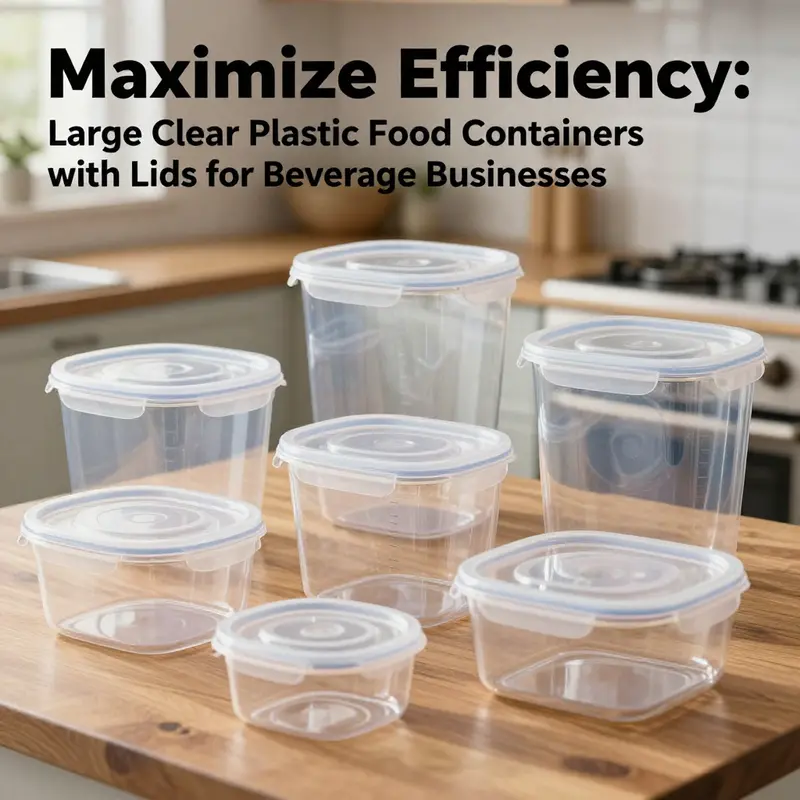
Large clear plastic food containers with lids have become essential assets in various sectors, particularly in beverage shops and restaurants. Their versatility and practicality offer remarkable solutions for meal prep, storage, and organization. This article dives into key aspects of these containers, highlighting their applications, material safety, supplier quality standards, and current market trends. By understanding these dimensions, beverage retail and food service businesses can better leverage these tools to streamline operations and elevate customer satisfaction.
Clarity, Control, and Calm: The Role of Large Clear Plastic Food Containers with Lids in Meal Prep and Organization
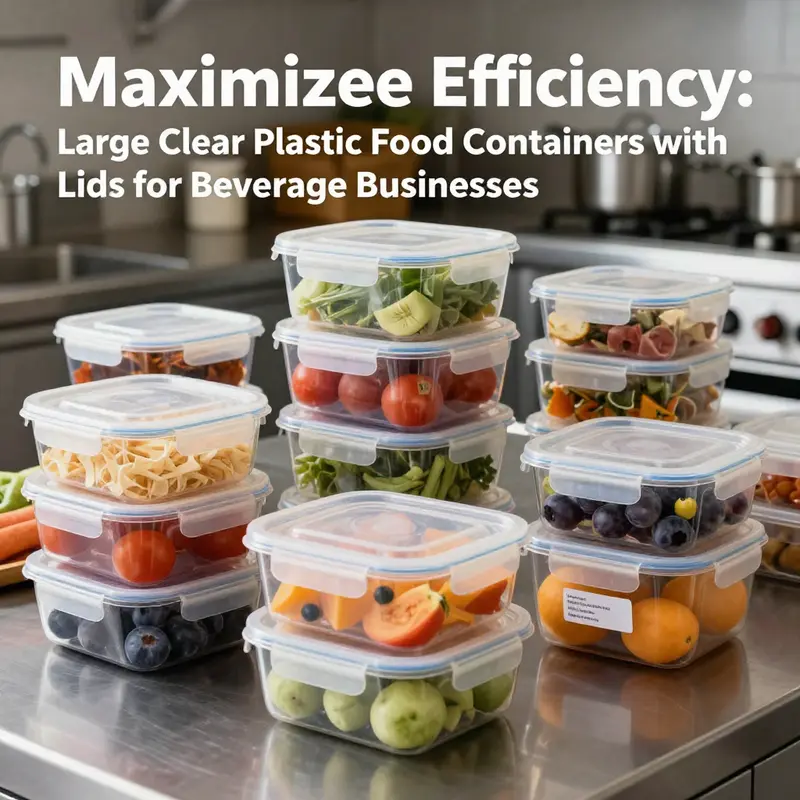
In kitchens where efficiency is as important as flavor, large clear plastic food containers with lids often play a quiet, indispensable role. They are not flashy tools, but their transparency, durability, and thoughtful designs help convert scattered ingredients and haphazard leftovers into a coherent system. The visual advantage alone—seeing at a glance what is inside without lifting a lid—reduces the cognitive load of daily cooking and reduces waste by making it easier to reuse ingredients before they spoil. This simple clarity becomes a practical habit that supports broader goals of planning, nutrition, and budget management.
Fundamentally, these containers are built from plastics chosen for safety and performance. The most common materials in this category are polypropylene (PP) and polystyrene (PS). PP is prized for its heat resistance, a feature that expands what you can store and how you can reheat. When a container is described as microwave-safe, it is often PP, capable of withstanding temperatures that allow noodles, grains, or a reheated protein to return to a comforting warmth without warping or releasing undesired odors. PS, on the other hand, tends to excel in transparency and rigidity, making it a preferred choice when the contents are cold and you want a clear view for display in a refrigerated display case or pantry shelf. In some designs, high-density polyethylene (HDPE) is used as well, offering strong chemical resistance and impact strength that endure the rough-and-tumble realities of busy kitchens, deliveries, and long-term storage.
Beyond the base material, the safety profile of these containers matters as much as their clarity. Many options in this category are BPA-free, addressing a long-standing consumer concern about how plastics interact with foods. The absence of BPA, together with the use of food-grade resins and compliance with safety standards, provides a level of confidence that storage will not compromise the flavor or safety of stored meals. Materials science and regulatory standards come together to shape these containers into reliable workhorses for home kitchens and small-scale food service. For users who prepare meals in bulk or who rely on portion-controlled meals, the combination of a safe material and a clear, stackable design creates a dependable rhythm in the week.
The practical design features go beyond material choice. A common thread across high-performing large containers is an airtight seal. These seals, often formed with silicone gaskets and snap-lock lids, are engineered to resist leaks, odors, and external contamination. The seal is more than a convenience; it’s a safeguard against the dryness or sogginess that can plague leftovers. For meal preppers, this means leftovers can travel through the fridge or freezer with far less risk of absorbing freezer odors or mixing with other foods. The airtight design also helps preserve the integrity of sauces, dressings, and marinated proteins—components that frequently anchor balanced meals—by preventing premature drying or flavor bleed between compartments.
The visual advantage of clear plastic containers cannot be overstated in meal preparation and pantry organization. Because the contents are readily visible, you can plan portions and reheating steps without constant inspection. This reduces the number of times you open containers, which in turn minimizes temperature fluctuations inside the fridge and helps maintain overall food quality. When you store a week’s worth of salads, cooked grains, or proteins in uniform, transparent containers, the workspace becomes legible at a glance. You can track quantities by simply scanning the stack, making it easier to rotate foods and manage inventory without pulling every item out onto the counter.
The space efficiency of these containers is another critical facet of their value. Modern designs emphasize stackability, enabling a compact, modular approach to fridge and pantry organization. Stacking not only saves room but also encourages a disciplined approach to meal planning; when containers sit neatly aligned, it’s easier to map out a week of meals and maintain consistency in portion sizes. This is particularly useful in delis, cafeterias, or households that rely on batch cooking. The combination of a transparent body and a tight seal creates a predictable, easy-to-control system where contents remain protected yet accessible, a balance that supports both home cooks and professional operations.
For those using these containers in multi-stage food handling—storage, reheating, even display in a bakery or café setting—their versatility shines. Some designs are explicitly described as freezer-safe, microwave-safe, and dishwasher-safe, offering choices that fit different stages of a food’s life cycle. The freezer compatibility allows bulk ingredients, sauces, or pre-portioned meals to be stored for extended periods. Microwave safety brings convenience to reheating cooked meals, while dishwasher compatibility reduces the burden of cleanup. The ability to move from storage to heating to cleaning within a single, compatible system minimizes the risk of cross-contamination that can arise when switching between incompatible containers.
A practical focus on durability and safety also guides the selection of materials like HDPE, admired for its resilience in the face of everyday wear and tear. HDPE’s chemical resistance makes it a reliable option for households that store acidic ingredients or frequently wash containers in hot water. This resilience translates into long-term usability, lowering replacement costs and reducing the environmental impact of frequent discards. When combined with a robust seal, the result is a container that remains trustworthy across months of routine use, even under the often chaotic rhythms of family life or a busy kitchen.
In the realm of meal prep, the technique of portioning becomes a central discipline. Large clear containers enable you to portion components for balanced meals—salads, cooked grains, proteins, and vegetables—that align with daily or weekly nutrition goals. The transparency helps ensure that portions stay consistent from one day to the next, which is important for people who manage calories, macros, or dietary plans. The ability to see how much of each component remains also reduces the cognitive friction of meal planning, so you are more likely to cook once and reuse leftovers instead of discarding unused items. Over time, this habit translates into a smoother weekly routine, less grocery waste, and more predictable meal outcomes for family members or coworkers following the plan.
The broader logic of organization becomes clear when you consider the pantry as a system rather than a collection of random containers. Large clear containers provide a unifying visual language: similar shapes and sizes create a rhythm that is easier to navigate. Clear bodies that reveal contents contrast with opaque lids or mismatched shapes that require guesswork. In a pantry, you can designate zones for grains, legumes, nuts, or snack items and maintain visibility without sacrificing the tight stacking that frees up shelf space. In the fridge, uniform containers create a similar sense of order, enabling quick retrieval and efficient restocking after a shopping trip. The net effect is a calmer, more deliberate approach to food storage, one that reduces the daily stress of mealtime decisions.
The conversation about sustainability naturally threads through this topic. Reusable, durable containers encourage a shift away from single-use plastics and disposable baggies. When containers are designed to last, families are more likely to convert to a routine of washing and reusing rather than discarding after a single use. The openness of a clear container also makes it easier to adopt a labeling habit, using reusable markers or modestly sized labels to track dates, contents, and even portion sizes. This practice not only supports food safety but also reinforces a culture of mindful consumption. In this way, the humble large clear container becomes a catalyst for a broader shift toward efficiency, responsibility, and sustainability.
For those exploring related avenues of organization and storage aesthetics, a look at varied product pages can offer visual cues about how different lids, seals, and sizes come together. One route to consider is the dedicated space of a product page that showcases a green-line motif and a robust, stackable configuration. This example page illustrates how a well-designed set can meet diverse needs—from bulk storage in a pantry to daily use in meal-prep routines. The page provides a useful reference point for how features like uniform sizing, clear bodies, and tight-seal lids translate into practical benefits in real kitchen workflows. If you’d like to explore related storage aesthetics further, you can visit the green-soil-lotus product page. green-soil-lotus product page.
As you integrate these containers into your routine, it becomes clear that the value lies not just in the containers themselves but in the ecosystem they help you build. A simple, standardized system of containers supports precise portions, predictable reheating outcomes, and consistent daily routines. It reduces decision fatigue and supports healthier cooking practices by making it easier to use fresh ingredients before they lose their best flavor. It also creates a practical framework for family members or colleagues to participate in meal prep, since the system is transparent, intuitive, and easy to maintain. The routine you establish around stacking, labeling, and rotating contents becomes a quiet backbone of daily life, enabling you to focus more on the creative aspects of cooking and less on the logistics of storage.
In considering the full arc—from material selection to lid design, from meal-prep efficiency to pantry discipline—the capacity of large clear containers with lids to harmonize food safety, convenience, and sustainability becomes evident. They are not magical shortcuts but reliable tools that, when used thoughtfully, reduce waste, improve organization, and support consistent, healthy eating patterns. The visual clarity invites quick, informed decisions about what to cook, what to store, and how soon to use each item. The sturdy construction and airtight seals preserve flavors and textures, extending the life of leftovers and bulk-prepared meals alike. The stacking and modularity maximize space, turning cramped refrigerators into organized, calmer environments where every item has a purpose and a place.
For practitioners and families alike, adopting a system built around these containers offers a measurable improvement in daily routines. The investment pays off not only in pantry and fridge organization but also in time saved during meal planning and shopping. When you can identify contents at a glance, you can assemble meals faster, reduce the impulse purchases that come from seeing only a single ingredient at a time, and maintain a steady cadence of cooking that supports healthier eating patterns. In the long run, this translates into fewer spoiled ingredients, less waste, and more predictable budgeting for groceries and meals.
External resource for broader context on safe plastics and food storage formats is available here: External storage container resource.
Visible Freshness, Locked-In Safety: The Material Safety and Performance of Large Clear Plastic Food Containers with Lids
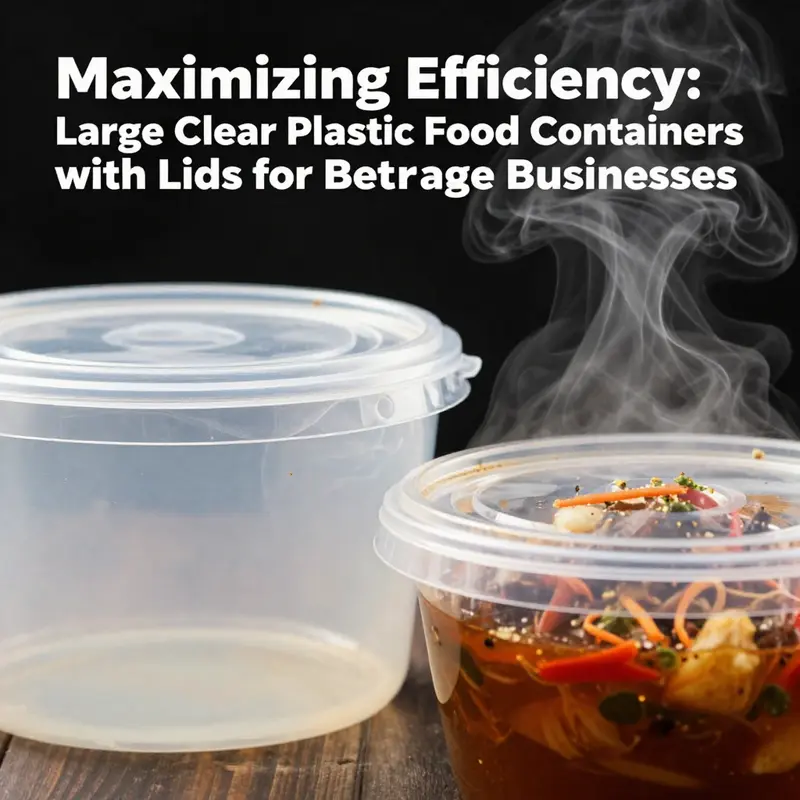
Clear, expansive panes that reveal the contents inside are more than a design flourish. They are the practical theater of a modern kitchen and a bustling storage area, where transparency translates into time saved, waste reduction, and better hygiene. Large clear plastic food containers with lids embody this blend of visibility and reliability, offering a single family of products that can meet the needs of a home kitchen, a school cafeteria, or a central commissary. The materials chosen for these containers—Tritan™, polypropylene (PP), and high-density polyethylene (HDPE)—are not interchangeable dreams; they are engineered choices that balance safety, performance, and durability in the actual conditions of everyday use. This balance matters because what makes a container useful is not just how it looks on the shelf, but how it behaves when it is filled with yesterday’s leftovers, today’s batch of prepared meals, or a bulk ingredient that must stay fresh for weeks. When a container is truly well-made, its material science quietly supports everyday decisions: what to refrigerate, what to reheat, and how to store foods with minimal waste and maximal confidence.
Material safety sits at the core of this category. Tritan™ is a BPA-free copolyester celebrated for its shatter resistance and chemical durability. It resists yellowing and maintains clarity even after repeated cycles, which makes it attractive for large, see-through storage that is often handled by multiple users in kitchens and supply rooms. Importantly, Tritan™ is designed to withstand typical kitchen temperatures, which means it can be used for reheating in some cases and then returned to cold storage, with less risk of leaching chemicals into food. The thermal stability of Tritan™ also translates into a longer service life, a factor that matters when choosing containers for bulk storage and daily use. In practice, this means fewer replacements and less downtime, especially in busy environments where reliability is crucial.
Polypropylene (PP) is another staple in the landscape of large clear storage solutions. It is chemically inert, which minimizes the risk of leaching into foods under normal use. This makes PP a sensible choice for hot meals and microwave-ready containers, enabling convenient reheating without moving the food to a different vessel. Yet every material has its quirks, and PP can absorb odors from strongly scented foods or from certain spices over time. Practitioners who rely on PP-based containers often counter this issue with rigorous cleaning, occasional deodorizing, and, when feasible, using separate containers for high-odor ingredients. The result is a storage system that remains safe and practical across a wide range of foods, from soups and stews to grains and cut fruits, while keeping the kitchen organized and predictable.
HDPE, typically reserved for larger and more robust containers, adds another layer of durability and moisture resistance. It is non-toxic and highly recyclable, which supports both kitchen hygiene and an environmental conscience. HDPE’s scratch resistance and toughness make it well-suited for pantry organization and bulk storage of dry goods, where resilience matters. The trade-off is that HDPE generally offers less heat resistance than Tritan™ or high-grade PP, which means that the temperature guidelines matter more on containers made from this material. In practice, HDPE tends to perform best for cold or cool storage and for containers intended to be used repeatedly in non-heated environments. Together, these materials form a spectrum of options so operators can match the right polymer to the specific storage task at hand, while staying aligned with safety and compliance.
A focus on safety also extends to the sealing systems that accompany large clear containers. High-quality lids with silicone gaskets and dependable snap-lock mechanisms create airtight or near-airtight seals. This is not merely a feature for convenience; it directly affects freshness, odor containment, and the likelihood of leaks when meals travel between rooms or to a customer. An airtight seal can slow the degradation of prepared foods by limiting exposure to air and moisture, thereby extending shelf life and reducing waste. In retail or food service contexts, the ability to prevent leaks and spills is a meaningful risk-management benefit, protecting both product integrity and the people handling it. As a result, these containers are often designed with robust lid geometry and gasket materials that stand up to repeated use, dishwashing cycles, and the occasional rough handling that occurs in busy kitchens.
The practical benefits of transparency extend beyond the kitchen counter. The clear walls of these containers enable instant content recognition, a feature that saves time during meal prep, inventory checks, and service delivery. When staff can identify contents at a glance without rummaging through a cabinet or opening a lid, the flow of work improves. This helps maintain hygiene by reducing unnecessary lid openings, which in turn protects against moisture loss and contamination. The visibility aspect also supports portion control and inventory management. In a catering or cafeteria setting, being able to quickly confirm what is in a container helps ensure accuracy in orders and reduces the chance of cross-contamination from mislabeled items. The net effect is a smoother operation where safety, efficiency, and quality are reinforced by the material’s clarity.
From a performance standpoint, these containers are designed for a wide temperature spectrum. The best-in-class options are engineered to tolerate freezing, room temperature, and microwave heating, often with specific guidance from the manufacturer about how to use lids and venting procedures. The ability to withstand cold storage helps preserve delicate ingredients like berries or prepared sauces, while microwave compatibility supports rapid reheating for takeout meals or single-serve portions. It is important to follow the labeling and instructions for heating to ensure the integrity of the seal and to avoid warping or stressing the lid or walls. In other words, performance is a carefully balanced package: the material must tolerate the heat of the microwave, the cold of the fridge or freezer, and the mechanical stresses of daily use, all while preserving the container’s shape, clarity, and seal.
The practical design of these containers also considers the realities of space and handling. A recurring design evolution is the incorporation of stackable profiles that nest or interlock when empty, enabling more efficient use of pantry space or storage rooms in a commercial kitchen. This is not a cosmetic improvement but a functional one: it reduces clutter, enables more effective batch storage, and simplifies inventory rotation. The interior and exterior surfaces are crafted to resist staining and wear, a factor that contributes to longer life and easier cleaning. The emphasis on durability extends to the way lids snap into place and the ease with which they can be opened and closed, even when hands are wet or greasy after washing up. All of these considerations—stability, stackability, seal reliability, and ease of use—cohere to produce containers that can perform under the pressure of daily routines without becoming fragile weak links in a hygiene-focused ecosystem.
As with any long-lasting consumer or industrial product, there are caveats to consider. Not all plastics are created equal, and older or lower-grade options may degrade faster under repeated exposure to heat, detergents, or acidic foods. In some cases, micro-porosity on the surface of certain plastics can trap residues or volatile compounds, which can contribute to odor retention or perceived changes in taste over time. Higher-grade materials with smoother, more uniform surfaces mitigate these issues, but they also carry a higher upfront cost. In addition, larger containers can be heavy when fully loaded, and there may be gaps between stacked units that create storage inefficiencies if space is not planned carefully. For storage that spans weeks or months, the choice of material—Tritan™, PP, or HDPE—becomes a decision about how much heat exposure is acceptable, how much odor risk you are willing to tolerate, and how many times you plan to reuse the containers before retiring them from service.
In practice, best-use scenarios often emerge from the everyday workflows of kitchens and storage rooms. For meal prep, containers that tolerate reheating and cold storage, paired with secure, leak-proof lids, offer the most seamless cycle from fridge to plate. For portion control in delis and cafeterias, reusable containers with clear walls make it easy to identify portions, track inventory, and maintain consistent serving sizes. For bakery items and display packaging, the clarity and rigidity of the walls help items present well while the lids preserve freshness and protect against contamination. In distribution and delivery contexts, the combination of a secure seal, durable construction, and transparent visibility reduces the risk of mis-sorting and helps ensure that the recipient receives what was ordered.
The pathway to optimal safety and performance also weaves in regulatory and quality considerations that govern food-contact plastics. Containers intended for repeated food contact should be labeled BPA-free and carry clear indications of microwave safety, dishwasher safety, and food-grade certification. In higher-volume supply chains, manufacturers often adhere to international standards such as FDA 21 CFR and EU Regulation (EC) No 1935/2004, with ISO-certified clean-room production environments that reinforce traceability and quality control. These certifications are not mere marketing signals; they reflect the rigorous testing and process controls that underpin safe and reliable packaging for food. For buyers and end-users, understanding these assurances helps ensure that the containers not only meet immediate functional needs but also align with broader commitments to consumer safety and sustainability.
Care and lifecycle management are integral to maintaining performance over time. Proper cleaning—avoiding abrasive scrubbing on the most transparent surfaces, selecting appropriate detergents, and following dishwasher guidance when available—helps preserve clarity and prevent surface scratches that can harbor residues. When a container shows damage, such as deep scratches or cracks, it is wise to retire it from service, as compromised surfaces can harbor bacteria or promote uneven heating. Storage practices that avoid overfilling, respect venting guidelines for heated foods, and keep containers away from direct sunlight help preserve the integrity of the material and its seals. This pragmatic approach to care becomes part of a broader philosophy: the right container is one you can rely on day after day, season after season, in a lifecycle that minimizes risk and maximizes value.
In the end, the choice of material and the design of the lid system do more than protect food. They shape behavior. They influence how people approach meal prep, how they stock the pantry, and how confidently they can reheat, store, or transport meals. The combination of transparency, chemical safety, temperature resilience, and durable sealing creates a practical toolkit for managing freshness and reducing waste. Although cost, appearance, and brand readiness bear on every purchase decision, the underlying science—BPA-free formulations, inert polymers, and robust seal geometry—provides the foundation for a storage system that works as hard as the people who use it. When you select large clear plastic containers with lids built around these principles, you’re choosing not only a container but a reliable partner for kitchen organization, food safety, and everyday convenience.
External reading and further technical context can deepen understanding of these materials and their safety characteristics. For a detailed overview of Tritan™’s chemical resistance and food safety compliance, refer to the official resource from its manufacturer: https://www.eastman.com/products/chemicals/titan-plastics
From Factory Floor to Pantry Shelf: Upholding Supplier Standards and Manufacturing Quality in Large Clear Plastic Food Containers with Lids
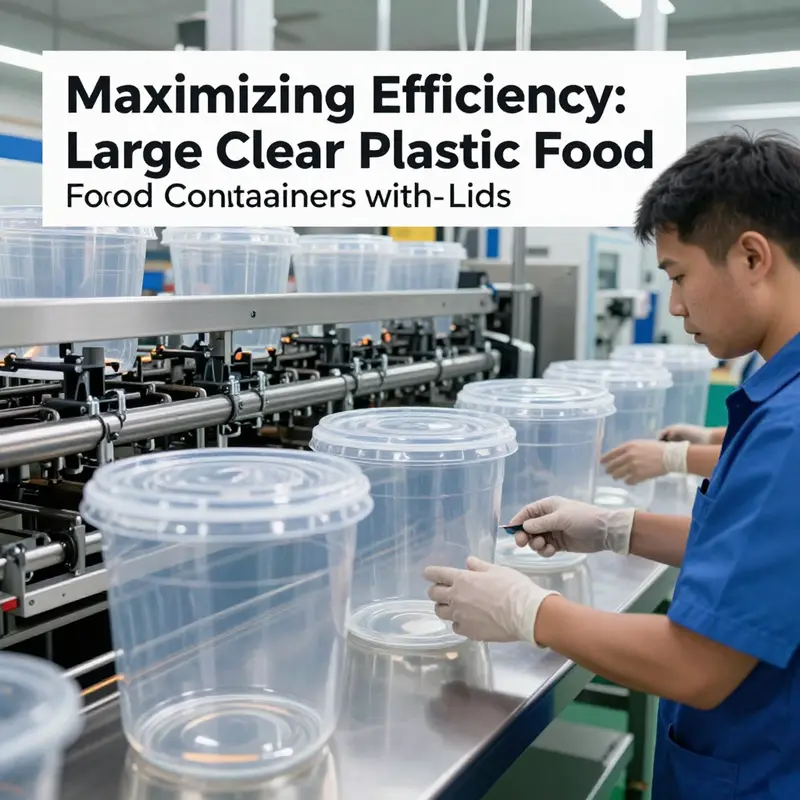
Sourcing large clear plastic food containers with lids for bulk use in kitchens, delis, and catering setups is more than a price comparison. It is a careful audit of reliability, safety, and long-term performance that starts long before a shipment arrives. The supply chain that feeds these containers must deliver products that are visually transparent, structurally stable, and hygienically manufactured. In practice, that means evaluating material safety, controlling manufacturing processes, and ensuring that every unit can stand up to the rigors of commercial use while preserving the freshness and appearance of the contents. The buyer who treats supply as a strategic function, not a transactional one, gains a quiet, persistent edge: fewer recalls, less waste, and a consistent consumer experience that helps a business run smoothly day after day. This chapter weaves together the core expectations of supplier standards with the realities of manufacturing quality so readers can understand how to navigate the path from a factory floor to a pantry, cold case, or backroom storage rack without compromising safety or performance.
At the outset, material compliance and safety form the bedrock of any trustworthy container. For large clear storage, the materials most commonly chosen are polypropylene (PP) or polystyrene (PS), prized for their clarity, rigidity, and compatibility with a range of temperatures. PP, in particular, offers superior heat resistance, which makes it a favored option for hot food storage and microwaveable meals, while PS shines in visibility and rigidity for cooler items like salads, baked goods, and display packaging. Consumers want to be able to identify the contents at a glance, and the same logic applies in commercial settings where time is money and exposure to open air must be minimized. Yet safety cannot be assumed from appearance alone. Responsible suppliers provide documentation that certifies compliance with stringent food safety regulations across markets, including FDA standards in the United States and EFSA guidelines in the European Union. National regulations, such as China’s GB standards, may also come into play for manufacturers operating across borders. The material itself must be food-grade and free from harmful additives such as BPA or phthalates. It is not enough for a container to look clean; it must meet verified safety criteria that protect consumers and maintain regulatory alignment as products move across regions.
Manufacturing quality and process control then translate those safety assurances into tangible performance. Reputable suppliers invest in advanced injection molding technologies and robust quality control systems. The result is dimensional accuracy, uniform wall thickness, and reliable sealing performance that prevents leaks and preserves product freshness. A highly controlled process reduces the risk of warping, cracking, or seal failure under typical use—whether a container is stacked in a crowded pantry, transported in a delivery cooler, or reheated in a kitchen oven or microwave. An ISO 9001 quality management framework is often the benchmark that signals a systematic, documented approach to consistency. When a supplier demonstrates this standard, buyers gain confidence that the same high-quality outcomes will be repeatable across multiple production runs and time horizons, not just in the best batch but in every subsequent batch.
Beyond safety and manufacturing discipline, the design and customization capabilities of a supplier matter in ways that affect efficiency and user experience. Large clear containers are often used across varied environments: meal-prep stations, delis, catering operations, and retail shelves. Therefore, lids, gaskets, and sealing mechanisms merit careful evaluation. The most dependable configurations feature airtight seals with silicone gaskets and snap-lock lids that resist leaks, minimize odors, and maintain freshness even when containers are stored for extended periods. The transparency of the material remains essential for quick content identification, but it must be paired with a practical lid that aligns precisely with the rim, maintains a seal under repeated use, and supports reliable stacking. Customization options—such as color-matching, bespoke labeling, or tailored lid designs (whether snap-on, screw-top, or tamper-evident)—can be valuable for brands and large-scale operators seeking brand consistency and workflow optimization. For instance, ergonomic handles, enhanced grip textures, and lid compatibility with accessory inserts (measuring spoons, labels, or dividers) can transform how efficiently a pantry is organized and how quickly staff can retrieve exactly what they need. In this context, a supplier’s ability to offer customization without compromising strength or clarity becomes a strategic advantage.
Scale and production capacity further shape the supplier choice, especially for B2B buyers with bulk needs. Reputable manufacturers in high-volume hubs are typically able to meet minimum order quantities that range from thousands to tens of thousands of units, depending on the client and the product line. This scalability is not just about meeting demand; it is also a signal of process maturity. Large-scale producers invest in automated inspection, precise mold maintenance, and continuous improvement programs that minimize drift in product tolerances over time. A credible supplier can promise stable lead times, predictable delivery windows, and a transparent warranty policy. They should also be able to handle variations in container dimensions, lid thickness, and seal geometry without sacrificing performance, which is vital when a customer adds new sizes or reconfigures storage options in a busy operation.
Sustainability and lifecycle considerations increasingly shape procurement decisions as well. Buyers are mindful of the environmental footprint of packaging, from material sourcing to end-of-life options. Recyclability is a primary criterion, with attention to whether containers contain post-consumer recycled (PCR) content and whether the supplier provides information about end-of-life handling. Some buyers favor take-back programs or recycling partnerships that minimize landfill impact. Biodegradable alternatives, while still evolving for clarity and durability, may be explored in select projects. An honest supplier will disclose the sustainability profile of their materials, including any certifications or third-party verifications, and will be prepared to discuss how choices affect performance, cost, and regulatory compliance. The conversation around sustainability should be concrete, not rhetorical, with data on resin composition, recyclability rates, and the logistics of recovery and processing where applicable.
No matter how compelling a product design may be, risk mitigation and supply chain transparency are what keep procurement resilient. A trustworthy supplier provides traceability for raw materials, including batch numbers, resin suppliers, and process records that tie back to each production lot. This level of visibility helps buyers assess defect risk, respond to field issues, and manage recalls more efficiently if needed. Stable supply chains depend on reliable sourcing, predictable pricing, and clear terms for delivery timelines, defect rates, and warranty coverage. For buyers working with overseas manufacturers, it is essential to verify that the production environment meets international standards, including clean-room conditions where relevant, air quality controls, and hygiene protocols that align with food-contact manufacturing expectations. Documentation such as factory audit reports, third-party certifications, and evidence of ongoing compliance checks should be readily available and easy to review during supplier evaluation.
Platforms that connect buyers with manufacturers can be valuable, but they require disciplined due diligence. Verified supplier profiles, evidence of certifications, and transparent QA metrics help buyers decide between long-term partnerships and one-off orders. The focus, however, remains on the substance of the product—its safety, its ability to maintain freshness, and its operational reliability across shifts, freezer doors, microwaves, and dishwashers, depending on use-case requirements. When evaluating a supplier, it is prudent to request samples for testing in real-world conditions, conduct compatibility checks with existing lids and dividers, and perform leak tests that mirror typical handling and transport scenarios. These practical assessments complement the documentary evidence and provide a grounded sense of what a supplier can consistently deliver.
Within this landscape, a cross-functional evaluation approach serves buyers well. Procurement, quality assurance, and operations teams should collaborate to define a shared specification: material safety, temperature range, clarity, sealing integrity, impact resistance, and ease of cleaning. In addition, the ability to customize—whether for labeling, volume markings, or lid ergonomics—should be aligned with the organization’s branding and workflow. The ultimate objective is to minimize surprises after initial approval. When a supplier demonstrates a robust privacy of confidential data, clear warranty terms, and an openness to address defects without resistance, a partnership can flourish even across long distances and complex logistics. This is how large, clear plastic containers with lids become more than items on a shelf; they become reliable components of an efficient system.
To illustrate how these principles play out in practice without naming specific brands, consider a hypothetical supplier profile. The company would provide documentation showing compliance with FDA and EFSA guidelines, confirm that raw materials are food-grade and free from BPA, and exhibit a traceable production chain that links resin suppliers to finished goods. Their manufacturing facility would be described as employing precise injection-molding equipment, with calibrated dies and regular process capability studies that demonstrate stable wall thickness and tight tolerances. They would showcase a range of lid designs—snap-on, screw-top, and tamper-evident—along with gasket materials designed to maintain seal integrity under repeated use and temperature fluctuations. Customization options would be presented as modular: color-matched rims, printed labeling surfaces, and the possibility of adding ergonomic handles or stackable foot patterns that preserve visibility and space efficiency in crowded storage environments. Minimum orders would be clarified, with scalable capacity that supports growth while maintaining quality, and sustainability measures would be transparent, including the use of recyclable resins and any PCR content. Finally, the supplier would offer clear terms for delivery, return, and warranty, plus a mechanism for traceability and post-sale support.
For buyers who want a pragmatic window into how these criteria are surfaced online, platforms that host supplier profiles often provide certifications and factory audit results. The emphasis should be on data-driven evaluations—checking the consistency of wall thickness across batches, verifying that seals remain effective after numerous opening cycles, and confirming that the packaging remains visually clear after repeated dishwasher cycles if applicable. The emphasis on data helps prevent the overreliance on price alone and grounds decisions in long-term value rather than short-term savings. In that sense, the supplier standards discussed here are not abstract guidelines but concrete criteria that support safer, more efficient, and more sustainable packaging for food service and retail environments.
For a practical glimpse into how design and packaging synergy can support operational efficiency, consider exploring content on a related product family page that emphasizes visibility, organization, and user-centric design. This example page demonstrates how labels, transparency, and lid configuration work together to streamline inventory control and daily prep work. See the old-lady-cactus page for a concise reference to how a simple, modular packaging approach can improve recognition and accessibility in a busy setting. old-lady-cactus
In synthesis, selecting a supplier for large clear plastic food containers with lids requires a holistic assessment of material safety, manufacturing precision, customization capability, sustainability practices, and overall reliability. The most successful partnerships are built on clear documentation, transparent testing, and a demonstrated commitment to continuous improvement. When these elements align, the containers you source will not only protect food and preserve freshness but also support efficient operations, consistent display of contents, and a sustainable footprint that resonates with modern food-service values and consumer expectations. The journey from supplier selection to shelf-ready performance is a pragmatic, evidence-based process, underpinned by the same principles that guide any robust manufacturing supply chain: safety, quality, accountability, and a clear path to long-term value.
External resource: For a broader industry view of supplier due diligence and wholesale capabilities, see Wholesale Plastic Containers with Lids – B2B Supplier Guide. https://www.alibaba.com/product-detail/Wholesale-Plastic-Containers-with-Lids-B2B-Supplier-Guide_1600875422387.html
Seeing, Stacking, Sustaining: The Market Dynamics and Meaning of Large Clear Plastic Food Containers with Lids
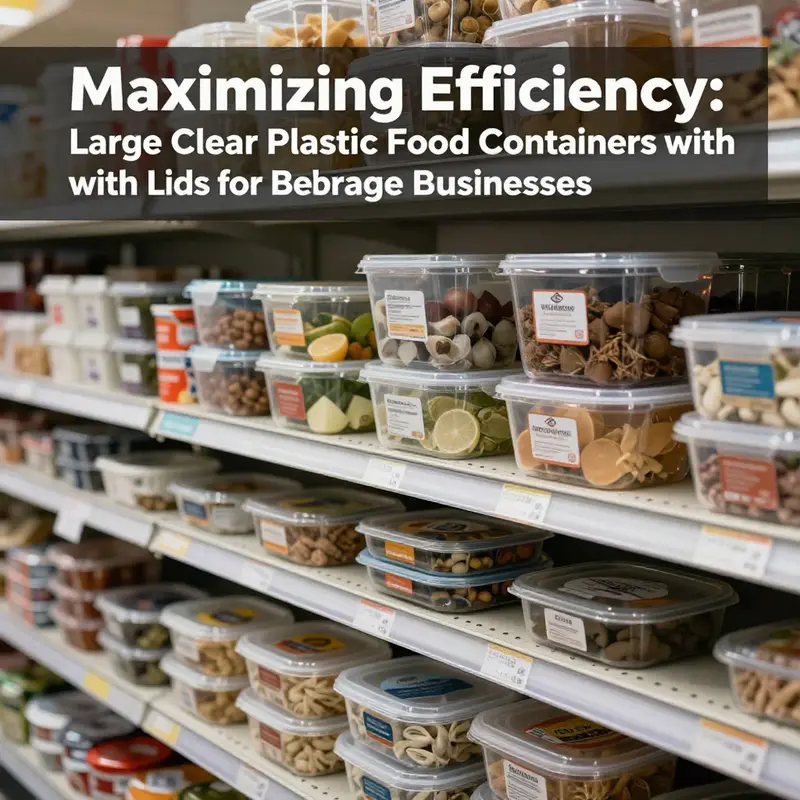
In contemporary kitchens and foodservice operations, large clear plastic food containers with lids function as more than storage pieces. They are instruments of organization, efficiency, and trust. Their transparency invites a kind of visual inventory that reduces the mental load of meal planning, portioning, and stock management. When a box is clear, it becomes a quick reference point: you see the broccoli you prepared last week, you remember the chopped peppers you set aside for tonight’s meal prep, and you can gauge volume at a glance without prying open the lid and exposing the contents to air. This visibility—coupled with sturdy construction and reliable seals—has become a defining feature of the modern pantry and the modern commercial kitchen. It’s a convergence of form and function where aesthetics do not merely please the eye; they facilitate everyday decision making, waste reduction, and workflow optimization.
From the home kitchen to the bustling back room of a deli, these containers are chosen for a blend of characteristics that feed a broader consumer demand: convenience, safety, durability, and sustainability. They are designed to stack, seal, and travel with minimal risk of leaks or spills, while still offering enough clarity to identify contents at a glance. This combination matters in a world where people juggle busy schedules, need consistent portion control, and seek to minimize food waste. The visual appeal of a neatly organized, transparent pantry or cabinet can be more than decorative; it signals a system in place. The containers serve as a practical reinforcement of discipline in storage, a silent partner in achieving efficiency and consistency across meals and menus.
Underlying these practical advantages is a quiet but powerful conversation about materials. The most common choices are heat-tolerant polypropylene (PP) and highly transparent polystyrene (PS), each bringing a distinctive balance of safety, performance, and appearance. PP is prized for its heat resistance and resilience. It can handle refrigeration and, in many cases, microwave use, which aligns with how many households and food services approach hot-filled or reheated meals. PS, with its crystalline clarity and rigidity, excels in presenting cold foods and bakery items where the visual lure of the product itself matters. The choice between these materials is not merely about aesthetics; it signals different usage scenarios, life cycles, and safety considerations. Quality-conscious buyers look for BPA-free formulations and food-grade certifications that reassure them that the container will perform in contact with a range of foods and environments. In practice, this translates to a careful evaluation of the plastic’s chemical composition, its tolerance to temperature changes, and its resistance to staining or odor retention after repeated use.
Safety and compliance extend beyond the material alone. In the supply chain, large clear containers are often sourced from manufacturers who operate under strict quality-control regimes. ISO-certified facilities, clean-room environments, and adherence to international standards—such as FDA guidance for food contact materials and EU regulatory frameworks—are not mere formalities. They are evidence of a commitment to safety and consistency. For buyers in busy kitchens, this translates into confidence: containers that will not degrade or leach undesirable substances, that can be repeatedly washed and reused, and that will not compromise flavors or aroma any more than necessary. The demand for non-toxic plastics intersects with a broader consumer aspiration for healthful living, where storage is an aspect of preparedness rather than an afterthought. In this context, clear storage becomes a partner in responsible household management, helping families keep track of perishables, plan meals, and store leftovers with the assurance that the container will behave predictably over time.
Design features play a pivotal role in extending the utility of these containers beyond simple storage. Airtight or close-fitting lids equipped with silicone gaskets deliver leak resistance and odor control, which matters for sauces, soups, and marinating products that travelers and commuters may carry in their bags. Snap-lock or screw-on mechanisms add to the robustness of daily use, ensuring that lids stay in place during stacking and transport. The outer shells are often shaped to maximize stackability—flat lids and straight sides minimize wasted space, making it possible to store a large quantity in a compact footprint. Inside, some designs incorporate graduated measurements or integrated labeling surfaces, so users can track portions without flipping through cupboards or rummaging for a pen. All of these choices—lid style, gasket material, wall thickness, and the dimensions that balance capacity with nesting ability—are part of a broader conversation about lifecycle value. A container is not simply a disposable artifact; it is a tool intended to endure, to be cleaned without degrade, and to return value with each reuse.
The applications of large clear containers are wide and increasingly nuanced. In meal-prep routines, the box becomes a week’s framework: a place to portion proteins, grains, and vegetables with a clear sightline to the day’s plan. In delis and cafeterias, the same design language supports quick assembly lines where staff must recognize at a glance what is stored and how much remains, minimizing order mistakes and reducing food waste. For takeout and catering, the combination of transparent visibility, durable construction, and leak-resistance translates into a reliable packaging solution that can move from kitchen to car trunk to client’s door with confidence. Pantry organization—an often-overlooked benefit—succeeds when containers nest neatly, lids align with minimal effort, and contents stay fresh, vibrant, and recognizable without opening every box in search of what’s inside. In short, these containers have become a practical language of storage that aligns with the rhythms of modern life: faster decision-making, clearer inventories, and more intentional use of ingredients.
A growing thread within consumer behavior is sustainability—a topic that has become inseparable from everyday packaging choices. Durable, reusable containers align with a broader preference for products designed for longevity rather than single-use convenience. Refillable, microwave-safe, and freezer-tolerant options extend the life of a container, encouraging households to reuse rather than replace. The recyclability of the plastic, and the ability to sort into appropriate waste streams at end of life, also weighs heavily in purchasing decisions. Codes such as PP and HDPE (for which consumer awareness is rising) signal a path toward recyclability, while the presence of clear labeling about composition and care instructions helps consumers make informed decisions. Designers and manufacturers respond to these expectations by emphasizing durability, resisting hazing or yellowing from repeated washing, and improving the ease of cleaning to support long-term reuse. The sustainable edge is not simply about material choice; it’s about the entire user experience—from unboxing to daily handling to eventual disposal or repurposing for non-food use.
In the online environment, consumer feedback shapes expectations. Reviews highlight key virtues: reliability of the seal, resistance to leaks, ease of cleaning, and how well the product performs in compact storage. The ratings tend to reward containers that deliver on leak resistance and that maintain clarity even after repeated cycles of microwave use or washing. Conversely, reports of hazing, odor retention, or lid misalignment quickly dampen enthusiasm. For manufacturers, the digital shelf is a testing ground where perception often hinges on subtle aspects of performance: how smoothly the lid snaps into place, whether the gasket remains flexible after many wash cycles, and whether the container’s clarity remains pristine after months of use. These are not trivial concerns. They influence not just a single purchase but repeat-buy behavior, with households building a personal sense of trust around a system that reliably keeps food safe, visible, and easily managed.
The market is crowded yet differentiated by a few critical vectors: material performance, sealing technology, and lifecycle value. Materials that withstand the pressures of refrigeration, freezing, and reheating expand the practical scope of use, while robust lids and seals reduce the risk of cross-contamination and spills. The most successful products transcend mere storage by enabling a smoother workflow in kitchens that rely on speed and precision. They become a core component of organization systems that span pantry, refrigerator, freezer, and even transport. When the user can see what’s inside, trust that it will stay fresh, and rely on a system that fits cleanly into their routines, the container ceases to be a simple object and becomes a facilitator of daily habit formation.
From a business perspective, the balance a manufacturer must strike is delicate. It involves cost considerations, regulatory compliance, and market expectations. High clarity is not free; achieving optical quality requires material selection, processing conditions, and quality-control checks that can add to the production cost. Yet consumers are willing to pay a premium for perceived reliability and safety, especially in baskets and pantry systems that promise long-term value. The best offerings harmonize this trade-off by delivering superior performance—clear, durable, and safe—without forcing households or businesses to compromise on other needs, such as stackability or ease of cleaning. In the end, the value proposition rests on a comprehensive experience: a container that remains clear while resisting stains, a lid that seals consistently without warping, and a form that earns a place in the kitchen through daily utility rather than novelty.
Operationally, the shift toward more responsible packaging in households and food-service environments also pressures suppliers to communicate clearly about material properties, care guidelines, and compatibility with heat or cold. Suppliers who articulate the safe use of their containers, explain the limits of temperature tolerance, and provide guidance on proper cleaning practices empower users to extend the life of their investment. This clarity reduces misuse, promotes longer lifecycles, and folds into the broader narrative of sustainable consumption. For the consumer, it is a reassuring alignment of product promise and actual performance. For the business, it reduces after-sales friction, returns, and reputation risks associated with improper use. The result is a market where transparency, safety, and practicality form a reinforcing triangle that supports continued growth and innovation.
In closing, the chapter of large clear plastic food containers with lids is less about a single product than about a system. It is a system that reflects how people live, plan, and move through their routines with greater intention. It encapsulates a preference for seeing what matters, for arranging it with intention, and for keeping it safe and accessible over time. The materials—PP and PS—are not merely plastics; they are enablers of a lifestyle that values efficiency, cleanliness, and responsibility. The containers’ design—clear, durable, seal-equipped, and stack-friendly—translates into everyday advantages that accumulate. They streamline meal-prep cycles, support portion control in high-volume settings, and offer a practical, reusable alternative to disposable packaging. As consumer expectations continue to evolve toward smarter, safer, and more sustainable storage solutions, these containers will continue to adapt—fusing clarity with capability and turning ordinary shelves into organized, dependable spaces. For readers already aligned with this shift, the next facet to explore lies in how standards and performance metrics translate into practical choices for home and business use, ensuring that every stored item remains as ready and reliable as the moment it was placed inside.
For a deeper technical overview of standards and properties, see this external resource: https://www.plasticcontainerguide.com/clear-plastic-jars-with-screw-on-lids-guide
Final thoughts
In summary, large clear plastic food containers with lids present invaluable benefits for the beverage and food service industries. Their applications in meal prep and storage enhance operational efficiency, while their safe materials assure quality for consumers. By engaging with reputable suppliers who adhere to stringent manufacturing standards, businesses can ensure their storage solutions meet safety regulations while remaining competitively relevant. Understanding market trends further empowers businesses to make informed purchasing decisions and adapt to evolving consumer preferences.