
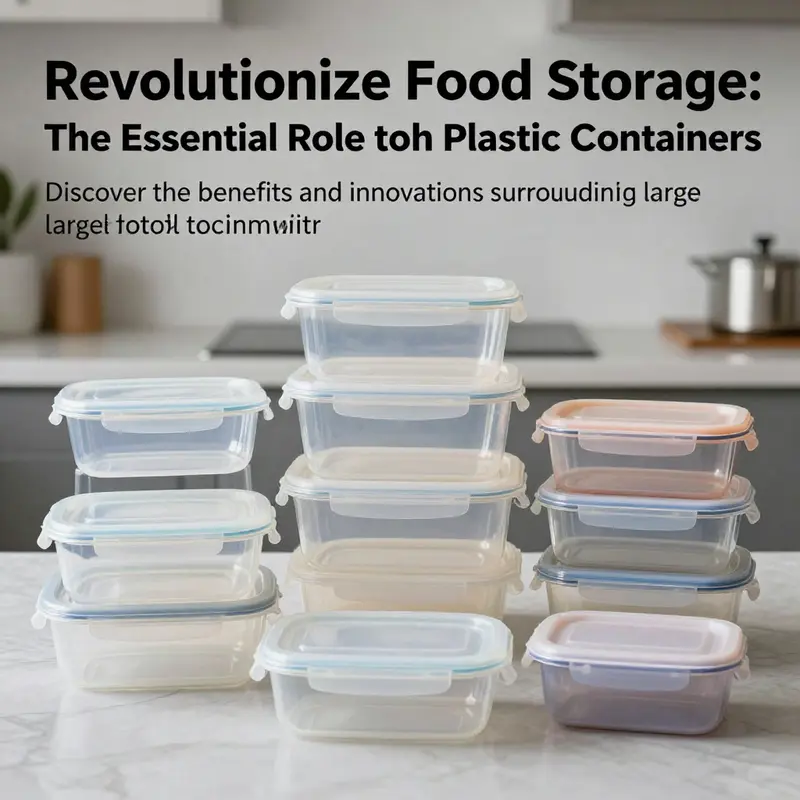
Effective food storage is crucial in the food industry, and large rectangular plastic food containers with lids are leading the way. Their design caters to various sectors, including bubble tea shops, restaurants, and catering services, offering innovative storage solutions that enhance efficiency and reduce waste. This article explores their innovative features, economic considerations, and societal impact, providing a comprehensive understanding of why these containers are essential in contemporary food operations.
Sealed, Stackable, and Sustainable: The Evolution of Large Rectangular Plastic Food Containers with Lids

The large rectangular plastic food container with a lid has moved well beyond its reputation as a simple box for leftovers. It now sits at the intersection of kitchen craft and design engineering, where materials science, user behavior, and sustainability inform what a storage solution can be. In busy homes, the container is a quiet partner in daily routines, but in meal-prep regimes, catering operations, and even community kitchens, its innovations sharpen efficiency, safety, and usability. The overarching arc is simple to state yet complex in execution: these containers must protect, purge, and present food while occupying as little space as possible, both in the kitchen and in transit. This demands a careful balance of durability, ease of use, and responsible sourcing, all woven together by a design language that respects the realities of modern food storage, whether anchoring a week’s worth of lunches or organizing bulk ingredients for a family meal. In pursuing this balance, manufacturers and users alike increasingly view the container as more than a container. It becomes a tool for reducing waste, for aligning with safety standards, and for streamlining routines that otherwise demand cognitive effort, so the act of storing food becomes less of a chore and more of a careful, repeatable practice.
Material safety sits at the core of this evolution. Modern large rectangular containers are typically made from high-density polyethylene (HDPE) or polypropylene (PP). These polymers are chosen for their food-grade properties, resistance to cracking, and relatively low leach risk when subjected to freezing, heating, or repeated washings. The shift away from materials containing bisphenol A (BPA) toward BPA-free formulations is not just regulatory compliance; it is a reflection of consumer trust built on transparent communication about what touches food. The safety profile matters most when containers are used to portion meals for the next day, when sauces are stored for longer periods, or when frozen components are heated directly in the same vessel. The resilience of these materials under temperature extremes is paired with a resistance to staining and odor retention, so a container can tolerate a week of varied ingredients without becoming a source of cross-flavor transfer or visible wear. The science here is pragmatic: the chosen polymers offer a predictable performance envelope that aligns with household schedules, while meeting the expectations of safety, ease of cleaning, and reuse. In practice, this means that users can safely thaw, reheat, and rinse without fear of chemical migration, provided they follow the manufacturer’s guidelines about heating limits and maximum dishwasher cycles. The result is a storage solution that earns daily trust because it behaves consistently under pressure, not because it promises novelty.
Space efficiency has matured from mere stacking to a thoughtful orchestration of form and function. The demand for space-saving solutions in refrigerators, freezers, pantries, and cupboards has driven several core design strategies. Reinforced bases and interlocking rims create a stable stack that resists tipping or crushing, even when a stack rises to several units high. This stability is essential for households with compact storage or shared kitchens where multiple users may retrieve containers at different times. Some models feature raised feet or support structures that prevent lids from warping under weight, ensuring a lid stays aligned with the rim for a dependable seal. This is not decorative; it reduces the risk of leaks and misalignment that can lead to wasted food. An equally important trend is the foldable or collapsible design. When empty, certain containers can be collapsed to a fraction of their full height, halving their footprint during off-season storage or while transporting a cache of containers to a community event. This collapsibility, while beneficial for travel and storage, also complements the broader goal of minimizing the environmental footprint of household storage. When space is at a premium, the ability to nest and collapse means more efficient packing, fewer trips to the storage closet, and less organization friction during busy weeks. The practical payoff is clear: more efficient use of interior real estate translates to less clutter, easier access, and a calmer kitchen workspace.
Another cornerstone of innovation is advanced sealing technology. Airtight gaskets, four-sided locking lids, and even vacuum-seal mechanisms are becoming standard in the large-rectangular category. The purpose is clear: block air and moisture ingress, preserve texture and flavor, and extend shelf life by reducing oxidation and microbial growth. This matters particularly for meal-prep enthusiasts who portion multiple days at once, for caterers who must hold prepared menus for service windows, and for families storing leftovers that might otherwise lose their appeal after a day in the fridge. A robust seal also supports portability; when a lid snaps into place with audible, reassuring resistance, the user gains confidence that the container will travel intact, whether it’s tucked into a gym bag, freezer tote, or car trunk for a family gathering. The mechanical logic behind these seals blends materials chemistry with ergonomic design: gaskets are sized to fit the rim with consistent compression, locking latches engage with a positive bite that resists accidental release, and modern variants may even incorporate a vacuum feature that reduces air within the container during long-term storage. Taken together, these innovations represent a shift from simply keeping contents away from the outside world to actively maintaining a protective microclimate inside each container. This subtle, often invisible, technology is credited by many users with keeping soups tasting fresh, vegetables crisper, and sauces thicker than they would be with a looser lid. The effect is felt most during weeknight meal prep when safety, efficiency, and predictable outcomes ease the burden of cooking.
Visibility and everyday practicality have grown in importance as well. Consumers increasingly value transparent bodies that reveal contents at a glance. Clear or high-clarity plastics, sometimes with light-diffusing additives, enable quick content checks without opening the lid—a feature that saves time during busy mornings or meal-planning sessions. This visibility is complemented by practical measurement markings on the sides. When a recipe calls for precise portions, or when a batch is divided into equal servings, such markings can be a silent guide, helping a cook portion ingredients without the need for extra measuring cups. In this way, the container doubles as a cooking aid, not just a storage vessel. The wide-mouth designs that accompany many large rectangular containers further enhance usability. They simplify scooping and pouring, reduce the splash risk when transferring sauces or grains, and make cleaning easier for those who hand-wash or soak items after a busy event. In households and professional contexts alike, this blend of transparency, measurement, and ergonomic access means fewer steps between kitchen work and the dinner table. The design choice to keep contents visible also aligns with the broader trend of reducing waste through better inventory awareness. When you can see what’s inside and how much is left, you are less likely to double-store or overlook items that should be used soon.
Sustainability threads through every facet of modern container design. Recycled plastics are increasingly common in both the body and, in some cases, the lids, aligning with broader circular economy goals. The appeal here is twofold: it reduces virgin plastic demand and communicates a commitment to reuse and resource stewardship. Consumers, too, are pressing brands to consider safer processing chemicals and worker wellbeing within supply chains. Brands that emphasize safer chemicals and transparent labor practices resonate with buyers who want responsible products, even when the upfront cost might be higher. A growing class of containers is marketed as reusable, freezer-safe, and dishwasher-safe, signaling a practical philosophy that a product is designed for repeated cycles rather than single use. This durability is critical for households that batch cook, families that rely on leftovers, and small businesses that depend on reliable containers for daily operations. Yet sustainability is not merely about materials; it’s also about longevity and repairability. Containers that resist yellowing, cracking, and staining after repeated dishwasher cycles help sustain their life in a busy kitchen, reducing disposal frequency and the environmental footprint of daily storage.
The converging threads of safety, efficiency, and sustainability shape how large rectangular containers are chosen and used. The rectangular geometry is not incidental but deliberate: it maximizes the use of square footage on shelves and in drawers, aligns neatly with stackable products, and fits side-by-side along refrigerator and freezer walls. In kitchens designed around routine and predictability, this shape becomes a quiet ally. The design language favors clean surfaces that resist food staining, while the labeling remains legible after multiple wash cycles. A practical consequence is the ease of categorizing items by category—protein, starch, vegetables, sauces—when the containers are consistent in size and shape. This uniformity reduces the cognitive load of meal planning and bulk storage, especially when several people in a household manage portions. The focus on user experience extends to care instructions as well. The most successful designs balance rigorous care guidance with intuitive use. Dishwasher-safe plastics that tolerate repeated high-temperature cycles, freezer-safe materials that withstand brief warming in a microwave, and lids that maintain their seal even after rough handling—these attributes together ensure that routine cleaning does not become a test of patience or a source of frustration. With these features, the containers become more than tools for storage; they become enablers of healthier eating habits, organized kitchens, and streamlined meal routines.
In practice, the integration of these innovations influences how households and food-service operations think about inventory, prep, and presentation. A family prepping meals for a week can portion soups, stews, grains, and vegetables into uniform, stackable units. The airtight lids preserve flavor while the clear bodies provide visual cues about what remains in the fridge, reducing waste. For a home cook who values batch-cooking efficiency, the measuring marks and wide mouths enable quick scaling of recipes and easy transfer of ingredients to pans. In a small catering setup, the reliability of seals and the flat, sturdy bases help keep transport stable, while the collapsible options offer a way to reduce bulk when empty, making the return journey more economical and less cumbersome. The ability to nest containers reduces the number of units needed to achieve the same storage capacity. This, in turn, translates to a leaner pantry and a more navigable kitchen workflow. When all these pieces come together, the container ceases to be a mere vessel and becomes part of a system that supports consistent food quality, reduces waste, and keeps kitchen routines calm and reliable even during peak times.
To connect the design ethos of this chapter with real-world practice, consider how the broad family of take-away packaging informs home-storage decisions. The lid and base interplay, the rigidity of the walls, and the ease of cleaning are elements that echo across both home and professional contexts. A practical takeaway for readers is to explore options that emphasize durable seals and stable stacking, as these design traits directly influence usability and longevity. For a closer look at how packaging designers think about lid integrity and stackability in multi-meal contexts, you can explore this example of take-away food packaging boxes. It offers a window into the decisions that shape containers used for a range of meals, from burgers to noodles to snacks, and how those decisions translate to home-storage applications. take-away food packaging boxes.
The journey toward more sustainable, user-friendly, and durable large rectangular containers does not end with the current generation of products. It is ongoing, driven by improvements in material science, manufacturing processes, and consumer expectations. The future may bring even more recycling-forward materials, smarter sealing systems that adjust to temperature and humidity, or modular lids that can be swapped for different storage needs without sacrificing compatibility. It may also see a stronger emphasis on repairability and end-of-life scenarios, including clearer pathways for recycling or repurposing lids and containers at the community level. In the meantime, the existing innovations already extend shelf life, protect flavor and texture, and simplify everyday operations. They help people store meals more efficiently, preserve the integrity of ingredients, and manage household inventories with greater clarity. The resulting improvements are subtle in the moment of use but cumulatively transformative for long-term sustainability, health, and convenience.
For readers seeking a broader, external perspective on these design and safety considerations, an additional resource provides a detailed look at how container design integrates with consumer needs and regulatory expectations. It offers a complementary view of the safety, performance, and durability criteria that guide material choices and sealing technologies in the wider market. For more detailed insights, see this external resource: https://www.amazon.co.uk/dp/B08X5KQ2VW
Economies, Materials, and Market Forces: The Economic Life of Large Rectangular Plastic Food Containers with Lids

The market for large rectangular plastic food containers with lids sits at the intersection of pragmatism and policy, of cost-efficient manufacturing and the evolving choices consumers make about waste, reuse, and convenience. These containers are not just simple storage boxes; they are the backbone of meal prep, leftovers, batch cooking, and organized kitchens across homes, offices, and catering operations. Their shape, size, and lid mechanism are tuned for one overarching goal: to keep food secure and fresh while minimizing the resources spent to do so. In economic terms, the appeal of these containers rests on a blend of durability, light weight, and the ability to withstand the routine of daily use. They must perform in a freezer, a microwave, and a dishwasher, and they must do so repeatedly without eroding under the stress of temperature changes or the abrasion of repeated stacking. This triad of functional expectations helps explain why plastic containers command a substantial share of the market and why producers pursue innovations that lower cost per unit while maintaining or improving performance.
From a macroeconomic perspective, plastic food storage containers hold a dominant share, driven by the inherent costs of materials and process technology. The sector benefits from the long history of plastic processing, where economies of scale reduce unit costs through high-volume production methods such as injection molding and blow molding. The practical implication is simple: as demand grows, manufacturers can spread fixed costs—molds, automation, quality control—across more units, driving prices down for consumers who need affordable, reliable storage solutions. The market value, measured in billions of dollars, reflects both consumer adoption and professional demand—from large-scale food service operations to households that rely on weekly meal prep. In a global context, the overall market has shown resilience and steady growth, with anticipated expansion driven by ongoing urbanization, busy lifestyles, and the persistent appeal of a tidy, well-organized kitchen.
Yet price remains a central axis around which decisions turn. We see a broad sensitivity to cost structures that differ by region and by the scale of production. In high-volume manufacturing hubs, the cost advantages of scale are most visible: lower marginal costs per container, more favorable terms with suppliers of resin and colorants, and technology investments that accelerate cycle times without compromising quality. In smaller markets or in countries with fragmented distribution networks, lead times and shipping costs can erode the price advantage, making local production or regional assembly more attractive. The result is a market that rewards producers who can navigate supply chain fragilities, optimize packaging for bulk shipment, and reduce waste in both manufacture and consumer use. In this sense, the economics of large rectangular plastic containers are not just about price tags. They are about predictability, reliability, and the ability to deliver a consistent experience to a consumer who expects to store, transport, and reheat food without complication.
Material selection is a second major lever in shaping the economics of this product category. Polypropylene and other thermoplastics offer a compelling balance of rigidity, clarity for some variants, and resistance to heat and chemicals. The materials chosen influence not only performance in the kitchen but also the cost structure of the final product. A resin with higher melt strength or better impact resistance may cost more upfront, but it can reduce waste through fewer cracked lids, less leakage, and longer service life. In addition, the choice of resin interacts with downstream processing—how easily lids lock, how tightly the containers can be nested for storage, and how they perform in the dishwasher or freezer. Each of these factors translates into manufacturing efficiency, rejection rates, and the overall lifecycle cost that producers must account for when they price, forecast, and plan capacity. The durability that underpins a long service life is, ironically, a driver of affordability only when complemented by high throughput and reuse opportunities. The more cycles a container can endure without losing performance, the lower the effective cost per use, which matters to budget-minded households and volume buyers alike.
Regulatory and environmental considerations have become inseparable from economic calculations. Governments worldwide are imposing rules that target single-use plastics, encourage recycled content, and demand clearer labeling around safety and disposal. These policies commonly shape cost in two ways. First, compliance requires changes in formulation or packaging design—things like reduced plastic content in some instances, or the incorporation of recycled content that can alter material properties. Second, there is often a compliance cost associated with labeling, testing, and documenting material safety to satisfy regulatory regimes and consumer expectations about health and sustainability. The economic consequence is a price signal that can tilt purchase decisions toward products that align with regulatory expectations and environmental concerns, even when those products carry a higher upfront cost. The broader effect is a push toward more sustainable supply chains, which, while beneficial for the planet, can entail higher capital investment in plant adjustments, certification processes, and supplier development. In markets where regulations tighten, manufacturers who can adapt quickly—through design adjustments, process optimization, or partnerships with resin suppliers that offer certified recycled content—build a competitive edge that translates into consistent supply and price stability for buyers.
Consumer preferences toward sustainability complicate the picture further. While plastic containers offer undeniable convenience, a rising segment of buyers seeks products that minimize environmental impact, including options with higher recycled content or with easier end-of-life recovery. This shift influences price and availability in subtle ways. Eco-friendly options often carry premium costs, reflecting the added steps in material sourcing, processing, and end-of-life management. Yet consumer willingness to pay for sustainable features can also create new niches and channels, particularly among organized meal-prep communities, corporate wellness programs, and food-service operations that emphasize green credentials. Producers respond by blending performance with sustainable attributes, attempting to maintain the durability and versatility customers rely on while pursuing material choices that reduce carbon footprints or enable better recycling outcomes. The economic challenge is to translate these environmental attributes into tangible cost savings or at least predictable total cost of ownership, so buyers recognize value beyond the sticker price.
Regional economics show how different market ecosystems shape competitive dynamics. In mature economies, where disposable incomes are higher and waste management infrastructures are well established, consumers and institutions can support higher price points for durable, multi-use containers. In developing regions, price sensitivity is more pronounced, and households often seek products that deliver essential functionality at a lower cost per use. The supply chain in these regions also negotiates different risks, including volatile resin prices, transportation costs, and varying levels of manufacturing maturity. Global players who balance regional adaptation with standardized product lines can maintain a steadier price curve while meeting local preferences for lid design, stackability, and ease of cleaning. This means that the economics of large rectangular containers are not universal; they reflect a mosaic of regional priorities around durability, safety, and cost, with successful players learning to tailor features to local needs while preserving the core benefits that make these containers a staple in the kitchen ecosystem.
A key strategic dimension in this market is the design of the product itself, which influences both performance and cost. The rectangular shape is favored because it maximizes packing efficiency, minimizes wasted space in refrigerators and freezers, and stacks neatly in cupboards. The lid mechanism—whether it locks four ways or seals with a snapping edge—has a direct bearing on usability and leakage risk, and thus on consumer satisfaction and repeat purchases. The interplay of geometry, material, and closure method determines the unit’s resilience to temperature cycles, impact, and chemical exposure from foods and cleaning agents. When designers optimize these attributes, they reduce the rate of returns and warranty costs for manufacturers and distributors, which in turn lowers the total cost of ownership for buyers. In a market where margins are often slim and competition intense, such incremental improvements accumulate into meaningful economic differences across the product family.
In this crowded landscape, the competitive landscape is defined by a delicate balance among affordability, functionality, and sustainability. Manufacturers must decide whether to push for lower-cost lines that target high-volume buyers or to invest in higher-performance variants that appeal to professional kitchens, caterers, and health-conscious households. Each path has distinct implications for price, supply reliability, and market share. A drift toward higher performance and better sealing can justify higher price points and longer lifecycles, while a focus on affordability can expand access but may require cost-cutting in areas like color options, printing, or fancy lids. The end result is a market that rewards not only technical excellence but also the ability to forecast demand, manage resin procurement, and optimize the production schedule so that turns are fast enough to meet seasonal surges in pantry restocking, school-year meal prepping, and holiday gatherings.
To illustrate the practical reality behind these macro forces, consider the way households and businesses adopt and repurpose containers for a range of uses. A high-quality, large rectangular container with a secure lid can be used to store leftovers, to portion meals for the week, or to stage ingredients for batch cooking. It can also serve as a portable vessel for a barbecue gathering or a potluck, where reliable sealing helps prevent leaks and odors from migrating between kitchen and car. Each of these uses reinforces the value proposition of the container as a durable, versatile, and space-efficient product. And every use case has a cost implication—fueling demand in certain regions, shaping the mix of resin grades suppliers choose to stock, and influencing how retailers price these items to balance turnover with profitability. The cumulative effect is a market that rewards products that stay dependable across diverse environments—from the glare of a hot kitchen to the chill of a freezer, from a dishwasher’s routine cycle to a microwave’s quick reheating.
In considering the future, we must recognize that the economics of large rectangular plastic containers with lids are likely to continue evolving in response to both policy and consumer behavior. If regulatory frameworks increasingly favor recycled content or mandate clearer end-of-life pathways, producers will adjust by investing in recyclability programs, modifying resin blends, and collaborating with waste management partners to create closed-loop options. If consumer groups push further for design for disassembly and clearer labeling, brands that embrace transparency and ease of recycling will win trust and, over time, market share. The price stability that buyers expect will hinge on the ability of manufacturers to engineer materials, process flows, and logistics networks that absorb shocks—such as resin price spikes or port disruptions—without compromising the essential, everyday utility that makes these large rectangular containers with lids a mainstay in the global kitchen.
For readers seeking a quick practical touchstone on the broader market implications, a credible external resource provides a structured market scope and is worth consulting. This context helps connect the micro-level decisions of households and caterers with the macro-level forces shaping the industry at large. See the industry scope and market projections from Grand View Research for a comprehensive overview of the plastic food storage container market, including dynamics that influence demand for large rectangular formats with lids. https://www.grandviewresearch.com/industry-analysis/plastic-food-storage-container-market
As this chapter has sketched, the economics of these containers arise from a blend of material choices, processing efficiencies, regulatory realities, and shifting consumer values. The most successful products in this space are those that translate advantages in one area—such as durability or stackability—into measurable reductions in total cost of ownership for the user. When manufacturers pair the right resin with robust tooling, maintain high-quality standards, and align with regional preferences and regulatory expectations, they create a product line that not only sells but sustains a resilient ecosystem of storage, meal prep, and organized kitchens for years to come. Within that ecosystem, an internal linkable option for packaging solutions demonstrates how the broader packaging world continues to evolve toward smarter, safer, and more sustainable choices while still delivering the dependable performance that users rely on. eco-friendly disposable packaging boxes for fast food.
Organized by Design: How Large Rectangular Plastic Containers with Lids Shape Modern Food Storage
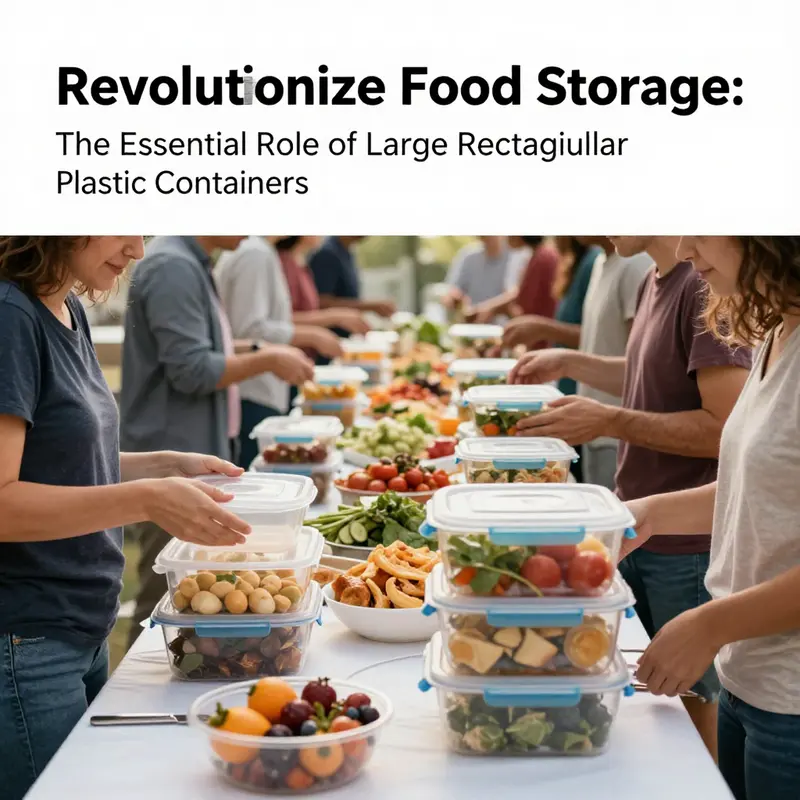
Across kitchens and crowded storage spaces, large rectangular plastic food containers with lids have become more than practical vessels. Their size, secure seals, and durable construction make them central to how households manage meals, leftovers, and weekly planning. The rectangular footprint optimizes fridge and freezer space, while clear or translucent walls help people see contents at a glance. A dependable lid that seals tight reduces leaks, odors, and the risk of cross contamination during transport to work or school. These features support meal prep habits by allowing portions to be measured, stored, and reheated efficiently, turning routine cooking into a predictable routine.
Beyond individual use, these containers influence how households think about waste, convenience, and sustainability. Reusable storage is positioned as an alternative to single use packaging, with durability and reusability helping justify the upfront cost over time. Stackability and nestability keep kitchens tidy and free up real estate in tight urban homes, while compatibility with freezers, microwaves, and dishwashers simplifies cleanup. In communities and families, clear labeling and standardized sizes can reduce food waste by making leftovers easier to track and use before they spoil. Together, these practical design choices shape daily life by making organized storage approachable, affordable, and aligned with broader values of efficiency and responsibility.
Final thoughts
Large rectangular plastic food containers with lids are more than just storage solutions; they are vital tools for efficiency and sustainability in the food industry. Their innovative features, economic advantages, and positive societal impacts contribute to their growing popularity among various food service providers. As businesses continue to prioritize quality and efficiency, these containers will remain essential in shaping future food storage trends.