
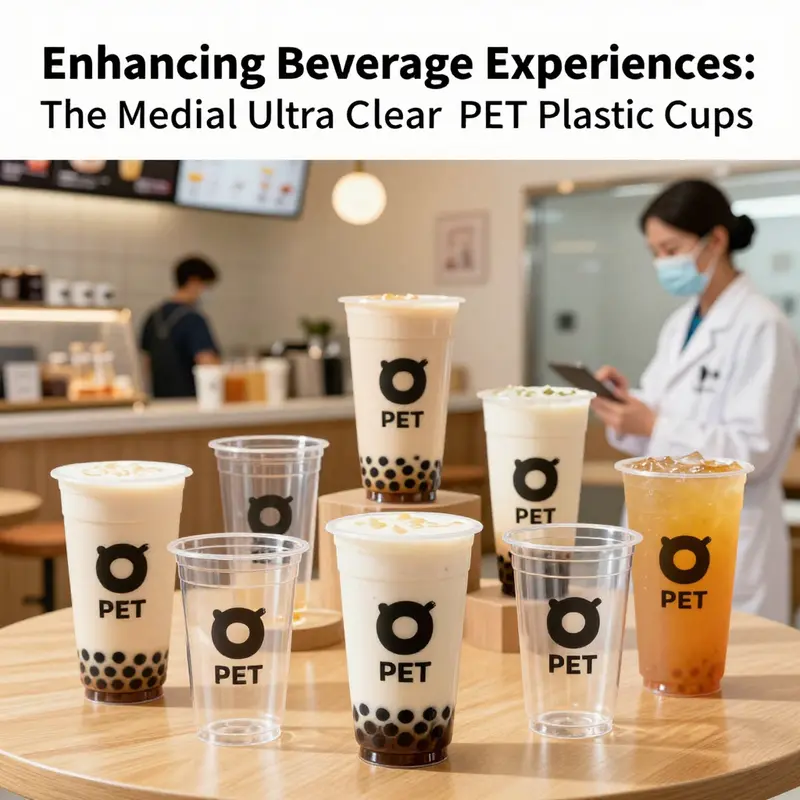
In a world where presentation and safety are paramount, the medical ultra clear PET plastic cup emerges as a pivotal tool across various beverage and food service industries. This article delves into the applications of these cups in healthcare settings, uncovering their unique material properties and advantages. We further explore the regulatory standards that ensure compliance and safety, and we conclude by examining market trends and innovations that keep these products relevant. Each chapter illuminates how integrating these cups can not only meet industry standards but also enhance customer satisfaction.
null
null
null
null
Clear Standards, Safe Outcomes: Regulatory Foundations for Medical Ultra‑Clear PET Cups
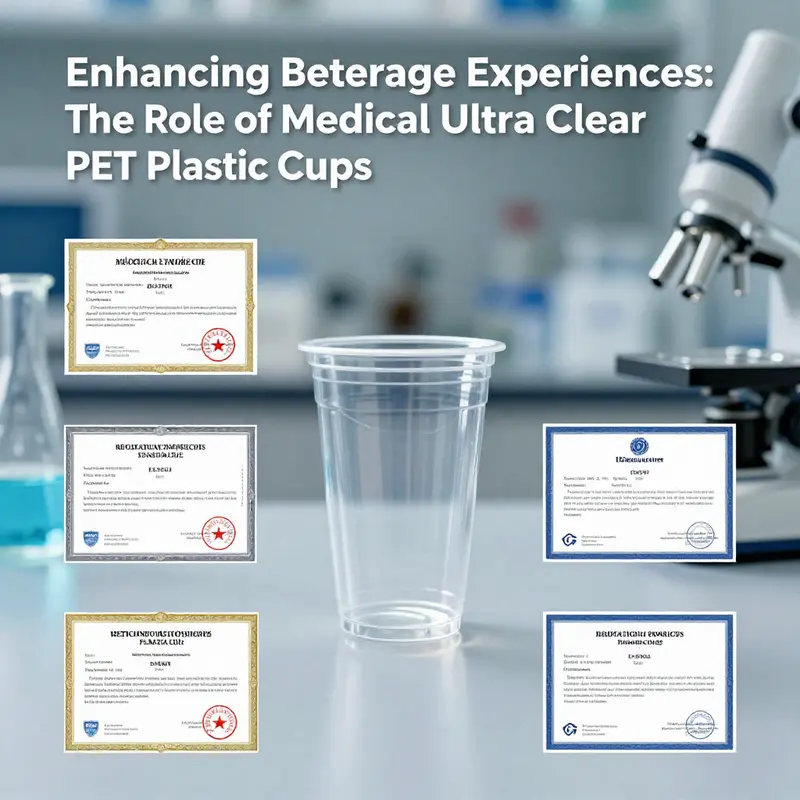
The clinical value of medical ultra clear PET cups rests not only in their optical clarity and mechanical resilience but also in a regulatory ecosystem that guards patient safety, preserves sample integrity, and sustains trust across care settings. In hospitals, clinics, and research laboratories, these cups must perform as precise, nonreactive vessels for medications, diagnostic liquids, and biological specimens. The regulatory standards that apply to them are designed to minimize contamination, prevent harmful migration, and ensure that every step from material selection to manufacturing practice is auditable and controllable. When a healthcare professional regards a transparent PET cup, they are, in essence, reading a compliance certificate rendered visible by glassy clarity. The cup communicates that what is inside can be trusted to be what it is supposed to be, and that the container itself will not become a source of risk as it moves from a patient’s bedside to a centrifuge, a fridge, or a sterile storage cabinet.
At the heart of these standards lies a careful alignment of biocompatibility, material performance, and process discipline. ISO 10993, the biocompatibility framework for materials intended for medical devices, sets the overarching expectations for substances that might contact human tissue or clinical specimens. For PET cups, this translates into targeted testing for cytotoxicity, sensitization, irritation, and systemic toxicity. The aim is not to prove that PET is inherently inert in every possible laboratory scenario, but to demonstrate that the cups used in sample collection, transport, and storage do not introduce adverse biological responses or compromise the integrity of the content. The tests probe potential leachables and extractables in representative conditions, so that what touches a patient or a sample remains nonhazardous and predictable across the life cycle of the product. In practice, manufacturers reference specific subparts of ISO 10993 to validate both the base polymer and any colorants, additives, or surface treatments that might be used to achieve the ultra-clear appearance.
In the United States, USP Class VI provides another layer of assurance. Although coming from a pharmacopoeial context, it remains highly relevant for materials used in close contact with medical substances. PET cups that are advertised for laboratory or clinical use typically undergo assessment of extractables and leachables under simulated storage and contact conditions. The objective is to confirm that substances capable of migrating from the container into a liquid do not reach levels that could affect a test outcome, alter a medication, or pose a patient risk. This emphasis on extractables and leachables complements the biocompatibility work, creating a comprehensive picture of material safety. It also reinforces the practical reality that many medical cups share supply chains with food-contact plastics, and the boundary between food safety and medical safety grows more permeable as use cases expand. In this context, the regulatory emphasis is less about labeling PET as inherently safe in all settings and more about proving safety for the specific intended uses and contact durations that the cups will encounter.
The U.S. Food and Drug Administration’s regulatory framework—anchored by 21 CFR Part 177 for food-contact materials—also informs medical packaging to a meaningful degree. Even when the primary purpose of a cup is not to contain food, the fact that some medical cups handle liquids used in oral therapies, rehydration solutions, or diagnostic fluids means that the same risk considerations apply. The FDA guidance reinforces the expectation that materials employed in medical contexts should not introduce contaminants that could confound a test result or harm a patient. For many manufacturers, this translates into rigorous documentation demonstrating that the resin, colorants, pigments, and adhesives chosen for ultra-clear PET cups meet safety thresholds for the intended duration of contact. It also underlines the importance of traceability, batch records, and clean, validated manufacturing processes that preserve the chemical and physical integrity of the cups through storage and transport.
Manufacturing practice, as a formal discipline, enters the regulation picture through GMP, or Good Manufacturing Practice. GMP demands that cups are produced in facilities with controlled environments, defined cleaning and sanitization regimes, validated process parameters, and robust quality control. Each lot can be traced from raw material to finished product, enabling rapid identification of any deviation that might affect sterility, clarity, or inertness. For medical cups that may be sterilized or pre-sterilized, GMP also anchors the procedures for sterilization validation, packaging integrity, and sterility assurance level. The reliance on GMP is not simply a box-ticking exercise; it provides the confidence that a cup used in a clinical trial, a pharmacy, or an emergency kit will remain compliant from the moment of manufacture to the moment it is opened and used under demanding conditions.
HACCP—Hazard Analysis and Critical Control Points—though traditionally associated with food safety, finds meaningful applicability in medical device manufacturing and packaging. In this realm, HACCP-oriented thinking helps identify critical points where contamination could occur, where surface cleanliness matters, or where packaging integrity could be compromised during transit. It is the strategic mindset that guides how suppliers, converters, and packagers work together to minimize risk at every interface: resin suppliers, extrusion lines, resin additives, molding or forming processes, inks and coatings for decorative or identification purposes, and the final sterile or non-sterile packaging stages. When a facility documents hazard analyses and implements critical controls, it gives buyers assurance that the cups were produced with measurable attention to arising risks rather than ad hoc precautions. The result is a chain of custody that supports patient safety and experimental reliability alike.
In the European context, CE marking and the EU Medical Device Regulation (MDR) 2017/745 frame the conformity assessment that medical devices and related packaging must undergo to be marketed within the European Union. The MDR elevates risk management, technical documentation, and post-market vigilance as essential components of regulatory compliance. For PET cups intended for medical use, this means that the device-level assessment includes the container’s compatibility with medical liquids, its stability under storage conditions, and its non-interference with diagnostic results. The MDR also emphasizes supplier responsibility, requiring manufacturers to provide evidence of component conformity and to maintain a robust risk management file. In practice, many medical-grade PET cups carry certifications and documentation—though it is important to distinguish between devices and consumables—signaling that the cup design, procurement, and production meet the stringent expectations of European health authorities.
As products circulate across borders, companies often emphasize GMP and HACCP credentials as part of their quality narrative. They may also reference sterilization qualifications, facility cleanliness standards, and process controls that minimize contamination during filling, sealing, labeling, and packaging. While the precise regulatory language differs between jurisdictions, the underlying principles are shared: a preparedness to document material safety, a commitment to controlled processes, and an ability to demonstrate compatibility with the liquids that will reside inside the cup. This coherence is essential when the cups serve in clinical trials, outpatient services, emergency kits, or laboratory workflows where accuracy and safety directly affect patient outcomes and research integrity.
A subtle but important consideration is the evolving emphasis on sustainability within medical packaging. Some suppliers pursue certifications that attest to eco-friendly attributes, such as compostability marks, without compromising medical safety or barrier performance. In regulated settings, the challenge is to harmonize environmental claims with evidence-based safety assurances. Clear, traceable statements about material composition, migration limits, and sterilization compatibility help ensure that sustainability goals do not undermine regulatory compliance. In practice, healthcare providers and researchers increasingly weigh both safety and stewardship when selecting containers for specimens or medicines. The result is a more thoughtful balance between transparency, reliability, and responsible resource use.
To the practitioner, the regulatory landscape may feel abstract until it is connected to everyday practice. Consider a scenario in which a petri dish or diagnostic sample must be transferred from patient to analyzer using a sterile or pre-sterilized PET cup. The biocompatibility tests reassure that the cup’s presence will not provoke an unwanted reaction in the surrounding environment or within the sample itself. The leachables assessment reduces the risk that trace substances migrate into a liquid, potentially altering a test outcome or compromising a drug’s stability. GMP and sterility validation confirm that the cup was produced in a clean, controlled setting and that its packaging remains intact until use. HACCP thinking ensures that every step—material handling, extrusion, molding, and storage—avoids contamination pathways. The EU MDR and related regulatory frameworks reinforce that these assurances are not merely local preferences but globally recognized expectations when care teams source medical containers.
From an operational perspective, regulatory compliance for medical ultra clear PET cups translates into a robust, auditable supply chain. Suppliers typically provide documentation that maps to the standards discussed: test reports for cytotoxicity and irritation, extractables/leachables studies, proof of GMP-compliant manufacturing, and evidentiary traces linking raw materials to finished cups. In addition, many manufacturers offer pre-sterilized options or validated sterilization processes, with packaging that preserves sterility until utilization. For organizations conducting clinical trials or operating in high-stakes diagnostic environments, this documentation serves as an essential reliability signal, reducing the need for redundant testing and enabling faster procurement decisions without compromising safety.
Ultimately, regulatory standards for medical ultra clear PET cups serve as a bridge between material science and patient care. They translate the physical advantages of PET—clear visibility, chemical inertness, light weight, and durability—into an instrument of safety and precision. They also remind stakeholders that even seemingly simple items, like a disposable cup, participate in a complex system of risk management. When compliance is pursued with rigor, the cups contribute to clearer observations, more accurate measurements, and better outcomes in clinical research and everyday medical practice. In the end, the value of the cup is inseparable from the clarity of its regulatory foundation, just as its material is inseparable from the clarity of the liquid it contains. For researchers and clinicians alike, that clarity is not just visual; it is a testament to the integrity of the entire diagnostic and care pathway. If you want a concrete illustration of how such cups appear in supplier catalogs and how their transparency is presented within a broader packaging ecosystem, you can explore the disposable-clear-plastic-cup-outdoor-picnic page, which demonstrates how these items are marketed in a way that remains consistent with safety and regulatory expectations across consumer and medical contexts. disposable-clear-plastic-cup-outdoor-picnic page.
For those seeking to anchor these considerations in external regulatory reference, the FDA’s medical device regulation guidance offers foundational context on how materials used in medical devices and associated packaging are evaluated for safety, including biocompatibility, sterility, and material stability. This external resource complements the chapter’s discussion by outlining the agency’s approach to device safety and the expectations surrounding materials and components used within medical workflows. https://www.fda.gov/medical-devices/medical-device-regulation
Seeing Clearly, Perceiving Safety: How Market Dynamics and Material Innovations Shape Medical Ultra Clear PET Cups
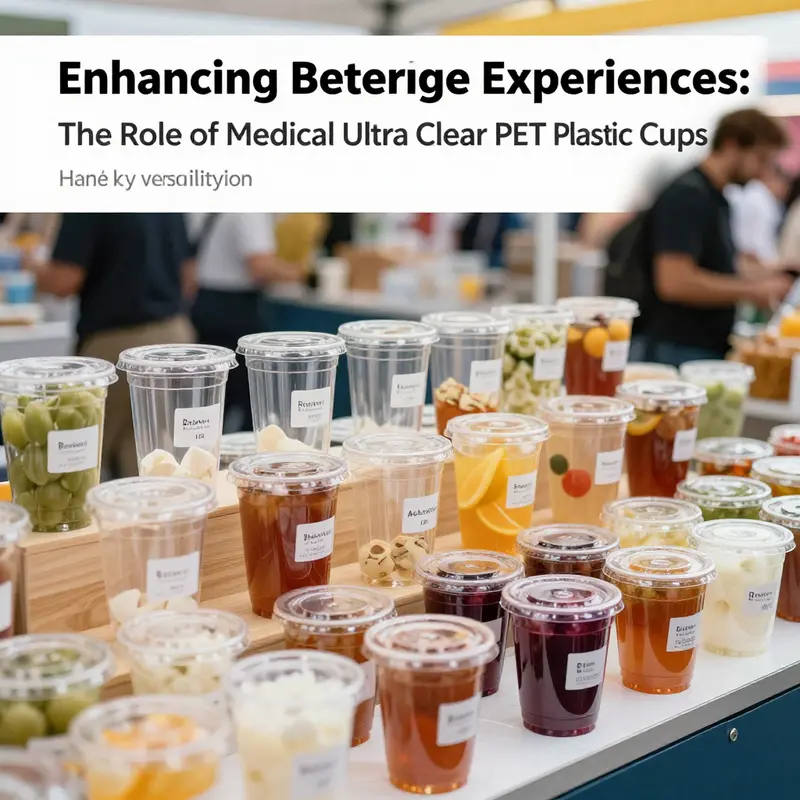
In the sterile world of care, every surface, tool, and container carries the weight of patient safety. Medical ultra clear PET cups are more than simple receptacles for liquids; they are precision instruments in their own right. Their clarity is not a cosmetic feature but a functional mandate. In the quiet moments of a clinic, a nurse or clinician relies on the glassy transparency of these cups to confirm the contents, observe effervescence or separation, and verify correct dosages or specimen integrity at a glance. The visibility is paired with a suite of physical properties that matter in hospital wards, laboratories, and home-care settings where quick, accurate visual inspection can translate into timely decisions. Because these cups are designed to be disposable, single-use items, they also play a critical role in infection prevention. The act of opening, filling, and discarding occurs within a tightly controlled stream that reduces cross-contamination and supports stringent hygiene protocols. In this context, the market’s appetite for ultra clear PET cups is not about novelty; it is about reliability, safety, and the capacity to integrate with modern clinical workflows where every milliliter counts and every observation can influence outcomes.
Technological progress in this space follows a clear logic: doctors and technicians need containers that can withstand routine handling and varied testing environments without compromising the sample or the readable metrics on the cup itself. The material choice—polyethylene terephthalate, or PET—offers a balanced profile. PET combines excellent clarity with toughness, making it less prone to breakage than glass and lighter to carry through crowded hospital corridors or mobile clinics. The inherent chemical inertness of PET means that a wide range of liquids, from low-ionic solutions to light acidity and alkalinity, can be contained without adverse reactions that could skew results. In medical contexts, where accuracy is everything, this stability matters as much as the absence of flavor or odor, which could confuse a patient during administration or a caregiver during observation. Yet clarity remains the hallmark feature. The near-perfect transparency of high-quality PET gives caregivers an unambiguous view of color, turbidity, sediment, or phase separation. When a sample changes color or appears cloudy after storage or transport, it can trigger a prompt re-check, re-test, or a new specimen collection—critical steps in diagnostics, pharmacology, and trial logistics.
Market forces are accelerating the adoption of single-use, sterile, and disposable cups across every level of the healthcare chain. The shift toward single-use items is not mere convenience; it is a strategic response to infection control challenges. In busy clinics and crowded laboratories, reusing containers can introduce risk vectors that compromise patient safety. Disposable PET cups, designed for one-time use, reduce handling steps and minimize cross-contact. They also enable efficient inventory management, since sterilization cycles, cleaning validation, and lot traceability add layers of cost and potential delay in care delivery. The culture of rapid turnaround, particularly in outpatient settings and in field hospitals, makes the reliability of a sterile, ready-to-use cup a practical necessity. In this environment, manufacturers are continually refining the manufacturing process to ensure that every cup leaving the plant is truly sterile, free of particulates, and ready for immediate clinical deployment.
Beyond sterility and disposability, material performance continues to be a focal point of innovation. Researchers and engineers are pushing PET’s boundaries to deliver improved impact resistance, better dimensional stability, and enhanced thermal tolerance. These properties matter when cups are subjected to a range of temperatures—from the cool storage rooms of a pharmacy to the potential warmth of a patient’s care environment. Dimensional stability ensures graduations and markings stay true even after chilling or warming, preserving measurement accuracy that is essential for dosing, sample preparation, or reagent mixing. Chemical resistance remains central as the cup encounters various fluids, including simple saline solutions, buffering agents, diagnostic reagents, and gentle organic solvents used in analytical workflows. The result is a cup that preserves its clarity and its calibrations under routine handling, transport, and use in automated systems that rely on precise fill volumes and consistent wall thickness.
The drive toward precision also shapes the way these cups support patient safety and clinical workflow. Many medical sites rely on graduated markings with high accuracy, allowing caregivers to measure contents quickly during administration or sample preparation. In automated handling environments—where robots or semi-automated systems sort, fill, or cap containers—the cups must exhibit tight tolerances and stable geometry to feed into equipment without jams or misreads. Tamper-evident features are increasingly integrated into the design language of medical PET cups, offering visible signals that the contents have not been disturbed. In diagnostic pipelines, where samples move along conveyors and through analyzers, compatibility with automation is not an optional add-on—it is a core design criterion that supports throughput, traceability, and reproducibility.
Sustainability remains a nuanced portion of the conversation. PET’s clarity and cost-effectiveness have sustained its prominence in medical packaging, but the environmental footprint cannot be ignored. The market increasingly seeks recyclable solutions that align with broader circular economy goals. Recyclability is not a single-issue pursuit; it intersects with supply chain logistics, waste sorting capabilities at healthcare facilities, and the availability of high-quality recycled PET (rPET) that can meet medical-grade standards. Some manufacturers are exploring versions that leverage recycled content while maintaining the optical clarity and purity required for biomedical applications. Others are advancing design principles that facilitate more efficient recycling, such as minimizing coloration, using clean edge finishes, and avoiding additives that complicate reprocessing streams. In parallel, there is growing interest in bio-based or compostable alternatives for some segments of the medical cup family, alongside transparent PET options, with ongoing dialogue about what sustainability truly means in regulated medical contexts where product sterility, compatibility, and regulatory compliance take priority.
The procurement landscape for medical ultra clear PET cups emphasizes rigorous standards and traceable supply chains. Buyers should look for products that meet FDA 21 CFR safety requirements, assuring medical users that the cups are appropriate for contact with pharmaceuticals, rehydration solutions, or diagnostic liquids. ISO 13485 alignment signals a robust quality management system for medical devices and related consumables, including cups used in clinical workflows. REACH compliance helps ensure the absence of harmful substances that could compromise patient safety or data integrity in sensitive testing environments. In practice, these criteria translate into partnerships with manufacturers that deploy advanced thermoforming or injection molding technologies to deliver consistent quality at scale. The strongest suppliers are those who can demonstrate stable production capacity, swift lead times, and reliable containment of microbial and chemical risks across lots and batches. In many cases, this reliability stems from geographic proximity to major medical hubs and well-developed logistics networks. In China’s coastal manufacturing corridors, for instance, facilities with sophisticated process controls can offer rapid turnover from design to sample to full-scale production, while maintaining strict hygiene protocols and validated cleaning procedures that align with clinical expectations.
The broader market outlook for medical ultra clear PET cups points toward continued growth through 2030 as healthcare facilities, research institutions, and mobile medical units expand their reach. The demand curve is supported by ongoing clinical trials, expanded outpatient services, and the increasing adoption of point-of-care testing that relies on compact, single-use packaging. As laboratories adopt more automation and digital record-keeping, the need for standardized containers with readable graduations and reliable material performance becomes even more critical. Innovation will likely continue to converge on several themes: enhancing barrier properties to limit ingress of moisture or fumes that could alter contents; expanding the range of compatible liquids, including more aggressive reagents used in diagnostic chemistry; and refining printing or marking technologies to deliver more precise, legible graduations across a variety of lighting conditions. These trends will be tempered by sustainability commitments and evolving regulatory expectations, resulting in a market that prizes not only clarity but also lifecycle optimization and responsible stewardship of resources.
In this ecosystem, the clinical and industrial communities are increasingly aware that the cup is part of a larger packaging and workflow chain. It interacts with a spectrum of other disposables—lids, seals, and racks—that together enable seamless sample handling and patient care. For procurement teams, this means evaluating compatibility not just within a single product line but across a family of related containers and accessories. The best practices emphasize supplier partnerships that offer comprehensive support, from material data safety sheets and sterilization validation to end-of-life recycling options and emission data for the manufacturing process. As with any medical-grade packaging choice, the decision hinges on balancing performance, safety, cost, and environmental responsibility, all within the framework of regulatory compliance and institutional policies.
To keep pace with these developments, designers and buyers often turn to industry insights and case studies that illuminate how facilities deploy ultra clear PET cups in real-world settings. A practical takeaway is the value of engaging with suppliers who can demonstrate end-to-end quality management, including cleanroom manufacturing environments, validated sterilization workflows, and robust lot traceability. The path from raw material to final cup is a chain of controlled steps designed to protect patient safety while enabling precise, repeatable results in testing and administration. Within the broader packaging ecosystem, you may also encounter cross-pollination with other consumer and healthcare packaging streams, where the same materials and processes are adapted for different regulatory contexts or product formats. For example, a packaging solution that supports high-clarity, barrier-resistant cups might also inform the development of compatible, easy-to-clean, and recyclable lids or trays used in sterile supply chains, reinforcing a more integrated approach to medical packaging design. For readers seeking a broader view of packaging ecosystems that intersect with medical cups, see this overview of custom take-away packaging solutions. custom-takeaway-packaging-supplies-disposable-tableware-for-theme-party.
A critical dimension of the current market is the ongoing search for a balance between clarity, performance, and sustainability. While PET remains the dominant material due to its optical properties and established recycling streams, the push toward greener practices pushes researchers and manufacturers to optimize resin formulations, reduce energy consumption during forming, and design products that are easier to recycle at end of life. This means not only reducing unnecessary additives that can complicate sorting but also exploring the potential of recycled content in a way that preserves medical-grade purity and performance. The goal is a bundle of benefits: a visually pristine product that supports accurate measurement and observation, a package that withstands routine use and handling without compromising sterility, and a pathway toward a more responsible environmental footprint. In healthcare settings, where budgets and resource stewardship matter, the ability to source reliable, compliant cups that also align with sustainability targets can have a meaningful impact on total cost of care, waste management practices, and public trust in clinical operations.
External research and market observations reinforce the practical realities of this landscape. For clinicians and procurement leaders, product specifications, user feedback, and regulatory alignments matter as much as the look of the cup’s crystal-clear surface. The dialogue around these cups, including how they integrate with automated handling systems, how markings hold under repeated sterilization cycles, and how they perform with a wide spectrum of diagnostic liquids, continues to shape specification sheets and supplier capabilities. Real-world performance data and user reviews from established marketplaces and medical packaging catalogs help translate abstract trends into actionable buying decisions. For a concrete example of user-focused specifications and performance messaging in the medical PET cup category, see the external resource that provides detailed product insights and field feedback. https://www.amazon.com/dp/B07VY9BZJN
Final thoughts
Medical ultra clear PET plastic cups are revolutionizing the beverage and food service industries, especially in bubble tea shops, restaurants, and catering services. Their exceptional properties—such as clarity, safety, and compliance—make them an optimal choice for both healthcare applications and everyday use. By understanding the applications, material benefits, regulatory standards, and emerging trends, businesses can make informed decisions that align with consumer expectations and safety considerations. Embracing these sophisticated disposable solutions not only enhances the user experience but also fortifies the overall standard of service offered.