
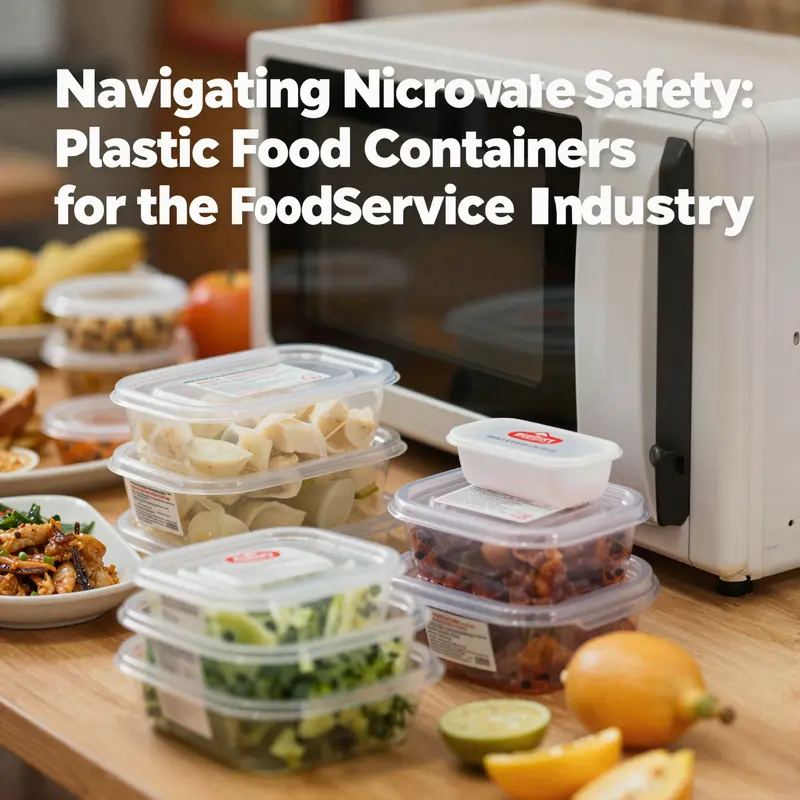
As food service providers seek efficiency and convenience in food preparation and service, the use of microwave plastic food containers has become prevalent. Yet, this trend brings forth important safety considerations that must not be overlooked. With research indicating potential risks associated with certain plastics in microwave use, understanding the implications of chemical migration and adhering to safety guidelines is essential. This article will explore safety considerations, the risks of chemical migration, and practical guidelines, enabling food shops, restaurants, and catering services to make informed decisions regarding plastic containers. Each chapter will equip you with the necessary knowledge to navigate this challenge confidently.
Heat, Leachables, and Microwave Plastic Containers
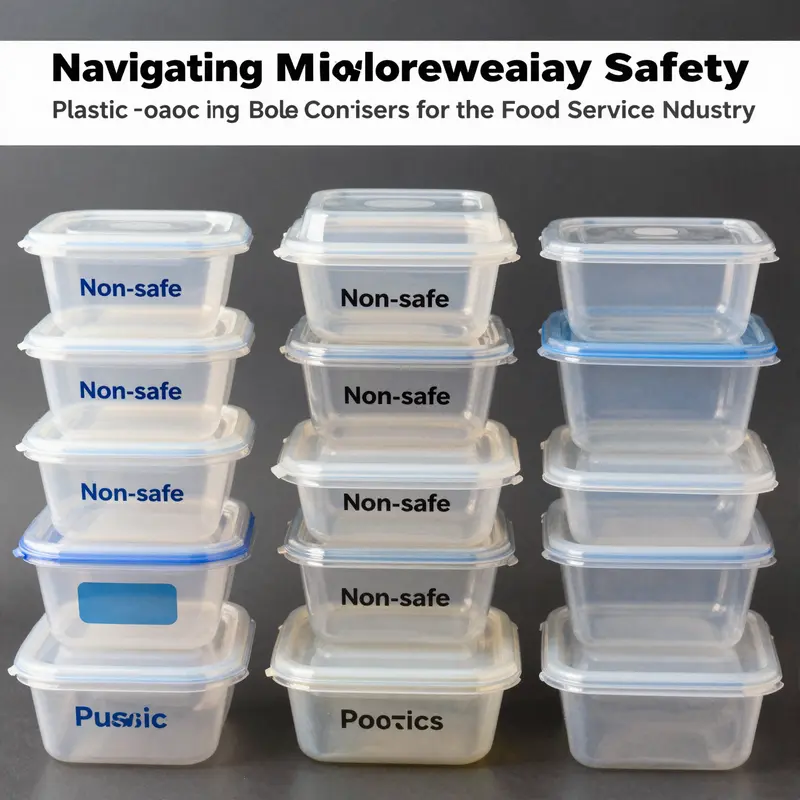
A concise overview of how microwaving plastics can affect food safety and quality. Plastics heated in microwaves can deform or melt and may release additives or monomers into food, especially with fatty or acidic foods. Even containers labeled as ‘Microwave Safe’ can pose some risk due to heat-induced migration, cumulative exposure, and variability in heating conditions. Practical guidance for households includes checking labeling that identifies the polymer, avoiding sealed or tightly closed containers, transferring hot foods to glass or ceramic when possible, and using microwave-safe containers more selectively to minimize repeated heating. Foods high in fat or oil can increase migration, so consider limiting plastic reheating for such meals and favor safer vessels for longer heating. In short, there is a spectrum of risk rather than a binary safe/unsafe verdict. Smart choices and mindful usage, together with clearer labeling and testing, can help households balance convenience with safety.
Heat, Leach, and Lunch: Tracing Chemical Migration from Microwave Plastic Food Containers
When a meal moves from the microwave to your plate, a hidden drama unfolds in the chemistry of plastics. Heat accelerates processes that can move chemicals from the container into the food. This phenomenon, often called chemical migration, is a real daily concern in households that reheat food in plastic packaging.
Common migrants studied in food contact plastics include bisphenol A (BPA) and several phthalates. Many products have eliminated BPA, but traces can remain in older stock or in non-food grade plastics. BPA is discussed for endocrine disruption and low-dose effects. Phthalates such as DEHP and DINP have drawn attention as plasticizers with potential effects on hormones. Other migrants include acetaldehyde and various antioxidants and stabilizers.
Migration depends on temperature, the food, and time. Microwave heating raises migration rates because of higher molecular mobility and solubility of migrants in fat and other foods. Fatty foods draw migrants more readily; acidic foods can alter diffusion. The polymer type matters: PET, PP, PS, PVC each have different risks. Impurities, recycled content, and manufacturing quality influence migration microenvironments inside the plastic.
Regulatory frameworks provide a safety framework. In the EU, regulation 1935/2004 sets general safety expectations for food contact materials. In the US, FDA governs under Title 21 CFR and has specific migration limits. Testing uses food simulants at controlled temperatures. Analytical methods include GC-MS and LC-MS to identify migrants. The goal is to set defensible limits, not to declare zero risk.
Empirical studies show that many microwave containers contain detectable migrants after heating, even innocuous-looking ones. Some containers labeled microwave-safe show migrants, though usually below safety thresholds. The takeaway is prudence, not panic: labeling should be interpreted as a guide, not a guarantee of freedom from risk.
Practice tips: read labels, prefer microwave designed containers, choose polypropylene (code 5) when labeled as microwave-safe. Avoid older plastics, PVC, recycled-content items with unclear provenance. Do not heat sealed containers, vent steam and transfer leftovers to glass or ceramic when possible. Use short heating intervals and stir to promote even heating. Minimize reheating in unknown plastics and favor safer packaging designs.
From a public health view, risk accumulates over time. The precautionary principle guides daily choices: shorter heating, diversifying containers, and avoiding repeated heating of the same container with fatty or acidic foods.
Broader context: NP or safer-plastic options exist. Packaging design choices affect safety and sustainability. The safest approach is to rely on containers clearly labeled microwave-safe, ideally with a polypropylene base and a code such as 5, and to prefer glass or ceramic for reheating when feasible. It is also important to be mindful of sealed containers that can trap steam and build pressure.
Practical steps: inspect the bottom for a microwave-safe label and resin code; if in doubt, transfer to microwave-safe vessels. For fatty or acidic meals, reduce exposure by using safe containers. Short, intermittent heating intervals help. Always consider the cumulative exposure rather than a single meal.
Resources: EFSA provides assessments and ongoing analyses of food contact materials. External resources: https://www.efsa.europa.eu/en/topics/topic/food-contact-materials
Material Matters in the Microwave: A Practical Guide to Safer Use of Plastic Food Containers
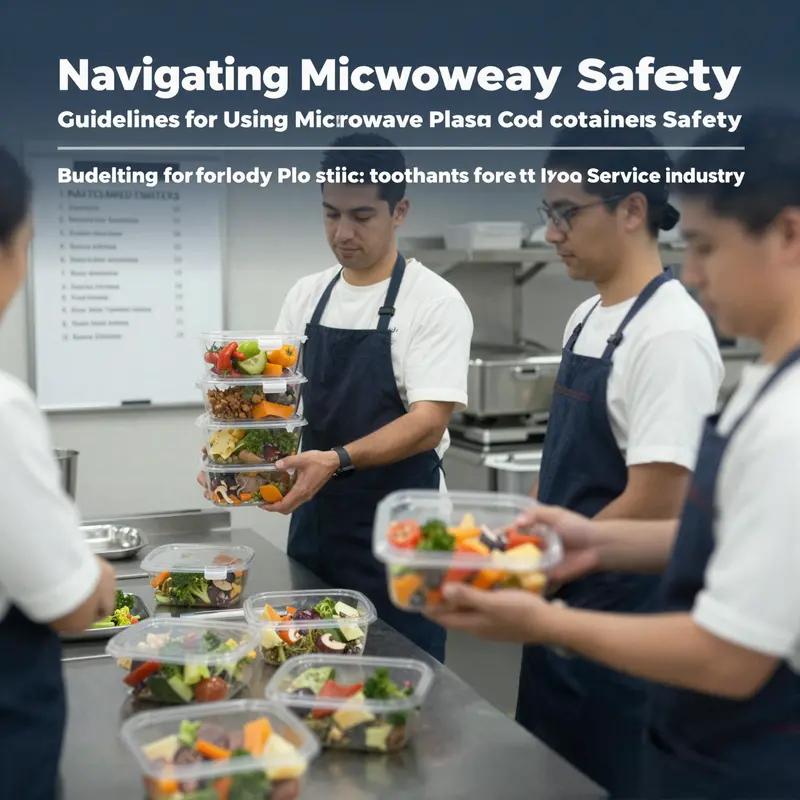
Material Matters in the Microwave: A Practical Guide to Safer Use of Plastic Food Containers
In most kitchens, the microwave sits at the heart of daily life. It promises quick heat, convenient meals, and minimal fuss. Yet beneath the surface of convenience lies a nuanced conversation about the plastics we trust to touch our food. The latest research paints a careful, not alarmist, picture: not every plastic container is safe for microwave heating, and even containers marketed as microwave safe come with caveats. This is not a call to abandon the microwave, but a reminder that material choice, testing, and mindful use can meaningfully reduce potential health risks over time.
A pivotal study published in Environmental Health Perspectives in 2023 tested more than fifty common plastic food containers under simulated microwave conditions. The researchers found that roughly four in ten containers that were not marked as microwave safe released measurable metabolites associated with bisphenol S (BPS) and certain phthalates after heating. While the detected levels stayed below existing safety thresholds set by regulators such as the FDA, the findings invite a broader consideration of cumulative exposure. In everyday life, people do not encounter a single chemical in isolation. Food, drinking water, outdoor air, and consumer products contribute to a combined chemical milieu that, over years of routine heating, may pose subtle risks—particularly for vulnerable populations and during long-term exposure.
This context matters because it helps explain why many households still reach for plastic containers in the microwave. The instinct is practical: containers labeled “microwave safe” offer a sense of reassurance, a shortcut to speed and ease. But safety is not a binary label. It is a spectrum built on how plastics behave at heat, how tightly they seal, and how they interact with fats, sugars, and acids in different foods. The chapter that follows takes that spectrum and translates it into a set of concrete, evidence-based practices. It emphasizes not only what to look for on the container itself but how to use every container with a mindset that minimizes risk while preserving the convenience that microwaves provide.
Central to the conversation is the resin identification code system, the little triangle of numbers on the bottom of many plastic items. Among these codes, Code 5— polypropylene (PP)—emerges as the safer option for microwave use. Containers marked with “PP” or “5,” and bearing a microwave-safe designation, have undergone testing that supports heat resistance and reduced likelihood of releasing harmful substances when heated within typical culinary ranges. Codes 1 (PET), 3 (PVC), 6 (PS), and 7 (Other/PC) are generally viewed with caution in the context of microwaving. PET can leach certain substances at higher temperatures; PS—especially foam takeout containers—can release styrene; polycarbonate (PC) has a well-documented history of BPA leaching when heated. These associations are not absolutes in every case, but they guide safer choices in everyday practice.
Another layer in the practical decision tree is the container’s condition. A microwave-safe label is a useful signal, but it cannot compensate for visible damage. Cracks, chips, deep scratches, or warping compromise structural integrity and can create microenvironments where heat concentrates or where leaching pathways widen. The recommendation to pass on damaged plastics is consistent with broader food-contact safety principles: integrity matters as much as identity.
Beyond container type and condition lies the wisdom of alternatives. The safest, most stable heating experience often comes from moving the meal to a different vessel: ceramic, glass, or heat-tolerant stainless steel tend to maintain their form better under microwave conditions and generally exhibit lower risks of chemical migration. This is not a blanket prohibition on plastics; it is a call for proportional caution. In many households, counterspace and routines make plastic containers a practical default for storing, reheating, and serving. The goal is to maintain that convenience while systematically reducing exposure to potentially problematic substances.
A key part of this strategy is to embrace a minimal-use approach: avoid heating foods that push plastics toward higher temperatures. Foods with high fat content or high sugar content heat more rapidly and can reach higher temperatures than water-rich foods. When fats or sugars surge, they can amplify the thermal stress on a container, increasing the likelihood of deformation and, in some scenarios, the migration of additives into the food. The practical consequence is straightforward: for high-fat foods or sugary sauces, consider transferring to a safer vessel and reheat slowly or using a short, monitored microwave cycle.
The principle of prudent usage also extends to sealing. Sealed containers can trap steam and pressure during heating. Even a seemingly harmless jar with a tight lid can become a safety hazard if placed in the microwave. Bursting or explosion is a rare but real risk, especially with home-canned foods or thick sauces that generate significant internal pressure. The safer default is to heat unsealed containers or to use vented lids designed for microwave use, or to cover with microwave-safe materials that do not trap heat like parchment paper or a vented lid. In sum, the conversation about safety becomes a conversation about pressure, heat transfer, and the integrity of the container.
How do these insights translate into daily rituals without turning the kitchen into a science lab? The answer lies in a blend of mindful selection, careful preparation, and alternative pathways that preserve both safety and convenience. Begin with the most reliable selector: choose containers that are explicitly labeled as microwave safe and verify the resin type when possible. When in doubt, or when heating foods that are high in fat or sugar, transfer the meal to a glass or ceramic vessel, which offers robust heat tolerance and stable performance. If you continue to use plastic containers, create a routine that reduces the number of heating cycles they experience. For instance, pre-portion meals into microwave-safe glass bowls for reheating rather than reusing a single plastic container repeatedly. Reduce the temptation to reuse damaged plastic items; replace them when signs of wear appear.
The practical guidelines also encourage a nuanced reading of labels. The phrase “microwave safe” is not a free pass to dump any content into the microwave. It is a safety credential that is most credible when paired with the PP/5 designation and a clear indication that heating is appropriate for the intended use. Store and reheat foods in containers that comply with these signals. And when you do choose plastics, maintain a routine of gentle handling: avoid leftover foods that sit for extended periods in plastic containers, especially in the fridge or freezer where materials can become brittle or stressed, thereby altering how they behave when heated.
Embedded in this approach is a modest but meaningful shift in how we view packaging choices. The everyday kitchen is a testing ground where safety principles intersect with convenience. A small change—selecting PP5 containers, replacing worn items, and favoring glass or ceramic for critical reheating moments—adds up across weeks and months. It is not a dramatic overhaul but a deliberate practice. It reflects a scientific posture: listen to the evolving evidence, apply it, and adjust as new data emerge. In practice, that might mean keeping a compact set of microwave-safe plastic containers for light, quick reheats while reserving heavier, more frequent reheating tasks for safer alternatives. It also means recognizing that some containers marketed as microwave safe may still contribute to low-level chemical migration, especially with long-term daily use. This nuance is essential for readers who are balancing busy schedules with health considerations.
A practical pathway that aligns with growing consumer demand for safer, more sustainable packaging exists in the marketplace. Some manufacturers offer packaging designed with microwave safety in mind that also emphasizes environmental responsibility. In particular, there are forms of takeout and meal-prep packaging designed to withstand heating without compromising the food’s integrity or the container’s structure. These options aim to combine safety, durability, and sustainability. For readers who want to explore safer options without sacrificing convenience, a relevant category of packaging options can be navigated by seeking products described as microwave-safe and made from materials known for heat stability and lower chemical leaching potential. For those who want to explore such safer options in practice, one route is available through a range of packaging types that prioritize microwave compatibility while staying mindful of environmental considerations. eco-friendly takeout boxes with microwave-safe design. This kind of packaging represents a pragmatic compromise: it preserves the convenience of reheating in a container designed with safety in mind, while also supporting more sustainable material choices.
Another layer of consideration concerns the broader context of cumulative exposure. Even with careful choices, people are exposed to a variety of chemicals from multiple sources. The International agencies and national health bodies consistently emphasize that reducing exposure, across all pathways, can have health benefits over time. In this sense, the focus on microwave-safe labels is a practical anchor. It gives households a clear signal to minimize risk not by mastering every chemical variable, but by making informed, consistent choices about the containers used for reheating. As with any health-related practice, the path to safer heating is not about absolute guarantees but about incremental reductions in risk through sound material choices, mindful handling, and sensible substitution when feasible.
The guidance offered here is designed to be usable in everyday life rather than technical jargon that dissolves into abstraction. It invites readers to apply a few manageable steps: confirm the labeling, inspect for damage, prefer PP5 where possible, avoid heating sealed or damaged containers, and consider safe alternatives when food types demand higher heat or longer exposure. It also invites a broader curiosity about packaging itself—how it is produced, what additives it contains, and how those additives behave under common kitchen conditions. The emphasis is on a practical, evidence-informed approach that respects the realities of modern eating patterns and food preparation while honoring the precautionary impulses that have long guided food safety.
In closing, the landscape of safety around microwave heating and plastic containers is not a verdict but an ongoing conversation. The interplay of material science, regulatory guidance, and everyday routines requires readers to remain vigilant without sacrificing the efficiency and comfort that modern appliances offer. The call is to use the microwave thoughtfully: choose the right container, monitor its condition, recognize when alternatives are warranted, and keep one eye on the evolving science. This approach preserves both health and convenience and keeps pace with new data as it emerges. For those who want to take a practical next step, exploring safer packaging options that still accommodate the microwave environment can be a productive move. And for a wider regulatory and safety overview beyond the kitchen, there are trusted resources that summarize best practices and explain why these guidelines matter in the broader landscape of food safety.
External resource: For a concise overview of microwave safety guidelines from a regulatory and consumer-focused perspective, see the FDA’s guidance on microwave ovens and food safety.
External link: https://www.fda.gov/food/food-safety-education/microwave-ovens-and-food-safety
Final thoughts
Understanding the complexities of using plastic food containers in microwaves is imperative for food service businesses aiming to safeguard health while enhancing operational efficiency. This article outlined pivotal safety considerations, the risks of chemical migration, and clear guidelines for responsible usage. As consumer awareness grows, adopting best practices will not only protect your customers but also bolster your business’s reputation. Let informed choices guide your packaging options, ensuring compliance and safety at every turn.