
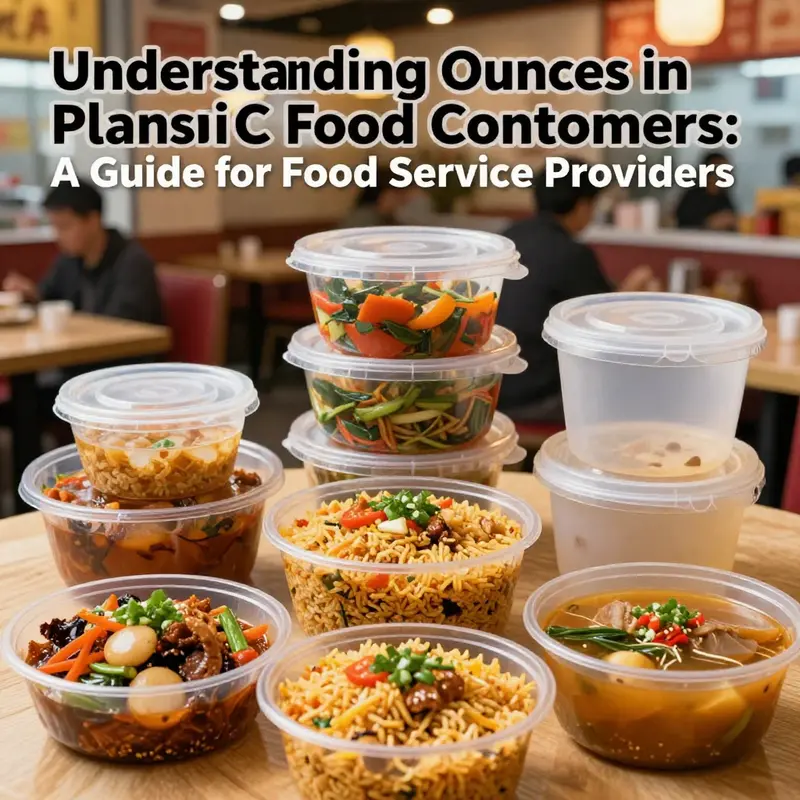
Plastic Chinese food containers are a staple for meal preparation and service in various food businesses, including bubble tea shops, restaurants, food trucks, and catering services. Understanding the different sizes of these containers, their materials, and appropriate uses is essential for business owners to optimize their food storage solutions. This journey delves into the common sizes of plastic containers and underscores their significance, which enhances efficiency and safety in food service. Let’s explore how many ounces these containers hold, the material considerations for safety, and their intended uses across diverse settings.
Sizing the Takeout Experience: How Many Ounces Matter in Plastic Chinese Food Containers
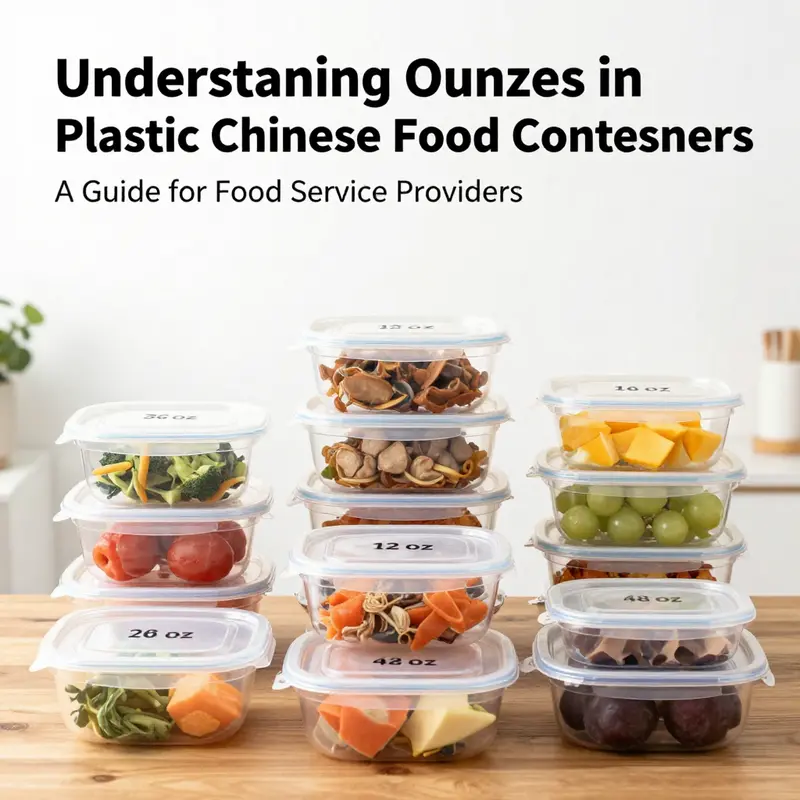
When a customer orders takeout or a workday meal is prepped for the week, the number of ounces a plastic container holds becomes more than a quirk of packaging. It is a practical measure that shapes portion control, keeps sauces from wandering, and determines how many meals can ride in a single box without compromising food integrity. In the world of Chinese-style takeout containers, a familiar spectrum of capacities emerges. The most common sizes fall between eight and thirty-two ounces, with smaller eight-ounce vessels ideal for a single portion of rice or a modest side, and larger options such as thirty-two ounces designed to cradle a full entrée or a generous serving of soup. Beyond that familiar middle ground, there are also twelve-ounce, sixteen-ounce, and even forty-ounce or larger configurations that find their way into bulk takeout, family meals, or batch-prepared portions for meal-prep enthusiasts. These capacities matter because they align with how much food is typically consumed in one sitting, how much room is needed for sauces or separate compartments, and how the container fits into the rhythm of a restaurant or a home kitchen. The practical implications echo through every decision from the supplier’s shelf to the customer’s table: the ounces that seem like a simple metric actually orchestrate the dynamics of portioning, packaging efficiency, and even the perceived value of the meal. A container that is too small risks leaving sauces spill-prone gaps or forcing a second container for the same dish; one that is too large can create awkward, empty space that makes handling less efficient and can invite heat loss or freezer burn if the container is used for storage and later reheating. In this sense, the ounce count is a design constraint as much as a convenience feature, guiding engineers to balance wall thickness, lid fit, and surface area to minimize leakage while maximizing durability and ease of use.
From the perspective of a kitchen or a storefront, the range of sizes is not merely a catalog of numbers but a ladder of use cases. Eight-ounce containers tend to be the go-to choice for a single portion of steamed rice, a small side of vegetables, or a bite-sized snack pack that travels well. They are light, inexpensive, and quick to stock, making them a staple in fast-service settings where speed matters as much as predictability. A step up to sixteen ounces broadens the range to include a larger main component, such as a protein with a modest vegetable pairing, or a larger portion of rice that might accompany a meat dish. Sixteen-ounce vessels strike a balance between portability and heft, offering enough capacity to avoid cramped portions while staying compact enough for a student’s lunch bag or a commuter’s tote. The twenty-four-ounce and thirty-two-ounce formats carry the bulk of everyday takeout orders and meal-prep routines. A twenty-four-ounce container often becomes a standard for meal-prep bowls that need to hold a complete protein, a hearty starch, and a bed of greens or stir-fried vegetables without overflowing. A thirty-two-ounce vessel, sometimes nicknamed a quart-sized option, is well-suited to soups, larger entrees, or family-style servings where sharing is part of the experience. In some markets, even larger choices—forty-eight ounces or more—appear as family-sized containers used for generous portions, communal meals, or soups intended to serve multiple people. The practical takeaway is not simply the number itself but how it translates into serving sizes, storage, and transport in a world that prizes speed and reliability as much as taste.
This spectrum is not uniform across all suppliers or all restaurant concepts. Container design, the geometry of the box, and the tolerance for fill volume all contribute to the actual ounce capacity that a consumer experiences when they lift the lid. A given product may be labeled as eight ounces, yet the way the walls flare outward, the thickness of the plastic, or the presence of interior dividers can alter how much of the space is effectively usable. For users who need precise portion control—for example, a meal-prep routine that aims to deliver the same protein-to-starch ratio every day—the difference between a nominal eight-ounce capacity and a working seven or seven-and-a-half ounces can be meaningful. This is why the industry emphasizes not just the printed capacity on a label but the overall geometry and the tolerances baked into the manufacturing process. The result is a family of containers that feels familiar to the eye and confident in practice, capable of handling hot foods, sauces, and even cold desserts with the same dependable lid snugness.
The materials that enable these capacities—primarily polypropylene (PP) and polyethylene (PE)—also shape how the ounce counts translate into real-world performance. PP is widely favored for its rigidity and heat resistance, making it a reliable choice for hot meals that need to travel without warping. It tends to support tighter lid seals and a crisp edge that resists cracking under pressure, which helps maintain an accurate perception of capacity as the container is handled, stacked, or packed into a cooler. PE, with slightly more flexibility, often accommodates a gentler squeeze without cracking, which can be advantageous for bagging multiple containers together or for containers with more intricate lid designs. Both materials lend themselves to features such as leak-resistance and the ability to tolerate a microwave in many everyday scenarios. The trade-offs revolve around the balance between stiffness, heat tolerance, and the ability to resist oily or acidic foods that might interact with the plastic over time. Those considerations are exactly why many manufacturers label their products as microwave-safe or freezer-safe, and why some containers specify that they are BPA-free. The absence of bisphenol A has become a de facto expectation for containers meant to hold hot foods or long-term storage, ensuring that the ounce count remains a reliable measure of portion capacity rather than a symptom of compromised safety.
In practice, the choice of size is often guided by the intended application. A restaurant that serves a wide array of dishes may stock multiple sizes to cover the continuum from a single-person lunch to a family-size soup for sharing. A meal-prep enthusiast might favor a set that includes both eight-ounce and sixteen-ounce options to accommodate different days’ meals with minimal waste. A catering operation may lean toward the thirty-two-ounce or larger end of the spectrum to ensure that generous portions are delivered in a single box, reducing the need for multiple containers when a tray of noodles or a pot of soup is transported. The availability of several sizes in the same line also simplifies inventory and eliminates guesswork for staff who need to meet specific customer expectations every day. When a customer is choosing, the ounce count they see on the packaging is not just a label but a signal of how much food to expect, how easy the meal will be to carry, and how well it will withstand refrigeration or reheating. And because these containers are designed to be leak-proof and microwave-safe, the ounce count is reinforced by a practical assurance: the food will travel intact and reheat without compromising its texture or flavor.
The design language used by producers often mirrors these practical concerns. The shapes—whether square, rectangular, or rounded—affect not only the visual appeal but also the way space is utilized in a lunchbox, a lunch bag, or a pantry shelf. A square or rectangular container can maximize the number of units that fit into a packing box, aligning well with uniform stacks and shelf organization. Rounded corners or curved walls might reduce the risk of food getting stuck in crevices, which can influence perceived cleanliness and ease of cleaning after use. The lid mechanisms—whether snap-on, hinged, or vented—play a pivotal role in ensuring that the chosen ounce capacity remains trustworthy under pressure, during heating, or when the container is jostled in transit. The ounce count is thus inseparable from the design choices that govern durability, seal integrity, and usability. In a marketplace where a shopper might buy several containers for different meals, the consistency of lid fit and container shape becomes part of the buying experience, a value proposition that extends beyond a single unit.
For those who want to scratch beneath the surface of these everyday choices, it helps to think about the journey of a container from factory shelf to customer hand. The capacities are preliminarily set during the mold design and plastic formulation stage, where engineers forecast how much material will be required to achieve the desired strength and heat tolerance. Then, during production, the actual poured resin and the molding process determine filling tolerances, which in turn affect the usable capacity. Small variations in wall thickness or internal ribbing can add or subtract a fraction of an ounce, and while these differences may seem minor, they compound across thousands of units and across weeks of use. This is why exact numbers are often approximate, and why suppliers provide tolerance ranges rather than a single fixed figure. Consumers who notice their favorite eight-ounce box holding just a touch more or a touch less than expected are witnessing the real-world consequence of these engineering decisions. In the end, the ounce count is more than a static figure; it is a reflection of precision, safety standards, and practical design that seeks to satisfy both the hurried cook in a bustling kitchen and the careful planner who inventories meals for the week.
If you want to see a sense of the broader packaging ecosystem that informs these capacities, consider how suppliers frame their offerings for takeout and meal-prep scenarios. The landscape includes lines that emphasize customization, modular packaging, and the ability to tailor sizes to specific menu items or dietary needs. For readers who are curious about the range of packaging designs that can house food in roughly the same ounce bands, one may explore supplier listings that discuss takeaway packaging options and “theme party” packaging lines. For example, one source highlights customizable takeaway packaging and disposable tableware designed to suit a variety of event needs, illustrating how a seemingly simple choice—how many ounces a container holds—lives within a larger system of product design, consumer expectations, and logistical efficiency. A practical way to connect with this broader landscape is to explore a lineup such as this: custom-takeaway-packaging-supplies-disposable-tableware-for-theme-party. The link provides a window into how packaging providers assemble complete solutions for catering and event settings, another reminder that ounce counts are not isolated numbers but a doorway into a functionally coherent packaging strategy.
In the end, the common eight, twelve, sixteen, twenty-four, and thirty-two-ounce containers, along with the occasional forty-eight-ounce or larger option, map closely to real-world eating patterns. They serve as a practical ladder for portioning, convenience, and cost efficiency across home cooking, meal prep, and restaurant service. The material choices—PP or PE—support the necessary properties to keep food stable, safe, and appetizing through storage, transit, and reheating. The design choices—shape, lid style, and wall thickness—translate the ounce capacity into a tangible user experience. And the broader packaging ecosystem that surrounds these options—ranging from bulk supplier catalogs to customized takeaway lines—ensures that the simple acts of weighing and sealing a container become part of a larger, well-orchestrated operation. For researchers and practitioners alike, the focus remains squarely on how many ounces a container can hold, because that number frequently dictates how much food is ready to be enjoyed, how reliably it travels, and how confidently it can be stored for later use. The next time a lid snaps shut and a meal is sealed for transport, that small number—eight, twelve, sixteen, twenty-four, or thirty-two—carries with it a story about efficiency, safety, and taste, all woven into the everyday practice of serving hot, flavorful Chinese dishes in a sturdy plastic vessel.
External resource: For more detailed specifications and dimensions across different container designs, see the external resource provided by supplier listings at https://www.alibaba.com/product-detail/Plastic-Chinese-Food-Containers-Wholesale-Explained_1600574899538.html
Material, Safety, and Capacity: Choosing the Right Ounces for Plastic Chinese Food Containers
Material, Safety, and Capacity: Choosing the Right Ounces for Plastic Chinese Food Containers
Understanding how many ounces a plastic Chinese food container holds is only part of the decision when you buy or use one. Equally important are the materials, temperature limits, and safety practices that determine whether the container will perform well and protect the food and people who eat it. This chapter weaves capacity and safety into a single practical guide. It explains how container material affects the safe usable volume, which ounce sizes suit which dishes, and what to watch for when reheating, storing, or transporting takeout.
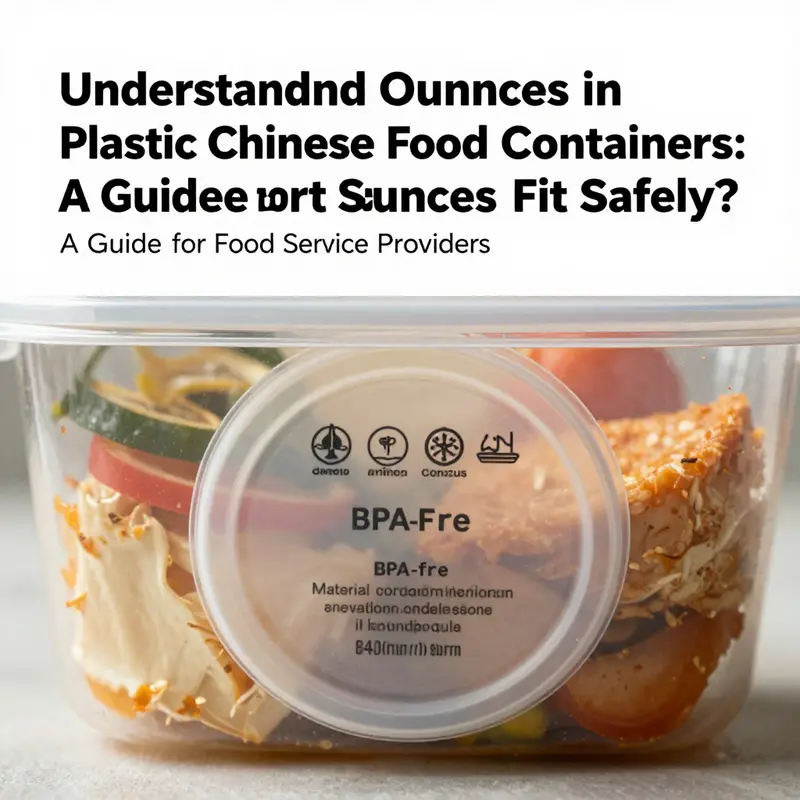
Plastic containers used for Chinese food vary in size—from small single-serving 8-ounce boxes to family-size 32- or 48-ounce bowls—but raw capacity alone doesn’t guarantee safe use. The two most common polymers in this space are polypropylene (PP) and modern copolyesters like Tritan™-style materials. PP is lightweight, heat-resistant and chemically stable, often rated safe for microwave use up to roughly 230°F (110°C). Copolyester varieties offer superior clarity and impact resistance; they are also BPA-free and resist staining and odor retention better than some lower-grade plastics. Both types are frequently certified as food-grade by regulatory bodies, but certification and labeling should always be checked before assuming any particular use is safe.
Capacity interacts with material limits in two practical ways. First, the larger the volume you place in a container, the greater the thermal mass when reheating and the more stress placed on the material and lid. Second, some plastics behave differently when used with hot, fatty, or acidic foods: oils and fats absorb and retain heat, raising local surface temperatures inside the container and increasing the risk of deformation, leaching, or lid failure. That means a container that is safe for an 8-ounce portion may face trouble when loaded to 32 ounces and microwaved repeatedly.
Selecting the right ounce size requires matching three elements: the dish and portion, the material and construction of the container, and the intended handling (microwave, freezer, transport). Use these practical pairings as a rule of thumb:
- 8–16 oz: best for single portions of rice, side dishes, or moderate noodle servings. Small containers are quick to reheat and cool evenly. They put minimal thermal stress on lids and walls, so PP containers rated microwave-safe perform well here.
- 16–24 oz: suitable for larger individual meals, combo plates, and bento-style portions. These sizes balance portability with capacity. If reheating in a microwave, remove the lid or vent it to avoid pressure build-up.
- 24–32 oz: works for family portions, soups, or meals with liquid components. These sizes are useful for takeout that serves multiple people. Exercise caution when microwaving at full capacity—heat distribution can be uneven and lids can warp.
Manufacturers commonly recommend not exceeding 24 ounces for routine microwave reheating unless the container is explicitly rated for the higher volume. This recommendation is practical. If a 32-ounce container is microwave-safe only when empty or partially filled, repeated heating of full containers may cause the lid to deform or the container to soften, leading to leaks or spills. Even containers labeled microwave-safe have limits. Check the product’s temperature rating and follow the guidance on permitted food types—high-fat soups or dishes with deep oils concentrate heat and stress materials differently than a broth or steamed rice.
Beyond the polymer type, container features influence safe use. Rigid walls and higher melt-temperature materials tolerate higher heat. Reinforced rims and well-fitted lids reduce leaks and hold shape during transport. Containers designed with a small vent or a loose-fitting lid allow steam to escape during microwaving; this reduces pressure and helps avoid sudden lid dislodgement. Seal design matters: silicone gaskets improve leak resistance but may reduce tolerance to very high temperatures unless specified. For takeout that will be reheated, prioritize containers marked microwave-safe for the expected fill level.
Food safety certifications and labels are practical safeguards. Look for FDA or EFSA compliance statements, and for explicit claims such as BPA-free, food-contact safe, or microwave-safe to X°F. These labels show the product has been tested against recognized standards. However, the presence of a label is not a license to misuse the container. Temperature and reuse instructions matter: many disposable-style containers are intended for single use or limited reuse. Repeated cycles of heat, washing, and exposure to oils accelerate wear and increase the risk of microscopic degradation that could transfer unwanted compounds to food.
Storage and freezing alter the calculus as well. Most PP containers handle freezer temperatures without becoming brittle, though some copolyesters manage cold and hot extremes better. When freezing soups or sauces, leave headroom to allow for expansion; liquids expand as they freeze and can warp lids or crack walls if filled to the rim. For freezer storage, choose an ounce size that aligns with portioning needs—freezing in 8–16 oz increments simplifies reheating and reduces repeated thaw cycles. Larger containers for bulk storage are useful but should be thawed and reheated in portions when possible to preserve both the material and the food quality.
Handling and reuse influence safety in everyday practice. Avoid using plastic containers for cooking on stovetops, in oven ranges, or under broilers. Do not use them at temperatures above the manufacturer’s rating. Avoid exposing plastic containers to direct flame or high conductive heat from metal pans. When washing, follow temperature guidance—some containers withstand dishwasher cycles, but repeated exposure to high-detergent environments can dull clarity and degrade gaskets. If a container shows signs of crazing (fine cracks), permanent staining, persistent odors, or an altered fit between lid and rim, retire it from food use. These are signs the polymer has been compromised.
Transportation of filled containers exposes lids and seals to mechanical stress. For takeout businesses or meal delivery, choosing a size that leaves a small gap between food and lid reduces the chance of overflow during transit. Supporting boxes or carriers that stabilize containers and prevent tipping also reduce leaks. For consumers carrying containers in bags, place them upright and inside a secondary bag or compartment to avoid spills. When using large containers for soups, ensure lids are properly vented or tied down in a way that prevents pressure build-up, especially when the food is still hot.
Understanding portioning by ounce helps match meal types to container sizes and minimizes risk. Dense items like stir-fried meats and vegetables pack differently than airy rice or noodle dishes. Volume measured in ounces for liquid items translates directly, but for solids, ounce capacity describes volume rather than weight; a compact vegetable stir-fry and a soup that weighs the same will occupy different volumes. Many vendors list container capacity in fluid ounces, which is the practical measurement for liquids and mixed dishes. If in doubt, test portioning: scoop a typical serving into the container and note headspace. Leave a finger-width of space for lids where possible to accommodate steam and movement.
Environmental and health considerations are part of the safety conversation. Reusable containers made from high-grade PP or copolyesters are a better choice for repeated use compared to thin single-use plastics. They stand up better to heat and washing and are less likely to degrade. If sustainability is a priority, combine high-quality reusable containers for hot and reheated foods with compostable or paper-based solutions for dry items where appropriate. For side-use items like sauces or condiments, small, sealable disposable sauce cups help portion and maintain freshness; several suppliers offer compact disposable sauce cups and lids designed for condensation control and leak resistance. For those interested in such options, consider a disposable sauce container box as a companion to main containers to reduce mess and preserve quality.
When buying in bulk for a restaurant or catering operation, specify the expected use-case for each container size. Ask suppliers for data on temperature limits, the number of safe reuse cycles, and any testing for chemical migration at varying temperatures. Inquire about lid compatibility across lines—mixing lids and bases from different productions can compromise the seal. A quality supplier will provide clear instructions on maximum recommended volumes for microwave use and guidance on venting and reheating. Where possible, request samples and perform in-house reheating and transport tests with your typical dishes.
Practical tips for daily use that tie capacity to safety:
- Always check labels. Confirm microwave-safe, freezer-safe, and any maximum temperature ratings before heating or freezing. Labels are the first line of safe use.
- Match portion to container. Heat mass is critical. Reheating a small portion in a large container wastes energy and can produce steam pockets; conversely, reheating a large volume in a container not designed for it risks deformation.
- Vent when microwaving. Even microwave-safe lids should be loosened or vented to let steam out. This reduces pressure and helps even heating.
- Avoid grease-heavy reheating in large volumes. Fat concentrates heat and can cause localized softening; reduce power or heat in intervals and stir.
- Leave headspace for freezing. Liquids expand; leaving 10–20% headspace prevents cracking.
- Rotate containers for reuse. Use the most heat-tolerant containers for reheating and reserve thinner, less durable containers for short-term storage or cold foods.
- Retire compromised containers. Visible damage, permanent odors, or poor sealing are reliable signs a container should be replaced.
Capacity labels—8, 12, 16, 24, 32 ounces and beyond—serve as practical guides. Yet safety depends on thoughtful use: knowing the material limits, matching portion to container size, venting for hot foods, and following reuse instructions. When these elements align, plastic Chinese food containers offer a safe, flexible solution for takeout, meal prep, and storage. When in doubt, choose a slightly smaller portion size for reheating, and supplement with small sealed sauce containers for oily or acidic components to protect the main container. For more on material specs and common industrial uses, see the industry overview linked below.
External resource: Plastic Chinese Food Containers Wholesale Explained: Composition, Key Characteristics, and Common Industrial Uses
Internal link: For portioning condiments and reducing leaks during transit, consider pairing main containers with a compact disposable sauce container box.
The Ounce Equation: Navigating Takeout Box Sizes, Reuse, and Heat with Plastic Containers
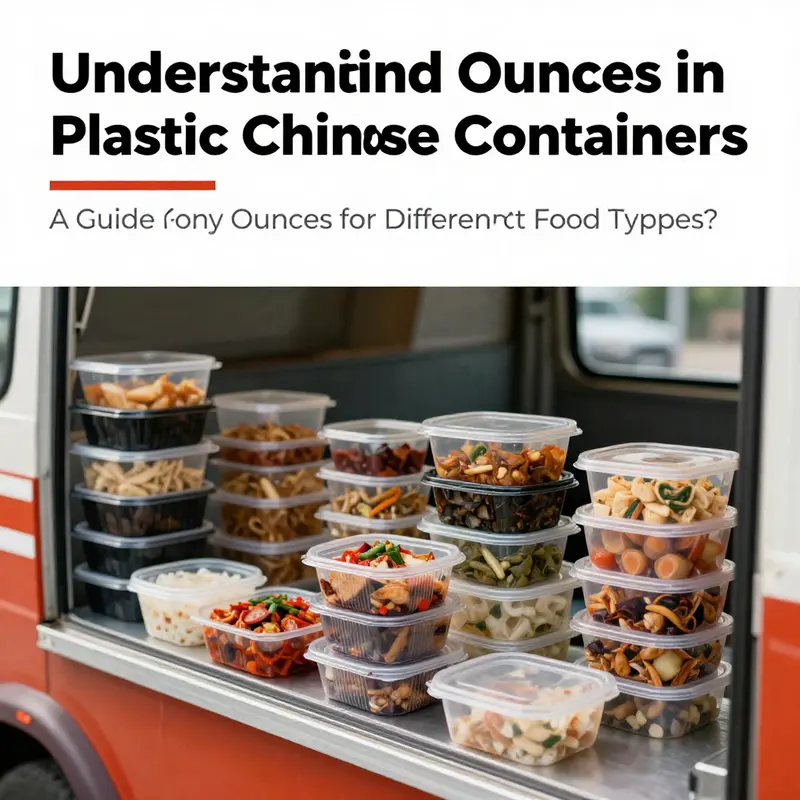
Ounces matter more than numbers on a takeout box. They signal capacity for portioning, heating, and reusing the box long after the meal is gone. The most common sizes—8 oz, 12 oz, 16 oz, 24 oz, 32 oz, and 48 oz—describe practical ranges rather than universal standards. Shapes matter: a tall 24 oz container can feel different from a squat one, and a rectangular lid can simplify stacking in a fridge.\n\nMaterial choice matters too. Polypropylene (PP) boxes are often microwave-safe and handle reheating well; their heat tolerance makes them reliable for leftovers. Polystyrene (PS) containers are clear and rigid, often favored for cold foods or desserts, but they are less forgiving with high heat. Each material interacts with the ounce in choose-the-right-container decisions: heat tolerance, seal strength, and resistance to leaks.\n\nAgainst the backdrop of these capacities, the design details—lid fit, seals, venting, and stackability—shape daily use. A good box pairs the chosen ounce capacity with a lid that seals reliably, reduces spills, and supports reuse. For home cooks and takeout operators alike, the takeaway is simple: match the container size to the dish’s portion and reheating path, then let the material and design support that choice.
Final thoughts
In the food service industry, the size and type of plastic Chinese food containers can make a significant difference in operational efficiency and customer satisfaction. Understanding the common sizes, material properties, and practical applications helps food service providers select the right containers for their needs. By ensuring that they choose appropriately sized and safe containers, businesses can store and serve food effectively while upholding quality standards. Embrace the right packaging solutions to elevate your food service experience.