
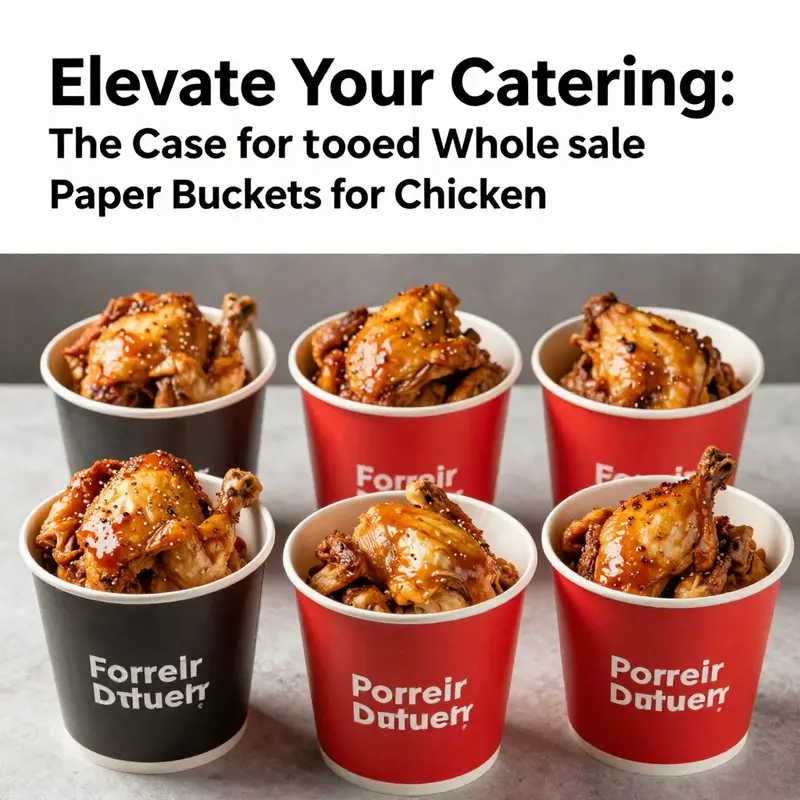
In today’s competitive food market, presenting your culinary creations in attractive, sustainable packaging can elevate your brand and appeal to customers. Paper buckets for chicken, in particular, are gaining traction among various service providers, including bubble tea shops, restaurants, food trucks, event planners, and corporate procurement teams. This article offers a comprehensive look into the advantages and specifics of wholesale paper buckets, exploring their customization options, sourcing, production technology, and sustainability trends. Each chapter will provide insights that are pertinent to ensuring you choose the best solutions for your business.
Rethinking Takeout Strength: How Wholesale Paper Buckets for Chicken Are Redefining Convenience, Branding, and Sustainability
The market for wholesale paper buckets for chicken is evolving into more than a simple packaging choice; it has become a strategic pillar for operators who seek reliability, brand recognition, and responsible stewardship all in one container. As fast food chains, quick-service restaurants, and cinema concessions push takeout and delivery into the foreground of everyday dining, the packaging that holds fried chicken and related snacks is increasingly designed to perform at the intersection of safety, practicality, and storytelling. In this landscape, paper buckets are no longer merely a receptacle but a carefully engineered kit of performance features. They deliver moisture and grease resistance to keep food at its best during transit, while the material itself is chosen to balance durability with environmental considerations. The practical advantages are clear: a well-made bucket minimizes leaks, reduces mess, and helps the consumer carry a warm meal with confidence from storefront to doorstep. Yet the real value emerges when these same containers function as mobile billboards for the brand, translating color, logo, and message into momentary trust and recognition at the moment of purchase and again in the impression left on social media posts and word-of-mouth reviews. The combination of performance and branding is increasingly crucial as consumer expectations have shifted toward not only tasty food but also packaging that conveys care for the planet and clarity about the business’s values.
Within this broader context, the size and shape of the bucket matter as much as the branding opportunity. There is rising demand for larger containers—32-ounce and 48-ounce variants—that can accommodate family-sized portions or bulk servings without compromising the eating experience. These larger formats are especially relevant for shared meals, office orders, or movie-theater combos where the simplicity of one container reduces the number of separate packing steps and simplifies logistics for staff handling takeout during peak periods. At the same time, the market continues to support more compact options for solo meals, recognizing that a diversified portfolio helps operators manage fluctuating demand across dayparts and seasons. The ability to offer a spectrum of capacities aligns with the broader shift toward modular packaging strategies, where a single line can accommodate diverse portion sizes while preserving efficiency through standardized forming and sealing processes.
The design of these buckets is fundamentally tied to the functional requirement of keeping fried foods crisp and appetizing. Moisture management is essential, and the right barrier materials work in tandem with the geometry of the bucket to minimize sogginess and grease seepage. Effective moisture and grease resistance protects not only the food itself but the surrounding packaging and the customer’s hands, reducing mess and complaints. Modern paper buckets often incorporate coatings and paper grades that strike a balance between barrier performance and end-of-life considerations. The industry has made significant strides toward recyclable and biodegradable options that do not compromise barrier integrity or heat retention. This emphasis on environmental responsibility has gained momentum as consumers increasingly equate sustainability with corporate accountability, and regulators push for packaging that minimizes landfill impact. The resulting tension—between durability, cost, and sustainable credentials—has driven material science toward smarter composites, more careful life-cycle analysis, and renewed focus on end-of-life options.
Customization remains a central driver of value in this sector. Operators want packaging that carries their logo with vivid color and consistent branding across markets, but they also need reliable print quality and predictable performance in high-volume environments. Flexible printing methods, such as flexo printing, have become popular because they offer high-quality designs at scale and with lower incremental costs than traditional, slow-running processes. The ability to print large, bold images on a curved surface creates a compelling canvas for seasonal campaigns, loyalty messages, and cross-promotions. When a customer sees a bucket that unmistakably signals a familiar brand, it heightens trust and sets expectations for a positive eating experience. The trend toward customization does not stop at color and logos; many operators seek to tailor the messaging for local markets, limited-time offers, or partnerships with other brands, all while maintaining a consistent structural performance. In practice, this means buckets that can be printed in multiple configurations and run on shared lines with other packaging formats, enabling centralized procurement and more predictable lead times in a volatile market.
From a production standpoint, the automation story is a critical element in delivering scale without sacrificing quality. Semi-automatic paper bucket forming machines have gained prominence because they strike a practical balance between automation and human oversight. These systems automate folding and sealing steps while leaving room for manual inspection and adjustment where needed. For centralized packaging facilities that service multiple outlets or regions, this balance translates into improved throughput, reduced per-unit labor costs, and the flexibility to adjust runs quickly in response to demand signals. The result is a manufacturing ecosystem that can reliably produce large volumes of branded, multi-size buckets with consistent performance characteristics. In such a setup, automation does not merely cut costs; it also enhances quality control, ensuring that grease resistance, seal integrity, and print fidelity meet the standards customers expect from top-line brands.
The global supply chain underpinning these products is robust, with Asia-based manufacturing hubs playing a pivotal role in scaling production, reducing time-to-market, and enabling a broad spectrum of customization options. The scale and reach of these hubs allow for rapid responsiveness to orders of varying sizes—from small pilot runs for regional launches to large, national campaigns that require thousands of units per week. The ability to source directly from manufacturers through wholesale marketplaces helps operators compare specifications, lead times, and pricing, while also enabling closer collaboration on design iterations and material selection. Such platforms foster a more competitive landscape where suppliers compete not only on price but also on the reliability of supply, the flexibility of printing capabilities, and the rigor of quality assurance programs. The consequence is a more dynamic market where buyers can secure packaging that aligns with their brand ethos and operational realities without sacrificing performance.
Sustainability remains a central pillar of strategy for the sector. Consumers increasingly favor packaging that is recyclable, biodegradable, or otherwise regenerative at the end of its life. This demand pushes suppliers to innovate in materials science, exploring coatings and paper stock engineered to maintain barrier performance while enabling more responsible disposal. For takeout and delivery operators, the sustainability narrative can be reinforced by design choices that minimize material use, support recyclability, and communicate a clear message about environmental stewardship on the packaging itself. When companies combine sustainable materials with high-performance features—grease resistance, moisture control, and secure sealing—the result is a packaging solution that satisfies both practical needs and ethical expectations. The interplay between performance and responsibility shapes investment decisions, supplier partnerships, and the overall pace of growth in the wholesale market for these buckets.
In practice, the packaging experience extends beyond the product itself. The container can become a quiet ambassador for the brand, carrying visual cues that reinforce quality, value, and consistency. The dome lid often used with larger cup-like formats demonstrates how a well-designed closure can contribute to the overall user experience by reducing spillage and enabling heat retention during transit. While the aesthetic aspect is important, the functional integrity of the lid—its fit, seal, and ease of removal—also affects customer satisfaction and repeat purchase. The packaging ecosystem, therefore, integrates multiple elements: the wall and liner materials, the coating system, the sealing method, the printing process, and the lid design. Each piece must align with the others to deliver a cohesive product that performs reliably in busy environments, travels well, and supports brand storytelling as it moves from kitchen to curbside.
For operators contemplating long-term strategy, the implications are clear. A well-chosen wholesale bucket system provides a platform for growth that extends beyond the shelf-space in a single restaurant. It supports multi-unit rollout, franchises, and partnerships with cinema chains or festival organizers who seek consistent packaging solutions across diverse venues. The investment in advanced forming equipment and robust supplier relationships yields dividends in the form of lower per-unit costs, shorter lead times, and greater control over quality. It also enables more efficient inventory planning, as standardized sizes and modular configurations simplify forecasting and distribution. In a market where customer experience and environmental responsibility are tightly linked to business reputation, packaging decisions—down to the exact material, print finish, and lid design—can influence perceptions and drive loyalty. This is the essence of the wholesale bucket market: it is not merely a container; it is a strategic asset embedded in the broader story of how food is prepared, presented, and perceived in a modern takeout economy.
An illustrative thread running through these developments is the capacity to source directly from manufacturers and leverage extensive catalogs to tailor specifications. Operators can explore a spectrum of sizes and finishes, arrange for flexible print runs, and coordinate bulk purchases that align with marketing calendars and seasonal campaigns. The ability to blend scale with customization supports a more resilient supply chain and a more responsive business model. It also opens doors to collaborative promotions, such as limited-edition packaging that pairs with film releases or community events, reinforcing brand presence while keeping packaging costs predictable. In this evolving landscape, the package itself becomes an integral component of the customer journey, guiding expectations and shaping impressions as the consumer transitions from dining room to doorstep.
For readers seeking a concrete example of how these principles crystallize in the marketplace, consider the ongoing emphasis on combining practical performance with strong branding and environmental stewardship. The market is quick to reward operators who embrace larger capacities when appropriate, invest in modern forming and sealing technologies, and partner with suppliers that share a commitment to responsible packaging innovations. The result is a more coherent and compelling takeout experience that resonates with today’s busy consumers and tomorrow’s sustainability-focused regulators. And while the specifics of each supplier’s catalog may vary, the underlying logic remains consistent: create packaging that protects, communicates, and elevates the meal, all while contributing to a more responsible industrial footprint.
Internal resource: For a practical example of sustainable takeout packaging options in action, explore this resource on eco-friendly, multi-compartment disposable packaging that can serve fried chicken and related snacks. eco-friendly takeout packaging options.
External resource: https://www.alibaba.com/product-detail/Wholesale-Food-Grade-Fried-Chicken-Buckets_1600795752824.html?spm=a2700.19150826.0.0.1f3d7c31WpKgGn
Shape, Size, and Signature: The Customization Wave in Wholesale Paper Buckets for Chicken
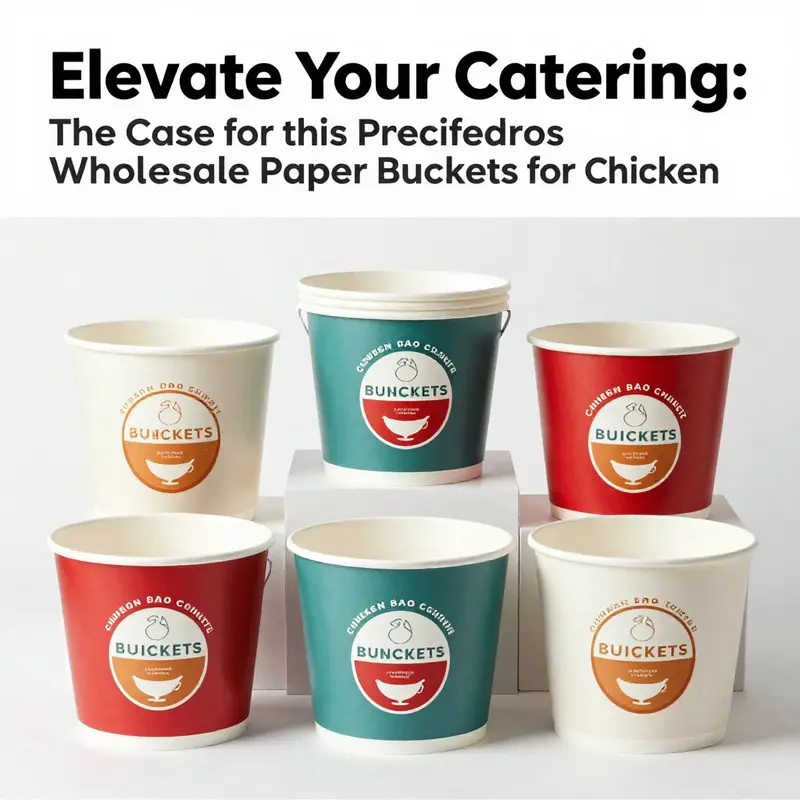
In the fast pace of food service, the paper bucket that carries fried chicken from kitchen to customer is more than a simple vessel. It is a practical partner for efficiency, a protective barrier against grease, and a moving billboard that can transform a takeout moment into brand memory. The wholesale market for these containers has evolved from plain, disposable elements to highly engineered packaging that blends performance with personality. Manufacturers in coastal manufacturing hubs have sharpened this mix, weaving together size, material choices, and design flexibility so that a single bucket can serve a family feast, a casual grab-and-go order, or a movie-night combo without compromising food safety, portability, or presentation. The result is a packaging ecosystem that treats form and function as a single, continuous practice rather than two separate concerns. This integration matters not only to the efficiency of a kitchen line but also to how a brand communicates its values through every macro and micro detail on the outside of the container.
Size and capacity sit at the heart of this evolution. Paper buckets for chicken are offered in a spectrum of capacities that speak to portion size, dining context, and cost per unit. Common capacities include 32 oz, 64 oz, 85 oz, 130 oz (roughly 4000 ml), and 170 oz. The 130 oz bucket, in particular, has become a standard for family orders and larger takeout bundles, giving operators a reliable middle ground between compact singles and oversized platters. Yet the beauty of wholesale packaging lies not only in these widely used sizes but in the ability to tailor dimensions to a brand’s exact needs. Brands with distinctive menu formats or unique serving concepts can request bespoke dimensions that optimize stackability, lid compatibility, and even the ergonomics of handoff. The capacity choices are more than numbers; they are design constraints that shape how a brand scales, how it communicates value, and how it manages waste streams across different markets.
Material science underpins the durability and sustainability of these buckets. The primary material—food-grade, double-layer kraft paper—has earned broad trust for its strength, grease resistance, and recyclability. A crucial functional feature is the coating that protects against oil penetration and leakage. Many designs employ a waterproof or oil-resistant coating, commonly PE-based, to preserve both the integrity of the product and the user experience during takeout. This coating creates a barrier that helps prevent soggy, limp interiors and keeps the wrapper clean for handling. Beyond performance, manufacturers increasingly emphasize environmental responsibility. The modern consumer looks for packaging that can be recycled or biodegraded, and suppliers respond with processes and materials that balance grease resistance with end-of-life options. The resulting buckets often present a practical compromise: robust enough to contain hot, greasy chicken, yet adaptable to recycling streams that many cities now insist upon.
Customization is no longer a fringe capability but a core value proposition. The exterior surface of a bucket becomes a canvas for full-color printing, enabling brands to project logos, slogans, and product imagery in high definition. The printing capability supports bold brand statements and strategic promotional messaging that can synchronize with seasonal campaigns or cross-promotional efforts. Color options extend beyond the natural hue of kraft; upon request, manufacturers can deliver a broader palette, enabling brands to coordinate packaging with menus, interior decor, or seasonal aesthetics. Design flexibility is not limited to branding. Some buckets accommodate themed packaging—holiday motifs for festive periods, or cinema-inspired visuals that align with entertainment experiences in the broader venue ecosystem. Functionality can also extend into the container itself. Lids, handles, and even built-in compartments for fries or drinks are features that enhance user convenience and the overall presentation of the meal. In a crowded market, such features can differentiate offerings and elevate the perceived value of a takeout experience.
The economics of customization reveal a clear staircase in cost and scale. The typical minimum order quantity (MOQ) begins around 10,000 pieces, with reductions available for smaller runs or samples in certain circumstances. Pricing demonstrates a similar tiered dynamic. Basic plain buckets can be remarkably affordable, occasionally dipping toward the low single-digit yuan range per unit when ordered at high volumes. Customized buckets with logo printing generally command higher unit costs, driven by the costs of pigment, adhesion, and print quality, and these can vary significantly from roughly ¥0.62 to ¥1.25 per unit depending on complexity and order size. More elaborate designs, coatings, or added features such as premium finishes or built-in compartments can push unit costs toward higher levels, potentially approaching ¥1.98 per unit for top-tier configurations. For brands evaluating the trade-off between upfront packaging investment and long-term brand impact, the math often favors a phased approach: start with core, non-branded or lightly branded options for initial rollout, then expand to full customization as volumes grow and brand recognition solidifies.
The application spectrum for these buckets is broad and practical. Fast-food operations see them as reliable workhorses for takeout and delivery, where speed, grip, and heat retention matter as much as appearance. In cinemas and other entertainment venues, the packaging can support combo sales and impulse purchases, contributing to a cohesive consumer experience that feels modern and convenient. Retail and gift packaging use cases—ranging from premium box-like presentations to bundled poultry products—illustrate how the same container can cross categories if the branding and finishes speak the right language. Wholesale distributors, catering companies, and online grocery platforms often leverage these buckets to streamline procurement, ensure consistency across outlets, and align packaging with safety certifications and regulatory expectations. The common thread across these applications is a packaging system designed to handle grease and heat reliably while offering a customizable surface that communicates a brand’s story and values at the moment of purchase.
Behind the visible features, the supply chain and manufacturing discipline are equally important. Leading suppliers operate out of coastal manufacturing hubs where automation and scale enable consistent quality at high volumes. The regional focus—centered in provinces known for packaging expertise and logistics efficiency—helps ensure that lead times are predictable and that the production lines can adapt to shifting demand without compromising safety or performance. Certifications such as FDA compliance and ISO standards are frequently highlighted in supplier profiles, signaling adherence to food safety protocols, quality management practices, and traceability. The result is a dependable supply network that can accommodate both the core needs of large restaurant groups and the bespoke demands of smaller chains experimenting with novel packaging formats. In this context, the ability to respond quickly to design changes, adjust print runs, and coordinate with logistics partners becomes as important as the materials themselves.
Automation plays a central role in delivering the scale and consistency required for high-volume disposable food packaging. Modern production lines integrate automated printing, precise coating, and robust assembly procedures, ensuring that each bucket carries the same branding fidelity, grease resistance, and structural integrity regardless of run size. This efficiency is not just about cutting costs; it is about enabling brands to evolve their packaging strategies with minimal risk. When a restaurant pivots its menu or launches a seasonal promotion, the ability to translate that concept into a new bucket design or color scheme without disrupting supply or quality is invaluable. The blend of automation and material science thus creates a practical path from concept to consumer, where design intent translates into tangible packaging that performs in the real world—hot holds, greasy contents, repeated handoffs, and the rigors of delivery ecosystems.
Sustainability considerations further shape decision-making in this space. Paper buckets designed with eco-friendly features respond to a growing consumer demand for responsible packaging solutions. Recyclability, compostability where feasible, and reductions in total material thickness without sacrificing performance are all part of an ongoing optimization process. The industry recognizes that a well-made bucket can support a circular economy, as long as end-of-life options are clear and accessible to consumers. In practice, brands can align packaging choices with broader corporate sustainability goals by selecting double-layer kraft options that balance barrier performance with recyclability, or by opting for coatings and inks that minimize environmental impact while preserving print quality. When combined with efficient logistics, standardized sizing, and scalable production, these choices help ensure that sustainability does not come at the expense of convenience or cost.
All of these threads weave into a broader narrative about how wholesale paper buckets for chicken packaging are more than containers. They are enablers of speed, consistency, and brand storytelling at scale. The choice of size and capacity informs portioning and operational throughput; material and coatings govern safety and user experience; customization transforms a takeout moment into a branded encounter. The economics of MOQ and unit price guide procurement decisions, while automation and regional manufacturing capabilities anchor reliability and delivery performance. In the end, the packaging strategy becomes a visible extension of a restaurant’s identity and a practical instrument for meeting the evolving expectations of diners who want food that travels well, feels premium, and aligns with their values.
For readers seeking concrete examples of how these principles translate into real-world options, an illustrative takeaway reference can be found in a collection of formats designed for fried chicken and related menu items. Takeaway food packaging boxes for fried chicken exemplify how a single container family can accommodate various meal configurations, from single portions to family-sized assortments, while preserving heat and texture. takeaway food packaging boxes for fried chicken. This experience-oriented approach highlights how brand managers and procurement teams evaluate containers not only by price and capacity but also by print fidelity, handle ergonomics, and the potential to build a cohesive, premium carry-out impression across multiple touchpoints. As packaging strategies continue to mature, the interplay between hardware performance, branding potential, and sustainability will remain central to decisions in chicken packaging at wholesale scale.
External resource: https://www.alibaba.com/product-detail/130-150-64-170-85-Ounce-China-Wholesale_1600552584327.html
From Sourcing to Scale: Navigating Suppliers for Wholesale Paper Buckets for Chicken Packaging
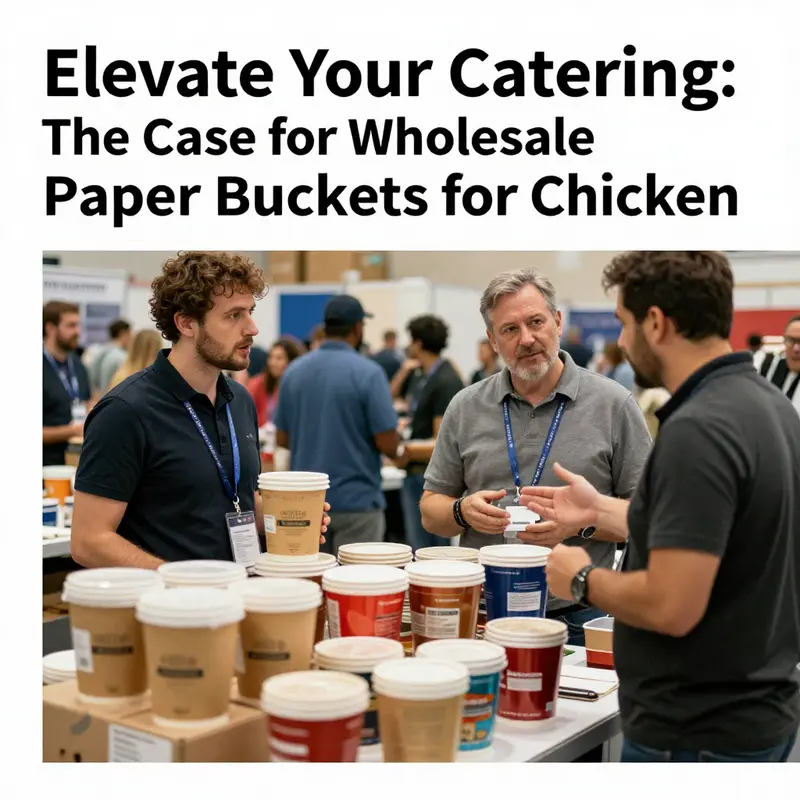
The wholesale landscape for paper buckets designed for chicken is a study in balance. It demands not only material quality and food safety compliance but also the capacity to scale with a brand’s growth, the flexibility to customize, and the efficiency to keep costs predictable as volumes rise. In this chapter, we trace how buyers move from broad market awareness to a precise supplier relationship that can weather changing demand, seasonal spikes, and evolving sustainability goals. The central thread is simple and pragmatic: great packaging starts with reliable sourcing, and reliable sourcing begins with a clear view of capabilities, processes, and priorities that matter most to food service operators. What follows is a cohesive exploration of how wholesale buyers identify, assess, and engage suppliers who can deliver durable, brandable, and compliant paper buckets at scale, while remaining aligned with broader market trends toward environmental responsibility and streamlined production flows.
At the heart of sourcing is access. Wholesale buyers often begin their search on a global marketplace that aggregates suppliers from multiple regions, filtering for capabilities that matter most to food packaging. The emphasis is on custom printing options, which allow operators to imprint logos, color schemes, and taglines that reinforce brand recognition at the point of takeout or delivery. This dimension of customization is not merely cosmetic. It is a strategic tool for consistency across channels—drive-throughs, online orders, cinema concessions, and event catering all benefit from a uniform packaging experience. The ability to specify print areas, color fidelity, and repeatable results helps ensure that a bucket can be used across promotions without creating a disconnect between the product and the brand image. In practice, buyers look for suppliers who can translate a brand’s visual identity into a durable, food-safe surface that accepts high-visibility inks while maintaining ink adhesion through the rigors of transport and refrigeration if needed.
Sizes and capacities are another critical consideration. In a typical wholesale assortment, buckets come in a spectrum from compact portions to larger, family-style servings. The 32-ounce and 48-ounce ranges, for example, are common configurations because they align with fast-food meal bundles and cinema snack portfolios. The right size is a function of portion type, hold time, and the operational realities of the kitchen or concessions floor. A reliable supplier will present a clear matrix of available capacities, along with guidance on how to choose based on expected throughput, peel-and-stick labeling needs, grease resistance, and stacking efficiency for shelf space and transport. For buyers, the question is not only what a bucket can hold but how the chosen size interacts with lid design, interior coatings, and anti-sag wall constructions that help maintain the product’s integrity during delivery.
Material and design choices matter nearly as much as size. A single-wall craft paper construction provides a cost-effective, recyclable option that satisfies many food safety standards while offering a warm aesthetic aligned with comfort-forward branding. The dome lid, a common feature in high-volume packaging, serves several practical purposes: it preserves warmth, protects contents during transit, and accommodates toppings or dipping sauces without compromising seal integrity. From a quality perspective, suppliers typically emphasize paper stock thickness, moisture resistance, and grease barriers. For operators, it is essential to verify that the material performs under anticipated temperatures and handling conditions, and that the lid forms a reliable seal that prevents leakage without excessive force during closures. The balance between performance and sustainability remains central: suppliers increasingly highlight renewable fibers and compostable coatings that meet regulatory expectations while reducing end-of-life impact.
Automation and production efficiency play a decisive role when orders move from pilot runs to full-scale manufacturing. The modern packaging ecosystem increasingly favors a mix of semi-automatic and fully automated forming lines. Semi-automatic lines can strike a pragmatic balance for businesses that need high output without committing to the capital intensity of fully automated systems. For a chicken bucket program, automation can streamline the forming of the single-wall shell, the application of coatings or barrier layers, and the insertion of the dome lid with consistent timing and alignment. Automation also supports tighter tolerances for lid fit, which translates to reduced product loss and better customer experience. Buyers who plan for scale therefore often request detailed production specifications, including line speeds, defect rates, and the supplier’s capacity to ramp up during peak seasons. A robust supply partnership will present a clear roadmap for ramping production, including changeover procedures, material lead times, and contingency plans to protect continuity of supply.
Quality control is inseparable from sourcing. In the wholesale arena, buyers demand traceability and consistency. This means not only auditing the supplier’s certifications and compliance with food-grade standards but also understanding the raw material supply chain, batch tracing, and warranty terms. A credible supplier will provide test results for grease resistance, water vapour transmission rates, and heat tolerance, along with documented testing protocols for finished buckets with domed lids. The objective is not to guarantee perfection in every unit but to ensure that the total defect rate remains within agreed thresholds and that any anomalies trigger a transparent remediation process. For operators, it is comforting to know that the supplier has established corrective action plans and clear communication channels to resolve issues before they disrupt store-level service.
Customization intersects with sustainability in meaningful ways. Operators want a bucket that reflects brand values and stands up to the realities of a takeout workflow. This often means exploring coatings that improve grease resistance and stiffness while enabling recyclability or compostability in end-of-life scenarios. Suppliers increasingly present a portfolio of finish options, including matte, gloss, and uncoated surfaces that are easier to print on with legible branding. The conversation around sustainability is not limited to end-of-life considerations; it also encompasses ongoing performance requirements. For example, a coating that provides reliable slip resistance, maintains print fidelity at scale, and resists smudging in humid takeout environments is a practical feature that reduces the need for frequent reprints or replacements. In this sense, choosing a supplier who can deliver both aesthetic flexibility and functional reliability becomes a strategic advantage for operators seeking to protect brand equity while meeting environmental commitments.
Travel through the procurement cycle reveals a broader context: the imperative of a dependable supply chain that can translate design intent into mass-produced packaging. This entails more than pricing and samples. It requires a shared vocabulary about lead times, minimum order quantities, and the logistics of replenishment. A well-aligned supplier relationship will provide clear lead-time estimates for standard orders and a transparent process for expediting orders during promotional periods or menu changes. The most successful partnerships codify these expectations in a written agreement that includes quality benchmarks, acceptance criteria, and a framework for continuous improvement. When a restaurant chain or cinema circuit places a long-term commitment on the table, the supplier’s willingness to invest in dedicated production runs, flexible scheduling, and on-site training or support can be the deciding factor in choosing a partner over competitors.
Beyond the mechanics of sourcing, the channel for discovering suppliers often shapes the overall experience. A wholesale marketplace that aggregates verified suppliers can be a practical launchpad for initial supplier vetting and early negotiations. The ability to filter for custom-printed, food-grade packaging in multiple sizes, combined with accessible contact points and a straightforward quote process, accelerates the move from concept to pilot. For a buyer, the goal is to compress the time between design finalization and first production run, while preserving the confidence that the chosen partner can scale responsibly and consistently.
The journey from concept to container is not isolated to the purchase of a single batch. As brands grow and diversify their offerings—perhaps adding a popcorn or snack component alongside fried chicken—the packaging system must adapt. A modular approach to bucket design, with interchangeable lids or accessory components, can provide the flexibility needed to respond to shifting menus and promotional calendars. Suppliers who can articulate options for future expansion, while maintaining current performance standards, stand out in a crowded field. The most effective sourcing strategies treat packaging as an integral part of product quality and customer experience, not merely as a cost center. By aligning printing capabilities, material choices, and production logistics with a brand’s strategic roadmap, operators can create a packaging ecosystem that supports consistent service, reinforces branding, and minimizes lifecycle waste.
To bring this closer to practical steps, imagine a buyer who starts by outlining their core requirements: a reliable source of food-grade paper buckets with dome lids, available in 32-ounce and 48-ounce capacities, with print options that can faithfully reproduce a brand’s colors at scale, and a production partner capable of semi-automatic or automated lines to meet forecast demand. The buyer then engages with a shortlist of suppliers, requesting technical data, samples, and a preliminary capacity plan. A well-structured evaluation considers not only the aesthetics of the print but also the resiliency of the packaging under real-world handling: hot food, condensation, frequent opening and closing, and long delivery windows. The decision hinges on a balance of price, quality, and service—the three pillars that determine whether a vendor can truly support a brand’s growth.
For readers seeking a practical starting point in real-world sourcing, a prominent wholesale platform remains an accessible option for exploring customizable, food-grade packaging options. The platform’s search functionality and supplier filtration help buyers identify partners who offer the precise mix of customization, capacity, and quality control needed for a scalable chicken bucket program. The key is to articulate the brand’s requirements early and to request detailed information that enables apples-to-apples comparisons across suppliers. In this way, the selection process becomes a deliberate, data-driven exercise rather than a reactive chase for the lowest price or the fastest lead time. The result is a more predictable supply chain, smoother menu rollouts, and a packaging solution that supports strong brand differentiation in crowded food-service environments.
External resource: a detailed external listing from a leading marketplace offers a concrete example of how large-volume packaging projects are presented and evaluated by buyers seeking dome-lid, large-capacity, custom-printed buckets. While the exact product name and model may vary, the underlying principles of specification, testing, and supplier collaboration remain universal for wholesale printing and forming operations. External resource
As this chapter closes, the takeaways for any wholesale inquiry are clear. The path to scale begins with a well-defined product brief that translates brand identity into a printable, food-safe, high-volume packaging solution. It continues with a careful supplier evaluation that weighs capability against cost and risk, anchored by transparent quality controls and realistic production plans. Finally, it hinges on a partnership mindset: a supplier that views the relationship as an ongoing collaboration, ready to adapt to changing menus, promotions, and environmental commitments without sacrificing performance or reliability. In the end, the most resilient wholesale packaging programs are those that treat paper buckets not as a one-off procurement item but as a critical component of the customer experience—one that travels from the kitchen to the customer with confidence, consistency, and care.
From Raw Stock to Branded Buckets: The Production Technology Behind Wholesale Chicken Packaging
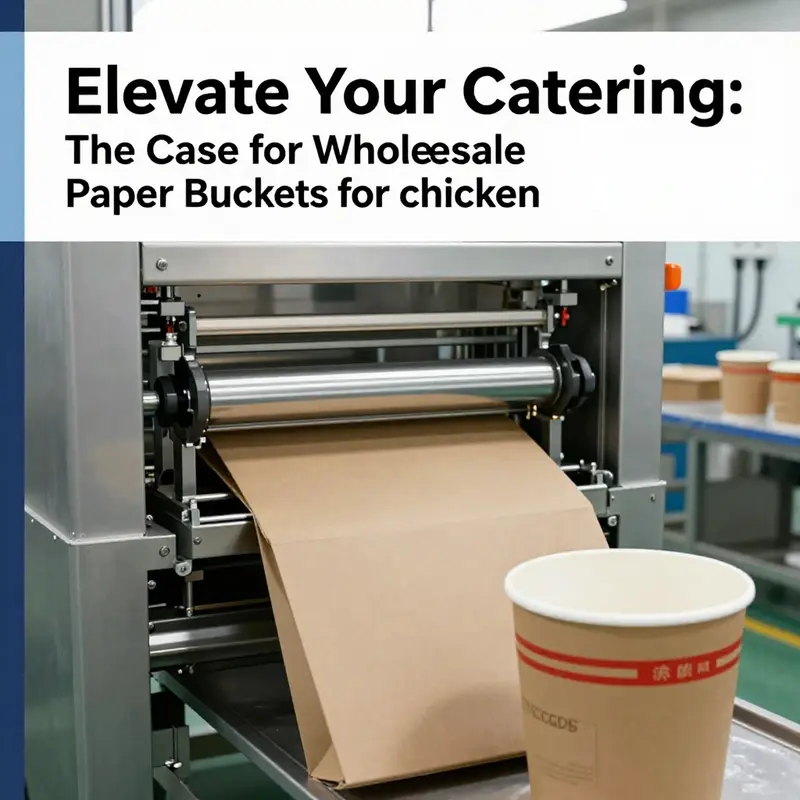
Production technology for wholesale paper buckets used in chicken packaging sits at the intersection of material science, converting, and branding. The goal is to transform simple sheets of paper into a sturdy, grease-resistant container that can withstand heat, handling, and time on display, while also carrying a brand message. The core choices start with substrate selection: food-grade kraft paper or coated substrates provide strength and barrier properties. A grease-resistant coating, which may be PE-based or a compatible plant-based alternative, forms the interior barrier that limits seepage without compromising recyclability.
Coating selection also influences heat retention, barrier performance, and print quality. The sheets then move through printing, die-cutting, folding, and gluing. Printing can be digital for short runs and customization or offset for large-volume, color-accurate runs. Die-cutting shapes the cylindrical or tapered bucket, with tight tolerances ensuring a clean seam and safe stacking. Folding and adhesive application turn flat blanks into three-dimensional containers, with quality control checks at each step to ensure leak resistance, dimensional accuracy, and consistent branding.
Customization is a key driver in wholesale packaging. Brands request multiple sizes, finishes, and colorways, often supported by a flexible production line capable of rapid changeovers. The supply chain emphasizes direct engagement with manufacturers and scalable services such as design support, prototyping, and bulk production, all aimed at reducing development time and risk.
Sustainability considerations guide material and process choices. Operators seek grease barriers that support recyclability or compostability and minimize material waste through efficient layout and high yield. Finally, regulatory compliance and food-contact safety underpin every decision, with certifications and testing for migration, heat exposure, and product safety providing confidence for operators and customers alike.
Rethinking the Takeout Bowl: Sustainable Paper Buckets in Chicken Packaging
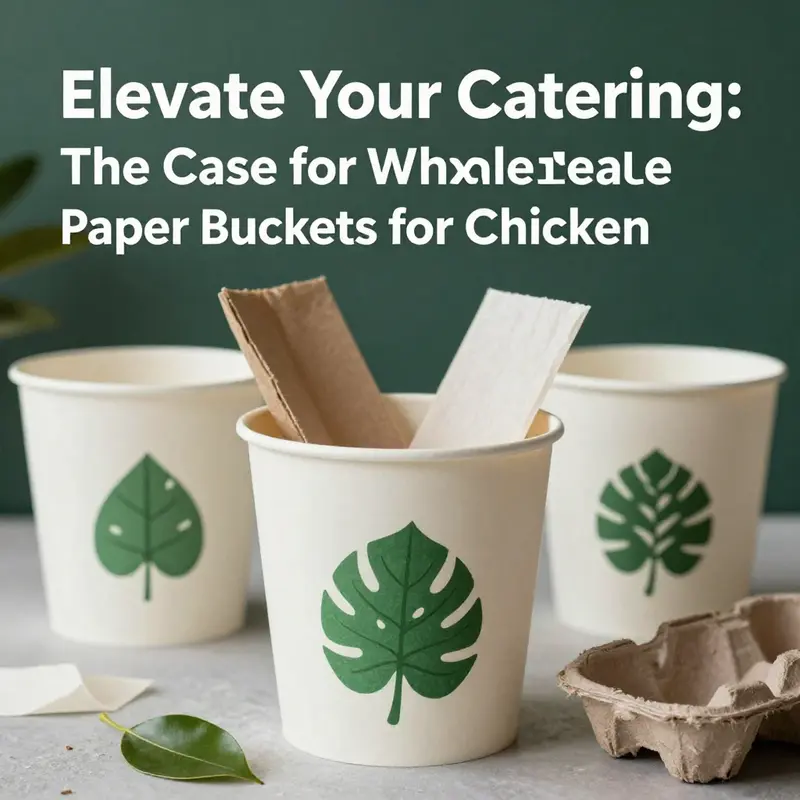
The wholesale chicken packaging landscape is increasingly guided by a single question: how can packaging protect product quality while minimizing environmental impact? Paper buckets have moved from simple vessels to focal points of sustainability, regulatory alignment, and brand storytelling. The chapter explores how the industry balances performance with responsibility, and why sustainability is now a central driver of design, procurement, and supplier collaboration in chicken packaging.\n\nMaterial choices matter most when moisture and grease are involved. Paper and paperboard offer recyclability and potential compostability, but coating strategies such as thin wax or low density polyethylene linings are used to improve moisture resistance while preserving end-of-life options. When thoughtfully designed, these coatings enable necessary barrier properties without sacrificing the base material’s recyclability. The goal is total life cycle performance rather than a single feature.\n\nProduction and automation play a critical role in scaling sustainable packaging. Modern coating equipment can apply ultra-thin layers with high precision, reducing material use and variability across tens of thousands of units daily. For wholesale buyers, the promise is scalable, predictable costs and reliable supply that align with sustainability targets.\n\nRegulatory and consumer dynamics accelerate the move toward greener options. Restrictions on single-use plastics, clear disclosure of environmental attributes, and partnerships that demonstrate credible recycling or composting pathways push suppliers toward transparent material choices and end-of-life plans. In this environment, sustainability becomes a differentiator and a shared objective across manufacturers, distributors, and retailers.\n\nThe market outlook remains positive for paper-based packaging, supported by policy incentives, ESG commitments, and growing consumer awareness. Long-term value is achieved when packaging systems are designed for end-of-life compatibility, enabling recyclers and composters to recover materials with minimal contamination. In wholesale channels, this translates into more durable, adaptable buckets that meet performance needs while minimizing waste.\n\nIn summary, sustainable paper buckets are not merely an environmental add-on; they are integral to a supply-chain approach that prioritizes product protection, waste minimization, and brand integrity. As materials, coatings, and recycling technologies evolve, the industry continues to redefine what it means for chicken packaging to be both reliable and responsible.
Final thoughts
Choosing wholesale paper buckets for chicken not only enhances your branding but also aligns with consumer demand for sustainability and convenience. By engaging with the specific offerings related to customization, finding the right suppliers, leveraging advanced production technologies, and incorporating eco-conscious practices, your business can thrive in the food service industry. With the insights provided in this article, you’re well-equipped to make informed decisions that cater to both your operational needs and your customers’ expectations.