
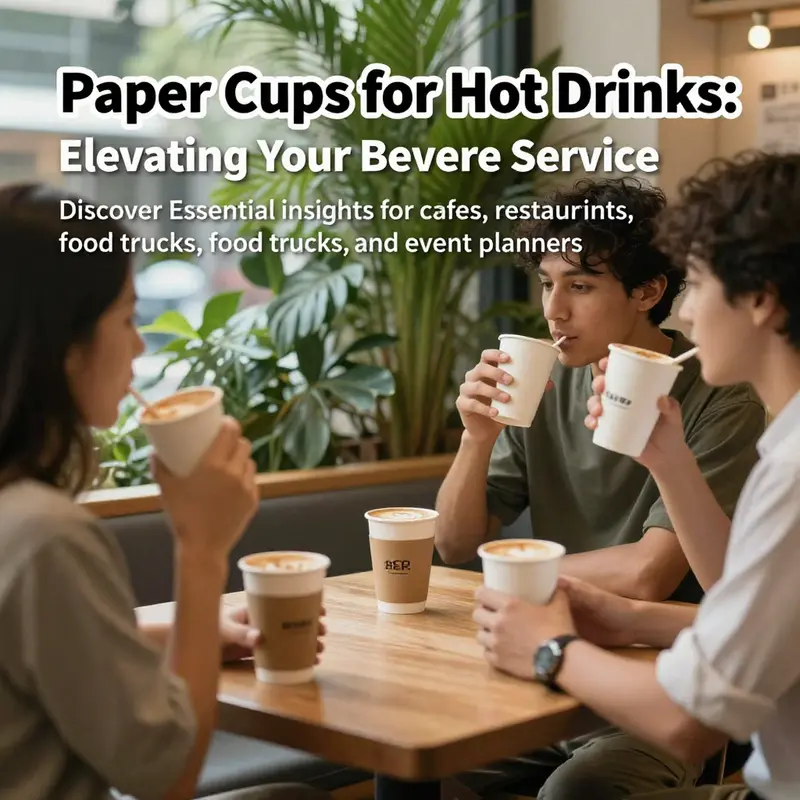
In the vibrant world of food and beverage service, the role of quality packaging often goes unnoticed. Moreover, paper cups for hot drinks represent a vital component for businesses aiming to provide comfort and convenience to their customers. As trends evolve with a strong focus on sustainability and innovation, understanding the intricacies of these cups can enhance service offerings. From exploring their specialized construction, eco-friendly innovations, and market trends to sizing options and effective sourcing strategies, each chapter will equip you with the knowledge needed to select the right paper cups for your establishment. Get ready to transform your beverage presentation while ensuring safety and satisfaction for your clients.
Crafting Comfort and Control: The Hidden Construction of Paper Cups for Hot Drinks
The everyday act of cupping a hot drink hides a careful balance of science, craft, and responsibility. Paper cups designed for hot beverages must simultaneously resist heat, prevent leakage, maintain form, and honor evolving attitudes toward sustainability. When a barista hands you a cup, you are not just receiving a vessel; you are receiving a compact system engineered to deliver warmth without compromise. The construction begins with the choice of base material. Most often, manufacturers select high-quality food-grade paperboard or kraft paper. These substrates deliver the required stiffness to hold liquid without collapsing under the pressure of boiling temperatures. They also offer a natural, recyclable, or at least recyclable-leaning appearance that aligns with consumer expectations for a responsible package, even as the cup travels from counter to curb.
Protection from within is the next essential concern. An inner lining, typically a thin plastic layer, forms a waterproof barrier that prevents the paper from absorbing liquid. The most common coating is polyethylene, or PE, which not only blocks seepage but also supports the structural integrity of the cup as it is welded at the seams. The coating choice matters; many cups advertise single or double PE layers, a decision that balances leak resistance with material cost. The inner barrier keeps hot beverages from wicking into the paper fibers, which would otherwise soften the walls and undermine the cup’s ability to stand on its own. This lining also lends itself to a smoother surface, reducing the risk of charring or scorching when the cup is filled with steaming liquids. In supplier listings, you will often see the practical emphasis on how these coatings support performance across a range of sizes, underscoring the universality of the design approach.
Emerging alternatives echo a broader shift toward sustainability. Bio-based coatings, derived from renewable resources such as plant starches or sugarcane-based materials, are gaining traction for their improved end-of-life profiles. Some of these coatings claim complete biodegradability, decomposing into benign elements under natural conditions. The allure is clear: a cup that keeps liquids safe and also reduces environmental impact when it reaches its final destination. The challenge, of course, is maintaining barrier performance and heat resistance while the coating is compostable or biodegradable. Early adopters emphasize that a bio-based coating can deliver comparable performance to traditional plastics, provided it is formulated to resist degradation under high heat and extended exposure to moisture. This is the nuanced frontier of hot-drink cups, where the physics of heat transfer and the chemistry of barrier materials converge with ecology and policy.
Beyond the lining, the exterior geometry of the cup is purpose-built for usability. The walls may be single- or double-wall thickness, with the latter providing superior insulation. Double-wall cups reduce the sensation of heat on the outer surface, helping to prevent burnt fingers and enabling the consumer to hold the cup longer without discomfort. Ergonomic features are often subtle but meaningful. A rolled rim is a common detail that enhances grip and protects the lip from sharper edges, while a tapered, snug fit around the lip ensures a comfortable, familiar drinking experience. In larger sizes, an integrated handle may be added to improve control during transport. The overall wall design is not just about warmth; it also touches stability. A cup that stands firm on a table, even when filled with a hot beverage, reduces spill risk and promotes a confident, controlled experience for the user.
The technical design is only part of the story. Brands seek to translate utility into identity, and the cup is a natural canvas for branding. Flexible printing processes, such as flexography, allow for vibrant, up-to-six-color designs that wrap around the cup. The result is not merely decoration; it is a portable advertisement and a decorative element that reinforces a cafe’s or event’s concept. The printing must endure heat and moisture without fading, chipping, or bleeding into the beverage. The alignment of art with ergonomics—where a logo sits along the curved surface without distorting legibility—requires thoughtful engineering and testing. Even the choice of color and texture can influence a consumer’s perception of warmth and quality, subtly shaping the drinking experience.
Cups designed for hot drinks are typically offered in a spectrum of sizes to suit different contexts, from a modest 3-ounce portion for a quick sample to a large 16-ounce serving for all-night study sessions or long commutes. The most popular size often sits around the 12-ounce to 13-ounce range, a sweet spot for many coffee and tea preferences. Lids are an essential complement to the cup, creating a near leak-proof seal for on-the-go consumption. The booth or counter prep becomes a choreography: fill, seal, cap, and present, all with a system that travelers can trust to carry hot liquid safely to the next destination. Yet the interdependence of cup and lid means that compatibility is a design criterion in its own right. The best cups perform reliably with a range of lids, minimizing the chance of leaks during transit while maintaining heat retention.
The potential for customization also extends to performance choices, not just aesthetics. For hot beverages, the seal between cup and lid is a critical determinant of spill resistance. Some customers demand a fully leak-proof experience that allows for a confident takeaway, while others prioritize rapid accessibility and ease of sipping. The industry responds with a variety of lid designs and sealing methods, all calibrated to the particular cup architecture. In bulk production, the manufacturing line is tuned to ensure consistent wall thickness, precise coating thickness, and uniform seam welds. The result is a dependable product that can scale for a cafe, a corporate event, or a major catering operation.
Safety considerations extend beyond the cup’s material and seal. Heating and handling guidelines are essential knowledge for businesses and end users alike. Some cups are microwave-safe, but only when explicitly labeled as such. Though many single-wall cups are not designed for microwaving, certain double-wall or specially rated cups can withstand microwave exposure if the manufacturer confirms it. Consumers and operators should always verify the labeling before attempting to microwave a cup, as unknown interactions between the coating and heating could alter the cup’s integrity or cause undesirable residues. This caution is part of a broader duty to provide accurate guidance about heat exposure, handling times, and safe consumption, especially in busy service environments where speed and safety must coexist.
The environmental narrative surrounding hot-drink cups continues to evolve. There is growing demand for fully compostable and recyclable options, aligning with broader commitments to reduce waste and promote circularity. Recyclability depends on local capabilities for processing the paperboard and the coating, while compostability depends on the availability of industrial facilities that can manage bio-based coatings and ensure proper breakdown. Consumers increasingly expect transparency about end-of-life and the conditions under which a cup will degrade. For some applications, fully compostable designs offer a compelling solution, though the supply chain, costs, and performance at scale must be weighed against traditional materials. The industry’s trajectory, then, is not a simple binary choice but a spectrum of options that balance performance, convenience, and responsibility. The conversation continues to hinge on how well the cup performs in actual service: how effectively it keeps a drink hot, how cleanly it seals, and how ethically it is produced and disposed of.
In manufacturing and sourcing terms, practical considerations shape supply chains as much as material choices. Bulk orders often come with minimums and terms designed to balance risk and delivery speed. For buyers, samples—frequently offered gratis but with shipping on the purchaser—provide a first test of fit, feel, and performance. Payment arrangements commonly involve advance arrangements that align with the scale of the order. The economics of hot-drink cups, including material cost, coating type, and print customization, drive decisions at every stage from design to deployment. The interplay of cost, performance, and sustainability is a continuing negotiation that unfolds in factories, warehouses, and storefronts around the world. The result is a product that looks simple and familiar but carries a complex load of engineering, care, and responsibility.
Ultimately, the cup is more than a vessel. It is a compact system engineered for warmth, safety, and convenience, shaped by materials science, ergonomic insight, and environmental awareness. The inner lining and outer geometry work together to deliver a satisfying handfeel and a reliable drinking experience. The coating choices, whether traditional PE or a bio-based alternative, reflect a broader industrial shift toward sustainable packaging without compromising performance. The capability to print branding directly on the cup translates a service encounter into a recognizable identity. And the ongoing development of double-wall designs and improved insulation confirms that the humble cup can keep pace with changing consumer expectations for comfort and control, even as it strives to minimize its environmental footprint. For those who design, produce, or purchase hot-drink cups, the construction dialogue—technical, aesthetic, and ecological—continues to shape what ends up in hands, and ultimately, what we pour into our days.
For a deeper look at a concrete example of double-layer, heat-insulating construction, see the product page linked here: double-layer-paper-cups-8-24pcs-disposable-paper-cups-for-home-office-party-weddings-coffee-shops-supplies-milk-tea-cups. This internal resource highlights how thicker walls pair with compatible lid designs to deliver a confident, spill-resistant experience. The broader landscape of coatings and sustainability is also reflected in supplier literature that emphasizes barrier performance and end-of-life considerations, including the shift toward bio-based coatings in certain markets. For readers seeking additional context on the material choices that make these cups possible, a representative external reference provides a real-world snapshot of single-wall and multi-wall configurations and their performance in hot-drink service: https://www.alibaba.com/product-detail/XINHUA-XH025416-Single-Wall-3-to-16oz_1600389788775.html?spm=a2700.1.women.2&albigo=1600389788775.html. The comparison helps illuminate why the inner PE barrier remains a common choice even as the industry explores greener coatings. As with any packaging choice, the best option depends on the specific use case, including what gets poured, how long the cup remains in circulation, and the local recycling or composting infrastructure available to the consumer. The conversation about construction is, in essence, a conversation about everyday reliability, comfort, and responsibility, carried forward with each cup that passes from hand to hand.
Turning Green into the Cup: Innovations in Eco-Friendly Paper Cups for Hot Drinks
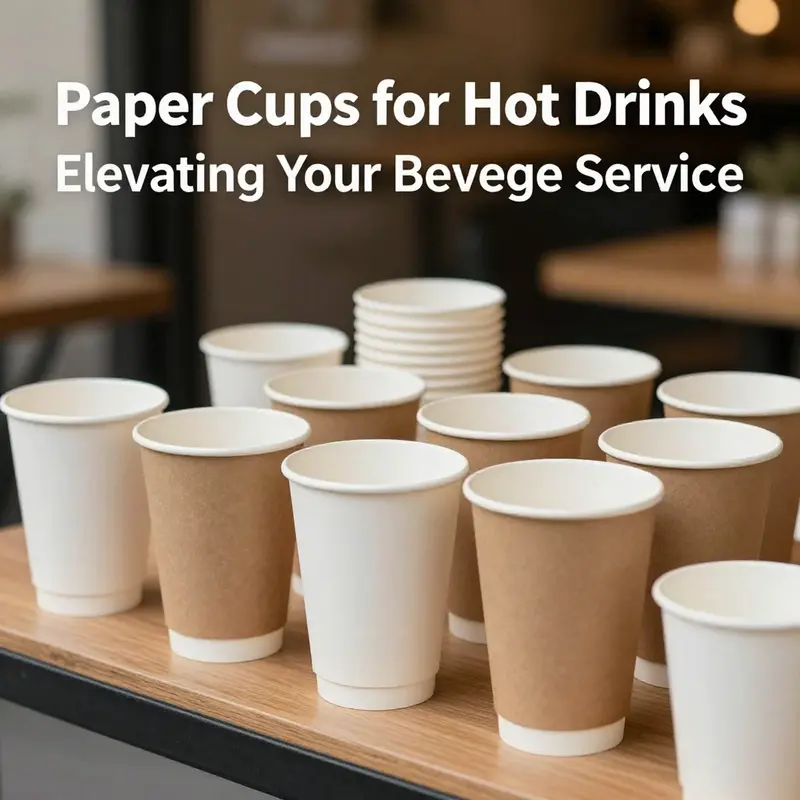
A shift in how societies think about waste has quietly transformed the humble paper cup. What once was a simple disposable vessel has become a focal point for material science, waste management, and consumer expectations. In the realm of hot beverages, there is growing pressure to keep drinks safely contained while reducing environmental impact. This pressure shapes choices from fiber sourcing to coating technology and the end of life pathway. The result is a family of cups designed to perform under heat, resist leaks, and exit the lifecycle with less environmental cost than the classic single use cup did a decade ago. This evolution is about more than swapping one material for another; it is a coordinated system of innards and outer surfaces, of manufacturing processes and end of life options, all aimed at preserving heat, preventing spills, and minimizing ecological footprint.
One visible shift is moving away from conventional plastic linings toward plastic free designs. The traditional inner layer often a polyethylene barrier was valued for barrier properties, weldability, and cost. Yet the plastic barrier has become a focal point of concern. Plastic free cups replace that lining with plant based coatings derived from renewable resources such as starches from corn or fibers from sugarcane. These coatings provide enough barrier performance to prevent leaks when filled with hot liquids while enabling industrial composting where facilities exist. Certifications and standards help reassure buyers that the cup will break down in appropriate facilities rather than persisting as microplastics. The practical result is a cup that maintains heat and integrity during use and follows a compostable or recyclable end of life path where infrastructure supports it.
Beyond coatings, the raw materials selection now emphasizes sustainability. Many eco friendly cups are produced from 100 percent virgin pulp kraft paper or from recycled paper with a plant based lining. Virgin pulp provides strength and surface quality to resist hot liquids, while certification bodies such as FSC offer assurance that the wood fiber comes from responsibly managed forests. Biodegradable kraft paper sometimes paired with virgin pulp can deliver performance without compromising credentials. The design aim is to balance durability with recyclability so the cup works reliably in busy settings while presenting a credible end of life option for customers who want to minimize waste.
Double wall construction has become common, providing superior insulation. The space between inner and outer walls slows heat transfer, helping keep beverages hot longer and reducing the risk of burns when holding the cup. This design also reduces the need for external sleeves, lowering waste. When combined with a well chosen lid, the double wall approach achieves practical on the go use while maintaining recyclability or compostability if materials and bonding methods are chosen thoughtfully.
Lids and closures have evolved in step with cups. Folding lids are designed to lock onto cups with a secure seal, improving spill prevention during transport and reducing waste from replacements. Some lids come from the same material family as the cup and support compostability, while others are designed to be fully recyclable depending on local facilities. Even small choices like lid edge geometry influence how the cup can be processed in recycling streams or composting facilities, reinforcing that ecological performance is summed across many minor optimizations rather than a single breakthrough.
Branding and consumer communication are part of the transition. Modern eco friendly cups handle printing in ways that allow vibrant branding without compromising environmental goals. Printing on recyclable or compostable substrates enables businesses to convey identity and values in a way that resonates with eco conscious customers. The visuals matter because they signal commitment to sustainability and can drive demand for greener options among cafes and events.
In the marketplace, solutions now bundle materials coatings and packaging design into coherent ecosystems. Suppliers offer customizable cup lines that meet environmental standards, including recyclability and end of life disposal. The trend toward full lifecycle thinking from responsibly sourced pulp to recycling or composting networks reflects a growing understanding that sustainability is not achieved by a single breakthrough but by compatibility across the product system, from fiber mill to processing facility.
Disposal realities vary by region. Industrial composting facilities capable of handling plastic free coatings are not universal, so end users rely on local waste streams. In some regions compostable cups may end up in mixed waste streams or landfills if infrastructure is lacking. In others, municipal programs recover cup components efficiently. This reality places a premium on clear labeling and consumer education, so if a cup is marketed as compostable, it is paired with explicit guidance about the appropriate facility type and end of life pathway.
The economics matter too. For many operators, the choice to adopt eco friendly cups depends on total cost of ownership, including purchase price, waste management costs, and the value customers assign to sustainability. As production scales, the unit costs of plant based linings and recycled content have become more competitive. This makes green choices more feasible for small cafes and large events, especially when paired with performance guarantees for heat retention and leak resistance.
Regulatory and policy developments also play a role. Extended producer responsibility schemes in parts of Europe create a framework in which manufacturers are accountable for end of life of their products. Such policies drive innovations that improve recyclability and compostability and push suppliers to improve labeling and standardize materials. While regulations vary by region, the idea is consistent design cups with their entire lifecycle in mind from forest to facility to final disposal. The result is growing adoption of eco friendly cups for hot beverages across service settings.
For practitioners practical options exist that fit common serving standards. Cups can be sourced in sizes appropriate for the service environment, with coating choices that support industrial composting or recycled content substrates. Pairings of cup bodies with compatible lids, sleeves, and branding materials further tailor packages to user needs while preserving environmental integrity. The end result is a system that preserves drink quality and user comfort hot or otherwise without compromising the planet.
Taken together these developments reflect an integrated forward looking design philosophy that treats the cup as part of a sustainable culture from the moment the beverage is poured to the moment it is responsibly disposed of.
Market Currents in Hot-Drink Paper Cups: Sustainability, Scale, and the Branding Opportunity
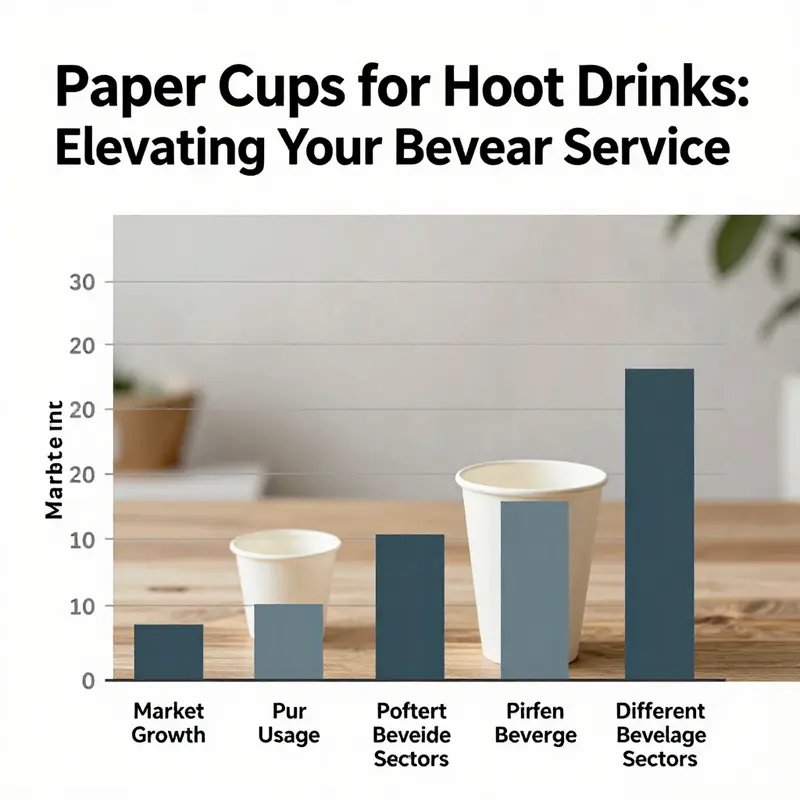
The market for paper cups designed to hold hot beverages is moving with evident momentum, shaped by shifting regulatory landscapes, evolving consumer expectations, and the relentless push of foodservice innovation. It is a chapter in which sustainability does not merely temper growth; it actively defines it. As cafés, restaurants, and delivery services pursue greater efficiency, they also seek packaging that preserves heat, prevents leaks, and aligns with a broader environmental agenda. In this context, the humble hot-drink cup becomes a proxy for how modern packaging can balance performance, responsibility, and brand storytelling, all at the speed of consumer demand.
A central driver is the shift away from traditional wax-coated or purely paper alternatives toward materials that better manage the lifecycle of single-use packaging. The classic wax barrier, once a mainstay for hot beverages, is increasingly replaced or augmented by plastic-laminated structures and, in many regions, by bio-based coatings. PLA, a compostable polymer derived from renewable resources, is drawing attention as a more environmentally friendly option than conventional plastics. This transition is not merely about reducing plastic in landfills; it is also about enabling recycling streams and compatible end-of-life processing. In practice, cups may feature plastic lamination or bio-based coatings that provide a robust moisture barrier, so the cup remains rigid under heat and reduces the risk of sogginess or seam failure. At the same time, producers are investing in coatings that improve heat resistance and integrity, allowing cups to perform reliably while consumers carry hot drinks from counter to curbside.
Regulatory momentum complements consumer expectations. Governments are tightening rules around plastic waste, disposable packaging, and recyclability. As these policies take shape, brands increasingly prioritise recyclable or compostable cups that can enter established waste streams with minimal complexity. Not all compostable cups are created equal, and end-of-life infrastructure matters. Industrial composting facilities can make compostable cups viable, but home composting or simple landfill disposal may not yield the same environmental benefits. This nuance matters for buyers and suppliers alike, guiding decisions about material choices, coatings, and the overall design of the cup. The industry’s response is a growing portfolio of fully recyclable and compostable options, driven by both policy alignment and consumer preference for products that reflect a responsible footprint.
Beyond materials, heat management remains a core design challenge—and a differentiator. The rise of double-wall or even triple-wall designs reflects a pragmatic response to customer comfort and safety. Double-wall cups reduce the external surface temperature, helping to prevent burns during handling and to preserve the heat of the beverage longer. This, in turn, supports consumer experiences that feel premium, even when the cup is disposed of after use. Production lines have adapted to these more complex geometries, leveraging advances in forming, sealing, and testing to ensure leak-proof seams and consistent performance at scale. In some segments, microwave-safe labeling is part of the conversation, but only when cups are explicitly designed and tested for microwave use. This caution is essential to avoid misapplication that could compromise integrity or safety.
The market’s scale is impressive and globally oriented. Forecasts point to substantial growth as the world economy leans more on on-the-go beverage consumption and takeout culture. The sector’s value, estimated around $110 billion in 2024, is projected to rise toward $162.8 billion by 2032, reflecting a compound annual growth rate of about 4.42%. Asia-Pacific, with China as a major hub of both production and consumption, is a central engine of this expansion. By mid-decade, the market in this region is expected to contribute significantly to global volumes and to the development of new manufacturing ecosystems. The projection that the market could approach roughly $166.8 billion by 2026 signals momentum that is not merely ceremonial or regional; it signals a broad-based shift in how hot beverages are packaged for consumption and how brands translate that packaging into value.
Branding and customization are increasingly understood as more than decorative add-ons. Paper cups offer a mobile platform for marketing that travels with the customer. Far from being a purely functional vessel, the cup becomes a canvas for identity, storytelling, and engagement. Louder, more vibrant prints, seasonal motifs, and brand-specific color schemes contribute to a sense of familiarity and loyalty. In highly competitive segments—from specialty coffee shops to bubble tea outlets—cup design supports a distinct customer experience and reinforces a brand’s stance on quality and sustainability. The ability to tailor artwork, logo placement, and even color accents makes the cup a portable advertising asset, a comment on the company’s responsibility, and a means to improve recall. The takeaway is that design optimization is now as strategic as material choice or coating technology.
From a manufacturing perspective, the rate of improvement is notable. Coating technologies have advanced to enhance heat resistance and leak-proof performance, while also enabling more efficient production processes. These innovations support higher throughput and greater consistency across large orders, which is essential given the bulk buying patterns of many foodservice operators. The push toward double-wall or multi-layer cups is accompanied by improvements in the seam welding process, which helps ensure durability even under the stresses of transport and repeated handling. In a world where many cups are destined for delivery or pickup, the reliability of the container is non-negotiable, and manufacturers are rising to that obligation with smarter materials and tighter quality control.
A practical consequence of these trends is visible in procurement and supply chain planning. Businesses that rely on disposable cup programs for hot drinks must navigate a landscape where bulk orders come with minimums, often starting around 50,000 pieces, and samples are sometimes available for evaluation—shipping costs borne by the buyer. Payment terms typically reflect international trade practices, with options like T/T and negotiated deposits that align with supplier lead times and production schedules. For buyers, the implications are clear: the decision-making horizon extends beyond price to include sustainability credentials, end-of-life handling, supply reliability, and partner readiness to support branding initiatives. The most resilient programs balance cost with lifecycle considerations, ensuring that a cup’s environmental profile, heat performance, and branding impact align with the operator’s broader sustainability and customer engagement goals.
In this evolving ecosystem, an emerging nuance is the expansion of packaging families that complement cups. As brands explore a cohesive on-the-go packaging strategy, the choice set broadens to include eco-friendly takeout boxes and other container formats that align with the same sustainability and design principles. An example of this broader packaging philosophy is evident in suppliers offering stylish, microwave-safe, and grease-resistant options that pair well with hot-drink cups. The synergy between cups and compatible takeout packaging helps operators present a unified, responsible package that travels well and leaves a smaller environmental imprint.
For readers seeking a concrete touchpoint within this ecosystem, consider the broader packaging landscape as a continuum rather than a menu of isolated products. The trend toward sustainable, recyclable, and compostable materials permeates cups and the takeout family alike. This holistic approach supports a more cohesive brand narrative and can simplify waste management for customers who return to the same venue or service again and again. It also invites operators to rethink their packaging spec sheets, supplier audits, and point-of-sale communications so that environmental claims are accurate, traceable, and verifiable across the life of the product.
In this context, it is worth noting the growing importance of accessible information for buyers. Certifications, material disclosures, and end-of-life guidance become part of the procurement conversation. Operators increasingly demand clarity on whether a given cup or lid is recyclable, compostable in industrial facilities, or compatible with specific waste streams. The best-performing products are designed with this clarity in mind, reducing confusion at the consumer level and supporting responsible disposal through straightforward labeling and guidance.
As the chapter on market dynamics closes in on the customer experience, one key observation stands out: the hot-drink cup is no longer just a vessel. It represents a strategic intersection of sustainability, performance, and marketing. The choices made in materials, coating technologies, and design influence heat retention, leak resistance, and user comfort. They also inform how brands communicate values to customers who care about environmental stewardship and want packaging that reflects those beliefs. In a sector propelled by rapid growth and intense competition, the cup’s journey from factory to curbside offers a lens into how the packaging industry will continue to evolve—one that values efficiency, transparency, and a compelling, responsible narrative at every step.
Internal link for further reading: For brands exploring packaging options that balance sustainability with performance, consider the broader portfolio of eco-friendly takeout solutions here: eco-friendly takeout boxes for food packaging. This resource highlights how modern packaging extends beyond cups and supports a cohesive on-the-go experience, reinforcing how design, materials, and waste management converge to shape the market’s next phase.
Sizing Up Comfort and Safety: Designing Paper Cups for Hot-Drink Experiences
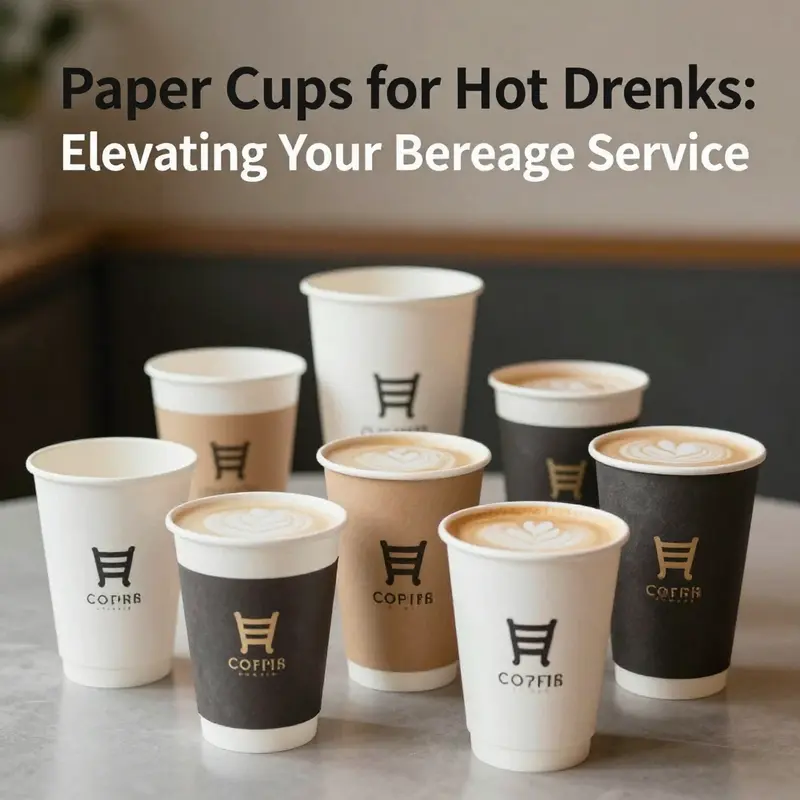
When a customer cradles a hot beverage in a paper cup, the experience is shaped as much by size and design as by the liquid itself. The chapter size chosen, the wall thickness, the liner material, and the way a cup feels in the hand collectively determine not only how long a drink stays warm but how safely it can be held, poured, and transported. In the world of hot drinks—the cup becomes a miniature interface between heat and human touch. Thus, sizing and design are more than mere logistics; they are a careful balance of ergonomics, safety, efficiency, and identity that supports the entire service flow.
In hot drink service, standard sizes are a practical language. The most common ranges move from compact 8 ounces (236 milliliters) up to larger 20 ounces (591 milliliters). These sizes are chosen to align with dispensing equipment, expected portions, and the varied contexts in which drinks are consumed. An 8 oz cup, for example, is compact enough for quick office refills and intimate sips, while a 12 oz or 16 oz cup accommodates premium beverages and longer conversations without overwhelming the hand or the cup holder. For those serving at events or peak hours, the 20 oz option signals a larger appetite and extended enjoyment. Each size carries a defined set of dimensional cues: the bottom diameter, the top rim, and the height influence stability on a tray, the ease of gripping during a walk, and the compatibility with lids designed to prevent spills. In many regions, these sizes are standardized in both milliliters and fluid ounces, ensuring consistency from a neighborhood cafe to a large catering operation. While the exact numbers can vary slightly by supplier, the practical implications of size remain constant: a cup must fit standard vending and dispensing equipment, be easy enough to hold with a gloved hand, and offer enough headspace for the beverage without risking overflow when the lid is applied or during transport.
Beyond capacity, the inner structure of the cup reveals the intentionality behind a comfortable sip. The interior is typically lined with a heat-resistant coating, most commonly a polyethylene (PE) layer or, in more sustainable lines, a polylactic acid (PLA) liner. This thin barrier serves multiple purposes. It prevents liquid from seeping into the paper wall, preserving structural integrity under high temperatures, and it minimizes the risk of the cup becoming soggy or deforming at the seams. The coating also assists with lid welds, contributing to leak resistance during transport. A double-wall option introduces a distinct layer of insulation. The outer wall and the inner barrier work together to slow heat transfer to the outside surface, reducing the burn risk for the hand and keeping the beverage warmer for longer. The trade-off, of course, is an increase in material and a slight rise in the cup’s overall footprint, which must be weighed against the service setting and the desired consumer experience.
As design evolves to meet environmental goals, many hot-drink cups now offer eco-friendly alternatives that do not compromise performance. Some cups use 100% food-grade paperboard with coatings designed to be recyclable or compostable, depending on local facilities. In the shift toward sustainability, brands explore materials like bamboo fiber or bagasse (the fibrous residue from sugarcane) alongside recycled content. These materials can contribute to a lighter environmental footprint while still delivering the rigidity needed to hold piping hot liquids. A design choice here is not merely about materials; it is also about coatings and certifications. Recyclability and compostability hinge on coatings that are compatible with end-of-life processing and on adherence to food-safety standards. The aim is to maintain a function-first approach: safe handling, dependable heat retention, and a clean break at disposal that aligns with broader sustainability goals.
The rim, grip, and overall geometry of a cup are often understated yet crucial design elements. A reinforced rim resists deformation when the cup is gripped firmly, and some designs taper slightly near the top to reduce tipping during pouring or when a lid is attached. The exterior may feature a subtle outward texture or a matte finish to improve grip, which matters when hands are moist or gloved. The outer surface can also host branding without sacrificing tactile comfort or readability. When branding enters the design conversation, there is a need to ensure printing methods, such as water-based inks, do not compromise the integrity of the inner liner or the cup’s ability to tolerate hot liquids. The visual language of a cup—logos, color blocks, or premium textures—becomes a marketing conduit, turning a functional item into a memorable touchpoint for the customer, without compromising safety or performance.
Industry standards extend to the packaging and labeling that accompany cups. Food-grade certification is a non-negotiable anchor for any hot-drink cup. In many markets, compliance with recognizable standards like GB/T 27589 and FDA specifications signals that the cup is designed to be safe for contact with high-temperature beverages. These certifications give operators confidence that the cup won’t leach harmful chemicals even when filled with the hottest drinks. When selecting cups, operators often scan for this information on the packaging, alongside manufacturing dates and storage recommendations. A well-chosen cup should also provide clear guidance about microwave safety. While some cups are labeled as microwave-safe, this is not universal. The standard bears repeating: only those explicitly marked as microwave-safe should be used in microwave reheating, and even then, care must be taken to avoid overheating or stressing the material.
The practical art of choosing cups also revolves around matching size to purpose and environment. For day-to-day office service, smaller cups—8 to 10 oz—are nimble, cost-effective, and efficient for quick coffee runs. For specialty drinks, hot chocolate, or longer service periods, 12 oz to 16 oz cups offer room for whipped toppings, latte art, or extra foam while maintaining a manageable handhold. Ultra-large 20 oz servings are commonly reserved for high-volume venues or events where rapid throughput and substantial servings are prioritized. The thickness and quality of the cup wall come into play here; thicker walls help maintain structure under heat and weight, reducing the risk of deformation during handling and transport. A note on thickness: many reputable cups feature walls of 0.3 millimeters or more, a threshold that helps prevent warping when liquids are hot and the cup is pressed or stacked.
In practice, bulk purchasing yields economic advantages that support sustainability and branding strategies. Suppliers often offer cases sized for commercial use, where minimum order quantities reflect the scale of the operation. A well-considered bulk plan not only reduces per-unit cost but also supports consistent supply for busy periods. For businesses pursuing branding, the opportunity to print with water-based inks enables a durable, attractive appearance that endures exposure to steam and heat while maintaining legibility. This intersection of design and practicality—color, logo, and texture—enriches the drink experience without sacrificing safety or performance.
For those exploring options beyond standard white or brown stocks, the design conversation broadens further. Some vendors offer a range of cup styles with color-tinted or patterned exteriors that enhance the consumer experience or align with a thematic event. The take-home message is simple: size must fit the purpose, but design must reinforce comfort, safety, and brand storytelling. A cup that feels sturdy and is easy to grip invites repeat purchases, while a cup that maintains warmth without demanding constant handling improves customer satisfaction and reduces waste from spillage or premature cooling. The relationship between size, design, and sustainability is not a line item; it is the chain that links the user’s moment of purchase to the final disposal decision, with safety and performance guiding every choice.
If readers wish to explore a concrete example of bulk options aligned with a broad range of sizes, a common catalog entry highlights cups spanning eight to sixteen-ounce options in scalable quantities. This line demonstrates how suppliers balance flexibility with standardization, enabling restaurants and events to tailor cup choice to the occasion while preserving uniform performance across service points. For more precise dimensional references and to compare exact measurements across sizes, a formal standard provides a dependable framework: 8 oz cups for small beverages, 9 oz and 10 oz for slightly larger servings, 12 oz for premium drinks, 16 oz for larger orders, and 20 oz for ultra-large beverages.
External reference for standard size specifications: https://www.baike.com/wiki/one-time-paper-cup-size-standard. For designers and buyers seeking a clear, hub-like reference on dimensions and capacities, this resource offers a structured baseline to align cups with equipment, lids, and service expectations. Meanwhile, the specific internal supplier options discussed earlier can be explored via product listings that illustrate how the practical principles of size and design translate into real-world choices—where the cups you choose influence not just the drink, but the entire experience of serving it. Customers notice when a cup fits their hand naturally, when the lid seals cleanly, and when the cup retains heat without burning fingers. That is the essence of thoughtful sizing and design in hot-drink paper cups.
From Raw Fiber to Front-of-House: Sourcing and Supplying Paper Cups for Hot Drinks

Every cup that finally cradles a hot beverage travels a long, carefully choreographed journey. The sourcing and supply chain for paper cups designed for hot drinks is more than a procurement puzzle; it is a sequence of decisions that touch safety, performance, branding, and the planet. To understand how a simple, disposable vessel can reliably hold coffee, tea, or cocoa, one must begin with the raw materials, move through manufacturing, and end with the logistics of bulk orders, all while balancing cost with sustainability and user experience. The chain is not a straight line but a network of choices where every node matters, from fiber sourcing to the coating that blocks leaks and the ripple or double-wall design that shields hands from heat.
At the heart of every hot-drink cup is a sturdy, heat-resistant paperboard. The core material is chosen for tensile strength, foldability, and compatibility with a thin barrier layer. Most cups incorporate a lining made of polyethylene (PE) or a plant-based biopolymer that prevents liquid from seeping through the walls and helps the cup hold its shape under high temperatures. This barrier is not just about leakage; it also supports the welding of seams, a critical factor in maintaining integrity as the cup expands with heat. As the market evolves, so too do the coating technologies. Biopolymers and compostable coatings are increasingly marketed as sustainable alternatives, though their performance in real-world composting facilities varies by region. The result is a careful compromise: durable use for hot beverages paired with a coatings ecosystem that can align with broader environmental goals.
In today’s global market, much of the large-scale production of hot-drink cups happens in regions equipped for mass manufacturing. The proximity of suppliers to raw material mills and the efficiency of logistics networks drive cost and lead times. Buyers frequently turn to online platforms that verify suppliers, provide detailed specifications, and track shipments. Such platforms reduce risk in international trade by offering product catalogs, certificates, and test data that help buyers compare options side by side. Yet even with these tools, the core decisions remain rooted in material science and manufacturing capability: the paperboard weight, the barrier thickness, and the consistency of the inner coating across millions of units. The result is a predictable performance profile that cafes and event organizers rely on, from the first pour to the last sip of a busy service period.
Product specifications for hot-drink cups typically cover sizes from 7 ounces to 16 ounces, roughly 200 ml to 470 ml. In practice, you’ll see 8 oz and 400 ml as ubiquitous benchmarks, with 7 oz as a compact option for quick refills and 12 to 16 oz serving as the go-to for larger drinks or to-go needs. The sizing choice is not only about quantity but about a balance of portability and thermal performance. A 400 ml cup, for instance, often sits at a sweet spot for both capacity and grip comfort. A growing feature set complements size: double-wall ripple designs that enhance insulation and provide a firmer grip, reducing the chance of slips when hands are wet or hot. These insulation strategies are especially valuable in high-traffic settings such as bustling cafes or catered outdoor events, where customers expect a comfortable touch on the outer surface even as the beverage steams inside. Design decisions also extend to lids, which are engineered to yield leak-proof performance during transport and to maintain temperature without impeding sipping for long periods.
Beyond the wall thickness and lining, the ability to brand and customize cups is a major driver of the supply chain. Many buyers look for full-color printing options, logos, and color schemes that align with brand identity. Eco-friendly certifications can also influence supplier choice, signaling adherence to sustainability standards that matter to consumers. The capacity to tailor the cup’s appearance while preserving performance underscores how the supply chain must be adaptable without sacrificing the core functional requirements of heat resistance, leak prevention, and structural integrity during use and transit. In practice, producers offer a spectrum of customization options, from plain white or brown stock to coated, printed, or branded variants that complement a cafe’s visual identity.
The economics of cups designed for hot drinks are shaped by bulk production and the need to maintain consistent quality at scale. Minimum order quantities often begin at tens of thousands of pieces, a threshold that supports the capital-intensive setup of large runs and ensures unit costs stay competitive. The price spectrum can be striking: basic 7 oz cups may be priced very aggressively when bought in bulk, with wholesale figures that enable large chains and event organizers to standardize service without inflating costs. With bulk purchasing also comes the reality of sampling—buyers frequently request free samples to evaluate coating performance, insulation, and lid compatibility before committing to a full order. Shipping and handling of these samples are typically borne by the buyer, which is a standard arrangement in global sourcing. Payment terms commonly involve formal arrangements such as telegraphic transfers and staged deposits. These financial structures reflect the cross-border nature of the market and the need to align risk and cash flow across multiple parties.
Sustainability trends are reshaping the sourcing conversation in meaningful ways. There is rising demand for cups made from 100% food-grade paperboard that are recyclable or compostable, provided proper waste streams exist. Makers experiment with biodegradable or compostable coatings that can ease end-of-life processing, though the actual compostability of cups depends on local facilities and composting programs. In many cases, the eco credentials are reinforced by certifications and third-party verifications that reassure buyers and end-users about the environmental performance of the product. This environmental emphasis does not exist in isolation; it interacts with performance requirements. A cup must remain robust under heat, hold a seal during transport, and still present attractive branding. The supply chain must reconcile these sometimes competing demands with evolving customer expectations and regulatory conditions in different markets.
For buyers seeking practical navigation through this landscape, supplier verification and real-time sourcing tools are increasingly essential. Platforms that offer USD-based transactions, supplier credentials, and shipment tracking help buyers compare options while managing risk. In addition to platform-hosted data, many buyers rely on direct communications with manufacturers to discuss line versatility, coating compatibility with specific beverage categories, and the feasibility of co-engineering custom solutions. The goal is to anticipate potential bottlenecks—such as coating availability, adhesive compatibility with printed designs, or the stability of double-wall constructions under repeated high-temperature exposure—and to establish contingency plans that preserve service levels, even when demand spikes. The result is a resilient, adaptable supply chain that can support both routine cafe service and large-scale events.
Within this evolving ecosystem, an internal example helps illustrate how sourcing reality meets on-the-ground needs. Buyers often explore a wide range of options for disposable paper cups for hot drinking, selecting suppliers who can deliver the required sizes, wall configurations, and branding capabilities in a single, reliable package. A practical reference point for these options can be found in collections that emphasize 8 oz to 16 oz configurations and the associated lids, while also highlighting the importance of leak resistance and heat retention. For readers seeking a concrete product example available in bulk, consider the range described in disposable paper cups for hot drinking. This example demonstrates how a supplier can provide a cohesive solution—from raw material selection through to finished, branded cups with compatible lids. You can explore a tangible option here: disposable paper cups for hot drinking.
Ultimately, the sourcing and supply chain for hot-drink paper cups weave together material science, industrial scale, sustainability, and customer experience. The choices at every juncture—from fiber origin to the slightest coating and the cap that seals a drink—shape how a customer experiences warmth in their hands and taste on their tongue. For those who want to deepen their understanding of the broader supplier landscape, external resources offer a window into the global market and the networks that connect growers, converters, and brands. A widely referenced hub for supplier information and product options is the global marketplace that features hot coffee cup offerings across many manufacturers. This resource provides a sense of scale, pricing norms, and the breadth of material and design choices that define today’s hot-drink cup market: https://www.made-in-china.com/products?keyword=hot+coffee+cups
Final thoughts
Understanding paper cups for hot drinks encompasses recognizing their construction, embracing eco-friendly options, identifying market trends, and knowing sizing and design variations. Additionally, efficient sourcing practices can lead to significant cost savings and enhanced service quality. As businesses in beverage service continue to evolve, prioritizing these aspects will contribute to meeting customer expectations while promoting sustainability. Ultimately, the right paper cup can elevate your service, ensuring safety, satisfaction, and memorable experiences for your clients.