

As a key component in the food and beverage industry, paper disposable cups have become essential for establishments like bubble tea shops, restaurants, and catering services. The evolution of this product—from classic designs to innovative solutions—has been significant, influenced by the demands of sustainability, technology, and consumer preferences. In this article, we will explore the landscape of paper disposable cup manufacturers, focusing on key players, technological innovations, market trends, and sustainability efforts. We’ll also discuss the necessary regulatory frameworks that shape the industry. Each chapter will provide essential insights that cater specifically to the needs of businesses looking to enhance their operations and customer satisfaction.
Leading Voices in the Paper Disposable Cups Industry: How Top Manufacturers Shape a Global Market
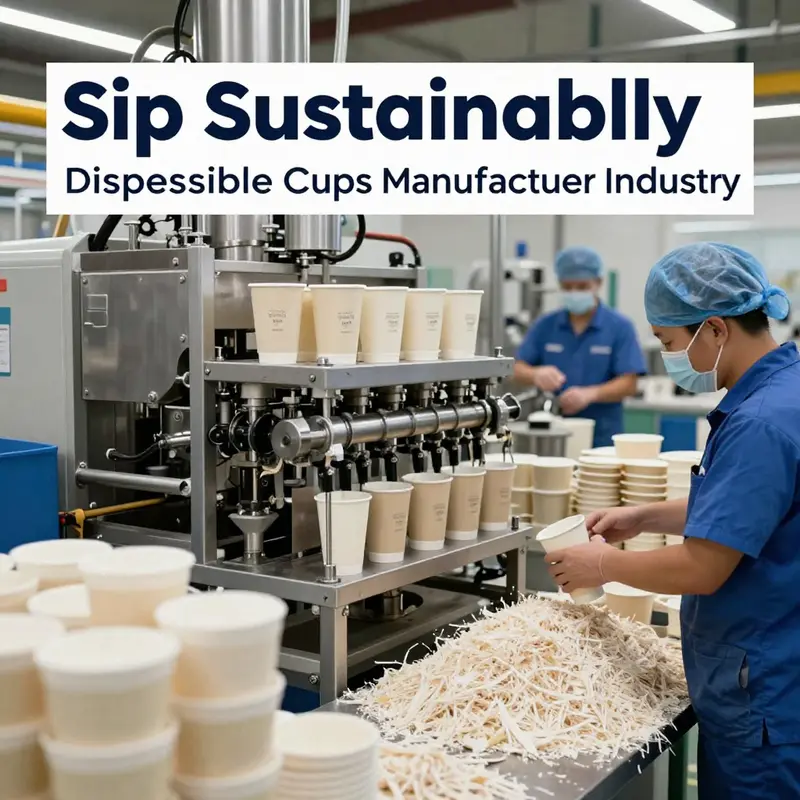
The paper disposable cup market is shaped by a network of leaders whose capabilities converge to deliver scale, reliability, and brand impact. This chapter traces four core profiles that together define how cups are produced, delivered, and experienced by end users. First, a Foshan based packaging specialist offers a broad line of paper and plastic packaging solutions for hot and cold beverages, with a stated capacity in the millions of cups per month, enabling brands to align cup supply with lids, sleeves, coatings, and other packaging components. This scale is not merely about volume; it is about predictable delivery windows, consistent quality, and the ability to support large campaigns without disruption. Next, a Wenzhou machinery provider is highlighted for its automation platforms such as the MYC-150 family. While not a cup producer, this company is a critical enabler of production scale, exporting to dozens of countries and emphasizing safety, ease of use, and rapid line changeovers that reduce downtime and extend equipment life. A third thread focuses on high-volume cup producers who specialize in durable supply for foodservice and hospitality, capable of delivering tens of thousands to hundreds of thousands of cups per day across a portfolio that includes PE coated materials and related packaging components. These players stress robust quality control, reliable logistics, and close collaboration with suppliers to ensure pulp, laminates, and coatings meet performance, shelf-life, and regulatory expectations. A fourth profile centers on customization and branding, where a notable producer illustrates how branding can migrate onto the cup surface itself through film based printing and dedicated color management. This capability supports brand identity directly at the point of service, while preserving cup performance parameters such as stiffness, stacking, and heat resistance. The four profiles together reveal a market where finished cups, machinery, high-volume production, and branding-centric solutions interact to meet the diverse needs of restaurants, cafes, event organizers, and retailers. Sustainability and service are woven throughout, as buyers increasingly weigh coating choices, fiber sourcing, and end of life scenarios alongside price and capacity. Companies emphasize environmental claims, compatibility with recycling or compost pathways, and clear after sales support, recognizing that durable partnerships are built on trust as much as on products. In practice, the industry benefits from this ecosystem through more reliable supply chains, better predictability during peak periods, and opportunities for brands to differentiate without compromising on performance. Practitioners can translate these insights into action by aligning supplier capability with organizational priorities: pursue end to end packaging solutions for scale and reliability, or collaborate with branding specialists to strengthen market presence, or invest with a dependable machinery partner to grow internal capacity. As the sector evolves, the boundary between commodity cup and brand experience continues to blur, with sustainability, regulatory clarity, and consumer expectations shaping what constitutes a best practice. The chapter closes by inviting readers to consider how packaging ecosystems pair cups with broader tableware and takeaway packaging, and to recognize that the most resilient market leaders are those who coordinate across supply chains to deliver consistent, high quality outcomes for customers and consumers alike.
Engineering for Edge: How Technology Redefines Paper Disposable Cup Manufacturing

Technology acts as a quiet revolver behind the daily, almost invisible, ritual of grabbing a cup. In the world of paper disposable cups, the trajectory from pulp to province-wide distribution hinges on a coordinated set of innovations that touch materials science, machine design, and data-informed process control. This chapter stitches together the threads of material performance, production rhythm, and market expectations to present a cohesive view of how modern manufacturers navigate a landscape defined by demand for reliability, safety, and sustainability. The study of leading players in this space, including prominent groups and factories, shows that the most consequential shifts are not simply about faster machines or shinier coatings; they are about the orchestration of materials, processes, and people in ways that reduce waste, lower energy use, and meet global standards for hygiene and traceability. In practical terms, the innovations discussed here enable a plant to run with less downtime, fewer defects, and more consistent product quality, all while maintaining a cost structure that makes high-volume production feasible for a broad range of customers. At the same time, these advances reflect a broader shift in the packaging ecosystem toward modularity and adaptability, where cups, lids, and secondary packaging can be designed to work together across different markets and end-use contexts. The result is a manufacturing environment that can respond quickly to shifts in consumer preferences, regulatory requirements, and environmental expectations, without sacrificing the speed and uniformity that large-scale distribution demands.
A core focal point of material innovation lies in laminated barrier systems. Modern paper cups commonly rely on a thin polyethylene (PE) layer bonded to a paper substrate to create a dependable liquid barrier. This lamination is a practical solution that preserves the structural integrity of the cup while keeping the barrier layer thin enough to minimize material usage. The chemistry here is nuanced: the PE film must be engineered to adhere reliably to paper during formation and sealing, yet remain separable where recycling streams or composting processes permit. The dream is a barrier that safeguards contents during use, survives typical handling, and then exits the lifecycle in an environmentally considerate manner when collected by appropriate waste streams. In practice, this means that manufacturers must carefully balance barrier performance with recyclability and end-of-life processing. Some markets push for compostable or bio-based laminates, which call for rigorous testing to ensure that the barrier is compatible with industrial composting facilities or home-composting conditions where feasible. The ongoing refinement of laminated systems, including adhesive chemistries and lamination thickness, translates directly into better cup performance in hot beverage service, reduced leakage, and improved consumer confidence—factors that ripple outward into brand trust and repeat purchases.
The manufacturing floor has responded to these material challenges with advances in real-time monitoring and data-driven quality control. Automated systems now weave together sensors, vision systems, and AI-driven analytics to track every cup as it progresses from unwinding the roll to final stacking. Real-time data collection helps identify anomalies early, allowing operators to intervene before defects propagate and become waste. Predictive maintenance algorithms analyze vibration signatures, temperature profiles, and servo motor cycles to forecast component wear and schedule maintenance before failures occur. The net effect is a significant reduction in unplanned downtime, a more stable output cadence, and an ability to maintain strict tolerances on dimensions, sealing quality, and print alignment. In a production scenario that might serve global supply chains, such predictability becomes a competitive differentiator because it lowers risk for customers who rely on timely deliveries and uniform product performance.
Two broad categories of cup-making equipment illustrate the spectrum of capabilities that modern factories deploy. Semi-automatic and mini models are still relevant for small to medium-scale operations, including regional packaging units and neighborhood food-service venues. These machines can produce roughly 30 to 50 cups per minute, a rate that suits operations where flexibility and craft-oriented customization matter. They offer direct human oversight, enabling operators to gauge quality with tactile judgment and immediate visual inspection. However, the very human-touch advantage can become a bottleneck in feeding and stacking, particularly as demand grows or product lines diversify. In contrast, fully automatic paper cup making machines represent a different tier of industrial capability. With production rates surpassing 1,000 cups per hour, these machines deliver end-to-end automation that covers feeding, forming, printing, embossing, sealing, and stacking. They rely on servo motor control to provide precise motion, touch-screen interfaces to streamline operator interaction, and predictive maintenance to minimize downtime. Such systems are well-suited for producers aiming at uniformity across large volumes, strict adherence to global standards, and the ability to scale output without sacrificing quality or consistency.
Beyond raw speed, the elegance of fully automatic systems often lies in their integration with downstream packaging and logistics. The ability to synchronize cup production with lid application, sleeve insertion, or quick-dissolution coatings for freshness can yield end-to-end lines that minimize material handling, reduce human error, and provide clearer traceability across batches. In addition, modern machines offer configurable tooling that accommodates different cup sizes, printing schemes, and barrier laminates without requiring significant retooling. This flexibility is a critical asset as consumer preferences evolve and as environmental criteria shift, because a plant can respond to market changes without being forced into costly plant-wide overhauls. The broader implication is that equipment choices influence not only today’s cost per unit but also tomorrow’s adaptability. With global supply chains subject to disruption and regional regulation continually tightening, the value of equipment capable of rapid adaptation grows correspondingly.
Material science and machine design intersect most acutely in the way they shape the environmental footprint of the cup. Companies increasingly quantify life-cycle considerations—from raw pulp and energy consumption in drying and forming to the end-of-life fate of laminated layers. While laminated barriers are essential for performance, the industry is progressively evaluating how to disentangle barrier function from recyclability. In some contexts, advanced lamination schemes enable the paper core to be recovered in a more efficient recycling process, while barrier materials are diverted to compatible streams. Others explore alternative barrier chemistries that maintain performance while removing some of the more challenging components for recycling infrastructure. This ongoing dialogue between material performance and waste management infrastructure is not merely theoretical; it translates into decisions on plant investment, supplier partnerships, and the design of regional recycling or composting programs that can absorb higher volumes without compromising environmental integrity.
The market implications of these technical shifts are profound. Manufacturers face a mosaic of regional standards—some requiring strict food-contact compliance, others emphasizing recyclable packaging ecosystems or compostability. The chapter’s overview of representative players shows a common thread: success emerges where technology and service converge. Companies that couple material science with robust data-driven production and proactive customer support tend to secure longer customer relationships and better market resilience. In practice, this means that a modern paper cup manufacturer negotiates more than just superior barrier performance or faster cycle times. It negotiates an ecosystem of sourcing, quality assurance, and post-sale service that minimizes risk for customers who must meet tight service-level agreements while maintaining sustainability commitments. The capacity to provide stable supply, consistent product performance, and clear, verifiable records of compliance becomes a core value proposition for customers who must demonstrate responsible sourcing to regulators and consumers alike.
This integrated approach is not exclusive to a single region; it reflects a global maturation of the industry. The research highlights how large-scale producers and regional factories alike adopt comparable digital tools—real-time process monitoring, automated QC, predictive maintenance, and modular equipment architectures—yet tailor their configurations to local demand and waste-management ecosystems. The balance between local customization and global standardization is delicate. For some markets, the emphasis is on repurposing existing machinery for new sizes or barrier types, with minimal downtime and a clear cost pathway. For others, the emphasis is on adopting higher-efficiency laminates, achieving lower energy use in the drying phase, and participating in recycling streams that align with extended producer responsibility programs. In both cases, the pathway toward improved manufacturing reliability is inseparable from a broader commitment to sustainability, regulatory alignment, and transparent quality control.
To connect these threads back to the broader narrative of the article, consider how packaging ecosystems are expanding beyond cups alone. Packaging designers increasingly explore smart, modular packaging ecosystems, as seen in foldable cake boxes with window, which demonstrates how paper-based packaging can cross-pollinate with various product formats while remaining rooted in a common material basis. These ideas illustrate how innovations in one packaging segment can inform others, encouraging a more cohesive approach to product design that leverages shared manufacturing platforms, standardized barrier strategies, and universal data-rich quality systems. The result is a more resilient, adaptable, and responsible supply chain that better serves customers across markets while reducing waste and conserving resources. For readers who want to dig deeper into the technical trajectories shaping equipment effectiveness and material performance, the literature and market analyses offer a rich map of current practices and future directions. External perspectives emphasize the importance of keeping pace with evolving consumer expectations, regulatory changes, and the emergence of circular economy principles that redefine what it means to manufacture, package, and recover paper-based products.
As the industry continues to evolve, the convergence of materials science with automated, data-driven manufacturing will continue to redefine what it means to produce a paper cup at scale. The real value lies in the ability to deliver a product that performs reliably under a range of use cases, meets stringent safety and environmental criteria, and can be produced in responsive ways that reflect shifting demand, all while maintaining profitability. This is the core of the technology-driven transformation in paper disposable cup manufacturing: not merely a faster line or a shinier laminate, but a holistic approach that aligns materials, machines, and methods with the expectations of modern customers and a planet that increasingly values stewardship. For those seeking further reading on the latest market technology focus and future scope for cup-making equipment, an authoritative external resource offers a comprehensive perspective on how these innovations are likely to unfold in the years ahead. https://www.marketsandmarkets.com/Market-Reports/paper-cup-making-machine-market-279468715.html
Sustainable by Design: Market Trends and Consumer Preferences Redefining Paper Disposable Cups

The chapter unfolds as a narrative of evolving expectations and evolving capabilities, where the disposable paper cup—a seemingly simple object—has become a focal point for sustainability, innovation, and strategic positioning in the packaging sector. The market trajectory underscores a growing conviction that packaging can be both convenient and responsible. Industry forecasters project the global disposable paper cup market to reach around US$13.79 billion by 2034, with a steady CAGR of about 3.6%. This projection is not merely a numeric forecast; it signals a shift in how consumers evaluate value. Increasing environmental awareness, stricter waste-management policies, and brand transparency about materials and end-of-life options are reframing consumer choices. In this context, manufacturers are compelled to balance performance with responsibility, crafting products that meet heavy-use demands while aligning with visible sustainability commitments. The two broad forces—environmental stewardship and functional reliability—are no longer competing imperatives; they are converging to shape product development and market strategy in tandem.
Sustainability sits at the heart of these changes. Consumers increasingly demand single-use items that minimize environmental impact, favoring cups made from renewable resources, free from conventional plastics, and produced without relying on trees for their raw materials. This consumer stance is prompting a renaissance in material science and supply chain design. Biodegradable and compostable options rooted in plant-based coatings and non-forest fiber sources are moving from niche experiments to mainstream offerings. Manufacturers are pursuing materials that degrade gracefully while preserving the integrity of the cup during use. In practical terms, this means exploring fiber blends that can withstand hot and cold beverages, developing coatings that resist moisture without compromising compostability, and refining printing and sealing technologies to ensure branding remains vibrant without introducing non-recyclable barriers. The sustainability narrative is not merely about what ends up in the consumer’s trash; it is about the cradle-to-cradle logic that governs how a cup is sourced, manufactured, used, and recovered. A cup that carries a credible sustainability story can serve as a competitive differentiator, reinforcing brand values at the point of sale and beyond.
Functionality remains a core driver because consumer contexts for cup use are diverse and dynamic. The modern cup must perform across a spectrum of applications—from hot beverages that demand excellent insulation and heat retention to cold drinks that require moisture barriers and structural integrity. The design challenge extends to specialized uses, such as cups intended for snacks or coated treats where moisture management is critical. In these scenarios, coatings and interiors must resist sogginess and seepage while still being compatible with recycling or composting streams. Innovation is not about simply adding more layers; it is about intelligent layering, where each material choice serves a defined role and contributes to the end-of-life outcome. This nuance matters because a cup that performs flawlessly in a café may falter in a food truck, a delivery environment, or a vending machine if its full lifecycle considerations have not been engineered in from the outset. The market rewards products whose performance is consistent across contexts and who can be customized to reflect the specific demands of a brand or venue.
From a business perspective, the convergence of sustainability and functionality translates into a more sophisticated value proposition for manufacturers. It requires not only investment in new materials and equipment but also a refined approach to product design, testing, and certification. Companies that can demonstrate credible environmental credentials—whether through third-party certifications, transparent supply chains, or quantified life-cycle assessments—tend to earn greater trust among retailers and consumers alike. In addition, durability and user experience become a form of branding. A cup that feels sturdy, performs reliably in maine cold or hot weather, and carries a message of stewardship can elevate a brand’s perceived quality and values. This is especially important as consumers increasingly compare the environmental footprints of brands in the same category, and as retailers seek packaging options that harmonize with their own sustainability commitments.
The market dynamics also reflect a maturing confidence in regional and global supply chains. Volatility in raw material prices, especially those tied to forest-based feedstocks or nonwoven barriers, has accelerated interest in alternate fiber sources and closed-loop recycling models. Producers are forging closer collaborations with suppliers of bio-based coatings, barrier papers, and certified sustainable fibers to reduce risk and improve predictability in pricing and availability. For many manufacturers, the challenge is no longer merely to secure cost-competitive inputs but to secure inputs that can be reliably scaled to meet rising demand without compromising ecological standards. In parallel, consumer expectations for brand responsibility extend beyond product performance to the broader social and environmental footprint. This means packaging decisions are increasingly connected to corporate storytelling, circular economy initiatives, and end-of-life infrastructure. Brands that communicate clear, verifiable commitments—how materials are sourced, how cups are recycled or composted, and how waste is minimized—benefit from stronger customer loyalty and differentiated market positioning.
As the sector evolves, case studies from prominent manufacturers illustrate how strategy translates into tangible, observable outcomes. Leading players are experimenting with plant-based coatings that replace traditional synthetic plastics, while double- and even triple-wall constructions are being reimagined with recyclable or compostable layers that do not hinder recycling streams. Some projects explore coatings that resist moisture for longer, enabling cups to retain integrity during extended outdoor events or during longer delivery windows. Others emphasize design for disassembly, making it easier for end-users to separate materials for sorting. The result is a broader palette of materials and designs available to brands—each option carefully matched to a specific consumer scenario and end-of-life pathway.
In this landscape, the consumer-facing dimension remains crucial. People want packaging that aligns with personal values, yet they do not want to compromise on convenience. The modern disposable cup must be easy to carry, comfortable to hold, visually appealing, and clearly labeled with its environmental attributes. Transparency about material composition, disposal guidance, and recycling compatibility is increasingly expected rather than optional. This has spurred a new kind of collaboration between manufacturers and retailers, where shelf-ready packaging messaging, labeling, and branding can support sustainable behavior. The goal is not merely to reduce waste but to cultivate a culture in which responsible packaging choices are the simplest and most intuitive option for consumers.
Within this broader narrative, it is worth noting how specific market segments differentiate themselves through tailored packaging solutions. For instance, cups designed for hot beverages often prioritize insulation, heat resistance, and user comfort, while cold-drink cups can emphasize clarity, moisture control, and stackability. Snack-oriented cups must negotiate moisture and grease resistance with consumer convenience. In all cases, the material architecture—fiber type, coating, barrier, and closure compatibility—plays a decisive role in performance. The strategic questions for manufacturers revolve around how to balance cost with sustainability benefits, how to communicate value without compromising technical performance, and how to align product development with evolving regulatory landscapes and consumer expectations.
The chapter’s exploration of market trends and consumer preferences is not a standalone forecast. It is a lens through which manufacturers can assess risk, identify opportunity, and chart a course toward designs and processes that harmonize environmental responsibility with practical usability. The convergence of eco-credentials, functional excellence, and brand storytelling is reshaping the competitive landscape. Companies that master this convergence position themselves to meet rising demand while contributing to a more sustainable packaging ecosystem. For brands and manufacturers alike, the path forward involves embracing material innovations, refining manufacturing workflows to accommodate new substrates, and building partnerships that support robust end-of-life ecosystems. The aspiration is not just a cup that holds a drink; it is a cup that embodies a responsible choice and a promise of cleaner, smarter packaging for future generations.
As a practical touchstone, many industry players point toward the growing availability of eco-friendly and recyclable packaging alternatives that can be integrated into existing lines with minimal disruption. The emphasis is on scalable solutions that can be deployed across diverse markets and consumer segments. In addition, educational efforts aimed at informing consumers about correct disposal practices can amplify the impact of better materials and designs. When end users understand how to recycle or compost effectively, the overall effectiveness of sustainability efforts increases. The interplay between product design, consumer behavior, and infrastructure is therefore central to achieving meaningful improvements in the environmental performance of disposable paper cups.
For brands seeking concrete avenues to align product development with these trends, a practical route is to explore the expanding universe of sustainable packaging options, including coated papers, bio-based barriers, and recyclable inner linings. The goal is to deliver a cup that performs reliably, looks appealing, and carries a credible, transparent narrative about its life cycle. In this sense, the cup becomes more than a passive container; it serves as a tangible representation of a brand’s commitment to sustainability and quality. To illustrate how market offerings are evolving in practice, consider how some suppliers and manufacturers are positioning themselves to support both the on-site experience and the off-site journey of the cup—from production lines that minimize waste to consumer-facing guidance that clarifies disposal routes. The result is a more thoughtful, resilient packaging system that can adapt to changing consumer expectations and regulatory landscapes while remaining economically viable for operators across a spectrum of markets.
As the discourse around sustainability matures, the industry’s attention also turns to innovation ecosystems. Collaboration among material scientists, packaging engineers, brand teams, and waste-management experts becomes essential for delivering end-to-end solutions. The capacity to pilot new materials, assess real-world performance, and iterate quickly is increasingly treated as a competitive advantage. In this light, the market’s growth is not solely a function of consumer demand but also a testament to the industry’s ability to mobilize cross-disciplinary expertise toward shared goals. The direction is clear: sustainable, functional, and intelligently designed cups that support both consumer convenience and responsible consumption. The path forward demands ongoing investment, rigorous testing, and a commitment to communicating value in ways that resonate with today’s environmentally conscious shoppers.
For readers seeking practical examples and further reading on the broader market context, manufacturers are increasingly sharing case studies and design rationales that illuminate how sustainability goals translate into everyday packaging choices. In the pursuit of a more sustainable future, collaboration with suppliers who offer plant-based coatings, recycled-content papers, and compostable barriers becomes a strategic priority. At the same time, brands should remain attentive to the end-user experience, ensuring that the packaging remains intuitive, easy to use, and aligned with short- and long-term disposal options. The interplay of these considerations—material science, product design, consumer behavior, and regulatory alignment—defines the current era of paper disposable cup development and will continue to shape the industry for years to come. The outcome is a market where sustainability is not an afterthought but a design criterion embedded in every cup’s form, function, and story. And as consumer preferences continue to evolve, manufacturers that embrace this holistic approach will be best positioned to deliver value that endures, long after the beverage has been enjoyed.
Internal link reference: As brands broaden their packaging strategies, many are turning to integrated, eco-conscious options that extend beyond cups to the surrounding packaging ecosystem. For example, the growing emphasis on sustainable takeout packaging can be explored here: eco-friendly takeout boxes for food packaging. This broader perspective helps illustrate how a single product category can catalyze improvements across materials, design, and end-of-life pathways. In sum, the chapter traces a trajectory where consumer expectations, material innovation, and responsible business practices converge to redefine what a disposable cup can be—and what it can stand for in a more sustainable economy.
External resource: For a wider, data-backed perspective on market growth, trends, and forecasts, see the Research and Markets report referenced in industry analyses: https://www.researchandmarkets.com/reports/7185959/disposable-paper-cups-market-growth-trends-forecast-by-2034
Between Convenience and Consequence: Rethinking Sustainability in the Lifecycle of Paper Disposable Cups

The promise and problem of paper disposable cups sit at a crossroad every time a barista slides a steaming cup across the counter. On one hand, they offer a convenient, familiar packaging solution for hot beverages and cold drinks alike. On the other, they carry a heavier environmental load than many customers realize. This chapter follows a thread through the lifecycle of these cups—from the forests and mills that supply raw paper to the factories that defend against leaks, and finally to the places where cups are disposed or repurposed. In this view, sustainability is not a marketing slogan but a set of concrete choices that ripple across supply chains, infrastructure, and consumer behavior. The discussion also touches the broader market dynamics that shape how manufacturers respond to environmental scrutiny while still meeting the demands of a global, convenience-driven economy.
Most paper cups today are built with a dual identity. The outer shell comes from wood pulp converted into paper, providing stiffness and grip. The inner lining, normally a polymer coating, serves as a barrier to heat and moisture. This combination preserves integrity when holding hot liquids but complicates end-of-life handling. The coating—often polyethylene in many cups—protects the cup from leakage but renders recycling difficult. The separation of paper from plastic is technically feasible but requires specialized processing that is not universally available. Consequently, a surprising share of cups ends up in landfills, where they persist for years or decades and contribute to the cumulative waste burden associated with single-use products.
Even the subset of cups marketed as compostable presents many practical hurdles. Industrial composting facilities can degrade certain biobased or plant-based coatings, but municipal reality often falls short. Many cities lack the infrastructure to sort, collect, and process compostable cups at industrial scales. In practice, compostable cups frequently fail to decompose as intended, ending up in landfills with the rest. This gap between the design intent and real-world outcomes underscores a central truth: sustainability claims depend as much on the surrounding systems as on the product itself. The ScienceDirect literature emphasizes that mismanaged disposal of paper cups can release microplastics and contribute to ocean pollution, challenging the notion that compostable or greener options automatically yield better environmental results.
The environmental footprint of producing paper cups is itself substantial. The paper itself arises from a fiber supply chain that can involve deforestation pressure, even as many manufacturers adopt certified fiber programs. Beyond raw material sourcing, the manufacturing process consumes energy and water and generates emissions. The energy intensity of drying paper, the use of bleaching chemicals, and the handling of coatings all shape a cup’s lifecycle footprint. A growing chorus of lifecycle assessments points to a counterintuitive finding: even when cups are used once, the energy and material flows associated with their production and transport can rival or exceed the impacts of some reusable alternatives when those alternatives are not used enough times. A 2021 estimate from a university-wide analysis suggested that a reusable cup must be used about twenty times to achieve a lower environmental impact than single-use paper cups, once manufacturing, transport, and end-of-life are accounted for. More recent analyses around 2026 have pushed that breakeven point downward—roughly to four uses—when considering carbon footprints and broader environmental costs. Such findings recalibrate the conversation around what sustainability even means in this sector.
These numbers matter not as absolutes but as guidance for manufacturers and policymakers alike. If reuse can dramatically outperform disposables after just a few uses, then business models that encourage durable, long-lived alternatives gain appeal. Yet the market realities remain complex. Not every consumer has reliable access to recycling or take-back programs, and not every consumer is willing or able to reuse cups consistently. That reality has pushed some manufacturers toward hybrid strategies: improve the recyclability of cups where feasible, invest in better post-consumer sorting, and promote consumer habits that extend the useful life of a given packaging system. Innovation has become a balancing act—between barrier performance and recyclability, between thermal resistance and material separation, between short-term convenience and long-term stewardship.
For manufacturers, the sustainability challenge also means rethinking design decisions. Coatings that can be separated more easily from paper, or that are genuinely compostable in common municipal facilities, are active areas of research. Equally important is the push to reduce water and energy intensity in production, minimize waste in the process line, and optimize the use of other inputs such as inks and adhesives. There is a growing expectation that fiber procurement be verifiable and responsible, with clear traceability to sustainably managed forests. In practice, this translates into supplier codes, third-party audits, and transparent reporting that can be shared with customers who want proof of responsible practices. The industry’s response, however, is not a single blueprint. Different markets and different regulatory environments demand tailored approaches, which in turn fosters a diversity of strategies across manufacturers.
The sustainability narrative also invites a broader examination of end-of-life pathways and consumer responsibility. Recycling rates vary widely by region, and even where recycling streams exist, cups can be rejected for contamination or due to insufficient sorting infrastructure. In places where industrial composting is the standard, cups aligned with that system might perform better; in regions without such facilities, compostable cups offer little advantage over conventional cups and may even generate confusion about disposal rules. The practical implication is stark: the environmental advantages of any single option hinge on the existence of compatible waste-management systems, consumer participation, and clear labeling that reduces missorting. The literature stresses the danger of “greenwashing” when environmental claims outpace the supporting infrastructure. Honest communication about limitations, measured improvements, and realistic timelines becomes essential to credibility and progress.
Against this backdrop, manufacturers are increasingly seeking to align their product development with broader sustainability objectives without sacrificing performance. One avenue is to pursue barrier innovations that reduce or replace conventional plastic coatings with materials that are easier to recycle or compost. Another is to improve the overall life-cycle footprint through more efficient pulping, reduced chemical use, and better heat recovery in drying processes. Some firms explore alternative fiber blends that maintain leakage protection while enabling easier separation in recycling facilities. The aim is not simply to comply with regulation but to participate in shaping a more resilient packaging ecosystem—one that can support a circular economy in which materials stay in use longer and waste is minimized.
Leadership in sustainability also involves corporate transparency and collaboration. Manufacturers increasingly publish supply-chain disclosures, engage with customers on best practices for disposal, and participate in multi-stakeholder initiatives that set shared standards. Such collaboration extends to researchers, waste-management operators, and policymakers who can help align product design with the realities of collection, sorting, and processing. The result is a more coherent narrative around what it takes to make paper cups truly sustainable in the modern world, rather than a collection of isolated improvements that fail to add up in the real environment. In that sense, the chapter returns to the core question: what do we owe to future generations when we design, use, and finally discard everyday packaging?
A practical way to bridge intention and impact is to showcase the continuum of packaging options beyond single-use cups. Some manufacturers and designers are turning to more adaptable, modular approaches that combine paper cups with packaging concepts that emphasize multi-use or reusable engagements. In this space, the idea is not to abandon convenience but to encourage smarter, more intentional use. For example, offering collapsible or foldable cups as personal accessories can reduce the demand for disposable options while still providing a reliable solution for spontaneous consumption. These approaches must be paired with consumer education and accessible infrastructure so that people can translate good intentions into everyday practice.
Within the broader discussion of sustainability, the topic of customer service and market strategy deserves attention, too. Buyers of disposable cups—from large food-service networks to independent cafés—are increasingly asking for evidence of environmental responsibility. They want suppliers who can provide lifecycle data, credible certifications, and short, transparent supply chains. In practice, this drives a preference for materials that are responsibly sourced, processes that minimize waste, and products that are designed with end-of-life in mind. It also motivates collaboration on packaging systems that optimize space, weight, and efficiency in transportation—factors that compound the environmental costs of global distribution.
For readers who wish to explore concrete examples of how packaging choices connect to sustainability outcomes, consider a broader view of the market’s packaging ecosystem. One practical avenue is to engage with examples of eco-friendly takeout packaging that highlights barrier properties, recyclability, and user-friendly disposal instructions. Such discussions illuminate how design decisions influence post-consumer pathways. They reveal that the most durable sustainability gains often emerge when product design, waste management, and consumer habits align. In other words, the cups themselves are only one piece of a larger system whose performance depends on coordinated action across producers, retailers, municipalities, and individuals.
To connect the narrative to tangible options available to businesses seeking gradual improvement, consider the following approach. First, strengthen fiber sourcing, ensuring that forests are managed responsibly and that suppliers can verify compliance. Second, invest in production efficiency—improving water reuse, reducing drying energy, and recovering heat within the plant. Third, advance coating technology when possible to facilitate separation or composting without compromising leak resistance. Fourth, support and participate in standardized labeling that clearly communicates disposal guidance to end users. And fifth, promote consumer engagement that emphasizes reuse and proper disposal, paired with accessible alternatives for those who cannot reuse. These steps do not guarantee an immediate overhaul of the entire system, but they establish a credible path toward lower environmental impact and more resilient packaging practices.
In closing, sustainability in paper disposable cup manufacturing is not simply an environmental footnote; it is a strategic imperative that touches sourcing, production, disposal, and consumer behavior. The lifecycle perspective reframes the conversation from a static product assessment to a dynamic system where improvements in one stage can amplify benefits at others. The challenge remains substantial, but so does the opportunity. By weaving responsible fiber sourcing, production efficiencies, innovative yet recyclable coatings, and active collaboration with waste-management stakeholders into the fabric of the business, manufacturers can offer packaging that supports convenience without compromising the health of ecosystems or the integrity of cities and oceans. The ultimate measure is not just what a cup can do inside a café, but how its afterlife aligns with society’s evolving standards for sustainability. For those seeking practical illustrations of how packaging design can integrate with a broader sustainability strategy, a closer look at modern takeout packaging offerings provides a useful lens on both potential and limitation. eco-friendly-disposable-3-compartment-food-grade-packaging-box-for-fast-food-high-quality-takeout-boxes-for-fried-chicken-french-fries-packaging
External reference for further reading: https://www.sciencedirect.com/science/article/pii/S095965262030147X
Rule by Cup: How Global Regulations Shape Paper Disposable Cup Manufacturing

Regulatory frameworks do more than set minimums; they define the operating rhythm of every link in the paper disposable cup supply chain. From the moment a raw fiber enters a mill to the moment a consumer finishes a hot beverage, rules govern hygiene, material choice, waste streams, and even the labeling that declares a product’s end-of-life fate. In a sector defined by speed, scale, and near-constant invention, compliance is not a burdensome add-on but a strategic capability that determines which factories stay in the game, what products a company can offer, and how markets respond to new environmental and health expectations.
Across regions, the most consequential vector of regulation is food safety. For manufacturers operating in or shipping to Australia and New Zealand, the Australian New Zealand Food Standards Code anchors production practices with particular insistence on food-contact materials. It translates high-level concerns about contamination risk into concrete controls: traceability of raw materials, sanitation of facilities, and disciplined process management that minimizes opportunities for impurities to enter cups that will hold beverages destined for human consumption. In practice, this means a paper cup factory must maintain documented hygiene regimes, audit trails for material suppliers, and validated cleaning protocols. It also means that even the smallest change—such as a new coating, an adhesive, or a supplier—requires careful verification to ensure continued compliance with those standards. The emphasis is not only on meeting a standard today but on building a quality system that can adapt to evolving expectations about food safety indicators and testing methods.
Beyond food safety, a second axis of regulatory influence centers on environmental standards. The global push to reduce single-use plastics has accelerated the demand for sustainable alternatives, and many regulators treat packaging as a critical front in climate and waste-reduction policy. In this landscape, coated papers—once the default for moisture and grease resistance—are increasingly scrutinized for recyclability and compostability. Standards bodies and certification programs are filling gaps that regulation alone cannot always close. Certifications such as OK Compost and BPI are becoming meaningful signals in markets where consumers and retailers want validated assurances about end-of-life outcomes. For manufacturers, achieving and maintaining such certifications is not a one-time hurdle but an ongoing program that touches product development, supply chain choices, and production processes. It also interacts with consumer expectations about corporate responsibility, influencing brand perception even when price and performance are comparable.
Material composition sits at the heart of both safety and environmental regulation. The conventional approach of coating paper cups with polyethylene provides excellent moisture resistance, but it compromises recyclability and compostability. Regulators and industry standards increasingly favor coatings derived from renewable resources or processes that yield easier separation in recycling streams. PLA, a compostable polymer derived from plant sources, has emerged as a prominent alternative, especially for products intended for composting or certified sustainable waste streams. The debate over coatings is more than a chemistry discussion; it is a regulatory and economic calculus about how a cup will behave in real-world recovery systems, how it will be labeled, and which markets will accept it without recall or rejection. The 2026 edition of industry gatherings, such as the Hong Kong International Tea Fair, highlighted the rising interest in sustainable tableware, including compostable and bio-based options. That interest translates into regulatory expectations that future standards bodies will codify, and it translates into market access realities for manufacturers who invest in new materials and processes.
International trade standards compound these domestic and regional requirements. Packaging materials cross borders with little friction if they carry the right certifications and survive migration testing. Chemical migration limits—particularly for coatings in contact with hot beverages—are scrutinized to ensure that any substances migrating into the cup contents stay within established safety thresholds. Proper labeling plays a pivotal role here: a product that is deemed compostable or recyclable must clearly communicate its status to end-users and to waste management entities. Mislabeling can trigger recalls, regulatory penalties, or exclusion from key markets, even if the product otherwise performs well.
For manufacturers, navigating this regulatory labyrinth demands a proactive, system-level approach. Compliance cannot be treated as a separate department’s duty; it must be woven into product design, supplier selection, production planning, and quality assurance. This begins with material sourcing: choosing suppliers who can certify the composition of incoming fibers, coatings, and adhesives and who can provide documentation that aligns with the food-contact material standards demanded by authorities such as FSANZ and other international bodies. It continues with facility design and operation: cleanability, airflow, wastewater management, and waste segregation must reflect not only local regulations but also anticipated future updates. It extends to process control: validated critical control points, regular microbial monitoring, and traceability loops that ensure any deviation can be detected and corrected quickly.
The practical implications for manufacturers in a global market are clear. A factory that aspires to serve multiple regions must maintain a flexible product development posture. It needs to design cups that can comply with diverse standards without requiring costly, last-minute retooling. It may pursue a modular approach to coatings and materials, enabling a switch from one resin system to another with minimal process disruption. It can invest in third-party certifications that speak to sustainability claims in Europe, North America, and Asia, thereby reducing friction at the border and shortening time-to-market. In short, regulatory frameworks are not a burden to be endured; they are a driver of innovation and a determinant of competitiveness in a market where customers increasingly equate compliance with quality and responsibility.
A closer look at how these ideas translate into everyday business decisions helps illuminate why the regulatory conversation cannot be separated from the broader strategic narrative of a paper cup manufacturer. Take, for instance, a company that positions itself as a global supplier of paper cups and related packaging. It must map regulatory expectations across its target markets, identify where standards converge, and anticipate where they diverge. It will recognize that environmental certifications are not merely marketing tools but access prerequisites for large retailers and institutional buyers who demand demonstrable sustainability credentials. It will also understand that the move toward biodegradable and compostable designs is not simply a product preference but a regulatory trend with real implications for waste management systems and consumer messaging. If a factory leverages this insight, it can time its material transitions, align its supplier audits, and calibrate its labeling strategy so that each product line carries a consistent, verifiable story about safety, sustainability, and performance.
In this context, the role of industry events and industry forums becomes evident. They are not only venues for showcasing new capabilities but also crucibles where regulatory trends are tested against practical realities. They provide a platform for dialogue among regulators, manufacturers, and recyclers, helping to align standards with the realities of production and end-of-life streams. The broader consequence for manufacturers is clear: to remain viable, they must build a regulatory literacy that extends beyond compliance manuals into strategic planning. They must translate standards into manufacturing playbooks, into supplier scorecards, into product roadmaps, and into market-entry protocols. This is how a company preserves its license to operate across diverse jurisdictions while continuing to innovate in packaging design.
To bring these threads together, consider the case of a manufacturer contemplating a shift toward more sustainable, compostable cup options. The decision hinges on regulatory readiness as much as on material performance or cost. If the regulatory environment supports compostable coatings and standardized end-of-life processes, the business case gains momentum. If, however, a market imposes rigorous migration testing and ambiguous labeling requirements, the company must proceed with greater caution, ensuring its claims are verifiable and its supply chain capable of maintaining consistent quality under changing conditions. In either scenario, the core capability remains the same: a robust regulatory framework that informs design, operations, and strategic partnerships. This is how the cup becomes not just a disposable item but a product with a clear, defendable role in a regulated, sustainable economy.
For readers seeking a practical touchstone within this regulatory tapestry, one relevant reference point lies in the official guidelines for food contact materials. These guidelines provide the foundation for how manufacturers interpret and apply standards across borders. They remind us that compliance is an ongoing discipline, not a one-time audit. As markets evolve and policy priorities shift, the ability to demonstrate consistent safety, environmental stewardship, and transparent labeling will increasingly determine which manufacturers thrive and which retreat from difficult conversations about sustainability, responsibility, and the future of disposable packaging.
Internal link: 20-50-200pcs-disposable-paper-cups-kraft-paper-cups-coffee-milk-cup-paper-cup-for-hot-drinking-party-supplies-8-10-12-16oz-cups
External resource: FSANZ and related regulatory guidance offer a centralized view of best practices for food contact materials and environmental performance. For an official baseline, see the Food Standards Australia New Zealand – Food Contact Materials resource. https://www.foodstandards.gov.au/foodcontactmaterials/
Final thoughts
In conclusion, the paper disposable cup manufacturing industry is evolving rapidly, driven by key players, innovative technologies, and a growing emphasis on sustainability. As bubble tea shops, restaurants, catering services, and event planners strive to meet customer demands and regulatory requirements, understanding these aspects becomes vital. Embracing the latest trends not only enhances consumer experience but also significantly impacts operational efficiency and environmental responsibility. Equip your business with quality paper disposable cups that reflect the changing landscape of customer preferences and sustainability values.