
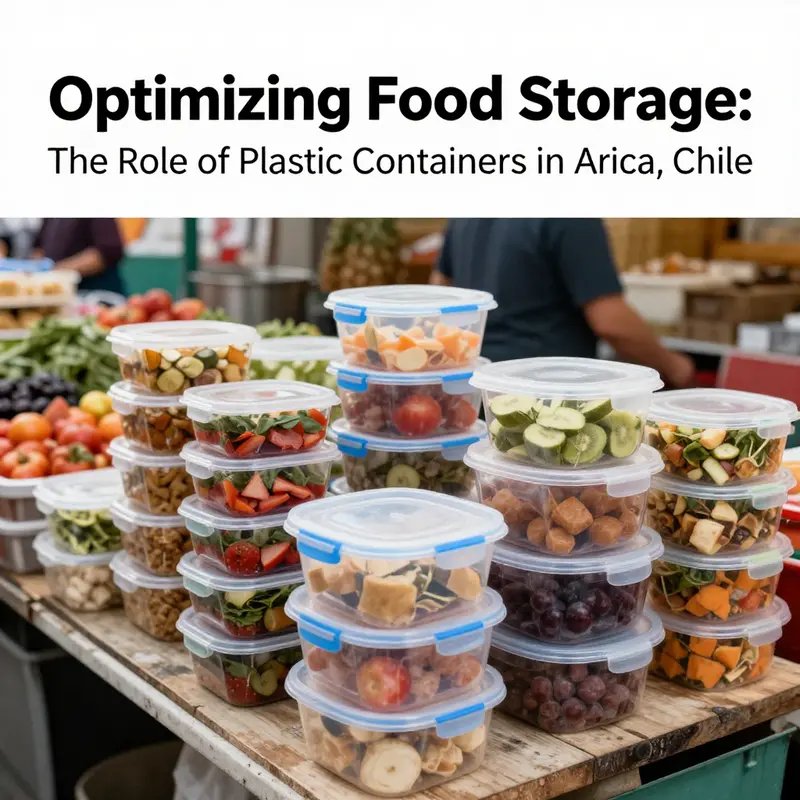
In the vibrant food scene of Arica, Chile, the importance of effective food storage solutions cannot be overstated. Businesses, from bubble tea shops to catering services, are finding that the right plastic containers are essential for food preservation, presentation, and safety. This article delves into the materials and safety of these containers, their design and functionality, practical use cases, economic impacts, and environmental considerations—all tailored to the unique context of Arica. By understanding these facets, food-oriented organizations can make informed choices that foster both efficiency and sustainability.
Safe Plastics, Safer Plates: Materials and Food‑Contact Rules for Containers in Arica, Chile
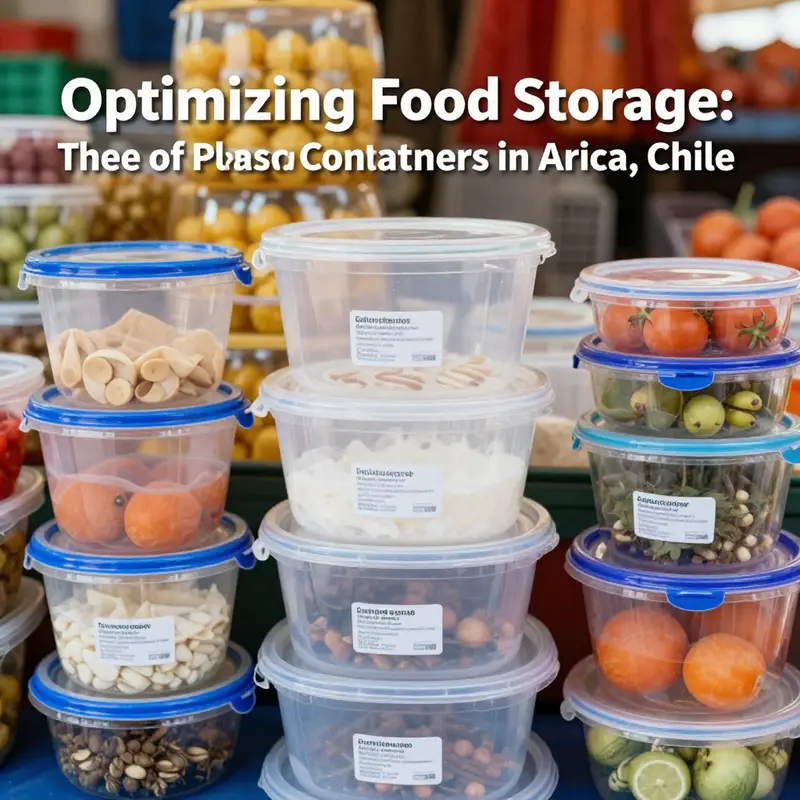
Materials, regulations and everyday safety for food containers in Arica
In Arica, as in the rest of Chile, the choice of plastic for items that touch food is governed by both chemistry and law. Materials must not only be chemically stable and fit for purpose, they must meet legal migration limits set to protect health. Authorities require testing that measures how much of a given element or compound can move from a container into food. This system is built around specific migration limits for a defined list of potentially harmful elements. Heavy metals such as lead and cadmium sit among those with strict ceilings. Sellers and importers must ensure raw materials meet those ceilings before placing containers on the market.
Common food-contact plastics are chosen for their safety profile and functional traits. Polypropylene and polyethylene offer good chemical resistance, strength and low weight. They handle repetitive use and gentle cleaning well. Polyethylene terephthalate is prized for clarity and barrier properties in single-use beverage and food packaging. Acrylic and high-clarity polymers are used where transparency aids merchandising or inventory control. Each material behaves differently under heat, cleaning, and long-term storage. Repeated heating, abrasive cleaning or prolonged contact with fatty or highly acidic foods can accelerate degradation and increase the risk of migration. Thus the same polymer may be safe in one use but unsuitable in another.
Chile has also moved to reduce single-use plastic pollution in recent years. The national policy framework restricts many disposable items, encouraging reusable and recyclable alternatives. Those rules reshape supply chains and choices for retailers and caterers in Arica. Businesses serving food are adapting by switching to durable containers, returnable systems, or materials designed to be recycled locally. Consumers are likewise urged to select products with clear food-contact designations and to avoid repurposing single-use bottles and trays for repeated food storage.
Regulation in practice relies on a mix of labeling, testing and supplier guarantees. Look for containers labeled as food-grade or bearing the food-contact symbol. The resin identification code—numbers 1 through 7 inside a chasing arrows triangle—helps identify the base polymer and its likely properties. But the code alone does not guarantee safety. Conformity is established through documented tests. Migration testing measures specific substances released under controlled conditions. Overall migration testing measures the total mass of migrants. A declaration of conformity from a supplier should reference the relevant tests and the legal limits they meet.
Practical guidance for consumers and businesses
Consumers in Arica should treat plastic containers as task-specific tools. Use lightweight polyethylene containers for dry goods and cold storage. Choose polypropylene for reusable tubs, meal prep containers and items that may see brief contact with warm food. Reserve clear, single-use bottles for one-time beverage use when those items are certified for that purpose. Never assume a clear, rigid container is safe for heating. Avoid microwaving plastic unless the item is explicitly rated microwave-safe. Do not place single-use beverage bottles in the dishwasher. Repeated heat cycles speed polymer breakdown and raise migration risk.
High-fat, highly acidic or very salty foods increase the potential for migration. Use glass, ceramic or purpose-rated, heat-stable plastics for long cooking, high-heat reheating, or overnight marination. Containers with scratches, clouding or surface pitting have larger surface area and aging defects. Those signs often mean increased release of substances. Discard or recycle worn containers.
Cleaning matters. Wash food-contact plastics promptly with warm soapy water. Avoid strong solvents and abrasive scrubbers. For repeated-use items, follow the manufacturer’s cleaning instructions. Dry thoroughly before stacking to limit bacterial growth. For businesses, validated cleaning protocols preserve material integrity and maintain safety records for inspections.
For eateries and retailers in Arica, supplier control and documentation are essential. Request test reports that reference the national limits for specific migration. Keep material safety data and declarations on file. When sourcing imported containers, insist on traceability and certificates from the material supplier or manufacturer. Periodic independent testing by a recognized laboratory provides an additional compliance layer. This protects customers and reduces liability.
Design, labeling and storage choices also affect safety. Airtight lids reduce oxidation and microbial contamination, not chemical migration. Transparent containers simplify stock rotation and reduce food waste. Containers designed to stack securely save space and limit accidental damage, which prolongs service life and safety.
Environmental and lifecycle considerations
Safety in Arica cannot be separated from sustainability. The move away from disposable plastics aims to protect coastal and marine environments. Reusable, repairable or recyclable containers reduce waste and the downstream risk of microplastic generation. Durable polymers chosen for repeated use generally offer a better lifecycle outcome than single-use alternatives when managed correctly.
However, durability does not guarantee indefinite safety. Repeated mechanical stress, UV exposure and heat cycles gradually change polymer structure. These changes can increase surface roughness and create sites for microfragment release. Proper lifecycle management reduces this effect. Rotate stock, inspect items visually, and replace containers on a scheduled basis. Where possible, select materials that are recyclable within the local waste system to avoid leakage into the environment.
Label literacy and everyday checks
A simple habit can reduce risk. Check every container for a clear food-contact mark. When present, the mark indicates intent for food use, though not the complete compliance story. When in doubt, ask the retailer for a declaration of conformity. Inspect lids and seals; a damp or misshapen gasket can compromise freshness and allow contamination. When a container warps, clouds, or develops a persistent odor, retire it. For storage, avoid direct sunlight and sources of heat. Store plastic containers with lids off to help ventilation and prevent trapped moisture.
Recommendations for product selection and supplier practices
Buyers in Arica should favor suppliers who provide clear documentation. Declarations should cite the testing standard and the specific migration limits used. For larger volumes, arrange batch testing. Maintain written supplier agreements that require notification if a material formulation changes. For local manufacturers, verify that production controls limit contaminant introduction during molding or extrusion. Cross-contamination with pigments, recycled input streams, or additives can change overall safety.
When single-use options are unavoidable, manage them as true single-use items. Avoid repurposing beverage bottles or takeaway trays for food storage. If a business adopts compostable or paper-based alternatives, confirm compatibility with the food type and local waste streams.
A final practical note
Safety rests on three pillars: correct material selection, appropriate use, and documented compliance. In Arica, the law sets numerical limits for migration and encourages reduced disposable plastic use. Consumers and businesses benefit when they read labels, follow manufacturer guidance, and favor durable, tested containers for repeated food contact. Small daily choices—using the right container for the job, replacing worn items, and checking supplier documentation—add up to meaningful risk reduction and better environmental outcomes.
For an example of a commonly used clear plastic option found in kitchens and food service, see the transparent plastic sauce container product page.
更多有关智利食品接触材料法规的说明,请参阅:
https://www.sgs.com/en/insights/articles/chile-consults-over-rules-for-food-contact-materials
Clear, Compact, and Coastal: Designing Plastic Food Containers for Arica, Chile
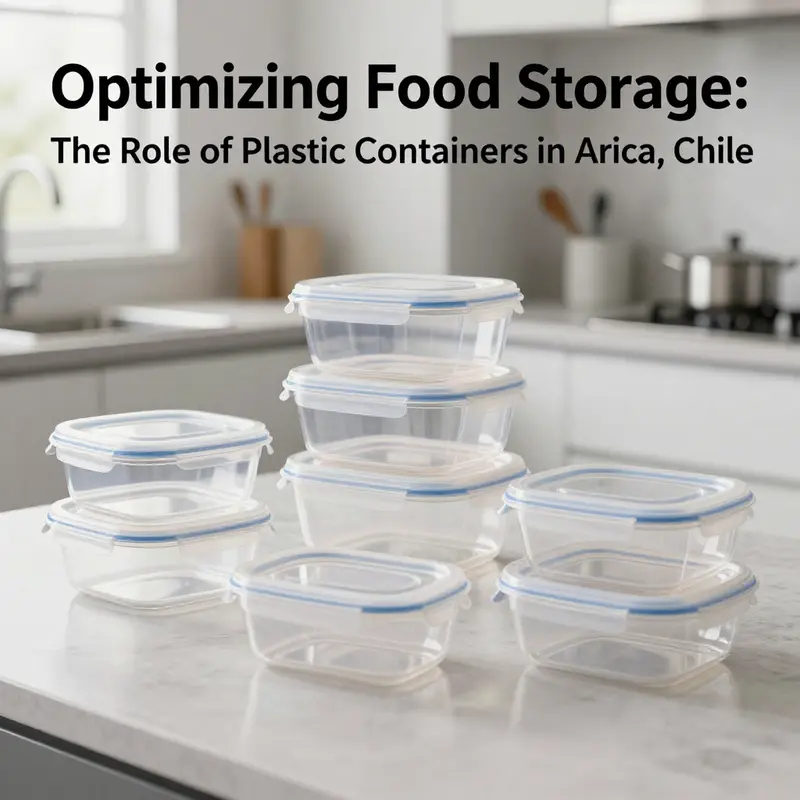
In Arica, where the Pacific meets a harsh desert climate, the simple act of storing food becomes a small but vital biome of daily life. The containers people rely on every day—from the pantry at home to the shelves of local markets and the backrooms of school cafeterias—are shaped by more than aesthetics. They are shaped by weather, by space, by the rhythms of supply chains that cross oceans, and by the careful balance between safety, practicality, and reuse. The design and functionality of plastic food containers thus emerge as a quiet but essential chapter in how a coastal desert city like Arica stays nourished and organized. The core idea is straightforward: visibility, protection, and simplicity. Containers made for food storage in Arica tend to prioritize transparency so contents are quickly identified without opening the lid, lightweight construction for ease of handling, and robust seals to guard against the region’s particular moisture and temperature variations. Materials commonly favored for these purposes include food-grade polypropylene (PP) and polyethylene (PE). These plastics offer a reassuring combination of chemical inertness, impact resistance, and compatibility with everyday kitchen routines. They are light enough to be carried up apartment stairs or stacked into a compact pantry, yet sturdy enough to survive the rigors of daily use, frequent washing, and the occasional bump during a move or a busy market day. In a city where space in homes and small businesses is precious, the ability to nest or stack containers without sacrificing accessibility becomes a practical advantage. The idea of a well-designed container is not only about holding flour or pasta; it is about maintaining the quality of the contents over time, reducing waste, and supporting a household’s or a vendor’s workflow with minimal cognitive load. The transparent walls, a hallmark of many contemporary designs, support rapid inventory checks. When shelves are lined with uniform, see-through bins, the act of choosing what to cook grows faster and more reliable. This is especially valuable in Arica’s markets and schools, where time and hygiene are often the difference between smooth service and a crowded, cluttered back area.** The choice of materials also carries a sustainability narrative. Food-grade PP and PE are widely recyclable in many urban waste streams, and they often accommodate reuse cycles that align with local attitudes toward waste reduction. In a global supply chain context, these materials travel well. They withstand long journeys from manufacturing hubs in Asia to South American ports and then through regional distribution networks into Arica’s urban centers. The long, sea-bound voyage challenges that a container faces—moisture, temperature fluctuations, and occasional rough handling—are mitigated by design choices that focus on integrity and protection. A well-engineered container for Arica not only keeps food safe but also minimizes the risk of leaks or contamination that could disrupt a school lunch program or a family’s weekly meal planning.** The structural logic behind these containers is both elegant and pragmatic. First, stackability is essential. In spaces where shelving, pantry corners, or market stalls are tight, the ability to stack containers securely saves vertical real estate and reduces clutter. A consistent exterior footprint and precise tolerances aid in stable stacking, so a row of containers won’t slide or tip when the room is busy or when carts roll past. Second, the wall geometry supports visibility without sacrificing durability. Transparent walls allow quick checks of contents such as grains, dried fruits, snacks, or prepped ingredients. Third, the lids—often with integrated sealing features—play a critical role in preserving freshness. A dependable seal helps guard against moisture ingress, which is particularly relevant in coastal climates where humidity can creep into cupboards and pantries. This is especially important for dry goods like rice, flour, or nuts, which are staples for many Arica households and food services. Fourth, durability and thermal resilience are not luxuries but necessities. A multi-layered or reinforced wall structure improves impact resistance and helps maintain internal conditions during transport or while sitting on a hot kitchen shelf. While many users value the ability to reuse containers repeatedly, the design also recognizes that frequent washing and dishwashing are part of everyday routines. Containers labeled as dishwasher-safe or microwave-safe simplify life for busy families and schools, even if not every use-case will rely on every feature. The result is a versatile tool set that can handle everything from a family’s weekly bulk buying to a restaurant’s takeout packaging in a way that feels almost invisible in daily practice.** Yet no design is perfect in every situation, and a few limitations deserve attention. Some models emphasize airtight sealing at the expense of ventilation. For certain fresh foods or aromatic ingredients, limited ventilation can influence odor retention or texture after extended storage. Odor transfer can be a challenge when strong-smelling items are stored together, underscoring the importance of thorough cleaning and, when possible, separating storage by category. Odor management also depends on the material’s surface finish and the presence of any gasket components. Proper cleaning—avoiding abrasive scrubbing that might scratch the clear walls—helps prevent residual smells from lingering after washing. None of these considerations should overshadow the practical benefits: clear visibility, reliable sealing, and durable construction, all of which align with how Arica’s households and small businesses operate. The design language is simply honest: containers should disappear into daily routines, supporting meals and marketplaces rather than complicating them. A well-chosen container becomes a quiet partner in organization, enabling shoppers and cooks to focus on the foods themselves rather than on packaging logistics. In Arica’s pantry, this translates into fewer trips to the store for forgotten staples, quicker meal assembly, and more consistent portion control in schools and cafeterias. For the urban vendor, the right container means that a batch of rice or beans can be prepared, stored, and portioned with confidence, while the outer shell keeps dust and moisture at bay during the long coastal drive from port to market stall. The practical face of this design philosophy is one of flexibility. Containers come in a range of sizes to accommodate everything from a few handfuls of nuts to bulk bags of flour. They can be nested when empty to conserve space and then expanded to create an organized shelf of uniform modules. The glassy clarity, far from being a mere aesthetic choice, reduces the cognitive load on cooks and managers who must monitor stock levels quickly—an everyday meteorology of a busy kitchen or a fast-paced school lunchroom. A locally relevant example of this approach to packaging design is the principle of combining visibility with a reliable seal, ensuring that contents are both easily identified and securely contained. In a related display of packaging design that emphasizes window visibility, many users find it instructive to explore packaging options that incorporate a transparent window—allowing the user to glimpse the product inside without opening the lid. This concept, while seen in a variety of product families, resonates with the ethos of plastic food containers designed for Arica: simple, practical, and protective. For readers seeking an explicit example of this visual strategy in a related packaging category, you can explore a line of foldable, windowed cake boxes that demonstrate how visibility can be integrated without sacrificing structural integrity or ease of storage. Pure Color Foldable Cake Boxes with Window Bakery Boxes. The anchor text mirrors the URL’s descriptive focus, and the example serves as a helpful touchstone for understanding how windowed designs can be adapted to broader food-container families. This is not a direct endorsement of any single supplier, but rather a way to illuminate how a design principle translates across packaging contexts. In Arica, the same principle translates to a pantry of uniform, transparent, and dependable containers that respond to both home needs and the demands of local businesses. The shipping dimension adds another layer of complexity. For suppliers and retailers who source these containers, the logistics of cross‑ocean transport matter as much as the lids and walls. Standardized high-cube containers moving from major manufacturing hubs to Chile’s Pacific ports must endure long voyages, with protections against moisture and temperature swings. The materials and joinery must resist corrosion, leakage, and the sometimes rough handling that accompanies global freight. Once the containers reach Arica, the ability to unload quickly, sort by size, and place into shelving that maximizes aisle and floor space becomes a practical benefit. In this respect, the design is a bridge between global manufacturing and local use, aligning the robust, reusable values of modern packaging with the day‑to‑day realities of a city that is both coastal and arid. The market for these containers in Arica is shaped by a blend of residential use and commercial demand. Families preparing weekly meals, schools serving lunch to dozens of children, and local markets that require reliable packaging for dried goods all rely on containers that offer clarity and resilience. Retailers may look for modular systems that can be configured to fit shelves or carts, while households might prefer lids with secure seals and easy-clean surfaces. The range of sizes matters here: a well-chosen set allows small apartments to store grains and snacks efficiently while giving larger households the option to manage bulk purchases. Customization options—such as sizes, wall thickness, sealing mechanisms, and even printed labeling—help local businesses align packaging with branding and regulatory labeling requirements. In Arica, where logistics are a daily concern, the capacity to adapt packaging to space constraints and to local waste-management practices is not a luxury but a practical necessity. The ongoing challenge for designers and manufacturers is to strike a balance between cost, durability, and environmental considerations, ensuring that containers remain affordable for households while meeting the needs of schools, markets, and takeout services. This is more than a design problem; it is a systems question about how everyday objects integrate into a city’s routines, transport networks, and ecological footprint. The beauty of a well-designed plastic food container lies in its quiet efficiency: it protects what’s inside, reveals what’s inside, travels with ease, and fits neatly into the rhythms of Arica’s day-to-day life. For readers who want to see a broader spectrum of packaging options that can inform local decisions, one useful starting point is the wide landscape of suppliers and products that connect manufacturing centers to Chile’s markets. External resources provide a map of opportunities and standards that shape what ends up on Arica’s pantry shelves and store backrooms. External resource: https://www.alibaba.com/trade/search?fsb=y&IndexArea=product_en&CatId=&SearchText=plastic+food+containers+Chile
From Port to Pantry: The Essential Role of Plastic Food Containers in Arica’s Food Trade
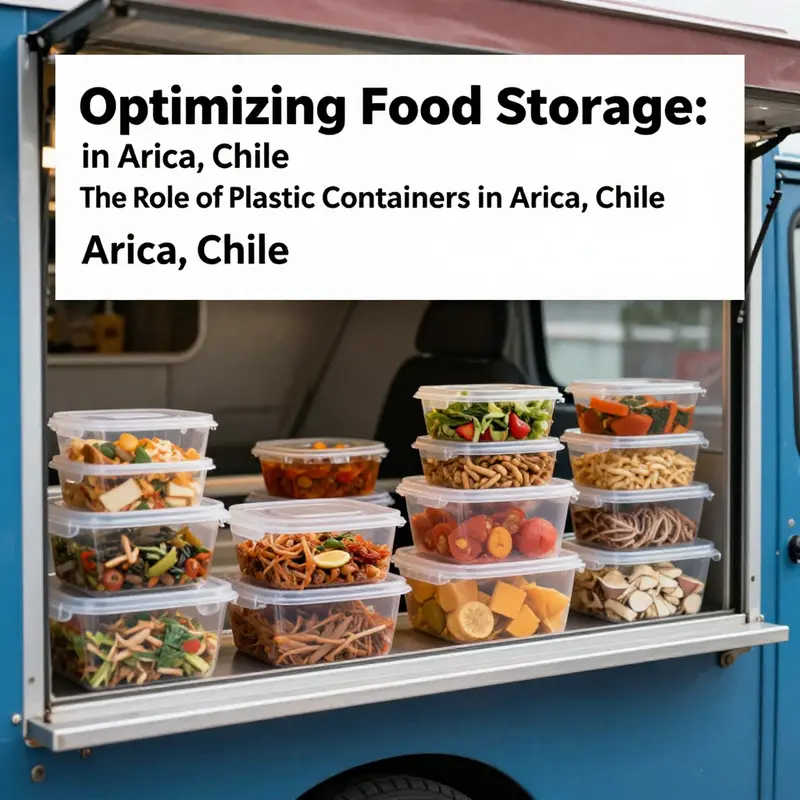
Arica sits at the edge of the Pacific, a northern Chilean port that has long traded not only minerals and fish but the everyday staples that keep households fed. The practical need for reliable, food-safe packaging grows out of that port-side reality: containers must survive long journeys, protect contents from the harsh coastal climate, and still present food in a way that invites trust from retailers, restaurateurs, and households alike. In this sense, plastic food containers are less about a single product and more about a logistics philosophy—one that links farms and fisheries to markets across South America, Asia, and beyond, while also serving local kitchens, delis, and street vendors that dot Arica’s urban landscape. When viewed through this lens, plastic containers become a quiet backbone of the regional food system, enabling efficiency, safety, and accessibility from port to pantry.\n\nThe cargoes that move through Arica’s corridors depend on a supply chain that bridges distant production points with local demand. Plastic food containers play multiple and complementary roles in this chain. For perishable goods, the right container design—durable, moisture-resistant, and stackable—helps maintain product quality from farm to market stall or grocery shelf. The materials themselves matter: food-grade plastics such as polypropylene (PP) and high-density polyethylene (HDPE) offer essential chemical stability, enabling safe storage of grains, dried fruits, legumes, and a wide range of refrigerated or ambient products. In a desert climate like Arica’s, where temperature swings and low humidity can both strain product integrity, the choice of container often translates into real savings in shelf life, reduced waste, and more predictable supply timing for retailers.\n\nArica’s role as a transshipment node also shapes how containers are selected and used. Global logistics networks that connect Asian manufacturing hubs with South American markets rely on standardized, scalable packaging solutions. The availability of generic, well-certified containers in 20-foot and 40-foot formats establishes a predictable framework for importers and exporters alike. In practice, these containers support a staggered array of activities: bulk storage of dry goods at the port area, intermediate packaging for consolidation into regional shipments, and retail-ready formats for supermarkets and markets across northern Chile and neighboring countries. The adaptability of plastic containers to both bulk and consumer-facing needs is precisely what makes them valuable in Arica’s mixed ecosystem of export-driven agriculture, seafood, and domestic catering.\n\nThe importance of design extends beyond the materials to how a container seals, stacks, and displays. A well-sealed container minimizes moisture ingress, a critical factor for preserving the crispness of nuts, dried fruit, and cereal products during long journeys. Clear or transparent options help traders and buyers verify content without opening the package, reducing handling time and improving inventory checks for busy port and wholesale environments. Stackability, achieved through precise tolerances and uniform dimensions, optimizes storage in crowded warehouses and aboard limited-space transit environments. These seemingly small design decisions accumulate into tangible benefits: fewer product losses, faster turnover, and more reliable delivery timelines that keep Arica’s customers satisfied.\n\nLocal retailers and hospitality venues also rely on plastic containers to manage the realities of Arica’s market. Ready-to-eat meals, takeaway snacks, and bulk ingredient storage in hotels, cafeterias, and casual eateries depend on containers that combine durability with ease of use. The region’s outdoor and semi-outdoor dining settings make moisture resistance and heat tolerance especially valuable, preserving texture and flavor when meals travel from kitchen to street or market stall. In many cases, a simple, transparent container with a secure lid can make the difference between a dish’s appeal and a missed sale. The practical value of such packaging aligns with ongoing shifts in consumer behavior toward convenient, portable meals that still meet food safety standards and environmental considerations.\n\nFrom a regulatory standpoint, Arica-based exporters and local manufacturers operate within a global framework of compatibility and compliance. Food-contact materials must meet safety standards that prevent migration of chemicals into the food, even under heat exposure or prolonged storage. This has made certified, food-grade plastics the baseline expectation for most suppliers and buyers. For exporters aiming to satisfy multiple markets, the ability to source standardized, compliant containers from international suppliers becomes a strategic advantage. The efficiency gains from such sourcing—reduced lead times, consistent packaging quality, and streamlined customs documentation—play a crucial role in seasonal agricultural exports, including fruits with short harvest windows that require precise coordination to reach markets while fresh.\n\nA broader perspective on Chile’s packaging dynamics helps illuminate why Arica’s container choices matter beyond local supply chains. The export-oriented segments that pass through Arica—fresh produce, seafood, and processed foods—must satisfy a diverse set of international packaging regulations. The ability to adhere to these standards while maintaining cost efficiency hinges on using containers designed for safe, predictable performance across distribution stages. For traders, this means prioritizing containers that are not only affordable and recyclable but also capable of protecting product integrity from warehouse to ship deck. In practice, this translates to a preference for simple, robust designs with clear labeling and reliable seals, which minimize handling errors and maintain traceability throughout the supply chain.\n\nThe realities of Arica’s market also invite a pragmatic look at sustainability. As awareness of environmental impact grows, many operators are exploring reusable or recyclable options that still deliver the performance demanded by high-volume food distribution. While not every use case can rely on reuse, the recycling stream for post-consumer plastics remains a critical consideration. In this context, container choice becomes part of a larger dialogue about waste reduction and lifecycle responsibility. For food service providers, adopting containers that balance durability with end-of-life options can yield a double dividend: lower disposal costs and a stronger value proposition for customers who seek sustainable and responsible packaging choices.\n\nTo illustrate how packaging choices fit into the broader ecosystem, consider how retailers, distributors, and service firms coordinate their needs. A common workflow involves selecting containers that can handle bulk storage yet transition smoothly to retail-ready formats. This dual-use capability reduces intermediate handling steps and helps maintain product quality as goods move from the farm or fishery to market shelves. In Arica’s port-adjacent logistics hubs, where time and temperature control are critical, containers that provide a reliable seal, clear visibility, and space-saving stackability become essential. They enable faster repackaging, easier inventory checks, and better space utilization in warehouses that often operate under tight turnover requirements.\n\nAnother layer of practicality concerns the sourcing strategy itself. The capacity to procure standardized containers from international suppliers, including shipments routed through major ports such as Shekou, can shorten lead times and stabilize pricing for Arica-based businesses. This global linkage supports seasonal exports by ensuring that packaging is ready when harvests peak and demand spikes. It also fosters consistency across shipments, which helps retailers and markets maintain familiar packaging aesthetics and labeling practices that consumers expect. In short, the packaging system in Arica is a living interface between production realities and consumer expectations, enabling a smooth, trustworthy flow from field to table.\n\nFor operators who want to explore packaging options that align with both performance and responsibility, there is value in a deliberate, evidence-based approach to container selection. What matters most is a balance: material safety, functional design, and lifecycle considerations, tuned to the specific logistics, climate, and consumer dynamics of Arica. This approach supports a resilient local food economy that can withstand supply fluctuations while upholding quality and safety. The end goal is a packaging system that not only protects and preserves but also speaks to the needs of a community that relies on both a steady stream of imported and locally produced foods.\n\nTo connect practical choices with concrete supply options, consider a straightforward pathway for procuring packaging that aligns with these priorities. A supplier offering eco-friendly takeout boxes for food packaging, designed to be sturdy, microwave-safe, and grease-resistant, provides a clear match for many Arican use cases. Such containers can serve multiple functions—from street food offerings to takeaway packs for groceries and prepared meals—while supporting a cleaner, more efficient operation. See an example of this category here: eco-friendly takeout boxes for food packaging.\n\nFor those who want to situate Arica’s packaging story within a broader Chilean context, the broader export-focused discourse available in industry coverage provides useful context. An external resource discusses how plastic packaging supports Chile’s export packaging needs, including regulatory considerations and practical logistics that resonate with Arica’s experience. External resource: https://www.freshplaza.com/article/3715962/plastic-food-containers-for-export-in-chile\n\nTaken together, these threads illuminate a practical, real-world picture: plastic food containers are a critical, if understated, infrastructure element in Arica’s food system. They enable efficient, reliable movement of goods from farms and fisheries to markets and kitchens. They support the everyday operations of retailers and food services, while meeting safety and regulatory requirements and accommodating evolving sustainability expectations. In Arica, the container is not merely a receptacle; it is a facilitator of trust—between producers and consumers, between international partners and local markets, and between the memory of a fresh, well-preserved meal and the moment it lands on a plate. As the city continues to grow as a gateway for regional trade, the role of robust, compliant, and thoughtfully designed plastic containers will remain central to keeping Arica’s food economy vibrant, resilient, and connected to the wider world.
Hidden Economics of Plastic Food Containers in Arica: Local Costs, Benefits, and Paths Forward
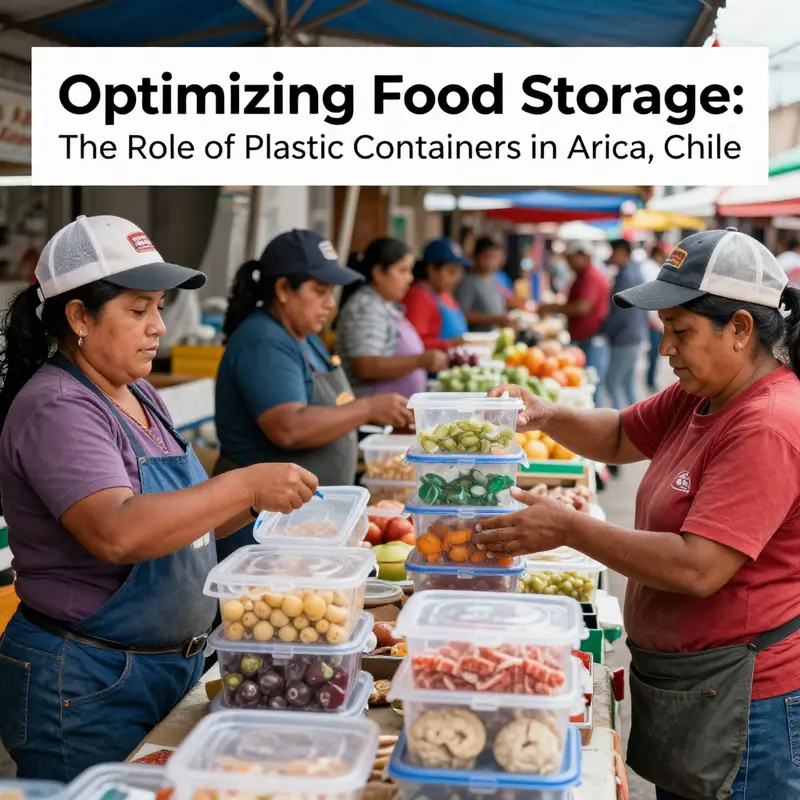
Arica’s local economy, like many coastal and regional centers, intersects daily with food packaging. Plastic food containers shape transactions across households, street vendors, restaurants, and small food producers. Yet, for Arica specifically, rigorous economic analysis of these containers is missing. No targeted studies map their costs, benefits, or market dynamics in this city. That absence matters because packaging choices ripple through supply chains, public services, and household budgets.
The immediate economic role of plastic containers is clear in practice. They lower short-term costs for vendors by being lightweight, durable, and cheap per unit. Vendors use them to portion and transport food safely. Households rely on them to store staples and reduce spoilage. For small food producers, packaging enables sales beyond immediate neighborhood markets. Those practical benefits translate to measurable effects at the business level: reduced product loss, clearer portion control, and simplified logistics. They also enable new revenue channels, such as prepared food sales and takeaway services, expanding incomes for micro-entrepreneurs.
However, these direct gains sit beside less visible costs. Municipal waste systems face growing volumes of mixed plastic waste. When packaging is not collected or recycled, it becomes litter that harms urban environments and coastal areas. Those environmental effects can hit local economic sectors indirectly. Tourism, fisheries, and recreation can suffer if plastics degrade beaches or nearshore waters. Local governments then carry cleanup and disposal costs. Informal waste workers and recyclers experience income fluctuations as material flows and market prices change. These downstream costs rarely appear in vendor profit sheets, but they are real and recurring expenses for the city and its residents.
The lack of localized research leaves key questions unanswered. What proportion of household and commercial food packaging in Arica is plastic? How much value does packaging add by extending shelf life or enabling sales beyond the point of production? What are the measurable public costs from increased waste management needs? Without these data, policymakers and business support agencies cannot weigh trade-offs objectively. Existing national or global studies provide a backdrop, but local economic structures and consumption patterns differ. That difference shapes whether interventions will be cost-effective here.
To create useful evidence, a mixed-methods approach works best. Quantitative material flow analysis can measure volumes of plastic containers entering homes and businesses. Simple spot surveys of markets and food vendors gather price points, frequency of use, and sources. Household expenditure surveys reveal how much families allocate to food packaging. Parallel qualitative interviews illuminate why vendors choose particular packaging. This combination shows both flows and motives. It surfaces the small-scale economic logic that drives packaging demand.
A rigorous cost-benefit analysis must include externalities. Calculate direct benefits such as reduced spoilage and increased seller revenue. Then estimate municipal costs of collection, transport, and final disposal. Factor in environmental damages that affect tourism or fisheries and the informal sector’s income dynamics. Include health-related expenses where packaging choices affect food safety or exposure risks. A common method is to monetize these externalities using conservative estimations. Presenting a range of scenarios helps stakeholders see best and worst outcomes.
There are pragmatic interventions that local authorities, support agencies, and businesses can test. Supporting pilots for reusable or refillable container systems in targeted markets would reveal uptake barriers. Small grants or loans could help micro-enterprises trial alternative packaging that reduces waste while keeping costs manageable. Strengthening links between producers and recycling firms, while formalizing informal recyclers, can stabilize material flows and create local jobs. Public procurement rules that favor reusable or high-recyclability packaging can generate steady demand and scale supplier responses.
Behavioral nudges and education also change economics. If households and vendors adopt simple separation practices, recycling becomes more viable. Clear labeling about reusability and safe use can reduce unnecessary single-use purchases. Training for vendors on cost-saving reuse strategies and correct cleaning extends container lifetimes and lowers per-use costs. These changes often carry low fiscal cost and high local benefit, but they require measured rollout and evaluation.
Policy instruments must be designed to reflect local realities. Fees or taxes on single-use items can reduce consumption but may disproportionately affect low-income vendors and consumers. To mitigate that outcome, revenue from such measures can fund recycling infrastructure or provide subsidies for low-cost reusable options. Incentive schemes that reward businesses for returning packaging or incorporating recycled content can shift supply chains, if implemented with transparent monitoring and practical logistics.
Private sector actors in Arica could take up several roles. Local suppliers and entrepreneurs can innovate around design, building containers that stack well, reduce transport costs, and extend shelf life. Small manufacturing or customization hubs could supply regionally appropriate solutions, keeping value local. Microfinance institutions and SME support programs can target packaging upgrades as productivity improvements. When support agencies align with waste management partners, small investments yield broader system benefits.
Measuring impact requires clear indicators. Track household expenditure on packaging, vendor revenue changes after packaging shifts, rates of food waste avoided, volumes of plastic diverted from landfill, and informal recycling incomes. Monitor municipal collection costs and any changes in environmental complaints or beach cleanliness metrics. Collecting these indicators before and after pilot interventions shows whether economic gains for businesses persist after accounting for external costs.
There are trade-offs to weigh. Substituting plastics with alternatives can reduce visible waste but can raise costs or increase carbon footprints if materials are imported or require more energy to produce. Reuse systems can reduce material flows but need logistics, hygienic practices, and consumer buy-in. Policy design should be iterative: pilot, measure, and adjust. Transparent reporting builds public trust and helps scale successful models.
Finally, expanding local research partnerships is essential. Universities, municipal agencies, and business support organizations can collaborate on targeted studies. International reviews of food system plastics provide useful frameworks and methods. One recent systematic scoping review synthesizes environmental and health impacts of food system plastics globally, and it offers methodological starting points for local adaptation (see the linked external study below). By adapting proven methods to Arica’s context, stakeholders can create a granular evidence base that informs effective policy and market responses.
Embedding economic analysis within broader sustainability goals turns a common daily object into a lever for change. Plastic food containers influence market opportunities, municipal budgets, and household resilience. Filling the current knowledge gap in Arica requires modest investments in data collection and pilots. Those steps will allow the city to balance short-term convenience with long-term economic and environmental health. For a practical example of packaging options relevant to takeaway and food service contexts, see an example resource on plastic sauce jars with lids.
External resource: Environmental, food security and health impacts of food system plastics – A systematic scoping review (https://doi.org/10.1186/s13756-021-00942-6)
Internal link: plastic sauce jars with lids – https://ecocupbowl.com/product/plastic-sauce-jars-with-lids-plastic-clear-food-small-sauce-container-box-with-lids-kitchen-organizer-disposable-sauce-pot/
Balancing Convenience and Coastlines: Environmental Choices for Plastic Food Containers in Arica, Chile
Environmental context and practical steps
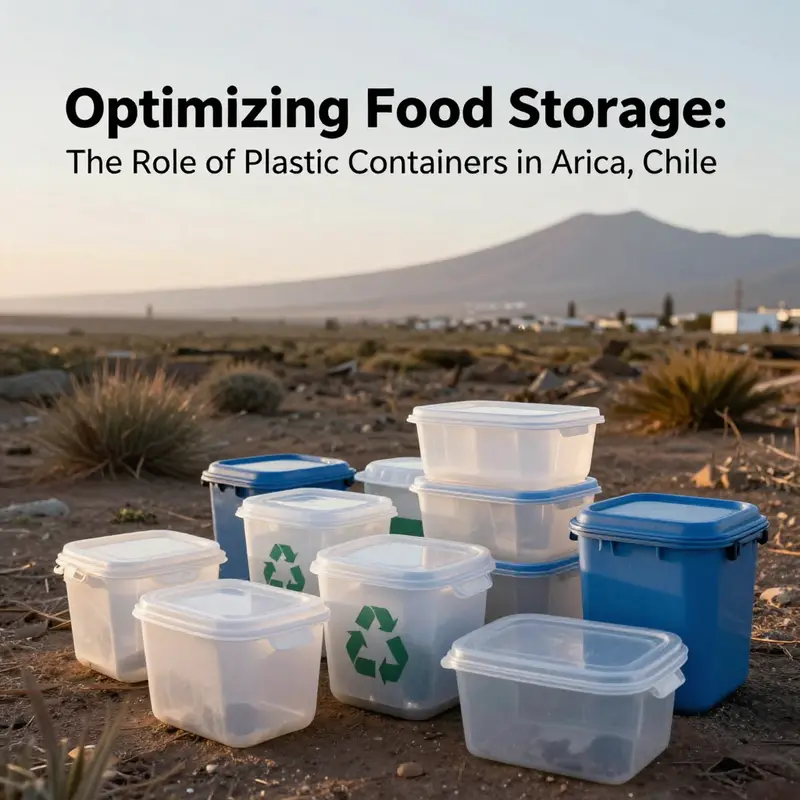
Arica sits at the meeting point of desert, city, and ocean. Its coastal waters and marine life face mounting pressure from plastic debris. Single-use plastics are a visible and persistent pollutant. They break down into microplastics that reach beaches and fisheries. For anyone working with or choosing plastic food containers in Arica, these realities shape decisions at every step: design, purchase, distribution, use, and disposal.
Materials matter. Food-grade plastics commonly used for clear food containers include polypropylene and polyethylene. These polymers are lightweight and durable. They resist oils and acids from food. They also have a life-cycle impact that depends heavily on local waste systems. In Arica, the capacity to separate, collect, and process these polymers influences whether a container re-enters a circular stream or becomes litter. A container that is theoretically recyclable can be worthless if collected with food contamination, mixed into residual waste, or exported in bulk without proper sorting.
Policy is changing. National measures have already restricted single-use plastic bags. Extended producer responsibility schemes are advancing. These rules shift the burden for end-of-life management towards manufacturers and importers. For a port city like Arica, which handles frequent containerized shipments, policy changes reshape import specifications and supplier contracts. Importers must now consider not just unit cost and transit time, but also the downstream costs associated with recycling programs or take-back systems.
Logistics and trade routes amplify impacts. The flow of containerized goods through Arica means packaging decisions made thousands of kilometers away affect local waste streams. Bulk shipping of food containers in twenty-foot or forty-foot containers concentrates large volumes of plastic in short periods. When disposal options are limited, imports can drive spikes in coastal litter. Conversely, responsible procurement practices and supplier requirements can reduce the local footprint. Procurement that favors lightweight, reusable, or easily recyclable packaging reduces waste generation and simplifies municipal handling.
Local realities change design priorities. In Arica, climate factors such as aridity and coastal winds increase the chance of wind-blown litter. Containers without secure lids or those made from brittle material are more likely to fragment and escape waste systems. Functional design features—tight seals, sturdy stacking, and clear material labeling—reduce contamination and loss. Transparent containers that allow quick visual inspection help encourage reuse and proper sorting. Stackable shapes cut down on transport volumes and storage needs, reducing the emissions associated with moving empty containers.
Recycling is not a silver bullet. Collection rates depend on infrastructure investment. Where curbside collection is limited, informal collectors fill gaps. Supporting those workers with cleaner, higher-value streams improves outcomes. Contamination is a major barrier: food residue, grease, or mixed materials often relegate otherwise recyclable plastic to landfill. Clear, simple labeling and public education campaigns targeted to local habits can push recycling rates higher. Investment in washing stations at commercial food hubs, or agreements with food service providers to pre-rinse packaging, can transform low-value waste into viable feedstock.
Alternatives require careful weighing. Paper and fiber-based containers are appealing, but their production can demand higher energy and water inputs. Compostable or biodegradable polymers depend on industrial composting facilities to break down properly. Without those facilities, they may persist like conventional plastics. Reusable systems require robust logistics: return loops, cleaning infrastructure, and consumer participation. For many businesses in Arica, a hybrid approach makes sense—reducing single-use items while investing in reusable containers where feasible.
Business-level actions can lead. Restaurants, grocery stores, and distribution centers can specify packaging that supports local recycling. Choosing containers made from a single polymer simplifies sorting. Avoiding mixed-material lids or combined paper-plastic laminates reduces contamination and increases marketability of recovered material. Contracts can require suppliers to accept returns or support local take-back programs. Where replacements are needed, switching to high-quality reusable containers can pay off quickly in reduced procurement and waste costs.
Community engagement shapes outcomes. Coastal cleanups and awareness campaigns are useful, but systemic change requires collaborative solutions. Municipalities, port operators, businesses, and nonprofits must coordinate. For example, aligning collection schedules with peak import arrivals reduces temporary overflows. Creating visible reuse or deposit schemes at markets and ports can keep containers in circulation. Educational materials in public spaces and food markets encourage consumers to select lower-impact packaging and to clean items before disposal.
Design for circularity is a practical goal. This means prioritizing containers that are durable, easily cleaned, and clearly labeled with recycling codes. It also means avoiding unnecessary additives and colorants that complicate recycling. Simpler color schemes and mono-material constructions lower the cost of reprocessing. Designing lids and bases to be separable increases recyclability. Clear instructions for consumers and vendors on cleaning and separation further improve material recovery rates.
Innovation and local solutions are emerging. Startups and social enterprises are piloting systems that turn recovered plastic into new, locally useful products. These models reduce export dependency for recyclables. They also create local jobs and foster skills in material handling and processing. Public procurement can support these ventures by prioritizing locally recycled content in contracts for municipal services and supply chains.
Practical steps for different stakeholders are straightforward. Importers should audit their packaging upstream and opt for suppliers who provide material transparency. Distributors can adopt reuse-friendly handling and storage. Retailers and food-service operators should choose containers that are single-polymer and easy to clean. Consumers can favor reusable options and rinse containers before disposal. Municipalities can invest in targeted collection points and partner with the informal recycling sector.
A useful intermediate option exists: well-designed disposable containers that prioritize recyclability and minimal environmental harm. Many alternatives to traditional single-use items emphasize compostability or renewable feedstocks. When industrial composting is unavailable, prioritizing containers that are mono-material and widely accepted by recycling streams reduces risk. For those seeking a practical example of accessible, lower-impact disposable packaging, consider exploring an eco-friendly disposable three-compartment food-grade packaging box. Such alternatives can help manage portioning while minimizing mixed-material construction and easing recycling efforts.
Regulatory clarity, market incentives, and infrastructure investment must converge. Extended producer responsibility schemes can internalize disposal costs. Deposit-return systems can raise return rates for reusable and refillable containers. Public grants and private investment can expand sorting and processing capacity. Ultimately, the environmental impact of plastic food containers in Arica will hinge on cooperation across trade, policy, and community actors.
To learn more about national shifts and startup innovation addressing plastics in Chile, see coverage by an international environmental agency that highlights changing approaches and scalable models: https://www.unep.org/news-and-stories/story/chilean-start-up-changing-our-relationship-plastic
Final thoughts
As Arica, Chile, continues to thrive as a hub of culinary delight, the role of plastic food containers becomes increasingly central. Understanding materials and safety, design and functionality, their diverse applications, economic benefits, and environmental impacts equips local businesses to make responsible decisions. By investing in quality plastic containers that meet safety standards and enhance the dining experience, food establishments can not only cater effectively to customers but also contribute positively to their community and environment.