
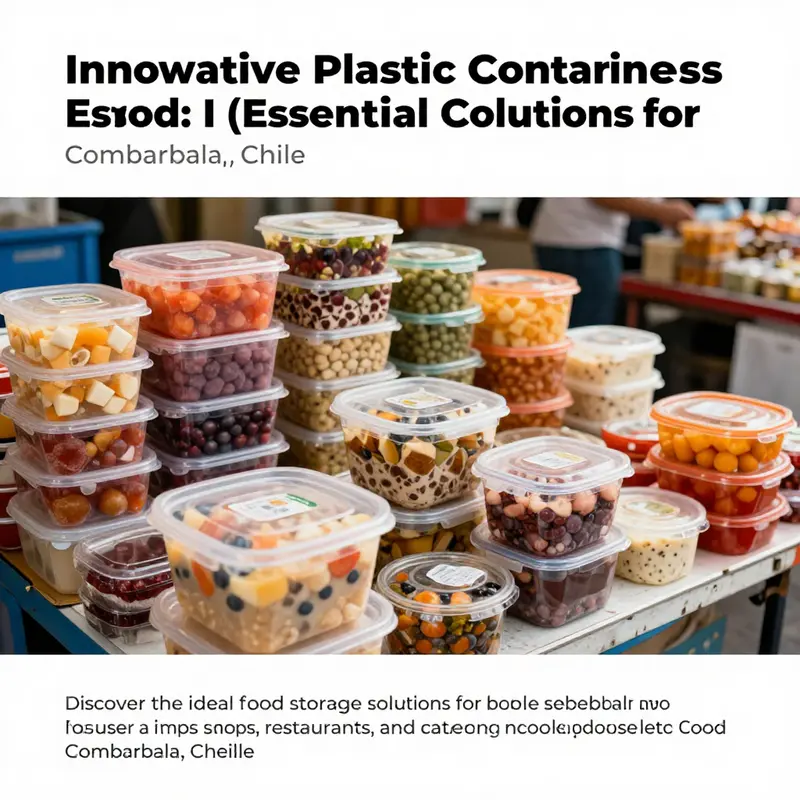
In Combarbala, Chile, the demand for versatile, high-quality plastic containers for food has reached new heights. Whether you’re running a bustling bubble tea shop, a trendy restaurant, or a vibrant food truck, having the right container is essential not just for presentation but also for food safety and convenience. As we explore the various aspects of plastic containers—from materials used to functional features—we aim to equip restaurant owners, food caterers, and corporate teams with crucial insights. Each chapter delves into a specific element of plastic containers, making your search for the perfect food storage solution in Combarbala easier and more informed.
From Community Kitchens to Market Shelves: Materials Shaping Plastic Food Containers in Combarbalá, Chile
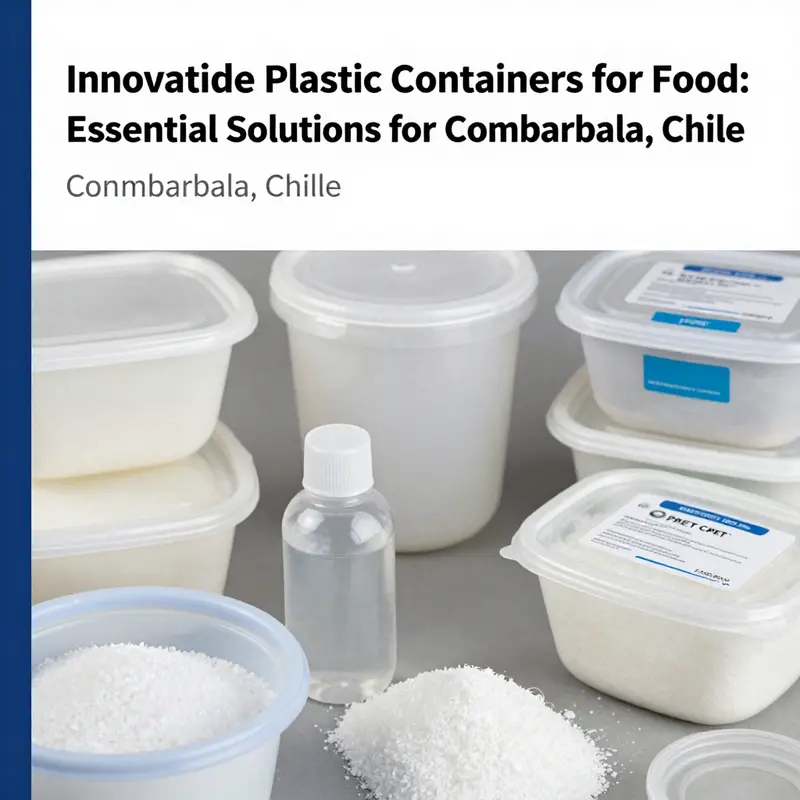
In Combarbalá, Chile, the everyday rituals of cooking, serving, and sharing food travel far beyond the kitchen. They move through local eateries, market stalls, school canteens, and home-packed lunches, all of which rely on containers that keep meals safe, presentable, and ready to transport. The materials chosen for these plastic food containers are not merely technical choices; they shape how food travels from the pot to the plate, and from there to the consumer’s hands. They influence safety, waste, and even the perception of freshness. Although the knowledge base cannot locate a precise, local catalog for Combarbalá’s plastic containers, the broader picture that emerges across Chile and similar markets helps illuminate how materials are selected, tested, and regulated to support food safety and efficient service in a regional context. The story begins with materials themselves—their chemistry, their performance under heat, their interaction with foods, and their resilience through busy service environments.
At the core of most plastic food containers are polymers designed to withstand the everyday stresses of food handling. In many foodservice settings, containers are fabricated from materials such as polycarbonate (PC), which offers excellent rigidity and clarity; CPET, a modified form of PET that gains enhanced heat resistance; and other common polyolefins like polypropylene (PP) and polyethylene (PE). The appeal of PC lies in its durability and transparent lid options, which allow staff and customers to see contents without opening the seal. CPET, in turn, adds the capability to withstand higher microwave or hot-fill scenarios, enabling quick reheating while maintaining a barrier against moisture and aromas. These properties matter in Combarbalá’s diverse service landscape, where quick-serve outlets and home-delivery meals often rely on microwavable containers to streamline operations, reduce service times, and maintain quality from kitchen to consumer.
Material choice is not just about performance in isolation; it is about compatibility with the foods being stored. In a region where traditional foods, sauces, and fried dishes are common, containers must resist grease and allow for easy, reliable sealing. That means attention to surface characteristics that minimize leakage and drips, as well as sealing methods that prevent contamination or spoilage during transport. The sealing integrity of a container is a practical safeguard—without a tight lid or proper gaskets, sauces can migrate, moisture can escape, and food can dry out during a short ride to a market stall or a customer’s home. When containers are designed with transparent or semi-transparent lids, staff can quickly verify portions and freshness without exposing food to potential contamination from repeated openings, a convenience that matters in fast-paced environments where turnover is high and customer satisfaction hinges on visible quality.
The availability of heat-resistant materials also intersects with cultural and logistical realities in Combarbalá. Not every kitchen or takeaway operation relies on a microwave, yet many consumers expect options that can go from fridge to table and, in some cases, to a microwave. This expectation drives the use of materials explicitly labeled as microwave-safe, a designation that goes beyond simple heat tolerance. It signals that the container will not warp, leak, or degrade under repeated heating cycles and that the container itself won’t release contaminants into food. For these reasons, CPET continues to be favored in many packing solutions for hot foods, while PP-based systems remain a practical choice for cold or room-temperature meals, thanks to chemical stability and resistance to staining.
A broader plastics vocabulary—polycarbonate, CPET, PET, PP, PE—underpins the regulatory conversations across Chile’s food safety ecosystems. Although specific, local product names may differ from one supplier to another, the underlying principle remains: materials used in contact with food must meet safety standards that limit the migration of substances into food, regulate heat resistance, and ensure consumer protection. In Chile, as in many countries, this translates into domestic oversight by public health and agricultural authorities, as well as alignment with international guidance for food-contact materials. For organizations operating in Combarbalá or supplying it, this means staying attuned to changing requirements, certifying that materials are appropriate for their intended use, and maintaining records that demonstrate compliance. The absence of a centralized, public catalog for Combarbalá-specific containers in the current knowledge base should not obscure the practical path forward: prioritize heat tolerance for heated meals, secure sealing to prevent leaks, and verify that chosen materials meet local and international safety expectations.
Directly addressing the practicalities, the choice of container material also intersects with environmental considerations and end-of-life management. In markets like Combarbalá, where waste streams may be variably organized, the recyclability of materials matters to operators who want to minimize environmental impact. Some plastics are easily recycled in established programs, while others may be downcycled or require more specialized facilities. This has led many service providers to experiment with eco-friendly and paper-based options, particularly for takeout boxes and secondary packaging. The trade-offs are nuanced: while paper-based or compostable options can reduce plastic waste, they may offer different barriers against moisture, grease, and structural integrity. For customers who expect reliability in crowded markets, the priority remains clear: containers should prevent leaks and maintain food quality across the journey, even if that means choosing plastic systems designed for safe disposal or recycling within the local waste infrastructure.
In practice, what does this mean for a Combarbalá kitchen or distribution point? It means a careful evaluation of the typical meals being packaged, the common travel times, and the modes of delivery that customers use. Hearty, saucy dishes demand strong seals and grease resistance. Items that are cooled for transport require materials that maintain freshness without excessive condensation. For those offering reheating services, microwave compatibility becomes a convenience that reduces handling steps and speeds up service. The material’s performance in real-world scenarios—how it handles heat, how well it seals, how it resists staining, and how it interacts with food over time—drives decisions that influence customer satisfaction and operational efficiency.
To frame these decisions in a local context, consider the supply ecosystem in and around Combarbalá. While the specific regional catalog may not be readily available in the public knowledge base, the broader Chilean and Latin American packaging landscape provides a useful map. Supply chains in regional towns often rely on a mix of imported materials and domestically manufactured components. This mix shapes cost, lead times, and the ability to customize colors, sizes, and packaging configurations to suit local foodservice practices. It also shapes how the market responds to regulatory changes and consumer expectations, which can shift with evolving health standards and environmental priorities. In such a milieu, the capacity to source materials that meet heat and sealing requirements, while remaining compatible with local waste streams, becomes a key competitive differentiator for small and mid-sized operators.
The unifying thread through these considerations is safety. Food-contact materials must limit migration, resist degradation under normal use, and preserve the sensory qualities of food. In practice, this translates to testing for heat stability, chemical migration, and mechanical durability. The containers must not impart off-flavors or odors to foods and must withstand the rigors of transport, stacking, and handling in busy environments. For operators in Combarbalá, this means partnering with suppliers who can provide documentation of compliance, offering guidance on suitable use cases—microwaving versus cold storage, for example—and supplying packaging options that align with local standards and consumer expectations. Although the existing research notes a lack of granular, locality-specific data for Combarbalá, the safety-first orientation remains universal: choose materials appropriate for the food and its use, confirm that the packaging will perform reliably during transit, and verify compatibility with the local waste and recycling framework.
Beyond the laboratory-like considerations of heat, seal integrity, and chemical safety lies a subtler element that shapes everyday practice: the visible and tactile experience of the container. The clarity of a lid, the rigidity of the walls, the smoothness of the seal interface, and even the ease of opening all influence how customers perceive the meal. In a setting where meals are shared, takeaway options expand social rituals and influence satisfaction. A container that holds its shape under stacking, resists leaks during a bumpy ride, and presents an appetizing view of the contents will reinforce trust in the service and encourage repeat business. In Combarbalá, where markets and family eateries play a central role in daily life, this small set of cues—shape, seal, visibility, and reliability—takes on outsized importance. It is here that the material choices translate into practical everyday value for both operators and diners.
For those negotiating packaging decisions, a sensible path blends local practicality with international safety norms. Begin with a clear categorization of the meals most frequently packaged and the typical transit conditions. Then map those requirements to material families—PC and CPET for higher heat and clearer visibility, PP for robust cold or room-temperature items, and PE-based options where cost and flexibility are paramount. Validate that the chosen materials are appropriate for the intended use, and seek documentation that attests to food-contact safety and heat performance. When considering ecological aspects, explore options that balance durability with environmental responsibility, keeping in mind the local waste management landscape and recycling capabilities that may be available to consumers and businesses alike.
For readers seeking further context on food-contact materials and their safety considerations, see practical guidance from international food-safety authorities. As one example of broader standards and consumer protection resources, refer to accessible guidelines on food-contact packaging materials provided by the U.S. food safety authority: https://www.fda.gov/food-packaging. This external resource offers a framework for evaluating compatibility, migration, and regulatory expectations that can inform local decisions in Combarbalá and similar contexts. For a concrete link to industry examples of packaging options, the following internal reference may offer useful context and inspiration: eco-friendly takeout boxes for food packaging. While not a substitute for region-specific regulatory counsel, such sources illustrate how packaging design blends material science with user experience, sustainability, and safety.
In sum, the materials used in plastic food containers in Combarbalá are not just technical specifications; they are a practical instrument for safety, efficiency, and customer satisfaction. The best choices arise from a thoughtful synthesis of food type, heating and handling patterns, regulatory expectations, and local waste realities. As the town continues to evolve its foodservice ecosystem, the dialogue between material capability and everyday practice will guide how containers support the local palate, the pace of service, and the collective effort to keep meals safe from kitchen to table. This ongoing balance—between performance, safety, and responsibility—will shape not only what is chosen today, but what the next generation of packaging in Combarbalá will aspire to achieve.
External resource: FDA guidelines on food-contact materials provide a broader lens on safety, migration, and regulatory considerations that inform local packaging decisions: https://www.fda.gov/food-packaging
Carrying Freshness and Safety: The Functional Life of Plastic Food Containers in Combarbala, Chile
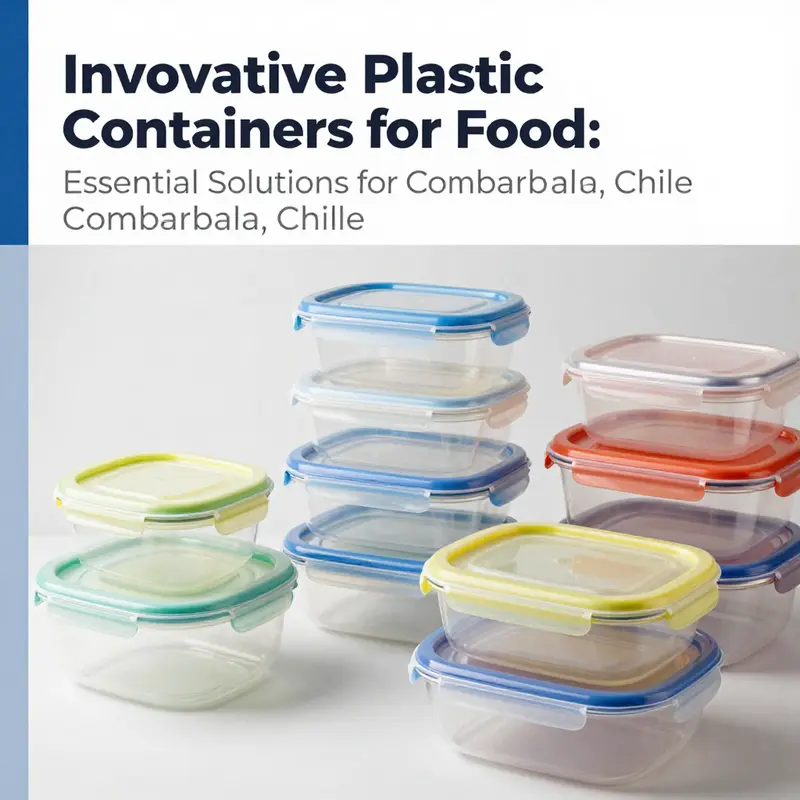
In Combarbala, a landscape of high plains and sunlit courtyards, plastic food containers are more than simple receptacles. They are everyday tools that help people move meals between home, school, and work. The region’s rhythms shape how residents value portability, safety, and cost in containers. The discussion blends global material science with local practice, asking what a container can hold, how well it preserves flavor, and how it travels through a day without leaking or spoilage. The practical emphasis is reliability and simplicity, because containers must perform in crowded hallways, outdoor markets, and roadside stops where meals are kept hot and intact on the move.\n\nAt the core of functionality lies material choice. Modern food-grade plastics include polymers chosen for heat tolerance, transparency, and toughness. In many contexts these choices include polycarbonate and modified PET variants, among others, each with a balance of strength, clarity, and heat resilience. In Combarbala the emphasis is microwave compatibility, airtight seals, and ease of cleaning. A microwave-safe, leak-resistant container can transform a cafeteria or family meal into a convenient experience. Material choices also raise safety questions about additives and potential contaminants. International standards guide the use of food-grade materials to minimize the risk of contaminant transfer over time.\n\nPortability is another defining virtue in a mountainous, sometimes windy landscape. The light weight of plastics makes it feasible to carry meals in backpacks or lunch bags for hours, a practical advantage for students and workers who spend much of the day away from home. In schools and community centers, stackable containers reduce fatigue and support regular, healthy eating. Different sizes let families plan a week of meals, from larger boxes for hearty lunches to small containers for salads or sides, and multi-compartment designs for mixed meals. This modularity promotes portion control and reduces waste, contributing to everyday sustainability.\n\nEqually important is resilience, how containers withstand bumps, drops, and daily handling. Plastic’s impact resistance helps prevent breakage compared with glass or metal. This is especially valuable in homes with children and in schools where containers are handed between students, tucked into backpacks, or slid across cafeteria tables. Durable lids and well-designed seals support reuse and long life, which in a cost-sensitive region translates into real savings and fewer replacements.\n\nSealing capability remains central to freshness and spill prevention. A reliable seal keeps sauces from leaking into backpacks and helps maintain texture and flavor. Clear lids and sides let users assess contents quickly, reducing unnecessary handling and contamination. Tight seals and user-friendly closures are practical safeguards for everyday life in this climate, where humidity and temperature swings can affect stored foods.\n\nCost-effectiveness and accessibility round out the functional picture. Broad distribution and locally affordable options matter in a region where budgets are managed and community programs scale up. For schools, kitchens, and small ventures, affordable containers support nutrition-driven initiatives and social inclusion. When access to consistent options is available, routines around food preparation, storage, and transport are strengthened.\n\nVersatility completes the functional triad. Many containers are microwave safe, can be refrigerated or frozen, and include compartments that separate components. The ability to reassemble meals easily supports healthier choices and easier meal planning for families and schools. In contexts that prioritize school meals or home-based nutrition programs, the flexibility of containers helps preserve nutrition, presentation, and portion control.\n\nOf course, no portrait is complete without limitations. Long-term use can cause scratches that harbor bacteria and hinder cleaning. Repeated washing and heating can affect surfaces over time. It is prudent to rotate containers and replace those showing wear, warping, or clouding. Some additives are under scrutiny for health impacts, so selecting food-grade products and following recommended cleaning protocols is wise to prevent residue buildup.\n\nThe local dimension matters. In Combarbala, container choice aligns with school lunch programs, family budgets, and regional supply chains. When programs scale, containers must be available in volumes, easy to distribute, and resilient to daily wear. The social value of reliable containers extends beyond convenience; it supports dignity in meals, reduces waste, and fosters a culture of care around food.\n\nFor designers and buyers alike, a few grounded recommendations emerge: prioritize heat tolerance and microwave compatibility; choose robust seals that remain effective after repeated uses; select sizes that fit common meals and school menus; favor clearly labeled food-grade materials with documentation to international standards; invest in containers that are easy to clean and resistant to scratches so they stay hygienic and presentable over time.\n\nIn practical terms, a representative takeaway option can illustrate these ideas: take-away packaging designed for versatility and transport. This example underscores how a single design—balancing capacity, sealing, and portability—can serve school lunches, family dinners, and community events. External resources from recognized food safety bodies can help translate local practice into universal standards. Together, these points sketch a cohesive picture of how plastic containers function in Combarbala: tools that carry nourishment, protect safety, and support everyday life in the mountains and along the open roads.
Plates, Portions, and Possibilities: The Role of Plastic Food Containers in Combarbalá’s Food Landscape
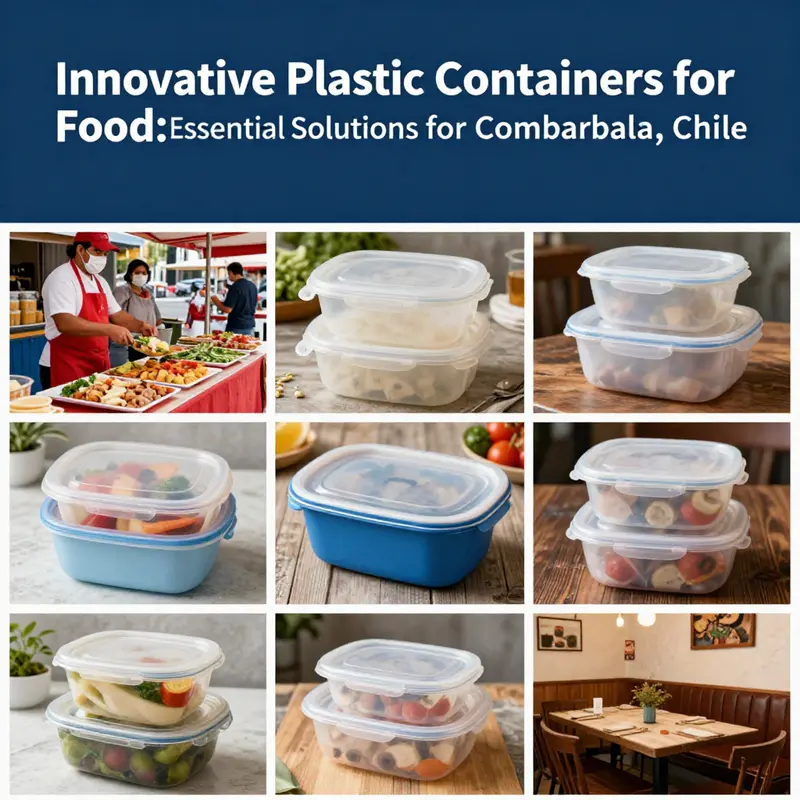
In Combarbalá, Chile, the landscape of food packaging is shaped by practical needs and shared routines in kitchens, cafés, schools, and markets. Plastic containers play a central role in how meals are prepared, carried, and enjoyed. This chapter examines how materials, designs, and sealing technologies translate culinary intent into reliable packaging that supports local business, food safety, and customer satisfaction.
Materials and performance: Polypropylene, PET, and CPET appear most often. Polypropylene offers light weight and good chemical resistance, while CPET handles higher temperatures and microwaving. PET provides clarity for visible contents and relatively rigid performance. The choice of material influences heat tolerance, leak resistance, and recyclability, and it interacts with energy costs and supply chains in a mid-sized town like Combarbalá.
Functionality in practice: multi-compartment designs, leak-resistant lids, and clear windows help staff manage meals and customers quickly. For takeout and catering, containers must withstand transport, preserve textures, and prevent cross-contamination. Home use emphasizes easy reheating, portion control, and efficient storage. Schools and festival vendors value stacks that save space and reduce waste, with sizes that fit standard meal portions.
Operational considerations: pricing, availability of lids and accessories, compatibility with microwaves and freezers, and compatibility with municipal recycling streams. Sustainability concerns are growing, with operators weighing recyclability and reuse potential against cost and performance. The local ecosystem often favors packaging that performs reliably at a reasonable price and can be sourced from regional suppliers.
Practical guidance: start with a few core sizes that cover common meals, invest in reliable lids, and verify microwave safety and grease resistance. Gather feedback from kitchen staff, drivers, and customers to refine choices over time. The result is a packaging system that supports efficient service, reduces waste, and builds trust in local food businesses.
Sizing for Safety: Specifications of Food-Grade Plastic Containers in Combarbala, Chile
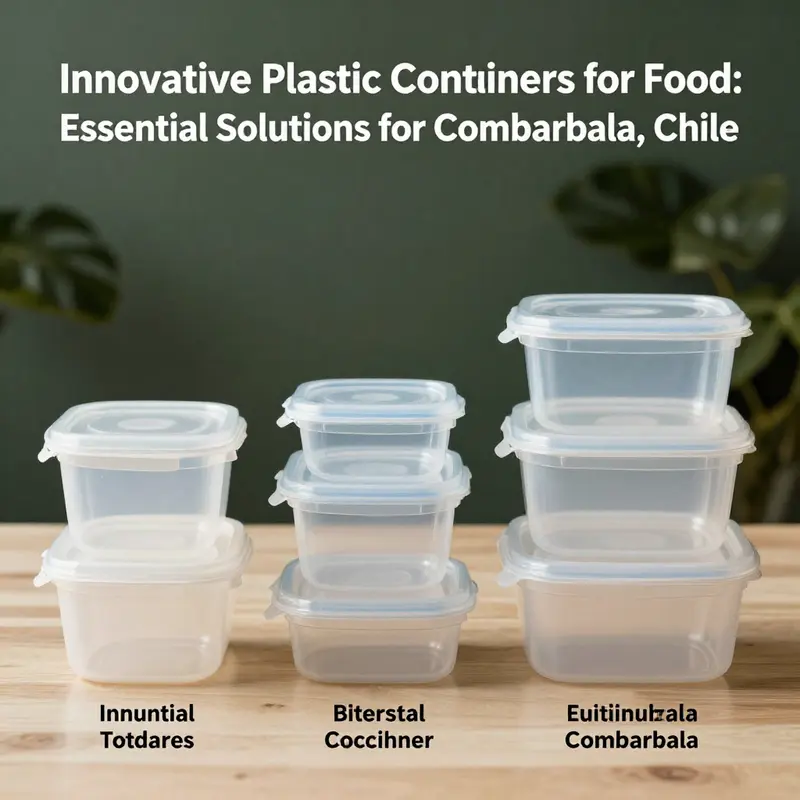
In the varied landscape of Combarbala and the broader Chilean food service ecosystem, plastic containers for food are not merely convenient vessels; they are crucial touchpoints where safety, efficiency, and consumer trust intersect. This chapter follows the thread of specifications and sizes, weaving together material choices, performance targets, and practical design considerations that shape how a simple takeout box or storage tub performs in real kitchens and households. Even though local regulatory bodies in Combarbala may reference international best practices, the reality on the ground is that operators must translate those standards into procurement criteria, supplier agreements, and daily usage routines. The aim is not to catalog every possible container type, but to illuminate how core specifications—rooted in food safety and mechanical performance—drive better outcomes for food quality, vendor reliability, and consumer confidence.
Material integrity sits at the heart of any robust specification. Containers intended for food contact must be fashioned from fresh, food-grade resins rather than recycled materials, and they should be explicitly free from hazardous additives. In practice, this means avoiding substances such as residual processing aids that could migrate into foods, and it means screening out notorious contaminants such as bisphenol A, lead, and phthalates. For operators in Combarbala who routinely transport hot meals, cold salads, or delicate sauces, the material choice matters not only for compliance but for sensory neutrality—no off-odors, no color bleed, and no texture that worsens with use. The emphasis on a pristine material base is echoed by global guidelines that tie safety to the chemistry of the plastic itself, as well as to how that chemistry behaves under real-world conditions, from the moment a container is packed to the moment it reaches a customer’s table.
Beyond the resin, the surface quality of a container communicates a message about care and hygiene. A smooth, defect-free exterior and interior—free from cracks, bubbles, scratches, or discoloration—reduces opportunities for food to trap bacteria or accumulate residue. Uniform coloration matters, too, because perceptible color variation can be a subtle signal of inconsistent processing. The capstone of appearance is edge comfort: sharp or rough margins invite accidental cuts during handling, undermining both safety and user experience. In the micro details of everyday use, these visual and tactile cues reinforce trust; the simplest, most durable containers say to a consumer that the establishment has considered their health in every touchpoint, from packing to reheating or sharing a meal at home.
Mechanical performance follows close behind material and appearance. A container must survive the rigors of daily life in kitchens and delivery environments. A standard drop test—defined in industry practice as a fall from about 0.8 meters onto a hard surface—becomes a practical proxy for the accidental bumps, jolts, and stacking pressures that occur during bustling service periods. A container that cracks or delaminates under such stress can leak contents or compromise seal integrity, leading to food loss and customer dissatisfaction. Temperature resilience is equally critical. For containers intended to withstand hot foods, immersion in hot water or hot oil must not induce deformation or surface failure. This is especially important in settings where containers travel through heat-retention stages or are used directly in microwaves by customers. Material type also governs strength: polypropylene, high-impact polystyrene, and ABS each carry distinct bending strengths that provide a safety margin for practical handling and stacking. In a real-world frame, these numbers translate into practical guidelines: different resins have minimum bending strengths that operators can rely on when planning portion sizes, lid compatibility, and stackability without fear of yielding or warpage.
When speaking of sizes and capacity, familiar ranges emerge across the industry, even as local buyers in Combarbala tailor choices to their menus and logistics. For everyday household and small-catering use, containers commonly span from roughly 100 milliliters up to about 550 milliliters. This spectrum covers single-serve meals, side dishes, and compact leftovers. Design decisions often orbit around three practical dimensions: capacity, wall thickness, and depth. As capacity grows, the depth and thickness typically increase to preserve structural integrity and thermal performance. In many design standards that inform international practice, a compact 100–150 mL container might have a wall thickness around 2.0 to 2.5 millimeters, while mid-sized 150–250 mL forms tend toward 3.0 millimeters, and larger 251–550 mL containers lean toward roughly 4.0 millimeters. Depth and wall thickness are not arbitrary numbers—they reflect a balance between material costs, insulation behavior, and the mechanical demands of stacking, sealing, and transporting foods that vary in viscosity and moisture content. For a kitchen in Combarbala, where quick-service operations often emphasize efficiency and consistency, these design choices become operational their own kind of standard operating procedure: predictable fill lines, reliable lid fit, and robust stacking that minimizes crush damage.
In the context of global safety and trade, several minimum performance benchmarks guide these decisions. Total chemical migration into food simulants is kept intentionally low, often capped at a level like 10 milligrams per square decimeter. This metric is a practical guardrail against leaching of additives or processing aids into foods, even under the condition of extended contact or when hot foods are served. Microbial safety is equally important: for each container, a limit on total aerobic microbial counts is established to limit the risk of contamination. If a consumer discovers any visible color migration or staining from the container into the food, the product is deemed unacceptable regardless of other performance metrics. These criteria help unify manufacturers and buyers around a common threshold for safety that travels beyond local borders and supports reliable international supply chains.
For the Combarbala supplier who must translate these principles into actionable procurement criteria, the question becomes how to evaluate and compare offerings. The most practical approach is to anchor purchasing decisions to three core attributes: first, the material certification and the absence of harmful additives; second, the mechanical and thermal performance data that assure resilience in a high-demand service environment; and third, the measurable dimensions that align with menu needs and packaging lines. The customer gets a consistent experience when containers meet defined depth and wall thickness targets for their capacity, ensuring that lids seal properly, contents remain secure during transport, and reheating remains safe if customers choose to microwave the container. The alignment of these factors—material integrity, surface and edge quality, mechanical robustness, and precise sizing—reduces waste, improves food quality, and fosters consumer trust.
To translate abstract specifications into tangible choices in a local market like Combarbala, buyers often require a straightforward set of criteria. The material must be described as fresh, food-grade resin. The product should explicitly disclose that the migration limits are within internationally accepted thresholds, and it should demonstrate resistance to typical service stresses through documented test results. A credible supplier will present a clear statement of compliance with temperature and chemical migration standards and will provide data that demonstrates the container’s ability to tolerate microwaving and hot liquids where appropriate. A consistent, predictable thickness helps ensure that the container does not deform under heat or pressure and that the lid remains reliably sealing. In practical terms, a buyer can usually verify these factors by requesting test reports, material declarations, and a short performance summary from suppliers, then cross-checking with the expected menu formats and service models. The aim is not to create a perfect container in every instance, but to establish a dependable baseline that reduces variability, supports training, and minimizes post-purchase surprises.
Within this framework, it is useful to consider real-world packaging decisions through a lens of user experience as much as engineering. A well-designed container should be easy to handle with gloved hands in a fast-paced kitchen, simple to stack without risk of tension or collapse, and straightforward to use for customers who reheat meals at home. The visual and tactile cues—the gloss of the surface, the smoothness of the rim, the evenness of color—contribute to perceived quality and safety. When a container truly satisfies the tested performance standards, it becomes a reliable partner in the delivery chain: it protects the contents, preserves aroma and texture, and maintains presentation from kitchen to consumer.
An essential aspect of localizing these considerations concerns the availability and suitability of packaging solutions in the Combarbala supply network. While no single standard can capture every micro-context, the adoption of internationally recognized performance benchmarks provides a robust framework for evaluating options. This is where practical guidance from global packaging resources and trade guidance becomes valuable. For operators who want to examine concrete packaging options without wading through promotional content, the idea is to anchor discussions around specifications rather than slogans. The goal is to ensure that every container entering a kitchen or delivery route has already cleared essential safety checks and performance tests, so the team can focus on food quality, speed, and customer satisfaction.
In this sense, the conversation around sizes and specifications is not a sterile, abstract exercise. It is a practical discipline that supports consistent service, minimizes waste, and protects public health. A common rule in procurement is to request a concise data package that includes material composition, test results for drop tolerance, heat resistance, and chemical and microbial safety, along with a clear dimensional profile that maps capacity to depth and thickness. By requiring such details, buyers in Combarbala can compare options with confidence and reduce the ambiguity that often accompanies packaging choices in fast-moving food sectors. The conversation then naturally extends to how these specifications are implemented across supply chains: how containers are produced, how quality control is performed, and how nonconforming lots are managed—topics that are essential to maintaining a stable, safe, and compliant packaging ecosystem.
For readers who want to explore practical parallels to these guidelines in related packaging contexts, consider the broader category of eco-conscious takeout designs. A representative example of a packaging approach that mirrors these safety and usability priorities can be found in resources describing durable, microwave-safe, grease-resistant, and ship-ready containers. These designs illustrate how material selection, wall thickness, and sealing mechanisms come together to deliver a reliable product that stores well, travels securely, and reheats safely. Such examples underscore the principle that well-specified containers are not only about holding food; they are about preserving the entire dining experience from preparation through consumption.
To summarize the essential takeaway for Combarbala’s food service landscape: the ideal plastic container harmonizes material safety, mechanical resilience, hygienic integrity, and precise sizing. It responds to the realities of fast-paced kitchens, variable transport conditions, and the diverse needs of diners who expect convenience without compromising safety. When these elements align, operators gain a dependable packaging partner, one that supports consistent food quality, reduces waste, and strengthens the trust that customers place in their meals. The practical implication is clear: procurement decisions should be anchored in transparent material declarations, verifiable performance data, and sizing specifications that reflect actual menu practices. In a market where every order travels through several hands, the stability of those fundamentals becomes a quiet competitive advantage.
For further context on the broader packaging landscape and to explore related examples of safe, practical, and compliant food containers, see an industry-focused resource on eco-friendly takeout packaging: https://ecocupbowl.com/product/eco-friendly-takeout-boxes-for-food-packaging-stylish-food-containers-safe-microwave-craft-paper-lunch-boxes-leak-grease-resistant/. This reference illustrates how modern packaging design translates the same core principles—safety, usability, and efficiency—into concrete products that can support a diversified food service operation in Combarbala and beyond. And for a global regulatory reference that informs how these standards evolve in international trade, consult the WTO TBT notice linked here: https://tbt.wto.org/CentralServer?screen=WTOPublication&lang=en&publicationId=17922.
null
null
Final thoughts
As we have explored, choosing the right plastic containers for food in Combarbala, Chile is crucial for ensuring food safety, maintaining quality, and enhancing customer satisfaction. From understanding the specific materials to recognizing the functional benefits and suitable applications, each aspect directly impacts your business’s success. By applying these insights, bubble tea shops, restaurants, food trucks, and catering services can confidently select the best containers that meet all necessary standards and enhance their operations.