
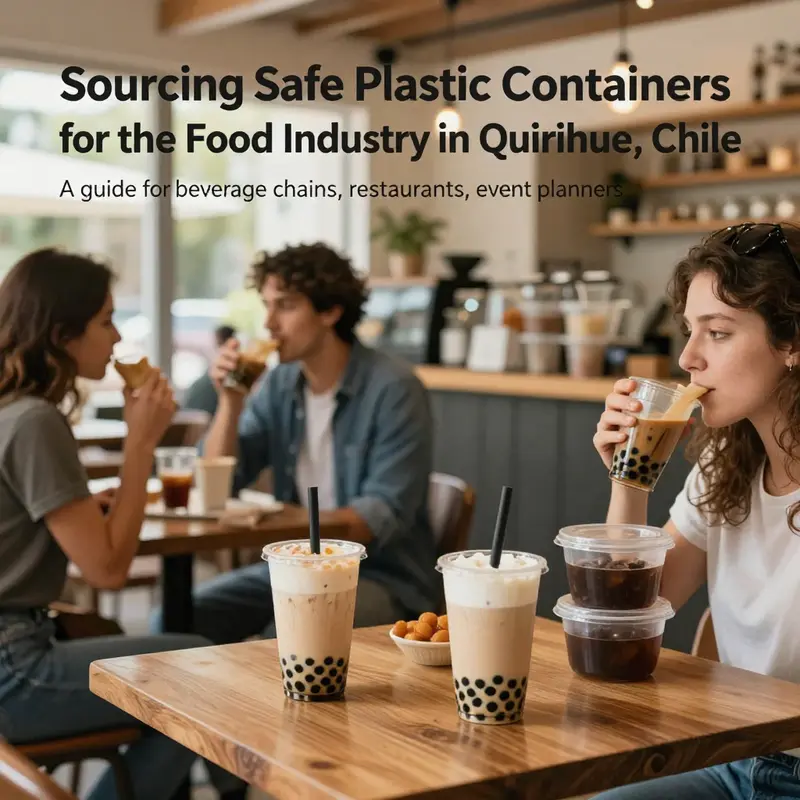
As the food industry continues to evolve, the importance of safe food storage and handling is paramount. In Quirihue, Chile, businesses such as bubble tea shops, restaurants, food trucks, and catering services must ensure compliance with food safety standards while sourcing plastic containers. This article will delve into critical aspects of food safety standards in the region, explore local supply chains for reliable container sourcing, and guide you in choosing the right plastic containers for your food storage needs. Understanding these elements will not only enhance your service quality but also ensure a safe dining experience for your customers.
Safeguarding Food in Quirihue: Navigating Evolving Plastic Container Standards and People’s Practices
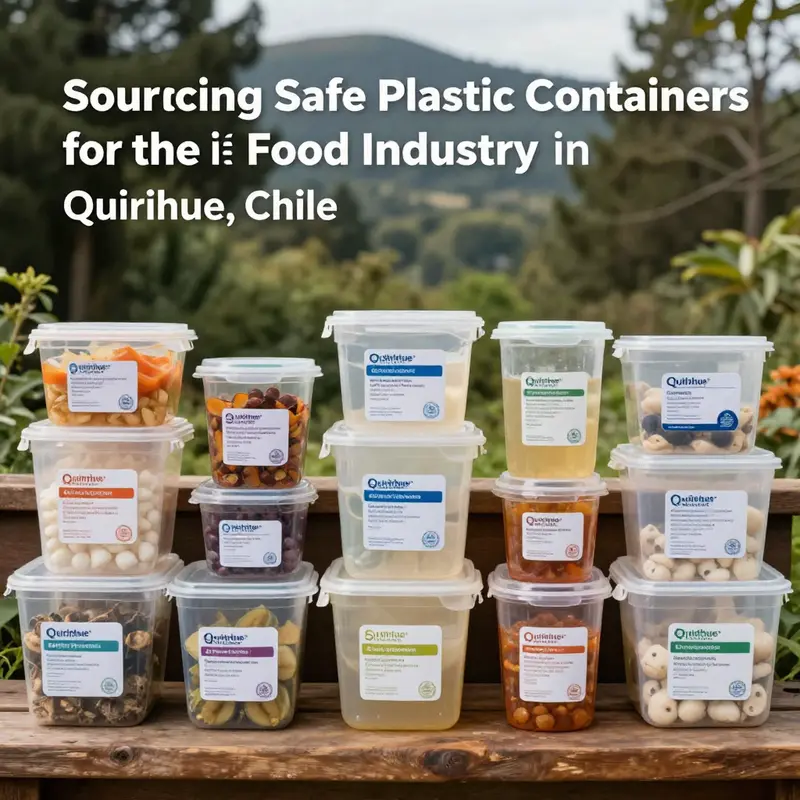
In Quirihue, a town that sits among fields and hills of central Chile, the decision to store and transport food in plastic containers is never merely a matter of convenience. It is a decision that carries implications for health, everyday routines, and the local economy. The landscape of plastic food-contact materials (FCMs) is not static. It tightens around safety considerations while expanding the possibilities of a more sustainable, compliant supply chain. For residents who shop at neighborhood markets, run small eateries, or simply organize meals at home, the question of what counts as a safe, reliable container has become both practical and deeply regulatory. The chapter that follows is not a survey of a thousand brands or a catalog of regulatory jargon; rather, it is a grounded exploration of how food-safety standards in Quirihue are shaped by national policy, international guidance, evolving consumer expectations, and the real-world constraints of sourcing containers that are both safe and accessible near home.
In the Chilean context, safety begins with the people and the processes that bring containers from production lines to kitchen shelves. The foundational idea is straightforward: materials that come into contact with food must not transfer harmful substances into the food. This is not a local whim but a public-health imperative that resonates with households, farmers, and small-business owners who depend on consistent, safe storage solutions. A practical understanding emerges when one considers what migration limits are and why they matter. Migration refers to the movement of additives and residual monomers from a plastic container into the food it touches. The risk is not a single dramatic exposure but rather a low-level, continual presence of substances that, over time, may affect health and taste, or interfere with the food’s integrity. Modern standards, including guidance and testing regimes, are designed to keep migration within safe thresholds while allowing containers to perform their essential roles—keeping produce fresh, soups warm, and leftovers secure.
Across the Atlantic and the Pacific, safety standards for plastics used with food have evolved in parallel with advances in chemistry and testing. In Chile, a regulatory mood has intensified in recent years. As of July 25, 2025, the Ministry of Health launched a public consultation to tighten the national requirements for FCMs and articles, especially those made from plastic and used for storage and packaging. This move reflects a recognition that the materials in contact with food must be evaluated through a more rigorous, risk-based lens. The consultation aims to harmonize Chile’s rules with international guidance, while also performing local risk assessments that can yield context-specific restrictions or allowances. In everyday terms, this means that a container that was considered acceptable yesterday may be re-evaluated against tighter migration limits or stricter labeling requirements today. Those who work with FCMs—manufacturers, importers, suppliers, and retailers—must stay informed about the latest guidance and ensure their products meet the evolving criteria.
The push toward stricter FCM rules sits alongside a broader environmental policy that has the potential to reshape the types of containers that shoppers encounter in Quirihue. In 2024, Chile implemented a nationwide ban on most single-use plastic products. This ban targets items such as plastic bags, cutlery, straws, and beverage cups, with the aim of steering retailers toward reusable or returnable options. The policy is not just about waste management; it also pressures the market toward safer, more durable containers that can be cleaned, reused, or recycled in a way that aligns with environmental goals. For Quirihue’s small businesses and households, this creates both a challenge and an opportunity. The challenge lies in sourcing containers that meet food-safety standards while also being compatible with reuse models, deposit-return schemes for bottles, or other sustainable systems. The opportunity lies in embracing a supply chain that rewards quality, traceability, and long-term cost savings from durable, reusable packaging.
As consumer behavior shifts toward reusables, the relationship between safety and sustainability becomes more pronounced. Sourcing decisions in Quirihue commonly begin with a careful reading of labels and certifications. While an easy, quick solution might be to grab a low-priced bag or box, the more deliberate choice is to verify that the container’s materials have appropriate food-grade compliance and that the product has been tested for relevant migration limits. To homeowners and small operators, that means looking for containers that can withstand repeated use without compromising safety or flavor. It also means considering the materials’ ability to endure typical kitchen temperatures, from fridge chill to oven or microwave brief reheating, without degrading or leaching substances. In this sense, food safety and practical usability converge: you want a container that is not only inert in your food but also robust enough for real-world handling.
The Chilean regulatory conversation is not happening in isolation. It is part of a global discourse about what counts as a safe material to touch food and how to monitor risk through testing, labeling, and traceability. The ongoing conversation draws on international benchmarks—from EU frameworks to the U.S. FDA guidelines—and invites local adaptation. Chile’s approach shows a preference for aligning with global best practices while keeping a close eye on local realities, including the composition of the plastics industry, the availability of testing facilities, and the needs of small businesses in towns like Quirihue. In practice, this means that producers and retailers of plastic containers must keep abreast of migration testing standards, acceptable substances, and permitted thresholds. They should also be prepared to present documentation that demonstrates compliance, such as test reports or certifications, when requested by suppliers or regulators. The upshot for consumers is clear: the containers that come into kitchens in Quirihue are increasingly backed by formal evaluation, with a public process that seeks to ensure the safety of everyday food storage.
A useful anchor in navigating this landscape is the broader understanding of what constitutes compliance in food-contact materials. A widely cited standard in the global discourse—though not Chilean law by itself—concerns the materials that come into contact with food and the migration limits that protect consumer health. The principle is simple: any component that could migrate into food must be governed by explicit thresholds. Compliance involves not only the raw materials but also the manufacturing process, storage conditions, and end-use scenarios. A container designed for cold storage should not become a source of contaminants when used for leftovers, and a container intended for reheating should not release substances when exposed to heat. The practical implication for Quirihue residents is that a container’s safety is a function of both its composition and the way it is used.
In daily life, the decision to purchase plastic containers for food storage often begins with a practical search for reliability. People may visit familiar retailers or explore online options to compare prices, sizes, and durability. Yet safety remains a non-negotiable criterion. That is why the community increasingly emphasizes containers that meet food-grade safety standards rather than merely meeting basic durability. The reality of supply chains means that not every option is equally trustworthy. Availability can vary with season, import cycles, and the regulatory wind, which may shift what is permissible in the Chilean market at any given time. In response, coopératives, small markets, and even family households tend to favor sources that disclose the materials, testing, and certification behind the products they stock. The result is a market in which transparency and trust become as important as price and convenience.
The practical steps a consumer or a small business can take in Quirihue reflect this emphasis on due diligence. First, seek products labeled with explicit food-contact approvals and, if possible, migration test data or third-party certifications. Second, examine the packaging’s material family—whether the container is made from compatible plastics such as polyethylene or polypropylene rather than polyvinyl chloride or others with more debated safety profiles. Third, look for clear information about reuse and disposal—reusable models should be robust and reusable without losing integrity over time. Fourth, assess the compatibility of the container with the intended use—microwave reheating, dishwasher cleaning, or freezer storage—and verify that the material can safely withstand those conditions. Each of these steps reduces uncertainty and helps ensure that the container you rely on for daily meals or business storage does not become a risk factor.
Information sources and practical examples are a vital part of this learning process. The local context matters: a small café owner in Quirihue needs containers that perform under frequent daily use, are safe for hot or cold foods, and align with regulations that may demand documentation of compliance. A consumer at home benefits from containers that are easy to clean, do not impart off-flavors, and can be used repeatedly without degrading. For both the household and the business owner, the journey toward safer plastic containers also involves thinking about the environment. The 2024 ban on many single-use plastics nudges the market toward refilling and reusing as a standard mode of operation. It also invites the exploration of returnable or deposit-based systems, especially for beverage containers, that can be integrated into local supply chains with proper labeling and safety assurances. The goal is not simply to avoid harm but to enable better, safer, and more sustainable storage practices across the community.
In this context, sourcing processes can be guided by a combination of local knowledge and digital tools. One practical avenue is exploring trusted suppliers and retailers that clearly articulate their safety commitments. Some platforms offer store locators or customer service channels to help buyers identify the nearest outlets that stock food-grade containers meeting Chile’s evolving FCM standards. It is worth noting that while a familiar retailer may provide convenient access, the most critical factor remains the container’s compliance with safety standards and its practical suitability for the intended use. The regulatory environment underscores the importance of choosing products that are evaluated for migration and that carry credible documentation. In Quirihue, as elsewhere in Chile, this combination of local accessibility and formal safety assurances shapes everyday consumer choices and business procurement alike.
For those who wish to explore packaging options that balance safety with usability, consider the broader ecosystem of sustainable packaging that has grown around food service and home storage. The shift toward reusable or durable containers aligns with a public policy impulse toward waste reduction and resource efficiency. It is not merely a fad but a structural change in how households and businesses approach food storage. In practice, this means thinking about how containers will be cleaned, how long they will last, and how their lifecycle fits into the local recycling or return schemes. It also invites reflection on the materials themselves. Are the plastics used in the containers free of harmful additives, and are any additives present at safe levels for migration into food under the most common usage scenarios? The answers to these questions depend on ongoing regulatory updates, research into migration limits, and the readiness of the market to provide clear, verifiable information.
To illustrate how these ideas translate into everyday decisions, imagine a family planning meals for a busy week. They might choose a set of containers that are clearly labeled as food-grade, with clear indications of compatibility with refrigeration, freezing, and gentle reheating. They might prefer a design that seals tightly, minimizing the risk of leaks during transport from home to school or work. They could incorporate reusable containers into a weekly meal-prep routine, thereby reducing waste while maintaining confidence that the food remains safe and fresh. A small café might opt for a similar approach, balancing the need for reproducible portioning with a robust supply of compliant containers that can withstand repeated cleaning and use. In both cases, success hinges on aligning practical needs with safety criteria and regulatory expectations.
The dialogue between safety standards and consumer practice in Quirihue is shaped not only by formal rules but also by the information ecosystems people use. Clear labeling, accessible certifications, and transparent testing information help demystify what might otherwise feel like a bureaucratic maze. When suppliers and retailers communicate clearly about the materials in contact with food, where migration limits come from, and how containers should be used and cared for, trust grows. That trust matters: it has a direct bearing on food safety outcomes, waste generation, and the well-being of families and communities. Even when the ultimate choice is simple—buying a plastic container—the decision becomes a valuable exercise in risk assessment, common sense, and civic responsibility. In this sense, the chapter’s thrust is not abstract theory but a practical, everyday practice of safeguarding food and health in a changing regulatory landscape.
Throughout this discussion, one recurring theme is the link between policy, practice, and perception. Policy provides guardrails; practice translates guardrails into daily routines; perception shapes habits and expectations. In Quirihue, where daily life often unfolds in close-knit communities and small enterprises, those three forces intersect in tangible ways. When a consumer reads a label on a plastic container and sees a claim about safety, they are not merely reading a marketing line. They are reading a credential that has been earned through testing, adherence to migration limits, and alignment with evolving standards. When a café owner negotiates with a supplier, they are negotiating not only a price but a guarantee that the containers will preserve flavor, maintain safety, and meet environmental goals. When a family revisits how they store leftovers, they engage with a public policy that seeks to reduce waste while protecting health. Each action echoes through time, contributing to a broader culture of safe storage and responsible consumption in Quirihue and beyond.
One practical takeaway for readers is to treat plastic containers for food storage as a category where safety and sustainability are not opposing forces but complementary ones. The decision-making process should integrate knowledge of regulatory updates, a careful reading of labels, and a thoughtful assessment of use scenarios. It should also consider the ecosystem of supply—where you source from, how you verify compliance, and how you dispose of or reuse containers at the end of their life. The fast-changing regulatory landscape in Chile, coupled with the country’s commitment to reducing single-use plastics, creates a dynamic environment in which informed consumers and responsible businesses can thrive. In this environment, flexibility and diligence are allies. They help ensure that containers used in homes, schools, and local businesses support safe food handling while contributing to a more sustainable future. This is not simply about avoiding harm; it is about building a reliable, resilient system for food storage in Quirihue that can adapt to new science, new regulations, and new expectations from consumers who demand more from the products they bring into their kitchens.
For readers seeking a concrete starting point, consider looking for packaging options that explicitly address food-contact safety, include migration data or third-party testing where available, and demonstrate a credible adherence to Chile’s evolving FCM framework. Engage with suppliers who can explain what substances are restricted, what testing methods were used, and what limits apply to your specific use case. If you are shopping online, a careful comparison of the product descriptions, safety certifications, and usage instructions can save time and reduce risk. And if you are supporting a small business in Quirihue, ask questions about how containers will be washed, reused, or swapped in return systems. The more information you gather, the better you can protect the health of your family or customers while aligning with the broader goals of waste reduction and responsible packaging.
In closing, the journey through Quirihue’s food-container landscape is a small but telling reflection of how communities adapt to new standards and new expectations. It is about balancing practical needs with safety assurances, and about recognizing that the choices we make about packaging have ripple effects—from kitchen countertops to landfills, from personal health to public policy. The shift toward safer, more sustainable plastic containers demonstrates a common-sense approach: invest in materials and processes that reduce risk, while embracing the innovations that allow for reuse, recycling, and more responsible consumption. This balance does not happen by accident; it requires informed choices, accessible information, and a shared commitment to safeguarding health in everyday life. As the regulatory conversation continues in Chile, Quirihue residents will likely find themselves at the forefront of a practical, embodied approach to food safety that respects both local needs and global standards.
External resources and ongoing conversations about food-contact materials provide essential context for this journey. For readers who want to explore the regulatory landscape in more depth, the following resource offers an authoritative overview of how Chile is approaching food-contact materials and the ongoing consultation process that informs practical standards for containers used in storage and packaging: https://www.sgs.com/en/insights/articles/chile-consults-over-rules-for-food-contact-materials
Sourcing Safe Plastic Food Containers in Quirihue: Local Circuits, Standards, and Everyday Food Storage

In Quirihue, a town woven into Chile’s agricultural heartbeat, the everyday act of storing and transporting food hinges on a surprisingly simple, yet collectively complex, decision: choosing the right plastic container. The shelves and markets that serve farmers, small-scale processors, and households are organized not merely by price or color, but by a quiet set of tensions—between convenience and safety, between local availability and national supply lines, between what resonates with traditional kitchen practices and what modern regulations require for food contact. The topic is not glamorous, but its implications touch health, waste, and local livelihoods. Containers that are safe for food contact must withstand the realities of the Chilean climate, the rhythms of harvest and market days, and the practical needs of families who cook, store, and reheat in modest spaces. In this chapter, the focus is on how residents of Quirihue navigate those constraints, what standards guide their choices, and how those choices ripple through households, small businesses, and the wider regional economy.
A central starting point is accessibility. People in Quirihue rarely source in a vacuum; they often begin with a broader geography—the province, the region, and national networks that connect producers of plastics with buyers at the municipal level. The practical question, then, becomes not only which container looks convenient, but which one can be trusted to hold food safely over time. Local retailers, wholesalers, and marketplaces extend the reach of modern packaging without demanding a long, complicated supply chain. They offer options that balance affordability with predictable quality. For households, a simple criterion emerges quickly: is the container labeled as safe for food contact? For small street vendors, market traders, and home-based food producers, the decision also hinges on whether the container can be reused, washed cleanly, and reused again without compromising safety or taste.
In the local discourse, it becomes clear that safety is not a single feature but a bundle. Food-grade safety is a designation that rests on materials and how they interact with food. The common expectation in Quirihue is that containers should be made from plastics that resist oils, acids, and moisture, and that they should not impart flavors or chemicals to foods. Beyond the material itself, there is attention to coatings, a factor that matters especially for containers intended to be reheated or used for hot foods. The idea that a container can be both cheap and safe is appealing, but in practice, the safe choice often requires looking for specific certifications or marks that indicate compliance with food-safety standards. In Chile, as in many countries, these assurances are grounded in national and international principles that govern materials contacting food, and buyers increasingly understand the importance of verifying such properties rather than merely assuming they exist because a container is plastic and widely sold.
The reference point for a responsible consumer in Quirihue is the idea that safety begins with material choice and ends with proper use. The material safety question leads naturally to the matter of regulation. A foundational standard that guides food contact materials in many markets emphasizes that the substances used in plastics must not migrate into food at levels that could pose health risks. This is not only about the absence of toxins but also about the stability of the material: will it hold up to heat from microwaving or hot storage, or will it degrade and potentially release compounds during repeated use? The overarching aim is straightforward: to minimize health risks while maintaining practical storage solutions for families and small businesses that rely on containers daily. In practice, consumers in Quirihue who scrutinize a container’s suitability may look for a plain, readable label or a small stamp indicating that the material aligns with food-contact safety norms. They may also look for signs of recommended use—whether the container is microwave-safe, dishwasher-safe, or resistant to certain temperatures—and for any coatings that might affect flavor or safety.
The broader regional context helps illuminate why this topic matters so much in Quirihue. The Araucanía Region, with its rich agricultural and forestry resources, creates a demand for packaging that can travel from field to market to kitchen with reliability. Local farmers might harvest peaches, tomatoes, or dried herbs, and small processors may turn these crops into packaged products for sale at markets or to nearby towns. The packaging supply chain that serves this ecosystem—consisting of distributors, small-scale manufacturers, and retailers—has to balance the immediacy of demand with the longer arc of regulatory compliance and consumer trust. While there is no granular, publicly available, Quirihue-specific map of every supplier of plastic food containers, the regional economy’s structure suggests a set of plausible patterns: a mix of regional wholesalers who stock a broad range of containers; national or multinational retailers with a local presence and store locators; and smaller, locally owned shops that carry a curated selection aligned with regional tastes and preferences.
From a practical standpoint, families and small-scale food operators in Quirihue often lean toward containers that are clearly designed for food use, sturdy enough to endure the day’s cycle of cooking, cooling, and transport, and compatible with typical kitchen practices. The decision-making process blends simple heuristics—Is the container robust? Can it be stacked? Will it seal? Can it withstand a quick rinse and repeated use?—with more nuanced considerations about safety standards. It is not unusual for a consumer to compare several options across different outlets, weighing cost against the perceived durability and safety of the material. The reality on the ground is that a safe, reliable container is more than a single purchase; it is a small investment in long-term health and in the efficiency of daily routines, from meal prep to leftovers stored for the next day.
Two intertwined themes shape these choices. The first theme is compliance with food-safety standards. In Quirihue, as across Chile, the practical implication of standards is that not every plastic container is equally fit for food storage. The requirement to align with safety regimes translates into a preference for containers that carry clear indications of food-grade status, resilience to temperature variations, and a design suited for maintaining flavor and texture without leaching chemicals. People search for functionality that remains stable after washing and repeated use, especially when households store sauces, oils, or acidic foods like citrus across a few days. While a low price can be attractive, the communities of Quirihue tend to respect the notion that safer materials are worth a little extra upfront. The second theme is supplier reliability. Because regional supply chains can be fragmented, and because some outlets depend on larger national wholesalers, trust in the supplier becomes nearly as important as the product itself. A container that arrives in good condition and with consistent quality is more valuable than a cheaper option that fails after a single washing or when exposed to heat. In short, people in Quirihue often evaluate containers through the lens of risk management: minimizing the chance of unsafe contact, breakage, or leakage that would disrupt daily life.
The practical routes to sourcing begin with awareness. Shoppers may scan the shelves of local retailers in town or consult a store locator for a larger hardware or home goods outlet that offers a broader range of plastic containers. The online dimension matters as well, since many buyers appreciate the ability to compare products side by side and to order containers online for delivery or pickup. The challenge, of course, is to maintain a balance between convenience and safety. An online catalog may present tempting options that seem affordable, but without visible certifications or clear use instructions, a consumer can never be sure that a product is truly appropriate for food storage. The habit of checking for food-grade markings, reading the material’s composition, and confirming that the product is designed for repeated use helps anchor the process in safety rather than impulse. This approach remains particularly relevant in a region where kitchens are often compact, and storage space must be optimized with containers that are both stackable and versatile.
The local supply-system picture, while not fully documented for Quirihue, aligns with broader patterns observed across Chile. Regional manufacturing avenues, supported by the Araucanía’s forestry and agricultural frames, may influence the availability of packaging solutions. A crucial caveat remains: the available data do not reveal a precise map of which companies produce or distribute plastic food containers specifically within Quirihue. What is clear, however, is that the indirect channels—regional wholesalers, national retailers with regional outlets, and municipal directories—provide paths that residents can follow to locate safe, food-grade containers. Where a direct, city-specific registry would be ideal, the current reality points toward a pragmatic approach: identify reputable suppliers, verify certifications, and use the local directory resources that guide business activity in the broader region.
This pragmatic stance is reinforced by the way households and vendors think about the lifecycle of packaging. A container is not a disposable artifact; it is part of a two- or three-step loop: fill, store, and often re-close or re-seal for future use. If a container is reused, its resilience becomes critical. Repeated exposures to heat, moisture, or oily foods can, over time, degrade plastics and increase the likelihood of leaching, odors, or structural weakness. The household calculus thus extends beyond a single transaction and into personal ritual: cleaning, drying, and reusing certain kinds of containers in ways that respect both safety and environmental considerations. In practice, families in Quirihue cultivate habits that align with regional norms for kitchen hygiene. They rinse containers promptly after use, store them away from direct sunlight, and avoid using visibly scratched or discolored plastics for foods with high fat or acidity. These everyday rituals demonstrate how safety standards translate into real-world behaviors that protect health while enabling efficient meal planning.
If one looks for a roadmap to navigate this landscape, it helps to think in terms of two parallel tracks: the regulatory track and the market track. The regulatory track emphasizes the quality of materials, the absence of migration of harmful substances, and the ability of containers to withstand the usual kitchen conditions without altering food. The market track emphasizes accessibility, price, and supplier reliability. In Quirihue, those tracks converge most clearly at points where shoppers can verify that a container is designed for food contact and is sourced from a supplier reputed for consistent quality. The existence of broad, national retail networks with physical stores and online portals eases access for residents who may not live near large urban centers. At the same time, the regional character of the Araucanía economy encourages a degree of self-reliance, where households and small businesses rely on local suppliers and community knowledge to discover products that meet safety expectations while fitting local budgets and space constraints.
For those who want practical pointers without sacrificing depth, the following synthesis may help. First, prioritize containers labeled as food-grade or explicitly designed for food contact. Second, look for durable plastics with proven heat resistance and robust sealing mechanisms. Third, confirm that the product can be cleaned effectively in typical home appliances or with standard dishwashing practices. Fourth, consider the container’s compatibility with your typical cooking and storage routines—whether you reheat, freeze, or simply refrigerate. Fifth, seek assurance about the supplier’s reliability and return policies. In many cases, a quick conversation with a shop attendant, combined with a careful read of product labels, can reveal guidance that a single-price comparison cannot. And finally, remember that local knowledge matters: neighbors, market traders, and small shop owners often know which containers consistently perform well in the everyday Latin American kitchen environment, where meals range from light snacks to hearty stews and sauces that must endure multiple days of storage.
An occasional but practical reminder is the role of the broader supply networks that connect Quirihue to national packaging ecosystems. Even when a container is purchased locally, the design, composition, and certification may reflect standards that originated elsewhere. In a globalized packaging world, the safety and practicality of containers depend on alignment with recognized safety norms and on transparent labeling. A consumer who understands this can better read product information and avoid missteps that could compromise food safety or user experience. The challenge remains that not all suppliers provide comprehensive documentation at the point of sale, and not all residents have the time or inclination to track every regulatory nuance. Consequently, the most effective approach is a combination of familiar store routines, explicit safety cues, and an openness to consult credible directories that map local suppliers and their offerings.
Within this context, local directories and public resources can play a meaningful role. The Chilean government maintains business directories that give a sense of the local commercial landscape, including those that deal with packaging materials. While the details of the Quirihue market require closer, region-specific study, such directories can offer a starting point for researchers or practitioners seeking to understand where packaging materials originate and how they reach kitchens in towns like Quirihue. For someone who wants to explore the local business scene beyond informal networks, consulting these directories can facilitate connections with suppliers who share a commitment to safety and reliability. A practical step for readers who want to situate Quirihue’s packaging options within a wider economic map is to consult the Directorio de Negocios Locales, which aggregates local business names and trade listings across Chile.
In that spirit, a useful entry point is to consider how the local packaging ecosystem could evolve. If regional demand spurs a more explicit local focus on food-contact plastics, one could imagine a gradual strengthening of regional supplier networks. This would mean more transparent labeling, clearer communication about allowable uses, and better alignment with consumer expectations about sustainability and reuse. It could also encourage regional manufacturers to experiment with packaging that minimizes environmental impact while maintaining safety standards. For Quirihue, such developments would not only simplify the process of sourcing containers but also support small-scale food producers and household cooks who want reliable, affordable, and safe packaging options that fit local realities. The potential for regional specialization—perhaps in the form of packaging designed for local crops or traditional dishes—could eventually lead to more efficient supply chains and a more resilient local economy.
In sum, the journey to sourcing safe plastic food containers in Quirihue blends everyday practicality with the broader structure of standards and markets. It requires a careful eye for safety markings and material properties, a pragmatic approach to price and reliability, and an awareness of how local and regional networks move packaging from production facilities to households and small businesses. The path is not spelled out in a single map, but it is navigable through informed choices, reliable suppliers, and a community knowledge base that includes municipal directories and regional retailers. As Quirihue and the Araucanía region continue to grow their agricultural footprint, the packaging that protects harvests and nourishes kitchens will increasingly reflect a balance between safety, accessibility, and sustainability—an intersection where food, law, and local economy meet in the everyday act of storage.
Choosing Safe, Durable Plastic Food Storage Containers in Quirihue, Chile: A Practical Guide to Local Sourcing and Standards
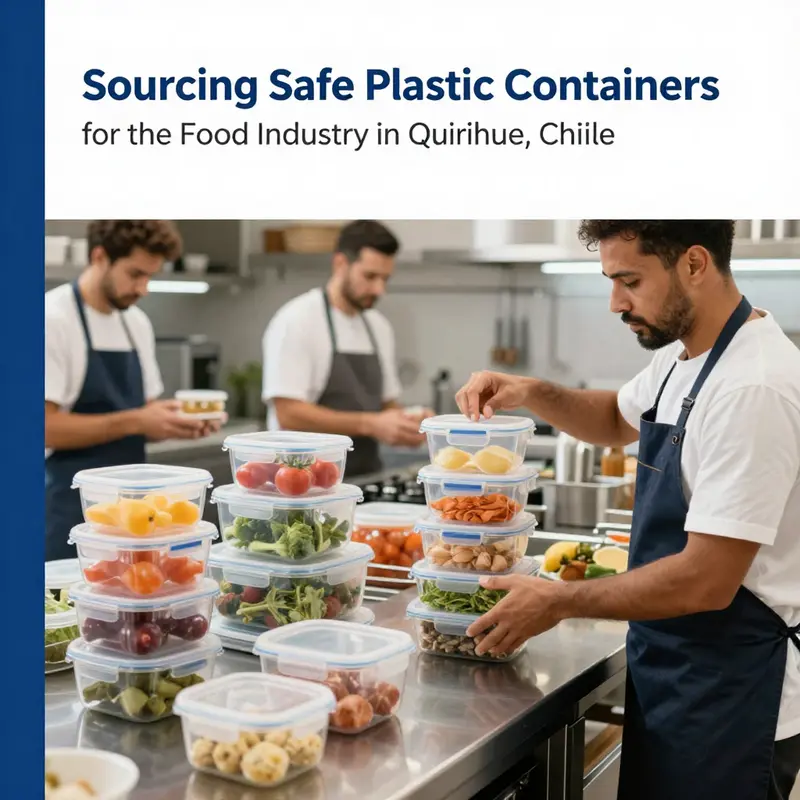
In Quirihue, Chile, keeping foods fresh and safe begins long before the meal is plated. It starts with the simple choice of a plastic container that will hold leftovers, dry staples, or meal-prep portions without compromising flavor, texture, or health. The chapter that follows treats this choice not as a quick purchase but as a decision shaped by local realities, material science, and practical care. It connects the everyday routines of households, farmers markets, and small eateries in Quirihue with the broader framework of food safety standards and the realities of sourcing. The guiding thread is clarity: safe storage is a combination of material chemistry, chosen purpose, and reliable suppliers. Taken together, these considerations help residents avoid the missteps that can arise when convenience overrides caution.
A practical starting point is to understand what makes a plastic container appropriate for food storage. Not all plastics are created equal when it comes to contact with food. Some plastics are designed to resist heat and maintain form when reheated, while others excel at sealing in moisture and preventing leaks. In this context, the resin identification codes that appear on the bottom of containers become a compass for shoppers. Codes #1 (PET) and #5 (PP) are generally favored for food storage because they tend to be more stable under everyday kitchen temperatures and less prone to leaching when used for a range of foods, including mildly acidic or fatty items. While many products proudly advertise themselves as “BPA-free,” the safest approach is to verify the resin code itself. The material code offers a clearer signal about what is likely to be acceptable for contact with food across typical uses such as refrigeration, freezing, reheating, and washing. For residents of Quirihue, this means looking beyond branding and toward the chemistry of the container in hand.
In practice, this translates into a few clear decisions about intended use. If a container is expected to withstand occasional microwaving and longer storage, a #5 polypropylene option tends to be the sturdier bet. It can handle higher temperatures without warping, making it suitable for reheating gently or for long-term storage in the refrigerator or freezer. In contrast, #1 PET containers are often lighter and well-suited for short-term or single-use applications, especially when items are refrigerated soon after preparation. They may perform well for takeout or immediate consumption scenarios but can be less forgiving under repeated heating or long-term reuse. The distinction is not about labels alone but about the actual use cycle contemplated in a household or small business in Quirihue.
The path to safe storage, however, does not stop at resin codes. It is equally important to consider compliance with food-contact safety standards. A widely cited standard in the literature is GB 7101-2015, which governs materials that come into contact with food. While this standard originates in a different regulatory ecosystem, noting it serves a broader purpose: it reminds shoppers that safe containers are not merely about being labeled as food-grade. They should be produced with materials and processes that minimize health risks during regular use, including repeated washing, exposure to varying temperatures, and contact with different types of foods. For Quirihue residents, the practical takeaway is to seek containers from suppliers who provide clear documentation or certifications indicating adherence to relevant safety standards. When local options are limited, online retailers or imported brands can bridge the gap, provided they offer transparent information about the resin code, temperature tolerance, and testing or certification. In a market where accessibility and reliability matter, these signals help sustain consumer trust and protect family health over time.
Availability for Quirihue shoppers often hinges on a mix of local retailers and online channels. Given the city’s geography and distribution patterns, residents typically access a range of options through supermarkets that stock international brands, hardware stores that emphasize durable storage solutions, and e-commerce platforms with broad reach. The practical approach is to compare choices based on safety signals (resin code, labeling accuracy, and any food-safety certifications), expected use, and price. It is not uncommon for families to maintain a small stock of containers with different intended purposes: some for microwavable meals and batch-prepped foods, others for dry pantry items, and still others for organized refrigerable leftovers. In this context, one store locator feature or online catalog can become a dependable ally. Consumers can search for outlets that carry certified containers, confirm whether the products are suitable for microwave use, and verify that the containers are free from substances known to pose health concerns in food contact applications.
From a user’s perspective, safety starts with a careful inspection at the point of purchase. The bottom of the container is usually where the resin code is molded, and a quick visual check can confirm whether the container aligns with the intended use. The codes to avoid are #3 (PVC), #6 (PS), and #7 (the ‘other’ category), which can carry higher risks in certain contexts. While these codes do not automatically disqualify any particular item, they do serve as a reminder to read labels critically and to favor materials with proven stability and reputable testing backgrounds. For many households in Quirihue, this means keeping a small, mnemonic checklist: confirm the resin code, verify that the packaging mentions food safety or related certifications, and ensure the container feels sturdy enough for the planned routine.
Care and maintenance are critical partners to material choice. A container that lasts longer and maintains its safety profile is one that is handled with gentleness and restraint. Extreme temperatures are a common hazard. Placing hot liquids directly into plastic containers can stress the material and accelerate chemical migration, while rapid cooling after heating can cause stress fractures that harbor bacteria or create micro-scratches. Gentle handling extends the life of the container and preserves its integrity. Cleaning should avoid abrasive tools that can scratch the surface; scratches are not only cosmetic but may increase the surface area where residues cling and bacteria can harbor. A routine of rinsing promptly after use, washing in warm soapy water, and air-drying can preserve both the container’s appearance and its safety profile over time. Avoiding harsh chemical cleansers that might degrade the polymer is likewise prudent.
The broader question in Quirihue, as in any community that balances daily practicality with health priorities, is how to connect local sourcing with global safety norms in a way that feels accessible. The local reality is that specialty storage solutions may be scarce in a small city, but the digital marketplace provides a path to reputable options. Online retailers can ship containers that meet safety criteria, and they often carry clearer specifications about resin codes and safety testing than some brick-and-mortar displays. It is important, though, to verify the ship-to location and check whether the online product page includes explicit information about heat tolerance, dishwasher compatibility, and any certifications related to food contact materials. For those who want a tangible example of a safe, versatile option, an internal reference point can help guide decisions: a representative online resource that highlights eco-friendly and microwave-safe takeout packaging platforms. This is a practical way to explore options that are both convenient and aligned with safety expectations, while still respecting local sourcing realities. See the following internal resource for a concrete illustration of such packaging options:
In thinking through a practical purchasing strategy for Quirihue, the idea is to balance three pillars: material safety, functional design, and supplier reliability. Material safety is addressed by resin codes and by a commitment to labels that indicate food contact suitability. Functional design encompasses not only whether a container is microwave-safe but also whether it stacks well, seals securely, and resists leaks—features that matter daily in households and small kitchens. Supplier reliability includes the availability of replacements or compatible lids, the clarity of product information, and the ability to deliver promptly to a local address or through a trustworthy online service with clear return policies. Collectively, these considerations nurture a chain of trust: a consumer learns to read, to compare, and to verify, while a supplier gains a reputation for consistency and safety. For residents navigating this landscape, the habit of cross-checking resin codes with practical cues—sturdiness, heat tolerance, and ease of cleaning—creates a durable baseline for safe food storage.
There is a social dimension to this chapter as well. Food storage choices shape everyday routines in homes, schools, and small eateries that populate Quirihue’s local economy. A family that prepares meals in advance may prefer containers that tolerate freezing and reheating without warping, while a neighbor running a home-based catering venture might seek durable, leak-proof options that survive a busy service day. The decisions people make about containers ripple through energy use, waste management, and even the accessibility of nutritious meals. When containers are not just inexpensive but also dependable and safe, households can organize more of their groceries and leftovers with confidence. The safety-first mindset becomes a habit rather than a one-off purchase. By choosing materials with robust supply chains and transparent safety credentials, Quirihue households contribute to a broader culture of precaution—one that recognizes the invisible, long-term costs of dietary mistakes and leans toward solutions that preserve both health and flavor.
Ultimately, sourcing plastic containers for food storage in Quirihue is about translating global best practices into local habit. It involves recognizing that not all plastics are equally suitable for every food scenario, and that the story behind a container—how it is manufactured, tested, and marketed—matters as much as its price or appearance. It also involves acknowledging the practical reality of limited local shelves and leveraging online channels to access reliable products while maintaining vigilance about safety signals. The idea is not to chase every trend in packaging but to cultivate a steady, informed approach that serves families, farmers, and small businesses alike. As you navigate the shelves of a grocery aisle, the display case of a hardware store, or the interface of an online catalog, bring to mind the resin code underneath, the temperature demands of your planned use, and the assurances you would want for your own meals. In doing so, you build a simple, resilient framework for safe storage that can sustain a family, a kitchen, and a community.
For readers seeking a broader frame of reference beyond local practice, consider a comprehensive guide that walks through the characteristics of different food storage containers and how to evaluate them. The guide emphasizes practical decision-making, including how to assess heat tolerance, chemical stability, and labeling clarity, all of which align with the concerns described here. It offers a well-rounded set of criteria that you can apply when shopping in Quirihue or online, helping you articulate a clear preference for materials that perform reliably over time. To explore deeper, refer to an external buying guide on choosing the best food storage containers: https://www.thespruce.com/choose-the-best-food-storage-container-4128096.
In addition to external guidance, local context and accessible resources shape everyday choices. When considering packaging suppliers, keep in mind the importance of a credible support network. A local retailer may provide direct assistance in interpreting resin codes or recommending safe microwave-safe options for family meals. An online option can expand the range of available shapes, sizes, and sealing mechanisms, making it easier to tailor storage solutions to specific family routines. The key is to combine the best of both worlds: the personal, hands-on help of a trusted local shop and the breadth of online catalogs that can bring in internationally certified products that meet your safety criteria. The practical effect is a storage system that is not only functional but also aligned with health standards and environmental considerations.
If you seek a concise take-away, it is this: in Quirihue, choosing plastic containers for food storage should be a deliberate act grounded in material understanding, safety standards, and reliable sourcing. Read the resin code on the bottom, prefer #1 PET or #5 PP when appropriate, and verify that the product labeling supports safe food contact. Prioritize containers designed for the intended use—whether for freezing, microwaving, or long-term refrigeration—and treat extreme temperatures with caution. Maintain the containers with gentle cleaning and avoid abrasive tools that can create hidden crevices for bacteria. When local options seem limited, use reputable online sources and import-brand catalogs while keeping an eye on safety certifications and return policies. And remember, a well-chosen container is not merely a container; it is a sturdy ally in preserving flavor, texture, and nutrition from the market to the table.
Internal link for practical packaging options: eco-friendly-takeout-boxes-for-food-packaging-stylish-food-containers-safe-microwave-craft-paper-lunch-boxes-leak-grease-resistant. This resource illustrates how packaging design—such as secure seals, leak resistance, and microwave compatibility—aligns with safety goals while offering a path to sustainable, reusable solutions in local contexts. It serves as a useful touchstone for evaluating whether a given product line meets the criteria discussed here and helps bridge the gap between theoretical guidelines and real-world shopping decisions in Quirihue.
In sum, making informed choices about plastic containers for food storage in Quirihue blends science with everyday practice. It means reading resin codes, understanding temperature and reuse limits, and choosing trusted suppliers who provide clear safety signals. It means recognizing that a safe storage habit is a composite of material behavior, construction quality, and responsible sourcing. By cultivating this integrated approach, households and small food businesses in Quirihue can protect health, reduce waste, and keep meals delicious from the moment they are prepared to the moment they are enjoyed. The result is a kitchen that not only stores food effectively but also embodies a thoughtful, health-conscious approach to daily life in this Chilean community.
Final thoughts
Navigating the landscape of food safety and the effective sourcing of plastic containers in Quirihue, Chile, is essential for any business in the food sector. By understanding food safety standards, leveraging local supply chains, and choosing the right containers, businesses can ensure not only compliance but also an exceptional customer experience. As the demand for quality food handling continues to rise, staying informed on the best practices will help you thrive.