
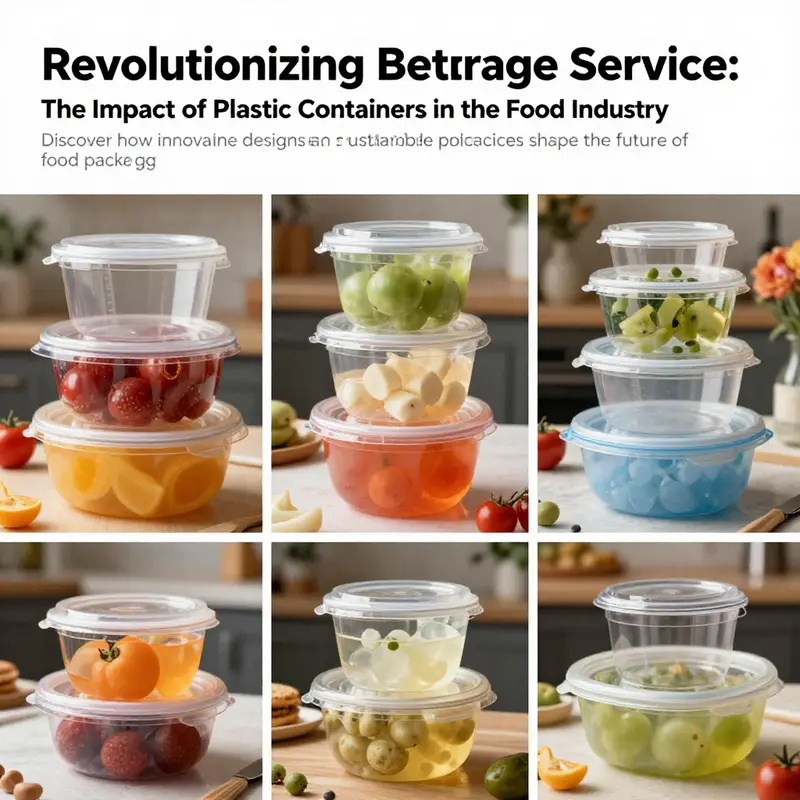
In the fast-evolving landscape of the food industry, plastic containers have established themselves as essential tools for businesses like bubble tea shops, restaurants, and catering services. Their ability to preserve product quality while being efficient in distribution makes them indispensable. This article explores the critical role that design innovations, market trends, and sustainability challenges play in the use of plastic containers. From enhancing customer experiences with innovative designs to navigating the complexities of environmental responsibility, each chapter delves into how these factors impact your business. Join us as we unpack the benefits and future potential of plastic containers in your food service operations.
Beyond the Layered Shield: Designing Tomorrow’s Food-Grade Plastic Containers

In the modern food industry, plastic containers do more than simply cradle a product. They act as guardians of safety, custodians of quality, and enablers of efficient flow from production line to kitchen table. The design discourse surrounding these containers has evolved from focusing on basic containment to embracing a holistic view that links material science with sustainability, consumer perception, and regulatory compliance. A central thread in this evolution is the way design choices reverberate along the supply chain, affecting everything from processing compatibility to transportation costs, shelf life, and end-of-life outcomes. At the heart of this transformation is material selection. Polypropylene, or PP, remains a workhorse in food contact applications not by accident but because its heat resistance, fatigue strength, and chemical compatibility enable a wide range of processing and consumer-use scenarios. PP can withstand the rigors of microwave heating, freezing, and even dishwashing cycles, making it a remarkably versatile option for containers that must endure temperature swings without cracking, warping, or leaching undesirable compounds. This resilience underpins a design ethos that prizes reliability as much as convenience, because a container that fails under heat or cold can compromise safety as surely as a faulty seal. Yet the decision to choose PP cannot stand alone. It is joined by a broader design philosophy that interrogates barrier performance, recyclability, and user experience in equal measure, recognizing that each attribute influences the other and that optimization is most powerful when pursued as an integrated program rather than as a series of isolated upgrades.
The barrier properties of plastic containers are a case in point. In a world where products need protection from moisture, oxygen, and light, the architectural approach to packaging has shifted toward multilayer constructs that combine the strengths of different polymers. These multilayer containers are designed to deliver superior barrier performance without selling the user short on clarity, weight, or heat tolerance. By stacking layers with complementary properties, manufacturers can slow down the ingress of water vapor, reduce oxygen transmission, and minimize light exposure, all of which are pivotal in extending shelf life and preserving flavor, aroma, and texture. The result is a packaging solution that is not merely a container but a functional barrier that maintains product integrity across extended distribution networks and diverse storage conditions. In high-demand sectors such as ready-to-eat meals, dairy, and beverages, this barrier science translates into tangible benefits: longer freshness windows, reduced spoilage, and greater consistency in consumer experience, whether the product is displayed on a grocery shelf or tucked into a pantry at home.
But barrier performance is not the sole determinant of packaging success. As consumers and regulators increasingly demand responsible packaging, the sustainability dimension becomes inseparable from design choices. The market dynamics are clear: a growing appetite for lightweight and durable solutions translates into lower transportation emissions and reduced material use, provided that strength is not sacrificed in the pursuit of lighter walls. Lightweighting—achieved through smart material selection and optimized wall geometries—has emerged as a cornerstone of modern design practice. The challenge is to remove excess material without compromising the rigidity, drop resistance, and stacking stability that retail and logistics environments demand. Here, innovations in molding techniques come into play. Methods such as injection stretch blow molding enable the creation of thinner walls and more complex, ergonomic shapes. These geometries are not mere aesthetic choices; they affect how a container handles in a busy processing line, how it stacks on pallets, and how it feels in a consumer’s hand. The result is a packaging form that stands out on the shelf, with a tactile and visual presence that aligns with brand identity while still delivering on performance and safety.
The push toward mono-material designs also reflects a strategic response to the waste hierarchy and recycling infrastructure. While multilayer systems offer exceptional barrier properties, they can complicate recycling. In response, designers are increasingly pursuing mono-material incarnations that preserve functionality while enabling more straightforward post-consumer processing. The shift toward mono-material solutions does not negate the barrier requirement; rather, it reframes it through clever use of the polymer’s intrinsic properties and, where appropriate, compatible recyclable fillers that do not compromise safety. The goal is a sustainable lifecycle that makes collection, sorting, and reprocessing more efficient, reducing the environmental footprint of packaging without diminishing the product’s shelf life or safety profile. This is not a trivial balancing act; it requires a deep understanding of material science, recycling streams, and local waste management capabilities. Yet the payoff is meaningful: packaging that is easier to recycle, more compatible with circular economy models, and still robust enough to handle retort, pasteurization, or high-temperature dishwashing when required.
Alongside the physical attributes of containers, the design language is increasingly informed by smart features that speak directly to safety, quality, and consumer trust. Freshness indicators, tamper-evident seals, and sensor-enabled labels are moving from novelty to standard in many segments. Freshness indicators can provide real-time cues about product quality, signaling when a shelf-life window has shifted due to storage conditions or time. Tamper-evident mechanisms, once a separate component, are increasingly integrated into the container’s lid, neck finish, or cap geometry, providing a clear and reliable signal of product integrity. These features do more than reassure consumers; they can influence handling practices across the supply chain. For example, indicators can help warehouse staff quickly identify compromised lots, while tamper seals can deter interference during distribution. In such contexts, the container becomes a smart interface that communicates with the product and the people who handle it, helping to minimize waste and maintain safety from production through to consumption.
Designing for safety extends into processing considerations as well. Many food processing steps, such as retorting and pasteurization, impose demanding temperature and chemical exposure requirements. Materials and wall designs must resist deformation and resist chemical interactions with heat-treated products. PP’s heat resistance is a key enabler here, supporting containers that can withstand sterilization processes without compromising structural integrity or leaching any substances into the product. When a container can reliably survive high-temperature cycles, it expands the processing options for brands and can unlock new product categories. Yet process compatibility does not stop at high heat. Freezing logistics impose their own set of constraints, including brittleness risks and microcracking, which designers mitigate through careful wall thickness optimization, ribbing patterns that distribute stress, and edge designs that resist crack initiation. The resulting containers are not fragile artifacts but resilient, dependable tools that perform across the entire lifecycle—from hot fill lines to deep-freeze storage and back to consumer kitchens for reheating.
In the broader market context, the design trajectory aligns with a continuing expansion of the global plastic containers market, driven by the demand for convenience, lightweight robustness, and durable packaging solutions. Market analyses indicate sustained growth through the next decade and beyond, propelled by ongoing innovation in sustainable materials and smart packaging technologies that meet evolving environmental regulations and consumer expectations. This growth is not merely a function of raw material substitution; it reflects an integrated strategy that brings together barrier science, material chemistry, advanced molding, and an adaptive mindset toward new processing regimes. Companies that master this integration can deliver containers that perform under varied conditions while still enabling efficient distribution and satisfying the consumer preference for practical, attractive packaging.
A crucial thread in this narrative is the relationship between barrier performance and processing geometry. The way a container is shaped can amplify or dampen the perceived barrier effects. Thinner walls achieved through modern molding must maintain stiffness and puncture resistance, a balance that often requires strategic ribbing and corner design. Ergonomic shapes are not cosmetic; they improve grip, reduce squeeze-induced leakage, and encourage precise handling on busy assembly lines and retail displays. A container’s form can also influence its stackability and pallet efficiency, factors that directly affect logistics costs and CO2 emissions associated with distribution. In short, design decisions ripple through the entire value chain, from the line speed on the plant floor to the number of miles a shipment travels before it reaches a consumer kitchen.
The consumer experience remains a north star for design. Clarity, readability of labeling, and a tactile sense of reliability all contribute to brand perception and trust. Transparent or translucent materials enable visibility of the product through the container, which can be a competitive advantage when combined with effective product orientation and labeling. Even the cap or closure design communicates quality; a well-formed closure that seals reliably under repeated use signals durability and care. These consumer-facing attributes are not frivolous details but essential components of a packaging system that communicates safety, freshness, and value. In many markets, consumers increasingly view packaging as part of product safety rather than merely a container, and this shift elevates the importance of thoughtful, durable, and trustworthy design.
Looking ahead, the direction of design in plastic containers for the food industry is likely to be shaped by several converging trends. Sustainability will drive more aggressive material recycling targets and a stronger emphasis on mono-material architectures where feasible. Smart packaging features will become more integrated, offering real-time data about storage conditions and product integrity, and even enabling supply chain traceability that improves food safety outcomes. Material scientists will continue to push performance boundaries, expanding the set of polymers that reliably meet warmth, cold, and chemical exposure while maintaining recyclability. At the same time, manufacturing innovations will push for more precise control over wall thickness, curvatures, and closures, enabling products with both distinctive aesthetics and resilient performance. In the aggregate, these developments promise containers that are not only safer and more efficient but also better aligned with the circular economy and the expectations of a more environmentally conscious consumer base.
The story of plastic containers in the food industry is thus a story of design as problem solving at scale. It is a discipline that requires a careful balance of science, engineering, sustainability, and human factors. Each choice—from the baseline material to the minutiae of a closure, from barrier layer architecture to the packaging’s silhouette—contributes to a system that must function reliably across multiple environments, regulatory regimes, and cultural contexts. The ultimate measure of success lies in a packaging solution that keeps food safe, preserves quality, reduces waste, and communicates value in a way that resonates with shoppers who demand convenience without compromise. In this sense, the future of plastic containers for food is not merely about making things lighter or stronger. It is about designing confidence into every layer, so that the container itself becomes a durable ally in the journey from farm to table.
External reference for further reading on related standards and applications in packaging technologies can be found here: https://www.plasticsnews.com/industry/plastic-containers-dishwashing-liquid-standards-properties-industrial-applications
Shaping Meals, Safeguarding Freshness: The Growth Trajectory of Plastic Containers in the Food Industry

The fabric of the modern food system is woven with plastic containers that do more than hold. They protect, preserve, transport, and present. They enable a kitchen-to-customer journey that is efficient, sanitary, and scalable, while also challenging producers to balance performance with sustainability. In this sense, plastic packaging is not merely a wrapper but a dynamic, technical barrier between product quality and the harsh realities of storage, handling, and distribution. Across the supply chain, containers must withstand heat, cold, pressure, and time; they must resist moisture and oxygen ingress; and they must do so without complicating manufacturing or inflating costs. This is why material choice matters as much as design and process. Among the candidates, one polymer family has earned the reputation for breadth of application and reliability: polyolefins, with polypropylene (PP) standing out for its heat resistance and versatile performance. In many ready-to-eat and heat-treated applications, PP’s ability to withstand microwave, freezer, and dishwasher conditions makes it a practical and comparatively safe option for food contact materials. Yet the story of plastic containers in the food sector goes far beyond one material, extending into multi-layer architectures, barrier optimization, and smart packaging innovations that collectively redefine how food is stored and sold in an increasingly global market.
The market narrative surrounding plastic containers in the food industry is a story of expansion and evolution, guided by the dual forces of consumer demand and supply chain sophistication. Demand for convenience, portion control, and on-the-go meals has surged in many regions, lifting the appeal of single-serve packaging and compartmentalized containers that can keep distinct components separate, preserve texture, and minimize waste. The shift toward ready-to-eat formats has, in turn, intensified the use of clamshell and rigid container designs that provide robust protection at the point of sale and during transit. These designs are most efficient when paired with materials and manufacturing processes that deliver low weight, high impact resistance, and reliable seal integrity. In practice, this means a continuous re-evaluation of polymer blends, extrusion and molding techniques, and barrier layer configurations to meet evolving requirements for moisture, oxygen, and light transmission.
But performance alone does not define success in this market. Economic and regulatory pressures shape material selection and packaging design as decisively as consumer preferences. The most compelling trajectories in recent years include the growing adoption of multilayer structures that marry multiple polymers to reinforce barrier properties against moisture, oxygen, and light. These multilayers enable longer shelf life for delicate items, such as fresh produce and ready-to-eat meals, while maintaining the convenience and stackability that keep logistics efficient. The practical effect is a packaging portfolio that can be calibrated for different product classes, from high-water-content dairy to moisture-sensitive produce, optimized for transport routes that span continents and climates. Such versatility is a cornerstone of the packaging strategy in a world where supply chains are both global and fast-moving.
Market data reinforce the momentum behind plastic containers in the food sector. Recent forecasts place the global plastic food containers market at around USD 35.5 billion in 2024, with a trajectory toward approximately USD 49.8 billion by 2033 and a compound annual growth rate (CAGR) near 4.6 percent from 2026 through 2033. In the larger context of the plastic bottles and containers market, projections point to a rise from roughly USD 137.2 billion in 2025 to about USD 190.5 billion by 2032, reflecting a CAGR close to 4.8 percent. Even more broadly, the overall plastic container market is anticipated to scale to roughly USD 421 billion by 2035, signaling a robust expansion rate around 6.3 percent from 2026 onward. These figures illuminate not only incremental gains but a sustained momentum across the supply chain, underpinned by continuous improvements in material efficiency, barrier performance, and the push toward recyclable and biodegradable alternatives.
Underlying these growth figures is a convergence of product design, material science, and process engineering. Multilayer packaging, for instance, is more than a technical curiosity; it is a practical response to divergent storage requirements. By layering polymers with complementary properties—some offering superior moisture barriers, others delivering oxygen resistance or light attenuation—manufacturers can tailor performance to specific product classes. The same principle applies to retortable and pasteurizable containers, where heat resistance and structural integrity must be preserved under rigorous processing conditions. In such contexts, the material selection goes beyond a single resin choice to a carefully engineered stack of interfaces and adhesives that maintain seal integrity and barrier function throughout the product life cycle.
The consumer-facing implications of these developments are equally important. The rise of single-serve formats meets a rising demand for portion control and reduced food waste, while ready-to-eat options capitalize on convenience that translates into faster preparation times and broader distribution windows. Plastic clamshells and rigid containers have become a visible part of the modern grocery landscape, particularly for fresh produce and prepared meals that benefit from a transparent or semi-transparent shell to signal quality and freshness. The equipment required to fill, seal, and label these containers has matured in tandem, enabling high-speed production lines that preserve product integrity even as package complexity increases. While this complexity can present challenges—such as ensuring compatibility across different sealing technologies and maintaining recyclability—the overall direction remains one of improved protection, easier handling, and clearer product communication at the point of sale.
A crucial dimension of this evolution is the interplay between barrier properties and sustainability. The push toward recyclable and biodegradable formulations reflects a broader commitment to reducing environmental impact without sacrificing performance. In practice, this means exploring material formulations and design strategies that support recycling streams, enable post-consumer reuse, or degrade under controlled conditions after disposal. The packaging industry is moving toward solutions that can integrate seamlessly with existing waste management infrastructures while still meeting product protection standards and consumer safety requirements. It is a balancing act between achieving a durable barrier to moisture and oxygen and ensuring that the packaging does not become a liability at the end of its life cycle. In this light, material science researchers and packaging engineers are increasingly collaborating to identify polymers and blends that deliver the right combination of rigidity, clarity, heat resistance, and compatibility with recycling streams.
Yet growth is not a purely technical story. It is deeply entwined with regulation and consumer sentiment. Governments and industry bodies are intensifying oversight of packaging materials, particularly around migration of additives, overall recyclability, and the end-of-life options available to consumers. This regulatory environment, while potentially constraining in the short term, is driving longer-term innovation. It accelerates the development of safer, lower-impact materials and better design practices that reduce waste and improve circularity. In response, manufacturers are embracing lifecycle thinking: selecting polymers not only for their performance in storage and transport but also for their behavior after use, when sorting, recycling, or composting may come into play. Diets of data—life-cycle assessments, recyclability tests, and standardized barrier measurements—are becoming as central to product development as sealing strength and heat resistance.
The supply chain itself is a stage for ongoing optimization. From the moment a resin is synthesized and pelletized to the moment a filled, sealed container arrives on a store shelf or in a distribution center, every step is subject to efficiency gains. Automated molding and filling lines reduce labor costs and improve repeatability, while advances in barrier layer engineering can lower material thickness without compromising performance. Lightweighting—achieving the same or better protection with less material—remains a persistent objective, not merely for cost savings but also to improve transport efficiency and fuel consumption across logistics networks. The cumulative effect is a packaging system that is increasingly fine-tuned to the specific needs of different foods and markets, yet standardized enough to facilitate global distribution and scalable manufacturing.
Beyond the numbers and the jargon of barrier layers, there is a human and logistical intelligence to these developments. Packaging professionals must understand the interaction of product chemistry, container geometry, processing methods, and consumer use. For instance, a container that performs well under retort conditions must also remain user-friendly for consumer microwaving, washing, and stacking in domestic environments. The design philosophy thus becomes a dialogue among product developers, packaging engineers, and end-users, an ongoing exchange that informs choices about material composition, transparency, and ergonomics. It is this holistic perspective that drives the most successful packaging solutions, enabling products to travel farther, stay fresher, reduce waste, and reach more households without compromising safety or quality.
In looking forward, several themes stand out as likely to shape the next phase of growth. First, the integration of smarter packaging concepts—with simple indicators of temperature exposure or barrier status—could add an extra layer of confidence for retailers and consumers alike. Second, material innovations will continue to balance performance with sustainability, exploring receptor-friendly polymers, recyclable multilayer configurations, and compostable alternatives where appropriate. Third, regional demand patterns will influence the pace and mix of packaging strategies, as urban centers in some regions intensify the focus on convenience while others emphasize shelf-life and cold-chain resilience. Finally, the convergence of packaging with digital logistics, including track-and-trace capabilities and data-driven optimization of packaging specs, promises to reduce waste, improve inventory management, and elevate the consumer experience.
In this evolving landscape, the role of plastic containers in the food industry remains central—not only as a protective layer but as an enabling technology. They are the interfaces through which raw ingredients become meals, through which freshness is maintained, and through which products travel from processing facilities to homes. The growth projections reflect a market that views packaging as a strategic asset, capable of delivering performance, efficiency, and sustainability in equal measure. As the industry continues to innovate, the challenge will be to maintain this balance: to push the boundaries of barrier performance and processing compatibility while advancing recyclability and end-of-life outcomes. If the past decade has taught the industry anything, it is that packaging advances do not occur in a vacuum. They are the result of a coordinated response to consumer needs, processing realities, regulatory expectations, and the imperative to steward resources responsibly across the global food system. The chapter that emerges from this convergence is not a simple tale of rising sales figures but a narrative about how modern plastic containers help feed a growing world with safety, efficiency, and care for the future.
For readers seeking a broader context on current market dynamics and future outlooks, industry analyses provide more granular projections and segmentation. A comprehensive source that aggregates these trends and translates them into accessible scenarios can equip manufacturers, retailers, and policymakers with the insights needed to navigate the next wave of packaging innovation. External resources capture the breadth of this evolution and offer detailed market size estimates, competitive landscapes, and scenario planning that reflect how plastic containers will continue to shape the food industry in the years ahead. See for example a contemporary market analysis that charts the size, share, and growth trajectory of plastic containers in the food sector and related markets.
External resource: https://www.marketsandmarkets.com/Market-Reports/plastic-containers-market-103982243.html
Beyond Protection: Navigating the Environmental Footprint and Sustainability Challenges of Plastic Food Packaging
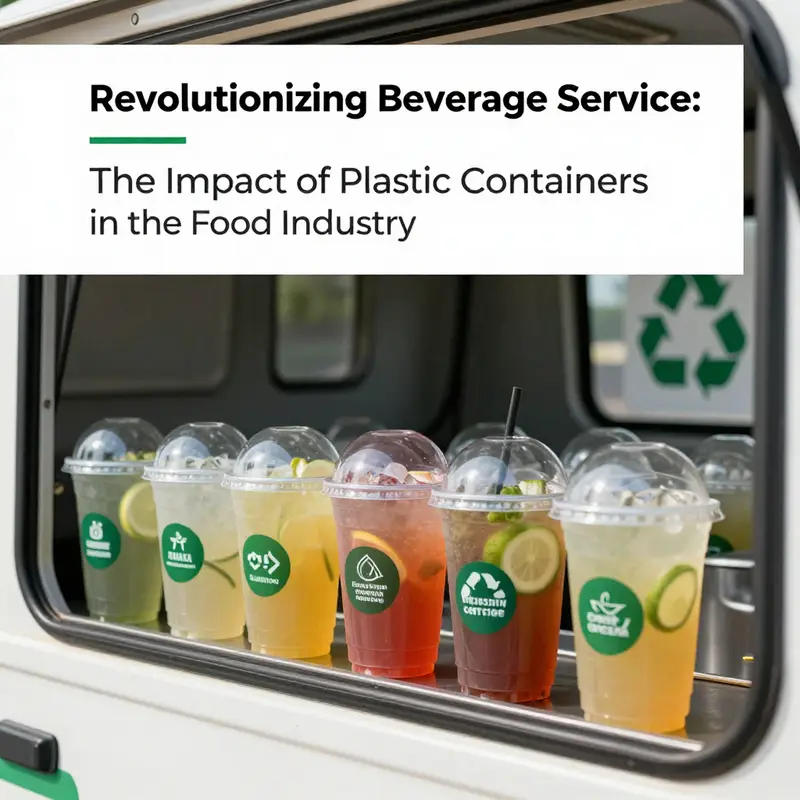
Plastic containers have long been celebrated for their ability to protect and preserve food, streamline processing, and support efficiency across every link of the supply chain. They withstand heat and cold, resist moisture, provide clarity or opacity as needed, and are engineered to keep products safe from the moment they are packaged until they reach the consumer’s hands. Yet the same materials that enable this performance also anchor a set of environmental footprints that are increasingly difficult to ignore. In the current landscape, stakeholders—from plant managers to policymakers, from retailers to researchers—are compelled to reconcile the indispensable logistical role of plastic packaging with a mounting concern for planetary health. This tension forms a through line that threads together the lifecycle of plastic containers, from the moment resin is melted and molded to the day waste is managed and finally disposed of, and it shapes both the present operating environment and the direction of future innovation in the food industry.
At the heart of this discussion lies a stark arithmetic: plastic packaging accounts for a sizeable share of global waste streams and persists in ecosystems for centuries. The numbers, stark as they are, tell a story of a system that fails to fully close the loop. A comprehensive view of plastic waste management reveals that only a small fraction—roughly 9 percent—of plastic waste is recycled. About half is landfilled, and an additional portion—around 20 percent—falls into the category of mismanaged waste. These figures illuminate systemic gaps in collection, separation, and processing infrastructure that must be addressed if packaging materials are to be treated as resources rather than as disposable burden. The implications extend beyond waste statistics; they reveal how packaging interacts with landscapes, waterways, soils, and urban environments. When mismanaged materials escape proper channels, they fragment and degrade, eventually breaking down into microplastics that infiltrate soil and water and, through direct contact and leaching, can enter the food chain. The potential consequences for human health and for ecological integrity reinforce the urgency of rethinking packaging design and end-of-life pathways as interdependent components of a single sustainability objective.
The environmental footprint of plastic containers in the food sector does not rest solely on one metric, such as the share of materials that are recycled or the volume of waste that ends up in landfills. It is the product of multiple interacting factors across the lifecycle. Life cycle assessments have shown that plastic packaging generally contributes less than 10 percent of total life cycle emissions for many food products, but this seemingly modest share belies a deeper truth. Emissions and environmental impact extend beyond carbon alone. The materials’ long-term persistence amplifies their potential to accumulate in the environment, while toxicity concerns remind us that the footprint of a packaging choice includes not only greenhouse gases but also ecological and health risks associated with persistence and chemical exposure. The complexity intensifies when we consider multilayer structures. These configurations, designed to maximize barrier properties against moisture, oxygen, and light, excel at preserving product quality and shelf life but complicate recycling routes. Each additional layer brings another polymer family with its own processing criteria and disposal considerations, often making end-of-life recovery more challenging. The performance gains in barrier integrity and product protection can thus come at the cost of recyclability, creating a tension between short-term operational efficiency and long-term environmental stewardship.
In parallel with material science, the industry is contending with the economic realities of sustainable packaging. Not all eco-friendly strategies are easily scalable or affordable within the price-sensitive confines of food distribution and consumer markets. Sustainable packaging initiatives frequently involve trade-offs, a reality highlighted by researchers who note that a substantial majority of such efforts—about 67 percent—encounter some form of compromise between performance, cost, and environmental benefit. The same body of work finds that roughly 41 percent of these initiatives lead to increased costs, presenting a formidable hurdle for broad adoption. These findings underscore a stubborn fact: reducing environmental impact is not simply a matter of replacing one material with another or of adding a green label. It requires a systemic approach that reevaluates the entire packaging ecosystem, including production methods, supply chain logistics, consumer behavior, and end-of-life infrastructure. The challenge is not merely to minimize harm but to architect a system in which the packaging itself can contribute to a circular economy—where materials are kept in use, recovered, and reintegrated into new products with minimal loss of value.
The choice of materials across the packaging spectrum is central to this debate. Polypropylene, for example, has earned a prominent place in food packaging due to its excellent heat resistance, making it suitable for microwave, freezer, and dishwasher applications. This versatility is not incidental; it is a core functional attribute that supports safety and convenience for both manufacturers and consumers. However, the same property profile that makes polypropylene attractive from a performance standpoint also shapes its end-of-life trajectory. When multilayer structures are involved, the opportunities and obstacles multiply. Multilayer containers can dramatically extend shelf life by limiting the ingress of moisture and oxygen and by protecting against light-induced degradation. Yet they often combine incompatible polymers, complicating separation and recycling processes. In practice, this means that packaging can become a composite of materials each with distinct recycling streams, or it may require energy-intensive sorting and reprocessing steps that erode some of the environmental advantages gained during use. The net effect is a lifecycle profile that must be carefully weighed against the anticipated gains in product safety and shelf stability.
This complexity invites a broader reflection on design principles. If the goal is to sustain food safety and quality while also reducing environmental harm, then packaging design must be approached with a double perspective: performance and recoverability. It is not enough to optimize barrier properties or temperature resilience in isolation; designers must also consider how a container will be collected, sorted, and recycled, and whether the materials can be recovered as clean feedstock for new products. In practice, this translates into a push toward mono-material architectures, or at least towards more compatible multilayer configurations where layers are designed to be recoverable together. It also elevates the importance of standardized labeling, which can simplify the sorting process and improve recycling rates across jurisdictions. The synergy between material science and waste management infrastructure becomes a critical determinant of how effectively packaging can transition from being a protective shell to a valuable resource in a circular economy.
Beyond the technical and economic dimensions, consumer expectations shape the sustainability narrative in powerful ways. Public discourse increasingly emphasizes not just the safety and convenience of packaging but its environmental footprint. Consumers increasingly favor products whose packaging is reusable, easily recyclable, or made from post-consumer recycled materials. This shift exerts pressure on manufacturers to innovate quickly, to verify the recyclability of their packaging across markets, and to communicate clearly about end-of-life options. It also places responsibility on retailers and waste management systems to provide convenient, reliable collection streams and to ensure that collected materials are actually reprocessed into usable material streams rather than diverted to waste streams due to contamination or inefficiencies. The disconnect between consumer expectations and the realities of material recovery systems is a central obstacle to achieving meaningful reductions in packaging footprints and highlights the need for coordinated policy, industry, and consumer action.
The environmental and health stakes extend into the realm of microplastics. Microplastics, originating from the breakdown of larger plastic items or from the direct release of micro-sized particles during manufacturing and packaging, can become embedded in food and beverages through multiple pathways. They may migrate from containers during storage, or arise from abrasion and degradation of packaging materials throughout distribution and consumer use. The potential for microplastic exposure raises questions about long-term effects on biological systems and metabolism. While the precise health implications are still the subject of ongoing research, a growing body of literature emphasizes the precautionary value of minimizing unnecessary packaging, reducing material complexity, and avoiding materials whose fragmentation products are difficult to capture in recycling streams. The conversation around microplastics is not merely a toxicology concern; it is a driver of policy, supply chain redesign, and consumer education that intersects with the broader objective of reducing overall plastic leakage into the environment.
In this context, the industry faces an imperative to expand the toolkit of sustainable packaging options without compromising safety and food integrity. Biodegradable or compostable alternatives have captured attention as potential routes to reduce long-term persistence, but they bring their own set of challenges. Bioplastics may offer renewable feedstocks and reduced reliance on fossil resources, yet they often require industrial composting conditions to break down effectively, conditions that are not always available in consumer-level waste streams or in some regional infrastructures. Even when these materials perform as advertised in controlled environments, their feedstock supply, land-use implications, and end-of-life management require careful lifecycle evaluation to avoid shifting the burden from one environmental problem to another. In many contexts, a hybrid strategy that combines reusability, higher recycling rates, and materials designed for easier recovery has the greatest potential to deliver meaningful environmental benefits while preserving the protective functionality that food packaging provides.
To move toward such a strategy, several guiding principles emerge. First, the packaging system must be designed with end-of-life in mind from the outset. This means selecting materials that align with well-established recycling streams, minimizing the use of additives that complicate processing, and avoiding multilayer constructs that defy straightforward separation unless their combined benefits clearly justify the recyclability penalty. Second, standardization becomes a critical enabler. When different products share similar packaging formats and when recycling streams are harmonized across regions, sorting accuracy improves and recovery yields rise. Third, investments in collection and processing infrastructure are essential. The most sophisticated packaging will not deliver environmental benefits if it cannot be efficiently recovered and reintegrated into manufacturing loops. Public and private investments in sorting facilities, advanced recycling technologies, and data-driven traceability can dramatically improve outcomes, turning packaging from a transient module into a reusable resource with high value.
The literature on sustainable futures in packaging underscores a recurring tension: the pursuit of performance can entail cost increases and design trade-offs. Yet it also points to a hopeful trajectory in which innovation can reduce environmental burdens without eroding product safety or consumer convenience. For example, improvements in material science are enabling thinner walls and lighter designs that cut material use while preserving barrier properties. Recycled content is rising in some markets as post-consumer streams mature and collection rates improve. And modular, design-for-recovery approaches are gaining attention as a practical pathway to decoupling performance from end-of-life complexity. While these developments do not eliminate the environmental challenges associated with plastic packaging, they offer a framework within which the industry can pursue incremental and cumulative gains across the lifecycle.
A critical implication of this approach is the need for robust, transparent lifecycle assessment (LCA) data that reflect real-world performance across diverse supply chains and regulatory environments. Such data support better decision-making by manufacturers, retailers, and policymakers, helping them compare options not only on shelf life, cost, and performance but also on end-of-life feasibility and ecosystem impact. They also enable more precise communication with consumers, a task that requires clarity about what sustainability claims mean and how they relate to actual environmental outcomes. In parallel, regulatory instruments that incentivize recyclability, labeling that aids proper sorting, and extended producer responsibility schemes can align incentives toward products designed for reuse or easy recovery. Taken together, these measures can reduce the burden of plastic packaging on the environment while preserving the safeguards that make modern food systems safe and reliable.
The road ahead is not a single leap but a sequence of careful steps. It requires cross-disciplinary collaboration among material scientists, process engineers, supply chain managers, waste-management professionals, and policy advisors. It demands a willingness to experiment with new materials and new business models while maintaining rigorous standards for safety and quality. It also invites a close look at the social dimension of packaging—how consumer norms, regional waste infrastructure, and market dynamics shape the feasibility of various approaches. When viewed through this integrated lens, plastic containers can become part of a more resilient, transparent, and sustainable food system rather than a source of ongoing ecological friction. The central question remains how to reconcile the need for dependable barrier protection and efficient distribution with a binding obligation to reduce pollution, safeguard health, and conserve resources for future generations.
The imperative to act is sharpened by the recognition that packaging decisions reverberate beyond the shelves. They influence agricultural practices through demand signals for certain package formats, they affect energy and water use in manufacturing, and they determine the ease with which waste streams can be captured and repurposed. The challenge is to reframe packaging not as a disposable afterthought but as an integrated component of a circular economy that aims to keep materials circulating, minimize leakage into the environment, and safeguard human health. As the industry advances, the dialogue between safety and sustainability will deepen, and stakeholders will need to translate technical innovations into scalable, economically viable solutions. In this sense, the environmental footprint of plastic containers is not merely a constraint to be managed; it is a guiding force that can drive meaningful improvements across the entire food system when addressed with rigor, collaboration, and an uncompromising commitment to safety.
For a comprehensive overview of microplastics originating from food packaging and their health implications, see the detailed study linked here: https://www.mdpi.com/2071-1050/18/2/1083.
Final thoughts
Plastic containers are not just a trend; they are a staple of the food industry that continues to evolve. As a key player in the market, businesses can leverage design innovations to enhance their brand and customer experience. The projected market growth signifies a robust demand, presenting opportunities for those willing to adapt. Nevertheless, sustainability remains a pressing challenge that businesses cannot ignore. By adopting greener materials and practices, you can contribute to a healthier planet while satisfying consumer demand for eco-friendliness. Now is the time to embrace these changes and position your business as a forward-thinking player in the food industry.