
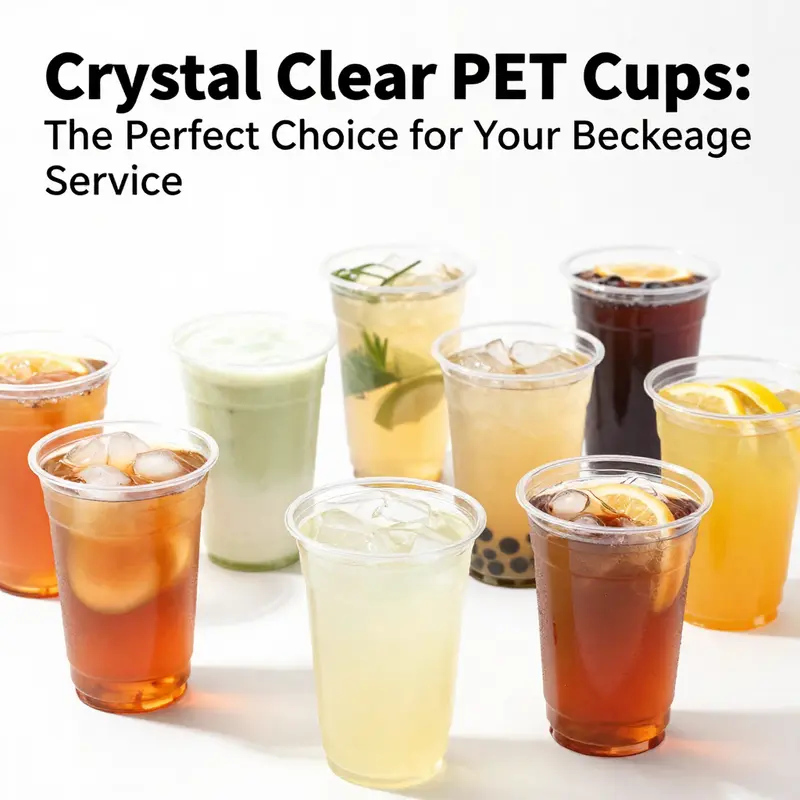
In the world of disposable beverage containers, crystal-clear PET plastic cups have emerged as a favored choice for businesses like bubble tea shops, restaurants, food trucks, and more. Their transparent design not only enhances product visibility but also aligns perfectly with modern aesthetics. Understanding the characteristics of these cups is critical, as it allows businesses to leverage their unique properties effectively. This article delves into the characteristics of crystal clear PET cups, their applications across various industries, their environmental impact, and the current market trends that shape consumer preferences. Together, these insights provide a comprehensive overview for event planners, corporate procurement teams, and beverage chains looking to make informed choices about their beverage containers.
Crystal-Clear PET Cups: The Practical Qualities Behind Transparent Plastic Drinkware

Crystal-clear PET cups combine optical clarity with practical performance, making them a common choice for serving cold drinks. Their transparent appearance lets beverages show through without distortion. This visual honesty boosts presentation and helps servers and customers identify contents quickly. In retail or hospitality settings, seeing the color and texture of a drink improves perceived freshness. For home gatherings, transparency can make simple refreshments look intentional and attractive.
The base material for these cups is polyethylene terephthalate, known for low haze and excellent light transmission. Manufacturers control clarity by refining polymer composition and processing conditions. Rapid cooling in the molding stage reduces crystallinity, which helps maintain that glass-like look. Wall thickness and surface finish also matter; a well-designed cup balances rigidity and clarity so the cup remains sturdy without appearing cloudy.
Beyond looks, these cups offer a useful blend of strength and lightness. PET has a high tensile strength for a thermoplastic, so thin walls resist cracking. This mechanical performance means cups stack well for storage and resist accidental crushes when carried. Their lightweight nature reduces shipping weight and makes handling easier during busy events. Still, they are engineered primarily for cold liquids. PET tolerates room temperature and chilled drinks easily, but it softens as temperature rises. The generally accepted safe maximum is about 70°C (158°F). Above that, cups can deform and lose structural integrity.
Safety is a critical consideration. Most clear PET cups intended for food use are manufactured to meet food-contact standards. They are often labeled food-grade and BPA-free, indicating no intentional bisphenol additives are present. Under normal use—serving cold or cool beverages—PET exhibits very low chemical migration into liquids. That makes it reliable for juices, sodas, iced coffee, milks, and smoothies. However, repeated or improper use changes the risk profile. Extended contact with hot liquids, alcohol, oils, or strong acids can accelerate polymer degradation. Over time, repeated exposure to these substances may lead to surface crazing or increased likelihood of leaching. For that reason, PET cups are typically marketed as disposable or single-use items rather than long-term food storage containers.
Recycling is one of PET’s strengths. It is widely accepted in many municipal recycling programs and carries the resin identification code 1. Recycling helps close the loop, transforming used cups into fibers, strapping, or new packaging. But recyclability depends on proper end-of-life handling. Rinsing cups and separating lids or straws improves the value of collected material. Contamination with food residue or mixing different plastic types reduces the likelihood that an item will actually be recycled.
Design features increase the practicality of crystal-clear PET cups. Lids with snap-on rims and integrated straw slots let you serve drinks for takeaway. Domed lids accommodate whipped toppings or full cups of iced beverages. Ridges and reinforced rims add rigidity without sacrificing transparency. Stackable shapes conserve space, and textured finishes on certain panels can improve grip while keeping most of the cup clear. These design choices reflect the needs of cafés, caterers, and event planners who prioritize appearance and ease of use.
Size variety is another advantage. Clear PET cups commonly come in standardized sizes such as 8 oz, 12 oz, 16 oz, and 20–24 oz. That range covers single-short servings to large smoothies. Choosing the right size matters for portion control and cost efficiency. Smaller sizes reduce waste and encourage sampling at events. Larger sizes can be ideal for iced lattes or family-style gatherings where refills are less convenient.
When selecting crystal-clear PET cups, pay attention to a few practical cues. Inspect clarity; haze or small bubbles in the wall can indicate lower processing quality. Check rim uniformity and lid fit. A well-seated lid reduces spills. Look for consistent wall thickness and smooth seams; those features signal good mold maintenance and quality control. If a supplier provides compliance documentation, examine it for references to food-contact regulations. Certification or testing reports add confidence that the items meet safety standards.
Despite their benefits, crystal-clear PET cups have limitations. Heat sensitivity is the foremost constraint. They should not replace double-walled paper cups or insulated vessels for hot coffee or soup. Sunlight and hot cars can also cause deformation if cups are left filled in those conditions. For beverages with high oil or alcohol content, avoid extended storage in PET, because those substances can swell or weaken the polymer over time. Moreover, the environmental advantage of recyclability only pays off when cups enter the recycling stream. Where recycling infrastructure is absent, single-use plastics increase landfill burdens.
Practical handling advice helps extend function while reducing risk. For serving, keep drinks chilled rather than hot. Use lids for transport and to limit airborne contamination at events. Do not microwave PET cups; microwaving can cause warping and heighten migration risk. If you plan to offer guests recyclable options, place clear receptacles labeled for PET collection. Educate staff about rinsing cups briefly when possible. Small operational changes can improve recycling outcomes significantly.
Event planning often highlights the balance between aesthetics and sustainability. Crystal-clear PET cups offer a clean visual with minimal waste at low cost. For higher-impact sustainability, consider pairing PET cups with compostable cutlery or paper napkins. Combining materials thoughtfully can reduce single-plastic loads while maintaining a polished presentation. If reusable ware is feasible, prioritize durable alternatives for long events. Otherwise, ensure single-use PET is collected and routed to recycling to maximize its material value.
From a lifecycle perspective, PET performs well when used as intended. It requires less energy to produce than glass and weighs far less in transit. Those factors reduce transport emissions per unit. Modern recycling streams turn PET back into useful materials, lowering the need for virgin resin. Still, the ideal is to reduce unnecessary disposables and choose the best container for the job. For cold drinks at large gatherings, crystal-clear PET remains a pragmatic choice.
Beyond basic care, subtle choices improve user experience. Offering optional sleeves for cold beverages can prevent condensation from making surfaces slippery. Including lids with vents for hot-fill cold drinks reduces splashing. If presentation matters, use clear cups with straight sides instead of heavily tapered styles, as the flat view enhances the perception of clarity. When serving layered drinks, choose thicker walls to support heavier liquids without flexing.
When thinking operationally, also consider supply and storage. Store cups away from direct sunlight and high heat. Keep boxes dry and stacked to prevent crushing. Labeled bins help staff quickly access the right sizes during busy service. Buying in bulk reduces per-unit costs, but balance bulk purchasing with realistic consumption forecasts to avoid long storage that might expose stock to temperature swings or dust.
Finally, communication matters. Indicate whether your cups are recyclable using a small printed symbol. If you provide collection bins, mark them clearly and explain any preparation steps, such as emptying and rinsing. Transparent communication encourages correct disposal and improves recycling rates.
For examples of clear, single-use plastic drinkware intended for parties and outdoor events, see a sample listing for a disposable clear plastic cup for parties.
External reference: https://www.walmart.com/ip/24oz-Crystal-Clear-PET-Plastic-Cups-Disposable-Cold-Drinks
Crystal Clarity as a Canvas: How Crystal-Clear PET Cups Shape Presentation, Practicality, and Perception Across Industries

Crystal-clear PET cups sit at the quiet edge of a busy dining and event ecosystem, often overlooked in planning but central to how a drink is perceived before a single sip is taken. Their transparent shells offer more than mere visibility; they provide a clean, modern stage for color, texture, and movement. When a glass-like surface catches light, the hues of a beverage become more vivid, and the consumer’s attention shifts from the vessel to the liquid inside. Across settings from quick-service counters to weddings, these cups become a silent partner in storytelling, elevating perceived quality and, by extension, the brand or event behind it. This is not merely about aesthetics; clarity is a functional trait that guides choices about when and where to use PET cups, how to present drinks, and how far to push customization while staying mindful of safety and sustainability.
PET cups, composed primarily of Polyethylene Terephthalate, are prized for their combination of clarity, lightness, and resilience. The resin’s high optical clarity makes it an attractive option when the goal is to reveal natural color and texture. A bright tropical smoothie, for example, looks more appetizing when the container doesn’t dull its appearance. The same logic applies to iced teas with mint specks, layered drinks with contrasting colors, or beverages with visible fruit pieces. The cup acts as a transparent conduit, not a barrier, allowing the drink itself to communicate freshness, quality, and flavor.
Yet clarity comes with a practical counterweight: temperature. PET cups maintain their shape and integrity best at room or near-freezing temperatures, with a practical upper limit around 70°C (158°F). This limitation is essential when planning menus, service styles, and even storage. Hot beverages exceed the material’s comfort zone, risking deformation or, in extreme conditions, unwanted leaching or softened surfaces. It’s a reminder that the crystal-clear look is not a universal invitation to pour any drink in any circumstance. In environments like car dashboards on sunny days or unventilated kitchens, heat can alter the cup’s geometry and, with it, the drinking experience. The takeaway is simple but crucial: honor PET’s design strengths while respecting its boundaries, especially in hot beverage service or prolonged exposure to heat sources. In that sense, crystal-clear PET cups are best matched with cold or cool beverages, which aligns with many everyday uses—from water and soda to iced coffee, smoothies, and frozen treats.
The versatility of PET cups also extends to a broad spectrum of sizes and configurations, an attribute that truly broadens their applicability across sectors. Common options—ranging roughly from eight to twenty ounces—provide a flexible scale for portion control, pricing psychology, and consumer convenience. In fast-service contexts, lighter, lower-cost options capitalize on rapid turnover and bulk purchasing, often in large bundles for events, catered gatherings, or seasonal promotions. In retail settings, these cups support takeout and on-the-go consumption, allowing customers to glimpse the beverage’s color and texture from a distance, a cue that can influence purchasing decisions. In hospitality and event planning, the capacity to customize becomes a powerful differentiator. The same transparent surface that reveals color can also become a branding canvas through printing and labeling, turning a simple cup into a temporary billboard for a brand, a theme, or a special occasion. Where guest experience and brand resonance intersect, crystal-clear PET cups emerge as a practical and aesthetic choice that does not demand heavy investment in glassware or risk breakage in high-traffic environments. For many venues, the cups’ light weight and compact packaging simplify storage and logistics, enabling a smoother turnover that aligns with service speeds and guest expectations.
Customization is where crystal-clear PET cups truly fulfill their potential as a design medium. The possibility to print logos, color schemes, or thematic elements on the cups allows planners to weave a cohesive look across table settings, bars, and service stations. Event planners in particular leverage this feature to create branded experiences that feel cohesive yet cost-effective. The transparency of the cup’s surface presents a confident backdrop for printing, because the ink or label sits on a surface that doesn’t compete with the beverage itself. When done well, branding on a clear PET cup reinforces recognition at every contact point—while the drink remains the focal point. In practice, brands and organizers can explore a range of finishes, from bold, high-contrast logos to delicate, subtle motifs that echo a theme without overpowering the drink’s presentation. The effect is a refined, professional aesthetic that elevates casual gatherings into curated experiences. For those who want to explore the practicalities of customization, one accessible path is to look at suppliers who offer custom printing on crystal-clear PET cups; a representative sample page demonstrates how branding can be integrated onto the cup’s surface with legible typography and durable colors. disposable-clear-plastic-cup for parties offers a tangible illustration of how such branding choices translate into real-world products. The page’s emphasis on disposable practicality, combined with clear PET’s aesthetic advantages, helps decision-makers visualize how a cohesive look can be achieved without sacrificing convenience or cost efficiency.
Beyond aesthetics, the materials science of PET contributes to durability and performance in ways that matter in real-world settings. PET cups are renowned for their impact resistance relative to thin-walled alternatives, a factor that translates into fewer breakages during handling, transport, and service. This durability complements the demands of bustling venues, outdoor events, and high-volume concessions, where fragile containers would otherwise threaten service continuity and guest safety. Additionally, the lightweight nature of PET makes shipments and daily operations more efficient, reducing both fuel costs and labor demands for restocking and cleanup. These operational efficiencies, paired with clear presentation, create a compelling argument for PET cups in environments that prize speed, reliability, and a clean, modern look.
The safety and storage considerations surrounding PET cups require careful attention, particularly in relation to temperature, food compatibility, and reuse. PET is suitable for cold liquids and, in some circumstances, for beverages that are partially frozen. This capability is valuable for scenarios like frappes, slushies, and ice-based cocktails, where the cup’s rigidity helps maintain form while the drink remains cold. Conversely, PET’s heat sensitivity means hot liquid service should be avoided, and cups should not be left in hot vehicles or environments that could accelerate deformation or chemical migration. The repeated-use caveat is especially important: these cups are designed for single-use convenience; repeated washing or prolonged contact with tough oils, alcohol, or acidic foods can degrade the material over time. In practice, this means operators should emphasize one-time-use policies for beverage service and consider dedicated, more robust containers for long-term storage of oils, fats, or heavy aromatics. This guidance aligns with general food-contact safety principles and helps maintain consumer trust by ensuring that the cups’ appearance and performance remain consistent.
Recycling and environmental responsibility are increasingly central to how customers evaluate disposable packaging. PET is recyclable, and many programs classify PET as a more sustainable option relative to non-clear, opaque plastics when measured by recycling infrastructure and end-of-life recovery. However, recycling outcomes depend on local facilities, contamination levels, and the presence of print or labels that can complicate processing. In practice, the sustainability story for crystal-clear PET cups benefits from a thoughtful lifecycle view: choose high-quality cups, use them for suitable cold beverages, and direct them to appropriate recycling streams after use. For events and venues with large volumes, partner with recycling programs that can handle post-consumer PET and maintain a clear chain of custody for waste streams. The narrative around PET’s recyclability works best when accompanied by practical guidance about local recycling capabilities, sorting, and preparation—such as rinsing to reduce residue and removing lids or sleeves in advance of collection. This approach preserves the transparency and integrity of the cups during service while aligning with broader sustainability goals that many consumers expect today.
In selecting PET cups for a given operation, a few pragmatic criteria emerge from the broader context. First, consider the clarity and finish. A cup that looks pristine in the vendor’s catalog should translate well to real-world lighting conditions, whether under warm venue lighting, natural daylight, or the glare of a sunny outdoor patio. Second, assess the lip and rim design for drinking comfort and stackability. A smooth rim supports comfortable sipping and minimizes drips, while a well-considered lip shape contributes to the overall user experience. Third, evaluate the packaging and transport logistics. Bulk packs reduce restocking complexity and can align with fast-paced service environments, but the packaging itself should protect the cups from scratches, cracks, and contamination. Fourth, reflect on customization options within budget constraints. Custom printing can amplify branding, but it should be durable enough to withstand the anticipated shelf life of the beverage and the handling conditions at events or in retail environments. These criteria, taken together, help decision-makers balance presentation with practicality and cost, ensuring that the crystal-clear look enhances rather than complicates service.
The story of crystal-clear PET cups also intersects with broader trends in consumer expectations and retail design. In a crowded market where beverage presentation matters, the ability to see the drink’s color and texture becomes a valued signal of freshness and quality. This is especially true for colorful beverages, layered drinks, or beverages with visible inclusions like fruit pieces or bubbles. The cups’ transparency supports such visual cues, which can influence purchase decisions at the moment of choice. At the same time, consumers are increasingly aware of packaging’s environmental footprint. PET cups offer a route to responsible, recyclable packaging when aligned with proper waste management practices, even as the conversation continues about reducing single-use plastics in favor of reusable options where feasible. For venues seeking to walk that line, PET cups provide a practical, scalable solution for cold beverages, brand visibility, and efficient service without compromising on the crisp, clean aesthetics that contemporary beverage service aims to achieve.
As this chapter winds through the questions of clarity, safety, and sustainability, an overarching truth remains clear: crystal-clear PET cups have established a versatile, reliable role in modern beverage service. They provide a dependable canvas for drink presentation, a durable and lightweight vessel for transport, and a strategic platform for branding and customer experience. They are not a panacea for every use case—hot beverages and extended storage require caution—but they represent a pragmatic balance between form and function in a disposable packaging landscape. For operators who prioritize visibility, speed, and cost-effectiveness, crystal-clear PET cups offer a compelling combination that supports both the spectacle of presentation and the pragmatics of service.
External resource: https://www.alibaba.com/product-detail/Custom-Print-PET-Crystal-Clear-Plastic-Eco_1600274378953.html
From Clarity to Consequence: The Life Cycle and Environmental Reality of Crystal-Clear PET Cups

Recycling and environmental impact: a practical perspective
Crystal-clear PET cups present a useful paradox. They deliver a clean, attractive presentation for cold drinks, yet their environmental footprint is shaped by choices made before and after use. Understanding that footprint means following a cup through production, service, disposal, and potential rebirth as a new product. It also means weighing the benefits of high recyclability against the risks tied to single-use culture and poor waste systems.
At the start of the life cycle, PET (polyethylene terephthalate) offers clear advantages. It is lightweight, has excellent optical clarity, and performs well with cold beverages. These properties make it efficient to ship and appealing to consumers, reducing transportation emissions per unit. PET is also highly recyclable and widely recognized by recovery programs. When collected and processed properly, PET can be turned into new bottles, fibers for textiles, and various packaging components. That capability supports a circular economy model where materials retain value and require less virgin feedstock.
But recyclability alone does not eliminate environmental impact. The reality hinges on collection rates, sorting efficiency, and contamination levels. A clear PET cup used for soda or water is often clean enough for recycling, but food residue, sauces, or oil can contaminate streams and render items unrecyclable. Local recycling programs vary greatly. Some cities accept rigid PET cups, while others do not. Where infrastructure is weak, even perfectly recyclable cups end up in landfill or as litter. That loss of material value accelerates demand for new plastic and increases overall environmental burden.
Single-use convenience amplifies these problems. High-volume events and busy food service operations generate thousands of cups a day. If most of those are sent to landfill, the environmental cost mounts quickly. Plastic debris from disposable cups also travels; light and buoyant, PET cups can escape containment and find their way into storm drains and waterways. In aquatic environments, they break down slowly. PET does not biodegrade in any short timeframe; instead, it fragments into microplastics. These microscopic particles persist, migrate, and can enter food chains. Marine animals mistake plastic fragments for food, which causes harm to individuals and stresses ecosystems.
Another practical consideration is the temptation to reuse single-use PET cups repeatedly. While PET is regarded as safe for single use with cold drinks, repeated washing and exposure to heat can deteriorate the polymer. That degradation may increase the risk of leaching additives or breakdown products into beverages. For this reason, PET cups should not be treated as durable ware. If longer-term reuse is intended, switching to products designed for repeated use is safer.
Reducing the environmental toll of PET cups therefore demands layered strategies. First, event and hospitality planners can optimize material choice for the use case. For example, when clear presentation is essential, crystal-clear PET offers a professional look with recycling potential. When heat resistance or repeated use is required, alternative materials perform better. Combining material selection with straightforward waste signage and accessible collection points increases the chances that used cups will be captured for recycling.
Second, supply chains and waste systems must be aligned. Clear labeling with the recycling code and simple instructions helps consumers. Sites that host high volumes of disposable cups should provide dedicated PET collection bins, kept dry and uncontaminated, and work with local processors to ensure proper handling. Contamination is a solvable logistics problem. Staff training, pre-rinsing stations, and smart bin placement reduce foreign materials entering recycling streams, which raises the yield of reusable PET feedstock.
Third, the design of the cup itself influences outcomes. Thicker walls or mixed-material constructions—like laminated coatings or integrated lids—can complicate recycling. Designing cups for recyclability means minimizing additives and mixed materials and prioritizing purity of the polymer. Simple changes, such as avoiding colored dyes and incompatible coatings, help recycling facilities process material without costly separation steps.
Beyond logistics and design, public behavior matters. Encouraging users to choose refillable bottles, reusable vessels, or certified compostable disposables when appropriate reduces waste volumes. At outdoor gatherings and picnics, the balance between convenience and environmental responsibility can shift when organizers provide reusable options or structured collection programs. For occasions where disposables remain practical, emphasizing recycling and offering immediate disposal options leads to better outcomes. Many consumers respond well to clear, visible infrastructure and concise instructions.
Economic incentives also play a role. Deposit-return systems and buy-back programs raise collection rates for beverage containers. When a small financial value is attached to a returned cup or bottle, the rate of capture increases dramatically. For businesses, partnering with recyclers that guarantee closed-loop processing can create market demand for recycled PET. That demand lowers the need for virgin PET and helps close the material loop.
Even with these measures, some environmental concerns remain. Microplastic formation from degraded PET is an unresolved challenge. Incineration and landfill are common end-of-life outcomes where recycling fails. Incineration may recover energy, but it also emits greenhouse gases and requires pollution controls. Landfilled PET persists for long periods and occupies space. Both outcomes underscore the reality that recycling is necessary but insufficient as a standalone solution. Systems-wide change is required, blending better design, improved infrastructure, and behavioral shifts.
Practical trade-offs inevitably appear. Alternatives to PET, including paper-based cups with plastic lining or compostable bioplastics, each bring their own limitations. Paper cups often require plastic coatings to contain liquids, which interferes with standard recycling. Compostable options demand industrial composting facilities and careful separation from conventional waste. In many current waste systems, a well-managed PET stream yields higher effective recycling rates than alternatives. This makes PET a pragmatic choice for clear, cold-service cups when supported by proper collection and processing.
For businesses and event organizers looking to minimize harm, a bundled approach is most effective. Choose clear PET when it fits the use case and the local recycling stream can process it. Avoid mixed-material cup designs. Provide clear disposal infrastructure and instructions. Consider deposit or incentive programs to boost capture. And when reusable service is feasible, prioritize it. The combined effect of these practices lowers landfill volumes, reduces new plastic demand, and lessens the chance of environmental leakage.
One specific step to improve outcomes is selecting suppliers and products designed with end-of-life in mind. For gatherings where clear presentation is non-negotiable, many suppliers offer disposable clear PET cups produced for ease of recycling. For everyday food service, switching to recyclable or compostable food containers can help, depending on local capabilities. For example, lightweight clear PET cups intended for outdoor picnics and parties perform well when paired with a solid recycling plan; organizers can source such cups and also provide collection and sorting stations to ensure they enter the recycling stream. A product example can be found here for reference: disposable clear plastic cup for outdoor picnics.
Finally, information and policy matter. Consumer education campaigns that explain which cups are recyclable and how to prepare them for recycling reduce contamination. Policy tools, like standardized labeling and expanded producer responsibility schemes, shift costs and incentives back toward circular outcomes. When producers bear a share of end-of-life costs, designs that favor recyclability become more common.
The environmental story of crystal-clear PET cups is therefore not binary. It depends on design decisions, collection systems, consumer behavior, and policy frameworks. Pet cups can be part of a lower-impact approach to disposable service when matched with robust recycling practices. They can also become persistent pollutants when they are mishandled or when infrastructure is absent. Shifting the balance toward better outcomes requires small changes across many points in the value chain.
For those seeking authoritative, practical guidance about managing plastics like PET and improving material outcomes, the Environmental Protection Agency provides a robust resource on plastics materials management and sustainable practices. Review their guidelines for deeper technical and policy context: https://www.epa.gov/sustainable-management-plastics/plastics-materials-management
Clarity That Sells: Market Forces and Buyer Choices Shaping Crystal-Clear PET Cups
Market Momentum and Consumer Drivers
Crystal-clear PET cups occupy a unique place where aesthetics, cost, and convenience meet. Retailers and event planners choose them because they display contents attractively. Manufacturers favor them for efficient production and packaging. Consumers pick them when visual appeal and practicality align. Together these factors drive a steady market trajectory and shape product development.
Global sales for single-use PET and similar cups are growing at a modest, predictable pace. The most recent market estimates put combined PP and PET cup sales in the low hundreds of millions of dollars range, with a compound annual growth rate under four percent projected through the next decade. This steady expansion reflects two simple realities: demand for disposable beverageware remains strong, and clear PET offers a balance of transparency, light weight, and cost efficiency that few materials match. Growth is concentrated in foodservice, packaged beverages, and events. Fast-casual restaurants, catering operations, and outdoor gatherings deliver repeated, high-volume purchasing that sustains manufacturers and wholesalers.
Beyond raw numbers, the market tells a more textured story. Consumers increasingly expect packaging to be part of the product experience. Clear cups showcase color, texture, and layers in beverages. They turn a simple drink into something visually appealing. That matters for trending categories such as craft soft drinks, layered cocktails, and dairy-based drinks like shakes. For foodservice brands, the cup becomes a display window for offerings. Visual merchandising at point of sale and social media presentation further amplify this impact. Photogenic beverages boost shareability, and that value influences purchasing decisions upstream.
Practical attributes reinforce the visual advantages. PET is lightweight and shatter-resistant. It ships and stacks efficiently, reducing logistics costs. It molds into precise shapes and accepts printing and labels easily. For event buyers, these features translate into lower breakage, faster setup, and clear branding opportunities. Custom printing options let brands put logos and messaging on the cup itself, improving perceived value. Cups in sizes from small tasting portions to large iced drinks cover many use cases, making inventory simpler for multi-outlet operations.
The buyer mix for crystal-clear PET cups is diverse. Small businesses and individual consumers order in bulk for celebrations and seasonal events. Large chains and caterers require consistent supply and predictable specifications. Distributors focus on unit economics and minimum order quantities. Designers and brand managers emphasize look and tactile feel. Each buyer type applies different priorities. Yet three concerns appear across this range: clarity, safety, and environmental profile.
Clarity is a baseline expectation. Buyers assume the cup will be visually pristine. Manufacturers invest in polymer purity and processing controls to ensure optical quality. Even small imperfections can harm perceived value. Safety follows closely. PET’s food-contact safety under normal conditions is well-documented. Still, PET has thermal limits. It is not suitable for hot beverages beyond roughly 70°C. Educating buyers about safe use avoids problems and aligns expectations with material performance. For applications involving warm or hot drinks, buyers often choose insulated paper or double-wall options. That means crystal-clear PET remains the cold-drink material of choice.
Environmental concerns shape long-term demand more than any single feature. Awareness of plastic pollution and recycling has shifted buyer behavior. Many consumers now ask whether packaging is recyclable, made from recycled material, or compostable. This forces suppliers to adapt. Options include producing cups from post-consumer recycled PET (rPET), improving recyclability through monomaterial design, and minimizing additive use that complicates processing. Some brands experiment with bioplastics, but these often bring trade-offs in clarity, cost, or processing equipment. The market therefore rewards transparent sustainability claims backed by credible programs and certifications.
In response, supply chains are evolving. Material sourcing strategies increasingly prioritize recycled content. Manufacturers optimize resin blends and processing to preserve transparency while increasing rPET fractions. Logistics partners offer take-back and recycling programs for high-volume customers. Retailers and event companies pilot collection points to improve recovery rates. These efforts are uneven across regions, but they signal a shift. Buyers now account for end-of-life considerations in procurement decisions.
Price sensitivity remains a reality. Even buyers committed to sustainability measure trade-offs carefully. rPET cups usually cost more than virgin PET alternatives. Compostable options are still more expensive and may lack the crystal clarity buyers desire. As a result, many organizations opt for compromise: choose rPET where feasible, improve on-site recycling, and use compostable alternatives for specific use cases. This blended approach aligns operational budgets with evolving customer expectations.
Design and customization create competitive differentiation. Clear cups are a canvas for design strategies that range from subtle to bold. Embossed logos, tamper-evident lids, and integrated rims for sleeves or labels improve functionality and branding. Size variation simplifies menu engineering, allowing operators to price and portion with precision. For seasonal promotions, limited-run designs boost perceived exclusivity. Manufacturers that offer flexible printing and short-run customization capture clients who value differentiation over commodity pricing.
Operational considerations further influence buyer choices. Stackability, lid compatibility, and leak resistance dictate usability. Heavy lids that seal well are key for off-premise sales. For busy event environments, cups that nest without sticking save time and reduce waste. Suppliers that innovate around lid geometry and rim strength gain traction among high-volume buyers. These small performance details can determine whether a kitchen team or beverage station prefers one supplier over another.
Regulation and safety standards shape product specifications. Food-grade PET must meet migration and purity thresholds. Regions vary in allowable additives and labeling requirements. Buyers with international supply chains need to confirm compliance in each market. Certifications and test reports reduce friction during procurement. Clear communication about heat limits and suitable use cases prevents misuse and maintains brand trust.
Looking ahead, the market will likely become more segmented. Commodity-grade clear PET will remain essential for price-sensitive applications. Meanwhile, premium segments will grow where clarity pairs with recycled content or advanced barrier properties. Demand will expand for cups that balance optical quality with circular economy credentials. Brands that invest in traceable recycled feedstocks and transparent labeling will gain loyalty from environmentally conscious buyers.
Retailers and event planners can use several tactics to navigate choices. First, match material to use case. Reserve crystal-clear PET for cold and visually driven drinks. Second, require documentation for recycled content claims. Third, evaluate logistics costs, since lighter materials reduce transportation emissions and expenses. Fourth, consider end-of-life options, including local recycling availability when choosing rPET shares. Finally, test lid and rim performance before committing to large orders. Small sampling programs prevent costly operational issues at scale.
For manufacturers, the path forward is clear in principle but complex in execution. Investments in rPET processing, upgraded material handling, and optical quality control will pay dividends. Strategic partnerships with recyclers secure feedstock and demonstrate commitment. Packaging designs that favor monomaterial constructions simplify recycling while retaining clarity. Marketing should communicate both aesthetic and environmental value, using plain language and verifiable claims.
The crystal-clear PET cup market balances immediate utility with evolving values. Visual appeal, cost efficiency, and usability maintain demand. Consumer expectations about sustainability change procurement decisions gradually. The winners will be companies that preserve clarity and performance while improving circularity. Those that combine strong operational performance with credible environmental measures will capture the most loyal buyers and position themselves best for future growth.
External reference: Market growth projections and forecast data supporting the sector analysis are summarized in the Global PP and PET Cups Market Outlook report (Market Research Future). (https://www.marketresearchfuture.com/reports/pp-pet-cups-market)
Internal link: For retailers and event planners comparing clear cup and disposable tableware options, see this product resource for a disposable clear plastic cup suited to outdoor events: disposable clear plastic cup for outdoor use.
Final thoughts
As the beverage landscape continues to evolve, crystal clear PET plastic cups stand out as a versatile and appealing option for businesses aiming to enhance their service. Their ability to showcase drinks beautifully, coupled with their practical benefits, makes them a savvy choice for any beverage-serving establishment. Understanding the characteristics, applications, recycling, and market trends surrounding these cups can lead to informed purchasing decisions that not only meet consumer expectations but also align with sustainability goals.