
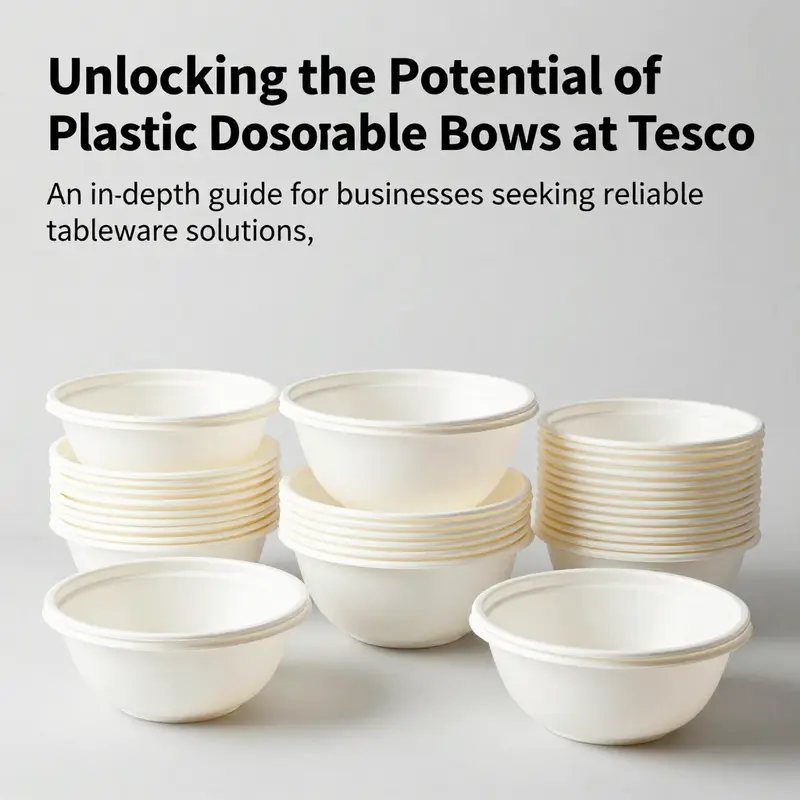
Plastic disposable bowls have become essential for a variety of businesses, from bubble tea shops to catering services. As operational needs shift and consumer trends evolve, having access to dependable and affordable disposable tableware is critical. This guide explores the availability, pricing, environmental considerations, and consumer preferences concerning Tesco’s plastic disposable bowls. Each chapter will provide insights that can aid your purchasing decisions and offer a comprehensive understanding of how these products can align with your business goals.
Plastic Disposable Bowls at Tesco: Availability, Variety, and the Pragmatic Balance of Convenience and Sustainability

When a family meal becomes a last-minute gathering or a casual picnic, the single-use plastic bowl often steps in as the quiet workhorse of modern life. In the UK retail landscape, Tesco occupies a familiar corner where kitchen and dining basics are tucked among everyday groceries. The question of availability is not only about whether a product exists, but about how the choice aligns with routines, budgets, and the growing awareness of waste. Plastic disposable bowls remain popular for their convenience, lightness, and practicality—attributes that matter when hosting, catering small events, or simply packing lunch for a busy weekday. Yet the conversation around them has shifted. Shoppers increasingly weigh the convenience against environmental considerations. Retailers respond by expanding ranges that include conventional plastic options alongside compostable and biodegradable alternatives. The result is a spectrum rather than a single choice, a landscape where the same shelf can hold both a straightforward, low-cost bowl and one built with plant-based plastics or paper.
In Tesco, these disposable bowls are typically found in the kitchen and dining area of stores and also on the online platform, tesco.com. The dual path—physical shelf and digital catalog—has become a core feature of modern grocery retail, letting customers compare sizes and materials with ease. Stock levels naturally vary from branch to branch, influenced by store traffic, regional demand, and seasonal cycles. A shopper planning a quick gathering or a family meal might find a small, clear plastic option on a busy afternoon, while a quieter store or a restock day could reveal a broader assortment, including larger serving bowls or bulk packs. The online listings often mirror this, but they slightly outperform physical shops in breadth, letting customers filter by size, material, and even whether the product belongs to a sustainability-focused subset. In this context, the word availability carries more than a message about shelves; it signals reliability for planning and choice. A consumer confident in online ordering may rely on Tesco’s search function to confirm what is currently offered, then arrange delivery or click-and-collect for tomorrow.
The materials story is central to understanding the choices on offer. What makes a disposable bowl more than a single-use item is the material story behind it. Plastic bowls, in their traditional form, deliver rigidity, moisture resistance, and a consistent seal for sauces and toppings. They are well-suited for picnics, kids’ parties, and takeout meal components where leakage would otherwise ruin a moment. At the same time, eco-conscious options have moved into the same aisle, often presented as compostable or biodegradable alternatives. Some bowls are advertised as PLA-based or crafted from plant-based plastics, designed to break down more readily in industrial composting settings. Others lean on recycled content to reduce virgin material use. Still others rely on paper or fiber composites, balancing lightness with sufficient sturdiness for meals that don’t require heavy-duty durability. Labels that read eco, sustainable, or compostable guide consumers toward a different intent—that is, not only to serve food, but to minimize post-use waste when possible. While plastic remains an efficient choice, these eco-forward variants reflect a market that wants practical answers without compromising responsible disposal.
In the Tesco ecosystem, the disposable bowl landscape is shaped not just by material choices but by the way the retailer curates its private-label, or in-house, lines. These lines aim to balance price with performance, offering a spectrum of options from basic workhorse bowls to more refined designs that might endure a little longer between uses and handling. The resulting mix is not merely about cost; it also speaks to the expected use case—whether a home cook is packing leftovers, a parent is serving a party, or a small business is meeting a last-minute catering need. Durability, grease resistance, and lid compatibility become practical criteria that shoppers weigh alongside environmental labels. The emphasis on lids, seal, and stacking efficiency is not incidental; it reflects real-world usage: space in a cupboard, ease of transport, and the need to keep contents secure during transit. Consumers may notice that some ranges emphasize stackable forms that save space, while others prioritize the ability to hold portioned meals without leaking or sogginess. In short, Tesco’s assortment strives to reflect daily rituals of eating and sharing, with packaging choices that suit home kitchens, office break rooms, and small-scale hospitality needs. The result is a single aisle that can feel like a practical toolkit for everyday life, rather than a narrow selection rooted in a single use or a single material.
Price, value, and decision-making are another layer that shapes the Tesco bowl landscape. Pricing is a significant driver in the choice between plastic bowls and eco-friendly alternatives. For many shoppers, the appeal of low-cost, straightforward plastic bowls rests on predictability and convenience. At the same time, the eco-conscious subset aims to offer comparable convenience while aligning with values around waste reduction. The price spectrum in a typical Tesco range often mirrors the tension between what a user needs today and what a more sustainable option promises for tomorrow. Consumers balancing these concerns travel through a mental map: does the item fit a one-time event or a recurring need? Will the bowls be used for hot foods or cold, or will they contain sauces that threaten flexibility? Is disposal in a home composting system a realistic option, or is industrial composting the only viable end-of-life pathway? These questions shape how many shoppers choose plastic, how many chase eco-labeled substitutes, and how many navigate a mixed approach—using reliable plastics for some occasions and paper or PLA-based containers for others. The existence of both forms within the same retailer is not a contradiction but a reflection of diverse consumer needs. And it nudges households toward mindful planning: spotting bulk packs for parties, evaluating whether a subset of bowls can double as serving dishes for casual gatherings, and recognizing that some eco-friendly choices might benefit from careful disposal or recycling instructions to realize their promised benefits.
The sustainability conversation and practical realities intersect in the Tesco aisle as well. The conversation around disposable bowls cannot ignore the broader sustainability arc shaping modern shopping. Shoppers want quick, mess-free meals and easy cleanup, but also want to avoid piling waste in landfills or damaging ecosystems with single-use plastics. Retailers respond by expanding options that feel both convenient and responsible. In Tesco’s range, this manifests as a deliberate curation of products that can perform effectively in day-to-day life while offering alternatives that claim better end-of-life outcomes. The nuance is important: “eco-friendly” does not necessarily mean universally compostable in every home environment; it often signals that the product is designed with materials that can be more readily broken down in compatible facilities or that they use a higher proportion of renewable content. Consumers benefit from clear labeling and accessible disposal guidance, which helps families decide whether a paper, PLA, or conventional plastic bowl best suits their plans, from weekday lunches to weekend gatherings. The practical takeaway for shoppers is that availability is not just about the presence of a product; it is about confidence in sourcing, understanding the material, and knowing how to dispose of it properly. In the context of Tesco’s shelves, this means a decision process that respects both convenience and responsibility, recognizing that small choices on a dinner table can contribute to a larger shift in consumption patterns.
For readers mapping out their weekly routines, the availability of plastic disposable bowls at Tesco is best understood as part of a broader ecosystem of disposable tableware. It’s about how retailers balance convenience with environmental narratives, how store layouts guide attention, and how online catalogs expand the set of options beyond what any one branch can physically stock. If you want to explore eco-conscious alternatives without straying from the Tesco ecosystem, consider this resource that highlights practical, ready-to-use packaging options eco-friendly takeout boxes for food packaging. For more details about where Tesco frames its Kitchen & Dining assortment and how to navigate online listings, the official retailer page is a reliable gateway. External resource: https://www.tesco.com/groceries/browse/home-and-lifestyle/kitchen-dining
Beyond Convenience: A Deep Dive into Tesco’s Disposable Bowls and the Shift Toward Sustainable Serveware

The chapter you are about to read delves into Tesco’s disposable bowls with a focus on how their current offerings balance everyday convenience, portion control, and a growing emphasis on sustainability. The catalog, as it stands, highlights a spectrum of paper-based options, such as the white paper bowls sold in compact packs, which are often positioned as economical and practical for home use, small gatherings, or quick-service contexts. In the most recent listings, a 16 cm white paper bowl in a 25-pack is commonly shown at a modest price, illustrating Tesco’s alignment with simplicity and value for everyday meals. Yet, within the same catalog, there is no explicit, widely publicized mention of a plastic disposable bowl as part of the core assortment. This absence does not necessarily mean plastic is unavailable; instead, it points to the current emphasis on paper and other more sustainable materials in the retailer’s mainstream ranges. For readers seeking the most accurate and up-to-date specifics on plastic disposable bowls at Tesco, the prudent step is to consult the official Tesco site or visit a nearby store, since product lines can shift with seasonality and supplier changes. This reminder anchors the chapter in the reality of a dynamic retail environment where packaging innovations and sustainability claims evolve rapidly.
To understand what Tesco’s disposable bowls offer beyond the surface, it helps to consider how the portfolio is structured around different serving needs. The catalog tends to segment bowls by capacity and intended use, a practical approach for households planning meals and for small-scale catering or takeaway applications. Larger capacity bowls—roughly 500 ml and above—are described as ideally suited for hearty dishes such as chili, noodle soups, and family-style servings where a robust bowl supports generous portions and stable handling. In real-world terms, these bowls are valued for the sense of durability they provide when families or groups gather around a shared dish, reducing the likelihood of spillage and making it easier to portion out meals without constant refilling. Conversely, smaller capacity bowls in the 200–300 ml range are positioned for lighter fare and individual portions such as fruit salads, yogurt, or appetizers. These smaller bowls cater to convenience and portion control, promoting mindful eating and reducing the amount of leftover food that households may struggle to manage. The juxtaposition of large and small options inside a single retail line reflects a broader consumer trend: people want a simple, reliable vessel that mirrors the size of the portion they intend to serve, rather than a one-size-fits-all solution.
Yet the shape of Tesco’s offerings is not merely about size. A central thread in this analysis is the sustainability angle that increasingly governs consumer choice. In parallel with the paper bowls, the market is witnessing a rise in wholesale and bulk options that emphasize compostability and plant-based materials. Supplies such as compostable options in wholesale soup bowls speak directly to a demographic that values eco-friendly packaging as part of their everyday dining practices. The materials used in these eco-forward products tend to fall into two broad categories: plant-based plastics and paper-based formulations. Plant-based plastics can offer familiar performance characteristics—stiffness, heat resistance, and leak prevention—while still presenting a lower environmental footprint compared with traditional fossil-fuel-derived plastics. Paper-based options, often derived from abundant fiber sources, can deliver excellent barrier properties when engineered correctly and can be tailored to be compostable in the right industrial settings. The practical implication for shoppers is clear: there is an expanding range of disposables designed to balance durability with a reduced long-term environmental impact, a combination that increasingly informs restaurant procurement decisions, event planning, and household choices alike.
Compostability, in particular, has become a meaningful differentiator for many buyers. Compostable bowls, when certified and properly disposed of, can break down more quickly than conventional plastics, helping to minimize landfill burden and supporting circular waste management goals. The adoption of compostable options in bulk or wholesale formats makes these products appealing to a broad audience, from small cafés and community groups to larger households seeking to align their disposable tableware with sustainability values. In practice, this shift means that consumers do not have to sacrifice durability or performance to reduce waste. With advances in materials science and packaging technology, compostable bowls can maintain heat resistance, structural integrity, and stackability—features that matter when serving hot soups, sauces, or cereals—while still being compatible with green waste programs in areas with robust composting infrastructure.
From a shopper’s perspective, the choice between traditional paper or alternative compostable materials often hinges on several intertwined factors: cost per unit, reliability in transport and handling, consumer expectations for performance, and the local waste-management ecosystem. For households hosting a casual dinner or a family movie night, a paper bowl with compostable credentials may offer a reassuring signal—that the packaging aligns with responsible disposal habits and that the product line-up reflects contemporary sustainability goals. For small businesses or community kitchens, the calculus extends to supplier reliability, bulk pricing, and the ability to source compatible lids or sleeves that preserve the integrity and temperature of the contents. Tesco’s strategy appears to recognize this dual demand: keep a practical, affordable line that works smoothly for everyday use while expanding capacity and product diversity to accommodate more ecologically minded customers who crave materials that can be responsibly managed at the end of their life cycle.
An important dimension in this discussion is how these products are designed for the real world. The larger capacity bowls, beyond their obvious utility, also engage with the practicalities of event catering and family meals where servings are generous and the need for stable, upright bowls is essential. The smaller bowls, with their lighter capacity, support snack-based or portion-controlled dining scenarios, reducing waste by design and encouraging consumers to opt for balanced servings. This functional spectrum is particularly relevant in the current retail climate, where customers increasingly expect packages that align with both their dietary needs and their values. In such a context, even a modest price point of a 25-pack of white paper bowls can carry meaning beyond immediate cost savings. It signals a baseline level of readiness for everyday use, while the availability of compostable wholesale options signals an aspirational shift toward a more sustainable operating model across both households and small-scale food service setups.
To connect these observations with concrete product navigation, consider the parallel between Tesco’s on-shelf choices and what is happening in comparable segments of the disposable ware market. The emphasis on paper bowls does not negate the presence of non-paper alternatives in other retailers or supplier catalogs, but it does highlight a consumer environment where the ease of disposal, recyclability, and compostability increasingly influence purchasing decisions. The materials story—moving from traditional plastics to plant-based composites and certified compostable papers—reflects broader societal changes, from individual households to small and mid-sized businesses that seek to minimize environmental impact without compromising practicality. If a reader is assessing the value of Tesco’s disposable bowls for a particular use case—say, a neighborhood potluck, a school bake sale, or a weekend family gathering—the bottom line often comes down to a simple question: Which option provides the right balance of size, strength, and end-of-life management for the given context?
In this context, an example of the kind of practical resource available to readers who want to compare similar packaging solutions can be found through related disposable packaging catalogs that emphasize kraft paper and compostable designs. A useful reference point is the broader family of kraft paper soup containers with lids, which are commonly offered in bulk for takeaway and catering needs. These containers illustrate how the design priorities—easy stacking, secure lids, and compatibility with hot contents—remain consistent across material choices while the end-of-life story grows more favorable for compostable formats. For readers who want to explore such options in depth, there is a relevant internal resource that mirrors this discussion and provides concrete product examples: disposable kraft paper soup containers with lids ready bulk takeaway bowls noodle soup container.
As the conversation about Tesco’s disposable bowls evolves, one should also keep an eye on official listings and third-party assessments that document material composition, certifications, and disposal guidance. The dynamic nature of product lines means that what is true today may be updated tomorrow, and the most reliable way to gauge current offerings is to review the latest Tesco Wholesale information, which remains a key external resource for industry professionals and curious shoppers alike. This ongoing updates cycle underscores the broader message of this chapter: Tesco’s disposable bowls sit at the intersection of everyday practicality and a deliberately expanding sustainability narrative, a combination that reflects both consumer expectations and supplier innovations.
External resource: https://www.tescowholesale.com
Shifting Value: Pricing Dynamics of Plastic Disposable Bowls in a Major UK Retailer’s Aisle

Pricing dynamics in a market shaped by material costs, supply routes, and consumer expectations can be as revealing as the bowls themselves. This chapter threads together how a leading retailer’s plastic disposable bowls have moved in price over the past year, what factors are pulling on the per-unit and per-pack numbers, and what shoppers should expect when shopping the aisles or clicking through the online catalog. It also situates plastic disposable bowls within a broader packaging ecosystem, where paper and other sustainable options compete for attention and budget, and where tiny shifts in resin costs can ripple into the price tags seen by households and small caterers alike. While the catalog in the current listing highlights paper bowls as an affordable entry point, the focus here is on plastic variants in standard sizes—roughly 250 ml to 400 ml—whose unit costs and pack economics tell a telling story about cost structure, value perception, and category strategy. As of early 2026, the observed price band for single-use plastic bowls in those standard sizes ranges from about £0.18 to £0.35 per bowl, influenced by brand, pack size, and regional store pricing. Bulk configurations—say packs of 50 or 100 units—tend to push the per-bowl cost downward, a pattern retailers leverage to move higher quantities and reduce handling costs per unit. In more premium or sustainability-forward lines, the per-bowl price can climb to roughly £0.45, reflecting additional features like recycled content, compostable liners, or enhanced recycling ambitions that align with evolving consumer values and regulatory trends. These shifts are not isolated to one region or one supplier; they echo global pressure on feedstock costs, energy prices, and the longer, more complex supply chains that connect resin plants to regional distribution centers and finally to the consumer’s basket. The data points available for the chapter underscore a broader truth: price is a signal of both cost pressure and strategic positioning. When raw material costs rise, every link in the chain—from polymer resin to packaging film to palletized transport—can contribute to a higher headline unit price. Retailers, in turn, respond not just by adjusting sticker prices but by recalibrating assortment, packaging formats, and promo calendars to balance top-line aims with customer affordability. The interplay between these factors produces a price landscape that can appear uneven at the street level but makes sense when viewed through the lens of supply chain responsiveness and competitive dynamics. If a shopper compares a 250 ml to a 400 ml option side by side, the per-unit delta is often modest but meaningful in aggregate. A small increase per unit compounds across a family-sized lunch or party order, and even a few pence difference can influence purchasing decisions when a customer buys multiple bowls for a family picnic, a small gathering, or a takeaway service. That math matters more when considered alongside bulk-pack pricing, where saving a fraction of a penny per bowl translates into real cost relief at scale. The price elasticity for disposable bowls tends to be modest at the single-item level; consumers are accustomed to small price increments in the context of a broader shopping trip. Yet the same consumer may be highly receptive to bulk-pack savings if they see a straightforward per-unit reduction that translates into tangible budgeting for events or meal-prep routines. In terms of market positioning, the retailer’s plastic disposable bowls compete with alternative formats—including paper and biodegradable options—where value is not solely about the price tag but also about convenience, leak resistance, microwave compatibility, and the reliability of supply during busy periods. It is common to see eco-conscious variants priced higher, reflecting the cost of sustainable materials or processes, even as basic, no-frills plastic bowls sit closer to the lower end of the spectrum. The resulting landscape is a tapestry of small price movements that can feel incremental on any given visit but accumulate into a meaningful difference in a household’s monthly or quarterly take-home expense. The trend lines, therefore, are not just about cost; they illuminate a broader strategic narrative about how retailers manage risk, optimize assortment, and communicate value in a market where consumer preferences are shifting toward sustainability without sacrificing convenience. In this context, the headline numbers—0.18 to 0.35 per unit, and up to 0.45 for premium lines—become a shorthand for a complex reality: material costs are volatile, logistic costs have risen in fitful waves, and retailers are balancing the pull of price competition with the pull of responsible packaging narratives that attract a different segment of shoppers. For the reader following this article’s arc, these numbers are not mere figures; they are a window into how a modern retailer negotiates the tension between affordability and sustainability, between the certainty of a simple take-away bowl and the growing expectations for products that can be recycled or repurposed after use. The practical takeaways for consumers are nuanced. When you shop for plastic disposable bowls, consider not only the unit price but also the pack economics. A bulk purchase may present a lower per-unit price, but it ties up cash and space and may not align with a low-commitment purchase for a one-off event. Conversely, a smaller pack buys flexibility, though at a higher per-unit cost, which can be acceptable for a one-time event or a small household needing a predictable supply. And for businesses, the decision matrix expands to include reliability of supply, consistency of quality, and compatibility with catering workflows. A durable, leak-resistant bowl is not just about price; it’s about minimizing waste, reducing service glitches, and maintaining hygiene standards across multiple service points. In comparing options, it is also helpful to contextualize price against a broader category strategy that retailers often reveal through their online catalog and in-store signage. The pricing signals are part of a larger story about demand cycles, seasonal peaks, and the cadence of promotions that help customers plan purchases around school holidays, public events, or outdoor gatherings. If a reader wants a snapshot of real-time pricing and inventory, the official online groceries platform provides the latest figures and availability. That channel is particularly useful for those coordinating meals, parties, or small-scale catering where precise quantities and delivery timing matter. For readers who want to explore adjacent design and packaging choices in the same ecosystem, a related resource in this space discusses takeaway packaging and disposable tableware across a spectrum of materials and formats. For a practical example of how packaging choices intersect with event planning and home dining, this linked resource offers a perspective on how disposable tableware can be tailored to different themes and service contexts. custom-takeaway-packaging-supplies-disposable-tableware-for-theme-party This reference helps frame how retailers’ packaging assortments respond to both functional needs and creative presentation demands, which in turn helps explain why some lines command higher prices or appear more prominently in promotions. For those who wish to verify current price points and availability directly from the retailer’s storefront, a reliable external resource is the company’s online groceries portal, which hosts the most up-to-date information and stock status. The real-time landscape can shift with supply disruptions, weather-impacted routes, or changes in resin pricing, making a live check a prudent habit for frequent buyers and small business operators alike. The interplay of cost and supply in plastic disposable bowls, therefore, is not a one-off price movement but a living snapshot of how a major retailer navigates a volatile market while preserving the convenience and predictability that customers depend on. As the chapter unfolds within the broader article, this pricing thread will intersect with discussions of paper bowls, compostable options, and the evolving consumer dialogue around single-use packaging. The goal is not only to track numbers but to understand the decisions behind them: how a retailer categories these items, how promotions are timed, and how customers interpret value in a market where sustainability conversations are increasingly foregrounded in everyday shopping. In sum, the 2026 snapshot—roughly £0.18 to £0.35 per plastic disposable bowl, with bulk packs offering lower per-unit prices and premium sustainability variants reaching around £0.45—is a reflection of more than cost alone. It is a reflection of a market in transition, a supply chain under pressure, and a consumer base that continues to weigh convenience against environmental considerations. For the reader, the practical takeaway remains clear: when budgeting for events or meal prep, factor in the potential savings from bulk purchases while recognizing that sustainability-forward options may come with a higher ticket. And when in doubt, consult the live catalog for the exact figures in your location, then weigh those figures against your needs for size, reliability, and waste management. External resource: https://www.tesco.com/groceries
Plastic Footprints and Fresh Choices: Reimagining Disposable Bowls in Tesco’s Aisles
Disposables travel with modern meals, moving from counter to curb. In a national retailer context, plastic disposable bowls illustrate a tension between convenience and responsibility. They are light, inexpensive vessels that keep soups hot, salads fresh, and sauces contained. They also contribute to a waste stream that challenges recycling systems and landfill capacity. Tesco’s packaging program centers on reducing single-use plastics while maintaining food safety and a positive customer experience. The aim is to balance performance with environmental impact through a coordinated strategy that considers materials, supplier collaboration, in-store messaging, and end-of-life options. The goal is not to eliminate plastic overnight but to shrink its footprint by choosing materials that are easier to recycle, designing for better waste streams, and enabling clearer consumer guidance.
A core comparison is plastic versus paper-based alternatives. Fiber bowls can offer recyclability advantages but bring challenges in moisture resistance, weight, and infrastructure for recycling. The decision matrix weighs barrier performance, cost, and end-of-life fate. Implementing fiber options at scale can ripple through contracts, warehousing, and labeling; customer perceptions of recyclability influence disposal behavior.
Lifecycle thinking plays a central role. Retailers must estimate energy and water inputs, emissions, and transportation impacts, along with the potential for recycling or composting after use. The goal is to reduce overall environmental impact without compromising safety or the integrity of the consumer experience. Tesco’s approach includes supplier standards, testing, and pilots, with a view toward maintaining product reliability while steering away from the most problematic materials.
Consumer behavior also matters. Clear labeling and disposal guidance help ensure that packaging ends up in the appropriate waste stream. In partnership with municipalities and recycling bodies, Tesco seeks to align on end-of-life pathways and invest in consumer education that explains how to recycle or dispose of different materials.
Reuse and alternative delivery models present a longer-term horizon. While most ready meals rely on single-use packaging, scalable reuse or take-back concepts require careful attention to logistics and cleaning economics. Tesco’s stance centers on reducing single-use plastics but remains open to service-model innovations that can lower waste over time.
For shoppers, changes in weight, feel, or performance may accompany a packaging transition. Guidance at point of purchase, shelf signage about recyclability, and highlighting products aligned with its sustainability program can support responsible choices and build trust in the brand’s environmental commitments.
Looking ahead, policy signals, consumer demand, and shifting expectations will continue to push packaging toward circularity. Tesco’s actions aim to simplify recycling, enhance transparency, and preserve convenience, making packaging a platform for responsible consumption rather than a single product decision. The broader objective is a packaging ecosystem that aligns with environmental goals while sustaining the quality and reliability customers expect.
From Plastic to Paper and Back Again: Tracing Tesco’s Bowls Through a Shifting Landscape of Convenience, Sustainability, and Reuse
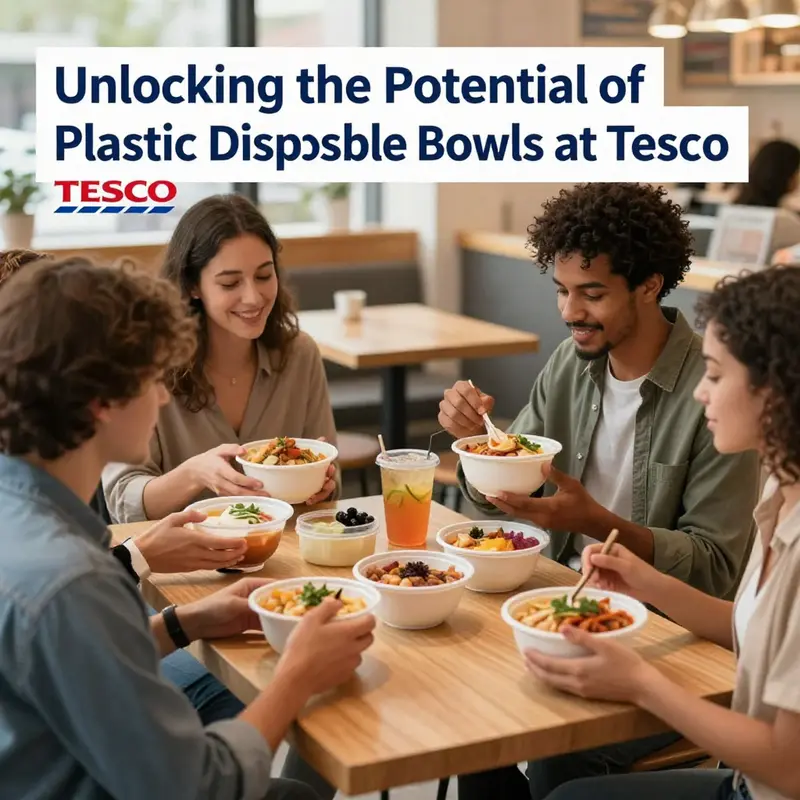
Consumer preferences are reconfiguring the everyday choices that surround even something as ordinary as a disposable bowl. The simplest form of packaging—a single-use container—has become a focal point for debates about waste, recycling, and the true cost of convenience. In this evolving landscape, retailers like Tesco are not merely reacting to shopper attitudes; they are actively testing and signaling the kinds of packaging that can align with a broader social shift toward sustainability. This shift is not about abandoning practicality but about reimagining practicality in a way that reduces environmental impact without sacrificing the ease that consumers expect from takeout and prepared meals. The implication for plastic disposable bowls is clear: demand is being recalibrated, and the marketplace is responding with a menu of alternatives that emphasizes paper, returnable or reusable systems, and smarter packaging that signals responsible choices while preserving user experience.
A tangible thread in this narrative is Tesco’s strategic move to replace certain plastic packaging with paper options for its own-brand foods. While the specific switch referenced pertains to pasta products, the decision mirrors a wider sentiment among consumers who increasingly associate plastic with waste and harm to the environment. Paper packaging is not presented as a cure-all, but as part of a broader portfolio of packaging strategies that retailers deploy to reduce reliance on conventional plastics and to communicate to shoppers that sustainability is a genuine priority. The broader takeaway for plastic disposable bowls is that shoppers are not simply choosing convenience for its own sake; they are weighing packaging as part of a product’s overall value proposition, and the perceived environmental footprint of a container now contributes to that value. In practice, this means that bowls and other single-use items are no longer assessed only by cost or usability but also by their end-of-life story and the ease with which they can be recycled or repurposed.
A complementary and increasingly influential strand is the rising interest in reusable packaging. A widely cited development in the sector is Tesco’s reported testing of a reusable packaging program in ten stores in the East of England. The aim, described in industry analyses, is to push toward a zero-waste philosophy by enabling consumers to return packaging for cleaning and reuse rather than discarding it after a single use. This initiative is not a one-off experiment; it signals a shift in Tesco’s long-range packaging strategy and provides a preview of how bowls—whether used for salads, soups, or snacks—could be integrated into a system that favors reuse over disposal. Consumers are showing a clear appetite for options that extend the life of a product’s container, reduce material throughput, and create a visible link between purchase and waste reduction. The implication for plastic disposable bowls is profound: if reuse becomes more common and accepted, the demand for traditional single-use plastic bowls could shrink, even as demand for reusable bowl systems grows. The BBC’s coverage of Tesco’s test program underscores this directional shift and helps frame the broader market context in which disposable bowls operate.
In this context, the role of packaging choices extends beyond the container itself. It encompasses design for reuse, compatibility with recycling streams, and alignment with consumer values about environmental stewardship. Consumers are increasingly aware of plastic’s environmental footprint, including concerns about litter, wildlife impacts, and microplastics. Paper bowls, compostable options, and reusable systems offer a package of responses that address these concerns while preserving the practical benefits that shoppers expect—lightweight, leak-resistant, microwave-safe, and easy to transport. The trend toward paper and reusable solutions is not merely a substitution of materials; it reflects a re-prioritization of how packaging contributes to a product’s overall sustainability profile. In turn, this re-prioritization nudges suppliers and retailers to invest in materials science, supply chain integration, and consumer education that clarifies how end-of-life choices are managed.
The current market dynamic also invites attention to how consumers actually use disposable bowls in daily life. In many households, a single bowl can serve multiple purposes across meals and gatherings, so the value of a disposable option often hinges on its reliability as a practical tool rather than a symbol of convenience alone. Here, the conversation returns to how well a packaging solution can perform under real-world conditions: does it stay leak-free when carrying liquids, is it microwave-safe for reheating, does it hold heat without becoming dangerously hot to handle, and can it be disposed of in a way that fits with local recycling or composting capabilities? These are the kinds of operational questions that shape perceptions of value and influence whether consumers prefer one option over another. When retailers emphasize paper or reusable pathways, they also signal an acknowledgement that performance cannot be sacrificed in the pursuit of sustainability. In other words, the research and testing around packaging must demonstrate that eco-friendly choices can meet or exceed the practical standards that shoppers expect from disposable bowls.
This convergence of consumer preferences and retailer strategy fosters a broader sense of agency among shoppers. People do not just vote with their wallets; they vote with their routines, their willingness to participate in return or take-back programs, and their readiness to choose packaging that offers clearer at-a-glance information about end-of-life options. The shift away from conventional plastic toward paper and reusable systems is as much about creating transparency and trust as it is about reducing material usage. When a retailer communicates a clear path for recycling or reuse, it helps customers feel confident that their everyday choices contribute to meaningful environmental outcomes rather than simply shifting the burden elsewhere. In this light, disposable bowls become a small but telling element of a larger ecosystem that ties together product design, consumer behavior, and corporate responsibility.
To illustrate how these themes play out in practical terms, consider the growing availability of alternative takeaway packaging across the market, including options that emphasize sustainability in design, materials, and lifecycle management. The choice set increasingly includes paper-based containers, compostable linings, and packaging designed for easy cleaning and return in reusable programs. For shoppers who routinely rely on disposable bowls for meals on the go, this availability matters. It adds to a toolkit of options that can help households reduce their environmental footprint without sacrificing convenience. The shift also signals opportunities for suppliers who can offer packaging solutions that combine durability with recyclability or reusability, a balance that continues to challenge and inspire the packaging sector.
In keeping with this broader trajectory, retailers and manufacturers are experimenting with how best to present these options to consumers. Messaging that highlights recyclability, compostability, or reuse can influence perceptions and choices at the point of purchase. Yet credible claims about end-of-life outcomes require robust waste-management infrastructure and consumer participation. The tension between aspiration and practice—between how packaging is designed and how it is actually disposed of—remains a central concern for policymakers, researchers, and industry observers alike. When a major retailer steps into reusable packaging, it draws attention to the practical steps needed to make such programs scalable and durable. It also invites dialogue about how to support households that lack convenient access to recycling or return systems. In that sense, the story of plastic disposable bowls at a large grocery chain is really a proxy for a larger conversation about how modern economies can accommodate heightened environmental expectations without compromising everyday practicality.
Within this evolving setting, a single link can illuminate how packaging ecosystems are expanding beyond the confines of any one product category. For readers seeking a concrete example of how the packaging landscape is embracing reuse and sustainability, a resource focused on takeaway packaging options and theme-party disposables offers insight into the kinds of products and systems retailers may incorporate in the near future. See the internal link here: custom-takeaway-packaging-supplies-disposable-tableware-for-theme-party. This reference points to a broader catalog of solutions that demonstrate how flexibility, aesthetic appeal, and environmental considerations can coexist in packaging design, reinforcing the idea that even everyday items like bowls are part of a thoughtfully engineered sustainability conversation rather than mere afterthoughts in a convenience-driven marketplace.
The chapter’s synthesis points toward a practical takeaway: the future of plastic disposable bowls is unlikely to be defined by a single material solution but by an array of packaging strategies that recognize diverse consumer contexts. Paper alternatives may be favored for many everyday uses, especially where end-of-life outcomes are straightforward and supported by recycling or composting infrastructure. Reusable systems may become more common in contexts such as prepared meals and self-serve formats where the costs and logistics of return programs can be justified by scale and user engagement. In this sense, the Tesco example is not about abandoning plastic altogether but about reconfiguring how bowls fit into a circular or semi-circular packaging model that emphasizes responsibility, usability, and transparency. The challenge for the industry remains clear: to deliver packaging that meets the practical demands of modern life while actively reducing environmental harm, and to communicate those efforts in a way that resonates with shoppers who increasingly demand purpose from their purchases.
External resource: https://www.bbc.com/news/business-68543297
Final thoughts
The exploration of Tesco’s plastic disposable bowls reveals a wealth of options and considerations for businesses in need of efficient solution. Understanding their availability, pricing trends, and the consumer preferences surrounding these products can significantly enhance your operational capabilities. Armed with this knowledge, businesses can make informed purchasing decisions that align with both their service goals and environmental commitments while responding effectively to market trends.