
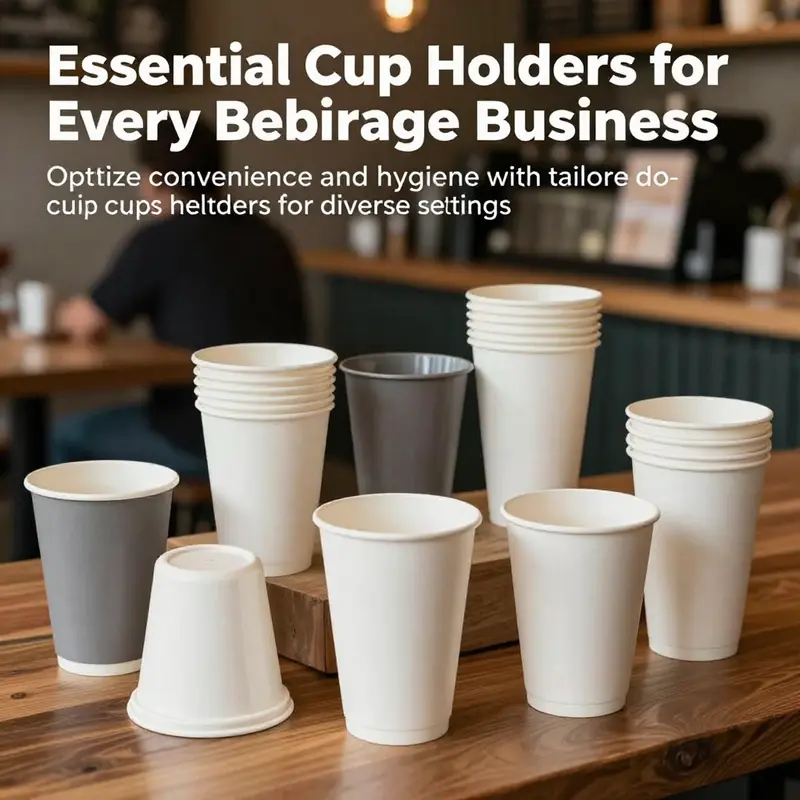
As beverage trends rise and the demand for convenience grows, understanding the role of plastic disposable cup holders becomes crucial for businesses across various sectors including bubble tea shops, catering services, and corporate environments. These holders are not just practical solutions for conserving space and ensuring hygiene, but they also enhance customer experience in restaurants and food trucks. By exploring specialized designs like wall-mounted holders, countertop trays, and eco-friendly options, you’ll see how choosing the right cup holder can significantly impact your operational efficiency and brand image.
Rising Above Counter Clutter: Wall-M Mounted Cup Holder Solutions for Hygienic, Efficient Environments
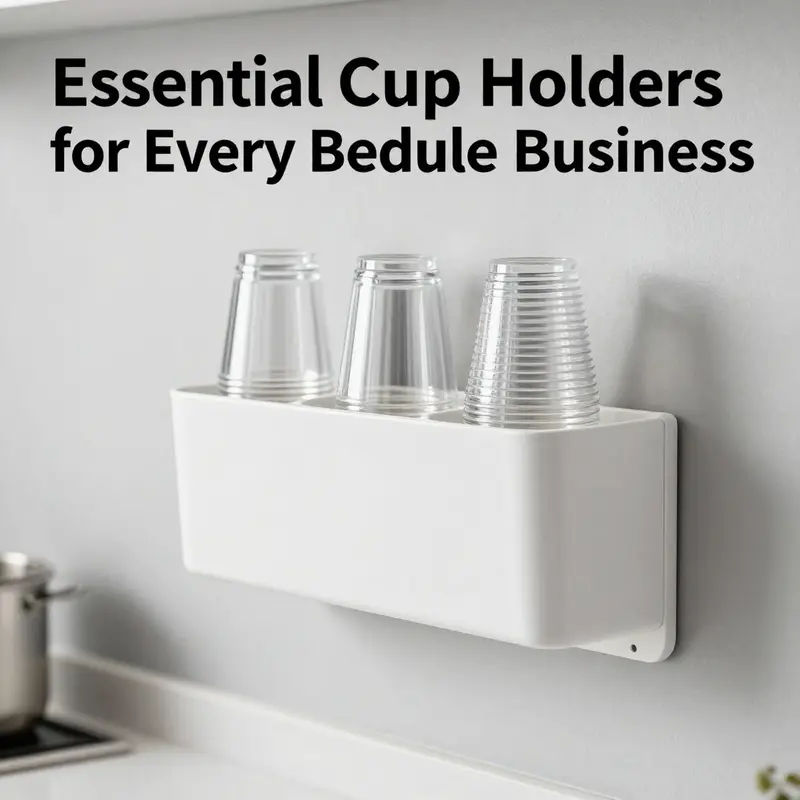
Wall-mounted plastic disposable cup holders offer a practical, space-saving path forward for modern workspaces and service areas. They optimize vertical space and create a hygienic workflow by keeping cups clean and readily accessible. In kitchens, break rooms, restrooms, and service counters, a well-chosen wall-mounted dispenser can transform a cluttered countertop into a calm, efficient station. The design logic behind these solutions centers on simplicity, durability, and ease of use. Materials are chosen for a careful balance of light weight, stiffness, and cost-effectiveness. Durable plastics like polypropylene and ABS are common because they resist moisture, withstand daily handling, and tolerate the frequent cleaning cycles that busy environments demand. Such robustness translates into fewer maintenance headaches and longer intervals between replacements, a practical consideration for offices and catering operations where downtime is costly. The aesthetic is equally important. A wall-mounted unit tends to convey order and cleanliness, with a clean, minimalist silhouette that integrates with diverse interiors—white, transparent, or neutral-toned housings that recede rather than shout for attention. In high-traffic settings, the visual calm of a well-organized dispensing station can subtly influence how people approach hydration or refreshment, promoting a smoother flow and reducing the instinct to pick up cups from a crowded countertop where the risk of contamination or spills is higher. The core benefit is not merely saving counter space; it is enabling a hygienic, efficient, and repeatable user experience that teams can rely on during peak moments, such as morning rushes, shift changes, or catering events where the tempo of service matters as much as the cups themselves.
A central advantage of wall-mounted designs is their versatility. They are adaptable to a range of environments—from compact home kitchens to expansive corporate break rooms and busy coffee stations—without sacrificing accessibility. The vertical installation supports the natural human habit of reaching for a cup at waist or shoulder height, a comfort zone that reduces bending and reaching, thereby contributing to a safer, more ergonomic workflow. This ergonomics-focused approach matters in environments where staff rotate through station duties or where volunteers manage service lines at events. By placing cups at a stable, consistent height, these dispensers help minimize spill potential and spillage-related messes, which in turn lowers cleaning costs and reduces breakage waste over time. Hygiene, of course, remains a focal point. The wall enclosure often features a dust-proof, transparent or semi-transparent window or cover that shields cups from airborne dust and kitchen humidity while still allowing quick visual inspection. Most models are designed for easy cleaning, with smooth interior surfaces and minimal seams where grime can accumulate. This simplicity supports a rapid wipe-down routine between shifts, an attribute that resonates in fast-paced offices, clinics, or educational facilities where time is precious and cleanliness is a non-negotiable standard.
When considering wall-mounted options, a few design features become especially meaningful. Dual-dispenser functionality, for example, dramatically reduces wait times during peak periods. In a busy facility, having two cups available at once can streamline service and improve throughput, particularly for environments that serve hot beverage stations or cold beverage dispensers in tandem with lids and sleeves. A hands-free element—such as a built-in smartphone holder or a small shelf that accommodates a staff device—supports multitasking without compromising the flow of service. In many workplaces, staff must consult digital schedules, check inventory, or communicate with teammates while restocking cups; a built-in holder minimizes the need to divert attention away from the task at hand, helping to maintain a steady, efficient rhythm throughout the day.
Installation is another practical dimension that many managers weigh. Self-adhesive mounting systems offer a tool-free setup that is ideal for temporary configurations in a classroom, event space, or pop-up cafe. For more permanent installations, screw brackets or magnetic mounting options provide secure attachment and long-term stability. The choice between adhesive, screw, or magnetic mounting often hinges on the surface material, the expected load, and whether the unit must be repositioned. A well-chosen solution accommodates routine maintenance as well. Removable panels or easily accessible mounting points simplify the process of cleaning and refilling, ensuring that the dispenser remains inviting and hygienic over time. The modularity of many wall-mounted systems also enables operators to adapt to evolving needs. If a venue pivots from single-use cups to a broader range of sizes, or if branding or color coordination becomes part of the interior refresh, a modular design supports these transitions with minimal disruption and cost.
The capacity of wall-mounted holders is another practical consideration that affects planning and budgeting. While configurations vary, it is common to encounter solutions capable of supporting multiple cups at once, with the ability to replenish from above or behind the unit to minimize handling. Some compact, wall-centered designs can hold dozens of cups suitable for standard disposable cup diameters, offering a balance between space efficiency and throughput. This capacity is particularly valuable in offices with long corridors or busy break rooms where staff may not have time to replenish frequently. What matters most is aligning the dispenser’s capacity with the anticipated cadence of use: a high-traffic site benefits from a larger reservoir and a quick-dispense mechanism, while a smaller office can thrive with a streamlined model that emphasizes minimal maintenance and clean aesthetics.
Equally important are the dimensional and aesthetic specifications that influence alignment with existing interiors. Neutral tones—white, black, gray—are common and work well with most decors. Some designs optionally feature translucent or clear enclosures to provide a quick visual cue about cup levels, which helps staff anticipate refill needs before a station runs dry. The interior geometry should avoid sharp corners and crevices that could trap moisture or dust, favoring smooth contours that are easy to wipe and sanitize. The user experience is enhanced when the exterior finish resists fingerprints and smudges, particularly in office zones or hospitality contexts where high touchpoints are frequent. Finally, a few manufacturers offer colorways or finishes to harmonize with branding or interior schemes, a subtle but meaningful way to extend the value of a hygienic station beyond function alone.
From a systems perspective, wall-mounted cup holders can be integrated into broader hydration or beverage ecosystems. In a corporate setting, a wall-mounted station complements other hygienic touchpoints—sanitizing stations, compact refrigerators, and hot beverage brewers—creating a cohesive, streamlined beverage hub. For catering or event environments, the wall solution can be paired with corresponding lid dispensers, straw holders, or napkin dispensers placed at convenient heights to support quick, clean, and organized service. This synergy reduces clutter, promotes consistent service flows, and helps event organizers and facility managers sustain a polished guest experience across multiple stations.
Eco-conscious considerations are increasingly relevant as operators seek to balance convenience with environmental responsibility. While many wall-mounted units are crafted from durable plastics designed for longevity, some venues explore eco-friendly alternatives for specific contexts. Disposable paper cup holders, for instance, offer an option in hot beverage settings where compostable or recyclable solutions align with sustainability goals. These eco-focused choices may have distinct maintenance or mounting considerations but can be appropriate in environments that prioritize green procurement practices and transparent branding about responsible waste management. The choice between plastic and paper-based options often reflects a broader sustainability strategy, logistical constraints, and the specific beverage workflows in a given space.
In terms of procurement and broader supply chain considerations, the decision to adopt wall-mounted cup holders intersects with the rhythm of daily operations and the stability of the supply network. Some organizations source wall-mounted dispensers as part of a larger package of premium disposable cups and related containers—often with customization options that support branding and event theming. For workplaces or event operations that require bulk orders or branding alignment, the ability to coordinate with a supplier that offers compatible packaging and tableware becomes a strategic advantage. Additionally, the availability of ready-to-install solutions that require minimal tools or special skills lowers the barrier to rapid deployment, enabling facilities teams to implement new stations during renovations or seasonal updates without significant downtime.
For teams looking to connect these practical advantages with a broader narrative of hospitality and service quality, consider how the wall-mounted approach aligns with branding and guest experience. A station that feels thoughtfully designed—consistent finishes, clean lines, and predictable interactions—contributes to perceived professionalism. The subtle psychology of ease and cleanliness can influence how guests perceive a space, whether it is a modern corporate kitchen, a bright campus break room, or a bustling catering operation. The station becomes more than a utility; it becomes part of the environment’s choreography, guiding behavior and supporting smooth interactions between people, beverages, and the spaces they inhabit.
To explore broader packaging and disposable tableware options that complement wall-mounted cup stations, you can explore related resources that focus on customizable takeaway packaging and theme-party tableware. This context helps illustrate how a well-coordinated set of dispensing and serving tools can support a consistent experience across different events and environments. See for instance a practical guide to custom takeaway packaging supplies—disposable tableware for theme party, which offers a connected perspective on how packaging, branding, and serviceware can align with the operational efficiencies of wall-mounted systems at scale. custom takeaway packaging supplies—disposable tableware for theme party.
In summary, wall-mounted cup holders embody a pragmatic convergence of space efficiency, hygiene, and throughput that resonates across offices, kitchens, and event spaces. They provide a reliable, easy-to-clean solution that remains unobtrusive while delivering tangible improvements in workflow and guest experience. The emphasis on durable materials, versatile mounting options, and thoughtful design details ensures that these systems can adapt to changing needs—whether a company doubles its beverage throughput, a campus refresh introduces new branding, or an events team scales up service for a multi-day conference. As with any component of a larger service ecosystem, the real value emerges when the dispenser is selected with an eye toward maintenance, compatibility with neighboring stations, and the rhythms of daily usage. When these factors align, the wall-mounted cup holder becomes a quiet workhorse—one that supports clean hands, quick access, and a steady cadence of service without adding clutter or friction to the journey from cup to consumer.
External reference for further technical insight on high-throughput wall-mounted solutions can be found here: https://www.alibaba.com/product-detail/Anso-A5138-Automatic-Cup-Dispenser-Wall_1601297481875.html?spm=a2700.160381.0.0.5d6a6b1eXmKjYq
null
null
Reshaping Convenience: Eco-Friendly Pathways for Plastic Disposable Cup Holders in a Waste-Conscious World
The daily rhythm of offices, cafés, and event spaces hinges on one small but telling detail: how a cup is kept upright, clean, and accessible without inviting chaos. Plastic disposable cup holders were born out of that need for speed and hygiene. They stack neatly, resist splashes, and travel with minimal fuss. Yet as the world pivots toward more sustainable practices, the same simple device that once symbolized convenience now invites a second look. The conversation today about plastic disposable cup holders transcends durability and cost. It threads through consumer expectations, supply-chain realities, and the broader imperative to minimize waste. A well-designed eco-friendly alternative can preserve the benefits of a disposable setup while aligning with commitments to reduce single-use plastic, lower leakage, and support a circular economy. In this chapter, we explore how materials, design strategies, and business practices converge to reshape what it means to host beverages without adding to the waste stream. The focus remains practical: how cup holders can function smoothly in high-velocity environments, how they can be produced and sourced responsibly, and how they can reinforce a brand’s sustainability narrative without sacrificing performance.
First, it helps to ground the discussion in the core role of a cup holder. In fast-service spaces, a holder is not merely a decorative accessory; it is a sanitary interface between the consumer and a disposable cup. It guards against drips that would stain counters and floors, it stabilizes a cup during transit or a quick refill, and it reduces contact points, an important factor in hygiene-sensitive settings. The traditional plastic forms — whether mounted, tray-based, or freestanding — excel at being light, inexpensive, and easy to clean. When businesses start to evaluate alternatives, the evaluation naturally shifts from “Will it hold up?” to “Will it perform reliably under volume, heat, and grease exposure, and can it do so without creating new waste problems?” In practice, that means pairing materials that can withstand beverage temperatures, resist moisture, and still be compostable or recyclable where infrastructure exists.
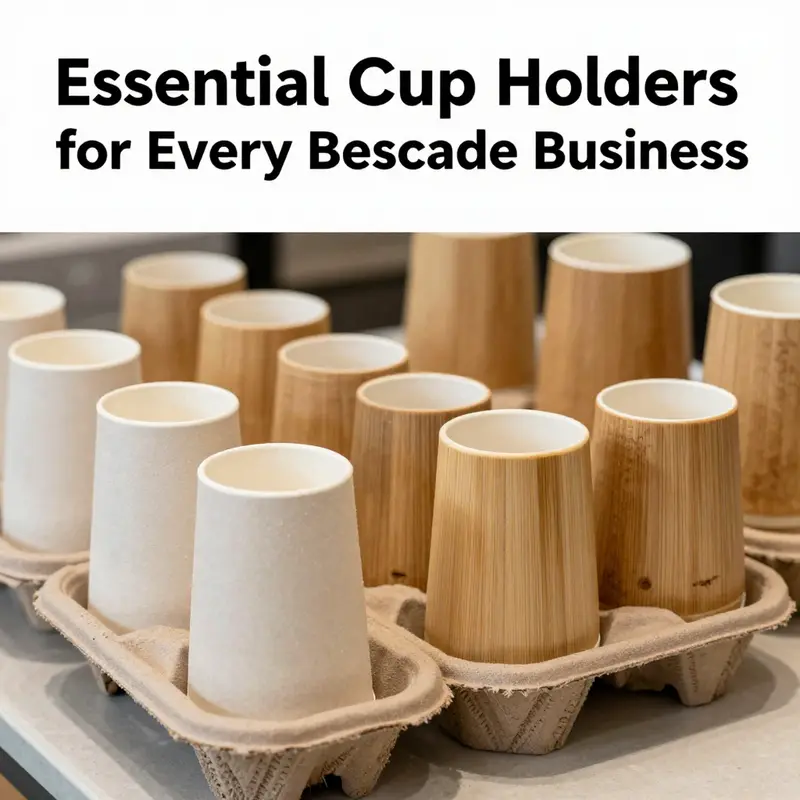
The category’s potential for sustainability rests on a spectrum of materials that can replace or complement conventional plastics. Biodegradable and compostable options have matured enough to offer credible substitutes in many contexts. Paper, for instance, brings a renewable-feel alongside easily compostable properties in systems that can handle the end-of-life process. Bagasse — a sugarcane byproduct — delivers rigidity and moisture tolerance while remaining biodegradable, which makes it a compelling candidate for hot drinks and messy beverage scenarios. Bamboo adds another dimension, bringing rapid renewability and robust mechanical performance. It is a familiar, familiar-tactile material that can be molded into cup-holding shapes with a natural aesthetic that often aligns well with premium coffee concepts. Then there is polylactic acid, or PLA, a plant-derived plastic that can be molded into familiar holder geometries while offering improved end-of-life characteristics in appropriate industrial composting facilities. These options aren’t billboard replacements for every situation, but they demonstrate a trajectory where the best solution depends on the product’s lifecycle context, the local waste-management landscape, and consumer expectations.
One of the enduring questions concerns performance. Eco-friendly cup holders must meet the same functional benchmarks as their conventional counterparts: they must be strong enough to hold a cup without bending under weight, compatible with lids, and capable of staying clean during repeated use in a busy environment. The challenge with some bio-based materials is balancing rigidity with cost, or ensuring that a holder remains stable when exposed to hot beverages and condensation. Grease resistance is another factor, particularly for holders used with hot drinks or in consumption settings where customers may resist tipping or accidental leaks. Experimental blends and engineered composites have emerged to address these needs, combining natural fibers with thin, moisture-resistant barriers to create a product that can perform under the same stress tests as traditional plastics while still offering a lower environmental footprint. The industry’s evolution shows that it is possible to design with a dual emphasis on performance and responsibility, provided there is clear alignment among material choices, production methods, and the end-of-life pathway.
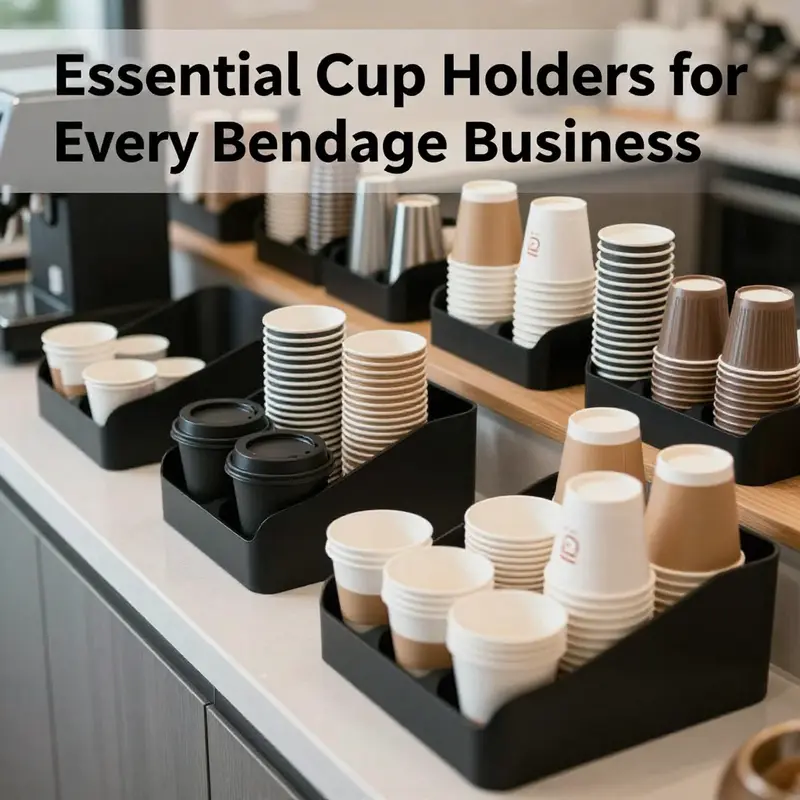
Design thinking becomes crucial when we shift from material science to practical deployment. A cup holder must integrate with existing cup designs, lids, and dispensing setups. It should promote quick handling by staff yet minimize contact with the consumer’s hands during a busy service window. It should also accommodate a range of cup diameters and be stackable for efficient storage in both wall-mounted dispensers and countertop trays. In the eco-friendly realm, designers often prioritize features that reduce waste and simplify recycling or composting. For instance, a holder might be engineered with a minimal number of materials that can be separated at end-of-life, or it might be produced from a single bio-based polymer to simplify sorting. Aesthetics matter too: a holder that looks and feels premium can reinforce brand values around sustainability, without creating a perception that eco-friendly equals fragile. The goal is to preserve the user experience while reducing the ecological footprint—an objective that can be achieved through thoughtful material selection, clever geometry, and a careful balance of cost versus durability.
The market has begun to respond with a blend of ready-made and customizable options that embody these principles. In many coffee-focused environments, there is a growing appetite for custom-branded, compostable cup holders that can carry a shop’s identity while being suitable for compostable cups and liners. For food trucks and mobile catering, the portability and disposability of a cup holder align with the necessity of quick turnover and easy cleanup. In delivery operations, where efficiency and hygiene converge, eco-friendly options can cut down on post-delivery cleanup and align with a customer’s expectation of responsible service. The financial calculus is never far from these decisions. While the upfront unit price for compostable or bio-based holders is often higher than traditional plastics, the calculation frequently shifts when considering waste-disposal costs, sterilization logistics, and the potential for enhanced customer goodwill. The possibility of branding and premium positioning can translate into higher perceived value in the eyes of consumers, which, in turn, supports a business case for investing in more sustainable solutions.
The lifecycle of an eco-friendly cup holder matters just as much as its manufacturing. A comprehensive approach looks beyond the single-use moment and considers how the product fits into the broader waste-management ecosystem. Some ecosystems emphasize industrial composting, where certain bio-based polymers break down under controlled, high-heat conditions. Others rely on recycling streams that can accommodate certain bioplastics if they are clearly labeled and properly sorted. The design goal for many suppliers is to simplify this end-of-life step for the consumer: clear labeling, compatibility with common disposal streams, and, when possible, a return or reuse option that keeps the product out of landfills altogether. In practice, consumer education plays a pivotal role. Even compostable or recyclable materials fail to deliver benefits if users do not understand how to dispose of them properly. Communication, labeling, and customer-facing guidance thus become integral to the sustainability equation, not afterthoughts.
From a supply-chain perspective, these eco-friendly options can be integrated into existing production lines with manageable disruptions. Many suppliers are now able to offer modular lines that produce either a traditional plastic or a bio-based holder without changing core tooling. This flexibility matters for businesses that need to adapt to seasonal demand or pilot a sustainability initiative without risking operational downtime. The minimums and lead times associated with new materials or molds can still present a hurdle, but the trajectory is toward more accessible options, shorter cycles, and better output consistency. In other words, switching to an eco-friendly cup holder need not be a binary leap; it can be a staged transition that respects current workflows while progressively reducing environmental impact.
The branding and consumer perception piece deserves attention as well. A growing segment of the market seeks environmentally responsible packaging that aligns with a broader sustainability message. A compostable cup holder, properly deployed, communicates to customers that a business treats waste seriously and values clean, responsible operations. It can become part of a larger narrative that includes compostable cups, lids, and wrapping, all of which reinforce a cohesive sustainability strategy. This is where partnerships between cup-holding design and takeout packaging brands become powerful. When a café or event planner can offer a coordinated set of products from a single supplier—each selected for compatible end-of-life plans—the overall environmental footprint is reduced more effectively than with piecemeal choices.
In this evolving landscape, an important realism emerges: not every environment is ready for every eco-friendly option. Some settings demand extremely high heat resistance or unparalleled mechanical stability, while others prioritize rapid disposal at outdoor events where composting facilities may be limited. The answer, again, is not a single universal material, but a toolkit. A toolkit that includes paper-based and bagasse-based holders for hot beverages, bamboo composites for mid-range durability, and PLA-based designs for controlled industrial composting contexts. A toolkit that also includes guidance for staff on proper usage, storage, and disposal. The best solutions come when designers, manufacturers, and end users collaborate to align material properties with operation realities, regulatory expectations, and waste-management capabilities.
The potential for lifecycle-sound design also invites a rethinking of how these holders sit within a broader suite of takeout and on-site consumables. The shift toward eco-friendly cup holders is part of a larger trend: a move away from single-material dependencies toward systems that optimize for end-of-life outcomes. This means considering lids, straws, napkins, and even the containers themselves in a holistic manner. When done well, this systems-thinking approach yields a set of products that not only serve their practical purposes but also clarify a company’s stance on environmental stewardship. The end result is a consumer experience that feels effortless, even as a chain of responsible decisions unfolds behind the scenes.
To illustrate how these ideas translate into practical choices, consider a hypothetical but representative scenario. A mid-sized café chain is piloting compostable cup holders made from bagasse for paper cups and a compatible, heat-resilient PLA blend for hot beverages. The chain installs wall-mounted dispensers in each location and updates countertop trays to accept both the new holders and corresponding lids. The shift is gradual: initial orders focus on one or two locations, with feedback loops that inform adjustments to stacking height, ease of grabbing, and compatibility with existing cup diameters. Because the design emphasizes minimal mixed-material complexity, sorting remains straightforward for end-of-life facilities. The café also offers a branded option, leveraging the holder’s surface area as a canvas for messaging about responsible sourcing and local partnerships. In time, the chain expands the program to other sites, while maintaining a careful eye on costs and waste metrics. The result is not merely a greener choice; it is a better operational fit that surprise-cends expectations around what sustainability can look like in a busy retail environment.
A related thread worth noting concerns consumer education and brand integrity. When customers encounter clearly labeled, compostable alternatives, they become more likely to participate in responsible disposal. In turn, this reinforces a broader cultural shift toward thinking about waste as a resource rather than as an afterthought. The dialogue between product design and consumer behavior is not a one-way street; it is a feedback loop. Positive experiences with eco-friendly holders can amplify trust in a brand’s sustainability commitments, encouraging repeat business and word-of-mouth advocacy. Conversely, if disposal infrastructure lags behind product availability, there is a risk of undermining the very benefits these innovations promise. Therefore, the rollout of eco-friendly holders should be accompanied by transparent guidance, visible labeling, and supportive waste-management partnerships that make the end-of-life process intuitive for customers and staff alike.
Within the broader discourse on sustainable takeout solutions, it is also important to acknowledge the value of hybrid approaches. For some venues, a mixed strategy—maintaining a core of conventional, highly durable holders for peak periods, alongside a curated line of compostable alternatives for steady, ongoing demand—can deliver the best balance of performance, cost, and environmental impact. Hybrid strategies acknowledge that the market is not monolithic. They empower operators to tailor their choices to the specifics of their customer base, climate, and logistical constraints. The net effect is a more resilient system, one that can scale with demand while remaining faithful to environmental goals.
As we look ahead, the horizon for eco-friendly cup holders includes innovations in material science, manufacturing efficiency, and cross-brand collaboration. Advances in bio-based composites and improved composting standards may unlock new combinations of strength, heat tolerance, and end-of-life clarity. At the same time, better data sharing across suppliers can help operators compare performance, total cost of ownership, and waste-diversion rates with confidence. The path forward invites experimentation, but it also requires a shared vocabulary so that suppliers, distributors, and end users can align expectations and measure progress in meaningful ways. In this sense, the cup holder is more than a tool; it becomes a signal of a business’s operational maturity and environmental ambition.
For readers seeking a concrete connection to the broader ecosystem of eco-friendly packaging options, a related resource offers insights into certified compostable and reusable cup-holder options. This external reference provides a lens on how verified solutions are formulated and tested to meet composting standards, ensuring that what ends up in a disposal stream is actually capable of breaking down in appropriate facilities. This resource can complement the practical decisions outlined here by offering standards-based guidance that helps ensure sustainability claims translate into real-world outcomes.
In sum, eco-friendly alternatives in plastic disposable cup holders are not about replacing convenience with sacrifice. They are about reimagining how everyday tools can support speed, hygiene, and efficiency while aligning with responsible waste management. The materials, design strategies, and collaboration practices discussed here illuminate a path where sustainability enhances, rather than disrupts, the operational flow of modern service environments. When organizations adopt thoughtful material choices, invest in robust design, and align disposal pathways with consumer behavior, they unlock a cycle of improvements that benefits customers, workers, and the planet. The journey from traditional plastic holders to eco-conscious options is iterative and context-dependent, but the destination—a cleaner, more responsible approach to everyday convenience—remains clear. And as these initiatives spread, they help redefine what is possible when form meets function in the service of a healthier world.
Internal reference for further exploration: eco-friendly-disposable-3-compartment-food-grade-packaging-box-for-fast-food-high-quality-takeout-boxes-for-fried-chicken-french-fries-packaging.
External resource for broader context: https://www.ecoenclose.com/products/compostable-cup-holders
Final thoughts
In a world where convenience and hygiene are paramount, investing in the right plastic disposable cup holders can set your beverage business apart from the competition. By exploring wall-mounted, countertop, and eco-friendly designs, you can enhance not only the customer experience but also operational efficiency. Embrace these tailored solutions to streamline your serving process while resonating with the growing demand for sustainability.