
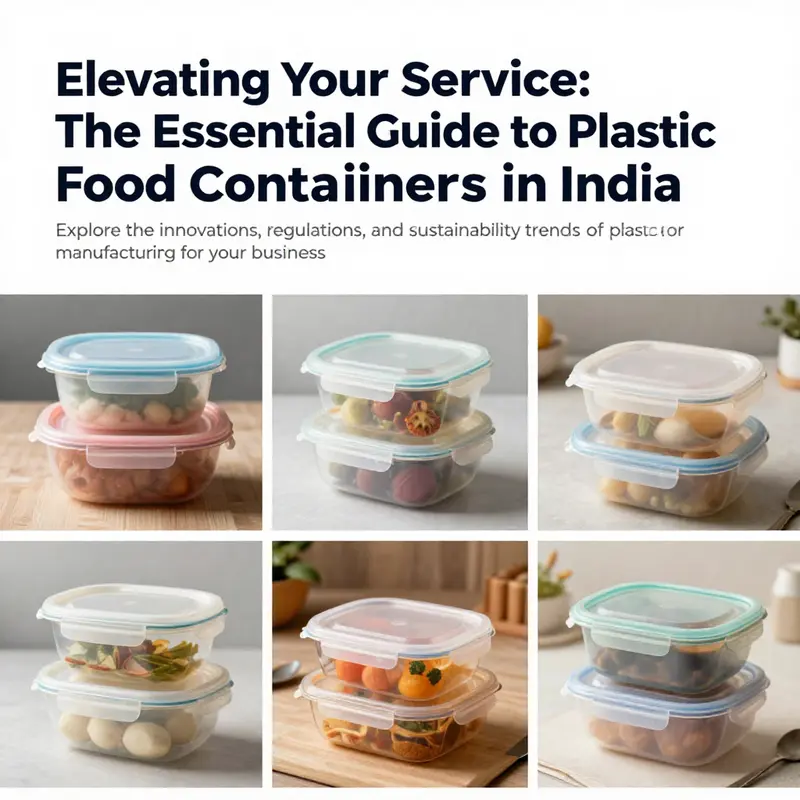
In the vibrant food and beverage landscape of India, efficient and safe packaging solutions play a pivotal role. As the demand for convenience grows among consumers, especially in the realm of ready-to-eat meals and beverages, the plastic food container manufacturing sector presents a wealth of opportunities. This article delves into the dynamic market landscape and key players such as 4 M Plaastech, highlighting their commitment to food safety and convenience. We will explore the technological advancements enhancing production efficiencies, the economic intricacies shaping this industry, and the regulatory frameworks that ensure compliance with safety standards. Additionally, as sustainability trends weave their way into the fabric of manufacturing practices, we will discuss how manufacturers are adapting to meet both consumer and environmental demands. Each chapter builds a clearer picture of how plastic food container manufacturers in India contribute meaningfully to the success of businesses in the food service sector.
India’s Plastic Food Container Market: Key Players, Market Forces and the Move Toward Sustainable Scale
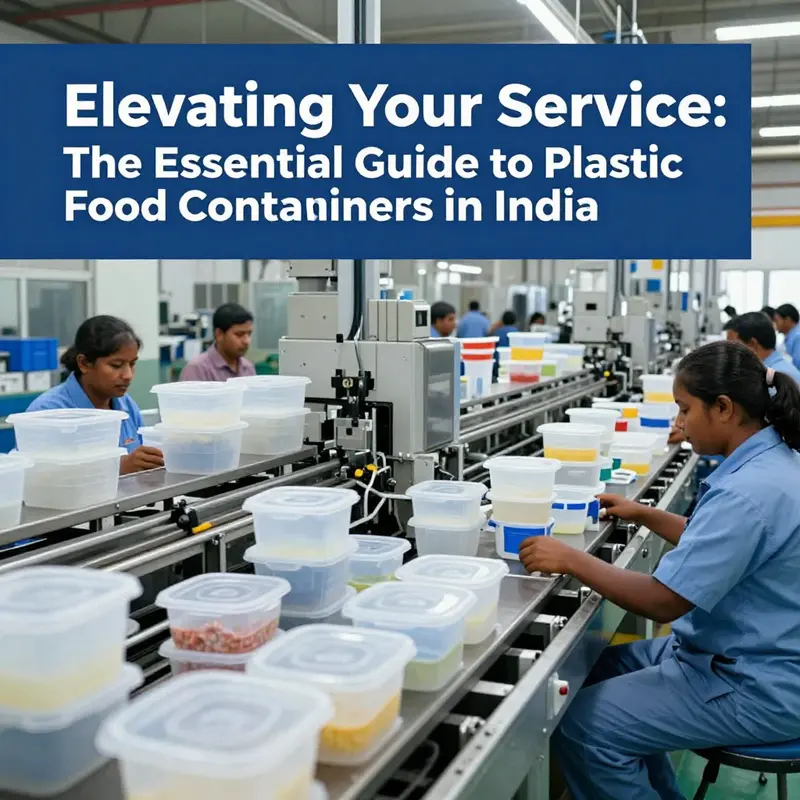
India’s plastic food container market is evolving rapidly, shaped by consumer habits and supply-side innovation. Urban migration, rising disposable incomes, and the surge in meal delivery have multiplied demand for containers that balance cost, hygiene, and convenience. Manufacturers now operate in a highly competitive arena where domestic firms and multinational corporations pursue scale, technology, and sustainability in equal measure.
Demand patterns have changed the shape of manufacturing. Restaurants, cloud kitchens, catering services, and packaged-food companies require high-volume, consistent supplies. Retailers seek retail-ready packaging with clear branding and barrier properties. Consumers increasingly expect leak-proof, microwave-safe, and recyclable containers. These varied requirements force manufacturers to be flexible across formats and materials. Common polymers used include polypropylene, polyethylene, PET, and biodegradable blends. Each material offers trade-offs between cost, thermal resistance, clarity, and recyclability, which manufacturers must manage every production run.
Scale matters. Large firms with integrated operations benefit from better raw material sourcing and advanced molding technology. They can absorb input price swings and invest in tooling, automation, and quality labs. These advantages translate into lower unit costs and faster turnaround. Domestic champions and international groups both stake claims in India. Some firms focus on full-package solutions across flexible and rigid formats, while others specialize in high-precision closures, multi-compartment trays, or clear display containers. At the same time, nimble regional manufacturers supply local foodservice networks, offering customization and faster lead times. This mixed structure supports both national retail chains and small-scale restaurateurs.
Regional hubs play a strategic role. Manufacturing clusters close to polymer suppliers, ports, or large consumer bases reduce logistics costs. Tamil Nadu, Gujarat, Maharashtra, and parts of the Delhi NCR area house clusters that combine tooling workshops, plastics processors, and packaging converters. These hubs enable manufacturers to source skilled labor experienced in injection molding, thermoforming, and blow molding. A notable domestic example operates out of Coimbatore, supplying a range of food containers and disposable packaging solutions for commercial and retail markets. Regional expertise often yields product innovation tailored to local cuisines and service formats.
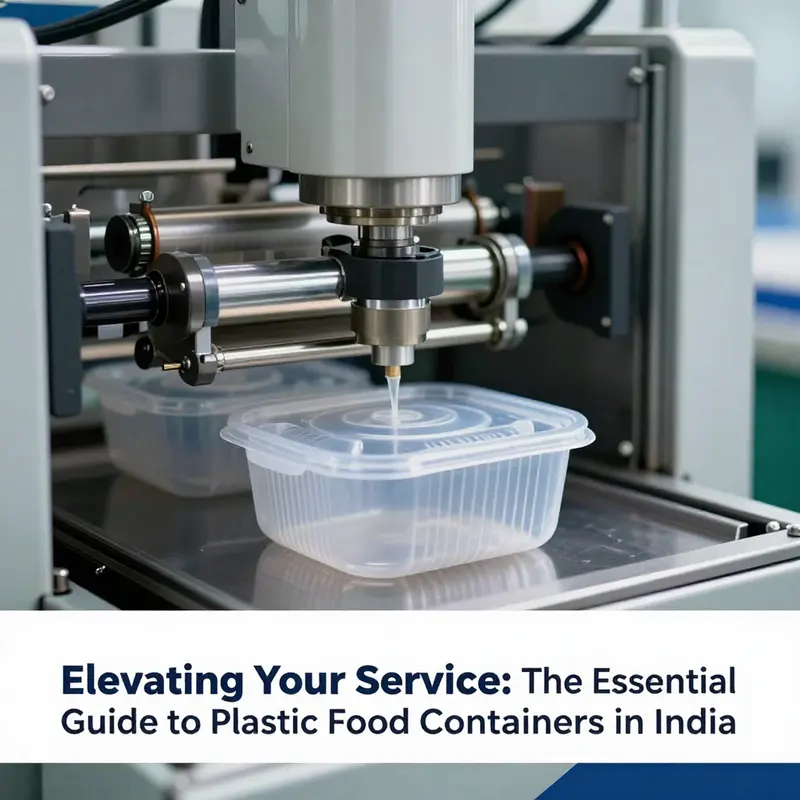
Technology is a key differentiator. Precision injection molding, multi-cavity tooling, and automated quality inspection cut production time and material waste. Thermoforming excels for shallow trays and clamshells, while injection molding yields tight-tolerance lids and stacking-friendly forms. Advances in barrier technologies and multi-layer constructions extend shelf life for prepared foods. Digital tooling design and rapid prototyping accelerate development of custom geometries. Leading manufacturers also integrate post-processing like ultrasound welding, heat sealing, and pad printing for branding. Those investments enable new product introductions without long delays.
Sustainability is reshaping strategy and product roadmaps. Pressure from regulators, large buyers, and end consumers pushes manufacturers to rethink material choices. Recycled content and post-consumer recycled (PCR) polymers are now common, though consistent PCR quality remains a challenge. Biopolymers and compostable blends gain traction for specific use cases, but cost and performance gaps limit widespread adoption. Lifecycle thinking prompts manufacturers to design for recyclability—minimizing mixed materials, using mono-polymers where possible, and simplifying closures. Industry players also pilot take-back and recycling programs to close material loops. These initiatives affect procurement, production processes, and market positioning.
Regulatory compliance and food-safety standards are non-negotiable. Manufacturers must adhere to national food safety guidelines and ensure materials are food-grade. Routine testing for migration, heavy metals, and hygienic packaging practices is essential. Certification and traceability have become selling points. Larger clients often require documented compliance, audits, and third-party testing before awarding contracts. Investments in lab capacity and quality management systems therefore produce both safety and a commercial edge.
Supply chain dynamics create both risks and opportunities. Raw material prices tend to track global crude oil and regional demand cycles. Volatility compresses margins for manufacturers lacking hedging strategies or long-term procurement contracts. Freight costs and import duties further affect pricing, particularly for specialized additives or machinery. Conversely, proximity to a diversified supplier base reduces lead times and helps firms pivot when shortages occur. Vertical integration, where feasible, brings stability through captive resin compounding or in-house tooling.
Competition is also shaped by service offerings. Many buyers now expect turnkey support: design consulting, private labeling, rapid prototyping, and dedicated account management. Manufacturers that offer packaging engineering help clients reduce material usage and improve stackability. Those that supply matched lid-and-base systems or multi-compartment designs capture higher-value contracts. Small-volume customization for promotional runs remains a lucrative niche where local manufacturers excel.
Price pressure remains acute, especially at the lower end of the market. Commoditized containers compete on cost, and margins tighten when buyers prioritize price over differentiated features. To counter this, manufacturers pursue operational efficiency and product differentiation. Lightweighting reduces polymer use while keeping structural performance. Improved tooling increases cavity counts per cycle, reducing per-unit costs. Automation cuts labor dependence and improves consistency.
Market growth and future opportunities are clear. The expansion of meal delivery and ready-to-eat segments will sustain demand for disposable and reusable containers. Institutional catering, organized retail, and branded takeout services will continue to scale. At the same time, sustainability-minded procurement will open new avenues for higher-margin products. Manufacturers that can demonstrate recycled content, compostability, or certified food safety will gain preferential access to forward-looking buyers.
Yet challenges remain. Public scrutiny of single-use plastics has led to regulatory changes and localized bans, requiring frequent product re-evaluation. Consumer confusion around recyclability encourages clear labeling and better education. Recycling infrastructure is uneven across regions, complicating end-of-life management for many plastic containers. These systemic issues make collaboration between manufacturers, waste managers, and policymakers essential.
Successful manufacturers view these dynamics as interlinked. They balance short-term competitiveness with long-term resilience. Investments in technology, certification, and design for circularity improve market standing. Partnerships with material scientists, recyclers, and institutional buyers help align supply with future demand. Manufacturers also explore hybrid approaches, combining recyclable plastics with paper-based carriers or compostable inserts for specific use cases.
Practical tactics winning traction include modular design for material separation, standardized closures to ease sorting, and filler programs that blend PCR into virgin resin. Sales strategies increasingly emphasize lifecycle costs rather than upfront price. Demonstrating lower total cost through reduced product damage, improved stackability, and lower shipping weight resonates with large buyers. Digital catalogues and sample-on-demand services shorten procurement cycles and support rapid scaling for new customers.
Operational discipline matters. Manufacturers with robust forecasting, flexible capacity, and fast tooling cycles meet peak season surges better. Lean production reduces scrap. Predictive maintenance minimizes downtime. These disciplines matter most when customers demand short lead times for seasonal or promotional runs.
The market landscape is therefore a complex mix of scale economics, technological capability, regulatory compliance, and sustainability commitments. Companies that navigate these factors with agility win contracts and build lasting relationships. For buyers, that means more options and steady improvements in safety, functionality, and environmental performance. For manufacturers, it means continually reassessing raw-material strategies, production technology, and circularity initiatives to remain relevant.
For a focused example of small-format food containers, manufacturers frequently supply clear dispensable sauce containers. A practical supplier example is available for reusable and disposable small sauce pots, often used by foodservice operators and delivery platforms, see a supplier of plastic sauce jars with lids for illustration. For a broader, data-driven perspective on the industry’s competitive landscape and outlook, consult this market report: https://www.mordorintelligence.com/industry-reports/plastic-packaging-market-in-india
Technological Frontiers in Indian Plastic Food Container Manufacturing: From Smart Molding to Circular Packaging
The plastic food container industry in India stands at a crossroads where rising urban consumption, shifting dietary patterns, and an intensifying focus on safety collide with a global push for sustainability. In this landscape, manufacturers face the dual challenge of delivering hygienic, convenient packaging and aligning with tightening environmental expectations. The chapter that follows traces how technology is redefining production, materials, and business models in a sector that touches every corridor of the nation—from bustling metropolitan kitchens to rural supply chains. It is a narrative of incremental advances that cumulatively tilt the market toward greater efficiency, lower environmental impact, and stronger resilience against regulatory and competitive pressures. Instead of treating technology as a mere accelerant, Indian plastic food container makers are integrating it into a holistic approach that marries process optimization with responsible material choices, supplier collaboration, and design for end-of-life management.
At the heart of this transformation is a shift in manufacturing capability. High-efficiency injection molding machines, once the realm of large-scale operations, are now accessible to a broader spectrum of producers through modular automation. These machines, equipped with smart sensors and programmable logic that interfaces with plant-wide control systems, deliver precision that minimizes scrap and rework. The result is not just faster cycle times; it is a consequential reduction in material waste and energy consumption. In a sector where margins hinge on tight cost control and consistent performance, such improvements compound over months and years. The integration of automated quality checks, real-time process feedback, and adaptive tooling allows producers to respond quickly to material variability—an important consideration when switching between petrochemical feeds and bio-based alternatives. In practical terms, this means containers that reliably meet food-contact standards while consuming less power and generating less waste per unit. The implication extends beyond cost savings: more predictable production translates into steadier supply for food manufacturers, chefs, and retailers who depend on consistent packaging for brand integrity and consumer trust.
Material science is expanding the palette of choices available to Indian manufacturers, with a growing interest in biodegradable and bio-based polymers as a strategic response to environmental concerns and policy signals. Polymers derived from renewable sources, such as polylactic acid (PLA) and other bio-based formulations, offer the potential to lower cradle-to-grave carbon footprints without compromising hygiene or durability. Yet the adoption of these materials is not a simple substitution. It requires careful balancing of barrier properties, heat resistance, and regulatory compliance with food safety standards. For many applications, especially in microwavable or hot-fill contexts, material scientists and process engineers work collaboratively to tailor formulations and processing conditions that preserve performance. In practice, this involves rigorous compatibility testing with common food types, ensuring migration levels remain within permissible limits, and confirming that recycling pathways remain viable for mixed material streams. Across the value chain, this confluence of material innovation and process design points to a future where sustainable plastics are not an optional niche but a mainstream option that aligns with consumer expectations for clean labels and responsible packaging.
Digital technologies—especially digital twin concepts and AI-enabled quality control—are turning production floors into intelligent systems. A digital twin creates a living model of the manufacturing process, incorporating sensor data, material properties, machine health indicators, and environmental conditions. Operators can simulate changes in mold temperatures, cooling rates, cycle times, and automation sequences before implementing them in real-world runs. The payoff is twofold: first, product quality becomes more predictable, with fewer defects and tighter dimensional tolerances; second, the ability to run rapid what-if analyses accelerates the introduction of new packaging concepts without the cost and risk of trial-and-error on the shop floor. AI-driven quality control augments human inspection by flagging subtle deviations that can escape the naked eye, spotting trends that may indicate tool wear or material aging, and recommending preventive maintenance before a fault escalates into downtime. In combination, digital twins and AI-based QC elevate the consistency of food containers across batches and lines, which is a non-trivial advantage when scale and regulatory scrutiny increase.
One notable dimension of these tech shifts is their alignment with circular economy principles. Indian manufacturers are increasingly designing containers with end-of-life in mind. This means selecting materials that are more readily recyclable within existing waste streams, minimizing the use of multi-layer laminates that complicate separation, and incorporating design features that simplify cleaning, handling, and collection post-use. The circular economy narrative is not merely about recycling; it encompasses product design, packaging workflows, and partnerships across the value chain to create closed-loop systems. In practice, this might translate into take-back initiatives that retrain consumers to return containers for cleaning and reprocessing, or it could involve collaborating with recyclers to ensure shredded material can be reintegrated into new loops with consistent quality. The goal is to extend the lifecycle of packaging and reduce material leakage into landfills, while still preserving performance and safety.
The regulatory environment, too, is a driver and a partner in this transition. India’s Plastic Waste Management Rules and related incentives for green manufacturing are shaping investment signals for technology adoption. Compliance is no longer a guardrail but a catalyst for innovation. Manufacturers that integrate regulatory requirements with their R&D agendas can optimize both product design and production economics. For example, rules that emphasize waste separation and proper end-of-life handling incentivize packaging that is easier to recycle. This, in turn, motivates the choice of resins, the simplification of multi-material structures, and the adoption of refurbishable or recyclable componentry. The practical effect is a manufacturing ecosystem that anticipates policy shifts rather than responds to them after the fact. In this context, technology acts as both shield and spear: it protects market access by meeting and exceeding standards, while it accelerates new business models that align with a more sustainable packaging paradigm.
In this evolving landscape, the surface-level choice between different plastics or container geometries gives way to a broader strategic calculus. Producers consider lifecycle costs, including feedstock price volatility, energy intensity, water usage in cleaning processes, and the downstream costs of disposal or recycling. This perspective is reshaping supplier networks and collaboration models. Rather than a linear chain from resin to finished container, manufacturers increasingly operate with embedded circularity: resins sourced from certified suppliers, partners who recover and process post-consumer packaging, and data-driven traceability that ensures materials meet the standards required by food safety regulators. The upshot is a more resilient industry with integrated processes, where technology serves as the connective tissue between product performance, environmental stewardship, and regulatory compliance.
From a consumer standpoint, the push toward sustainable, technologically advanced packaging resonates with the rising expectations of a more educated and environmentally conscious middle class. Ready-to-eat meals, takeaway food, and convenience formats have surged, and packaging that preserves taste, texture, and food safety while reducing waste becomes part of the value proposition. As manufacturers experiment with machine learning to predict demand for different sizes and packaging styles, they can tailor lines to produce the exact formats needed for various cuisines and distribution channels. This leads to leaner inventories, less overproduction, and improved capital utilization. The social dimension should not be overlooked: better packaging can also curb food waste by extending shelf life and reducing exposure to moisture or oxygen, which is particularly relevant in a country with diverse climate zones and a wide range of food products.
A practical thread weaving through these innovations is the ongoing exploration of packaging formats that balance safety, usability, and sustainability. Kraft-paper alternatives, for example, are gaining traction for certain segments due to their lower environmental impact and consumer appeal, while composite systems are revisited to find simpler, more recyclable configurations. The design phase increasingly incorporates recyclability metrics, enabling teams to anticipate how a container will be processed in typical local recycling streams. Such forward-thinking design reduces the risk of post-consumer misrouting, which can undermine environmental gains and erode consumer trust. Even the smallest design choice—like an adhesive that remains clean during washing, or a lid that ensures a tight seal without compromising recyclability—can ripple through the supply chain to affect energy use, waste streams, and end-user experience.
A concrete point of synthesis emerges when considering a single, illustrative path: a modern plant using lightweighting techniques to reduce resin consumption, paired with a shift toward bio-based polymers for certain applications, supported by a digital twin that optimizes mold and cooling parameters. Such a configuration can lower the carbon footprint per unit, while maintaining or enhancing product safety. It also creates room for a more robust circular economy—where post-use containers can be efficiently collected, sorted, and reprocessed with predictable quality. The ambition is not merely to cut costs but to craft a packaging system that aligns with national development goals and international sustainability expectations without compromising the affordability that underpins India’s dynamic food economy.
The narrative would be incomplete without acknowledging the practical realities of scaling these innovations. Cost considerations, skill availability, and infrastructure gaps can slow adoption, especially for smaller and regional manufacturers. Yet there is a growing recognition that strategic investment in automation, materials research, and data-enabled operations yields returns that compound over time. Governments and industry bodies are increasingly willing to partner on pilot projects, shared testing facilities, and access to financing that lowers barriers to entry. The result is a more inclusive innovation ecosystem where even mid-sized players can experiment with advanced molding technologies, test biodegradable resins in select applications, and explore closed-loop models that were once the preserve of their larger peers.
For readers seeking a broader frame on these trends, a leading business publication offers a detailed, data-driven view of how technology and sustainability are driving the plastic food container industry in India. It situates the above developments within a national and global context, highlighting regulatory frameworks, market dynamics, and policy incentives that shape strategic choices for manufacturers. External reference: https://www.economictimes.indiatimes.com/industry/cons-products/plastic-food-container-manufacturing-in-india-technological-innovations-and-sustainability-drives/articleshow/107654321.cms
As a practical takeaway, consider how a single producer might integrate these threads into a cohesive roadmap. Begin with lightweighting through advanced injection tooling and process control to reduce material use and energy per unit. Parallelly, pilot a bio-based resin in a limited product range to gauge performance in real-world conditions and identify recyclability improvements that can be scaled. Invest in digital twin platforms and AI-enhanced QC to elevate quality consistency and shorten development cycles for new packaging concepts. Finally, embed circular economy principles from the design stage, establishing collaboration channels with recyclers and waste-management partners to ensure a viable end-of-life path. When done thoughtfully, technology becomes a platform for safer, more sustainable, and more reliable packaging—one that supports both the country’s growing appetite for convenient food and its long-term environmental responsibilities.
Internal linking note: for readers exploring the practical aspects of sustainable, user-friendly packaging formats, see how eco-friendly takeout boxes for food packaging are being designed for microwave safety and grease resistance. This example illustrates how material choices and design features combine to deliver performance while supporting recycling and reuse goals. https://ecocupbowl.com/product/eco-friendly-takeout-boxes-for-food-packaging-stylish-food-containers-safe-microwave-craft-paper-lunch-boxes-leak-grease-resistant/
How Plastic Food Container Manufacturers Drive India’s Economy — Challenges, Costs, and the Path to Circular Packaging
Economic ripple effects and transition pathways
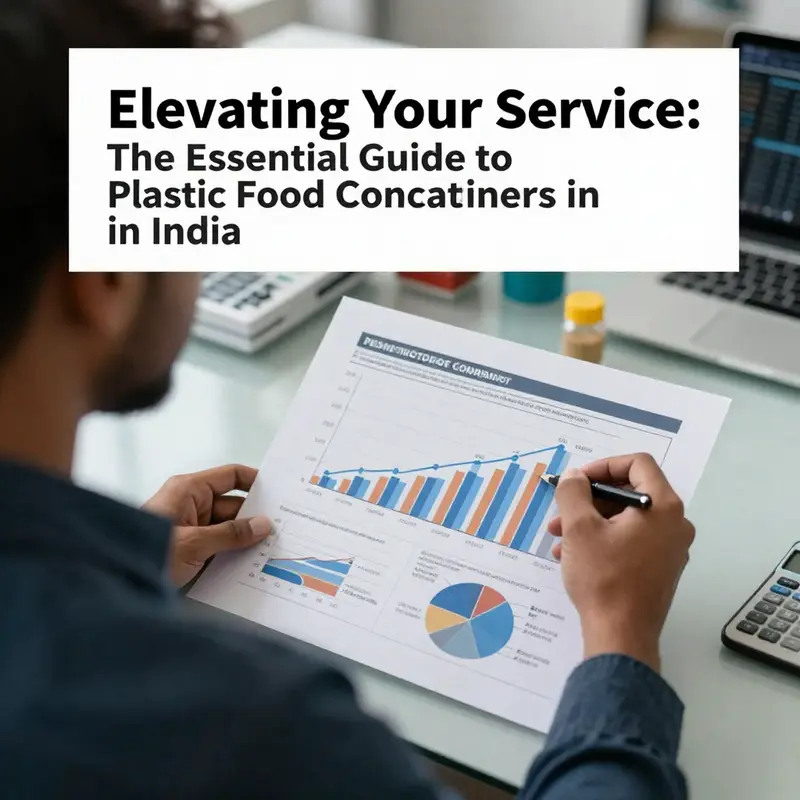
Plastic food container manufacturers form an important link between agricultural production, food processing, retail and urban consumption patterns. They deliver packaging that is lightweight, durable and inexpensive, enabling the safe movement of perishable goods from processing hubs to retail shelves and consumers’ doorsteps. These firms support a cascade of economic activity: processors can expand product ranges and shelf life, distributors can move larger volumes with lower breakage risk, and retailers can present packaged convenience foods that appeal to growing urban households. The aggregate effect is measurable in manufacturing output, employment in production and logistics, and the value added to food items that can now reach distant markets.
A technical advantage often cited in this sector is the use of clear, high-barrier polymers that preserve freshness and reduce spoilage. Such materials improve shelf stability by limiting gas and moisture exchange, which in turn lowers wastage across the supply chain. For industries like bottled water, ready-to-eat meals and processed foods, this translates into higher sell-through rates and better export competitiveness. The underlying efficiencies — lower transportation losses, more compact stacking, and reduced breakage — change cost structures for many food businesses and increase the overall throughput of the cold chain and retail segments.
Beyond product-level effects, the manufacturing footprint of plastic food containers supports regional industrial clusters. Small and medium enterprises clustered near raw material suppliers, converters and recycling facilities create jobs not only on factory floors but in machinery maintenance, logistics, quality control and laboratory testing. The presence of these manufacturers attracts related services: mold makers, tool designers, polymer testing labs, and certified recyclers. This localized value chain intensifies industrial development in manufacturing corridors and contributes to tax revenues at state and municipal levels.
However, the industry now faces a period of transition driven by policy shifts and shifting consumer preferences. Government efforts to limit single-use plastics, along with stricter food-safety rules for recycled content, introduce new compliance costs and demand changes in materials sourcing. For many manufacturers the immediate consequence is an increase in operational expenses: investment in certified recycling processes, upgrades to material traceability systems, and more frequent testing and audits are now routine requirements. These costs tend to hit small and informal producers hardest, increasing the risk of market consolidation where financially stronger players scale up while smaller ones exit or pivot.
The labour market implications are significant. A move away from traditional single-use items without a managed transition can displace workers who lack skills for new production methods. Re-skilling and up-skilling programmes are therefore central to mitigating socio-economic fallout. Manufacturers that invest in workforce training gain access to skilled technicians who can operate new recycling machinery, run quality assurance labs and manage compliance workflows. Public-private partnerships and targeted financing for training can ease the transition and preserve livelihoods.
Regulatory developments have also raised the bar for recycled content in food contact materials. New rules require that recycled inputs come from authorized sources and pass approved processing standards. For manufacturers this demands tighter supplier vetting, documentation and greater transparency across the supply chain. Many find themselves redesigning procurement systems and dedicating resources to vendor certification and batch testing. While these steps raise short-term costs, they also create opportunities for firms that move quickly to certify their supply chains and market their products as compliant and safer choices for food companies.
The uneven implementation of single-use plastic bans across states adds another layer of complexity. Where enforcement is lax, businesses may continue existing practices; where enforcement is strict, demand for alternatives spikes. This patchwork regulatory environment creates unpredictability for investment planning and affects where manufacturers choose to locate new capacity. Those that balance agility with compliance are better positioned to capture markets that move faster toward sustainable options.
Yet the same regulatory pressure is a catalyst for innovation. Manufacturers are exploring several pathways to remain competitive while meeting environmental goals. One is investment in certified mechanical and chemical recycling technologies. Establishing on-site or partnered recycling streams reduces reliance on virgin polymers and creates a supply of compliant recycled feedstock. Another approach is material innovation: blending recyclable polymers with biodegradable additives or switching to compostable alternatives where feasible. Product redesign, such as reducing material thickness without compromising function, or creating modular reusable containers for institutional buyers, can lower material costs and lifecycle environmental impacts.
Market dynamics also favor companies that can verify sustainability claims. Consumers and corporate buyers increasingly demand transparency — chain-of-custody documentation, third-party certifications and measurable reductions in plastic intensity. Firms that can demonstrate certified recycled content, lower carbon footprints, or participation in takeback schemes gain market differentiation. In addition, food service and delivery platforms are creating demand for sturdier, leak-resistant packaging that can be reused multiple times or recovered efficiently for recycling, presenting new contract opportunities for manufacturers.
Financing and scale matter. Transitioning to sustainable materials and certified processes requires capital. Larger manufacturers can amortize equipment investments over higher volumes. Smaller firms can form cooperatives or joint ventures to share recycling and testing infrastructure. Access to green credit lines, subsidies for recycling technology, and tax incentives for circular-economy investments can accelerate this shift across the sector. Public sector support in the form of standardized certification frameworks reduces duplication and lowers the cost of regulatory compliance for all players.
The shift also reshapes export prospects. As global buyers increasingly require compliance with environmental and safety standards, manufacturers that meet international recycled-content and traceability norms enhance export opportunities. Conversely, non-compliant practices can close off markets. Therefore, aligning domestic production with international expectations can increase foreign revenue and drive further investment in efficient manufacturing.
Longer term, the industry is moving toward a more circular model. Manufacturers, waste managers and brand owners are collaborating to design packaging with end-of-life recovery in mind. Systems that incentivize collection, improve sorting and ensure recycled streams meet food-contact standards are integral to sustaining the sector. When these systems work, they reduce raw material volatility, stabilize input costs and generate secondary markets for recycled polymers. The result is greater resilience against supply shocks and a reduced environmental footprint.
Policy choices will continue to shape the pace and direction of change. Clear, phased regulations that combine bans with incentives for recycling and product redesign can reduce disruption. Equally important are standards that are pragmatic and implementable across the industry, protecting public health while enabling economic continuity. Manufacturers that engage with regulators and invest in compliance early gain strategic advantage.
In sum, plastic food container manufacturers in India sit at a crossroads. Their contributions to supply chain efficiency and regional industrial development are substantial. At the same time, regulatory changes and sustainability imperatives are raising short-term costs and prompting structural adjustment. Firms that proactively invest in certified recycling, material innovation and workforce training can convert regulatory pressure into competitive advantage and help drive the transition toward a circular packaging economy. For the broader economy, supportive finance, clear standards and cooperative recovery systems will determine whether this sector continues to underpin food-sector growth while reducing environmental harm. For examples of sustainable alternative packaging that complement these shifts, see this resource on eco-friendly takeout boxes for food packaging: https://ecocupbowl.com/product/eco-friendly-takeout-boxes-for-food-packaging-stylish-food-containers-safe-microwave-craft-paper-lunch-boxes-leak-grease-resistant/.
For the full regulatory framework on recycled plastic in food packaging, consult the Food Safety and Standards Authority of India guidance: https://www.fssai.gov.in/Portals/0/Content/News/Press%20Release/FSSAI%20Notification%20on%20Recycled%20Plastic%20in%20Food%20Packaging.pdf
Regulatory Pressure and Opportunity: How India’s Rules Reshape Plastic Food Container Manufacturing
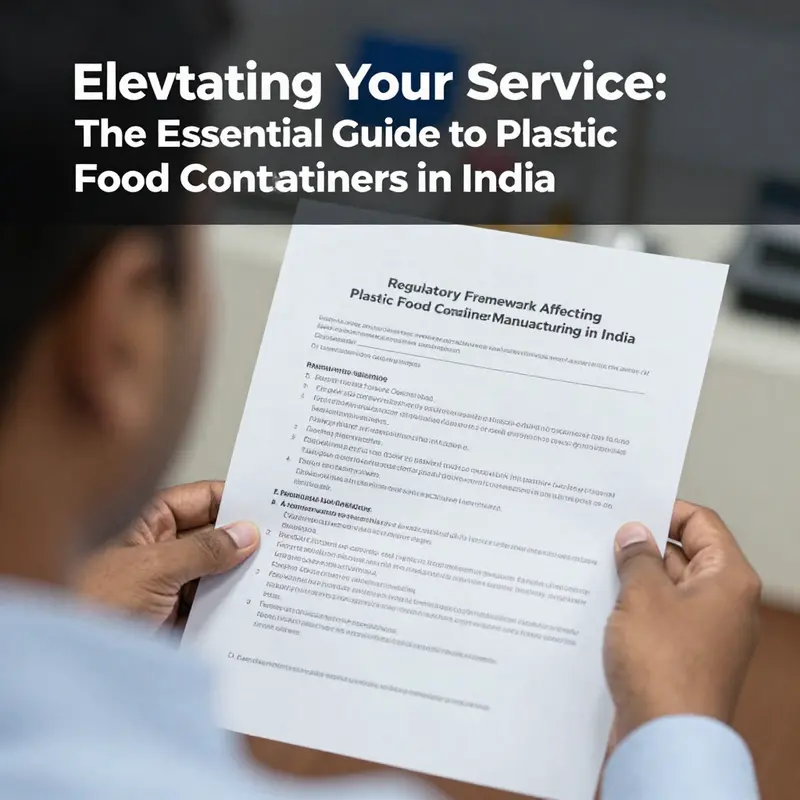
Regulatory Landscape and Practical Implications for Manufacturers
The regulatory environment for plastic food container manufacturing in India has moved from permissive to proactive. New directives, bans, and accountability measures now guide material choices, production practices, and end-of-life management. Manufacturers must translate legal requirements into operational changes. They also must align those changes with market expectations for safety, convenience, and sustainability.
Policy action centers on three priorities: reducing single-use plastic, protecting human health from unsafe food contact materials, and ensuring producers take responsibility for plastic waste. National agencies and standards bodies create overlapping obligations that affect design, sourcing, production, labeling, and waste handling. Understanding these overlapping layers is essential for any manufacturer that wants to remain compliant and competitive.
At the national level, directives to phase out specific single-use items changed the baseline for allowable products. Items such as thin carry bags and disposable cutlery are restricted under recent bans and amendments. Beyond item bans, regulatory updates introduce systemic obligations. The concept of Extended Producer Responsibility, or EPR, is now central. EPR requires producers and importers to collect and recycle defined shares of packaging waste tied to their products. Practically, this changes cost structures. Manufacturers must now budget for collection, recycling targets, and reporting. They must also engage with third-party aggregators, waste processors, and government bodies to meet targets.
Health and safety oversight rests with established standards organizations. Quality and food-contact safety standards set by national standardization bodies require material testing and certification. These standards define allowable polymer grades, additive limits, and migration thresholds. Food safety regulators then enforce hygienic practices, labeling, and traceability. Together, these requirements make documented quality systems critical. Manufacturers need validated testing, supplier declarations, and batch traceability. Failure to document compliance risks penalties and reputational damage.
State and municipal regulations add further nuance. Enforcement and interpretation vary by jurisdiction, creating complexity for manufacturers that supply multiple regions. Some states and cities operate their own bans or collection systems. These local rules influence packaging design choices and logistics planning. Large manufacturers must maintain flexibility across production lines to meet different regional requirements.
Environmental policy also drives innovation. The government encourages alternatives such as plant-based polymers and compostable materials. While attractive, these alternatives raise new questions about performance and post-use management. Biodegradable materials often require controlled environments to break down properly. They may not behave as intended in mixed municipal waste streams or informal recycling systems. Manufacturers exploring these materials must consider life cycle trade-offs, certification costs, and consumer education needs.
Meeting regulatory demands offers commercial opportunities. Retailers, restaurant chains, and delivery platforms increasingly prefer suppliers with clear compliance credentials. Consumers likewise express stronger preferences for packaging safety and sustainability. Manufacturers that proactively adopt robust testing regimes, transparent supply chains, and validated recycling partnerships can differentiate their offerings. This creates potential for premium pricing and longer-term contracts with institutional buyers.
Operational response requires an integrated approach. Material selection must balance food safety, durability, and recyclability. Design choices should aim for minimal material complexity to improve recyclability. For example, avoiding multi-layer constructions or mixed-material lids can streamline recycling outcomes. Labels and inks should be chosen to avoid contamination of recycling streams. Clear labeling also helps consumers dispose of containers correctly.
Supply chain management becomes more strategic. Manufacturers must qualify suppliers not only on cost and lead time, but also on material certifications and traceability. Procuring verified food-grade resins and documented additive profiles reduces testing burdens. It also helps ensure compliance with migration and toxicological limits. Many manufacturers are instituting supplier scorecards and periodic audits to maintain compliance assurances.
Waste management obligations under EPR mean manufacturers must build effective collection and recycling partnerships. This can include direct investment in collection infrastructure, contracting with waste management firms, or joining producer responsibility organizations. The choice depends on scale, geography, and product mix. Whichever path is chosen, manufacturers must maintain accurate records of collections, recycling rates, and implementation costs for regulatory reporting.
Testing and documentation are non-negotiable. Routine migration testing, microbial safety testing, and traceability records form the backbone of compliance. Establishing accredited laboratory relationships and in-house quality labs accelerates product approvals. Additionally, clear packaging labels and safety instructions protect consumers and reduce liability. Many companies are adopting digital traceability solutions to link batches with test certificates and supplier declarations.
Cost impacts are real, but manageable. Compliance adds direct costs: material premiums for certified resins, testing expenses, investment in recycling programs, and potential redesign costs. There are indirect costs as well, such as extended lead times and supplier qualification overhead. Managing these costs requires careful product segmentation. Commoditized, low-margin items may need leaner compliance pathways. Higher-margin or institutional products justify investment in certified materials and sustainability programs.
Collaborative strategies help spread the burden. Manufacturers can form purchasing consortia to secure certified feedstocks at scale. They can partner with waste processors to develop localized recycling solutions. Strategic alliances with foodservice customers help develop takeback or deposit systems that fit operational realities. Such collaborations can reduce unit costs and improve EPR performance.
Compliance also demands agility in product development. Rapid regulatory shifts call for flexible tooling and modular production lines. Manufacturers should design product families that can be adapted quickly for new material formulations. Investment in modern molding technologies improves production efficiency and reduces cycle times for new variants. Simultaneously, design for recyclability and minimal material diversity should be prioritized from the outset.
Market communication is critical. Transparency about material choices, certifications, and end-of-life options builds trust. Clear messaging highlighting compliance and safe food-contact performance reassures institutional buyers and consumers. Demonstrating an active role in waste management and recycling strengthens brand position in a market increasingly driven by sustainability claims.
Finally, regulatory compliance can be turned into a competitive advantage. Firms that integrate regulatory foresight into strategy will outpace peers. They will be better positioned to capture contracts from large food service providers and packaged food brands. They will also be more resilient to future policy tightening.
Manufacturers that blend robust quality systems, smart material sourcing, collaborative EPR solutions, and transparent communication can navigate this evolving landscape. Those that do so proactively will find regulatory pressure transforming into market opportunity. For practical examples and deeper analysis of health and socioeconomic impacts of plastic pollution in food packaging systems, consult the linked external study below.
External reference: https://www.sciencedirect.com/science/article/pii/S136455372400188X
Internal reference: For a view of eco-focused packaging options in the market, see eco-friendly three-compartment takeout boxes.
Sustainable Transformation in India’s Plastic Food Container Manufacturing: Materials, Design, and Circular Systems
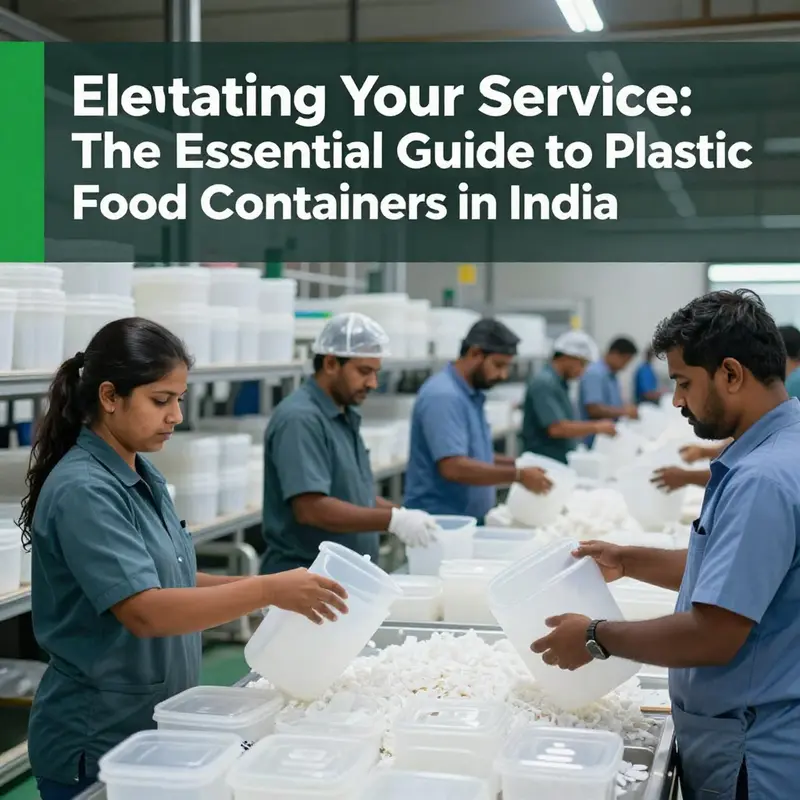
Sustainable Transformation in India’s Plastic Food Container Manufacturing: Materials, Design, and Circular Systems
The plastic food container sector in India is moving from incremental fixes to strategic change. Market forces, consumer expectations, and regulation now push manufacturers to rethink materials, design, and lifecycle management. This shift is not cosmetic. It touches sourcing, molding processes, product specifications, logistics, and after-use recovery. For manufacturers who supply foodservice chains, meal-kit companies, and retail brands, sustainability is becoming part of core operations.
Manufacturers are experimenting with alternative feedstocks to reduce environmental impact. Biodegradable polymers such as polylactic acid, derived from plant sugars, have gained traction for specific uses. They work best when waste streams are segregated and industrial composting is available. Recycled plastics are also central to the transition. Recycled polyethylene terephthalate is increasingly used for clear food containers. When sourced and processed correctly, r-PET reduces dependence on virgin resin and lowers embedded carbon. Yet recycled materials demand strict quality control. Food-contact safety requires traceability, rigorous testing, and adherence to migration limits.
Design choices now balance functionality, safety, and end-of-life outcomes. Products are being engineered for recyclability by avoiding mixed materials and incompatible additives. Rigid containers are favored over items that combine plastic with foils or paper windows. Simple color palettes help recycling centers sort streams more efficiently. At the same time, lightweighting is a pragmatic technique that yields immediate benefits. Reducing wall thickness and optimizing geometry lowers resin use without sacrificing strength. Less material means lower production energy, reduced transport emissions, and smaller volume of post-consumer waste.
Beyond material selection and design, systems matter. Closed-loop recycling initiatives are emerging among manufacturers, brand owners, and waste processors. These programs collect post-consumer containers and channel them back into feedstock for new production. Investments in washing, pelletizing, and quality assurance enable higher r-content in food-grade applications. Some manufacturers partner with local aggregators and municipal bodies to secure consistent input streams. Others sponsor deposit-return pilots and takeback schemes that drive clean recovery. Closed loops are not yet universal across India, but they are gaining momentum in urban centers where logistics and awareness are more mature.
Transparency has become a strategic differentiator. Labels that show resin type, recyclability, and certification help consumers choose responsibly. Clear communication also reduces contamination, a major barrier to effective recycling. When food residues and mixed materials enter recycling streams, material value drops. Simple on-pack instructions and visible resin codes increase correct disposal. Manufacturers increasingly pursue third-party certifications and testing to prove food-safety compliance for recycled content. These credentials reassure buyers and support B2B relationships with large food brands.
Regulation drives several of these shifts. Policy trends favor waste reduction and circularity. Extended producer responsibility frameworks, bans on specific single-use items, and rules on compostables are shaping market behavior. Manufacturers that adapt early gain competitive advantage. They can re-engineer products, secure compliant raw materials, and form partnerships that satisfy both regulators and customers. Compliance also mitigates business risks associated with sudden policy changes and reputational damage.
Economic context supports the transition, but costs matter. Bioplastics and certified recycled resins can carry higher per-kilogram prices. Upfront investments in machinery and product redesign add to capital needs. Nevertheless, the expanding middle class and booming food delivery market create scale. Higher production volumes spread fixed costs and make sustainable materials more affordable. In many cases, lightweighting offsets increased unit resin costs. Volume contracts with suppliers and long-term offtake agreements for recycled feedstock further improve economics.
Technology underpins progress. Advanced injection molding and thermoforming improve material efficiency and reduce scrap. Real-time monitoring optimizes cycle times and energy use. Additive manufacturing is used for rapid prototyping of new geometries that minimize material without compromising performance. Digital traceability and blockchain pilots help document recycled content and chain-of-custody. These systems help manufacturers meet rigorous buyer specifications for food safety and sustainability.
Supply chain resilience has become part of sustainability planning. Reliance on imported resins leaves manufacturers exposed to price volatility and transport emissions. Localized sourcing of recycled material or bio-based feedstocks reduces those risks. Manufacturers are exploring supplier partnerships that include reverse logistics services. These collaborations shorten recovery loops and create a more stable material pipeline.
Consumer empowerment is reshaping product messaging and innovation. Younger buyers prefer packaging with clear environmental benefits. Food operators respond by specifying recyclability and recycled content. Manufacturers that can demonstrate lower life-cycle impacts earn repeat business. Education campaigns from brands and manufacturers also reduce contamination and increase recovery rates. Simple guidance about rinsing, separating lids, and local drop-off points produces measurable recycling gains.
Operationalizing sustainability requires measurement. Life-cycle analysis informs material decisions and identifies trade-offs. For instance, the climate and pollution footprints of some compostable materials depend on how they are processed after use. Compostables can be advantageous if industrial composting is available. Otherwise, they may contaminate recycling streams. Engineers therefore evaluate end-of-life infrastructure before choosing materials. Standardized tests and certification help compare options objectively.
Innovation is also creating hybrid solutions. Some manufacturers combine minimal plastic with recyclable paper elements. Others use plastics designed for repeated reuse in takeout and institutional foodservice. Reusable programs reduce single-use demand in captive settings like corporate cafeterias or campus dining. These models require logistics for cleaning and redistribution, but they drastically cut waste per meal over time.
Challenges remain. Collection infrastructure in many regions is inconsistent. Mixed waste streams and informal sector dynamics complicate recovery. Contamination from food residues lowers recycling yields and compresses margins. There are also technical limits to the amount of recycled content permissible in some food-contact applications. Scaling high-quality recycled feedstocks will require coordinated public-private investments in sorting, washing, and pelletizing facilities.
Yet opportunities are abundant. Manufacturers that combine design intelligence, material science, and supply chain innovation can lead. Partnerships with waste-management firms, brand owners, and technology providers unlock scalable solutions. Training and capacity building in molding best practices reduce scrap and improve energy efficiency. Meanwhile, standardization of labeling and certification increases consumer trust and simplifies compliance across different markets.
The market for sustainable food containers in India will not be static. It will evolve as policy, infrastructure, and consumer behavior change. Manufacturers that build adaptable systems will capture long-term value. They will benefit from cost savings on materials, stronger client relationships, and lower regulatory risk. The transition is complex, but it is increasingly integrated into the business case for success in India’s food packaging sector.
For practical examples and an overview of composition standards and performance considerations, see the industry overview on material standards and benefits: https://www.plasticcontainerindia.com/overview/.
Manufacturers pursuing sustainability must remain pragmatic. They should match material choice to local recovery systems. They should design for end-of-life clarity. They should invest in partnerships that secure recycled feedstock and reliable collection. Done well, these steps convert environmental responsibility into operational advantage. They also prepare manufacturers to meet the evolving demands of India’s foodservice and retail markets, where sustainability is now part of purchasing decisions.
More on renewable and disposables alternatives is available through case studies of eco-conscious packaging, such as examples of eco-friendly takeout boxes for food packaging.
Final thoughts
The plastic food container manufacturing industry in India is at the crossroads of innovation, sustainability, and economic growth. As consumer preferences shift towards convenience, businesses in the food service sector—ranging from Bubble Tea shops to catering services—must choose reliable packaging solutions that align with quality and safety standards. Understanding the market dynamics, technological advancements, economic impacts, regulatory requirements, and sustainability trends provides essential insights for making informed decisions. By partnering with established manufacturers, businesses can ensure they not only meet customer needs but also contribute positively to environmental goals. The future of food packaging lies in the hands of those who prioritize safety, efficiency, and eco-friendliness, ensuring a bright outlook for the next wave of culinary entrepreneurs.