
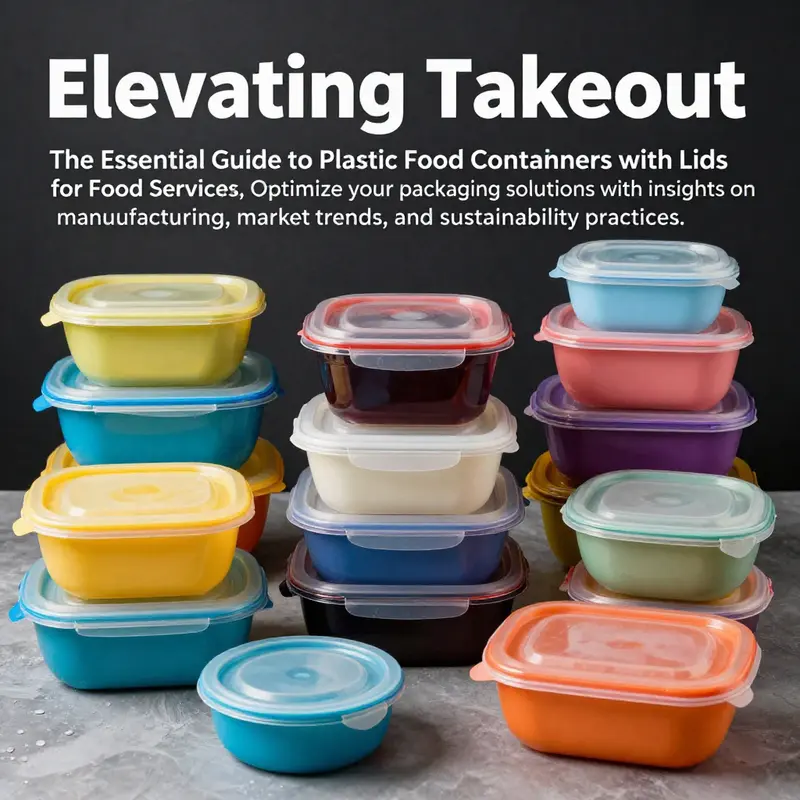
Plastic food containers with lids play a crucial role in the food service industry, becoming the backbone for takeout and delivery operations. From bubble tea shops to large catering services, the demand for reliable, cost-effective packaging solutions is at an all-time high. This guide aims to unravel the complexities behind the manufacturing processes, explore current market dynamics, and highlight sustainability practices among leading manufacturers in the industry. Each chapter will provide valuable insights to help businesses choose the right packaging solutions that not only meet their operational needs but also align with modern environmental standards.
From Melt to Meal: The Manufacturing Pathways Behind Plastic Food Containers with Lids
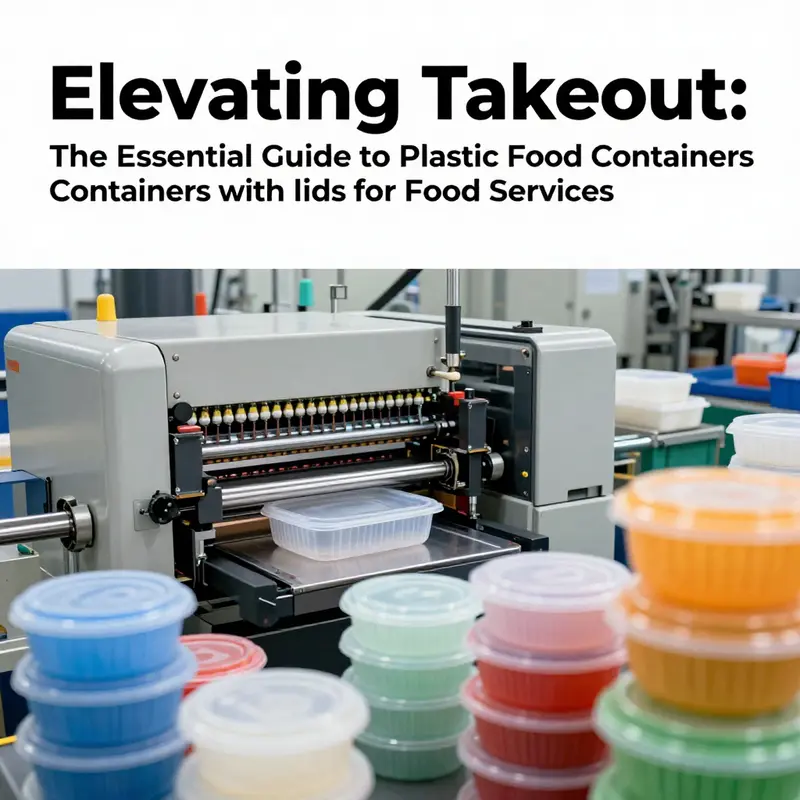
The assembly line of a plastic food container with a lid is a choreography of materials, molds, and machines that unfolds with precision. Behind each square box, each shallow tray, and every snap-top lid lies a suite of manufacturing choices shaped by scale, geometry, and the intended use. In early 2026, the landscape remains characterized by specialization within a few core technologies, each chosen to optimize strength, cost, and safety for end users. To understand how a factory transforms resin pellets into ready-to-stow packaging, we begin with the most common starting point: injection molding for rigid bodies and lids, followed by blow molding for hollow forms, and then thermoforming for lighter, tray-like components. The result is a family of containers that can range from compact, single-use boxes to reusable, heavy-duty vessels designed for recycling streams. This layered approach reflects not only engineering judgment but also the growing demand for customization, sustainability, and fast delivery to diverse markets.
Injection molding stands as the workhorse for the rigid pieces that define modern takeout and storage systems. Pellets are fed into a heated barrel, melted to a homogeneous viscosity, and injected into complex metal molds under high pressure. The mold cavities define the container’s geometry, from the sharp corners of square lunch boxes to the gentle curves of round cups and lids. Once the material cools and solidifies, the mold opens and the part is ejected. This cycle repeats hundreds or thousands of times, producing bodies and closures with tight tolerances and repeatable performance. The beauty of injection molding lies not just in precision but in the ability to embed features that matter for everyday use: snap-fit closures, reinforcing ribs, integral ribs for stacking strength, and even thin-walled sections that conserve material without compromising rigidity.
Mold design is a discipline in itself. Every feature—a lid overhang, a locking lug, a vent orifice, a groove for labeling—changes cooling rates, warpage tendencies, and ejection forces. In high-volume operations, multi-cavity molds maximize output and amortize the cost of a single tool over a huge production run. The result is a balance between cycle time and quality. Efficient cooling channels, uniform wall thickness, and controlled shrinkage are essential to ensure the lid snaps securely every time and the container resists deformation during handling in transport and storage. For many applications, this means choosing resins with predictable crystallinity and low shrinkage, such as polypropylene (PP) for its heat resistance and fatigue strength, or polyethylene terephthalate (PET) when clarity is valuable for product display.
Food safety concerns steer material choices toward resins with well-established food-contact credentials. PP, high-density polyethylene (HDPE), and PET are commonly employed because they exhibit favorable melt flow, stability under reheating, and compatibility with standard sterilization and cleaning regimes. Each material brings trade-offs. PP offers excellent chemical resistance and heat tolerance, making it suitable for hot-fill or microwave-reheating scenarios. PET provides clarity and rigidity but may require barrier coatings or additives to enhance moisture resistance. PS can be a cost-effective option for disposable, non-reusable packaging, though its heat resistance and chemical compatibility are more limited. In all cases, the food-grade status of the resin is non-negotiable, and manufacturers increasingly pursue BPA-free certification or equivalent measures to align with evolving consumer expectations and regulatory guidance.
Beyond the resin choice, the injection-molding paradigm accommodates a spectrum of customization. Color blending, depth of printing, and surface textures can be integrated on the mold or through secondary operations to deliver packaging that supports branding without sacrificing productivity. Printing lines, sometimes integrated with thermoforming or stamping, allow a brand to communicate freshness, quality, and safety at the point of sale. A practical consideration is the integration of printing with the injection-molding cycle. In some setups, a lid or body carries a design in a separate process, which requires careful alignment to avoid misregistration during ejection or handling. The upshot is that many manufacturers offer the ability to tailor sizes, colors, and print patterns while maintaining strict control over tolerances that matter for stacking and nesting.
Blow molding enters the picture when the container’s geometry calls for hollow, bottle-like forms or large-volume jugs. There are two principal variants: extrusion blow molding and injection blow molding. In extrusion blow molding, a molten tube of resin, or parison, is extruded vertically or horizontally. The parison is captured in a cooled mold, and compressed air expands it to the inner cavity’s shape. This method excels at producing standard bottle and jar geometries at high throughput, with relatively simple tooling for a wide range of sizes. The process favors consistency in wall thickness along the height of a container, which is crucial for performance under vacuum or pressure during transport or pasteurization. However, precise neck finishes and very tight diameter control can be more challenging than with injection molding, which is why certain high-demand applications still rely on a two-stage approach.
Injection blow molding, by contrast, begins with an injection-m molded preform that includes the neck finish. The preform is heated and transferred to a blow mold where air is introduced to expand the resin into the final shape. This two-step process yields containers with superior wall-thickness control and dimensional accuracy. It is often the method of choice for water and beverage bottles, where consistent neck dimensions and optical clarity may matter. When hollow forms require more intricate profiles or heavier wall sections, injection blow molding provides a path to robust performance without an overbearing cycle time. It is precisely this balance—dimensional control, wall integrity, and production efficiency—that keeps blow molding relevant across a range of product families.
For faster, lighter, and more economical disposables, thermoforming plays a distinct and valuable role. In thermoforming, a sheet of plastic—typically PET, PP, or PS—is heated until pliable and formed over a mold using vacuum or sometimes positive pressure. The resulting shallow, tray-like shapes are ideal for breakfast packs, small takeout boxes, and multi-compartment snack containers. Thermoforming is highly suited to high-volume runs with relatively simple molds, delivering quick cycle times and lower tooling costs compared with injection molding for some geometries. The process also enables easy inclusion of features such as vented trays for steam release or raised rims to improve stacking stability. While thermoforming may not achieve the same wall thickness uniformity as injection molding, its cost advantages for certain shapes and sizes make it indispensable for large-scale, low-cost packaging.
The choice among these processes— injection molding for rigid bodies and lids, blow molding for hollow forms, and thermoforming for shallow trays—reflects a factory’s strategic positioning in the market. Manufacturers design their tool inventories, material portfolios, and process flows around anticipated demand, regulatory constraints, and the needs of the end users. In practice, most product families blend these methods. A typical line-up might use injection molding to form a square casserole container and its lid, blow molding to produce a bottle or jug in the same family for beverages or sauces, and thermoforming to create the sleek, low-cost trays that accompany ready meals. The interaction between these processes is not merely about producing components; it is about synchronizing form, function, and finish across an entire packaging system that can be distributed quickly and safely to diverse regions.
Material science and process engineering converge when discussing food safety and regulatory compliance. The industry has seen a steady push toward certifications that verify the absence of harmful substances and the reliability of performance under typical household use. ISO, FDA, and SGS have become common benchmarks for producers seeking to reassure buyers about product integrity. When a lid clicks shut, it is not just a mechanical feature; it is a seal that helps preserve moisture, flavor, and safety during transport. When a tray sits in a cold store or a microwave, its material must withstand thermal cycling without releasing contaminants or warping. In many markets, BPA-free certification is not merely a nicety but a regulatory expectation. Against this backdrop, resin suppliers, mold designers, and process engineers collaborate to ensure that every component aligns with the intended lifecycle, whether it ends its life in a recycling stream or a multi-use setting.
The economic realities of manufacturing cannot be ignored. The investment in molds, automation, and quality-control infrastructure can be substantial. Molds can cost hundreds of thousands of dollars and clock many thousands of cycles before they justify replacement. For brands and distributors, the cost of tooling is a long horizon investment, but one that enables consistent, repeatable performance across markets. The production facility’s scale also matters: higher volumes typically translate into lower per-unit costs, but require more sophisticated logistics, tighter quality control, and more robust supply chains to keep lines running smoothly. Lead times, minimum order quantities, and delivery schedules shape how a company negotiates with suppliers and plans new product introductions. In many regions, manufacturers have responded by converging onto standardized resin grades that meet broad regulatory requirements, while still offering a spectrum of customization options—colors, printing, and packaging configurations—that can differentiate products in crowded shelves.
From a design and production perspective, the most telling signal of capability is how easily a facility can translate a concept into a finished part and how reliably that part performs in real-world use. A strong supplier will present a clear path from resin selection and mold design through to finished product, with transparent tolerances, material data sheets, and documented certification dossiers. Importantly, the integration of design with production planning helps ensure that a new lid style or body geometry can be scaled up without sacrificing cycle times or quality. When a brand requests a new lid geometry, the manufacturer should be able to evaluate the feasibility, estimate tooling costs, and propose a realistic timeline that accommodates prototype testing, pilot runs, and full-scale production. This alignment between concept and execution is what allows the industry to meet the evolving demands of fast-casual chains, food-service distributors, and consumer-packaged goods markets alike.
The consumer-facing appeal of these containers rests not only on the integrity of the containers themselves but also on the broader packaging ecosystem. Compatibility with printing, labeling, or embossing programs helps brands convey safety, freshness, and value at the point of sale. Compatibility with various lid designs means manufacturers can offer modular solutions: a single body can pair with multiple lids to address different portion sizes or food categories. The end-to-end capability—mold design, resin selection, forming or molding process, printing, and final assembly—defines the competitive edge in a market where supply chain resilience and speed-to-market matter as much as material performance.
In this landscape, one recurring theme emerges: the need for tight integration across engineering, quality, and logistics. A factory that can deliver a full family of container shapes and sizes—from compact disposable boxes to larger, reusable storage vessels—while maintaining consistent food-grade standards and rapid delivery is well positioned for global demand. By harnessing injection molding for rigidity, blow molding for hollow forms, and thermoforming for trays, manufacturers assemble a versatile toolkit that can be deployed across multiple product platforms. This versatility is essential when markets demand localized variants—different dimensions, colorways, or branding—without sacrificing the efficiency of mass production. It is also a reminder that the journey from resin to ready-to-sell packaging is not a single machine’s job but a coordinated sequence of operations, each step tuned to the next.
For readers who want a tangible glimpse into how these concepts translate into market offerings, consider the evolving landscape of packaging options near the border between food-service and home use. A single supplier may provide an entire system: rigid containers for soups and salads, stackable lunch boxes with secure snap closures, clear-preference trays for ready-to-serve meals, and even bottles that share a unified neck finish or lid interface. The design language across these products emphasizes user-friendly handling, reliable sealing, and compatibility with automated filling, labeling, and palletizing lines. While the details of mold geometries and cycle times stay within the plant, the outward expectations—a uniform standard of safety, a consistent brand presence, and dependable performance—rise from the same core manufacturing choices described here.
The practical takeaway is straightforward. If a business seeks partners capable of delivering complete packaging solutions, it should evaluate potential suppliers on a few core dimensions: material purity and food-grade compliance; the breadth of process capabilities (injection molding, blow molding, thermoforming); the ability to customize sizes, colors, and printing; and, crucially, the supplier’s readiness to provide reliable lead times and flexible MOQs. In practice, this means looking for evidence of robust mold tooling, a well-managed resin supply chain, and a quality-management system that can document process controls across thousands of cycles. It also means recognizing that the most efficient producers are not just machines and molds but tightly integrated teams that can translate a product brief into a tested, scalable, ready-to-ship packaging solution. This alignment of capabilities is what ultimately enables the industry to support foodservice operators, retailers, and households with packaging that protects, preserves, and presents product with confidence.
To see how a real-world packaging system translates these principles into a tangible product range, you can explore examples of foldable cake boxes with windows, which illustrate how thermoforming, printing, and assembly come together to deliver both function and aesthetics in a single unit. foldable cake boxes with window packaging. The same logic underpins the broader class of containers with lids used for takeout, meal-prep, and storage across continents, driven by demand for safety, performance, and consistent quality at scale.
As manufacturers continue to refine processes, the field will increasingly emphasize sustainability alongside efficiency. Recyclability of materials, the use of recycled-content resins, and innovations in barrier coatings are shaping procurement and design decisions. Even as the tooling and automation evolve, the fundamental chain—from resin to molded part to finished container—remains anchored in the same trio of formation techniques. The future of plastic food containers with lids, in short, will be defined not just by faster cycles or bolder colors but by how well producers can harmonize safety, performance, and environmental responsibility across a global network of suppliers and customers.
External resource for further reading: For an overview of relevant manufacturing processes and standards, see the HKTDC Sourcing page on Plastic Food Containers with Lids.
Riding the Wave: Dynamics, Materials, and Global Flows Shaping Plastic Food Containers with Lids
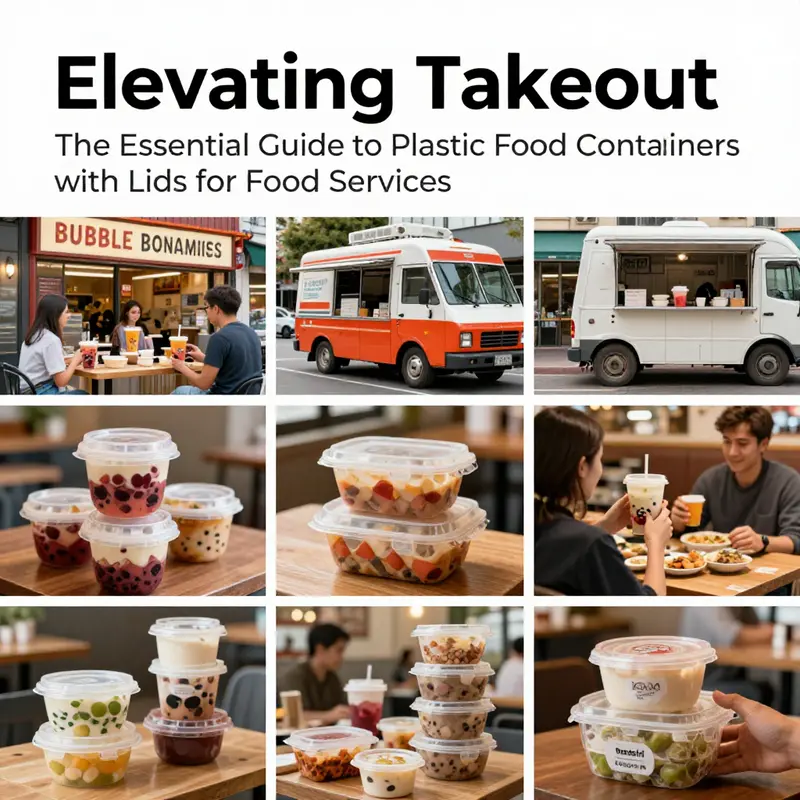
The market for plastic food containers with lids sits at an intersection of convenience culture, global trade, and rapid shifts in consumer expectations about safety, cleanliness, and sustainability. In a world where meals travel from home to office, from street vendor to doorstep, the packaging that encases food must perform a delicate trio of functions: protect the product, preserve quality, and invite confidence from the consumer. The rise of on-demand food services, grocery delivery, and ready-to-eat meals has turned packaging from a simple container into a critical part of the dining experience. This creates a durable, often overlooked, demand engine for containers with lids that can withstand the rigors of storage, transit, and repeated handling, all while meeting stringent safety standards. A closer look at the supply landscape and market drivers reveals a landscape where scale, material choice, and regulatory compliance converge to determine which players survive and thrive.
At the heart of this market is a surge in convenience packaging. Consumers increasingly expect packaging that is easy to use, portable, leak-resistant, and capable of being warmed or cooled as needed. The lid is not merely a closure; it is a seal of trust, a barrier that helps maintain moisture, aromas, and structural integrity. In dense urban environments, where meals are frequently consumed on the go, containers with lids become a practical extension of daily routines, enabling households and professionals alike to portion, transport, and reheat food without contaminating or compromising the product. This shift has elevated the importance of lid-assisted design features such as secure snap closures, venting mechanisms for steam control, and compatibility with microwaves or freezers, depending on the material. The result is a packaging ecosystem that rewards those who couple robust engineering with a thorough understanding of end-use contexts.
The production and manufacturing side of this ecosystem has diversified in tandem with demand. A common regional pattern features hubs where suppliers congregate to optimize supply chains, accelerate product development, and offer modular capabilities to food service and retail brands. In regions with deep plastics know-how, manufacturers develop multi-line operations capable of handling a wide spectrum of polymers, film laminates, and forming technologies. A typical Guangdong or coastal China hub, for example, leverages a cluster of facilities with extensive plastic processing capabilities, including multiple thermoforming lines, injection molding, printing, and post-processing. Such ecosystems support rapid scale-up when orders surge and enable a breadth of customization, from lid geometry and color to printing on the container surface. The scalability of these operations often hinges on the integration of material supply, extrusion, forming, and decoration into a seamless value chain that can deliver on tight timelines.
This brings us to the interplay between volume and value in choosing a manufacturing partner. Large-volume producers can amortize fixed costs across thousands of SKU combinations, delivering cost efficiency while maintaining consistent performance across batches. They typically emphasize high output through sophisticated automation, blanket ISO or SGS certifications, and rigorous process control. For buyers, this translates into predictable lead times and competitive unit costs, especially for standard shapes and sizes. On the other hand, mid-sized or specialist manufacturers may carve out niches by emphasizing customization—special lid features, unusual dimensions, or materials tailored to specific regulatory environments. They often win when a brand requires a distinctive packaging experience or when a retailer aims to differentiate through packaging storytelling and brand integrity. In practice, buyers weigh the trade-offs between price, speed, and customization, and they layer in third-party certifications and food-safety assurances to minimize risk.
Material selection remains a defining factor in performance, cost, and regulatory compliance. A broad spectrum of food-grade polymers is employed to meet different needs. Polypropylene, widely used for its balance of toughness, clarity, and chemical resistance, remains the default for many everyday containers. PET and PET blends offer clarity and rigidity that support premium presentation and long shelf life. HDPE provides impact resistance and chemical compatibility for certain food types and service contexts. More specialized options, such as polycarbonate, bring exceptional clarity and toughness, making them attractive for premium lines intended for reusable or long-term use in commercial kitchens. Each material brings its own cost profile, recycling considerations, and regulatory footprints, influencing decisions on whether to pursue single-use legitimacy or invest in higher-value, reusable formats.
The question of safety threads through every aspect of the decision matrix. Food-grade compliance is not optional; it is the baseline. Certifications such as ISO and FDA or SGS attest to manufacturing discipline and product safety. BPA-free certification has become a standard expectation for many buyers, reflecting consumer concerns about chemical exposure and long-term health considerations. Packaging designers increasingly consider end-of-life pathways, even as the primary concern remains preserving product quality during transit. The regulatory environment has nudged manufacturers toward more robust testing and more transparent documentation, ensuring that the packaging not only meets performance criteria but also aligns with evolving governance and consumer expectations.
In the discourse around materials and capabilities, the supply chain narrative remains essential. The global containers market is shaped by the friction and fusion of raw material sourcing, resin pricing, and freight dynamics. The Guangdong region, with its dense network of suppliers, converters, and processors, exemplifies how regional density translates into speed and cost advantages. The proximity to raw material suppliers, ports, and logistics hubs reduces lead times and facilitates rapid responses to demand shifts. This geographic advantage has a cascading effect: it enables a broader set of manufacturers to offer both standard and customized products with tighter delivery windows, and it supports a rich ecosystem of service providers who can assist with design dispersion, testing, and compliance.
To illustrate the kind of market activities that underscore this landscape, consider the typical production footprint of a mid-sized packaging operation. Such a facility might run multiple plastic thermoforming lines, a dedicated printing line, and a trimming or finishing station. Daily outputs can range into tens of tons, enabling the facility to satisfy both high-volume retail demands and smaller, more nuanced projects. The ability to switch configurations quickly—altering lid styles, varying wall thickness, or adjusting to different resin grades—can be a decisive competitive advantage when a brand launches a new product or enters a new market.
The buyer’s journey in this market often begins with a clear view of standards and requirements. Is the material food-grade? Is the product BPA-free? Are there options for custom sizes, multiple colors, or printed branding? What is the minimum order quantity, and how flexible is the supplier on lead times? Certifications play a pivotal role in this dialogue, and the choice of supplier is frequently guided by the clarity and credibility of the supplier’s documentation. The pros and cons of different pathways—standard off-the-shelf designs versus fully customized solutions—are weighed against the consumer expectations of the end markets, whether they be takeout, home storage, or retail display. This balancing act is not merely about meeting current demand but about aligning packaging with a brand’s strategic aspirations, including sustainability narratives and supply chain resilience.
A portion of the market’s momentum comes from more value-driven production, where cost-sensitive buyers seek ultra-low-cost options for disposable meal boxes, sometimes as low as a few tenths of a dollar per unit in large quantities. These offerings attract segments within food service, quick-service restaurants, and retail cold cases where price competition is intense. Yet such options must still comply with food-safety norms and deliver reliable performance, from leak resistance to lid integrity during temperature fluctuations. The trade-off between price and performance often pushes buyers to consider total cost of ownership, including potential waste, returns, or packaging-related spoilage that could erode any savings gained at the point of purchase.
From a geographic perspective, the manufacturing ecosystem is distributed but with focal points that drive efficiency. Coastal and southern manufacturing belts tend to concentrate players capable of high-volume production while maintaining the agility required for customization. The clustering effect supports faster iterations and more cooperative problem solving between brands and manufacturers. It also fosters a competitive pricing environment, where suppliers leverage the density of the ecosystem to offer integrated solutions—from resin sourcing and mold design to printing and packaging decoration. Consumers of packaging benefit from shorter lead times and more consistent quality across seasons and product launches, a reality that becomes especially important as digital commerce expands and the frequency of product renewals accelerates.
Against this backdrop, the market projections point toward sustained expansion. The global plastic food containers market is reported to have grown from roughly USD 209.76 billion in 2025 to an estimated USD 217.92 billion in 2026, signaling continued momentum. The longer horizon envisions continued growth, driven by urbanization and the digitalization of food services, with a projected total market size approaching the hundreds of billions. Within this broader trajectory, the segment of containers with lids remains a central pillar, given its essential role in maintaining product safety and user convenience throughout the food supply chain. The preference for durable, attractive, recyclable, and sometimes reusable packaging continues to influence material choices and design strategies among manufacturers, brand owners, and retailers alike.
Material innovation keeps the momentum going by enabling new price-performance envelopes. Polycarbonate containers, though more expensive than traditional plastics, offer exceptional clarity and durability that appeal to professional kitchens and environmentally conscious consumers who value reusability and long-term performance. These attributes matter in contexts where product visibility, presentation, and longevity are part of the value proposition. For brands that aim to communicate premium quality, the ability to present a transparent, crack-resistant container with a robust lid can translate into higher perceived value and customer satisfaction. Yet this premium path has to be balanced against consumer sentiment about single-use plastics and the evolving emphasis on recycling and waste reduction. As a result, manufacturers increasingly position polycarbonate and similar high-performance materials within a portfolio that also includes more traditional options for standard, cost-sensitive applications.
The packaging landscape is also shaped by a broader sourcing and logistics story. The clustering of manufacturing capabilities in key regions supports not only scale but also a more resilient supply chain. In times of disruption, proximity to a dense network of suppliers can reduce risk and improve responsiveness, a factor highly valued by food service operators and retailers who cannot afford delays. This resilience is sometimes achieved through supplier partnerships, contract manufacturing arrangements, and the ability to adapt lines quickly for seasonal demand. The result is a dynamic where flexibility—both in material choice and production scheduling—becomes as important as technical excellence.
For buyers navigating this market, a practical approach is to assess a supplier on several pillars: whether the material aligns with food-grade standards and BPA-free expectations; the breadth of available formats, including custom sizes and lid configurations; the ability to support branding and printing; the presence of third-party certifications; and the supplier’s capacity to meet MOQ and delivery timelines. The decision calculus also benefits from a clear view of the end-market context. Are the containers destined for quick-service chains with standardized packaging, or for boutique food brands seeking a distinctive packaging experience that reinforces their brand story? In either case, the packaging should perform its core function reliably while offering opportunities for differentiation through design and material selection.
In the broader narrative of the industry, it is helpful to recognize the spectrum of packaging professionals who contribute to the market. A Guangdong-based producer with integrated lines faces a different set of opportunities than a specialized firm with strong capabilities in customization and branding. Meanwhile, a high-response, export-oriented firm in a major tech hub may emphasize rapid prototyping and flexible manufacturing to meet the demands of Western markets. Across these profiles, the shared objective remains the same: to deliver safe, hygienic, and practical packaging solutions that enable food to travel from source to consumer with minimal risk of compromising quality. That shared objective also means that improvements—whether incremental in a lid seal or transformative in a recycling-friendly polymer blend—are usually embedded in a broader strategy that prioritizes reliability, transparency, and compliance as the baseline.
The packaging ecosystem does not exist in isolation. It connects to consumer expectations, retailer standards, and the wider sustainability agenda. The drive toward safer, more sustainable packaging has spurred material innovations, such as formulations that optimize barrier properties while enabling easier recycling. It has also encouraged design choices that reduce weight and improve stackability, making logistics more efficient. The lid, often a simple add-on, emerges as a functional hinge on which the entire consumer experience turns. If a lid seals securely and remains tamper-evident during transport, it bolsters consumer trust and reduces waste from leaking or spoiled contents. If it accommodates reheating, it broadens the range of use scenarios and enhances the perceived value of the packaging. These attributes are not merely technical details; they are critical components of a packaging strategy that binds product quality, brand promise, and consumer satisfaction.
In this moment of continued evolution, buyers would do well to view the market not only through the lens of price and speed but also through the lens of long-term value. The most compelling packaging solutions are those that balance performance with sustainability and brand alignment. The opportunity for manufacturers lies in delivering reliable, scalable, and flexible packaging platforms that can adapt to shifting consumer preferences, while ensuring safety and regulatory compliance across markets. For brands intent on sustaining growth in a crowded field, the decision to invest in lids and container design is not optional but foundational; it can determine whether a product’s packaging becomes a mere container or a conduit for memorable consumer experiences.
To explore pragmatic packaging options and design considerations that align with these market realities, consider a packaging solution such as the foldable cake boxes with windows that illustrate how a lid-enabled container can deliver visibility and protection in one package. These boxes demonstrate how thoughtful design can support bakery and pastry categories by combining aesthetics with practical performance. For readers seeking direct examples within the packaging ecosystem, a concrete reference is available at the following link: Pure Color Foldable Cake Boxes with Window Bakery Boxes Pastry Box for Cake Chocolates Cupcakes Gift Packaging Paper Boxes. This kind of solution reflects how packaging developers translate market demands into tangible formats that protect, present, and elevate the product.
As markets mature, the external signals that shape manufacturer choices become more nuanced. While price remains a consideration, the trade-offs among price, lead time, and compliance become more finely balanced. A brand may prioritize a supplier who can demonstrate end-to-end quality control, transparent supply chain documentation, and robust after-sales support, especially when launching new SKUs or entering new geographies. In these contexts, the value of a strong, certification-backed supplier network becomes a strategic asset. The packaging industry, though driven by commodity-like products in many segments, ultimately thrives on how well its offerings support the stories brands tell about food—safety, quality, and responsible stewardship—through every mile of the product’s journey.
External resource for further context: https://www.marketresearchfuture.com/reports/plastic-food-containers-market-2777
Circular by Design: How Lid-Bearing Plastic Food Containers Are Redefining Sustainable Packaging
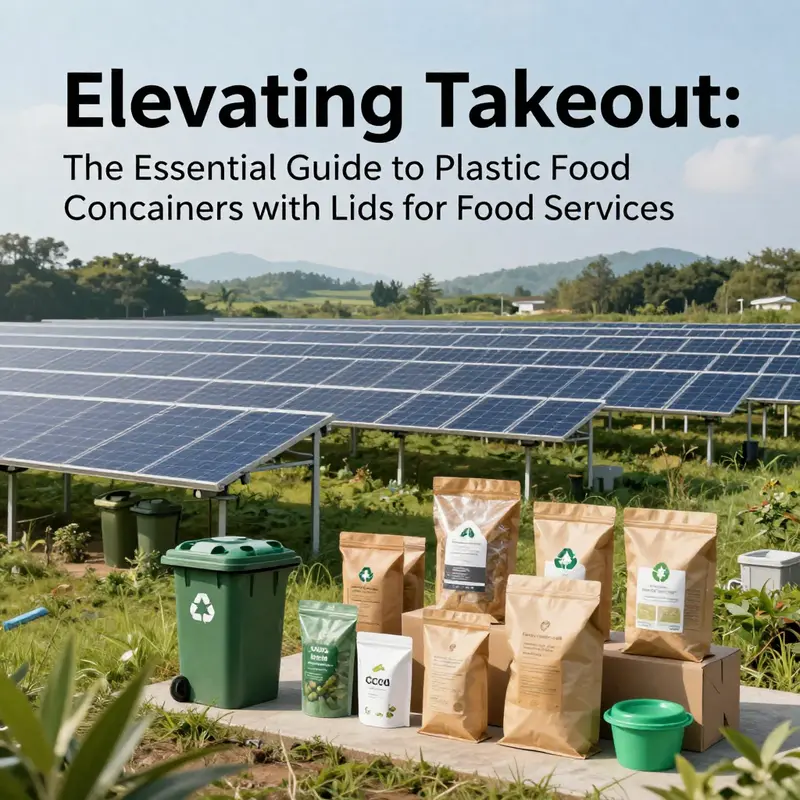
Sustainability in the realm of plastic food containers with lids has moved from a peripheral concern to a core design criterion. In early 2026, manufacturers across the globe are weaving environmental responsibility into the fabric of product development, production, and end-of-life planning. The shift is not merely about compliance or chasing a market trend; it reflects a deeper recalibration of what pays off for brands, retailers, and households over the long term. The conversation now encompasses material choices, manufacturing efficiencies, and the lifecycle management of containers so that every box, lid, and seal contributes to a more circular system. The challenge and the opportunity lie in balancing performance and cost with environmental metrics that matter to regulators, retailers, and consumers who increasingly demand packaging that minimizes waste, reduces energy use, and fits within existing recycling infrastructures. This chapter surveys how leading and emerging manufacturers are aligning these imperatives, without sacrificing the reliability and convenience that define plastic food containers with lids in kitchens and takeout windows around the world.
Material choice remains a central vector for sustainability, guiding both the environmental footprint of production and the ultimate fate of containers after use. Historically, the industry leaned on low-cost options such as PS and PET, favored for their formability, rigidity, and barrier properties. Yet a growing body of evidence and regulatory pressure is nudging designers toward materials that perform across multiple cycles and align with established recycling streams. Polypropylene (PP) and high-density polyethylene (HDPE) are now more than just durable workhorses; they are frequently singled out as preferred bases for sustainable portfolios because they offer robust reusability, compatibility with common washing cycles, and broad recyclability in municipal programs. When a lid is designed to snap, twist, or seal with confidence, the impetus to reuse strengthens, and the temptation to default to single-use is tempered by the prospect of meaningful lifecycle savings. The choice of resin is never purely academic. It cascades into energy requirements for extrusion, the weight of the final product, compatibility with automated sorting streams, and the possibility of recovering post-consumer content in subsequent production runs.
The forward-looking manufacturers also think in terms of recycled content as a fundamental design input. Implementing closed-loop strategies—where post-consumer plastics are collected, cleaned, and reprocessed into new containers—has moved from a niche initiative to a widely discussed competency. The best programs emphasize compatibility with current recycling infrastructure and consumer participation. They also underscore the importance of traceability and quality assurance, because recycled content can alter properties such as clarity, heat resistance, and sealing performance. In regions where regulatory frameworks incentivize or mandate higher recycled-content levels, manufacturers invest in pipeline improvements, sorting accuracy, and contamination control. The European Union and California stand out as catalysts in this space, promoting standards that push brands to embed recycled content and to demonstrate resilience against real-world sorting and contamination challenges. Certifications and third-party verifications—ISO, FDA, SGS, and others—emerge as essential signals that the recycled content is not only present but stable and safe for reuse in food-contact applications.
A complementary route to reducing environmental impact lies in encouraging reuse through thoughtful design. Reusable plastic containers aim to withstand multiple cycles while preserving the integrity of the seal and the safety of contents. The design language across modern lids reflects a union of robustness and practicality: threaded or interlocking sealing mechanisms that resist leaks, coupled with materials that tolerate dishwasher or sanitizing-dishwasher cycles. The lifetime value of such products grows when lids and bases remain compatible across generations of container lines, enabling households and foodservice operators to reduce the total number of units required for daily operations. The durability of the lid is not an afterthought; it is a linchpin in the user experience. A well-engineered lid that maintains its sealing properties after dozens of washes minimizes the need for replacements, lowers waste, and reinforces consumer trust in reusable packaging. This is not merely a technical feat; it is a behavioral facilitator, encouraging households to treat containers as long-term assets rather than disposable disposables.
Although reuse represents a powerful lever, manufacturers recognize that reliance on single-use packaging remains part of today’s landscape. The strategic path, therefore, blends reuse where feasible with intelligent end-of-life planning for single-use items. Innovation in modular lid systems and stackable designs exemplifies this philosophy. Modular lids offer flexibility: a single lid platform can accommodate multiple base sizes, reducing the number of SKUs and simplifying consumer choice. Stackability enhances transport efficiency and warehouse handling, which translates into lower freight emissions and improved logistics throughput. Together, these design choices reduce the resource intensity per unit of usable packaging, even when the product is ultimately discarded after a limited number of uses. Beyond practical efficiency, such innovations illuminate a broader trend: design for reuse and efficient recovery are becoming baseline expectations rather than exceptions in a market where sustainability is increasingly a determinant of brand loyalty.
Investments in recycling infrastructure and post-consumer collection are equally critical to a sustainable path. Closed-loop systems are most effective when there is a reliable stream of plastics that can be reclaimed, cleaned, and reintroduced into production with predictable quality. This requires alignment among packaging engineers, waste-management partners, and policy makers so that the entire value chain reduces friction in recycling. It also demands transparency in labeling, including clear resin identification codes and materials data sheets, so that consumers and recyclers can correctly sort and process containers. The practical upshot is a packaging ecosystem where new containers can credibly claim a substantial recycled content and where the end-of-life process returns the material cleanly to manufacturing cycles. In this context, governance and certification move from peripheral assurances to core competencies, signaling to customers that sustainability is embedded in the product’s life course rather than bolted on as a marketing message.
The topic of materials also encompasses the exploration of bioplastics as a potential pathway to lower overall impact. Bioplastics, derived from renewable resources such as corn starch or sugarcane, offer the allure of reduced fossil input and, in some instances, improved compostability. However, their adoption is not without complexity. Industrial compostability claims require specific infrastructure, and contamination in recycling streams can undermine the value of traditional recycling programs. The packaging industry aligns with cautious optimism here: bioplastics may find their strongest niche where composting infrastructure exists and where end-of-life channels are clearly delineated. Where they do not, blends and alternatives must be carefully evaluated to avoid undermining existing recycling systems. The environmental calculus becomes a nuanced assessment of energy use, water footprints, and the likelihood of successful return to ecosystem-friendly outcomes after the container’s useful life ends.
A crucial dimension of sustainability, often less visible than material choices, is the lifecycle performance of containers. A comprehensive life cycle assessment published in 2025 provides a compelling benchmark: reusable plastic and glass food savers carry a significantly lower environmental footprint over time than their single-use counterparts, especially when used across more than 10–20 cycles. This finding reframes the decision matrix by highlighting the payoff of durability and repeated use. It also invites manufacturers to expand their attention beyond the first-mile production costs toward the long-haul energy and water inputs involved in cleaning, sorting, and recycling. The net effect is a more sophisticated calculus of trade-offs—where the best option is not necessarily the cheapest container off the line, but the container whose use-phase emissions, materials flows, and end-of-life recovery align to minimize cumulative environmental impact across the product’s lifetime. In practice, this means that a slightly heavier or more robust container may yield lower overall emissions and resource use when it is washed, stored, and reused across multiple cycles.
The innovations that support these sustainability goals extend beyond material choice and reuse. Several design features have emerged as enablers of circularity. Modular lid systems provide flexibility in catering to varied portion sizes and storage needs while maintaining a single sealing platform that reduces SKU proliferation. Stackable designs optimize space in both transport and household cabinets, cutting down on waste and energy spent moving air in transit. Public labeling and consumer education—clear resin identification codes and straightforward recycling instructions—also empower end-users to participate effectively in recycling schemes. These hardware and information design decisions together support a more resilient and efficient packaging ecosystem. They are not abstract; they translate into measurable improvements in waste diversion rates, energy intensity, and the rate at which post-consumer plastics re-enter the production stream.
For practitioners evaluating suppliers, sustainability is a composite signal rather than a single metric. The most compelling manufacturers are those that can demonstrate ethical sourcing of resin feedstocks, traceability across supply chains, and verifiable compliance with food-contact safety standards. They articulate a coherent strategy that covers the entire lifecycle—from raw material sourcing and manufacturing energy intensity to end-of-life outcomes and consumer engagement. Certifications such as ISO, FDA, and SGS help quantify and certify performance, yet the most persuasive narratives couple data with transparent disclosures about recycling rates, post-consumer content, and the practical realities of facility upgrades. The conversation is not merely about meeting minimum requirements; it is about building a robust system in which improvements are continuous and auditable.
The practical expression of these ideas often appears in case illustrations embedded in everyday practice. Consider a widely used reference in the packaging community that highlights an eco-conscious range of takeout and home-storage solutions designed for multiple uses and easier end-of-life recovery. While the specifics of product lines must remain generalized here, the core lesson remains clear: when a container is engineered with reuse in mind, when it is compatible with existing recycling streams, and when its materials can be tracked and recovered efficiently, the packaging system begins to behave like a circular economy asset rather than a linear waste emitter. This is a shift in mindset as much as in manufacturing technique, a deliberate move to design, produce, and dispose of packaging in a way that yields value at every stage of its journey.
In practice, manufacturers are increasingly turning to a combination of strategies to realize these ambitions. They are pursuing higher recycled-content rates while maintaining performance parity with virgin materials. They are refining base resins to improve thermal performance and durability so that lids remain effective after repeated dishwashing and daily use. They are collaborating with waste-management partners to ensure that sorting, collection, and processing are predictable and efficient. They are embracing modular and stackable architectures that reduce the number of unique parts in a line and streamline logistics. And they are investing in consumer education and labeling that remove ambiguity about how to recycle or reuse, reducing the incidence of contamination and mis-sorted streams. Taken together, these efforts reflect a field that recognizes sustainability not as a passive attribute but as an active design discipline that influences every decision—from the choice of resin to the configuration of a shipment pallet.
A practical lens on these developments can be found in how modern packaging ecosystems visualize and communicate sustainability. For instance, one relevant example in the industry highlights a range of packaging solutions that prioritize recyclability, stacking efficiency, and leak resistance in a way that aligns with contemporary consumer habits. This example demonstrates how a single design philosophy can cascade into measurable environmental and economic benefits: fewer SKU variants simplify production planning; better lid designs extend container lifespans; and clear labeling improves recycling accuracy. The broader implication is that sustainability throughout the lifecycle of plastic food containers with lids is not a stand-alone objective but an enabler of improved supply chain resilience, reduced waste, and enhanced consumer trust.
The interplay between market demand, regulatory pressure, and technological innovation continues to shape the sustainability trajectory for plastic containers with lids. As buyers become more discerning, manufacturers are compelled to provide transparent data on recycled-content levels, energy use, and end-of-life outcomes. The push toward greener packaging is not a one-off transformation; it is a continuous evolution that requires ongoing investment in materials science, process optimization, and collaboration with recyclers and policymakers. The result is a landscape in which containers not only protect food safely and hygienically but also participate more effectively in the circular economy. The path ahead will likely involve deeper material innovations, smarter design for disassembly and recovery, and more sophisticated lifecycle analytics that quantify improvements with precision. In this sense, sustainability becomes a moving target—one that challenges and inspires manufacturers to redefine what counts as value in the packaging industry.
For researchers and practitioners seeking concrete illustrations of these principles in action, one practical reference point lies in a widely discussed category of packaging that emphasizes eco-friendly takeout boxes and related products. The detailed exploration of such packaging demonstrates how a single product family can embody multiple sustainability strategies—recyclability, reuse, modularity, and consumer engagement—without compromising the performance required by foodservice operations. While the specifics of any given product line should remain general here, the underlying lesson is transferable: when sustainability is embedded in the design brief from the outset, the resulting containers are better aligned with both current recycling systems and future improvements in materials and processing. If you would like to explore a concrete example of these practices in a real-world catalog, you can see how such packaging appears in practice at the linked resource that provides a broader view of eco-friendly takeout and food-service packaging solutions.
External reading and synthesis support a disciplined approach to evaluating sustainability claims in this space. A comprehensive peer-reviewed study published in 2025 highlights the environmental advantages of reusable packaging formats when used for an appropriate number of cycles, emphasizing the nontrivial impact of end-of-life pathways and maintenance requirements on overall footprints. The study underlines that when a container is designed to endure repeated use and is supported by efficient cleaning and recovery processes, its life-cycle environmental impact can be substantially lower than that of single-use alternatives. This reinforces the practical intuition that durability, reuse, and recovery are not only ethically desirable but environmentally effective when implemented with rigor and transparency. For those seeking the theoretical and empirical foundation of these ideas, a direct reading of the study provides a rigorous context for the assertions above and helps frame the ongoing dialogue about sustainable packaging design.
Internal link to a practical example: one relevant practical reference in the industry demonstrates how a thoughtfully designed, reusable, and recyclable packaging system can function across food-service and household contexts. The linked resource exemplifies how modular lid systems, stackable forms, and clear recycling guidance come together to support a circular approach. You can explore this practical example here: eco-friendly takeout boxes for food packaging-stylish food containers safe microwave craft paper lunch boxes leak grease resistant.
In sum, sustainability practices among plastic food container manufacturers are increasingly integrated into the fabric of product development and operations. The emphasis on durable, reusable designs, recycled-content strategies, and end-of-life recovery reflects a conscious shift toward circularity. These advances respond to regulatory expectations and consumer demands while opening pathways to innovate in ways that lower total environmental impact. They also acknowledge the practical realities of supply chains, where cost, performance, and reliability must be balanced with long-term stewardship. As the industry continues to evolve, the most successful players will be those who articulate a coherent, verifiable sustainability story across the entire lifecycle of their products, from resin procurement to recycling bins, and who translate that story into tangible reductions in waste, energy use, and emissions. The ongoing dialogue between designers, manufacturers, recyclers, policymakers, and consumers will determine how quickly and how fully the packaging system embraces circularity and how effectively it delivers value in a world that increasingly judges products by their true lifecycle costs rather than their upfront price. In this sense, sustainability is not a single feature but the guiding principle that shapes every decision in the lifecycle of plastic food containers with lids. It is the lens through which performance, responsibility, and resilience converge on the road to a more sustainable packaging future.
Further reading: https://www.mdpi.com/2071-1050/17/18/6843
Final thoughts
As the demand for plastic food containers with lids continues to grow, understanding the manufacturing processes, market trends, and sustainable practices is essential for food service providers. By partnering with reputable manufacturers who prioritize quality and sustainability, businesses can elevate their packaging solutions while also meeting customer expectations. Investing in reliable and environmentally conscious options not only streamlines operations but also enhances the overall service experience. Empower your food service business by making informed choices and embracing innovative packaging.