
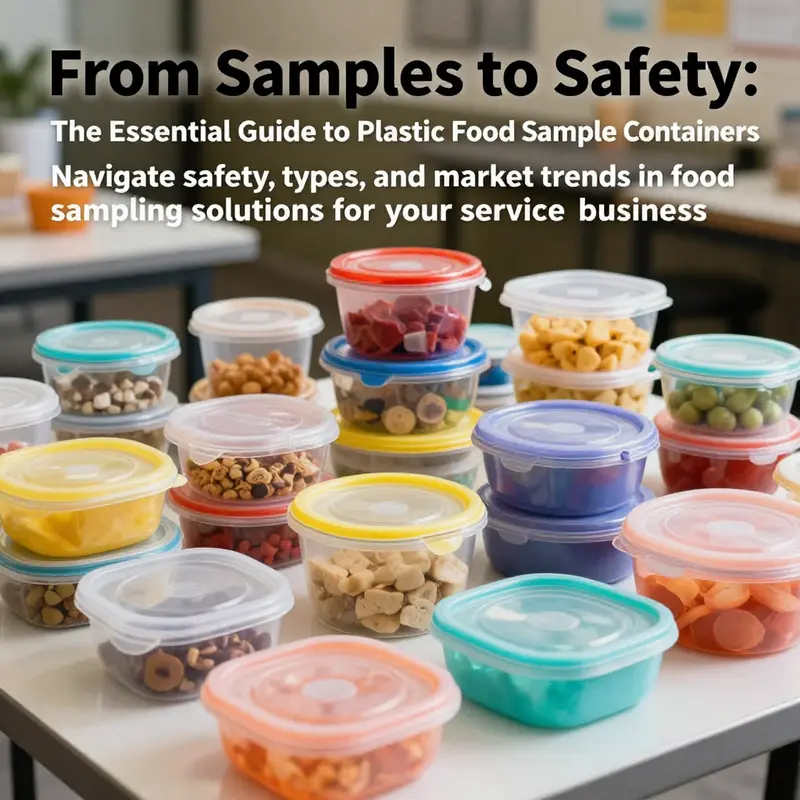
Understanding plastic food sample containers is crucial for businesses in the food industry, including bubble tea shops, restaurants, food trucks, catering services, and event planners. These containers not only aid in compliance with safety regulations but also facilitate efficient food storage and service. In this guide, we will explore the essential safety standards and regulations governing these containers, delve into the various types and applications suited for your needs, and discuss the latest market trends and innovations that can enhance your operational efficiency and customer satisfaction.
Guardrails at the Table: Global Standards for Safe Plastic Food Sample Containers
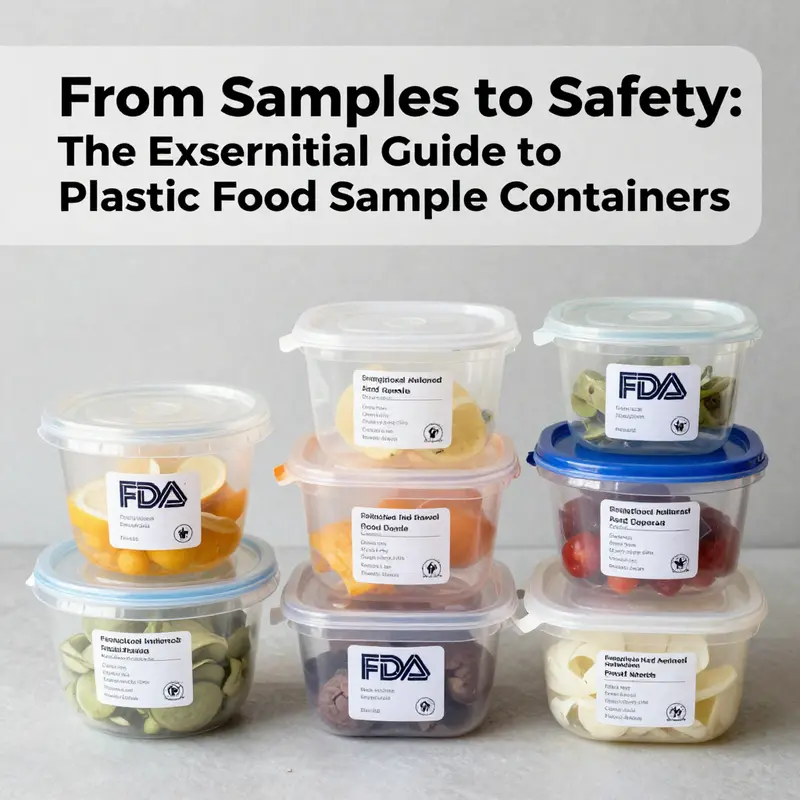
The safety of plastic food sample containers rests on a network of standards, tests, and accountable practices that translate material choices into something trustworthy for everyday use. These containers, from the most modest school sample to the kitchen cart of a busy cafeteria, sit at the interface between utility and health. The science behind them is not only about what plastics can do but about what they should not do when in contact with food. At the heart of this discipline is a thoughtful balance: enable practical, affordable, and reusable or disposable solutions while ensuring no harmful substances migrate into what people eat. The way this balance is achieved is through a layered system that blends international norms with national regulations, robust laboratory testing, and diligent supply chain practices. It is a story of migration controlled not by chance but by design, a story that explains why certain containers are recommended for specific uses and why temperature, fatty content, and duration of contact matter just as much as the plastic’s composition itself. In the broad landscape of plastic food sample containers, there is a shared assumption: when used as intended and within defined conditions, these products are safe. That assumption rests on a framework that makes safety measurable, verifiable, and traceable across the life cycle from raw resin to finished box to disposal. The first part of this framework is the concept of migration. Migration refers to components that may move from the packaging into the food under certain conditions. It is not a matter of a single worst case but a spectrum of possible scenarios that depend on the material, the printed inks and adhesives, the level of heat, the fat content of the food, and the duration of contact. Regulators and scientists study these variables in a controlled way, using standardized testing methods that are designed to simulate real world use without requiring a consumer to test the limits of a takeout box or a laboratory to overstate a risk. The science begins with the selection of material and the recognition that not all plastics are created equal for food contact. Materials deemed suitable for food contact are often described as food grade and may include polypropylene, PET, or certain polystyrenes when appropriately formulated and processed. The term food grade signals that a resin or a finished container has passed a set of criteria intended to protect human health under defined conditions. Yet food grade is not a blanket guarantee; it is a label that accompanies a chain of testing, certification, and compliance that must be maintained through production. The occupation of compliance is not a mere ritual. It is the central discipline that assures the legitimacy of every transfer from the factory floor to the table. The migration concept is complemented by the idea of tolerance and by the recognition that some substances have low thresholds for migration while others are tightly controlled, and that the goal is to keep any migration to levels that are demonstrably safe under realistic use. In practice, this translates into two primary testing paradigms: total migration and specific migration. Total migration testing asks: what is the maximum amount of material that can migrate from a container into a food simulant under defined conditions? It is a worst case assessment that treats the container as a whole, peering into the aggregate leakage from a product into substances that mimic real foods. Specific migration testing, by contrast, looks for particular chemicals known to raise concerns—benzene, certain plasticizers, bisphenols, heavy metals, and residual monomers. The results of these tests are then weighed against regulatory limits to decide whether a given container is suitable for the intended food contact scenario. The methodologies for these tests are codified in international standards and national regulations alike, with laboratories carrying the dual burden of technical competence and procedural integrity. Accreditation to ISO 17025 is one of the clearest markers of this competence. ISO 17025 defines the general requirements for the competence of testing and calibration laboratories, ensuring that the labs analyzing migration from plastic materials are technically capable and operate under a consistent quality system. In parallel, ISO 18843 provides guidance specifically for the determination of total migration from plastics into food simulants, underscoring how critical experimental design is to producing meaningful results. Together, these standards help laboratories produce data that regulators can rely on when setting safe-use conditions. The connection between testing and regulation is not abstract. In the United States, the regulatory framework is anchored in the Code of Federal Regulations, particularly Title 21. Parts 174 through 179 establish what is considered a Food Contact Substance and describe the conditions under which these substances may contact food. Part 177 covers polymers and polymer resins used in packaging, setting out the chemical families that may be used and the limits on certain components that can migrate into food. Part 178 addresses indirect additives, such as processing aids and coatings that might be used in the course of packaging manufacture. This constellation of provisions creates a legal map that manufacturers must follow if their containers are to be marketed in the United States. Across the Atlantic, the European Union builds its safety architecture around Regulation (EC) No 1935/2004 on materials and articles intended to come into contact with food, complemented by specific implementing rules. Regulation (EU) No 10/2011, for example, lays down criteria for the safety of plastics intended for contact with food, including how materials are authorized, notified, and controlled. The principle at work in the EU framework is sometimes summarized as no migration or safe migration; the idea is that any migration should be controlled so as not to endanger health or alter food composition. The EU approach is characterized by a rigorous risk assessment culture that continuously evaluates new materials and additives and requires that they meet strict safety criteria before they can be placed on the market. In practice, this means that a container intended to hold a fatty or high-temperature food will be scrutinized for the specific migration of substances that tend to migrate under those conditions. It also means that a container must be traceable back to its source, with documented evidence of compliance, batch records, and, where applicable, certificates of conformity or test reports. All of this work is designed to prevent a worst case from becoming a consumer risk. In a real use scenario, the temperature and food composition are among the most influential variables. For example, polystyrene containers sometimes show higher migration of residual styrene monomer and other additives when exposed to elevated temperatures. A study highlighted that under conditions simulating fatty foods at 120°C, a PS container could exceed overall migration limits, whereas the same container could meet safety standards at 100°C. This nuance underscores why users must adhere to temperature guidelines and why retailers and institutions often specify instructions for microwave use, storage, and disposal. It is not merely a matter of what the plastic is made of, but how it is used. The same body of science that governs migration also informs the choice between disposable and reusable options, the design of the container, and the labeling that accompanies it. For institutions such as schools, hospitals, and research facilities, the regulatory frame is intertwined with practical procurement and hygiene requirements. Food sample containers used for regulatory compliance in educational or healthcare settings must be hygienic, sealable, and clearly labeled. They often function as evidence in audits, so the supply chain places a premium on traceability, batch numbering, and reliable packaging integrity. In this context, the emphasis on BPA-free products, where relevant, and on FDA-approved materials is not optional but foundational. The procurement pathway reflects a broader confidence in safety: buyers demand documentation that the container was produced under good manufacturing practices and that its materials are compatible with the anticipated use. The supply chain thus becomes a living extension of the regulatory framework. Customization capabilities—such as labeling, multiple sizes, and multi-piece packaging sets—are also shaped by safety requirements. The same standards that require low migration also drive how a container can be safely sealed, how inks and adhesives are chosen, and how the product can be stored, transported, and displayed. This is why many institutional buyers prioritize containers that explicitly advertise food-grade construction, BPA-free status, and formal compliance certificates. In practical terms, this means that a buyer might seek options that ensure hygienic handling and traceability across batches. A typical procurement scenario involves evaluating the container for its material class, the presence of any coatings or inks, and the ability to maintain a stable barrier under the intended use conditions. The discussion of regulation and safety would be incomplete without acknowledging the role of explicit guidance from health authorities and regulators. Official guidance, such as the U S Food and Drug Administration guidance on food contact materials, provides practical direction for manufacturers, testers, and end users alike. This guidance covers the safety assessment, testing protocols, and the regulatory expectations that underpin everyday operations in laboratories and factories. It is a reminder that the safeguards built into the system are grounded in transparent, science-based processes. For researchers, students, and professionals who work with food samples, compliance also means understanding the limits of what a container can do. It means recognizing that migration is not an abstract risk but a measurable phenomenon that can be quantified through standardized tests and that the results must be interpreted in light of the intended use. An important, often overlooked, aspect of this ecosystem is the importance of labeling not just for consumer information but for health audits. Labels indicate material type, safety status, and compliance with regulatory codes. When the label is accurate and informative, it reduces the chance of misuse, such as using a container intended for cold foods to hold hot, fatty substances in a microwave. The responsibility for safe practice, however, does not rest solely on manufacturers and regulators. End users—kitchens, laboratories, and educational institutions—play a crucial role by adhering to temperature allowances, storage recommendations, and disposal guidelines. Temperature is not a trivial variable. In the lab and in the pantry, higher temperatures or longer exposures intensify migration risk. The total migration test is designed to capture the worst plausible exposure, but real life can be more complex because of the mixture of foods, the frequency of use, and the repeated cycles a container may undergo. The regulatory framework understands that complexity and offers a structured path for managing it. It does so by requiring ongoing verification, quality assurance, and, where applicable, post-market surveillance. Laboratories must operate with validated methods, maintain calibration, and report uncertainty in their results. Manufacturers must provide product specifications and certificates of conformity. Institutions must document compliance in their own records and ensure that the containers they deploy are suited to their specific food safety objectives. The end result is a system that wins trust not through fear but through demonstrated reliability. It is a system that allows educators to sample, healthcare workers to store specimens, and caterers to serve without compromising safety. It also accommodates the practical realities of bulk procurement, where brands may offer configurable options and where the logistics of labeling and packaging sets must be aligned with regulatory expectations. In this supply chain, the interplay between regulation and practice is visible in the everyday decisions of procurement teams who weigh cost, performance, and safety in equal measure. They consider not only whether a container can hold a given food at a given temperature but whether its entire life cycle—from resin to finished product to end-of-life disposal—meets the standards that keep food safe. The commitment to safety is reinforced by the fact that laboratories that perform migration testing often operate under ISO 17025 accreditation, a signal that results are produced by technically competent personnel using validated methods. Meanwhile, EU and US regulators demand that migrants stay within prescribed limits corresponding to the intended use of the product. This system does not remain static. It evolves as new materials enter the market, as new testing technologies emerge, and as scientific understanding deepens. The result is a dynamic but stable framework that supports innovation while protecting public health. For readers seeking practical grounding in these ideas, the concept of no migration is not an abstract slogan but a criterion that informs everyday choices. When choosing plastic food sample containers for regulatory compliance, education, or service operations, the right container is more than a box; it is a carefully engineered interface that minimizes risk while enabling reliable sampling, storage, and transport. If you want a concrete example of how this translates into procurement practice, consider the emphasis on clearly labeled, food-grade designs that are compatible with the temperatures and food types they will encounter, and the availability of reliable labeling, batch traceability, and documentation that accompany the product. These features are not optional extras but integral components of a compliant supply chain that aligns with both global and local expectations. For those who work in environments where food safety audits are routine, the clarity of this framework helps demystify why certain containers are recommended for particular tasks and why a misused container can escalate risk. It also clarifies why a buyer should look for evidence rather than assumptions: a current safety data sheet, an official test report demonstrating total and specific migration results, and a certificate of conformity that ties the product to the standards described in the regulatory code. In sum, safety standards and regulations for plastic food sample containers are not about restricting creativity; they are about enabling responsible, scalable use. They provide a coherent language for engineers, testers, suppliers, and end users to communicate risk, performance, and accountability. They ensure that when a container touches food, it does so within limits that protect health and preserve the integrity of the food itself. They are a shared discipline, built on sound science, reputable testing, and a commitment to consumer safety that transcends borders. This transnational framework is the backbone of confidence in the everyday operations of kitchens, classrooms, and laboratories that rely on plastic food sample containers to perform their functions safely and effectively. For readers who want to explore the regulatory landscape further, official guidance on food contact materials offers a comprehensive view of the safety assessment, regulatory requirements, and testing protocols that underlie these standards. FDA guidelines on food contact materials
Further reading and references can be found in regulatory documentation and official agency guidance, such as the U S FDA materials guidance mentioned above. This body of work helps translate the complex language of regulations into practical expectations for manufacturers and users alike. It also provides a roadmap for staying current as standards evolve and as new materials and methods enter the market. As a closing note, the crucial idea remains constant: when food safety is at stake, the traceable chain from resin to regulation to the consumer is what sustains trust. The containers designed for sampling, storage, and display are not only convenient tools; they are components of a safety system that makes every bite-or-bite-sized sample-a responsible, protected choice. For those who want to verify details beyond this chapter, the FDA guidance on food contact materials serves as a foundational external resource that outlines the principles and practices that keep migration within safe bounds.
Materials, Forms, and Real-World Uses of Plastic Food Sample Containers: A Practical Guide to Safety, Sampling, and Compliance
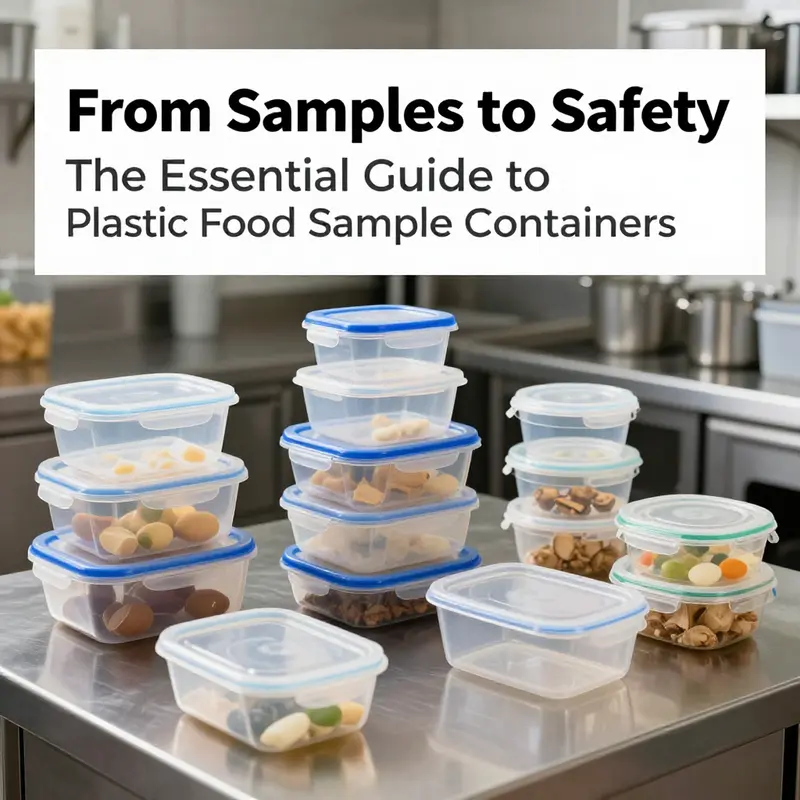
Plastic food sample containers are more than mere vessels; they are interfaces where safety, data integrity, and operational practicality meet. They support controlled collection, storage, transport, and analysis of samples across kitchens, laboratories, healthcare settings, and field operations. The choice of material, shape, and closure influences both sample integrity and the ease of compliance with food-contact regulations.
The material palette commonly used for food-contact containers includes PET, HDPE, PP, PS, LDPE, PC, and PVC in various forms. Each material brings tradeoffs: PET offers clarity and rigidity suitable for cold or cool storage but can soften with heat; HDPE provides ruggedness and chemical resistance for bulk or outdoor use; PP balances heat tolerance and chemical stability with broad suitability; PS supplies stiffness and cost advantages for cold or display use but has limited high-temperature performance; LDPE enables flexible packaging for portions or bags but may offer lower barrier performance; PC affords durability and clarity but regulatory scrutiny around BPA has shifted its use toward BPA-free formulations. PVC is increasingly avoided in direct contact with foods due to migration concerns. The choice should reflect the expected temperature exposure, the presence of fats/oils, the required visibility, and the regulatory status of the material.
Container forms range from rigid boxes, jars, and cups to thermoformed trays and flexible pouches. Rigid options support precise portioning, labeling, and stacking in regulated environments, while flexible packaging can excel in field sampling or when space efficiency matters. For hot samples, materials with robust heat resistance and designs that minimize thermal migration are preferred; for cold-chain applications, clarity, seal integrity, and low-temperature performance take precedence. The lifecycle of containers matters as well: single-use plastics dominate many fast-paced sampling workflows for hygiene and convenience, whereas reusable systems require validated cleaning, disinfection, and sterilization protocols to sustain safety and data integrity.
Regulatory and safety considerations guide material selection and handling. Containers intended for food contact should be explicitly certified for safety, labeled with their certificates, and traceable to their material specifications and lot numbers. Guidance from authorities such as national food-safety agencies and regional regulators informs limits on migration, required testing, and appropriate certifications. Documented conformity supports auditable records and reduces risk in audits and inspections.
In practice, procurement teams balance cost, performance, and sustainability. They align material choices with expected temperatures, contact duration, and the presence of fats, oils, or other migratory matrices. They plan for labeling, tamper evidence, and effective storage, as well as clear disposal or recycling pathways at end of life. Where reuse is feasible, validated cleaning and sterilization programs underpin the return of containers into the sampling workflow without compromising safety or data quality.
The practical takeaway is to match the container to the sample and the workflow: ensure food-grade status, check for appropriate certifications, design in robust labeling and traceability, and plan for disposal or recycling consistent with local policy. When these elements come together, plastic food sample containers become reliable partners in safety, analysis, and service across classrooms, kitchens, laboratories, and production lines. For further guidance, consult current regulatory resources and the supplier-provided material specifications for the exact product being used.
Sealed for Safety and Scaled for Change: Trends and Innovations in Plastic Food Sample Containers
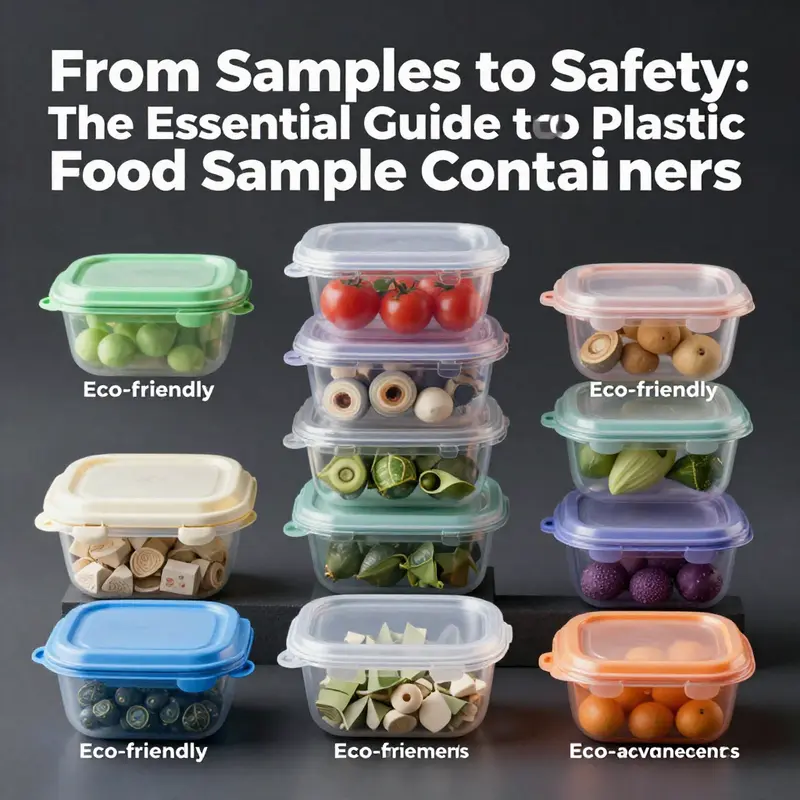
Plastic food sample containers occupy a quiet yet essential niche in modern food systems. They travel through school cafeterias, hospital kitchens, research labs, catering operations, and manufacturing floors, performing tasks from the simple storage of a sample to the controlled presentation of an entire meal. Their story is one of careful balance: between keeping foods safe and maintaining costs that make daily operations possible; between the clarity that helps a consumer inspect contents and the strength needed to survive rough handling during transport; between the urgency of regulatory compliance and the pace of innovation that pushes materials science forward. The market today reflects these tensions in a robust arithmetic of growth, safety, and evolving expectations. The latest projections place the global value of plastic food containers in the tens of billions of dollars, signaling more than a transactional demand; it signals a durable shift in how institutions and individuals think about packaging as an integral part of food safety. By 2026, estimates suggest a market size around the mid-40s of billions of dollars, rising toward the mid-60s by the mid-2030s, all while maintaining a steady compound annual growth rate near 5 percent. These numbers, though easy to quote, encode a deeper story about how users across sectors are reimagining what a simple container can do and how a container can be used to enforce safety, traceability, and sustainability.
Historically, plastic food sample containers earned their reputation through three core attributes: durability, clarity, and cost efficiency. They needed to hold up under routine handling, resist damage during stacking and transit, and provide enough transparency to enable quick visual checks of contents without opening the lid. Plastics such as polypropylene, polystyrene, and PET rose to prominence because they offered predictable performance under normal temperatures, accepted printing and labeling, and could be produced at scale. But as safety standards evolved and consumer expectations shifted toward greater transparency about materials and processes, manufacturers and users began to demand more than just a cheap, clear box. They asked for evidence of food-grade compliance, assurances about chemical migration, and confidence that a container could perform reliably in the settings where food is sampled, stored, or displayed.
The regulatory frame around plastic food contact materials has become a central driver of product development. Across regions, standards require that materials intended for contact with food meet defined thresholds for residual monomers, additives, and other migrants. While many tested containers perform within safe limits when used as intended, there is a well-documented caveat: high heat and fatty foods can elevate migration in some polymers. A classic illustration comes from polystyrene-based containers, where elevated temperatures—such as those encountered in microwave heating or hot-food service—can increase the movement of monomers and additives into food. In practice, this means that a PS container might exceed overall migration limits at 120°C in tests designed to mimic fatty foods, yet perform safely at 100°C under the same assay. The takeaway for practitioners is not a call for alarm but a reminder of proper usage: adhere to temperature guidelines, respect storage recommendations, and choose materials that align with the intended use case. In many real-world settings, including take-out meal services and school meal programs, samples have shown compliance for heavy metals and residual monomers when containers are used within specified ranges. The lesson is nuanced: safety is a function of material, design, and user behavior, not a single property or specification.
This complexity helps explain why the market has shown sustained interest in adopting safer, more controllable materials and designs. The shift toward BPA-free formulations has moved from niche preference to mainstream expectation, supported by certifications such as FDA-approved status and compliance with relevant national or international standards. The emphasis on food-grade plastic is not about replacing one bad actor with another; it is about aligning formulation science, processing controls, and supply chain integrity so that what reaches the consumer’s table is demonstrably safe. The drive toward safer materials dovetails with a broader sustainability conversation. Stakeholders across government, industry, and civil society seek packaging that reduces environmental impact without compromising safety or performance. This has spurred interest in resins with higher recyclability, designs that minimize material use, and formulations that enable easier recycling or safer end-of-life pathways. In practice, this translates into more frequent use of clear, recyclable polymers, reduced reliance on vacancy-laden components, and a preference for monomers and additives with robust, well-documented safety profiles.
On the manufacturing front, the landscape remains global, with China continuing to play a dominant role in high-volume production and a dense network of industrial clusters that supply complex packaging ecosystems. Guangdong, Guangzhou, and Qingdao stand out as hubs where polymer sourcing, injection molding, and logistics converge into a remarkably efficient operational model. The scale of production in these regions enables manufacturers to offer tiered options—from basic, micro-perimeter designs suitable for bulk distribution to more sophisticated, multi-compartment and controlled-atmosphere configurations that can support delicate or segregated contents. The ability to produce hundreds of thousands to millions of units per month at a unit price that remains highly competitive is a key driver of market dynamics. Yet this geographic concentration also highlights the need for resilient supply chains, as shifts in resin prices, regulatory changes, or export restrictions can ripple quickly through downstream users.
At the same time, inland production centers are gaining attention for reasons that are both economic and strategic. Regions with lower input costs, even when they sit farther from port infrastructure, are attracting investment because producers can lower a significant portion of the landed cost of materials. When MOQs can be modest, entrants—startups, educational institutions, or regional distributors—can test new concepts, materials, or configurations without incurring prohibitive upfront expenses. This democratization of manufacturing capacity supports a more agile market, one in which new designs—whether aimed at improved sealing, heat resistance, or antimicrobial properties—can be prototyped and evaluated with speed. The implication for buyers is clear: the procurement lens has shifted from simply selecting a price tier to weighing a broader set of capabilities, including process transparency, supplier responsiveness, and the ability to scale while maintaining consistent quality.
The frontier of innovation in plastic food sample containers extends beyond material choices and price points. It reaches into the realm of product architecture and how containers interact with the people and systems that use them. Customization has moved from decorative labeling to functional adaptations that address niche uses in laboratories, educational settings, and commercial kitchens. Ultraviolet (UV) stabilization, anti-static additives, and color-coded or cone-bottom geometries are not cosmetic options; they solve real problems. UV stabilization can shield contents from light-induced degradation, critical for samples or beverages with sensitive components. Anti-static additives can reduce cling and dust collection in environments that demand cleanliness. Cone-bottom designs, while visually distinctive, support better drainage for fermentation or sediment-heavy contents and facilitate more complete sampling in certain laboratory workflows. These features, often bundled with automation-ready assembly lines, enable manufacturers to offer scalable, repeatable configurations that meet exacting standards without sacrificing efficiency.
The digital thread that runs through modern container design is not just about the product itself, but about the entire value chain around it. Smart manufacturing concepts—traceability, in-line inspection, and data-driven quality control—are increasingly embedded into production lines. A facility that can produce 100,000 units in a month and track each batch to a resin lot, a mold cavity, and a stamp imprint provides a level of accountability that resonates with buyers seeking regulatory compliance and audit readiness. For educational institutions and healthcare providers, where samples must be clearly labeled and traceable, such capabilities offer a tangible return: reduced risk of mislabeling, easier retrieval during audits, and clearer documentation for regulators.
In the sphere of educational and healthcare applications, the concept of a dedicated food sample container takes on a more purposeful tone. These are not disposable boxes for casual use; they are hygienic, sealable, and clearly labeled tools that must withstand repeated handling, preserve sample integrity, and enable rapid identification. Kindergarten programs, for example, require containers that are robust enough to survive the rough-and-tumble realities of classroom use while maintaining hygienic standards and ensuring safe contact with edible contents. The demand for standardized sizes, reliable sealing mechanisms, and straightforward labeling has driven a niche economy within the broader plastic packaging sector. Suppliers respond by offering coordinated sets—often with volume discounts, labeling options, and packaging configurations that simplify deployment across classrooms and cafeterias. The public health dimension is not incidental here; well-designed sample containers contribute to safer food-handling practices and more reliable data collection during inspections or educational experiments.
From a sustainability standpoint, the market is navigating between two parallel currents. On one hand, there is clear momentum toward safer, BPA-free materials and stricter compliance with food safety standards such as FDA guidelines and relevant regional regulations. On the other hand, there is an equally strong push toward environmental stewardship. Recyclability and the exploration of alternative polymers that lower ecological footprints are increasingly visible in product roadmaps. This tension—between safety and sustainability—drives the industry to seek polymers that perform under typical usage while offering cleaner end-of-life profiles. It also pushes suppliers to consider the entire lifecycle of a container, from resin procurement and manufacturing energy use to recycling streams and waste management compatibility. With regulators and customers demanding greater transparency, manufacturers are prioritizing material declarations, third-party testing, and robust documentation that can accompany shipments through complex supply chains. The result is a packaging landscape that is not only safer by default but more thoughtful about its environmental responsibilities.
The convergence of safety governance, economic pragmatism, and technological advancement has real consequences for procurement and logistics. For buyers in kitchens, classrooms, clinics, and research facilities, the choices extend beyond a single product to a portfolio of packaging options designed to match specific workflows. A school lunch program might favor lightweight, stackable, and easy-to-label containers that can be used in quick-service contexts while still meeting hygiene requirements. A hospital or research lab may require more stringent sealing capabilities and clear, auditable labeling that aligns with infection control and chain-of-custody concerns. A dairy operation or a fresh-produce distributor might seek multi-compartment designs that separate components, minimize cross-contact, and support chilled storage. Across these use cases, the common thread is the drive to optimize safety without sacrificing usability or cost-effectiveness. The market is responding with a broader range of shapes, sizes, colors, and sealing technologies, all while maintaining compliance with safety standards and a growing emphasis on environmental accountability.
To translate these developments into actionable practice, organizations are adopting more sophisticated supplier evaluation frameworks. The focus extends beyond price to include technical compliance, process transparency, responsiveness, scalability, and post-sale performance. This holistic approach reflects a mature market where the value of a container is measured not only by its performance in a single use but by the stability of its supply, the clarity of its labeling, and the reliability of its compliance documentation over time. In the same breath, buyers recognize that partnerships with producers who can demonstrate consistent quality, sustainable practices, and flexible MOQs can dramatically reduce time-to-market for new concepts and new programs. The result is a more resilient ecosystem where innovation is paired with rigor, and where the best ideas survive not solely because they are novel, but because they are verifiable, scalable, and responsible.
The chapter would be incomplete without acknowledging the broader ecosystem that shapes these trends—the role of digital marketplaces, the growth of educational and healthcare procurement channels, and the emergence of green logistics that accompany modern packaging solutions. As e-commerce and global sourcing become more ingrained in everyday purchasing, buyers gain access to a wider palette of options, faster sampling cycles, and more transparent pricing dynamics. Universities and healthcare networks, in particular, have begun to standardize their container specifications across campuses and facilities, creating shared data on performance, safety, and labeling that can be leveraged to improve compliance audits and reduce waste. The practical upshot is a more predictable operating environment for users who rely on consistent container performance across multiple locations and over time.
For readers who want to connect the trends to ongoing safety testing and material specifications, it is essential to consult reputable regulatory guidance and laboratory findings. Official guidelines on food-contact substances outline the testing frameworks and migration thresholds that inform the development and acceptance of these products. The reference points are not static; they evolve as new additives and polymers are introduced and as risk assessment methodologies become more refined. In practice, this means ongoing investment in testing and documentation, in collaboration with regulatory bodies, to ensure that containers used for food sampling and storage continue to meet the highest safety expectations while enabling the efficiency and adaptability that modern operations require. The complexity of this landscape underscores why thoughtful purchasing decisions—rooted in a clear understanding of materials, usage conditions, and regulatory expectations—are essential for organizations that rely on plastic food sample containers.
In sum, the market for plastic food sample containers is characterized by steady growth, expanding capabilities, and a deepening commitment to safety, traceability, and sustainability. The drivers are clear: a growing emphasis on safe food handling in diverse environments, the need for reliable and scalable packaging solutions, and a demand for materials and designs that minimize risk while supporting efficient, data-driven operations. The innovations are equally clear: safer materials and additives, smarter packaging architectures, and manufacturing ecosystems that emphasize transparency and collaboration. The challenge—navigating heat, migration, and environmental considerations—remains real, but it is answered with better materials science, more rigorous testing, and a more informed and connected supply chain. As institutions and industries continue to rely on plastic food sample containers to manage the flow of samples, meals, and medications, the dialog between safety and innovation will persist, yielding products that are not only fit for purpose but also aligned with the evolving expectations of a world that wants its food experiences both safer and more sustainable.
For further reading and a broader market context that frames these developments, see the industry outlook and market size discussion in external research resources. As the sector continues to mature, the lines between packaging, safety science, and supply chain strategy will become even more intertwined, shaping how containers are designed, procured, and used in the years ahead. The shared aim remains simple and powerful: preserve the integrity of food while enabling reliable, scalable, and responsible packaging practices that can meet the needs of diverse settings—from bustling cafeterias to meticulous laboratories.
Internal link for related content: eco-friendly takeout boxes for food packaging
External resource: Plastic Food Containers Market Size, Share and Industry Outlook, 2026. https://www.marketresearchfuture.com/reports/plastic-food-containers-market-2586
Final thoughts
In summary, plastic food sample containers are indispensable for businesses in the food service sector, ensuring safety, compliance, and efficiency. By understanding the safety standards, exploring the diverse types and applications, and keeping abreast of market trends and innovations, you can make informed choices that enhance your food handling practices. Investing in quality containers not only supports regulatory compliance but also elevates your brand’s commitment to safety and quality, ultimately benefiting your customers.