
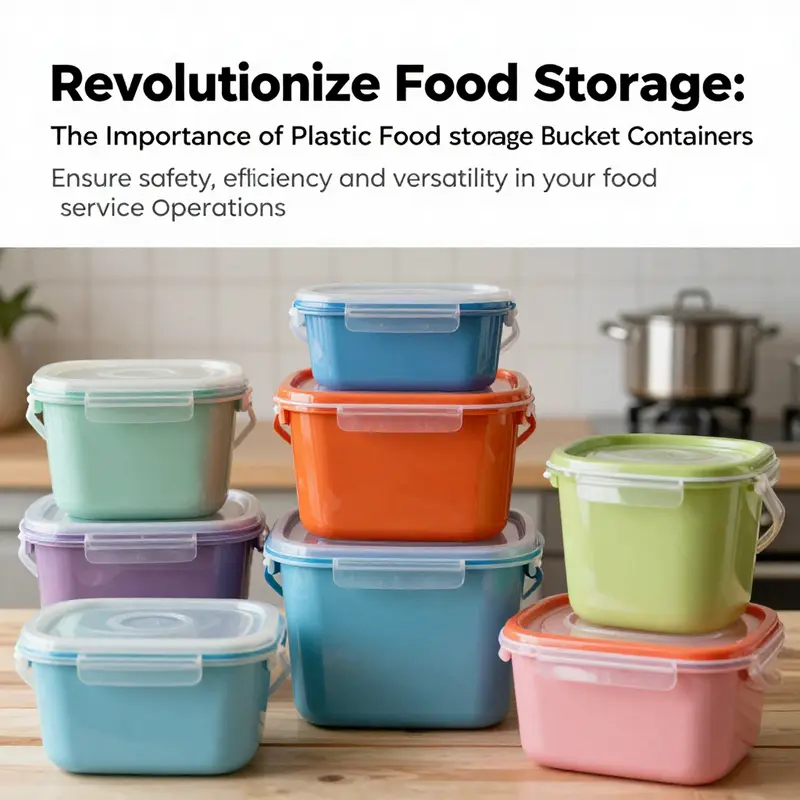
In the service industry, efficient and safe food storage is essential. Plastic food storage bucket containers present an optimal solution for various businesses, including bubble tea shops, restaurants, food trucks, and catering services. This article explores the critical aspects of these containers, including material safety, design efficiency, functional versatility, and their broad applications across industries. By delving into these topics, we aim to highlight why investing in high-quality plastic food storage bucket containers can enhance your operational efficiency and ensure food safety.
Guardians of Freshness: Material Safety and Reliable Plastic Food Storage Buckets
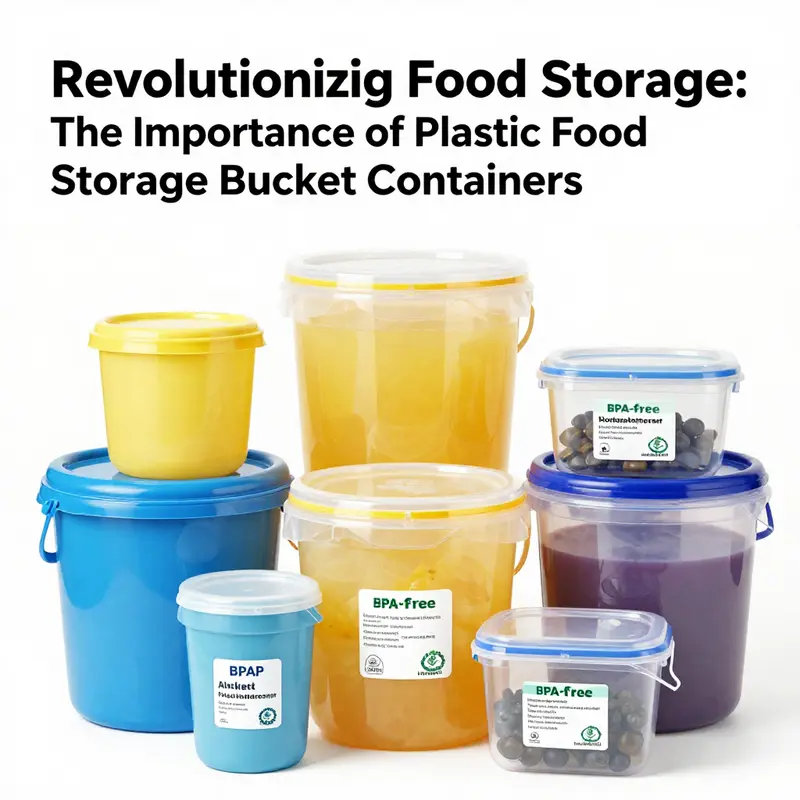
Material safety sits at the core of plastic food storage buckets, defining trust as surely as the shape of the container itself. When a bucket touches food, water, or other consumables, it must perform its function without imparting risk. This is a design philosophy that governs materials, production, and everyday use in kitchens, warehouses, and manufacturing floors. The most common materials are polypropylene (PP) and high-density polyethylene (HDPE), chosen for food-grade compatibility, chemical inertness, and durability. These plastics are engineered to resist leaching under temperature shifts and extended storage, ensuring contents remain uncontaminated. For consumers, this means containers that can hold sauces, grains, or dry goods without affecting taste, aroma, or safety; for processors, predictable behavior under production conditions and reliable shelf life when sealed, stored, and reused.
Polypropylene stands out for broad temperature tolerance and practical usability. It is FDA-compliant and supports contact with temperatures from freezing to hot-fill scenarios. PP buckets can tolerate freezing without becoming brittle and can hold warm contents when lids are designed to seal properly. The natural translucency offers product visibility without sacrificing safety, aiding inspections in busy institutions. Microwave-safe configurations extend its versatility for reheating within guidelines that govern microwave use and food contact. These capabilities are balanced by maintaining consistent wall thickness and smooth internal surfaces to minimize hotspots and moisture traps where microbes could accumulate.
HDPE brings moisture barrier properties to keep dry foods dry, high impact resistance, and recyclability (often marked as #2), aligning with sustainability goals. HDPE supports durable, drop-resistant buckets for transport, stacking, and long-term storage. Design choices often consider recycling streams and contamination risk early in the lifecycle.
Safety certification and regulatory alignment underpin credibility. Reputable manufacturers pursue food-grade certifications indicating compatibility with consumables and compliance with health and safety standards. Certifications like the Global Recycle Standard (GRS) signal responsible materials handling. Sealing systems—airtight lids with robust gaskets, sometimes with tamper-evident features—complement safety by minimizing air and moisture ingress and preserving flavor and nutrition. In industrial settings, reliable seals reduce contamination risk during handling and reuse.
Manufacturing perspective: moulds crafted from high-grade steel or aluminum ensure consistent wall thickness and smooth internal surfaces, enabling easy cleaning and predictable sealing interfaces. The rigidity of the moulds supports tight tolerances, which in turn supports reliable sealing interfaces and robust lid mechanisms.
Usage considerations include looking for BPA-free claims, explicit temperature tolerance, and clear guidance on migration testing. End-of-life statements about recyclability and waste handling matter for sustainability. In real-world settings, these practices reduce contamination risk, support hygiene compliance, and enable reliable storage across kitchens, warehouses, and food-service operations.
Design Efficiency in Plastic Food Storage Buckets: Space-Smart Solutions, Safe Handling, and Sustainable Practice
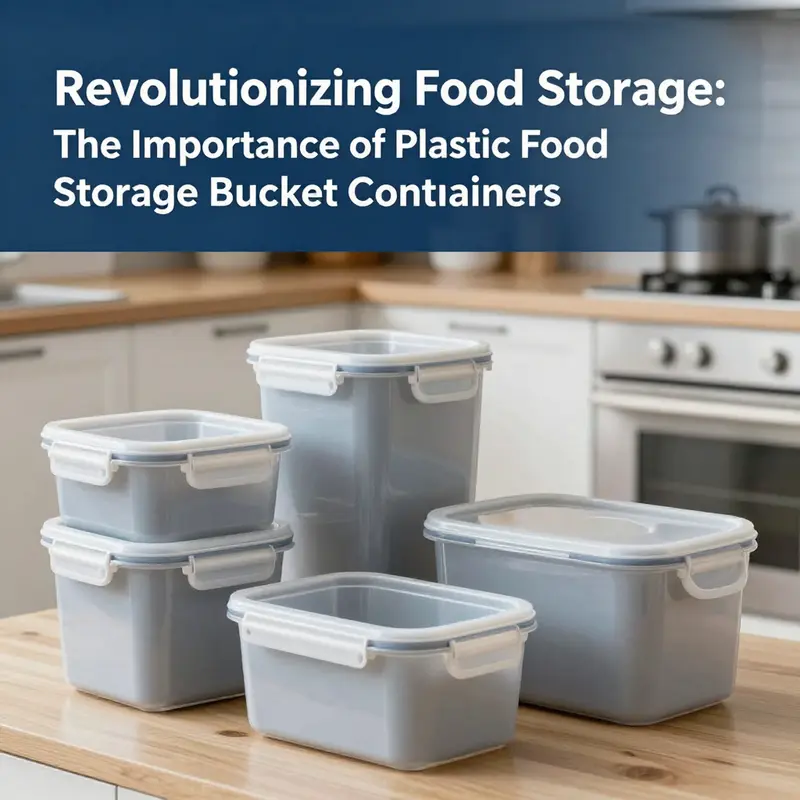
Design efficiency in plastic food storage buckets is more than a matter of aesthetics or mere convenience. It is a careful orchestration of form, function, and future readiness that translates the everyday act of storing, transporting, and preparing food into a reliable, repeatable workflow. In kitchens, warehouses, and commercial facilities, the bucket becomes a node in a larger system of organization. Its success is measured not only by how much it can hold, but by how readily it can be stacked, moved, cleaned, and reused. This is where the best designs reveal themselves: not in a single feature, but in the way several features synergize to reduce effort, save space, and preserve quality from storage to table. The most compelling examples of this efficiency do not shout their attributes. They whisper through quiet ergonomics, predictable behavior under stress, and a balance between light weight and enduring durability that makes everyday tasks feel almost effortless. In this sense, design efficiency is a practical philosophy as much as a set of specifications.
At the heart of this philosophy is stackability. When a container can nest inside another when empty, and also stack securely when full, the vertical footprint of storage suddenly shrinks. This is not only about saving shelf real estate; it is about enabling faster access, cleaner storage zones, and simpler inventory management. In real-world use, stackable designs compress the storage area from a cluttered shelf to a tidy, predictable stack that can be counted and rotated with minimal effort. The footprint reduction becomes especially meaningful in busy kitchens or long-term storage facilities where space is at a premium. The beauty of this feature lies in its versatility: containers can be nested during downtime and then rapidly converted into a compact, stable array for transport or stacking in a pantry, a walk-in, or a loading dock. The result is a calmer, more efficient environment where staff spend less time wrestling with mismatched boxes and more time on productive tasks.
Another core element is the ergonomic handling that accompanies stackability. A design that considers how a container is lifted, carried, and tilted for pouring or labeling reduces strain and improves accuracy. A well-designed carry handle, positioned to balance weight and center of gravity, makes a loaded bucket feel lighter and more manageable. This is especially important when multiple containers are transported in a chain—moving from prep to storage to a serving line or a cold room. In practice, ergonomic features mean fewer dropped lids, less spillage, and more consistent sealing. When lids are secure and leak-proof, there is a domino effect of efficiency: less waste, less time spent cleaning up, and less risk of contamination. The lid’s airtight seal protects contents from moisture and air exposure, which in turn sustains freshness and reduces the need for frequent repackaging. The lid and body interface is a quiet study in compatibility: a secure fit that relies on precise tolerances, durable materials, and a simple, reliable locking mechanism that can be operated with one hand or while wearing gloves. These subtle, everyday interactions accumulate into tangible time savings and a calmer, more controlled workflow.
Material choice anchors both safety and longevity, which are indispensable to design efficiency. Modern plastic storage buckets are predominantly fabricated from food-grade, BPA-free plastics that meet rigorous standards for contact with consumables. This choice is not merely a compliance checkbox; it has practical implications for the user’s confidence and the product’s lifecycle. Food-grade plastics reduce the risk of chemical transfer to stored foods, an assurance that becomes especially important when containers are used repeatedly for bulk storage or for contents with long shelf lives. The same materials that ensure safety also contribute to a robust, reusable product. Recyclability is a practical dimension of sustainability that translates directly into supply chain efficiency: it simplifies waste streams for facilities that operate under tight environmental goals and helps end users feel good about their stewardship. In daily use, the material’s resilience matters too. A container must withstand repeated openings and closings, exposure to cool or cold temperatures, and occasional microwaving or reheating in some contexts without compromising integrity. In the best designs, the material is a quiet enabler of comfort rather than a focal point of concern.
A consistent thread through efficient design is versatility. These containers are crafted to perform across a range of conditions and tasks. In domestic settings, they may be used for everything from bulk dry storage to meal prep and even as convenient reheating vessels when the lid is microwave-compatible. In commercial kitchens or food-service operations, the same buckets adapt to bulk packaging, portioning, and inventory control. Lids that create airtight or near-airtight seals protect against moisture loss and contamination, a feature that appreciably extends shelf life and stabilizes quality. The ability to withstand freezing temperatures, and in some cases to endure reheating in micro or oven-like conditions, reduces the need for transfer to other vessels and streamlines the workflow. This multi-functionality reduces the number of different containers a team must manage, cutting down on purchase costs, storage space, and lifecycle management. The interoperability across contexts is not incidental; it is a deliberate design outcome that keeps the bucket relevant from first use to long-term deployment.
Design efficiency also encompasses how products are packaged, shipped, and integrated into existing systems. In a well-considered approach, standardized dimensions and shapes simplify logistics, stacking, and shelf allocation. A consistent profile allows for faster restocking, easier labeling, and more precise forecasting of inventory needs. This consistency matters in environments where space is configured with modular shelving or where racking systems are used to maximize capacity. The dimensional harmony also promotes compatibility with a broader ecosystem of accessories, such as compatible lids, sealing rings, and labeling options. When lids and containers share a common interface, staff can mix and match within a familiar framework, reducing confusion and training time. A streamlined system reduces the likelihood of errors that might lead to wasted contents or mislabeling, and it supports a more predictable daily rhythm. Even the tiniest design decision—the alignment of the lid groove with the body’s rim, for example—can matter when multiple units are handled at speed.
Beyond the practicalities of space and handling, the design of plastic food storage buckets reflects a commitment to hygienic and sustainable practice. The smooth surfaces, rounded corners, and recessed areas are chosen to facilitate quick cleaning and minimize niches where food particles could accumulate. This ease of cleaning reduces the time and effort required for sanitation cycles in professional environments and is a meaningful factor in consumer use as well. When a container is easy to wipe down, it naturally supports better hygiene outcomes and contributes to a more efficient kitchen culture. In tandem with cleaning efficiency, the materials and manufacturing choices emphasize durability to withstand repeated cycles of washing, steaming, or dishwasher use. A robust design resists scratching and staining, preserving appearance and performance over time. Consumers and institutions alike appreciate that a long-lasting product lowers the total cost of ownership and reduces the environmental footprint by delaying replacement.
From a sustainability standpoint, recyclability and material purity are not merely eco-friendly add-ons but integral to design efficiency. Recyclable polymers shorten the life cycle and enable responsible end-of-life management for both households and facilities. The choice of materials also influences how easily a product can be repurposed or refurbished rather than discarded. A durable, well-made bucket that can endure heavy use and remains functional after years of service supports a more circular approach to resource use. In practice, this means fewer units entering landfills, which in turn reduces the energy and transportation costs associated with manufacturing and waste processing. The design thus aligns with broader goals of resource stewardship and cost efficiency, delivering value to buyers who seek practical performance without compromising environmental responsibility.
In commercial and industrial contexts, the drive for efficiency takes on an even more explicit dimension. Standardized dimensions and robust construction are tailored to high-volume packaging and retail-ready applications. While these versions may be heavier, their enhanced durability and compatibility with automation equipment ensure reliable performance in demanding environments. Standardization reduces variability in handling equipment, picking processes, and storage layouts, translating into measurable savings in time, labor, and space. The capacity to operate across multiple stages of the supply chain—packaging, storage, transportation, and preparation—makes the bucket a versatile workhorse. The ability to move seamlessly from a pantry shelf to a loading dock, or from a freezer to a prep station, exemplifies how design efficiency extends beyond a single use case and supports a continuous, optimized workflow.
What emerges from these considerations is a holistic view of design efficiency that integrates form, material science, usability, and lifecycle thinking. This integration is not about chasing the newest feature in isolation; it is about cultivating a coherent system where each attribute reinforces another. Stackability reinforces space efficiency, which in turn supports easier handling and faster replenishment. Ergonomics reduce physical strain and error, while the choice of food-grade materials ensures safety and longevity. Airtight lid performance protects quality, enabling longer storage times without additional handling or content risk. The end result is a container that feels almost instinctively reliable—the kind of tool that disappears into the background of daily work, letting users concentrate on the tasks at hand rather than wrestling with the container itself.
For readers who think about design in terms of a broader packaging ecosystem, the bucket serves as a lens into how principles translate across formats. The same underlying logic that makes a bucket space-efficient and user-friendly—clear interfaces, predictable interaction, robust sealing, and compatibility with a range of applications—can inform the design of other storage and packaging solutions. A glance at related forms, such as practical takeout packaging or modular food containers, reveals parallel threads: a shared emphasis on easy handling, reliable seals, and sustainable materials. This cross-pollination of ideas highlights how small, intentional design choices accumulate into meaningful gains in productivity, safety, and environmental stewardship. In the end, design efficiency is less about a single standout feature and more about the durable alignment of many features with real-world workflows.
For practitioners, educators, and designers who are evaluating or teaching about storage solutions, these insights offer a framework for judging value. Look for containers that demonstrate a coherent, predictable user experience across use cases. Prioritize those with secure, easy-to-use lids and ergonomic handles that work smoothly when stacked or nested. Check for material certifications and cleaning compatibility to ensure safety and practical upkeep. Observe how the product performs in both domestic and commercial contexts and how its dimensions align with common storage systems. When a bucket system addresses these aspects in an integrated fashion, it becomes more than a container. It becomes a dependable partner in daily operations, helping to reduce waste, save time, and promote safer, cleaner, and more sustainable food management practices. The result is not just a more efficient kitchen or storage area, but a more confident, consistent approach to everyday food handling that can scale with evolving needs.
External resource for further context: https://www.alibaba.com/product-detail/DS1378-Plastic-Storage-Container-0-1L-capacity_1601297342872.html
Internal reference for related packaging design discussions: eco-friendly takeout boxes for food packaging
Buckets of Possibility: The Functional Versatility of Plastic Food Storage Containers
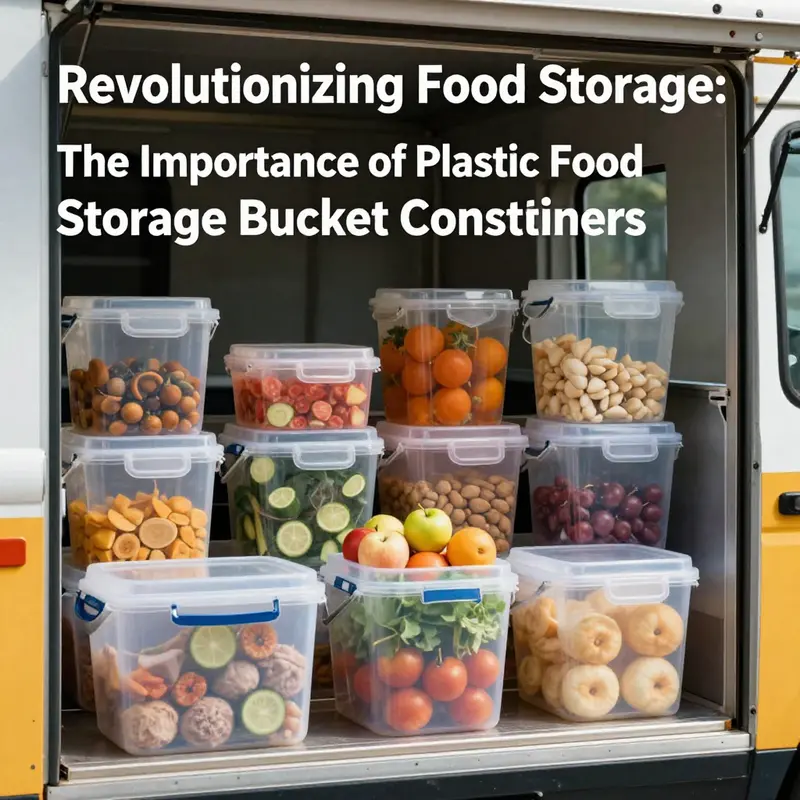
In kitchens, storerooms, and on the move, plastic food storage bucket containers have evolved from simple receptacles into a flexible system of solutions. They embody a practical philosophy: one container should be able to perform many tasks well, from organizing pantry staples to serving as a portable mixing bowl in a temporary workstation. The safety backbone behind this versatility rests on food-grade polymers such as high-density polyethylene (HDPE) and polypropylene (PP). When these materials are manufactured to stringent specifications, they resist leaching and preserve the integrity of stored items. A willingness to exclude harmful additives, such as BPA, has become a standard expectation rather than an optional feature. Beyond safety, these plastics are frequently recyclable, contributing to a more sustainable lifecycle by reducing single-use waste and enabling reuse in community kitchens, food banks, and industrial settings. This combination of safety, durability, and environmental responsibility helps explain why these containers have become common in settings as varied as family pantries, commercial kitchens, and field operations where reliability matters most.
Capacity and spatial logic guide the everyday choices people make when selecting a bucket. Today’s plastics offer a broad spectrum of sizes, typically ranging from about 1 liter (roughly 33 ounces) up to 5 gallons (approximately 19 liters). This breadth supports both small households seeking compact storage and large operations that require bulk handling. An often-overlooked design detail is the square or rectangular geometry that maximizes usable space. In many contexts, space efficiency can exceed 20 percent compared to traditional round containers, a difference that translates into tighter shelves, easier stacking, and smoother workflow in busy kitchens or crowded storage rooms. The shape also aligns with modular stacking systems, reducing the chance of tipping and making it easier to label and isolate different ingredients or materials.
Functionality extends well beyond containment. Modern plastic storage buckets are engineered with ergonomic handles and secure, leak-proof lids that protect contents from air, dust, and pests. The lids aren’t merely sealers; in many models they function as part of a tight, multi-point closure system that preserves freshness and helps maintain labile flavors and textures. Some variants are designed to be dishwasher-safe, and a subset is microwave- or freezer-safe, offering a level of convenience that blurs the line between storage and preparation. This versatility matters in households where meal-prep routines are continuous and in professional environments where time, space, and safety are all-critical constraints. The practical implications are clear: a bucket can be rolled out for bulk dry storage, then repurposed for liquid handling, or used as a temporary mixing vessel during a bustling service shift.
The primary function of these containers is to enable safe, efficient handling of a broad spectrum of food items. The use of HDPE or PP is central to this aim. HDPE, with its dense molecular structure, contributes to a robust moisture barrier that helps keep contents dry and free from contamination. PP, with its resilience to chemicals and heat, broadens the range of possible applications, including scenarios that involve warmer prep or light heating. Together, these materials create a platform that remains stable under repeated use, resisting scratches, impact, and the minor wear and tear that comes with frequent handling. The critical outcome is measurement integrity and content safety; a kitchen bucket that leaks or malfunctions under pressure undermines both food safety and efficiency. In this light, the emphasis on food-grade certification—along with rigorous quality control—becomes not only a compliance issue but a practical assurance for users who rely on these containers for daily tasks.
Another dimension of versatility lies in the practical storage options these containers enable. They are well suited for dry goods storage, offering an organized home for bulk pantry staples such as grains, beans, flours, and dried fruit. They also excel at holding liquids when designed with proper seals, serving roles from bulk water transport at a campsite to stockkeeping in a small restaurant’s back room. Yet their functionality does not stop at storage; many buckets are robust enough to act as ingredient mixing vessels during meal preparation, particularly in bulk cooking or batch-recipe contexts. When markings are included on the side, the containers become handy for precise portioning—an attribute that simplifies recipe scaling, inventory control, and dietary planning. Reading measurements directly on the container reduces the need for extra measuring tools and helps maintain consistency in production or home cooking. The integration of measurement scales is a quiet but powerful feature, turning a bucket into a multifunctional tool that supports accuracy and efficiency across tasks.
The versatility extends well beyond the kitchen, weaving into outdoor activities and emergency preparedness—areas where reliability and portability are critical. Lightweight by design, a sturdy bucket is easy to carry on camping trips, to an outdoor event, or into an emergency kit stash. Its ability to hold either dry sustenances or liquids makes it useful for water storage, field sanitation, or even temporary food processing in the absence of a full kitchen. In disaster preparedness contexts, these containers provide a fail-safe option: they can be sealed to guard against contamination, then stacked or moved with relative ease. The same qualities that make buckets practical in homes and restaurants—durability, ease of cleaning, and compatibility with standard lids—also equip them for the unpredictable demands of field work, relief operations, and temporary shelter setups. This cross-domain adaptability is not incidental; it reflects a thoughtful design ethos that prioritizes continuity of safe storage and straightforward maintenance across environments.
Within the design spectrum, secure airtight lids play a pivotal role. The lids are more than closures; they are safeguards against air, dust, and pests that can degrade quality and shorten shelf life. Airtight seals help preserve aroma, texture, and nutritional integrity, especially for foods that are sensitive to moisture or oxygen exposure. Hygiene considerations are baked into many models as well. Some buckets are dishwasher-safe, lowering the burden of sanitation in kitchens and facilities that require frequent cleaning. For those who need the option of warming meals directly, a subset of models is microwave-safe or rated for freezer use, enabling flexible workflows from prep to reheating. The growing availability of microwave-safe variants reflects a shift toward functional efficiency, especially in environments that prize quick turnaround times and versatility. At the same time, the freezer-safe attribute enhances long-term storage options, allowing bulk ingredients or prepared meals to be preserved for extended periods without compromising quality.
Industrial and agricultural settings have their own distinct demands, and plastic storage buckets adapt accordingly. In manufacturing and packaging contexts, these containers can serve as secure, sanitary packaging for bulk foods. Their robustness makes them suitable for handling, transporting, and portioning products at scale, even in environments with challenging temperatures or variable humidity. The ability to withstand repeated cycles of use—filling, sealing, washing, and refilling—translates into lower per-unit costs over time and a reduced environmental footprint when compared with single-use alternatives. In agricultural settings, buckets facilitate the storage of harvested grains or feed, while maintaining a clean separation between batches and guarding against cross-contamination. The same structural integrity that protects contents in a kitchen also supports operations where inventory control, traceability, and sanitary conditions are paramount.
Sustainability considerations thread through every aspect of this equipment. The move toward recyclable materials aligns with broader strategies to reduce waste and extend the life of food-related infrastructure. Reusability stands out as a practical virtue: a single high-quality bucket can serve for years with proper care, reducing the need for frequent replacements. The emphasis on safe materials—HDPE and PP, BPA-free formulations, and compliant certifications—helps ensure that reuse does not come at the expense of consumer health. In many supply chains, this combination of durability, safety, and recyclability creates a compelling value proposition: a container that both protects the product and minimizes environmental impact over time. Moreover, its modular, space-saving design supports efficient warehouse management and logistics, enabling teams to maximize square footage and streamline workflow without sacrificing safety or cleanliness.
The thread of safety runs through every claim about these containers. Certifications and standards are not marketing labels; they are verifiable assurances about contact with consumables. When a bucket carries recognized food-grade credentials, it signals that its materials meet established thresholds for safety, compatibility with various foods, and resistance to contaminants. This is particularly important in bulk storage, where a single breach in material integrity could affect many units of product. The science behind these assurances includes barrier properties that limit moisture ingress and gas exchange, as well as chemical resistance that protects contents from interactions with the container itself. The result is a simple, dependable premise: if the container is used as intended, it supports food safety and quality from the moment contents are added to the moment they are consumed.
Choosing and using these containers in a coherent, efficient system requires a touch of practical planning. Organization benefits from thinking in layers: selecting the right size for a given inventory, pairing it with a compatible lid system, and designing a labeling strategy that makes sense for daily routines. Space planning becomes a conversation about efficiency rather than a cosmetic concern. The rectangular family of buckets can align with shelving, pallets, or cabinet interiors, enabling quicker access while maintaining a clean, orderly appearance. When labeling is integrated into the system—whether by color, lid type, or clear markings on the bucket sides—it becomes easier to maintain inventory control, track expiration dates, and standardize portions for meal prep or service. In environments where speed matters, such a cohesive approach reduces the cognitive load on staff and simplifies training for new crew members.
A practical example of the broader versatility described here can be found in packaging and takeout contexts that share the same design sensibilities as storage buckets. For practical packaging solutions that align with this versatility, one example can be found in eco-friendly takeout boxes that mirror the same emphasis on safety, durability, and space efficiency eco-friendly takeout boxes for food packaging. This linkage—between bulk storage and portable packaging—highlights how the same material choices and design principles translate across uses, reinforcing the idea that a single container family can span both home and enterprise needs. The cross-pertilization of ideas also points toward opportunities for standardized solutions that streamline procurement, storage, and distribution in diverse settings, from home kitchens to large-scale operations.
As this chapter unfolds, the through line is clear: plastic food storage bucket containers are more than containers. They are adaptable systems whose material science, geometry, and closure innovations empower safe handling, precise portioning, and flexible use across contexts. Their story is one of continuous refinement—balancing safety, practicality, and sustainability in a way that supports healthier diets, cleaner kitchens, and more resilient operations. The next chapter will continue this trajectory, exploring how evolving materials science and lifecycle thinking are poised to push these buckets even further into the realm of multifunctional tools for everyday life. For readers seeking a concrete example of how the same design philosophy plays out in packaging, a peek at related takeout solutions provides a useful parallel to the storage bucket family and its broader implications for food systems.
External resource: For authoritative safety standards and guidelines, see https://www.foodsafety.gov/.
Across Sectors and Shelves: The Cross-Industry Reach of Plastic Food Storage Buckets
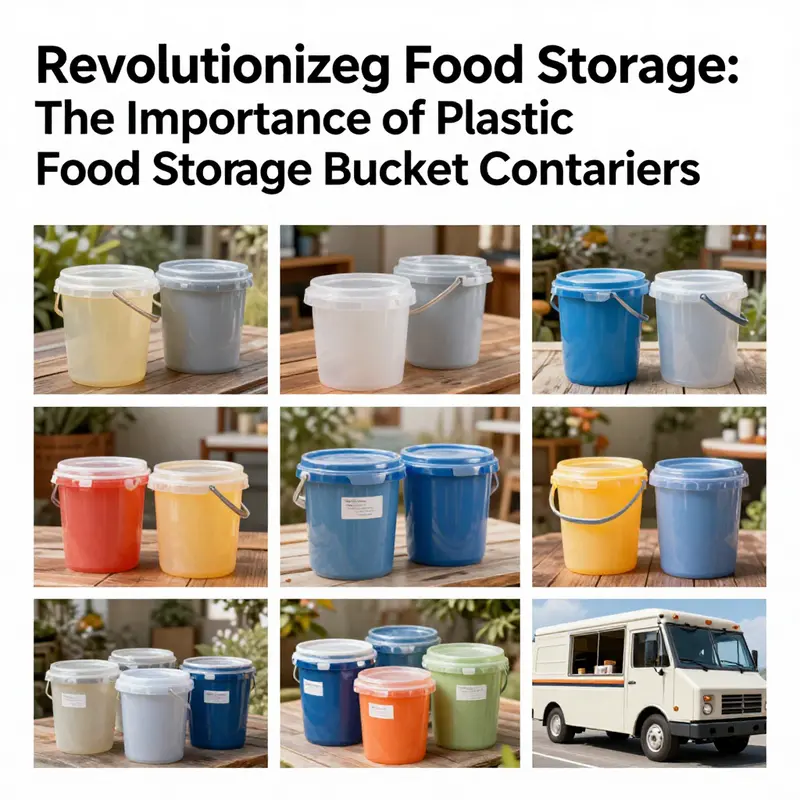
Plastic food storage bucket containers occupy a surprising place in modern commerce and domestic life. They are not only the workhorse of the kitchen pantry but also a versatile tool on the factory floor, in clinics, farms, and beauty rooms. What makes them so adaptable is a combination of material safety, practical design, and the economic realities of handling large quantities of products that must remain stable, uncontaminated, and easy to move. In practice, the same bucket that holds dry pantry staples or a batch of homemade sauce can, with the right material and lid, become a trusted storage vessel for volumes far larger than a family can consume in a week. The narrative of these containers, then, is not a single-use story but a spectrum of applications shaped by safety standards, engineering choices, and evolving expectations about sustainability and efficiency.
In the food sector, the appeal of plastic bucket containers rests on three core attributes. First is safety. Food-grade plastics that are BPA-free reduce concern about chemical migration, an important consideration when containers are used for oils, sauces, beverages, or dry goods destined for later preparation or distribution. Second is reliability. The containers offer a robust seal with leak-proof lids that can withstand rough handling during transport or multiple stacking cycles in a warehouse. Third is scalability. From small cafés that pull bulk ingredients from a backroom bin to large-scale bottlers moving oils or syrups, these buckets enable batch processing and organized inventory management. Their design often prioritizes space efficiency; square or rectangular variants fit together tightly on shelves or in trucks, sliding into corners that round containers leave awkwardly exposed. This spatial efficiency translates into measurable savings in warehouse footprint and logistics costs, a practical benefit that business operators feel in their bottom line.
The role of these buckets in food delivery and takeout ecosystems further underscores their utility. As demand for fast, hygienic service rises, so does the need for containers that can transition from kitchen to customer without compromising product quality. The stackable nature of many models supports first-in, first-out rotation, while the sturdy handles facilitate manual movement across busy kitchens and loading bays. In an era where consumer expectations extend beyond freshness to sensory integrity—taste, aroma, texture—buckets that maintain product integrity during transit become part of the brand experience. Even non-perishable staples, such as bulk flour or beans, benefit from a packaging option that shields products from moisture and air ingress while occupying a predictable amount of space on shelves or in distribution centers.
Beyond the culinary world, the appeal broadens to the pharmaceutical and healthcare sectors. Plastic food-grade buckets are used to store and dispense medical supplies, supplements, and sterile liquids under conditions that minimize contamination. The same sturdy lid that keeps a sauce secure can be trusted to seal a container holding sensitive materials when combined with appropriate sterilization and handling protocols. The sealing properties of these buckets—paired with reliable closability—help preserve product integrity, reduce the risk of cross-contamination, and support regulatory expectations in environments where cleanliness is non-negotiable. The lightweight yet durable nature of the material makes repetitive handling less fatiguing for staff, a practical advantage in settings that operate around the clock.
In chemical and industrial contexts, the buckets gain a different kind of resilience. High-density polyethylene (HDPE) or polypropylene (PP) variants are chosen for their resistance to a spectrum of corrosive substances. While not all bucket designs are suitable for every chemical, the appropriate choice of resin and additive package allows these containers to store acids, bases, solvents, and other reactive materials with a level of safety that is difficult to match in more fragile packaging. The choices involved—color coding, lid integrity, venting features if necessary, and compatibility with secondary containment—reflect a broader principle: packaging is an enabling technology. It must not only hold contents but also support the safe, efficient, and compliant handling of those contents through every step of the supply chain, from blending and transfer to storage and eventual disposal.
Agriculture provides another compelling canvas for bucket containers. Seeds, fertilizers, animal feed, and pesticides require packaging that can withstand shifting storage conditions and potential exposure to moisture or pests when stored in climate-controlled barns or outdoor facilities. Buckets designed for agricultural use often emphasize ruggedness, chemical resistance, and ease of handling with gloves or protective clothing. The design considerations extend to labeling, with space for lot numbers, batch traces, and crop-specific information that helps farmers manage inventory with precision. The ability to store granular or pelletized products without spillage is a practical advantage that reduces waste, protects the quality of inputs, and supports sustainable farming practices by minimizing product loss.
The cosmetics and personal care industry has also embraced these containers, repurposing their moisture barriers and air-tight seals for creams, lotions, balms, and similar products. In this context, the bucket’s primary value lies in protecting delicate formulations from oxidation and exposure to environmental factors that can accelerate degradation. While consumer-facing packaging in this sector often favors more compact or premium containers, large-format tubs remain relevant for bulk production, regional distribution centers, and professional-grade cosmetic lines that require stable, sanitary storage during formulation, filling, and transport. A robust lid and a cleanable interior surface are crucial when products are replayed through multiple stages of production or repackaged for different markets.
The overarching thread across industries is the commitment to a combination of safety, sterility, and practical usability. But there is a second, equally important thread: sustainability. As organizations seek to reduce waste and move toward more circular packaging systems, the conversation around these containers shifts from merely whether they can perform a job to whether they can do so responsibly. Recyclable plastics reduce the environmental burden, and the move toward BPA-free formulations aligns with heightened consumer and regulatory expectations around chemical exposure. Some producers explore biodegradable or compostable additives, though these options come with their own handling and end-of-life considerations. The industry’s trajectory toward sustainability is not just about the material itself; it is about how the entire lifecycle—from manufacturing and use to recovery and recycling—fits into corporate stewardship and consumer confidence.
An essential element in this lifecycle is certification and standards. Reputable products are backed by food-grade certifications that verify safe contact with consumables and compliance with health and safety norms. Even in non-food applications, material choices and manufacturing processes may align with industry-specific guidelines for chemical compatibility, leak resistance, and durability. The result is a family of containers capable of serving diverse roles—from a bulk olive oil fill in a commercial kitchen to a secure, sanitary reservoir for a pharmaceutical solution and, perhaps most challenging of all, a pesticide or seed mix in an agricultural setting. The adaptability comes not from a single feature but from a carefully engineered balance of several attributes: chemical resistance, mechanical strength, sealing performance, and a lifecycle approach that honors both cost constraints and environmental responsibilities.
The practical design attributes that make plastic food storage buckets so versatile deserve particular attention. Their square or rectangular shapes maximize space efficiency, offering as much as a 20 percent improvement in shelf real estate compared with traditional round containers. This space saving matters in urban warehouses and in crowded kitchens where every inch translates into a more responsive operation. Ergonomic handles reduce the physical strain of lifting heavy contents and facilitate transport through busy facilities. Secure, leak-proof lids protect contents during rough handling, vibration, or stacking, a common scenario in distribution networks and during long-haul transport. Some models even extend their utility by being microwave-safe and freezer-safe, expanding their functional envelope to include stages of thawing, reheating, or frozen storage without the need to transfer to a different vessel. While not every bucket will meet every requirement, the spectrum of options ensures that buyers can select the precise feature package that aligns with their specific workflow, whether that is high-volume oil storage, sterile liquid handling, or bulk fertilizer management.
From a market perspective, the expansion of the plastic food container ecosystem is driven by urbanization, rising disposable incomes, and the demand for convenient, reliable packaging across the supply chain. In emerging economies, where storage and transport efficiency can dramatically affect per-unit costs, the appeal of durable, recyclable, and certification-backed containers grows even stronger. The breadth of applications—from kitchens to clinics to farms—reflects a manufacturing ethos that prioritizes compatibility with existing processes while offering an avenue for scale. In this sense, plastic food storage buckets are not merely containers; they are adaptable platforms that fit into diverse operational fabrics, enabling organizations to standardize handling practices, streamline inventory, and uphold product integrity across repeated cycles of use.
For readers who want to explore adjacent packaging innovations, the broader ecosystem includes a rich array of takeout and food-service packaging solutions. A notable example is eco-friendly takeout boxes for food packaging, which demonstrates how designers and suppliers are reimagining materials, structures, and coatings to reduce environmental impact while preserving performance. This kind of packaging philosophy resonates with bucket manufacturing, where the emphasis on recyclability, reusability, and safety aligns with the needs of multiple industries. The connection between different packaging formats helps illustrate a larger trend: packaging is increasingly viewed as a strategic asset that supports safety, efficiency, and sustainability across the board. In practice, the choice between a bucket and a lid, between a rigid tub and a flexible container, becomes a matter of optimizing workflow, cost, and environmental footprint rather than simply choosing what is cheapest or most convenient in the short term. The conversations around these choices are becoming more nuanced as stakeholders weigh regulatory expectations, consumer preferences, and the realities of large-scale logistics.
As this chapter closes on the practical, cross-industry value of plastic food storage buckets, it is worth noting how the literature frames future expectations. Market analyses point to continued growth in the global food container segment, buoyed by urban lifestyles, the need for efficient supply chains, and the imperative to safeguard product quality from production line to consumer table. The conversation will continue to evolve as materials science advances, allowing for more advanced resin systems, better barrier properties, and even more sustainable end-of-life options. What remains constant is the core purpose of these containers: to provide a safe, durable, and economical means of storing, transporting, and protecting products as they move through complex supply networks. They are, in essence, the quiet workhorses of modern packaging, quietly enabling a wide range of industries to function with greater reliability and less waste. For practitioners and scholars alike, understanding their multipurpose utility offers a practical lens on how packaging design can harmonize safety, efficiency, and sustainability across diverse operations. To situate this within a broader industry perspective, see industry analyses that discuss the expansion of the food packaging market and its drivers, such as urbanization, rising disposable incomes, and the demand for convenient packaging across regions. https://www.grandviewresearch.com/industry-analysis/food-packaging-market
Internal link note: packaging ecosystems are not isolated. In the context of ongoing innovations, readers may find it useful to explore related packaging solutions that emphasize eco-friendly and efficient design. For a related view on how packaging choices can align with sustainable practices while remaining practical in fast-paced environments, consider exploring this practical example of eco-friendly takeout boxes for food packaging. eco-friendly takeout boxes for food packaging.
External resource: For a broader context on trends in the food packaging market, see the latest industry analysis. https://www.grandviewresearch.com/industry-analysis/food-packaging-market
Final thoughts
Plastic food storage bucket containers play a crucial role in maintaining food safety, optimizing space, and offering versatility across various food service industries. As you’ve seen, their design and materials prioritize both functionality and safety, making them indispensable for bubble tea shops, restaurants, food trucks, and catering services. Choosing the right storage solutions can greatly enhance your operational efficiency and safety standards. With their proven advantages, investing in high-quality plastic food storage buckets is a step forward toward better organization and enhanced service in your food business.