
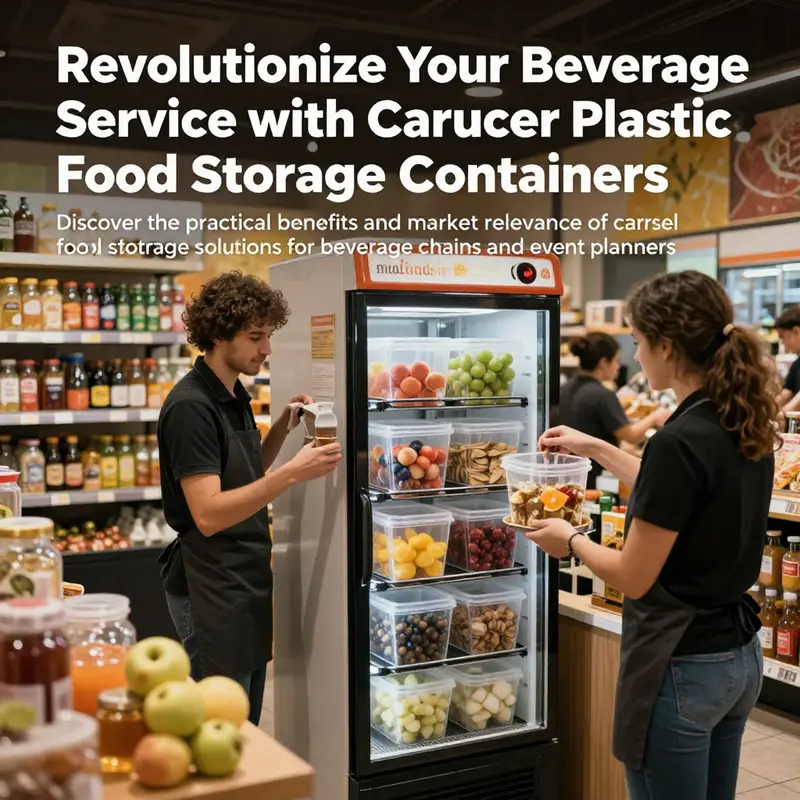
Efficient organization plays a vital role in the food service industry, particularly in bustling environments like bubble tea shops, restaurants, and food trucks. Embracing innovative solutions like plastic food storage containers with a carousel design can transform your operational efficiency while enhancing customer experience. In this exploration, we will delve into the design benefits allowing easy access and organization, examine the durability and safety of these containers, and analyze current market trends that underline their growing popularity. Additionally, we will conduct a comparative analysis within various industries and highlight practical uses for home organization. Together, these insights will showcase how adopting carousel storage containers can elevate your service offerings.
Spinning Systems: How Carousel Plastic Containers Reimagine Kitchen Organization

Carousel-style plastic food storage containers bring more than a neat trick to the counter; they embody a design philosophy that treats the kitchen as a compact, workable ecosystem. When a set is mounted on a rotating base, the entire collection becomes a single, dynamic unit. The central axis serves as both a visual anchor and a functional spine, guiding the eye from one compartment to the next and inviting a more deliberate approach to meal prep and pantry management. This is not merely about having more containers in one place; it is about a careful choreography of access, labeling, and reuse that reduces friction in daily cooking and storage tasks. The core advantage lies in efficient organization. A carousel typically houses multiple containers of varying sizes, each with its own lid, arranged in clearly labeled sections. The rotating action lets a user spin to the exact size and type needed, eliminating the time spent rummaging through a jumbled stack. In practice, users can group components of meals—vegetables, proteins, sauces, grains—into distinct compartments while keeping everything within arm’s reach. This arrangement translates into fewer misplacements and a natural rhythm to meal planning. The benefit compounds when the set is used in tandem with a pantry or fridge that values visibility. Transparent bodies let you read at a glance what’s inside, which reduces the cognitive load of inventory management. When you know at a moment’s notice whether you’re down to the last cup of lentils or a half-used jar of tomato paste, you can plan more efficiently. This immediacy supports better portion control and reduces waste, a practical consideration regardless of household size. The visual clarity also doubles as a driver of hygiene. Clear walls reveal residue and spoilage earlier, prompting timely use of ingredients before they degrade. The rotating mechanism itself supports this by keeping the active compartments readily accessible without repeatedly opening the entire container set. The ability to reach for a specific size with a simple spin becomes a subtle mental shortcut, encouraging a more deliberate use of each component rather than bottom-dwelling in a cupboard or refrigerator. Material choice is central to the carousel’s durability and ease of care. Most designs rely on food-safe plastics such as polypropylene or high-grade alternatives like Tritan. These materials withstand daily handling, resist staining from common kitchen ingredients, and maintain their clarity after repeated washing. For families who rely on batch cooking, the resilience of the plastic matters. Dishwashing, whether by hand or in a machine, should not dull the lids’ seals or warp the containers’ shapes. The best-equipped sets balance firmness with a gentle touch: lids snap on with a reassuring click, while the containers retain their form through cycles of freezing, reheating, and microwaving. The ability to use the same container in multiple contexts—storing in the freezer, reheating in the microwave, then serving on the table—adds to the sense that the carousel is more than a storage device. It becomes a versatile platform that supports a range of culinary routines from weekly meal prep to casual snack time. This versatility rests in part on the design’s attention to odor and stain resistance. Tomato sauces, curry bases, and coffee-rich flavors can leave stubborn traces. When the materials resist staining and odor retention, the set remains visually appealing and easy to clean over time. The design also embraces the practical realities of modern kitchens by enabling stackability. Even as the carousel holds multiple containers, its footprint often remains compact enough to fit on a standard shelf or pantry corner. Many designs are sized to optimize vertical storage, enabling a neat column of containers that can be topped with lids in orderly fashion. This stackability becomes especially valuable in smaller homes or apartment kitchens where every inch of horizontal space is precious. The broader implications extend beyond home kitchens into commercial and institutional settings. In fast-paced environments that require rapid access to different ingredients, a modular carousel can be scaled up or down to meet changing needs. The same principle—central rotation, compartmental clarity, and quick, visual access—translates to professional kitchens, catering operations, or institutional meal programs where efficiency and consistency are vital. In these contexts, rotating storage supports streamlined workflows. Staff can retrieve ingredients with minimal motion, reducing fatigue and the potential for cross-contamination. The interplay between economy and performance is a recurring theme in carousel design. Plastic, as a material, offers a cost-effective, lightweight, and versatile medium compared to glass or metal. Its inherent flexibility allows the creator to craft a base that supports precise rotations, secure closures, and modular configurations without driving up manufacturing costs. Yet affordability is only one side of the equation. Because these systems are designed for reuse, they can be part of a longer-term strategy to minimize waste and lower disposal pressure. When a family or a kitchen chooses a durable set with a long service life, the environmental footprint of frequent replacements declines. Manufacturing choices further shape sustainability outcomes. The best carousel systems use food-safe plastics that resist staining and odors, hold up under temperature extremes, and support easy cleaning. They also rely on tight-seal lids that preserve freshness while reducing the frequency of tossing elements due to spoilage. The reliance on BPA-free materials is part of a broader industry move toward safer, more transparent production standards. The consumer experience is strengthened by these safety considerations, which in turn fosters trust and encourages repeated use rather than short-lived, one-off purchases. Beyond the kitchen, the concept of a rotating, organized storage platform has resonance with other packaging and storage innovations. In a broader sense, a carousel embodies a modular approach to design: a core rotating base that can accommodate different shapes and sizes, a system of clearly marked compartments, and a lid mechanism that guarantees security while supporting daily accessibility. In many ways, this is a philosophy of efficiency that can translate to other domains, from small parts organization in industrial settings to consumer goods that benefit from rapid, visual identification. The alignment of form and function becomes a guiding principle for the creator and the user alike. For those who crave a more tactile sense of control, the carousel offers immediate feedback with every spin. You feel the resistance of the base as it turns, hear the soft click of a lid closing, and see the contents shift into view. The sensory cues—the movement, the color of the containers, the brightness of the transparent walls—create a user experience that feels intuitive. It becomes less about hunting for a container and more about orchestrating a small, daily ritual. The design’s success also rests on how well it informs and supports routine habits. If labeling is clear, if sizes are intuitive, and if the lids provide airtight seals, the system invites daily use rather than seasonal storage. When a kitchen supports consistent routines—meal planning on Sundays, prepped lunches for the workweek, or quick breakfasts—the carousel can act as a backbone for those routines, providing a reliable, repeatable method for reclaiming time and reducing decision fatigue. Ultimately, the principle behind carousel containers is that organization should feel effortless rather than overwhelming. The spinning motion, the visible contents, and the durable materials converge into a compact tool that respects the realities of modern life: busy mornings, hungry families, and the endless flow of ingredients that pass through every kitchen. In this sense, the carousel is less a gadget and more a philosophy of design—one that recognizes how people live and how small, thoughtful choices can sustain order, reduce waste, and make everyday cooking a more humane and enjoyable act. For readers who want to explore related packaging and storage concepts, a related resource on eco-friendly takeout boxes highlights how the same material science and design thinking translates across contexts, reinforcing the value of durable, safe, and accessible containers that adapt to varied uses. Learn more about that broader packaging approach here: eco-friendly takeout boxes for food packaging. To deepen understanding of the standards and material choices that underpin these designs, refer to external literature on plastic container specifications and safety. For further reading on standards and materials, see the external resource at the end of this chapter. https://www.plasticcontainers.com.au/
null

null
Spinning Toward Efficiency: Navigating the Market Trends of Carousel-Style Plastic Food Storage

A kitchen can feel like a small, well-orchestrated machine when it houses a carousel of containers that rotate to reveal the right size and seal. The rotating base is more than a gimmick; it is a practical response to a universal frenemy in home kitchens: clutter. When lids vanish into the pantry’s far corner and mismatched containers tumble from a stack, the act of cooking or meal-prepping becomes a scavenger hunt. Carousel designs address that friction by transforming access into a smooth, almost intuitive motion. They organize not just space but behavior, nudging households toward more deliberate choices about what to store, in what quantity, and for how long. The appeal lies in the choreography: every container slides into view, every lid snaps into place, and the moment of searching becomes a moment of planning and efficiency.
Market observers describe this appeal as part of a broader shift toward smarter, more organized kitchens. Consumers increasingly crave storage solutions that reduce time spent deciding what to use and increase time available for preparation and enjoyment. Carousel containers meet this need by combining clear visibility with a compact footprint. A well-designed set keeps frequently used sizes near the front, while the less common shapes recede, creating a visual logic that aligns with how people actually cook and snack. In practice, the spinning mechanism helps households maintain a mental map of ingredients, whether for daily lunches, batch cooking, or weekend feeding for a growing family. The result is not merely neatness; it is a workflow improvement. When you can access a container, you are more likely to use what you already have, minimizing waste and reinforcing mindful consumption.
Behind the immediate convenience lies a broader narrative about food safety and user confidence. In markets where consumer interest in airtight seals and materials that resist leaching climbs, carousel designs often emphasize secure lids and robust sealing mechanisms. BPA-free plastics, multi-layered walls, and gasketed closures are not cosmetic details but assurances that protect freshness. The emphasis on safety is especially salient as households extend storage into longer timeframes—marinating batches, prepped dinners, and bulk staples that must stay flavorful and uncontaminated. This trend toward safer storage resonates beyond the home, echoing in food service settings and small-scale catering where consistent containment and reliability matter. It also aligns with an expanding view of plastic as a material that can be both practical and responsible when manufactured with health-conscious design principles in mind.
Another dimension in the carousel story is the growing footprint of pet products in the storage marketplace. The pet economy has unlocked demand for durable, stackable bins that can accommodate multiple pet foods, treats, and supplements. Carousel configurations that keep categories neatly separated and easily accessible are particularly appealing to pet owners who juggle the needs of different animals or dietary regimes. In households where pet care sits alongside human meal planning, the capacity to rotate between containers for family meals and pet provisions without swapping gear is a welcome convenience. This convergence of household needs helps push the market toward versatile, modular designs that scale from a single kitchen to a multi-dog or multi-cat home.
As the market evolves, sustainability considerations increasingly shape product development. Plastics remain the core material in many carousel storage systems, but consumer expectations are shifting toward recyclability and reduced environmental impact. Manufacturers respond by exploring recyclable formulations and post-consumer recycled content, as well as hybrid designs that balance performance with responsible end-of-life options. The push toward eco-friendly materials sits alongside the ongoing demand for durability and long service life; durability not only supports reuse but also reduces the frequency of replacement, contributing to a lower per-use footprint. In practice, this means more attention to how containers are molded, how lids seal, and how the entire system can be disassembled and recycled at the end of its life. The market therefore travels a careful line between convenience, safety, and responsibility, recognizing that modern households want products that perform well today and respect the world tomorrow.
Urbanization and globalization have accelerated the spread of carousel storage beyond the domestic kitchen. E-commerce platforms broaden access to innovative designs, offering urban dwellers in dense regions and travelers seeking organized meals a greater array of options. The evolution is not merely about product availability; it is about how products become part of daily routines. In rapidly developing regions, shoppers increasingly seek compact, space-efficient solutions that align with smaller living spaces while preserving the freedom to rotate through a varied pantry. Market watchers also note that aisle competition is shifting toward features that matter to online shoppers: clear labeling, easy cleaning, and consistent stackability that translates into reliable shipping and storage performance across borders. The result is a more interconnected market where design choices reflect a wide range of culinary cultures and household configurations.
A further layer emerges with smart features that hint at a future where storage systems become data-enabled partners in kitchen management. Early-stage innovations in humidity sensing, RFID tagging, and app connectivity are beginning to appear in some carousel models. The prospect is to provide real-time information about contents, estimates of shelf life, and reminders for rotation to minimize waste. Imagine a carousel that not only shows you what is inside but also tells you what to cook next based on what’s near expiry. While such features are not yet universal, their potential to shape consumer behavior is undeniable. They promise to reduce spoilage, improve portion control, and support healthier eating patterns by keeping perishables in the foreground of decisions rather than buried in opaque storage.
From a strategic viewpoint, the market trajectory for carousel-style containers reflects a composite of steady growth and disruptive potential. Industry forecasts point to a global plastic food storage container market expanding at a modest pace, with a compound annual growth rate that reflects sustained interest in efficient organization, safety, and price accessibility. Within this broad expansion, the smart-storage segment—though still nascent—projects a notably higher growth path as connectivity and analytics mature. This dynamic suggests a bifurcated landscape where core, dependable storage solutions continue to dominate household shelves, while premium, tech-enabled designs begin to carve out dedicated niches in both consumer and commercial spaces. The interplay between affordability and advanced functionality will likely determine which features endure and which fade as tastes and technologies evolve.
The practical implications for designers and manufacturers are clear. A successful carousel system must balance ease of use with robust performance. It must endure the daily rigors of kitchen life—frequent washing, variable temperatures, and the repetitive action of spinning and locking lids. It should also accommodate a spectrum of storage needs, from dry grains to cookies, from big portions to small leftovers, while maintaining a compact footprint that respects tight urban kitchens. In addition, the design language should communicate safety and trust through tactile cues, clear labeling, and reliable closure systems that resist wear over time. The material story matters too: while plastics will remain central in many markets, the path toward more sustainable options will influence future formulations and manufacturing choices, shaping not only what is possible but also what is desirable in the eyes of regulators and consumers alike.
To connect these market realities with real-world decisions, consider how a household or business might approach a carousel project. The decision framework begins with space and behavior: how much counter or cabinet real estate is available, and how the team or family actually organizes meals and storage over a typical week. It continues with safety and hygiene: what level of airtightness is required, how easy is cleaning, and how durable must the seals remain after repeated use and washing. Then there is scalability: will the system expand if new storage needs arise, such as specialty ingredients or pet foods? Finally, sustainability and cost must be weighed against performance. These considerations guide not only consumer purchases but also the development choices of manufacturers seeking to balance price, function, and environmental responsibility.
For readers seeking a broader view of how carousel storage fits into the evolving landscape of kitchen organization and retail packaging, a practical reference point is the way packaging and storage platforms are presented to consumers online and offline. A linked example of a packaging solution—cited here as a representative approach to theme-oriented takeaway packaging—illustrates how modular, easy-to-access storage concepts translate across contexts, from home kitchens to commercial operations. You can explore a related approach here: custom takeaway packaging supplies. This example underscores how the principles of clarity, ease of use, and efficient stacking resonate across product categories, reinforcing the carousel’s appeal as a versatile organizational motif.
As the market continues to mature, the conversation will increasingly hinge on how designers can fuse function with responsibility. Consumers want containers that perform reliably, keep food fresh, and fit seamlessly into daily life. They also want products that align with environmental values and that keep pace with digital innovations that promise to reduce waste and improve planning. The confluence of convenience, safety, and sustainability will shape which features endure and how the carousel concept evolves. In the end, the spinning carousel is more than a storage system; it is a reflection of how modern households manage time, space, and nourishment in an era of growing choice and responsibility. For those who view your pantry not as a place to hide clutter but as a dynamic workspace, carousel containers offer a practical, forward-looking solution that keeps pace with changing lifestyles and evolving expectations.
For readers seeking a broader, data-driven perspective on market size, growth rates, and competitiveness, the latest industry analyses provide a quantitative frame to these qualitative observations. The global plastic food storage container market is projected to grow over the next decade, with the smart-storage segment expected to outpace the overall market as connectivity and data-driven optimization become more widespread. This trajectory invites designers, manufacturers, and retailers to experiment with forms that combine intuitive use with traceable value, all while remaining mindful of sustainability and consumer safety. External resources offer deeper insights into market forecasts, competitive dynamics, and industry standards shaping the field. For further context, see the Global Plastic Food Containers Market Report 2026-2035: https://www.marketsandmarkets.com/Market-Reports/plastic-food-containers-market-123456789.html
Carousel Trade-offs: Material Safety, Performance, and Practical Use of Plastic Food Storage Systems

Material, Safety, and Practical Trade-offs
Carousel-style plastic food storage systems pair mechanical convenience with compact organization. A rotating base simplifies access to multiple container sizes. Users can spin the set to grab the right size without rummaging. That convenience is the principal reason these systems thrive in domestic kitchens and light commercial settings. Yet the carousel form amplifies several trade-offs tied to the underlying plastics, long-term food preservation, and user habits.
Most carousel systems use common food-grade polymers such as polypropylene (PP) and high-density polyethylene (HDPE). These materials are chosen for their lightweight strength, impact resistance, and relative thermal tolerance. They also permit flexible lid designs and tight snap-fit seals that support stackability. In short, PP and HDPE enable the rotating storage geometry that makes carousels so practical. They also tend to be affordable, which keeps whole sets within reach for many households.
Despite these benefits, material chemistry introduces limits. Plastics have finite barrier properties. Even well-made PP and HDPE containers are slightly permeable to oxygen and moisture. For short-term storage this permeability is rarely consequential. For multi-day storage beyond a week, however, measurable oxygen transmission can accelerate staling and flavor loss. Moisture exchange can affect texture in foods like baked goods, rice, and certain prepared salads. That means a carousel set optimized for daily meal prep will perform differently from sealed canisters intended for pantry preservation.
Another concern is chemical migration under stressors like heat, acidity, and repeated use. Many containers are marketed as free from a specific additive, yet manufacturers sometimes replace that additive with structurally similar compounds. Alternatives can include bisphenol analogs and plasticizers. Under repeated heating cycles, exposure to acidic foods, or long-term storage, some of these compounds may migrate into food. Scientific reviews have noted that substitutes can carry biochemical activity, raising the same kinds of safety questions that led to earlier reformulations. Users who routinely microwave, freeze, or store acidic leftovers may want to factor that into material choice.
Glass and borosilicate alternatives illustrate the trade-offs clearly. Glass is chemically inert and provides an impermeable barrier. It withstands repeated heating, freezing, and acidic contact without chemical migration. From a preservation perspective, glass outperforms plastic for long-term freshness and for dishes with tomatoes, citrus, or vinegar-based dressings. The drawback is weight and breakability. Glass storage often consumes more vertical space and lacks the integrated carousel convenience that a plastic spinner provides.
Industrial and heavy-duty carousel bins demonstrate a different application of plastic carousels. In those settings, plastic parts bins on rotating racks are built from durable polymers and often meet strict testing standards. Certifications from regulatory bodies or testing labs attest to material consistency and resistance to certain contaminants. These systems prioritize mechanical resilience, ease of part retrieval, and standardized bin sizing over food-safety considerations. The result is a versatile family of carousel formats: from kitchen-friendly rotating container sets to industrial bin towers that organize hardware and components.
When comparing performance in the kitchen, consider the intended use. For daily meal prep and short-term meal storage, carousel plastic sets deliver efficient organization. They make portion selection and matching lids intuitive. For longer storage, or for foods that are acidic or oily, glass containers better preserve quality and avoid concerns about migration. In mixed-use kitchens, many people combine the two approaches—using glass for leftovers and long-term storage, and plastic carousels for snacks and convenient access to frequently used portions.
Design details also matter. A well-engineered lid, usually with a silicone gasket or multi-point seal, reduces vapor exchange and improves leak resistance. Stackable geometry that nests securely prevents wobble on a spinning base and maximizes space. Ergonomic features, like textured grips and recessed lids, help users remove containers without disturbing adjacent pieces. Where possible, choose carousels with replaceable or clearly labeled lids; clarity reduces mismatched lids and lost seals, which degrade performance.
Maintenance and inspection extend the useful life of plastic carousel sets. Replace lids that warp after repeated heating cycles. Discard containers with deep scratches, gouges, or clouding; those signs of wear increase surface area and micro-crevices where residues and bacteria can persist. Regular dishwashing according to manufacturer guidance helps. However, note that repeated high-heat cycles in dishwashers may accelerate wear for some polymers. Treat any container that shows persistent odor or discoloration as likely degraded and retire it from long-term food duty.
Environmental and end-of-life considerations are part of the comparative picture. PP and HDPE are widely recyclable where local infrastructure supports it. However, mixed-material lids, silicone gaskets, and adhesives complicate recycling. Glass generally has a higher recycle value and can be reused almost indefinitely when handled carefully. For consumers seeking to minimize waste, a mixed strategy often helps: favor durable glass for lasting storage, and use plastic carousels for short-term convenience where mechanical resilience and light weight matter.
Certifications and labeling should influence buying decisions. Look for clear food-grade markings and recognized certifications that confirm material testing. Where available, choose sets that disclose polymer types and provide care instructions. Labels that specify maximum safe temperatures for microwave, freezer, and dishwasher use allow safer handling. When details are sparse, treat marketing claims like ‘‘microwave-safe’’ with caution; verify the limits and avoid heating containers that show any doubt about chemical stability.
Practical selection advice helps translate comparison into action. If carousel convenience is a priority, pick materials designed for repeated handling and easy lid replacement. Match container sizes to your typical portions; smaller sizes reduce food exposure and spoilage. Reserve glass vessels for acidic, oily, or long-stored foods. Keep a few modular glass pieces handy for reheating, serving, and storing week-old meals. Finally, consider how the carousel integrates on your countertop or pantry shelf. A spinner that prevents stacking instability will protect both containers and cookware.
The industry continues to refine polymer formulations, lid engineering, and carousel mechanics. As material science evolves, watch for clearer disclosure about chemical alternatives and independent testing data. That transparency will help consumers balance the undeniable organizational strengths of rotating plastic sets against the superior barrier properties of glass. Until then, a deliberate mix of materials, attentive use, and routine inspection offers the best compromise between convenience, safety, and preservation.
For practical accessories that complement carousel systems, such as small sauce containers and sealed cups for dressings, consider specialized options designed for sauces and dips to reduce cross-contamination and leakage. You can find suitable sauce cup solutions here: disposable sauce cups with lids.
For a detailed, independent comparison of plastic versus glass food storage containers, refer to this external resource: https://www.consumerreports.org/food-storage-containers/best-plastic-food-storage-containers-a123456789/.
Spinning Order: How Carousel Plastic Containers Redraft Kitchen Organization and Everyday Efficiency
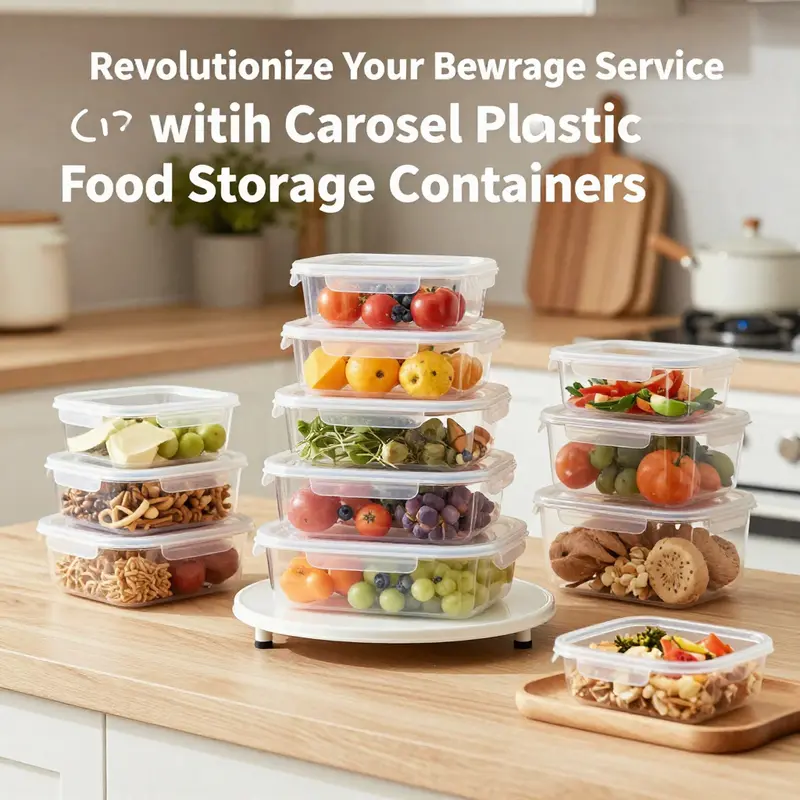
A spinning carousel is more than a clever novelty in a kitchen cabinet; it is a design philosophy that reframes how we access, store, and think about the ingredients and tools that power daily meals. When a set of plastic food storage containers is mounted on a rotating base, the entire pantry or counter becomes a compact, living map of possibility. The rotation invites a different kind of interaction with our food—one that prioritizes visibility, speed, and minimal rummaging. In crowded weeknights, when the stove and timer are in constant motion, the carousel’s ability to bring any container into view with a simple spin shifts how we plan and execute meals. It transitions cooking from a search-and-guess routine into a streamlined, almost ritual-like flow where prepped components and takeout containers are always at arm’s reach. The practical value emerges not only in the moment of cooking but in the habit it helps form: a disciplined approach to keeping what you actually use, accessible, and protected from the elements that degrade freshness over time.\n\nAt the core, a carousel storage system maximizes both vertical and horizontal space. By arranging containers of different sizes on a circular, rotating base, you gain a compact footprint while still allowing for rapid selection. The balanced layout means those common kitchen staples—spices, grains, nuts, and snack items—occupy distinct, clearly viewable niches. With a single spin, the entire lineup is visible, reducing decision fatigue and eliminating the need to pull whole stacks from cabinets to locate one item. This kind of intuitive accessibility matters most on busy nights when every extra step adds up. It also encourages smarter meal prep. When you can see bags and jars at a glance, you’re more likely to notice gaps in stock and plan replenishment before a run to the store becomes urgent.\n\nThe design language of these carousels often centers on modularity and sealing. Locks, snaps, and airtight lids are common features that preserve flavors, protect against moisture, and prevent cross-contamination between ingredients. The value of sealed storage goes beyond odor containment; it helps control humidity that can invite pantry pests or lead to mold growth in delicate items like ground spices or herbs. Ventilated compartments, sometimes found in specialized units, provide a subtle airflow for produce that benefits from gentle ventilation while still obstructing the dampness that accelerates spoilage. Across the board, the clear plastic walls of many containers let you quickly identify contents without removing lids, which reduces the number of times lids are opened and closed—a small but meaningful factor in preserving freshness.\n\nA well-chosen carousel system also supports organization logic that minimizes waste. When each container is labeled and sized for a specific category—such as rice, pasta, dried beans, or snack mixes—the set becomes a visible inventory that reminds you of what you have and what you’ve run out of. The labels can be as simple as etched or printed on the lids, or as organized as color-coded bands that match a pantry map. The visibility of the contents is especially welcome for spices and seasonings, where light exposure and air can quickly erode potency. A spice carousel, with compact, tight-sealing jars, can shield sensitive flavors from light and air, keeping them potent longer. This is a practical advantage for cooks who rely on a precise flavor profile, turning guesswork into dependable results during weeknight cooking.\n\nThe container sizes themselves are part of the practical philosophy. Small 8-ounce jars are ideal for salts, minced garlic, and single-use portions of sauces, while mid-sized 16-ounce or 24-ounce containers accommodate grains, nuts, seeds, or sliced fruit that needs portion control. A rotating base designed to hold multiple container diameters accommodates user needs without forcing a rigid system. This flexibility matters in real kitchens where starches, legumes, and baking ingredients live in the same space as snacks and pet treats. The ability to reconfigure the set as needs shift—perhaps expanding to accommodate bulk purchases or reducing for smaller apartments—keeps the carousel relevant long after it’s installed. It’s the sense that you’re investing in a system, not a gimmick, that makes this approach sustainable in everyday life.\n\nBeyond the kitchen’s core, the carousel’s utility stretches into other rooms and functions. Offices can adopt a rotating setup for staples like paper clips, rubber bands, and small desk supplies; garages and workshops can house screws, nails, and fasteners in clearly labeled compartments. In refrigerators, carousels can corral containers of prepared foods, small jars of condiments, or single-serve components for easy meal assembly. The same principle—easy sight lines, rapid retrieval, and tight seals—translates well across spaces, reinforcing a household-wide habit of organization that scales with changing needs. When you pause to observe how a spinner-based system handles every container with care, you recognize a simple truth: organization is less about storage and more about a reliable workflow.\n\nThe practical benefits also touch freshness and safety in meaningful ways. Airtight lids guard against moisture and odors that can migrate between containers, which helps maintain the integrity of dry goods and prepped ingredients. A well-sealed unit acts as a barrier against pantry pests, a factor that becomes particularly important in households with varied storage climates or frequent grocery trips. For items that require a bit more air—like certain root vegetables or ventilated storage for garlic—the capacity to select a lid design with proper airflow removes the guesswork of adapting a standard container for a specific purpose. The result is a system that supports good food hygiene: minimized contamination risk, cleaner surfaces, and less exposure of contents during daily use.\n\nAesthetic considerations matter, too. Clear walls with uniform lids create a calm, cohesive look that reduces visual chaos. A consistent color or material vocabulary across sizes makes the carousel feel intentional rather than haphazard, which in turn reinforces the habit of returning items to their designated spots. The visual appeal is not just about taste; it reduces the cognitive burden of meal planning and helps maintain a steady rhythm in the kitchen. When you can see every container clearly, you’re more likely to reuse leftovers, rotate older ingredients to the front, and notice when moisture or spoilage is beginning to creep in. These micro-decisions matter in a busy home where the goal is not perfection but predictable, reliable routines.\n\nChoosing a carousel system means weighing a few practical questions. What diameter fits your shelf or cabinet most comfortably? How many containers do you need, and are the lids locking or simply snug? Is there ventilation for particular items, and do you require microwave-safe plastic for reheating, or do you prefer reserving the spin rack for dry goods only? For households managing a tight pantry, a compact 10-inch to 12-inch diameter unit may fit better on a countertop or in a narrow cabinet, while larger configurations can handle bulk items and larger containers. The number of compartments and the ability to customize the size of each compartment determine how well the system scales with cooking styles, dietary needs, and shopping habits. A thoughtful selection translates into fewer countertop clutter moments and more efficient, satisfying meal prep.\n\nAs you consider integrating a carousel into your home, it helps to reflect on the broader ecosystem of storage choices available. The turning mechanism is the centerpiece, but the surrounding features—material safety, lid seals, venting, and labeling—are what translate a clever gadget into a practical, long-term solution. The carousel approach pairs well with a habit of regular inventory checks and a rotation scheme that prioritizes freshness. When you empty a container, you replace it with a fresh bag or bulk purchase that slides into the same slot, maintaining a steady, predictable rhythm that aligns with planned meals rather than impulse buys. The result is a pantry that feels curated rather than chaotic, a space where function and form work together to support healthier eating patterns and a more intentional approach to leftovers.\n\nFor readers curious about related packaging and organization solutions, a related reference offers insights into compact, lifestyle-friendly storage options that complement carousel containers in small spaces. Eco-friendly takeout boxes for food packaging provide a perspective on materials, footprint, and versatility that can inform how households choose lids, seals, and visibility features when setting up a kitchen spinner system. This broader view helps position carousels not as isolated tools but as part of a continuum of practical, space-saving storage options that adapt to evolving needs. eco-friendly takeout boxes for food packaging.\n\nIn practice, adopting a carousel storage system changes the cadence of cooking. It invites you to plan ahead, to preorder staples with the confidence that you will find them quickly when needed, and to reuse components efficiently without creating clutter. The key is to marry the rotating convenience with disciplined labeling and a flexible configuration that can accommodate shifts in family size, diet, and routines. The spinning design does not imply a throwback to a gimmick; it signals a thoughtful, modern approach to everyday chores. It is about transforming time spent in the kitchen from a sequence of searches into a smooth, confident workflow where ingredients are a touch away, and the act of cooking feels like an ongoing, well-choreographed routine.\n\nExternal resource for further exploration: https://www.amazon.com/Spin-Store-Swirl-Around-Food-Storage/dp/B07ZKJ9B5F
Final thoughts
Integrating plastic food storage containers with a carousel design into your business operations not only enhances organization and efficiency but also helps in maintaining food safety standards. Their innovative design allows for easy access and optimal use of space, making them an invaluable asset, especially for the fast-paced catering and beverage sectors. As consumer preferences shift favorably towards quick service and easy access, these containers stand out as a practical solution. By choosing high-quality, certified containers, industry professionals can ensure durability, safety, and sustainability in their operations, ultimately leading to better service delivery and customer satisfaction.