
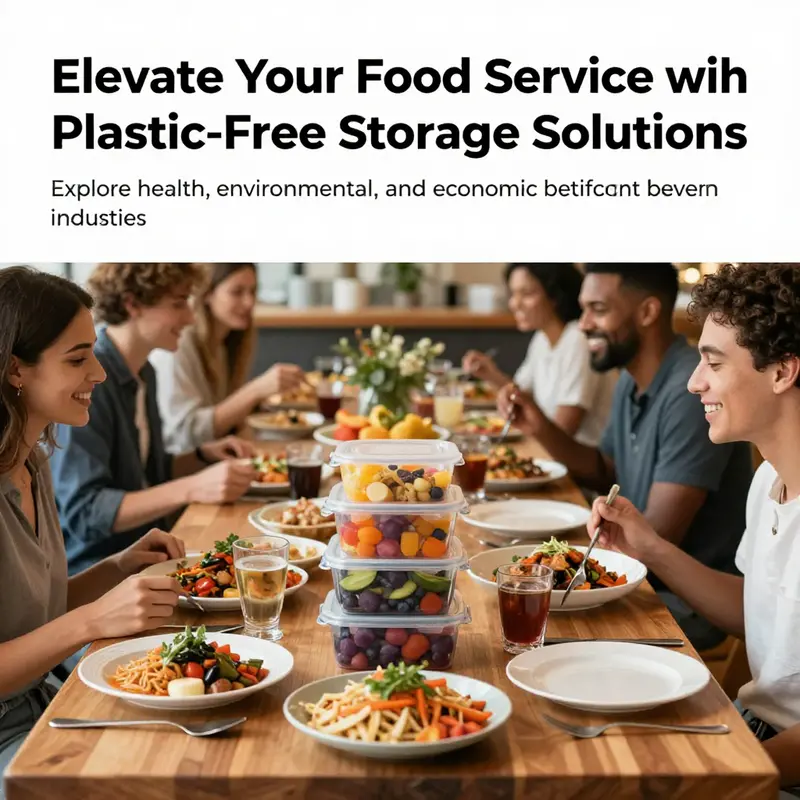
As businesses in the food and beverage industry, ensuring the health of your customers and the environment is paramount. The shift towards plastic-free food storage containers presents an opportunity to enhance your service while addressing critical health and eco-conscious trends. In this comprehensive exploration, we will delve into the health implications, environmental advantages, diverse types of plastic-free containers, and economic considerations surrounding this vital switch. By understanding these elements, beverage chains, restaurants, food trucks, catering services, event planners, and procurement teams can make informed decisions that resonate with today’s values and market demands.
From Leaks to Longevity: The Health Case for Plastic-Free Food Storage Containers
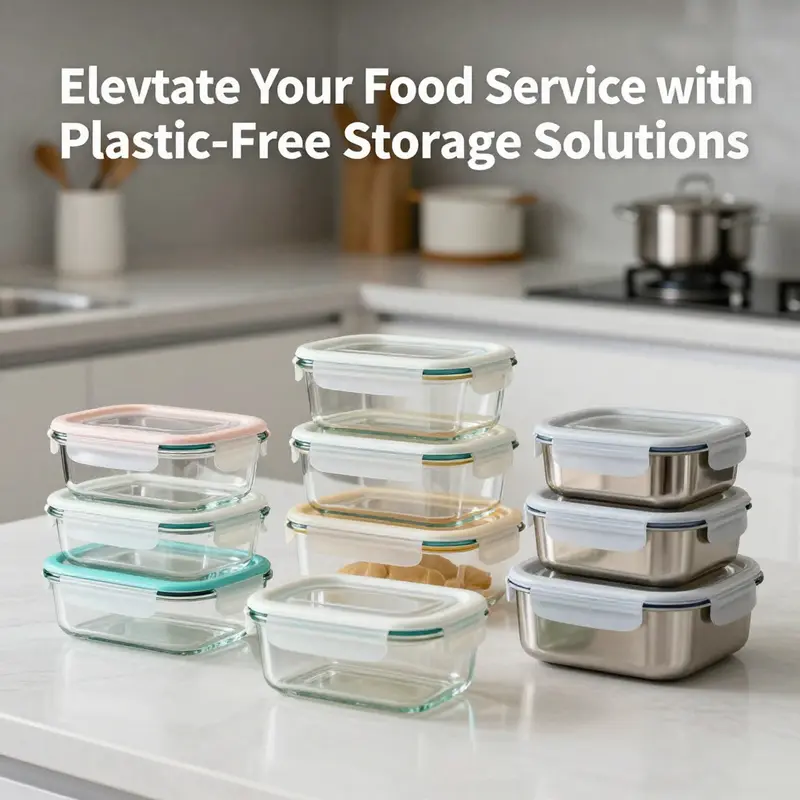
Every meal carries a quiet question about health and longevity: what is the safest space to store it, and how can the vessels we reach for in the kitchen contribute to or protect our well-being over time? The shift away from plastic storage is not just about avoiding visible wear or future waste; it is about reducing subtle, persistent exposures to compounds that can affect our hormonal systems and our long-term health. In many households, plastic containers have become convenient defaults. Yet the health implications of these choices are increasingly clear. Chemicals such as bisphenol A (BPA) and phthalates have long been flagged for their potential to migrate into food, especially when containers are heated, hold acidic ingredients, or endure repeated washing. Even products marketed as BPA-free can include substitutes that behave similarly in the human body, raising concerns about endocrine disruption that can ripple through development, metabolism, and reproductive health. As a result, the appeal of glass or other plastic-free materials grows beyond environmental considerations and becomes a matter of personal wellness. The health stakes are not abstract. Microplastics, tiny fragments shed from plastics, have been detected in human tissues, blood, and even placental material, underscoring a pervasive exposure pathway that many people had not previously considered. The reality is sobering: plastic pollution is not merely an ecosystem issue; it is a human health issue. Dr. Sarah Evans from Mount Sinai School of Medicine has warned that plastic pollution affects us in ways that extend far beyond the oceans, reminding us that everyday choices at the kitchen counter can influence long-term health outcomes. The implications are practical as well as philosophical: if the goal is to minimize toxin exposure, moving toward materials that do not shed chemicals into food seems a prudent strategy. In this context, glass emerges as a particularly compelling option. Unlike many plastics, glass is chemically inert and does not react with food or beverages. It does not absorb odors or flavors and maintains its integrity under a wide range of temperatures, from the fridge to the oven, and through repeated washing. This inertness translates into a straightforward health advantage: there is no leaching of BPA, phthalates, or their potential substitutes into meals, even when storing acidic sauces, citrusy marinades, or hot leftovers. This is not a claim about absolute safety in every conceivable scenario, but it is a well-supported orientation toward minimizing chemical exposure in ordinary domestic use. A glass container also reduces a less often discussed risk—microplastic shedding. Plastics can develop scratches, chips, and microscopic cracks through dishwasher cycles and ongoing use. Those micro-defects can release tiny particles into food or drinks, and while the full range of health effects is still being studied, the precautionary principle nudges many households toward glass or similarly inert materials as a healthier baseline. From a cleanliness standpoint, glass is also simpler to sanitize. It does not harbor micro-crevices as readily as some plastics, and it withstands thorough scrubbing and high-temperature cleaning without warping or staining. This means fewer gaps where bacteria or odors might linger, contributing to safer storage of leftovers and raw ingredients alike. It is worth noting, however, that no material is without trade-offs. Glass is heavier and more fragile than many plastics, and it can be less forgiving in certain travel or outdoor contexts. Yet durability and lifespan argue in favor of plastic-free glass when the storage system is planned with care: selecting appropriately sized jars for dry goods, using sturdy lids with reliable seals, and organizing stacks to minimize risk of breakage. For households needing a broader mix of solutions, other plastic-free options complement glass well. Stainless steel containers provide resilience for on-the-go meals and long-term storage, handling both hot and cold foods without structural degradation. Silicone bags and collapsible containers offer flexibility for snacks, marinating, or portioning, with the advantage of being reusable and heat-tolerant. Breathable fabric bags, crafted from organic fibers, help manage humidity for certain fruits and vegetables, while wooden or bamboo boxes lend a natural aesthetic for dry goods such as spices or grains. Each material brings its own balance of weight, durability, sealing performance, and care requirements. In choosing among these options, it is useful to imagine a plastic-free kitchen not as a single perfect substitute but as an integrated system. The goal is to harmonize safety, practicality, and everyday joy in food storage. A practical thread in this tapestry is the availability of packaging options that align with plastic-free values. For households who occasionally ship or gift baked goods, plastic-free packaging can be a functional extension of a health-focused storage approach. For example, foldable cake boxes with window—designed to contain pastries and confections without plastic—reflect a broader shift toward packaging that minimizes single-use plastics while preserving product quality. They illustrate a principle rather than a niche application: it is possible to design food-related packaging that is both functional and respectful of health considerations. If a reader wants a concrete example to anchor this principle, such packaging choices serve as a tangible bridge between everyday kitchen storage and responsible consumption patterns. The broader public health context also matters. The United States Environmental Protection Agency notes that a tiny fraction of plastics ever produced is recycled—roughly 9 percent—while the rest ends up in landfills, incinerators, or the environment. This statistic anchors a broader conversation about what it means to reduce plastic use not only for personal safety but also for the health of communities and ecosystems. The ripple effects of a plastic-free storage approach include fewer microplastics in the environment and far fewer opportunities for unwanted chemical exposure to accumulate in our bodies over time. When we consider how to implement a plastic-free storage strategy, the practical steps are not as daunting as they might appear. It begins with a kitchen audit: which items are routinely heated in their containers, which foods are highly acidic, and which vessels show visible wear or odors after washing? In many households, converting to glass storage for leftovers and pantry staples can begin with a few key jars and a dedicated set of lids. A simple practice—storing acidic foods in glass rather than in a plastic container—can prevent leaching and odor transfer and maintain flavor integrity longer. For those with busy schedules, the transition can be staged: swap out a fraction of plastic containers at a time, prioritizing items used most frequently and especially those that encounter heat or acidity. As such, the health benefits are not just theoretical. They are the outcome of deliberate daily decisions that reduce exposure to potentially harmful chemicals and minimize microplastic ingestion. This shift aligns with a broader movement toward mindful, sustainable living. The emotional and psychological satisfaction of choosing safer storage can reinforce healthier habits across meals, snacks, and even grocery planning. It is an invitation to reframe storage not as a concession or a compromise but as a proactive contribution to wellness. In this light, a plastic-free kitchen does not demand perfection; it invites balance. It accepts that some uses may still involve plastics in limited, lower-risk contexts, while prioritizing glass and other inert materials for the most sensitive applications—hot foods, acidic ingredients, and long-term storage. It also encourages a valuation of product longevity and care. Glass containers, when chosen with robust seals and proper lids, can endure years of use with proper handling, reducing the consumer footprint and the cumulative exposure to leaching. This durability stands in contrast to the more frequent replacement cycles of lower-quality plastics. The result is not only a healthier personal profile but a less plastic-saturated home, diminishing the end-of-life waste and the likelihood of microplastic contamination in household food systems. To illustrate how this philosophy translates into daily routines, consider a simple, practical framework: designate a glass-storage zone for leftovers, batch-cooked meals, and acidic sauces; reserve stainless steel or silicone options for on-the-go meals and soft, pliable storage needs; use fabric or natural fiber bags for produce and moisture balance where appropriate. This integrated approach helps maintain the flow of cooking, meal prep, and grocery planning, without forcing a wholesale, impractical transformation. It also keeps the kitchen visually cohesive, with a calm, natural aesthetic that echoes the safety of the materials themselves. The health case for plastic-free storage is reinforced by independent voices that synthesize laboratory findings, epidemiological data, and consumer experiences. While the day-to-day reality of replacing every plastic container may be gradual, the cumulative effect of consistent choices across weeks, months, and years can be meaningful. In the broader narrative of public health, reducing exposure to endocrine-disrupting compounds and minimizing microplastic ingestion are steps that align personal wellness with planetary health. The practical reality is that glass is inert, non-porous, and resilient to the demands of modern kitchens, especially when used with well-designed lids and appropriate storage solutions. Glass does not degrade into microplastics and does not leach harmful chemicals into hot soups, tomato sauces, or citrus-based marinades. This is not a universal absolution from all concerns—no storage solution is entirely risk-free—but it represents a robust shield against two of the most persistent issues associated with plastics. In turn, the health advantages ripple outward: clearer skies, less plastic in landfills, and fewer microplastics entering the food chain. For readers curious about how this translates into contemporary guidance, consider navigating the practicalities in light of reputable health information, such as the Healthline examination of glass versus plastic storage. External resource: Healthline – Are Glass Food Containers Safer Than Plastic? (Published February 2026) https://www.healthline.com/nutrition/glass-vs-plastic-food-containers.
For readers seeking a concrete, real-world example of plant- and fiber-based packaging as part of a plastic-free approach, a deeper dive into eco-conscious packaging options can be informative. For instance, barrier-free, windowed paper packaging for baked goods demonstrates that safe, attractive, and functional containers can be achieved without reliance on traditional plastic. A relevant example of such packaging is a foldable cake box with a window, designed for bakery and gift-use, which offers a plastic-free alternative for carrying and presenting finished goods. These choices reflect the broader principle that food safety and sustainability are not merely theoretical, but reachable through thoughtful materials and design. In the end, the decision to pursue plastic-free storage becomes less a crusade and more a practical adaptation—a means to preserve both flavor and health while supporting a gentler footprint on the environment. When we approach kitchen storage with this mindset, we are already mapping a healthier future—one container, one meal, and one mindful choice at a time.
How Plastic-Free Food Storage Cuts Waste, Carbon, and Microplastics — A Practical Look at Environmental Gains
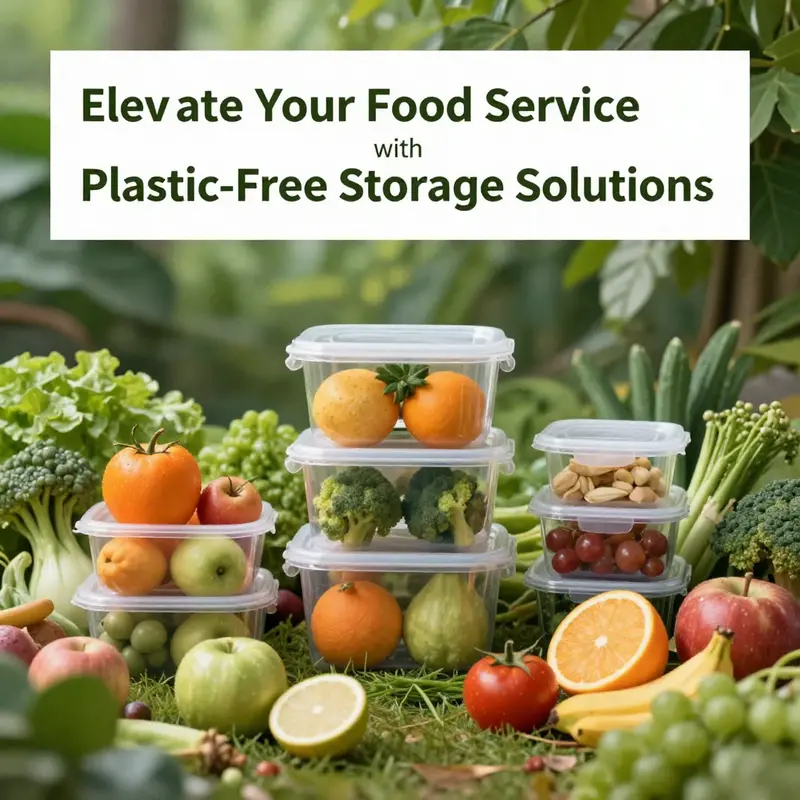
Plastic-free food storage delivers measurable environmental gains that reach beyond the kitchen. Choosing glass, stainless steel, silicone, fabric, or wood for storing food reduces plastic dependence and interrupts a chain of environmental harms. The benefits begin with waste reduction and extend to lower greenhouse gas emissions, diminished microplastic pollution, and stronger local circular economies. The true scale of impact depends on material choice, product lifespan, and daily habits. This chapter walks through those effects with practical clarity, showing why swapping single-use and disposable plastics for durable, non-plastic containers matters for the planet.
Durability is the first and most visible environmental advantage. Single-use plastic bags, flimsy tubs, and throwaway wraps are designed for one or a few uses. They fragment quickly under stress and washing, creating persistent waste. Durable alternatives are built to last years or decades. Glass jars, metal boxes, and heavy-duty silicone bags survive repeated cycles of use, cleaning, freezing, and heating. Each time you reuse a container, you spread the embodied environmental cost of making that item over more uses. The result is a lower per-use footprint, which is often the most important metric for sustainable consumer choices.
The problem with plastic is not only its lifespan but what it becomes. When plastics break down, they rarely disappear. They fragment into microplastics that move from soil and waterways into food chains. Microplastics have been found in rivers, oceans, and organisms across trophic levels. Emerging research has detected tiny plastic particles in human blood and tissues. Reducing plastic storage at home directly shrinks the input of new plastics into this global system. Durable, non-plastic containers reduce the flow of new plastic items into waste streams. Over time, this reduces the amount of material entering landfills and the wider environment.
A second major advantage is reduction in virgin fossil-fuel use. Plastics are largely made from petrochemicals. Their production consumes oil and natural gas and emits greenhouse gases at multiple stages. Making a ton of rigid plastic generates far more carbon emissions than producing an equivalent mass of glass or stainless steel when measured over a long service life. The catch is that energy-intensive materials like glass and metal need careful use to pay back their production footprint. That is why reuse matters. A glass jar used daily for several years will usually have a lower lifetime climate impact than dozens of single-use or short-lived plastic items.
Recyclability and end-of-life pathways matter too. Many non-plastic options are recyclable, compostable, or biodegradable under the right conditions. Stainless steel is nearly infinitely recyclable without losing quality. Glass can be recycled repeatedly, keeping materials in circulation. Natural fibers like cotton and bamboo can be composted when untreated. Even silicone, which resists degradation, can often be recycled through specialty streams. These end-of-life options contrast with the reality that only a small fraction of produced plastic is recycled effectively. When plastic is neither recycled nor properly managed, it becomes litter, landfill mass, or ocean pollution. Choosing materials with viable circular pathways strengthens the possibility of a truly circular system.
Beyond material science, the environmental benefit compounds when households change behavior. When people invest in a few high-quality, long-lasting containers, they tend to plan meals, reduce overbuying, and store foods more efficiently. These behaviors lower food waste, which is a significant environmental burden on its own. Food production uses land, water, and energy; wasted food amplifies those impacts. Using better storage to keep leftovers edible and produce fresh longer can cut household food waste. That amplifies the climate and resource benefits of switching away from plastic.
Durability also reduces the need for frequent replacement and the consumption loop. A metal lunchbox that lasts five years replaces dozens of disposable containers. A glass set that serves for years replaces countless single-use wraps. The environmental savings come from that avoided production, transport, packaging, and disposal associated with frequent replacements.
The benefits scale from single households to entire communities. Businesses that switch to reusable or compostable packaging reduce municipal waste streams. When cafeterias, markets, or catering services adopt non-plastic containers, the volume of plastic entering local systems falls. That lowers cleanup costs for cities and reduces plastic’s presence in waterways. Policies that encourage reusable systems, deposit-return schemes, and commercial composting create infrastructure that supports household choices. Community-level shifts also create market signals. Demand for non-plastic, durable goods increases, prompting better designs and wider availability.
There are trade-offs to acknowledge. Not all plastic-free alternatives are perfect in every context. For example, glass is heavier to transport than plastic. If a glass item is rarely used or frequently replaced, the transport and manufacturing emissions can outweigh benefits. Bamboo and wood require careful sourcing to avoid deforestation, while fabric bags can carry a higher footprint if manufactured from non-organic, chemically intensive cotton. A clear, practical rule helps: consider the expected lifespan, care practices, and end-of-life options. Prioritize long-lived items and keep them in circulation as long as possible.
Practical steps ensure decisions deliver real environmental wins. First, choose the right material for the job. Use glass or stainless steel for long-term storage and foods that need airtight conditions. Use silicone for flexible, heat-tolerant tasks like freezing or boiling. Use breathable cotton bags for produce. Second, maintain containers to extend lifespan. Avoid harsh cleaners that degrade seals, inspect silicone for tears, and replace wooden pieces at the first sign of mold or deep cracking. Third, favor repair, resale, or recycling at end-of-life. Donate usable items, sell or trade them locally, and recycle materials through appropriate streams. Doing so keeps materials circulating and reduces demand for virgin raw inputs.
The broader picture requires system-level thinking. A single family can reduce waste and emissions through careful choices, but scaled impact needs better infrastructure. Municipal recycling systems must expand to handle diverse materials. Composting facilities should accept certified compostable natural-fiber containers. Retail systems can promote reusable deposit programs. When policy and consumer action align, manufacturers get incentives to design for reuse and durability. Investing in better material loops makes plastic-free choices easier and more effective for everyone.
Economic implications are often positive. Durable containers may cost more upfront, but they save money over years by replacing dozens of disposables. Reduced household food waste also saves money. On a community level, lower waste management costs and reduced environmental cleanup create savings that public budgets can redirect to services.
Social outcomes link to culture change. Kitchens stocked with reusable containers create new norms. Children raised with durable storage habits view waste differently. Communities that support refill and return practices nurture shared responsibility. That social momentum can accelerate adoption of non-plastic alternatives and normalize continuous reuse.
Finally, the microplastic problem deserves direct attention. Plastic leaching and fragmentation are not hypothetical. Tiny particles change soil chemistry and affect organisms. Reducing plastic use upstream cuts the supply of particles that eventually become microplastics. Choosing plastic-free storage is a preventative measure. It protects ecosystems and reduces future cleanup burdens.
For households that want to adopt these practices, resources exist to ease the transition. Local repair cafes, zero-waste groups, and municipal recycling guides help identify where to buy, how to care for, and where to recycle non-plastic items. Businesses offering durable takeout or reusable systems can provide models for broader adoption. For example, community suppliers of eco-friendly takeout boxes for food packaging outline how compostable or reusable serviceware integrates with local disposal systems and composting facilities. Integrating such options into daily life helps households and restaurants keep materials out of landfills while supporting circular economy goals: https://ecocupbowl.com/product/eco-friendly-takeout-boxes-for-food-packaging-stylish-food-containers-safe-microwave-craft-paper-lunch-boxes-leak-grease-resistant/.
Switching to plastic-free food storage is not a single act. It is a set of choices that add up. Each durable container used instead of a disposable one reduces waste, cuts lifetime emissions when reused, and keeps microplastics out of our environment. When combined with good care, repair, and local infrastructure, these choices shape markets and policy. Over time, they help shift entire systems toward reuse, stronger circularity, and healthier ecosystems.
For readers who want deeper technical comparisons and lifecycle data between glass and plastic containers, consult this recent study that examines long-term safety and environmental outcomes: https://www.sciencedirect.com/science/article/pii/S0013936X2501345X.
Plastic-Free Storage Essentials: Materials, Uses, and Smart Choices
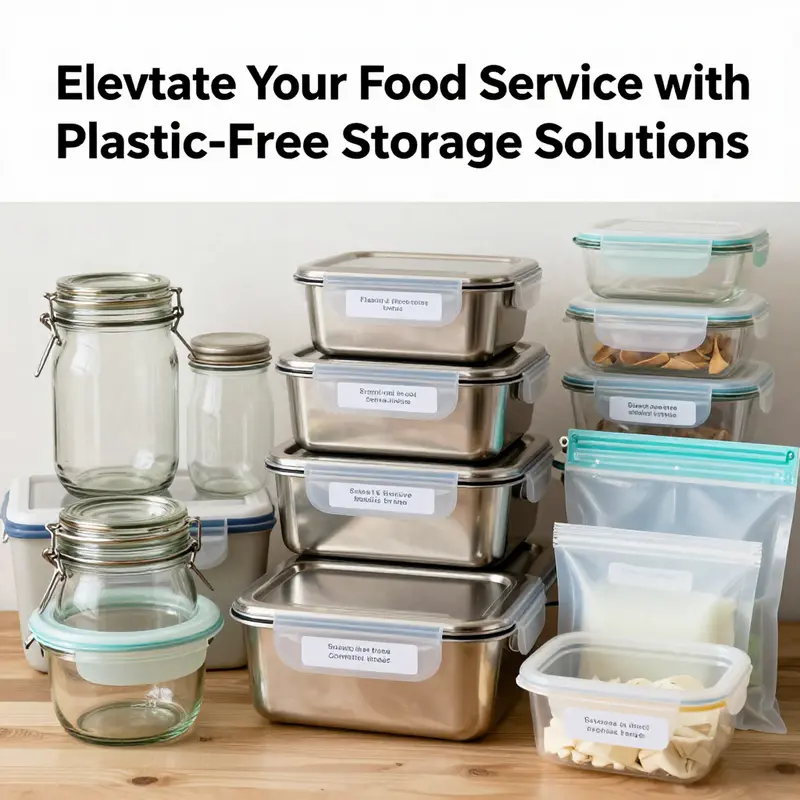
Plastic-free storage offers a practical way to protect your food and reduce plastic waste. Different materials serve different needs, so knowing what each one does will help you build a system that is safe, efficient, and suited to your kitchen habits. This chapter describes common plastic-free materials, their best uses, practical care tips, and selection guidance to help you choose the right container for every situation.
Glass is the most versatile of the plastic-free options. It is inert, so it won’t absorb smells or leach chemicals into food. Clear glass lets you see contents at a glance, which cuts down on forgotten leftovers. Use glass jars and containers for dry goods like grains and flours, for refrigerated leftovers, and for freezing liquids if the glass is rated for freezer use. Oven-safe glass works well for reheating or baking, but verify temperature ratings before moving a dish from fridge to oven. For storage, prioritize containers with well-fitting lids and consider jars with wide mouths for scooping and pouring. Glass can be heavier than other options, so reserve it for foods stored at home rather than for daily commuting.
Stainless steel excels where durability and portability matter. It resists dents, won’t stain or retain odors, and has a long service life. Use stainless steel for lunches, picnic supplies, and for foods you carry to work or school. Double-walled stainless options maintain temperature, keeping soups hot and salads cool. Because stainless steel is opaque, label or use a consistent system to identify contents quickly. Some stainless lids rely on silicone seals to reduce leaks; check gasket materials and replacement options to extend lifespan. Stainless steel is not microwave-safe, so plan for reheating needs accordingly.
Silicone offers flexibility and temperature resilience. Reusable silicone bags and collapsible containers are ideal for freezer storage, marinating, and for sous-vide style cooking where a flexible waterproof pouch is useful. Silicone tolerates high temperatures, so it can handle boiling or oven-steam applications when rated accordingly. Its collapsible nature saves space in cupboards, and it is light for travel. Silicone is best used for semi-solids, liquids, and for short- to medium-term storage. Avoid exposing silicone to direct flame, and be mindful that very oily or greasy foods can require more vigorous cleaning to prevent residue build-up.
Waxed and plant-based wraps are a lightweight alternative to cling film. They are perfect for covering bowls, wrapping sandwiches, and protecting cut produce for short-term refrigeration. The slight breathability helps herbs and leafy greens retain texture without getting soggy. These wraps are not designed for long-term storage of wet or oily items, and they should not be used for raw meats. Periodic washing by hand and occasional re-warming by gentle heat restores tack for better sealing. When wraps wear thin, they can be composted if made from natural fibers and coatings.
Natural-fiber bags and sacks made of cotton, linen, or hemp are valuable for fresh produce and pantry organization. Breathable fabric slows condensation and mold growth on many fruits and vegetables. Use them for apples, potatoes, onions, and for herbs tied into bundles. Cloth bags are washable and compact. For bulk dry goods, consider thicker woven bags with tight closures to keep pantry pests out. At end-of-life, natural fibers are compostable and have a smaller environmental footprint than synthetic counterparts.
Wood and bamboo containers present a warm, natural aesthetic. They work well for dry goods such as tea, spices, and coffee, where minimal moisture exposure is required. Wood is not suited for prolonged wet storage or for raw meats. Proper seasoning and occasional oiling will extend the life of wooden boxes and lids. Because wood can wick moisture, store contents in a dry place and rotate stocks to avoid stale or moldy items.
Choosing between these materials requires balancing safety, convenience, and the types of food you store. For long-term pantry storage, choose airtight glass or thick fabric sacks with proper sealing. For fridge and freezer use, glass and silicone are reliable; stainless steel is excellent for portable meals. For wrapping and short-term coverage, opt for waxed or plant-based wraps. For dry goods and aesthetics, wooden containers are appropriate when kept dry.
Care extends the practical life of every material. Wash glass and stainless steel promptly to avoid stains. Use non-abrasive cleaners to protect finishes. For silicone, periodic boiling or dishwasher cycles can help sanitize. Natural wraps benefit from cool, gentle washing and air drying to preserve coatings. Wood needs gentle hand-washing and should be kept out of soaking water; oil wooden items occasionally with a food-safe oil to prevent cracking and drying.
Sealing and lid performance are critical. Airtight seals slow oxidation and spoilage. Look for containers with easily replaceable gaskets and parts. When lids are metal or wood, add a silicone or waxed liner if you need a stronger seal. For jars, a two-part lid system provides tamper evidence and better vacuum sealing for long-term pantry or fermentation uses.
Stacking and space efficiency matter in every kitchen. Glass and rigid containers stack predictably, creating neat rows in fridges and cupboards. Collapsible silicone and fabric options save space when empty. Consider a modular set that shares lid sizes to minimize clutter. Clear labeling with dates and contents reduces waste by helping you prioritize older items.
Safety and material sourcing deserve attention. Ensure glass is intact and crack-free; chips harbor bacteria. Confirm that silicone used for food storage is food-grade and free of fillers. For fabrics and wraps, prioritize natural fibers and food-safe coatings to avoid synthetic treatments that negate the environmental benefits. Check the lifecycle of an item: a durable container that lasts for years will generally have a lower environmental footprint than a cheaper product that needs frequent replacement.
A pragmatic transition to a plastic-free system often mixes materials. Use glass jars for long-term pantry staples, stainless steel for lunches, silicone for freezing and sous-vide tasks, and wraps for daily produce. This layered approach matches material strengths to real-world uses. Rotate older containers into less demanding roles if they show wear. For instance, a scratched stainless lunchbox may continue to serve as a dry-goods bin rather than being discarded.
Cost is front-of-mind for many households. While the upfront price of durable plastic-free containers can be higher, their lifespan usually delivers savings. Prioritize a few versatile pieces first, then expand. Buying single-purpose or decorative containers can wait until you are confident about capacity needs and routines.
Finally, think about end-of-life. Glass and stainless steel are highly recyclable. Natural fibers and woods can often be composted or repurposed. When a container can no longer be used for food, find creative reuse opportunities such as storage for non-food items, craft supplies, or garden uses. Proper disposal or recycling keeps materials in circulation and minimizes waste.
For a concise overview of greener kitchen strategies and the relative benefits of different materials, see this practical guide on sustainable food storage. (External source: https://www.sfgate.com/home/article/Plastic-free-food-storage-guide-to-greener-kitchens-in-2026-14789345.php)
If you sometimes need ready-to-use disposable options for events, consider sourcing responsibly produced takeout-style boxes that are compostable. These can bridge a gap when reusable systems are impractical for large gatherings. One example of such packaging is the eco-friendly takeout boxes for food packaging available from specialty suppliers: https://ecocupbowl.com/product/eco-friendly-takeout-boxes-for-food-packaging-stylish-food-containers-safe-microwave-craft-paper-lunch-boxes-leak-grease-resistant/
By matching materials to purpose, caring for items properly, and planning for end-of-life, you can create a plastic-free storage system that protects food quality and reduces environmental impact. Practical choices and a few durable staples will carry most households through daily needs and special occasions alike.
Counting the Real Cost and Real Rewards: The Economics of Plastic-Free Food Storage
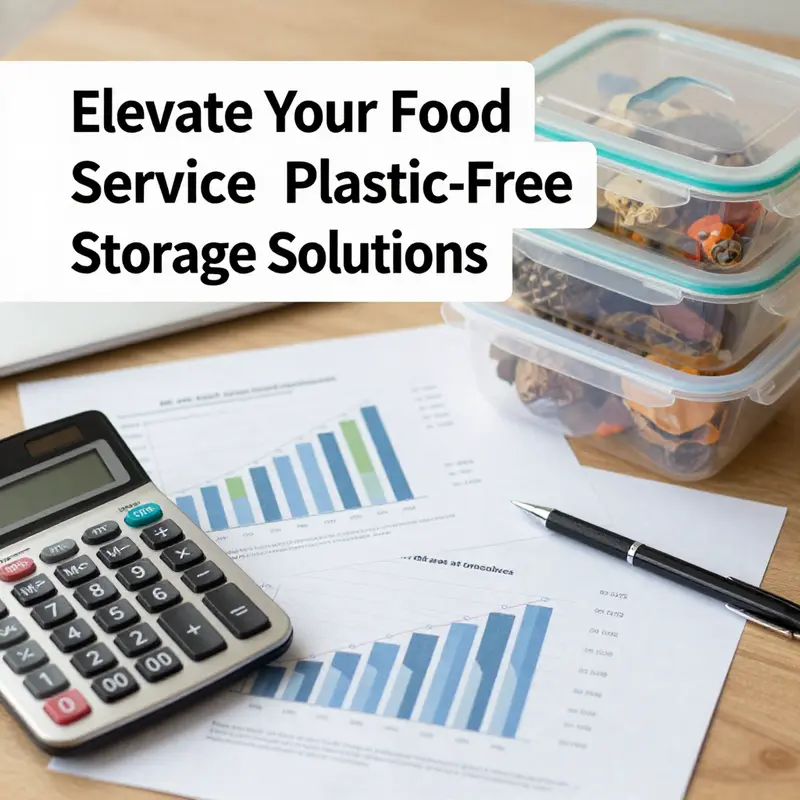
Switching to plastic-free food storage containers is often framed as a values-driven choice, but it also rides on a solid economic argument. When households weigh dollars and sense, the equation isn’t simply about initial sticker price. It’s about the long arc of use, maintenance, waste, and the way a pantry’s organization can influence time, health, and even appetite for change. The upfront costs of durable, reusable options can be higher than a year’s supply of disposable wraps or bags, yet the long-term savings and systemic benefits accumulate in a way that makes plastic-free storage financially prudent for many families. As one environmental health researcher notes, the switch is one of the simplest and most impactful changes a household can make for personal health and planetary well-being. The economic dimension sits at the heart of that impact, shaping which materials, designs, and buying habits actually take root in real kitchens day after day.
At the core of the financial calculation is the clear contrast between upfront investment and ongoing expense. High-quality reusable options—whether sturdy glass, durable stainless steel, or flexible silicone—do not come free. A single silicone bag, for instance, may cost more upfront than multiple disposable bags. The numbers cited in recent research place typical silicone bags in the eight to fifteen dollar range. In contrast, a box of fifty disposable plastic bags can run around three to five dollars. The difference is real, but so is the potential payback. With proper care, a well-maintained silicone bag can last three to five years, if not longer, with daily use. That durability drops the cost per use to a fraction of a dollar, often pennies, long after the initial purchase has been recouped. In economic terms, the investment transitions from a single price to a favorable amortization schedule, where the monthly burden is modest and the lifetime return meaningful.
This dynamic reframes the decision as a mix of preference, planning, and discipline. Choosing plastic-free storage often means reframing your kitchen around a set of core, reusable pieces rather than a proliferation of disposables. The incremental nature of this approach matters. Rather than replacing everything at once, many households start with a small, versatile kit—perhaps a few airtight glass jars for leftovers, a couple of silicone bags for produce and bulk items, and a small set of stainless steel containers for lunches. Over time, that kit grows as needed, distributing the upfront cost and avoiding the temptation to buy more than the space or need justifies. The economic logic favors deliberate, staged adoption, which also aligns with a broader shift toward sustainable consumption that emphasizes durability and utility over novelty.
Beyond the direct price tag, a crucial economic channel is the reduced expenditure on disposable storage aids. The annual or monthly outlay for wraps, foils, and single-use bags adds up for many households. Each trip to the grocery or dollar store becomes a place where a habit is reinforced: wrap, seal, discard. Plastic-free options cut that cycle by offering reusable, sealable, and dependable solutions that don’t require constant replenishment. When you translate that into a cost-per-use metric, the savings become tangible. A reusable silicone bag, used consistently, yields a much lower cost per use than continually purchasing disposables. And because these containers last years, the savings accrue across multiple shopping cycles, meals prepared, and leftovers saved. The math isn’t glamorous, but it is compelling in practical terms for families who track monthly budgets and grocery bills.
There is also an indirect economic benefit that often gets overlooked: the reduced need for waste management and disposal resources. When households cut back on disposable plastics, municipalities see lower volumes in recycling streams and landfills, and some households may benefit from lower waste-collection fees or surcharges over time. While policy environments vary by region, the collective effect of widespread plastic-free adoption can ease the load on municipal systems designed to handle waste streams that are heavy with non-recyclables. These systemic savings may not appear on a family budget line item, but they ripple through the local economy and public services in meaningful ways, reinforcing the argument that plastic-free storage contributes to cost containment beyond the kitchen.
Take-back programs and recycling initiatives for reusable items add another layer to the economic picture. Some communities and retailers offer options to recycle or repurpose durable storage products at the end of their life. When such programs exist, they can offset end-of-life costs and sustain the circular economy model that makes plastic-free materials a long-term choice rather than a temporary habit. This is not merely an environmental nicety; it’s a financial mechanism that reduces waste, preserves material value, and supports producers who design for longevity and repairability. In short, the economic case for plastic-free storage strengthens as the system around it matures, shifting costs away from the consumer and toward a more resilient, recycling-oriented markets.
A broader economic argument rests on the idea that consumer demand drives sustainable manufacturing. When households commit to durable, plastic-free options, manufacturers respond with improved designs, more versatile forms, and better durability. The result can be lower prices as economies of scale come into play and as production lines adapt to a growing market for reusable storage. This is not a rapid transition but a gradual reallocation of supply chains toward materials that are reusable, recyclable, or compostable at end of life. The ripple effects extend to green jobs, as new production and repair services arise to support a growing ecosystem of plastic-free storage solutions. The deeper the market commitment, the stronger the case for investment in sustainable materials, and the more accessible these options become to a broader range of households.
The budgeting mindset that accompanies a plastic-free transition also benefits from practical strategies. Start with a needs assessment: what storage tasks dominate in your kitchen? Leftovers, dry goods, produce, and pantry staples each have unique storage demands. By identifying the most used functions, you can curate a compact, high-use set that minimizes waste and maximizes usability. The aim is to reach a level of versatility where most daily tasks can be accomplished with a single, well-maintained system. This prevents the trap of accumulating an array of specialized containers that do not see regular use and inflate the upfront cost unnecessarily. Maintenance matters here too. Proper cleaning, avoiding overheating plastics, and routine inspection for cracks or warping extend the life of reusable containers, preserving their value and delaying replacement costs.
Another consideration is the relationship between plastic-free storage and household food waste. Leftovers that would have been discarded because of poor sealing or inadequate storage can instead be kept safely for longer periods. Glass, silicone, and stainless steel options often provide superior integrity for both cold and hot foods. When foods stay fresher, households spend less on spoilage and more on meaningful meals. The knock-on effect is personal health, but it also has an economic dimension: less waste translates into more efficient grocery budgeting and, frankly, a more predictable food plan for families with tight schedules.
The consumer’s experience matters, too. Plastic-free storage is not simply a decision about materials; it’s a shift in lifestyle that rewards organization and thoughtful consumption. A kitchen that uses breathable fabric bags for produce, for example, can slow spoilage in some cases and reduce plastic waste simultaneously. A well-structured pantry of glass jars for dry goods keeps items visible, easy to measure, and quick to access. That clarity reduces impulse buys and fosters a more mindful approach to food, which, in turn, translates into more consistent meal planning and fewer wasted ingredients. It’s not just about saving money at the checkout; it’s about reducing losses from mismanaged inventory inside the refrigerator and pantry.
An important practical note is how these choices can extend into everyday dining and takeout habits. Because plastic-free storage often aligns with broader packaging and container choices, it naturally dovetails with efforts to reform personal consumption in other areas, such as food packaging and transport. For instance, when people carry reusable containers for leftovers or use airtight glass jars for bulk purchases, they also encounter opportunities to rethink how meals are transported and stored in other contexts. A gateway behavior—using a versatile, plastic-free container—can cascade into more comprehensive changes in shopping patterns, cooking routines, and even social habits around food sharing. This synergy reinforces the economic logic: small, purposeful actions accumulate into a durable, long-term savings trajectory.
Importantly, the bankruptcy of “one-size-fits-all” economic advice applies here. Not every household will experience the same balance of upfront costs and long-term savings, because incomes, waste streams, and local programs vary widely. Yet the underlying pattern holds: higher-quality, reusable options carry a higher initial price tag but offer lasting value across many meals and years. The decision, then, becomes a personalized calculation—how many years of use are anticipated, what is the cost of replacing disposables over that period, and how much waste management or recycling infrastructure is present in the community. When these factors align, plastic-free storage emerges as a financially prudent choice that also aligns with health and environmental goals. The payoff is gradual but meaningful, extending beyond the kitchen into budgets, health, and the well-being of communities.
For readers seeking a clear, real-world perspective on the health and economic benefits of switching from plastic storage to reusable silicone bags, one external resource outlines how such changes translate into tangible value over time. It summarizes why many households find that the initial investment pays off through repeated use and reduced reliance on disposables. This outside validation complements the in-house analysis and can help readers feel confident about taking the first steps toward a more plastic-free pantry.
As you consider adopting plastic-free containers, remember that the decision is not just about saving pennies today. It’s about shaping a kitchen that supports healthier living, less waste, and a resilient economy that rewards durable design and responsible consumption. The economics of plastic-free storage, when viewed through the lens of time, behavior, and systemic change, reveal a practical path to both personal savings and collective impact. A small, well-chosen set of containers can become the backbone of a kitchen that reduces junk flows, simplifies routines, and strengthens financial clarity. The chapters that follow will explore how these materials perform in daily life, how to care for them to maximize longevity, and how to integrate plastic-free storage into different cooking styles and household sizes. For those who want to explore a concrete example of how reusable products can support everyday use, see this example of eco-friendly takeout boxes used in various settings to reduce waste while maintaining practicality and safety. [eco-friendly takeout boxes].
Further reading and related resources can illuminate the broader implications of these choices. For a broader perspective on the health and environmental benefits of reusable food storage, a detailed external resource highlights how silicone bags and other plastic-free options contribute to reduced chemical exposure and lower environmental footprints. This external reference complements the internal discussion and provides additional context for readers who want to deepen their understanding of the economic and health dimensions of this transition.
Final thoughts
Transitioning to plastic-free food storage containers not only supports your business in delivering safe and health-conscious options but also positions you as a leader in sustainability. By making this switch, you will be catering to a growing market of environmentally aware consumers while reaping the long-term benefits of eco-friendly practices. Explore the vast array of available plastic-free options and consider how integrating them into your operations can enhance your brand reputation and customer loyalty. The time is ripe for innovative solutions that prioritize health and our planet, making it a win-win for everyone involved.