
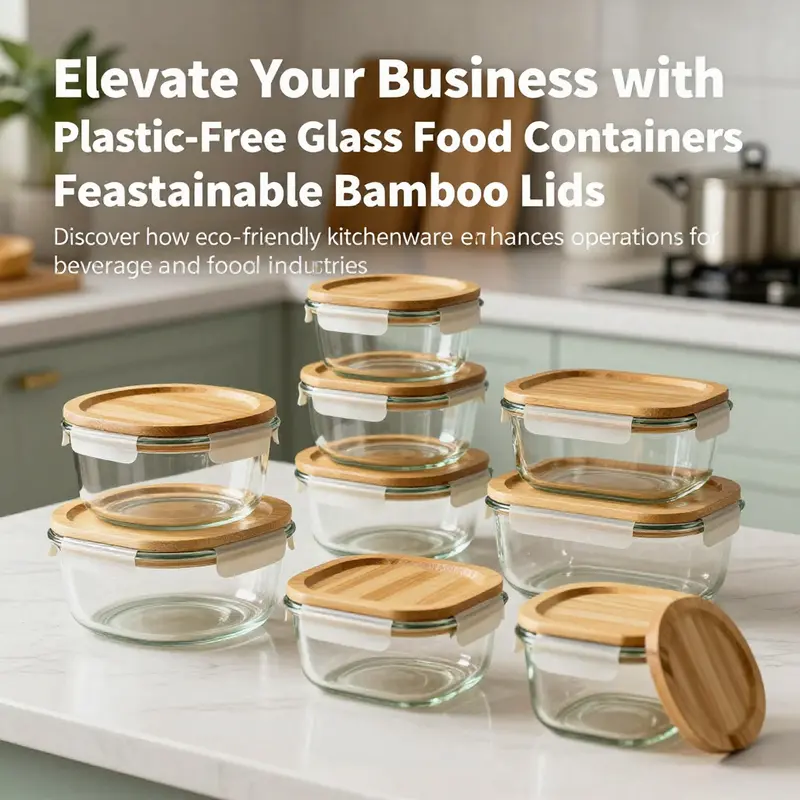
In the quest for sustainable solutions, plastic-free glass food containers with sustainable bamboo lids have become essential for modern businesses. These innovative storage options not only promote environmental responsibility but also reflect quality and care in food presentation. Chapter by chapter, we will explore how the advanced material technology and sustainability of these containers provides robust options for the hospitality industry, explore their interactive designs and functional benefits which cater specifically to the needs of beverage shops and catering services, and examine their performance parameters and versatility across various applications. Finally, we will delve into real-world scenarios and certification standards to illustrate why these eco-friendly containers are the right choice for conscientious professionals.
Glass, Bamboo, and a Cleaner Kitchen: Material Science and Sustainability in Plastic-Free Food Storage
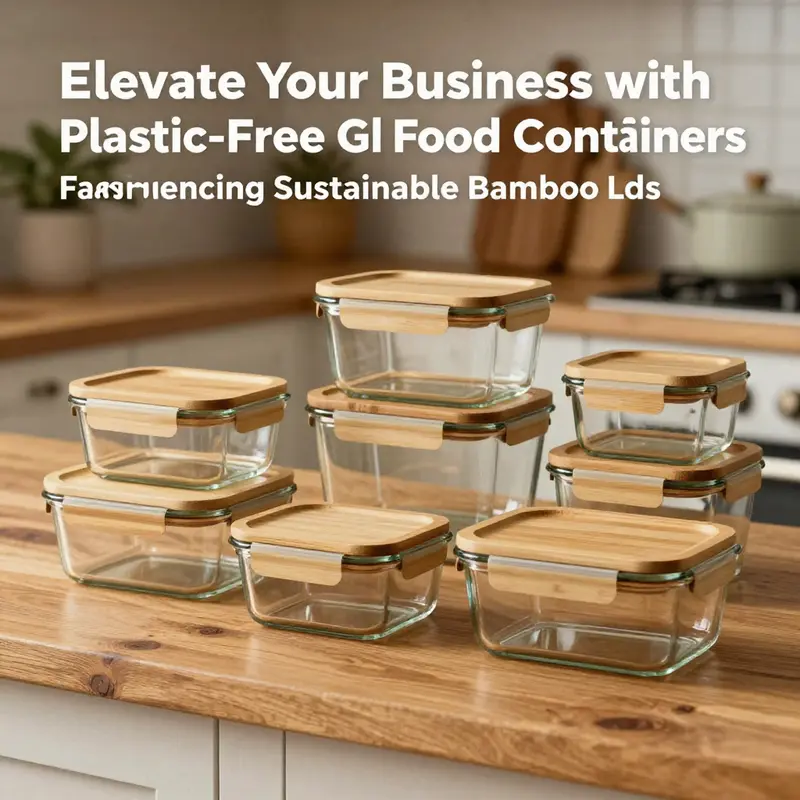
Material technology sits at the core of a shift toward plastic-free glass food containers with sustainable bamboo lids. It is not merely a matter of repackaging what already exists; it is a rethinking of how materials behave under real-world conditions—how they interact with food, heat, moisture, and the rhythms of daily life. In this chapter, we traverse the science behind tempered borosilicate glass and bamboo, exploring why this combination offers both safety and longevity, how it fits into a circular economy, and where the remaining challenges lie. The story begins with glass that is as practical as it is resilient. Tempered borosilicate glass and its close relative soda-lime glass provide a robust platform for storing a wide range of foods. These glazes and clear bodies are inherently inert. They do not react with acids or alkalis, do not absorb odors, and—crucially—do not leach chemicals even when the container is heated or cooled rapidly. This inertness matters at scale; it translates into a storage system that preserves flavor, texture, and nutrition without introducing off-flavors or contaminants into meals. The transparency of the glass invites visual inspection, letting a cook or household manager see the contents at a glance. The non-porous surface resists staining and odor retention, an attribute that matters when containers tumble from fridge to microwave or are used to portion out spices, grains, or leftovers. Beyond daily use, glass as a material is well suited to recycling and to a circular lifecycle. It can be melted and reformed without degrading its fundamental properties, allowing for multiple reuse cycles with minimal loss of performance. In communities pursuing zero-waste goals, glass reduces the cumulative burden of packaging waste, particularly when it replaces disposable plastics that accumulate in landfills and waterways. The sustainability argument strengthens when glass is paired with bamboo lids, a pairing that blends high performance with renewability. Bamboo is a rapidly renewable resource. It grows quickly and requires comparatively low inputs to thrive, often without pesticides. The rapid growth cycle makes bamboo a favorable component in sustainable design, especially when sourced from forests or plantations with FSC-certified practices that promote responsible harvesting and ecosystem stewardship. Modern manufacturing methods have expanded the possibility space for bamboo lids that are both strong and food-safe. A key design element is the gasket system: many bamboo lids incorporate silicone or other food-grade elastomers to ensure an airtight seal. This seal is essential for protecting food from moisture and air, logging in freshness, and preventing leaks during transport. The material choice—bamboo with a silicone gasket—favors a balance between durability and safety. The bamboo itself gains resilience from careful processing, drying, and surface treatment designed to resist warping and cracking over repeated cycles of washing, reheating, and cooling. While the glass remains inert and easy to sanitize, the lid and seal demand careful attention to cleaning practices to maintain hygiene. The combination works best when the lid’s interface with the glass is stable, with a lip or rim that prevents lateral movement and a gasket that compresses evenly. In practice, this translates into a culinary tool that holds heat and moisture effectively, while avoiding the micro-leaks that plague lighter, less secure closures. The result is a container that can be used for a wide spectrum of cooking and storage tasks: from refrigerating soups and sauces to reheating meals in the microwave, or even transferring hot dishes to the oven for a quick finishing bake. The compatibility with a range of temperatures is especially important for meal-prep routines. For many households, the ability to move from freezer to oven without transferring contents to a different vessel is a major time-saver and a significant energy efficiency improvement. Yet, as with any material system, trade-offs exist. Glass is heavy relative to plastics or aluminum, and it tends to be more fragile in the event of a drop. Tempered glass helps, but it does not render a container invincible. This is where the bamboo lid, with its natural resilience and robust finish, helps complete the user experience by contributing to a balanced weight distribution and a tactile, high-contrast aesthetic that reduces the chances of accidental mishandling in busy kitchens. The broader ecological calculus also matters. Glass is fully recyclable, and its recycling stream is well established in many regions. The bamboo lid, however, introduces a second material into the end-of-life equation. Ideally, bamboo would be diverted to composting or reprocessing streams that can handle wood-based materials, or at least separated from glass so that the recyclable glass stream remains uncontaminated. This separation principle is central to responsible end-of-life planning: it ensures that the glass can be recycled efficiently while the bamboo portion is either composted or repurposed in a way that environmental authorities deem appropriate. The lifecycle logic, therefore, rewards a design that minimizes plastics, embraces renewables, and simplifies recycling logistics. In this sense, the material choice is not just about performance. It is about reducing reliance on petroleum-based inputs and aligning with a circular economy that emphasizes reuse, repair, and reprocessing. The dialogue between material science and sustainability becomes even more meaningful when we consider the steps manufacturers take to ensure safety and compliance. Glass is inert and food-safe by design, but the entire product must pass a battery of safety checks. Certifications such as CE marking and FDA compliance are standard benchmarks in many markets, signaling adherence to rigorous health and safety standards for direct food contact. For bamboo lids, responsible sourcing is critical. Certifications like FSC help ensure that bamboo is harvested in a manner that preserves forest ecosystems, supports fair labor practices, and maintains biodiversity. These credentials are not merely bureaucratic formalities; they serve as practical assurances to consumers who want to trust the entire product—from the glass body to the lid and its gasket assembly. The documentary and theoretical underpinnings of these materials are echoed in expert voices. Dr. Lena Patel, an Environmental Health Researcher, has summarized a core insight that anchors the material choice: “Glass is inert. It doesn’t react with food, absorb odors, or release toxins—even under high heat.” Such a statement reinforces the practical truth that material science can translate into meaningful health benefits over the long term, particularly as households adopt more intensive meal-prep routines and rely on containers for multiple days’ worth of food. In the context of the broader sustainability conversation, this material pairing resonates with a growing desire for packaging that performs reliably while reducing adverse environmental impacts. It is not enough to claim a product is plastic-free; the claim must be grounded in real properties that shield food quality, support reuse, and integrate with established waste-management systems. The design community has started to emphasize a few behavioral features to maximize the value of plastic-free glass storage. The lids’ smooth, label-friendly surfaces encourage customization with reusable markers or labels, aiding pantry organization and reducing the reliance on disposable packaging accessories for labeling. The stackable geometry of many sets enables efficient cabinet storage, which in turn reduces the energy and time spent organizing and accessing ingredients. An important behavioral cue is to emphasize proper care: glass benefits from gentle handling and avoidance of sudden temperature extremes that exceed recommended tolerances. While most high-quality glass can stand up to microwaving or oven use, occasional misuse can cause microfractures that degrade performance over time. To a consumer who wants a zero-waste lifestyle, these are not mere technicalities; they are the practical rules that determine whether a system endures across years of use. The material story thus becomes a narrative of resilience, safety, and environmental stewardship rather than a single feature list. It is about designing for repeated cycles of use and repair, not obsolescence. The practical implications reach into kitchens and even into the gifting economy. A container that looks as good as it performs is well suited for gifts that celebrate sustainable living, a factor that helps expand awareness of material choices while aligning with consumer values around health and environmental responsibility. The broader cultural shift towards sustainability is reinforced when consumers see visible evidence of responsible sourcing, safe manufacturing practices, and a packaging lifecycle that favors reusability over single-use waste. Keeping these containers in circulation requires only a few simple habits: hand-washing or gentle dishwashing, avoiding aggressive thermal shocks, and ensuring the gasket remains intact and clean. When the bamboo lid is well cared for and the glass body is not subjected to impact beyond its tolerance, these containers can effectively outlive many plastic equivalents. The preferred narrative here is not one of compromise but of intelligent material synergies: glass provides inert, heat-resistant storage; bamboo provides renewability, beauty, and a durable sealing interface; and together they chart a path toward a kitchen that blends science with daily practicality. In a world of growing environmental awareness, this synthesis—transparent glass, renewable bamboo, and a seal that keeps flavors intact—offers a tangible example of how material science can translate into everyday choices that matter. For readers who want to explore more about the practicalities and assurances of safe food storage, a broader look at packaging options and safety standards can be found in related resources and industry discussions. For an overview of safe, material-conscious storage practices, see the linked external resource that anchors this chapter in established scientific discourse: Columbia University’s Research on Material Safety in Food Storage. In addition, practical context and examples of eco-conscious packaging options can be explored through internal references that discuss sustainable, plastic-free approaches to food containment and transport, such as eco-friendly takeout boxes for food packaging. Although the latter is a general example, it helps illustrate how a plastic-free philosophy extends beyond a single product and informs a broader ecosystem of reusable and renewably sourced containers. While the precise formats and materials may vary across manufacturers and markets, the guiding principles remain consistent: prioritize inert materials that safely contact food, maximize recyclability and compostability where possible, minimize embedded plastics, and design for durability and long service life. The convergence of science, design, and sustainability in these containers invites ongoing attention from researchers, manufacturers, and consumers who seek practical, healthful, and responsible choices in everyday storage. It is a reminder that the future of kitchenware can be both scientifically grounded and aesthetically satisfying, delivering safety and serenity in equal measure, while contributing to a cleaner, more resilient planet. External resource: Columbia University’s material safety in food storage research
Seamless Functionality: How Bamboo-Lidded Glass Containers Transform Everyday Food Storage
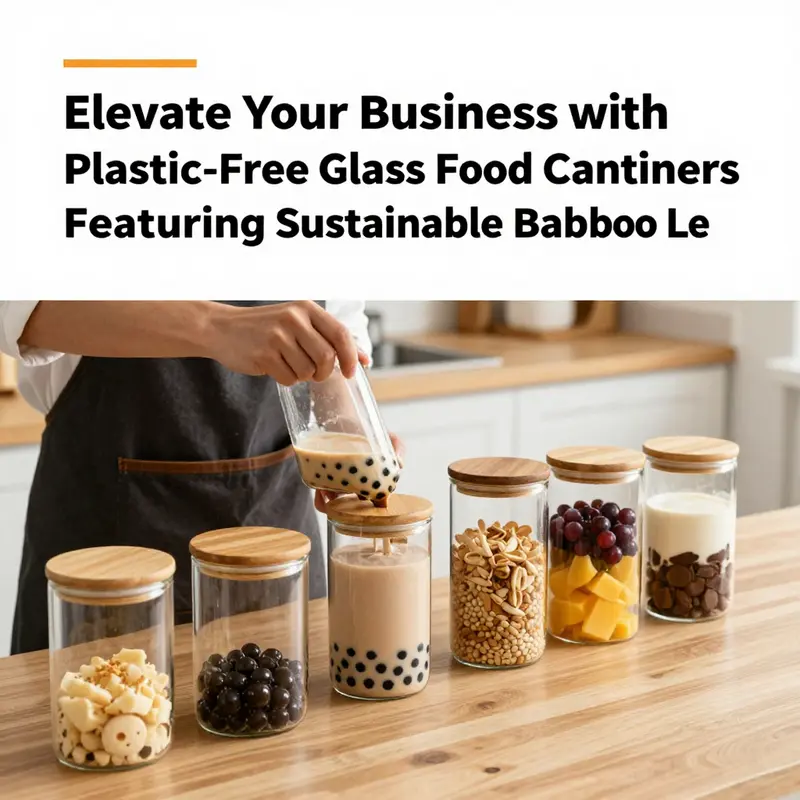
Plastic-free glass containers with bamboo lids represent a thoughtful shift in kitchen design. They combine functional engineering with natural materials. The result is storage that performs reliably while reducing plastic use. This chapter explores how interactive design choices and material synergies make these containers more than a pretty bowl on the counter.
At the core of their appeal is the marriage of high-borosilicate glass and sustainably harvested bamboo. High-borosilicate glass brings thermal stability and chemical inertness. It resists shock from temperature changes and does not absorb odors or stains. Bamboo lids contribute tactile warmth and structural strength. Together they form a system that addresses common pain points of food storage: leaks, stale food, clutter, and short product life.
One defining interactive feature is the airtight seal. Many designs pair a precision-milled bamboo lid with a thin gasket. The gasket sits flush in a recessed groove and compresses evenly when closed. This creates a near-total barrier to air exchange. The effect is practical: dry goods stay crisp, coffee retains aroma, and leftovers maintain moisture and flavor. For households trying to cut food waste, the difference is measurable. Airtight bamboo-lidded glass can extend freshness compared to loosely covered containers.
Bamboo itself brings unexpected functional benefits. Properly finished bamboo is naturally antimicrobial and resists odors. It will not soften or warp with repeated exposure to steam or humidity. Unlike many plastics, bamboo does not leach chemicals when exposed to heat. This makes it a safe partner for glass, especially when containers move from fridge to oven or microwave. The lid’s finish, often a food-safe oil or wax, both protects and highlights the grain. That finish also creates a pleasant tactile interface: lids are easy to grip, line up, and remove without slippery edges.
Design choices amplify convenience. Many sets favor rectangular or square footprints. Those shapes optimize shelf space and allow uniform stacking. Stackability is not merely a storage trick. It transforms the user experience. When lids align cleanly, stacking minimizes sideways shifting in crowded refrigerators and cabinets. A modular approach—matching small, medium, and large sizes—supports meal prep workflows. You can portion, stack, and label containers quickly. The glass faces are excellent for reusable labeling with erasable markers. Labels wipe off cleanly and do not degrade the glass surface.
Versatility is another strength. High-borosilicate glass tolerates a broad temperature range. Users can bake in glass, then cool and refrigerate in the same container. Freezer-safe glass prevents freezer burn when combined with a tight lid. Some sets are oven-safe to temperatures that cover everyday baking and reheating. This removes the need for multiple specialized dishes. Fewer containers mean less clutter and fewer materials to wash, store, and eventually replace.
Dishwasher compatibility matters for usability. While bamboo lids prefer gentle hand washing, the glass body often survives standard dishwasher cycles. This split-care approach balances hygiene and longevity. A routine where lids are wiped and oiled occasionally, and glass is machine-washed regularly, keeps the set functional for years. The longevity of both materials reduces lifetime environmental impact because fewer replacements are required.
Ergonomics and sensory design play a quiet role. Bamboo lids offer a warm visual contrast to clear glass. That contrast helps users inspect contents quickly. A smooth, natural finish communicates care and craftsmanship. The weight of high-borosilicate glass gives a sense of durability. Together, these tactile cues build trust. Users feel confident stacking containers, packing lunches, or presenting food directly at the table. The aesthetic also supports a minimalist kitchen. Containers look intentional when left on counters or open shelving, which encourages reuse instead of single-use packaging.
Sealing systems deserve closer attention. A well-designed gasket is subtle yet central. It must compress consistently, resist odors, and remain flexible across temperature cycles. Silicone gaskets typically succeed at those requirements. When combined with an accurate lid fit, they produce a vacuum-like effect when pressed and sealed. Some lids incorporate a small vent for steam release during reheating. That vent maintains safety without sacrificing the overall airtight performance when closed. The engineering is simple, but precision in manufacturing ensures consistent performance across many uses.
User interaction also benefits from practical details. Rounded internal corners in glass bowls make scooping and cleaning easier. Slight lip textures on lids provide non-slip grip points. Visible fill lines inside containers aid in portion control. Optical clarity of the glass speeds visual inventory checks in pantries. All of these micro-interactions compound into a daily experience that feels frictionless.
Sustainability is baked into the design decisions. Bamboo grows fast and needs little fertilizer or irrigation. Choosing certified bamboo supports responsible forestry practices. Pairing it with durable, recyclable glass creates a material loop that minimizes single-use waste. Even end-of-life scenarios are preferable: glass is widely recyclable, and untreated bamboo can be composted or repurposed. These options contrast with the persistent pollution associated with many plastics.
Certifications matter because they verify claims. Look for evidence of food-contact safety and responsible sourcing. Certifications such as LFGB or equivalent food-safety marks confirm non-toxicity. Responsible sourcing certifications for bamboo demonstrate environmental stewardship. Compliance with extended producer responsibility schemes shows attention to lifecycle impacts. These marks help buyers choose containers that perform well and align with environmental goals.
Practical real-world scenarios highlight how design translates to daily value. For meal preppers, modular stacks make batching and transporting meals simple. For coffee lovers, airtight jars keep beans fresher. For families, durable glass reduces the need to constantly replace brittle plastic. For small food businesses, presentation-ready glass with bamboo lids provides an appealing retail display while keeping contents safe.
Compatibility with complementary eco-friendly products extends benefits. Natural wooden or bamboo utensils pair well with these containers for picnics or packed lunches. For example, lightweight bamboo dessert scoops provide a single-use-free alternative for on-the-go treats. Linking useful accessories in a cohesive system supports a low-waste lifestyle and simplifies purchasing choices. One relevant accessory example is mini ice cream wooden spoons, which complement portable containers and eliminate single-use plastic cutlery.
Maintenance guidance is straightforward and supports longevity. Clean glass promptly after use to avoid stains. Wipe lids with a mild soap and water, then dry immediately. Periodically treat bamboo with a food-safe oil to maintain water resistance. Replace gaskets if they show wear. These small actions preserve both function and appearance. They also keep containers performing at peak airtightness.
Finally, design also supports behavior change. Containers that are beautiful, intuitive, and easy to use encourage consistent reuse. People are more likely to bring glass lunch containers to work, to store leftovers thoughtfully, and to organize pantries with reusable jars. Thoughtful product design therefore becomes an enabler for sustainable habits. It reduces reliance on disposable packaging and reshapes routines around durable materials.
The success of bamboo-lidded glass containers rests in their practical, everyday value. They are engineered to solve common storage issues. Their materials are chosen for resilience and low environmental impact. And their design encourages long-term use through ergonomics and aesthetics. For anyone rethinking kitchenware toward a plastic-free future, these containers offer a clear, functional, and pleasing option.
External reference: https://www.alibaba.com/product-detail/Glassware-Airtight-Glass-High-Borosilicate-Meal_1600792838624.html
Clarity, Seal, and Sustainability: The Performance and Versatility of Plastic-Free Glass Containers with Sustainable Bamboo Lids
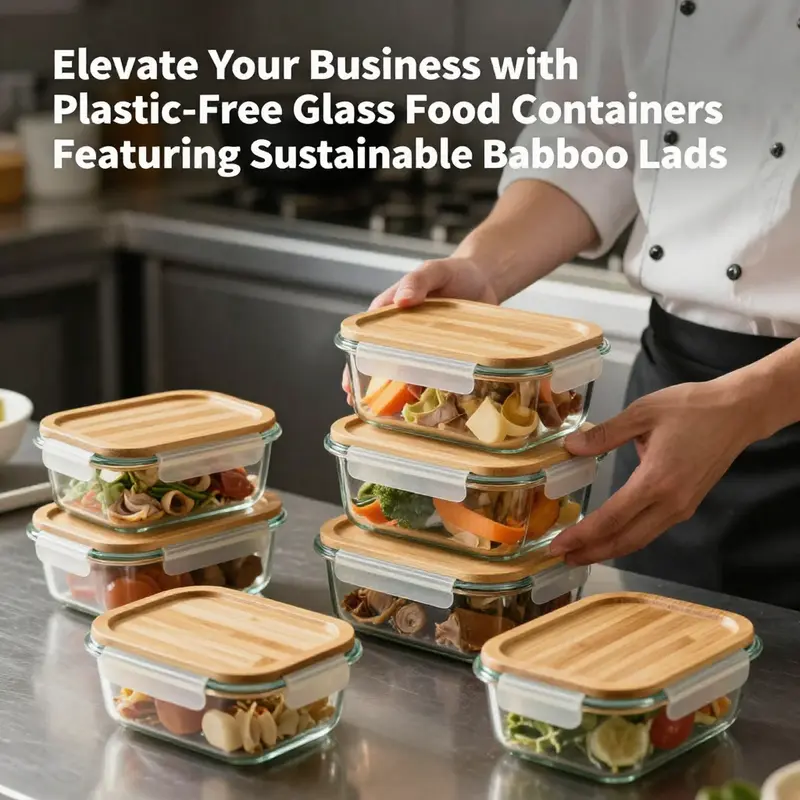
A shift toward kitchenware that honors both health and the planet has brought plastic-free glass containers with bamboo lids from the periphery of eco-conscious shopping into daily use. These containers embody a philosophy that prioritizes clarity—of material safety and transparency in sourcing—while delivering practical performance that meets the rhythms of modern cooking, meal planning, and storage. The narrative behind their appeal begins with material science. High-borosilicate glass, chosen for its exceptional resistance to thermal shock, scratches, and odors, is renowned for its stability under a wide range of temperatures. This makes the containers versatile enough to transition from fridge to oven (with lauds for careful use) and from freezer to reheat in the microwave or oven when lids are removed. The glass is inert and non-porous, which means it does not harbor odors or flavors from previous contents, nor does it allow microplastics or lingering chemicals to permeate into food. The result is a pantry with a clearer, purer line between different foods, a subtle but meaningful improvement in flavor retention and perceived freshness. The lid, crafted from natural bamboo, adds a tactile, renewable aesthetic that resonates with a broader sustainability ethos. Bamboo grows quickly, requires minimal water, and can be harvested without pesticides, enabling a renewably sourced component that complements the glass’s long life. Together, they form a system that aligns with a plastic-free mission, offering a 100% plastic-free status when the seal, latch mechanism, and lid materials are free of conventional plastics. This combination also signals a commitment to responsible sourcing and durability, a key factor for households that want to minimize waste without compromising everyday usability. The bamboo lid’s surface carries a warmth and texture that invite hands-on use. It also provides a visually appealing contrast to the cool, clear glass, harmonizing with a broad array of kitchen decors, from minimal modern to rustic warm. In practice, the user experience centers on a reliable, airtight seal designed to keep moisture in when needed and air out when appropriate. The general expectation is that a well-made seal will limit oxygen exposure, which is a principal factor in the staling of dry goods and the wilting of aromas. A robust seal helps maintain texture, whether it’s a dry grain or a chunk of fruit puree, and minimizes the risk of cross-contamination by reliably delimiting the container’s interior from the surrounding fridge’s contents. Beyond the seal, the containers often employ a secure latching mechanism that fits neatly into the bamboo lid, contributing to a near-vacuum effect and allowing cooks to stack and organize with confidence. The practical upshot is simple: more of the culinary work you put into preparing meals—seasoning, marination, portioning—retains its intended texture and aroma through storage. The design also anticipates real-life kitchen dynamics. The glass interior is smooth and easy to label with reusable markers, which makes pantry organization intuitive and reduces the chance of misidentification. This is especially valuable for households that balance meal prep with a busy schedule, where quick access to a particular spice jar or bulk grain matters as much as the ability to seal in freshness. The sets are frequently designed to be stackable, an attribute that plays a surprisingly large role in fostering an orderly kitchen and reducing wasted space. In living rooms with open shelves or in compact apartment kitchens, the visual and spatial efficiency of stackable glass containers with bamboo lids becomes a practical advantage, marrying form with function in a way that plastic-lidded containers rarely achieve. The performance story extends to temperature resilience. Glass’s inertness means it handles hot foods more confidently than many plastics, alleviating concerns about chemical leaching with acidic or fatty foods. Yet even with this resilience, the conventional wisdom is to remove lids for oven use and to avoid direct contact of the bamboo with heat, preserving both the lid’s integrity and its longevity. In the same breath, the containers are designed to be dishwasher-safe and recyclable, reinforcing their status as durable, long-lived pieces in a household’s kitchen kit. The idea of durability in this context is not merely about resisting chips and cracks; it is about a lifecycle that favors reuse and repair. If a lid wears, the glass remains usable; if a seal shows signs of wear, it can be replaced, enabling the container to continue serving a zero-waste lifestyle. This contrasts sharply with single-use or short-lived plastics, which often contribute to the very waste streams these containers seek to reduce. The environmental credentials extend beyond materials. Bamboo sourcing is frequently paired with certifications that validate responsible forest management, such as FSC certification, which assures consumers that harvesting practices comply with ecological and social standards. The absence of plastics in the lid and sealing system also aligns with broader environmental goals, limiting microplastics and the long-term persistence of non-biodegradable components in landfills. The lifecycle logic is compelling: durable glass plus renewable bamboo yields a product designed to outlast many plastic alternatives, reducing the frequency of replacement purchases and lowering the per-use environmental footprint. The performance arguments gain additional resonance when considered within real-world contexts. For families, these containers support meal prep and portion control, enabling a clear pathway from bulk purchases to daily use. A bulk grain or legume can be portioned into the larger sizes, with smaller jars or containers standing in for spices, seeds, or herbal mixes. The airtight seals maintain aroma and moisture levels, a particularly meaningful advantage when dealing with coffee beans, nuts, dried fruit, or specialty grains, all of which benefit from reduced exposure to air and humidity. For busy households, the ability to repackage leftovers for later reheating without transferring to a plastic bag or wrap reduces the number of disposable items in circulation, aligning everyday practice with longer-term sustainability goals. In professional kitchens and food service settings, the same principles apply, albeit at scale. The durability, cleanability, and safety profile of glass with bamboo lids can simplify compliance with food safety standards while delivering a visually cohesive, brand-consistent storage solution. These applications extend to catered events or institutional cafeterias, where the aesthetic of glass and bamboo can communicate a commitment to sustainability without sacrificing performance. When manufacturers emphasize the airtight seal and the inert quality of glass, consumers can trust that the taste integrity of stored foods remains intact. A well-sealed container helps preserve the texture and moisture of soups, stews, and broths, while preventing freezer burn in bulk storage. The freezing and thawing cycle tends to be gentler on glass than on many plastics, assuming that temperature changes are gradual and the containers are not dropped or subjected to rapid thermal shock. This line of thought resonates with a growing cohort of mindful shoppers who seek to minimize plastic exposure not only in daily meals but also within the broader ecosystem of packaging and storage choices. The conversation about sustainability is, at its core, a conversation about responsibility across supply chains. Certifications like CE and FDA ensure that the materials meet safety standards for direct contact with food, a baseline that gives households confidence in the product’s safety profile. When bamboo sourcing is confirmed by FSC or similar certifications, the narrative expands beyond personal health to collective stewardship—forests managed to protect biodiversity, watershed health, and local communities. Consumers are invited to see storage as a mindful act, not merely a practical choice. It is a daily ritual that reinforces a shift away from disposable consumption toward a circular approach, where durability, renewability, and repair become the baseline. This is where the performance parameters begin to translate into a lifestyle. The ability to withstand a broad range of temperatures, to resist odors and stains, and to maintain airtight seals under normal use—these factors converge into a simple, repeatable routine: wash, dry, stack, label, and reuse. In practice, a pantry can become a model of minimalism with maximum utility. A few well-chosen sizes can cover most needs, from a 10ml jar ideal for spices to a 51-ounce (approximately 1.5-liter) container for grains, pasta, or bulk items. The goal is not merely to replace plastic with glass and bamboo but to redesign the pantry around containers that invite frequent use, careful labeling, and thoughtful organization. The broader literature supports what many shoppers observe in their own kitchens. A comprehensive review by a leading sustainability publication highlights glass containers with bamboo lids as a top-tier option for health-conscious and eco-aware households, underscoring superior sealing capabilities, chemical inertness, and a lower environmental footprint compared to plastic alternatives. This external validation helps connect micro-level kitchen decisions with macro-level environmental outcomes, reminding readers that small, consistent changes in storage habits can compound into meaningful reductions in plastic waste. For readers seeking a bridge to related packaging discussions, a practical point of reference is how such glass-and-bamboo systems align with broader trends in eco-friendly packaging for takeout and home use. See this example of eco-friendly disposable takeout packaging options as part of a wider conversation about materials, end-of-life pathways, and consumer responsibility. eco-friendly disposable takeout packaging options. The thread connects everyday kitchen use to a larger sustainability fabric, illustrating how choice in one domain can ripple into related areas, from bulk storage to consumer packaging. In sum, the performance parameters of plastic-free glass containers with sustainable bamboo lids reveal a practical philosophy: choose a system that is safe, durable, and aesthetically resonant; use it confidently across refrigeration, cooking, and reheating; and regard it as a durable ally in reducing plastic reliance, one day at a time. It is a design that respects material integrity, supports responsible forestry, and invites a more deliberate relationship with food storage. When these containers are used as part of a broader zero-waste lifestyle, they serve as tangible reminders that sustainability is not a single product decision but a continuous habit—an ongoing commitment to healthier food, cleaner kitchens, and a healthier planet. External reference: The Good Trade sustainability review offers a corroborating perspective on how such glass-and-bamboo systems perform in practice and how they fit into a growing landscape of plastic-free kitchenware. External reference: https://www.thegoodtrade.com/glass-food-containers-bamboo-lids-sustainability-review-2026
From Pantry to Plate: Practical Uses and Certification for Plastic-Free Glass Containers with Bamboo Lids
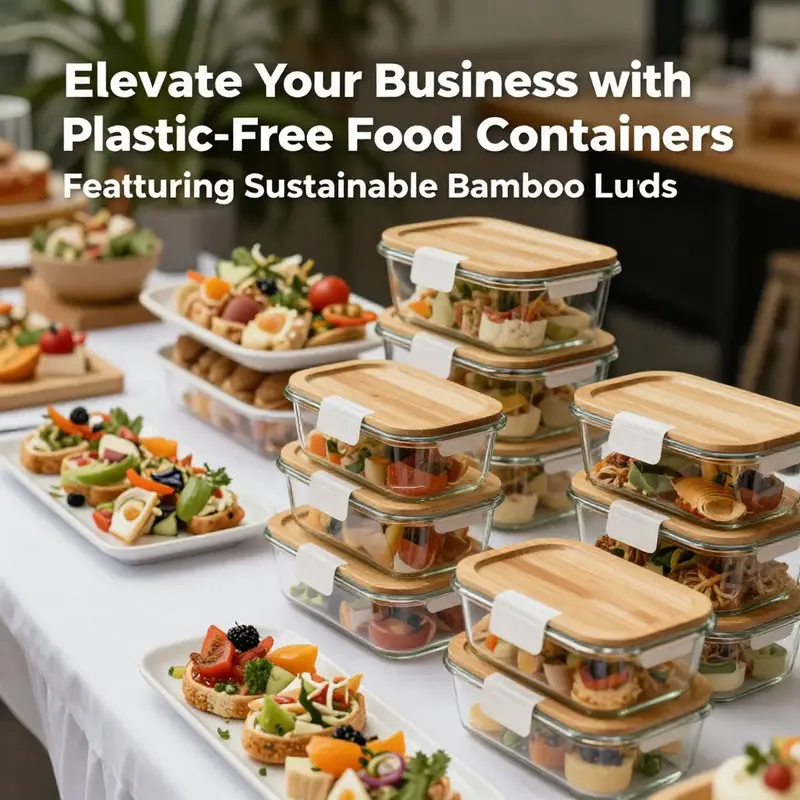
Practical Uses, Certification and Buying Guidance
Plastic-free glass food containers topped with sustainable bamboo lids move beyond trend status. They are a functional, long-lived alternative to single-use and mixed-material storage. In everyday kitchens these containers preserve flavor and texture, reduce waste, and simplify organization. In commercial settings they meet demanding workflows if chosen and maintained properly. Understanding their real-world applications, the certifications that matter, and simple best practices helps buyers get full value from this sustainable pairing.
Glass brings key material advantages into the food storage equation. It is non-porous and chemically inert. That means glass does not absorb oils, acids, or odors. It does not leach chemical residues into food. It tolerates acidity and high temperatures without breaking down. For meal preparation and day-to-day storage, this translates into safer food contact and fewer phantom smells clinging after repeated use. Transparency helps too. Clear glass lets you see contents at a glance. You waste less time opening and re-closing containers. You also reduce heat exposure when reheating. Seeing the food reduces steam-related burns during handling.
Borosilicate and similar high-quality glass varieties offer significant thermal shock resistance. That allows safe transitions between fridge, oven and tableware when lids are removed. In practice, this means you can freeze a soup, thaw it overnight, and finish it in the oven without transferring to a different dish. That continuity reduces dishwashing and material use. It also extends the useful life of cookware and storage ware.
Bamboo lids complete the pairing with a renewable, biodegradable material. Bamboo grows fast, needs little water, and requires no pesticides. A well-crafted bamboo lid combines natural aesthetics with functionality. Properly sealed lids lock out air and moisture. They prevent contamination and preserve freshness. Lids that rely on integrated silicone gaskets or tight-fitting wooden designs can create an airtight environment without plastic parts. The result is a storage system that stays plastic-free throughout.
In homes, these containers shine for meal prep, batch cooking, and bulk storage. Use small jars for spices and tea. Reserve mid-sized containers for lunch portions and leftovers. Deploy large containers for rice, pasta, and grains. Airtight seals reduce oxidation and moisture ingress. Households report measurable reductions in spoilage when switching to airtight glass storage—studies indicate spoilage drops by about twenty percent in routine use. That savings shows up as less food waste and lower grocery bills.
Transparency and stackable shapes make pantry organization efficient. Clear sides and uniform silhouettes allow quick inventory checks. Labels adhere well to glass and can be applied with erasable markers or reusable sticker systems. That flexibility supports seasonal rotation and bulk-buying strategies, which further reduce packaging waste and carbon footprint.
For foodservice and catering, material compliance is a priority. Commercial kitchens must manage intense handling, frequent cleaning, and rigorous safety standards. Glass containers designed for foodservice often meet those needs. Look for products tested for repeated thermal cycles, impact resistance, and dishwasher durability. In addition, verify the lid design for repeated sealing and sanitization. Bamboo lids are resilient, but they require care under commercial conditions. They are less tolerant than stainless steel under heavy, hot-water sanitation. When bamboo lids are part of a service model, confirm whether the lids are removable for short-term wooden storage or whether silicone or compostable sealing elements are provided for more aggressive cleaning.
Retail and gifting applications also benefit from the combined look and performance of glass and bamboo. Their clean aesthetic and tactile warmth make them natural choices for sustainable gift sets. For businesses that package home goods or artisanal food items, these containers convey quality and responsibility. They are an effective physical expression of a sustainability commitment. If you sell pre-packaged foods in glass, consider complementary packaging that aligns with the product values. For eco-centered gifting or takeaway options, explore responsibly sourced paper and kraft packaging that pairs well with glass. For an example of thoughtfully designed home-grade takeaway packaging, see an eco-friendly food container option for home and takeaway.
Certification is the backbone of trusting these products for food contact. Glass itself is inherently safe, but lids and seals deserve scrutiny. Certifications indicate independent testing and compliance with food safety standards. Look for FDA compliance for materials intended for food contact. FDA confirmation indicates materials meet requirements for direct contact without leaching harmful substances. CE marking may appear for products sold within certain markets and signals conformity with health and safety requirements relevant to that region. For commercial foodservice, NSF certification ensures suitability under foodservice sanitation protocols and repeated, heavy use. NSF listings are especially valuable when the containers will be used in restaurant or institutional settings.
Beyond food contact approvals, sustainability certifications guide responsible sourcing. For bamboo lids, seek Forest Stewardship Council (FSC) certification or equivalent evidence of sustainable harvest practices. FSC-certified bamboo confirms that the material was sourced and processed under defined environmental and social standards. Claims of “sustainably sourced” should be backed by third-party verification whenever possible. Avoid assumptions based on appearance or marketing alone.
Be cautious with claims of “BPA-free” or plastic-free that only apply to certain components. Many storage systems use silicone or small plastic parts within lids for a tighter seal. Silicone is generally considered stable and safe for food contact, but understand what material composes each part. If total plastic avoidance is your goal, examine product listings and ask suppliers whether the entire assembly is plastic-free. Third-party certification or a clear bill of materials will confirm the claim.
Testing and performance standards matter. Thermal shock testing, dishwasher cycle testing, and chemical migration testing are common. Request documentation showing how the container and lid performed under these conditions. A container that resists thermal shock reduces breakage risk when moving between hot and cold environments. Migration testing ensures no substances migrate into food during contact or heating. These evaluations protect both users and vendors against regulatory or reputational risk.
Maintenance and care routines extend lifespan and performance. Glass tolerates most domestic cleaning. Lids made of bamboo require gentler care. Hand-wash bamboo with mild soap and dry immediately. Avoid prolonged soaking and high-heat sanitization methods that can warp or delaminate wooden lids. Regularly oil bamboo surfaces with a food-grade mineral oil to maintain moisture balance and reduce cracking. Store lids separately when stacking for long periods to prevent trapped moisture. Replace gaskets if present, according to manufacturer guidance.
End-of-life planning completes the sustainability story. Glass is fully recyclable and can be recycled indefinitely without quality loss. Bamboo is biodegradable under industrial composting conditions and can be repurposed for lower-grade products in circular systems. When either material is worn beyond use, prioritize recycling glass with your local program. For bamboo, check local composting or industrial organics options. If recycling streams are limited, repurpose bamboo lids for dry storage, plant saucers, or small serving boards to extend life.
Choosing suppliers requires practical due diligence. Ask for chemical safety documentation, supply chain transparency, and long-term warranty terms. Evaluate return policies and inquire about replacement parts for gaskets or seals. For commercial buyers, request batch-level traceability and evidence of quality control. Small differences in glass thickness, lid fit, and gasket design affect longevity under repeated use. Investing in certified, well-documented products reduces total cost of ownership over time.
When integrating these containers into a zero-waste kitchen, combine them with complementary habits. Buy in bulk and decant into large glass jars for pantry staples. Portion meals into reusable glass containers for grab-and-go lunches. Use small glass jars for homemade condiments and preserves. Employ labeling systems that use recyclable tags or reusable markers. Together these habits amplify the environmental benefits of the containers themselves.
Glass with bamboo lids offers more than utility. It creates an opportunity to align daily routines with sustainability principles. Its performance delivers tangible reductions in food waste and single-use packaging. Certifications provide the assurance needed for both home cooks and commercial operators. Proper care and procurement practices ensure the system remains plastic-free and functional for years.
For authoritative guidance on food contact safety and regulatory expectations, consult the federal food safety resource available online at FoodSafety.gov.
Final thoughts
Plastic-free glass food containers with sustainable bamboo lids represent a significant advancement in eco-friendly packaging solutions tailored for the food and beverage industry. Their durability, ease of use, and aesthetic appeal make them not only a responsible choice but also a functional one, enhancing the presentation of your culinary creations. By adopting these containers, businesses can position themselves as leaders in sustainability while meeting the demands of today’s conscientious consumers. Making the switch to these innovative storage solutions will not only benefit your operations but also contribute positively to the planet’s health.