
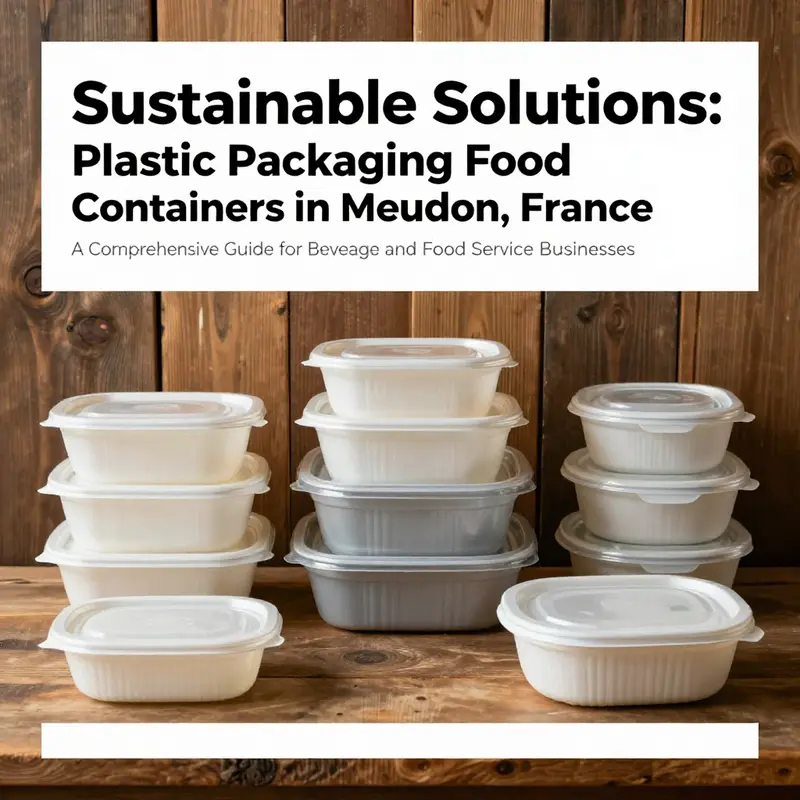
In the bustling gastronomic landscape of Meudon, France, the demand for efficient and sustainable plastic packaging food containers is on the rise. For bubble tea shops, restaurants, food trucks, catering services, event planners, and corporate procurement teams, understanding the nuances of plastic packaging is essential for both operational efficiency and customer satisfaction. From the current market landscape to major suppliers, sustainability practices, consumer preferences, and the overall economic impact, each aspect plays a critical role in shaping the success of food and beverage operations. This article delves into these facets, providing a holistic view of plastic packaging food containers tailored specifically for businesses in Meudon, France.
Meudon in the Flow: Navigating the Plastic Food-Container Market on the Edge of Paris
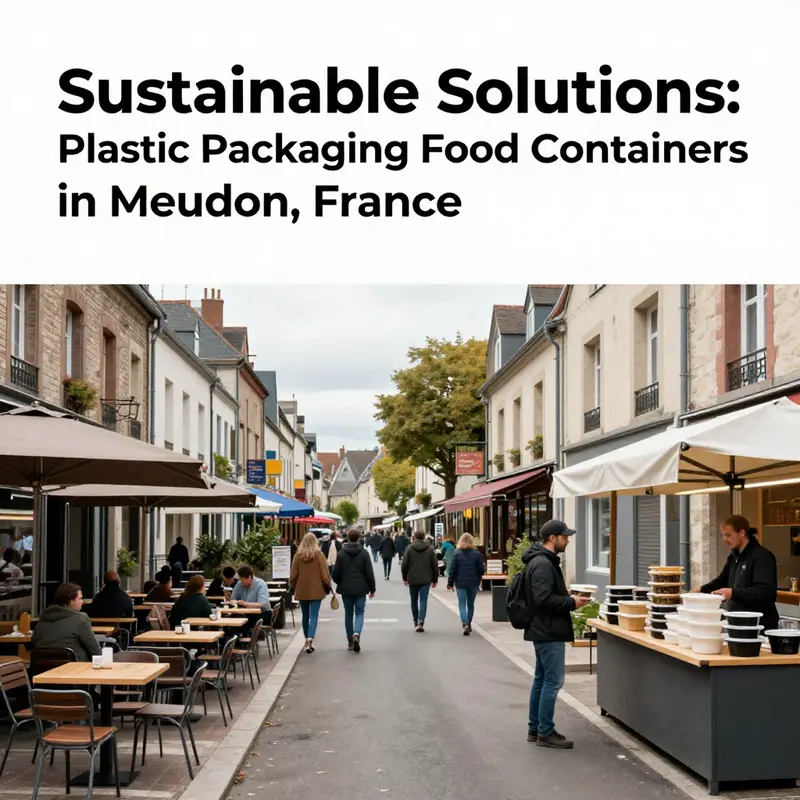
Meudon sits just beyond the immediate bustle of central Paris, a quiet yet significant node in the urban economy where daily meals, grocery runs, and the practice of takeaway packaging intersect with modern logistics. The market for plastic food containers in this suburban commune does not exist in isolation; it mirrors a national and European cadence that has evolved over years of shifting consumer habits, regulatory tightening, and rapid growth in food service and e-commerce. The latest national picture shows a disposable food packaging market in France that generated around USD 1.807 billion in revenue in 2024, a figure forecast to climb to about USD 2.764 billion by 2030. This trajectory is not a mere headline; it translates into real demand for containers—whether for cafés, meal-prep services, or home-delivery groceries—that balance cost, performance, and compliance with increasingly stringent rules. In Meudon, as in other French suburbs near major consumption hubs, the proximity to Paris and its distribution infrastructure amplifies both opportunities and pressures. The urban resident’s appetite for convenience coexists with a public push toward sustainability, shaping purchases of lightweight, adaptable, and recyclable options that perform under a range of conditions from refrigeration to reheating.
The market splits between flexible and rigid plastic packaging, a distinction that carries practical implications for Meudon’s food service operators and households. By 2025, France is expected to use roughly 1.36 million tonnes of flexible plastic packaging, growing at a compound annual rate of about 4.37 percent through 2030. Parallel growth is seen in rigid plastic packaging, projected to reach about 3.14 million metric tons in 2025 with a 3.52 percent CAGR. For a community like Meudon, these numbers translate into a diverse supply chain that can deliver lightweight, space-saving containers for takeout and cold storage, alongside sturdier options for retail-ready meals and longer shelf life. In practical terms, a local restaurant or grocery-grade operation can tailor its choices toward bags and clamshells built from recyclable resin types for daily takeout, while reserving more durable trays for prepared meals that must withstand longer transport times. The overarching trend is toward compatibility with recycling streams and clear, verifiable food-contact safety, rather than any single, rigid standard.
Meudon’s locational advantages matter here. Nestled near Paris, the commune benefits from a dense population, diverse consumer profiles, and a network of distribution facilities that can shorten lead times for replenishment. The nearby urban markets drive frequent demand for single-use and reusable containers, which in turn stimulates local procurement activity and partnerships with suppliers who understand EU and national requirements. Yet the story is not one of a single Meudon-based manufacturer filling every need. Rather, local buyers draw on a broader national and European ecosystem, sourcing from suppliers who can align material choice with evolving regulations, while also meeting cost and sustainability objectives. This reality—where proximity to Paris acts as a conduit to diverse supply options—helps explain why the Meudon area often leans toward packaging solutions that combine lightness, sealing performance, and compatibility with circular economy goals.
Policy and regulatory conditions shape every major purchasing decision. In France and across the European Union, there is a persistent push to reduce the environmental footprint of disposable packaging. Regulations around food-contact safety, recyclability, and transparency about materials influence product selection and supplier due diligence. Compliance with food-contact regulations, awareness of REACH chemical restrictions, and alignment with the EU Plastics Strategy are not abstract considerations; they inform how a product is sourced, labeled, and end-of-life managed. For Meudon-based operators, this translates into a preference for containers whose resin systems, coatings, and barrier properties are compatible with local recycling streams and national collection schemes. It also encourages a growing interest in alternatives that reduce environmental impact, including packaging designed for multiple-use scenarios or improved recyclability without compromising safety or efficiency. In practice, this means evaluating whether a given container avoids problematic additives, whether it can be recycled domestically, and whether it carries credible certifications that reassure customers about safety and sustainability.
The supply chain dynamics that connect Meudon to the wider European market are shaped by global manufacturing realities as well as regional logistics. Much of the world’s plastic packaging for food comes from production networks that extend into Asia and other regions, with distributors in Europe translating this supply into ready-to-sell stock. The European market’s resilience depends on a balance between price competitiveness, quality, and timely delivery, all of which are tested by shifts in demand from food service providers and the accelerating pace of online grocery and takeout orders. For Meudon, this means that container selection often weighs sourcing stability as heavily as unit price. A container that arrives on time and performs reliably in a busy kitchen or in an after-delivery environment carries value that goes beyond its nominal cost. That value is amplified by a growing preference for materials that can be clearly identified as recyclable and, where possible, sourced from suppliers that have transparent sustainability practices and robust end-of-life solutions.
Within this framework, Meudon’s buyers frequently navigate the balance between low-cost, high-volume options and more sustainable, higher-cost alternatives. The cost dimension is never far from mind when deciding between thin-walled, flexible pouches for cold storage and more rigid, heat-resistant trays intended for reheating at consumer end-points. The decision is further colored by the expectations of a discerning customer base that values eco-friendly claims, clear labeling, and a packaging narrative that aligns with broader environmental goals. The result is a careful procurement approach that prioritizes packaging solutions able to withstand daily cycles of use and transportation, while offering predictable performance in temperature management and leak resistance. Because Meudon sits within the catchment of major urban demand, retailers and food-service operators in the area often favor formats that simplify logistics, minimize weight, and reduce breakage risk during handling and transit.
For those exploring practical procurement options, the Meudon context suggests a two-tier approach. First, align material choices with the French and European emphasis on recyclability and safety. Seek containers whose resin families are widely accepted in local recycling streams, and that carry clear, verifiable certifications. Second, acknowledge the role of e-commerce and delivery trends that have reshaped how containers are used. The rise of takeout and home delivery has increased the demand for leak-resistant, grease-resistant, and microwave-compatible designs, especially for ready-to-eat meals and meal-prep services that cater to busy urban residents. These trends underscore the value of containers that perform consistently under diverse conditions, from cold-chain storage to hot takeaway, while preserving the integrity of the food and the convenience of the consumer.
For Meudon-based buyers seeking examples of practical packaging formats, a broad view of the landscape can be instructive. Takeaway formats, in particular, illustrate the spectrum of needs—from compact, stackable boxes for quick-service meals to deeper, multi-compartment trays for balanced meals and snacks. A useful reference point for understanding the diversity of takeaway formats is the online catalog of take-away food packaging boxes, which showcases a range of designs suitable for different cuisines and service models. For a glimpse of practical takeaway formats, see this collection of take-away food packaging boxes. take-away-food-packaging-boxes-hamburger-french-fries-popcorn-chicken-nuggets-fried-chicken-boxes. In Meudon, where small businesses often operate with tight margins, such formats offer tangible benchmarks for performance and cost, guiding decisions about whether to favor simpler, single-use options or more durable, multi-use designs that can be repurposed or returned for recycling.
The role of external research and market intelligence should not be underestimated in shaping Meudon’s packaging choices. Comprehensive market analyses indicate that the disposable food packaging market in France is not only large but also highly dynamic, with ongoing shifts in consumer behavior and regulatory emphasis driving demand for safer, more sustainable solutions. External resources that track market size, growth rates, and regulatory developments can provide valuable context for local decisions and strategic planning. For example, external analyses and industry reports shed light on the scale of the French market and its expansion trajectory, offering benchmarks for suppliers and buyers alike. External reference: https://www.statista.com/statistics/1448919/disposable-food-packaging-market-size-france/
In practice, Meudon’s buyers should also consider the broader ecosystem of packaging suppliers and distributors operating in and around the Paris region. Local procurement channels may include French packaging specialists and regional distributors who can offer a mix of flexible and rigid plastic solutions, along with additional options that emphasize recycling compatibility and food-safety certifications. While there may not be a long, explicit registry of Meudon-specific manufacturers, the regional network provides access to a spectrum of packaging solutions designed to align with EU regulatory expectations and evolving consumer preferences. The key is to build a procurement profile that emphasizes performance, end-of-life clarity, and supply reliability, while maintaining flexibility to adapt as standards or consumer expectations shift.
Ultimately, the Meudon narrative of plastic food-container packaging is a reflection of a city and its hinterland negotiating the tension between convenience and responsibility. It is a story of urban life driving demand for efficient, safe, and recyclable packaging, of logistics networks enabling rapid replenishment, and of policy signals pushing for greater circularity in a sector long defined by disposable products. For stakeholders in Meudon, the path forward lies in choosing containers that not only meet the immediate needs of kitchens and households but also contribute to a more sustainable urban economy—one that can sustain Parisian living without compromising environmental obligations that extend beyond municipal borders.
Meudon and the Global Flow: Packaging Food in a Paris Suburb

Meudon sits on the edge of Paris, a place where daily life for schools, cafes, markets, and households depends on practical, safe packaging. The city is not a manufacturing hub for plastic food containers, and its supply chain mirrors many European urban peripheries: regional distributors sourcing from larger producers abroad and translating global options into locally usable choices. The result is a reliable availability of containers, lids, and multi compartment solutions that protect hygiene, extend shelf life, and present food in an appealing way. Yet this convenience rests on a balance of regulatory demands, waste management realities, and sustainability expectations with practical cost and reliability.
From a broader perspective, the industry around Meudon follows a threefold pattern seen across many European contexts. First, production remains concentrated across three zones: Europe, Asia, and North America. European suppliers may offer closer alignment with local rules, while Asia and North America still contribute substantial volumes of standard container formats that meet international food contact standards. In practice, French buyers mix products from within Europe with global manufacturers, seeking consistent performance, predictable lead times, and clear safety documentation. Second, the market is increasingly driven by recyclability and end of life considerations, with EU strategies pushing for circularity and for packaging that can be sorted and recycled in municipal systems. Third, the procurement approach favors verified suppliers who can demonstrate material safety, traceability, and robust service, especially in B2B relationships where delays or compliance issues ripple through schools, municipal events, or catering operations.
The regulatory backdrop informs every purchase decision. At the EU level, the Plastics Strategy shapes which packaging is prioritized, how labeling works, and the end of life streams for recyclables. In France, industry bodies provide guidance and practical checklists for compliance and best practices. For Meudon operators, this translates into a straightforward process: verify food contact safety, confirm compatibility with local recycling or composting, and ensure lifecycle impact aligns with sustainability goals. Documentation such as COAs and audits becomes a baseline expectation, turning suppliers into partners in risk management and quality assurance.
In practice, Meudon buyers seek packaging families that can cover daily takeouts, school meals, and events without sacrificing safety or end of life outcomes. The design emphasis is on leak resistance, grease tolerance, clear labeling, and suitable counts of compartments. Lightweight yet sturdy options, compatible with local waste streams, are valued for transport efficiency and waste management. There is growing interest in recycled content and certified food grade materials, plus exploration of compostable or bio based alternatives where local streams allow appropriate processing. Local distributors play a key role in translating global product specs into regionally suitable choices and in providing certificates, joint testing opportunities, and flexible ordering.
Within this urban ecosystem, Meudon illustrates how small communities can connect with global supply networks while maintaining a clear focus on food safety, cost control, and environmental responsibility. The EU Plastics Strategy and related regulations promote better design for recycling, higher recycled content, and clearer labeling. Local associations and directories can offer practical guidance for alignment with these goals and for sharing validation data and experiences with different materials. For operators seeking a broader regulatory context, EU level resources describe how packaging is treated in waste management and how composting or recycling capabilities influence material choice. In Meudon and surrounding areas, procurement practices emphasize documentation, end of life guidance from suppliers, and formats that fit local sorting rules. The outcome is a predictable supply chain, a transparent sustainability narrative for customers, and a procurement approach that reduces risk for institutions handling large volumes of food containers.
Meudon’s story is not about solo shopping decisions but about weaving global production strength with local practicality. It is about respecting food safety, embracing waste infrastructure realities, and building supplier relationships that emphasize reliability and transparency. It is about choosing designs that serve multiple needs, support flexible service models, and contribute to a healthier urban ecosystem. The chapter also points to a broader European project to reduce environmental impact without compromising safety or convenience. For more regulatory context, see EU Plastics Strategy pages and national guidance on packaging and waste management.
Sustainable Pathways for Meudon’s Plastic Food Containers: Regulation, Reuse, and Recycling
Meudon sits near the heart of the Paris region, a place where everyday choices about plastic food containers ripple through kitchens, cafés, and small manufacturing facilities. The chapter you are about to read treats regulation not as a backdrop but as a living framework that shapes design, material selection, and end of life. In Meudon, as in much of France and the wider European Union, sustainability is not a trend but a mandate that blends safety for consumers with responsibility toward the environment. The result is a complicated but navigable landscape in which businesses can innovate while remaining compliant, Transparent product information, and clear pathways for disposal become as important as the containers’ performance in protecting and delivering food. The challenge is to balance practical packaging needs with the political and cultural impetus to reduce plastic waste and to promote reuse and recycling wherever possible.
The regulatory backbone begins with the European Union Regulation 1935 2004 on materials and articles intended to come into contact with food. This regime requires that any packaging material in contact with food must not transfer substances in amounts that could endanger human health under normal use. In Meudon, as elsewhere in France, national authorities translate these principles into specific requirements, testing regimes, and documentation standards. The French Agency for Food Environment and Occupational Health Safety, known as ANSES, reinforces these expectations by providing safety assessments and by overseeing compliance for materials used in food contact. The practical upshot is that suppliers and manufacturers must demonstrate that their resins, additives, and finished containers meet food grade specifications and are produced in facilities with proper quality control. Migration limits, good manufacturing practices, and traceability from resin to finished container become routine checks in the procurement process, rather than extraordinary hurdles.
France has pushed further with its environmental agenda, most notably through a broad ban on single use plastic packaging for fresh produce that took effect in 2022. This policy is not just about reducing litter; it is about steering the market toward reuse, recyclability, and compostability. In Meudon and the surrounding Île de France region, retailers, restaurateurs, and industrial users have had to rethink how produce and ready to eat foods are packaged. The aim is to shrink environmental footprints while preserving food safety and shelf life. As a result, many operators favor packaging systems built from recyclable polymers or from materials that can be composted under appropriate industrial facilities. At the same time there is growing interest in durable and reusable packaging options, a trend that aligns with the circular economy ethos that the French government actively promotes through policy and incentives. The shift is gradual but discernible in the choices merchants make about what to stock and what to offer customers.
Beyond safety and bans, the regulatory conversation encompasses labeling and end of life information. European and national rules require clear communication about what material a container is made from, how it should be disposed of or recycled, and under what conditions it is suitable for reheating or microwaving if applicable. In practice this means that packaging must carry legible markings or labeling that inform consumers about recyclability, the specific resin family, and any limitations on reuse or heating. For Meudon businesses, this translates into a design brief that prioritizes single material streams where possible, easier separation at the recycling stage, and consistent labeling across products. The aim is to minimize confusion at the consumer level, which in turn improves actual recovery rates in local recycling streams and reduces contamination in those streams. The steps may seem technical, but they have real implications for how well a packaging solution performs after its useful life, which is increasingly central to the decision making of food service operators and manufacturers alike.
In this regulatory milieu Meudon is also positioned to contribute to a broader policy narrative that favors circular economy innovations. France has signaled support for plant based plastics and innovative coatings that can reduce dependence on fossil resources while maintaining safety and performance for food contact. Bioplastics and alternative materials are being explored and piloted within French supply chains, with particular attention paid to their end of life pathways. The emphasis is not simply on the material itself but on the systems that govern how it is collected, sorted, and processed. Local pilots in the region illustrate how changes in packaging can be paired with new collection schemes, return programs, or on site reuse strategies to create a more resilient local economy. For Meudon businesses this means an opportunity to align product development with public policy while also differentiating themselves by offering verifiably responsible packaging solutions. In other words, sustainability becomes a competitive advantage when it is anchored in compliance and validated through transparent reporting and certification.
The practical implications for Meudon’s packaging ecosystem are considerable. Retailers and food service operators must precisely define what they require from packaging—capacity, barrier properties, heat tolerance, recyclability, and, increasingly, the ability to demonstrate a circular life cycle. This translates into supplier due diligence: selecting resin suppliers and manufacturers who can provide documentation of compliance with ANSES and EU regimes, who can supply material safety data sheets and migration test results, and who can certify production facilities under recognized quality standards. It also means a strategic focus on material choices. Polyethylene and polypropylene remain common workhorses for food contact packaging because of their balance of performance and recyclability, provided they are designed and labeled for efficient recovery. Bioplastics such as PLA attract interest for their lower carbon considerations, but their end of life in France’s infrastructure must be clearly understood and accounted for to avoid misrouting in recycling streams. The overarching goal is to ensure that any packaging used in Meudon can realistically be recycled or composted within the local system and that the path from consumer use back to material for future products is traceable and verifiable.
To translate these principles into everyday practice, Meudon based businesses should view packaging decisions through a lifecycle lens. This means asking hard questions about the full story behind a given container: Where is the resin sourced? What additives are used and are they compliant with EU and national rules? How easy is the packaging to recycle or compost in the local municipal system? Is there documentation to support claims about food safety and end of life? And crucially, can the packaging be designed so that it does not complicate sorting for municipal recycling facilities in Paris and its environs? These are not rhetorical questions; they guide supplier selections, contract terms, and product development roadmaps. The best packaging solutions are those that deliver reliable performance for protecting and presenting food while enabling straightforward, low contamination recycling pathways for the consumer. In Meudon, this alignment of performance, safety, and end of life is increasingly the baseline expectation from customers, regulators, and local authorities alike.
Alongside safety and recyclability, Meudon’s packaging community is beginning to experiment with novel design approaches that support reuse and higher recycling rates. The circular economy framework encourages packaging that can be returned, cleaned, and used again, or that can be processed into new material streams with minimum energy input. The design challenge is to maintain the integrity and hygiene of food contact while enabling multiple lifecycle uses. This is particularly relevant for containers used in takeout and delivery, where demand for robustness and cleanliness must be balanced with the imperative to minimize waste. Local discussions and policy developments signal openness to such approaches, provided they meet safety requirements and can be integrated into existing waste management infrastructure. In practice, this means closer collaboration among restaurants, packaging suppliers, waste collectors, and municipal authorities to align on standards, labeling, and measurement of outcomes. The aim is not only to comply with the law but to move toward a packaging ecosystem in which Meudon businesses can demonstrate tangible reductions in single use plastic and measurable improvements in recyclability and reuse rates.
As with any complex regulatory environment, the path forward benefits from concrete examples while remaining rooted in compliance. A practical reminder for Meudon operators is to favor packaging that is clearly recyclable in local streams, carries transparent material information, and supports safe reuse or disposal. Even seemingly small choices can have outsized consequences for the packaging’s end of life. A design decision such as selecting a foldable packaging option that facilitates stacking, reduces material usage, and presents the possibility of reuse can influence not only a product’s lifecycle but also its acceptance by waste management systems. For instance, foldable cake boxes with windows in a controlled, compliant design can meet safety and display needs while still fitting into recycling infrastructure. Such examples illustrate how the technical and the political intersect in ways that matter to Meudon’s businesses and consumers. You can explore variations of this approach through packaging catalogs that emphasize clear, recyclable configurations and processing-friendly features. Foldable options that balance visibility with material efficiency are especially relevant when considered against the region’s evolving consumer expectations and the regulatory push toward sustainability.
In closing, the Meudon context embodies a broader European transition where safety, environmental responsibility, and consumer clarity converge in packaging decisions. The regulatory architecture is not a barrier but a framework that guides safer materials, better design for recycling, and clearer consumer information. The ongoing policy dialogue, reinforced by official resources and industry collaboration, points toward a future in which plastic packaging for food remains essential but is used more wisely, designed for easier recovery, and paired with robust systems for reuse and disposal. For practitioners in Meudon, the practical path involves rigorous supplier evaluation, lifecycle thinking, and continuous alignment with evolving standards. The result is packaging that protects what matters most—the food itself and the health of people and the planet—while integrating seamlessly into the city’s sustainable future. For those seeking a concrete example of how packaging choices translate into practical design and disposal considerations, see foldable cake boxes with window as a reference point linked through a commonly used packaging catalog. foldable cake boxes with window. And for official guidance on permitted materials and labeling, consult the French Ministry of Ecological Transition.
External resource: official guidance from the French Ministry of Ecological Transition
https://www.ecologie.gouv.fr
Meudon’s Green Wave: Consumer Choices Shaping Plastic Food Packaging in a French City
Meudon sits on the edge of the Île-de-France region, a place where elegant streets meet the rhythms of modern urban life. In cafés and market squares, residents order, share, and store food with a habit of mindful consumption that mirrors larger European conversations about plastic. The narrative around packaging here is not just about what keeps a meal warm or hygienic; it is about how a city negotiates convenience with responsibility. In recent years, the pressure on packaging choices has grown from a chorus of complaints about litter to a more systematic demand for products that can be traced, recycled, or composted. The suburban and semi-urban geography of Meudon, with its mix of residential blocks and leafy corridors, provides a useful microcosm for understanding how European shoppers balance speed, safety, and sustainability in a single purchase decision.
Consumer attitudes in Meudon reflect a broader shift documented in September 2024, when researchers reported that packaging materials derived from genetically modified plants were increasingly viewed as acceptable if they offered clear environmental benefits and traceability. The study’s regional lens includes France, a country with strong environmental rhetoric but varied consumer experiences across cities and towns. In Meudon, even shoppers who value full information about the supply chain tend to weigh trade-offs carefully. They are not simply rejecting plastic; they are asking for packaging that behaves like plastic in its protective role yet aligns with ecological expectations. Such a paradox is not unique to Meudon, but the local conversation is telling: packaging must keep food safe during transit and storage, while the end-of-life story should be legible and relatively low impact.
The expansion of online food delivery has intensified the demand for convenient, single-use containers. In Meudon’s busy neighborhoods, appetites for speed intersect with concerns about waste. Residents recognize that a takeout box is more than a disposable item; it becomes part of a household’s daily routine and a data point in a city’s waste system. This awareness translates into a preference for materials that are either recyclable or compostable and for manufacturers who can demonstrate performance without compromising the recycling stream. Public authorities in France and across the EU have been clear that packaging must be safer, cleaner, and more sustainable, prompting producers to retool formulations and to rethink designs. The challenge, as many Meudon shoppers observe, lies in achieving a practical balance: packaging that is light, durable, and affordable, yet capable of being recycled or responsibly disposed of without undue burden on consumers.
Industry responses in Meudon and beyond reveal a broader trajectory toward sustainable alternatives. Companies are experimenting with bio-based plastics and with paper-based solutions that mimic the functional advantages of traditional plastics: lightness for transport, barrier properties to protect food, and grease resistance for messy meals. These innovations are not merely technical; they reflect a shift in how value is defined in packaging. The goal is to preserve food safety and shelf life while reducing environmental footprints through life-cycle thinking and improved end-of-life options. In practice, this means packaging designers collaborate with waste managers to optimize recyclability, compatibility with existing recycling streams, and clear labeling that minimizes confusion for consumers. The narrative in Meudon mirrors a continental dialogue: how to extend the utility of packaging without turning it into a burden on the city’s streets and waterways.
For residents of Meudon, the personal often aligns with the planetary. Local conversations about packaging are not abstract. They touch daily choices—whether to select a container that promises recyclability, whether to favor packaging that uses renewables, and whether the product tells a credible story about its origin and end-of-life fate. In this context, the rise of sustainable packaging is less about a single trend and more about a continuum: from conventional plastics governed by performance costs to greener alternatives shaped by environmental obligations, consumer expectations, and regulatory clarity. The public’s appetite for traceability means that brands cannot rely on a simple claim about recyclability; they must provide transparent information about feedstocks, processing, and the ultimate fate of their packaging. In Meudon, as in other French urban environments, this transparency becomes a form of trust that sustains consumer confidence in the broader food system.
Beyond consumer sentiment, the Meudon context also highlights how policy levers can accelerate or deter change. EU regulations, including REACH and the Plastics Strategy, push manufacturers toward safer materials and clearer labeling. At the local level, municipalities are revising waste collection practices and supporting infrastructure for composting and advanced recycling. When these systems function well, the perceived value of sustainable packaging increases, reinforcing consumer willingness to choose products that align with ecological goals. Conversely, if end-of-life options remain vague or inconvenient, even well-informed shoppers may retreat to familiar choices, particularly during times of supply-chain stress or price volatility. The tension between convenience and responsibility is not unique to Meudon, but its public discourse tends to emphasize pragmatism: the best packaging is the one that can be integrated into daily routines with minimum friction and maximum ecological clarity.
In practical terms, retailers and food service operators in Meudon face a decision matrix that blends safety, hygiene, performance, and sustainability. Containers must resist leaks and heat, endure delivery journeys, and remain visually appealing. At the same time, they must align with environmental goals and consumer expectations. Achieving this balance often involves compromises and phased transitions. For example, a shift toward compostable or bio-based options may require customers to adopt new disposal habits and familiarizing themselves with local composting programs. It also demands clear product labeling that reduces confusion about what can be recycled or composted and where. Meudon’s market, with its mix of luxury boutiques, family-run cafés, and convenience stores, provides fertile ground for experimenting with packaging formats that minimize waste while preserving the sensory appeal of food.
The implications for the supply chain are equally significant. Global producers remain the main source of plastic packaging for Europe, with many players relying on low-cost materials sourced from international networks. Yet, the Meudon story underscores a growing regional emphasis: packaging must be compatible with European waste streams, and suppliers must be ready to demonstrate environmental performance and regulatory compliance. This is not merely a compliance exercise. It is part of a broader strategic commitment to responsible sourcing, traceability, and product stewardship. For Meudon’s residents who value local environmental health, the packaging choices of nearby retailers carry moral weight as well as practical utility. The city’s environmental discourse becomes a lever for supplier differentiation, influencing design decisions and prompting ongoing collaboration among brands, recyclers, and municipal authorities. In turn, this collaboration supports a broader transition toward a circular economy that does not abandon the protective virtues of plastic but redefines them in ecological terms.
For residents seeking concrete, real-world cues, the Meudon experience suggests a path forward that centers on transparency, recyclability, and practical demonstrations of end-of-life outcomes. When a market communicates clearly about feedstocks, processing, and disposal options, consumer trust deepens. The presence of clear environmental benefits, such as reduced greenhouse gas footprints or lower energy requirements in production, becomes a crucial differentiator. Yet the narrative remains grounded in everyday life: parents packing school lunches, workers commuting with hot meals, and neighbors decluttering their kitchens. In all these moments, the choice of container shapes not only what is carried but how a city imagines its future. A simple box becomes a conduit for values—safety, convenience, dignity, and responsibility.
To connect readers with tangible, practical considerations, consider the broader ecosystem of packaging options that a Meudon consumer might encounter. For instance, a simple takeout container might be preferred if it demonstrates robust performance during transit while carrying a credible environmental story. The journey from product concept to curbside disposal involves material science, regulatory scrutiny, and consumer education. It also requires a shared public-private commitment to improving waste management infrastructure so that recyclable or compostable options do not stagnate in the wrong stream. In Meudon, this commitment is reinforced by community norms that celebrate responsible consumption and by municipal programs that reward innovations enabling lower overall packaging footprints. The result is a dynamic where convenience and sustainability reinforce each other rather than compete for scarce attention.
For readers who want to explore practical packaging options beyond theory, consider the following pointer: eco-friendly disposable packaging boxes. This link points to a catalog that showcases formats designed to deliver both performance and a kinder environmental profile, reminding us that Meudon’s consumer choices reflect trends felt across many urban centers. The implication is not that one solution fits all but that a portfolio approach—combining recyclable plastics, bio-based materials, and paper alternatives—will prevail as markets mature and waste systems improve. As the literature points out, the push toward materials derived from renewable resources is often coupled with advances in design for recyclability and better labeling, making it easier for consumers to participate in responsible disposal without sacrificing the convenience they expect.
External resources play a guiding role in shaping these decisions. A September 2024 study highlighted in the Journal of Cleaner Production illuminates how consumer acceptance of bio-based packaging materials can hinge on transparent life-cycle information and visible environmental benefits. While Meudon-specific attitudes align with broader European trends, the research underscores that trust must be earned through credible, accessible data about feedstocks, processing, and end-of-life fate. In practical terms, this means brands and policymakers should invest in clear labeling, robust certification, and straightforward consumer education. As Meudon continues to evolve within the Parisian metropolitan landscape, its packaging choices will reflect a broader European blueprint—one where sustainability and safety coexist with everyday practicality.
External resource: https://www.sciencedirect.com/science/article/pii/S095965262400187X
From Meudon’s Cafes to the Circular Economy: Economic Realities and Environmental Stakes of Plastic Food Containers
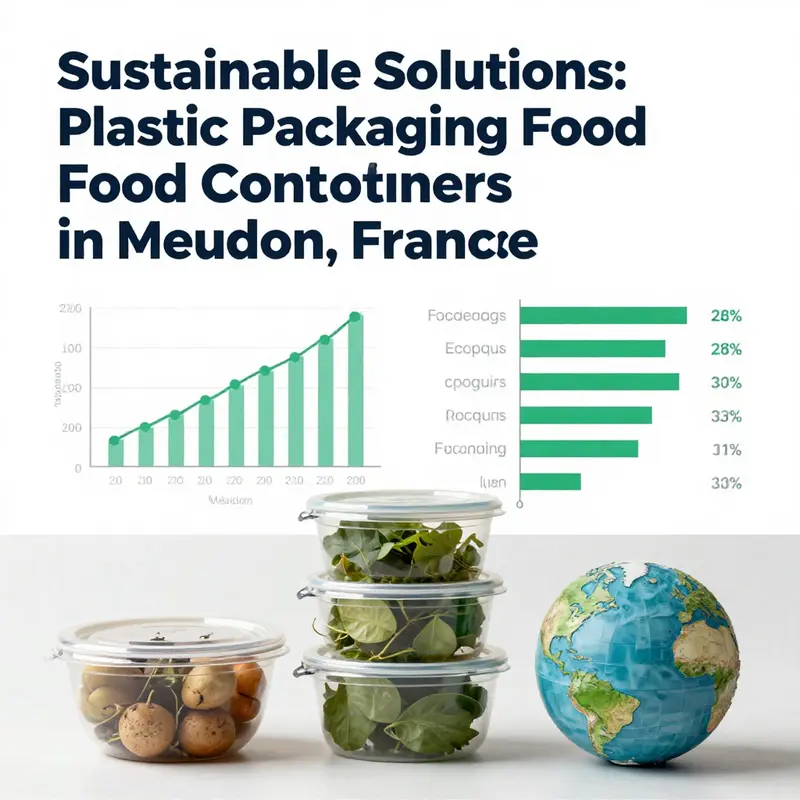
Meudon sits on the edge of metropolitan Paris, where everyday routines such as coffee cups, lunch boxes, and takeout bags trace the rhythms of urban life. In this setting, plastic packaging for food does more than protect meals; it connects local commerce with municipal waste systems and residents’ choices about what footprint they leave behind. The Meudon story mirrors a broader European debate: the convenience of single-use packaging collides with growing demands for responsibility, recyclability, and resource efficiency. To understand this tension on the ground, we can examine how the economics of production, logistics, and regulation shape options for cafes, grocers, and households, and how those choices, in turn, steer the city’s environmental path. Economically, plastic packaging blends protective function, light weight, and cost efficiency. In Meudon these attributes help quick-service eateries and markets operate with predictable price tags, which matters when margins are tight. Yet the apparent simplicity of cheap packaging masks a web of costs beyond the checkout counter. Extended Producer Responsibility (EPR) schemes, now embedded in national and European practice, require producers and importers to finance the collection, sorting, and recycling of their products. For local businesses, this shifts some financial risk from municipal tax bases to the supply chain, nudging firms toward packaging that can be recovered more efficiently or reused more often. In a town like Meudon, near metro stations and residential streets, small changes in packaging can ripple through customer experience, waste handling, and perceived value. The environmental stakes underpinning these economic decisions are steep. Plastic packaging contributes to pollution along multiple fronts: it can accumulate in landfills, persist in natural ecosystems, and threaten microplastics in soil and water. In a place like Meudon, bordered by green spaces and streams that feed into larger watersheds, the local environmental calculus resonates with EU concerns about marine litter and ecosystem health. The EU Single-Use Plastics Directive has guided policy across member states, aiming to curb problematic items and to improve the recyclability and reuse of packaging. Although Meudon does not legislate policy, the directives shape how waste is managed, how materials are sorted, and how the public perceives the cost and value of packaging. The result is a slower move toward products that minimize environmental risk, even while the immediate economics of production and logistics still favor plastics in many contexts. The broader challenge is to reconcile cheap, durable packaging with a cleaner, circular economy, a frame that features in municipal planning and in the strategic choices of local businesses. In economic terms, long-term costs of plastic packaging extend beyond production price. The expenses associated with waste collection, contamination, and limited recycling capacity impose a financial burden that can otherwise fund community services or environmental programs. France has been explicit about strengthening recycling through policy instruments and producer responsibility schemes, aiming to catalyze innovation toward designs that reduce material use, enable easier sorting, and encourage reuse models where feasible. In Meudon, this translates into a landscape where some cafes begin to experiment with reusable or returnable container concepts, while others lean toward packaging that is clearly labeled as recyclable and accompanied by accessible recycling streams. The practical outcome is a mosaic: some outlets keep operating costs steady through familiar plastics, while others invest in new supply arrangements or in partnerships with local recyclers and community programs. These choices matter, because costs that seem local can influence consumer prices and demand. A cafe that adopts a reusable program, for example, might secure a stronger community identity among customers who value environmental stewardship. A crucial factor shaping these dynamics is the recycling rate itself. In France, recycling remains a challenge, with contamination and complex material compositions limiting the efficiency of sorting streams. The figure—roughly around 30 percent recycling in some analyses—speaks to the work still required to close the loop. For Meudon’s municipal authorities and business community, improving recycling infrastructure means investing in better sorting facilities, providing clear guidance to residents about what can be recycled, and aligning with EU goals for a more circular packaging system by 2025 and beyond. The local dialog thus centers on how to reduce contamination, how to endorse materials that can be separated and repurposed with reasonable energy input, and how to support consumers who want to do the right thing without feeling overwhelmed by complex rules. In practice, that means a blend of clearer labeling, more robust collection services, and public education campaigns that demystify the recycling process. The net effect is not a single silver bullet but a pathway toward packaging systems that decouple economic activity from environmental harm, at least to the extent that technology and policy permit. In Meudon’s everyday life, the consumer’s role cannot be overstated. Sorting waste, choosing products with simpler material compositions, and supporting outlets that participate in reuse programs all feed back into the system. The city’s streets and markets reveal a community negotiating between convenience and responsibility. The dialogue is shaped by European and national policy, but it lands most directly in kitchens, storefronts, and the curb. Here, the economic calculus expands to include the cost of cleanliness and the value of longevity. A container that can be reused multiple times or made with materials that are easier to recycle may carry a higher upfront cost but deliver long-run savings through waste reduction and stronger recycling yields. In contrast, single-use plastics with opaque multilayer structures may deliver immediate convenience but trap value in systems that struggle to recover energy and materials efficiently. The tension is a constant reminder that packaging is not merely a carrier for food; it is a system with social, economic, and environmental consequences that ripple through a city’s life. Within this, there is room for optimism. Local developments hint at a future in which packaging choices align more closely with the EU circular economy framework: redesigning packaging to be more recyclable, investing in reusable models, and supporting infrastructure that can handle higher-quality sorting. For Meudon, this could translate into more cafes adopting refill or return programs, schools integrating waste-sorting education into everyday routines, and small manufacturers exploring post-consumer recycled materials or compostable alternatives where practical. The transition is incremental, requiring coordination among producers, retailers, residents, and municipal bodies. Yet the direction is clear: packaging decisions will increasingly carry the imprimatur of environmental considerations that were once optional add-ons. To illustrate how these dynamics might play out in the broader European context while maintaining a local flavor, consider a packaging option frequently seen across European markets. For more context on a specific packaging approach circulating in these markets, you can view this packaging page: https://ecocupbowl.com/product/pure-color-foldable-cake-boxes-with-window-bakery-boxes-pastry-box-for-cake-chocolates-cupcakes-gift-packaging-paper-boxes/. While this link points to a particular product line, it helps illustrate how design, usability, and recyclability influence consumer experience and the economics of takeout and bakery packaging in urban settings like Meudon. The broader policy and environmental frame remains the EU’s ongoing push toward a circular model where packaging materials are designed for repeated use, remanufacturing, or safe end-of-life recovery. In that sense, Meudon becomes a microcosm of how European cities can progress: aligning local consumer behavior and business models with the policy architecture that prizes recyclability, reuse, and responsible stewardship of resources. The effort requires patience, data, and collaborative leadership, but the potential rewards—cleaner streets, lower long-term costs, and a healthier urban ecosystem—are compelling. For readers seeking a larger policy context that frames these local choices, the European Parliament’s research and briefing on plastics in a circular economy offers a comprehensive backdrop. It situates the Meudon experience within a continental strategy that aims to harmonize product design, waste management, and market incentives across member states. By understanding these wider currents, stakeholders in Meudon—whether a cafe owner, a municipal official, or a resident who sorts their waste diligently—can better anticipate shifts in regulation, costs, and opportunities for innovation. The path forward will likely emphasize simpler, more recyclable materials, the expansion of reuse schemes, and investments in sorting technologies that reduce contamination and improve recovery rates. In such a scenario, Meudon’s plastic packaging narrative evolves from a mere logistical fact of life into a catalyst for a more sustainable urban economy that preserves the convenience of modern meals while preserving the environmental integrity of the city’s neighborhoods, streams, and parks. The chapter closes with this implicit invitation: to see packaging not as an incidental byproduct of dining, but as a mechanism through which a city can practice its values—efficiency, responsibility, and care for future generations. External resource for broader context: https://www.europarl.europa.eu/RegData/etudes/STUD/2024/603940/EXPOSTU(2024)603940EN.pdf
Final thoughts
In conclusion, the landscape of plastic packaging food containers in Meudon, France, is evolving with the pressures of sustainability, consumer preferences, and market dynamics. For bubble tea shops, restaurants, and food service providers, understanding these factors is paramount for operational success and environmental responsibility. Embracing innovative packaging solutions not only caters to modern consumer demands but also contributes positively to the community and environment.