

In the bustling landscape of food services in Poissy, France, the choice of plastic packaging food containers is pivotal. These containers not only serve functional purposes but also ensure compliance with safety standards, enhancing the overall dining experience for customers. This article delves into the critical aspects of these containers, starting with material and safety standards, moving through design and functionality, then exploring their versatility and certifications. Finally, we’ll provide keen insights into the local industry, rounding out a holistic understanding for bubble tea shops, restaurants, food trucks, catering services, event planners, and corporate procurement teams.
Poissy at the Crossroads: Material Safety, Regulation, and the European Imperative in Plastic Food-Container Packaging
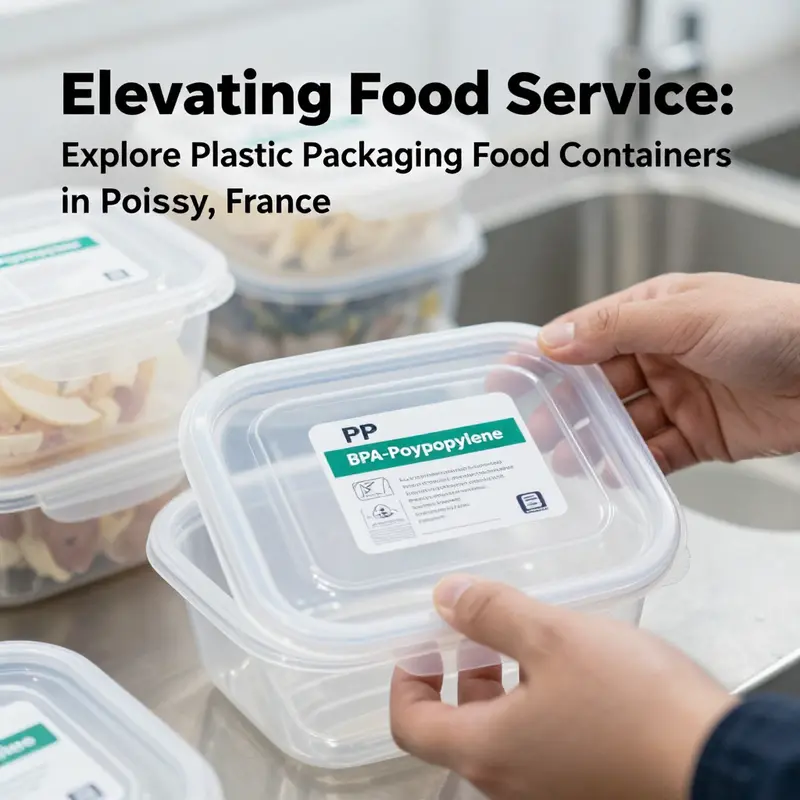
Poissy, a town with its own quiet industrial memory along the Seine, sits within a larger frame of regulation and market dynamics that shape every plastic food container arriving on its shelves or leaving a kitchen for a consumer’s car. The narrative of plastic packaging designed for food is less about a single material or a single design and more about a carefully choreographed sequence of choices: the polymer that touches the food, the additives that enable performance, the design that ensures reliability in use, and the regulatory and environmental obligations that govern how the product is manufactured, sold, and eventually recycled or disposed of. In France, as in the rest of the European Union, this sequence is governed by a precise system of rules and standards intended to safeguard health, promote transparency, and steer the market toward more sustainable options. The core of this system rests on how materials come into contact with food, how migration is controlled, and how the entire lifecycle of the packaging is accounted for through producer responsibility schemes and national measures that complement EU-wide directives. Although the available data do not confirm Poissy as a manufacturing hub for plastic food packaging containers, the standards that apply there are the same standards that would constrain any supplier seeking to market containers in France and across Europe. The result is a landscape in which material safety, design integrity, and environmental stewardship are inseparable from everyday decisions made by manufacturers, retailers, and even the households that choose to reuse or recycle these containers.
At the heart of this landscape lies Regulation (EC) No 1935/2004 on materials and articles intended to come into contact with food. This framework establishes the general principles for food contact materials (FCMs), including plastics, ensuring that substances do not transfer into food in amounts that could endanger health or alter the food’s composition. It is a treaty with long tendrils: it invites testing, migration assessments, and continuous surveillance, all of which are essential when a container will transport hot soups, delicate sauces, or remnants of a meal that might sit in a fridge before being reheated in a microwave. The regulation does not dictate a single recipe but rather a standard of safety that tolerates a range of materials while insisting that the end product has no unacceptable impact on food quality or consumer safety. In the Poissy context, this translates into a demand that any plastic container proposed for both home and commercial use—whether for a takeout meal or for a batch of stored ingredients—has withstood migration testing and carries the necessary documentation to verify its material identity and its compliance with EU-wide expectations.
Moving from the general to the specific, Regulation (EU) No 1881/2006 establishes specific migration limits (SMLs) for various substances that may be present in plastics. This is the true regulator’s tool for ensuring that the interior of a container does not become a source of unintended chemical exposure. The regulation enumerates limits for monomers, additives, and degradation products, and it also prohibits certain hazardous substances altogether. The practical effect for Poissy’s supply chain is that manufacturers must demonstrate, through rigorous testing, that the containers can hold food without releasing substances above those limits during typical use. This is especially relevant for containers designed to carry hot liquids or to be subjected to repeated heating in a microwave. In such cases, even materials that are generally considered safe must be evaluated for their performance under heat, abrasion, and long-term storage conditions.
A fundamental part of the safety narrative is the prohibition of certain substances, such as bisphenol A (BPA), in plastics intended for food contact, particularly in contexts involving children’s feeding bottles and utensils. Regulation (EU) No 1935/2004, along with subsequent amendments, underscores a precautionary approach that has shaped both industry practice and consumer perception. Even when BPA is no longer used in primary food contact applications, the broader emphasis on minimizing exposure to regulated substances remains. For Poissy and its surrounding supply networks, this means that many of the standard materials used in everyday containers—polypropylene (PP), polyethylene terephthalate (PET), high-density polyethylene (HDPE), and polystyrene (PS)—are acceptable within the regulatory framework provided they comply with the specified migration limits and labeling requirements. The emphasis, in practice, is on verification: evidence that the chosen polymer, the additives, and the processing conditions align with the law and with consumer safety expectations.
The EU’s positive list, Regulation (EU) No 10/2011, further narrows the field to the specific chemicals permitted for use in food contact plastics and their maximum allowable levels. This list does not ban every potentially useful substance; instead, it delineates what may be used, under what constraints, to produce reliable, safe packaging. For stakeholders in Poissy and the wider French market, the positive list becomes a practical guide during formulation, supplier selection, and quality assurance. It pushes manufacturers toward materials that have demonstrated safety across a range of scenarios, including exposure to heat, fats, acids, and other common food constituents. As a result, the containers that leave Poissy’s regional networks are expected to embody a careful balance: robust mechanical performance and chemical stability, while staying within the precise limits established by EU law.
An additional layer of complexity comes from national and local measures that go beyond EU directives. France has implemented national measures that reflect a broader commitment to environmental protection and waste reduction. The Loi Anti-Gaspillage et à l’Économie Circulaire, passed in 2020, seeks to curb single-use plastics in various contexts and to promote reusable or recyclable packaging solutions. In Poissy, as in many French communities, such measures translate into frameworks that encourage packaging designs aimed at reuse, higher recyclability, and better end-of-life outcomes. While the law targets a broad set of packaging behaviors and products, its underlying logic is tightly aligned with the EU’s risk-based approach to food contact materials: design for safety, design for recycling, and design for reuse wherever feasible. This alignment is not merely regulatory trivia; it shapes the decisions of manufacturers who must demonstrate that their containers can be safely used, and then disposed of or recycled in ways that minimize environmental impact.
Labeling and transparency emerge as practical consequences of these regulatory expectations. Containers marketed in Poissy and elsewhere in France should clearly indicate material type (for example, PP or PET), the recycling code, and any relevant certifications or tests. Certifications from bodies such as ANSES (the French National Agency for Food, Environmental and Occupational Health Security) or AFNOR (the French standardization organization) provide additional assurance that a product has met national or international standards. The consequence for the consumer is that a simple choice—looking at a label for the right material and recycling instructions—becomes a rational decision that folds into a broader system of safety and environmental stewardship. In the consumer’s hands, a BPA-free claim is a signal of compliance with modern expectations, even if the underlying regulatory language is more nuanced and encompasses far more substances and tests.
From the design perspective, the containers that meet these standards are often chosen for their practical functionality. The typical family of plastics used in food packaging—PP, PET, HDPE, PS—offers a spectrum of properties: heat resistance, rigidity, clarity, and barrier performance. A common feature across many safe designs is a secure, leak-proof lid and a stackable form that maximizes space in storage and during transport. When these containers are intended for hot soups or for meals on the go, they must endure the rigors of repeated heating, washing, and handling without compromising the containment or risking leakage. The capacity range, from small to larger volumes, aligns with the needs of households and commercial kitchens alike. A well-designed container will also support efficient microwave use, enabling direct reheating when appropriate and reducing the need for secondary containers or transfer steps that could introduce spill risks. In Poissy’s context, this translates into a practical ecosystem where product developers, manufacturers, and distributors pay careful attention to how a container is used in daily life, how it is processed after use, and how it contributes to a recycling stream that is efficient and effective.
The concept of stewardship extends beyond the product itself to the supply chain and the end user. Extended Producer Responsibility (EPR) schemes, operational across France and the broader EU, place meaningful accountability on producers for the management of packaging waste after consumer use. EPR policies contribute to how packaging is designed, manufactured, and collected, ultimately influencing what suppliers choose for Poissy’s markets. In practice, EPR incentives can encourage the switch to materials with higher recyclability, improved labeling for sorting, and a greater emphasis on reusable options or more sustainable disposal pathways. The participation of Poissy’s local authorities and regional distributors in such schemes ensures that the packaging system is not a one-way transaction but a cycle that supports waste reduction and resource recovery. The implications for a typical container are not just about why it is safe to touch food, but also about what happens to it once it has fulfilled its purpose and how that end-of-life stage feeds a circular economy in which resources are used more efficiently and waste is kept to a minimum.
For the people who choose and shape these containers, the regulatory framework helps justify the prioritization of materials and designs that support safety and sustainability without compromising performance. In a practical sense, it means selecting a polymer that can be used in a heat-stable, leak-proof system, choosing pigments or additives that stay within safe margins, and confirming through tests that a container will remain compliant across its lifecycle. It also means acknowledging and addressing the consumer’s need for clear, accessible information about material identity and disposal. In France, and particularly in the Poissy milieu, this translates into a consumer experience in which a simple lid and a label become a gateway to trust, safety, and environmental responsibility. The design decisions thus become a conversation between science, regulation, and everyday use—a conversation that Poissy embodies as part of the broader European packaging ecosystem.
To keep the chapter grounded in the lived realities of the supply chain, consider the practical steps a manufacturer or a retailer might take when introducing a new plastic food container into Poissy’s market. First, it would begin with material selection. The aim is to choose a polymer that delivers the desired performance—resilience to heat, clarity if transparency is needed, compatibility with the intended foods and reheating methods—while also staying within the migration thresholds and the positive list’s allowances. Next, the design would emphasize reliability of a seal in the lid and a form factor that supports stable stacking in storage and during transport. The product would undergo migration testing, stability checks, and functional tests for microwave use if that is part of its intended life. Third, labeling would be verified, ensuring that material identification, recycling codes, and any relevant certifications are readily visible to users, with additional information available if needed. Finally, the packaging would be integrated into an EPR framework, ensuring that its end-of-life management aligns with national goals for recycling and waste reduction. Each of these steps is not merely a regulatory checkbox but a disciplined approach to producing packaging that is safe, functional, and aligned with the European will to move toward more sustainable consumption patterns.
Practical guidance for those navigating this landscape includes a continual dialogue with the European Commission’s materials-in-contact guidance, which provides current, authoritative insight into the legal requirements, authorized substances, and testing protocols applicable across the EU. For professionals in Poissy and elsewhere, this ongoing resource supports not just compliance but a proactive approach to design and process improvements. It helps explain why certain materials are favored for specific applications and why additive packages must be vetted with care. It also clarifies how different regulatory pieces fit together—the general food-contact principles, the specific migration limits, the positive list, and the broader national measures that push for reuse and recyclability. This is not a static body of rules but a living framework that evolves with advancements in material science, changes in consumer expectations, and the evolving demands of a circular economy. The Poissy context, with its location in the Île-de-France region and its connections to wider European markets, illustrates how local and regional practices can be harmonized with EU-wide standards to create a coherent and trustworthy packaging system.
The broader insight that emerges from this regulatory and design tapestry is the central role of material identity in the meal supply chain. When a consumer picks up a container in Poissy, they are not merely choosing a practical vessel; they are engaging with a system that tethers health safeguards to product performance, and that links a local purchase to a continental framework of environmental accountability. The move toward BPA-free designs, the reliance on proven polymers, and the attention to labeling and end-of-life outcomes all reflect a mature approach to consumer goods where safety and sustainability are not competing priorities but complementary dimensions of value. In this sense, Poissy’s packaging landscape becomes a microcosm of Europe’s attempt to balance everyday convenience with long-term stewardship of resources. The containers are more than containers; they are conduits through which a culture of safety, trust, and responsibility travels from the factory floor to the kitchen, and finally back into the recycling loop, wherever possible.
To illustrate how these ideas translate into everyday choices, one can consider an internal guideline used by industry professionals when assessing new packaging concepts. The guideline is simple yet powerful: Does this container enable safe storage of foods at typical temperatures? Does it maintain its integrity during microwaving, freezing, or repeated washing? Is it compatible with a practical end-of-life path that aligns with French and EU recycling streams? Are all materials and additives within the permitted lists, and is the labeling clear enough for a consumer to understand the container’s journey after its use? In Poissy, as in other communities across France, answers to these questions inform whether a product advances toward production, distribution, and consumer use, or whether it is redesigned to meet higher standards of safety and sustainability. The result is a packaging culture that values not only what a container can do for a meal, but also what it can do for the planet when the meal is finished.
In this sense, the Poissy chapter is a reminder that the safety and sustainability of plastic food containers are inseparable from regulatory discipline, thoughtful engineering, and responsible consumer behavior. The EU’s framework provides the scaffolding for safety, but it is the combined effort of manufacturers, national authorities, retailers, and households that ensures that every bite remains secure and that the packaging system itself becomes a catalyst for more responsible consumption. The path from raw resin to a ready-to-use container in a Poissy kitchen—or a Poissy restaurant’s takeout program—depends on a chain of decisions that respects the letter of the law while translating it into tangible benefits: safer foods, fewer risky exposures, clearer information, and a cleaner environment. This is the practical imagination of Europe’s food-contact packaging, lived out in a town like Poissy and extended into the daily routines of millions of households and businesses across the region.
On a practical note for readers who seek further understanding or want to explore related products and packaging solutions, consider the broader marketplace of eco-conscious takeout and disposable packaging. For those drawn to the idea of sustainable design that still prioritizes safety and practicality, there is a growing range of options that emphasize recyclability, reuse, and lower environmental footprints while maintaining the performance required for food contact. Such options highlight the evolving conversation around packaging and how a place like Poissy can be part of a continental shift toward smarter materials, better end-of-life outcomes, and a more transparent supply chain. To see how these principles translate into real-world packaging concepts and to explore a range of compliant, user-friendly designs, you can browse examples that emphasize eco-friendly takeout boxes and reusable or recyclable configurations. eco-friendly takeout boxes for food packaging.
Finally, for readers who want to verify the regulatory backbone underpinning all these considerations, the European Commission’s guidance on food contact materials remains the authoritative source for up-to-date requirements, testing protocols, and the list of authorized substances. This resource provides a comprehensive map of how the EU regulates materials that touch food, including the migration limits and the process by which new substances can be evaluated and approved for use in packaging. Access to this information supports informed decision-making for manufacturers, distributors, and regulators alike, and reinforces the idea that food-contact packaging is a field of continuous improvement rather than a static set of rules. External readers can consult the EC’s portal to stay current with developments that may influence product design, labeling practices, and waste management strategies in Poissy and beyond.
In sum, the safety and sustainability of plastic food containers in Poissy are not merely features of a product category; they reflect an integrated system of standards, testing, and responsibilities. The chapter’s threads—EU Regulation 1935/2004, Regulation 1881/2006, Regulation 10/2011, and national measures like the Loi Anti-Gaspillage—bind together the material choices, the design considerations, and the lifecycle expectations that define today’s packaging products. The result is a landscape where a simple container becomes a tested, certified, and improving instrument of daily life, capable of carrying hot soups and fresh leftovers while aligning with the broader European commitment to health, safety, and environmental integrity. This is the ongoing story of plastic packaging in Poissy: a story of precision, care, and responsibility that resonates far beyond the town’s boundaries and into the heart of the EU’s evolving approach to food contact materials.
Poissy in Focus: The Design and Functionality of Plastic Food Containers Within a French Regulatory and Everyday Life Context

Poissy, a town near Paris, illustrates how plastic food containers become part of daily life through a blend of design, regulation, and everyday habit. In homes, schools, and local eateries, the containers we reach for to pack meals or store leftovers are not just containers; they embody safety standards, practical needs, and a shared commitment to reducing waste. The choices people make about what to buy, how to use it, and how to dispose of it are shaped by a wider European and French framework that translates policy into everyday practice. Through the lens of Poissy, packaging becomes a living part of the city, linking grocery aisles to microwaves, closets to recycling streams, and family routines to community environmental goals.
Material choices for most everyday containers center on polypropylene and PET. Both polymers have long been approved for food contact when produced to high purity and within migration limits. PP is favored for heat resistance and durability, which makes it a reliable partner for hot foods and repeated use at home or school. PET provides clarity and stiffness for containers that benefit from visibility of contents or a rigid form. The safety narrative is not a single checkbox but an ongoing assurance process that includes labeling such as BPA-free to reassure consumers. In practice, Poissy shoppers encounter a packaging ecosystem where EU risk assessments and national health and environmental guidance shape what ends up on shelves and how it is communicated to buyers.
EPR and recyclability form a central axis of the French and broader EU packaging framework. Extended Producer Responsibility requires producers and importers to finance the collection, sorting, and recycling of packaging waste at end of life. This framework influences material selection, coatings, labeling, and the way products are designed for disassembly and recycling. The consumer-facing effect is a sense that everyday packaging participates in a circular flow rather than becoming waste. Poissy retailers, schools, and service providers aim to present packaging that can be recycled with clear instructions for cleaning and sorting, reinforcing the idea that materials should re-enter the economy rather than populate landfills. This mindset travels across the region, helping residents and businesses see packaging as part of a system that prioritizes recoverability as well as safety and convenience.
Design features matter in daily routines: leak-proof lids, secure seals that still allow easy opening, and stackable shapes that save space. Microwave safety is a persistent concern for families who reheat leftovers or school meals, and the materials must stay stable under heat without leaching or degrading. Reusability is a practical aspiration, linked to durability, washability, and predictable performance across multiple uses. In Poissy, kitchens, canteens, and delivery workflows rely on containers that balance practicality with the expectations of health and environmental responsibility. The design language reflects a culture that values convenience without surrendering safety or sustainability.
Beyond the practical, there is attention to migration and environmental impacts. The discourse around microplastics and additives underscores the need for better barrier properties, higher quality resins, and transparency about contents and end-of-life options. This has spurred interest in recyclable, reusable, and even biodegradable alternatives, while maintaining rigorous safety standards. In Poissy, retailers and households navigate a spectrum of options, weighing durability and cost against the desire to minimize environmental footprint and keep packaging out of the waste stream.
Lifecycle thinking shapes daily choices. France has policies that encourage recyclability and material compatibility with mechanical recycling streams, guiding manufacturers toward resins that are easier to sort and process. The result in Poissy is visible in the aisles and in the recycling bins: clearer labeling, simpler sorting instructions, and packaging designed to survive multiple uses. Consumers participate through proper cleaning, sorting, and choosing products that fit into local recycling infrastructures, while businesses adapt by offering lines that can scale with demand and still comply with safety and environmental requirements.
As an ongoing conversation, Poissy epitomizes a European approach to packaging that values safety, convenience, and responsibility. The containers you encounter in daily life are the product of collaboration among designers, regulators, retailers, and households. They demonstrate how policy can translate into practical design choices that stand up to the realities of busy modern life, while also inviting individuals to participate in a circular economy. For those seeking authoritative guidance, agencies such as ANSES provide official information on food-contact materials and risk assessments that help translate EU rules into locally applicable practices, ensuring that Poissy and its surroundings stay aligned with evolving standards.
Versatility in Form and Rigor in Standards: The Fabric of Plastic Food-Container Packaging in Poissy, France
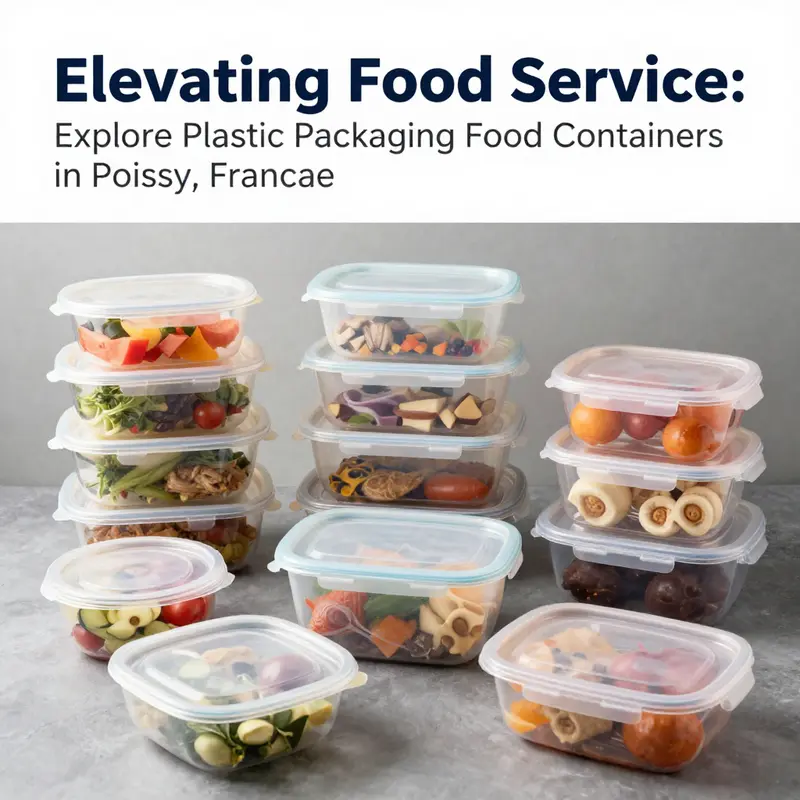
Poissy sits within the wider fabric of the Île-de-France region, a nexus where industry, regulation, and daily life intersect. The chapter you are about to read is not a travelogue of a single plant or a street-side display of a glossy container. It is a narrative about how plastic packaging for food—containers designed to carry soups, salads, or ready meals from kitchen to table—exists at the crossroads of design ingenuity, consumer safety, and environmental accountability. In Poissy, as in much of France and the European Union, this intersection is governed by a set of intertwined forces: the material science that ensures safety, the practical needs of transport and reuse, and the regulatory frameworks that compel producers to satisfy high standards without stifling innovation. Although the sources do not point to a Poissy-specific manufacturer, the characteristics described here map onto the requirements that would guide any local supplier or distributor operating in or around Poissy. They also illuminate how a city that blends historic industry with modern sustainability aims can become a meaningful node in a continental network of compliant, versatile packaging.\n\nThe material choice behind today’s plastic food containers is not incidental. Polypropylene, or PP, stands out because it is BPA-free and has a favorable balance of rigidity and resilience that suits both domestic and commercial use. Safety in direct contact with food is paramount, and the BPA-free attribute is a key signal in the marketplace: it reassures consumers that the container’s ability to hold hot liquids and solids does not come with a high risk of harmful chemical migration. In the French and broader European context, this assurance is embedded in a legal architecture that governs food-contact materials (FCMs). While Poissy-specific declarations may not appear in a centralized data set, the regulatory logic is clear: packaging materials intended for contact with food must comply with EU and national rules that limit migration of substances, specify permissible polymers, and require clear labeling. France amplifies these expectations through its packaging stewardship commitments and Extended Producer Responsibility (EPR) schemes. In practice, an entity supplying plastic food containers in Poissy would be expected to align with EPR frameworks that assign responsibility for the lifecycle of packaging to producers and importers, ensuring that packaging is designed, produced, and disposed of with recycling and recovery in mind.\n\nThe design and functionality of contemporary food containers further reveal how Poissy’s potential producers or distributors might balance efficiency, safety, and practicality. The lids are designed to be leak-proof, a necessity when transporting hot soups or sauces that threaten to spill during transit. Call this a humble feature, yet it underpins trust: a customer should be able to carry a meal from market stall to kitchen with confidence that nothing will leak or dribble along the way. Stackability is another practical virtue that translates well to both household kitchens and professional kitchens or catering operations. In a city like Poissy, where space can be at a premium in small catering setups and where households value compact storage, a container that nests or stacks efficiently saves precious real estate. The materials themselves contribute to this efficiency—PP plastics can maintain form under repeated use, resisting deformation from heat or pressure while staying light enough for easy handling.\n\nCapacity is a thread that runs through usage scenarios—from a modest 12-ounce cup of soup to a 32-ounce container for a family-sized portion. The range supports a spectrum of needs: single servings for personal meals, larger portions for families or communal dining, and even institutional use in schools or office breakrooms. The versatility extends beyond capacity: clean, microwavable heat tolerance, grease resistance, and the ability to withstand brief oven or microwave exposure are critical for containers designed for both home and commercial environments. The requirement to be microwave-safe is not merely a convenience; it is a practical consideration in a culture that prioritizes convenience without compromising safety. Consumers expect to reheat leftovers directly in their container, and foodservice operators rely on packaging that can withstand such use without compromising the integrity of the container or the safety of the food. In Poissy and across France, that expectation is mirrored in certifications that signify compliance with food-safety norms and practical performance standards.\n\nThis convergence of form and function is complemented by certification, a word that carries significant weight in European markets. BPA-free status signals immediate safety for consumers, but it sits within a broader certification ecosystem that spans material safety, packaging design, and end-of-life management. In France, as in Germany and other EU markets, packaging is often evaluated not just for short-term use but for its lifecycle impact under EPR schemes. EPR captures a philosophy that responsibility does not end when a package leaves a factory; it continues through disposal and recycling, with producers bearing costs or obligations to support infrastructure that handles packaging at the end of its useful life. In practical terms, this means that a Poissy-based supplier would need to ensure traceability of materials, confirm compliance with the EU’s FCM framework, and align with national EPR requirements that reward recyclability and proper waste management. The goal is not merely to pass a regulatory test, but to demonstrate that the packaging makes a positive contribution to the circular economy by preserving food safety while facilitating recycling and recovery.\n\nTo understand the regulatory lens through which Poissy-based packaging would be evaluated, it helps to consult the broader resources that frame these decisions. The French Ministry of Agriculture and Food is a primary source for updates on food-safety and packaging regulations. This ministry is a reference point for guidance on how materials interact with food, how labeling should occur, and how packaging waste is to be managed within France. On the European level, the European Commission maintains a Database on Food Contact Materials that provides a centralized understanding of which substances and polymers are allowed, what migration limits exist, and how products should be documented for compliance. This EU-wide resource helps explain the cross-border expectations that Poissy’s packaging sector must meet if it participates in supply chains that extend beyond French borders. Finally, regional industry associations, such as the Chambre de Commerce et dIndustrie Paris Île-de-France, offer localized insight into the dynamics of packaging businesses, supplier networks, and regulatory updates that are particularly relevant to the Île-de-France region.\n\nThe absence of Poissy-specific data in the initial material set does not undermine the logic of applying these standards locally. Rather, it underscores a practical reality: even when a city does not host a well-documented manufacturing hub for plastic food containers, the demand for safe, versatile, and certifiably compliant packaging persists. A Poissy-based distributor or producer could source materials from broader French or European networks and integrate them into a local supply chain that aligns with EPR obligations and FCM compliance. This alignment is critical not only for legal compliance but also for maintaining the trust of French consumers who expect packaging that protects their food and honors the environment. In this sense, Poissy’s role in the broader ecosystem is less about specific local production lines and more about how well its packaging actors navigate safety, functionality, and responsibility in a market that is intensely scrutinized for its environmental footprint.\n\nThe practical implications of this framework extend to design choices and supply-chain decisions. When selecting plastics for food containers, the emphasis on BPA-free PP is not merely a preference but a response to public health concerns and regulatory expectations. PP’s chemical resilience and heat tolerance support many use cases—from hot meals to cold salads—without compromising safety. For Poissy’s stakeholders, this means that the development of new packaging concepts can proceed with a clear standard for safety and performance, reducing risk for operators and customers alike. Yet the conversation does not stop with safety and performance; it moves toward sustainability. France’s EPR programs push producers to consider the entire lifecycle of packaging, from design to end-of-life disposal. In practice, this translates into packaging that is easier to recycle, uses recycled content when possible, or is designed to be compatible with existing municipal sorting streams. For Poissy’s food-related businesses, the implication is that a successful packaging strategy must harmonize material choices with local recycling capabilities and national policy trajectories, ensuring that containers do not simply perform well in the kitchen but also contribute positively to the region’s waste-management objectives.\n\nTo further illustrate how versatility can be realized within a certifiable framework, consider the ways in which a container’s features enable a wide array of applications while still conforming to safety and regulatory criteria. A leak-proof lid is not only about preventing spills; it is also about maintaining the integrity of the food during transit, protecting against contamination, and enabling customers to carry meals confidently. A stackable form supports efficient storage in both home and commercial settings, reducing clutter and enabling better space management in busy kitchens. Microwave safety expands the container’s utility, allowing consumers to reheat food quickly without transferring to another dish, which simplifies preparation workflows for households and reduces opportunities for contamination in foodservice environments. The capacity range—spanning roughly from 12 to 32 ounces—accommodates a broad spectrum of meals, whether it is a single serving of soup or a larger family-sized portion. In the Poissy context, such versatility translates into packaging options that can support a cafe, a school cafeteria, a workplace canteen, or a home kitchen, each requiring different configurations but all anchored in the same safety-first, regulation-friendly design principles.\n\nFrom a strategic perspective, Poissy’s potential packaging activities sit well within a European market that prizes interoperability, standardization, and a shared commitment to safety and sustainability. The cross-border nature of European supply chains means that a Poissy-based operation, even if modest in scale, can participate in a larger system where standardized materials, similar testing protocols, and harmonized labeling practices create a predictable business environment. The regulatory architecture rooted in EU directives and national implementation facilitates this cross-border movement while encouraging innovations in material science and packaging design. In practice, that translates to a practical mandate: build packaging solutions that are safe for food contact, demonstrate compliance with applicable standards, and support efficient recycling and disposal. It is not a shortcut to success but a reliable pathway to durable market access.\n\nFor readers seeking to deepen their understanding of the regulatory and practical landscape that frames Poissy’s packaging ecosystem, several resources offer authoritative perspectives. The French Ministry of Agriculture and Food provides official guidance on food safety and packaging controls. The European Commission’s Database on Food Contact Materials offers a comprehensive overview of permissible substances, migration limits, and compliance expectations that shape both product development and market access. Finally, local business networks, such as the Chambre de Commerce et dIndustrie Paris Île-de-France, can illuminate how regional companies navigate these requirements while remaining competitive. Collectively, these references anchor the discussion in a concrete regulatory reality that informs every design choice, every supplier selection, and every consumer-facing claim.\n\nIn sum, the story of plastic packaging food containers in Poissy is not a map of a manufacturing plant or a street-side showroom. It is a narrative of how design meets safety, how regulation drives accountability, and how regional actors participate in a continental system built to protect public health while enabling the efficient movement of meals from kitchen to table. The materials, the lids, the stackable forms, and the capacity ranges all serve a shared purpose: to make food packaging that is safe, versatile, and responsibly managed through its entire life cycle. Even when Poissy-specific production details are not explicitly documented, the conditions described here describe the work that would be required for any packaging operation in the city—work guided by robust safety standards, practical design thinking, and the environmental responsibilities that France and the European Union expect of packaging players today. The outcome is not only a container but a reliable link in a chain that sustains households, eateries, and institutions with meals that arrive in good condition, ready to be enjoyed, while respecting the region’s commitment to a cleaner, more circular economy.\n\nInternal link embedded for context and illustration: eco-friendly-disposable-3-compartment-food-grade-packaging-box-for-fast-food-high-quality-takeout-boxes-for-fried-chicken-french-fries-packaging\n\nExternal resource for further reading: For a broader regulatory context on food-contact materials at the European level, see the European Commission’s Database on Food Contact Materials: https://ec.europa.eu/food/safety/fcm_en
Poissy’s Packaging Footprint: Navigating Safe, Sustainable Plastic Food Containers in a France Shaped by Regulation

Poissy sits quietly within the dynamic orbit of the Paris metropolitan region, a town whose everyday rhythms—rising train commuters, logistics corridors, and service-oriented businesses—give it a practical relevance for anything that travels from factory floor to kitchen shelf. The chapter that follows the overview of national and European policy is not a manifesto about a single plant or a single supplier; it is a narrative about how a place like Poissy embodies the broader transformation of plastic packaging for food. It is about the interplay between safety mandates, design ingenuity, and the practical realities of sourcing and distributing containers that keep food fresh, protected, and minimally wasteful. In this sense, Poissy becomes less a static locus of production and more a node in a regulatory and logistical network that shapes choices at every turn—from materials to lids, from heat tolerance to recyclability, and from regional supply chains to consumer expectations.
At the heart of this narrative is material safety. In many discussions about plastic food containers in France and across Europe, the emphasis centers on the combination of BPA-free polymers, primarily polypropylene (PP), and the regulatory scaffolding that ensures that these materials meet strict safety criteria for contact with food. The decision to use BPA-free PP is not merely a precaution; it is a regulatory norm reinforced by consumer expectations in a market that prizes both safety and transparency. In Poissy and the wider Île-de-France region, manufacturers and distributors align with these expectations, ensuring that the products moving through regional warehouses meet not only the French standards but also the broader European framework that governs packaging safety. This alignment is reinforced by Extended Producer Responsibility (EPR) certifications, which signal a commitment to end-of-life stewardship and to the broader environmental obligations that have become central to packaging policy in France and Germany. The practical upshot is that even in a town known for its proximity to bustling logistics corridors, the baseline standard is not just performance in a shipment; it is compliance, traceability, and environmental accountability that accompany every container that enters the market.
Yet safety and compliance do not operate in isolation. They are inseparable from the design and functionality of the containers themselves. In Poissy, as in much of the Paris region, the demand profile for plastic food containers leans toward products that can handle hot liquids, resist leaks, and stack efficiently for transportation and storage. The characteristics—secure, leak-proof lids, heat-resistant walls, and a stackable geometry—are not incidental features; they reflect a careful balancing act between user convenience, transport efficiency, and the realities of food service operations. A container that performs well in a café kitchen, for instance, must prevent spills during a multi-stop delivery route and still maintain its integrity when microwaved for reheating. The capacity range, typically from 12 ounces to 32 ounces, provides flexibility for soups, stews, sauces, and ready-to-eat meals commonly prepared for takeout or catering in the region. The emphasis on microwave safety is particularly salient in a market where consumers expect convenience without compromising safety. This is not merely about heating; it is about a lifecycle continuity—from procurement and use to disposal or reuse—that minimizes risk and maximizes the utility of each container across multiple contexts.
Beyond the immediate safety and functional considerations, there is a broader, more forward-looking thread that runs through the Poissy story: sustainable packaging. The European Union’s Single-Use Plastics Directive (SUPD), a regulatory anchor since 2021, has steered French and regional packaging strategies toward reducing single-use plastic reliance while increasing the share of recycled content in packaging. In Poissy, this regulatory climate translates into a market that favors recyclable designs, higher recycled-content plastics, and, increasingly, alternatives that align with a circular economy mindset. The shift is visible in two linked directions. First, manufacturers and suppliers in and around the Paris metropolitan area are intensifying the use of materials that are easy to recycle or reuse, such as rigid plastics with high recyclability and post-consumer recycled content. Second, the rise of reusable or returnable containers for meal delivery services and institutional catering reflects a deliberate pivot away from one-way use toward reusable solutions that can be integrated into a broader logistics and cleaning cycle. The practical implication for Poissy is that buyers—whether they are restaurateurs, school canteens, or corporate caterers—are increasingly judging packaging not only by its immediate performance but by its compatibility with collection, cleaning, and recycling streams. In a region where public and private actors are vigorously aligning with recycling targets and ESG commitments, the packaging choices effectively become a signal of corporate responsibility as well as operational efficiency.
This sustainability trajectory also interacts with material science and supply chain considerations. In the regulatory environment described by agencies such as the French Environment and Energy Management Agency (ADEME), and mirrored in EU policy, there is growing momentum around post-consumer recycled (PCR) materials and bioplastics where appropriate. While bioplastics derived from plant-based materials like polylactic acid (PLA) have a role in some applications, in Poissy, as elsewhere in France, the default remains a robust, BPA-free PP for many mainstream food containers, paired with recycling-friendly designs. The adoption of PCR content in containers aligns with the expectations of both regulators and brands that want to demonstrate strong circular economy practices. Suppliers in the market offering recyclable or reusable packaging must not only provide a technically sound product but also demonstrate end-of-life pathways that fit the local waste management framework. In practice, this means that the packaging is designed to be collected, sorted, and processed within the existing municipal and regional recycling streams, with clear labeling and consumer guidance to facilitate proper disposal. The synergy between material choice, product design, and regional waste infrastructure is a critical determinant of how Poissy’s businesses operate—an example of how local markets are bound to broader regulatory and environmental systems.
Specifically, the Poissy context benefits from the proximity to major industrial and logistics hubs, which facilitates access to a spectrum of packaging solutions that meet both safety and sustainability criteria. This proximity matters because Poissy’s businesses rely on a reliable supply chain to maintain consistent packaging availability, manage costs, and ensure compliance across predictable lead times. In such a setting, the choice of a packaging solution often hinges on a combination of regulatory compliance, supplier reliability, and the capacity to communicate clear, actionable guidance to end-users about safe use and disposal. The regional data suggest a trend toward packaging that can be heated without compromising containment, that remains leak-proof and grease-resistant, and that looks professional in both retail and catering contexts. These attributes are not merely about aesthetics; they reflect the practical realities of service delivery and consumer expectations in a market that values both convenience and sustainability.
There is also an important social and economic dimension embedded in Poissy’s packaging landscape. As France and the European Union push for greater recycling rates and more responsible packaging, regional actors—municipal authorities, industry associations, waste management operators, and educational institutes—play a critical role in disseminating best practices, showcasing successful local case studies, and providing guidance on how to upgrade packaging choices without disrupting operations. ADEME’s insights and case studies—accessible through its public-facing channels—offer a framework for understanding how packaging innovations can be scaled within Île-de-France and neighboring regions. This is not merely an abstract policy conversation; it is a practical blueprint for companies in Poissy seeking to align with national and European targets while maintaining affordability and performance in their packaging portfolios.
In this complex landscape, the regional supply chain for plastic food containers in Poissy embodies a balance between standardized safety, performance-driven design, and sustainability-driven innovation. A consumer in Poissy may enjoy the comfort of a hot soup packaged in a container that remains leak-proof during transit and can be heated safely in a microwave. The same consumer benefits from knowing that the container’s materials are BPA-free, that the product supports recycling or reuse, and that the upstream producers adhere to robust EPR frameworks that ensure responsibility beyond the point of sale. For local businesses, this translates into planning that integrates procurement with waste management, and into communications that clearly convey safe heating instructions and disposal guidance to their customers. In practical terms, it means a packaging decision process that weighs heat resistance against recyclability, that favors stable supply chains with reliable certifications, and that embraces a circular economy mindset without sacrificing day-to-day operational realities.
The Poissy narrative, then, is not about a single production line or a single supplier. It is about the regional ecosystem that surrounds packaging choices: the regulatory architecture that mandates safety and environmental accountability, the technological and material innovations that enable safer and more efficient containers, and the logistical networks that move these products from warehouses to kitchens and back through recycling streams. It is about how a town with strong ties to Paris’s logistical backbone becomes a microcosm of a wider European shift toward safer, smarter, and more sustainable plastic packaging for food. The lessons from Poissy’s experience—embraced by readers who live in similar municipalities or who manage supply chains in comparable urban-rural interfaces—are that compliance and performance can be harmonized with sustainability and usability. The future of plastic packaging in Poissy will continue to be shaped by regulatory horizons, by material science breakthroughs, and by the everyday choices of businesses and households that insist on containers that keep food safe, minimize waste, and respect the planet’s finite resources.
Internal link reference: For readers interested in the practical design and sourcing options that align with the shift toward eco-friendly packaging, a relevant catalog page highlights the evolving landscape of sustainable takeaway containers and related supplies. This resource explores how stylish, microwave-safe, grease-resistant, and leak-proof solutions can be implemented without compromising safety or recyclability. eco-friendly-takeout-boxes-for-food-packaging-stylish-food-containers-safe-microwave-craft-paper-lunch-boxes-leak-grease-resistant
As this chapter has outlined, Poissy’s packaging reality sits at the convergence of safety, design, and sustainability. The local market is not insulated from the European agenda; rather, Poissy participates in a broader movement toward materials that are safer for consumers and gentler on the environment. The interplay of regulation, consumer expectations, and practical business choices shapes a future in which plastic containers remain useful, but increasingly aligned with a more ambitious set of goals—recyclability, traceability, and responsible end-of-life management. The next step for Poissy, and for the companies that operate within its economic orbit, is to translate these broader directives into concrete, locally meaningful actions: selecting materials with proven safety profiles, investing in container designs that minimize waste and maximize reuse potential, and embracing the routing logic of a circular economy that binds Poissy’s present to a sustainable, resilient future. This ongoing transformation will be visible not just in policy briefs or trade journals, but in the daily operations of eateries, distributors, and households across Poissy and its surrounding communities.
External resource: ADEME provides authoritative context on sustainable packaging initiatives, recycling targets, and innovations within France and the Île-de-France region. https://www.ademe.fr
Final thoughts
Understanding the landscape of plastic packaging food containers in Poissy, France, equips food businesses with the knowledge needed to make informed decisions. From safety standards and design features to versatility and local industry dynamics, each element plays a crucial role in delivering quality service to customers. By prioritizing these aspects, food service providers can not only enhance their product offerings but also foster customer trust through safety and sustainability.