
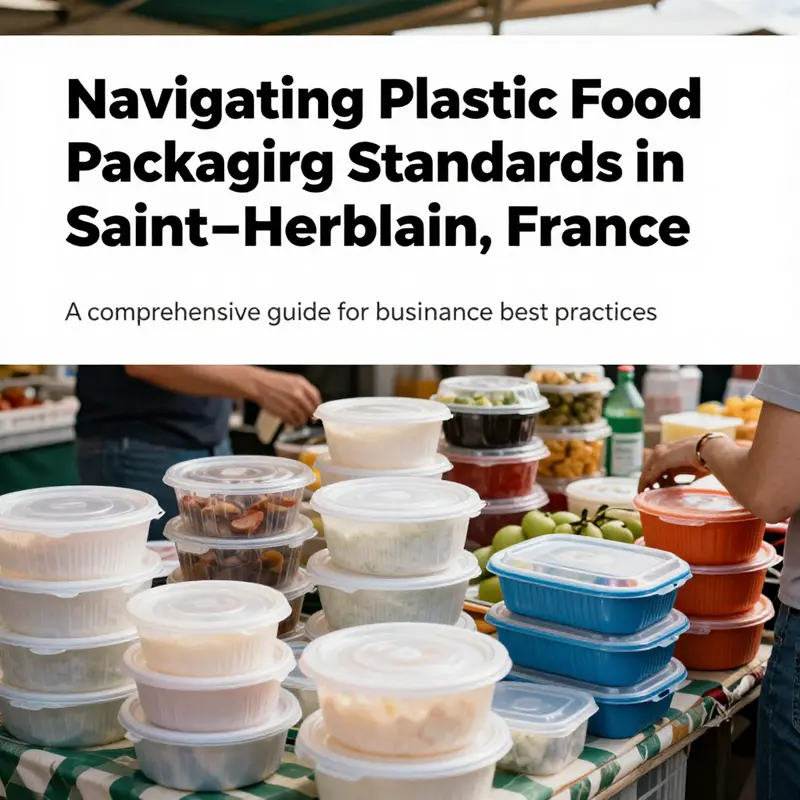
In the vibrant culinary scene of Saint-Herblain, France, the selection of plastic packaging food containers is both an essential and regulatory-driven aspect of operations for bubble tea shops, restaurants, food trucks, catering services, and event planners. With a growing demand for safe and sustainable packaging solutions, understanding the local regulations, material standards, and safety protocols is paramount. This guide will delve into the regulatory standards for plastic packaging in Saint-Herblain, explore the materials and their implications on safety, evaluate hygiene practices, assess mechanical properties crucial for food containers, and examine health impacts associated with plastic usage in food service. By the end of this article, you’ll be equipped to make informed choices for your packaging needs, ensuring both compliance and the satisfaction of your customers.
null
null
From Virgin Resin to Safe Bites: The Material Architecture of Plastic Food Containers in Saint-Herblain
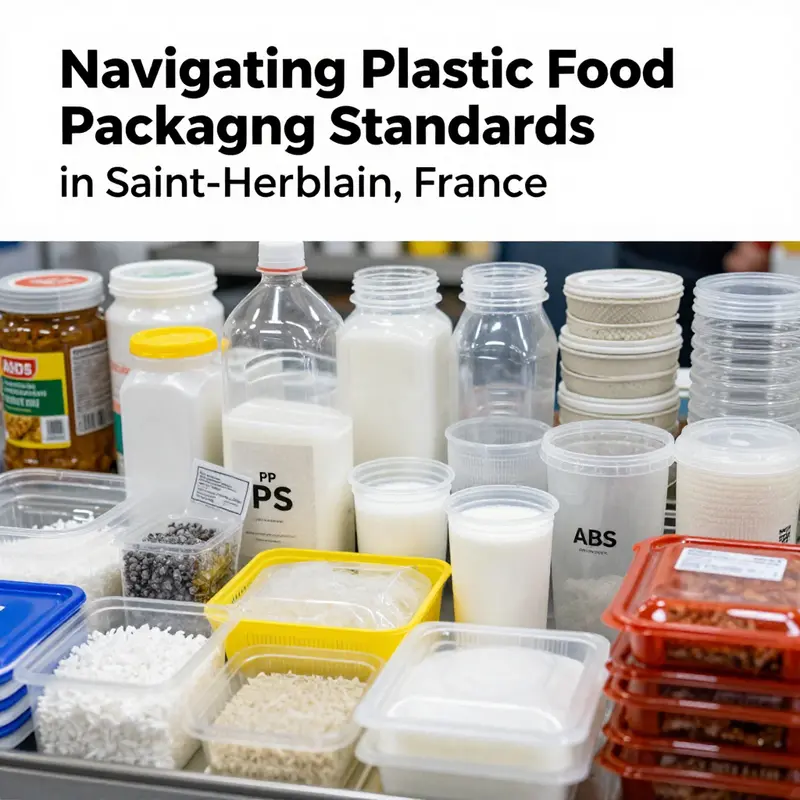
In Saint-Herblain, as in the broader European Union, the material makeup of plastic packaging for food is not just a matter of cost or convenience. It is a carefully choreographed decision that aligns with a safety framework designed to protect consumers while supporting everyday cooking and dining. The trail from resin to ready-to-use container runs through a regulatory landscape that demands transparency, traceability, and tested performance. At the heart of this framework is Regulation (EC) No 1935/2004, which requires that substances migrating from packaging into food do not pose health risks. In France, such principles are operationalized through national and sectoral guidance, including the Technical Trade Measures Latest Notification 2026 Issue 2. This notification translates EU-wide safeguards into concrete obligations for disposable plastic food containers and utensils that circulate in the French market, including in Saint-Herblain. The result is a system that treats packaging not as a passive vessel but as a controlled interface between food and consumer, where every choice—from material origin to end-use performance—carries safety implications that must be validated and documented.
The material palette most commonly seen in Saint-Herblain mirrors the EU’s sustained reliance on a set of polymers chosen for compatibility with food contact, durability, and process-ability. Polyethylene (PE) stands out for its versatility, particularly in bags, films, and some rigid containers, where its moisture resistance and resilience are prized. Polypropylene (PP) often takes the lead for storage containers and lids, prized for its resistance to heat and mechanical strength. Polystyrene (PS) remains a staple for disposable cutlery, takeout trays, and certain cold-packaging applications, though its public perception and regulatory scrutiny are increasingly shaping market choices toward alternatives. Polyethylene terephthalate (PET) is widely used for beverages and some food trays, valued for clarity and barrier properties that preserve product quality. Bioplastics, including polylactic acid (PLA), are edging into the scene as part of a sustainability narrative, offering compostable pathways that resonate with environmental goals while requiring careful calibration of their performance and end-of-life routes. These materials do not exist in isolation; they are deployed within a regulatory matrix that defines how they may contact foods and under what conditions they can be used, emphasizing safety as the default expectation rather than the exception.
A core truth in this regulatory culture is the insistence on food-grade virgin materials for primary packaging. Reclaimed or recycled feedstocks are approached with caution because the migration profile of contaminants can be more difficult to guarantee in recycled streams. Alongside material origin, the presence and use of additives are subject to strict limits. The French and European stance prohibits certain additives—most notably bisphenol A (BPA) and a range of phthalates—in food contact materials intended for infants or for repeated use. The objective is to prevent any chemical migration that could accumulate in food and pose health risks. To verify such safety, migration testing is standardized and systematic. Laboratories employ food simulants—patterns that mimic fatty, aqueous, and acidic foods—across defined time and temperature regimes. The resulting data address both total migration, the overall amount of material that could migrate, and specific migrations, focusing on particular substances of concern. This dual approach ensures a comprehensive safety profile rather than a narrow snapshot. Color migration, while seemingly minor, is also monitored as part of the broader quality assurance framework; a packaging that releases color into food could signal deeper material interaction or manufacturing inconsistencies.
The physical and mechanical expectations attached to these materials further shape the Saint-Herblain packaging landscape. A practical benchmark is the container’s ability to endure a drop from at least 0.8 meters without compromising its integrity. This parameter underlines how containers behave in real-world handling—from the bustle of a takeout order to household storage and transport. Temperature resistance is equally critical. Containers are expected to withstand exposure to heat up to 100°C, aligning with cooking, reheating, and hot-fill scenarios that many households rely on. These performance criteria are not mere afterthoughts; they guide the choice among polymers for any given use case. PP’s robust heat resistance makes it a predictable choice for reheating and hot meals, supporting safe service and consumer convenience. PS offers a cost-effective option for cold or ambient-use packaging but requires careful targeting to ensure safety under whichever conditions it will encounter during handling. PET provides advantage in clarity and barrier properties, enabling attractive presentation for ready-to-eat meals and beverages, yet its hot-use applications are typically defined by specific formulations or use cases. PE’s flexibility and resilience reinforce its role in secondary packaging and light-duty containers where moisture control is essential. In parallel with these material choices, the packaging industry in Saint-Herblain is increasingly mindful of how the product’s life cycle intersects with waste streams and recycling capabilities, a concern that also informs design decisions such as thickness, sealing methods, and lid mechanisms to promote safe opening, reuse, or disposal.
The regulatory architecture supporting these material choices is anchored in EU-wide and French-specific provisions that govern food contact materials and articles. Regulation (EC) No 1935/2004 ensures that substances migrating into food are not hazardous and that there is a framework for compliance. Regulation (EU) No 10/2011 provides additional specificity for plastics, detailing testing protocols and permitted substances within plastic materials intended for contact with food. The Saint-Herblain context thus requires manufacturers and suppliers to validate that their materials are food-grade, that virgin resins are used in primary packaging, and that any additives are within permitted limits. Migration testing uses standardized approaches to quantify total migration and specific migrations, with acceptance criteria designed to protect public health across a range of real-world scenarios—from cold storage to hot meals. This regulatory clarity supports the consistency of packaging across France and strengthens the reliability of the supply chain for retailers and consumers alike.
As the market moves toward sustainability, bioplastics like PLA introduce a new dimension to Saint-Herblain’s packaging landscape. PLA, derived from renewable resources, offers compostability under appropriate industrial conditions, appealing to environmentally conscious segments of the market. However, its integration with food contact safety demands careful attention to thermal performance and end-of-life pathways. The regulatory conversation does not treat bioplastics as a loophole around safety; rather it tests whether their use aligns with migration limits and whether waste infrastructure can handle their intended disposal stream. The broader narrative in this region is thus a balancing act: delivering packaging that supports food safety and consumer convenience while acknowledging environmental responsibilities. In practical terms, this means packaging developers, suppliers, and regulators engage in ongoing dialogue about material selection, additive strategies, and the compatibility of end-of-life options with food safety guarantees. Saint-Herblain’s market, like many in France, embodies this dual objective of safeguarding health and advancing sustainability while maintaining the reliability that restaurants, retailers, and households depend on.
The local dimension remains essential in understanding how these standards translate into everyday practice. Even if public data about specific Saint-Herblain manufacturers is less visible, the regulatory DNA is clear: packaging must perform, protect, and be traceable. Material specifications are accompanied by supplier qualifications and batch-level testing that confirm conformity with food safety laws. The requirement for food-grade status, purity of virgin resin, and the reliability of migration data creates a disciplined supply chain where quality is built into every stage—from resin procurement to the finished container arriving on a kitchen shelf. The 10 CFU per item limit for microbial contamination reinforces the principle that safety begins with the material and ends with the consumer’s trust. Durability tests, heat resistance checks, and drop tests work in concert with chemical safety checks to provide a holistic assurance that Saint-Herblain’s plastic packaging ecosystem is designed to keep meals safe from manufacturing through consumption.
For professionals and informed consumers alike, understanding these material choices sheds light on how to store, heat, and transport food safely. PP-based containers, with their notable heat tolerance, are often the go-to for reheating, while PS-based items are more common for cold or ambient-use packaging. PET’s combination of clarity and barrier properties makes it a favored option for ready-to-eat meals and beverages, though its use in very hot contexts is carefully controlled. PE remains a versatile workhorse for bags and lighter containers, while bioplastics offer compelling sustainability narratives when used within appropriate end-of-life channels. Reading materials labels and understanding intended use and temperature ranges helps consumers avoid misapplying packaging. The Saint-Herblain context emphasizes that packaging decisions are not standalone choices but components of a national and European system that seeks to harmonize safety, performance, and environmental stewardship. To widen the lens beyond plastics and explore complementary packaging solutions, see eco-friendly takeout boxes for food packaging.
From a policy and industry perspective, the Saint-Herblain experience mirrors a broader European commitment to aligning health protections with practical packaging needs and sustainability ambitions. Regulations translate into measurable actions in factories, testing labs, and warehouses. They shape the vocabulary engineers use when selecting resins and additives and steer container design toward safer handling and more reliable recycling streams. The outcome is packaging that helps preserve flavor and nutrition, protects health, and supports waste reduction as markets and technologies continue to evolve in the French context and beyond.
External regulatory context and further reading: For regulatory context on food contact materials at the EU level, see the European Commission’s database on food contact materials. https://ec.europa.eu/food/safety/food-contact-materials_en
Safeguarding Disposable Plastic Food Containers in Saint-Herblain: EU Safety and Hygiene Rules in Practice
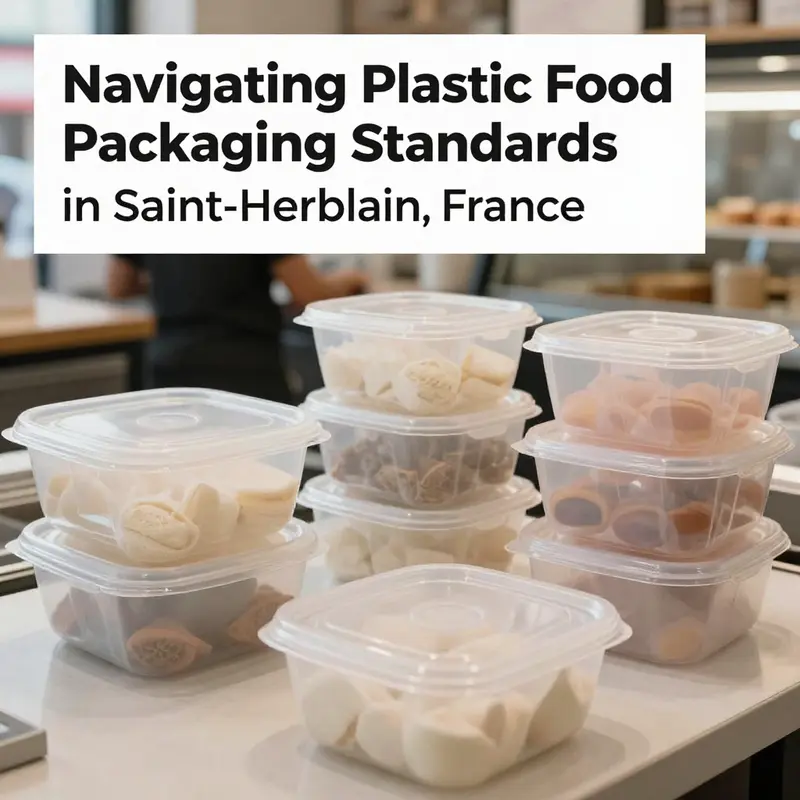
Saint-Herblain, a dynamic municipality near Nantes, relies on a coherent EU framework to ensure disposable plastic food containers are safe and suitable for contact with food. While there may be no Saint-Herblain-specific regulation, packaging used here is governed by EU rules designed to protect health, preserve food quality, and maintain consumer confidence.
The core regulations are Regulation (EC) No 1935/2004 on materials intended to come into contact with food, which prohibits the transfer of substances that could endanger health or alter the food, and Regulation (EC) No 282/2008 on plastics, which lists authorized monomers and additives and sets migration limits. In practice this means containers must meet migration limits and be made from food-grade materials, tested under typical use conditions, including exposure to heat and fatty foods.
Common materials include polypropylene (PP), polystyrene (PS), and PET, chosen for their balance of heat resistance, rigidity, and clarity. Additives are controlled and substances such as BPA, lead, and phthalates are restricted in food-contact use. Recycled materials are typically avoided for high-purity applications where safety is paramount.
To verify safety, suppliers provide test reports and certificates of analysis. Packaging should meet microbiological and chemical safety standards, with limits on contamination and migration. Certifications such as CE marking and quality systems like ISO 22000 or HACCP underpin supplier reliability, while retailers may require BRCGS or FSSC 22000. National authorities and the European Commission provide guidance and surveillance to ensure ongoing compliance. In everyday operations, Saint-Herblain kitchens should insist on full documentation, maintain clean storage, follow microwave guidance on containers, and use single-use packaging only where appropriate and safe.
The EU framework is designed to protect health without stifling innovation, enabling safe and convenient packaging across Saint-Herblain’s diverse food scene, from street food to catering. For official guidance, see the European Commission’s Food Contact Materials resources: https://ec.europa.eu/food/safety/foodcontactmatter_en.
Guardians of Freshness: Mechanical Standards for Plastic Food Containers in Saint-Herblain, France
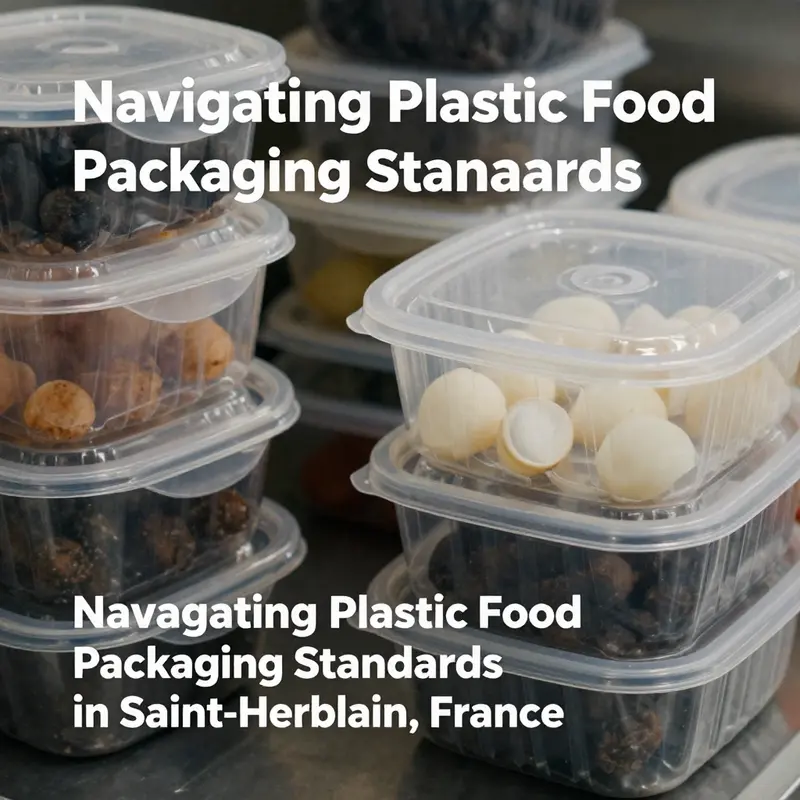
In Saint-Herblain, a suburb of Nantes, the everyday drama of a takeout box begins long before it reaches the consumer. The journey from factory to fork is governed by a web of rules that ensure safety, integrity, and trust. While local suppliers may be discreet, the national and European framework shapes every plastic container intended for food contact. The 2026 edition of the Technical Trade Measures Latest Notification Issue 2 sets out precise expectations for disposable plastic food containers and utensils used across France, including Saint-Herblain. The emphasis is not on appearance alone but on the stubborn realities of materials, heat, impact, and migration.
Mechanical properties become a practical barometer of safety. A container must survive a drop from 0.8 meters onto a cement floor without cracking or delaminating. It must endure exposure to hot liquids or oil near boiling temperatures, specifically 100°C ±5°C, without deforming, peeling, or wrinkling. Those conditions are not universal waivers; they are conditional. If a product is not designed for heat exposure, the heat-resistance test may be waived, but any item expected to handle hot contents must pass the test. The rules also specify that materials should be food-grade virgin resins, free from harmful additives, to avoid compromising safety at the moment of contact with food.
Beneath the surface of these tests lies the formal language of strength. The bending strength must meet minimum thresholds that vary by material: polypropylene (PP) demands ≥25 MPa, polystyrene (PS) ≥40 MPa, and acrylonitrile butadiene styrene (ABS) ≥60 MPa. These numbers are not decorative; they govern how a container behaves during stacking, carrying, and daily use. A box that buckles under weight or heat becomes more than just an inconvenience; it becomes a potential risk to its contents and to the consumer’s confidence. The categories reflect material science as much as packaging design, translating polymer science into everyday reliability.
Durability under use is the other side of the coin. Containers must resist typical wear—from repeated opening and closing to rough handling in transit—without accumulating cracks or deformations that could foster leakage, contamination, or heat loss. The testing regime does not merely measure a moment of impact; it encodes a storyline of handling, stacking, warming, and serving that occurs from factory shelves to household kitchens. The safeguards extend to limits on microbial contamination, with a ceiling of 10 colony-forming units (CFU) per item, and to migration and color standards. Migration must stay under 10 mg per square decimeter, while color migration should be invisible to the eye. These embedded limits reflect a precautionary approach: the packaging is a passive interface, yet it must shield food from contaminants and aroma migration alike.
In the Saint-Herblain context, these standards play out through local procurement and supplier selection. French regulations funnel decisions about what can be brought into kitchens, cafes, and catering operations. The challenge is to source containers that simultaneously satisfy mechanical rigor and practical cost, while ensuring lab-proven safety for a wide variety of foods and temperatures. Even when the local market lacks a specific brand memory, the regulatory framework creates a predictable baseline. Designers and purchasers in Saint-Herblain learn to interpret the European and national cues for durability, choosing containers whose physical properties align with anticipated use—whether a quick-service meal, a bakery box, or a ready-to-heat dish. The requirements act like an invisible warranty that every stakeholder relies on, from the compliance officer at a cafe to the purchasing manager at a distribution center.
The drop test, the heat exposure check, and the material-specific bending strength thresholds have a common ambition: to guarantee that safety lives at the point of contact with food. With heat, the container must be sentinels against deformation that could open seams, expose contents, or trap heat unevenly. With mechanical load, they must resist crushing and maintain seal integrity so that moisture and aroma do not escape or contaminate surroundings. And with chemical concerns, migration limits are a protective barrier, ensuring that substances do not leach into the food at rates that could accumulate over time. Color migration, though harder to quantify with precision, remains a qualitative safety signal, ensuring that the appearance of the packaging does not betray a hidden hazard.
These considerations also influence the way products are designed for Saint-Herblain’s markets. A practical implication is the alignment of packaging options with the expected service life: some containers are intended for one-time use, others for limited reuse with careful handling. The regulatory language allows for waivers where heat resistance is not required, which reflects a realistic split in the market between multicourse meals that require hot contents and simple, cold-item packaging. The net effect is a packaging ecosystem that rewards materials with robust heat resistance, strong bending strength, and stable barrier properties, all while remaining compliant with the broader European framework.
For manufacturers and retailers, the interplay of rules and performance metrics suggests a disciplined approach to material selection. Polypropylene offers a reliable baseline, delivering cost-efficient strength that suits many everyday uses. Polystyrene provides higher stiffness and a different surface finish suitable for certain designs, while acrylonitrile butadiene styrene brings exceptional rigidity that can be advantageous for rigid, heavy-duty containers. Each material’s compliance posture must be documented, tested, and verified, ensuring that the final product performs as promised under real-world conditions. In practice, this means a careful collaboration between material scientists, packaging engineers, and quality-control teams, all working within the framework that Saint-Herblain’s food economy expects to uphold.
To illustrate how these principles translate into tangible choices in the wider packaging landscape, consider how designers respond to regulatory cues while remaining practical for everyday use. Packaging that is sturdy, heat-tolerant, and safe in terms of chemical migration often occupies a sweet spot where performance, cost, and compliance converge. The example of a foldable cake box with a window, a design that blends structural confidence with user-friendly presentation, demonstrates how modern packs can balance aesthetics with safety and durability in a way that aligns with the article’s broader focus on plastic packaging in this region. Pure Color Foldable Cake Boxes with Window Bakery Boxes. The equilibrium it suggests—rigid enough to protect, flexible enough to ship and display—embodies the mechanical ethos discussed here, even as it points to a future where more packaging decisions are guided by measurable performance.
All of these threads connect to the ongoing conversation about how Saint-Herblain’s kitchens, schools, and cafés can rely on packaging that is not only compliant but also resilient. The narrative of mechanical properties becomes a narrative of trust: the trust that a container will perform when it matters most, protecting the food and its consumer. In the end, the discipline of testing and the discipline of design reinforce one another, shaping a local market that respects safety as a baseline and strives for reliability as a standard feature of everyday life.
External resource: For the broader regulatory context of food-contact materials within the European Union, see the official EU guidance on food contact materials: https://ec.europa.eu/growth/sectors/food-contact-materials_en
Guarding the Plate: Health Risks, Regulation, and the Plastic Packaging Landscape in Saint-Herblain
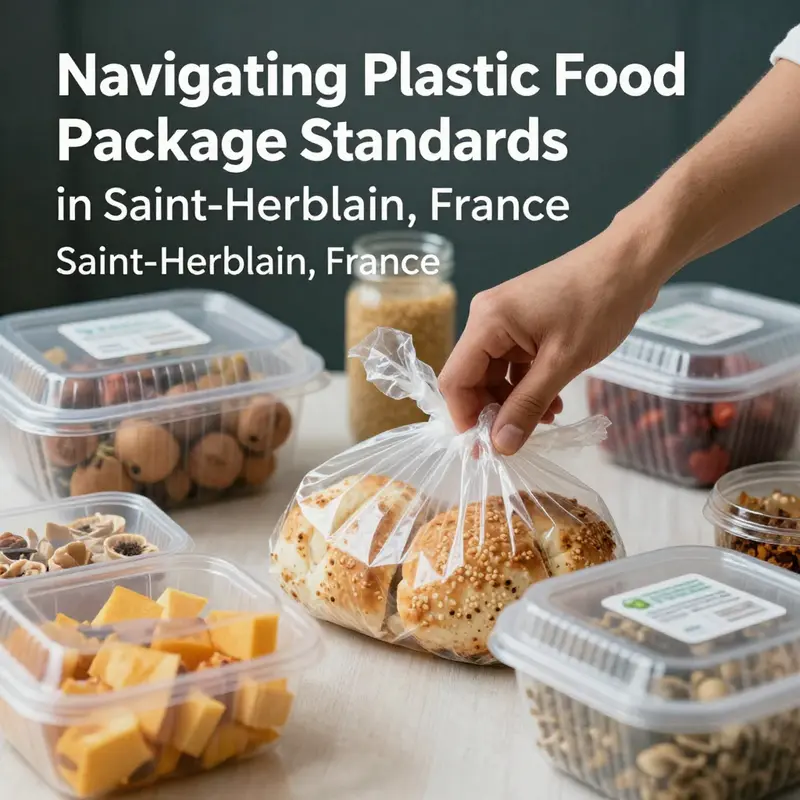
In Saint-Herblain, just outside Nantes, the everyday act of eating depends on packaging that must keep food safe and uncontaminated. Plastic containers, cups, clamshells, and utensils are embedded in daily life from shops to schools. But behind convenience lies a regulatory framework that governs materials, performance, and safety for disposable food contact items. France operates within a national system that outlines what is allowed, tested, and traceable for products used or sold in municipalities like Saint-Herblain. A key reference point is the latest Technical Trade Measures Notification, which describes the requirements for food-contact packaging, including the use of food-grade and virgin materials and prohibitions on certain additives and contaminants. The rules specify that packaging must withstand practical handling, heat exposure, and mechanical stress, and must be made from material families such as polypropylene, polystyrene, or ABS to ensure strength while maintaining safety. The framework also sets limits on microbial contamination and chemical migration, aiming to minimize exposure during storage, handling, and consumption. While these measures reduce obvious hazards, they do not eliminate subtler risks such as microplastics and trace chemical migration, which remain subjects of ongoing research and debate. Emerging studies indicate microplastics can migrate from packaging into foods and beverages under certain conditions, posing potential inflammatory, oxidative, or endocrine-related concerns with long-term exposure. The French system thus acts as a safeguard, but health considerations extend beyond regulation into supply chains, consumer choices, and the design of safer packaging options like paper-based or compostable alternatives. For consumers, practical steps include choosing products that meet migration and microbial standards, avoiding unnecessary heating of non-microwave-safe containers, and seeking transparent compliance data from suppliers. For businesses, the emphasis is on robust supplier verification and offering safer alternatives when feasible. The broader public health message remains nuanced: regulations reduce the most acute risks, while scientists continue to investigate subtler pathways of exposure, including microplastics, to inform future governance. In Saint-Herblain, the dialogue among policymakers, researchers, retailers, and residents supports a safer, more sustainable food scene, where the goal is to minimize harm while preserving the convenience that modern life demands.
Final thoughts
Understanding the regulations and safety standards surrounding plastic food packaging in Saint-Herblain is vital for businesses aiming to ensure both compliance and customer satisfaction. By selecting appropriate materials, adhering to hygiene and safety guidelines, and being aware of health impacts, businesses can enhance their offerings while protecting consumer interests. With the right knowledge and tools, you can confidently navigate the complexities of food packaging, ensuring your products meet both quality standards and customer expectations.