
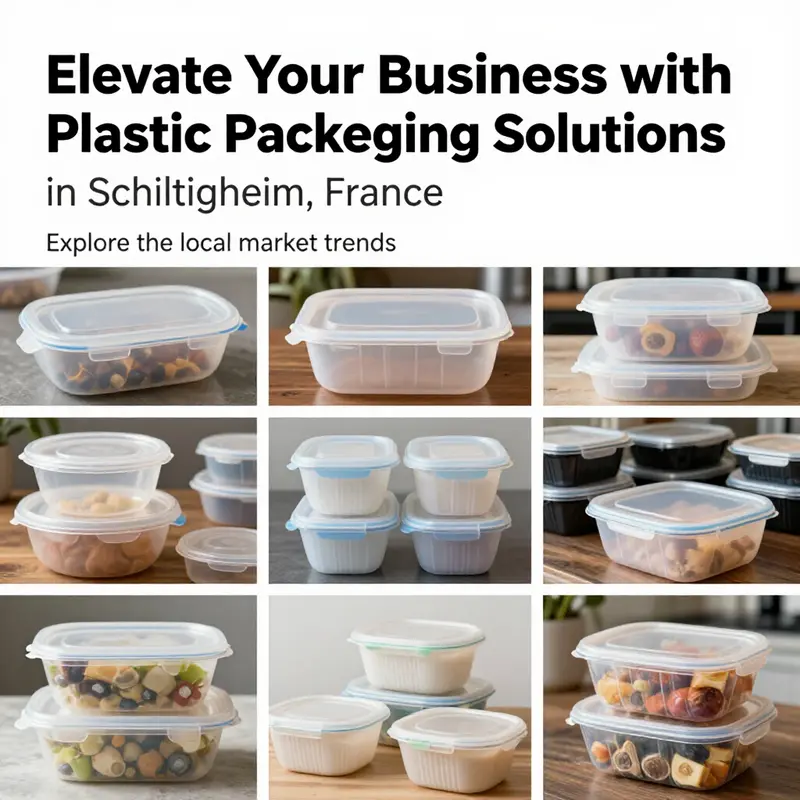
Plastic packaging food containers are essential for the thriving food and beverage landscape in Schiltigheim, France. With the rise of bubble tea shops, vibrant restaurants, mobile food trucks, and catering services, the demand for quality packaging has never been higher. This article delves into the current market landscape, exploring local suppliers and manufacturing trends, alongside critical regulations in food safety and compliance. By understanding these elements, businesses can make informed decisions to enhance their operations and satisfy customer needs.
Local Dynamics and European Shifts: Plastic Food Packaging Containers in Schiltigheim
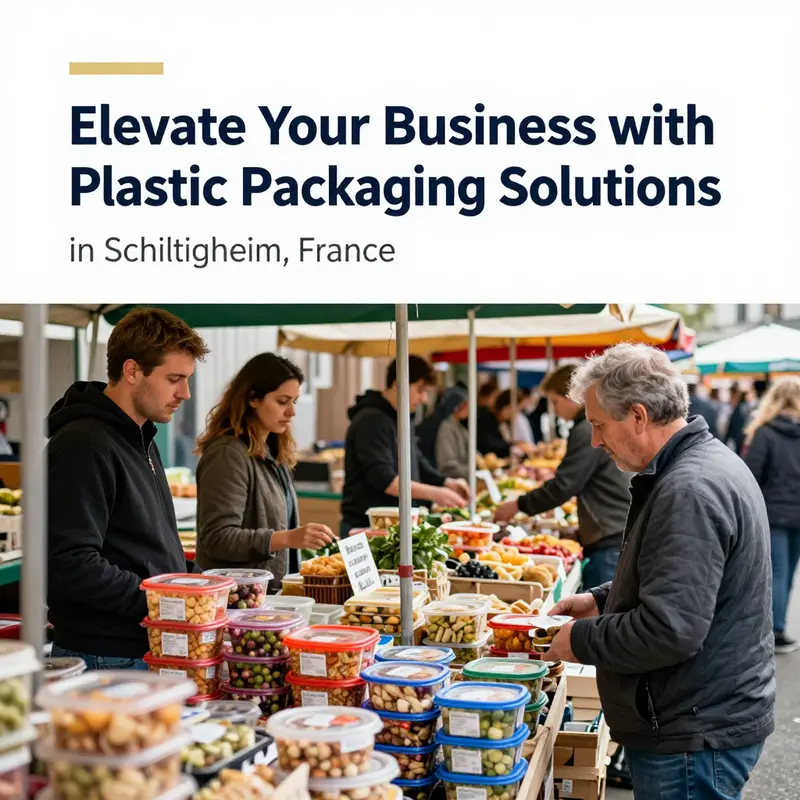
The market for plastic food packaging containers in Schiltigheim sits at the intersection of local food culture, cross-border supply chains, and evolving European expectations about safety and sustainability. Although direct records of manufacturers based in Schiltigheim are limited, observable trends across Alsace and France point to a market shaped by affordability, convenience, and mounting environmental and regulatory pressures. This chapter describes how these forces combine in the Schiltigheim context and how buyers, retailers, and local authorities are navigating choices between low-cost plastics and more durable alternatives.
Plastic containers remain widely used in household kitchens, small cafés, bakeries, and local markets. Clear, lightweight trays and tubs are common for fruit, prepared salads, and pastries. Their low unit cost makes them attractive for merchants who need simple, hygienic packaging at scale. Prices drawn from contemporary supplier listings show how low entry costs drive continued adoption. For example, clear single-use fruit containers are available at a fraction of the cost of reusable glass or high-grade metal alternatives. That affordability extends the life of many small food enterprises by lowering overheads associated with packaging.
At the same time, consumer habits in the region are shifting. A growing segment of shoppers in Schiltigheim chooses packaging based on perceived environmental impact and long-term value. Glass and stainless steel containers appeal to these buyers because they promise extended service life and greater chemical stability. Tempered borosilicate and similar glass types resist staining and odor retention. High-grade stainless steels provide resistance to corrosion and physical wear. Although these materials cost more up front and weigh more in transit, many consumers and businesses accept those trade-offs for lower waste generation over time.
This preference shift affects local purchase decisions and product ranges offered by retailers. Smaller grocers and artisan food producers are increasingly stocking hybrid offerings: reusable glass jars, stiffer polymer containers designed for repeated use, and compostable paper-based takeout boxes. Such hybrid strategies help satisfy different client needs: quick, low-cost packaging for short-term use, and reusable or compostable options for customers who prioritize sustainability. In practice, hybrid inventories reflect both immediate cost concerns and longer-term brand positioning—businesses in Schiltigheim use packaging to signal quality and values.
Environmental policy and consumer expectations combine to drive innovation among suppliers. Across France and the broader EU, manufacturers are investing in recyclable and biodegradable polymers and in designs that minimize material use. Lightweighting—reducing weight without sacrificing functionality—lowers material consumption and transport emissions. Design-focused changes such as nesting geometries and thinner ribs reduce plastic use while preserving container strength. For local merchants, these incremental improvements can yield tangible savings and easier compliance with municipal waste management schemes.
Regulatory context matters more as the market evolves. European rules on food-contact materials set strong safety standards for materials intended to touch food. Producers and importers must demonstrate compliance with migration limits, approved monomers and additives, and labelling requirements. These regulations shape procurement decisions in Schiltigheim. Small buyers increasingly demand supplier documentation that proves compliance with EU food-contact regulations. The pursuit of compliant supply chains is practical; it helps protect local businesses from liability and helps maintain consumer trust.
Supply chain dynamics also influence local availability and price. Many plastic food containers found in French retail originate from global manufacturing hubs. Bulk imports remain an efficient route for low-cost single-use containers. These imports serve high-volume needs in restaurants, canteens, and retail sectors. At the same time, European manufacturers and converters supply higher-specification items and regional solutions that better align with local recycling streams and regulatory expectations. The coexistence of imported low-cost goods and higher-end local production reflects a market segmented by price sensitivity and regulatory demand.
Local logistics shape which solutions make sense economically. Schiltigheim benefits from proximity to larger urban centers and cross-border trade routes. Distributors there can access supply hubs quickly, enabling small businesses to order on short notice. Yet distribution also raises the environmental cost of distant manufacturing. As awareness of lifecycle emissions grows, some local buyers prefer domestically produced containers with verified recycled content. This shift to local sourcing is still limited by price differentials, but it grows as municipal waste targets and corporate sustainability goals press for lower embodied emissions.
Waste management and recycling infrastructure play a critical role in determining the environmental performance of plastic food containers. In regions with robust collection and sorting systems, certain polymer types (such as PET and PP) can be captured and reprocessed effectively. Where such systems are weaker, single-use plastics are more likely to become litter or non-recycled waste. In Schiltigheim and neighboring areas, municipal schemes are improving, and local authorities increasingly require clearer labelling to help consumers sort packaging correctly. That progress matters to local producers, who must adapt product design to ensure that the containers they sell are compatible with prevailing recycling routes.
Design choices are therefore an important lever. Packaging designers are responding with container geometries that reduce contamination and simplify washing for reuse. Separable components—such as lids that can be easily recycled separately from bases—help sorting and recycling. Some manufacturers also adopt mono-material construction to simplify recycling. When a container and its lid are made from the same polymer, the entire item is more likely to be recyclable in practice. Local buyers who care about recyclability increasingly request mono-material designs when they order packaging in bulk.
Health and safety considerations remain paramount for any food-contact material. Consumers expect packaging to be inert and free from contaminants. Plastics such as PET and PP have long histories of food use and well-defined safety profiles when manufactured to proper specifications. To earn the trust of local retailers and end consumers, suppliers must provide evidence of food-grade certification and material traceability. These assurances influence procurement decisions in Schiltigheim, particularly among businesses supplying children’s meals, deli goods, and ready-to-eat products.
Cost remains a decisive factor for many stakeholders. For large-scale catering operations and seasonal markets, the lower upfront cost of disposable plastic containers will continue to be attractive. For independent cafés and premium producers, perceived value and brand alignment push purchases toward reusable and compostable choices. This dual pressure produces a plural market: wide distribution of low-cost clear containers for mass needs, and targeted growth in higher-value sustainable alternatives.
The presence of alternative materials also reshapes distribution of demand. Paper-based and compostable containers capture specific use cases, such as hot food takeout and short-term consumption. These alternatives often require different handling and disposal routes. For local governments and businesses in Schiltigheim, aligning procurement with available composting infrastructure is essential. When organics collection is available, compostable takeout boxes become a feasible choice. Where such infrastructure is absent, compostable materials may not deliver environmental benefits and can complicate sorting.
Retail competition and brand differentiation influence packaging choices too. For artisan producers and boutique retailers, packaging is a critical brand touchpoint. A thoughtfully chosen container communicates quality and values. For example, a bakery may move away from mass-market plastic trays and toward eco-friendly kraft boxes with clear windows to emphasize craftsmanship. Restaurants offering delivery services may choose sturdier containers that survive transit and preserve presentation. These choices matter both for sales and for the perceived responsibility of businesses toward waste reduction.
Small-scale innovations in the Schiltigheim area reflect the broader European movement toward circularity. Local actors experiment with deposit-return schemes for takeout containers, partnerships with refillable packaging providers, and collaborative purchasing groups that secure better pricing for reusable containers. These community-level approaches lower barriers for small businesses to adopt more sustainable packaging. Vendors benefit from predictable supply and from being able to advertise reduced single-use waste to their customers.
There is also a clear role for education. Consumers and businesses alike need clearer information about the proper use, care, and end-of-life handling of packaging. Simple guidance on how to clean, sort, or return containers can significantly improve reuse and recycling rates. For example, encouraging rinsing and separation of mixed materials reduces contamination and helps materials retain value in recycling streams. Local authorities and trade groups in the region can amplify this guidance through signage at markets, digital toolkits, and partnerships with retailers.
Looking ahead, the market in Schiltigheim is likely to continue evolving along three lines. First, price-sensitive demand for single-use plastics will persist, supporting a baseline market for low-cost clear containers. Second, sustainability-driven demand will expand steadily, favoring reusable, recyclable, or compostable alternatives. Third, regulatory and logistical improvements will gradually shift purchasing toward solutions that align with regional recycling and safety systems. The net effect will be a more segmented market, but one that offers clearer pathways for businesses to reduce waste and improve material stewardship.
For purchasers in Schiltigheim, pragmatic steps can bridge current needs with long-term goals. Prioritize suppliers who provide clear documentation of food-grade compliance and recycled content. Favor mono-material designs where possible. Experiment with reusable systems at the business scale, starting with targeted offerings for loyal customers. Engage with local waste authorities to match procurement choices to available recycling or composting services. Together, these actions will reduce risk and create opportunities for differentiation.
Finally, sourcing remains a cross-border conversation. Imported plastics offer cost advantages but come with environmental and regulatory complexities. Domestic or regional suppliers may provide better alignment with European standards and circularity objectives. Buyers should weigh total lifecycle impacts, not only unit price, when selecting packaging. For those seeking immediate supplier options, bulk listings from global platforms can provide price benchmarks and a starting point for sourcing discussions. A representative listing for clear fruit packaging is available here: https://www.alibaba.com/product-detail/Plastic-Clear-Food-Container-Packaging-for_1600982719327.html
Across Schiltigheim, the packaging choices made by small businesses, food producers, and institutions will shape the local waste landscape and consumer expectations. The market today balances affordability with growing demands for sustainability and safety. As infrastructure and regulation evolve, so too will the range of viable packaging solutions. The most resilient local strategies will be those that combine cost awareness with careful attention to health, recyclability, and long-term environmental performance. For businesses and policymakers alike, the task is to match packaging selection with local conditions and with a clear commitment to reducing waste while maintaining food safety and customer satisfaction.
Explore eco-friendly takeout boxes for food packaging
From Factory Floor to Fork: Manufacturing Trends and Local Supply Dynamics for Plastic Food Containers in Schiltigheim
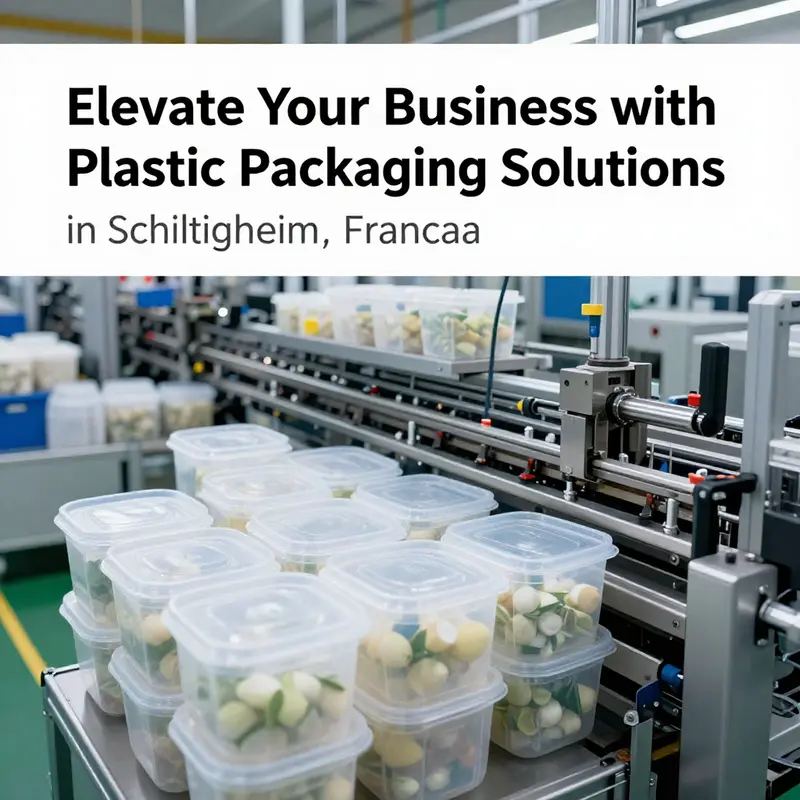
Schiltigheim occupies a strategic position in the Bas-Rhin corridor, close to major European transport arteries. Its industrial base and access to cross-border markets make it a logical node for packaging activity tied to food logistics. Within this environment, manufacturers, converters, and distributors of plastic food containers respond to three overlapping pressures: shifting consumer expectations, evolving regulatory requirements, and rapid technological change. These forces shape what is produced, how it is made, and how local buyers and food service operators source and evaluate packaging solutions.
Market demand in and around Schiltigheim is increasingly defined by two buyer priorities. The first is safety and compliance: food businesses must meet strict rules on food contact materials and traceability. The second is sustainability: restaurants, caterers, and retailers want packaging with a smaller environmental footprint. Manufacturers serving the area adapt by balancing proven plastics, such as PET and PP, with emerging alternatives and by implementing systems that document compliance and life-cycle characteristics.
On the production side, flexibility and efficiency are central themes. Local converters that focus on food containers emphasize modular production lines. These lines allow quick changeovers between different container sizes and formats. Quick changeovers reduce downtime and enable small-batch production for niche customers. Automation plays a clear role too. Automated thermoforming, injection molding, and high-speed sealing systems reduce labor variation and enhance hygiene standards. Automation also supports traceability: integrated serialization and product coding feed into digital records that accompany shipments.
Material choices reflect competing needs. PET and PP remain dominant for rigid containers. Their favorable barrier properties, heat resistance, and recyclability make them reliable for chilled and ambient food. For hot applications, certain grades of polypropylene are preferred because they tolerate heat and microwaving. However, the local market is not static. There is steady interest in bio-based polymers and compostable blends for single-use menus. These materials attract attention from customers who want to communicate eco-credentials. At the same time, recyclability infrastructure matters. Designers and buyers consider local collection and recycling capabilities when choosing materials. In regions where industrial composting is limited, compostable packaging can present disposal challenges. Consequently, many suppliers emphasize designs that combine bio-based content with established recycling streams or that use mono-material constructions to simplify recovery.
Sustainable design extends beyond material choice. Lightweighting—reducing the mass of a container while preserving strength—is a frequent target. Less material means lower transport emissions and reduced raw material use. But lightweighting must preserve barrier performance and stacking strength. To manage this, manufacturers use embossed geometries, ribs, and optimized wall thickness distributions. For some applications, combining a thin plastic shell with a paperboard sleeve produces a balance between tactile appeal and structural performance, while reducing overall plastic content.
Another growing area is functional design for reuse and return schemes. While single-use plastic remains common in takeaway and convenience contexts, pilots for reusable containers and deposit-return models are emerging in urban and campus settings. Reusable options require different production considerations: more durable materials, stronger closures, and surface finishes that withstand repeated washing. Local manufacturers that can offer both single-use and reusable solutions find greater resilience as market preferences evolve.
Innovation in packaging extends to traceability and active functionality. Technologies such as RFID and QR-based systems help food businesses track lots, expiry dates, and provenance. For perishable food, embedding traceability features into packaging supports just-in-time distribution and reduces waste. Active packaging concepts that control moisture or oxygen, or that include indicators for temperature abuse, are also under evaluation. Adopting these features increases unit cost, but for high-value prepared foods and long-distance distribution, the benefits in reduced spoilage and improved safety often justify the expense.
Local supply dynamics in Schiltigheim are shaped by proximity to broader regional clusters. While some converters and plastics processors operate near the town, many food businesses rely on a mix of local stocking distributors and international suppliers. Local players often provide value through short lead times, customization, and compliance support. They tend to offer services such as on-site sampling, rapid prototyping, and pilot runs that let food producers validate packaging in real conditions before committing to large volumes.
International sourcing remains an important component of the market. Manufacturers from broader European networks and overseas suppliers provide competitive pricing and a wide palette of materials and formats. For buyers in Schiltigheim, the choice between local suppliers and international partners involves trade-offs. Local suppliers offer agility, lower transport footprints, and familiarity with French and EU regulatory frameworks. Overseas suppliers can offer scale and specialized product lines. Many purchasers adopt a hybrid strategy: they use local partners for critical or customized items and import standard SKUs for everyday needs.
Regulatory compliance is a continuous concern. EU regulations on food contact materials require documentation on migrating substances and set limits. Conformity rests on validated materials, appropriate use declarations, and up-to-date test reports. Manufacturers serving the Schiltigheim market typically provide detailed declarations of conformity and facilitate access to migration test data. For purchasers, an effective procurement checklist includes requests for material safety information, migration test certificates, and traceability documentation that connects finished parts to the material batches used in production. Ensuring that suppliers supply this evidence reduces the risk of non-compliance during inspections.
Quality assurance in food packaging is more than paperwork. Production facilities need hygienic flows, segregated storage for food-grade resins, and validated cleaning protocols for mold and tooling maintenance. Many local manufacturers have adopted ISO 22000 or BRC standards to signal their capability. Buyers seeking robust supply should prioritize vendors with clear HACCP assessments tied to their packaging lines. These standards reduce operational risk and simplify audits by food customers.
Price sensitivity and total cost of ownership influence procurement decisions. Raw material prices for plastics fluctuate with oil markets and seasonal demand. Waste-handling costs and regulatory levies, such as eco-modulated fees, affect final price. A holistic procurement approach looks beyond unit cost. It considers transport, reverse logistics, disposal, and potential reputational costs associated with perceived environmental harm. In some cases, a slightly higher unit price can deliver savings when reduced waste, lower breakage rates, and extended shelf life are taken into account.
For small and medium-sized food businesses in Schiltigheim, practical sourcing advice is straightforward. First, establish clear specifications for temperature tolerance, barrier needs, and stack strength. Second, require material declarations and migration test results. Third, ask for sample runs to check sealing and machinability on your packing equipment. Fourth, evaluate disposal pathways locally; if municipal recycling is limited, prioritize mono-material designs that local collectors can process. Fifth, build relationships with at least two suppliers to mitigate supply disruptions.
Collaboration across the supply chain builds resilience. Packaging designers, material scientists, and logistics managers working together can unlock solutions that reduce environmental impact and improve functionality. For example, aligning container geometry with palletization standards lowers air transport costs and reduces damage during transit. Similarly, standardizing lid and base formats across product lines allows shared tooling and faster changeovers, lowering per-unit costs.
Community-level initiatives also play a role. Local authorities and trade associations can accelerate sustainable transitions by supporting pilot schemes for reuse, by investing in separate collection for recyclable plastics, or by hosting joint procurement platforms for smaller food businesses. Such measures create scale and make higher-cost sustainable options more viable. Producers and converters that engage with these initiatives often gain early access to technical assistance and market intelligence.
Looking ahead, three dynamics deserve attention. First, circularity will continue to influence design and procurement. Expect more emphasis on recyclate content, on design for disassembly, and on certifications that verify recycled content. Second, digital integration will increase. Packaging will more often carry digital tokens for traceability and consumer information. Third, regulatory change will tighten requirements on single-use plastics and on the demonstration of safe alternatives. Firms that invest early in compliance and in flexible production will be better positioned to adapt.
For buyers targeting the Schiltigheim market, a balanced strategy combines rigorous supplier evaluation, a clear sustainability criterion, and operational flexibility. Engage suppliers on test programs and incremental improvements. Prioritize designs that work with local waste systems. Make technical documentation a standard procurement requirement. And consider the long-term cost benefits of durability and reduced spoilage, not only the sticker price.
If a practical example helps, consider a fast-casual operator that needs containers for hot and cold items. The operator specifies two container families: one for hot meals, using heat-stable polypropylene, and one for chilled salads, using PET with an oxygen barrier. The supplier agrees to a two-month pilot with sample quantities. During the pilot, the operator tracks breakage, lid fit, and customer feedback. The supplier provides migration data and traceability records. After validation, the operator scales purchases, consolidating orders to improve pricing. This pragmatic approach reduces risk, aligns packaging with operational needs, and keeps the supply chain responsive.
Manufacturing trends and supplier relationships in Schiltigheim reflect broader European patterns, yet they retain a local character. Proximity to markets, the presence of agile converters, and a pragmatic approach to compliance create a distinctive environment. Businesses that actively manage materials, document conformity, and design for real-world disposal will thrive.
For practical sourcing of eco-conscious takeaway containers, suppliers in the region commonly stock options described as eco-friendly takeaway food containers, useful when evaluating alternatives that blend performance with reduced environmental impact. For a broader view of suppliers and industry initiatives across France, consult the national agri-food association for guidance and contacts: https://www.france-agroalimentaire.fr
Between EU Safeguards and Local Practices: Navigating Plastic Food Packaging Safety in Schiltigheim, France

Schiltigheim sits at the crossroads of culinary tradition and modern regulation. The town, nestled in the Alsace region and part of the Strasbourg metropolitan area, is more than a collection of bakeries, cafés, and small grocers; it is a microcosm of how European safety standards shape everyday choices about plastic packaging that touches food. The local marketplace in Schiltigheim operates within a framework that is not created in isolation but is instead woven from EU-wide rules, risk assessments, and evolving scientific understanding of what it means for a plastic container to be safe for food contact. In practice, this means that the containers used to hold, transport, and present meals must pass a chain of evaluations that starts with material science and migrational analysis and ends with clear accountability along the supply chain. The chapter that follows traces this journey from high-level European regulation to its local echo in Schiltigheim’s shops, kitchens, and households, underscoring how safety, sustainability, and consumer trust come together in a concrete, regional setting.
At the heart of the EU approach to plastic food contact materials is a simple, but powerful, principle: materials intended to touch food must not transfer substances to food in a way that could endanger health or alter the food’s composition, taste, or odor. This principle is embedded in Regulation (EC) No 1935/2004, which provides the overarching safety requirements for all materials and articles intended to come into contact with food. The emphasis is on a risk-based framework rather than a roster of fixed substances alone. In Schiltigheim, as in every EU member state, this regulation creates the baseline standard that is understood by manufacturers, wholesalers, and retailers who handle plastic packaging for food. It also sets the tone for more specific provisions that follow, ensuring that when a consumer picks up a ready-to-eat meal in a plastic container, there is a legally grounded expectation of safety that travels with that product from factory floor to household shelf.
Building on that foundation, Regulation (EC) No 282/2008 provides the more granular rules that specifically govern plastics. This regulation is the one that speaks directly to the practicalities of plastic packaging materials and articles. It establishes the concept of a positive list of authorized substances—those monomers, additives, and starting materials that may be used in food-contact plastics. It also acknowledges two important categories that shape risk assessment: substances that require explicit authorization and non-intentionally added substances (NIAS). The latter category recognizes that impurities, degradation products, and reaction by-products can arise during production or recycling. While NIAS do not necessarily require pre-authorization, their potential presence must be evaluated through risk assessment. That distinction matters in Schiltigheim, where recycling streams and multi-material packaging increasingly intersect with food contact use. The practical implication is that a local supplier cannot simply claim compliance by pointing to a broad polymer family; instead, there must be a traceable, auditable record showing that substances migrating into food have been assessed in line with the EU framework.
The NiAS concept, together with the authorization regime, translates into a stringent approach to material selection and processing. In everyday terms, this means that a plastic container used for food acceptance in Schiltigheim cannot rely on unverified sources or non-approved additives. The producer must demonstrate that any substances that could migrate into food are either on the authorized list or have undergone a robust risk assessment if they fall into NIAS. This is why the migration testing and toxicological assessment work conducted by the European Food Safety Authority (EFSA) has become a cornerstone of confidence for consumers and regulators alike. EFSA does not issue a single, static safety verdict; instead, it provides a scientific basis for ongoing evaluation of substances, with updates reflecting newly identified risks or evolving analytical capabilities. For Schiltigheim’s food-service sector, the EFSA framework helps translate broad EU rules into concrete expectations about what kinds of plastics are appropriate for specific food contact scenarios, how they should be manufactured, and under what conditions, such as heat exposure or mechanical stress, their safety could be challenged.
A further layer of complexity—and, for many, a source of assurance—concerns recycled plastics. The EU has drawn clear lines around the use of recycled materials in food packaging because recycling introduces additional pathways for contamination and NIAS formation. Recycled plastics intended for food contact must meet strict criteria designed to prevent contamination and ensure that any residual substances have been reduced to safe levels through validated processes. The origin of the recycling stream becomes crucial here: the plastic must have originated from food-contact applications, cross-contamination with non-food uses must be avoided, and decontamination efficiency must be demonstrated. For Schiltigheim’s local packaging industry, this means that any recycled-content packaging intended for food is not merely a matter of recycling rate but of traceability, purity, and validated processing steps. The region’s businesses, like those across the EU, are navigating a transition that aims to balance the environmental benefits of recycling with an uncompromising standard of consumer safety.
The EFSA risk assessment process has grown more nuanced in recent years. The authority’s work spans migration data, toxicological thresholds, and hazard assessment protocols. Notably, EFSA has published important pieces on micro- and nanoplastic release from food contact materials, offering a more granular view of how tiny particles may migrate under real-use conditions. This focus reflects a broader shift in risk perception: not only the bulk chemical composition of plastics matters but also how materials behave when repeatedly used, heated, or mechanically manipulated in a kitchen or takeaway setting. In Schiltigheim, where food service and packaging supply chains are intertwined with daily life, these insights translate into practical considerations about product design, such as choosing materials with favorable migration profiles, selecting additives with robust toxicological data, and communicating clearly with customers about safety standards.
Beyond microplastics, EFSA’s evolving evaluation of substances like BPA and various phthalates reinforces a precautionary approach to chemical exposure. Re-evaluations and hazard protocols inform both manufacturers and regulators in Schiltigheim about the latest scientific conclusions and how they should influence allowable materials and risk management strategies. The local implications are straightforward: packaging decisions are no longer based solely on performance and cost. They are anchored in an increasingly transparent science of safety, where the potential health implications of certain chemical classes have direct consequences for product formulation, labeling, and end-of-life handling. The message to the market in Schiltigheim is that compliance is dynamic, and staying aligned with EFSA’s and EU bodies’ continued assessments is essential for any supplier who wants to maintain access to the regional market.
The regulatory architecture described above does not exist in a vacuum. Schiltigheim is part of a broader regional and national ecosystem that emphasizes environmental sustainability, waste management, and consumer protection. Local authorities and regional programs interact with EU rules in ways that can shape the practical experience of consumers and businesses. While Schiltigheim itself does not issue its own unique food-contact regulations, its governance participates in regional initiatives that align with the EU framework. The city’s historical openness to environmental research—reflected in the approval of projects exploring urban environmental monitoring and related public health concerns—signals a community intent to understand and improve the environmental context in which packaging decisions are made. This local willingness to engage with environmental data complements the EU’s safety mandate, enabling a more holistic view of packaging’s role in public health and ecological stewardship. In this sense, the Schiltigheim market becomes a test bed for how well EU standards, regional sustainability targets, and consumer expectations converge in daily life. When a restaurant or market chooses a packaging solution, it is not just a compliance choice; it is a statement about trust, environmental responsibility, and the city’s collective approach to health and consumption.
From the vendor’s point of view, the regulatory framework shapes every link in the supply chain. A Schiltigheim-based distributor of food containers must ensure that the materials used are on the authorized list or supported by EFSA-backed risk assessments for NIAS, that migration testing is documented, and that any recycled content in food-contact packaging has undergone decontamination processes and origin verification. Labels and documentation become essential tools, not mere formalities. The customer—whether a café, a bakery, or a school canteen—depends on this chain of evidence to confirm that the packaging is suitable for its intended use. In practice, this translates to a rigorous supplier vetting process, clear specifications for each packaging type, and a robust quality-management system that can demonstrate ongoing compliance even as regulations evolve. For any business in Schiltigheim seeking to expand its operations or switch to more sustainable packaging formats, the regulatory clarity provided by EU rules offers both a roadmap and a set of guardrails that minimize risk while enabling innovation.
A closer look at the consumer-facing side of the equation reveals a parallel demand for transparency. As the public becomes more aware of plastic contents, migration potential, and end-of-life considerations, packaging choices in Schiltigheim—like elsewhere in France and Europe—are increasingly judged not only on the product’s functionality but on its safety profile and environmental footprint. Consumers expect to be able to trust that a container will not leach substances during the course of a meal, whether it is a hot soup, a cold salad, or a ready-to-eat dessert. They also expect packaging to be designed with end-of-life in mind, favoring materials and constructions that optimize recycling or composting opportunities and minimize waste. This expectation dovetails with EU directives and national waste-management programs aimed at reducing single-use plastics, while still supporting the practical realities of modern foodservice and retail. In Schiltigheim, where culinary culture is vibrant and diverse, packaging choices reflect a balance between performance, safety, and sustainability—a balance that EU regulations help to anchor, and local markets help to translate into everyday purchase decisions.
The interconnection between regulation and practice is perhaps most visible in the way local packaging suppliers and food-service operators communicate about compliance. A packaging solution offered in Schiltigheim cannot be evaluated on aesthetics or price alone; it must be accompanied by credible documentation about material composition, authorized substances, migration testing, and, when relevant, decontamination credentials for recycled content. The EU framework’s insistence on traceability supports this culture of accountability. For instance, when a supplier emphasizes that its packaging is suitable for contact with specific food types or heating conditions, the basis for that claim should be transparent and reproducible. In the current European market, this means that a packaging option is most credible when it can demonstrate compliance with the 1935/2004 framework, the plastics-specific 282/2008 regulation, and the most up-to-date EFSA assessments. The local Schiltigheim consumer benefits from this truth-telling ecosystem because it reduces the likelihood of unexpected safety issues, recalls, or regulatory disruptions that can disturb a city’s food supply chains.
The broader takeaway for Schiltigheim’s food packaging ecosystem is not merely about compliance as a checkbox. It is about building a culture of safety that integrates scientific insight, regulatory discipline, and community values around sustainability. When a bakery or takeaway shop selects a container, it participates in a systemic practice that recognizes the potential for substances to migrate and the need for ongoing evaluation of the materials’ behavior under real-use conditions. At the same time, the emphasis on recycled-content packaging, when properly controlled, demonstrates the city’s commitment to waste reduction and resource efficiency. The net effect is a market that can adapt to evolving science without compromising consumer protection or the practical needs of a busy food-service operation. In Schiltigheim, this adaptability is not a vague aspiration; it is the outcome of a regulated, evidence-based approach that guides product development, supply chain decisions, and daily consumer choices.
For readers seeking a concrete illustration within the chapter’s broader themes, consider how packaging providers in this region are balancing performance with compliance. A representative scenario is one in which a supplier advertises a line of food-contact-ready containers that incorporate recycled content. Such a decision would trigger a cascade of regulatory checks: confirming that the post-consumer plastic feedstock originated from food-contact applications, verifying that decontamination steps meet validated criteria, and ensuring that NIAS levels remain within safe limits as demonstrated by migration testing. The Schiltigheim market, with its dense network of food businesses and supply chains, benefits from these rigorous checks because they reduce the risk of noncompliance across multiple links in the chain. This is not merely a matter of avoiding penalties; it is about sustaining consumer confidence in the safety of everyday packaging and supporting a transition toward more sustainable materials and processes without sacrificing the reliability that foodservice depends on.
In connecting these regulatory threads to a tangible resource within the broader packaging landscape, one can observe how the industry responds to EU guidelines while adapting to local needs. For example, a packaging provider’s catalog of take-away and bakery containers might emphasize compliance with safety standards, ease of use, and compatibility with recycling streams. The language used in such materials aims to reassure buyers that the product is fit for food contact, that any recycled content is properly vetted, and that the supply chain behind the packaging can produce the necessary documentation. This alignment of compliance, practicality, and transparency is essential in Schiltigheim’s market, where the variety of food offerings—from traditional Alsatian pastries to modern fast-casual concepts—demands packaging that is not only functional but demonstrably safe.
In sum, Schiltigheim’s plastic food packaging market operates within a sophisticated regulatory environment that is global in reach and local in practice. The EU’s regulatory architecture provides the substantive safety framework, while EFSA’s ongoing scientific evaluations inform the interpretation and evolution of that framework. Local adoption and implementation hinge on transparent documentation, careful material selection, robust traceability, and a shared commitment to environmental stewardship. The result is a packaging ecosystem that respects health and safety while supporting innovative, sustainable, and customer-focused food service in Schiltigheim. This integrated perspective—where EU rules guide everyday decisions, and local practice translates those rules into reliable, trustworthy packaging—serves as a foundation for the article’s next exploration of design choices, consumer expectations, and the broader shift toward safer, more sustainable plastic packaging in Europe.
For readers who want to explore a practical reference point that illustrates how packaging suppliers align with these principles in a market that shares Schiltigheim’s regulatory and sustainability ambitions, one can examine packaging options described in a recent supplier catalog that emphasizes take-away packaging solutions compatible with best-practice safety standards. The emphasis on design that supports food safety, user convenience, and recyclability shows how the EU framework inspires tangible product choices within local communities such as Schiltigheim. This example, while not naming specific brands, reflects the broader trend of compliance-driven innovation that characterizes today’s European packaging landscape. It also highlights the cross-border dimension of packaging supply chains, where local needs in Schiltigheim are served by producers and distributors operating across national and continental boundaries. As the next chapter turns to design strategies and consumer behavior, this regulatory backbone remains the quiet but essential influence behind every box, lid, or sleeve that accompanies a meal in Schiltigheim.
Internal resource reference: custom-takeaway-packaging-supplies-disposable-tableware-for-theme-party. This example illustrates how packaging offerings are framed to meet practical use cases while staying aligned with safety and sustainability expectations that shape the Schiltigheim marketplace.
External resource for regulatory context: EU regulators and public-health authorities maintain a robust and evolving body of guidance on plastics in contact with food. For a comprehensive overview of the legal framework and safety assessments relevant to recycled plastics used in food contact materials, see the EU official source: https://ec.europa.eu/food/safety/plasticrecyclingen. This external resource provides authoritative context for the standards discussed here and invites readers to explore the regulatory landscape beyond the local arena.
Final thoughts
In Schiltigheim, France, the market for plastic packaging food containers is not only growing but also evolving with an emphasis on safety and compliance. By understanding the market dynamics, manufacturing trends, and regulatory frameworks, businesses can better position themselves within this competitive landscape. Investing in quality packaging not only enhances product presentation but also ensures compliance with food safety regulations. Embrace these insights to elevate your service and protect your brand’s reputation.