

Finding the right plastic packaging for food products is crucial for businesses like bubble tea shops, restaurants, food trucks, and catering services. Not only does quality packaging ensure the preservation of food, but it’s also integral to enhancing your brand’s image and commitment to sustainability. In this guide, we’ll explore sustainable options available in the market, effective bulk buying strategies to optimize your procurement processes, and the latest market trends shaping the plastic packaging landscape. With actionable insights tailored to your needs, you can make informed decisions that elevate your services and resonate with your customers.
Sustainable Plastic Packaging for Food in Bulk Procurement: A Practical Framework
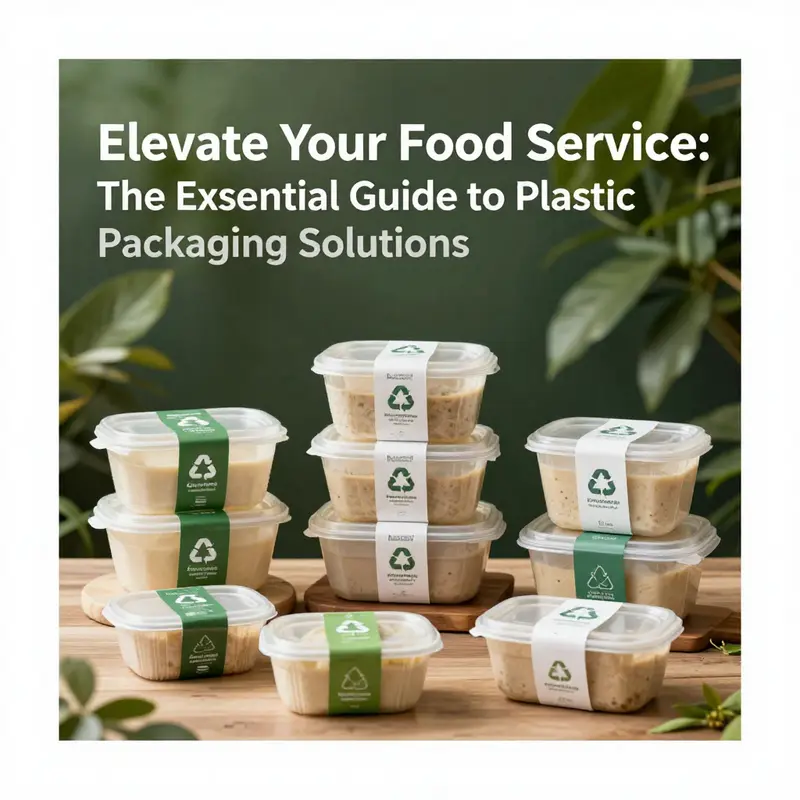
Modern packaging decisions for bulk food products increasingly integrate sustainability with cost and performance. This chapter outlines a practical framework for buyers to evaluate plastic packaging options across life cycle stages, regulatory landscapes, and consumer expectations. It emphasizes material choice, recyclability, reuse potential, and end-of-life infrastructure while keeping a clear eye on total cost of ownership.
Material choices and end-of-life realities are central. Bioplastics and bio-based polymers such as PLA offer renewable feedstocks but require appropriate end-of-life infrastructure to realize real benefits. Industrial composting can enable many PLA applications, yet access is uneven, so brands should assess regional capabilities and communicate disposal expectations clearly to consumers. End-of-life outcomes matter as much as origin when comparing environmental tradeoffs.
Recyclability should be designed in from the start. Favor single-material designs where possible, minimize multi-layer laminates, and select resins that are collected through established municipal or post-consumer streams. Clear labeling and packaging that supports sorting reduce contamination and improve recovery rates. In practice, the best path often combines performance with widely supported recycling streams and transparent consumer guidance.
Reuse and durability offer another avenue for reducing waste. Reusable containers with reliable closures can lower single-use demand, provided they withstand repeated washing and handling in commercial operations and preserve safety and flavor. When reuse is pursued, compatibility with existing processing lines and storage logistics becomes essential.
From an economic perspective, sustainability must align with total cost of ownership. Bulk buyers face a spectrum of prices, where basic disposables are inexpensive per piece, and eco-friendly formats may incur higher upfront costs. The payback comes from waste reduction, reduced disposal fees, and potential regulatory incentives over the life of the product line.
A practical procurement approach blends lifecycle thinking with supplier collaboration. Start with a landscape assessment of materials and end-of-life options in your target markets, run pilot programs, collect performance data, and verify that packaging meets safety and regulatory requirements. Request samples and test data for seals, microwave performance, and compatibility with your products before large-scale commitments.
The consumer experience should not be overlooked. Packaging must communicate disposal expectations clearly, work reliably in real-world use, and support brand values. Transparent claims backed by data build trust and reduce the risk of greenwashing.
Finally, recognize that there is no one-size-fits-all solution. The optimal choice depends on regional waste infrastructure, product type, brand positioning, and supply-chain capabilities. A disciplined framework that combines lifecycle assessment with practical testing, supplier collaboration, and clear consumer guidance helps buyers navigate complexity and scale sustainable choices across bulk procurement.
Bulk Buying for Food-Grade Plastic Packaging: Strategy, Compliance, and Value in Container Sourcing
Bulk buying for food-grade plastic packaging is more than a price game. It is a strategic operation that underpins every link in the supply chain—from the farm gate to the consumer’s pantry. In an era when consumer expectations around safety, sustainability, and convenience rise in tandem with demand, manufacturers, retailers, and e-commerce brands must approach container sourcing as a core capability. The choices are not simply about the lowest per-unit price; they hinge on regulatory compliance, supplier reliability, production scale, and the downstream impact on brand integrity. The path from a tempting unit cost to a robust, future-ready packaging program runs through a disciplined, multi-dimensional evaluation. It begins with safety as the bedrock and ends with a sustainable, cost-competitive, and reputationally sound packaging portfolio that can accommodate growth, seasonal spikes, and evolving market expectations.
At the heart of bulk procurement is material safety and regulatory compliance. For any food-contact packaging, the governing rules are explicit about what can migrate from the plastic into the food. In the United States, the framework is anchored by FDA regulations that govern polymer substances intended for food contact. Buyers who pursue bulk purchases must demand verifiable documentation that the materials are virgin-grade resins suitable for direct contact with food, and that the composition is free from substances that could pose risks to human health. BPA-free is more than a trend; it is a baseline expectation that resonates with consumer confidence and regulatory literacy. The need for non-toxicity and stability across temperature extremes is particularly important for containers intended for microwave use, freezing, or reheating, all of which introduce dynamic stressors on the polymer matrix. To avoid later surprises, suppliers should provide accredited lab test reports detailing heat resistance, chemical stability, and migration testing. These documents are not optional add-ons; they are the first line of defense against recalls, brand damage, and supply disruption.
The regulatory landscape in Europe mirrors this seriousness, with Regulation (EC) No 1935/2004 and EU 10/2011 setting clear prohibitions on the migration of harmful substances into food. For buyers sourcing in multiple geographies, the expectation is that packaging meets both the specific regional standards and the broader international norms that many leading manufacturers align with. The emphasis on virgin-grade resins, BPA-free formulations, and transparent, verifiable testing creates a shared language between buyers and suppliers. As a practical matter, this means asking for a complete compliance package: material safety data sheets, third-party lab certifications, and traceability documentation that can be consulted not only at the moment of order but at any point in the product lifecycle. The payoff is straightforward: reduced risk of quality failures, fewer disruptions to production, and enhanced trust with retailers and end consumers who increasingly scrutinize packaging origins and safety claims.
The journey from compliance to supplier selection is where the bulk-buying mindset must evolve beyond headline price points. A common temptation is to gravitate toward the lowest unit price, perhaps quoted at a few cents per container or per set. Yet price alone is an unreliable proxy for total worth. A supplier with a seductive per-unit price may deliver inconsistent seals, fluctuating lead times, or inconsistent tolerances that force costly quality rework downstream. A strategic buyer instead evaluates suppliers along a matrix that includes operational reliability, technical capabilities, certifications, and communicative responsiveness. Operational reliability means transparent production capacity, robust on-time delivery metrics, and proven scalability to handle sudden increases in order volumes. Technical capabilities cover a supplier’s ability to customize sizes, lid styles, color options, and labeling schemes—factors that matter when packaging must align with brand standards and shelf presence. Certifications such as ISO 22000 for food safety management, ISO 9001 for quality management, and RoHS compliance are signals of a mature quality-control system and a commitment to continuous improvement. Responsiveness and clear communication ensure that, when issues arise, the supplier is willing and able to work through solutions quickly rather than waiting for a quarterly review. The takeaway is simple: the cheapest option today can become the most expensive choice if it fails to deliver consistency, traceability, and confidence when it matters most.
A reality check for many buyers is the geographic sourcing puzzle. China remains a dominant ecosystem for bulk plastic food container production, with specialized industrial clusters that drive efficiency, scale, and price competitiveness for orders in higher volumes. These ecosystems offer integrated supply chains that shorten material lead times and reduce the risk of bottlenecks, while providing a broad palette of material options—PP for microwave-safe applications, PET for transparent and rigid containers, and a range of other polymers suited to different temperature and optical requirements. The advantage of this geography is not merely cost; it is the reliability that comes from mature manufacturing networks, standardized process controls, and the availability of documentable quality-assurance practices. Buyers should, however, exercise discernment here: not all suppliers are equal in capability or in the robustness of their quality-control processes. It is prudent to prioritize partners operating in ISO-certified environments, with visible, documented quality-control routines and the willingness to share performance metrics and audit results.
To illustrate the cost dynamics of bulk buying, it helps to refer to the real-world price bands that typically appear in the market for bulk orders. Some standard formats show a spectrum that ranges from around a few cents per piece for simple, generic containers to higher levels for specialized designs such as microwave-ready, two-compartment, or clamshell formats. For example, recyclable plastic takeaway containers may be offered starting in the low hundreds of a cent per set at massive bulk scales, while clear, high-clarity containers suitable for fresh produce can be found at modestly higher per-piece prices when purchased at multi-million-piece volumes. Biodegradable or eco-friendly options marketed as compostable or sustainably branded may command a premium that reflects the additional processing and certification requirements. The common thread across these price points is that the true value rests not just in the price tag but in the packaging’s ability to meet safety standards, withstand back-end logistics, and preserve brand integrity through the product’s life cycle. It is the combination of regulatory compliance, supplier reliability, and total cost of ownership that transforms bulk buying from a tactical purchase into a strategic capability.
One practical way buyers approach this terrain is by leveraging the breadth of platforms that connect buyers with verified suppliers. Bulk procurement platforms enable the comparison of multiple suppliers on lead times, customization options, and documentation packages. In such ecosystems, the option to request samples becomes a critical step before committing to large-scale orders. This sample phase is not a perfunctory gesture; it is an operational checkpoint that allows teams to validate sealing performance, visual aesthetics, lid compatibility, and stacking efficiency under realistic handling and transport conditions. It is during this phase that the alignment between product design objectives and supplier capabilities is either confirmed or called into question. The strategic buyer should also consider the supplier’s ability to accommodate design changes, whether that means subtle dimensional tweaks to improve nestability or color adjustments to align with evolving branding guidelines.
Transparency around documentation is another crucial facet of supplier evaluation. Prospective partners should provide a complete compliance dossier, including certifications (ISO 22000, ISO 9001, RoHS, and any regional accreditations), third-party test reports for heat resistance and chemical stability, and migration-testing data that demonstrates safety margins under typical usage. The most dependable suppliers offer a structured audit trail, with serial-numbered batch records and traceability across the supply chain—from resin suppliers and converters to the finished containers entering warehouses. In regions where supply chains are strained by global demand cycles, this traceability becomes a critical risk-management tool. It enables brands to identify the origin of a defect quickly, isolate affected lots, and implement corrective actions with minimal disruption to customers and partners.
The sourcing strategy also benefits from recognizing the practical advantages of regional manufacturing hubs. While the scale and efficiency of Chinese manufacturing clusters can drive aggressive unit costs for large orders, buyers should weigh this against lead times, freight costs, and the regulatory environments of their target markets. A well-structured approach balances supplier diversity with the simplicity of a core set of partners who can reliably deliver on time, with consistent quality, across a year-round cadence. This approach is not about choosing a single supplier for every container need; it is about building a reliable network that can flex in response to demand variability, seasonal promotions, and the product mix that a brand must support at any given time.
In practice, cost optimization emerges as a function of total cost of ownership rather than headline per-unit price alone. Total cost of ownership encompasses logistics, import duties, potential recall costs, and the intangible but real value of brand protection. The risk of packaging non-compliance can trigger recalls or customer dissatisfaction that far exceeds the savings achieved through a few tenths of a cent per unit. Conversely, investing in slightly higher-priced but more reliable suppliers can yield dividends in the form of lower returns, fewer production stoppages, and smoother scale-up during peak demand. The modern buyer, therefore, focuses on value creation through quality, dependability, and continuous improvement. This value calculus is not in opposition to sustainability; it often aligns with it, as durable, well-designed packaging reduces waste, lowers the risk of leakage during distribution, and supports end-to-end efficiency that reduces the product’s environmental footprint.
Sustainability considerations have migrated from a niche concern to a baseline expectation in bulk packaging programs. Buyers recognize that the packaging ecosystem must respond to consumer preferences for recyclable and biodegradable materials, while still meeting technical requirements for protection, shelf life, and ease of use. Recyclable resins like certain grades of PET and PP, when properly managed through recycling streams, can contribute to circular economy goals. In other cases, biodegradable or compostable options—when certified and properly disposed—offer a pathway to reduce long-term waste. Lightweight designs are not just a cost-saving lever for shipping; they also contribute to lower carbon emissions across the logistics network. Sustainable sourcing also includes supplier transparency on environmental metrics, including carbon footprint reports and third-party sustainability certifications. A robust procurement program blends these environmental objectives with the operational and regulatory demands of the business, ensuring that saving money today does not come at the expense of tomorrow’s resource base.
The research landscape for bulk plastic packaging provides a practical lens on how these strategies translate into concrete buying decisions. It highlights the dynamic intersection of price, design, and regulatory compliance across several core container formats. For example, the options cataloged in the materials point to a spectrum of shapes—ranging from recyclable takeaway containers to clear PET options for fruit and vegetables, to biodegradable PET clamshells, to microwave-safe PP lunch boxes, and to two-compartment, microwavable designs for portion control. Each category brings its own pricing curve, production capabilities, and regulatory considerations. In bulk scenarios, buyers often negotiate on dimension tolerances, lid compatibility, sealing performance, and labeling options in addition to price. The ability to request and receive samples is essential to verify these attributes before large commitments.
To anchor these considerations in a practical sourcing approach, many teams adopt a staged decision framework. First, define the core requirements: compliance with applicable food-safety regulations, core material families, and a baseline level of durability and temperature resistance for the expected use cases. Second, map the supplier landscape to identify a small, trusted set of verified partners that can meet the broad needs of the business while also offering customization capabilities. Third, run a pilot with a representative portion of the product mix, running tests that cover shelf life, transport handling, microwave or freezer use, and consumer experience with the packaging. Fourth, evaluate total cost of ownership across multiple months of operation, including lead times, shipment reliability, and the potential need for obsolescence management as product lines evolve. Fifth, maintain a focus on sustainability by selecting packaging options that align with both regulatory commitments and corporate social responsibility goals, gradually expanding the share of recyclable or compostable materials as technology and infrastructure mature.
The practical reality is that bulk buying is a function of relationships as much as it is of specifications. A platform-led approach, such as the one that connects buyers with verified suppliers, offers a structured path to access a broad range of container formats, sizes, and finishes. It enables buyers to compare documentation packages, performance histories, and customization capabilities side by side, reducing the time to finalize supplier selections while increasing confidence in the chosen partners. But even within such ecosystems, the buyer remains responsible for due diligence. This means verifying the supplier’s ISO certifications, requesting recent audit reports, and ensuring that the chosen partners have the capacity to sustain supply during market fluctuations.
From a practical perspective, the chapter’s insights are reinforced by a curated look at the price tiers and capabilities outlined in the bulk-buying landscape. For instance, containers designed for general takeaway use with recyclable materials might start at modest unit costs when bought in immense volumes. Clear, high-clarity containers optimized for display and consumer visibility can command a slightly higher price, reflecting the additional processing and optics. Biodegradable variants, while appealing to sustainability goals, typically come with a premium that aligns with the added complexity of materials and end-of-life handling. Disposable PP lunch boxes offer an ultra-lightweight, cost-effective option for high-volume meal programs, while two-compartment microwavable designs address portion control needs and can be critical for meal-prep services or restaurant-to-home delivery models. Each category serves a distinct operational need, and each presents its own total-cost considerations. The challenge for buyers is to assemble a portfolio that covers the breadth of product formats their business requires, without chasing price points that undermine safety or reliability.
Embedded in this approach is a practical nod to generative sourcing strategies that leverage a few trusted platforms and a disciplined, evidence-based vendor relationship model. The bulk procurement mindset benefits from standardizing key specifications where possible, thereby reducing variant risk, while maintaining enough flexibility to accommodate product-specific packaging requirements. The ability to request samples and to access verifiable documentation becomes a differentiator in the market, enabling teams to make decisions with high confidence and lower exposure to downstream disruption. This is not about choosing the cheapest option; it is about choosing the most reliable option that aligns with the business’s regulatory obligations, quality standards, and long-term sustainability commitments.
For teams seeking practical on-ramps to start or refine their bulk buying programs, the following synthesis is useful. Begin with a compliance-first mindset, ensuring that every candidate container undergoes a rigorous review of material safety, migration potential, and temperature performance. Build a supplier panel that includes at least a couple of ISO-certified manufacturers with proven track records in food-contact packaging, and verify their performance histories, production capacities, and responsiveness. Leverage the manufacturing ecosystems in major production regions to balance cost efficiency with lead-time reliability, but maintain a diversified supplier base to mitigate risk and ensure continuity. Always factor total cost of ownership, recognizing that a drop in unit price is less valuable if it triggers higher logistics costs or brand risk through recalls or customer dissatisfaction. Finally, integrate sustainability as a core criterion, not an afterthought, selecting containers that either streamline end-of-life processing or minimize environmental impact through lighter weight or recyclable content.
To illustrate the practical application of these strategies while keeping pace with actual market options, consider the following concrete pathway. Start by outlining the packaging needs for your product portfolio, including temperature exposure, shelf-life expectations, and display requirements. Then, survey the major sourcing platforms to identify suppliers capable of delivering a broad range of container formats in large quantities, with the ability to provide certification packages that meet regulatory requirements. Request samples across several representative formats to validate sealing performance, clarity, lid compatibility, and stacking characteristics. As you collect documentation, map each candidate against your compliance checklist and demand traceability from resin to finished container. Assess not only the per-unit price but also lead times, minimum order quantities, and the supplier’s capacity to scale with your demand curves. When a preferred supplier is identified, negotiate a framework that covers ongoing quality audits, change-control processes for any formula or design updates, and a clear path for product recalls or warnings should any issue arise. By anchoring negotiation in the principles of safety, reliability, and value, your bulk-buying program becomes a strategic enabler of product quality and customer trust, rather than a per-household cost reducer.
A final thread ties this approach back to consumer expectations and brand narratives. In a marketplace where packaging communicates as loudly as the product itself, the choice of container format, the look of the lid, and the transparency of the material can influence perceived quality, convenience, and even willingness to repurchase. The science of packaging design—how a container protects the product, how it interacts with the consumer during use, and how it lends itself to recycling or disposal—intertwines with the business’s strategic goals. Buyers who invest in the right packaging platform, supported by solid documentation and a reliable supplier network, cultivate a supply chain that is responsive to shifting consumer tastes, regulatory updates, and sustainability imperatives. The result is a supply chain that not only withstands the pressures of scale but also supports a brand story built on safety, transparency, and thoughtful stewardship of resources.
For teams seeking a trustworthy starting point in real-world sourcing, the market commonly emphasizes the value of bulk procurement platforms that connect buyers with verified suppliers. These platforms offer access to a broad continuum of container formats and customization options while providing a structured framework for documentation and sample access. Such a framework helps buyers avoid the common trap of equating low price with low risk and instead adopt a more balanced approach that prioritizes safety, reliability, and total value. As the literature and industry practice suggest, the most resilient packaging procurement strategies emerge when compliance, supplier evaluation, regional manufacturing advantages, cost optimization, and sustainability converge in a coherent, auditable process. In other words, bulk buying is a discipline as much as it is a transaction; it is the craft of curating a packaging ecosystem that can endure the test of time, regulatory scrutiny, and evolving consumer expectations.
Internal link note: For a real-world example of packaging formats that combine visibility with protective performance, see foldable cake boxes with window packaging. This category illustrates how a simple design choice—transparency paired with sturdy construction—can support premium product presentation while maintaining integrity through distribution. foldable cake boxes with window packaging is one such representation of how packaging can contribute to brand storytelling and consumer satisfaction, especially for confections and bakery items that rely on display appeal.
In closing, bulk buying of plastic food containers is not a singular act of procurement. It is a strategic, iterative practice that blends regulatory discipline, supplier diligence, regional production dynamics, and a principled approach to cost and sustainability. By anchoring decisions in safety and reliability, maintaining a discerning eye on total cost, and leveraging the advanced manufacturing ecosystems that support scale, food-packaging teams can build resilient supply chains that protect product quality, enable growth, and reinforce brand integrity across markets. This integrated view aligns with the broader aim of the article: to illuminate how buyers can secure high-quality, compliant, and cost-effective plastic packaging for food products at scale, without compromising the standards that define responsible food packaging.
External reference: For regulatory grounding and detailed standards related to polymer substances used in food-contact applications, see FDA 21 CFR Part 177.2600. https://www.accessdata.fda.gov/scripts/cdrh/cfdocs/cfcfr/CFRSearch.cfm?fr=177.2600
Sealed for Change: Market Trends Redefining the Purchase of Plastic Food Packaging Containers
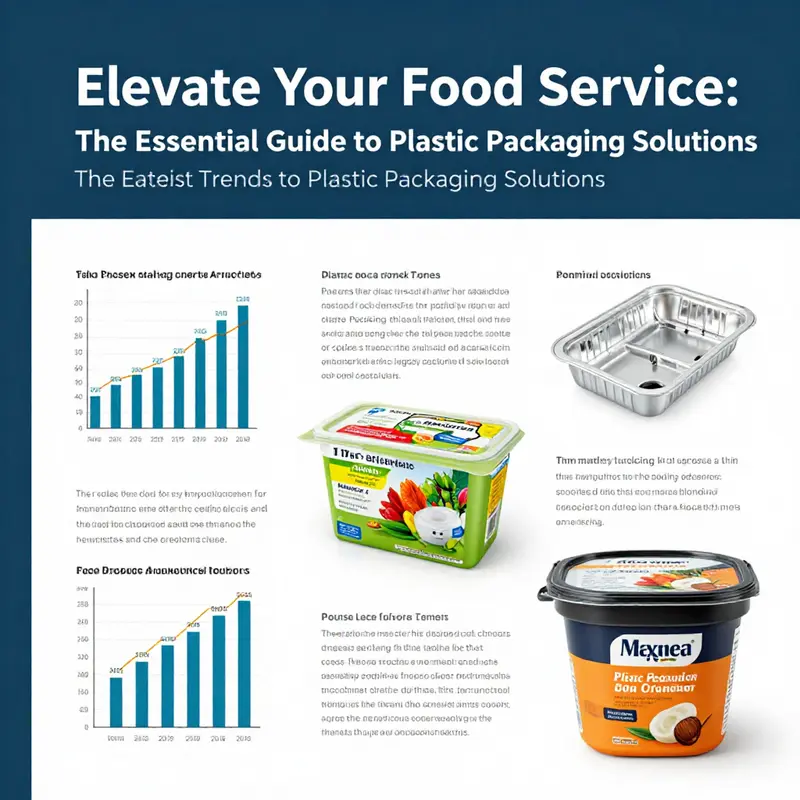
The landscape of plastic packaging for food products is changing quickly, demanding more than price and performance alone. Buyers now weigh sustainability, regulatory alignment, and end-to-end lifecycle impact as part of the procurement calculus.
Sustainability has moved from a differentiator to a baseline expectation, with bio-based blends and recycled-content options gaining share as processing and end-of-life infrastructure improve. Buyers must assess recyclability, supply chain transparency, and true environmental impact, not just packaging claims.
Smart packaging and materials innovations add capability and data streams, from freshness indicators to digital labeling, but require scale, cost discipline, and alignment with recycling streams to deliver real value. Procurement teams increasingly evaluate ecosystem partners—labels, sensors, and data platforms—alongside the container itself.
Finally, supply chain resilience and total value are shaping decisions. Price remains important, but total cost of ownership, risk exposure, and opportunities for co-development often drive longer, more strategic supplier relationships.
Final thoughts
Adopting the right plastic packaging solutions can significantly influence both operational efficiency and customer satisfaction in your food service business. By prioritizing sustainable options, leveraging strategic bulk buying techniques, and staying informed about market trends, you can effectively enhance your packaging strategies. Make thoughtful choices today to not only fulfill your business needs but also contribute positively to the environment.