

In the ever-evolving culinary landscape, efficient storage and presentation are key to success. Plastic round food containers with lids are increasingly becoming the go-to choice for bubble tea shops, beverage chains, restaurants, food trucks, catering services, event planners, and corporate procurement teams. Their design allows for optimal food preservation, seamless transport, and stunning display, making them an essential asset in modern food service. This article explores the types and specifications of these containers, their core functions and advantages, various application scenarios, market recommendations, and reliable purchasing channels to help you make informed decisions for your business.
Round, Sealed, and Strategic: The Quiet Power of Plastic Round Food Containers with Lids
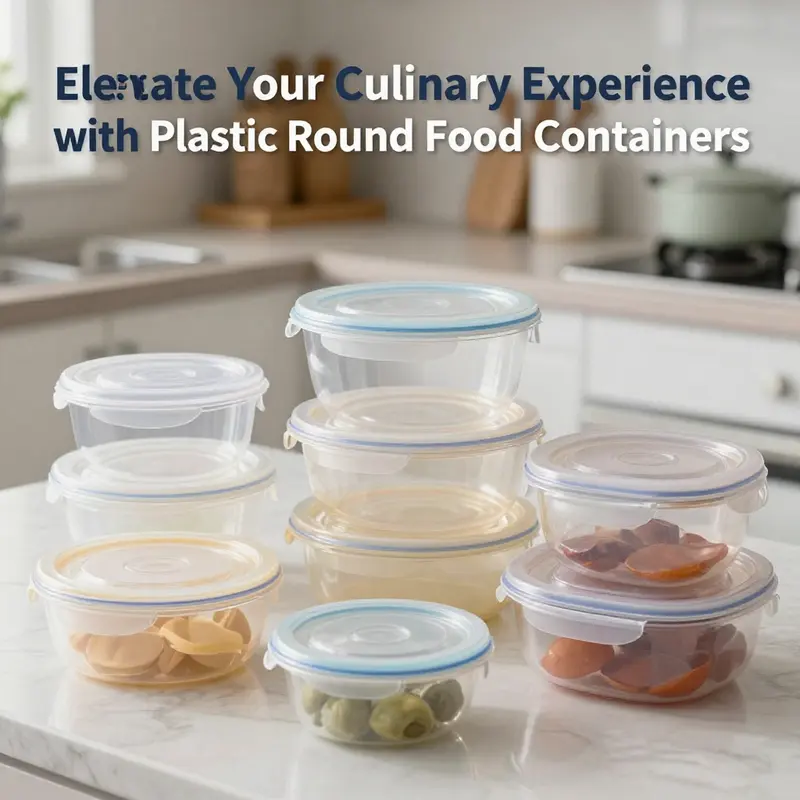
Round shape has long been more than a geometric preference in food storage. It is a deliberate design choice that brings together sealing, visibility, and efficiency in a way that flat or irregular containers often struggle to match. Plastic round containers with lids embody a balance of durability, safety, and everyday practicality that makes them essential workhorses in kitchens, offices, schools, and catering operations. When you think of how a container behaves during reuse—from the moment it is filled, through stacking in a crowded fridge, to the simple act of carrying it to a picnic table—you begin to see how the round form contributes to performance. The lid, carefully engineered to seal, becomes a partner to the body, not an afterthought. In this chapter, we explore the layers of choice that define these containers: materials and safety, capacities and configurations, sealing mechanisms, temperature resilience, and the social practicality of organizing food and ingredients. The story is not about one perfect product but about a family of containers designed to adapt to different tasks while maintaining a consistent standard of reliability and ease of use.
At the heart of most plastic round containers lies a choice of material that governs safety, temperature tolerance, and compatibility with cleaning cycles. Food-grade polypropylene, commonly designated as #5 plastic, is one of the most widely used options. Its popularity stems from a combination of safety certifications, resistance to cold, and a capacity for short-term heating. In practical terms, polypropylene containers are well suited for refrigeration and freezing, and many are advertised as microwave-friendly for brief reheating. However, the exact heat tolerance can vary by design, with some models advertising safe heating up to around 110°C (230°F) for short periods, while others may claim handling up to higher temperatures under controlled conditions. The important takeaway is that these containers are designed for versatility in daily meal storage and transport, rather than for long-term high-heat processing. Alongside PP, high-density polyethylene (HDPE) is used for larger or more rugged options. HDPE brings rigidity and durability to bulk storage, and while it can tolerate cold and moderate warmth, it is typically less heat-tolerant than PP. This makes HDPE a practical choice for non-food or bulk storage in industrial or outdoor settings, where the container may need to resist impact and rough handling more than intense reheating. The rotationally molded buckets—larger, heavier round containers often seen in farm or industrial environments—show a different facet of the same family. These are designed for bulk storage, with thick walls, robust sealing, and sometimes UV-stabilized materials. They are not everyday lunch-boxes, but they illustrate how plastic round containers scale up to meet demands for bulk ingredients, animal feed, or bulk packaging in food production and agricultural contexts. Across all these formats, the lids are not merely a hinge and a cap; they are integral to the container’s performance. A well-sealed lid reduces the risk of leaks during transit, whether that means a lunchbox being shuffled through a bag or a food service vessel being moved across a kitchen floor. In high-use environments, lids may employ different sealing strategies—threaded screw-ons, snap-on ties, or latch-style mechanisms. Some lids feature built-in gaskets or elastomeric seals to improve airtightness, which is pivotal for preserving moisture, aroma, and freshness over time. Yet even with robust seals, the success of a storage solution depends on the compatibility of the lid and body, the tolerances of the mold, and the degree to which stacking and nesting are allowed without warping. The interaction of these elements—material, shape, lid design, and stacking geometry—creates a family of tools that can be tuned to very specific needs while keeping a core philosophy: safety, reusability, and ease of use. This philosophy is echoed in the way these containers satisfy the everyday demands of home cooks who prepare meals in advance, office workers who carry a planned lunch, and pastry shops that portion out ingredients for consistent batch quality. They are designed to be opened and closed repeatedly without fatigue, to resist accidental leaks during transit, and to show the contents clearly through transparent walls that simplify meal planning at a glance.
Capacity and form are not mere numbers; they shape how effectively food can be prepared, stored, and shared. In real-world kitchens you will encounter a spectrum ranging from compact, snack-sized containers to mid-sized containers intended for leftovers or meal prep, all the way up to large, bulk-storage options that hold substantial quantities of dry goods, grains, or sliced fruits. A typical set may include small units around 7.6 centimeters in diameter for dips, toppings, or child-portion snacks; mid-range capacities around 520 milliliters or 1000 milliliters that balance portion control with practicality; and larger, stackable designs that enable bulk storage while keeping fridge and pantry spaces organized. The often overlooked feature of stackability becomes a critical ally in kitchens that face space constraints. Round containers frequently feature lips and rims designed to nest within one another when empty, and lids that align with minimal friction, so that a dozen containers can occupy the same footprint as a single large bowl when the stash is fully reheated or prepped for the week. The transparent plastic that many of these containers employ reinforces this efficiency by letting you identify contents at a glance—no more unnecessary rummaging through crowded shelves. This visibility is not just about convenience; it reduces food waste by making it easier to track what has been stored, what needs to be used, and when leftovers should be consumed. The practicality of the design becomes especially important in settings like offices or schools, where users may need to grab a ready-made portion quickly and know exactly what sits inside without unsealing multiple lids or removing top layers.
Material safety is a thread that winds through every decision about these containers. The market’s standard practice is to label containers as BPA-free, signaling avoidance of the controversial chemical in contact with food. Beyond the absence of BPA, many models meet broader food-safety regulations, and some advertise compliance with microwave and dishwasher guidelines for top racks or specific cycle conditions. If you consider the lifecycle of a container—from washing to refilling to reheating—soft expectations about safety must meet the realities of repeated use. The design of the lids and their seals often culminates in a practical balance: easy opening and closing, a reliable seal, and a resistance to cracking or distortion when repeatedly snapped on and off. It is common for manufacturers to emphasize that their lids maintain a stable seal across a series of cycles, an assurance that matters when a container is carried in a bag or moved in a crowded office. In this light, the round container becomes a small but meaningful platform for consistent food safety across daily routines.
A third dimension of these containers is their temperature resilience. The lower end of the spectrum is built to resist freezing, a range often encountered in meal-prep for families who do batch cooking. The upper end, while not a substitute for professional cooking equipment, allows brief warming in a microwave or a brief warm-up in a hot dish setting. Users should be mindful of the cautions that accompany heating plastic: many containers are designed to tolerate mild heat and short duration reheating, but prolonged exposure to high temperatures can warp lids, soften walls, and compromise seals. In practice, that means planning meals in advance and rewarming with care—transferring food to a microwave-safe dish if needed. In outdoor contexts, the durability of the walls and the integrity of the lid’s seal matter just as much as the container’s ability to withstand sun exposure and the occasional tumble in a backpack. Specialty features such as vented lids for herbs or baked goods may address condensation and moisture management, while measured lids or integrated measuring marks can help with portion control during meal prep. These nuanced design choices illustrate how a round container, modest in appearance, can be engineered to support both practical cooking workflows and responsible food management.
From a practical perspective, the choice of container should be guided by how it will be used. Household use often centers on fruits, vegetables, leftovers, and small snack portions, where a clear wall and secure lid translate into reliability in daily routines. In a commercial kitchen or restaurant setting, the emphasis shifts toward organization, traceability, and repeatability, with a premium placed on leak resistance, ease of cleaning, and compatibility with standard cold-chain handling. For bulk storage in manufacturing, agriculture, or storage rooms, large-capacity round containers with durable walls and secure lids can simplify inventory management and reduce the chance of spillage. In laboratory or medical contexts, the criterion expands to include compatibility with sterile handling or containment of sensitive reagents, reminding us that the form factor—round and lidded—must also align with the specific safety and hygiene demands of the setting. Across all sectors, the common thread remains: round containers with lids offer a straightforward, reliable solution for preserving freshness, minimizing waste, and simplifying transport. They are a practical example of how thoughtful design can turn everyday habits—like packing a lunch, organizing a pantry, or preparing a batch of ingredients—into an orderly, repeatable process.
In choosing among the options, purchasing considerations center on material safety, sealing performance, capacity alignment, and reuse potential. It is wise to favor containers that are clearly labeled as food-grade, BPA-free, and compatible with the types of cleaning equipment you use most often. Seal integrity should be tested through simple checks during receipt: opening and closing the lid a few times to feel the seal engage, and gently pressing the lid to assess for any visible gaps. Capacity should match your typical portion sizes to avoid overstuffing or underfilling, which can both undermine sealing performance. If space efficiency is a priority, look for nesting or stackable designs that minimize space when empty, but still provide a sturdy hold when full. The environmental dimension should not be ignored. The prospect of reusing containers repeatedly to cut down on waste resonates across households and businesses alike. A durable, well-sealed container reduces the need for disposable packaging in everyday routines and aligns with growing expectations for responsible consumption.
A practical note for purchasers and organizers is the value of sourcing from reliable platforms that provide clear specifications, consistent quality, and support for samples or small orders before committing to larger purchases. In the context of global supply networks, professional sourcing platforms can help buyers validate material safety, confirm packaging compatibility, and compare lids, seals, and capacities across a broad range of designs. For example, a reputable sourcing channel can connect buyers with multiple manufacturers across regions, enabling small unit trials before scaling to larger lots. In the same spirit, the shopping experience for round containers with lids benefits from transparent product data, including material type, temperature limits, sealing method, and recommended cleaning instructions. These details empower purchasers to select containers that integrate smoothly into meal-prep routines, school lunch programs, or restaurant operations while maintaining consistent safety and performance.
The wider ecosystem around these containers also hints at the evolving conversation on sustainability and circular use. While plastic remains a practical choice for many users, the emphasis on reuse, leak-proof design, and compatibility with dishwasher cycles reflects a broader push toward efficiency and responsible consumption. In a world where kitchens are increasingly organized around meal-prep workflows and batch cooking, the round container with a lid offers a reliable, repeatable tool that supports healthful, economical, and organized eating patterns. The design language—clear walls, dependable seals, and thoughtful stacking—speaks to a philosophy of everyday reliability rather than flashy novelty. It is a quiet embodiment of how simple geometric forms, when engineered with care, can streamline complex routines, from the fridge to the lunch bag, from the pantry shelf to the catering table.
For readers who want to explore practical procurement options while staying aligned with safety standards, consider beginning with professional sourcing platforms that present verified suppliers and configurable packaging solutions. As you evaluate options, keep the emphasis on material safety, seal quality, and capacity alignment, and remember that the container is more than a receptacle—it is a partner in how you store, transport, and reuse food. If you are curious about related storage solutions that extend beyond plastics, you can also explore a range of takeout and packaging options that include lids and secure closures, which illustrate how the same design principles translate across materials and contexts. The essential idea remains consistent: round, lidded plastic containers are a resilient, versatile toolkit for modern food management, offering a practical confluence of safety, efficiency, and everyday reliability.
For further reading on safety standards and material guidelines that govern plastic food contact products, see official guidelines on food-contact materials and testing standards from national standardization authorities. This resource provides comprehensive specifications on material safety, labeling, and testing procedures that underlie the products discussed here. plastic sauce jars with lids offers a concrete example of how lid design and material choices translate into everyday utility, reinforcing the idea that even small components play a critical role in the overall performance of round containers with lids.
External resource: For formal safety standards and testing guidelines governing food-contact materials, see the official body that regulates these specifications at https://www.sac.gov.cn/
Sealed Versatility: The Core Functions and Practical Advantages of Plastic Round Food Containers with Lids

Plastic round food containers with lids have become a silent workhorse in both home kitchens and commercial operations. They are not just boxes; they are a compact system for preserving freshness, organizing meals, and enabling practical logistics from pantry to plate. At the heart of their utility lies a straightforward principle: secure storage that protects food from the elements while remaining affordable and adaptable to a wide range of cooking routines and service settings. When you lift a round container and snap its lid into place, you’re engaging a small but mighty piece of a larger process—meal prep, portion control, and waste reduction—that translates into healthier habits and leaner operations over time. The core functions are best understood as a seamless blend of containment, protection, and accessibility, a triad that supports both everyday household routines and the high demands of catering, schools, and workplaces. The most immediately evident function is secure storage. A well-designed lid creates an airtight or near-airtight seal that keeps moisture in when needed and keeps outside air out. This seal is not merely about keeping the contents from leaking; it’s about maintaining the internal environment so flavors, textures, and colors stay closer to their original state. In practice, the embrace of an airtight seal can modestly extend freshness, a benefit that becomes visible in leftovers and meal-prep portions. In controlled comparisons, airtight containers have shown the potential to slow aroma loss and moisture transfer, contributing to a longer perceived shelf life and better taste upon reheating. While the exact percentage can vary with food type, the principle holds: a reliable seal reduces the rate at which foods lose moisture and aroma, supporting batch cooking and daily planning. The second essential function is safety and suitability for everyday use. Most modern containers in this category are designed as food-grade plastics that are BPA-free, a standard that has moved from a niche preference to a baseline expectation. The material commonly used—polypropylene (PP)—is chosen for its balance of stiffness, clarity, and chemical inertness. Properly manufactured PP containers meet stringent safety criteria that align with U.S. and European guidelines for food contact. In practical terms, this means you can store a wide array of items—from soups and sauces to chopped fruits and pasta salads—without worrying about migration of additives under typical storage conditions. The third functional pillar is durability under various conditions. Temperature resilience is a standout feature of many round containers with lids. They are engineered to handle both cold and hot environments, freezing temperatures and reheating scenarios, with a common operating range that accommodates refrigerator storage, freezing, and microwave reheating. The ability to move from freezer to microwave minimizes the risk of thermal shock and helps preserve texture when you reheat a meal. This versatility is especially valuable for people building weekly meal plans, families who batch cook, and food service operations that must move quickly from prep to serving. In addition to temperature tolerance, many lids are designed with practical gripping edges or ridges. This ergonomic detail matters when you are carrying multiple containers, whether strolling to a picnic, commuting to the office, or re-stocking shelves in a café. A secure grip reduces the chance of slips and spills, which is no small matter in busy environments. The fourth core function is stackability and space efficiency. In kitchens and pantries where space is at a premium, the ability to nest or stack containers without compromising the integrity of the seal is a real advantage. Transparent walls make contents visible at a glance, cutting down on rummaging time and helping households and staff manage inventory with minimal disruption. The result is a more organized workflow that translates into less food waste and more predictable meal timing. The fifth functional dimension concerns ease of cleaning and reuse. Modern containers are designed to be dishwasher-safe on the top rack and resilient enough to withstand repeated cycles. Reusability is a practical extension of safety and environmental responsibility: when containers last longer and perform consistently, households and businesses reduce the frequency of disposal and the volume of waste. While not all plastics are created equal, thoughtful design paired with quality materials ensures these containers perform well across multiple reheats and reuses. Taken together, these core functions form a cohesive system that supports everyday meals, restaurant service, and the broader goals of healthier eating, optimized meal prep, and waste reduction. The advantages that flow from these functions are equally clear and resonant in many real-world contexts. First, durability and safety are the foundation. A well-made set of round containers with lids provides a reassuring platform for daily use. When materials are BPA-free and meet strict food-contact standards, users gain confidence that their meals stay uncontaminated and safe for repeated handling. In practical terms, this means not just safer storage but also a more reliable answer to questions like, “Can I microwave this?” or “Will this container hold up in the fridge or freezer?” The second advantage is convenience. The combination of secure lids, ergonomic rims, and transparent walls makes transport straightforward. You can carry a portion of soup in a leak-resistant container, or pack a cold fruit salad that remains visually appealing through the day. This convenience extends to meal-prep rhythms, as containers can be pre-filled and stacked, ready to grab on busy mornings or during shifts in a busy kitchen. The third advantage is space efficiency. Nesting lids and containers reduces clutter in cupboards and refrigerators, helping households and food operations optimize every inch of storage. This is especially meaningful in apartment living, school cafeterias, and small cafés where compact design translates directly into cost savings and improved service speed. The fourth advantage is heat and serve versatility. Microwave-safe and dishwasher-friendly options enable quick reheating and thorough cleaning, reducing the friction between planning and eating. The fifth advantage is portion control and organization. A range of sizes supports disciplined meal prep, enabling precise portions for individuals or groups. This is not merely a matter of convenience; it’s a pathway to healthier eating patterns and better inventory management, where food waste is minimized because portions align with actual consumption. For operators and consumers alike, the ability to select an appropriate size for a given food item—whether a small serving of dressing, a mid-sized fruit mix, or a bulk preparation for the week—creates a predictable, scalable system that travels well from home to office to dining hall. The practical implications of these advantages extend across diverse settings. In a family kitchen, the combination of secure seals, clear visibility, and stackable design supports both daily lunch prep and weekend splits for kids’ snacks, helping busy households keep food fresh and accessible. In an office environment, reliable leak-proof performance matters for portable lunches and shared break rooms, where spills can create messes and waste. In schools, the same principles translate into safer, more hygienic storage of meals and snacks, with containers that stand up to frequent use by many hands while preserving food quality. In catering and event settings, durable, reliable containers that maintain freshness during transport support consistency in presentation and service. In bakery and takeout contexts, clear walls help showcase product variety and portioning, while secure lids safeguard moisture and prevent contamination during delivery. These advantages are not just theoretical; they show up in everyday routines and professional operations alike, shaping how households plan meals, how offices feed staff, and how caterers handle large prep tasks with confidence. The procurement and selection process benefits from these insights as well. When choosing plastic round containers with lids, buyers typically look for materials that convey safety, durability, and compatibility with their intended use. Key criteria include the absence of BPA, a robust lid design that ensures a leak-proof seal, appropriate capacity matching the intended food items, and the ability to withstand the required reheating and cleaning cycles. In addition, users increasingly consider stackability and visibility, valuing products that help reduce clutter and improve inventory control. The market offers a spectrum of options, from compact 500–700 milliliter sets suitable for sauces and dressings to larger 1–1.5 liter volumes for bulk salads or prepared meals. For many buyers, cost remains a factor, but the best value often lies in sets that balance price with durability and reusability, supporting a longer lifecycle while meeting safety standards. In this regard, it is helpful to engage with professional sourcing platforms that provide verified supplier information, samples, and scalable ordering options. Such platforms can streamline procurement, ensure consistent quality, and support both small trials and large-volume programs. A practical takeaway is to cross-check product safety certifications and to request sample testing for fit with specific foods and reheating methods. The choice of lids, in particular, deserves attention. A well-sealed lid with a snug rim that resists warping and maintains tension across cycles contributes significantly to the long-term performance of the container. While aesthetics matter—the container should be easy to store and identify—the functional priorities of safety, seal integrity, and temperature tolerance drive the most meaningful outcomes in day-to-day use. As part of a broader strategy to standardize meal storage and packaging, consider how a unified system of sizes and lids can simplify inventory, labeling, and handling. The value of consistency becomes apparent when you manage multiple households, classrooms, or kitchen stations. Finally, recognizing the wider ecosystem of sourcing, it is prudent to explore reputable procurement channels that offer verified supplier networks and guidance on compliance with international standards. A well-curated channel can help ensure that the containers chosen for a given project actually meet the claimed specifications, from BPA-free materials to top-rack dishwasher compatibility. For readers seeking to widen their sourcing horizon, a comprehensive procurement portal provides access to a broad spectrum of suppliers and product lines, enabling trials and scalable orders with confidence. In the broader conversation about packaging and food safety, these containers occupy a practical nexus: they translate safety, convenience, and efficiency into tangible daily benefits, reinforcing healthier eating habits while supporting organized, waste-conscious operations. For a deeper look into a marketplace that aggregates plastic food containers with lids from global suppliers, you can explore a widely used sourcing resource and its catalog of options. For related discussions on lid-bearing containers and their role in modern food storage, see disposable sauce boxes with lids. This reference helps illustrate how similar sealing principles and material choices apply across a range of container types, reinforcing the continuity between plastic round containers and other secure packaging options. https://www.hktdc.com/product/plastic-food-containers-with-lids/
From Pantry to Marketplace: The Versatile Reach of Plastic Round Food Containers with Lids

Plastic round food containers with lids have quietly become a backbone of modern food handling. Their rise is not just about a single shelf product but about a flexible system that spans homes, workplaces, kitchens, retailers, and logistics. The design features that keep contents secure, visible, and ready for use at a moment’s notice are what give these containers their broad appeal. They combine a light footprint with sturdy performance, making them a practical answer to everyday storage, transport, and presentation challenges. When you look closely at how these containers circulate—from the fridge to the takeout counter to the school lunchbox—you see a thread: the need to seal tightly, to be safe for food, and to fit seamlessly into cramped spaces while still offering clear identification of what’s inside. The result is a family of products that, while similar in concept, cover an astonishing range of sizes, lids, and configurations that can be mixed and matched to meet specific tasks with minimal fuss.
In the food and beverage sector, these containers are workhorses for the front-of-house display as well as back-of-house organization. Transparent polypropylene round containers are commonly chosen for their ability to showcase contents while maintaining a robust barrier against air and moisture. In cafés, restaurants, and convenience stores, they hold everything from light salads and fruit slices to cheeses, desserts, and soups. The ability to see what’s inside at a glance accelerates service and reduces miscommunication between kitchen and front-of-house staff. A secure, leak-resistant lid is essential for transport between kitchen stations, for catering events, or for off-site meal preparation. In a professional kitchen, some designs are approved for microwave heating, allowing a direct path from prep to plate. The material’s temperature tolerance—up to roughly 130°C in many cases—means heated dishes can be kept warm or reheated in a controlled way without compromising the container’s integrity. This convergence of visibility and performance is a recurring theme in why these containers remain a staple in professional settings.
For households, the story is simpler but equally compelling. Home cooks use round containers for meal planning, batch cooking, and systematic refrigeration. Leftovers find a second life in the same containers that previously held a complete meal, while bulk pantry items—grains, nuts, dried fruit—are organized in clearly labeled, stackable units. The practical benefits are often practical elegance: airtight seals extend shelf life by mitigating moisture loss and oxidation, while stackable designs free up valuable fridge and cabinet space. Handles and ergonomic ridges on some models further ease everyday use, especially when containers are full and you need to move them from the fridge to the countertop or microwave to the table. Visibility remains a key advantage; a quick glance through a transparent wall tells you whether a portion is ready for reheating, freezing, or final serving. These features collectively transform storage from a chore into a straightforward part of daily life.
The scope of application extends beyond homes and restaurants into industrial and logistics contexts. Black or opaque round buckets with lids are common in non-food settings as well, but even these share core traits with their food-grade cousins: non-reactive materials, durable sealing, and reputable containment. High-density polyethylene (HDPE) and polypropylene (PP) formulations are favored for their chemical inertness, impact resistance, and resilience to temperature changes. This makes them suitable for storing non-hazardous chemicals, agricultural inputs, and industrial lubricants, where the risk of corrosion or breakage would be higher with metal or glass alternatives. The basic physics of a good container—sealed corners, a gasketed lid, and a surface that’s easy to clean—remains the same across categories. The difference lies in the emphasis: food-grade packaging prioritizes safety and easy cleaning, while industrial-grade options prioritize compatibility with specific contents and easy handling in bulk shipments.
Promotional and retail contexts also benefit from these containers’ durability and versatility. They’re not merely functional props; they can be branded and repurposed as gift items or marketing giveaways. The sturdy construction helps them survive transit to events, while the modular sizes enable creative bundling ideas that showcase a brand’s commitment to practicality. In many instances, a double-layer lunch box or a multi-piece set becomes a practical introduction to a company’s product line, signaling reliability and value to potential customers. The ability to repackage and reuse these containers adds to their appeal as promotional merchandise, especially when they come with comfortable lids and easy-to-carry handles in appealing colors.
Agricultural and household storage uses—collecting seeds, organizing cleaning supplies, or simply tidying a cluttered pantry—also highlight the multi-functionality of round plastic containers with lids. Moisture resistance helps protect seeds and dry goods from humidity, while the simple act of washing and reusing them supports longer product lifespans. For households that prize efficiency, the compact footprint of many sizes enables a layered storage strategy: smaller 3-inch containers for spice mixes or tiny portions, mid-sized 520- to 1000-ml units for fruit and prepared foods, and larger 1–2 liter equivalents for bulk items or party snacks. The lids, often designed to nest with the containers, add yet another dimension to space management in cramped cabinets.
A crucial element behind all these scenarios is a steady emphasis on safety, sustainability, and responsible usage. BPA-free labeling has become a baseline expectation, and many containers emphasize that claim as a mark of consumer confidence. In practice, this means a commitment to food-grade standards that reduce the risk of unwanted chemical migration into foods. Temperature tolerance is another practical consideration. The ability to withstand a range from freezer cold to oven-like warmth—though often at modest levels—allows for flexible meal prepping and transport. Consumers also increasingly value recyclability and reuse potential. The lifecycle of a container—from procurement through repeated use to end-of-life disposal—plays an important role in decision-making, especially as sustainability becomes a non-negotiable criterion in both households and businesses.
Beyond raw performance, design features influence how effectively these containers integrate into daily routines. Clear walls speed up content recognition, while secure, leak-resistant lids protect contents during transport and minimize waste from spills. The lids themselves may use various sealing mechanisms—snap-on with gaskets, screw-on lids, or hinged designs—that balance ease of use with a tight seal. In some sets, the lids are engineered to be stackable, allowing multiple containers to nest in a compact footprint when not in use. This is particularly valuable in kitchens with limited storage or in office break rooms where space efficiency translates directly into operational practicality. The result is a product category that does more than hold food; it facilitates healthier habits, reduces waste, and enhances efficiency across different contexts.
From a sourcing perspective, buyers increasingly weigh material safety, durability, and cost against the practical needs of their operation. The price range reflected in market data demonstrates a broad spectrum: wholesale prices can start around modest levels per piece, with bulk sets offering meaningful value for households and businesses alike. The decision often comes down to matching the container size and lid design to specific tasks—whether it’s portion-controlled meal prep, bulk storage, or catering needs. In practice, this means that a home kitchen might opt for a diverse mix of small, medium, and large round containers to cover a wide array of uses, while a café or school program might standardize on a consistent size set that aligns with portion control targets and workflow.
To navigate these choices, many buyers lean on professional sourcing platforms that verify suppliers and offer small trial orders before committing to larger buys. A practical approach is to select a supplier that can provide food-grade certification, reliable seals, and durable material with clear labeling for microwavable or dishwasher-safe use. The ability to request samples and compare lid performance across several designs further informs a smart investment. When evaluating options, it is helpful to consider how well the chosen containers will integrate into existing processes. Will a certain lid style stack with other containers? Will the material respond well to the temperatures expected in your environment? Will the contents be easy to see at a glance during pre-portioning or quick-service handling? These questions drive a cohesive, user-centered solution rather than a collection of separate parts.
In terms of practical usage, I have watched meal-prep routines evolve around the principle of airtightness and speed. A typical workflow begins with portioning a large batch of ingredients into the appropriate 3-inch or 520-ml containers, each with a secure lid. The compact size is ideal for snacks or dressings, while the mid-range containers hold salads, fruit, or yogurt-based dishes for a week’s worth of lunches. The largest capacity containers store bulk components like grains or roasted vegetables for future meal builds. The entire system relies on a simple, repeatable order: wash, fill, seal, label, and store. The transparency of the walls makes inspection quick, which reduces the need to open containers repeatedly during meal prep. For families, the same system scales up or down with the purpose, whether it’s a family dinner, a school lunch program, or a small office break area. In each case, the fundamental benefits remain intact: secure sealing, food safety compliance, storage efficiency, and clear visibility of contents.
For readers seeking concrete examples of supplier ecosystems and credible sourcing options, one practical route is to explore a broad catalog of plastic containers with lids that includes dedicated accessories for lids, gaskets, and related storage solutions. The online landscape offers many opportunities to compare specifications, check for microwaving compatibility, and assess whether a given set supports reuse and recycling ambitions. A practical tip is to look for configurations that include a combination of small, medium, and large containers, as this mix tends to support a wide range of tasks—from condiment storage to bulk meal-prep portions and office lunches. If a reviewer or buyer is trying to align product choices with a branding or packaging program, consider partnering with a supplier who can provide samples and discuss customization options, such as logo printing on lids or color-coded sets for different food groups.
For readers curious about concrete sourcing options, a relevant example to explore is a product page offering plastic sauce jars with lids, which illustrates how lid design and jar form can influence sealing performance and user experience. This kind of reference helps demystify the trade-off between compact size and robust sealing, and it can guide decisions on which lid style best fits a given storage scenario. See the linked option for a tangible sense of how a lid-and-container pairing can be optimized for everyday tasks, from kitchen prep to on-the-go meals. https://ecocupbowl.com/product/plastic-sauce-jars-with-lids-plastic-clear-food-small-sauce-container-box-with-lids-kitchen-organizer-disposable-sauce-pot/
In the broader narrative, the value proposition of plastic round containers with lids lies not just in their current capabilities but in their potential to support responsible consumption. Reusable designs, clear labeling, and standardized sizes contribute to a more predictable, organized storage system, which in turn helps reduce food waste. The ongoing emphasis on food safety standards and material transparency reinforces trust with consumers and institutional buyers alike. As manufacturers refine lids for easier handling, better spill control, and improved stackability, the ecosystem grows more capable of meeting diverse needs without sacrificing safety or performance. The result is a storage and transport solution that remains relevant across seasons, across cultures, and across the many settings where food is prepared, shared, and enjoyed.
External standards and guidelines continue to shape best practices in this space. For readers seeking formal safety guidelines and regulatory references that underpin the use of plastic containers with lids, consult the national food safety standards and related resources. These standards help ensure that the materials and designs used in round containers align with established limits on additives, migration, and labeling, supporting confidence from kitchen to cafeteria to catering event. External references can provide a helpful backbone when modernizing a kitchen, expanding a catering program, or validating a bulk purchase for a school or office program. https://www.nhc.gov.cn/zwgk/wjw/201607/t20160715_30913.shtml
Sealed for Freshness: Pricing, Market Dynamics, and Practical Guidance for Plastic Round Food Containers with Lids

In kitchens, offices, schools, and a growing segment of the catering and hospitality world, plastic round food containers with lids have moved beyond mere storage. They are a practical language for meal planning, portion control, and responsible food management. The market around these containers reflects a balance of safety, durability, and affordability, with a clear emphasis on materials that keep food safe, easy to transport, and visually accessible. This chapter delves into how the market currently behaves, what buyers typically pay, and how to navigate the landscape with confidence. It ties practical purchasing considerations to real-world usage, so readers can translate price signals into healthier habits, less waste, and smoother operations in both home and business contexts. The story of these containers is not just about price; it is about how design meets daily needs in ways that save time, protect food quality, and support sustainable routines.
Sizes and volumes form the backbone of the selection process. A typical kitchen or office kit includes a spectrum of forms, from compact three-inch vessels ideal for condiments and small snacks to larger, bucket-like 520 milliliter or 1000 milliliter options that can hold fruit, leftovers, or bulk ingredients. Many sets are offered in multi-piece packages, such as 12-, 17-, or 50-piece configurations, which align with the planning rhythms of meal prep, school lunches, or commercial packing. The practical benefit of such assortment is the ability to match container size to the exact portion, reducing both waste and guesswork. Lid design is a recurring point of emphasis: easy-open mechanisms paired with secure, leak-resistant seals help ensure that liquids, sauces, or semi-solid foods remain contained during transit or in the fridge. For users who repeatedly juggle cold and hot items, the value of a lid that stays put and a body that resists cracks cannot be overstated.
Safety sits at the core of material choice. The top-tier containers on the market are BPA-free, FDA-compliant plastics that are designed for repeated use rather than single-use throwaways. This safety profile matters because many households reuse containers for leftovers, lunches, and even microwaved meals. Several products explicitly advertise compatibility with microwave reheating and top-rack dishwasher cleaning, reinforcing the idea that these containers are built for convenience rather than fragility. Temperature resilience is equally important: a practical range from sub-freezing to modest reheating temperatures allows storage in a freezer and reheating in a microwave without the container warping or releasing unwanted odors. The transparency of the material—clear or slightly tinted—speaks to another everyday benefit: quick visual identification of contents without removing lids and opening containers. In short, material safety, durability, and usability converge to create a dependable everyday tool that can be used again and again.
From a design perspective, these containers are optimized for space and organization. A common feature is stackable construction, where lids nest neatly and containers can be stored upright or nested together, preserving pantry and refrigerator real estate. This is particularly valuable for households and small offices with limited storage. The strategic combination of stackability and transparency reduces the time spent searching for the right container, which, over time, contributes to a calmer, more efficient kitchen workflow. The lids themselves matter as much as the containers. Airtight seals that resist leaks reassure users packing soups, gravies, or sauces for transport. Some lids offer a slightly raised edge or a modular system that locks onto multiple container sizes, enabling a cohesive, modular pantry that scales with family size or business volume.
The application landscape speaks to the versatility of plastic round containers with lids. They are the quiet workhorses of meal prep, enabling individuals to portion meals for the week and label containers for easy rotation. In schools, they support lunch programs by providing hygienic, easy-to-handle packaging that keeps meals fresh. In the workplace, they facilitate organized packing for take-home leftovers or catered events, and in catering and bakery setups they serve as reliable models for pre-portioned servings. Outdoors and during travel, these containers prove their worth by offering sturdy, spill-resistant packaging that can survive the bumps and jostles of transport. In all these scenarios, the common thread is the shift from improvisation to reliable structure: pre-packed, clearly identified portions that reduce waste and streamline routines.
Pricing within this category follows a broad spectrum that mirrors the range of sizes, features, and material choices. Small to medium sets typically land in a price corridor from the mid-teens to the low hundreds of dollars for more elaborate configurations, with eight- or ten-piece collections commonly priced in the range of roughly 15 to 60 dollars depending on the exact mix of capacities and the presence of value-added features such as airtight lids or added stackability. For example, a compact eight-piece set designed for pantry organization and meal prep might sit at the lower end of this spectrum, while a larger, more robust set intended for frequent daily use can move toward the higher end. The market also features mid-range options that balance quality and price well, offering reliable leak resistance and microwave-safe functionality without reaching premium glass or specialty-labeled lines. The consumer can expect a more economical option when selecting a standard round container with a straightforward lid, though price can vary by finish, color, and whether the set is plastic-only or includes glass alternatives in the same family.
When the set expands into larger configurations or when the brand promises particular durability advantages, prices tend to rise accordingly. A larger, multi-piece set—often including a mix of medium and large capacities—can exceed fifty dollars, while premium configurations with a broader size range may push higher still. For bulk or wholesale requirements, the per-unit cost drops further as purchase volume increases, illustrating the classic economy-of-scale effect that rewards buyers who are purchasing for clubs, schools, or commercial kitchens. In parallel, the market has seen competitive pricing on large-count, multi-container packs, sometimes with discount incentives that bring the per-unit price down noticeably. These bulk options are a practical path for businesses or households that anticipate frequent use or long-term storage needs. The overarching message is simple: the total cost of ownership for these containers will be shaped not only by the sticker price but also by the lifetime value of the set—how often it can be used, whether it withstands repeated heating and washing, and how effectively it supports waste reduction and organized meal preparation.
Beyond the raw price, buyers weigh function and safety as part of the value proposition. A key factor is the seal’s reliability. An airtight, leak-proof lid translates into less waste and less mess, which in turn can lower the costs associated with spoiled food and cleanup. The material choice—BPA-free plastic that can endure microwaving and dishwasher cycles—reduces the need for frequent replacements and aligns with broader consumer expectations for safer, more sustainable kitchen tools. Durability matters as well; a container that resists cracking under temperature swings or that maintains its shape after repeated cycles earns a premium in real-world use. Buyers also consider the convenience of stackability and visibility. Containers that are easy to identify at a glance save time and reduce the chance of leaving food behind or buying duplicates. The cumulative effect of these factors—safety, durability, and ease of use—often proves more decisive than the initial price alone.
From a sourcing perspective, established buyers frequently turn to professional trade platforms or supplier networks to verify quality and ensure supply-chain reliability. The ability to request samples, compare similar sizes, and negotiate bulk terms can be decisive when planning a purchase for a family kitchen or a larger operation. For many buyers, the choice to engage through a formal sourcing channel reflects a preference for verified suppliers, consistent product specifications, and reputable timelines for delivery. This approach helps mitigate risks that can arise from lower-cost, unverified options while ensuring that the chosen containers meet regulatory and safety expectations.
To connect practical buying decisions with trustworthy information, it helps to consult credible sourcing guides and supplier catalogs that compile product specifications, safety certifications, and typical price ranges. Such resources illuminate what most buyers can reasonably expect at various price points and how the features line up with different use cases. The market data across the board suggests a healthy balance: affordability paired with safety and functionality. The conversation about price is, at its core, a conversation about value—whether measured in time saved, food preserved, or convenience gained. For a household builder of a weekly meal plan, a modestly priced eight-piece set might be all that is needed to streamline corralled portions. For a busy catering operation, a broader, more durable collection with varied sizes could deliver tangible returns in reduced waste and improved service efficiency.
In practice, the decision-making process often follows a simple arc. Buyers first assess capacity needs and storage constraints, then evaluate lid security and material safety, followed by considerations of heat resistance and dishwasher compatibility. Next comes durability and how well the set stacks within the fridge or pantry. Price naturally enters as a final check, but it is rarely the sole determinant. When price and performance align, it becomes easier to justify a slightly higher upfront investment for a set that will endure repeated use, deliver consistent results, and deter waste through reliable portion control. The importance of planning ahead should not be understated. A well-chosen set can be a proactive step toward healthier eating habits, less plastic waste, and a more orderly kitchen ecosystem.
For readers seeking reliable access to supplier information and verified product offerings, authoritative channels exist to guide procurement. In many markets, a reputable sourcing platform can connect buyers with a broad network of manufacturers and distributors, spanning regional hubs to global suppliers. The benefit is twofold: buyers gain transparency about product specifications and pricing, and suppliers gain access to a broad audience of potential customers. Such platforms also make it feasible to order small trial lots before committing to larger purchases, a practice that helps teams evaluate fit, performance, and total cost of ownership without incurring unnecessary risk. When considering a move from casual shopping to methodical procurement, the value of these platforms becomes evident, particularly for organizations that rely on consistent packaging standards across multiple locations.
As readers think through the next steps, a few practical tips emerge. Start with a clear list of needs: how many containers, what capacities are essential, and how often you expect to wash and reuse them. Then prioritize safety features—BPA-free materials, food-grade certifications, and compatibility with microwave reheating. Consider the benefits of lid design—how easily can you seal, how resistant is the seal to leaks, and is there a venting option for hot foods? Finally, assess storage efficiency: will these containers stack neatly in your fridge or cabinet, and can lids be organized with the containers to minimize misplacement? By anchoring decisions in these practical criteria, buyers can navigate the market with confidence, avoiding overinvestment in features that don’t add value for their specific needs.
For further exploration of packaging options and supplier information, readers may consult reputable catalogues and supplier directories that curate plastic food containers with lids, including detailed specifications and sample requests. A representative gateway to such information can be found in industry guides that compile options across sizes, lid types, and material compositions, making it easier to compare features side by side. In addition, for a broader view of the sourcing landscape, a respected global trade platform provides access to multiple suppliers from regions known for plastics manufacturing. This combination of practical product knowledge and vetted sourcing channels helps buyers make informed choices that align with both budget and sustainability goals.
As a closing thought, these containers are more than mere vessels. They embody a pragmatic approach to everyday nourishment, organization, and efficiency. When chosen thoughtfully, they support healthier eating habits, reduce food waste, and streamline the rhythms of daily life. The price you pay is a reflection of the value you gain—from less mess in the car to more consistent portions on the plate. In a market that continues to evolve with safety standards, user-friendly designs, and smarter storage ideas, plastic round containers with lids remain an indispensable toolkit for modern living. For those who rely on reliable packaging as part of their daily routine, the current landscape offers a meaningful mix of affordability, safety, and practicality that can be tailored to virtually any household or business context.
Internal resource for readers eager to explore compatible packaging options and lid-equipped containers in a broader catalog: disposable sauce boxes with lids.
External resource: https://www.hktdc.com/product/plastic-food-containers-with-lids/
Sourcing Plastic Round Food Containers with Lids: A Global Buyer’s Guide to Reliable Suppliers

Sourcing plastic round food containers with lids in today’s market means more than choosing a size or a seal. It requires a sourcing approach that combines safety, reliability, and cost efficiency across the buying journey. For kitchens, caterers, and food-service operations that ship or store meals, the right channel can reduce risk and speed up time to value. A leading global marketplace that connects buyers directly with verified suppliers offers a practical route to product variety, credible information, and purchasing tools designed for international sourcing. The platform emphasizes direct access to manufacturers and distributors who understand food-contact safety and demand consistent quality across shipments. This is not just about finding a container; it is about aligning with a supplier ecosystem that can scale with a business, help manage risk, and provide support as needs evolve from a few trial units to large container orders. The value rests on three pillars: breadth of options, credible supplier data, and tools that streamline due diligence and purchasing.
Product varieties span materials, sizes, and features. Core plastics include polypropylene (PP), polyethylene terephthalate (PET), and other food-safe polymers, with round formats ranging from compact 8-ounce cups to multi-liter rounds suitable for bulk meal prep. Many listings offer customization options such as vented lids, leak-proof seals, and ergonomic handles to ease transport and daily use. Buyers can filter by certs, MOQs, lead times, and whether the product is designed for microwave or freezer use. Increasingly, platforms highlight eco-friendly options such as bio-based or recycled-content materials while maintaining clear safety documentation.
The platform’s practical listings typically show real-time pricing and minimum order quantities (MOQs). They also display supplier credibility signals—years in business, dispute histories, and verified certifications—that help buyers assess risk. Documentation often covers food-contact compliance with international standards and the specific certifications that accompany each SKU. With this information, buyers can design a sourcing plan that balances pilot testing with scale, ensuring that early orders can be replicated in larger runs without sacrificing quality.
Geography matters. Many suppliers are based in manufacturing hubs such as China and Southeast Asia, which can enable factory-direct pricing and shorter lead times for certain routes. A well-structured negotiation can reveal favorable terms for MOQs, packaging configurations, and shipping options. Yet the platform still requires due diligence: verify supplier credibility, request samples, inspect safety documentation, and confirm packaging performance under expected conditions. This diligence reduces the risk of receiving mismatched fit, inconsistent lids, or subpar seal integrity on long shipments.
A practical workflow helps buyers move from inquiry to order with confidence. Start with a clear product brief: container capacity, material, sealing performance, and any regulatory or sustainability goals. Use the platform to surface a curated set of suppliers that match these criteria, then review profiles for certifications and past performance. Request samples to test fit, stacking, and sealing under typical use. If the samples pass, place a trial-sized order to validate lead times and pricing bands before committing to larger volumes. Throughout this process, leverage buyer protections, transparent shipping terms, and clear return policies to manage risk.
Beyond the basics, consider how the channel supports innovation and sustainability. Some buyers seek vented lids, collapsible features, or moisture control capabilities for specific foods. Others prioritize eco-friendly materials, recyclability, and clear labeling that aids end users and waste streams. The platform makes it feasible to compare these configurations across suppliers and to obtain standardized data packs that summarize material composition, safety certifications, temperature tolerances, and packaging details—facilitating apples-to-apples comparisons.
Finally, connect this channel to broader sourcing strategies. Regional distributors and local contacts can offer speed and hands-on reassurance for small orders, but a global marketplace brings scale, consistency, and auditable records for larger programs spanning multiple sites. A careful mix of approaches—pilot runs via a marketplace, direct talks with trusted local partners, and periodic supplier reviews—tends to yield the most reliable supply of plastic round containers with lids for food storage, catering, and service operations.
For readers seeking a practical starting point, focus on supplier profiles that emphasize safety documentation and reliability. Ask for standardized data packs and request samples early in the process. When a supplier demonstrates consistent quality, clear communication, and reasonable lead times, you gain the confidence to scale from pilots to multi-container deployments while maintaining safety, safety, and sustainability standards across the program.
Final thoughts
In conclusion, plastic round food containers with lids stand as an integral asset for any food service business, helping to streamline operations while ensuring food quality and safety. Understanding their types, core advantages, application scenarios, and market dynamics will equip you to make informed purchasing decisions. As you seek to enhance your culinary offerings and operational efficiency, these containers can serve as fundamental tools in achieving your goals.