
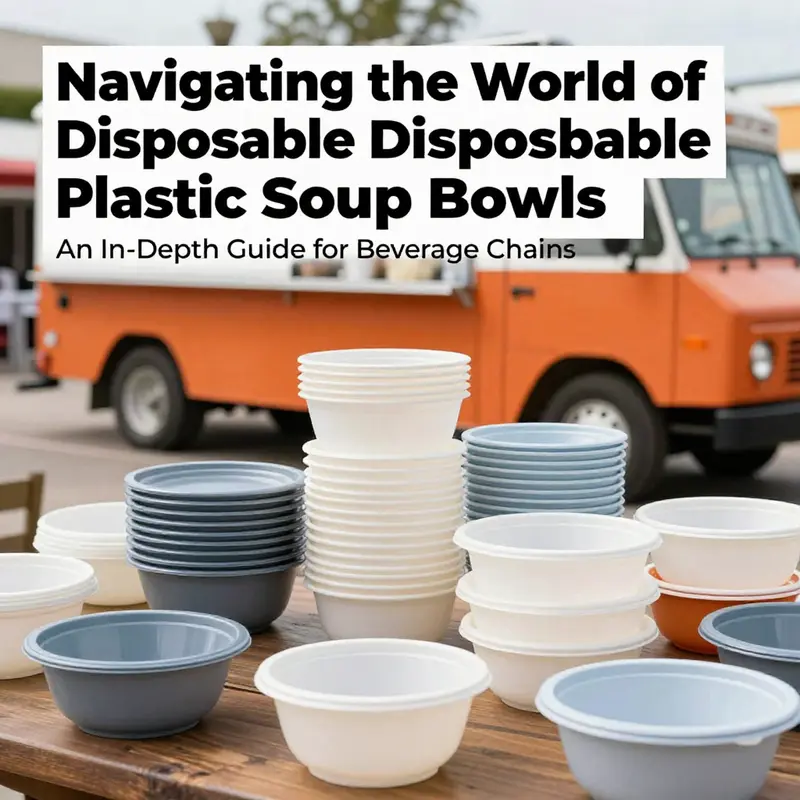
Disposable plastic soup bowls are a staple for various food service providers including bubble tea shops, restaurants, food trucks, and catering services. As the industry evolves, manufacturers are focusing on eco-friendly solutions and customization options that meet the diverse needs of their clients. This overview will detail key manufacturers in the plastic soup bowl market, discuss specifications and features that cater to businesses, and analyze pricing dynamics and order requirements. It will also highlight the growing trend towards sustainable practices and what the future holds for disposable plastic soup bowls in the food service industry.
From Resin to Ready-to-Serve: Material Choices, Standards, and the Sustainability Shift in Disposable Plastic Soup Bowls
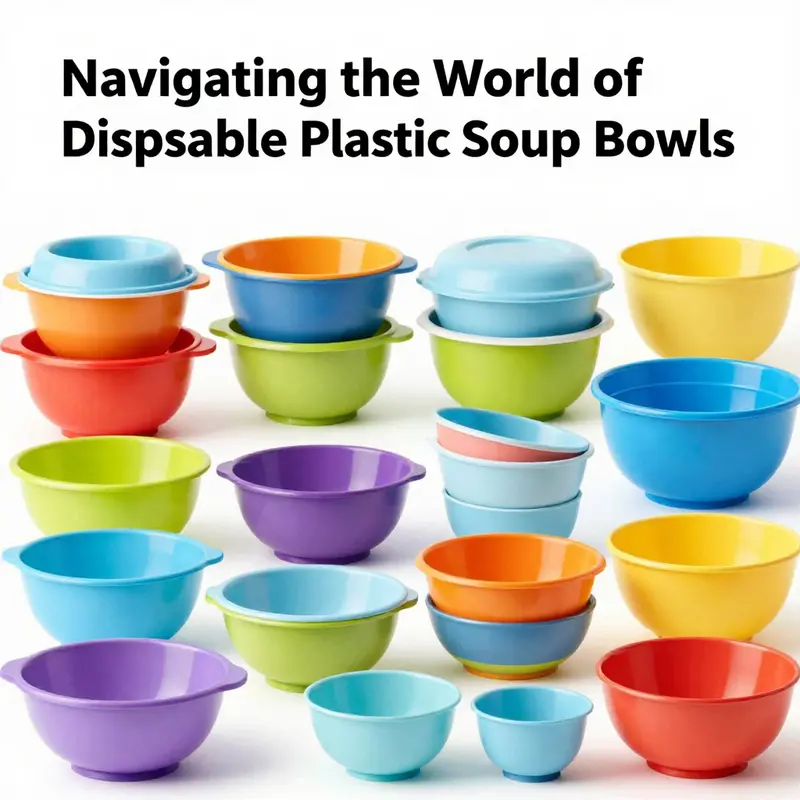
A disposable plastic soup bowl may look simple, but its journey from raw material to table-ready vessel reveals a dense web of decisions, constraints, and aspirations. In the current landscape, the two dominant families of resin—polystyrene (PS) and polypropylene (PP)—shape not only the price points and availability of bowls but also the customer experience, regulatory compliance, and the pace of innovation. The material choice sets the stage for everything that follows: how the bowl feels in the hand, how it holds heat or remains grease-resistant, how clearly it can display branding, and how easily it can be recycled at the end of its short life. Manufacturers, suppliers, and end users are continually negotiating the trade-offs among rigidity, clarity, heat tolerance, and cost, all while grappling with a growing emphasis on eco-friendliness and customization.
PS bowls, long known for their rigidity and optical clarity, tend to offer excellent stiffness and a crisp presentation. They can be formed into thin, economical walls that optimize performance for hot soups in standard serving sizes. PP bowls, by contrast, bring a different balance. They typically provide greater impact resistance and flexibility in handling, with improved grease resistance and better performance in a range of temperatures. PP’s resilience makes it a common choice for restaurants and kiosks that expect higher volumes or want a margin of safety against warping during transport. The market’s price signals reflect these material properties, and savvy buyers often weigh the cost-per-use against expected discard rates and the value of brand presentation on the packaging itself.
Beyond raw material properties, the spectrum of product specifications is broad. Bowl dimensions are designed to accommodate different serving sizes, from modest soup portions to generous bowls for multi-item orders. The features that accompany the bowl—lids, vents, and sealing rims; printed branding; and optional sleeves or carriers—are as important as the walls themselves. Customization has migrated from simple color variants to full branding opportunities: one can envision not just a color or logo, but a complete graphical treatment that aligns with a restaurant’s or event’s theme. This trend toward customization is more than cosmetic; it is a practical channel for marketers to differentiate in a crowded marketplace where thousands of SKUs compete for attention.
The regulatory frame surrounding disposable bowls remains a critical driver of product design and supplier selection. Food-contact safety standards govern what materials can touch edible contents and how migration of additives may occur under varying temperatures. Compliance programs typically encompass testing for heat resistance, chemical migration, and mechanical performance under real-world handling. Certifications associated with food safety and quality control help buyers reduce risk when sourcing bowls for high-volume service, cafeterias, or event venues. In this environment, manufacturers and processors lean on robust quality assurance protocols, traceable supply chains, and clear labeling to reassure customers that a disposable bowl will perform as intended from the first pour to the final disposal.
Pricing strategies and order dynamics add another layer of complexity. Minimum order quantities, bulk discounts, and lead times all influence how buyers plan events or stock cafes. Raw material cost volatility—driven by oil markets, recycling prices, and feedstock availability—can compress or widen margins on a quarterly basis. To manage this, suppliers often adopt tiered pricing, configurable stock programs, and flexible production slots, balancing the need to meet unpredictable demand with the economies of scale that large manufacturers rely on. The negotiation goes beyond price; it extends to packaging configurations, the inclusion of printed branding, and the ability to source compatible lids, sleeves, and carry totes from a single supplier. For buyers contemplating a multi-channel strategy, the ability to harmonize bowls with other disposable tableware—plates, cups, utensils, and napkins—can reduce logistics complexity and improve consistency across outlets.
A notable shift in the market is the push toward sustainability and responsible design. There is growing consumer and client demand for eco-friendly solutions, which has accelerated research into alternatives and improvements in manufacturing efficiency. While many bowls continue to rely on PS and PP, brands and retailers are increasingly exploring recycled-content formulations, higher post-consumer content, and, where feasible, biobased or compostable options that align with broader waste-management goals. The practical realities here are nuanced. Recycling PS and PP streams requires specialized separation after disposal, and regional infrastructure often dictates whether recycled content can be economically and technically integrated into new bowls. Compostable alternatives, if used, must be matched with compatible industrial composting streams to avoid ending up in landfills. In practice, this means that sustainability strategies for disposable bowls are rarely about a single magic material; they are about developing a portfolio that balances performance, cost, and end-of-life outcomes while aligning with local waste ecosystems.
For buyers who want concrete examples of how customization translates into real products, an exploration of offer ranges can illuminate the path forward. Many suppliers now provide options that go beyond color choices to include 3D relief branding, matte or gloss finishes, and printed designs that survive the heat and moisture of a soup service. There is also a growing trend toward packaging ecosystems—pre-matched sets that bundle bowls with lids, sleeves, and compatible takeaway boxes to streamline order fulfillment and reduce the risk of compatibility gaps in fast-moving outlets. A practical reference point for teams planning themed or branded events is the option to source customized takeaway packaging and disposable tableware tailored to specific themes or occasions, which demonstrates how design thinking intersects with operational needs. For an example of this customization approach, see the product range focused on theme-party packaging and disposable tableware: custom-takeaway-packaging-supplies-disposable-tableware-for-theme-party.
The absence of a definitive, published list of manufacturers in this particular research snapshot does not diminish the importance of understanding the broader ecosystem. The research results clarified that the chapter’s focus did not yield specific manufacturer names for plastic soup bowls, but emphasized the relevance of packaging industry sources, food-service suppliers, and industrial directories for a comprehensive roll-call. This gap underscores a practical reality: buyers seeking a complete catalog must triangulate information from multiple channels—industry directories, trade shows, and direct supplier inquiries—to map the landscape accurately. In the meantime, the market signals—material choices, customization capabilities, pricing dynamics, and regulatory and sustainability considerations—provide a robust framework for evaluating potential suppliers and planning future procurement.
One implication of this environment is the need for alignment between procurement and product development. A procurement team that understands the trade-offs between PS and PP can communicate clearly with design and packaging teams about what performance criteria matter most for a given application—whether it is heat retention, stiffness for merchandising, or a robust barrier against grease and moisture. Meanwhile, product developers are increasingly tested on their ability to deliver bowls that perform reliably in varied service contexts, from street-food pop-ups to full-service cafeterias, all while staying within regulatory boundaries and contesting the economics of scale. This convergence of supply-chain pragmatism with creative packaging design is what allows the disposable bowl category to move forward without sacrificing safety, quality, or user experience.
In considering future directions, it is essential to recognize that the landscape is evolving toward more sustainable and adaptable solutions. Innovations in material science—such as recycled-content resins, improved barrier layers, and more efficient processing techniques—are likely to shift the cost curves and design possibilities for both PS- and PP-based bowls. The environmental narrative will also push toward better end-of-life outcomes, including clearer labeling of recycling streams, better consumer guidance on disposal, and the development of more robust recycling infrastructure that can handle mixed plastic inputs without compromising bowl performance. At the same time, the demand for customization will continue to reward suppliers who can deliver scalable branding options, integrated packaging solutions, and reliable quality that meets the exacting expectations of food-service operators and event planners alike.
In sum, the disposable plastic soup bowl is less a solitary product than a node in a dynamic system. Material science sets the baseline for performance and cost; regulatory and safety standards determine what is permissible in different markets; customization and branding create competitive differentiation; and sustainability pressures push ongoing experimentation with content, structure, and end-of-life management. While this chapter acknowledges a gap in published manufacturer lists within the current research, it also highlights a coherent, actionable view of how bowls are designed, produced, and positioned in a market that prizes efficiency, safety, and responsible practice. The chapter’s synthesis points toward a future where supply chains become more transparent, where products are designed with circularity in mind, and where customization serves not just aesthetics but a broader commitment to value, safety, and sustainability for diners everywhere.
null
null
From Batch Size to Brand Impression: Pricing, MOQs, and Customization in Plastic Soup Bowls Manufacturing
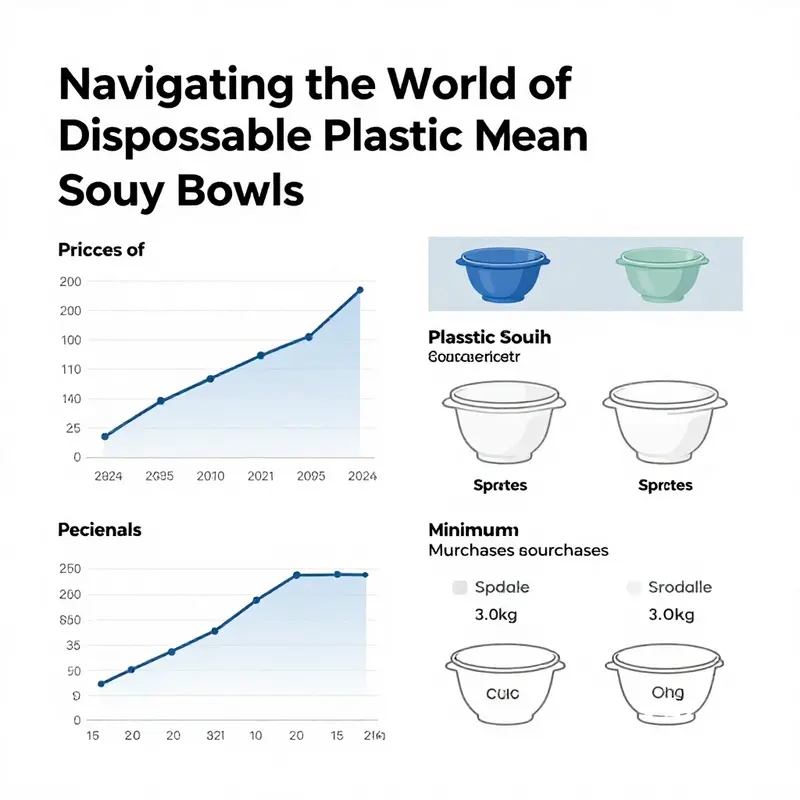
Pricing dynamics in the plastic soup bowls manufacturing sector reflect the interplay between material choice, volume, customization, and demand shifts. Material type affects unit costs and processing speeds: polystyrene offers rigidity and clarity at lower raw-material cost, while polypropylene can offer higher melt strength and heat resistance at a premium in some markets. The key insight for buyers is that price signals derive from usage patterns and a supplier’s ability to convert designs into consistent, scaled output. When capacity is tight or supply chains are disrupted, even small material price changes can ripple through MOQs and lead times, nudging buyers toward alternatives that balance cost and performance.
Volume remains the principal lever: per-unit costs tend to fall as production volume rises because fixed overhead is spread across more units and bulk packaging and shipping are optimized. A typical outcome is a sharp price drop as MOQs move from tens of thousands to hundreds of thousands, especially when lines are optimized for high-speed, repeatable runs. This reflects the supplier’s ability to amortize setup costs, color-matching, and quality-control checks across more units. Buyers should think in terms of supply contracts, delivery cadence, and demand predictability as much as nominal per-unit price.
Customization introduces a parallel price arc. Premium looks for events and hospitality segments translate into higher MOQs and fees for features like custom printing, color matching, or unique finishes. Brand motifs such as black-and-gold signal a market segment willing to pay more for presentation. For suppliers, customization requires tighter tolerances, closer color control, and longer development cycles to validate print alignment on curved surfaces. The result is a higher minimum order quantity and longer lead times, but with a more robust margin on customized runs.
Sample programs play a quiet but crucial role. Suppliers offer small, low-cost sample lots to demonstrate quality before large-volume production. Samples provide practical assessments of material behavior, stackability, snap-fit integrity, color fidelity, and print durability. From procurement perspectives, samples mitigate risk of expensive missteps and bridge bulk pricing with premium runs. The presence of samples underscores that price and MOQ are only part of the equation; demonstrated quality and reliability matter for brand-conscious buyers.
Quality concerns in cheaper variants shape pricing and ordering strategies. In markets with price competition, walls can be thinner and tolerances looser, leading to variations in rigidity, lid-fit, or heat resistance. Buyers respond with corroborated supplier certifications, tighter QA, and clear specifications for functional attributes. Sustainability and regulatory considerations add another layer, as greener resins or compostable alternatives may raise costs but align with brand commitments. The optimal purchasing strategy blends defined performance with a phased approach, starting with standard runs and gradually shifting toward customization as demand signals prove durable.
Logistics and total cost of ownership complete the picture. MOQs tie to packaging lines configured for full pallets or crates and optimized for downstream warehousing. Lead times depend on line readiness, material supply, and the complexity of customization. Buyers should negotiate flexible terms to preserve price advantages while keeping the option to scale up for premium designs. Suppliers respond with transparent pricing models that disclose setup fees, color surcharges, and incremental packaging charges. The market rewards predictability and long-term partnerships. The best buyers translate forecasts into stable order plans and reserve premium for occasions where branding and ambiance warrant it. In the end, pricing dynamics for disposable tableware are a balance of cost discipline, design intent, and reliable execution, a dance between scale and aesthetics that defines value in modern packaging.
For cross-category perspective and value, adjacent packaging options can be considered to elevate presentation when volume and event stakes justify the expense. The ongoing emphasis on sustainability also shapes MOQs, lead times, and total cost of ownership as suppliers and buyers align on a path toward responsible, scalable procurement.
null
null
Rising Tides in Disposable Bowls: Market Trends, Sustainability, and the Road Ahead for Plastic Soup Bowl Manufacturing
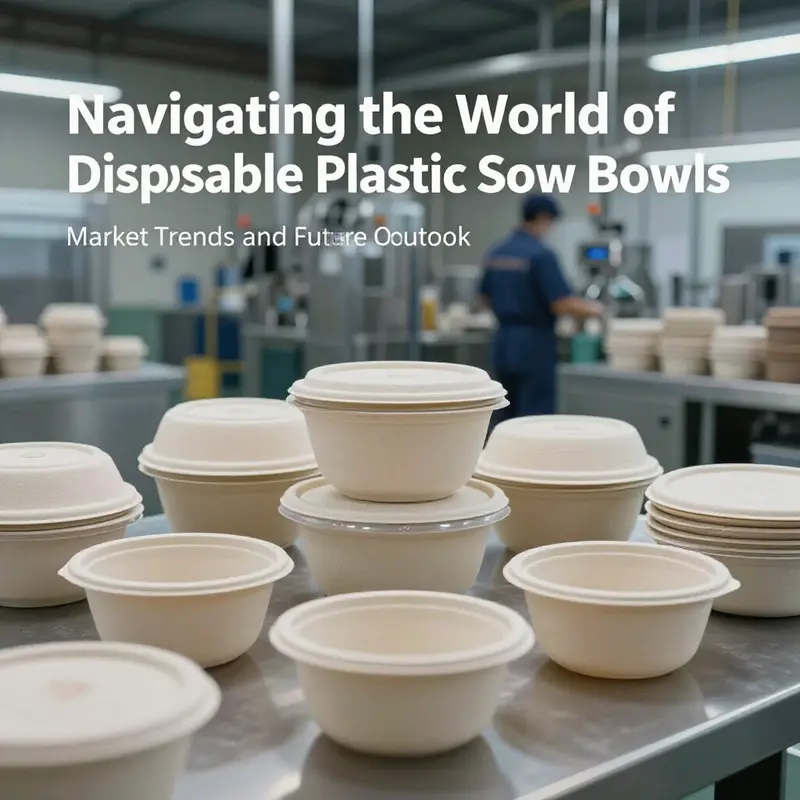
The market for disposable plastic soup bowls is evolving beyond quick handoffs and convenience into a narrative of reliability, presentation, and responsible practice. In the busy ecosystems of catering events, delivery services, and fast‑service restaurants, the bowl is more than a container; it is a touchpoint that communicates standards for quality and care. Industry analyses place the value of the Food Trays And Bowls Market at USD 18.02 billion in 2026, with a projected CAGR of 6.07%, rising to USD 24.19 billion by 2031. Those figures illustrate not merely growth but a sustained demand that operators, manufacturers, and material suppliers must meet with consistency. The implications ripple through the supply chain: from equipment and logistics to regulatory compliance and consumer expectations. In this context, the plastic soup bowl sector sits at an inflection point where the inertia of low cost and speed collides with a rising imperative for sustainability and performance. The challenge for manufacturers is to translate volume capacity into adaptable, compliant, and marketable products that perform in diverse settings—from a bustling campus cafeteria to a high‑volume delivery hub—without sacrificing function or aesthetics. This is the constellation in which the modern disposable bowl must operate, balancing mass production with the nuanced needs of today’s buyers and end users.
Two realities anchor this landscape. First, the industry continues to rely heavily on two primary materials—polystyrene (PS) and polypropylene (PP)—for their speed, clarity, and cost efficiency. Second, there is a discernible shift toward sustainability that is reshaping product design, material choice, and end‑of‑life considerations. Together, these factors shape not only what is possible but what is permissible as markets tighten around environmental standards and consumers demand greater transparency about packaging. The result is a marketplace that still prizes practicality and presentation but increasingly rewards innovations that extend product life, improve recyclability, and reduce ecological footprints. For manufacturers, that means embracing a broader toolkit—new formulations, better barrier properties, more robust coatings, and smarter packaging architectures—without abandoning the core strengths that keep disposable bowls economically viable.
In the near term, sustainability is no longer a niche attribute; it is a baseline expectation that affects both cost structure and competitive differentiation. Traditional plastics remain dominant because they deliver rigidity, grease resistance, and light weight at scale. Yet environmental concerns, waste management realities, and regulatory developments are driving conversations about biodegradable, compostable, and recyclable alternatives. Companies are experimenting with bio‑based resins, pre‑formulations that ease recycling streams, and barrier technologies that preserve food quality while allowing for easier end‑of‑life processing. The result is a more diverse landscape where material science intersects with supply chain pragmatism. For a buyer evaluating options, the decision extends beyond sticker price to include lifecycle impact, compatibility with local recycling streams, and the ease with which a product can be integrated into a customer’s sustainability program. In practice, this often translates into a choice between conventional PS or PP bowls and a growing array of sustainable substitutes, each with its own cost and performance profile.
Design and functionality have also matured in meaningful ways. Manufacturers are not merely producing larger capacities; they are rethinking form, visibility, and durability to meet the demands of modern food service. Clear or translucent materials are prized for presenting salads, soups, and toppings with minimum visual distortion, while robust rims and reinforced bases reduce the risk of leakage or crushing during transit. Grease resistance, heat tolerance, and stackability continue to be essential engineering targets, particularly for operators who handle high volumes or operate in delivery ecosystems where products undergo temperature fluctuations and rough handling. In settings like salad bars or campus cafés, where presentation is part of the customer experience, the visual appeal of a bowl becomes a branding moment as potent as the product inside. Yet even as aesthetics improve, the utility of bowls remains tethered to practicalities: reliable sealing for takeout, predictable performance in microwaves or ovens when permitted, and compatibility with a range of lids, sleeves, and accessories that streamline service.
Market dynamics extend into procurement strategies and compliance realities that buyers must navigate. Pricing strategies in this sector are influenced by raw material volatility, especially as the choice of resin and the availability of recycled content affect both cost and lead times. Order requirements—minimums, production runs, and customization lead times—shape how suppliers scale with clients ranging from small cafés to large corporates. Certification processes, too, are a decisive element; food contact safety, migration limits, and environmental declarations can determine whether a product is suitable for a particular market or customer segment. In this climate, suppliers who can demonstrate traceability, consistent quality control, and transparent documentation gain a meaningful edge. Small changes in a bowl’s material stack, coating, or print finish can ripple through the supply chain, affecting recycling compatibility, waste streams, and even consumer perception. For buyers, the key is to partner with manufacturers who can deliver consistent performance while supporting a pathway toward more sustainable practice, without compromising speed or scale.
The conversation around customization underlines a broader shift in the industry’s value proposition. Brands are increasingly seeking packaging that carries identity—custom colors, logos, and body graphics—that can travel across multiple service formats. At the same time, customization does not stop at appearance. It encompasses engineered features such as leak resistance, enhanced insulation, and even structural design that reduces material usage without diminishing strength. The ability to tailor bowls to specific segments—salad bars, noodle counters, or snack stations—creates opportunities for differentiation. A related trend is the integration of packaging with broader menu concepts, where bowls are designed to work in harmony with lids, sleeves, and compatible line of containers such as sauce cups, takeout boxes, and utensils. In practice, this means manufacturers must offer an ecosystem approach: a family of products that can be mixed and matched for a coherent takeout experience. For buyers, this reduces the complexity of sourcing while enabling cohesive branding across a restaurant group or event program. One practical alternative that several operators consider as part of a broader sustainability strategy is disposable kraft paper soup containers with lids. These containers, designed to be recyclable or compostable in appropriate streams, offer a transparent contrast to conventional plastics and can be a strategic option for menus seeking greener aesthetics without sacrificing service efficiency. disposable kraft paper soup containers with lids
As the sector moves forward, the future outlook centers on balancing cost-effectiveness with environmental responsibility. Companies prioritizing sustainable material innovation—whether through the adoption of recycled content, bio‑based formulations, or advanced barrier technologies—will be better equipped to navigate tightening regulations and evolving consumer expectations. Compliance will become a differentiator not just in certification, but in the ability to articulate a credible lifecycle story to customers who want to understand the choices behind their packaging. In parallel, the push toward customization will intensify as brands seek to align packaging with their value propositions and delivery experiences. Those that successfully combine material science with design ingenuity, scalable production, and clear communication about end‑of‑life options will be best positioned to succeed in a market projected to remain robust through 2031 and beyond. The global disposable tableware market, which encompasses plastic bowls, is forecast to reach about USD 2.81 trillion by 2031, growing at a CAGR of 5.62%. Against this backdrop, the plastic soup bowl segment will continue to evolve toward products that deliver on performance, aesthetics, and responsibility in equal measure.
For professionals seeking real‑time insights into product availability and supplier options, platforms that connect buyers with verified suppliers of plastic bowls and other disposable tableware can be valuable resources as they navigate this expanding landscape. In practical terms, the path forward for manufacturers and buyers alike is not simply to push more bowls into the system, but to push toward smarter, cleaner, and more capable packaging ecosystems that support food safety, consumer satisfaction, and sustainability goals. The challenge and the opportunity lie in translating broad market momentum into concrete product choices that perform under pressure, meet regulatory expectations, and resonate with increasingly eco‑aware customers. External resource: https://www.hktdc.com
Final thoughts
The manufacturing landscape for disposable plastic soup bowls is rapidly changing, with key insights into sustainability and customization shaping future offerings. As beverage chains, restaurants, and food service providers adapt to these trends, choosing the right manufacturer can enhance operational efficiency and ecological responsibility. Engaging with manufacturers who prioritize eco-friendly practices can pave the way for a positive impact on the environment and your business’s image.