
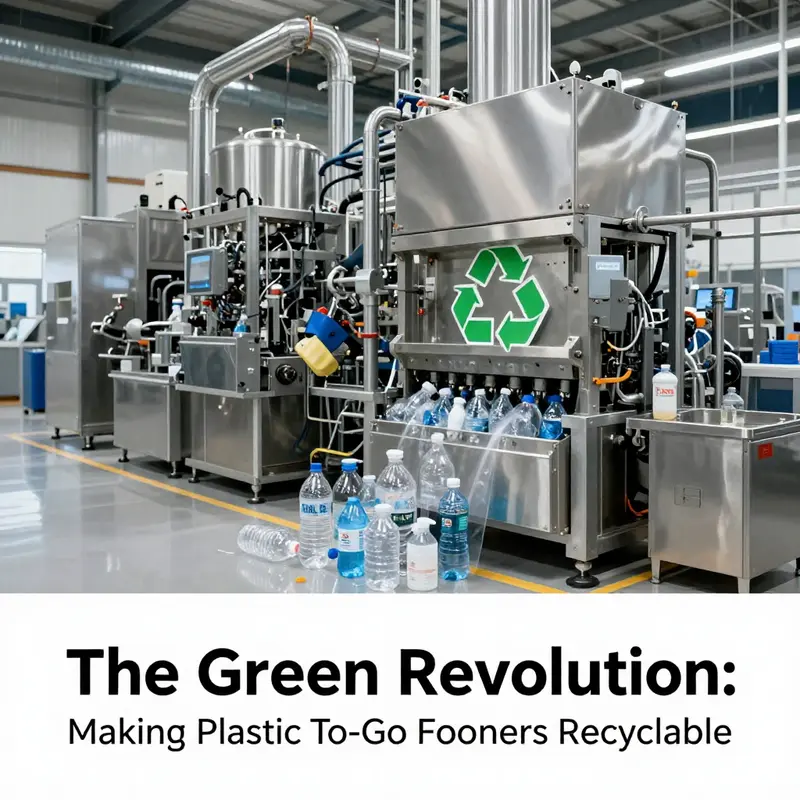
As consumer demand for takeout and delivery rises, plastic to-go food containers have become commonplace in restaurants, food trucks, and catering services. Yet, many businesses overlook the environmental implications of their packaging choices. The recyclability of these containers varies by plastic type and local regulations, making it imperative for businesses to stay informed. In this discussion, we will explore the types and regulations around recycling plastic containers, the detrimental effects of contamination, sustainable alternatives to plastic packaging, and the promising future of recycling systems for food service. This comprehensive approach will empower your establishment to make informed, environmentally friendly choices.
Beyond the Bin: Untangling the Recyclability of To-Go Plastic Containers in Real-World Systems
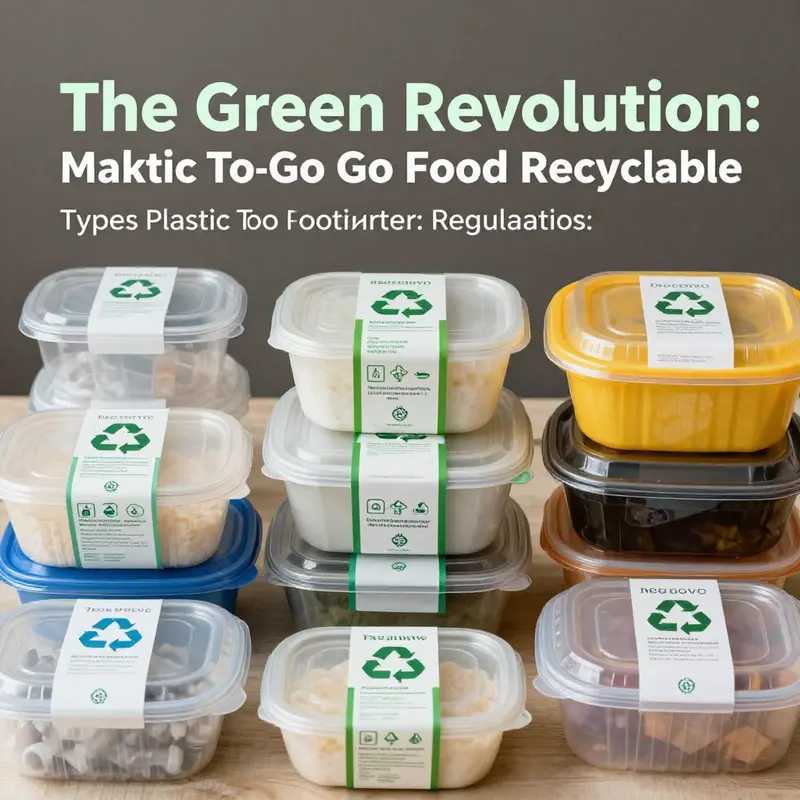
Plastic to-go containers sit at the crossroads of convenience and waste, a choice many people make without a second thought about where their used box ends up. The recyclability question is deceptively simple on the surface: can this plastic be recycled? Yet anyone who has stood by a curbside bin knows the answer depends on a web of practical details. The material itself matters, but so do the local rules, the processing realities of Material Recovery Facilities, and the way a container is cared for after use. In the end, effective recycling hinges on aligning the packaging we choose with the systems that rinse, separate, and remake it into something new. When we take a closer look at plastic to-go containers, three layers emerge: the type of plastic, the regulatory framework that governs recycling in a given place, and the daily realities of contamination. Each layer shapes whether a box makes it back into the loop or becomes waste that needs a different end-of-life path. And because the system varies so much from one city to the next, a box that is accepted somewhere can be excluded elsewhere, a reminder that individual choices must be informed by local practice as well as the inherent properties of the plastic itself. The most common takeout containers arrive in forms defined by resin codes, and these codes tell a story about what the material was designed to do, how it behaves in heat or cold, and how hospitable it is to recycling streams that were never designed to handle every plastic on the market. Among these, Polyethylene Terephthalate, known widely as PET, often stands out as the most favorable entry point for curbside recycling. PET is clear, rigid, and durable, qualities that have made it a staple for beverage bottles and a growing range of short-term food containers. The same properties that make PET reliable for packaging also make it highly desirable to recycling programs that rely on consistent material streams. In many municipalities, PET is explicitly accepted and sorted into streams that feed into established recycling markets. But even PET comes with caveats: its suitability depends on the item’s use, the degree of contamination, and the local market demand for post-consumer PET pellets. If a PET container carries heavy grease or sticky sauces, or is filled with food scraps, its journey through the recycling process can be compromised. The residue adds cleaning burdens and can degrade the resulting material, sometimes causing a batch to be rejected, ultimately defeating the recycling goal. This is why the guidance around PET is careful but pragmatic: rinse out the container, removing large food pieces and excess grease, while recognizing that a perfect, spotless rinse is not required. The key is to reduce the residue to a level that does not prevent the container from re-entering the supply stream.
Yet PET is not the only plastic found in to-go packaging. Polystyrene, including the familiar foam variants, has a long history in disposable round containers and foam lunch boxes. Technically recyclable in some systems, polystyrene foam presents a real challenge in many places. Market demand for recycled polystyrene is often weak, and processing costs can be high relative to the value of the recovered material. The result in many curbside programs is that PS, particularly the foam variety, is not accepted. Even when a facility can technically recycle PS, the economics and logistics of sorting and processing can tilt the balance away from acceptance. This divergence between what is technically possible and what is practically viable creates a recurring friction point in the recycling system. Then there is polypropylene, or PP, a resin code that is increasingly favored for takeout packaging. PP is durable, heat resistant, and compatible with microwave use in many consumer-grade containers. It sits in a kind of middle ground: not as widely accepted across all programs as PET, but increasingly visible in municipal streams as recycling infrastructure expands and consumer demand for reusable or reusable-friendly packaging grows. PP’s growing acceptance reflects a broader shift in the sector toward materials that combine user-safety with recyclability, enabling a wider range of packaging to be recovered and remade.
But materials and programs do not exist in a vacuum. Regulations—how rules are set, enforced, and updated—shape what recyclers will accept and how consumers should prepare containers for recycling. In the United States, safety and suitability for food contact are overseen by the Food and Drug Administration. The FDA’s oversight ensures that plastics in contact with food meet standards for chemical migration and thermal behavior, a critical assurance for consumer health. Beyond that national frame, local governments have substantial sway over what is accepted by curbside programs, how facilities handle different resins, and what kinds of packaging bans or restrictions are in place. The polystyrene foam bans that have appeared in several cities reflect a broader policy concern about waste form and environmental impact. When foam containers are banned, the rationale typically rests on their tendency to fragment into small, persistent pieces and their challenges in end-of-life processing. In parallel, the European Union has pursued a more aggressive plastics strategy, mandating recycled content in new products and curbing certain single-use plastics to steer the market toward more sustainable options. These regulatory push-and-pull dynamics—between safety assurances, end-of-life feasibility, and market demand—are not abstract. They directly influence what packaging manufacturers design, what retailers specify for their operations, and what any given household should expect when preparing to recycle a takeout box.
Within this regulatory landscape, contamination remains the most practical battleground. The belief that recycling is a simple deposit-and-return system is appealing but incomplete. Real-world recycling facilities operate best when the incoming material is clean and well separated. Food scraps, grease, and liquids are the arch-nemeses of recycling lines; they complicate sorting, degrade the quality of recovered plastics, and in some cases can trigger a batch rejection. That is why the recommended behavior is straightforward: a quick rinse to remove leftover food and grease, followed by a light shake to reduce surface moisture. The aim is not to achieve a pristine kitchen-clean container but to minimize contaminants enough to preserve the quality of the recycled resin. If every user adopts this small ritual—rinsing, discarding scraps, and returning the container to the recycling stream—recyclers gain a meaningful head start toward producing higher-quality recycled materials. It is also worth noting that the landscape for recycling is not uniform. Some materials that are accepted in one region may be rejected in another, depending on local infrastructure, the presence of specialized facilities, and regional markets for recycled materials. The practical message for consumers is to know their local program’s rules, looking for the recycling symbol with a number on the container and consulting municipal resources when in doubt. This leads to a more informed approach to selecting packaging and to disposing of it in ways that actually close the loop.
Given these realities, sustainability-minded businesses are increasingly turning toward packaging strategies that transcend the single-use model. Reusable and recyclable packaging is gaining momentum as a means to reduce waste, and at times, comply with stricter regulatory expectations. When a company shifts to packaging designed for reuse—such as containers and closures intended for repeated use—it reduces the pressure on recycling streams while still enabling a safe and convenient takeout experience. Of course, not every operation can move to a fully reusable system, but partial shifts—replacing polystyrene with more recyclable alternatives, selecting PP-based designs, or adopting clearly labeled recycling and return programs—have meaningful environmental benefits. For those seeking longer-term options, compostable materials such as PLA, derived from plant sources like cornstarch, offer another pathway. Yet the deployment of compostables hinges on having industrial composting infrastructure and clear consumer guidance about disposal. Without appropriate facilities, compostables can end up in the wrong stream, where they do not contribute to a closed loop and may contaminate the recycling stream they were meant to complement. In short, the goal is to align choice with system capabilities, ensuring that the packaging moves from use to reuse or to a high-quality recycling stream, rather than slipping into a landfill or misrouted into a compost bin that cannot process it.
Consumers also benefit from a practical set of steps that connect the science of materials with everyday decision-making. First, look for containers labeled with widely accepted resin codes and recycling symbols, but don’t rely on a symbol alone as a guarantee of acceptance. Second, when possible, choose packaging known to be compatible with your local program—PET and some PP-based items are more likely to be accepted than mixed plastics or polystyrene foams. Third, practice good disposal habits: rinse, separate, and ensure containers are dry before placing them in the recycling bin. Fourth, consider partnering with retailers and food-service operators who prioritize recyclable or reusable packaging and who clearly communicate disposal guidelines to customers. These steps do not eradicate the complexity of the system, but they empower individuals to participate more effectively in the recycling process and to push for packaging choices that align with local capabilities.
For readers seeking practical exemplars within this broader framework, the world of packaging design has begun to emphasize not just material choice but the end-of-life narrative as part of the product brief. The shift toward packaging that neighbors a takeout meal, in terms of recyclability and ease of recovery, reflects a confluence of consumer demand, regulatory encouragement, and economic viability. A packaging option that emphasizes grease resistance while maintaining recyclability can help reduce the friction of contamination and improve recovery outcomes. This is where the concept of a consciously designed takeout box becomes more than a convenience item; it becomes an integral piece of a city’s waste-management ecosystem. If you’re a business considering alternatives, eco-friendly takeout boxes can be a starting point for evaluating how a design interacts with both consumer use and the municipal recycling stream. The goal is not merely to replace one material with another but to reframe packaging as a lever for system-wide improvements, where the material choice supports effective sorting, cleaner streams, and higher-quality recycled output.
The dialogue about recyclability also benefits from linking to broader informational resources. For instance, the Environmental Protection Agency’s plastics recycling information provides an auditable framework for understanding how various plastics behave throughout the lifecycle of collection, sorting, and remanufacture. This external perspective helps bridge the gap between what consumer-facing labels promise and what the recycling infrastructure can actually deliver. In practical terms, it reinforces the idea that recyclability is a property of both material and process. Consumers who understand this nuance can make more informed choices at the point of purchase and can act more effectively when preparing containers for recycling. By recognizing the interplay between material properties, regulatory regimes, and real-world processing, we can approach takeout packaging not as a single-use obstacle but as a component of a resilient, circular system that aims to minimize waste and maximize recovery.
External resource: https://www.epa.gov/sustainable-management-waste/plastics-recycling
Contamination as the Gatekeeper: Untangling Recyclability, Safety, and the Future of Plastic To-Go Containers
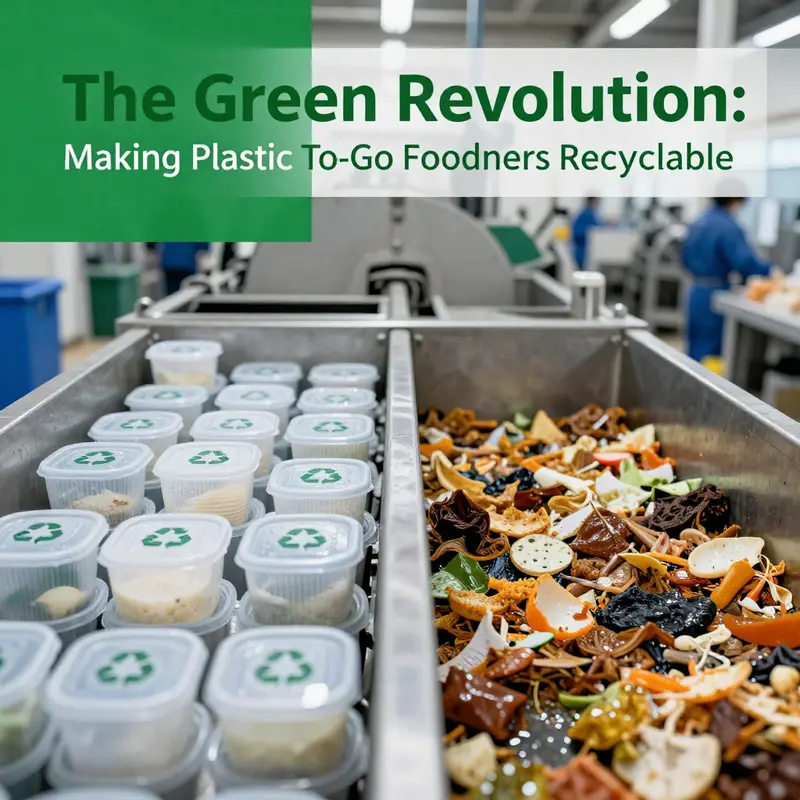
Plastic to-go containers sit at the crossroads of convenience and circularity. They are the everyday vessels that carry meals from cafe to couch, from office to home, and in doing so they carry with them a set of complicated questions about what recyclability really means in a world of diverse plastics, municipal rules, and contaminated waste streams. The simple act of tossing a used container into a curbside bin is not just a small personal decision; it is a step that interacts with material science, waste management infrastructure, and public policy. The path from a food-grade container to a recycled resin is long and highly dependent on context—the type of plastic, the level of contamination, and the regulations that govern recycling in a given city or region. When the pieces align, recyclable plastic can close the loop and reduce the demand for virgin resin. When they don\’t, the same container can end up in landfills or be rejected at a Material Recovery Facility (MRF), wasting the energy and resources already invested in its production and transport. The result is a landscape in which the recyclability of to-go containers is not a fixed property of the plastic, but a negotiated outcome shaped by contamination, policy, and practical handling from kitchen to curbside.\n\nTo understand why contamination matters so profoundly, it helps to start with the most common materials used in to-go packaging. Food-grade PET, or polyethylene terephthalate, is widely accepted in many curbside recycling programs. PET\’s structural clarity, strength, and ability to act as a barrier to moisture and gases make it a popular choice for beverages and many food containers. When a container is labeled with the familiar recycling symbol and the number 1, it is signaling a pathway that, in many systems, is navigable. However, not all plastics hold the same map. Polystyrene, marked as number 6, and various mixed-plastic blends often fall outside the typical reach of municipal programs. Even with PET, the journey from used container to recycled resin is not automatic; it is conditional on how clean the container is when it reaches the recycling stream and on the composition of the waste stream it enters. A key reality is that recyclability is as much about process viability as about material classification. The line from consumer to recycled pellet depends on whether the contaminants present can be efficiently removed and whether the resulting material can meet the stringent standards required for new food-contact applications.\n\nContamination is the quiet but stubborn adversary in recycling. Containers used for to-go meals routinely carry residues of grease, sauces, oils, and small food particles. These residues complicate each stage of the recycling process. Sorting relies on clean streams, with sensors and automated systems designed to separate plastics by resin type and remove non-plastic contaminants. Grease and large food remnants can gum up equipment, reduce the efficiency of sorting, and create quality risks for the recycled material. At the processing stage, even modest levels of contamination can degrade the mechanical properties of recycled plastic, limit its clarity, or introduce odors that are hard to remove. The problem compounds at scale: rejected batches and the increased energy and water use needed to wash out residues drive up costs and can undermine the environmental benefits of recycling. In other words, grease and food scraps are not just minor nuisances; they can undermine the very viability of recycled products.\n\nThe concern goes beyond mechanical performance. After cleaning, trace contaminants can remain embedded in the polymer matrix, raising questions about chemical migration when the recycled plastic is reused in food-contact applications. Additives, residual monomers, or pollutants absorbed from the previous uses can persist through processing and become a source of chemical exposure risk in new products. While microbial contamination is often mitigated by the high temperatures involved in reprocessing, chemical residues are more stubborn. They may originate from original additives used in the plastic or from substances that migrated into the container during its life cycle, such as oils, flavorings, dyes, or other additives. In some studies, even thoroughly cleaned recycled plastics have been found to harbor low levels of contaminants. The industry thus faces a delicate balance: ensuring safety while not discarding the potential benefits of recycling.\n\nEuropean regulatory bodies have acknowledged these challenges with a focus on safety and containment. The European Commission has recognized that recycled plastics can carry contaminants and has stressed the necessity for stringent monitoring and regulation to ensure safety, especially when recycled material is repurposed for food packaging. This is not merely a theoretical concern; it translates into practical requirements for testing, traceability, and limits on permissible contaminants. Environmental organizations echo these concerns and push for improvements in recycling practices, greater transparency, and safer alternatives where necessary. Greenpeace, in particular, highlights the risks associated with recycled plastics and calls for more robust safeguards and innovative packaging solutions. Taken together, these perspectives remind us that recyclability cannot be assumed, even for materials that are technically recyclable, and that effective food packaging must account for contamination along the entire value chain—from product design and use to end-of-life processing.\n\nGiven the realities of contamination and regulatory complexity, consumers and businesses alike are urged to verify recyclability locally. PET\’s prevalence in curbside programs means it remains a strong candidate for recycling in many places, but the presence of grease and food residues demands practical steps at the point of disposal. The guidance is straightforward: containers should be rinsed to remove large food particles and excess grease before placing them in recycling bins. They do not need to be spotless, but the residue should not be present in a way that would clog sorting equipment or degrade batch quality. While a quick rinse is better than nothing, it is also essential to understand that not all plastics are equally recyclable in every municipality. Some programs will accept PET containers only if they are clean and empty, while others may have additional restrictions on packaging materials or multilayer composites. The prudent path is to consult local guidelines and look for the recycling symbol with a number on the container, which offers a quick reference to the resin type and its likely acceptability. Where local systems are less accommodating, alternative routes—such as dedicated return schemes for specific packaging lines or industrial recycling partners—may be explored, though these options vary by region and market.\n\nIn the search for sustainable solutions, many stakeholders are turning toward packaging designs and waste-management practices that reduce contamination and improve recyclability. Reusable packaging models, for example, have gained momentum as a means to decouple the lifecycle of packaging from the single-use culture. The shift toward reusable or more easily recyclable packaging is being propelled by businesses eager to demonstrate environmental responsibility and by consumers who expect brands to take tangible steps toward waste reduction. This transition is not without its challenges—logistics, cleaning processes, and consumer behavior all influence outcomes—but it represents a meaningful direction for those aiming to align operations with circular economy principles. The future of to-go packaging is likely to be characterized by a mosaic of approaches: PET-based, widely recyclable options for many regions; higher emphasis on rigorous cleaning and contamination controls; expanded use of reusable and multi-use packaging systems; and ongoing development of safer, lower-risk materials and additives that reduce the potential for contaminant migration.\n\nAll of these considerations point toward practical implications for both providers and customers. For food-service operators, the choice of packaging matters not only for shelf life and food safety but also for the material\’s end-of-life journey. Cleanliness in the sense of residues is a shared responsibility: kitchens must strive to minimize residue build-up, while customers play a role by emptying containers and rinsing them before disposal. Education and clear labeling at the point of sale can help guide behavior and improve recovery rates. At a broader level, the packaging supply chain can benefit from design-for-recycling approaches that favor single-material construction, discourage multilayer or mixed plastics, and incorporate resins that are reliably accepted by local programs. In the meantime, the idea that recyclable packaging automatically equates to a fully circular outcome remains too optimistic; contamination is the gatekeeper that determines whether recycling can truly close the loop or whether it merely slows the path to a more resource-efficient system. This is why the conversation about to-go containers must weave together material science, waste-management infrastructure, and human behavior in a single, continuous narrative.\n\nTo illustrate a concrete direction without getting lost in jargon, consider the family of packaging options that emphasizes simple, separable components and materials with broad recycling compatibility. A multi-compartment design that keeps different food components separated can reduce cross-contact and grease transfer, potentially simplifying downstream cleaning and sorting. Such designs, when coupled with clear consumer guidance and robust municipal recycling support, can enhance recyclability while still meeting practical needs for food presentation and portion control. In the broader picture, shared standards and clear labeling help illuminate the path from disposal to recovery. When a container clearly communicates its resin type, its suitability for local streams, and how to prepare it for recycling, households contribute more effectively to a system that can process it responsibly. For readers seeking practical examples of packaging configurations that prioritize recyclability and safety, a close look at designs that emphasize straightforward materials and minimal additives is instructive. One example of an option worth exploring, described in industry catalogues and product pages, is a package assembled as a single-resin, food-grade container with a simple lid and minimal coatings. This approach reduces the risk of cross-contamination and simplifies processing, making it more likely to retain value through recycling.\n\nWithin this frame, it is helpful to acknowledge how the packaging ecosystem is evolving. As local authorities refine their guidelines and as manufacturers experiment with safer alternatives, the boundary between recyclable and non-recyclable becomes a moving target. Continuously updating knowledge about what is accepted where, and what constitutes properly prepared waste, is essential for anyone who wants to participate meaningfully in a circular economy. The core message remains clear: recyclability exists only when contamination is controlled, materials are compatible with local systems, and stakeholders align on consistent practices. The more we understand these interdependencies, the more we can design products and systems that make recycling a realistic, reliable option rather than a hopeful aspiration.\n\nFor readers who want to explore a concrete example of packaging design that aligns with these principles, an accessible option is a packaging solution that emphasizes sustainability without sacrificing functionality. You can learn about a type of multi-compartment box designed for fast food that aims to balance convenience with recyclability by focusing on food-grade materials and ease of processing. This approach demonstrates how design choices influence end-of-life outcomes, reinforcing the idea that the path to true circularity begins in the packaging itself and travels through the consumer\’s hands. A practical reminder is that the recycling journey is a two-way street: the producer has a responsibility to minimize contamination and optimize recyclability, and the consumer has a responsibility to dispose of containers in a way that supports recovery.\n\nIn closing, the story of plastic to-go containers is not simply about the existence of recyclable materials; it is about the conditions under which those materials can be recovered and repurposed. Contamination, in its many forms—grease, food scraps, liquids, and trace chemical residues—plays a decisive role in whether recycling can proceed smoothly and whether the resulting material is safe for future food-contact applications. The European Commission\’s emphasis on monitoring and regulation, alongside civil-society concerns raised by groups like Greenpeace, underscores the seriousness of the challenge. The practical takeaways are clear: rinse containers to remove major residues, check local guidelines and resin codes, and support packaging designs that minimize contamination and maximize recyclability. For businesses, this means pursuing packaging solutions that are not only functional and attractive but also compatible with the local recycling landscape and capable of delivering material that meets safety standards for reuse. For consumers, it means recognizing that a recyclable symbol is not a guarantee of complete circularity; it is a prompt to participate in proper disposal, to demand better packaging, and to support systems that reduce waste and protect public health. The future of plastic to-go containers will be shaped by how effectively we address contamination, how we regulate for safety, and how innovator and consumer collaborate to keep materials in use longer and with fewer risks. To further explore the safety considerations around recycled plastics in food-contact applications, see the NIH resource on Plastic Food Container Safety linked here: https://www.ncbi.nlm.nih.gov/pmc/articles/PMC7214368/.\n\nFor additional context on packaging options and sustainability considerations, you may also find value in exploring a range of eco-friendly packaging solutions that promote safe, recyclable, and reusable designs which align with consumer demand for responsible waste management. One example of practical packaging options is described in the following product overview: eco-friendly-disposable-3-compartment-food-grade-packaging-box-for-fast-food-high-quality-takeout-boxes-for-fried-chicken-french-fries-packaging.
Practical Alternatives to Disposable Plastic To‑Go Containers: Reusable, Compostable and Circular Paths
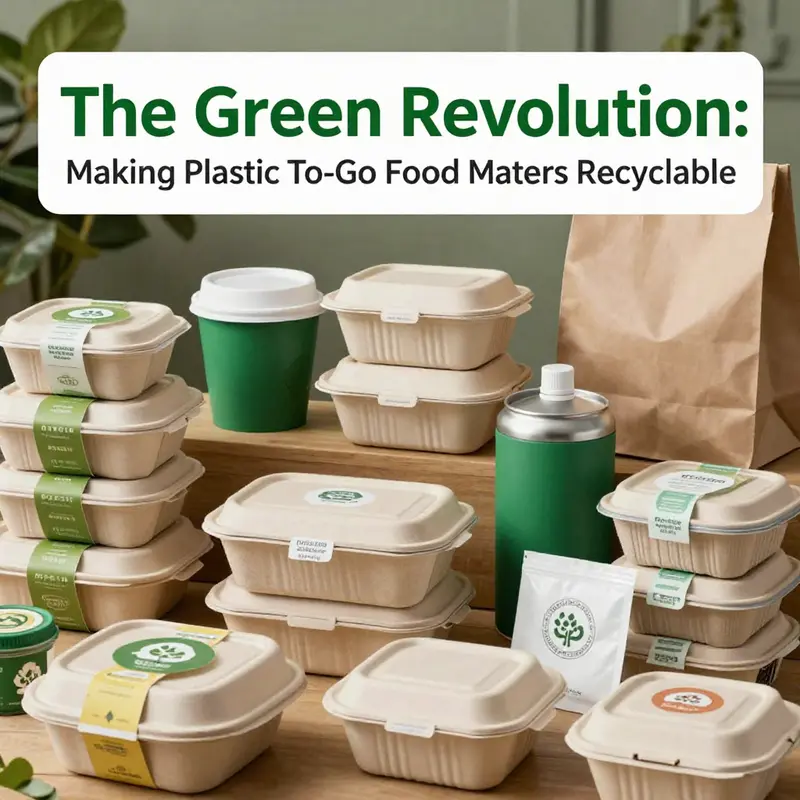
Practical pathways away from single-use plastic
The push to replace disposable plastic to-go containers is moving from aspiration to action. Communities, restaurants, and consumers increasingly demand packaging that performs well and leaves a smaller footprint. Viable alternatives now span durable reusables, industrially compostable materials, and innovative bio-based products. Each option balances performance, cost, and end-of-life outcomes differently. Understanding those trade-offs helps businesses choose solutions that reduce plastic waste while maintaining convenience and food safety.
Durable reusables form the simplest way to reduce single-use plastic. Consumers can carry stainless steel, tempered glass, or high-quality silicone containers. These materials withstand thousands of wash cycles without losing barrier or structural properties. For households, durable containers also reduce clutter and kitchen waste. For food-service businesses, reusable deposit-and-return systems scale this concept. Customers pay a modest deposit for a sturdy container, then return it for cleaning and reuse. When implemented well, such systems can drastically cut disposable demand while keeping food transport convenient.
Reusable systems require infrastructure. Clean, reliable collection and sanitization are essential. Businesses can partner with third-party laundry and sanitization services to outsource cleaning. Automated vending and return stations make the user experience frictionless. Clear labeling and standardized sizes streamline stacking and washing. Firms that pilot deposit-return programs report strong customer acceptance when the process stays simple and convenient. The result is a circular loop where containers serve many customers before being retired.
When reusables are impractical, compostable materials often provide the next-best route. Compostable containers made from sugarcane bagasse, cornstarch-derived polymers, and other plant fibers combine heat-resistance with a tidy end-of-life story. These materials break down in industrial compost systems, returning organic carbon to soil. For businesses, switching to certified compostable trays, clamshells, and bowls can eliminate large volumes of mixed plastic waste. The caveat is ensuring access to proper composting facilities. Without industrial composting, many compostable products will not degrade quickly in landfill conditions.
Bamboo fiber technology represents an advanced plant-fiber approach. Manufacturing processes convert bamboo pulp into sturdy foodservice products that resist grease and heat. These items decompose more predictably than many plastics and often meet food-contact safety standards. In places with strong composting or biodegradable-waste collection, bamboo fiber containers provide both performance and environmental benefit. Their production can also make use of a rapidly renewable resource, lowering land-use impacts relative to some crops.
Mycelium-based packaging is another emerging material to watch. Grown from agricultural waste and fungal networks, mycelium can be molded into strong, insulating shapes. The material is compostable at home or in commercial facilities. Because production often uses low-energy growth rather than intensive chemical processing, mycelium has the potential for a favorable life cycle. Early commercial uses include protective packing and cold-chain inserts, and foodservice adaptation is progressing for select use cases where cushioning or thermal insulation matters.
Paper-based options remain a pragmatic choice for many takeaway foods. Properly engineered kraft paper trays, lined with a water-resistant coating, can hold moist and greasy foods. These containers are lightweight and widely accepted by municipal recycling systems when unsoiled. For grease-heavy foods, businesses can choose heavier-duty paper or add a compostable lining, preserving recyclability where possible. Paper solutions also lend themselves to branding and printing, helping restaurants retain identity while reducing plastic use. For ready-made eco-friendly alternatives, businesses can explore suppliers of takeout boxes and paper-based packaging to replace plastic clamshells. See a practical supplier offering a range of kraft and craft paper options here: eco-friendly takeout boxes for food packaging.
A recurring reality is that no single material solves every use case. For hot soups and oily dishes, a compostable molded-fiber bowl may outperform lighter paper. For delicate pastries, a clear window often helps display, which means combining paper with a small biodegradable film. For multi-compartment meals, sturdy plant-fiber trays or returnable containers reduce spill risk while meeting meal-assembly needs. Smart selection blends materials to meet both function and circularity goals.
Operational changes often matter more than material swaps. Reducing portion packaging, consolidating condiments into bulk dispensers, and offering utensils only on request cut waste across the board. Training staff to rinse and sort returned containers improves the quality of compostable streams and recycling loads. Point-of-sale prompts that encourage patrons to bring reusables or accept digital deposits increase reuse rates. These behavioral and operational shifts amplify the climate and waste benefits of alternative packaging choices.
Policy and procurement choices create market pull. When institutions and large food-service contractors prioritize recycled-content packaging or reusable systems, suppliers respond. Local governments can accelerate adoption by investing in composting infrastructure and by revising procurement rules to favor circular options. Transparent labeling and third-party certifications also help buyers choose products that meet performance and end-of-life claims. Standards for compostability and recyclability reduce greenwashing and make progress measurable.
Life-cycle thinking prevents unintended consequences. Some bio-based plastics may appear sustainable but can compete with food crops or require industrial composting to break down. Conversely, lightweight plastic packaging can reduce transport emissions but complicates recycling streams. Evaluating greenhouse gas impacts, water use, and end-of-life management together helps identify genuine improvements. Lifecycle assessment tools and simple procurement checklists make these assessments practical for businesses without specialized staff.
Finally, engaging customers completes the loop. Clear messaging about how to dispose of each container—recycle, compost, or return—reduces contamination. Visual cues and short instructions at the point of sale increase correct disposal. Outreach that explains the benefits of reusables and compostables builds trust and loyalty. Over time, consistent options and simple rules shift consumer norms away from single-use plastic.
Transitioning away from disposable plastic to-go containers is both practical and necessary. A mix of durable reusables, plant-fiber compostables, innovative bioproducts, and smarter operations can cut plastic waste dramatically. Success depends on aligning material choice with collection infrastructure, and on designing systems that make good behavior easy. With coordinated procurement, investment in processing systems, and thoughtful product design, food service can remain convenient while moving decisively toward a circular, low-waste future.
External resource: For technical details and certification information about bamboo fiber food containers and their manufacturing process, see the manufacturer’s official site: https://www.rui-zhu.com/
null
null
Final thoughts
In the ever-evolving landscape of food service, understanding the recyclability of plastic to-go food containers is crucial for businesses aiming to minimize their environmental footprint. By acknowledging the impact of contamination, exploring sustainable alternatives, and staying committed to improving recycling systems, food service providers can lead the charge toward a greener future. Making informed decisions not only enhances your brand’s sustainability efforts but also resonates increasingly with environmentally conscious consumers. Embrace these insights to elevate your business and contribute meaningfully to global sustainability.