
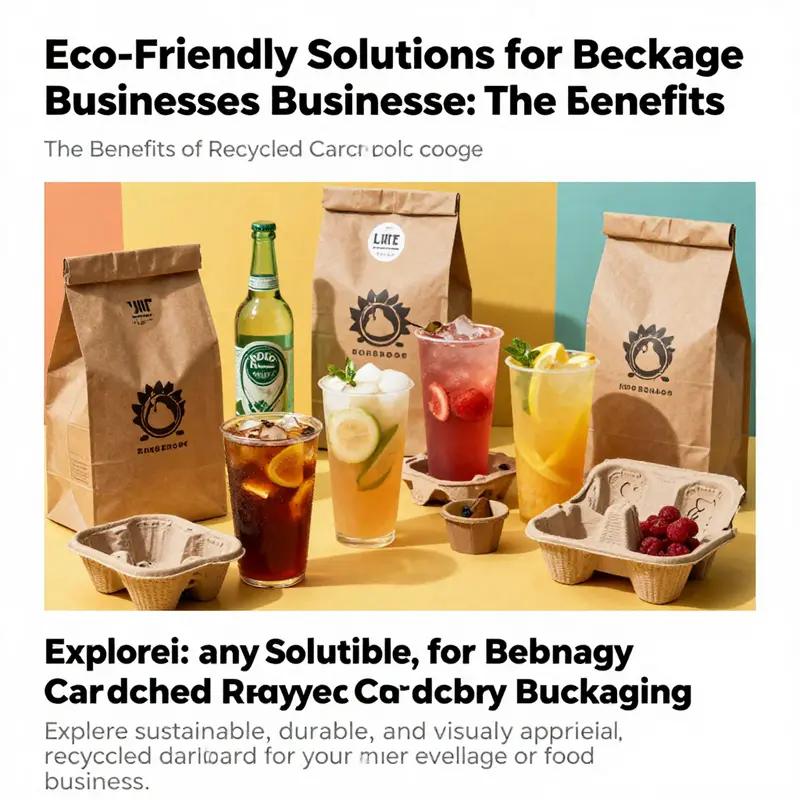
As consumers become increasingly conscious of their environmental impact, the demand for sustainable packaging solutions has surged. For bubble tea shops, restaurants, food trucks, catering services, and event planners, recycled cardboard emerges as a versatile, eco-friendly choice. This article delves into the advantages of utilizing recycled cardboard, covering essential aspects such as the different types available, their structural integrity, visual appeal, and the broader impact on the circular economy. Each chapter reflects on how this green alternative can seamlessly integrate into your operations, enhancing both your brand identity and ecological commitment.
Single-Wall vs Double-Wall Corrugated Cardboard in Recycled Packaging
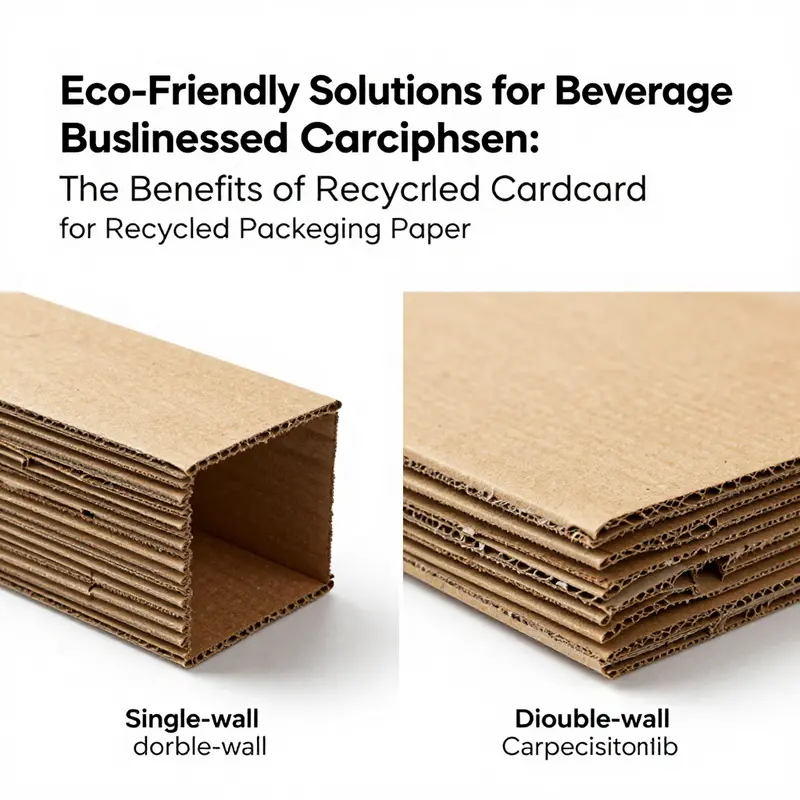
A practical overview of how recycled single-wall and double-wall corrugated cardboard serve different packaging needs. Single-wall, with one flute sandwiched between two liners, offers lighter weight, lower cost, and good printability for smaller or lighter items, while maintaining recyclability. Double-wall adds a second flute and an extra liner, increasing rigidity, crush resistance, and protection for heavier, bulkier, or higher value shipments, though with added weight and material cost. Both configurations can incorporate post-consumer recycled content and are compatible with standard recycling streams, supporting a circular economy. When choosing between them, brands weigh product protection, transport conditions, space efficiency, and end-of-life considerations, aiming to maximize performance while minimizing environmental impact. The lifecycle advantages arise from using recycled feedstock, optimizing manufacturing energy, and facilitating reuse and recycling downstream, reinforcing responsible packaging strategies.
Built to Protect: How Recycled Cardboard Balances Strength and Longevity for Packaging Paper

Built to Protect: How Recycled Cardboard Balances Strength and Longevity for Packaging Paper
Recycled cardboard succeeds because its structure marries economy, protection, and environmental responsibility. The corrugated form, fiber composition, and finishing choices determine how well a package survives handling, storage, and transport. Understanding these elements lets designers and supply chain managers specify boxes that protect goods without unnecessary weight or cost.
At the heart of cardboard performance is the corrugated sandwich: fluted medium between two linerboards. That geometry delivers bending stiffness and shock absorption far greater than flat sheets of the same weight. Single-wall corrugated panels, with one flute layer, are light and resilient. They absorb drops and vibrations well, making them ideal for small to medium shipments. Double-wall variants add a second fluted layer, producing a thicker, more crush-resistant board. The extra layers increase compressive strength and stacking capacity, crucial for palletized shipments and long transit routes.
Fiber quality shapes much of this behavior. Recycled fibers are shorter and more broken than virgin fibers. That change reduces bonding surface area and lowers ultimate tensile strength. As a result, recycled boards can show lower burst strength and diminished resistance to repeated bending. These limitations do not prevent effective use. Instead, they prompt design adjustments: higher basis weights, denser fluting, or hybrid constructions that mix recycled liners with selectively stronger media. When specified properly, recycled cardboard reaches performance levels comparable to virgin-fiber equivalents for most consumer and industrial uses.
Shock absorption is an area where corrugated design excels. The flutes function as small springs, compressing under sudden loads to dissipate energy. This cushioning protects fragile contents from impact and vibration. Flute profile selection matters: larger flutes provide greater deflection and cushioning but reduce flat crush resistance. Smaller flutes increase rigidity and printability. Smart packaging design tailors flute type to the product’s fragility and the expected transport environment.
Moisture exposure highlights another distinction. Recycled cardboard absorbs water more readily than coated or laminated alternatives. Wet fibers soften and lose bonding strength. That change reduces box stiffness and stack strength rapidly. To mitigate moisture effects, manufacturers employ moisture-resistant coatings, water-based sizing, or wax finishes for food-grade containers. For many retail and e-commerce uses, simple corrugated treated for humidity control suffices. In harsh or refrigerated supply chains, additional barriers or alternative materials may be necessary.
Reinforcement techniques expand recycled cardboard’s capabilities. Doubling walls or adding internal corrugated inserts can turn a lightweight shipping box into a load-bearing container. Laminating multiple boards increases puncture resistance. Specialized adhesives improve internal cohesion and distribute loads evenly. Edge reinforcement—using folded flaps, glued corners, or paperboard channels—raises crush resistance where boxes are weakest. Innovative folding patterns and die-cut supports often replace foam and plastic cushioning. When well-engineered, these solutions reduce material waste while preserving protection.
Testing ensures that chosen constructions will perform. Common metrics include Box Compression Test (BCT), Edge Crush Test (ECT), and burst strength. BCT predicts how many boxes can be stacked without collapse. ECT evaluates the board’s resistance to edgewise compression, informing pallet stacking strategies. Designers use these tests to size boxes correctly and to decide between single-wall and multi-wall options. Real-world drop and vibration trials complete the picture, revealing how a packaged product behaves during typical transit sequences.
Handling and storage practices influence longevity as much as material choice. Corrugated products are often flat-packed, saving warehouse space and reducing transport volume. However, flattened sheets are vulnerable to moisture uptake and edge damage during storage. Palletizing packed boxes with proper weight distribution and humidity control maintains integrity. Clear labeling of stacking limits and orientation helps logistics staff avoid accidental overstacking. For long-term storage, shallow stacks with moisture barriers extend life and maintain strength.
Design choices also affect supply chain efficiency. Lighter packages reduce shipping costs and emissions. Using recycled cardboard with optimized flute geometry can meet protection requirements while minimizing mass. White recycled cardboard offers a bright printable surface for premium retail presentation. It supports high-quality graphics without sacrificing recyclability. For point-of-sale displays and gift packaging, this blend of appearance and performance is attractive. When selecting board types, balancing printability, stiffness, and recyclability is key.
Beyond conventional boxes, recycled cardboard finds innovative structural roles. Research and applied projects show that properly reinforced cardboard can form temporary furniture, exhibit stands, and even structural trusses. For example, cardboard trusses using roughly 33 kilograms of board per unit have passed load tests for particular construction tasks when reinforced effectively. These applications reveal the potential of paper-based materials when structural design compensates for lower fiber strength.
Practical selection guidelines follow from these principles. First, match flute type and wall construction to the product weight and fragility. Second, specify treatments for environmental exposure when humidity is a factor. Third, use reinforcements and glued joints where repeated handling is anticipated. Fourth, validate choices with standard tests and representative handling trials. Finally, consider end-of-life: ensure that adhesives and coatings remain compatible with recycling streams to maintain circularity.
An everyday example helps ground these ideas. Retail bakery packaging often uses kraft takeaway boxes. These containers must resist grease and occasional moisture while keeping pastries intact. Designers choose board weights and coatings that balance breathability with protection. The same logic scales: choose stiffer boards for heavier cakes, and add internal supports for fragile arrangements. For an example of this kind of retail packaging, see a representative kraft bakery takeaway box.
Well-specified recycled cardboard delivers resilience without needless resource use. Material limitations from recycling are real, but they are manageable through engineering, testing, and smart handling. When those elements align, recycled cardboard protects goods reliably, reduces supply chain weight, and supports circular economy goals. For a deeper technical overview of recycled cardboard types and their applications, consult this detailed industry resource: https://www.packagingdigest.com/recycled-cardboard-types
null

null
Closing the Loop: The Circular Economy Impact of Recycled Cardboard in Packaging Paper
The packaging landscape is increasingly defined by a conscious shift from linear consumption to a circular economy, where materials are kept in productive use for as long as possible. Among the most impactful enablers of this shift is recycled cardboard, a material that not only diverts waste from landfills but also sustains a continuous loop of materials recovery. In the packaging paper sector, recycled cardboard unlocks substantial fibre recovery, with studies pointing to roughly 70-90% of fibres recoverable over four to six recycling cycles. This high retention of fibre life underscores how a single input stream can power many product lifecycles, reducing the need for virgin timber, cutting energy demand, and lowering greenhouse gas emissions across upstream and downstream processes. The circular economy in packaging thus hinges on the steady flow of these recovered fibres, and recycled cardboard stands at the core of that flow. When designers, manufacturers, and retailers collaborate to optimize every stage of the recycling chain, the gains multiply across supply chains, logistics, and consumer perception. The result is a system that not only performs better environmentally but also aligns with growing consumer expectations for responsible packaging.
The practical implications of high fibre recovery extend well beyond the factory floor. As used cardboard is reprocessed into new packaging, the loop closes more efficiently, and the volume of waste entering landfills shrinks correspondingly. Fewer virgin fibres are drawn from forests, which helps preserve biodiversity, reduces energy-intensive pulping, and lowers the total carbon footprint of packaging products. This outcome resonates with broader climate and resource-efficiency goals, especially in sectors where both the volume of packaging and the speed of product turnover are high. In this context, recycled cardboard becomes a strategic asset for brands seeking to demonstrate environmental responsibility while maintaining robust performance in transit and storage.
The spectrum of recycled cardboard used in packaging includes both single-wall and double-wall corrugated options. Single-wall cardboard, with its single fluted layer between two linerboards, is lightweight, cost-effective, and well suited to e-commerce, retail product packaging, and smaller storage applications. It delivers adequate shock absorption and is highly recyclable and compostable, making it a strong fit for fast-moving consumer goods and lightweight electronics. Yet it also presents limitations in stacking strength and moisture resistance when compared with other materials, which means careful design considerations are essential for items that face heavy loads or humid environments. Double-wall corrugated cardboard, on the other hand, employs two fluted layers separated by additional linerboards, delivering substantially higher durability and compressive strength. This configuration is designed for heavier, bulkier items, long-haul shipments, and industrial contexts where goods require heightened protection against crushing and impact. The choice between single- and double-wall is not merely a matter of weight and cost; it reflects a strategic balance between protection, recyclability, and overall logistics efficiency. In a circular framework, both options can still contribute meaningfully to the loop when their end-of-life pathways remain straightforward and well-integrated into recycling streams. The design question then becomes how to maximize material recoverability while delivering fit-for-purpose performance.
Beyond the structural aspects, the aesthetics of recycled cardboard play a meaningful role in consumer acceptance and brand storytelling. White recycled cardboard, produced from bleached recycled fibers, offers a bright, clean finish that supports high-quality printing and branding. This intersection of sustainability and visual appeal matters, particularly for premium products and gift packaging where appearance communicates values as much as function. While whitened fibers enable sophisticated graphic design, the underlying advantage remains that the material is recycled at its end of life, enabling a sense of responsible luxury rather than disposable packaging. The broader message—the ability to reuse, redesign, and reintroduce materials into circulation—amplifies the perceived value of such packaging choices. In practice, this balance between aesthetics and recyclability is part of a larger corporate narrative about resource stewardship and circular leadership.
As with any material system, the path to a true circular economy depends on collaboration across the value chain. Recyclability is not only about the fibre itself but also about the pathways that collect, sort, and reprocess the material. The integrity of the recycling stream hinges on factors such as adhesive formulations, ink systems, coatings, and the absence of multi-material barriers that complicate processing. When packaging designers minimize complex laminates, avoid non-recyclable coatings, and select inks and adhesives compatible with standard paper recycling, the likelihood of successful fibre recovery increases. Suppliers and packaging developers therefore play a critical role in shaping systems that preserve fibre quality across cycles, enabling the gradual replacement of virgin inputs with recovered material. In parallel, the availability of comprehensive support services from material suppliers helps brands pick the right combinations of fibers, coatings, and mechanical properties to meet both performance and recyclability criteria. This cooperative approach is a fundamental driver of the circular economy in packaging, turning material choices into long-term strategic decisions rather than one-off specifications.
For brands and retailers seeking to optimize both environmental impact and logistical efficiency, the shift toward recycled cardboard often involves rethinking packaging architecture and distribution patterns. Consider the broader logistics implications: lighter, well-cushioned single-wall boxes can reduce energy use in transportation, while stronger double-wall packaging can decrease damage rates on longer routes, potentially lowering returns and waste. Both configurations benefit from standardized recycling streams, which simplify end-of-life processing and increase the probability that a used box re-enters the same material loop rather than becoming waste. In many cases, this systemic optimization also aligns with efforts to minimize plastic use, eliminate single-use plastics, and replace non-recyclable packaging with fiber-based alternatives wherever feasible. The result is a more agile, resilient packaging ecosystem that supports circularity not only in material terms but in the broader operational framework of a brand.
In practice, progressive brands are actively piloting and scaling recycled cardboard across online and physical channels. A global fashion retailer, for instance, has advanced a program to prioritize recycled cardboard for online store boxes and to substitute paper envelopes where feasible, thereby reducing raw material demand and streamlining shipping logistics. This approach also contributes to lower total packaging weight and a leaner supply chain profile, while maintaining product protection and brand integrity. Although such shifts require careful planning—recognizing limits in moisture resistance, stacking strength, and the places where plastic alternatives remain necessary—the overall trajectory supports a more circular, resource-efficient system. In parallel, ongoing innovations in fiber recovery, deinking, and pulping technologies continue to improve the quality and yield of recycled cardboard across cycles, expanding the viable end-use applications and enhancing confidence in recycled feedstocks for a broader range of packaging formats.
From a policy and industry perspective, the circular economy narrative around recycled cardboard emphasizes the importance of designing for recyclability, maintaining high-quality sorting streams, and investing in the infrastructure that keeps fibres circulating. The measurable impact—reduced virgin fibre demand, lower emissions, and lower waste-to-landfill volumes—provides a compelling case for continued investment in recycling technologies and collaborating networks. It also reinforces the idea that packaging is not a one-way product but part of a systems-level response to resource scarcity and climate change. As consumer expectations evolve toward sustainability without sacrificing performance or aesthetics, recycled cardboard offers both a practical solution and a compelling story of environmental responsibility that can drive broader adoption across industries, from household goods to electronics and apparel.
For readers seeking a more technical lens on how the production stages of cardboard influence circular economy outcomes, a comprehensive study collects the evidence on material recovery, energy use, and lifecycle implications. This external resource provides detailed analyses of process conditions, quality requirements, and the trade-offs involved in maintaining fibre integrity across multiple recycling cycles. See the external study here: MDPI article on the influence of production stages of cardboard on the circular economy. To explore a concrete example of product packaging options within this circular framework, you can examine a practical example of sustainable, recyclable kraft packaging such as picnic kraft paper cake boxes with clear windows (https://ecocupbowl.com/product/picnic-kraft-paper-cake-boxes-clear-windows-dessert-fruit-packing-eco-friendly-food-container-home-kitchen-takeaway-party/). This kind of packaging demonstrates how design choices can support recyclability while still delivering the visual and functional qualities brands seek. The overall message is clear: recycled cardboard is not merely a substitute for virgin material but a strategic pillar for a resilient, circular packaging economy. It connects how we design, how we ship, and how we re-enter materials into circulation, ensuring that the packaging we rely on today continues to serve tomorrow’s needs without exhausting the resources it depends on.
Where Recycled Cardboard Shines: Practical Uses, Design and Logistics for Packaging Paper

Recycled cardboard is a material that moves products, tells brand stories, and closes resource loops. Its utility stretches across shipping, retail presentation, foodservice, industrial storage, and creative uses. Each application draws on the same strengths: low embodied carbon, predictable mechanical performance, and excellent recyclability. This chapter traces how recycled cardboard adapts to diverse packaging demands, and how design and supply decisions make it perform better on the shelf and in the supply chain.
At the core are two structural families: single-wall and double-wall corrugated board. Single-wall corrugated board, with one fluted layer between two liners, balances weight and protection. It is the workhorse for online retail and lightweight consumer goods. Double-wall corrugated board stacks two flutes and three liners to create higher compression strength. That extra depth matters when goods travel long distances, sit on pallets for weeks, or face heavy stacking in warehouses.
E-commerce and general shipping account for the bulk of corrugated demand. Mail-order parcels, subscription boxes, and specialty shipments rely on recycled corrugated because it provides shock absorption and predictable crush resistance. Designers specify flute types and board grades to match product fragility, while engineers validate choices with compression and drop tests. Recycled board can be thinner and still perform well, allowing brands to reduce material use without sacrificing protection. It also simplifies reverse logistics: customers can flatten and recycle the same box they received, reducing waste and return freight.
In consumer packaged goods, recycled cardboard helps brands show environmental intent. The natural kraft finish signals reuse and honesty. For premium lines, recycled board can be bleached and finished to a bright white for high-quality printing. Heat transfer, embossing, and selective coatings allow brands to create tactile, premium-feeling packaging while keeping a recycled content baseline. Designers increasingly pair minimal ink footprints with spot varnish to reduce lifecycle impacts while preserving shelf appeal.
Retail fixtures and point-of-sale displays make clever use of recycled cardboard’s formability. Thick, rigid boards can be die-cut into interlocking displays, endcaps, and shelf extenders. Internal dividers, inserts, and partitions created from recycled board protect multiple SKUs and create efficient multipack configurations. Custom inserts reduce the need for loose void fill. They secure products with minimal additional material, improving both unboxing experience and recyclability.
Foodservice and takeaway sectors lean on recycled board for disposables and carriers. Grease- and leak-resistant treatments exist that maintain compostability or recyclability when chosen carefully. For single-use food containers, recycled kraft boxes and trays offer both structural support and an eco-friendly signal. When microwave-safe or greaseproof properties are needed, designers select barrier treatments compatible with local disposal systems. For businesses exploring sustainable food packaging, products like eco-friendly takeout boxes for food packaging demonstrate how recycled board can meet both functionality and environmental goals.
Moving, storage, and industrial packing are straightforward applications that make environmental and operational sense. Moving boxes, archive cartons, and pallet collars made from recycled cardboard are lighter than some alternatives, saving transport energy. Their standard sizes and predictable stacking performance streamline warehouse workflows. Industrial uses also include slip sheets, bulk dividers, and temporary protective skids. The material’s stiffness-to-weight ratio is a major logistic advantage: lighter packaging reduces shipping costs, yet retains sufficient protection for most items.
Across all sectors the same design principles apply. Right-size packaging to remove excess void space. Use engineered inserts to support fragile parts. Combine single- and double-wall sections where local reinforcement is needed, such as corners and bottoms. Specify recycled content percentages and ensure receiving facilities accept the chosen material and treatments. Where moisture is a concern, consider liners, waxes, or recyclable coatings, but validate end-of-life options before finalizing the choice.
Performance testing and standards guide material selection. Compression tests, edge crush tests, and drop trials quantify how boxes behave under stack load and transit stress. Boards with higher edge crush values and appropriate flute profiles resist crushing and puncture. For long transit routes, double-wall constructions and higher grammage liners yield better compression strength and creep resistance. Using these metrics, packaging engineers can optimize for a target product weight and shipping environment, minimizing both material and damage-related costs.
Sustainability is central to recycled cardboard’s appeal. It reduces virgin fiber demand and diverts paper waste from landfills. It also supports circular material flows: used packaging can be repulped and remade into new board. To keep these systems healthy, designers avoid mixing non-recyclable elements into structural cardboard. Labels, tapes, or barrier layers should be recyclable or easy to remove. Where film windows or plasticized coatings are unavoidable, mark them clearly to aid recycling sorting.
Supply chain considerations matter as much as design. Recycled board availability fluctuates with collection rates, paper market cycles, and global trade. Specifying multiple acceptable board grades and working with suppliers who can guarantee recycled content helps maintain continuity. Local sourcing reduces transport emissions and improves lead-time resilience. Small format manufacturers benefit from standardized box styles, while high-volume brands can gain cost and sustainability benefits from bulk orders and long-term contracts.
There is also room for creativity. Designers use corrugated inserts to eliminate plastics in multi-component packaging. Innovative die-cuts create handles, locking mechanisms, and display features without glue. For promotional and seasonal packaging, recycled board can be printed with low-impact inks and finished with eco-conscious lacquers to achieve premium presentation without compromising recyclability.
Finally, regulatory and market signals shape choices. Many regions establish recycled content targets or ban certain single-use plastics. Brands that integrate recycled cardboard now reduce future compliance risk while appealing to increasingly informed customers. Measurement matters: report recycled content, track waste diversion, and quantify lifecycle benefits. Those metrics reinforce product claims and guide ongoing improvements.
Recycled cardboard is not a one-size-fits-all solution, but its flexibility makes it adaptable. Through smart design, careful material specification, and alignment with local recycling systems, companies can scale packaging that protects products, enhances brand value, and closes material loops. For practical inspiration on how recycled board performs in foodservice, see an example of eco-friendly takeout boxes for food packaging. For sourcing and technical details on recycled board bales and customized solutions, consult this external reference: https://www.alibaba.com/product-detail/100-Cardboard-Paper-Brown-OCC-11-Waste1601759284707.htm?spm=a2700.galleryofferlist.picker.1.3c9d3a5fjYqZwK&from=1000111200&scm=1007.10843.1601759284707.0&source=yandex&utmsource=yandex
Final thoughts
Recycled cardboard packaging presents a myriad of benefits tailored specifically for businesses in the beverage and food sectors. From its lightweight structure that supports efficient shipping to its ability to elevate brand presentation through aesthetic packaging options, the integration of recycled cardboard into your operations can significantly contribute to your sustainability goals. As you explore the diverse applications of this eco-friendly material, consider how its strengths align with your brand values and consumer expectations. Embracing recycled cardboard not only enhances the visual and physical integrity of your product but also positions your business as a leader in sustainable practices.