
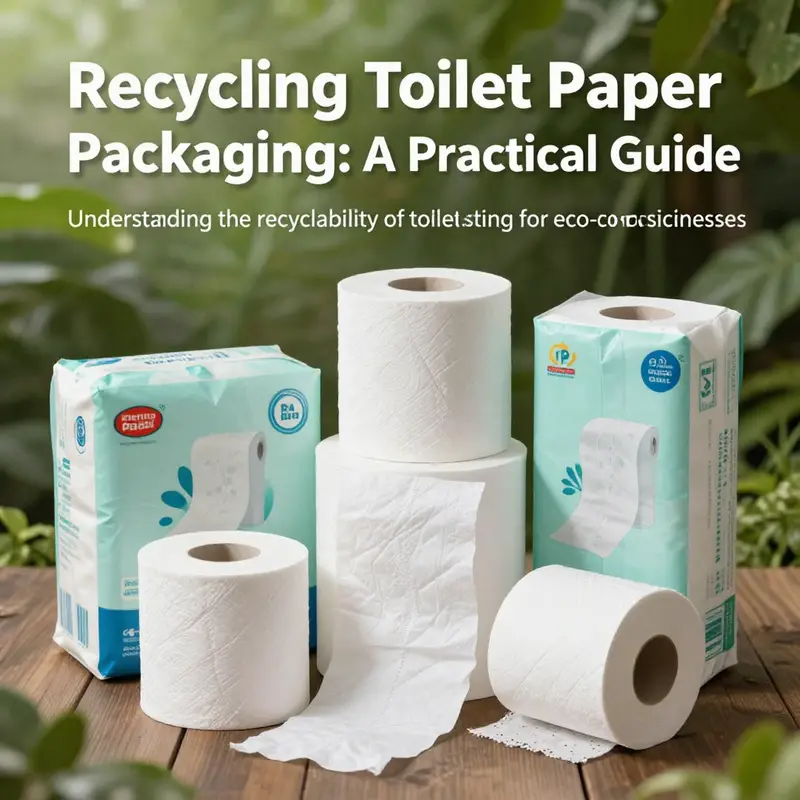
As sustainability becomes central to consumer choices, many businesses wonder how toilet paper packaging fits into recycling streams. This guide covers packaging materials, local recycling variations, and practical steps to improve recyclability across restaurants, offices, and retail settings.
Materials Matter: Decoding the Recycling Fate of Toilet Paper Packaging

External resource: For a concise overview of recycling basics and guidance on toilet paper packaging, see the U.S. Environmental Protection Agency’s Recycling Basics page focused on toilet paper. https://www.epa.gov/recycle/recycling-basics#toilet-paper
Can Toilet Paper Packaging Be Recycled? Navigating Local Programs and Material Realities

Toilet paper packaging typically comes in a cardboard outer box, sometimes with a plastic wrap around multiple rolls. Recyclability depends on whether the box is plain paper or coated, and on local program rules. Plain uncoated cardboard is widely recyclable, but plastic films, laminates, or foil layers complicate recycling. Keep the outer carton clean and dry, and remove any plastic wrap before placing the box in the recycling stream. Many curbside programs do not accept plastic film with paper, so the wrap should go to a separate recycling channel such as store drop off. Local guidance varies, so check municipal guidelines to know what coatings or laminations are accepted. Some brands are moving to 100 percent recyclable paper packaging or plastic free options, which simplifies recycling. If you encounter mixed materials, prefer packaging that minimizes plastic and coatings. Sorting at the material recovery facility, or MRF, can separate paper from other streams, but heavy coatings can hinder pulping and contamination control. Cleanliness, such as dryness and absence of food residue, is another key factor; damp or greasy boxes can contaminate a bale. The EPA offers general recycling basics that help consumers understand what counts as contamination and how to navigate changes in local rules. In summary, toilet paper packaging can be recycled in many places when it is plain paperboard, dry and free of residues, and when local guidelines permit it; otherwise, it may be diverted away from traditional paper recycling.
Beyond the Cardboard Box: Reimagining Toilet Paper Packaging in a Circular Recycling System

The question of whether toilet paper packaging can be recycled quiets the noise of daily routines and invites a closer look at the choices that pass through our hands every week. Most of us see a simple cardboard box or a paper-wrapped roll and assume that the path to reuse ends there. In reality, the journey from bin to reuse is governed by the materials used, how they are assembled, and the rules of local recycling programs. This chapter threads together the material reality of toilet paper packaging with the social and practical habits that shape recycling outcomes. It is not merely about whether the outer carton goes into the blue bin; it is about designing for recyclability from the start, choosing packaging that minimizes contamination, and understanding the small steps a consumer can take to keep the system moving smoothly.
At first glance, the most common toilet paper package—an outer cardboard carton enclosing one or more rolls—is a familiar, almost boring form. Cardboard and paperboard are widely accepted by municipal recycling programs, and the cardboard box is among the most straightforward recyclables to sort, separate, and process. The cardboard’s fate is linked to the beating heart of the recycling stream: the paper mill. Here, paper fibers are repurposed into newer products, ideally with as little loss of fiber strength as possible. When the packaging is clean, dry, and free of non-paper payloads, it enters the system with comparatively little friction. But the true story is subtler. The packaging can also carry plastic elements—thin wraps, inserts, or laminations—that complicate recycling if they are not removed or if they render the material non-recyclable in a given stream.
The friction comes primarily from contamination and mixed-material components. A clean, dry cardboard carton that has held a paper product without grease or food residue is a strong candidate for recycling. However, if the packaging has a plastic wrap or a薄 film that clings to the box, it must be removed before the cardboard is placed in the recycling bin. The same goes for plastic inserts inside multi-pack formats; those plastic pieces typically cannot be recycled in curbside programs and, if left in, can contaminate the entire batch of paper fibers. In many communities, a simple rule holds: separate plastic from paper, and recycle the paper portion. The situation becomes more complex when the wrapper or insert uses a laminated or coated material that blends plastic and paper in a way that the local mill cannot easily separate. Such composite packaging often falls outside standard curbside streams and may require special drop-off locations or may be deemed non-recyclable in that program. The practical upshot is clear: the recyclability of toilet paper packaging hinges on the exact construction of the package and the local capabilities of the recycling facility.
Even when the packaging is primarily paper, adhesives, inks, and coatings can play a role in determining recyclability. Labels are a common encounter on paper packaging and, in most cases, do not derail recycling. Yet heavily coated or non-paper components can create hurdles. If the box, for instance, has a glossy coating or a heavy wax layer, some mills may accept it, while others might treat it as contamination. The safe approach is to treat packaging as recyclable when it is labeled as such by credible certifications and to follow local guidelines about coatings, waxes, or laminations. In the end, it is not about a single universal rule but about aligning packaging design with the capabilities of the recycling stream in a given jurisdiction.
An important takeaway for consumers is to look for packaging that minimizes or eliminates non-paper materials. In recent years, several manufacturers have experimented with packaging that relies almost exclusively on paper and paperboard, reducing the need for plastic wraps or inserts altogether. This shift is not purely aesthetic; it directly affects the ease with which households can participate in recycling without inadvertently contaminating the stream. When packaging is 100% recyclable or even compostable, the entire package becomes a more straightforward end-of-life choice for the consumer, which can translate into higher recycling rates and less waste in landfills. The broader implication is that packaging design matters as much as recycling behavior. If the packaging speaks the language of recyclability—uncoated paper, minimal adhesives, and simple components—it lowers the cognitive load on the consumer and improves the likelihood that the material will re-enter the production cycle rather than the waste stream.
This is where labeling and certification become meaningful. The packaging landscape includes a variety of signals meant to guide disposal decisions. Among them, the How2Recycle label has gained prominence as a practical shorthand that helps consumers determine how to properly dispose of packaging in their local system. The presence of such a label—alongside clear instructions about removing plastic films and separating components—can reduce contamination and promote more accurate sorting. When a consumer sees a packaging label that instructs to “remove plastic wrap” before recycling or to “recycle the paper portion only,” those cues translate into real-world actions that preserve the integrity of the recycling stream. It is a subtle, yet powerful, form of consumer education that complements the physical design of the packaging itself.
Beyond interpretive signals, the conversation expands into the realm of sustainable packaging practices and consumer choices. A growing segment of the industry is experimenting with packaging that uses paper-based materials exclusively or that ensures any plastic used is a thin, recyclable type that is easily separated from paper. In this evolution, the consumer becomes an active partner. By prioritizing products that emphasize minimal plastic, recyclable paper-based designs, and transparent labeling, shoppers can steer demand toward packaging that aligns with circular economy principles. The decision matrix expands beyond price and softness of the tissue to include packaging ethics: how much plastic is used, how easy it is to recycle, and whether the packaging can be managed in ordinary curbside streams. In practical terms, this means paying attention to the packaging’s overall design, the presence of coatings or laminations, and whether the packaging can be fully recycled in one pass through a local facility.
The consumer’s agency is amplified by knowledge of local rules, because programs vary by city, county, and state. A carton that is deemed recyclable in one municipality may be treated differently elsewhere if the local mill and recycling infrastructure have different capabilities. This divergence is not a flaw in the system but a reflection of diverse waste management ecosystems. The solution is not a universal mandate but a combination of better packaging design, clearer labeling, and informed consumer sorting. A practical approach to this triad begins with cleanliness: ensure the packaging is free of grease, oil, or any non-paper residues that might hinder the recycling process. Remove plastic wraps and plastic inserts when possible, and if a component cannot be separated, consider whether the packaging can be recycled in a facility that accepts composites or if it should be diverted to a non-recycling waste stream according to local guidelines.
Another dimension of sustainable practice is the recognition that not all recyclable packaging is equally easy to recycle everywhere. Some packaging may be technically recyclable in theory but not practically recyclable in many curbside programs due to local processing capacity. To navigate this, consumers should consult their city or county waste management website for the most current guidance. This step is not a rebuke to the packaging designer but a pragmatic acknowledgment of the realities of recycling infrastructure. It is also a reminder that the design intent is to minimize the obstacles to recycling in everyday life. When the packaging is designed with the constraints and capabilities of the local system in mind, the path from consumer to recycled product becomes smoother and more predictable.
In the broader arc of sustainability, the packaging choices for toilet paper can reflect a company’s commitment to reducing plastic, improving recyclability, and educating customers. A number of manufacturers are moving toward packaging that minimizes plastic, uses more fiber-based components, and is designed to be recycled without specialized facilities. This trend aligns with a larger shift in consumer goods packaging toward circular economy principles, where materials are kept in use for as long as possible and reentered into production with minimal loss of quality. While the specific packaging design can vary, the underlying objective remains the same: to simplify the recycling process for households, to reduce contamination, and to keep the material in the stream so it can be reborn as new fibers rather than ending up as waste.
From a practical perspective, this translation from design to disposal begins with the choice a consumer makes at the shelf and continues through the steps taken at home. When choosing toilet paper, a consumer can look for packaging that emphasizes paper-based construction, minimal plastic, and clear recyclability signals. In the home, the steps are equally straightforward: separate any plastic components from the paper packaging, ensure the paper portion is clean and dry, flatten the carton to save space, and place it into the appropriate recycling stream. If a seal or adhesive is present, consider whether it is paper-friendly or if it represents a non-recyclable component that might require removal. The goal is to reduce the likelihood of contamination and to ensure that the packaging that enters the recycling stream can be efficiently processed by mills designed to handle paper fiber.
The dialogue between designers, manufacturers, and consumers is ongoing, and the pace of change is influenced by policy frameworks, market incentives, and public awareness. Consumers play a pivotal role, not just as end users but as validators and drivers of packaging design trends. When shoppers reward products with recyclable, plastic-reduced, or paper-based packaging, they participate in a market feedback loop that encourages more sustainable packaging choices across the industry. This is not merely a matter of personal habit; it is a collective practice that can shift the baseline of what is considered acceptable packaging for everyday essentials. As the industry evolves, so too does the consumer’s toolkit: an informed buyer’s intuition about labels, coatings, and composition becomes a practical instrument for steering packaging toward a circular life cycle.
To bring the discussion back to the core question—can toilet paper packaging be recycled?—the answer is nuanced but affirmative in many cases. The cardboard or paperboard portions of packaging are widely recyclable, especially when they are clean and free of non-paper contaminants. The challenges arise when the packaging includes plastic wraps, inserts, or laminations that complicate the recycling process or render the material non-recyclable in a given curbside stream. The path forward involves both better design and better sorting. Packaging designers can prioritize paper-based solutions and minimize or eliminate plastic elements. Consumers can support these designs by choosing products with recyclable packaging, removing plastic components, and following local guidelines for disposal. Finally, the recycling system benefits from accurate labeling, clear consumer education, and robust recycling infrastructure that can handle the fibers with minimal contamination.
The broader lesson is that packaging is not a peripheral detail but a central component of a system aimed at preserving materials for future use. When the design, labeling, and consumer actions align, toilet paper packaging can fit neatly into a circular economy, returning to mills as fiber rather than becoming waste. This alignment is not guaranteed in every market or for every package, but it is increasingly achievable as packaging science, regulatory guidance, and consumer behavior converge on the shared objective of reducing waste and extending the life of resources. In this sense, every carton opened and every roll unwrapped becomes a small test of how well the system handles everyday materials and how willing individuals are to participate in a recycling culture that values clarity, simplicity, and practicality over convenience alone.
For readers seeking a broader frame beyond packaging specifics, the understanding of how recycling works and what can be recycled is essential. It is worth noting that credible guides and industry discussions emphasize that local rules matter and that the same packaging can be treated differently in different places. The alignment of packaging design with these rules is part of what makes recycling more efficient and less error-prone for households. In other words, the more that design and policy speak the same language as consumer practices, the higher the chance of true circularity. This is not a distant ideal but a pragmatic objective that guides manufacturers, retailers, waste managers, and households toward packaging that is easier to recycle, easier to sort, and more likely to re-enter the production cycle.
In closing, the journey of toilet paper packaging from shelf to recycling bin is a story about choices—how we build, how we label, and how we act. It is a story that invites caution with non-paper elements, encouragement of paper-based designs, and a patient commitment to learn and follow local guidelines. It invites consideration of how to reduce the use of plastic in packaging without sacrificing functionality and how to identify packaging signals that genuinely reflect recyclability. And it invites a broader cultural shift: a shared expectation that everyday packaging is designed with the end of life in mind, so the fibers can be renewed, the materials reused, and the environmental footprint of a simple household staple kept as small as possible. The more clearly and consistently we communicate about recyclability, the more confident households can be about what goes into the blue bin and what stays out. The result is not only cleaner streams of recyclables but also a groundwork for a more resilient, resource-conscious economy.
External resource for broader context: https://www.epa.gov/sustainability/understanding-recycling
Final thoughts
As sustainability remains a priority for consumers and businesses, understanding the recyclability of toilet paper packaging is essential. By examining materials, local programs, and sustainable practices, you can make decisions that support a healthier planet while maintaining product quality and customer trust.