
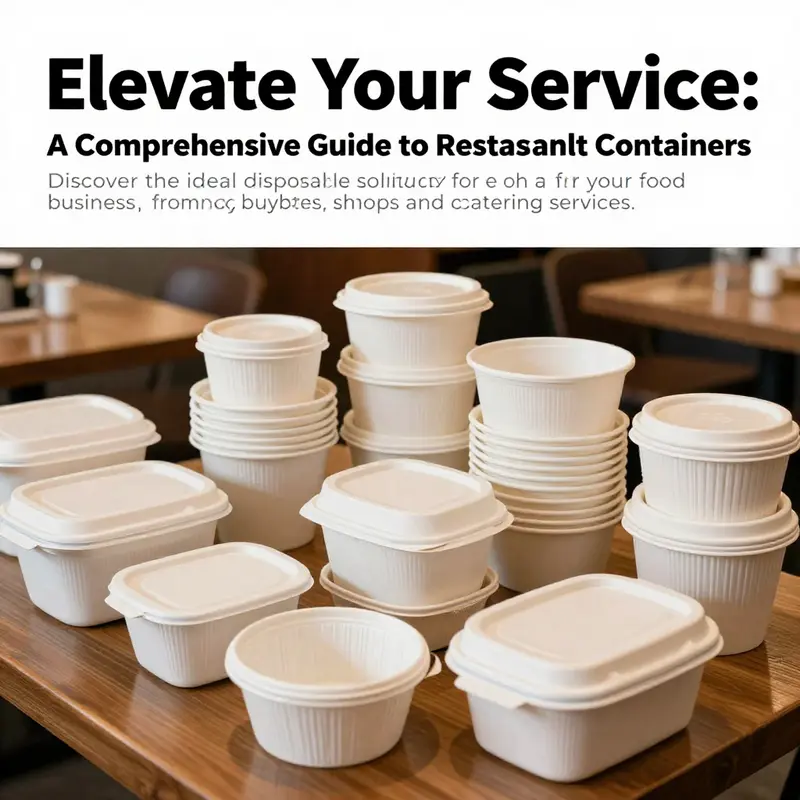
The demand for disposable containers in the food industry has surged, catering to various segments from bubble tea shops to catering services. These containers are vital for maintaining food quality, ensuring hygiene, and enhancing customer satisfaction. This article explores the diverse types of restaurant disposable containers, their pricing and bulk discounts, noteworthy suppliers, and the sustainable trends reshaping their usage. With a well-rounded understanding of these facets, food businesses can make informed choices that align with their operational needs and environmental responsibilities.
Diversity, Design, and Duty: Navigating the Landscape of Restaurant Disposable Containers
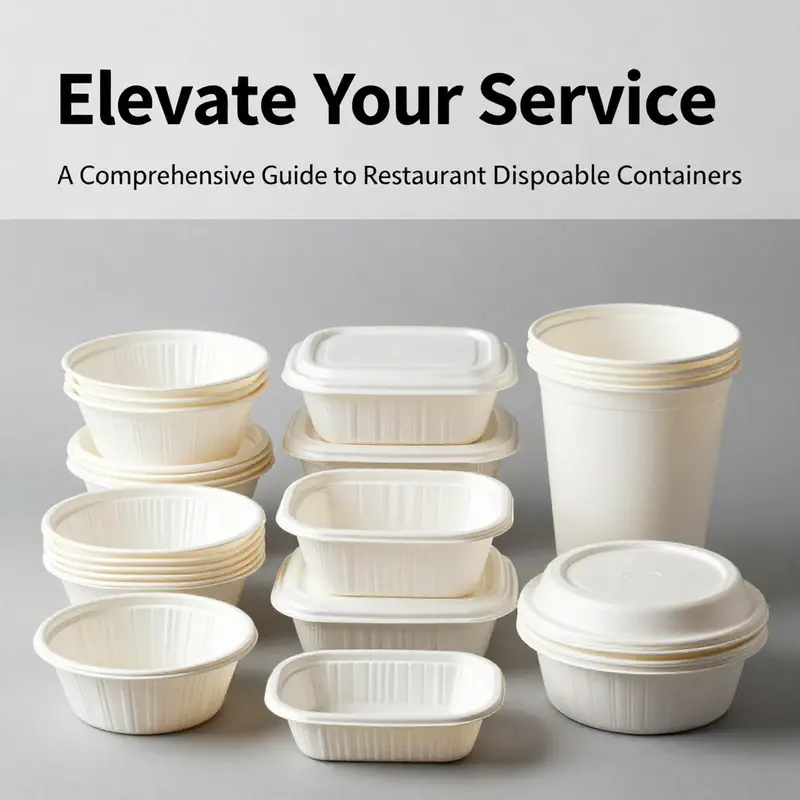
Every tableware choice a restaurant makes speaks to its operational realities, its brand, and its relationship with the environment. When we talk about restaurant disposable containers, we are not merely discussing a container for food; we are examining a node where logistics, safety, sustainability, and customer experience intersect. The diversity of these containers reflects a culinary world that ranges from intimate family meals at home to high-volume, high-speed service in bustling urban districts. In the evolving ecosystem of takeout and delivery, the container becomes a silent ambassador. It must preserve temperature, safeguard moisture, prevent leaks, and protect aromas while also projecting a restaurant’s values to a consumer who often decides where to reorder based on packaging alone. In this light, the topic is not a footnote to food service but a central channel through which efficiency, perception, and sustainability travel from the kitchen to the consumer’s hands. The story of restaurant disposable containers, therefore, is a story of how design and material science translate into everyday dining experiences.
The spectrum of products available to a modern restaurant spans plastics, papers, and foams, each with its own set of performance traits and trade-offs. Plastic containers, especially those made from polymers like polypropylene and polyethylene terephthalate, offer reliability in heat resistance and structural integrity. They can be shaped into double-layer constructions with integrated compartments, which helps keep components like sauces separate from entrées and desserts. This segmentation is not merely a convenience; it serves to maintain the integrity of the dish during transit. It also reduces the risk of cross-contamination and improves customer satisfaction, since a well-sealed container minimizes spills and odors that could otherwise taint the dining experience upon receipt. Yet plastic packaging carries environmental considerations that grow more salient with each passing year. As regulations tighten and consumer expectations shift toward sustainability, many operators reassess the trade-off between cost, performance, and environmental impact.
Paper-based options, including those derived from agricultural byproducts, add a compelling option for restaurants pursuing greener footprints. Bagasse, for instance, is made from the fibrous residue after sugarcane processing, repurposed into sturdy takeaway boxes and bowls. These containers tend to perform well for both hot and cold foods, and they align with growing consumer demand for compostable or biodegradable solutions. Kraft paper and other coated papers offer similar benefits, delivering moisture resistance, strength, and a more natural aesthetic that can reinforce a brand poised as environmentally conscious. The ecological discourse around paper-based packaging is nuanced, however. While many of these materials are designed to decompose under industrial composting conditions, end-of-life reality varies by locale and infrastructure. Restaurants that promote sustainability must therefore pair their packaging choices with clear guidance for customers about proper disposal and, when possible, partner with vendors that can certify compostability or recycling compatibility.
Foam containers, including expanded polystyrene variants, once dominated the thermal protection space. They excel at insulation, keeping meals hot or cold during transit. But foams face increasing restrictions in many regions due to environmental persistence and end-of-life concerns. This has accelerated the shift toward alternatives that match the insulating performance of foam while offering better recyclability or compostability. In practice, many operators weigh insulation against weight, cost, and waste-stream feasibility. They ask questions like: Will a more sustainable option perform as reliably during peak demand? Can it be produced at scale with consistent quality? How will customers dispose of it, and will the packaging remain attractive after a long delivery window? The answers often guide a careful blend of materials rather than a single, one-size-fits-all solution.
Beyond the basic material families, the functional design of disposable containers has grown more sophisticated. Modern takeout packaging frequently features modularity, venting mechanisms, and intelligent segmentation that keeps foods from interacting in ways that dull textures or alter flavors. For instance, a container may accommodate multiple compartments, allowing sauces, sides, and mains to travel together without cross-contact. For hot meals, design considerations include heat retention, steam release control, and structural rigidity to prevent collapse during transit. For cold dishes, moisture barriers and non-sweat surfaces help preserve texture and presentation. The goal is to ensure that a meal, when opened, appears as it did at service, with the same aroma and vibrancy the customer expects. In this context, packaging moves from a passive vessel to an active facilitator of quality sustainment.
A nuanced point often overlooked is how packaging shapes operational workflows. The rise of one-stop packaging solutions—where suppliers handle raw material sourcing, quality control, fabrication, and logistics—has reshaped the restaurant’s procurement playbook. Rather than managing several suppliers for cups, boxes, and trays, a restaurant can coordinate with a single vendor that offers a coherent system for customization, inventory management, and guarantees around food-contact safety. Such arrangements can streamline approvals, reduce lead times, and stabilize costs during volatile market cycles. They can also help a business scale quickly when menus evolve or when a restaurant expands into new delivery geographies with distinct regulatory landscapes. In practice, a one-stop approach translates into fewer vendor touchpoints, simpler reconciliation, and a clearer path to achieving brand-consistent packaging across channels.
Pricing dynamics for disposable containers reflect not only material costs but also economies of scale and the value of customization. For bagasse and other plant-based papers, unit prices may start in the cent range and decline further with very large orders. Bulk discounts can be substantial when purchases exceed several hundred thousand units, underscoring the importance of forecasting and storage in the cost equation. Kraft paper boxes, commonly used for takeout and bakery items, also attract favorable pricing at scale, combining sturdiness with a natural aesthetic that can be leveraged in marketing. Plastic options, given their versatility and lower mold costs, historically span a broader price range, often reflecting design complexity and the inclusion of features such as double walls, interlocking lids, or microperforations for steam venting. While the upfront per-unit cost remains a simple number in a spreadsheet, the total cost of ownership includes considerations such as storage space, supply reliability, and the risk of regulatory changes that could require substitution away from certain materials.
From a supply-chain perspective, the ecosystem around disposable containers has increasingly favored manufacturers who offer end-to-end services. The modern supplier is not just a factory that sells boxes and cups; it is a partner that can manage material selection, quality assurance, regulatory compliance, and even logistics. For a restaurant, this means reduced administrative overhead, faster onboarding of new packaging lines for limited-time menus, and a clearer line of sight into environmental credentials such as compostability certifications or recycling compatibility. Even the mold or tooling costs associated with customized designs can be amortized across larger purchase commitments, making bespoke solutions financially viable for chains with frequent menu rotations or seasonal promotions. In such environments, packaging ceases to be a fixed cost and becomes a strategic element of brand storytelling and customer experience.
The environmental narrative surrounding disposable containers has evolved in step with consumer expectations and policy developments. The global discourse around plastic pollution has intensified, nudging many restaurants toward options that reimagine the lifecycle of packaging. Bagasse and other bio-based materials offer a compelling path because they leverage agricultural byproducts and can, in some contexts, decompose under industrial composting conditions within a predictable timeframe. Even when full home-style composting is not feasible, these materials can still provide a meaningful environmental benefit by reducing fossil fuel reliance and contributing to a circular economy when integrated with appropriate waste streams. However, every choice comes with caveats. Not all compostable packaging behaves the same in all facilities, and consumer clarity about disposal can significantly affect actual environmental outcomes. This is why many operators now pursue transparent labeling, disposal guidance, and partnerships with waste-handling services that can verify end-of-life performance. The packaging decision thus becomes a collaboration across kitchen, procurement, marketing, and facilities management, aligning operational realities with environmental aspirations.
Material selection is inseparable from safety considerations. Regardless of the material, all food-contact packaging must meet stringent safety standards. Food-grade coatings, inks, and adhesives are essential to minimize the risk of migration of substances into food. The safety narrative is not merely about whether a product can pass a regulatory threshold; it is about how consistently the entire packaging system performs in real-world conditions. A 2026 evaluation highlighted that some coated papers exhibit uneven performance, with potential leakage or inadequate barrier properties in certain designs. This underscores the need for robust testing that mirrors kitchen and delivery conditions. For restaurants, safety is not just about regulatory compliance; it is about protecting the customer’s health, sustaining trust, and upholding the brand’s reputation. The packaging you choose communicates a silent but powerful message: we care about what touches your food and how you receive it.
To navigate this complex landscape, restaurateurs increasingly weigh three core levers: cost, performance, and perception. Cost includes the material price and all the ancillary expenses tied to packaging, from storage to waste handling. Performance encompasses the container’s ability to maintain temperature, prevent leaks, and withstand stacking and transit. Perception concerns the visible and tactile experience of the packaging—the color, texture, and sturdiness that signal quality and care to the customer. A well-chosen container should harmonize these levers, delivering reliable service at a sensible total cost while supporting a brand story about responsibility and care. In practice, this means choosing materials and designs that fit the restaurant’s menus, service pace, and delivery model, while also factoring in regional waste-management realities and customer preferences.
The journey from basic utility to sophisticated packaging solution is also a journey of design thinking. Because packaging is not merely a protective shell but a customer touchpoint, many operators aim to preserve both function and aesthetics. A sleek, well-fitted box or cup with a clean, legible labeling can reinforce a brand’s attention to detail. Conversely, packaging that is flimsy, ill-fitting, or difficult to open can detract from the dining experience and create negative associations with the brand. Thus, designers in this space focus on ergonomic aspects—how easy it is to open, how well the lid seals, and whether the package remains stable on the move. They also consider the multilingual realities of global delivery, ensuring labeling and instructions are accessible to diverse customer bases. In this way, disposable containers become not just a cost center but a conduit for brand values, customer engagement, and operational excellence.
A practical takeaway for restaurants is to view packaging decisions as a strategic element of menu design and service architecture. If a menu item travels well in a particular container, that container becomes an enabler of the dish’s integrity and presentation. If a promotional dessert or seasonal bundle benefits from a clear window that showcases the item, a packaging option with a window or display-friendly structure can enhance impulse appeal. If a dish requires heat retention for longer delivery windows, a multi-layer or insulated design may be warranted. Each choice is a thread in a broader operational fabric that includes food prep timing, packaging fill rates, order accuracy, and last-mile logistics. In short, packaging is not an afterthought; it is an integrated component of the dining proposition that can influence speed, accuracy, and satisfaction across the entire customer journey.
To illustrate how this integration plays out in practice, consider the path a restaurant might take when evaluating packaging for a new seasonal menu. The team begins with a clear brief that defines the dish profiles, expected delivery radius, and the typical environmental conditions for transit. They then explore material categories that align with the brief, weighing the trade-offs between insulation, moisture control, and end-of-life handling. As designs are evaluated, the team considers the total cost per unit, including tooling and potential discounts for bulk orders. They also examine the supplier’s capacity to deliver consistent quality at scale and to provide the necessary documentation for safety and sustainability claims. When a preferred option emerges, the restaurant may pilot it in a limited number of locations, gathering feedback from kitchen staff, couriers, and customers. This iterative process ensures that the final choice supports not only the dish’s quality but also a seamless, on-brand experience across all points of contact with the consumer.
For readers seeking a concrete example of how packaging options can be presented and evaluated without getting lost in product names, it is useful to anchor discussions in the functional categories outlined above. A kitchen may choose a sturdy paper-based box with a moisture barrier for hot mains and a separate, leak-proof container for sauces. A modular, multi-compartment container can be used for complete meals that include sides and dessert, offering a unified package that minimizes the need for additional wrappings. For beverages, cups with reliable lids and heat-insulating properties can reduce the risk of spills during delivery and improve the drinking experience upon receipt. These are not abstract ideas; they are actionable practices that influence preparation sequences, packing steps, and courier handoffs. The result is a cohesive system where packaging, food quality, and service speed reinforce one another rather than compete for attention.
As the packaging landscape continues to evolve, so too does the vocabulary of sustainability we use to describe it. The push toward compostable materials is not simply about replacing plastic with plant-based fibers. It is about aligning product performance, real-world disposal infrastructure, and consumer behavior. Restaurants that embrace this alignment often include educational prompts on packaging to guide customers toward proper disposal. They may also participate in or sponsor waste-sorting programs, contributing to a broader culture of responsible consumption. The net effect is a packaging strategy that reduces environmental impact without sacrificing reliability or customer satisfaction. In this sense, the container becomes a partner in sustainability as much as a conduit for food delivery.
From a procurement perspective, the path forward is likely to remain collaborative and data-driven. Restaurants should seek suppliers who can provide transparent material specifications, third-party certifications, and evidence of performance in real-world conditions. They should also advocate for flexibility in orders, recognizing that seasonal menus, promotional events, and regional delivery patterns require adaptable packaging solutions. The most resilient operators build packaging into the budgeting process, treating it as a dynamic resource that can be scaled or redesigned as needs shift. In times of disruption, those who have established clear supplier relationships and robust forecasting practices are better positioned to maintain service levels and protect brand integrity. Because at the end of the day, even the most delicious dish can be undermined by a poorly chosen container that leaks, cools unevenly, or communicates a bargain-basement impression.
For readers exploring concrete exemplars of customizable packaging options, a practical reference can be found here: custom-takeaway-packaging-supplies-disposable-tableware-for-theme-party. This resource highlights how customization can align with branding while preserving performance and safety. It also illustrates the breadth of structural possibilities—from simple improvements to full-scale, themed packaging programs that can be integrated across multiple locations. While individual product names are not the focus here, the underlying principle remains clear: packaging is a design problem that benefits from a holistic, system-wide approach rather than isolated tinkering at the component level.
The broader conclusion of this discussion is that the world of restaurant disposable containers has grown far beyond the days of generic wrappers. Today’s choices are informed by a spectrum of materials, performance requirements, safety standards, and a shared commitment to environmental responsibility. The best selections are those that harmonize with a restaurant’s menu, service pace, and market positioning, while also delivering on the practical demands of delivery logistics. They support a dining experience that delights customers from the moment they see the packaging to the moment they finish their meal. In this sense, the container is not a disposable afterthought but a durable element of the restaurant’s operating system—the part that carries, preserves, and presents food, and does so with mindful respect for the planet and for the people who prepare, deliver, and eat it.
External resource: https://www.douyin.com
Market Prices and Bulk Discounts: An Economic View of Restaurant Disposable Containers
Prices tell a story about how restaurants turn everyday packaging into a strategic lever. The chapter you’re reading treats disposable containers not merely as a cost line, but as a nexus where material science, supplier economics, operating scale, and policy signals converge. The goal is to understand how today’s price dynamics shape choices around what to stock, how to negotiate, and when to pivot toward more sustainable options. In this landscape, material mix matters as much as order size, and bulk discounts are the hinge on which profitability swings. As food service moves toward tighter margins and stricter environmental expectations, a careful read of market prices becomes essential for any operator who wants to balance customer experience, operational practicality, and long-term viability.
Across the spectrum of materials, plastic remains the most common choice for reasons of price, durability, and performance. The most widely used plastics in takeout boxes—polypropylene and related variants—offer low unit costs, high heat tolerance, and reliable grease resistance. They are the default option for many menus that must transition quickly from stove to doorstep, especially when orders come in large, irregular bursts. Yet the cost edge of plastics is brittle in a changing policy environment and growing consumer sensitivity to single-use waste. A restaurant that leans heavily on plastic containers often faces rising input costs if raw material markets tighten, or regulatory pressure tightens the permissible forms of packaging. Even when price per unit is at its lowest, the total cost of ownership includes waste handling, potential surcharges for recycling, and the reputational premium or penalty tied to packaging choices.
Paper-based and bagasse containers present a different calculus. The appeal here is primarily environmental: the idea of renewable feedstocks, lighter corporate footprints, and easier disposal under appropriate conditions. Bagasse, derived from agricultural residue, offers robust strength, good moisture resistance, and compostability under industrial conditions. In the market data available up to early 2026, bagasse products commonly begin around a low unit price, and when purchase volumes climb into the hundreds of thousands or millions, unit costs can fall markedly. A price point in the neighborhood of five to six hundredths of a dollar per piece represents a competitive baseline for high-performing paper-based containers. Yet even with favorable economies of scale, the per-unit cost stays higher than most basic plastic options, and the economics hinge on whether the restaurant can realize the environmental or branding benefits that often accompany such a shift. For restaurants under uniform branding pressure or operating with a sustainability mandate, those additional benefits can justify the premium, especially when combined with consumer willingness to pay or internal cost-savings elsewhere in the operation.
Foam containers, historically favored for their insulation, illustrate another dimension of price and risk. While their insulating capabilities can be unmatched, their environmental profile is problematic in many jurisdictions. In markets where regulatory actions have or will restrict foam use, price stability for foam variants becomes a risk event. Restaurants navigating this space typically see a widening premium to maintain heat retention while transitioning to alternatives, a dynamic reinforced by consumer expectations and municipal policies. The trajectory here is straightforward: foam may deliver short-term performance at a cost that grows over time as policy and sentiment shift away from it. The same logic applies to metals and aluminum-based solutions used for certain premium formats; while they can deliver excellent thermal performance and a strong brand signal, they come with higher base prices and sometimes more complex logistics. In short, the spectrum of material options reflects a continuum of trade-offs among price, performance, environmental impact, and regulatory exposure.
Prices themselves are not static figures; they range widely based on material, container design, and the scale of purchase. General market insights show that plastic takeout boxes can sit in a broad price band, with basic configurations often reported in the vicinity of a few tenths of a dollar per unit, and more feature-rich or larger-capacity designs climbing toward a few tenths of a dollar as well. In contrast, paper-based formats tend to crown at a higher unit price but improve rapidly with scale, as producers amortize manufacturing lines, improve coatings for moisture and oil resistance, and optimize conversion processes. Bagasse containers have carved out a niche where strength and compostability justify the premium, especially for operators that emphasize sustainability to customers who value responsible packaging choices. When a restaurant evaluates these options, the math extends beyond per-unit price to include packing density, weight, and the space required for storage. The total cost picture can shift dramatically if a venue faces limited storage space, a high turnover of SKUs, or frequent variations in menu size that affect how many compartments or sizes it needs.
Bulk discount structures are a central feature of the pricing landscape. For enormous procurement volumes—think hundreds of thousands or millions of units—suppliers commonly offer tiered discounts that translate into meaningful savings per unit. The numbers in the current data environment point to a practical rule of thumb: the larger the order, the greater the potential discount, with incremental improvements often realized in the 5% to 15% range and sometimes higher for market leaders who can guarantee long-term purchasing commitments. These discounts do not appear in a vacuum; they interact with the fixed costs of tooling and mold creation, which can be significant for complex packaging designs. A restaurant contemplating a long-run switch from plastic to a more sustainable material must also weigh the upfront costs of new tooling or molds against the recurring savings on unit price. When you compound marginal discounts across millions of units, the difference can be substantial enough to shift a project from “possible someday” to “economically sensible now.”
This is where platforms and procurement strategies come into play. Large restaurant groups often leverage bulk-buying arrangements through dedicated procurement teams that pursue multi-year contracts and vendor consolidation. The aim is not only to secure lower unit costs but also to stabilize supply, reduce administrative overhead, and create a predictable replenishment cycle that aligns with demand. For smaller operators, tiered pricing on wholesale platforms provides a straightforward path to savings, especially when those platforms bundle packaging with related gear or offer free samples to test performance. The capability to test fit and function before committing to a full-scale roll-out can be a decisive factor in whether a business feels confident about a switch or an upgrade in its packaging. The economics of this decision are sensitive to lead times, minimum order quantities, and the reliability of suppliers during peak seasons. Any disruption in supply can quickly erode the value of bulk discounts if it forces restaurants to pay premium for last-minute replacements or to revert temporarily to suboptimal packaging. In practice, careful supplier selection and clear service-level expectations are essential to translating bulk discounts into real-world savings.
While price is the most immediate lever, the long-run cost calculus often includes regulatory risk and brand impact. A growing number of markets are tightening plastic use or introducing taxes on single-use packaging. The financial expectation here is not merely about avoiding a future surcharge but about reducing exposure to sudden price spikes as the supply chain adjusts to new rules. In many cases, adopting renewable or compostable materials has a dual payoff: it aligns with policy trajectories and strengthens brand equity with customers who increasingly value sustainability. A subtle but meaningful advantage arises when packaging choices become part of a restaurant’s marketing narrative. A container that is clearly designed for recyclability or industrial compostability can strengthen a brand’s sustainability story, and some operators discover that packaging itself becomes a promotional asset—capable of carrying targeted messages during the customer’s moment of decision while waiting for delivery. In this sense, the economics of disposable containers extend beyond the price tag and into how packaging supports the overall customer experience and business identity.
An important dimension of the pricing equation is the relationship between packaging performance and operational practicality. For example, containers with higher oil and water resistance may allow a restaurant to transport sauces or moisture-rich dishes without leakage, thereby reducing the risk of negative consumer experiences and returns. The balance between barrier properties and cost per unit becomes a negotiation point. Restaurants with higher volumes and more complex menus may find that the premium for enhanced performance is warranted, whereas a smaller operation may achieve acceptable outcomes with simpler designs coupled with rigorous handling practices. The choice of packaging thus becomes a function of menu structure, delivery model, and the specifics of the kitchen workflow. The most successful decisions tend to be those that reflect a clear understanding of how often containers are used, how they travel, and how they interact with the restaurant’s standard operating procedures from pickup to delivery.
A subtle, increasingly influential factor is the opportunity to generate ancillary value from packaging. Some suppliers offer packaging with advertising or promotional space, enabling restaurants to monetize the container itself. This idea—turning the box into a marketing channel—has gained traction as delivery becomes a prominent touchpoint for brand interaction. The economics of such arrangements depend on the size of the audience, the receptivity of customers to advertising in this context, and the cost to produce packaging that can support such features without compromising performance. For operators that enjoy a consistent customer base and repeat orders, even a modest advertising yield can contribute to overall profitability, especially when combined with bulk pricing on the core container.
In all these considerations, it helps to anchor decisions to a practical framework that respects both numbers and realities on the shop floor. First, quantify your expected annual container usage by material type, packaging size, and the proportion of dine-in, takeout, and delivery. Second, map your demand to supplier lead times and minimum order quantities, ensuring you can maintain inventory without overstocking. Third, compare the total landed cost per unit after discounts, including storage, handling, and any waste-management costs, to the value delivered in terms of customer satisfaction, waste reduction, and branding impact. Fourth, stress-test scenarios around price volatility—raw material price hikes, currency fluctuations, or regulatory shifts—and consider how a diversified supplier base could reduce risk. Finally, align packaging choices with broader sustainability goals, regulatory requirements, and the restaurant’s market position. When these elements converge, a price-focused decision becomes a strategic maneuver that can strengthen margins while preserving the quality of the customer experience.
For operators who want a hands-on anchor for sustainability-informed procurement, one practical path is to explore internal packaging options that prioritize compostability without sacrificing performance. The market now offers a range of compostable or readily compostable formats that can, under industrial conditions, break down within a defined period. The cost curve for these options has been bending downward as scale increases and as coatings and barrier technologies improve. In many markets, this transition does not happen in a single leap but unfolds in staged pilots that test compatibility with existing workflows, including storage, transport stability, and customer feedback loops. This approach helps restaurants manage risk while building knowledge about how alternative materials perform under real-world conditions. It also helps clarify the point at which the environmental benefits translate into measurable business value—from reduced waste disposal costs to enhanced customer loyalty and the ability to participate in local sustainability initiatives.
To illustrate the practicalities, consider the interplay between bulk pricing and storage capacity. A medium-sized restaurant that projects a monthly order volume of several hundred thousand units can negotiate favorable terms for bagasse or high-grade paper containers if it commits to a multi-month or multi-year contract. The same restaurant must still maintain secure storage for the selected packaging, ensure compatibility with its dishware and warming equipment, and verify that the chosen format aligns with its delivery processes. Conversely, a smaller operation with fluctuating order volumes may prefer a more flexible arrangement on a platform that rewards consistent ordering with modest discounts while allowing periodic experimentation with different materials. In both cases, the financially meaningful decision is not a single price point but a program that aligns with demand, capacity, and strategic priorities. The result can be a more predictable cost structure, a clearer path to sustainability, and a stronger ability to scale as the business grows.
For readers seeking a concrete touchpoint, the landscape also invites a broader look at the market for disposable utensils and containers as a whole. The research landscape points to a globalized supply chain with a mix of standardized plastics, bio-based alternatives, and biodegradable options, all competing for shelf space on wholesale platforms and in procurement catalogs. The exact mix of materials a restaurant adopts will depend on local regulations, supplier availability, and the comfort level of diners with different packaging stories. The numbers tell a story of a market in transition rather than a market at rest. Operators who learn to read the price signals in concert with environmental and regulatory trends will likely find opportunities to optimize costs, reduce risk, and enhance brand value over time.
As a closing note, this chapter remains mindful of the fact that packaging is only one piece of a larger system in which supply chain resilience, operational efficiency, and customer experience intersect. The price of a container is a window into a broader ecosystem of decisions—about vendor relationships, material science, and the way a restaurant communicates its values to guests who are increasingly attentive to sustainability. The choices made today about disposable containers will ripple into tomorrow’s costs, reputations, and capabilities. Restaurants that treat packaging as a strategic asset—carefully balancing unit price, bulk discounts, and long-term value—stand to gain more than just immediate savings. They can build more resilient operations, better align with regulatory trajectories, and deliver a packaging experience that supports a compelling, responsible brand story for both dine-in and delivery customers.
External reference: https://www.researchandmarkets.com/reports/678901/global-disposable-utensils-market-analysis
Internal resource for further reading: eco-friendly takeout boxes for food packaging
From Raw Materials to Takeout: Tracing the Market Chain of Restaurant Disposable Containers
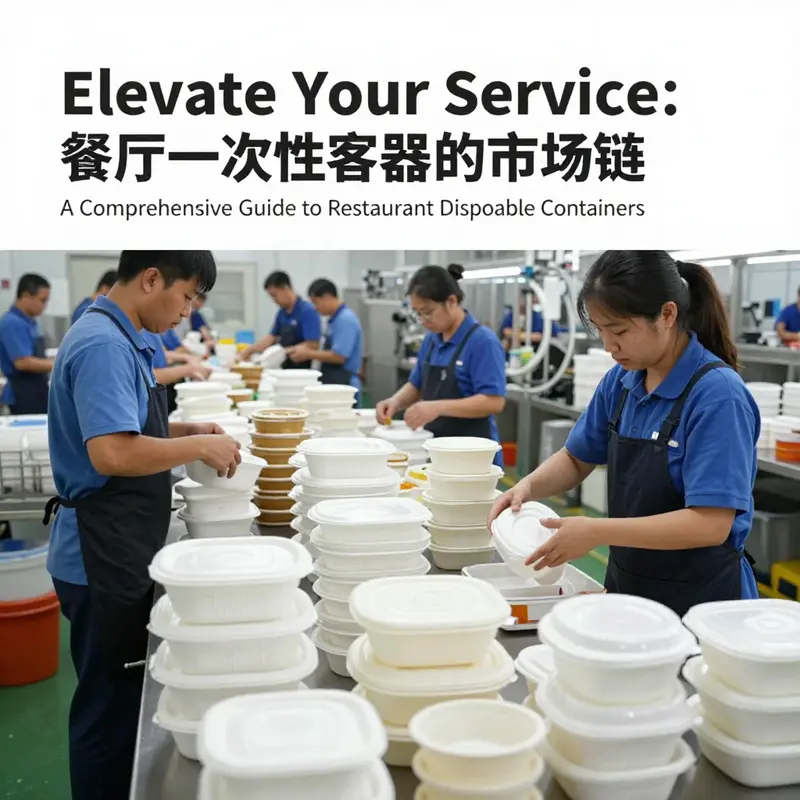
Every disposable container used in modern restaurants sits on a long chain that begins long before the first mold is opened or the first sheet is formed. It starts with raw materials that determine not just price, but performance, safety, and environmental impact. In a landscape where margins are thin and customer expectations are high, the upstream choices—whether a chef reaches for a bagasse-based box or a sleek, clear plastic container—shape the entire dining experience, especially for takeout and delivery. The market chain that supports restaurant disposable containers is not a simple supply line. It is an intricate ecosystem built around material science, processing technology, manufacturing capacity, and a web of downstream demand that spans foodservice, retail catering, and mass-market delivery platforms. Understanding this chain requires looking at each layer in context: the raw materials that power the product, the processes that turn those materials into safe and reliable packaging, and the downstream users who demand consistent quality, customization, and responsible packaging at a viable price.
At the upstream edge of the chain, the choices of materials are driven by performance requirements and regulatory currents as much as by cost. Traditional plastic containers rely on polymers such as polypropylene and polystyrene, sometimes polyethylene, which offer clear advantages in heat resistance, stiffness, and barrier properties. Polypropylene, in particular, is prized for its dual functionality: it can perform well with hot foods and withstand the temperature shifts common in delivery logistics. Yet polymers carry exposure to price volatility tied to oil markets, and they raise questions about recyclability and waste management in a world increasingly attentive to plastic pollution. These dynamics push developers toward more sustainable streams. Biobased or compostable options—glucose or plant-derived polymers, bagasse from agricultural waste, and pulp-based materials—have moved from niche offerings to mainstream considerations for many operators. The shift toward bagasse boxes and other pulp- and fiber-based alternatives reflects a broader industry intent: to reduce reliance on fossil feedstocks while preserving the integrity of the food contact surface. The materials themselves are not a static choice; they are a response to policy signals, consumer demand, and the economics of scale.
In recent years, the market has seen a diversification of upstream suppliers who can deliver not just raw resin or fiber but integrated material systems. Some suppliers focus on single-material streams—PP, PS, PE—but many more now offer blends or multi-material solutions that combine heat resistance, grease resistance, and barrier performance in a single package. The availability of aluminum and steel as metal-based alternatives adds another dimension, particularly for premium segments or for products designed to endure repetitive mechanical handling in high-volume settings. For restaurants that emphasize sustainability, the upstream options extend to bagasse, bamboo fiber, and wood pulp-based products that are designed to be industrially compostable or home-friendly compostable under certain conditions. The supplier ecosystem here is not merely about selling a box; it is about delivering a system that aligns with a restaurant’s operational realities, waste-management capabilities, and branding commitments.
The variability in raw materials is mirrored in the pricing that downstream buyers confront. For bagasse-based boxes, the price profile often begins near five hundredths of a dollar per unit in small lots and can drop toward two hundredths when purchases reach the half-million mark. Paper-based solutions—such as kraft or coated paperboard boxes—tend to cluster around a mid-range, roughly four-one-hundredths per unit when orders are large, with customization costs influencing the final tally. Plastic options, especially those engineered for dual-temperature performance with reliable seals and leak resistance, carry a broader spread—from about ten cents per piece in simple configurations to as much as thirty cents for highly engineered, feature-rich designs. In practice, the choice is rarely driven by cost alone. It is a negotiation among performance, regulatory compliance, consumer perception, and the capacity of the restaurant to manage the packaging within its waste streams. The high-volume nature of restaurant packaging means that bulk discounts are a critical lever for operators negotiating with suppliers.
As the materials move from resin or pulp into the manufacturing arena, the midstream segment of the market chain begins to transform raw inputs into finished products through a spectrum of processing technologies. This is where the packaging industry’s blend of tradition and innovation becomes most evident. Plastic containers are typically produced through injection molding or thermoforming, depending on the geometry and desired properties. Injection molding excels at precision and repeatability for complex, multi-compartment boxes; thermoforming is often used for lighter-weight, flatter shapes with high throughput. In the same ecosystem, coatings and laminations add grease resistance and moisture management, enabling containers to hold sauces and fried foods without leaking or delaminating. For fiber-based options, processes such as compression molding, forming, and drying yield sturdy, stackable boxes that can withstand the rigors of transit while maintaining a clean, presentable surface for branding and sensing. In some cases, metal packaging—especially aluminum containers—joins the lineup for premium or specialized delivery contexts. Aluminum boxes offer resilience under high heat and a level of inertness that can be advantageous for certain menu items or for airline and catering environments.
Quality control is the quiet backbone of the midstream world. In a business that ships edible products, every batch must conform to strict safety and performance standards. The chain rewards those manufacturers who can demonstrate consistent material performance, reliable sealing, and predictable shelf-life. The most demanding operators insist on traceability, from raw material lot numbers to finished product identifiers that travel with each delivery. This traceability is not merely a compliance exercise; it is a performance signal. When a restaurant knows exactly which lot a particular batch of containers comes from, it can troubleshoot issues and audit supplier reliability with confidence. The manufacturing segment is thus not just about producing containers; it is about delivering a dependable system that supports food safety, brand integrity, and customer satisfaction across a broad range of menu types, service models, and delivery environments.
Once manufactured, the downstream ecosystem drives the real-world impact of these packaging choices. The market chain’s downstream segment encompasses fast-casual and full-service restaurants, quick-service brands, takeout and delivery platforms, and even nontraditional venues like convenience stores, catered events, and hospital cafeterias. For many operators, the decision to switch from one material family to another is not simply a matter of aesthetics or a minor cost delta. It can be a strategic lever that aligns with sustainability pledges, waste-collection capabilities, and customer education efforts. In markets with mature waste-management infrastructure, compostable or recycled-content options are increasingly popular. In other contexts where industrial composting is not readily accessible, restaurants may weigh recyclability and the environmental footprint of each option more carefully, seeking a balance between performance, cost, and end-of-life outcomes.
From the restaurant’s perspective, the downstream demand environment is both a source of stability and a driver of experimentation. The growth of online ordering and delivery means that the packaging must perform under longer transit times, temperature fluctuations, and the additional handling that comes with curbside pickup, third-party logistics, and aggregation by delivery hubs. The packaging design becomes part of the total dining experience: it must be visually appealing, functional, leak-resistant, and easy to open, while also signaling a commitment to sustainability. The market has responded with a proliferation of design options, including multi-compartment configurations for separate components of a meal, grease-resistant linings, and branding surfaces that can bear logos and color schemes without compromising performance.
The numbers behind the market help illuminate why suppliers and restaurants care so much about this chain. In the Chinese market, the scale of foodservice and delivery has crossed significant thresholds, with the sector surpassing billions of yuan in annual volume and hundreds of millions of online delivery users integrating with countless brand and operator concepts. Globally, the disposable tableware market has been forecast to grow significantly through the coming decade, with research suggesting a compound annual growth rate in the low single digits to mid-single digits, culminating in a multi-hundred-billion-dollar expansion by mid-2030s. This growth is not merely a function of higher demand; it reflects ongoing innovation in material science, packaging design, and logistics efficiency. The market chain, therefore, is not just about making “one more box.” It is about supporting a delivery ecosystem that can scale with brand portfolios, multi-channel strategies, and evolving consumer expectations for safety, convenience, and sustainability.
For operators who want the most seamless experience, some buyers seek a single-source solution that bundles material sourcing, design, regulatory compliance, production, and logistics. Such one-stop providers promise easier forecasting, streamlined approvals, and reduced administrative overhead, while also offering technical support on food-contact safety and end-of-life options. This integrated approach resonates with restaurants juggling multiple suppliers, seasonal promotions, and large-volume launches. A well-orchestrated supply network can translate into fewer production hiccups, more precise inventory planning, and lower total cost of ownership over the lifespan of a packaging program. When indulging in customization—whether it is a unique ribbing pattern, a color-matched interior coating, or a specific lid design—the interaction with suppliers becomes a collaborative process rather than a transactional one. In practice, the most successful partnerships blend material science expertise with manufacturing efficiency, quality assurance, and reliable logistics.
The journey through the market chain is not merely about the hardware of packaging. It also involves the storytelling and branding that accompany a restaurant’s takeout experience. Packaging is a conduit for communicating brand values, whether a concept emphasizes premium sustainability, culinary cleverness, or a playful consumer experience. A consumer tasting a hot, well-contained meal in a carefully chosen container is also a consumer interpreting the restaurant’s commitment to safety and environmental responsibility. In this sense, the market chain is a performance framework as well as a supply chain: every material choice, every processing step, and every delivery handoff contributes to a narrative about what the restaurant values and how it wants to be perceived by guests opening a takeout box after a long day.
To those navigating this space—the operators, the designers, and the procurement teams—awareness of price bands, performance profiles, and end-of-life implications matters. For instance, when a restaurant is evaluating options, it will consider not only the initial unit price but the total cost of ownership, which includes storage, breakage, quantity discounts, and the potential need for return or recycling programs. The chain rewards those who can demonstrate stability in supply, transparency in material composition, and a commitment to responsible disposal. It rewards those who can translate technical specifications into menu outcomes, ensuring that a meal travels from kitchen to customer intact, warm, and presented in a manner consistent with the restaurant’s standards. In this way, the market chain of restaurant disposable containers becomes a strategic arena where sustainability, performance, and cost converge to shape the future of takeout culture.
For readers seeking practical pathways within this ecosystem, the landscape offers a spectrum of choices. Some buyers prioritize eco-friendly materials and lean toward bagasse or pulp-based options, while others emphasize barrier performance and opt for advanced plastics with recycled content. The decision matrix is not rigid; it adapts to the restaurant’s service model, whether it relies heavily on delivery, dine-in, or hybrid formats. In all cases, a robust supplier network—one that can deliver material expertise, scalable production, consistent quality, and reliable logistics—helps ensure that the packaging is a positive extension of the dining experience rather than a logistical complication.
In the spirit of enabling informed decisions, consider the idea of exploring a packaged, end-to-end packaging solution that can handle design, compliance, and fulfillment as a single blueprint. Such an approach reduces the friction between product development and distribution, enabling restaurants to experiment with new formats and sustainable materials without sacrificing operational reliability. It also positions brands to respond quickly to evolving consumer expectations and regulatory developments. As the industry continues to evolve, the market chain of disposable restaurant containers will keep adapting—incorporating new bio-based materials, refining manufacturing workflows for efficiency and safety, and expanding the set of downstream options through partnerships with foodservice operators, retailers, and delivery networks.
One practical way to surface this integrated approach in everyday procurement is to look for suppliers that offer not only a product but a spectrum of services, from material selection to logistics. For those who want to see a sample of how such partnerships operate, a prominent option is to explore a dedicated provider catalog that showcases customizable takeaway packaging solutions. The catalog can reveal the breadth of options—from multi-compartment constructs to recycled-content boxes—along with the ability to tailor lids, coatings, and branding inserts. The right partner can translate a brand’s vision into packaging that performs under heat, resists grease, and supports sustainability goals while staying within budget. Ultimately, the market chain is not just about packaging; it is about delivering a reliable, safe, and compelling guest experience from kitchen to doorstep.
For readers who want to dive deeper into the supply landscape and see a real-world example of how a package program can be structured, a relevant case study can be found through a supplier catalog focused on custom takeaway packaging. This resource demonstrates how operators can align formulation, design, and logistics to meet the demands of a growing takeout culture, while also addressing environmental considerations and cost constraints. Custom takeaway packaging supplies offers a window into how one-stop providers position themselves as end-to-end partners in the packaging journey, reflecting a broader industry trend toward integrated solutions rather than fragmented procurement.
External resource: for a broader market forecast and analysis of the disposable tableware sector, see the global market research report on disposable tableware that outlines size, share, and growth trajectories across products, applications, and regions. https://www.grandviewresearch.com/industry-analysis/disposable-tableware-market
秸秆驱动的绿色承诺:餐厅一次性容器的环保转型与品牌价值
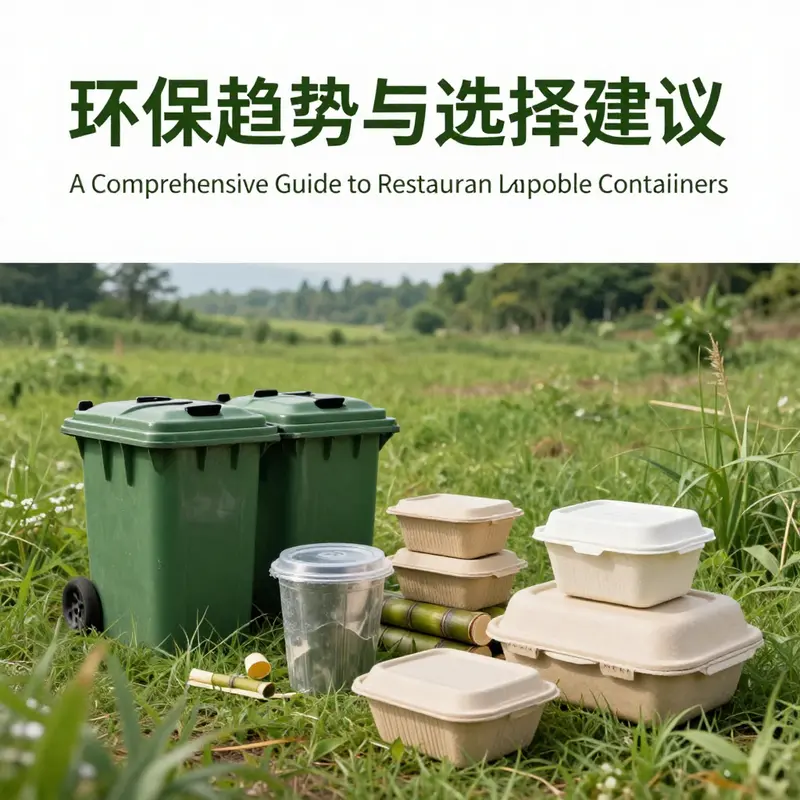
在全球范围内的消费升级和环境治理 demand 下,餐饮行业正经历一个深刻的包装转型。一次性容器并非简单的耗材,它承载着食品安全、用户体验、供应链效率以及企业社会责任的多重诉求。政策的风向也在持续推动这场转型:多地陆续实施禁塑令,要求逐步减少不可降解塑料的使用,同时推动回收、再利用和降解材料的广泛应用。以海内外为例,越来越多的城市将禁用不可降解外卖餐具、限制发泡材料的应用,并通过财政激励与监管手段推动行业向可降解、可回收的方向发展。这一切都在提醒餐饮企业,包装不仅仅是成本项,更是品牌表达与长期竞争力的核心要素。对于餐厅而言,真正的机遇在于把环保和商业利益结合起来,把包装变成传递品牌价值的一部分,而不是仅仅追寻“合规”与“最低成本”。
从材料角度看,市场上可选的可降解与可回收材料大致分为几类:以植物纤维或农业废弃物为原料的餐盒,是当前最具潜力的方向之一。相比传统塑料,这类材料在生命周期内表现出更低的碳足迹,且在政策环境日趋严格的背景下具有更强的合规性与市场接受度。甘蔗渣、玉米淀粉、纸浆以及秸秆纤维等原料,经过不同的工艺处理,能够实现一定程度的生物降解或可回收利用。但不同材料的性能差异,也会直接影响到餐盒在实务中的适用性:能否承受热汤、油脂的渗漏、是否具备良好的防水防潮性、在运输过程中的抗压与耐摔性能,以及在多次使用后的可重复使用性等,都是餐厅在选型时需要权衡的关键。
在这一轮材料与工艺的升级中,植物纤维类餐盒正在得到越来越多行业与学界的关注。与传统塑料相比,植物纤维餐盒的优势不仅在于原料的再生性,更在于全生命周期的环境友好性。与之相对,其他材料在成本、供应稳定性及对环境的实际影响方面则表现出明显的差异。根据最新行业趋势,秸秆等植物材料在不显著牺牲强度和密封性能的前提下,具备零碳排放、资源循环利用、全生命周期环境友好等特性,被越来越多的监管体系视为重点推广对象。这一方向也被各类权威行业白皮书所支持,被视为可持续发展目标最贴近现实的落地方案。对餐厅而言,这意味着通过选择基于可再生原料、具备相应认证的餐盒,不仅能降低政策风险,还能通过绿色叙事提升品牌信任度与消费者的愿意支付意愿。
在实际采购层面,成本与规模效应是决定材料选择的关键因素。研究数据表明,甘蔗渣类餐盒在批量采购时价格极具竞争力,甚至可以达到极低的单位成本。纸制餐盒的单位成本也相对可控,适合需要较高定制化的场景;塑料餐盒的价格区间则受设计复杂度和模具成本影响较大,且在未来市场中越发受限于合规要求。这些价格趋势提示餐饮企业,在未来的采购策略中,应优先考虑那些在法规与认证框架内可持续供应的材料,并尽量通过大宗采购来获取更有利的单位成本。这并非简单的降成本策略,而是一种“以长期合规性与稳定性换取短期价格波动”的理性投资。
对餐厅来说,功能性同样不可忽视。一些创新设计正在逐步改变外卖体验的边界。更耐热的材料、完整的防漏结构、可分层的设计、以及便携式的卡扣与锁合系统,能显著提升用户在外带、野餐、或户外活动中的用餐体验。这些功能性改进,往往比单纯的材料创新更能直接转化为销量与用户黏性。将功能性与环保属性结合起来的餐盒,能够在不牺牲使用便利性的前提下,提升品牌的现代感与专业度。企业在设计阶段应将“用户行为”与“供应端约束”共同纳入考量,确保包装既能兼顾食品安全与易用性,又具备市场竞争力与环境友好性。
在供应链层面,减少对一次性不可降解塑料的依赖,需要建立稳定且可追溯的材料来源。合规认证是关键,这不仅涉及材料的降解性能,还包括对食品接触安全的严格要求。GB/T 28287-2012等标准体系在行业内的广泛应用,帮助企业明确材料的降解、回收与安全边界。对于希望实现“绿色溢价”的餐厅而言,选择具备权威认证的材料,是提升消费者信任并实现价格溢价的基础条件。与此同时,供应商也在向一站式解决方案靠拢,从原料采购、质量控制到物流运输的全链条服务,降低了餐饮企业在跨区域采购中的复杂性与风险。对那些在扩张阶段寻求统一包装标准的连锁品牌而言,这是降低运营不确定性的一条有效路径。
可持续包装不仅是材料选择的问题,更是一种品牌策略的表达。消费者在购买外卖与堂食打包服务时,越来越关注企业对环境的承担与透明度。高质量的包装,不仅能有效提升食品体验,还能作为品牌传播的一部分,通过环保标识、减塑信息、可回收路径等叙事,帮助企业与顾客建立情感连接。以秸秆等农业废弃物为原料的植物纤维餐盒,因其“零碳排放、资源循环利用、全生命周期环境友好”的特性,成为目前最具一致性与可推广性的解决方案之一。这并非简单的替代关系,而是一个能够叠加品牌价值的设计变量。为此,餐饮企业除了关注成本与功能外,还应重视包装的视觉设计、品牌语言与教育性传播,用以引导消费者形成正确的环保认知与消费行为。
在具体行动上,行业内已经开始出现若干转型路径。第一,优先替换不可降解塑料餐盒,转向植物纤维或PLA等更环保的替代材料,并确保产品符合国家与区域性的降解认证标准。第二,与正规、可追溯的供应商建立稳定合作关系,确保材料来源、加工过程与最终产品的合规性与稳定性。第三,将包装设计与品牌理念深度绑定,通过标签、信息设计与包装讲述,塑造“绿色品牌形象”,并借此提升顾客的情感认同与支付意愿。第四,探索可重复使用与回收的系统性方案,例如在校园、写字楼等固定场景试点可重复使用容器的押金制模式,以降低长期成本并最大化资源回收。所有这些步骤的核心,是将包装从“成本中心”转变为“品牌资产”,让环保成为企业持续竞争力的一部分。
在实现这一转型的过程中,市场上也出现了能对接企业需求的定制化方案。企业可以通过与具有可降解材料能力的供应商合作,进入定制化生产环节,获得符合自身品牌风格的餐盒,与此同时确保材料的食品安全性与环境友好性。通过将包装方案嵌入品牌故事,企业不仅提升了产品体验,还在市场中树立了值得信赖的形象。需要强调的是,此类定制服务并不仅限于包装外观的个性化,更包括材料类型、结构设计、耐热性、密封性能以及运输适配性等方面的综合定制。对餐饮企业而言,选择一个能够提供从原料到成品、再到物流全链条控制的一站式方案,意味着可以在较短时间内完成从理念到执行的跨越,减少内部协调成本与风险。
在未来的阶段,行业将越来越强调“可持续性与可追溯性”的统一性。政策驱动、消费者认知升级、供应链协同及品牌诉求,共同塑造了一个新的市场秩序。餐厅若要在这个变革中保持竞争力,必须将环境责任嵌入企业文化与经营策略之中。最重要的是,包装不应被视为单纯的合规工具,而应成为企业对外传达的核心价值之一。通过选择以秸秆等农业废弃物为原料的植物纤维餐盒,结合可靠的认证与透明的供应链,餐饮企业可以实现经济效益与生态效益的双赢,更能在消费者心中建立起“负责任、创新、专业”的品牌形象。
对于正在打造可持续包装战略的餐饮企业,不妨查看一个以往在定制外卖包装材料方面提供综合解决方案的平台,那里可以探索关于定制外卖包装材料的主题型解决方案的案例与资源:^1。同时,若你希望深入了解权威行业白皮书中对植物纤维餐盒的政策与市场解读,可以参考一份关于绿色包装发展白皮书的权威综述,看看国家层面如何评价以秸秆等原料的植物纤维餐盒在全生命周期中的表现,以及未来的推广路径。最后,关于行业现状的官方报道也提供了宝贵的宏观视角,帮助餐饮企业把握政策走向与市场趋势。
外部参考资源:关于绿色包装发展与生物降解材料的行业综述,可以参阅《中国环境报》在2026年发布的《绿色包装发展白皮书》,其中明确指出以秸秆等一年生草本植物为原料的植物纤维餐盒已被国家重点推广,具有零碳排放、资源循环利用、全生命周期环境友好等特性,是当前最符合可持续发展目标的解决方案之一。链接: https://www.cenews.com.cn/2026/01/15/20260115-1.html
Final thoughts
Understanding the vast landscape of disposable containers is essential for enhancing operations in the food service industry. From the types and pricing to suppliers and eco-friendly practices, each aspect contributes to a comprehensive strategy for sourcing the right materials. By prioritizing sustainability and quality, food businesses not only meet the demands of their customers but also align with a growing trend towards environmental responsibility. The right disposable containers can significantly enhance service, making informed choices today for a better operational tomorrow.